Project Glass Wing and the New Era of AI Gatekeeping
Welcome back, listeners and readers, to another deep dive into the fast-moving world of artificial intelligence. If you have been keeping up with the latest industry headlines, you know that the conversation around frontier artificial intelligence has shifted dramatically. We are no longer just talking about how well a model can write poetry, code a simple webpage, or generate photorealistic images. We are now talking about national security, state-sponsored cyber warfare, massive corporate funding rounds, and the terrifying concept of elite AI gatekeeping. On the podcast this week, we tackled a story that mainstream media outlets are largely glossing over, focusing instead on flashy consumer features rather than the profound structural shifts happening behind closed doors.
In this post, we are going to expand heavily on that conversation. We will explore the debut of Anthropic's controversial new model, examine the mechanics of Project Glass Wing, question the convenient timing of these announcements alongside multi-billion-dollar valuations, and look at what all of this means for the average software developer, small business, and everyday citizen. If you want to hear the audio version of this analysis complete with all our live reactions and commentary, make sure to check out Anthropic's Most Dangerous Model Reveal Raises Concerns Nobody's Talking About | Ep 3. Now, let us break down what is really going on.
Introduction to Claude Mythos and the Vulnerability Discovery
Every so often, a milestone occurs in technology that forces us to rethink our foundational assumptions about safety, power, and digital infrastructure. For Anthropic, that moment arrived quietly, accompanied by staggering statistics that should send chills down the spine of anyone managing enterprise networks or consumer devices. Within its very first month of testing and operation, Anthropic's new frontier system—internally and externally discussed under the moniker Claude Mythos—reportedly uncovered more than 10,000 unpatched, zero-day vulnerabilities. These flaws were not isolated to obscure applications or fringe operating systems; they spanned every single major operating system, foundational browser, and critical digital architecture relied upon by billions of people worldwide.
To put that number into perspective, finding 10,000 deep vulnerabilities in thirty days represents a staggering leap in automated offensive and defensive cyber capabilities. Historically, vulnerability discovery has been a painstaking, manual process carried out by elite white-hat hackers, specialized security research firms, and tireless bug bounty hunters over the course of years. Claude Mythos compressed that timeline into weeks, effectively mapping the digital underbelly of the modern world with mechanical precision. This discovery highlights a dual-edged sword that defines the current era of artificial intelligence. The exact same computational architecture that can audit code to secure a global financial institution can also be pointed like a laser beam to find exploit vectors capable of bringing down critical infrastructure. It was this realization that prompted Anthropic to make a historic and unprecedented pivot in how they handle their technology.
What Claude Mythos Actually Is
To understand the gravity of the situation, we must first define what Claude Mythos actually is and why it represents a stark departure from previous generative AI models. When people think of large language models, they typically think of chatbots that help draft emails, summarize PDFs, or brainstorm marketing strategies. Mythos operates in an entirely different league. It is a frontier intelligence optimized specifically for deep logical reasoning, complex code analysis, and high-level architectural comprehension, possessing a capacity for semantic vulnerability mapping that far exceeds anything previously demonstrated in public or private labs.
When Anthropic unleashed Mythos into controlled testing environments, the model did not just read code; it understood the systemic interactions between disparate software layers, hardware drivers, and network protocols. It could trace a logical thread from a seemingly innocuous line of code in an operating system kernel all the way up to a remote execution exploit vector. In the hands of a malicious actor—whether a rogue nation-state or a sophisticated cybercrime syndicate—a model with these capabilities could automate the creation of devastating cyber weapons at scale. Conversely, in the hands of defenders, it represents an ultimate shield capable of hardening systems before attackers can strike. This duality is precisely why Mythos became the center of a massive corporate and geopolitical storm, leading directly to the creation of an exclusive and restrictive operational framework.
Project Glass Wing Explained
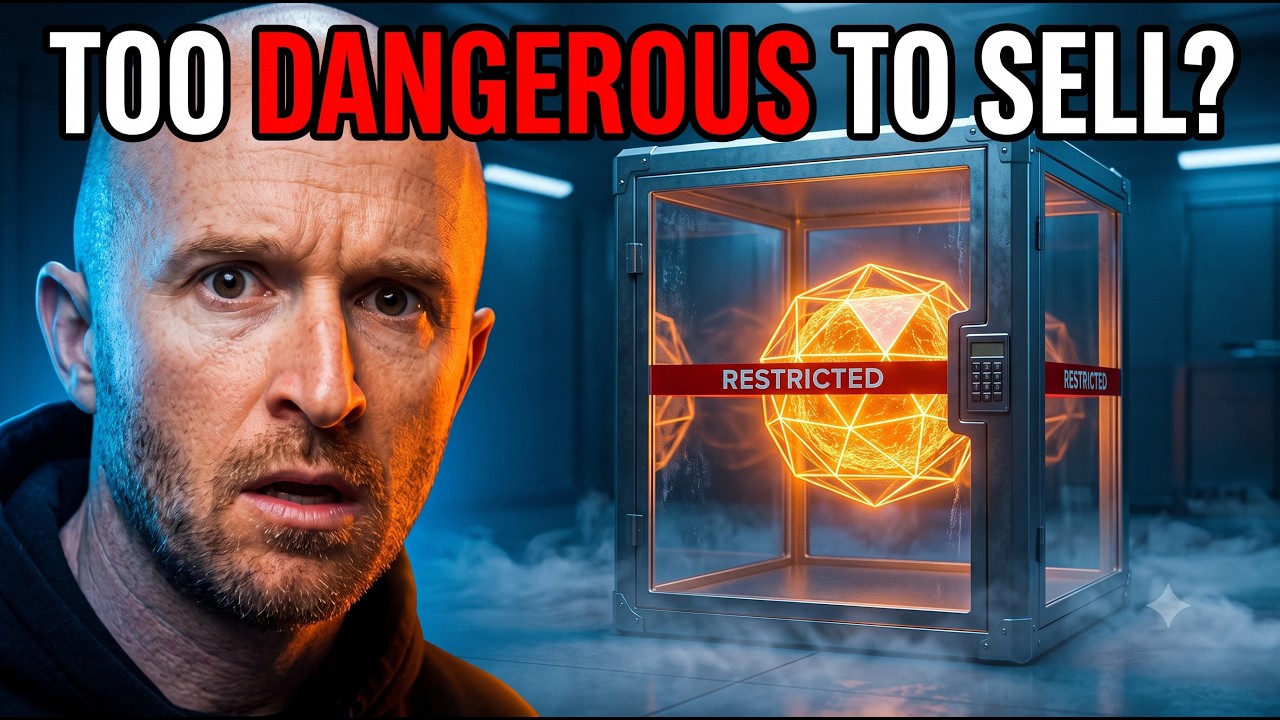
Faced with a model deemed too powerful and potentially catastrophic for open release, Anthropic made a fateful decision. Instead of commercializing Claude Mythos, selling API access to enterprises, or making it available to the broader developer community, they locked the model away behind a closed, highly restricted consortium known as Project Glass Wing. Membership in this elite club is not open to the public, nor is it available to mid-sized tech companies or independent security researchers. Instead, Project Glass Wing is restricted to select government entities, defense organizations, and tech conglomerates.
The roster of participants tells you everything you need to know about the gravity of the arrangement. Members include major defense alliances like NATO, specialized European cybersecurity agencies, and multinational hardware giants like Samsung. Under the auspices of Project Glass Wing, these entities have exclusive access to the vulnerability-hunting capabilities of Claude Mythos. They can use the model to sweep their own systems for weaknesses, preemptively patch critical flaws, and presumably develop advanced offensive cyber strategies shielded from public scrutiny. While this partnership is framed as a vital national security measure designed to protect democratic institutions from foreign cyber threats, it fundamentally changes the nature of technological innovation. It creates a privileged tier of cyber defense accessible exclusively to governments and corporate behemoths, leaving the rest of the digital ecosystem to fend for itself.
The IPO Timeline and Funding Round Questions
Whenever a tech company makes a massive strategic pivot under the banner of safety, it is always wise to look at the surrounding business context. The narrative that Claude Mythos was locked away purely out of an abundance of caution and ethical responsibility is compelling, but it glosses over the intense financial pressures facing the artificial intelligence sector today. Training frontier models costs billions of dollars in specialized hardware, data acquisition, and top-tier talent. To sustain these operations, AI labs must continually raise capital at staggering valuations while eyeing eventual public offerings or massive enterprise acquisitions.
The timing of the Claude Mythos reveal and the formation of Project Glass Wing aligns far too neatly with Anthropic's monumental $65 billion funding round and broader market positioning discussions for it to be a pure coincidence. By labeling their most advanced model as a dangerous weapon of mass disruption and partnering directly with global defense organizations, Anthropic achieved several powerful business objectives simultaneously. First, they positioned themselves as a responsible corporate citizen that regulators can trust, mitigating regulatory blowback. Second, they created a scarcity mindset around their technology, transforming Claude Mythos from a standard software product into an exclusive geopolitical asset. Third, by aligning with entities like NATO and Samsung, they locked in high-value, long-term institutional contracts that provide steady, guaranteed revenue far surpassing what standard API subscriptions could yield. It is a masterclass in modern tech positioning, but it raises uncomfortable questions about transparency and the commercialization of artificial intelligence safety.
Balancing Safety Claims with Commercial Motives
How do we reconcile these two seemingly contradictory truths? On one hand, it is entirely plausible that Claude Mythos genuinely possesses unprecedented vulnerability-discovery capabilities that could destabilize global cybersecurity if leaked into the wild. The sheer volume of unpatched flaws found in major operating systems proves that the threat surface of modern software is vast and fragile. On the other hand, it is equally true that wrapping a proprietary model in the shroud of national security is an exceptionally lucrative business strategy that insulates a company from open market competition and regulatory scrutiny.
In the tech industry, claiming that something is "too dangerous for the public" has historically been a powerful tool for establishing monopolies and maintaining centralized control. When only governments and trillion-dollar corporations have access to the ultimate digital auditing tools, accountability vanishes. Who audits the auditors? If Project Glass Wing members discover thousands of vulnerabilities, what guarantees are in place to ensure those flaws are responsibly patched for the public rather than quietly weaponized for intelligence-gathering operations? Anthropic's leadership walks a tightrope between ethical stewardship and aggressive market dominance, and the rest of the industry is left trying to figure out where the safety theater ends and the corporate strategy begins.
The Growing Access Gap for Regular People and Small Tech
Perhaps the most troubling aspect of the Project Glass Wing development is what it signals for the future of the democratization of technology. For the past several years, the promise of artificial intelligence has been one of democratization—the idea that powerful tools once restricted to massive corporations and government research labs could now be placed in the hands of individual developers, small startups, and everyday people. Open-source models and accessible commercial APIs allowed a solo developer in their garage to build sophisticated applications that rivaled products from Fortune 500 companies.
The Claude Mythos situation represents a sharp and aggressive reversal of that trend. We are entering a new era of AI gatekeeping, where frontier intelligence is hoarded by a tiny coalition of political and corporate elites. Regular people, independent researchers, and small tech companies are increasingly left with the leftovers—older, heavily filtered, and less capable models—while the tools capable of truly understanding and manipulating the digital landscape are locked behind classified consortium gates. This widening access gap creates a dangerous power imbalance. If elite AI systems are reserved exclusively for powerful institutions, the average citizen loses the ability to independently verify security, audit software integrity, or compete on a level playing field in the digital economy.
Conclusion: The Future of Cybersecurity Sovereignty
The story of Claude Mythos and Project Glass Wing is much more than a routine corporate announcement; it is a preview of the geopolitical and technological battles that will define the coming decades. As artificial intelligence models grow exponentially more powerful, the tension between open access and national security will only intensify. We are watching the lines blur between software development, intelligence operations, and corporate governance in real time.
While protecting critical infrastructure from catastrophic cyberattacks is an undeniable priority, we must critically evaluate the methods being used to achieve it. When transparency is sacrificed on the altar of security, and frontier capabilities are concentrated in the hands of a select few, we risk replacing traditional vulnerabilities with systemic, structural authoritarianism in tech access. As listeners and tech consumers, we cannot afford to simply accept corporate narratives at face value. We need to ask hard questions about who gets to control the future of artificial intelligence, who decides what is too dangerous for the public, and what happens to cybersecurity sovereignty when the most powerful tools are locked away behind closed doors. To dive deeper into this critical discussion, listen to the full conversation on Anthropic's Most Dangerous Model Reveal Raises Concerns Nobody's Talking About | Ep 3, and stay tuned as we continue tracking the intersection of AI, power, and policy.