Linda Darnell
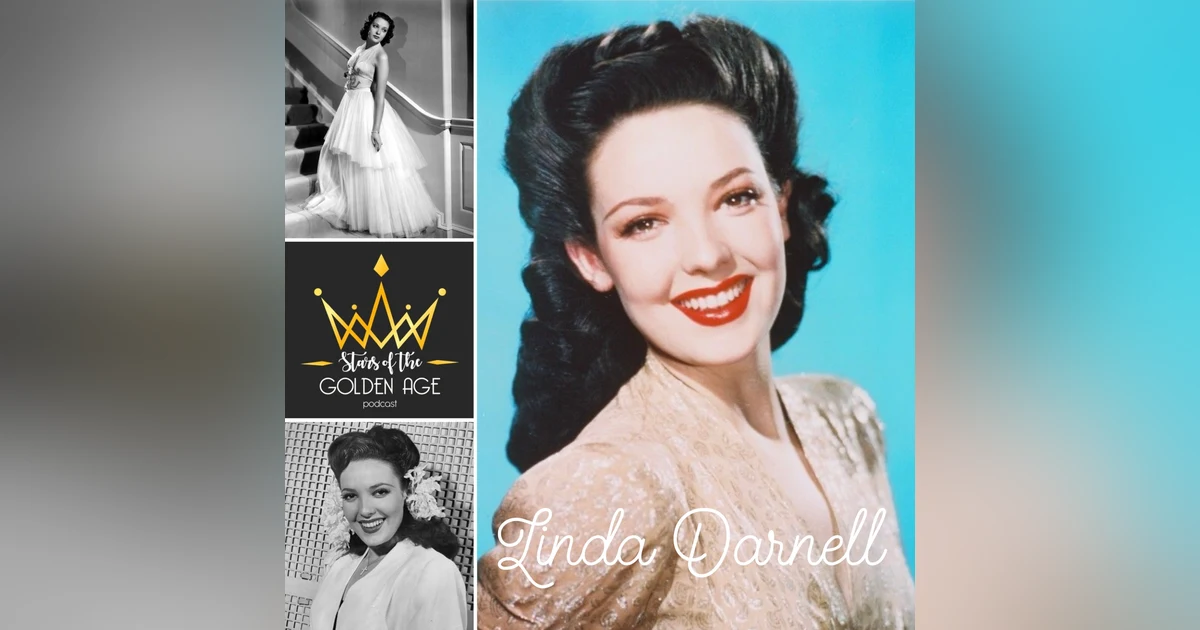
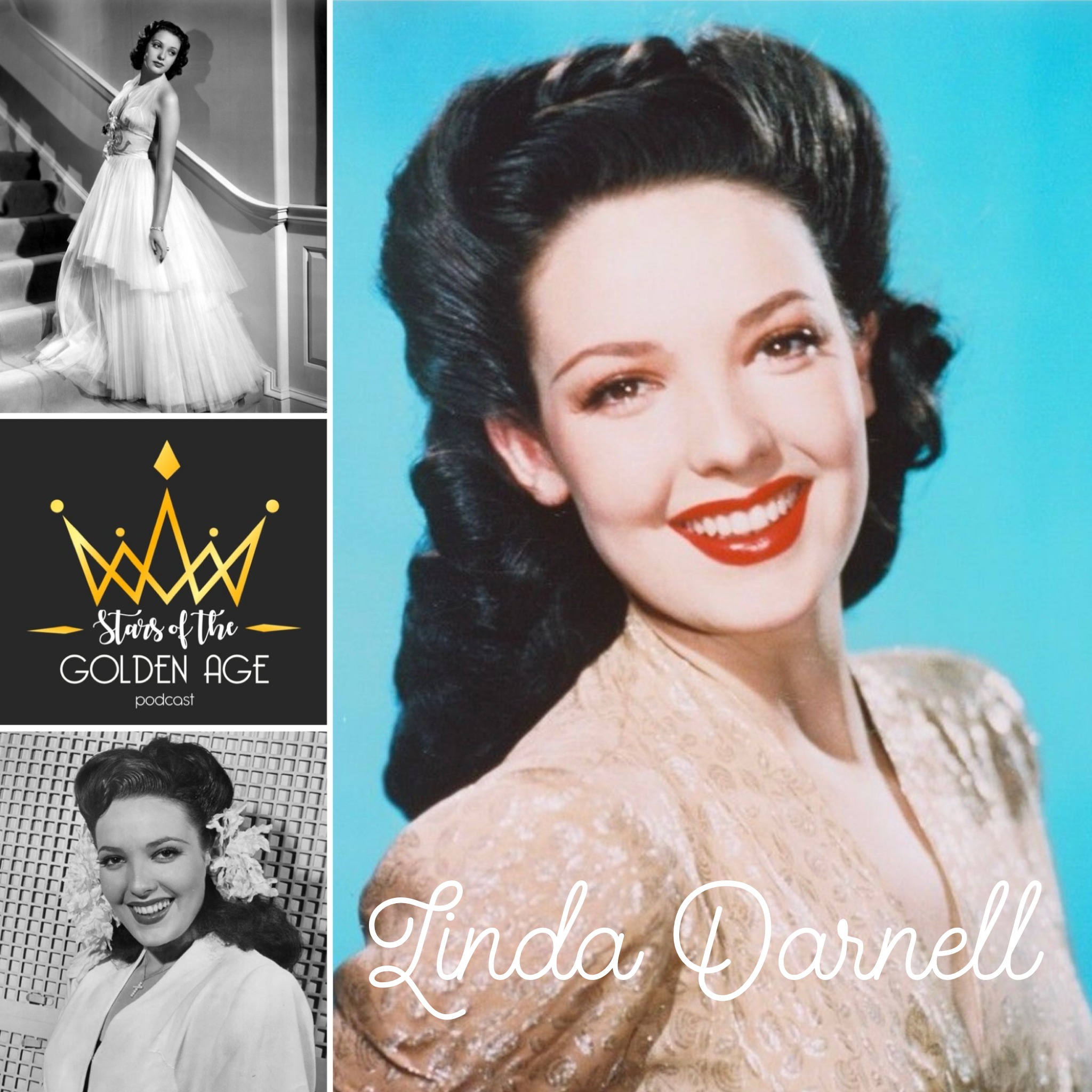


LINDA DARNELL: She is most often discussed in relation to the way she died, but leading up to that tragic day was a whole life full of love, hardships, successes, and decades of incredibly hard work. She wasn't given the best circumstances in life, but she powered through with her own inner strength. This story will tug at your heartstrings... you'll laugh, you'll cry. Linda Darnell lived a dozen lifetimes in her short life on Earth. She was beautiful inside and out.
Why is this episode so long? Well, I have a special treat embedded into it for you! Listen now!
Support Stars of the Golden Age on Patreon! And gain access to TONS of bonus content!
P.M. Terrell's book PADLOCKED... Order HERE! Support creative minds!
Episode Sources: The book Hollywood Beauty: Linda Darnell and the American Dream by Ronald L. Davis; an article from Criterion from October 19, 2023 titled Linda Darnell’s Tough and Timeless Women by Mayukh Sen; IMDB
Image Source: IMDB
Advertising Inquiries: https://redcircle.com/brands
Privacy & Opt-Out: https://redcircle.com/privacy
0:02 [SPEAKER_00]: a quick message before the episode. [SPEAKER_00]: My name is Erin, and I'm the host of Stars of the Golden Age. [SPEAKER_00]: This podcast is my baby, my passion project, my absolute pride and joy. [SPEAKER_00]: And I am proud to say that absolutely no AI is used in my research, my writing, my recording, or my editing, or really anything in my life. [SPEAKER_00]: Everything you are about to hear is 100% humanly researched, voiced and edited through hours and hours of good old-fashioned hard work. [SPEAKER_00]: And I'm sad that we live in a world where I have to say that.
0:42 [SPEAKER_00]: I'm so happy to have you here. [SPEAKER_00]: Thank you so much for giving this little independent one-woman show a chance. [SPEAKER_00]: And let's get into today's journey through one of our great stars of the Golden Age. [SPEAKER_00]: Hello listeners, welcome to Stars of the Golden Age. [SPEAKER_00]: A show that highlights the lives of legends from film, music and the birth of television during Hollywood's Golden Age, with a special emphasis on their lives behind the scenes. [SPEAKER_00]: I am your host, Erin Carlson.
1:46 [SPEAKER_00]: Today, we will be talking about the beautiful Linda Darnell. [SPEAKER_00]: A big thank you to my dear listener friend Anna for the book that I used for my primary source today. [SPEAKER_00]: The book is called Hollywood Beauty, Linda Darnell and the American Dream by Ronald L. Davis. [SPEAKER_00]: Thank you Anna, Anna hooked me up with so many wonderful old Hollywood books. [SPEAKER_00]: I am forever indebted to her. [SPEAKER_00]: And also, a big thank you to our newest Patreon member, someone I have the great pleasure of knowing in real life. [SPEAKER_00]: Thank you to Sheila, who is to adorable grandchildren I've had the privilege of teaching in preschool, one past and one current, and this one is a spitfire I just love her.
2:31 [SPEAKER_00]: Thanks Sheila, you're the best. [SPEAKER_00]: Now, I present to you the life of Linda Darnell, [SPEAKER_00]: Linda Darnell was born as Monetta Eloise Darnell on October 16, 1923. [SPEAKER_00]: I first need to start with a bit of the life that she was born into, a little backstory of her parents and grandparents. [SPEAKER_00]: Her mother was a pretty unique character. [SPEAKER_00]: Linda Darnell's parents names were Roy and Pearl Darnell. [SPEAKER_00]: Linda's grandfather, Pearl's father, was half Cherokee, and he spent some time as a young man traveling with the circus.
3:12 [SPEAKER_00]: He was a talented musician and learned how to play many different instruments, but the fiddle was his favorite and the instrument that he was most skilled at playing. [SPEAKER_00]: Post-circuit stays, he formed a band, and the band performed on Riverboats traveling up and down the Mississippi River. [SPEAKER_00]: Pearl thought her father's life was the most fascinating life a person could live. [SPEAKER_00]: She wanted to live life like that. [SPEAKER_00]: Unable to go with her father on his entertainment adventures, she settled for dressing up in her mother's dresses and high heels and putting on performances for her sisters. [SPEAKER_00]: Pearl wasn't enthusiastic, colorful, highly spirited, and often very dramatic.
3:53 [SPEAKER_00]: You'll get lots of examples of this through our journey today. [SPEAKER_00]: This was much to the delight and amusement of Pearl's father, but to the disappointment and annoyance of her mother. [SPEAKER_00]: She was a daddy's girl. [SPEAKER_00]: They shared the same adventure spirit, but her dad was rarely home. [SPEAKER_00]: Pearl was devastated when her father died when she was only 10 years old, and with his death when the family's pretty decent income. [SPEAKER_00]: They were left poor. [SPEAKER_00]: So when an Italian man in his late 30s named Lawrence Cetro arrived in town and took a liking to 14-year-old Pearl, her mother was more than happy to set her daughter free for a more hopeful future.
4:37 [SPEAKER_00]: on May 27, 1905, 14-year-old Pearl married late 30 something Lawrence Cetro. [SPEAKER_00]: Lawrence was a mostly absent husband after he wished Pearl away from her family, seemingly only around to get her pregnant before disappearing again. [SPEAKER_00]: Before Pearl was even an adult herself, she was the mother of two children. [SPEAKER_00]: Then, Lawrence disappeared for good. [SPEAKER_00]: He left one day and just never returned. [SPEAKER_00]: Pearl decided to make a fresh start for herself and her two young children in Dallas, Texas. [SPEAKER_00]: She had zero education having never gone to school, so the only work she could find was as a domestic worker for a well-to-do family.
5:22 [SPEAKER_00]: Needing someone to care for her children while she worked and lived with the family who employed her, she placed them in a local orphanage, visiting them every Sunday. [SPEAKER_00]: One Sunday, she showed up to learn that the orphanage had allowed another family to adopt her children, and they would not tell her who or where they were. [SPEAKER_00]: Surprisingly, she did end up finding them several years down the road. [SPEAKER_00]: She found them playing in a yard near where she worked at that point. [SPEAKER_00]: She didn't get them back, but she was able to establish some kind of relationship with them. [SPEAKER_00]: In her work as a domestic servant, one of Pearl's tasks was to gather the male each day.
6:02 [SPEAKER_00]: And while doing so, she made the acquaintance of the local male man who delivered the family's male. [SPEAKER_00]: A man named Calvin Roy Darnell. [SPEAKER_00]: They were complete opposites. [SPEAKER_00]: Roy was quiet and well-mannered, [SPEAKER_00]: But they liked each other, eventually started dating, and after a brief courtship, or married, in March of 1915. [SPEAKER_00]: Pearl was now 24 years old and Roy was 27, a much more appropriate pairing, each-wise at least. [SPEAKER_00]: Herl was obsessed with Hollywood movies. [SPEAKER_00]: She knew her own childhood dreams of being a performer would never come true, now that she was an old hag at 24 years old.
6:49 [SPEAKER_00]: So when she and Roy welcomed a daughter, on Dean, three years after they wed, she became determined to make her a movie star. [SPEAKER_00]: Unfortunately, Undeen did not want to be a movie star. [SPEAKER_00]: She couldn't act, she couldn't sing, she couldn't dance. [SPEAKER_00]: And despite the classes and pageants per putter in, she was not going to learn how to do any of those things. [SPEAKER_00]: She just didn't want to. [SPEAKER_00]: Then, a long came another daughter, another chance for a movie star daughter. [SPEAKER_00]: Linda Darnell, while she wasn't quite Linda Darnell. [SPEAKER_00]: The new little baby of the family was given the name, Monetta and Louise Darnell.
7:29 [SPEAKER_00]: And she was born with big dark eyes and inch-long jet black hair. [SPEAKER_00]: She was adorable. [SPEAKER_00]: Upon meeting her, Linda's father touched her hair and said, well hello, tweetals. [SPEAKER_00]: And from that moment on, her family nickname remained tweetals. [SPEAKER_00]: But the world would soon know her as Linda Darnell. [SPEAKER_00]: Monetta or Tweetle's Darnell didn't become Linda Darnell for a little bit yet, but just to save on confusion, I'm going to refer to her as Linda throughout our story. [SPEAKER_00]: Linda was a calm and docile child who mostly preferred solitary play. [SPEAKER_00]: Her sister, Undine, was five years old when Linda was born, so she wanted nothing to do with playing with her little sister.
8:15 [SPEAKER_00]: Two more children rounded off the family. [SPEAKER_00]: A girl named Monty, when Linda was six years old, in 1929, and Calvin Jr. or Cal in 1930. [SPEAKER_00]: Sister Monty was named after one of Pearl's old boyfriends, and Cal had looks very similar to Linda's, beautiful black hair and long eyelashes. [SPEAKER_00]: So, because of that, Pearl dressed him as a little girl in dresses and long curls in his hair until he was about six years old. [SPEAKER_00]: I'm not sure he wanted that, but Pearl wanted that. [SPEAKER_00]: And Pearl got what she wanted. [SPEAKER_00]: She was a very strict mother and would fall into a rage if things did not go her way.
8:56 [SPEAKER_00]: But back to Little Linda. [SPEAKER_00]: Pearl began grooming her little girl for Stardom, the second she was born. [SPEAKER_00]: She ingrained it into her very soul. [SPEAKER_00]: The idea that she would someday be a Hollywood movie star. [SPEAKER_00]: She definitely had the beauty and personality as she grew. [SPEAKER_00]: She was stunningly beautiful. [SPEAKER_00]: She was kind, smart, and wore a big, beautiful smile everywhere she went. [SPEAKER_00]: But she was also really shy and introverted. [SPEAKER_00]: Still, Pearl had her in dance class, singing lessons, piano lessons, and elicution lessons from the time she was four years old. [SPEAKER_00]: Linda really didn't know any other kind of childhood.
9:38 [SPEAKER_00]: The Darnells were not very popular in their Dallas-Texas neighborhood. [SPEAKER_00]: Everyone, from other mothers to neighborhood children, were afraid of Pearl. [SPEAKER_00]: Neighboring women would hide if they saw her approaching their house. [SPEAKER_00]: She was known for popping over and way overstaying her welcome while she gossiped meanly about everybody else in the neighborhood. [SPEAKER_00]: Children avoided walking by mean Mrs. Darnell's house. [SPEAKER_00]: Some kids thought she was a witch. [SPEAKER_00]: Here is what Linda's brother said, just to give you an idea of old Pearl's reputation. [SPEAKER_00]: Quote, Mother was a dragon, a fire-eating dragon, and Quote. [SPEAKER_00]: All the neighborhood adults felt really bad for the quiet and submissive Roy Darnell.
10:22 [SPEAKER_00]: He just kind of sat back and let Pearl run the show, and she was not very nice to him. [SPEAKER_00]: The Darnell's iteration for pets also fit into their unpopularity in the neighborhood. [SPEAKER_00]: They had dogs, rabbits, mice, chickens, snakes, turtles, and lots of different insects. [SPEAKER_00]: It just sounds like they were that house on the block. [SPEAKER_00]: As Linda Jarnel grew, so did her busy schedule as a budding entertainer. [SPEAKER_00]: She had almost daily lessons or rehearsals aimed at grooming her for start-up, and her mother entered her in every single talent contest she could find, and Linda won most of them.
11:04 [SPEAKER_00]: In her early teenage years, Linda was accepted into the Dallas little theater, and through the connections there earned an audition for a local screen test. [SPEAKER_00]: In what little spare time she had left, Pearl got Linda modeling work. [SPEAKER_00]: Basically, any avenue she could find for her to be potentially discovered. [SPEAKER_00]: Another future star became acquainted with Linda during her modeling work. [SPEAKER_00]: Dale Evans, who was at the time a vocalist for a local Dallas band. [SPEAKER_00]: She was singing at the venue that Linda was modeling dresses at. [SPEAKER_00]: Dale Evans recalled Linda being a very nice girl, quiet and kind. [SPEAKER_00]: This is how Linda Dernel herself later described her childhood in adolescence.
11:46 [SPEAKER_00]: Quote, I've been working since I was a child, and never got to do the things most girls do. [SPEAKER_00]: I never attended a school dance, never took a span and a cut-down gelopy. [SPEAKER_00]: I worked. [SPEAKER_00]: I was a lonely child and grateful to anyone who liked me. [SPEAKER_00]: I guess my craving for affection goes back to my childhood when I didn't have very much of it. [SPEAKER_00]: And Quote. [SPEAKER_00]: Linda's mother was an intense woman, and Linda was the putty in her domineering hands. [SPEAKER_00]: Pearl instructed her to dress sophisticated and to always have full hair and makeup on. [SPEAKER_00]: Years before she was 16, she told her to say she was 16 when she arrived at modeling gigs.
12:26 [SPEAKER_00]: Basically, Linda's childhood and teenage years were torn away from her because of her mother's own big Hollywood dreams. [SPEAKER_00]: Who took care of the other kids? [SPEAKER_00]: Good question. [SPEAKER_00]: Nobody, they raised themselves. [SPEAKER_00]: Pearl had groomed her daughter so well that when 14-year-old Linda Darnell went to the hotel suite of a 20th-century Fox talent scout with her mother, of course. [SPEAKER_00]: That talent scout thought she was at least 18 years old. [SPEAKER_00]: He was, of course, put off by her actual age once he learned it. [SPEAKER_00]: But he still had to read some lines for him and he took some photos back to Fox. [SPEAKER_00]: and wrote up this report of his meeting with her.
13:08 [SPEAKER_00]: Quote, will photograph more beautifully as she progresses, reads well, has a particular cuteness at the same time strength along with it, and Quote. [SPEAKER_00]: This is the part where you really start to see the similarities between Linda's actual life and the fictional life of her character in Stardust, if you've seen that. [SPEAKER_00]: This meeting with the telescope in Dallas was in November of 1937, and Linda, and more importantly her mother Pearl, had to wait a grueling three months before receiving the telegram that they had been hoping for. [SPEAKER_00]: Linda Darnell was invited to Los Angeles, [SPEAKER_00]: All expenses paid to do a screen test for 20th Century Fox.
13:54 [SPEAKER_00]: When Linda boarded the train bound for Hollywood, accompanied by her mother, brother and sister, mother Pearl carried on a large picnic basket with her into their compartment. [SPEAKER_00]: And in it, what do you think, cheeses and fruits? [SPEAKER_00]: Nope, it was their beloved pet rooster, [SPEAKER_00]: Upon arriving in Los Angeles, Linda and the other two young hopeful fox starlets that had been scouted, Mary Haley and Doris Bowden, both in their early 20s. [SPEAKER_00]: They were all whisked right over to a local radio station. [SPEAKER_00]: And it just so happened that Linda's absolute favorite Hollywood actor was conducting the broadcast.
14:37 [SPEAKER_00]: Tyrone Power. [SPEAKER_00]: She was star-struck. [SPEAKER_00]: After some publicity photos with the Hunky Hollywood star, the girls were taken to the Hollywood Plaza Hotel, which would be their home for the next couple of weeks, plus Linda's family, and of course, we'd either rooster. [SPEAKER_00]: The next day, the girls were taken to the studio, and Linda was very excited. [SPEAKER_00]: A publicist quickly had them in a makeup chair, [SPEAKER_00]: Every little detail about their physical appearances was critiqued by the studio pros as if the girls weren't even sitting there to hear it. [SPEAKER_00]: It was overwhelming, but so exciting.
15:20 [SPEAKER_00]: Linda Darnell had worked her whole life for this moment. [SPEAKER_00]: Although it had been her mother's dreams, it had naturally morphed into hers too, and all her work had paid off. [SPEAKER_00]: The dreams her mother forced upon her were coming true. [SPEAKER_00]: She worked with a drama coach who helped her prepare for her screen test, and also helped her ditch that Texas accent. [SPEAKER_00]: After her screen test, just like in Linda Darnale's later movie start us, the studio decided she was too young. [SPEAKER_00]: She should go back to Texas and grow up a little. [SPEAKER_00]: So that's what she did and she was devastated. [SPEAKER_00]: But beyond that initial devastation came determination, she would show Hollywood that she had what it took.
16:07 [SPEAKER_00]: She returned to modeling and acting in local theater productions, and then she sent a letter to the Fox talent agent and told him that she had worked on her craft and she'd grown up. [SPEAKER_00]: Although she was still just a sophomore in high school. [SPEAKER_00]: Box wasn't convinced. [SPEAKER_00]: Well, Fox wasn't the only film studio in Hollywood. [SPEAKER_00]: Pretty soon, RKO was in Dallas with their gateway to Hollywood contest. [SPEAKER_00]: Linda auditioned and was chosen as the [SPEAKER_00]: She was heading back to Hollywood, and when the talent scouts at Fox learned this, they thought they'd better reevaluate their decision about her. [SPEAKER_00]: They weren't sure they wanted another studio grabbing her up.
16:47 [SPEAKER_00]: You only want what you can't have, right? [SPEAKER_00]: Suddenly the studios were fighting over her. [SPEAKER_00]: And, Fox 1 On April 5, 1939, Linda Darnell was signed under contract with 20th Century Fox, for a salary of $75 per week, which would be $1,800 per week today. [SPEAKER_00]: She was 15 years old. [SPEAKER_00]: Pearldard Nell had signed the contract for her 15-year-old daughter to become a contracted actress at 20th Century Fox in Hollywood, and the studio made it clear the second that ink was dry. [SPEAKER_00]: That Linda's new home at Fox did not include her mother.
17:29 [SPEAKER_00]: They had gotten a real good taste of Pearl when they first came out to do that screen test with Weedie the Rooster, and that taste left a pretty bitter taste in their mouths. [SPEAKER_00]: They knew an overbearing stage [SPEAKER_00]: So, Linda was put up at the Hollywood Studio Club, and Pearl was asked to stay in Dallas. [SPEAKER_00]: 15-year-old Linda Darnell was now on her own in Hollywood. [SPEAKER_00]: Head of Fox, Darrell F. Sannig, had plans for Linda to appear in their upcoming movie, Hotel for Women, and he got her right to work with a drama coach. [SPEAKER_00]: She still had to fulfill her education too, since she was still under age, so she received the required minimum of three hours of schooling each day at the studio as well.
18:12 [SPEAKER_00]: And, of course, it was at this period of grooming and preparation early in her fox contract that Monetta Darnell was renamed to Linda Darnell. [SPEAKER_00]: With her new name, the studio re-aged her to 17, adding two years on to her young age. [SPEAKER_00]: and they reinvented her backstory and her family a bit. [SPEAKER_00]: They even reported her favorite cussword, what it was according to the men who invented it for her at the studio. [SPEAKER_00]: It was fiddle dd, just like Scarlet O'Hara, they considered that a cussword. [SPEAKER_00]: Linda became homesick very quickly. [SPEAKER_00]: She was just a kid. [SPEAKER_00]: So her mother ripped older sister and Dean away from her recent promotion at the insurance company she worked for, and sent her to Hollywood to keep her little sister company.
19:02 [SPEAKER_00]: The studio put the girls up in a small apartment, but then, on Dean became the homesick one, because Linda was never home. [SPEAKER_00]: When she wasn't putting in long hours at the studio, [SPEAKER_00]: Again, she was 15. [SPEAKER_00]: Undeen walked away from the career she loved to sit alone and lonely in a Hollywood apartment. [SPEAKER_00]: Finally, the girl's neighbor tired of hearing undeen crying night after night, set her up with her fiance's friend, and that cured her right up. [SPEAKER_00]: That blind date became Undeen's husband. [SPEAKER_00]: Soon the girl's mother, brother and sister, made the big move to Hollywood too, even though Pearl was asked to stand Alice, and they all moved in together.
19:47 [SPEAKER_00]: Oh, and we'd either the rooster, of course, who had free range of the family's bungalow like he was a pet dog. [SPEAKER_00]: Linda was made aware right from the start just how controlled she was by Fox. [SPEAKER_00]: They decided who she socialized with, where she died, when she was expected to go out on the town, which was often. [SPEAKER_00]: She had makeup artists, hair stylist, and manicurist showing up to her house to begin transforming her at 4.30 a.m. each day of filming. [SPEAKER_00]: And she was expected to be made up like the movie star she was supposed to be every single time she walked out of her house. [SPEAKER_00]: She learned this the hard way after Darrell's Anik had trailed her and her mother to the grocery store one day.
20:28 [SPEAKER_00]: And he saw her wearing slacks and no make-up and carrying her own groceries. [SPEAKER_00]: She was called into his office, first thing the following morning, and reprimanded. [SPEAKER_00]: You are going to be a star, he snapped at her, and a star does not carry groceries. [SPEAKER_00]: Whenever you go out in public, you dress to the teeth, you do not go around and slacks, you dress, and look like a star. [SPEAKER_00]: Fox put a lot of publicity power behind Linda Darnell when her first movie, Hotel for Women was released, and it worked. [SPEAKER_00]: People liked her. [SPEAKER_00]: To maintain this excitement, she was next-placed opposite her hunky-screen idol, Tyrone Power, in daytime life.
21:13 [SPEAKER_00]: And then came Stardust, the movie that was written about her very own road to Stardum. [SPEAKER_00]: Linda Darnell was 16 years old, and she was a movie star. [SPEAKER_00]: A movie star already starring in a movie about her own personal story. [SPEAKER_00]: Her and Mary Helie who had been along for the ride with her from that very first invitation to Fox. [SPEAKER_00]: Mary Helie played her part of the story in Stardust 2. [SPEAKER_00]: And then, just as that semi-autobiographical movie of a teenage starlit ends, Linda set her hand-in-foot prints in the cement at Gralman's Chinese theater. [SPEAKER_00]: She received this honor on March 18, 1940. [SPEAKER_00]: She was just 16 years old.
21:56 [SPEAKER_00]: Linda Darnell was an almost overnight star, and with her start-up came a big fat raise, from $75 per week to $500 per week. [SPEAKER_00]: And then it quickly rose to $750 per week within the next year. [SPEAKER_00]: We're going to take a quick break here, and then we'll talk about Linda's personal life. [SPEAKER_00]: We'll be right back.
22:43 [SPEAKER_00]: Welcome back. [SPEAKER_00]: Okay, so we have Linda Darnell all snuggled up in her new life as a Hollywood movie star. [SPEAKER_00]: Let's talk about what's going on behind the scenes. [SPEAKER_00]: Linda Darnell was a teenage girl, but that didn't really matter much in Hollywood Society. [SPEAKER_00]: The first guy who fell in love with Linda was cinematographer, Pev Marley. [SPEAKER_00]: He was 40 years old when they first worked together. [SPEAKER_00]: She was 15. [SPEAKER_00]: No big deal, not in 1939, I guess. [SPEAKER_00]: They went out together and nobody seemed to blink an eye. [SPEAKER_00]: Linda was also sent out on publicity dates with other young actors more her age, like [SPEAKER_00]: Linda wasn't very fond of the night club life though.
23:29 [SPEAKER_00]: She would have much rather been home drawing or painting, which she was very gifted at. [SPEAKER_00]: Art was her therapy, and she was no one to be doing watercolors or drawing while waiting between takes on sets too. [SPEAKER_00]: The Darnell family was living in a comfortable five-room house. [SPEAKER_00]: Everyone except her undine, who got married, and Mr. Darnell, Roy, who didn't want anything to do with Hollywood. [SPEAKER_00]: The head of the Darnell's Hollywood household, Pearl, had become more and more, controlling, uncontrollable, and erratic. [SPEAKER_00]: Although Fox had her band from the studio most of the time, she still situated herself in as many public appearances with her movie star daughter as possible.
24:14 [SPEAKER_00]: And the bigger the event, the wilder Pearl's appearance that those events would be. [SPEAKER_00]: For instance, she showed up to one press conference with Linda, wearing bedroom slippers, and we'd either the rooster under her arm. [SPEAKER_00]: Reading of her eccentricities made me think of Barbara Stanwick and Stella Dallas, her style at least, plus a rooster. [SPEAKER_00]: Pearl was a beast at home, constantly yelling at her children, taking out her aggressions of being shut out of Hollywood on her kids. [SPEAKER_00]: This was her dream, and she felt that they were all there because of her, and she was getting no appreciation for it. [SPEAKER_00]: That's how she felt.
24:54 [SPEAKER_00]: If nobody else was going to show her the respect she felt she deserved, she was going to treat herself to it. [SPEAKER_00]: She moved the family into a huge Spanish-style home on Sunset Boulevard in the Pacific Palazades in the fall of 1940. [SPEAKER_00]: And it was at this home that the family lost Weedy Theroster. [SPEAKER_00]: While Linda and her mother were in Mexico for the movie Blood and Sand, Linda's father Roy traveled to LA to stay with the other two kids, and he didn't believe a rooster should be living in the house, so he made Whiti stay in the garage. [SPEAKER_00]: While apparently Whiti caught a cold, which I didn't know chickens did, but that's the account I read.
25:39 [SPEAKER_00]: Whiti got a cold and died. [SPEAKER_00]: And Pearl was pissed. [SPEAKER_00]: She returned home immediately and started planning we'd either roosters funeral, in which she dressed him up and had him buried in a local pet cemetery. [SPEAKER_00]: I really wish I could tell you what she dressed him up in, but sadly I can't. [SPEAKER_00]: To ease her grief and fill the void we de-left in her heart, Pearl got some new pets. [SPEAKER_00]: Five baby ducks, three guinea pigs, three turtles, two white rats, a big fish tank full of fish, a handful of rabbits, one goat, one alligator, and one skunk.
26:23 [SPEAKER_00]: I feel like all those animals do not get along the best. [SPEAKER_00]: Back on the Foxlot, everyone seemed to love Linda. [SPEAKER_00]: But everyone seemed to not love Linda's mother, Pearl, who would occasionally weasel her way onto the studio lot. [SPEAKER_00]: She was overbearing and over the top. [SPEAKER_00]: She even showed up to the studio with a big pet snake wrapped around her shoulders. [SPEAKER_00]: Nobody wanted her around, and it finally came to the point where she was completely banned from the studio. [SPEAKER_00]: Linda was living what many girls around the country would have considered a dream, starring again and again with her absolute favorite heart-throb movie star Tyrone Power.
27:05 [SPEAKER_00]: But although Linda had been pushed to work for Hollywood's start-up all her life, she still really yearn to just be a typical young woman. [SPEAKER_00]: She was still a teenager. [SPEAKER_00]: Her biggest dream was to graduate with her former high school in Dallas, but the school denied her request to do so. [SPEAKER_00]: Not because they didn't think she earned it through her studio studies, but because they didn't want the focus to be taken away from the other kids would work so hard to get there. [SPEAKER_00]: If a famous movie star was on the stage, the principal worried the other kids wouldn't get the attention and acknowledgement that they deserved. [SPEAKER_00]: Linda graduated from a local Los Angeles High School with a group of strangers. [SPEAKER_00]: She turned 18 years old a few months later, and with that, came a drastic change in her career at Fox, because as soon as she was 18 years old, Darrell Zanick and the other Fox execs started pressuring her for sexual favors in exchange for good movie parts.
28:04 [SPEAKER_00]: And Linda, firmly said, no, which means they didn't give her the good parts. [SPEAKER_00]: The mother-daughter relationship between Linda and Pearl had gotten increasingly worse, and it was around this time when Linda turned 18, that Linda's father Roy finally joined the family in LA, and he and Pearl really didn't get along. [SPEAKER_00]: They were constantly screaming at each other, and Linda's brother recalled occasions of Pearl throwing eggs at her husband or chasing him with a knife. [SPEAKER_00]: Linda recalled her mother throwing knives at her too. [SPEAKER_00]: Linda finally left and got her own apartment, taking her youngest sibling with her.
28:45 [SPEAKER_00]: She had to get out of that toxic environment. [SPEAKER_00]: She really preferred it quiet life, and she loved having her own space. [SPEAKER_00]: She preferred enjoying time and her new home opposed to going out and bouncing around the Hollywood social scene. [SPEAKER_00]: She just felt like everyone was always putting on a show, faking their way through night after night while hiding their authentic selves inside, and she didn't like that. [SPEAKER_00]: She was quiet and reserved and preferred evenings at home, reading or drawing. [SPEAKER_00]: She did go out sometimes, mostly on dates arranged by the studio. [SPEAKER_00]: Dick Paxton was a really good friend, and when the two of them went out, it would be something casual like bowling or football games.
29:26 [SPEAKER_00]: He was perfectly happy accompanying Linda in her most comfortable state. [SPEAKER_00]: In slacks and without makeup. [SPEAKER_00]: One constant that had remained in Linda's life since her first days in Hollywood was cinematographer, Pav Marley. [SPEAKER_00]: He was a whopping 24 years older than Linda, and should have been a father figure tour. [SPEAKER_00]: But that's not how he saw it. [SPEAKER_00]: He had fallen in love with Linda the first second he saw her when she was 15 years old. [SPEAKER_00]: Linda loved Pev 2. [SPEAKER_00]: It sounds like more as a friend and a confidant, or as the father figure she'd missed out on for most of her life. [SPEAKER_00]: But that must have shifted just enough because on April 18, 1943, 42-year-old Pev Marley and 19-year-old Linda Darnell snuck off to Las Vegas and he loped.
30:19 [SPEAKER_00]: Linda's best friend and Miller was her maid of honor. [SPEAKER_00]: Most of Linda's friends were shocked at the marriage, and her boss, Darrell Episannic, was I rate. [SPEAKER_00]: This was bad for her image and bad for Fox. [SPEAKER_00]: Nobody was more furious than, that's right, you guessed it, Linda's mother Pearl. [SPEAKER_00]: There goes her paycheck. [SPEAKER_00]: When she was informed of the news, she went into a two-hour screaming rage of throwing anything and everything she could get her hands on out onto the lawn. [SPEAKER_00]: Linda's brother Cali recounted it. [SPEAKER_00]: Quote, you could hear that old girl screaming and raven against Linda and pev from a block away. [SPEAKER_00]: The son of a bitch this, the unholy bastard that, it was appalling.
31:03 [SPEAKER_00]: She was throwing clothes, bases, kitchen utensils, everything out of the house, and she was yelling at the top of her lungs. [SPEAKER_00]: It looked like a tornado out in the front rose garden with a flagpole in the middle, where clothes, pots and pans, broken things, eggs, garments, sofa cushions, the whole lot. [SPEAKER_00]: It was a horror and quote. [SPEAKER_00]: Like I said, Darrell Evzannick was pissed at this new marriage. [SPEAKER_00]: Pav Marley's contract was not renewed at Fox and he moved over to Warner Bros. Linda was punished through her roles or like they're of. [SPEAKER_00]: For a little while, and then Zannick must have gotten over it because he suddenly started showcasing her again.
31:46 [SPEAKER_00]: Her career had survived. [SPEAKER_00]: The marriage on the other hand was not going so hot. [SPEAKER_00]: Linda was never madly in love with him. [SPEAKER_00]: I think she was just looking for safety, a way out of her mother's control. [SPEAKER_00]: She, herself, said of Pev Marley later on. [SPEAKER_00]: Quote, he made out of Ben the most polished man in the world, but he was dependable and honest. [SPEAKER_00]: and he understood Hollywood, and quote. [SPEAKER_00]: He seemed like a good man for the job, but it became apparent pretty quickly that Pev was a domineering husband, and he pushed Linda into drinking when she hadn't been much of a drinker before. [SPEAKER_00]: Strait Laker, and he bullied her into going shot for shot against him, and this became the beginning of a lifelong struggle with alcohol.
32:33 [SPEAKER_00]: Linda had always wanted to be married, but Mary Life did not end up being what she had envisioned. [SPEAKER_00]: So, when another man started showing interest in her, she caved. [SPEAKER_00]: Too bad it was the one man in Hollywood that showed interest in every single movie [SPEAKER_00]: Howard Hughes. [SPEAKER_00]: He was pushy. [SPEAKER_00]: He pushed until he got what he wanted, and he really put on the charm and sparkle. [SPEAKER_00]: Linda thought he was strange, everyone did, but she was still intrigued and charmed by him. [SPEAKER_00]: But you know how it goes, that kind of charmor loses interest really quickly once he gets what he wants, once the chase is over.
33:15 [SPEAKER_00]: Unfortunately, Linda had fallen madly in love with him by the time that happened. [SPEAKER_00]: He was became even more uninterested when Linda's now-estrange husband Pev Marley told him that he would let him have his wife for a price. [SPEAKER_00]: $25,000 a year for the rest of his life. [SPEAKER_00]: Pev Marley tried to sell his wife to Howard Hughes. [SPEAKER_00]: And, with that, Linda walked away from both of them. [SPEAKER_00]: Not for long, though, she ended up returning home to Pab after a little while. [SPEAKER_00]: I think she just felt so lost and didn't know how to live an independent life. [SPEAKER_00]: Once back with Pev, after their Howard Hughes Field Estrangement, Linda thought the same thing that many women have thought over the years.
34:02 [SPEAKER_00]: A baby will fix this. [SPEAKER_00]: Linda herself could not have children, so they adopted a baby girl who was born on January 5, 1948. [SPEAKER_00]: Little Lila joined her new family six days after she was born, and Linda was thrilled. [SPEAKER_00]: There was actually a rumor within the Darnell family that Pev was the baby's biological father, not sure who the mother would have been, but it definitely was not Linda. [SPEAKER_00]: Linda supposedly knew about this rumor and said she didn't mind either way, because she wanted a baby and she got her baby, and she would love her with all her heart, [SPEAKER_00]: She started out with really good intentions, but reality played out otherwise.
34:48 [SPEAKER_00]: Linda stayed far too busy making pictures and other things and missed out on the close relationship that she envisioned with her young child. [SPEAKER_00]: Lola later recalled feeling emotionally alone as a child. [SPEAKER_00]: Linda had nothing to go by, she hadn't grown up with a compassionate and loving mother. [SPEAKER_00]: and she was forced to grow up so fast so she didn't know what a good childhood should look like. [SPEAKER_00]: Linda and Lola did not become close until Lola was a teenager. [SPEAKER_00]: Until then, she was raised by nannies. [SPEAKER_00]: Six months after becoming a mother, Linda had fallen in love again, with someone other than Pef Marley.
35:28 [SPEAKER_00]: It was during filming of one of her most famous roles in a letter to three wives, and this new love was married director, Joseph Minkowitz. [SPEAKER_00]: Linda considered him her great love, just like Judy Garland had. [SPEAKER_00]: and many other women in Hollywood. [SPEAKER_00]: And also just like Judy Garland, Joseph Megowitz persuaded Linda to start seeing a psychoanalyst. [SPEAKER_00]: Director Henry Hathaway recalled, quote, after she got involved with Megowitz, she became a little exotic. [SPEAKER_00]: I think he was the one who turned a simple girl into what came damn close to being a neurotic, and quote, [SPEAKER_00]: This relationship lasted on and off for six years, but Maygwitz was ultimately not willing to leave his wife for Linda, or anyone else.
36:19 [SPEAKER_00]: This was the greatest personal tragedy of Linda Darnell's life. [SPEAKER_00]: She was so in love with Joseph Maygwitz. [SPEAKER_00]: a frightening experience occurred for Linda in the fall of 1949. [SPEAKER_00]: She was going about her business, driving to the studio to report to the set of no way out, and her car exploded. [SPEAKER_00]: Well, that's how it was described in the biography I used, but the entire car didn't spontaneously explode. [SPEAKER_00]: The engine apparently did, and the car started on fire. [SPEAKER_00]: Luckily, a school bus driver going by stopped to save Linda and put out the fire. [SPEAKER_00]: Linda was already terrified of fire, and this just amplified that fear.
37:02 [SPEAKER_00]: It was a really scary experience, as you can imagine, and a really good excuse to get out of work for the day. [SPEAKER_00]: But, not for Linda Darnell, she took a few deep breaths and made her way to the studio to report for work. [SPEAKER_00]: This happened at a really difficult time for Linda. [SPEAKER_00]: She was so despondent over her relationship with Joe Mangowitz and not getting back from him the same kind of love she felt for him. [SPEAKER_00]: It was so bad in the winter of 1949 that Linda contemplated suicide. [SPEAKER_00]: She later recalled, quote, [SPEAKER_00]: Millions of people pictured me as living like Cinderella, but I felt desperate and the rest that I needed was only an arms length away, and quote.
37:58 [SPEAKER_00]: She was referring to the sleeping pills she was very close to taking too many of. [SPEAKER_00]: Six months later, she and Pev Marley separated for the final time. [SPEAKER_00]: Linda was just 26 years old. [SPEAKER_00]: And just a couple more years down the road, her time with Fox came to an end. [SPEAKER_00]: It was the end of the old Hollywood studio system, and life as many actors and actresses had known it was over. [SPEAKER_00]: which was a relief in one way, not being owned by the studio, but those big regular salary paychecks that came with it were also gone. [SPEAKER_00]: And the guaranteed work and career guidance. [SPEAKER_00]: Linda Darnell wasn't even 30 years old and her film career as she knew it was over.
38:45 [SPEAKER_00]: post-fox, Linda did still make movies, including a couple in Italy, but it was a whole different way of life now. [SPEAKER_00]: She decided to figure out what was next for her, and she decided what was next was settling in on a ranch in New Mexico, which she did. [SPEAKER_00]: She also wanted to mend her heart and distract it from Joe Manguets, which she also did. [SPEAKER_00]: She dated a few men, but it was a very wealthy businessman named Philip Liebman who stood out. [SPEAKER_00]: He's actually the one who bought the new Mexico Ranch for her. [SPEAKER_00]: Linda and Philip got engaged and were quietly married in February of 1954. [SPEAKER_00]: Philip was described as well-educated and cultured, but shy, strange, difficult at times, lifeless, flabby, sloppy, unattractive, and uncertain about his sexuality, a real catch.
39:41 [SPEAKER_00]: The marriage was not good right from the start. [SPEAKER_00]: Linda was drinking pretty heavily by this time and she was acting more and more like her mother Pearl when she had too much to drink, taking it all out on Philip. [SPEAKER_00]: Although things were not good in the relationship. [SPEAKER_00]: Philip convinced Linda they should adopt a child, great idea. [SPEAKER_00]: They adopted a little girl they named Alfreda. [SPEAKER_00]: And soon after this, Linda and Philip divorced after a rocky year-and-a-half marriage. [SPEAKER_00]: Philip kept the New Mexico Ranch and the baby, and Linda walked away with what she entered the marriage with, which was not much. [SPEAKER_00]: Five days after the divorce, Philip married a 26-year-old car rental clerk who met when he was renting a car.
40:28 [SPEAKER_00]: After this ending of her attempt at a new life, Linda and her daughter Lola returned to Los Angeles and she returned to Hollywood movies. [SPEAKER_00]: A couple at least, but the offer is just weren't rolling in. [SPEAKER_00]: Then she decided to attempt the theater. [SPEAKER_00]: She'd always wanted to try stage acting, but she never really considered herself a good actress. [SPEAKER_00]: And to act on stage, you have to be a good actress. [SPEAKER_00]: She wanted to give it a whirl, but she didn't want to do it in New York or LA because she didn't want any big time critics reviewing her. [SPEAKER_00]: So she secured a part in a room full of roses at the Sombrero Playhouse and Phoenix Arizona. [SPEAKER_00]: Well, when those big name critics heard that Linda Darnell was appearing in a play in Phoenix, they all hustled right into town to see her.
41:14 [SPEAKER_00]: Her plan didn't work. [SPEAKER_00]: But the reviews were good. [SPEAKER_00]: Linda really blossomed on the stage and really responded well to a live audience. [SPEAKER_00]: And after that very first performance on opening night, Linda was offered a contract with the Coconut Grove Playhouse in Miami. [SPEAKER_00]: And then her Broadway debut came in July of 1956 with Harbor Lights, that one didn't do so well. [SPEAKER_00]: She spent the next several years staying very busy with traveling plays in Nightclub work and sprinkled in quite a bit of television variety show appearances in between. [SPEAKER_00]: Life was pretty good, but finances were always an issue. [SPEAKER_00]: What Linda really wanted was love.
41:58 [SPEAKER_00]: And she had her try at that again just after the flop and quit closing of Harbor Lights on Broadway in the summer of 1956. [SPEAKER_00]: She met in American Airlines pilot named Merle Roy Robertson, who everyone called Robbie. [SPEAKER_00]: Robbie was quite a different man than Philip Liebman had been. [SPEAKER_00]: While Philip was shy, flabby, slabby, and unattractive, Robbie was described as handsome, devineer, dashing, affectionate, sexually experienced, and swavly, aggressive. [SPEAKER_00]: Linda Darnell married Robbie the Greek god and February of 1957, almost exactly three years after the last time she said I do.
42:46 [SPEAKER_00]: Things were good at first. [SPEAKER_00]: They had a lot of fun together. [SPEAKER_00]: Robbie seemed really good for Linda and he helped manage her career as well. [SPEAKER_00]: But Linda began drinking more and eating less and her moods were becoming erratic. [SPEAKER_00]: With her husband once again at the [SPEAKER_00]: Her daughter, Lola, too, who recalled several times when her mother came after her with a knife. [SPEAKER_00]: Sound familiar? [SPEAKER_00]: Linda had never learned how to be a mother. [SPEAKER_00]: I mean, she did not have the best role model, and her daughter was paying the price for it all. [SPEAKER_00]: Get this! [SPEAKER_00]: On the morning of Lola's 13th birthday, Linda called her into her bedroom.
43:28 [SPEAKER_00]: It was her birthday, she should split mommy's champagne with her. [SPEAKER_00]: So, Linda welcomed her daughter to sit in bed with her, then opened her morning bottle of champagne and emptied it into two large glasses. [SPEAKER_00]: She handed one to her 13-year-old daughter and said, [SPEAKER_00]: Linda Dornel's third marriage lasted a little bit longer than her second. [SPEAKER_00]: She and Robbie legally separated on Valentine's Day of 1962 after five years together. [SPEAKER_00]: You see, Robbie had a girlfriend, and that girlfriend was expecting a baby. [SPEAKER_00]: Definitely not good on a marriage.
44:09 [SPEAKER_00]: They were officially divorced in November of 1963, and they were broke. [SPEAKER_00]: Linda had nothing. [SPEAKER_00]: Bill collectors were pounding on the door, she had her utility shut off, and she couldn't afford food. [SPEAKER_00]: It was a really dark time. [SPEAKER_00]: The drinking intensified even more, she overdosed on pills at least twice, and she was diagnosed with [SPEAKER_00]: Thank goodness for one very important person in Linda's life. [SPEAKER_00]: Her longtime best friend, Jean Curtis, and her husband, Dick. [SPEAKER_00]: The Curtis's were a godsend and kept her alive during her darkest times, and they took the wheel on getting her back on her feet, getting her financial mess in order, and giving her the love and support she desperately needed.
45:01 [SPEAKER_00]: The criticism were forced to move to Glenview, Illinois, just north of Chicago, for Dix' work, while they were still helping Linda through her troubles, but they still planned to help her long distance. [SPEAKER_00]: When Linda had a little break in engagements in the spring of 1965, she decided to take a much-needed retreat to spend an extended Easter holiday with Gene and Dick. [SPEAKER_00]: While there, they could work some more on her tax mess and make a plan for her financial future, and they could just [SPEAKER_00]: While there, Linda received a letter from her brother, Cal, on April 5th. [SPEAKER_00]: In the letter, he wrote, I just had a terrible nightmare last night.
45:42 [SPEAKER_00]: I dreamed you were in a burning building, a shack or someplace. [SPEAKER_00]: I awakened in a cold sweat. [SPEAKER_00]: It was just the most horrible dream. [SPEAKER_00]: On the evening of April 8, 1965, Linda spent a relaxing evening with Jean and Jean's 16-year-old daughter, Patty. [SPEAKER_00]: Dick was out of ton on business, but both he and Linda's daughter Lola were expected to arrive in a few days so they could all celebrate Easter together. [SPEAKER_00]: Linda and Jean got the not so fun task of preparing receipts for Linda's income taxes and researching bankruptcy proceedings out of the way before settling in for some TV.
46:24 [SPEAKER_00]: Linda saw that one of her very earliest movies was showing on TV that night. [SPEAKER_00]: Start us. [SPEAKER_00]: It was late, but Linda said to Jean and Patty, let's stay up and watch this. [SPEAKER_00]: We need some laughs. [SPEAKER_00]: Linda did indeed laugh throughout the movie, and she told her friend G in that she was going to call Darrell Zannick first thing in the morning to order a copy, so she could show it to her daughter Lolo when she arrived for Easter. [SPEAKER_00]: It's the least he could do for her, she said. [SPEAKER_00]: But, she would never get the chance to make that call. [SPEAKER_00]: That night, in the pre-don hours, as Gene, Linda, and Patty slept upstairs of Gene and Dick's home.
47:08 [SPEAKER_00]: They were awoken to intense heat. [SPEAKER_00]: They went to the top of the stairs and saw a bright glow, and then a big wish and instant flames darting up the stairs. [SPEAKER_00]: They were trapped upstairs, and the only way out was through a second floor window. [SPEAKER_00]: Jean broke a window open, the metal on the window cranks was too hot to touch. [SPEAKER_00]: The adult women ordered Patty to jump first, she was just a kid. [SPEAKER_00]: She did, jumping to a patio below and breaking her leg, one of her heels and angles, and fracturing a vertebrae in the process. [SPEAKER_00]: But she survived the fire. [SPEAKER_00]: Jean was about to jump, but she realized Linda was no longer behind her.
47:51 [SPEAKER_00]: She attempted to find her, but the smoke and flame stopped her from getting very far in the house. [SPEAKER_00]: She screamed and screamed for her best friend, but she didn't know where she was. [SPEAKER_00]: She went out the window and clung onto the roof while teetering on a ledge outside the window. [SPEAKER_00]: She screamed for Linda. [SPEAKER_00]: She continued to scream for Linda. [SPEAKER_00]: She screamed at the arriving firefighters that they had to come in and save her friend. [SPEAKER_00]: Neighbors had flocked over from everywhere, and a neighbor man saw a figure of someone through the living room window, surrounded by flames. [SPEAKER_00]: He broke the large living room window hoping he could save her and injuring himself paddling the process.
48:36 [SPEAKER_00]: He watched the flames get bigger and bigger, engulfing the figure inside, and he helplessly stood hearing her screams and cries unable to help her. [SPEAKER_00]: Firefighters helped Gene down from the ledge and Patty was given initial first aid for her severe injuries, and another crew entered the home in search of Linda. [SPEAKER_00]: And then, they found her. [SPEAKER_00]: She was conscious, barely, but she was really, really badly burned. [SPEAKER_00]: She needed to get to the hospital fast, but get this, the back door of the one ambulance on the scene was jammed and they couldn't get it open.
49:21 [SPEAKER_00]: They were forced to lay Linda in the back seat of a police car to transport her to the hospital. [SPEAKER_00]: Another ambulance arrived soon after her patty, and she was rushed right into surgery at the hospital. [SPEAKER_00]: While doctors were quickly wheeling patty into the operating room, a reporter stepped out and blocked the gurney, looking for a hot story about an old Hollywood movie star tragedy. [SPEAKER_00]: A nearby police officer, pulled a gun on the reporter, it was an intense scene. [SPEAKER_00]: Linda had all available hands-on deck working to treat her burns, and she was obviously rushed right into surgery as well. [SPEAKER_00]: She was covered in second and third degree burns over 90% of her body, head, and face, and there was extensive nerve damage.
50:09 [SPEAKER_00]: This is going to get a little disturbing describing her burns, so please proceed with caution for about the next 30 seconds. [SPEAKER_00]: Linda's pajamas were fused to her flesh, what flesh was left that is. [SPEAKER_00]: Linda was in surgery for two and a half hours, and then she was transferred to a burn unit in Chicago for further treatment. [SPEAKER_00]: Linda was in horrific shape. [SPEAKER_00]: She had virtually no skin left. [SPEAKER_00]: Her nerves were so damaged that she didn't seem to even feel the pain. [SPEAKER_00]: When her daughter Lola arrived, she couldn't even touch her mother. [SPEAKER_00]: Linda wanted her to hold her hand and Lola couldn't bring herself to touch her own mother.
50:52 [SPEAKER_00]: It was too gruesome. [SPEAKER_00]: letters and telegrams and telephone calls came pouring into the hospital. [SPEAKER_00]: Hollywood friends, fans, ex-husbands. [SPEAKER_00]: Linda was surrounded by so much love. [SPEAKER_00]: She had felt like the faded movie star, a failure, if all from grace. [SPEAKER_00]: But, at the end, she received such a wonderful outpouring of love. [SPEAKER_00]: Linda Darnell died from her injuries at 2.20 pm on April 10, 1965, 33 hours after the fire. [SPEAKER_00]: She was only 41 years old.
51:49 [SPEAKER_00]: And now, I would like to share some other interesting things I learned during my research. [SPEAKER_00]: Bullet Point Number One Linda had been a strange from her mother Pearl for several years at the time of her death. [SPEAKER_00]: Pearl died just eight months later at a nursing home in California. [SPEAKER_00]: She had been very ill for over a year. [SPEAKER_00]: When Linda died, staff and family decided not to tell Pearl, so she died never knowing [SPEAKER_00]: Bullet Point Number Two Poor Lola had also lost her father, Pev Marley, just ten months before the tragic death of her mother. [SPEAKER_00]: And five months after Linda died, her ex-husband Robbie Robertson died, Lola's ex-step father, who she'd been close with.
52:34 [SPEAKER_00]: And then of course her grandmother, eight months after Linda died. [SPEAKER_00]: Lola was just 17 years old when she lost her mother, so much loss for a young girl. [SPEAKER_00]: Bullet Point No. [SPEAKER_00]: 3, Linda Darnell received threatening letters from an extortionist in 1942 when she was 18 years old. [SPEAKER_00]: The letter letter had seen in a movie magazine that Linda had received a raise, so he threatened bodily harm on her and her family, unless she paid him $2,000. [SPEAKER_00]: That's $41,000 today. [SPEAKER_00]: The FBI was called into investigate and patrol the Darnell house. [SPEAKER_00]: Ultimately, a 17-year-old Salt Lake City high school student was found to have been the extortionist.
53:19 [SPEAKER_00]: Bullet Point No. [SPEAKER_00]: 4. [SPEAKER_00]: 18-year-old Linda Darnell was Lana Turner's maid of honor when she married Stephen Crane in 1942, the first time. [SPEAKER_00]: Linda had been out at a nightclub with Ellen Gordon, who was a friend of Crane's. [SPEAKER_00]: The couple told Linda and Ellen that they were flying to Vegas the next day to a lope and asked if they wanted to join them. [SPEAKER_00]: Turned out Stephen Crane forgot he was already married, but that's a story for another day. [SPEAKER_00]: This is similar to how Katherine Hepburn ended up standing up for Vivian Lee and learns Olivia when they got married. [SPEAKER_00]: She was just drug along with her boyfriend. [SPEAKER_00]: bullet point number five. [SPEAKER_00]: Dick and Gene Curtis were Linda's rocks for several years.
54:02 [SPEAKER_00]: They adored her. [SPEAKER_00]: I wanted to share something dick said about Linda because I think it helps us get a feel for the person she was in her adult life. [SPEAKER_00]: He said, quote, Linda, in all my years in the Marine Corps, I never met a sergeant who could outswear her. [SPEAKER_00]: She is the only woman I know who can be dressed like a queen and blow someone right out of the air with her language, and quote, hard to imagine I know. [SPEAKER_00]: Bullet Point Number Six Linda Darnell was a chronic nail writer. [SPEAKER_00]: To protect her perfect movie star manicures, the studio required her to wear foul tasting gloves between takes when she was making movies.
54:43 [SPEAKER_00]: Bullet Point No. [SPEAKER_00]: 7. [SPEAKER_00]: We can't leave without talking a little more about weedy the rooster. [SPEAKER_00]: Because weedy the rooster had his own 15 minutes of Hollywood fame. [SPEAKER_00]: He appeared in Chad Hannah in 1940 with Linda, Dorothy Lamore and Henry Fonda. [SPEAKER_00]: And he almost got killed by a dog on the set. [SPEAKER_00]: But he walked away with just a few missing till feathers and a wild story to tell. [SPEAKER_00]: In conclusion, Linda Darnell was never given the chance to live the life she wanted to live. [SPEAKER_00]: She was never given the chance to know that was even an option that other children and young adults had that option.
55:27 [SPEAKER_00]: In her life, it was normal to be hustling for one dancer singing class or audition to the next instead of playing kick the can with all the other neighborhood kids. [SPEAKER_00]: Linda was given a purpose from the second her mother laid eyes on her after she was born. [SPEAKER_00]: She was going to be a star. [SPEAKER_00]: I feel like we hear this story all too often with our Hollywood stars. [SPEAKER_00]: Judy Garland, Natalie Wood, the list goes on. [SPEAKER_00]: As an early childhood educator, it just breaks my heart when I read these stories of childhoods being ripped away. [SPEAKER_00]: Also, the parents can achieve [SPEAKER_00]: This is what happened to Linda Darnell. [SPEAKER_00]: Her mother wanted to be a star, but that never happened for her.
56:10 [SPEAKER_00]: So she placed her dreams upon her child, and she pushed, and pushed, and pushed until those dreams came true. [SPEAKER_00]: Pearl's dreams naturally became Linda's dreams too. [SPEAKER_00]: She was groomed into the life her mother wanted for her, for them. [SPEAKER_00]: So as a teenage girl, she was of course thrilled to be given a chance in Hollywood. [SPEAKER_00]: Every teenage girl in the country wanted that chance. [SPEAKER_00]: But as she matured, she slowly realized she never had a chance to follow her own dreams. [SPEAKER_00]: What even were her dreams? [SPEAKER_00]: Well, I don't know what kind of inner reflection Linda experienced with herself. [SPEAKER_00]: But I can tell you what I envision after taking the journey through her life.
56:52 [SPEAKER_00]: I know she wanted love and respect, and I know the thing that brought her the most peace and enjoyment was art. [SPEAKER_00]: I think if Linda was given the opportunity to grow naturally and have a typical childhood and adolescence, she likely would have gotten married to a nice man with a respectable career. [SPEAKER_00]: They maybe would have adopted a child or two, and she would have filled her days creating sculptures, drawings, and paintings in her little backyard studio. [SPEAKER_00]: That's what I like to envision at least. [SPEAKER_00]: I know in our modern lens, we may envision her with all of that minus the nice husband with a nice career, because a woman doesn't need a man. [SPEAKER_00]: But in Linda's time, and what I know about Linda's spirit, she really wanted that love and security of a husband.
57:36 [SPEAKER_00]: It was the 1940s that's just what women did when they became adults. [SPEAKER_00]: but I do know that art would have been a big part of that life. [SPEAKER_00]: It still was and the path she was pushed into in Hollywood. [SPEAKER_00]: It was her coping mechanism, her therapy, and I'm so happy she had that. [SPEAKER_00]: Linda's mother Pearl was emotionally and sometimes physically abusive. [SPEAKER_00]: She was not a good mother, but I do want to have some compassion for Pearl. [SPEAKER_00]: She adored her father and lost him at just ten years old. [SPEAKER_00]: Then, at 14 years old, she was married off to an almost 40-year-old man, who used her, from the sounds of it, primarily for sex.
58:20 [SPEAKER_00]: Pearl had a hard life and was forced to grow up really fast. [SPEAKER_00]: None of this isn't excuse for her later behaviors, but it does make some of it make a little more sense. [SPEAKER_00]: She treated all of her children so differently, Linda was definitely her pet project. [SPEAKER_00]: The others for the most part were cast aside. [SPEAKER_00]: Pearl took Linda and began grooming her for the life she had with she could have had. [SPEAKER_00]: Linda was Pearl's path away from the demons that haunted her from her own troubled past. [SPEAKER_00]: When Linda herself became a mother, [SPEAKER_00]: She didn't quite know how to be one. [SPEAKER_00]: She was so excited to adopt Lola and smother her in love, but she just didn't know how to provide the comforting compassion a child needs from their mother.
59:08 [SPEAKER_00]: Linda Darnell was trying to rebuild her life when it was tragically ripped away from her. [SPEAKER_00]: Her friends were helping her get back on her feet, get her financial mess cleaned up and find stability and happiness again. [SPEAKER_00]: Linda was very happy in those final days. [SPEAKER_00]: She was where she felt safest and most at ease, with her friend Jean. [SPEAKER_00]: It was never officially determined what exactly started the fire that killed Linda, but it was widely believed that it was a cigarette. [SPEAKER_00]: Gene remembered clearly carrying the astries from the evening into the kitchen before they went upstairs to bed. [SPEAKER_00]: Gene also wanted everyone to know that Linda was only drinking coffee that night, no alcohol.
59:49 [SPEAKER_00]: She loved her friend so much and she wanted her legacy to reflect the good person she knew her best friend was. [SPEAKER_00]: She didn't want all of the negative information that it floated around about Linda over the years to outweigh the positive. [SPEAKER_00]: That she was a kind, loving, talented, strong and wonderful woman. [SPEAKER_00]: Thank you, Moneida Darnell, for sacrificing your dreams to fulfill the happiness of others. [SPEAKER_00]: In doing so, you showed us the strength it takes to come out on the other side of that life, from when those dreams fade away. [SPEAKER_00]: Thank you for the legacy you left behind. [SPEAKER_00]: And thank you all for listening.
1:00:33 [SPEAKER_00]: Before I go, I have a really great book that I want to tell you about. [SPEAKER_00]: This is not some provotional thing this is coming straight from my heart. [SPEAKER_00]: And then please stick around after I tell you about this because I have a special treat for you. [SPEAKER_00]: So, dear friend of the show Neely, who does absolutely amazing things for the world in her humanitarian work. [SPEAKER_00]: Also has an amazing sister named Trish, and Trish is a really gifted author. [SPEAKER_00]: Her latest book is titled Padlocked by PM Terrell, that is the name she writes under. [SPEAKER_00]: You guys, it is good and powerful. [SPEAKER_00]: It follows the journey of a few different individuals, all with very different backgrounds and stories, as they navigate through the Nazi invasion of Poland during World War II.
1:01:21 [SPEAKER_00]: It is powerful, moving, and I'll be honest at times really difficult to read, because in case you didn't know, a lot of really ugly stuff happened in Poland during World War II. [SPEAKER_00]: But it's important that we know this ugly stuff, I think. [SPEAKER_00]: Trish put an incredible amount of research into this book and unbelievable amount of research was required to write this book. [SPEAKER_00]: The details as far as I know them are spot on with historical accuracy because she put in hundreds probably more like thousands of hours of research to make sure that her readers are getting true facts of history. [SPEAKER_00]: while intertwining her character's lives and experiences into that history, making a really, really good story.
1:02:02 [SPEAKER_00]: Beyond the historical truths, which is so impressive, she gives us lessons in love, trust, strength, endurance, hope, consequences, faith, and how our own personal journeys and decisions can affect the lives and journeys of others. [SPEAKER_00]: how we're all connected and how our decisions can impact our destiny. [SPEAKER_00]: It is really, really good. [SPEAKER_00]: I bought a copy for myself and one for my mom. [SPEAKER_00]: My mom could not put it down while I can't either. [SPEAKER_00]: But she has a lot more time available to read, so she read it in two or three days, I think. [SPEAKER_00]: Me, it took a little bit longer, but I finished it and I just loved it. [SPEAKER_00]: It's one of those books that you close the cover for the last time and the story just stays with you.
1:02:47 [SPEAKER_00]: You know what I mean? [SPEAKER_00]: Readers, you know what I'm talking about. [SPEAKER_00]: All of the stuff that you gained from the pages inside those covers. [SPEAKER_00]: I highly recommend it. [SPEAKER_00]: Padlocked by PM Terrell. [SPEAKER_00]: There's a link in the show notes if you want to grab a copy for yourself. [SPEAKER_00]: Support Trish and her hard work. [SPEAKER_00]: It is really hard to be a craftsman of creative works in today's world, and I think we should all support as many hardworking creative minds as we can. [SPEAKER_00]: Padlocked by PM Terrell. [SPEAKER_00]: Go get it now. [SPEAKER_00]: And if you want to support this creative mind, you can do so by supporting Stars of the Golden Age on Patreon, just like Sheila Chos to do.
1:03:29 [SPEAKER_00]: Patreon.com slash Stars of the Golden Age podcast. [SPEAKER_00]: And I will thank you with hours and hours of awesome bonus content. [SPEAKER_00]: Okay, now for my special treat for you. [SPEAKER_00]: Tell me, who out there knows how I feel about AI? [SPEAKER_00]: Show of hands? [SPEAKER_00]: Well, I know you all heard my little opening quote about it, but long time listeners have been treated to a passionate ranger too over the course of the show. [SPEAKER_00]: I don't like the word hate. [SPEAKER_00]: I try to avoid using it. [SPEAKER_00]: It is just as bad as the effort in my preschool classroom. [SPEAKER_00]: But you guys, I hate AI.
1:04:09 [SPEAKER_00]: I hate what it's doing to society, to the human mind, to accountability, to hard work, and to creativity. [SPEAKER_00]: I think it is incredibly dangerous. [SPEAKER_00]: Not to mention those data centers. [SPEAKER_00]: So, the fact that this show has been accused of being AI-generated is outrageously offensive and very hurtful, because I put in ungodly amount of hours into the show every week, just ask my husband. [SPEAKER_00]: I sacrifice so much of my own time to put out these shows. [SPEAKER_00]: And that's okay because I am so proud of the end result, and I learn so much from them. [SPEAKER_00]: I can't help but for my own emotions to become intertwined with these stories.
1:04:51 [SPEAKER_00]: I learned from them, and I hope that I'm able to add a real human quality to their stories in the way that I share them with you. [SPEAKER_00]: But I was curious. [SPEAKER_00]: I was curious to see what fake creators were doing to generate their AI-generated content. [SPEAKER_00]: So I used generative AI for the very first time today. [SPEAKER_00]: Never touched it before, and will likely never touch it again. [SPEAKER_00]: So, full disclosure, I used Google Gemini to create the script, and then I used 11 labs to add a voice to it, and then pretty much create a whole podcast episode. [SPEAKER_00]: All I did was ask for a script about the life of Linda Darnell, and there it popped up on my screen within three seconds.
1:05:33 [SPEAKER_00]: Kind of cool, mostly scary. [SPEAKER_00]: Then I had 11 labs take that script, add a voice to it, and create an audio podcast episode. [SPEAKER_00]: And that episode is my special treat to you today. [SPEAKER_00]: The AI version of the story I just told you. [SPEAKER_00]: The episode that took me about 20 hours maybe more to create for you, created by AI in about 10 minutes. [SPEAKER_00]: Give it a listen and please let me know which version you like better. [SPEAKER_00]: Mine or theirs. [SPEAKER_00]: I do have to say they do not mention we do the rooster once, so I don't know about this AI crap. [SPEAKER_00]: I present to you, Linda Darnell, as told by some random AI check.
1:06:20 [SPEAKER_01]: In 1940, 20th century Fox released a publicity photo that stopped filmgoers in their tracks. [SPEAKER_01]: It showed a 17-year-old girl with dark, luminous eyes, alabaster skin, and a face so symmetrical, it almost seemed sculpted from marble. [SPEAKER_01]: Studio Chief Darrell Fzanak called her the most perfect visual specimen he had ever seen. [SPEAKER_01]: Plucked from working class Dallas, Texas as a teenager, she was thrust into leading roles opposite icons like Tyrone Power, Henry Fonda, and Kirk Douglas. [SPEAKER_01]: She starred in landmark films, The Mark of Zoro, My Darling Clementine, Forever Amber, and a letter to three wives.
1:07:08 [SPEAKER_01]: To the studio machine, she was a goddess. [SPEAKER_01]: But behind the technical or glow, Linda Darnell's real life was a dark, brooding drama that rivaled any film noir she ever made. [SPEAKER_01]: It's a story of a child forced to grow up too fast, driven by a stage mother who saw her daughter as a winning lottery ticket. [SPEAKER_01]: It's a story of an industry that prized her jaw-dropping beauty while constantly dismissing her intellect and genuine talent as an actress. [SPEAKER_01]: And ultimately, it's a story of a tragic, sudden end in a fiery house fire at just 41 years old. [SPEAKER_01]: Today, we're looking past the studio glamour and the carefully crafted studio biographies.
1:07:51 [SPEAKER_01]: This is the real heart-breaking and brilliant life of Linda Darnell. [SPEAKER_01]: To understand Linda Darnell, you have to understand where she came from, and more importantly, who she came from. [SPEAKER_01]: She was born Monette Eloise Darnell on October 16, 1923 in Dallas, Texas. [SPEAKER_01]: Her father, Roy Darnell, was a quiet, unassuming post office clerk. [SPEAKER_01]: Her mother, Pearldarnal, was...well, Pearl was a force of nature. [SPEAKER_01]: Pearl was a woman possessed by unfulfilled ambitions. [SPEAKER_01]: She had always wanted to be an actress, a star, someone famous. [SPEAKER_01]: When her own youth slipped away, she projected every single one of those desperate dreams onto her children, specifically, Monat.
1:08:38 [SPEAKER_01]: From the time Monat was five years old, Pearl began grooming her. [SPEAKER_01]: not just encouraging her, pushing her. [SPEAKER_01]: Monat was sent to elicution lessons, dancing lessons, modeling gigs. [SPEAKER_01]: While other children were playing in the Texas sun, Monat was being rehearsed, posed, and instructed on how to tilt her head to catch the light. [SPEAKER_01]: By age 11, Monat was modeling for local department stores. [SPEAKER_01]: By 13, she was acting in Dallas theater productions. [SPEAKER_01]: She was extraordinarily mature for her age, largely because her mother insisted she act like an adult, and then came 1937. [SPEAKER_01]: Monette was just 14 years old when a talent scout for 20th century fox rolled through Dallas, looking for fresh faces for the Texas Centennial celebrations.
1:09:26 [SPEAKER_01]: The scout saw Monette and sent her test photos to Hollywood. [SPEAKER_01]: Fox invited her to California for a screen test. [SPEAKER_01]: She was overjoyed. [SPEAKER_01]: This was it, the biggest scape. [SPEAKER_01]: She arrived in Los Angeles, stepped in front of the cameras, and Fox was immediately impressed. [SPEAKER_01]: But then, they checked her birth certificate. [SPEAKER_01]: She wasn't 18 as her mother had claimed. [SPEAKER_01]: She wasn't even 16. [SPEAKER_01]: She was 14 years old. [SPEAKER_01]: Fox sent her straight back home to Texas. [SPEAKER_01]: They told her, grow up a little kid, come back in a couple of years. [SPEAKER_01]: For most teenagers, that would have been a crushing disappointment. [SPEAKER_01]: Or perhaps a relief to go back to being a normal kid.
1:10:08 [SPEAKER_01]: But Pearl Darnell wasn't about to let the studio slip away. [SPEAKER_01]: For the next 18 months, Pearl refined Monats look, changed her posture, polished her voice, and kept up a relentless correspondence with Hollywood contacts. [SPEAKER_01]: In 1939, at 15, Monat returned to Hollywood. [SPEAKER_01]: This time, the studio didn't care about the birth certificate. [SPEAKER_01]: They signed her to a contract, changed her name from Monette to Linda Darnell, and officially launched the machine. [SPEAKER_01]: Linda's rise was dizzying. [SPEAKER_01]: Within months of signing her contract, she was cast as the female lead in hotel for women, 1939. [SPEAKER_01]: She was 15 years old, playing a mature, glamorous working woman.
1:10:52 [SPEAKER_01]: The press hailed her as the newest sensation in cinema, and then, 20th Century Fox found her ultimate screen partner, Tyrone Power. [SPEAKER_01]: Power was one of the biggest heartthrobs on the planet, and Fox paired the 15-year-old Linda with him in daytime wife, 1939, [SPEAKER_01]: followed quickly by the swashbuckling classic, the Mark of Zoro, 1940, and the lush technicolor romance, blood and sand, 1941. [SPEAKER_01]: On-screen, they had unmistakable chemistry. [SPEAKER_01]: Offscreen, Linda was completely overwhelmed. [SPEAKER_01]: Imagine being 16 years old, carrying multi-million dollar studio pictures, working 14-hour days under scorching studio lights, and having your entire life controlled by studio executives, publicists, and your mother.
1:11:43 [SPEAKER_01]: Pearl had moved to Hollywood with Linda, taking control of her earnings and dictating her personal life. [SPEAKER_01]: Linda was supporting her parents and siblings on her salary, yet she had almost no autonomy over her own life or her finances. [SPEAKER_01]: Linda confessed in later years that during this peak period of teen stardom, she felt utterly hollow. [SPEAKER_01]: She was treated like a living doll. [SPEAKER_01]: The studio cared deeply about her hair, her weight, her dresses, and her cheekbones, but virtually no one asked if she could actually act. [SPEAKER_01]: Whenever she asked for more challenging dramatic roles, studio-head Darrell Ephzannick brushed her off. [SPEAKER_01]: Why change the formula?
1:12:23 [SPEAKER_01]: The public loved looking at her. [SPEAKER_01]: By 1942, at 18, Linda made a desperate bid for independence. [SPEAKER_01]: She wanted away from her mother's suffocating grip, and she wanted control of her life. [SPEAKER_01]: She found her escape where so many young stars did. [SPEAKER_01]: Marriage. [SPEAKER_01]: In 1943, 19-year-old Linda aloped with Povero Marley, a veteran Hollywood cinematographer. [SPEAKER_01]: He was 42 years old, more than twice her age. [SPEAKER_01]: To Linda, Marley represented stability, maturity, and a sanctuary from her mother. [SPEAKER_01]: But the marriage immediately created a firestorm in the press and strained her relationship with her family.
1:13:05 [SPEAKER_01]: More importantly, it didn't give her the peace she craved. [SPEAKER_01]: Instead, it traded one controlling dynamic for another. [SPEAKER_01]: As the mid-1940s arrived, Linda Darnell faced a crisis every young starlet dreads. [SPEAKER_01]: She was growing up, and the studio didn't know what to do with her anymore. [SPEAKER_01]: The innocent girl next door image was wearing thin. [SPEAKER_01]: If Linda was going to survive in Hollywood, she had to reinvent herself. [SPEAKER_01]: And she did it in the dark, smoky world of film noir. [SPEAKER_01]: In 1945, director John Brahm cast Linda in Hangover Square, followed closely by Otto Premendor's classic Fallen Angel. [SPEAKER_01]: Gone was the sweet, wide-eyed Augeonu.
1:13:48 [SPEAKER_01]: In her place was a cynical, smoldering, dangerous femme fatale. [SPEAKER_01]: In fallen angel, she plays Stella, a sultry roadside diner waitress who manipulates men with a cold, calculating glance. [SPEAKER_01]: Critics were shocked. [SPEAKER_01]: For the first time, people weren't just talking about how Linda Darnell looked. [SPEAKER_01]: They were talking about her acting talent, her sharp comedic timing, and her dramatic weight on screen. [SPEAKER_01]: Then came 1946 when legendary director John Ford cast her as Chihuahua, the fiery tragic saloon girl in my darling Clementine, opposite Henry Fonda. [SPEAKER_01]: Linda stole almost every scene she was in.
1:14:30 [SPEAKER_01]: She gave the character a raw heartbreaking vulnerability that grounded the entire Western. [SPEAKER_01]: Linda had proven her talent, and in 1947, she won the most coveted role in Hollywood. [SPEAKER_01]: Amber St. Claire in 20th century Fox's adaptation of Kathleen Windsor's scandalously best-selling novel Forever Amber. [SPEAKER_01]: The search for Amber had been Fox's version of Gone With The Wind Search for Scarlet O'Hara. [SPEAKER_01]: every major actress in town had tested for it. [SPEAKER_01]: Fox initially cast Peggy Cummins, but after filming began, Zanik decided she wasn't right and shut down production. [SPEAKER_01]: He turned to Linda. [SPEAKER_01]: They died her signature dark hair a bright honey blonde poured her into lavish 17th-century corsets and put her front and center in a massive budget-busting technicolor epic.
1:15:22 [SPEAKER_01]: Forever Amber was a box office monster. [SPEAKER_01]: It was condemned by the legion of decency for its depiction of a woman using her wits and seduction to survive in restoration era England, which only made audiences flocked to theaters in even greater numbers. [SPEAKER_01]: Linda was now at the absolute zenith of her career. [SPEAKER_01]: And in 1949, she followed Forever Amber with what many consider her masterpiece. [SPEAKER_01]: Joseph L. Mankowitz's Whitty Razor Sharp Drama, a letter to three wives, playing Laura May Holland's way. [SPEAKER_01]: A girl from the wrong side of the tracks who marries a wealthy, cynical department store owner. [SPEAKER_01]: played brilliantly by Paul Douglas, Linda gave a performance layered with pride, sharp intelligence, and hidden insecurity.
1:16:08 [SPEAKER_01]: The film won Academy Awards for Best Director and Best Screenplay. [SPEAKER_01]: Critics universally praised Linda, arguing she deserved an Oscar nomination. [SPEAKER_01]: At 25 years old, Linda Darnell had reached the summit. [SPEAKER_01]: But as so often happens in the tragedy of Hollywood, the fall was about to begin. [SPEAKER_01]: The late 1940s and early 1950s brought a cascading series of personal and professional disasters for Linda. [SPEAKER_01]: Carmarriage to Povero Marley collapsed in 1951, ending in a bitter divorce. [SPEAKER_01]: During their marriage, they had adopted a daughter, Lola, whom Linda loved fiercely.
1:16:49 [SPEAKER_01]: But raising a child while struggling with her own personal demons proved overwhelming, Linda began drinking heavily. [SPEAKER_01]: What started as social drinking to cope with the immense stress of her childhood and career, turned into severe alcoholism. [SPEAKER_01]: To make matters worse, her relationship with studio chief Daryl Afzanik sourd. [SPEAKER_01]: Zanik was notorious for holding grudges, and when Linda fought back against bad scripts or pushed for better contract terms, he quietly began sidelining her. [SPEAKER_01]: Her contract with [SPEAKER_01]: The studio that had been her home and her cage since she was 15 years old simply let her walk away.
1:17:32 [SPEAKER_01]: Without the studio system shielding her, Linda's life unraveled rapidly. [SPEAKER_01]: She married a second time to a wealthy brewery heir named Philip Liebman. [SPEAKER_01]: The marriage lasted barely two years and ended in financial distress and mutual resentment. [SPEAKER_01]: In 1957, she married her third husband. [SPEAKER_01]: Merle Roy Robertson, a pilot. [SPEAKER_01]: That marriage, too, disintegrated into public arguments and alcohol fueled disputes, ending in divorce by 1963. [SPEAKER_01]: Financially, Linda was in dire straits. [SPEAKER_01]: Despite having earned millions throughout the 1940s, bad investments, supporting her extended family, high-profile divorces, and predatory managers had drained her bank accounts.
1:18:17 [SPEAKER_01]: By the early 1960s, the Hollywood movie offers had completely dried up. [SPEAKER_01]: Linda found herself working in dinner theater, doing guest spots on television shows like wagon train and 77 sunset strip, and traveling to Europe to make low budget Italian films. [SPEAKER_01]: Yet, those who worked with her during these difficult years remembered her extraordinary kindness. [SPEAKER_01]: Linda never acted like a washed-up diva. [SPEAKER_01]: She was warm to crew members, generous to fellow actors, and genuinely loved the craft of acting. [SPEAKER_01]: Even when the industry no longer loved her back. [SPEAKER_01]: In early 1965, she completed work on a low-budget thriller called Black Spurs.
1:18:59 [SPEAKER_01]: She was just 41 years old, sober, and hopeful that this role might mark a modest comeback. [SPEAKER_01]: On April 9, 1965, Linda was staying at the Glenn View Illinois Home of her former Secretary and friend, Jean Avalino and Jean's daughter. [SPEAKER_01]: That evening, Linda and her friends sat in the living room watching television. [SPEAKER_01]: irony in its cruelest fashion was at play. [SPEAKER_01]: The movie playing on the television that night was star dust. [SPEAKER_01]: The 1940 film that had launched Linda as a young star-lit 25 years earlier. [SPEAKER_01]: Later that night, after everyone had gone to bed, a fire broke out in the house. [SPEAKER_01]: It is believed the fire was caused by a cigarette left burning on a sofa in the living room.
1:19:44 [SPEAKER_01]: Jean Avolino and her daughter escaped from an upstairs window, calling for Linda to follow. [SPEAKER_01]: But Linda, trapped by smoke and heat, was trapped inside. [SPEAKER_01]: When firefighters finally reached her, she was severely burned. [SPEAKER_01]: She was rushed to the hospital in Chicago, where she held on for 30 hours before succumbing to her injuries on April 10, 1965. [SPEAKER_01]: She was 41 years old. [SPEAKER_01]: When news of her death reached Hollywood, there was widespread shock and grief. [SPEAKER_01]: The tragic nature of her passing felt like a bitter, unfair exclamation point on a life that had suffered so much quiet pain. [SPEAKER_01]: Today, Linda Darnell's name isn't always spoken in the same breath as Marilyn Monroe, Rita Hayworth, or Elizabeth Taylor.
1:20:32 [SPEAKER_01]: But when you look back at the golden era of cinema, her work stands as a testament to someone who was so much more than a pretty face. [SPEAKER_01]: She was a working-class kid who carried an entire studio on her teenage shoulders. [SPEAKER_01]: She was an actress who took the limitations Hollywood placed on her and shattered them in film noir classics and brilliant comedies. [SPEAKER_01]: When you watch my darling Clementine or a letter to three wives or fallen angel, you don't just see a studio studio creation. [SPEAKER_01]: You see an artist fighting for her truth, illuminated forever on nitrate film. [SPEAKER_01]: Thank you for listening to today's episode. [SPEAKER_01]: If you enjoyed this dive into Hollywood history, make sure to subscribe, leave us a review, and share this episode with a fellow movie lover.
1:21:19 [SPEAKER_01]: Until next time, keep looking past the lights. [SPEAKER_00]: Don't listen to her, don't follow whatever that was. [SPEAKER_00]: But please feel free to follow stars of the Golden Age, an old fashion podcast where a human mind reads humanly authored books with her human eyeballs, and then talks into a microphone with her human voice, so she can spend a million hours meticulously editing that recording. [SPEAKER_00]: I will die on this hill, and I would love a little company. [SPEAKER_00]: Support the human mind. [SPEAKER_00]: That is all. [SPEAKER_00]: Thanks, guys. [SPEAKER_00]: Remember, reach for the positive in every day. [SPEAKER_00]: Be kind to everyone you encounter and have a great rest of your week.
1:22:07 [SPEAKER_00]: My primary source for this episode was a book titled Hollywood Beauty, Lynda Darnell and the American Dream by Ronald L. Davis. [SPEAKER_00]: ILC used an article from Criteria from October 19th, 2023, titled Lynda Darnell's Tough and Timeless Women by Mayuk Sen and IMDB.