Who Decides How Much Fish Ends Up on Your Plate?


 Apple Podcasts

 Spotify

 YouTube

 Amazon Music

 PocketCasts

 Overcast
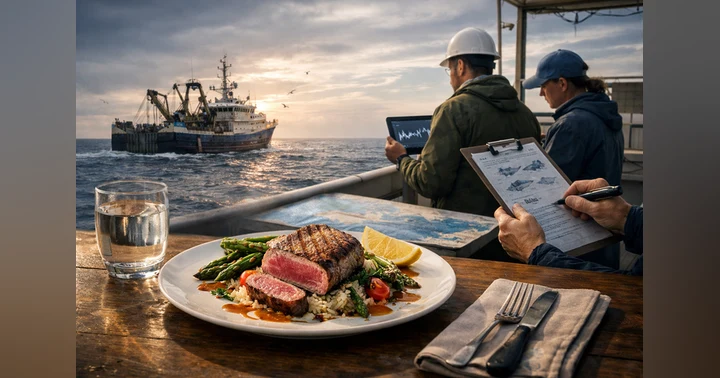
Most people assume fisheries are either working or failing, but very few people know how the system actually works. In this episode, I break down the hidden process behind fishing limits, stock assessments, political negotiations, and the science that shapes what ends up on your plate.
You will learn why fisheries management can go wrong, what happens when countries ignore the science, and how better systems like harvest rules and stronger accountability can help fisheries recover. This episode also sets up tomorrow’s interview with Susan Jackson from ISSF, where we will reveal just how far tuna fisheries have come.
Follow How to Protect the Ocean for more weekday ocean stories that connect science, policy, and real-world action.
Support Independent Podcasts: https://www.speakupforblue.com/patreon
Help fund a new seagrass podcast: https://www.speakupforblue.com/seagrass
Connect with Speak Up For Blue
Website: https://bit.ly/3fOF3Wf
Instagram: https://bit.ly/3rIaJSG
TikTok: https://www.tiktok.com/@speakupforblue
Twitter: https://bit.ly/3rHZxpc
YouTube: www.speakupforblue.com/youtube
0:00 Most people think fisheries management is broken. Too political, too slow, too disconnected from science. And honestly, a lot of the time, they're right, it's true. But what if I told you there's one global fishery where things have actually started to turn around? Not perfectly, but measurably. And tomorrow I'm bringing on a guest who's gonna walk through just how big of the shift really is. But today, we need to understand the system first. Because if you see how fisheries management actually operates, you'll understand why the result matters so much. This is the How to Protect the Ocean podcast. Your weekday ocean news and insight podcast, where we connect the dots between science, policy and real world action.
0:42 So if you want to understand how ocean management is done, how it really works, and not just the headlines, you want to follow this podcast on your favorite podcast app so you don't miss tomorrow's episode. At its core, fisheries management answers one question. How much can we fish without collapsing the population? You think that's a pretty big idea, and it's a very, a lot of pressure on that because we haven't really been doing a great job with many of the fisheries in the past. But to figure that out, scientists use stock assessments. These models estimate how the fish are, how many fish are in the ocean, how fast they reproduce, how much pressure they can handle. From there, they determine where a stock is, if it's healthy, being overfished, or even at risk of being overfished.
1:25 Now, here's where it gets complicated. Tuna, they don't stay in one place. So instead of managing a local fishery, you're managing a shared global resource. Multiple countries, one population. That's where things start to break down. One of the things that I always talked about in my master's with my professor and my supervisor, he was always saying, "Hey, you know what? There are certain fisheries that we can manage within like a national boundary, an exclusive economic zone. And those fisheries are a little easier to manage because just one country, one population, maybe a couple of fisheries, different stock assessments and so forth. But the one country had the ability to enact its own rules on it. Now, some of those rules are great for different countries, and some of them are not so great for other countries.
2:09 But they are able to manage it and makes it a little bit easier. When a fishery population goes over those borders outside the exclusive economic zone, like squid fishery, or they go all over the place or go into another country's exclusive economic zone, then you start to have to work in collaboration with other countries, other nations. Hopefully you're friendly with those nations. And when it goes to the high seas, it's even more difficult because there's really, other than the high seas treated, which is just enacted on January 17th of this year, 2026, there's really no process in place to protect those fisheries once it goes into the high seas. So it gets a little difficult and it gets a little complicated and starts to break down when we get to those positions and those processes.
2:53 Now, here's the uncomfortable truth. The science has been there for decades. I've been saying that all week. The problem was never knowing what to do, how to act. The problem was actually doing the work and implementing the science, the guidance into the system. In global fisheries like tuna, decisions are made by international groups. Dozens of countries sit around the table. Scientists give advice, but countries negotiate and those negotiations often push limits higher than what the science recommends. Sometimes they don't agree at all. There are even cases where meetings happened over and over again and no decision was actually made, even when stocks were clearly in trouble.
3:36 So the science says the stocks were in trouble. If they go over a certain amount of quota, then, you know, the stocks will be even more trouble, but then nobody really cared because they couldn't agree to an actual number, even though the number was there to be like, hey, if we fish at, say, 30,000 tons, then we can actually make sure that we do not overfish the population. I'm picking 30,000 tons out of the air. I don't know what the tons in here would be. However, it is very, it is very important. So the system wasn't being broken because of the lack of knowledge or the lack of data. It was broken because of how the decisions were actually made. And we've seen this time and time again. Yesterday's episode of you haven't been able to listen to it. You know, I talked about the cod fishery and how that was broken.
4:18 That system was broken. The science said, hey, we're seeing a collapse. We're trying to see a decline and maybe even collapse coming for the cod fishery. Paul Disson is like, yeah, we're going to still negotiate above the quota level that that will make it sustainable. And then what happens? The collapse of the fisheries shifted the economics for the province of Newfoundland and other places. And it's just it hasn't really recovered. It just really hasn't. So that makes it very difficult. So what started to shift that made things change? It really was alignment groups like International Seafood Sustainability Foundation brought together scientists, industry and NGOs. And instead of competing voices, they created one unified push. Follow the frickin science.
4:59 Right. Seems pretty easy. But believe you me, it is actually more complicated than you than you think because people don't want to listen to the data. The one thing about science is you may not like the results, but it's still the result and you have to follow the science or else you are going to get a worse result the next year or the decade later whenever you decide to sample or if you continue to sample and still not listen to the science. But more importantly, the groups backed up the follow the science action. Companies shared catch data. Retailers demanded sustainable sourcing. The fisheries started pushing for better management. This wasn't about necessarily being louder. It was about being consistent and credible.
5:40 And when pressure comes from every part of the system, not just one, governments have to start to respond. And they do. And they did. Then came the biggest shift. Harvest strategies, which we talked about yesterday. If you don't know about harvest strategies, listen to the episode yesterday. We talked a lot about it. Before this, fisheries were managed pretty reactively. Every year meant new negotiations, new debates, new delays and harvest strategies flipped that right. They came up with a pre agreed rules. If stock declines, we reduce fishing. If it grows, we increase fishing. No debate in the moment. No political delay. Just a system that responds automatically based on science.
6:20 That's pretty powerful because it removes short term decision making and replaces it with long term planning. And at the same time, the market started to change. Right. Certification programs like the Marine Stewardship Council raised the bar to sell into major markets. Fisheries needed healthy stocks, science based management and harvest strategies. They needed those rules. So fisheries had a choice. They could adapt or lose access and they adapted fishing vessels also stepped up adopting bycatch reduction techniques, monitoring systems, voluntary sustainability, maintenance, and so forth. And here's the key. Even one improvement matter.
7:01 So because there when hundreds of vessels each did their own thing, we started to see them doing better. The system changed fast because everybody was doing something. And that's a big thing. Even if it was just one thing, there were multiple measures they could take. But even if they did one thing at the minimum, things changed because there were so many vessels involved. So why does all of this matter in this episode? I've talked about it all week. Why does it all matter? Because it's a very important thing. We don't hear enough about fisheries management can actually work. Not perfectly, not everywhere, but it can work when science is trusted. Data shared incentives are aligned and decisions aren't delayed.
7:42 And tomorrow we're going to look at what happens when all of that comes together because the results might actually surprise you. Now, this isn't a perfect system by any means. There's going to be gaps of monitoring and enforcement, data limitations, observer coverage and climate impacts are all going to have a say in what happens. And the next step is even bigger. Moving towards ecosystem based management. Looking at the entire ecosystem, not just one species. That's where this is heading and it's heading in a good in a good way, in a good direction. If there's one thing to take away from this episode today, it's this. We don't have a knowledge problem in fisheries.
8:25 We have an implementation problem and when implementation improves outcomes improve. It's really not that difficult from a process standpoint. And tomorrow we're going to look at exactly how far that improvement has gone with tuna fisheries and what it means for the future of ocean conservation. I want to thank you for listening to this episode of the how to protect the ocean podcast. Make sure that you follow the show so you don't miss tomorrow's episode. It's a really important episode where we both have a lot of fun. And if you know someone who thinks fisheries management never works, share this episode with them because the ocean needs more people who understand what is actually possible.
9:05 I want to thank you for joining me on today's episode of the how to protect the ocean podcast. I'm your host, Andrew. Have a great day. We'll talk to you tomorrow and happy conservation.