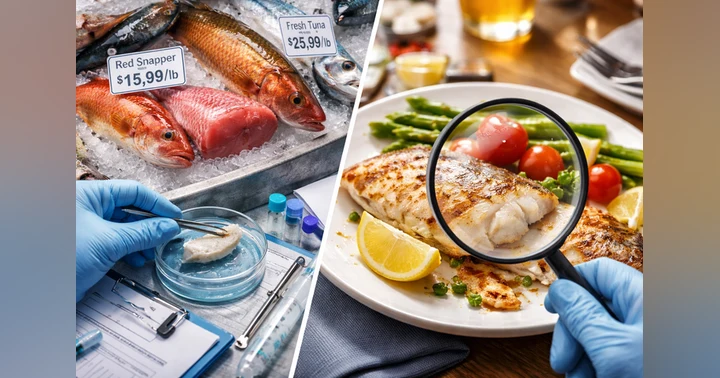
The Fish on Your Plate Might Not Be What the Label Says


 Apple Podcasts

 Spotify

 YouTube

 Amazon Music

 PocketCasts

 Overcast
What if the fish on your plate isn’t the fish you think it is?
Scientists around the world have been testing seafood from grocery stores, markets, and restaurants using DNA. The results are often surprising. Studies have found that anywhere from 10 percent to more than 30 percent of seafood products are mislabeled. In some cases, cheaper fish are sold as expensive species. In other cases, endangered fish or illegally caught seafood can enter the market under completely different names.
Seafood mislabeling is not just a consumer problem. It can hide illegal fishing, undermine sustainable fisheries, and make it harder for regulators to protect ocean ecosystems. In this episode, we break down how common seafood fraud really is and why it matters for the future of ocean conservation.
Follow How to Protect the Ocean for weekday ocean science updates.
Support Independent Podcasts: https://www.speakupforblue.com/patreon
Help fund a new seagrass podcast: https://www.speakupforblue.com/seagrass
Connect with Speak Up For Blue
Website: https://bit.ly/3fOF3Wf
Instagram: https://bit.ly/3rIaJSG
TikTok: https://www.tiktok.com/@speakupforblue
Twitter: https://bit.ly/3rHZxpc
YouTube: www.speakupforblue.com/youtube
0:00 Scientists sometimes run a simple test. They go into the grocery stores or fish markets, or even restaurants. They buy seafood just like you would when you're at these places and they bring those samples back to the lab and they test the DNA. What they find. It's often surprising. The fish on the label is not always the fish in the package. In some cases a substitution is harmless, but in other cases it hides illegal fishing, endangered species or seafood that was caught in poorly regulated fisheries. And researchers have discovered that this problem is more common than you realize. This is the How to Protect the Ocean Podcast, your weekday Ocean news update. And today we're gonna be talking about seafood fraud, how rampant it is and what we can do about it.
0:44 But if you wanna stay informed about this type of Ocean news updates, please hit that follow button so you don't miss tomorrow's story. The key question today, how common is seafood mislabeling? And it could be seafood fraud. Over the last 15 years, scientists around the world have used DNA barcoding to test seafood products. DNA Barcoding allows researchers to identify species by sequencing a small genetic marker and comparing it to global reference database. So basically they take the filet or whatever they buy, they do a genetic test. They take a sample, they run it through like a genetic test, And then all of a sudden they look at that gene sequence and they say, okay. Let's run it through the database doesn't match this other species DNA sequence.
1:24 And if it does, which species is it? And then they can identify which species, where it is found around the world. 'cause the same species, if they're found in different parts of the world, might have different genetic markers. We could talk about that another time 'cause that's kind of a cool thing. But they'll compare it to those databases. And when researchers compare the DNA results to the label on the package or the menu, they often find mismatches, which is a little surprising. Multiple studies have documented this problem. So in 2013, a global meta-analysis published in the journal of PLOS One found that approximately one in three seafood products, that's 33% worldwide, were mislabeled. Now, whether they're done on purpose or not, we don't really know. There's a lot of stuff that can go to which we'll dive into.
2:05 But other regional studies have shown a similar pattern. For example, a 2013 study, you know, by Oceana in the United States, tested more than 1200 seafood samples from 21 states and found that 33% were mislabeled. In Canada as a 2019 investigation by the University of Guelph, my alma mater, and Ocean Canada, which is right down the road from me in all relative, of course, found that 44% of seafood samples from grocery stores and restaurants were mislabeled. European studies have also documented substitution. A 2018 review published in food control reported mislabeling rates across Europe, ranging from 10 to more than 30%, depending on the species and the country.
2:46 So some examples of that seafood substitution, researchers have identified many specific substitution patterns. Most of the common ones include red snapper substitution. Red snapper is one of the most frequently mislabeled fish in North America. Many studies have found that products labeled as red snapper are actually tilapia, like freshwater fish, rockfish, lane snapper, and vermilion snapper. In some studies, less than 10% of tested samples labeled red snapper were the real species. So less than 10% were actually the species. There's also the case of escolar is sometimes sold as white tuna in restaurants. Escolar contains high levels of indigestible wax esters.
3:26 And eating large portions of the fish can cause digestive problems known as chiari, sometimes called oily diarrhea. Doesn't sound like a fun time. Because of these health concerns, Japan and Italy restrict the sale of Escolar, yet it still appears in markets disguised as tuna in some country. That's pretty scary when not only do you not know what the fish is, it could be something that could give you problems. Now you have sometimes farm fish labeled as wild. DNA testing cannot always distinguish farm versus wild fish directly. But investigators have found cases where farmed Atlantic salmon was sold as wild Pacific salmon, which is crazy to think. They're very different colors.
4:07 People here in Canada hate farmed Atlantic salmon and if they want something like Wild Pacific salmon and they figure out that they get Atlantic salmon, not great. So particularly in restaurants where supply chains are hard to track, you get this problem. Wild salmon commands a higher price, creating incentives for mislabeling. So if you mislabel Pacific salmon, but it's, really atlantic salmon, you can charge a higher price and make more money off it. So obviously some corruption there. It attacks the consumer, which it makes for people not wanting to buy seafood, especially if they don't know what they're buying. So it has a stain on the retailer or the supermarket or the fish market or the seafood market that's selling it. It just kind of taints the whole idea of trying to buy salmon in general or any kind of fish where you know this kind of happens.
4:50 So sometimes you get endangered species sold as a generic names. So some studies have found threatened shark species sold under vague labels like flake, rock salmon or just simply fish. That's the label. It's just fish. Talk about not enough information. Just fish. DNA testing in Europe revealed that products labeled a rock salmon were sometimes actually spiny dogfish or endangered shark species. If you think about again, it causes mistrust in the seafood industry in general. Whether people are trying to do it on purpose or not, it just causes mistrust. And to be honest. I know at one point there were people that were trying to design like in hand DNA sequencers, so they can go around and they can sequence the DNA of some of these fish so that they know if they truly are that type of fish.
5:31 But I feel like supermarkets or seafood markets should have these DNA testers if they're still in existence. I don't know if they actually work well. But they should have that so they can show the transparency that yes, this fish is exactly what you are buying. So seafood supply chains are pretty long and complex from wherever the seafood's fished or taken out of the Ocean all the way to the retailer, that could be a global trip. And so sometimes it can get lost in translation. Fish may pass through multiple hands before reaching consumers, which we talked about in yesterday's episode, where Carolinian fishers were fishing and then the shrimp or whatever they caught would go towards into the supply chain and they would never find out where they sold it. It would just go into these, like secret supply chains where nobody would know where they were going.
6:13 So a typical chain can include the fishing vessels, the landing sites where the fishing vessels come in, export companies, processing plants, importers, distributors, wholesalers and restaurants or grocery stores. That's a lot. That's like eight different places where they can change hands. And that's just the different types. It doesn't mean that there might be more than one export company or more than one import company, depending on where the fish is going. Substitution can occur at many points in this change. So substitution of fish or the mislabeling, a fish on purpose, which would be fraudulent. Filets often look very similar once the skin and bones are removed. To most people, it's sometimes it's accidental, but sometimes it's on purpose. I remember being in a restaurant with my professors and it was a seafood restaurant and they brought a fish, I forget what the name of the fish.
6:57 They brought a fish. And the professors were like, they're ichthyologist, like they are fish biologist. And they looked at, it's like, this is not what I ordered. And the waiter was like, what do you mean? He's like, well, I ordered haddock, but this is not haddock. And they're just like, well, no, this is haddock. It's like, no, see the bone structure and everything, they knew from the bone structure, but not many people are that good at understanding what a filet looks like for what species of fish. So that could be a difficult thing to look for. That could be a difficult thing to identify when you're just trying to eat and you're not trying to think about, Hey, I'm gonna this place. I wanna know if it's actually real, the fish that I order, or is it something different that could actually harm my body, or I'd be eating an endangered species. That's not why I'm eating the seafood. I want to eat sustainable seafood, but sometimes you just can't do it.
7:39 In many cases researchers believe the substitution is economically motivated. So they replace a high value fish with a cheaper species that can significantly increase profits. For example, substituting tilapia for red snapper can multiply the margins, the profit margins several times. Why does this matter to you? That's the big question. Why does this matter to you? Seafood mislabeling is not just a consumer protection issue. It can also hide major environmental and governments problems. Mislabeling can conceal illegal fishing, illegal, unreported, and unregulated fishing accounts for an estimated 20% of global Marine catch according to the Food and Agriculture Association and FAO. If illegally caught fish enters markets under false labels, enforcement becomes extremely, extremely difficult unless, like I said, you have one of those portable DNA samplers.
8:26 Then it also has observed overfished species problem, when an endangered or heavily exploited species are mislabeled, as more sustainable ones, consumers cannot make informed decisions. This undermines sustainability certifications and responsible seafood program. So something like MSC, the Marine Stewardship Council often gets criticism for certifying specific supply chains for fish. But people know that these supply chains have been found to be fraudulent in times. And unfortunately, it kind of tarnishes the reputation of MSC, which is trying to do its best. It's trying to do its due diligence. This is a complex situation. It's hard to get all the data and you have to admit when that certification may not have been the best and you may have to go back on it. Sometimes it doesn't happen.
9:07 I don't know why. I don't wanna talk ill of some of these certification programs, but some people really, really dislike it and others are like, well, they do their best with what they have. So if most of their 400 supply chains that are certified are good, then we're probably okay. But what if we're eating some that are not certified well? And so that could be a problem. Of course, when you're talking about fishing and overfishing, you're talking about human rights abuses. Some fisheries are linked to forced labor and poor working conditions also have been associated with seafood fraud because like if they're gonna treat humans like that, they don't care about the consumer. Traceability gaps allow products from these fisheries to enter the global market. So when, a lot of times just to explain what fishery slaves are, essentially what happens is, people from different countries, but a lot of 'em are from like Malaysia, the Philippines and other island countries who may not known to be the richest countries, and a lot of people are part of the fishing community.
9:59 They will go on these boats with a promise of money and good care for their families and so forth. And they will go on these boats for like months at a time, sometimes years at a time, and they won't come back to shore. So these boats will go out and fish as much as possible, probably doing illegal, unregulated, and unreported fishing, IUU fishing. They go out for a long time and then they never come back. So if you're sick, you don't eat properly, you don't get treated properly. You're working really long hours and people get sick. And there have been cases where it's been documented where people are just being thrown overboard because they're too weak to do anything. Or they don't come home. A lot of times they can't see their families, they can't bring the money home. A lot of times, they'll remove their passports and their traveling papers just so they can't get off the ships when they go into port to bring in their fish. And a lot of times, they're exchanging the fish to these large ships that are on the Ocean, that are basically just warehouses.
10:45 They just dump all their catch into there, they log it, and then they go back home. That those ships just travel back home. So basically like shipping containers. That's what we look at when we are looking at fisheries around the world like this is you get human rights abuses. And so when you have those human rights abuses, you also don't have good traceability. So the seafood could be fraudulent, probably most likely. And so that could be a difficult thing. That seafood mislabeling, that seafood fraud in a nutshell, tomorrow we look at why seafood traceability is so difficult in the first place, you'd think it'd be like an easy thing to solve, but it's not. And why tracking a fish from the Ocean to plate remains one of the biggest challenges in global seafood governance.
11:25 If you like this type of episode where you get weekday updates on the Ocean news, hit that follow button so you don't miss tomorrow's episode. We're gonna talk about why seafood traceability is so difficult in the first place. But I also want you to share this with a friend who's interested in seafood, wants to make the right choices and has some, you know, some ethics and has some integrity. If you have friends like that, send this over to them and help them be educated on what they can do when it comes to choosing seafood. I wanna thank you for joining me on today's episode of the How to Protect the Ocean Podcast. I'm your host, Andrew Lewin. Have a great day. We'll talk to you next time and happy conservation.