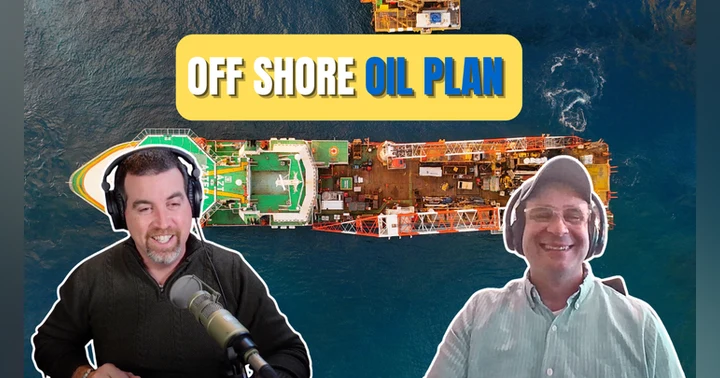
Coastal Economy and Tourism Are Being Put at Risk by Offshore Oil Drilling


 Apple Podcasts

 Spotify

 YouTube

 Amazon Music

 PocketCasts

 Overcast
Coastal Economy and Tourism face a serious threat as the US government moves forward with a plan to open more than one billion acres of ocean to offshore oil and gas drilling, a decision that could impact beaches, fisheries, tourism jobs, and coastal communities for decades. This episode explains why this proposal matters now and how it could reshape life along the coasts of California, Alaska, and the Gulf of Mexico.
Offshore oil drilling is often framed as an economic benefit, but this conversation reveals a very different reality. Pete Stauffer from the Surfrider Foundation breaks down how tourism, recreation, and fishing support millions more jobs than oil and gas, and why a single spill can shut down beaches, fisheries, and local businesses for months or even years.
Ocean conservation becomes deeply personal in this episode when Pete shares how communities still feel the impacts of oil spills years later, including business owners who lost income, beaches closed for days, and volunteers stepping up to document pollution when official systems failed. The surprising truth is that offshore drilling is widely unpopular across political lines, and grassroots action has stopped similar plans before.
Help fund a new seagrass podcast: https://www.speakupforblue.com/seagrass
Connect with Speak Up For Blue
Website: https://bit.ly/3fOF3Wf
Instagram: https://bit.ly/3rIaJSG
TikTok: https://www.tiktok.com/@speakupforblue
Twitter: https://bit.ly/3rHZxpc
YouTube: www.speakupforblue.com/youtube
0:00 The US government wants to open more than 1 billion acres of ocean to offshore oil drilling. That decision can threaten beaches, fisheries, tourism, jobs, and coastal communities across California, Alaska, and the Gulf of Mexico. In this episode, surf Riders Pizza offer explains why this plant is so dangerous, who really benefits. And how everyday people can still stop it. We're gonna talk about that on today's episode of the How to Protect the Ocean Podcast. Let's start the show. Hey everybody. Welcome back to another exciting episode of the How to Protect the Ocean Podcast. I'm your host, and/or Lewin, Marine biologist and science communicator here to tell you what's happening with the ocean, how you can speak up for the ocean, and what you can do to live for a better ocean by taking action.
0:45 On today's episode, we're gonna focus on a major federal Prosple that could reshape. America's coastlines For decades, the Trump administration has released a new offshore oil and gas drilling plan that would expand leases across vast areas of the US Ocean, including regions that were previously protected. How are they doing this? I have no idea. Is it right? I have no idea. We're gonna find out today to help us understand what is at stake. I'm joined by Peter Stoffer, national Ocean Protection Manager at the Surf Rider Foundation. Surf Rider is a grassroots organization with chapters and volunteers across the US and beyond. And for over 40 years, they have been protecting oceans, waves, and beaches from threats Just like this one, Pete works directly on offshore drilling policy and has spent more than 20 years inside surf riders.
1:35 Starting as a volunteer and rising through the organization. In this conversation, we talk about why offshore drilling is an existential threat, how it affects coastal economies and communities, and why this issue is not partisan, and what listeners can do right now to speak up and. Protect the ocean. They depend on. This is going to be a great interview. I can't wait for you to listen. So here's the interview with Peter Stocker from the Surf Rider Foundation. Enjoy the interview and I'll talk to you after. Hey Pete, welcome to the How to Protect the Ocean Podcast. Are you ready to talk about this new oil and gas plan in the us this drilling plan, as well as surf rider's position on it? I am ready. Thanks so much for having me, and/or.
2:16 You bet. I'm super excited for this because, you know, we've, we've had on at this point we've, we've, I've recorded and I've posted Oceania's recording with this interview about this plan. I'm doing the same thing with you 'cause I wanted to get surf writer's perspective, uh, you know, on this. 'cause it's, it's good to get everybody's perspective and I know. Surf Rider Oceania have worked together before. We're gonna have other, uh, people on as well to talk more about this plan. Um, but I want to get everybody's perspective. 'cause Surf Rider has this unique positioning within sort of the, the ocean conservation world in that it's a grassroots. Um, you know, a grassroots organization has a lot of people on the ground of all over the us, even in Canada and other places, and you guys have been able to accomplish so much, so much with the staff as well as the army of people that you have to, you know, speak up and speak out against stuff that's happening, not only to prevent.
3:08 You know, beautiful surfing spots from being ruined, but also just to protect this lovely ocean that we have. So, really appreciate you coming on the podcast to give Surf Riders position on this oil and gas plan. I think it's very important to hear everybody's perspective and what they can do, Um, So before we get into all that though, Pete, why don't you just let us know who you are and what you do. Yeah, thanks, and/or. Uh, my name is Pete Stoffer. I'm the National Ocean Protection Manager for Surf Rider Foundation. So I lead Surf Riders national campaigns to protect the ocean. So right now, uh, a huge amount of effort focused on stopping new offshore drilling. That's, that's great.
3:49 There's been a lot of stuff, um, I, I, you know, we're gonna focus on this, this offshore drilling plan, but there's been a lot of stuff that, uh, we are speaking up against and speaking out against. Right. There's deep sea mining, there's oil and gas, there's like the EPA problems that are going in just. You know, no funding being cut and a lot of people being, uh, thinking how, how is everybody at Surf, surf Rider? It's a lot of work. You know, you're working in over overdrive. How is everybody doing there? Yeah, well, you're right. It has been a really challenging time under the current federal administration, but, uh, surf Rider's great. You know, we're a volunteer based organization and we are so lucky to have incredible chapters, credible student clubs, and a lot of what Surf Rider does is programs, uh, beach cleanups, water testing.
4:38 Uh, we work on, on local projects. You know, everything from, you know, protecting and restoring our beaches to making sure there's good public access. So, yeah. Uh, I, I think that's kind of the magic and the stoke mm-hmm. That bring people, uh, to surf Rider. I've been with Surf Rider for over 20 years and Wow. I started as a volunteer that I became a chapter leader than, uh, a regional manager, And so. Um, sort of the classic example of someone who's kind of worked their way up. But I, that's what I've always loved about the organization is, is just that grassroots muscle. And when we do have these federal threats, that's the real power of being able to unite our chapter network and our clubs across the country.
5:25 You know, working with partners like Oceana and many others. Uh, to try and stop bad things from happening to our ocean. I, I, I completely agree. You've been with Surf for 20 over 20 years, which is amazing. Uh. In that time, there have been some ups and downs, as you mentioned. There's a, there's federal threats right now. You've had federal threats before, probably had state threats and all, you know, across like things are so dynamic across the US it's so different culture and everything like that that goes, that goes on, uh, you know, whoever's the governor at the time or whatever the states are doing at the time, even from a municipal level. What has helped you like through like what parts?
6:06 Like you've, you've seem like you've done a lot of different parts within, within Surf Rider. What do you find like people really clinging to during these tougher times that are volunteering or working within the sort of the, the surf rider umbrella? 'cause like. In my, like, just to the assumption here is people like the hands-on stuff they're doing, like the beach cleanups or you know, something, you know, that's, that's more hands-on that you do. Um, is that what helps or are there other things that help as well? Yeah, I think, you know, at Surf Rider it is very much about place and you know, when I was younger I moved around a bit and it was always so fun to be able to move to a new place.
6:52 Go to a surf writer chapter meeting and just knowing that you would meet great people and mm-hmm. You could have a way, not just to get involved with conservation work, but to actually be part of a community. So Yeah. Yeah. I think that's, that's a big part of the appeal of, of wanting to work on something that feels a little more tangible. Mm-hmm. Um, but I think the other thing is, is being part of something that's bigger. You know, this national network, the international affiliates. Because with issues, you know, facing our ocean and our environment, it can get really depressing. And so, yeah, as one person, you can think, well, what difference can I make? But if you're plugging into, uh, a national campaign or you're getting your, your hand sandy, you know, restoring a beach, uh, it all kind of, you know, adds to that feeling of yeah, you're really doing something and it matters.
7:46 And when people come on, I know there's like an onboarding process when people come on as a volunteer. You guys provide videos, you know, online videos and, and things like that. And there's, everybody does their own thing within their chapters to help people, uh, you know, stay up top, stay at top of, of the issues. And then what? You can do for people who are listening to this, who want to do something, especially during a time like this where they're seeing a lot of federal cuts and, and, and a lot of proposals for drilling and for deep sea mining and stuff, what do you recommend, especially with your experience, what do you recommend they do, uh, you know, to help speak up and help, you know, speak out against these things?
8:26 Yeah, I mean a, a few things. One, of course, getting involved in, whether it's Surf rider or another organization, uh, because they can help you make a difference Yeah. On the things that you, you care about. Mm-hmm. Uh, and the other thing is just communicating with your elected officials. And it's so important, whether it's city council Yeah. State legislator, uh, your representatives in Congress. We live in a democracy and it's their job to listen to their constituents. So. Um, that is so important too. And that can come in the form of like emails, phone calls, tweets or exes or whatever you call them now or Yeah. Any way of communicating 'em so you can send them, you know, uh, information based informa, like information that you want, like, you know, evidence-based information is what I meant to say, like to, to, and, And then what I always tell people too, and I'm sure this goes a long way with surf fryers.
9:18 Is the stories. Tell the stories of why you love that specific place. If you're a surfer, why have you been surfing there for 30 years or for 10 years, or for 15 years, or, or if you're a fisher, why you've been fishing this. 'cause I think it's important to tell those stories 'cause we connect over those stories. Is that something that Surf Rider encourages? Oh e exactly. And especially with elected officials, we love to invite them to our beach cleanups, nice to water testing events. Um, nice. You know, to show them that, that the places, not just the environment and the wildlife, but show 'em, you know, how businesses and their constituents, you know, really depend on a clean, coastal environment. So, absolutely. Uh, and we're nonpartisan.
9:59 We believe that. You know, it shouldn't be some sort of, uh, political stance one way or the other to wanna protect our public resources Um, So, you know, that's our goal is, is to build that broad support and do it from the bottom up. Absolutely. And everybody should love the ocean, right? I know. And everybody loves the ocean, but we all should, you know, love the ocean. Doesn't matter on political spectrum, cultural, professional, wherever you're from the world, we all need, we all need the ocean. So we, we should all, you know, protect as much as possible. Obviously that's how you and I feel, don't wanna speak for you, but I'm sure that's how you feel as well. Yep. And so I, yeah, that's the way I see it. Um, this is great. No, I, I, you know, before we get into the, the, the offshore plan, I have one more question 'cause I know, uh, a lot of people will be kicking me and screaming and being like, and/or, you gotta ask.
10:47 How people can work for sea, like for, for surf rider, you know, like based on your experience, you know, I know you, you talked about how, but how did you, like what was your background when you first volunteered, uh, with the organization and did the organization inspire you to do more schooling or how did that all, how did that all work out? Yeah, no, great question. I get it all the time too. Uh, I mean, I began as a volunteer with Surf Riders, so that's certainly one way to, you know, gain relevant experience and show your interest in Yeah, in, you know, being part of the organization. Uh, in my case, you know, I work for the environmental department within Surf Rider, so I have a, a science and a policy background.
11:32 Mm-hmm. So, before actually getting hired by Surf Rider, I was working for Noah, which is the lead federal agency Oh, interesting. For managing the oceans. So I think from their standpoint, you know, they probably saw my grassroots and volunteer background, but also the, the academic background and, and professional experience. You know, working within Ocean Management. So I, I think that was a helpful background. But, you know, we have, um, you know, people who work in our marketing team, communications, um, you know, doing grassroots training and, and things like that, so, mm-hmm. It really depends on the type of position that you'd be seeking.
12:13 I love it. Perfect. Thank you so much for that. Let's get into this offshore, uh, oil and gas drilling plan. Um, can you just tell us, like, give us an overview of what that plan entails, where it, it plans to do leases And so forth? Sure. Yeah. So three weeks ago, the Trump administration released their offshore drilling federal Prosple. So this is something the federal government does every five years. They create a new offshore drilling plan, uh, in this case, uh, they're doing it sooner than that because they didn't like the Biden plan. Uh, but this, the, the Trump administration plan, it's really alarming, uh, proposes over 1.2 billion acres of ocean for oil and gas development.
12:59 And that includes, uh, multiple regions throughout the country, right? So the entire California coast. Uh, most of the Gulf of Mexico, uh, including the central and Western Gulf, but also, uh, a large portion of the Eastern Gulf off Florida that was previously protected. Uh, And then the Alaska and Arctic waters, hundreds of millions of acres, uh, of waters, pretty much around the entire state of Alaska, including the high Arctic, which is incredibly sensitive, so massive, unprecedented Prosple. Uh, no public meetings on this, but there is a public comment period that's open until January 23rd.
13:41 So we're doing everything that we can to get the word out and, uh, to get people to get their comments on the record. Amazing. I mean, this is something that's, as you said, is quite alarming. How did it differ from the offshore plan for the Biden administration? Obvi there Was there obviously an increase, but by how much, like what was the the Biden plan doing compared to what this Trump administration plans to do? Yeah, so the Biden plan that was finalized, uh, just a couple years ago, it, uh, limits new leasing to just the central and Western Gulf. Okay. Um, So it still is a significant amount of new offshore drilling, uh, but compared to what the Trump administration is looking to do, uh, you know, a really a, a, a fraction of the impact.
14:33 The other thing is before President Biden left office. He used his authority, uh, under the executive powers of the president to permanently protect the Atlantic Coast, the Pacific Coast, and the Eastern Gulf from New Drilling. And so those protections should still be in place. But when President Trump came in the office, uh, he issued, uh, an executive order and essentially announced that he was revoking those protections. Even though there's nothing under federal law that says he can do that. Right. But, but that's, that's my next question. Yeah. So there have been multiple, uh, lawsuits filed. So this will continue to play out within the courts.
15:16 But, um, you know, for all intents and purposes, uh, those protections are not there right now because they have been revoked. We have a federal agency that's proposing huge amounts of drilling in many of those areas. Right. So when, when Biden put in those protections, because I remember Obama did that as well up in the North slope, right? In, in Alaska. Yeah. He put in these protections. He did. And I remember him doing it. I remember it saying that he did it through Congress to protect it so that it was, it it, you couldn't use an executive order to take it away. Is that, like for this one did, did the Biden administration, like, did President Biden use an executive order to protect these areas that you mentioned?
16:01 The Eastern Gulf. The Atlantic, I believe it was the California coast, uh, to, for those protections. And that's why that, you know, Trump thinks that he can use an executive order to, to take those away. Or was it more solidified than that? Yeah. You know what President Biden did? He used his authority under federal law, so it was more than just an executive order. Okay. So there's a federal law called the, uh, outer Outer Continental Shelf Lands Act. Right? Basically provides the framework for how the federal government determines where and if new offshore drilling will occur. Yeah. There's a section, uh, under that law that says, and it's very succinct language, but it says.
16:46 Uh, essentially that the president can withdraw, uh, temporarily or permanently certain, uh, areas of the outer continental shelf from future oil and gas leasing. That's all it says. It doesn't say anything else about a future president being able to reverse those protections, but essentially the, the argument that's being debated in the courts. For all the non-lawyers, and I'm not a lawyer either, but it's this debate of, well, did the law really intend for this to be used at that scale? Which, um, from our standpoint is sort of an arbitrary, you know, the, the determination, you know, of course we're going off what, what the language of the law says.
17:33 Yeah. Um, and, and it's also probably worth noting that. Offshore drilling is broadly unpopular across the United States. This is particularly true on the Atlantic Coast, the Pacific Coast, the Eastern Gulf. You know, we'll get to this in a second, but we're seeing this play out in real time in terms of the Trump administration's Prosple, but Um, So yeah, in, in, in short, uh, the Trump administration revoked those protections that were. Highly popular and we're advocated for by communities for decades. And now his administration is looking to expand over a billion acres of ocean for new offshore drilling.
18:17 Interesting. And of course, we know that this is not just about energy because he's canceled a lot of the ongoing activities and proposals for renewable energy. On offshore, uh, like on the Atlantic Coast. I don't know if there's anything else on the Pacific, but I know he's canceled a lot of that stuff that was going on because he just didn't think it was right. He didn't like, he doesn't like windmills. We all know he doesn't like windmills and the administration doesn't like, so it's not an energy thing because we know that if they had continued with this official plant and renewables, at least they could have a case that we're trying. They're trying to increase energy. This is more about oil and gas drilling.
18:59 'cause they think that's the way forward. They think that's the, the future of this administration. So I find that really interesting when, you know, you cancel, it's not just about energy. So you're not, you're taking away other alternative energy, which could become mainstream energy the way it was being built up. Uh, and a lot of, you know, a lot of regulations were going into place for that. Uh, as part of the, I believe it was the, in the, um, was it the inflations act under Biden that these projects were going. Yeah, sure. The, the Inflation Reduction Act. Yeah. Reduction act. Yeah. Yeah. Yeah. Yeah. And, and also the bipartisan infrastructure laws. So between those two federal laws, a huge federal investment in, um, solar and wind and energy efficiency.
19:42 And yeah, it's been just a shame to see the current administration in Congress. Try and reverse, uh, all those things. Um, right. But, but to what you were saying, uh, you know, one, we're turning our back on renewable energy, which is not a finite resource and doesn't contribute to climate change. Uh, but the US is already energy independent. I mean, we're at record levels of. Oil and gas production. We've been a net oil exporter for the last five years. Uh, so yeah, none of this really is needed. And it's basically just revealing, uh, a bias towards more and more, um, oil and gas leasing at the expense of our public lands and waters.
20:28 Yeah, a hundred percent. I, I think that's, that's a really good point to make now. Uh. Surf rider calls offshore drilling an extent. Ex existential threat. Yep. What does that mean in practical terms to you guys? Yeah, I mean, almost any way that you look at it and, and you know, you think about the beaches and our coastlines and our communities. And how woven that is, right? Whether it's quality of life or environmental health, or our coastal economies. Uh, offshore drilling threatens all those things. It threatens wildlife. Uh, it threatens, uh, you know, the, the conditions of our Marine ecosystems.
21:14 Uh, it threatens public health with terrible air pollution. Um, and it contributes to climate change, which, you know, we're already losing our beaches. We're already, um, you know, seeing the impacts around the globe with just unbelievable, you know, heat and drought and extreme weather. It's putting billions of people, uh, in harm's way. So for all these different things and, and whatever timescale you're, you're looking at it, it really is, you know, like we said, uh, an existential threat. Yeah, absolutely. And, and I think what's interesting too is I think when a lot of us think about. Offshore drilling, we think of these oil platforms, right?
21:57 These oil and gas platforms you see a lot in the Gulf of Mexico. I used to work in the Gulf of Mexico for like eight months and I used to see there, there's like a city of platforms that you see in the Eastern Gulf of Mexico. Uh, yeah. And then you see them on the, uh, a little bit on the west coast, definitely up in, in Alaska when the drilling was happening, uh, in quite a, a bit of abundance back then. But when you see them, you don't see the risk that they take. You see sometimes the fire burning and you see the smoke billowing from the sort of the, the, the, the working that, that like a working platform. But you don't, when people think about that, I don't think a lot of people think about the risk that could happen to those coastal communities, whether they can see it from the coast or whether they can't.
22:39 We really don't under, I don't think we really understand as people, even myself, when I look at that, it's the first thing I think of. I don't think of what, what would happen if an oil spill would happen and it would come up on the shores until we see like these big oil spills that happened. You know? Yeah. Exxon Valdez happened in the eighties, I think it was the eighties. Then of course, BP oil spill happened. I'm sure there was a number of spills between that. Um, And then of course there was the Santa Barbara spill in 2015 And then the one, four years ago just off of Orange County. We don't, why don't we, like, we don't think of those things when we like communities, when we hear about offshore drilling, a lot of times they're out of, out of the sight of eye from the, from the coastline.
23:21 Yeah. But what do you think it is about these offshore drills that pose that threat? 'cause like, really each and every one of them can spill in a number of different ways, in a number of different amounts. Let's just say sometimes you may not see it, sometimes you, you will see it. But like, you know, recently off the California coast. We saw two that really reached, you know, the coastline. Yeah. And, and you know, and they really affected it, really brought it home that these things can leak. What do we not know about the oil and gas industry in terms of leaks other than these, you know, the four major spills that I mentioned here. I'm sure there was some other ones that I missed, but what is it that the public doesn't know about these types of like that, about this happening?
24:04 Does it happen more often than not, than we think? Yeah, I mean, oil spills happen all the time. The smaller ones tend to be under-reported by the industry and not covered by the media. The larger ones can be catastrophic, uh, not just for the environment, but for communities, for businesses. Um, yeah, I I maybe there's a, a recency bias that, that people have. But I can tell you as someone that lives in Orange County, that. People remember the spill. Uh, right. You know, we just had a big people's hearing event, uh, in Costa Mesa, and we had over a hundred people turn up, uh, including local officials who remember the challenges of, of dealing with amplify energy and, you know, their lack of forthrightness, uh, their failure to turn off the spigot, if you will, while oil, you know, continued to flow into the Marine environment.
25:02 Uh, we had a woman who owns a, a charter fishing business and, and whale watching company out of Dana Point. She came and, and spoke out about it, And then emailed me the next day to let me know that she'd submitted her own official letter to, to the federal government. So. Yeah. When you see this stuff happen, uh, it, it's hard to forget. Yeah. Um, you know, the, the Orange County spill that was 25,000 gallons, which is actually on the small end of Yeah. Of what could have been much worse. Mm-hmm. And the, the, the weather conditions could have been worse in terms of bringing the oil to shore. But, you know, we still had our beaches closed for 10 days.
25:42 Mm-hmm. Our fisheries were closed for a few months. Um, you know, horrible impacts to the hotels and businesses, restaurants. Um, you know, the official cleanup, uh, lasted over three months and, you know, great response again by local agencies and, and trained cleanup workers and, and volunteers. But yeah, just, just a real mess. And Yeah, know this is part of doing business for, you know, the oil and gas industry in terms of, of offshore. Well, I think it's, it's interesting how it's like. One industry can affect so many other stakeholders. And what I mean by stakeholders for our audience members is, you know, the fishing community, the tourism community, the whale watching community, the restaurants, you know, the, the, the people who, you know, beach goers.
26:31 And, and I mean like, let's be honest, California Coast probably has a high highest percentage of beach goers. You know, it's known for their beaches, it's known for that activity. Um, it's a very important aspect to, to their. You know, to just life, you know, in, in California, in certain spots in, around the world. And we, that's, I think, some of the things that we don't think about. And for me it was the BP oil spill where I really started to seek, I think I, because I lived in certain, like in, in Louisiana, Southern Louisiana at the time, or, or right before that. Where I started to realize how many people that I met there that it was going to affect. Yeah. And I think that's just something that we don't think as, as citizens, as people like in North America around the world, when we see these oil spills is who it's going to affect, not just right then and there for an hour, for a day, for a couple of weeks, but for months and years down the road, like BPO spill, which was a huge catastrophe, probably one of the worst bills in the US if not the worst.
27:30 It's still affecting people. It, you know, like it's still, and the dispersements that they use is even, you know, we now know it's even worse. It's just they, they're not to clean up the oil, but it's just there to literally disperse the oil so you don't see it, you know, it sinks the oil to the, to the, to the, the, the ocean floor. So I think that's one thing that we just don. Get as a people is that it? When these things happen, they affect the, the, the people local to where it happened for such a long period of time. Even to the point where this spill for that, you're talking about Orange County happened four years ago, having a people's hearing four years after, and people can still remember it. People can still say. What's going on here? Like why we're thinking about doing this again, we're thinking about doing this more, uh, and coming out in droves to speak out, which is, which is fantastic, and I think it's great that Surf Rider has that connection with the people to help them amplify their message.
28:26 When you see people being affected like this. What is what? What is, what role does Surf Rider play, you know, in, because you guys are so community driven, what role do you guys play as an organization in helping people who are being affected by who? Were affected by the, that Orange County Ospel? Like what role did you play? As for, from a surf writer perspective? Roles, I guess I should say. Yeah, I, I mean, it was really interesting because within 12, 18 hours of this bill happening, we got just inundated with hundreds of people saying, I wanna help, I wanna, you know, in some cases donate, which was great.
29:10 But in more cases saying, I wanna do something, I want to be part of the cleanup. And what made it really tricky is that oil is toxic. You know, it's, it's highly. Hazardous to human health. Uh, but what we were able to do was develop a smartphone app to allow volunteers to actually contribute to the cleanup without picking up the oil. And so the way it works is, you know, the response area's basically from Los Angeles all the way down to the San Diego border, which is over, over days and weeks and ultimately months on end. Depending on ocean conditions, you would continually get fresh deposits of tar balls and oil on the beach in different locations.
29:57 And you had, as part of the unified command and the official cleanup, you had these, you know, trained cleanup teams in hazmat suits, picking up the oil. The, the really great thing about having the smartphone app is we had, you know. Hundreds and hundreds of people using the app who are just going to the beach, sort of, you know, either look for oil or maybe just part of their daily routine. Mm-hmm. Because that's their local beach. And when they would spot oil, they take a photograph of the oil, it automatically would upload not just the photo, but the, the date, the time, and the location. So this would go into a crowdsource map to unified command.
30:38 And then they were able to sort of take that information real time and say, okay, let's deploy our team to, um, you know, north of Huntington Beach tomorrow. Mm-hmm. Or, oh, it looks like, you know, we're getting, um, more deposits down by Oceanside. So, um, it was great to, to be able to contribute to the cleanup, but also give people something they could do without putting their health in jeopardy by trying to clean it up with their bare hands. It's genius. A again, it's the power of the people and just putting a, a device in, in the device that everybody has and utilizing it for something that could really help. And like you said, not put them in in harm's way. 'cause it could be very toxic.
31:19 It's, it's a not an easy thing to, to deal with. It's very hazardous. It's like hazardous material essentially. Mm-hmm. Um, I think it's interesting when we, again, talking about oil, how does like these spills. And just oil in general. How does it affect the, sort of the long-term planning of, um, you know, the, the, the beach access and recreation along, you know, for California along the west coast, along the Gulf Coast, um, and even up in Alaska for different reasons. But how does that, how does that affect that planning and, and, and, and for those sort of areas?
32:00 Yeah, I mean, offshore drilling can impact beach access in a variety of ways. One of course would be oil spills, right? Yeah. Where you have, Yeah, your beaches get closed. Get closed, like you mentioned. Yeah. Um, you know, other ways just from the industrialization of the shoreline. And so it's not in every community, but it's in someone's community and you know where you have, uh, pipelines and refineries. Petrochemical facilities and, and air pollution that doesn't lend itself to either public beach use or all the economic and social benefits of that. Uh, And then, you know, we of course have climate change And so mm-hmm.
32:41 Our beaches are getting squeezed right now with rising Seas. And you know, particularly in places like California, you have increasing coastal development pressure. And so the beaches have nowhere, nowhere to go. Um, right. So yeah. Part of that long-term solution is to stop pumping more greenhouse gases into the atmosphere, try and restore our beaches, give them the opportunity to migrate inland if they need, and, and use those nature-based solutions. Yep. And, and I'm speaking of that. With climate change. You look up in Alaska, obviously they're really feeling the effects of climate change, probably more so than many other communities in North America.
33:25 Uh, you know, especially from an indigenous perspective. I know in Canada there feel, you know, the indigenous, uh, um. And nations are feeling it as well. Uh, I've saw, I've seen videos of people complain that the permafrost is getting is is like the, the, the amount of flooding they get just from the permafrost 'cause it's, it's melting into their homes on a daily basis is ridiculous. I can just imagine what the coastline's looking at to, And then to add, you know, offshore drilling as an extra, you know. Yeah. Seems like it's not helping those communities in, in one bit. Um. Have you, like, does Surf Rider have a presence up in Alaska in terms of chapters and, um, working with indigenous people up there?
34:14 Yeah, we have, uh, a small but mighty chapter in Alaska on the K and I Peninsula Um, So, uh, you know, we, we don't have a ton going on up there. Yeah. We did just have, you know, within Surf Rider, um, you know, these regional drilling strategy calls mm-hmm. To talk about the Gulf, talk about California, And then also to talk about Alaska and the Arctic. And so, right. We are doing, we, we do have a much stronger presence in, uh, Seattle, uh, and Washington State. And so we are doing outreach with the Port of Seattle and. The fishing fleets there because they are very much dependent on healthy Marine ecosystems for their fisheries.
34:59 So they're not a fan of this. Um, yeah, I can't imagine. And I have, have done some, uh, some interviews, some media, um, you know, stuff, uh, uh, up in Alaska as well. But I mean, in the case of Alaska, it's, you know, talk about the worst pace to, to drill for oil. I mean, you have extreme weather, you have. Um, you know, storm activity, some of the most difficult conditions to try and respond to an oil spill. Uh, And then you have, you know, these highly sensitive, you know, particularly as you go up to the, the high arctic, just, um, unbelievable.
35:39 Yeah. Yeah. You know, Marine season. Yeah. It's horrible. Like it's a, it could be a horrible environment to work in. Uh, Yeah. You know, the water's below, below zero centigrade a lot of the times. Yeah. Uh, you know, there's ice you have to deal with. There's, um, the freezing cold winds, uh, it, the, the wave action obviously is, is very difficult. Going back to, uh, I mentioned, uh, the Obama administration put in some. Restrictions in, in drilling along, I believe it was the north, that North Slope, is that what it's called? The North Slope? Right. Well, it was actually the, the Boer and Chuck Chi Seas.
36:19 Right, right. So I was on Anwar on land there, you know? Yeah. Was protections put in place too. But yeah. So how can those plans be put in place if they're not allowed? And I remember that rule or that law was pretty. Strict in terms of who and what can be done in terms of drilling in that area. How can they propose offshore drilling when there was already, uh, a law in place that would, would ban it from happening? Well, there's ongoing litigation to try and determine that, so, okay. That's, that's my first answer as a non-lawyer. But, um, yeah. You know, right now in terms of the current federal Prosple.
37:03 They are, uh, in their draft plan looking at, uh, oil and gas leasing, uh, in those areas, including the Beaufort and Chuck gc. Yeah, I think it's really interesting how they keep proposing these spots where there is already legislation, as we mentioned before, and from Obama, Obama, the Biden administration, where they said you can't, and they're still putting in plans to get there. Hopefully. I guess they just hope that. People don't take 'em to court and they don't fight it, and they can just continue to do it, even though at this point it's considered illegal. It'll be interesting to see, uh, what happens with those court, uh, proceedings typically, how long do those types of court proceedings go on for?
37:45 Like, will this be a decision that's, I mean, I know it was only released like three weeks ago. Yeah. Is this like something that'll take years, do you think, to litigate or, I know you're not a lawyer, so I don't want to give you Yeah. I know this is not like professional, but like just in your experience, do these take a long time to litigate and that can that delay the process? Yeah, I mean, we expect these cases to play out over a number of years, so Okay. Particularly the legal challenges that relate to the Trump administration. Revoking. Yeah. The Biden protections, so right. I, yeah, and the way I would characterize it is, you know, this, this legal work and, and the litigation, it's fundamental.
38:25 It, it's so foundational to, to, to do everything that we can in this effort. Absolutely. To lean on our existing federal laws and policies. But at the same time, I don't think there's any quick fix here. So, right. You know, we, we have our legal department and we have, you know, a number of other groups that. Uh, are working closely together on this, on these legal strategies, but, um, it is certainly, at least in the short and midterm, it is not a replacement for the public involvement and the, the community advocacy that, um, is really, I think, our best chance to protect our coasts.
39:06 Absolutely. A lot of times the argument for, uh, oil and drilling for oil is it brings in jobs. Right. We, you know, that's something that is a big, a big thing. It's like, yeah, well we're gonna bring in local jobs, people can go work there, it's great. But there are other stakeholders along the coastlines that provide more jobs. Yeah. So something like in the Gulf, you know, you have tourism and fishing. Employ more people than oil in in the Gulf, which is saying something because there's a lot of oil that goes off in the Gulf. So why do you think there's always that argument of like, oil provides jobs, but why are those jobs more important than the jobs?
39:49 Knowing that what an oil spill can do, especially in the Gulf, why are those typically. You know, prioritized over jobs of fishing and tourism and all these other different things that can happen along the coastline. Yeah, I mean, I, I can't tell you why the federal administration would prioritize that, but I mean, I think that's why offshore drilling is so unpopular because yeah, whatever region you're looking at from the Florida Gulf to Alaska's fisheries to. California's beach economy. Uh, it doesn't pencil out. It's like, why would you put at risk hundreds of of billion do, uh, billions of dollars of economic revenue from recreation, from tourism, from fishing, uh, you know, all the, the visits, the, the trip related expenditures of why people live and, and visit our nation's coastlines.
40:45 Uh, in so many ways are connected to a clean, coastal environment, so, right. Yeah. I, the, the promise of saying, well, we're gonna add some jobs, it's like, well, how many jobs are you gonna put at risk, you know? Yeah. And communities and, and, you know, ways of life really for, you know, the people who live in that region. I think that's a strong narrative and argument against oil and gas. I really do. Yeah. I don't find that I hear it enough to make that argument. 'cause you know, everybody's worried about the economy. It seems like the economy always takes over the environment, unfortunately, even though those go hand in hand. And a lot of the times when we talk about tourism and, and, And so forth.
41:26 But it's, it's, I find a lot of the times, you know, the economy, like that argument for the economy. Should be really uplifting in terms of even marketing from a nonprofit being like, if you work in an area that, you know, demands a, a clean coastline, you do not want oil and gas, uh, to happen. Um, yeah, and, and I feel like this, it kind of shows the disconnect. That this administration has with the people, as you mentioned, you know, people are, are very, again, not many people are for oil drilling. Um mm-hmm. On, and it doesn't matter. This is a, a bipartisan issue in terms of the people, but it, it seems as though the people representing them are really staunch on promoting this So.
42:12 This is one of those things where when, you know science communicators like myself, when people are trying to speak out, scientists, conservationists, people who love the ocean, this is not a, a partisan issue, right? This is a environmental issue. This is a people issue. Uh, and, and the focus, if we focus on that instead of the political side of it. In your experience, do you find there's more success in. Turning that tide. Yeah, I think that's very well said. And you know, to what you were talking about in terms of, you know, showcasing that business opposition, uh, surf Rider has a sign the surfboard project that is ongoing on different coasts where basically it's a surfboard that is traveling, uh, south to north, and it's getting signed by coastal businesses, so by restaurant owners, by surf shop owners.
43:08 By, uh, chambers of Commerce and we actually did this project during the first Trump administration. We still have the surfboard, uh, in our headquarters. It's covered with signatures. I can imagine all these business owners. We took the surfboard to Washington, DC we, uh, paraded around to to members of Congress. We actually was small enough you could fit through the X-ray machines to get into Congress. Uh, And then we met with the Trump administration. We organized the business round table and had executives from the outdoor industry, from the surf industry, from, um, you know, chambers of Commerce in North Carolina.
43:49 And had a good discussion both with, um, the Bureau of Ocean Energy Management and the Department of Interior. And for those who remember during the first Trump administration, they were trying to do the same thing. Same thing. Open up, uh, virtually all US coasts. To offshore drilling, and they ended up, uh, just sort of abandoning the plan. They never got around to finishing it, so there was no big announcement. Um, but I think, you know, this was really the, the success that came from community speaking out. Yeah. You know, the, the sign, the surfboard project was just one piece of that. Yeah. The, the, the bigger pieces were the hundreds of, of local government resolutions that got passed or.
44:35 You know, elevating tens of thousands of businesses, uh, through these business alliances of saying they don't want this. And really, you know, building that bipartisan opposition from the local level up. Yeah. To the point where, you know, I, I, I wasn't part of those meetings behind closed doors with, with the Trump administration, but you can only assume they just did a political calculation that said no one wants this, including. You know, other members of our party. So let's work on something else. So the silver lining with this is there is a, a pathway to victory if Yeah. If we build a movement that's big enough.
45:16 If, if we spread the word and we get not just environmental groups, but, but businesses, local electeds, you know, state representatives speaking out about this mm-hmm. Um, we can win this. I, I do believe it. I, I believe it as well. I think you really hit the nail on the head too, but really focusing on the local aspect too. 'cause if you, if you think about it, there is this sort of like this vastness and um, this, this feeling of, of, I can't control the federal government. Yeah, because it's so overarching and you know, we know, you know, the, this administration has a lot of power more than other administrations, And so there's a worry there.
46:00 There's this feeling of this like, you know, it's just, it's just like, okay, like I guess this is what's gonna happen. Oh my gosh. Like we could be depressed about it or we could do something about it. And I love that. Again, and this is why I love having surf Rider on why and why I love having. People like yourself on Pete, because you talk about not just as an individual speaking up and doing the public commenting, but also. Start talking to local officials, right? And they pass, you know, regulations and resolutions to not have oil in their municipalities, in their cities, in their counties. And then that goes up And then they start, And then they start to. Like the federal government starts to see the barriers just piling up and up and up and like, they'd be stuck in litigation probably for the rest, you know, for like 30 years down the road.
46:48 If they really wanted to try and, and, and overpower everybody, they, they just can't because the mechanisms in place. And I think again, that's another thing that doesn. And when we talk about what we can do, it doesn't get talked about unless you're maybe part of the Surf Rider organization, the volunteer network, because you, this is like what you guys have been doing all this time and why you and the partners and collaborators have been so effective in stopping these things from happening or slowing them down or making people think. Or maybe people have to go to court because you're just like. We will do everything we can as long as we have the power of the people and the people are speaking out and what they want, not of what they've been told they want, but what they actually want. That makes a difference.
47:29 I feel like, you know, I think that that makes a huge, huge difference. So focusing on the local, building up those resolutions within municipal government, talking to counselors, talking to county members, you know, whatever that structure might be in wherever you live. Is gonna be super important, and that's something that you actually have direct. That's what I love about it. You have a direct influence on, you know, 'cause like a lot of, like, I know my city counselor, you know, I, I, I know her, I interact with her, you know, we see her all the time, like out and around in, in the, in the, in the town that we live in, the city that we live in. And some people may have access and some people may not, but. You know, that's the power of democracy. That's the power of what you can do in the US and and from outside.
48:12 I think we're seeing it with deep sea mining, and I think we're gonna see it with, with oil and gas in this plan Um, So I love that aspect. So, to, to give one last thing to, to people, like one last strategy to people or, or, or one last sort of like, encouragement to people. The people who are listening here who may have felt. Just exasperated by everything that's happening. What, what is the advice that you give them and, and that, that Surf Rider gives them to encourage them to continue the fight, to continue to act for a better ocean? Well, I think it's important to know what you're fighting for. If you're always just fighting against something, I think that that's hard to sustain.
48:54 Uh, yeah, just mentally. Uh, and, and, and physically. And so for me, I, I think you do have to keep the joy. And I think the reason why we get such amazing volunteers, and we get so much done at Surf Rider is people wanna be a part of something positive. And yeah. And I think, and and I, I've been doing this for 20 years, but I'm the same way. Sometimes I just need to leave my computer and go do a beach cleanup. For an hour and it's likeor completely. Yeah. Yeah. Re resettles things in, in my head. So, yeah, you know, o obviously we're facing some really, really huge challenges when it comes to our ocean, but I think, you know, being part of, uh, of a network that's doing great things locally.
49:45 And then also being, you know, in, in a place where you can plug in to the power of a national network and all the coalition partners and communities, um, because there is real power there. And that's, that's how we're gonna win is, is by continuing to grow the movement. Absolutely. I have to, I have to admit, something personal that happened to me is I joined an advocacy community online. And these are people, you know, some people I know, some people I met through this. It was like a a, a WhatsApp group and it's a bunch of science communicators that get together. It's, it's, it's monitored and, and, and, and kind of like run a lot of the times or organized by, uh, the people at Future Swell, Alex and, and Carissa Berra.
50:26 Yeah. You know, wonderful. You probably know them, that you've probably worked with them before. Mm-hmm. Um, and, and it made me feel, you know, like, like there's multiple people doing stuff. We're collaborating to do stuff and I feel like surf riders the same thing. When people get together, you, people are like-minded in terms of they want one thing, they're come from different backgrounds, different parts of the country. Mm-hmm. You know, they're all over international, here in Canada. And you feel that, that, that comradery, you feel that connection and you feel that power of surf rider to give you the resources to help out to do something. So if people wanting, like listening to this episode and be like, Ooh, no, no. Pete and And/or have hit the nail in the head here. I wanna be a part of this. How can they get involved with, uh, with Surf Rider as a, as a volunteer?
51:13 I mean, the easiest way is just go to Surf Rider Foundation, you know, look it up online and you can connect a course with our national page and plug into our Drilling is Killing campaign. So within uh, seconds, you know, you can take action and submit a comment to the federal government on this issue. Uh, but you can also find your local chapter or your local student club and get involved. And, you know, I think one of the great things about Surf Rider is, is as a volunteer you can pick what you wanna do, you know? Yeah. Some people wanna organize events and go to city council meetings. Other people are like, no, I'm, I'm an introvert, you know, I just wanna, you know, do a beach cleanup or Right.
51:56 Or help with the flyers, or something like that. And so. That's what's neat is, is you can join that community and just figure out, you know, where, where is it that you wanna plug in and, and you know, how can you contribute? I love this. Pete, I wanna thank you so much. Not only for coming on the podcast and sharing, uh, this valuable information, but also the work that you and Surf writer have been doing for the last 20 years. Plus, um, you know, we, we appreciate everything that you've done. Um, probably stuff that we don't even know about, you know what I mean? Like, there's been so much you've been a part of. Uh, I wanna thank you for the work that you continue to do and the work that you've done in the past, especially with Surf Riders. So thank you so much, uh, for coming on the podcast. Really appreciate it.
52:36 Love to have you back on to talk more ocean conservation. Well, thank you, and/or. Yeah, real pleasure. And thanks for all you're doing to get the word out. Thank you, Peter, for joining us on today's episode of the How to Protect the Ocean Podcast. It was great to be able to get context on things that have happened in the past with oil and gas, especially with that oil spill that came to the shores of Orange County, California. I think it really reminisces on how much. Oil spills happen and how often, and we don't realize, a lot of times it doesn't come to the shore, but this just happened four years ago in 2021 with Orange County, and people were devastated even to the fact that people come four years later to a public meeting to say, Hey, we do not want offshore drilling anymore. We do not want. Offshore oil drilling because it is going to affect our business.
53:19 It's gonna affect our livelihoods. It's not just about oil and energy anymore. It's about how it affects the people of the us, how it affects the people that depend on the economies of the ocean. Right, and this is something that goes across the us. It's the common denominator around all of this is the people. And if we want to protect the people, we need to protect the ocean from offshore oil drilling. And so that was great to be able to have Pete on to talk about how it affects those communities. And I would love to hear your thoughts on this. Let me know in the comments below if you're watching this on YouTube or if you go to speak up for blue.com/feedback. You could let me know of your comments there. I would love to hear what you have to say.
53:59 There's other places where you can leave comments. If you're listening on Spotify, leave a comment. We actually have comments. I'll reply to it 'cause I checked those as well. There's so many ways we can engage. This is about community building. This is about saying, Hey, as a community we can stop this stuff. We can put in public comment, we can talk to influential people that we may know in our lives. We can join Surf Rider as a volunteer and work in within their internal organization to be like, Hey, how do we stop this? There's so many things that you can do. Work with Oceania, work with a surf rider. There's just so many things that you can do, And then just speak up for yourself. That's the greatest power that you have in a democracy. So I would love to hear your thoughts on this, comments down below. Go to speak up for blue.com/feedback so you can hear your comments.
54:42 I'll even publish them at some points if you're okay with it. I wanna thank Pete for joining me on today's episode. I wanna thank you for listening and I wanna just thank you. This is awesome. I love hearing from people, I love engaging with people. It's the why I decided to do this science communication thing in the first place. And so it's just great to have you on this episode of the How to Protect the Ocean Podcast. I'm your host, Angela. From the true North, strong and free. Have a great day. We'll talk to you next time and help you conservation.