Deep Sea Hydrothermal Vents: The Hidden World Beneath the Pacific That Shapes Life on Earth


 Apple Podcasts

 Spotify

 YouTube

 Amazon Music

 PocketCasts

 Overcast
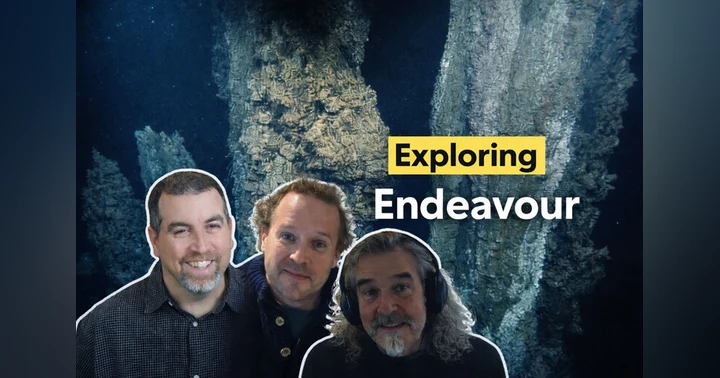
Deep sea hydrothermal vents reveal a hidden world where life thrives without sunlight, forcing scientists to rethink how ecosystems can exist in extreme heat, pressure, and darkness. Nearly two kilometers beneath the Pacific Ocean, superheated fluids erupt from the seafloor at Endeavour, creating environments that challenge everything we thought we knew about life on Earth and how it survives.
Deep-sea hydrothermal vents are not isolated deep ocean curiosities, they actively influence the chemistry of the entire Pacific Ocean. In this episode, scientists explain how minerals and iron released at Endeavour can be traced thousands of kilometers across the ocean, fueling productivity far from the vents themselves and connecting deep ocean processes to surface ecosystems in surprising ways.
Ocean Networks Canada enables this discovery through one of only two cabled deep-sea observatories in the world, allowing scientists to monitor volcanic activity, chemistry, and biodiversity in real time. This episode explores why Endeavour is one of the most important natural laboratories on the planet, what it teaches us about the origins of life, and how it may even help us understand life beyond Earth.
Surprising insight: the fluids released at Endeavour do not disappear into the ocean, they can be chemically traced across the entire Pacific, meaning deep-sea activity shapes ocean life on a planetary scale.
Help fund a new seagrass podcast: https://www.speakupforblue.com/seagrass
Connect with Speak Up For Blue
Website: https://bit.ly/3fOF3Wf
Instagram: https://bit.ly/3rIaJSG
TikTok: https://www.tiktok.com/@speakupforblue
Twitter: https://bit.ly/3rHZxpc
YouTube: www.speakupforblue.com/youtube
0:00 Far beneath the surface of the Pacific Ocean, nearly two kilometers down, there is a place where the earth is actively tearing itself apart. Molten rock rises, superheated fluids burst from the sea floor, and entire ecosystems thrive without sunlight. This hidden world does not just shape life in the deep ocean. It also influences chemistry, biology, and circulation across the entire Pacific Basin. Today we are taking you to that place on this episode of the How to Protect the Ocean Podcast. Let's start the show. Hey everybody. Welcome back to another exciting episode of the How to Protect the Ocean Podcast. I'm your host, and/or Lewin, Marine biologist and science communicator here to tell you what's happening with the ocean, how you could speak up for the ocean, and what you can do to live for a better ocean by taking action.
0:48 On today's episode, we are continuing our monthly episode of Surfacing Secrets, explore the Ocean and Know the Planet, a series created with Ocean Networks Canada to bring the deep ocean to the surface through science story and discovery. In this episode, we're gonna be diving into the endeavor. One of the most active and intensely studied hyperthermic vent fields on earth endeavor sits along the Wanda Fuca Ridge off the coast of British Columbia, where new ocean crust is continuously being formed and where seawater is heated to hundreds of degrees before erupting back into the ocean as black smokers. To help us understand why endeavor matters, how it works, and why scientists around the world are so focused on this site.
1:33 I'm joined by two experts who know it intimately. Steve Mahaley is a senior scientist with Ocean Networks Canada and has spent more than a decade working directly with Endeavor through one of the world's only cable observatories. Lawrence Coogan, who's the professor at the University of Victoria, and a geologist who studies mid ocean ridges, volcanic systems, and the geochemical processes that connects Earth's interior to the ocean above. Together we explore what makes endeavors so special, how life survives in extreme conditions, and why this site influences the entire Pacific Ocean and what it can teach us about the origins of life on Earth and possibly beyond.
2:13 I can't wait for you to listen to this interview. So here's the interview with Steve and Lawrence in Joy, and I will talk to you after. Hey Steve. Hey Lawrence. Welcome to the How to Protect the Ocean Podcast. Are you ready to talk about the endeavor? Absolutely. Certainly. Awesome. I am looking forward to this. This is gonna be, uh, so much fun 'cause this is, uh, something that uh, you know, it's such a big part of the Ocean's, ocean Networks, Canada, and, you know, we haven't had a chance to really explore this. So we're gonna take this time to explore endeavor, the significance of it, what is so special about it, and why we love talking about it so much and, and why we like studying it so much. And I think it's gonna be a, a lot of fun.
2:54 So what we'll do first is we'll just start off just by introducing yourself. So Steve, why don't you just let us know, you start, let us know who you are and what you do. Uh, Steve Mahaley, uh, basically senior staff scientist at Ocean Networks Canada. And, uh, and my responsibilities are, are in for Endeavor are the work we do at Endeavor. So that's, that's the connection. Love it. Love it. And, and Lawrence, how about yourself? Yeah, I'm, uh, I'm Lawrence Cogan. I'm a professor in the school of o Earth and Ocean Sciences at eVic, and I've spent my career working on various aspects of Midian bitches. So that's my link to Endeavor.
3:34 Awesome. So why don't we just start off, um, you, Lawrence, you can start off what is Endeavor like? What is it so that people can kind of get an idea and get a picture of what it is in their head? Yeah, so Endeavors a, a Midian village. So around the bottom of the world's oceans, there's like 65,000 kilometers of, uh, mid ocean villages, which are submarine volcanoes and endeavors. Um, one of these, um, in the north northeast Pacific, the, um, where new ocean crust is continually created, um, where seawater circulates down into that ocean crust and gets heated to four or 500 degrees Celsius before venting at black smokers on the sea floor.
4:15 So. So this, like for you as someone like, like someone who studies rocks and volcanoes and everything, this is like, this is, this is your special, this is, this is like the thing for you, right? This is where, this is your, your, this is the endeavor. This is your thing to study. Yeah. I mean, endeavor's one of the greatest places on the planet to look at these because, uh, there's so much access through things like the ocean networks and, uh, observatory and previous studies that people have been doing since the eighties there. Yeah. So it's really well understood area and yeah, it's, these are the most active volcanoes on the planet even though we don't see them. 'cause they're covered by the ocean, so. Right. It's an incredible place to study. Now there are a lot of areas around the endeavor, you know, that have hydrothermal vent and everything like that.
5:01 And even just around the world, what sets the endeavor, Steve, why don't you just answer this one. What sets the endeavor apart from other hydrothermal vent fields that are, that are around the world? That's a, you know, actually that's a, a pretty important question. Um, but basically it's just the sheer magnitude of hydrothermal venting that's occurring there. That's, you know, a lot of people say, well, there's, this one's a medium spreading perfect example of a medium spreading. Uh, you know, speed is spreading is, is, is in the middle. So you actually have time to, to have life forms, uh, make use of the hydrothermal venting and, and actually have a succession of, of, uh, of ecologies there.
5:44 Uh, but the sheer magnitude, there's, there's an incredible amount. There's five major vent fields there. Um, if you go down south on the Wanda Fuca Ridge, you get to other areas where you have a, you're in a Caldera and, and it's far less active in, in the hydro, uh, the actual movement of water through the cross. And, and it's unclear. Lawrence probably has pretty good idea why it's so active. Uh uh, but. I, I don't know. It is a very, uh, very special, uh, venting site. It could strictly, you know, if you wanna just go to the, the brass tacks or the whole thing strictly because the sheer magnitude of venting that's going there and to, and they're different from, you know, two kilometers away.
6:27 Uh, vent sites will have a totally different look to them because of the different, uh, uh, GE geological, uh, water interactions that occur. And, and you can, you know, we're just. We're just scratching the surface of trying to understand what's going on there. Unreal. And it's been, it's been studied for quite some time as Lawrence said. Like that's, that's pretty cool. You know, Steve kind of opened up the question, Lawrence, I'm gonna have you answer it. Why is there so much volcanic activity in the, in the endeavor? Yeah, I mean, I guess I'd answer this question a little differently and, you know, um, we've studied such a small fraction of the sea floor. We don't actually know what most of the Mid Ocean Bridge network looks like. So there's very few places we've studied and, and like as much detail as endeavor.
7:11 There's just not the resources to study everywhere like this Um, So there may, well, in fact there are other places that are just as active as Endeavor And then there are other places that aren't. And it's really, um, a combination like Steve says, of, uh, the crystal structure Um, So how the faults allow fluid to get into the sea floor, um, and just temporal variations or changes in the amount of volcanic activity over time. But I. I think there are other places that are similarly active. It's just mm-hmm. That we, we don't have enough areas we've studied in detail to know, um, know how unique endeavor really is. Right. But there are plenty of other places that are just as active for sure. Yeah.
7:51 Interesting. Now a, apart from the volcanic activity, why is the endeavor considered like such a valuable location for ocean science? Steve, do you want to answer that part? Well, basically it's, it's close by. It's in our, that's what I go very fundamental. Uh, you know, lots of things are pretty fundamental. Like, it's, it's within our EEZ, our exclusive, exclusive economic zone. We can get to it. Uh, and, uh, and we basically, uh, I think the, these, these kind of, the, these websites like endeavors only, uh, discovered in 1984. So this is a very new kind of thing happen, you know, that, that we didn't know about before that, uh, it was.
8:37 Postulated speculated, but we, we actually didn't, you know, the first event, I can't remember, early eighties Endeavor 84, they finally actually, uh, got Alvin down there. And so, oh yeah, there's a whole bunch of stuff and, and there's a whole bunch of life associated with it. I mean this, so, so it's basically, we realized pretty, the scientific community realized pretty soon that something had to hap this is very special area, easy to access. So it was made into a Marine protected area quite, you know, in the 2000 or so. So it was very quickly, um, uh, protected because also what vent sites are basically ways of aggregating or concentrating minerals and, uh, some minerals concentrate there, you know, there's gold, there's, you know, copper, there's all kinds of stuff.
9:25 So it's an ideal, uh, place to mine. In fact, like, uh, mines on. On the actual, you know, uh, sub aerial or terrestrial mines are often, were old, uh, hydro hydrothermal vent sites. So the, the Rio Tinto. Oh, interesting. Yeah. Rio Tinto mine, the Red River or, um, in, in Spain, one of the first places where they, you know, they move out of the Stone Age was, uh, basically a hydrothermal venting site prior to being a mine. I did not realize that and being my land, that's it. Yeah. So yeah, you're move, you're move, you're concentrating, uh, minerals in an area and obviously, you know, once you con do that, people wanna come by and mine it, so we rich.
10:07 Yeah. You know, we, it's two kilometers down, so it's not that easy to mine. So we, uh, the community realized that, and the fact that this had so much attention and basically, uh, even the scientific, uh, you know, exploration could be damaging to the actual environment itself, uh, just right. There's quite a, if you go down there, there's quite a, we have quite a few things on the sea floor there, so you have to, we have to be quite careful on, on, on recovering our stuff and, and keeping the place, uh, yeah, as pristine as we can. You know, with all this, like these vent fluids, they go all over the place, you know, they go out, they shoot up into the water column, but I've heard that they can like, be traced across the Pacific.
10:47 Like how does that, how can you trace that and like, what does it tell us about these vent fluids, you know, just in general in terms of their, their, their patterns of how they spread out? Uh, Lawrence, can you answer that for that? Sure. So I mean, we trace a, um, mainly by collecting samples, fluid samples from, uh, the ocean. And so you go out on a ship and you lower, um, what's called a CTD rosette instrument allows us to collect water samples And then, uh, we bring them back to the lab and you analyze the composition of them and you can see, uh. Key element in isotope, uh, tracers that tell you that fluid has interacted with those hydrothermal fluids.
11:30 And it's always at the same depth as a ridge. So it's about two kilometers depth in the Pacific. Right across the Pacific, there's a region and it's enriched in elements like iron, uh mm-hmm. So that's the iron that's coming out with the hydrothermal vents. It's building the chimneys. Um, but it's also been spread right across the Pacific and people are really excited about that because s uh, limiting micronutrient in the ocean and parts of the ocean. Mm-hmm. So everything needs it, uh, for primary productivity. And so knowing we have this source, um, of iron and to Deep Pacific is really interesting to, uh, biologic oceanographers as well as geologists like me. Yeah.
12:10 So the, these, so these fluids go around like the, the bottom of the ocean, they kind of travel. There's just, is it just 'cause there's like these deep sea currents that take 'em around. How far? Off the, the hydrothermal events. Will you get traces of that, that vent fluid, you can trace it right across the Pacific. So 4,000 kilometers across the Pacific, these fluids have been traced. Uh, yep. And you can see that the, sorry, I didn't mean to, that's through isotope analysis. Like looking at the, the specific aspect of that vent fluid that comes from, from endeavor. Yeah. Isotopes and even just the abundance of elements like ion Gotcha. Or even very small particles of, uh, the minerals that lack smoke.
12:52 That gets very diluted. But you can still trace those particles right across the Pacific too. It's incredible. That is incredible. That is incredible. Now with all that happening, you know, you get, you know, these, the areas can be hotter in temperature in these, around these vents. And, um, there's a lot of, uh, stuff that's coming out that, you know, we wouldn't be able to handle. Like if we were out there, obviously with pressure. But even if it was at the surface, uh, it wouldn't, it wouldn't be good for us. But biodiversity is pretty, like, is is pretty high around endeavor. Steve, why is it so high? And, and, and why is that such like an impressive thing to, to under, like, to, to see around the endeavor? Well, probably it, it, it's, it, you know, its, it's hard to, you know, compare biodiversity as for, uh, terrestrial biodiversity.
13:41 This, the whole ecology there is based on a totally different, uh, you know, uh, function. Basically it's, it's chemosynthetic base. So basically it's, uh, the, the bottom layer. Instead of being green plants, there is this sort of, uh, uh, uh, uh, utilizing, uh, the chemicals that are coming outta the actual, uh, vent fluids, uh, to make a, a, a, a entire ecological system. So the. The diversity is different. It's totally different. It's, it's nothing at all. Like what we have on, you know, there's, there's animals that have adapted to it. There's, you know, all these, there's skates there, there's giant, uh, crabs that are white there and, and things like that mm-hmm.
14:23 That are living off these guys that are only endemic or only found in that, that specific area based on, on this chemosynthesis uh, uh, process. So it's hard. Why, why is it biodiverse? Well, um, it's basically, it, it, we, you know, it's been around, we figure for at least a thousand years there that this venting is, is, is happening. That's a rough guess of what, but it changes quite a bit. So right now we're going through a, a, uh, cycle that we believe for pretty simplistic reasons, uh, it is a 20 year cycle that, uh, you have increased sort of activity and that's gonna change the ecology of one area.
15:05 Too hot for the animals that happen to be there, and some of them are not. Right. Some of it is, is platonics. So float around. Other guys are attached to something and if it gets too hot, they, they die. If it gets too cold, they die. So there, there's, so you have a, a succession of, of, uh, of biology that can occur. And, and you, uh, you know, uh, adaptation processes that have been going on for, you know, thousands of years have, have mm-hmm. Built a whole different diverse community. And the inter, the more interesting thing about it is the fact, even though these are localized into certain areas, like the endeavor segments sits, you know, 300 kilometers offshore and the next section is, is well down the ridge where there's other Yeah.
15:47 Uh, there, there's interconnectivity between. The ridge. So they, they're showing that there's certain, you know, certain why, why is there, why are the same creatures living at, at Endeavor that are living somewhere else? If, if they're, they're not, they're not isolated because the ocean itself, right. As, as we're, as, uh, Lawrence was saying, basically it is interconnected all along really long timescales, so mm-hmm. The, basically the oxygen oxygenated, uh, water's ventilated in the, in the Arctic and the Antarctic, and it sinks down, it gets cold, sinks down, and it ends up at Endeavor in a thousand years. Yeah. It's about a thousand year cycle, so it's gonna go, it's all connected somehow.
16:29 Yeah. Generally when it's in the ocean, you are, you're stuck with, uh, mixing processes that slow, you know, slow down the, uh, the, the vertical, uh, sort of, uh, travel times. And that's why you can pick up, uh, the, these signals at the depth of event many, you know, hundreds of kilometers away from national event site. Because it's not gonna go up and down. It's, but it, it has no problem going side to side. It's, uh, it's once it's got its neutral density, it's, it's, that's, yeah, that's where it goes. And these currents that we don't fully understand, because models aren't that concerned about the, the bottom of the ocean, the models are there basically to make sure that the atmosphere models are doing the right job.
17:11 Because that's the big reason. We, we wanna know where we live, what, what the weather's gonna be, for sure. Not necessarily at the bottom of the ocean. So we often have a very confused view of what's happening in the, in the deep sea. And that's a major area of, of scientific research that. Hopefully we're helping out by this observatory that we have there. Yeah, absolutely. When I, I also think too, like the biodiversity, like with the amount of different species you get there and, and such a unique set of species because of the, the, the harsh conditions for, you know, for the, your quote unquote regular species that we know and find around, I would imagine it, it offer a bit of protection from other predators around that because those predators probably wouldn't be able to go into those areas to eat those crabs or, or eat those skates or, or things like that.
17:56 Would that be a fair assessment? It seems to be. I've never actually read any, uh, particular sort of thing, but tho those, those giant crabs, those white crabs that you might've seen, yeah. Um, if you pull a bunch of two berms, for instance, which are full of mm-hmm. Blood basically, and they're very tasty for crabs. They're not on the actual venting sites. They're not, they're not. They're, they don't go there. But when you go to sample it, you can't get back to the, uh, you know, back to your little trailer that you're gonna bring it up to without these crabs chasing you down and ripping it outta your hands and trying to eat it. It's, it's serious. They're, they don't look like they're moving very fast, but they get there. Right. Once they see that, oh, there's one, it's just like, there, it's, And then they've got, they're, I dunno why I, I, I can't see.
18:42 They're, they're just, I That smells good. Yeah. So they do avoid it. Uh, probably, probably, uh, heat, probably chemicals. There's lots of chemicals. I, but I, I'm, I'm not a biologist. To, to, yeah. And I don't know, Lawrence, you don't know how to, Ian. I, I, I just know they're never on the actual events. Yeah. No, I'm not a biologist either, so I, uh, you can't really, I didn't know that about the crabs coming in to get their tube worms, so, oh, they love them. They gotta get, they love those tasty tube verbs. Yeah. Uh, well, I mean, you know, we're looking at just sort of what you mentioned, how things move and like they, they kind of like, you can see things happening over thousands of years and, and how they move from ridge to ridge and stuff.
19:22 Can you see, like, like, can you answer questions about just not only evolution of, of some of the species that are down there, but also just the evolution of the vents and the ridges that happen. You know, like what questions about, you know, life and evolution can, you can be raised through research at Endeavor Lawrence, do you, have you done any kind of like, thought on that, especially when it comes to like how dynamic it can be with all these volcanic eruptions? Yeah, I'm certainly no expert on this and I don't work on it, but I know of people who do. So, yeah, you can certainly, um. Uh, trace that there are different, um, different things live at different vents and how interconnected the species are.
20:06 Depend on how long it is since there was a straightforward geological pathway between one set of vents and the next. So for example, if the tectonics changes so that one ridge gets separated from another ridge and there's not a direct transport per larvae between them, right? And then they start to evolve separately. So kinda like, uh, the islands at Darwin looked at the fins with different, um, features on. Yeah. So as soon as the ridges get separated, then things can evolve separately in those locations. And um, and people have traced that out and tried to help reconstruct when tectonic boundaries. Between these ridges first, uh, were created.
20:49 And that can be on a small scale, or it can be on a much bigger scale. Like you find very different things in the Atlantic Ocean than you find in the Pacific Ocean, right? So it, that'd be a very big scale. Um, but yeah, even much more locally, you get those kinds of variations too. One thing that's not often, uh, understood or or known is, is the fact that there's a lot of stuff that lives in the crust. There's, uh, microbial, uh, uh, so what happens, even though, you know, it may not be the pathway, may not be in the ocean oceanic occurrence, it's through the actual, uh, crust it itself. So you have microbes in there, you have a new vent shows up, it spits out a whole bunch of mi microbial stuff, basis of, uh, that, uh, uh, and that's the basis of the, the basically food chain.
21:33 Uh, you know, we, we've gone to, uh, eruptions that just occurred, uh, with a, a rapid response. And basically as soon as we got there, which is a month, you know, after things happened, these newer places were occupied by, by Lifeform. So we don't know whether that was through, through the water column or through the actual crust itself. It seems like the crust has, you know, there's, it, we, we don't often appreciate the fact that there could be, you know, uh, uh, similar amounts of species that live in the crust that we have on the actual planet itself. That their numbers keep on going up and down all over the place, I guess. And how many, how many things live in the crust? And they do.
22:13 And they have a geological role. They actually change, uh, they, they use, it's, it's basically microbial activity. They, they grab a bit of this mineral and that mineral and mm-hmm. Get energy out of it and make a third, uh, you know, mineral like serpentine or something. Um, Yeah, Lawrence probably knows more about this than I do, so I'm probably sticking my neck out here. But I'm a, I'm a physical oceanographer and generalist salesman for salesman for Endeavor. Yeah, no worries. Well, you guys are selling it. You guys are selling it well now. Uh, but what did it, like, you know, you're thinking, I'm thinking about the endeavor and it's like a number of ridges, but, you know, a couple kilometers down below the sea surface.
22:55 What's it like when you start to, you know, work on there? So you're going out on a ship, like what's it like to visit the endeavor? Like what, what's that? Like, what, what, what, how's that work like in terms of a research cruise? Can you just kinda just give the, the, for the audience, like a picture of, of how you go visit. I mean, we all can't go in an ROV and I know that's been ha that's happened before, but like, what's a typical research cruise, um, that happens, like to do research on the endeavor? Lawrence, why don't you start with this? Okay. Steve's better to speak to this than me because he's actually been there. Uh, but I mean, you know, one thing that's great with Owen, Steven and the cruises out there now is that all of it's, uh, fully available.
23:39 They stream all of this live, right? So anyone in the world can be watching it. So, you know, he had bought a ship and, um, with an ROV and the crew, And then you'd head out, uh, just over a day's steaming to get to Endeavor. When you get there, then you locate yourself And then, you know, you drop the ROV into the water. So using the A-frame on the back of the ship and it takes, you know, some hours to get down to the bottom. Um, And then you'd have a, um, a van, basically like a shipping container with. Um, typically, um, a whole wall of TV screens looking at all the different cameras that the RV's projecting back.
24:19 And you have the pilots for the RV who are really skilled at manipulating both the arms on the RV and finding where you want to go. And, you know, that's a big challenge, is tracking where you are and where you wanna go. Um, And then, you know, you'd have, uh, typically one to three scientists in there, or engineers telling the pilots of the RV what they wanna do, where to go next, what the aims are. Navigation's a big thing down there, so. Um, and you know, you go about doing whatever you want to do, just looking at these TV screens and just playing back what's happening in the sea floor. And like I say, anyone in the world can watch these either using the Ocean Networks, Canada playback facilities mm-hmm.
25:04 To look at ancient or past cruises or watch it in realtime next time that they're out there. So yeah, that's pretty, that's pretty cool. Now Steve, you've been down there before, right? Y yeah, so basically, you know, and in general if it was a real science, science crews, so we were basically going there, we're doing operations and maintenance and sciences almost. We have to do a certain amount of science to be able to, uh, uh, properly, uh, characterize what we're seeing with the sensor. So there is a, there, but it's a limited role. Like in other cases, um, the, uh, I guess Alvin was out there this summer on the Atlantis, that's a human, uh, occupied vehicle, and they, they would have a, a, you know, two week plan based on a scientific question.
25:51 Mm-hmm. And, uh, and, and, And then it would, they would gather up the science people that were gonna go on it. They get the funding from, in this case, national Science Foundation. And then the whole thing is concentrated on the science it, it, with, with, uh, ONC. We're going out there, we're gonna go to, uh, places on the slope. We're gonna go to places, uh, uh, near shore. We're gonna have all kinds of different depths to, to go and, And then we'll squeeze in, in a four or five day thing, uh, at Endeavor. Somewhere in that whole, uh, uh. Sequence. So it's not, and that is based on, you know, a number of predetermined, uh, dive plans that we make up. So this is exactly what we're gonna do.
26:32 We're gonna replace this, we're gonna move this over there. We're gonna do this. We're gonna sample this in here to characterize that. So it's very, it's quite structured. Um, it's, uh, it, it can be, uh, because science is always good that way. Research, you basically wanna be able to, uh, change anything in the last minute because suddenly you see something unbelievable. Certainly you're not gonna not look at it. Yeah. And that's right because oh, we have, we have to, we have to now, you know, plug this thing over here. No, we're, we're, so it, but it's still, it's the, the, uh, our funding is based on, based on operating and maintaining a observatory at Endeavor and all through the, uh, Northeast Pacific. So it's not, not the classic science thing.
27:12 So you'll have like me or two scientists on board doing 12 hour shifts and, and we try to, you know, cover all the different bases. So we won't have a, a geological expert. We won't have a a necessarily a, a biologist. It, it, it's all over. It's. You have to, you have to rely on your email contacts, Lawrence, what, what should I do? You know, that sort of thing. You, you do, you try to keep Yeah. Communications with the shore scientists that are experts and, And then you learn, you learn rudimentary sort of, uh, parts of many different fields. Uh, at least that, that's has been my role anyway, is just not so jack of all trades. Yeah. Uh, master of none.
27:55 Well, currents. I deal with the currents and stuff like that, but that, that's only one small little, uh, factor in what we do. Yeah. So there's a lot of, there's a lot of prep that goes into before these cruises are going out. You're, you're looking at collaborating with partners like with Lawrence and, and other, other, uh, scientists that, that want to ask certain questions. And then you go down there with a, a, a plan ready to be adaptable depending on what you see down there. And then you go down and you try and, you know, do some maintenance on, on some equipment. Um, check out some cool things that are, that are around there at that time. Um, have you had any, can you tell us like a, a time where you at really saw some really cool stuff while you were down there?
28:37 Well, every time you go down there, um, uh, so it's kind of a, what's your most memorable, what's your most memorable moment? Most memorable, most memorable moment? I, it's, I, you know, basically these things are, are so, um, uh, fascinating. It's, you know, the first time we laid the cable, going in there and, and, and you've got that five meter kind of area where you've got. Really high intensity lights, uh mm-hmm. But you can't see any farther. And so you're, you're coming along bumbling along there with a clear view of something very close up, and suddenly you walk right into a, well walk the ROV flies into this field of these massive, uh, uh, pillars, and you're going, wow.
29:22 And they just come into view fairly quickly and you're just, it's, it's, uh, it, it raises, you know, goosebumps on the back of your neck, right? It's, it's, it's, yeah. So that whole thing, And then finding, you know, accidentally finding another one, oh, there's, there, this guy's here, and you, and, and Right. Again, because of the viewing, uh, you're, you're, you can't really see that far. You, you don't get a picture of the whole story. So you're completely lost in this, of course, little maze. And you know, the pilots. Who have been there a lot often know that stuff or you, or to un to give, you know, they actually put in a life size cardboard, not cardboard, uh, plywood cut out of one of the, uh, Alvin Alvin, uh, uh, pilots.
30:09 And it, it, we, we got to see it too. It was, it was hung around for quite a while. And actually what happened though, it floated around. So you come across this life-sized band pointing at a, he was point, he was meant to point, to give a size estimate of a, a, a edifice, and it's floating around. And so you run into that, that's pretty spooky down there. Or you see something. So it's, it's kind of like that. I, it's not, you know, what's specific, unbelievable thing. We, the sometimes, uh, a piece of, uh, a vent will fall off and break and they're basically, they grow all these, uh, they're, they're like OIDs where there's all bunch of crystals grown on the inside and you don't.
30:51 It come from an area where it looks like it's completely like a muddy, not that interesting thing. Yeah. And you crack it open and it's this, this unbelievable, you know, it's full of lots of fell spiral down, lots of really shiny, uh, things that, the, that it's so dark in the background and your lights are so strong. It, it's a fascinating kind of, uh, thing. There's a yeah. Contrast in that occurs anyways. That's, yeah. It's not, not a, not, it's not an example, but it's just, it's every day. It's, yeah. That's a, it's, it's kind of a, I think it's, it's a, it's a difficult thing to picture for people who haven't been down there, because I think a lot of times when we think of the deep sea, we just think of just, you know, the thought that process goes like a flat land, you know, a flat, a flat bottom, not land, I guess, or bottom in this sea, and you're just like, oh my gosh.
31:39 Like what is is happening with all this? And, um, I think it's, uh, it's, it's really interesting to. Here that it's like, there's these pillars and there's this like complexity of the, the, the, the bottom of the ocean when we're like two kilometers down and, you know, you can't really see where you're going other than how far the, the, the lights are shining. How far of a distance do you think they go? Like approximately the five meters where you can actually see it? I, I always use five meters Yeah. Yeah. You know, it, it's, it's, you know, an R cube kind of, it drops down really quickly. Um, but yeah, it's, it's not far. It's the, yeah, it's just slightly bigger than the actual ROV itself.
32:22 Yeah. Yeah. That's cool. They got more lights now. You can look in the back and if they've, you know, we have, if often we, uh, use a two body system where it has a, uh, a clump weight, but it has some control, it has some lights on it, And then you have your ROV, so that'll be above you. And you try to, you, you'll be able to see the lights from a great distance. Yes. Okay. More than five meters. So, but all you see is a bunch of lights down there, And then you might be able to see what that light, what that, uh, light of the ROV is actually doing. So that's pretty fascinating. That's like Titanic, uh, stuff, you know, you can actually Yeah. Similar to there, you can, they have to re reconstruct the whole thing in a number of, uh, photograph parametric, uh, techniques to show you of them, because you only see this one.
33:07 Oh, there's the front end of the Titanic, and that's the same thing we have in there. It's where we, we got the, this guy here, that guy there, And then you have to piece that together in your head and, uh, and try to make the picture. And so we're, that's one of the big, big research things that we're doing is trying to put, put together an actual, uh, map of, of the area, because it's not, yeah. And this is a hard, hard thing for a lot of the cartography people, or GIS people, is that they don't realize it's, there's. The, the third dimension is just as important as the, the, the x and Y dimensions. In this case, it's just as vertical as it is horizontal. And there's often, there's two Z points. So you have an overhang and you have, you know, so what's the bot? You know, it's, they can't, it's not mapped, not easily mapped by flying over with the multi-beam and stuff like that.
33:53 So you have to actually go in there and build these structures. I don't know where on, on Land Lawrence might know, but where there's that kind of structures on, you know, maybe in caves. Yeah. You know, there's tights and you know, something. It's kind of like that. There's a lot of, it's not a flat, the flatter theory doesn't work there. Yeah, no, absolutely not. Absolutely not. Um, one of the, the unique things about. About endeavor is, is the amount of data that we have on it and the amount of science that we have, and that's because of this, this cabled observatory. So Lawrence, like for you as a scientist, why is having this cabled observatory at endeavors such a breakthrough for the work that that you do and that you've seen your colleagues, uh, go through as well?
34:43 Yeah, I mean it's um, if you think about trying to study, um, a volcano on land, let's say you wouldn't do it by going there, uh, once every few years, um, in a looking only five meters in front of you at any one time and going down and maybe having like, I don't know, four hours to study the volcano And then you come back in three years time. So actually being able to do things in real time. Yeah, you know, I can look up right now. What's the change in the temperature of the vents? How has that changed in the last 24 hours? How has it changed in the last week? I can look at the camera footage and say, oh look, that microbial mat that was growing like that has been eaten by something 'cause it's got much smaller or it's shed into the water column.
35:29 And, and those are the kinds of things you can never do if you're just going out intermittently collecting one-off data. So, you know, we've got some really, uh, unique instruments now too. So we can, uh, for example, sample that black smoker fluid 350 degrees c, fluid on demand from just through the internet. So, um, if something happens, if there's an earthquake, Yeah, we know there's been an earthquake because we've got the seismometers that are keyboard. They tell us, oh, the ground just started shaking. Okay. Oh yeah, this is a big earthquake compared to normal. Let's sample the fluid coming out the vent and see if that changed at the same time. That's the kind of thing that you could never do with a. You know, even if we had the money to send a ship out after that, right.
36:13 It takes like a month or something to be ready to do it. So, yeah. And in terms of understanding, you know, how does the geology relate to the fluid chemistry and to the biology? You know, you need to know how things, uh, the time scale of those processes. Does everything change within an hour? Does it change within a month? Does it change in a year? And you can't do that if you just go out once in a while to do things. So you need the real time data. So it's. Being quite revolutionary to have these, uh, cabled observatories, um, oh yeah. So they don't solve everything. There's certainly Right. Plenty of things. You still need to go there and do the one-off, uh, sampling and, you know, it's finding the good balance between, you know, having the cable data in real time and the Yeah, collecting enough one-off samples, you know, Um, so.
37:01 Yeah. Well, that was gonna be my next question. You know, when you, when we talk about gathering data, there's always like, this is, this is the information that I want. I want all these different things. We have all these different instruments that we know can, can sample sometimes in real time, sometimes not in real time. Uh, Lawrence are, are there things that you would love to see that, that are not on the endeavor right now that you would love to have measured and keep it like to like, you know, couple, not, not the, the big list, because I know there's always a big list, right? There's always a big list, but Yeah. Like, how long have you got? Yeah. So like, I know there's lots of stuff that, that we can, you mentioned a, a number of things like measuring the, measuring the, the plume and, and, and all these things real time and seeing what happens after earthquakes and stuff.
37:43 What would you love, like on your dream list, like the biggest item on your dream list that you would love to see? Uhhuh? Yeah, that's a really tough question because my dream list is too long and I'm not sure what's on the top of it, but, you know, um. I guess I'll give two answers if I can. Yeah. Yeah, for sure. One is for everything to be working all of the time 'cause it's just really difficult to do for sure. Uh, stuff on the sea floor. So instruments, however well engineered they are, don't necessarily last that long on the sea floor. And then you're not just on the sea floor, but you're trying to put things in these hydrothermal vents. Mm-hmm. So it's incredible that anything works ever Yeah. Yeah. And then you have to go to sea to maintain this and if the weather's not good or your ship's not good for the weather state, then then you can't do the maintenance.
38:29 So it can be another year before. Yeah. So even with instruments out there in real time, you can still have big gaps in the data if there's any problems with weather for the cruisers or for just instruments not working. So one would be to really, that'd be a big dream, is to have everything working all of the time rather than like. X percent of things working all of the time. Yeah. Yeah. You know, the other would be, um, having some kind of tracer to tell us, um, about what's happening with the magma beneath the surface. So there are, there are chemicals that we can look at, like carbon dioxide that's released by volcanoes and being able to tell, like, measure how much carbon dioxide is coming outta the fluids in those hydrothermal events.
39:13 That could be a real great way to tell us about magma. Yeah. Under the surface. 'cause it's gonna be, if we do have an eruption there, it's gonna be really exciting to see how that impacts the entire system from the rocks through to the biology. Uh, and one of the key tracers for seeing that would be, yeah, a geochemical tracer for, uh. Magma. So like carbon dioxide. Yeah. But, but I could list another, you know, another 20 things too. So. Well, I think you brought up a really interesting point. I've worked at sea a number of times and I was, I was a Marine technician on a boat in the Gulf of Mexico. And even when we're at the surface, you know, having like a surface like, you know, sampler that sampled all the time.
39:58 Things would break, just like just being in a dry area, just with having like, you know, water circulating through it. I can't even imagine what it is. It's like in the deep sea with all the problems. You're in a hydrothermal event for God's sakes, and you're, you know, you're sampling all these things. It's like you said, uh, Lawrence, it's amazing that it, it works in the first place, but it's a true testament to like the, the, the engineering and, and the placement and, and understanding the, the life that's down there and how it's gonna interact with, with the instrumentation. Um, Steve, you know, working at ONC and, and being out in the field quite a bit, um, how does the staff sort of, you know, adapt to putting these instruments into a place like the endeavor to try their best to make sure that it, you know, it works all the time, or it works just like it does right now and providing information for people as earthquakes, as earthquakes are going on and being able to see it, uh, live.
40:53 How does that, how does that whole like system work? In five minutes or less. Well, you know, if you take Yeah, you, you learn, you, you slowly learn it. It's, uh, it, but, you know, we have been going to these places since early eighties, and, and we, you, you learn simple things like, okay, lots of people think stainless steel, for instance, is a, is a mighty good, uh, uh, material, but at mm-hmm hydrothermal fence, it immediately disappears. It, it's like unbelievable vanishing. So I say, oh, let's make a mooring normally be galvanized steel or something cheaper like that. Uh, And then well we're, this is really important.
41:33 So we're gonna use stainless steel, we're gonna use alium, we're gonna use all this stuff. And then it doesn't last for the year. The mornings are all on the shore and we learn. And then you tell other people they don't believe you. They make the same mistake, but so so you, you eventually Yeah, it's, it's interesting. They, they, so, so we put the first one out there in 1985, I believe, and lost all of 'em. And then basically, uh, I was actually part of the act, uh, I looked at the data, but so you, it's built up. So we know titanium works, we know plastics works. We know iron will like, like this is the craziest, you know, because it, yeah, it's such an, it's a big iron reactor down there.
42:16 You put a, you put a, a piece of galvanized steel that you paint. Let's say you paint it red or something like that, and you got it sitting on the, you go back next year or maybe the year after. All that's there is the paint. You just touch it And then the whole thing crumbles. All the iron is now this powder, so this this red powder everywhere. So these things, you know, become very clear. Everybody knows, but it's. It wasn't really predicted. I mean, it should have been predicted, but it's more of an experience thing. So you wanna be able to have this, I, you know, long-term kind of, uh, knowledge. So now that there's no engineer at our, our engineering area that know, knows that we were not gonna put in, you know, stainless steel anywhere near the ocean, basically our first actual first platform, we put it designed, it's, we still have the same design was made outta stainless steel and we put it in ACH inlet, which is anoxic at a certain level.
43:09 And it last, it it, six months later, we pulled it back up and whenever we had the stickers on, this is like you're trying to sell your operation. So you go down with our ov take pictures of this thing, wherever the stickers were, it was all cake. It all, the fact that you had another sticker on there. Lower the oxygen level so that that stainless steel was eaten away underneath it. And then we, oh yeah. We can't use stainless steel, but we, we generally don't put things, the people who designed it are, were ROV pilots and stainless steel and aluminum. That works great for ROVs 'cause it goes in the water, you clean it off when it comes back up and it's fine. But if you put something in there for like, you know, a year or six months, it, it, it can't work. So it's all a, a sequence of uh, trial and error.
43:52 Learn. There's some engineering involved in there, but, uh, ahead of time. But often it's, you know, you'll say, don't, don't do that. That's not a good idea. Yeah. And there's lots of MacGyvering that goes on at actual, on the ship to figure out how to do things. I mean, that's the big thing is to be able to adapt right away. A as we are there. 'cause you, that's nothing. That focuses you, you're out there, it's, I can't remember what the numbers are, you know, a, a, a dollar, you know, a a dollar a second, whatever. Yeah. Yeah. That's your, you, you realize you gotta get all this done or you, you're not gonna get funded to do it again because you're just going out there. Yeah. It's hard to explain to people that it's a really difficult thing to do too.
44:33 So you wanna have success. Yeah. No, for, and you have to be adaptable, as you mentioned. Like it, I think that's the unique part of the staff that, that worked for ONC that goes out on these cruises is you have to be able to adapt to any type of condition, any type of whatever happens. And you have to be able to put stuff together, like you said, MacGyvering it together, um, and be able to, you know, put it in the, in the water so that it works properly. You can't just put it in the water and hope, hope for the best. So, so, uh, I think that's, that's a true testament to the staff, right. Yeah. Yeah. It's not prescriptive. You can't, you wanna have the dollar plan. You wanna know your plan is all there, ready to go, but it's not gonna go to plan. No, exactly. Exactly. Now one thing you, you both have mentioned over this, over this interview is, you know, you both come from different professional backgrounds, right?
45:18 And, and that, you know, we see that a lot with people who are using the data within, like this, this whole context of, of the data that's coming up from, from the endeavor. Um, there's a lot of collaboration that goes on. Is there a lot of collaboration that goes on in the final studies? So, Lawrence, do you collaborate with Steve to put a study together or, or other people at ONC or even other people within the scientific community that are, that are studying this? Yeah, there's a lot of collaboration. I mean, Steve and I have certainly been involved in a whole bunch of different studies together. Uh, published a bunch of papers on different aspects together. Um. And yeah, lots of people collaborate and those collaborations range from, you know, detailed collaborations that lead to publications with, with multiple people who've collaborated, all been authors like Steve and I through to much more, um, helping each other, but without actually being involved in detail in the sounds.
46:17 So, for example, the biologists might be going out there and, and not know where things have changed recently, right? So Steve's been out there recently, maybe can tell them, oh, go look at this area. 'cause things have changed a lot there. That area hasn't changed. So there's a lot of collaboration like that, that's much more informal as opposed to being. Co coworkers on a publication or coworkers on a grant Prosple and things like that. But yeah, I mean, it's hugely interdisciplinary, you know? Yeah. Everything we're doing, um, it involves people working right from the seismologists through the Georgia, the fluid chemists, through to the biologists, the physical oceanographers. We all get together.
46:58 We have workshops every few years, uh, where everyone gets together and catches up on what the latest is in every, uh, every discipline. Right. So there's a lot of, uh, feedback between things that way too. Yeah. Yeah. And that helps every like, you know, like you said, like, you know, you're, you have an update on a study or an area that's changed that helps biologists or other people to understand, oh, that's changed. Maybe I should, I have these questions to, to ask and, and, and answer, uh, within that. But it, it's not, it hasn't, only the endeavor hasn't only. Just been like a, a diversity of professional background. It's been a diversity of, of people from all over the world, Canada, us, Asia, Europe. Like how did the inve like the endeavor, uh, Steve become such a global hub for, for researchers from those places?
47:44 It's, uh, well, it, it, it got, it got lucky. It was, uh, picked as, uh, uh, as one of the three study sites that they, uh, had for a very large, uh, uh, American based program. Ridge Ridge, uh, uh, one was Ridge 2001 was just Ridge before that. And so they had three sites. Uh, and that was one of 'em, so three integrated study sites. I can't remember which one, the other one. So it really focused a lot of work on, on these three different sites. And it, you know, still, you know, like if, if you take, you know, like France works on, uh, on, they have a, a observatory in, in the Lucky Strike region, but that's. In the middle of the Atlantic. So you have to go. Yeah.
48:24 Take a ship way out there. This is an interesting sort of side, side thing. This one's quite close to a very major port Vancouver, Seattle, and, and major scientific area. So it's right there. People can fly into va, to Astoria or wherever, and you go offshore only 200 kilometers, you know, that's less than a day's, uh, travel. And you can actually get, so these big international kind of groups can get together. Because the other problem is, I mean, Canada's a small country, so how many, you know, I can't. I can count on one hand the scientists working at endeavors. Yeah. And, uh, uh, we really have to rely on Americans. We have to rely on the French, we have to rely on, And then, you know, the, the whims of, uh, those countries change, uh, uh, France wasn't gonna support any kind of research, uh, in, basically in, uh, in the Pacific because they want to concentrate on the Atlantic, so they do that.
49:21 Mm-hmm. Now it's kind of, that's changing a little bit. I just, so it moves around quite a bit. It's not, it's not, you know, Canada sunk a bunch of money into making this happen. So we, we are, you know, we try to, uh, uh, corral Canadian scientists mm-hmm. Who are working at, at Endeavor and, and of course American scientists as well. Of course. Yeah. But, but that's, you know, basically. You build it and, And then you people will come. Absolutely. Yeah, we've heard that, we've heard that before. That, the line before. So just, yeah, it got, there was a, a path then it just happened to, uh, a path that ended up, uh, you know, uh, concentrate a lot of research and endeavor compared to other places.
50:06 Now, you know, you have all these collaborative and you and people have been working on the endeavor, you know, since the early eighties and, and you know, there's been a lot of scientists have come through. Um, some have retired since. Some have gone to other, you know, other places. What happens when, you know, a scientist or an expert like works on the endeavor for like a, a long period of time And then suddenly, you know, they. As as life is, they retire or they move on. Um, Lawrence like, have you seen that happen before? And like does, is there a gap in that knowledge or is there like a succession plan with like other researchers? Like I know you probably have students that you probably have as graduate students. Hopefully they'll work on the endeavor, you know, throughout their lifetime, you know, how does that work when someone leaves or retires?
50:50 Yeah, unfortunately it's pretty informal, so Um, so yeah, it certainly happens and. There's obviously some information gets passed on because it's been published or it's been written in after every or after most cruises. There's cruise reports come out that document things in there. But there definitely is a loss to the community when someone's been working in an area retires. Um, and that corporate knowledge, um, of these areas and especially 'cause they're so dynamic, like Steve was talking about earlier, chimneys fall over, new chimneys grow, these things can grow at like a meter per year, even so, so you see a chimney and someone's saying, I think that's, uh, that's X chimney.
51:31 And it's only if someone's been there multiple times that they can really say, no, that chimney wasn't there three years ago. Uh, or that chimney, no, that's not that one because it used to be bigger, so it must have collapsed and a new one grown and stuff. So, so there is definitely a loss to the community and a big good moving forward. The more of this that, like again, Steve was talking about that we can digitize And so that's readily available when people were first going there in the eighties. You know, we, the technology for doing this was very different than is now Yeah. Yeah. So a lot of the early maps were drawn by hand, you know? Wow. Because you know, you didn't have, well you still have pretty poor navigation, but you had even worse navigation. And so, And then sketching what things look like out the window of an, I mean, you've got a six inch wide window to look out from Alvin to see what's there.
52:20 So yeah, Um, So moving forward, the technology's definitely getting much better to try to, um. Document things much more clearly and have that available to future generations. But we definitely have lost as a, as some of the people who were there in the early days have retired by now and yeah, that corporate memory's gone and even different chimneys get given different names by different groups from around the world and stuff. So you're like trying to make sure they really talking about the same thing as we are. Those kinds of things. So, um, Yeah. Yeah, it's, it's a problem and yeah, it's a problem across all of science, so For sure, for sure. Yeah, no doubt. Now one thing that's, that I want to kind of talk a little bit about, and it might be literally outta space, uh, but you know, we, we, we always compare, you know, a lot of times people compare like working in the deep sea to to space, and here we have these, these hydrothermal events that are very different from what we've ever seen before.
53:16 Uh, we're still discovering a lot of new things. How does studying the in endeavor. Help us understand like the potential for hydrothermal events on other planets or, or moons? Lawrence, I think that's a question, uh, for you, uh, on this one. Sure. I mean, um. There's another number of different aspects to that question. Partly, uh, just knowing about how these work on your own planet can give you ideas about what could be going on in other planets. What are the key controls? What do you need? You need to have a heat source. You need to have hot rocks. It can't just be cold rocks or else there's no drive for the rocks and the fluids to react with one another.
53:57 Right. Um. And then there's other things like, okay, what pressure, temperature conditions are actually conducive to these systems working? Um, how would they work differently if you didn't have salt in the water? The salt in seawater plays a huge role in how these systems work. So if we start thinking about what could be happening on Europa, for example, where people think there may be hydrothermal systems under the ice, you know, well, how would that work? What do we need to know? So there's gonna be a flyby mission that NASA are running in, I forget, six or eight years or something. Yeah. And a lot of the, a lot of the data that they're going to try to collect from these fluids that spurt up through the ice.
54:37 Uh, those questions are driven by, okay, this is how we think those systems would work if they're working like earth systems, right? And if the ocean on Europe is different, then these are the kinds of observations we'd need to look for. What, what organic molecules would we have to look for in there to tell us that the temperature or pressure of the hydrothermal system was different, for example. Right. So yeah, it's, uh, it's fascinating to think how these things could work on other planets. It's also very unconstrained, so it does allow you to have a, a lot of your imagination can come in as well as the shines, but for sure, for sure. Now, uh, for, for Steve, you've worked on, on Endeavor for, for a very long time. Uh, why does the endeavor keep inspiring, like new generations of scientists?
55:22 Why do you think like the endeavor is sparking that? Well now, basically because there's an observatory there that has basically a lot of footage, and right now we can go pull up a camera looking at the side of North Tower and it's looking at a whole bunch of animals moving around there. So it's very accessible. Um, uh, and the, the concept, I mean, a lot of scientists like the idea of, well, there's, it, it breaks down. And there's a lot of scientists that are more like to be not going to see, but a lot of people like to go to see. And if you're Yeah. Going to see guaranteed every, you know, well, except for this last year, which is really unfortunate, you basically get out there once a year and that's a, that's a very compelling sort of, uh, you know, uh, thing if you, if your scientist get out to your study zone once a year.
56:13 You can get a lot of stuff done. Uh, so I, I think the, the regularity, the fact that there's this observatory there and, And then has the fascinating, you know, the stuff that we, every, you know, I I, I was just looking at Oceano Oceanography magazine, you know, we just published something in, in June and it's had a big, uh, hydrothermal vent picture on the front of it. Now I just realized the last one, which is. Comes out every two months. So three issues later, it's gotta hide a thermal vent picture right on the front of it too. So these are topics that are very, um, yeah, uh, magnetic to, to, uh, uh, you know, you know, you start science as, as a student, you're not. Yeah. You want to get something that you can really drive.
56:54 You usually you'll find it, but this one's very easy to capture onto It's, yeah, probably it's, it's, it's like, it's like studying whales, you know, Yeah. Yeah. Everybody wants to study a whale. Um, they're, yeah, for sure. They're big, they're charismatic. Uh, this, this one is the charismatic, uh, geo rocks. It's the iconic habitat right now. Right. Yeah. It's, it's, it's what it's like the sea turtle and whale of, of, of the deep, which is, which is great. And with that said too is, you know, deep sea has been a, a, a big topic these days just sort of in the, in the general media, you know, with, with talks of exploring the bottom a little bit more, trying to extract things. But, you know, we don't know a lot.
57:35 Like, you know, if you ask most people who, who are listening to this or just most people like the, the average person on the street, what do you know about the deep Sea? They might say some things. And, and I wanna ask Lawrence, like in your, uh, in your experience working in the deep Sea, like what, what do most people misunderstand about these deep sea environments? Oh, um, yeah, that's a good one. Um, I mean, part of it is just how little we understand about them. You know, we know more about the surface of, uh, Mars or the moon than we do about the bottom of the ocean, so, mm-hmm. I mean, we don't have decent maps from most of the bottom of the ocean. There are very few places that we actually know where the hills are.
58:18 Like we know if there's like a, a kilometer high, uh, mountain somewhere on the bottom of the ocean, but we don't know whether there's a five meter, a scalp or something over most of the bottom of the ocean. And that leaves us, uh, yeah, just with so much still to learn about. Almost everything to do at the bottom of the ocean. So, you know, and, and people, I mean, I don't know if it's that people don't know it, but people don't really appreciate, uh, just the vastness, you know, like most of our planet is ocean. Yeah. The bottom of the ocean is way more important to the planet than the right continents. But we're kind of parochial species who think more about the continents 'cause we live on them.
58:58 Right. But, but they're not more important for the, for how the whole planet is. So, yeah. Um, yeah. Um, I think people also sometimes think that anything that happens at the bottom of the ocean doesn't really matter 'cause it's out of sight and out of mind. And whether that is, it can be a dumping ground for pollutants or whether it's just that we don't have to worry about what's happening down there from the natural processes because it seems like it's a long way away. But everything we learn says it's really not. There's so much interaction between the deep ocean and the shallow ocean and the atmosphere that, you know, yeah, we really have to care more and learn more. And in some ways it, uh, it frustrates me sometimes that, uh, the, the space community can get these massive projects funded to send out a mission to wherever, um, yeah.
59:51 And getting trillions of dollars, literally. Yeah. And you have to study the bottom of the ocean on our own planet. You'd never get that kind of funding. Right. I mean, with that kind of funding, we could revolutionize how much we understand our planet and Yeah. Um, So it's, uh, we're not telling things quite right, probably, but, yeah. True, true. And, uh, last question to you, Steve. Uh, like what is the most single, most surprising fact about Endeavor that you wish that everybody knew? Like everybody listening to this, what, what would you say? Wow. Single fact that, well, it, it sort of building, building on what, what Lawrence was saying is, is the fact that, you know, sure.
1:00:36 It's a geologic area. Uh, it's interesting, it's beautiful to look at, uh, there's ecology there, but it, it's basically a passage from the deep, the, the crust into the, in, into the ocean. And it, and as previous statements by Lawrence, we, that affects that at that level all across Pacific. So this is a hugely, uh, formative to the ocean environment. So if things change there, the ocean will, will, will change it. And, and we don't Yeah. Fully understand the, the implications of all this. It, it, it's.
1:01:17 Shooting a, a ton of iron into the ocean, which iron does a whole bunch of interesting things as it folds around in the plume, but it's also, it's a ma, it's this, this, uh, limiting macronutrient. If you stop that, what, what difference? So the connection between this sort of geologic ar area and, and the deep ocean. So if there's a, you know, if there's a volcano that erupts on the, on, uh, Mount St. Helms or what somewhere mm-hmm. You know, it affects the, the entire, um, you know, uh, the atmosphere and the, the planet. Yeah. And this is Yeah. Yeah. We have this happening in a much more regular controlled way in, in the, in the deep sea, and we don't fully understand that cycle, or, I, I, Lawrence understands a little bit more than I do, but I think that's probably the biggest thing that you Sure it's a beautiful, beautiful place, but it's, it's basically pumping all this, uh, important, uh, uh, chemistry into the ocean and controlling the chemistry of the ocean.
1:02:10 Of course, you get it from the land too, but it's this huge cycle of, of, of that we. If we, if we take it, if we mine it and pull all that stuff outta there, what, what will, what will, how will that change, uh, the chemistry of the ocean? Because that's, you know, that, that's the big reason we're focused on now is basically for mining. So they're gonna mine it. If they mine it, that'll spread a whole bunch of that, uh, chemistry around in much different way. And if we don't have the fan study, what, what it'll do, it'll be similar to burning fossil fuels where you, it was a good idea way back then, but you implications were kind of pretty, uh, planet ending if you'll Yeah, definitely.
1:02:52 Planet influencing. So we, yeah, no, I mean, this is great. Yeah. Yeah. No, I wanted, this has been a amazing to, to, uh, learn more about the endeavor through, through your eyes and, and, and hear you guys, uh, speak about the endeavor and all its different, uh, unique aspects and, and I think this is a lot of fun to listen to. So I wanna thank both of you, Steve and Lawrence, for, for being on the show and sharing, uh, your wisdom and your experiences and, and everything we really do. We really do appreciate it. Thanks, and/or. You bet. Thank you. Thank you Lawrence and Steve for joining us on today's episode of the How to Protect the Ocean Podcast. It was great to have you on and really dive in almost physically to the endeavor and finding out what the endeavor is all about.
1:03:36 It's something that is very special here in Canada, off the coast of the British Columbia coast. It is something that. We don't really talk about enough, I feel like. And when you go over to the website, ocean Networks Canada's website, osha networks.ca, you can actually take a look at live cameras deep down in the ocean, near and around Endeavor, looking at different slopes. The Campbell River. Cascadia Basin. I highly recommend that you go and check out all these different places 'cause you can see these live cameras ready to go and showing you the deep ocean. This is something that is not offered everywhere around the world and it's something to give you a glimpse of what it looks like to be in the deep sea.
1:04:19 So I wanted, again, thanks Lawrence. Thanks Steve for joining us today. Thank you. Ocean Networks Canik for this continuing series of surfacing secrets. Explore the ocean, know the planet. It is something that is very special to me to be able to collaborate with this organization 'cause they do such amazing work. So thank you so much for that. Looking forward to next month when we're gonna dive into more Ocean Networks Canada. So I wanna thank Steve, I wanna thank Lawrence. I wanna thank Ocean Networks. I wanna thank you for listening to this episode of the How to Protect the Ocean. I'm your host, and/or Lewin. Have a great day. We'll talk to you next time and happy conservation.