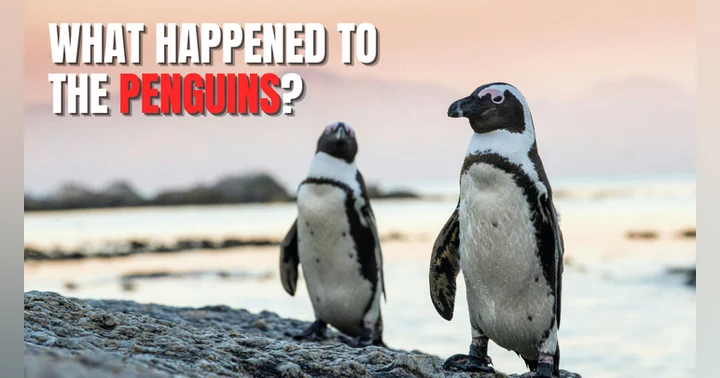
Mass penguin die off explained, the shocking truth behind why African penguins are disappearing and what it means for our future


 Apple Podcasts

 Spotify

 YouTube

 Amazon Music

 PocketCasts

 Overcast
Mass penguin die off explained, a crisis that wiped out ninety five percent of some African penguin colonies, raises a heartbreaking question: how does a thriving species fall to fewer than ten thousand breeding pairs and almost no one sees it happening? This episode uncovers the chain reaction that pushed an entire population toward collapse, from vanishing sardines to the brutal timing of the molt that left tens of thousands of penguins starving. One of the most emotional discoveries in the research was that more than sixty thousand penguins died simply because they did not have enough body fat to survive a three week fast.
African penguin population collapse reveals a deeper story about the ocean. Sardines and anchovies shifted out of reach as warming waters changed plankton patterns, leaving penguins stranded at colonies they could not abandon. Even as conservation groups step in with nest protection, rescues, and fishing closures, the core problem remains that the food web itself has moved. Without a return of sardine abundance, recovery is nearly impossible at scale.
The collapse of the ocean food web illustrates how fragile marine ecosystems can become when climate pressure and overfishing intersect. Listeners will learn why conservation helps slow the decline but cannot reverse it until prey returns, why projections warn of possible extinction in the wild by 2035, and what actions people can take right now to protect one of the most iconic seabirds on Earth.
Help fund a new seagrass podcast: https://www.speakupforblue.com/seagrass
Connect with Speak Up For Blue
Website: https://bit.ly/3fOF3Wf
Instagram: https://bit.ly/3rIaJSG
TikTok: https://www.tiktok.com/@speakupforblue
Twitter: https://bit.ly/3rHZxpc
YouTube: www.speakupforblue.com/youtube
1:00:00 What happens when a species that once numbered in the tens of thousands slips into fewer than 10,000 breeding pairs? And almost no one notices until it's nearly too late. New research reveals the silent disaster on South Africa's coastline, where African penguin colonies have collapsed by up to 95% in under a decade. Underbreeding sites once packed with life now sit nearly empty. Their disappearance is not a mystery of predators or disease. It is the story of an ocean food web that has failed at the worst possible moment. And a lot of it is due to us.
1:00:42 We're going to talk about that on today's episode of the How to Protect the Ocean podcast. Let's start the show. Hey everybody, welcome back to another exciting episode of the How to Protect the Ocean podcast. I'm your host Andrew Lewin, Marine Biologists and Science Communicator here to tell you what's happening with the ocean, how you can speak up for the ocean and what you can do to live for a better ocean by taking action. On today's episode, we're going to be talking about what happened to the South African penguins or African penguins in South Africa. This is something that has been very tragic. It happened from 2004 to 2011. 95% of the population just disappeared, died off. And now we know the answer is why. And I'm here to explain that.
1:01:23 And I just want to say before I start to explain that I've been doing this for 10 years. I've been doing on YouTube for on and off for quite some time, but really for the last year and a half. And the reason I do this is because I love to hear back from you. So if you have comments or any kind of questions or anything like that, you want me to cover something, let me know in the comments below if you've been watching this on YouTube. And if you've been with me on audio for the last 10 years plus, you know, please let me know if you have any questions. You can DM me at how to protect the ocean. You can go and you can put up a link for you where you can go and give me feedback. We'll speak up for blue dot com forward slash feedback. And you can have questions or comments.
1:02:03 I love to hear from them. And if you can hit it like follow in any of your watching, if you're on YouTube, subscribe. If you're on Apple podcast, Spotify, Amazon music, you hit that follow button. That would make me feel really great. Not only do I want to reach more people and consistently on a consistent basis. I do three episodes a week. I just want people to love the ocean just as much as I do and find out what's happening with this ocean. What are we doing to it and how we can make it better for the long run for not only our health, but the ocean's health. And I think that's something that's really important. I just want to drive this community. I want to build this community so that we can get together and talk about this more often. So in the new year, you're going to start to see some offerings that I'm going to be offering for community so we can actually hear from each other and discuss each other.
1:02:47 You know, on the membership sites for YouTube and others. So I just want to be a part of that. I think it's going to be really important. So I'm looking forward to doing that. Those live sessions. It'll be a lot of fun. We get together. So just look out for that. But the biggest thing is, if you've been here for a long time or you've just started, welcome. Thank you for joining us. You're always welcome to be here. No matter if you agree with me or not, who cares? Let's just have some fun. Let's get to know the ocean. Let's make it better. All right. That's my that's my PSA for today. Again, thank you for being here. But let's let's look at this before 2004. African penguins had roughly fifty seven thousand breeding pairs across their range.
1:03:29 Fifty seven thousand that total today has dropped to about ninety nine hundred breeding pairs worldwide from fifty seven thousand breeding pairs to nine hundred nine nine thousand nine hundred breeding pairs worldwide. That's insane. That should not happen. That should be something that we never have to deal with. But unfortunately it happened. And you know, the South Africa holds about eighty seven hundred of those pairs and then Namibia holds around twelve hundred of those pairs. So over the last thirty years, their population has plummeted more than eighty percent with some colonies losing ninety five percent of their birds in fewer than ten years. So now we're trying to find like what's going on because now they're critically endangered.
1:04:10 And with those projections, the projections, if it continues to show what we're seeing, they could go extinct from the wild by twenty thirty five if the trends continue. So that's something we don't want to have. So the first question we have to ask is like what happened to these penguins? Right. First, we've got to look at this shocking discovery. The fact that we had fifty seven thousand breeding pairs and we go down to nine nine hundred. So there's two major South African colonies. There's Dassen Island and Robin Island. I hope I'm pronouncing it properly. They lost up to ninety five percent of their breeding pair penguins in under a decade. That's the biggest biggest loss that we saw. More than sixty thousand birds starved during their most vulnerable life stage.
1:04:53 A species that once filled the beaches with noise and movements that was nearly vanished from the most important strongholds. The collapse happened quickly and quietly and then most people never even heard about it until scientists started to publish their new findings. So what happened? What caused this the die offs? Well, the biggest thing was the trigger was the dramatic die off like of the sardines of the sardine population on the west coast of South Africa. So sardines are the penguins primary food source. They have they provide the best energy in the long lasting energy and they're not that quick as quit not as quick as penguins and they can get caught pretty easily. And so but a mix of warming seas altered salinity disrupted plankton production and intense fishing pressure wiped out local sardine stocks. The loss happened at the worst possible time during the penguins annual molt.
1:05:44 So these sardines disappeared when these these penguins molt their feathers that keep them from being wet and cold and everything. And so when they're land bound, they have to stay in land and they have to use the reserves. They can't go eat and they can't get the energy they need. They have to use the reserves. They just didn't have as many reserves as possible. So when they go out and eat, they build up those reserves so that when they have to actually molt and they stay on land for a little bit, they have to use their stored fat. But if they don't have enough stored fat to eat, they eventually starve. And so when they had these sardines to build those reserves, tens of thousands did not survive and that just continued to happen year after year after year for 10 years. Now why 10 years? Why did these penguins not recover? Because even after the initial collapse, the sardine population did not bounce back. Sardine biomass stayed below one quarter of its historical maximum for nearly 20 years.
1:06:41 This sardine population really suffered. Anchorvies, which was the next best prey, were not abundant enough to in the West to feed the whole distribution and their distribution actually shifted eastward. So far outside the penguin foraging range, the penguins can only go so far. And when they have their colonies, their breeding colonies, they can't move them and they can't swim that far. So if the sardines are out of range, if the paying of the anchovies are out of range, then they can't eat. Right? They can't move their nesting sites. They cannot travel long distances while they're raising their chicks. So with low energy prey, fewer chicks survived. Adults entered molting under underweight, right? When they enter that molting, they don't have enough the fat storage. And the population spiraled downward every year.
1:07:29 Replacement prey species were too fast. So the hake and everything else that's around her too fast or too scarce or too low in fat to support the recovery. So it just wasn't enough. Like the anchovies and the sardines, especially the sardines provided enough for these animals to survive. Now the shift in distribution of sardines and anchovies happen because the shift in plankton happened, which is the main food source during and after and before sardine and anchovy spawning. So if climate change shifts the wind patterns and shifts the current, it shifts the distribution of plankton, which will shift the distribution of the predator species that eat that prey.
1:08:09 So you have anchovies, you have sardines that will shift their distribution away from the colonies. So now these animals can't move far because they have chicks that they're raising. They have low fat storage and they're stuck on land while they molt and they have to use the fat reserves and they don't have enough fat reserves. So they start to die and it happens year over year over year. So now that we know what the problem is, we know why is happening for so long because these sardines and anchovies just, you know, the collapse happened for quite some time in that area. What is being done? I should mention before we go into that, we're still seeing fishing pressure on sardines that have stayed around. So even though there's a lower population of sardines that have stayed around, we're still seeing fishing of those sardines. So that adds to the pressure of already dwindling population.
1:08:58 So now what is being done to help these penguins? Several conservation measures are underway. So governments introduce fishing closures near the key colonies to reduce competition for sardines. Wildlife groups are protecting nests, improving breeding shelters, managing predators and running rescue programs for injured or starving adults and chicks. Some organizations also hand reared abandoned chicks and release them back into the wild. Research teams are tracking penguin movement to identify new foraging hotspots and understand how they're going to be able to get their own species. So there's a lot of stuff that is going on, but are they actually successful? Do these efforts matter? Is it enough to bring their populations back up to the 57,000 breeding pairs that they once had?
1:09:45 The honest answer is it's actually mixed. These conservation actions have helped individual penguins and improved conditions around some of the nesting sites. However, the underlining issue is the collapse of the sardine stocks. It hasn't been solved. So how do we solve this sardine? Problem, which is really difficult because you're looking at an entire shifting predator price situation and a food web switch. So without a significant recovery of prey availability, penguin numbers cannot rebound at the scale it once was. The species is listed now as critically endangered and projection so that they could disappear from the wild by 2035 if the trends continue to happen. So that's if the sardine populations remain in the wild. Efforts are slowing the decline rather than reversing it. So the thing is, is sometimes when we talk about conservation, we talk about the efforts that we put together and sometimes they help locally, but they're not going to help overall because you can only do so much as humans in bringing everything back. One is expensive. It's expensive to do all these efforts and two, it's not going to happen at scale, which is because the the the process is not going to happen at scale.
1:10:50 Which is because the the primary problem hasn't been solved. This could help extend their life on this planet by a few years, but it's not going to solve the problem until we can get sardines back in the area or maybe move these colonies to somewhere else, which is a much difficult, much more difficult problem. So like what can you do to help? So even though these these conservation actions may not be the best thing, it is something that we can do in the meantime to kind of give us some time before the sardines population comes back hopefully so you can support any kind of African penguin recovery in several meaningful ways. So support organizations working directly on sardine and penguin conservation share science based information on how climate change and overfishing affect marine life, which doesn't really happen a lot.
1:11:42 Choose seafood from sustainable fisheries, of course, and encourage others to do the same and contact your elected officials to support marine protected areas, science driven fish fishing policies and finally amplify this story. Share this story. The African penguin crisis is still invisible to much of the world. And unless we get it in front of their eyes or in front of their ears, we cannot help these penguins at the scale that they need help. Far too long, the decline of the penguins went silent and it's about time that we speak up and we amplify their story. That's what this podcast is all about. That's what this community is all about. I'll tell you one thing, something that happened to me recently. I joined an advocacy group. It was a group on WhatsApp and it's a bunch of science communicators and creators content creators that are to get that work together to get specific campaigns out that we all start or somebody starts as hey, I need someone to help me amplify this.
1:12:37 Can you put it on your story? Can you put it on your your Instagram, your TikTok? Can you put on your podcast and let's talk about this story because with this amplification, this style of sharing these stories and putting this on a platform that can be shared with hundreds with thousands with hundreds of thousands of millions, this will help these populations and people will finally understand the plight. These penguins are facing and hopefully we'll get to the point where we can get policy enacted that can help these fish at scale as well as these penguins at scale. That's the important part of this journey. That's what I want to get across by sharing this story. I hope you share this podcast, whether it's the audio version or video version. If you have a comment or a question, it helps with the algorithm to get to in front of more people. Please let me know.
1:13:27 I want this to go everywhere. I want every story to go everywhere and it's with the help of you, the community and that we can get together and discuss. I want to get to know you. I want to hear your comments. I want to hear your questions. If you're watching this on YouTube, put your comment in the comment section below. If you're listening to this on your favorite podcast app, just let me know. Just go to speakupforblue.com forward slash feedback. Let me know how you feel. You can also go to speakupforblue.com follow to follow the podcast on your favorite podcast app. I want to thank you so much for joining me. On today's episode of the how to protect the ocean podcast. I'm your host, Andrew Lune from the true north strong and free. Have a great day. We'll talk to you next time and happy conservation.