The Pollution That Breeds: How the Great Lakes Stopped Invaders


 Apple Podcasts

 Spotify

 YouTube

 Amazon Music

 PocketCasts

 Overcast
In 1988, someone found a striped mussel the size of a fingernail in Lake St. Clair. Within a few years, zebra mussels coated pipes, boats, and the bottom of the Great Lakes, and they became the poster child for "it's too late." Andrew closes Marine Pollution week with the pollutant that breaks every rule: a living one that reproduces instead of diluting.
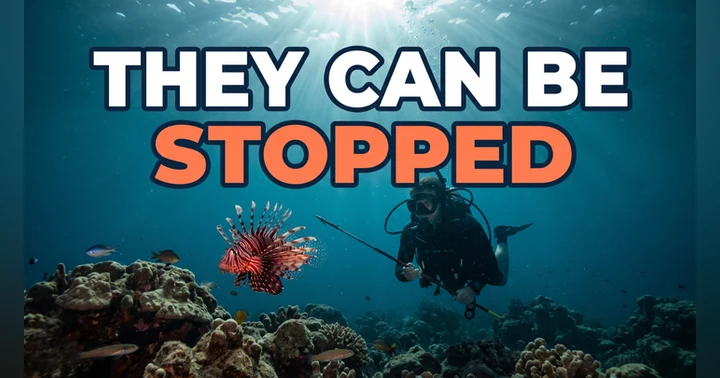
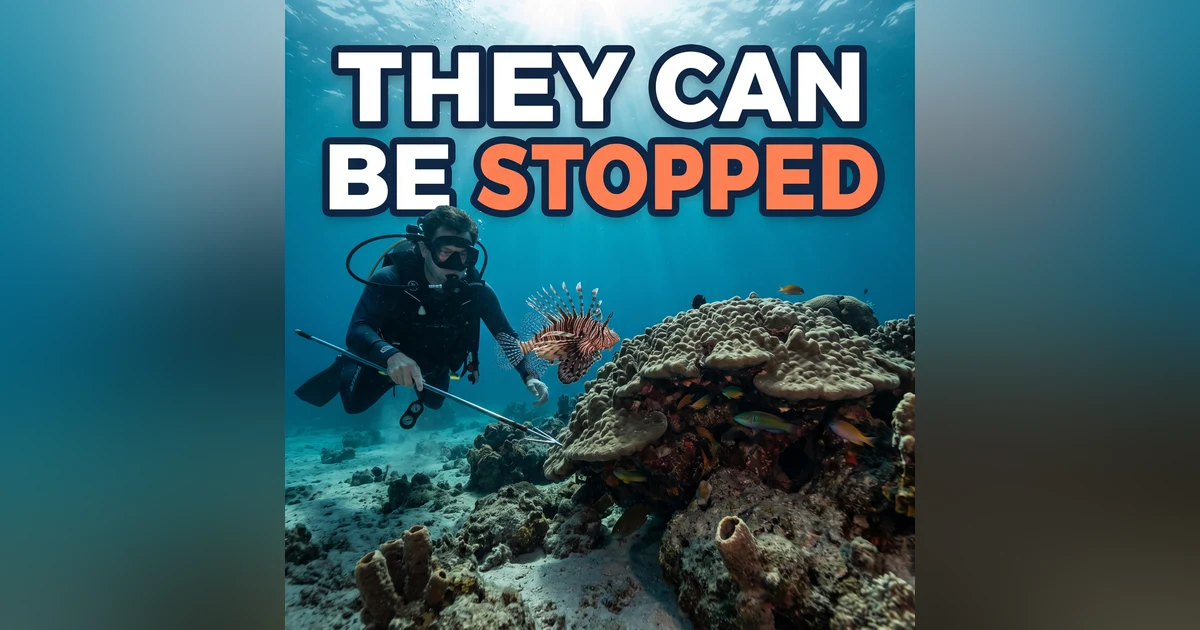
He follows two invaders. Zebra mussels rode in on ship ballast water, clogged power plant intakes, and stripped plankton from the base of the food web. Lionfish, likely released from home aquariums, spread from Florida across the Caribbean and cut the number of young native fish settling on reefs by about 79% in one experiment.
Then comes the fight back. Ballast water rules tightened between 1993 and 2008, and new invasions in the Great Lakes fell 85%, to the lowest rate in two centuries. In the Bahamas, keeping lionfish low on small patches of reef let native fish rebound by 50 to 70%. Andrew wraps with the role every boater and paddler plays: clean, drain, and dry, every time.
Takeaways:
- Invasive species are biological pollution, and they multiply over time.
- Zebra mussels arrived in ballast water and were found in Lake St. Clair in 1988.
- Densities at one Michigan power plant topped 700,000 mussels per square metre within a year.
- Lionfish likely reached the Atlantic through aquarium releases and now range from North Carolina to the Caribbean.
- Lionfish cut the number of young native fish settling on test reefs by about 79% in five weeks.
- Stricter ballast rules dropped new Great Lakes invasions from 26 to 4 per 13-year period.
- Keeping lionfish numbers low on targeted reefs let native prey fish rebound by 50 to 70%.
- Florida divers removed 31,773 lionfish in the 2024 Lionfish Challenge.
- Ontario has required boaters to drain water and remove plants and animals before moving a boat overland since 2022.
- Clean, drain, and dry every boat, canoe, kayak, or paddleboard between waterways.
Support Independent Podcasts: https://www.speakupforblue.com/patreon
Need help with your ocean non-profit, company, or project? Get the help you need with Pisces Oceans Inc.: https://www.piscesoceans.ca
Connect with Speak Up For Blue
Website: https://bit.ly/3fOF3Wf
Instagram: https://bit.ly/3rIaJSG
TikTok: https://www.tiktok.com/@speakupforblue
Twitter: https://bit.ly/3rHZxpc
YouTube: www.speakupforblue.com/youtube
0:00 in 1988 someone found a small stripe muscle in Lake St. Clair. and it was about the size of a fingernail. Nobody had seen it in North America before. And within a few years, there were actually billions of them coating pipes, boats. And the bottom of the Great Lakes. It didn't look good. A lot of the fish populations went down. It would like the lakes were changed quite significantly. Then the Great Lakes pulled off something that no other freshwater system in the world has managed. And that's what we're gonna talk about on today's episode of the How to Protect the Ocean podcast. I'm your host, Andrew Lewin. Marine biologist and science communicator here to tell you all about what's happening with the ocean. Today we are talking a lot about ~ invasive species, right? It's a we're gonna talk about some of the stories ~ that usually end in the same way. some something arrives, they take over, and then use is like this is here forever, we can't do it.
0:51 And you feel helpless because you see these animals here. And how are you gonna get rid of them? How do we get rid of them in the Great Lakes? Like these mussels and other like lionfish. How do you get rid of them into the ocean? And there's all these things that you you look at and you're my gosh, how are we doing? ~ but this episode shows two places where people did push back, and the numbers have proved that we can manage some of these invasive species. I'm not saying it's easy, but it's something that we can do. ~ Just to kind of give you an I an idea, like I've been watching the Zebra Mussels for a while. This this whole invasive zebra mussels thing since high school. So I was in high school in the 1990s. they were the poster poster child for it's too late, quote unquote, it's too late. And and I've been waiting a long time to tell the other half of the story.
1:35 This was something that I did a project on in my science and society class, which is one of like my favorite classes looking back at at high school. And it it's something that, We never really talk about in terms of pollution. This is a type of pollution. And we've been talking all about pollution this week. We had, the author of the second edition of Marine Pollution, Dr. Judith Weiss, who's here to talk to us on Monday about all the different types of pollution. Then we start to dive in. We looked at sewage in New York Harbor and how it's, we stopped the flow and the harbor started to recover. ~ and recovered. Now we have, a great ~ organization that's looking at whale counts because the whales are back and the Mendaton are back. the next day we talked about on Wednesday we talked about drugs in our water like pharmaceuticals.
2:19 to try and stop the dose and and and we see that the the lake can recover and we have the technology to do that. And then yesterday we talked about plastic and it it only grows when we make more and so that we know that we can stop making it and everything is better. Now, every one of those pollutants needs us to keep adding it, right? Like the like plastic, pharmaceuticals, sewage, everything is added in there. But this one, the biological pollution, breaks that rule, right? A chemical spills and gets diluted over time. an invasive species as a population gets bigger because it reproduces. And that's why like some scientists call invasive species like biological pollution. living things in the wrong places and changing the system around it.
3:02 That's what we need to do. So let's let's talk about, the zebra muscle situation and how that started and then how we we're and getting to the point where what we are doing to really stamp this out. Cause I think it's it's really important when we think about the ramifications of this. So the big cargo ships that you see in at ports carry water in their hulls to keep them steady, It's a called ballast. So a ship takes on water in one port, sails across the ocean, and pumps it out into another. So if it arrives in Hamilton Harbor here in Canada in the Great Lakes, ~ in Lake Ontario, then it will, it'll pump out that water. Now Not anymore, but it did that's what it did. So along with that water comes whatever was living in it.
3:44 So it could be larvae, tiny crustaceans, fish eggs, plankton. a ship's ballast tank is is pretty much a free ride across the planet. And In 1988, a small striped mussel was found in Lake St. Clair. It's the little lake between Lake Huron and Lake Michigan. And it was a zebra mussel, native to the region around like the Black and Caspian seas in Eastern Europe and Western Asia. It almost certainly arrived in the ballast water. That's what pretty much we have on ocean-going ships. it spread pretty quickly. So zebra mussels and their close cousins, the quagga mussel, can pack in about 20,000. per square meter. That's how that's how close they can get and that's how dense they can get. And they're small, like they're like the size of a fingernail.
4:27 and at some of the power plants intakes, so the pipes that that bring in the water, people have counted up to 750,000 per square meter. they clog the pipes, jam valves, they they damage cooling systems I remember I worked for one of my first jobs in private environmental consulting. I worked for a company, a wastewater company, that would try to get rid had like a type of natural chemical that these erbamos didn't like. And they would they would help industry get rid of them from their pikes because they would clog them up so much. Now, the estimated economic damage in North America since they arrived runs between one and one and a half billion dollars. that's a pretty large sum of money, especially when you look at all the stuff that happens along the Great Lakes.
5:09 And they changed the lakes themselves, like completely. A single adult can filter up to two liters of water a day. And Lake Erie's muscle population can filter a volume of water equal to the whole basin in a single day. Now, Lake Erie is not the biggest lake, but it's still a pretty big lake. And that made the water clear, which sounds to be good news. That's great. Like it make it nice and clear. But clear water here means the plankton at the bottom of the food web has been stripped out. There's like a lot of the the brownness or the the the murkiness, I guess, of the water was plankton. And when you don't have plankton, the fish that depend on it, including like the young species like walleye and leg trout, pay the price. they're not there anymore.
5:49 And unlike a spill, the mussels didn't fade over time. They reproduced every year. There were more and more and more. That's the type of biological pollution we're looking at. It's not like that it dilutes, it multiplies. So now let's head south to a warmer water and a fish that's pretty beautiful, venomous a little bit, and very hungry. it's the stuff that nobody really recognized, like lionfish. Lionfish are stunning. red and white stripes, long fan-like fins, a crown of venomous spines. Like they're pretty cool. They're native to the reefs of the Pacific and the and the Indian Oceans. And for years, they were a popular fish in home aquariums. And in mid-1980s, lionfish started to turn up along the Florida coast.
6:31 And people were like, where did this come from? And most likely the explanation is that they were released from the aquariums, like the marine aquarium hobby. So essentially people had them in the aquariums. And they said, what, we don't want them anymore. We don't want to ret we're not going to return them to the store, which is what they're supposed to do. They don't want to kill them. So they release them into the ocean because it's the ocean. It's one big ocean. This is where they should be. Well, yeah, they do belong in the ocean, but they're from Indonesia. They're not on the Atlantic. They're not in the Caribbean. So since then, they've actually spread through the Caribbean, the Gulf of Mexico, and the US as far north as Carolina. I've gone diving in the Caribbean multiple times and I see them on every single dive. It's actually Quite insane to see them. The only time I didn't see many of them was in Grand Cayman, and that was pre-COVID.
7:16 So that was quite a long time ago. Now they had every advantage. A female lionfish can spawn every three to four days, releasing more than two million eggs a year. their venomous spines mean almost nothing in the Atlantic wants to eat them. So there's no natural predators. And the native fish had never seen a predator like this before. So they didn't know like to swim away. So lionfish had been recorded eating like more than 70% of the native species that were on there, the native fish that were on there, because they're predatory species. And in 2008, two scientists from Oregon State University, Mark Albans and Mark Hicks, measured just how much damage they do. On a small experimental reef in the Bahamas, they compared reefs with lionfish to reefs without.
7:58 Over just five weeks, the reefs with lionfish saw about 79% fewer young native fish settling into that area. That's crazy. Like young fish are like the reef's future and lionfish are eating. And I've covered this on Ocean Dakota Live ~ earlier this week, where we talked about how if you have a coral reef that is suffering from bleaching, having the layers of fish that you need. To make sure that there are fish to take off algae, to allow young corals to settle after a pretty devastating like six month bleaching event or six-month heat wave event. It's really important to have those there, to have that like layers of fish and and a and a healthy food web.
8:38 If you don't have that, then the coral reefs are not going to be able to survive for very long. So now you have like we talked about two invaders, right? We two different places, very different places, one freshwater, one marine. And like I want to talk now like how how people are are fighting back, because that's really what this comes down to. This is not anymore where we're just like, hey, these species are here. We're just gonna have to deal with them. That was part of it. But there's been research going on for decades to kind of figure out how we can get rid of them. So between eight 1959 and the mid 2000s, the Great Lakes picked up a new invasive species, roughly like every six to seven months. It wasn't just the zebra mussel. Some had more impact than others. And scientists have said no other freshwater system on the planet was invaded that often. It's almost like a war of the species.
9:22 And it's because, the Great Lakes are such an important navigation area into central Canada and the US. Now today there are close to 190 non-native species established in the basin. And about two-thirds of the ones that have arrived after 1959 came in the ship's ballast water. So Canada and the United States went after the ballast. Like that's that's you found the the the problem. Now you gotta go after it. So in nineteen ninety-three, ships coming into the Great Lakes from the ocean have to swap their ballast water out and it's at sea, replacing the fresh or brackish water with salt water. So it gets rid of all those animals that were in there. And anything that stays around, get if they're freshwater, they're gonna get killed by the salt.
10:04 And the idea was simple like freshwater hitchhikers from the from the port in Europe usually can't survive a With a full strength ocean water. And the the early rules had some gaps. So ships that said they had no ballasts on board often still carried leftover water and sludge in the bottom of their tanks, and invasive and invasions kept coming in. So between 2006 and 2008, both countries, United States and Canada, tightened up the rules. Ships had to flush even those empty tanks with salt water. And every ship heading into the St. Lawrence Seaway would have its tanks checked. So they were all inspected. In 2022, two Canadian scientists, Anthony Ricciardi at McGill University and Hugh McIsaac at the University of Windsor, looked at what happened next.
10:46 They compared three 13-year periods from 1981 to 93. 19 new non-native species were detected. From 1994 to 2006, 26 were detected. So obviously that the f now they're gonna have to really flush them out. From 2007 to 2019, after the tougher rules, just four not native species came in. That's an 85% drop. The invasion rate in the Great Lakes is now the lowest it's been in two centuries. So we're starting to see some progress here. There's still obviously some work to do, but there's some progress here in not allowing more in and trying to get rid of the ones that are already here. And Ricky already put it this way. He goes, I'm aware of no other documented case In which the invasion rate of a large aquatic system has been suppressed through a management intervention. Like the same lesson as New York Harbor.
11:36 Find the door to the problem that comes through and pretty much close it. That's the idea, And in 2017, an international treaty on ballast water management came into force. So ships around the world now have the to manage their ballast water too. So it's not just people coming into Canada or the US or the St. Lawrence Seaway. Now closing the door. works for new arrivals, but what about the lionfish already here? You can't flush an ocean. Like it just doesn't work that way. So once the lionfish had spread across thousands of kilometers of reef, most people assumed nothing could be done. you'll never catch every lionfish in the Caribbean. That's just not going to happen. And a team led by Stephanie Green, ~ working with Isabel Cote at Seven Fraser University, asked a different question. What if you don't catch every single one?
12:22 they worked on 24 coral reefs near Eleuther Island in the Bahamas. On some reefs, divers regularly speared lionfish, removing somewhere between 75 to 95% of them. enough to keep their numbers below the level where they start to wipe out the native fish. Others were left alone. The results came out in 2014 on the reefs where lionfish were kept low. native prey fish numbers went up by 50 to 70 percent fish that matter to local fishers like nasal grouper and yellow tail snapper they came back too and Stephanie Green summed it up like this by creating safe havens small pockets of reef where lionfish numbers are kept low we can help native species recover and we don't have to catch every lionfish to do it And that idea caught on. So in Florida, the state now runs a lionfish challenge.
13:09 In 2024, 285 divers removed 31,773 lionfish. Holy cow. The highest total since the challenge started in 2016. One diver speared 915 by himself. And the lionfish ended up on restaurant menus, where it turns out like they're quite delicious. I've actually had them before. They're they're they're quite meaty. Noah has even promoted eating lionfish as a way to help control them. we are very good at overfishing. Overfishing an invasive species, it's not a bad thing. So the thing is, I think what I want you guys to keep in mind here is you don't need to completely win. Keeping an invader low gives the local ecosystem time to recover.
13:50 But the thing is, like ballast rules close one door and There are still others that are still open, right? You have recreational boats moving between lakes, aquarium and pet releases, bait buckets, and invasive carp moving north through US rivers. And there are programs out there to try and keep them out as much as possible, but we can't control everything. Like zebra and quagga mussels aren't leaving the Great Lakes. They're still there. The wind is keeping them from reaching new lakes and keeping new species out. They're even Have been experiments to try and keep them out of smaller lakes and even just like eradicate them from smaller lakes by dosing the lakes. I don't know the exact chemical to use, but it's usually natural and it doesn't affect the rest of the lakes because they do a lot of studies around that.
14:33 Now lionfish aren't leaving the Caribbean either. They're gonna be there. The wind is managing them reef by reef. So it's all gonna be down to local management and whether the local authorities or the countries or the islands that are around there have the ability and the resources to do this type of stuff. And it's like this is where where you come in, I mentioned earlier, if you have a boat and you're going from lake to lake, which is fine. I want we want people to be on lakes. But the thing is you should clean, drain, and dry every time you move a boat, canoe or kayak, anything, or a paddle board even, from one lake or river to another. Sometimes it just takes a couple of larvae pieces to attach onto a paddleboard and then it goes into another lake and it starts to it starts to invade that lake, Clean off any kind of plants, mud.
15:17 Anything struck under the hull or a trailer, Drain all the water, anything that will go into the water, like clean them off, drain all the water, including the bilge and live wells. Let everything dry before you launch somewhere new. And in Ontario, it's it's pretty much the law. Since January 1st, 2022, you have to remove aquatic plants and animals and drain the water before you move the boat overland. Fines could run up to at least $350, which doesn't sound like much, but for a recreational boater, you don't want to have to pay that much. we saw a zebra mussel spread from the Great Lakes to inland lakes, largely on boats and trailers. And the ballast ruse close the big door, they're less likely to come in through through the ports.
15:57 you clean, drain, and dry, that closes the small ones. you're the one who's who's holding them shut. Like we want to close these doors. We want to close these areas that they can come in. Now, this week we had five episodes. The first episode was all about the different types of pollution. Then we broke down four different types of pollution, Sewage in New York, drugs in the lake, plastic in Canada, invasives in in the Great Lakes. Obviously, a focus on Canada because I'm Canadian. I'm I'm close to these ~ ideas, but this is happening all around the world. And the pattern is pretty much every time. We find where the problem comes from, we act on it, and give nature time. It responds faster than most people expect. You'd be surprised when policies go into place.
16:38 Getting them in there sometimes is tough, but once they're in place and they're enforced properly, they work. Like look at the Great Lakes. It was home to over 150 non-native species, invasive species, Once a bit more often than any other freshwater system on Earth, and is probably one of the biggest freshwater systems on Earth. And now it's holding the door shut, like with ships flushing their their tanks at at sea and boaters cleaning their hulls at the launch. pollution can breed, sure. And it can spread and it can hide. And we've shown again and again that we can stop it. All we have to do is put the policies in place and enforce those policies once they're in. Mistakes happen. Sometimes they're bigger than others. Totally understand. as the world becomes more globalist and we're we're all mixing in, we have to ensure that there are Policies and regulations in place and laws enforced to ensure that everything is not being changed. one study that I was a part of, it was really just a more of a exercise, I guess, is we looked at how similar the fish populations got within the Great Lakes over years. So we had data all the way back from the 1800s, and we looked at it presently at the time was like mid 2016 and we or mid 2012.
17:46 And I I looked at it. Like as the years went by, the decades went by, we started to see a like it it was less diverse and more similar because of the lock system, because of all the travel, these fish are able to get into different places and there are certain fish that will dominate others. And it changes the diversity, it changes the biodiversity that we see, and it can switch up the system. Having other species that come in from other places around the world that can take advantage of these like Asian carps and so forth, that becomes a dangerous situation because it can change habitat. Anything that changes habitat can really have an effect on the populations that are here, whether they're fish or invertebrate populations. And this happens not only in in the Great Lakes or in lake systems and freshwater systems. This is happening in the oceans.
18:31 We just saw that with the lionfish. It's great to see them in the southeast Pacific, but not in the Caribbean, not in the Atlantic. which we gotta make sure that we keep them where they belong and to make sure that the systems where they are are pretty safe. And this happens in ecology all the time. ~ and it and it changes how a system will run with underwater. And I think we have to be very careful on how that diversity gets affected in that way. But that's it for today's episode. I would love to hear your thoughts. If you're listening to this on Spotify, I love Spotify because it has a comment section. I normally listen on Apple, but I'd love Spotify for the comment section. So let me know what you think about this episode in Invasive Species. If you have a story to share, love to hear that. Also, you can just hit me up on my socials.
19:13 The links are in the show notes to see to have that conversation. Cause this is the beginning of that conversation. Unfortunately, podcasting, I can't get responses back quickly, but I would love to hear what you think. because ideas are what leads to solutions. And we really need a lot of solutions. So thank you so much for joining us. Thanks for being a part of this community I can't wait to talk to you next time. This has been another episode of the How to Protect the Ocean Podcast. I'm your host, Angela. Have a great day. We'll talk to you next time and happy conservation.