What Happens to Fish When Our Pills Reach the Water?


 Apple Podcasts

 Spotify

 YouTube

 Amazon Music

 PocketCasts

 Overcast
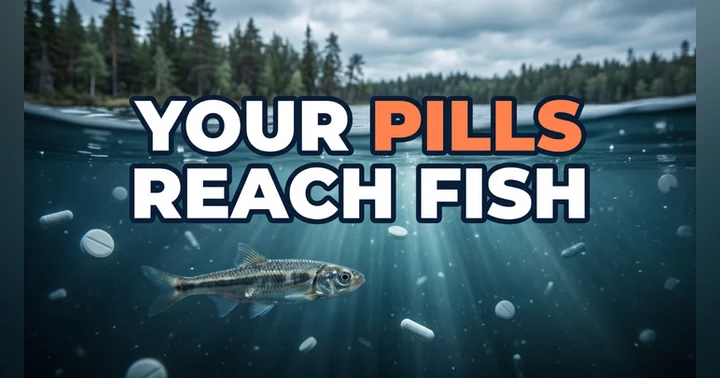
In 2001, government scientists started adding a tiny amount of the synthetic estrogen found in birth control pills to a remote lake in northwestern Ontario, at levels already measured in city wastewater. Within seven weeks, male fish were making egg-yolk protein. After two summers, some had eggs growing in their testes, and the fathead minnow population collapsed to about 1% of normal. Andrew explains how the same chemistry leaves our bodies every day, passes through treatment plants built for sewage and bacteria, and flows into rivers, lakes, and the coast.
Hormones are only part of it. In Sweden, researchers at Umeå University found that perch exposed to the anti-anxiety drug oxazepam, at levels matching wild fish, became bolder, fed faster, and drifted away from their schools, all behaviours that make a small fish easier to eat. Andrew then goes back to DDT, when bald eagles fell to 417 nesting pairs in the lower 48 states before the 1972 US ban let them climb past 71,000 breeding pairs.
The recovery story continues at Lake 260. Once the hormone additions stopped, the minnows came back to pre-experiment levels within three years. Switzerland is now upgrading about 120 treatment plants with ozone or activated carbon to remove more than 80% of these micropollutants, paid for by a small annual fee per person. Andrew closes with the part you control today: take your leftover and expired medications back to a pharmacy.
Takeaways:
- Your body doesn't use every bit of a pill, and what's left leaves in urine.
- Most treatment plants remove solids and bacteria, and many drug compounds pass straight through.
- At Lake 260, synthetic estrogen at about 5 to 6 nanograms per litre collapsed the fathead minnow population to about 1%.
- Lake trout that ate those minnows declined too.
- Oxazepam made perch bolder, faster feeders, and loners, raising their risk from predators.
- Bald eagles went from 417 nesting pairs in 1963 to more than 71,000 breeding pairs after DDT was banned.
- Lake 260's minnows recovered within three years once the hormone additions stopped.
- Switzerland is adding ozone and activated carbon treatment to about 120 plants to remove more than 80% of micropollutants.
- Ontario's free pharmacy return program collected more than 330,000 kg of medications in 2024.
- Keep taking what your doctor prescribes, and return the leftovers to a pharmacy instead of flushing or trashing them.
Support Independent Podcasts: https://www.speakupforblue.com/patreon
Need help with your ocean non-profit, company, or project? Get the help you need with Pisces Oceans Inc.: https://www.piscesoceans.ca
Connect with Speak Up For Blue
Website: https://bit.ly/3fOF3Wf
Instagram: https://bit.ly/3rIaJSG
TikTok: https://www.tiktok.com/@speakupforblue
Twitter: https://bit.ly/3rHZxpc
YouTube: www.speakupforblue.com/youtube
0:00 Welcome back to another episode of the Ocean Leader Podcast, the podcast that helps you get your ocean project to the next level, to be successful, and to have a great ocean impact. I'm your host, Andrew Lewin. I'm the Ocean Communications Manager at Pisces Oceans because the Ocean Leader Podcast is a Pisces podcast. Today on the podcast, we have PJ Swieswerda of Gotham Whale. Now, if you don't know what who Gotham Whale is or what Gotham Whale is, it is an organization that works to find out what like research, monitor, and help marine mammals in New York City Harbor. What? Marine mammals in New York City Harbor? Isn't it polluted? Not anymore.
0:40 And the whales have come back because the menhaden, the fish have come back, and we have seen. An amazing community just grow back to the health and ecosystem that it was pre-industrialized era. And New York has helped do that by cleaning up its harbor, by cleaning up its rivers and the Hudson River and the harbor And it's been amazing to see. And Gotham Whale was born out of that. And its founder, Paul, started this, and his his story is absolutely amazing. And I think what happens when we become ocean leaders, we become so focused in on our own story that we sometimes lose that inspiration because we're stuck in a part of our growth of an organization or of an ocean project.
1:25 And we we have to look outside for more inspiration. And Paul Swierswerda's story is an inspirational one. And you know, working in the aquarium field at in in Boston at the New England aquarium and in New York City aquarium. For over 40 years combined, and then he retiring, and then starting an organization like Gotham Whale is absolutely riveting. But I I don't want to tell you that all the details because his son, PJ, is here to tell his father's legacy of starting Gotham Whale and just who he was as a person, being inspirational and also inspiring people to come out. And monitor whales as part of a citizen science program. You're gonna find out about Gotham Whale.
2:06 You're gonna find out most importantly about the man who started it, Paul Swieswerda and you're going to love this story. I hope it helps inspire you get out and participate either for Gotham Whale or for another citizen science project that you are close to, or even your own project and help develop your own. project as an ocean leader and as an ocean project so you can have more of an ocean impact. So here is PJ Swieswerda talking about the ~ legacy of his dad Paul and Gotham whale. Enjoy and I'll talk to you after. Hey PJ, welcome to the Ocean Leaders podcast. Are you ready to talk about the legacy that is Gotham? Yes, I am very ready and love talking about Gotham Wheel and love talking about the the legacy that my father created and then ~ I was fortunate enough to watch develop and ~ s see what it it it it balls into.
2:59 I love it. I think this is a really interesting perspective because you know, this is what we call the Ocean Leader podcast. We talk a lot about ocean leaders, but a lot of times we talk to the ocean leaders, you know, who started things and who are running things. You have a really interesting perspective in that you saw your father, an ocean leader within himself, be able to work at an aquarium for his entire you know career. You watch that growing up as a kid. Have a lot of stories which will get into, you know, of you being watching him at the aquarium and visiting him at the aquarium to through with his job. And then he starts Gotham Whale. So I I I would I'm really interested in getting your perspective, what that looks like from someone who's not in the in the business or who wasn't in the business and looking from the outside in to be like, this is really cool. Like we're starting to see all these whales, and we're starting to see like all these marine mammals were tracking them.
3:50 and and to watch your dad kind of build that into this legacy that we now have for in Gotham Whale in New York City is absolutely amazing. So I'm looking forward to really diving into this story because it really gives people a different perspective of what it's like to look at how ocean leaders kind of develop from it from you know within a family and and see how that is with your with your dad. So let's start, you know, kind of from the beginning. You how long did your dad work at the at the aquarium, at the New York Aquarium? The New York aquarium, I believe it was 20 plus years. I'm not exactly sure how many, but it was 20 plus in New York and then 20 in Boston. So it was, you know, a split. Wow. So ~ it's very interesting, like you said, for me to be an observer watching this whole journey and what you know what came out of it. And then, you know, from a layman's point of view, not being in the ~ scientific or the the marine biology and Dad could tell you the the Latin names of different animals, where ~ Right.
4:51 I'm unfortunately I I cannot. But Yeah. he was very knowledgeable and ~ it all started, you know, if you turn the turn the clock and the watch back, is ~ watching Jacques Cousteau, you know. So he was inspired by Jacques Cousteau like many other ~ marine scientists and marine biologists back in that era, where Mm-hmm. Jacques Cousteau was exploring the underwater world. And, you know, we what he'd watch them on TV. And, you know, I can have vague memories of, you know, him watching those shows and getting inspired. And then I can also remember, you know, his dive watch. And that's where I go to, you know, this precious thing called time, you know, what you do with your time.
5:35 And what my dad decided to do with his time was invest in ~ learning about the oceans and the creatures in it. And At that time the Boston aquarium was being built. And so it was very convenient. And maybe by divine intervention, it just ~ attributed to the fact that he showed up there and said, How do I get involved in this? And ~ that developed into a career, but also just being around that environment. Mm-hmm. it's it's amazing to see what grew out of it. I love that. I love that story. Did he go to school for marine biology or was this something where he learned through experience?
6:19 It's it's it's all through experience. He he does he did not have a degree in it. it was all self taught Crazy. That's awesome. and ~ it was self taught by ~ also again being in that environment and then Yeah. then mentors and other people in the field that coddled him into different ~ aspects of this is the way you should go. And you know, Mm-hmm. one of them, ~ one of the stories that I do remember was Doc Edgerton. And so I don't know if you're familiar with Doc Edgerton. He's the flash photographer guy that, you know, took all sorts of pictures of ~ bullets going through apples and what have you. And so Okay. Right.
7:00 it was, it was ~ he developed ~ Flash Alley. And my dad went to Flash Alley at MIT and just by hanging around that environment, got to meet Doc Edgerton and became not a ~ understudy, but He he observed the fact that my father was interested and he led him into this world of ~ Flash Alley and you know, that inspired my father at a young age to say that he was on the right track. That's unreal. So how old did you think he was at this at this time? I I'd say he was probably in his early twenties. Yeah. That's so cool. That's so cool.
7:41 So he's just following these different paths. Like people are telling him, like, hey, go follow this person or go talk to this person. You should check out this area of of study. And and he was just taking it all in like a sponge. Absorb yeah, absorbing it like a sponge and then also, you know, taking it upon himself to understand what he could learn out of it and understand how he could ~ build off of it. And you know, hard work pays off is Yeah. you know the motto. And he would go to the aquarium starting as a volunteer and that got him to a job and he used to say that he worked up to middle management, you know, worked Yeah. his way to worked his way to the middle.
8:22 And then ~ after 20 years, moved down to New York and built off his career in a different angle that went to different places ~ around Europe. So he was doing like European ~ conferences and Wow. learning learning about accreditations for aquariums throughout Right. ~ throughout the world and how they did their exhibits. So that Mm-hmm. learning curve was something that, you know. He was fortunate enough to be around and and build off of. amazing what kind of of like day-to-day activities would he be doing would he be helping creating the the exhibits and the in the habitats or would he be more managing like the people that are that are around that how would all that work From from my memory, it was a a bit of both.
9:11 And so, you know, it was it was people skills and managing people, but also developing new cutting edge exhibits, you know, so you know, building the exhibits to, you know, have for the public so they could ~ appreciate and learn from what they were trying to ~ depict on what the exhibit was supposed to be behind. You know, so there was one exhibit that I do remember. Which was a a a tidal tidal wave pool where it was Yeah. just ~ waves coming crashing into the into the rocks and all sorts of anemones just flapping back and forth and you know, it's creating an environment that is real life.
9:53 And so to Yeah. get to get the technology to do that back in that era was again cutting edge and trying to f trial and error, figure these things out and work through the bugs. And and you and it's a it's a mi I feel like it's also, and you can correct me if I'm wrong, it's a mix of the knowledge that you that he accrued throughout, you know, knowing how the physics works in in terms of how like the the the waves would come in and go out, but also how to construct these these things as well. So there's like a construction background as well as the knowledge of the physics of the oceanography, and and that's what he's been pulling in all this way. Was like was he handy that way in terms of of like he can make a lot of stuff and then can in like construction?
10:39 He wa he was handy in that way, but he was also handy in getting the right people to do the right things. So, you know, so you know, back then there was different materials, you know, acrylics were just coming out. Mm-hmm. Yeah. So there was all sorts of ~ he started ~ a side business, which was ~ something that I was affiliated with, which was called Aquatic Associates. And so Okay. what we would do is we would go around to different ~ different restaurants or ~ dentist offices that would have Yep. Yep. displays. And my father knew how to care for the animals, you know, the the fish with diseases and what have you, Mm-hmm.
11:20 but also he knew how to build the exhibits. So it was something that he would ~ bring that knowledge to that aspect Yeah. of how to build fish tanks. And so building fish tanks meant, you know, what type of glass or acrylics Yeah. were coming out. So that that was very interesting back then to be an observer like myself in my background of like to build things and carpentry and, you know, I fit well with that. And then I was a hired hand in in Yeah. But I mean like and that's during the time like I was a I'm a I was a marine hobbyist for quite some time, like probably from like the mid-2000s till the mid-2017s.
12:01 And you know, it it the the amount of knowledge that people accrued over that time of of how to bring in like marine tanks and and how to take care of corals and the lighting and everything. But your dad had all that knowledge from like the beginning, like from like for 40 years. He was ~ he had that knowledge. So he had that one up on people. Like if I were at a dentist, I was a dentist, I'd be like, yeah, I'm bringing in the the the crew that you know is is at the aquarium, like the big aquarium knows how to handle the animals, knows how to build it right. I mean, that is credibility to no end. Like the guy that that's on the forefront of creating these things and making sure they work at at like large scales, because these aquariums are like the, you know, the The the the Boston aquarium probably turned into the New England aquarium and the New York aquarium. These aren't little aquariums, these are full scale public aquariums, like amazing displays, you know, world renowned. And like you said, going to different conferences and stuff.
12:56 That's pretty cool. Before you started working with your dad, did you often visit him at work? Like, were you one of those kids who are like, I want to go see dad? I want to go see what he's doing and maybe look around at some of the some of the exhibits and He'll take you around, maybe do a little behind the scenes tour. So that was my childhood is I was fortunate enough to Yeah, I can imagine. be around that environment where going behind the scenes and him being a teacher would be something that, you know, we were ~ fortunate enough to have for friends in the neighborhood of hey, let's go see, you know, Paul's dad at work. And I was I don't want to say ignorant, but I wasn't really understanding the magnitude of it, you know, Mm-hmm.
13:45 that it was just dad. It wasn't Yeah. it wasn't, you know, he did his thing and my friends thought it was interesting, but ~ he would bring them in and we would go behind the scenes and he would show them how the mechanics work of the plumbing Yeah. and those type of things. And then also educate about the animals on what they do and how they live. That's amazing. And I could I could completely see that too. Like that's that's your dad. So that's just dad. Dad's doing his work. That's what you know he does. That's you know, it's like when they ask actors what their kids think of them being in in these movies and stuff. They're like, no, they don't care that I was in a movie. They just think I'm mom, I'm dad. Like that's that's what they that's what they think. It's the same kind of thing. But your friends are probably like, this is really cool. We get to see all this, all this mechanics behind the scenes and these animals, and we get to see them up close.
14:33 That that's a pretty I I could I could completely see. how that happens. Now, as you kind of grew older into into your teenage, were you born in in in Boston or were you born in New York? Born in Boston. I was born in Boston, born and raised in Maldon Mass, my the house my father grew up in and ~ yeah, Okay, cool. and you know, his his parents bought it and I'm still living here myself now, so it's now I'm Okay. raised raising my kids here and it's it's Nice. it's beautiful. I can imagine. Now when he moved to New York, were you already old enough to like be out on your own at that point? In a way. Yeah. ~ yeah, yeah, I mean, by by default, you know, so he you he had to go where the work was and I was just Yeah. getting out of high school and so it was something that ~ just transpired that yeah, I was on my own.
15:17 Okay, and then so you get into the construction side of the business and you see him, ~ I assume you're visiting you guys are visiting each other and you're seeing what he's doing in New York. And how different was it for you at that age to kind of see him and what he's doing in New York and all the different things he's doing there compared to what he was doing in Boston? So it's it's similar to the cities, right? So he used to say that Boston was a cute little city. And in Ha ha ha. in New York is New York. I mean, Yeah. it's it's a big city, big dreams, Right. Right. right? So ~ it's it was a whole different animal, no pun intended, with ~ Right. the fact of much bigger scale, much bigger opportunities. ~ you know, one of the opportunities was to go and ~ go to Alaska and and get a get an exhibit for the aquarium which was a walrus.
16:14 You know, so he he went on an ex expedition to, you know, bring back a walrus. And you know, this was something that the the the aquarium made s all sorts of ~ arrangements and Yeah. and you know brought the animal back and had it in display and there's a whole you know, stories behind, you know, Course. I d I don't know the name of the of the ~ of the walrus, but there was, Mm-hmm. you know, we they had a baby walrus at New York and that was a big famous story that ~ you know, my dad was affiliated with where like you just mentioned, there were there were different people that wanted to see the walrus and was big ~ it was big public publicity.
17:01 Mm-hmm. And so there was a lot of people interested in it and some some actors and you know those things that wanted to come by. And that yeah. was something that my dad was also very good and personal with is bringing whether it's teachers or kids or actors and sports ~ sports personalities into Mm-hmm. the the environment so they're comfortable. You know, some ~ there's a story of Bobby Orr coming into Boston and Nice. Everybody, you know, people are very familiar with Bobby Orr and It's a legend. other peop he's a legend. So ~ he toured Bobby Orr and and his family behind That's so cool. the scenes and and showed them, you know, what the exhibits were and how they worked to keep him out of the public so he wasn't bothered by, you know, the public. And that's one of the stories that, you know, resonated with me.
17:56 ~ that I ended up reaching back out to Bobby Or because he wrote my dad a a a note saying, you know, thank you so much for the tour, very educational. You know, if there's anything I can do for you. So I reached out to him when my dad was was was passing to try to lift his spirits up to have Bobby call him and talk to him. nice. it it was a debacle. Ha ha ha. I i it was a debacle because I set him up to think that it was somebody else because I wanted to surprise him. Right. And so he thought it was Roger Payne. And I don't know if you're familiar with Roger Payne. I'm not I I've heard the name before but I don't know where he's from. So Roger Payne, and this is where the stories in in my association with a lot of ~ the history, Roger Payne is the the the man who you know recorded the song of the humpback. And that album went into National Geographics and became, Right. Yes.
18:52 you know, super famous. And is it's ~ amazing how, you know, Roger Payne, I was talking to him in the last ~ year of my dad's life. And unfortunately the same thing for Roger. Roger passed the same same year, Mm. and I was talking with him about this film that ~ came to across my table, which got me inspired to, you know, storytell and get into film aspect with Rand Levy's film Ocean Angels. So Ocean Mm-hmm. Angels is my dad is an ocean angel, Roger Payne, and then this woman, Fiona Middleton, that plays the violins to ~ to seals.
19:32 And so that's Mm. a very interesting aspect of communication between ~ animals and humans is the way I Yeah. I put it out there. Yeah. That's amazing. That's awesome. But I mean, like to have that, you know, that impact on somebody like a a person like like Bob Yore, to for him to say, Hey, yeah, I'd I'd love to reach out to him and talk to him and stuff, like that shows the the level of of ~ you know, personability that he had with people to to have them remember. I mean, Bob Yore probably met a lot of people, you know, throughout his life. And here he is, like, you know, talking to him however many years later, being like, Hey, yeah, like to to lift his spirits and you know. however it went, it doesn't matter.
20:13 The fact that like it Exactly. just goes to show, you know, that is is amazing to have that that you know that impact on somebody, you know, just from a tour in an aquarium. People just think, well, it's just a regular tour, but he no, he remembers that. And I think that that brings about, you know, kind of like that legendary aspect, that legacy aspect of people remembering you the way you the way you were. ~ and and that's it's it's really interesting to to see that. A thousand percent. That's what I ~ loved watching. I I loved watching that happen in front of my eyes. And you know, that's something that you realize as a son that, you know, your father being an ocean angel, but not so much that hype, but just the humbleness of, you know, somebody like Bobby Orr or you know, these these different people like I think there was another one, Javi Kaitel, you know. So he interacted with Hav Javi Mmm. Wow.
21:08 Kaitel. at one point. Yeah. And, you know, it wasn't about the pictures and getting like, hey, I'm with this guy. It was No. it was all business, you know, respectful and and that goes a long way. And Yeah. what I also noticed ~ watching my dad work was he would do that with anybody, you know, kids on a boat. You know, if there was any slight interest in the ocean, he would be right there to say, Yeah, this is that, and that's a humpback, and this is he he was a teacher. And Yeah. you know, we we interacted with this this ~ this woman from Geneva, Switzerland, who had never seen a whale before.
21:51 And Mm. this really, you know, hits home on the fact that I watched this right in front of my eyes. Me and my dad and her talked that she came from Switzerland wanting to see a whale in New York because she heard about it. And she's like, Yeah. This is what I want to do for my birthday, is I want to see a whale. And she ended up seeing a whale, a humpback. And she was an artist. She drew a little skit sketch for me and sent it to me in the email. We became friends. And now she's studying ~ sperm whales in in Greece. You know, from that, from that Unreal. Yeah. experience to, you know, trajectory to ~ wanting to do this as something that's in her soul.
22:35 Yeah. just really ~ was something amazing to watch. Can imagine. And and let's get into that because I think that comes more into the Gotham whale ~ part of your of your dad Paul's life. And after he retires, you know, after 40 years of of an amazing career, you know, meeting people, giving tours, building exhibits, kind of growing up in a really pivotal time for public aquariums. And and here he is, he's about to retire. Did you think he was just gonna retire and just kind of relax for the rest of the time, maybe tour, get some back back ~ back room tours of back behind the scene tours of aquariums? Or did you had a feeling that he was going to develop something like like Gotham Whale?
23:18 How do you been talking about it? He he did not talk about it and from my memory of how it transpired was, you know, he was at the retirement age. He always had the knowledge of what he had built throughout his years and he didn't want to let it go. And so Mm-hmm. ~ you know, he would do the what he started out doing was observing the seals in the area and the seal population. So it it all comes back to seals, which Yeah. is interesting enough, you know. ~ and in the last year of his life, we brought the story of the seal we had in our bathtub here in Malden Mass to a children's book, you know, to ~ tell that story with a voice because Cecil and Hoover, Hoover was a talking seal, so it it does give these animals a little bit of a voice to say that, you know, ~ generations can still talk. So there's a there's a seal in the aquarium now in Boston, Chakota, which is a grandson of Cecil and Hoover that vocalizes and says, How are you? So this is y you can't write this, but I lived it, you know.
24:36 No. Yeah. But so like I said, it all started with SEALs. So he was from What he told me is he was ~ observing the seal population in the area and he wanted to start to track the seals. So he aligned himself with the American princess and went out on some seal watching tours, almost like the ~ the Audubon bird count. So he would go out there and document the seals with different ~ people on the boat to have them give information, and then he also asked people in the community to come. And say, what have you seen out there? And Yeah. send it to me so I can document it.
25:17 And with his background, he could say that this is scientific. Mm-hmm. You know? So lo and behold, whales started showing up. And with this knowledge of being in New England and knowing how the whale watching and how whale observation up here in New England worked, he said this is something we should pay attention to. And so he started doing documentation, which started the New York City ~ humpback whale catalog. is amazing. Even this is the fact that you know humpbacks came back to New York was huge at that time because they hadn't come, you know, in a long, long time.
26:00 Like we're talking decades. when he started to see these humpbacks there, what was like his like was he surprised? Was he like once they came back, he's like, okay, we got to look after these whales. Like, you know, it was that was that kind of a defining feature or was it the seals that led him to and then the whales were there and then he started to look after the whales? From you know, I from my recollection and from from my standpoint is he was excited about the whales showing up, you know, and Right. and then realizing that we have to observe this and document it. And so when Yeah. he started documenting it, ~ you know, there was I think it was three whales in two thousand nine and now we're up to five hundred individual whales.
26:51 in the New York bite that we've observed with citizen science and then also, you know, our affiliates, boat affiliates that we work with in the New York area, New York, New Jersey. And Long Island. That's amazing. And Long Island. And this was all before Gotham Whale. Like this is all before he started the organization. This is just on his own. This is what he was doing in his retirement. Okay, so this is Correct. Correct. it started to kind of get his his his thoughts kind of going. When did Gotham Whale come up? When did that start, that idea Bil believe start to come? it was two thousand eleven. Two thousand eleven. Okay. And what like And what when he told you about it, like what was his like almost like pitch to you?
27:32 Like how was he describing it to you? It was not a pitch. It was like this is happening and I'm part of it. And so ~ I attributed to like I said earlier, it's it was his golf thing. It's like that's what he liked to do on the weekends, Yeah, it's right. and that's what he liked to that's what he liked to do with his time is to be out on the water talking about what is what was happening. And what was happening to from his words is the waters were getting cleaner. Because of, you know, the Clean Water Act, the Marine Mammal Protection Act. Now we have a lot of nutrients in the water. We have a lot of ~ you know, fish activity and and all sorts of nutrients coming into the water, Mm-hmm. Right.
28:17 and it's not as polluted anymore because we're we're observing the fact that what we are doing to our waters is not the right thing. And so when we Yeah. start to pay attention to that, good things come out of it. Indeed. And you the Menhayden came back, the the whales came back. And so tell us what Gotham Whale is, because I think there's a lot of misconceptions of what it is. It's not a a whale watching company or organization. This is about what your dad was already doing. It was, you know, measuring, monitoring, looking after the local, not only just whales, it was marine mammals altogether, right?
29:00 Yeah, what Gotham Whale is, is it's it an organization that brings in the community but also goes off of the science. And so we have our head researcher, Dr. ~ Danielle Brown, who's been observing these whales with my father as well. And she's writing papers on her findings. And so what she does is, you know, puts the science behind all the ~ documentation that our boat affiliates and our citizen science bring to the table. And so what we do is we compile all that information and have it be actual ~ data that we can have scientific papers written about.
29:44 And then also That's incredible. we're bringing education to the table where we want to bring ~ our knowledge of how we build a community in the classroom. And so we're bringing a lot of this knowledge into the classroom now with different programs we're developing. So you're bringing it to shore, not just it's not just out on the ocean, you're bringing it to shore. When when he started Gotham Whale, and I don't know if you have all the information, because as I as you mentioned, you're watching this from outside in and watching what your dad's doing, and obviously you're talking to him on a fairly regular basis, ~ but like Is this something where it's an organization where it was he called it an organization, called it Gotham Whale, had all these people work with him, but he had to pay some of these researchers and he had to like do all this stuff.
30:32 Like how did it start? Did he get funding for this? Like how did all that There were begin? th it b it began with all volunteers, which were all volunteers in this organization. ~ and then that does come with the the fact of volunteers ~ are doing their thing out of their goodness of their heart. And, you know, ~ I can attest to the fact of, you know, driving back and forth from Boston and and doing different table events and different type of Yeah. ~ you know, beneath the sea and all sorts of things down in New York. And then that's That's the love and the passion that comes out. And that goes so far. And an organization we have to, you know, depend on keeping the lights on and getting ~ getting membership and people involved with ~ helping the organization grow.
31:24 And that's where we're at. So it's memberships. ~ you probably get ~ some do you get like some affiliations with some of your partners that that do the whale watching and and things like that? And that's so that's all like donation based coming in through the organization. Phenomenal. What and that's kind Yep. Yep. of a different way than a lot of organizations work because usually they get grants and things like that. This is off the people that are working that that want to see this organization succeed. They want to see more data, they want to see more scientific publications. And and your dad was all a a part of this. He was like managing all of this, right? With with the he had a small team, but he had like it was mostly him. He had a small team with a lot of ~ people that knew, you know, different facets of how that those mechanics Yeah.
32:10 worked. And, you know, but he was at the helm doing a lot of the organizational ~ decisions and also how to delegate to the right people to do the right things. That is phenomenal. What like when you outside looking in, you know, he's got the the marine bio like the he's got like the marine biology background from the his own accessibility. Like he's learnt that over 40 plus years being around a brown animals, learning, soaking it all up. You are watching this develop as a child, as ~ you know, early adulthood. You you you you get your family of your own, you're you know, he's got grandkids, they're all watching this happen.
32:51 And you see Gotham Whale kind of get a a lot of notoriety in the business. Like it's it's a very well-respected organization to this day. Like what are your thoughts as a son on this, like this entire sort of journey that he was on? Like this is pretty incredible to build something that still continues to impact people every single day. It's ~ obviously it warms my heart to see what he has built, but it also carries a lot of weight on how to, you know, develop it into the the whole dream that he had, you know, and what what the dream he had ~ I don't want to say died with him, but it's also Mm-hmm.
33:36 now up to the team and a lot of the community to to build it in a in a in a aspect of where we could go and how we wanna build it into something that is an everyday ~ knowledgeable organization like ~ like many others that are out there. Yeah, I can I can imagine. Now let me ask you this, because I mean, he seems like a like your dad, from what you've told me, seems like a very personal guy, like a personable guy. ~ the team, you know, ~ we we unfortunately we lost we lost Paul in in 2023. ~ the team that that was with him, like they were with him for quite some time at Gotham Well, I'm sure there were some people that that that came and and and went, but there were the team that's with them, they they must feel the the passion.
34:29 That he had for that. I mean, obviously, this is a hard thing to get over. He was the visionary, he was the person who had the drive and the motivation, never stopped even in retirement, which is which is pretty cool. And if I'm looking at his age, he was in his 80s as continuing on with this, with this kind of thing. They're built different back then. My dad was the same way. He retired very late. what like the their thought process? Do they feel a bit of motivation to? continue his legacy in whatever way everyone decides to go. But is that motivation there because of the impact that he had on on the team as well, do you think from your from what you gather? I would I would like to think so. I mean the the he had that humbleness that we talked about and you know he had that ~ that thing about him that people wanted to you know follow his lead and you know unfortunately that that he's gone ~ Mm-hmm.
35:23 that doesn't die. I mean you still have that ~ that's one of the the healing ~ properties that I'm going through with being involved in this is Mm-hmm. it's It's something that's helping me be around that environment and feeding off the fact of people love what my father did. And so being around that environment is is giving me a leg up on, you know, my healing too. So and then also, you know, being around the water. I mean, the w water has its healing properties and you know, Absolutely. just being out in nature is a whole nother facet that I'm learning about myself that is something that is I don't want to say untapped because, you know, I think everybody can feel the, you know, the ocean spray and feel better.
36:11 But ~ you know, it's not it's not new to anybody, but I'm I'm encouraging, you know, people to do the same thing. It's just get out on the water and observe Mm-hmm. what's around you and ~ good things will come out of it. And and you know what's what's interesting too, the history that your family has in Boston and now New York City. Very big cities. You know, Boston, you could almost say has a little bit more of that maritime connection, you know, because of the, you know, the history of the f and the fishers and stuff. New York has that connection, but I feel like a lot of New Yorkers don't really think of, you know, in the harbor outside of the harbor as an environmental paradise to see whales and even to the people who live there.
36:53 I think it's it's it's really interesting to be in a in a in a such a big city like New York City, one of the biggest cities in the world, and to be able to go into schools and to be able to like kind of pull that out of people and be like, hey, by the way, yes, you're in a a very dynamic city. It's it's it's huge, it's it's full of concrete, and you know, it's there's there's some green spaces around, but there's not a lot of blue spaces, although there are a lot of blue spaces. And if you start to look and how Well, New York City has done as a city over the ~ last number of decades, like like even the last hundred years, to clean up the water and get it to a point where the whales are back, the Medhaden back, the whales are back, the seabirds are back, I'm sure the sea turtles are back too.
37:36 This is an incredible ~ area to be in in such a large city. It's it's it's like this story within a story of this big city. And I think. Your dad had the right idea, you know, obviously. And it's it's it's it it's not only caught on while he was alive, it's gonna continue to grow. ~ and and and PJ, I would like, you know, I'd I would love to continue this story, you know, in a in a year, maybe even in a year or two ~ you know, from now, have you back on and really look at the direction that the organization has chosen to to go in, you know, as you go through this this healing process, which I can't even imagine.
38:16 all the emotions that that you must feel and your family must feel around this. But this is a true legacy as a marine biologist ~ that looks in from the outside. It is something of a a wonder, you know, to see someone build such a a really interesting organization in such a large city. I didn't think it could be done. I really, I really didn't. I'm sure a lot of us didn't. And your dad proved everybody wrong, which I'm very happy to say. and I've been watching Gotham Whale for a long time and it's just so cool to hear the story and to hear the passion your dad had and where it's where it's gone and where it's gonna go with with you, your family, the family that you have at Gotham Whale.
38:59 I think it's gonna be a a really, really great story. And I would I would love to have you back on to continue that that story. I w I would love to be back on and one of my dad's friends used to have a ~ a saying, if it can't be done, we won't do it. Yeah, that's true. I love it. So yeah. Yeah. I love it. No, wonderful PJ to talk to you. Can't wait to talk to you more. ~ we'll definitely keep in touch over over the until the next time you come on. but thank you so much for sharing this story. This was this was great. It's it's our first guest story for the podcast, and I think it's a great one to really see what ocean leaders are made of, you know, in in and during this time and building some really creative things and some really cool things. So thank you so much for sharing that story.
39:42 Thank you for having me on and I really appreciate it and ~ love to be back. All right, perfect. Thanks. There you have it, folks. What a story. I mean, just absolutely inspirational, a phenomenal story because you don't get to see people starting an organization these days without a PhD credential or a master's credential or some kind of undergraduate in marine science or marine conservation. You know, Paul was somebody who learned on his own through 40 years of just being a sponge and interacting with other people and learning from them and going to You know, places all over the world in Europe and all going to Alaska and and being able to understand the aquarium industry, but also be inspired by the conservation of it all.
40:28 And during his retirement, the time he's supposed to rest, the time he's supposed to play golf, as PJ says, he his golf was marine monitoring. And that's what he loved to do. And that's what he did. And he's inspiring others to do it as well. And unfortunately he's left us, but he his his legacy. Has continued on and it goes through PJ, it goes through the staff and the and the board members at Gotham Whale. And I'm looking forward to seeing the next stage of growth for Gotham Whale in the future. And we're gonna have PJ back on when he's ready to talk about it. ~ and it's absolutely a phenomenal and inspirational story. Gotham Whale, what first of all, name is amazing, logo's amazing, and the work that they do is absolutely amazing.
41:13 So We are going to keep you updated on this story, but I would love to hear what you think of Gotham Whale's story. What do you hear of Paul's story and PJ coming on to talk about his father and the legacy that he had to ensure that everybody else gets inspired as well. Love to hear your thoughts. If you're on Spotify, let us, you know, hit us up with a comment. Or if you want to get hit us up on LinkedIn through our page at on LinkedIn, just look up for Pisces Oceans Inc., or you can contact me directly on LinkedIn, Andrew Lewin. Thank you so much for joining us on today's episode. It was such a treat to be able to have our first guest talk about somebody who left such an inspiration for not only his son, but the rest of the staff at Gotham Whale and the people who work along with him, the volunteers and the citizen scientists.
41:58 it's just absolutely wonderful to be a part of that story. ~ and this is why I love podcasting so much and being able to have other people tell their stories and their father's stories and and those legacies. It's just wonderful. So thank you so much for joining us on today's episode of Ocean Leaders Podcast. We appreciate you. Don't forget to follow. ~ but thank you so much for joining us. I'm your host, Angelo, and have a great day. We'll talk to you next time in happy conservation.