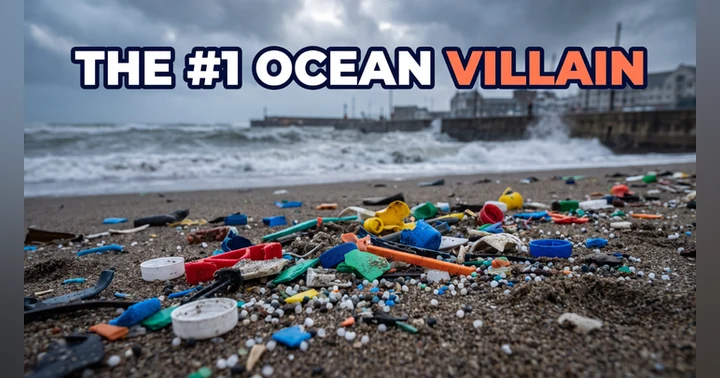
Plastic Is Still the Ocean's #1 Villain, with Dr. Judith Weis


 Apple Podcasts

 Spotify

 YouTube

 Amazon Music

 PocketCasts

 Overcast
Plastic keeps getting made, it never goes away, and almost none of it gets recycled. Dr. Judith Weis, Professor Emerita at Rutgers University Newark and Andrew's very first guest on this podcast more than 2,000 episodes ago, returns for her fourth appearance to talk about the second edition of her book, Marine Pollution: What Everyone Needs to Know.
Judith walks through every major category of marine pollution: nutrients, metals, oil, pesticides, marine debris, pharmaceuticals, ocean acidification, and one category that surprises most people, biological pollution. She explains why microplastics earned a brand new chapter, why they're so hard to study when they're in every lab and every body, and what Canada's legal fight over listing plastic as toxic means for regulation.
There's good news too. Judith grew up near a Hudson River full of raw sewage. After the Clean Water Act and new treatment plants, New Yorkers now walk the waterfront, the water is swimmable in dry weather, and humpback whales feed in New York Harbor. Andrew and Judith ask what that comeback can and can't teach us about plastic, and what you can do today.
Takeaways:
- Every major type of marine pollution comes down to three questions: where it comes from, what it does, and what we can do about it.
- Judith calls plastic the number one villain in marine pollution today because production keeps rising and recycling doesn't work at scale.
- Microplastics are 5 mm or smaller, mostly invisible, and carry chemicals both inside them and stuck to their surfaces.
- They're so widespread that researchers struggle to find microplastic-free controls for experiments.
- Canada listed plastic manufactured items as toxic under CEPA, banned six single-use categories, and saw that listing upheld on appeal.
- Large tanker spills have become far less common, with double hulls part of the reason.
- Sewage treatment after the Clean Water Act transformed the Hudson River and New York Harbor, and whales are back.
- Pharmaceuticals and hormones pass through treatment plants and change fish behavior and biology.
- Invasive species count as biological pollution, and unlike chemicals, they reproduce.
- Beach cleanups, local environmental chapters, and cutting your own plastic use are practical places to start.
Buy the book: https://global.oup.com/academic/product/marine-pollution-9780197753811?cc=ca〈=en&
Join the newsletter
Need help with your ocean non-profit, company, or project? Get the help you need with Pisces Oceans Inc.: https://www.piscesoceans.ca
Connect with Speak Up For Blue
Website: https://bit.ly/3fOF3Wf
Instagram: https://bit.ly/3rIaJSG
TikTok: https://www.tiktok.com/@speakupforblue
Twitter: https://bit.ly/3rHZxpc
YouTube: www.speakupforblue.com/youtube
0:00 Do you know everything there needs to know about marine pollution? Or do you even think, "Well, maybe I shouldn't know."? But I think you should know about marine pollution, because that is the topic of today's episode with Dr. Judith Weis, who is a retired professor from Syracuse University, who has written two editions of the book Marine Pollution. She's here to talk about her second edition, where we talk about everything that has to do with marine pollution, like what are the categories of marine pollution, and the last one's really gonna be a surprise to you, but I agree with her. It is, uh, a category for marine pollution. And what can be done? And we're gonna talk about some challenges that we're facing now with microplastics, as well as some really good news stories that we've had in the past with sewage treatment plants, and how that's helped, really bring back and revitalize harbors as well as, water quality and bringing back animals that weren't there or that were lost because of dirty water.
0:50 So there's a lot of stuff that we discuss here, uh, and we discuss everything in the book, so, uh, this is what we're gonna be talking about here on the How to Protect the Ocean podcast. Uh, if, this is the podcast, if you want information on the ocean and you want to satisfy your, anxiety around the ocean, like, "What's happening? Are we really protecting it? What about climate? I've got anxiety around that," this is the place where we provide you with the knowledge of what's happening in the world to help bring and reduce those, issues that we face, uh, down, and hopefully give you a little bit more of an optimistic view. And plus, it gives you the information to share with your family and friends to talk about it more, because that's what people have found that is nice to do, uh, is they, feel better if they talk more about what's happening in the ocean, and some of the, good new stuff that's happening.
1:34 So we have some good news in this one, as well as some challenges that we're still facing. But hopefully one day we will be able to face those, especially when it comes to microplastics. Here is the interview with Judith Weis, who's actually my first interview on this podcast. Some 2,000 episodes earlier, she was my first, uh, episode. and, uh, it's always great to have her back. This is her fourth time back on the podcast. Always a delight. Enjoy the interview, and we'll talk to you after. Hey, Judith. Welcome back to the How to Protect the Ocean podcast. Are you ready to talk about marine pollution? Absolutely. Anytime. Oh. All right. Look, this is a very special interview 'cause, Judith, you've been on, we were looking at it before, you've been on three times, but you were my first episode ever.
2:18 You were my first interview, my first episode. This is over 2,000 episodes later. Wow. Uh, here you are again for your fourth time on the show. I'm delighted to have you back on. And actually, what's kind of interesting too is that our first episode, we talked about the first edition of your book called Marine Pollution, and today we're gonna be talking about the second edition of your book called Marine Pollution, and we're gonna talk all just different things. But before we do, uh, Judith, why don't you just remind the viewers and the listeners who you are and what you do? Okay. Well, I'm a retired, professor from Rutgers, uh, marine biology. I taught marine biology and environmental biology and stuff, undergrads and graduates.
3:05 and, uh, as a professor I wrote lots of scholarly papers, published in scholarly journals, and I wrote a few technical books. But I've also, got interested in writing books for the general public, which is a very different type of writing. And I learned that by collaborating with someone who was a writer on my first book for the general public about, salt marshes. And so I had a co-author. Uh, and then after that book, I sort of felt, more comfortable on my own writing books, for the general public, and I followed that up with a book about fishes, and then a book about crabs, and then a book about marine pollution.
4:05 And the first marine pollution book came out about a decade ago, and as Andrew said, uh, I was on this program talking about it. Then, couple years ago, uh, the editor at Oxford University Press contacted me and said, "How about a second edition updating the book?" I thought about that for a while and decided, yeah, I'll do a second edition. So that's what we have now, is the second edition, uh, that has all the chapters are updated.
4:45 There's a whole new chapter in here about microplastics. there may be some other totally different stuff too. but the main thing is, uh, a new, chapter on microplastics, and all the other chapters are updated. That's amazing. Uh, now, you know, obviously marine pollution happens on and off. You know, we see it show up in a variety of different ways. Can we just sort of remind the listeners, for those who weren't there for the first episode, you know, what are some of the major, marine pollution topics that you cover? Uh, you kinda mentioned a little bit there, but that you cover in, in, in both books, that, you know- Sure … one has been updated.
5:26 Yes. the way the book is organized, there's a chapter about for each major kind of pollution. So, nutrient pollution, that is sewage, fertilizer runoff. This is stimulating algal blooms, which can be harmful, which can cause deoxygenation of the water. Mm-hmm. So the first substantive chapter is about nutrient pollution. And, uh, within each chapter Talk about where does it come from, what does it do, and what can we do about it?
6:12 So that theme- Yeah … runs through all the chapters. and so that nutrients is the first one. second is, uh, metals, mercury, cadmium, lead and so forth. Again, what are the sources? in this case it's mostly industry. and, we have some, you know, major sites with metal pollution. Mm-hmm. And then the next chapter is oil. We know about oil spills. We haven't had any in quite a while. Knock on wood. Knock on wood. Yes. that's not just good luck. that's not just accidental.
6:53 I mean, the effects of oil pollution and there's an oil spill from a ship, and it comes ashore and it hits the shoreline and causes this huge amount of damage and gets a lot of publicity- Mm-hmm … and a lot of money trying to clean it up. they have cleaned up their act a lot and the ships now have double hulls. the tankers. Mm-hmm. And so there's a whole lot done so that we haven't had an oil spill in over a decade I think. Right. Yeah. Uh, so that's oil. And then there's pesticides and other organic chemicals.
7:36 That's still with us. We still have pesticides being sprayed not only in agricultural regions but, people's gardens- Mm-hmm uh, and their lawns and so forth. There's still pesticide spraying. And then it rains and that runs off into local creeks and streams which then go down. And these tend to be chemicals that don't break down very readily. Mm-hmm. The kinds of pesticides that are mostly used now are, do break down within let's say weeks.
8:18 Yeah. As opposed to the earlier generation of pesticides like DDT, which still is infamous in history. Yeah. And its related chemicals that just didn't break down and continued to poison things- Yeah … forever. Known as the forever chemicals, right? For, well, there are other forever chemicals that aren't pesticides. Gotcha. Yeah. Uh, but they're still around. And then, marine debris. Trash, garbage, litter. Mm-hmm. you go on a shoreline, you'll find, oh, hopefully you won't find any, but- Yeah. Many cases- But unfortunately … you will find marine- Especially after, like, a storm or something, right?
9:03 Yes. That's when you really find it. Stuff washes, Yeah … up on the shore. But there are also places where a lot of the currents will take, and they have these floating garbage patches in some places because the currents sort of move a lot- Mm-hmm … of this float. It's mostly plastic, really, floating stuff. Plastic is a major, major problem. a lot of the other problems are being reduced, but the plastic issue has not been dealt with. they keep making more, and it never goes away.
9:44 And it moves around, from one place to another and accumulates where the currents take it and onshore. And, um, they talk about chemical recycling of plastic, which, I don't buy that. they're trying. Yeah. And they also try to recycle, and that is extremely difficult to recycle it. Plastic isn't a single thing. Mm-hmm. Polypropylene, polyethylene, polystyrene, poly this and that. So there's very many different chemicals that could be, all of which can be plastic, and they come in different colors.
10:30 And you can't recycle red ones with green ones with yellow ones. So you have to have a separate recycling thing for polyethylene that's red and polyethylene that's blue, et cetera. So recycling just doesn't work. They have been trying what they call chemical recycling- Mm-hmm … where they melt it down and that is releasing lots of toxic chemicals. So, uh, I would consider plastic currently the number one villain Yeah … in the story that has not been, dealt with really.
11:10 I know plastic's been around for a while, but the real manufacturing of plastics, like there's been an, increase over a number of decades. is it just the political power that these companies have, and that's why it hasn't been dealt? 'Cause like, I mean, when we had chemicals as a problem, back in the '70s and '80s and, and so forth, that took a few decades to kinda clean up and get with the program before we really knew what the damage was and we were able to fix this. and others as well, other types of, pollution that you've mentioned as well, where we've been able to, like oil, like you said, they have the double hulls. There've been more regulations, and there have been more protections based off of that. what do you think it is with plastics that we haven't seen movement even though we've seen it for probably about five or six decades?
11:57 Oh, yes. I mean, more than that. Yeah. About 1950- And even the increase over that time … plastics sort of came in around 1950s. Mm-hmm. And have been increasing. The increased manufacture and the inability to recycle, just makes the problem continue to get worse. Yeah. and the problem being the various different chemical natures that can't be recycled together and the different colors that can't be recycled together. You'd have to have, a few dozen recycling- Yeah … streams- It's expensive. Yeah … to try to do this.
12:39 and the companies are not receptive, not trying to cooperate, in denial and so forth. Yeah. it's interesting 'cause like in Canada, over the last few years we've banned specific, Types single-use plastics, right? So we've, you know, cutlery, checkout bags- Right food service, so expanded, polystyrene, extruded polystyrene, polyvinyl chloride, carbon black, oxo-degradable plastics. Hmm. clamshell containers, lidded, containers, you know, boxes- Yeah, lots of those have been banned in the States also. Yeah.
13:19 Um, but then another problem with the plastics is they break down into these microscopic microplastics. Yes. which, you know, are defined as five millimeters- Mm-hmm … or less. And the ones that are one to five millimeters are visible, but the vast majority of them are invisible. You're not seeing them. But they're all over the place, everywhere. and they are in our food, they're in our bodies, they're everywhere. And, in addition to the plastic molecule, they contain toxic chemicals that are associated with them.
14:03 Mm-hmm. And they are ubiquitous. I mean, if you look for them anywhere, you will find them. Mm-hmm. Including in people's brains, hearts- Yeah … livers, et cetera. Uh, and everything you eat, and the air you breathe, et cetera. and, you know, there's a lot of study going on to, uh, try to find out their effects. Mm-hmm. And some problems with the research is to get controls. You know, you do a scientific- 'Cause they're so, they're everywhere, so it's hard to get the reference. Yeah. How do you find the control?
14:45 Yeah. When, you know? So they have these ultra clean rooms in some laboratories trying to do the research. Yeah. But they're in the air. Yeah. They're gonna settle onto everything. So it makes the research very tricky to, uh, find some a place where there aren't microplastics to compare, you know- Yeah … response of an animal or plant or whatever you're looking at, and have a control. Yeah. I mean, you could have a control that has maybe less And a higher amount- Right … in the- Right … experimental Like a minimal, yeah. But, it's difficult.
15:25 it's really difficult. And they're still working on developing proper lab procedures and techniques to do, kind of experimental studies properly in scientific labs. Yeah. Um- Well, a- and it's interesting too, 'cause a lot of these, as you mentioned, like, these, not only these microplastics cause a lot of problems, like physical problems, but as they break down, they break down into chemicals, and they start to leach out- Right these, these chemicals that have- They have chemicals. the microplastics not only have chemicals in them, chemicals from the surrounding air or water- Bind to it … will glom onto them.
16:08 So you have chemicals on them and another set of chemicals in them. so it's a very complicated business. Yeah. Well, and I think what happens is that affects our systems, like when it gets into us, when it gets into- Ah … the environment, those leach out. Yes. Those bind to something else. They'll bind to parts of our bodies, organs- Sure … things like that. And over time, as that accumulates, we get the bioaccumulation that we see that happens in along the food web. Right. I mean, this- You know? … this is, you know, the, the new chapter in this issh- you know, edition of the book because back, a dozen years ago when the first edition came out, microplastics were just beginning to get studied.
16:54 And- Yeah … you know, the knowledge was just beginning. And now, it's, a huge area of study, and there's, huge numbers of papers coming out every week- Mm-hmm about microplastics. I don't know how long I should spend on plastic. Well, I mean, I think it's, I think it's important too, because like we're not seeing a stoppage in the use. We're not seeing a stoppage in you know, getting these out into the marine system, let alone into the air- Or anywhere else or anywhere else, you know? Or anywhere else. It's just- Yeah … you know, there's no regulations to reduce manufacture or whatever.
17:35 Yeah. But the, policymakers know of these types of, problems. So in your opinion, like, what's the holdup in terms of putting these regulations in place? what is the argument against putting these regulations in place? I'm not sure, what a valid argument against it would be. Right. But the fact that something is ubiquitous- Mm-hmm probably makes it difficult to try to regulate something That's in everywhere in the air, everywhere in the water, everywhere in the body. Mm-hmm. How do you say there's a limit and then how do you enforce that?
18:16 But I mean, if it's everywhere and we know where it starts from by the manufacturing of these, is it not better to start, like, putting in these types of bans or reductions or quotas? You could put in reductions, but, uh, the industry's not gonna tolerate it. Have they done that in Canada? Not that I know of, no. The only thing I've seen was this ban. Have they done that anywhere? I don't think so. Not that I know of. I think we're moving towards that. in Canada, from the federal government perspective, they've consider- they put it in the, Canadian Environmental Qualities Act, that plastic is toxic. All plastic is toxic. Right. and from that, they came up with this first bill where these, what I mentioned was, these single-use plastics were banned.
19:03 and then what they're doing is they're looking at a registry, creating a registry of who creates what plastic and tracking where that plastic ends up. and so, like, the supply chain of after, not only during manufacturing, but after purchase by, you know, retailers and so forth who use them and then the consumers, and then where those end up. rumor has it that they're gonna start putting the companies responsible in the cleanup, 'cause obviously the recycling's not working. Well, I- But that, that's a long ways away, I think. I hope that happens. Um- Yeah … nothing's gonna happen in this country. Right. Not anytime soon anyway. Our current administration- No … nothing is gonna happen. Yeah. I mean, of course- Well, I mean, what was interesting though is the chemical companies that create this and the fossil fuel companies did try to fight the label that all plastic is toxic.
19:51 Uh, and they, overturned, or they appealed and they won their appeal, against the government, and then, the, uh, environmental, like the NGOs that first brought it to the government, uh, and supported the bill, appealed that decision and the appeal got overturned. So it's back in. It never stopped being in, but it's back in. And, and you see it, it's reduced in terms of these six plastics, but there's still a lot to go, as you mentioned, because it's everywhere. You hope that eventually we come up with another material that will not be as, as, uh- Yeah. And you know, we hope- … as toxic we'll have an administration sometime in this country that will- Yeah … enforce the environmental legislation.
20:33 You know, how do you deal with, you know- pollution in the Great Lakes, you know? Yeah. You've got good regs in Canada, and we have pollution coming out on our side, so. Yeah. Yeah. I mean, it's always interesting, especially when we look at, like, these binational agreements when one country… I mean, I, right now, as we're recording this, I think, uh, one of the countries is looking at renaming a Great Lake to just to kind of- Yes, they wanted to change the name of, uh, Trump wants to rename Ontario something, uh- Great Lake, uh, to Great, to Great America or Lake America, I think it is. Yes. So I think there's some- And there's so- … different battles being done here than, than regular pollution, uh, battles So appalling, everything- Mm-hmm … that comes out from that administration.
21:16 And, uh, so- Now, so if people, I guess the, the question I have here, uh, before I, 'cause I wanna move on to, uh, another topic in the book with the chemicals and, some positive stuff that comes out of there. But with the, microplastics, there are a lot of organizations that are working to, you know, help reduce the amount, ban it from getting, like, and just basically reducing it from getting out into the ocean, getting out into the atmosphere and these kinds of things. some people feel a little helpless when they learn about these things. And then, uh, obviously this is a complicated issue. people are profiting off of it and it's everywhere. Like, how do you think, like, people who are listening to this podcast can get information or follow somebody who's trying to do stuff or support organizations who are trying to help in this situation so that they can kinda tame down their plastic anxiety, if you will?
22:07 just like climate anxiety and ocean anxiety. I'm not sure if, you know, can reduce the anxiety, but, beach cleanups. There's a lot of organizations that do beach cleanups. And I think participating in a beach cleanup, you know, it's mostly plastic that- Right … you're picking up off the beaches, um, can make you feel better about things. Mm-hmm. You know, you're doing something good for the environment. And by helping in a beach cleanup, I think you can, uh, reduce your own personal use of plastics whenever possible. Although, sometimes you can buy juice in a glass- Yeah … rather than a plastic container.
22:50 Yeah. You know, you can do personal in terms of your shopping what you're doing Yeah Of What about organizations? Are there any organizations they can follow or support that are working towards- Well, I, I think the, you know, the big, uh, national, environmental groups, Sierra Club, for example, is an, environmental organization that has a lot of individual members active. Mm-hmm Unlike EDF or NRDC, which is run by the staff. Individual members pay dues but don't really get opportunity to work on stuff. But Sierra Club and Audubon are ones where there are local chapters and members can do stuff.
23:37 Gotcha but there are then other smaller organizations that will sponsor beach cleanups and- Mm-hmm … things like that. Uh- And it's, and, and I should mention too that, one of the things that I was discussing on a call with, Chad Nelsen, who's the Surfrider CEO, is sometimes when you go to do these beach cleanups, you get to meet other people who are out there to do the same thing. Right And so you, come for, to help clean up the ocean, but you stay for the community, which I think a lot of people are- Yes … missing. You know, in-person events where you can meet people face-to-face. Yeah You can, bond over your love for the coastline, the oceans, uh, and stay in the positive effects.
24:18 Maybe not in the comments section of a post that's an environmental post which you don't wanna be in sometimes, and more into, like, hanging around with the people who have the same values of the ocean- Yes … of the, of nature- This is all good … right? Yeah. Yeah. This is all good I think that helps. Yeah. Now, one thing I wanted to kinda bring up. Uh, you're a resident of, New York City. and we've seen a lot of progress in the water quality in New York City Harbor over the last number of decades. New York Harbor, yes. Yeah. Now, can you just talk about the history of the harbor in terms of the chemical pollution that we saw, the loss of animals you know, that would disappear, and then sort of the what's happened since then, and you know, what led to those animals coming back and seeing a cleanup of that?
25:02 Sure. I mean, when I was a kid, I also lived in Manhattan, and, close to the Hudson River, and nobody would wanna go down there. Mm-hmm. I mean, it was a smelly, awful place. There was raw sewage going in. That's why- Mm-hmm … it was a smelly, awful place, because it was raw sewage, and this was the Hudson River and New York Harbor, the whole thing. Then in 1970-ish, uh, Congress passed the Clean Water Act, and one of the things from the Clean Water Act required building sewage treatment plants.
25:43 And there had been no sewage treatment plants for the whole upper west part of Manhattan. So what went in the toilet went right into the Hudson River. That's how it was- Like raw sewage, basically … raw sewage went right into the Hudson River, into New York Harbor, and that's why nothing lived there. Mm-hmm. So then they built a sewage plant on the upper, West Side, 150- Do you know when that was? in- Like ' 70s, ' after the '70s. It took a while to get the funds together to build it. It was probably in the '80s. Gotcha … and now the sewage from the whole West Side of Manhattan goes there and gets treated before going into the Hudson River.
26:34 And gradually, the river that nobody wanted to go near, - the, the riverfront was industrial anyway. Um, as the water quality improved, they then built a walkway. You can walk along the river now, 'cause it's not smelly. It's nice. You know? You wouldn't wanna walk, you wouldn't have wanted- Who would? Yeah, why would you want to? You wouldn't have wanted to walk along it in, back then. Yeah. And so there's, a walkway, through the whole West Side of Manhattan from the Battery all the way up. I think you may be able to even walk all the way around Manhattan on the East River and the Harlem River.
27:17 I'm not sure they all- Yes … connect, but they might. Yeah. If you had a long day, you could perhaps- … walk all the way around the perimeter of Manhattan Island. Mm-hmm. But anyway, so over time, the smelly, stinky river and harbor got better. Yeah. Now we have sewage treatment, it got better, and the water quality… I mean, if it rains a lot and you get this combined sewer overflow, not so good. Mm-hmm. But you get moderate rain, you get a drought, the water quality is swimmable. Yeah. Yeah.
27:57 And they have not built any access, you know, ladders and things to make a beach or whatever for people to swim in yet. I predict that will count, that, that will come in the future. Like in Chicago, there's high buildings, there's a drive, and there's Lake Michigan. Mm-hmm. And it's downtown Chicago, which is, big city too. Huge city, yeah. Yeah. and, people go swimming. In the downtown. Yeah. Downtown on Lake Michigan. Mm-hmm. Which was a big shock to me when I first went to Chicago.
28:38 I couldn't believe what I was seeing. Driving along the waterfront- Yeah … and there's tall buildings on one side, and there's a beach, and there's people swimming on the other side. Yeah. Yeah. It was wonderful. I've c- I mean, it's a shock we have a lot of people, you know, from the Toronto area, from the area that I live in, that will go to Chicago, visit, 'cause it's a quick flight, just like it is to New York. Um, and they are always amazed. the downtown looks so beautiful. Like, in, Toronto, uh, we don't necessarily have the same water quality. You know, I don't know, like, there are some places where you can go swimming, but you know, we have our, water quality problems. I haven't been to Chicago yet, uh, but it apparently it's like it's night and day when you go. It's wonderful. Yeah.
29:19 Yeah. Uh, and New York will be there one day. Yep. Yep. I really think New York will be there. Um, we're not there yet, but we're not what it used to be. Well, it's, it's, changed so much that you saw the menhaden start to come back. We saw- The menhaden, the whales are back … the whales are back. You can go whale watching- Yeah … from Brooklyn. Yeah. And we're gonna do that next month. That's awesome. there's a whale watch company in Brooklyn. Yeah, Gotham Whale. Is it? Is that- Gotham Whale. Gotham Whale, yeah. And, we have a date to go out. We did that last year also. Fantastic. And you go out into New York Harbor, and there's humpbacks and sometimes fin whales and s- Yeah sometimes dolphins.
30:04 Mostly humpbacks, though. Yeah. Well, it's beautiful to see those humpbacks- Oh, and so- … especially back in that area, right? It's such a delight. A very satisfying, fun thing to do. Well, and I, and I think, that's kinda what I, what I want people to feel is that when there are multiple actions taken, you know, once we discover that there's a problem and there are not only regulations, but, laws put in place to say, "Hey, you know, we need to control this so that we have better health in our area, better water quality." it's an important part, especially with the New York Harbor, it's such an important harbor. But in places all over the, the world, not just the US but Canada, Mexico, other continents, other places, when you put action in place, it works.
30:50 Like, when you put policies in place, it works. And it's just a matter of looking at what scientists like yourself, Judith, and your colleagues from the past and even now are saying and are identifying it. to get these lawmakers to understand and to say, "Hey, there's a problem." So if we kinda compare and contrast the work that's been done in the New York Harbor, which is a lot of people, a lot of powerful people that live there, a lot of, companies that were on that, uh, industrial companies that were on that, that harbor, that were working along, that had buildings along there. what could we learn from that like that situation, that cleanup, that we can apply to, say, something like microplastics in the future?
31:30 I don't know you can apply those lessons to microplastics because this had clear sources- Mm-hmm … that could be regulated sewage treatment plants. Mm-hmm. Or the absence of sewage treatment plants. Yeah. Yeah, yeah. Remedy it by putting in a sewage treatment. Microplastics are… I don't think there's any lesson that you can do, from that to apply to microplastics. Kinda like comparing apples to oranges in a way? Yeah. But there's a couple other… I don't know if I can go back to the book contents. Sure, absolutely. Other things I would like to mention, other kinds of pollutants- Yeah, absolutely … that we should be concerned about.
32:12 one is pharmaceutical pollution. Mm. This is necessary stuff. Mm-hmm. We have prescriptions or whatever. We swallow pills, and we pee out a lot of it, and it goes out into the water. It's not-- The sewage treatment plants don't deal with that. Mm-hmm. And so you have incidences where, the fish and whatever in the water are being affected by the pharmaceuticals. I mean, there was a- Mm-hmm … there was a paper some years ago called Fish on Prozac, right? Yeah. Tranquilizers and stuff.
32:53 So, you know, affecting their behavior and stuff. So that's one thing to worry about. Even hormones. Like, there were some fish that were- Hormones … switching sex- Exactly … like throughout their life history as they- You get sex alterations. Yeah. Right? From birth control pills and that. Yep. Yeah. Because the sewage treatment plants don't get those- They don't catch those compounds … kinds of chemicals. Yeah. And then a-another really serious issue… Two others. one is climate change, except in addition to temperature issues, the CO2 that dissolves in the ocean- Mm turns the ocean more acidic.
33:35 Yeah. Changes the pH. So you have what's called ocean acidification. The pH goes down in the water. which it's not turning the ocean really acidic. The pH is still on the upper side of seven. but it's closer to the seven neutral. Which enough to change, enough to change the systems. It's less basic, less alkaline. Mm-hmm. So they call it ocean acidification. And the main effect of this is impairing shell formation. Animals that make calcium carbonate shells have trouble. So, juvenile oysters, mussels, clams Are making thinner shells, which is problematical.
34:24 Mm-hmm. microscopic plankton that are, have shells like forams, they're like shelled amoebas in the plankton, also having trouble making shells. So that's another chapter devoted to, um, ocean acidification. And then I guess the last type of pollution that I discuss in the book I call biological pollution, um, otherwise called invasive species. An organism ends up where it didn't used to be.
35:04 And this can happen as a result of shipping. You know, something hitches a ride on a ship and gets moved from, you know, the US to Europe- Mm-hmm whatever, and moves- Or back and forth. Yeah … to a different place. So we have a lot of new species in places where they never were before. Yeah. Examples like zebra mussels in the Great Lakes, which have- Zebra mussels in the- … completely changed the Great Lakes … Great Lakes, you know, a poster child- Yeah for this. Absolutely. Uh- I learned that when I was in high school. I remember- Right … learning about zebra mussels in the ' 90s. Yeah And there's also this very beautiful but, deadly lionfish.
35:48 The lionfish from the American marine aquarium industry. Uh, in, in more tropical regions. Mm-hmm. which just eats up everything because nobody recognizes it as a predator. Right. And so that, we were in one of the Caribbean islands some years ago snorkeling, and the density of the lionfish- Everywhere … were unbelievable. Yeah. Um, these aren't generally referred to as pollution, but I think… I have a chapter about it and I call it biological pollution. Well, I, agree with you in, in that. I remember the first one you kinda talked about in the first book, right? The biological pollution. Yes, I think it was in the first book, too. Yeah. and, uh, I agree with you wholeheartedly.
36:30 It is a biological pollutant, something that doesn't belong there that, that's there now. Um- Yeah and there's different means of getting to these types of pollutants that changes the system. You know, if you look at chemicals, they change the system. Microplastics, they change the system. you look at invasive species, they're gonna change the system. That's what makes them so successful. Right. And they can have, like, serious repercussions, not only to the health of the ecosystem, but to our health and our economy. Um- Yeah. Well- … absolutely. I mean, and, the invasive species, unlike the chemicals, the animal, invasive either animals or algae or plants or whatever, reproduce and become Yeah more. Yeah.
37:10 Yeah. Um- Absolutely … whereas a chemical pollution only becomes more when more is released into the water. Mm-hmm. Toxic chemical doesn't reproduce, but, these animals and plants in the wrong place do. Yep. So. Yep. Yeah. No, I completely agree. Well, I'll tell you, it's, it's a, it's a fantastic book. and I highly recommend that people do it. We'll put a link where people can buy the first and the second edition, 'cause I think they're both- I, I hope nobody buys the first- … worthwhile … edition. You want them to buy the second? Or- All right. 'Cause the be- the second one's more updated. Oh, yeah. So buy the second edition at this point. Yeah. No, no point in the second. No point in buying the second. but I hope people buy the s- I mean, no point in buying the first one.
37:52 Buy the first. I hope people buy- Buy the second … buy the second. I don't think they're, making- Missing it … any more copies. Right. Uh- Yeah … you can probably get the first, you know, really cheap secondhand, but- Gotcha pay a little more and get the second. Yeah, get the updated version. Yeah. Absolutely. it's more worthwhile anyway. We'll put a link to the second one then so people can, uh, get access to that. Judith, it's always a pleasure to have you on. You are a wealth of knowledge. Uh, and I love your passion towards this, of getting information out to the public because we definitely all need it, right? I think there's a lack of what's been happening and just not knowing what, you know, the different types of pollutants that we've seen and their effects on not only humans, but, uh, even on the ecosystem as well.
38:33 So I appreciate you coming out here and, sharing that with us. And of course, you're always welcome to come back and talk more. I think we have a crab book I think we discussed before for you to come back, and we'll talk all about crabs, just like we did salt marshes, uh- I, I, I'm always- … back in the day … delighted to talk with you, Andrew. Wonderful. Thank you so much. Okay. Thank you, Judith, for joining us on today's episode of the How to Protect the Ocean podcast. Look, I said there's good news and bad news in this. We face some challenges with microplastics. And you know, in my opinion, I feel like you have to go after the makers, you have to go after the people who are creating it, and you have to say, "Hey, enough is enough. We need to start putting better stuff in our plastics if that's gonna be the case or making it in a better way. But also, we need to reduce the amount of plastics that we use, and we need to shift away from that." I don't care if businesses depend on it.
39:17 We need to shift away from it. It's better for the environment, it's better for us. As you heard Judith say, it's in our systems, it's in our bodies, it's in our lungs, uh, it's in our water, it's in, our air. You cannot get away from microplastics, so much so that it's hard to find a control when they do experiments on the effects of microplastics. So we definitely need to reduce that. How that's done, I don't know. But I would love to hear your ideas. Just let me know, uh, either hit me up on my socials, which the links are in the show notes, or you-- if you're on Spotify, you can comment. I'd love to hear your thoughts. Uh, and obviously, don't forget to get the book. If you're interested in finding out more about marine pollution, you can get the second edition of Marine Pollution by Judith Weis. all you have to do is just click that link in the show notes, it'll take you right there.
39:59 And uh, yeah, I'd love to hear your opinion on the show just in general. But anyway, I wanna thank you so much for joining me on today's episode of the How to Protect the Ocean podcast. I am your host, Andrew Lewin. Have a great day. We'll talk to you next time, and happy conservation.