The 90 Percent Fix Hiding in Your Laundry Room


 Apple Podcasts

 Spotify

 YouTube

 Amazon Music

 PocketCasts

 Overcast
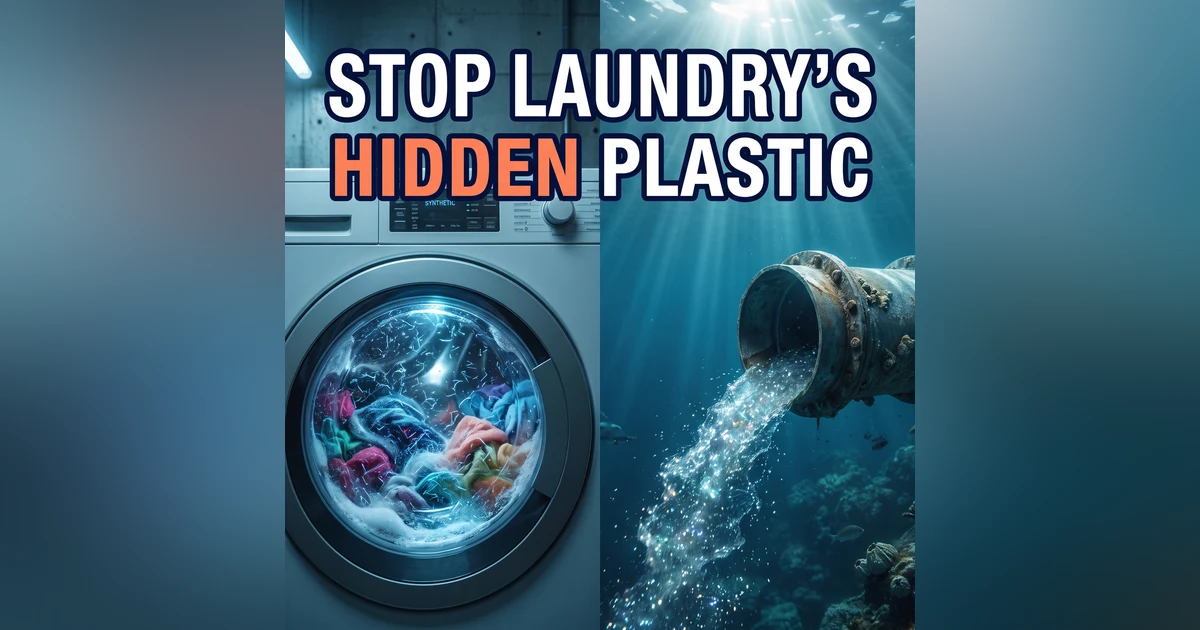
Every time you run a load of laundry, your washing machine sheds plastic. Not metaphorically: synthetic clothing made from polyester, nylon, and rayon releases microfibers with every wash, and depending on the study, a single load can shed anywhere from a few hundred thousand to millions of them. Most of us have never thought about it, because unlike a plastic bag on the beach, you can't see it happening. In this episode, Andrew talks with Dr. Anja Brandon, Director of Plastics Policy at Ocean Conservancy, about the plastic pollution problem hiding in plain sight behind the more familiar debates over straws and single-use bottles.
Anja's own path here started at an aquarium, not a policy office. She volunteered there as a student, went on to earn a PhD in environmental engineering from Stanford studying plastic-degrading bacteria, then took a detour into policy through an AAAS/AGU Congressional Science Fellowship, spending a year working inside Senator Jeff Merkley's office translating science into legislation before joining Ocean Conservancy to help build out its plastics policy program from the ground up. Andrew and Anja dig into that career pivot in detail, including her honest read on why plastic-eating bacteria research, despite the viral videos, is still a long way from solving this problem at scale.
From there, the conversation gets practical. Anja walks through what actually happens to a microfiber after it leaves your washing machine (wastewater treatment, biosolids used as fertilizer, and eventually rivers, lakes, and oceans), why its needle-like shape makes it unusually good at lodging in tissue once ingested, and what the evidence says about ocean wildlife and human health. Then she lays out the fix: retrofit filters, low-tech options like the Cora Ball and mesh laundry bags, and Ocean Conservancy's "Not Safe for Wash" (NSFW) campaign pushing for a legal requirement that new washing machines ship with a microfiber filter, the same way seatbelts got phased into cars. California's SB 54 comes up as a model for how extended producer responsibility policy can make manufacturers, not individual households, absorb the cost of the plastic they put into the world.
Takeaways:
- Synthetic clothing sheds microfibers every time it's made, worn, and washed, and depending on the study, a single load of laundry can release anywhere from a few hundred thousand to millions of them.
- Shed microfibers mostly end up caught in wastewater treatment biosolids, which are frequently applied to farmland as fertilizer, meaning they get moved around rather than actually removed from the environment.
- A retrofit or built-in washing machine filter can capture up to 90% of the microfibers a wash cycle would otherwise release, and Ocean Conservancy's own polling found roughly 8 in 10 Americans support requiring them.
- No U.S. state currently requires washing machine microfiber filters, though several have introduced legislation and a similar bill has been introduced federally.
- California's SB 54 uses an extended producer responsibility (EPR) model, making the companies that create plastic packaging financially responsible for its end-of-life costs rather than leaving that bill with taxpayers and consumers.
- Lower-cost individual options exist too: full loads over small ones, lower wash temperatures, less soap, a Cora Ball, or a fine mesh laundry bag for synthetic fabrics.
Ocean Conservation Plastic Pollution webiste: https://oceanconservancy.org/work/plastics/
Support Independent Podcasts: https://www.speakupforblue.com/patreon
Need help with your ocean non-profit, company, or project? Get the help you need with Pisces Oceans Inc.: https://www.piscesoceans.ca
Connect with Speak Up For Blue
Website: https://bit.ly/3fOF3Wf
Instagram: https://bit.ly/3rIaJSG
TikTok: https://www.tiktok.com/@speakupforblue
Twitter: https://bit.ly/3rHZxpc
YouTube: www.speakupforblue.com/youtube
0:00 If I tell you the term plastic pollution, what are you thinking? Might be thinking plastic bags, maybe plastic straws, or maybe that water bottle, that single-use water bottle that that people take and on the road or when they take at home or they need it if they live in an island community where they don't have, you know, access to clean water, which is understandable. But there's still plastic pollution and it still needs to be addressed. But what if I talk to you about the fibers that come off your clothes, the microfibers? And how big of a problem these microfibers are in the ocean. Not only in the ocean, but in a lot of other things that happen within our environment, whether it's agriculture, whether it's river systems, whether it's lakes, whether it's oceans, it's found pretty much everywhere.
0:45 And it's because it's coming from our clothes in the new way we do clothes. But there are ways that we can fix it and catch 90% of them before they go out of our wash. We're gonna talk to Dr. Anya. Brandon, who is from the Ocean Conservancy here to talk about microfibers and give us a whole bunch of information on it. And the best thing is, is there's hope that we can actually stop it with just one single item. We're gonna talk about that on today's episode of the How to Protect the Ocean podcast. Your weekly update on ocean news or weekday, I guess, ocean news and ocean science and ocean conservation, Monday to Friday. We give you all the information that you need so that you can make better decisions.
1:27 For the ocean. So if you like this type of information, please feel free to follow the podcast on your favorite podcast app so that you don't miss Monday's episode or Tuesdays or Wednesdays or Thursdays or Fridays. We got lots of great ~ information coming up for you this week or next week and the next coming weeks and just all the time. It's gonna be amazing. I can't wait to bring it to you. So let's talk about this interview because this is the the the interesting part. Look, when we buy clothes, we don't really think about how It affects the environment. We think about fashion. There's a lot of things that, you know, you want to look good. You want to feel good. And there's a lot of ways you can look at fashion. There's a lot of ways you can look at clothes and how we go about clothes. For me personally, I buy clothes like usually every five years, maybe six years, or if it gets ripped, or if it gets stains, which actually happens more than ever.
2:15 But I try and decrease the amount of clothes I buy just so that I don't have to worry about, you know, over polluting or just, you know, just buying clothes for the sake of buying clothes. There's one thing about buying clothes because it looks nice. There's nothing buying clothes because you need it and then you don't really need it for another five years. Now, I know some time some of you out there who want to be a little bit more fashionable and want to have more clothes. I get it. There's no judgment here. This is just my personal stance. I have I live with three young ~ three young ladies, including my wife, and they buy it, they have a lot of clothes. And it's and it is what it is, and and they thrift a lot and they do a lot of things to reduce their their impact on the ocean. But you know, th some of the things that we don't talk about are microfiber.
2:56 And just like no matter what clothing you buy, whether you think you're buying, you know, something that's really good for the environment or organic cotton and things like that, microfibers still come off the shirts and they come off every washing cycle. And it comes off in the wash and it gets into the environment. It goes through like your wastewater treatment plant. And then sometimes it gets through there or it gets caught in these like this gucky stuff that sometimes gets used for fertilizer and stuff, and then it gets on agricultural land. There's all these different things that can happen. and and it gets confusing and it gets, you know, you wonder what are the best things that you can do to help, you know, reduce your impact from buying all these clothes ~ and and you and washing them, right? Obviously, you're gonna wash your clothes. So Dr. Anya Brandon from the Ocean Conservancy is here to tell us all about microfibers, the impacts, how it gets into the environment, and how to prevent it from getting into the environment, which could which could reduce up to 90% of the microfibers that get up.
3:49 into the environment and cause micropollution or microplastic pollution. because microfibers are a type of plastic pollution. So we are going to be talking to to Anya. She ~ was fabulous. I can't wait to have her back on. But here is the interview with Dr. Anya Brandon from the Ocean Conservancy talking about microfibers, the effects and how to prevent them from getting into the environment. So hopefully we can all prevent them as well. Enjoy the interview and I'll talk to you after. Hey Anya, welcome to the How to Protect the Ocean podcast. Are you ready to talk about plastic pollution? I sure am. Thanks for having me. You bet this is exciting. Although I don't like we kind of assessed this before between both of us, we don't like plastic pollution, but like talking about plastic pollution because it's a pretty big issue around the world that I don't feel gets enough attention.
4:36 But I also think that the attention it does get sometimes it gets kind of ~ manipulated into certain things, i.e. plastic straws and and and so forth, and really not knowing the bigger problem of of plastic pollution. We're gonna get down to some. like microscopic like fibers and and talking about a lot of things that we just don't know about plastic pollution ~ or we don't spend a lot of time on that. So I'm looking forward to to talking about it. ~ and and especially with you, Anya, who's an expert in this. And we're gonna have a a good time being able to talk about that. But before we do, ~ Anya, why don't you just let the audience know who you are and what you do. Great. Well, my name is Dr. Anya Brandon, and I am the Director of Plastics Policy at Ocean Conservancy.
5:19 So I lead a team of folks, and our whole job is to try to prevent plastic from becoming pollution in our ocean in the first place. So we work at the state level, the federal level, the international level, working on different policies to try to tackle plastic pollution at its source. Love it. Okay, that's awesome. Now, now you have a like you mentioned, you're you're you're a doctor, you have a PhD in environmental engineering from Stanford, Mm-hmm. no less. Like that's fairly a fairly good university, Yeah. a fairly well-known university. ~ and your your research really focused on breaking down plastics. What pulled you from the lab bench, so to speak, to policy work?
6:03 Yeah, great question. ~ I actually got my start originally at an aquarium. ~ so I was a I ~ cool. was a volunteer at an aquarium where I first learned about plastic and plastic pollution and was like, I I couldn't tell you what it was, but like that is it for me. That is the the problem for my brain. ~ and you're right, I took that all the way through to a PhD where I studied plastic degrading bacteria to try to solve this this huge global crisis. Mm. ~ and it was Awesome and the science is so interesting and super cool. And I pretty quickly realized as I was like coming towards an end that it was a drop and a drop and a drop in the ocean in terms of what we need to tackle this issue. ~ and so I started thinking through like how do you create real change? Like, how do you tackle a problem this big and this important?
6:56 ~ and I stumbled on policy. ~ and Interesting. it's you know. How we can do really big hard things together. Yeah. I I really think that I've got a couple of questions on that. first of all, ~ bacteria, you know, eating plastic, I guess is what we call it. ~ we keep seeing it and I keep getting friends of mine who send me videos being like, hey, is this gonna solve our problem? Like, is this where are we at? I know it maybe have been a while since you've you've looked into it, but where are we at with this type of either bacteria or some kind of biological agent to break down. plastic. Are we far from doing it at scale or are these just more like are these just more micro scale type things?
7:38 Yeah, that's a great question. ~ we are a little ways away from having it be like a meaningful part of the solution for sure. Right. I mean, the research I finished my PhD or I started my PhD almost like 10 years ago now. So folks have been doing this research for a while Yeah. Right. and like it's still ramping up. So we're getting closer and Yeah. ~ you know, we're kind of also learning about some of the drawbacks of this approach at the same time. Like it's never going to be able to tackle all of the plastic already out in the environment. ~ Right. Right. but as a an alternative to, you know, recycling or Mm-hmm. a complementary system to recycling, maybe as something you can kind of help treat water or wastewater or other things that have Mm.
8:25 microplastics or plastic contaminants. I think we could get there, but Yeah. I'm certainly not holding my breath for the next couple Right. of years. I feel like way in the future we're all gonna have like a little machine we can put in our homes or apartments to break all that down and it'll just turn into something that we can use. And and you know what I mean? That's for some reason that's where my thought went with it eventually. I know we're way Yeah. far away from that, but ~ that would be kind of cool. I think that's what I think Yeah. people think though. I think a lot of people are thinking that like maybe we can have this, you know, tomorrow or the next day, you know. Yeah, I think a lot of times like one thing that's challenging about those conversations is it's like, my gosh, this technology is going to come and save us all.
9:08 And and I too thought that. that is why I did that research. Mm-hmm. Yes. Yeah. ~ and then you step back and you're like, wait, there's like other technology options or other things that can save us. Like, what if instead of using all this single-use plastic, we switch to reusables and you're just like, Right. right, we don't need all that plastic in the first place and it's Right. It's one of those things where it's like, Are we creating a technology for a problem that we don't need to solve? You know? It's like you create these little like Yeah. catch twenty two systems. For sure. And I think there are like there's, you know, the ocean cleanup project. There's other projects out there that kind of sell that, hey, we can clean up the ocean pretty quickly when that's not really what we need to do. It's almost like we need to stop it at its source in a way, with and I think that's where the you probably got led to policy.
9:56 But I I that's my other question I have from your first answer was it it it takes a lot. I I I talked to a lot of people who are under ~ finished, just finished their undergrads. undergraduate ~ degrees and and graduate degrees and and they they don't know where to go with their with their career because obviously it's you know ocean conservation marine biology ocean engineering environmental engineering they're huge huge subject matters and that you can go in a lot of different fields and so I guess like you know through your PhD you're probably you're you're it's an exercise of thinking as well as doing and so you're probably thinking a lot of of this big picture stuff but you know as a know there's still lot going on in a PhD.
10:37 It's a it's a basically a full-time job plus more. ~ in in Mm-hmm. doing that. What like what was the mechanism that you could like give ~ advice for current graduate students who are going through the same thing that led you to this like sort of like a bigger picture of like I want Yeah. to help more. How can I help more? Like what led you down that path of thinking, policy is a good because when I'd introduce policy to a lot of people, they're like, I don't I don't really know what that is or what does that mean, you know? Yeah. Yeah. I mean, those are some of my favorite conversations to have with folks is like how do you kind of broaden Yeah. that horizon of like what you can do with the concept of science and like a science degree. you know, I think my number one piece of advice for folks in undergrad or or grad school that are kind of going through this is to use the time to take a couple extra classes that might seem outside your wheelhouse. ~ Mm-hmm.
11:35 science communication is Always going to pay dividends, being able to talk and communicate about your science and make it relevant to other folks. I think I was introduced in those styles of classes to the other audiences for science and like how interesting those different audiences are in science and what Mm-hmm. you can do when you better translate your science for them. ~ And then I took, you know, a couple other classes. I took a class on like the theory of change and how we have. Tackled whole hard problems. I took a class on public policy. I took a class on a couple other things just to kind of, you know, pique my interest in different places.
12:15 ~ and then ultimately, you know, I decided to do this fellowship because it's it's a one year, it's almost like a mini postdoc ~ following a PhD. Cause I was like, hey, if I hate it, it's only a year. ~ and I got lucky, I loved it and kind of stuck with it. Yeah. ~ but for folks who are interested in, you know, like How do you get your hands dirty, get more applied to the type of work you're doing? I think it's a really great option. Yeah, no, a hundred percent. I I I I agree. And ~ from that, you know, going to the speaking of of policy, ~ you've got a you had a really interesting fellowship ~ at Senator Mm. Merkley's office. Can you talk a little bit about that? What was the fellowship and ~ you know what like how how did that science actually help you with policy, like having that science background and engineering background?
13:01 Yeah, it was an awesome fellowship program. I was the AGU AAAS Congressional Science Fellow, which is part of this larger Sounds fancy. cohort of science fellows. There's like a bunch of different types of these folks that go to the Hill. And the whole goal of the program is to get scientists into policy, at least for a little bit. So some folks Yeah. do it as like a sabbatical, some folks do it straight out of grad school, some folks do it after working for a while. ~ and the goal is to that you not the goal, you essentially become a staffer for a year in Right. a senator's office, a representative's office, kind of you name it. there's also folks who do it in the federal government, at a at an agency, ~ and you are quite literally bringing the science to bear to help these ~ you know, political offices make legislative Mm-hmm.
13:54 decisions. But you're also learning about the policymaking problem. Like we're you're in the sausage making ~ as it's Yes. happening. And so you get to really learn like how these two worlds interact and how to make them interact better, ideally. Right. And that's kind of like the theory there is like if you bring more scientists to the table, they will understand it more, can tell their fellow scientists how to engage more. ~ and also you just get better outcomes because you have folks who know about climate change. Working on the policies to tackle climate change, Yes. for example. That's a big difference, especially these days. It seems like sometimes what's proposed in the legislation in any country, sometimes you wonder like, where are these people getting their information from?
14:37 Right? Yeah, and and I'm not naive, you know, science is only part of the equation when these decisions are being made. Of course. Yeah. ~ but given that you should have some really smart scientists there to advocate for that part. ~ otherwise, Yeah. A hundred percent. you know, that part becomes even a f a smaller fraction of Yep. yeah. the decision making process. so it's, you know, incredibly valuable to have folks who kind of know the background, know the science, Yeah. can help. you know, push things in the right direction. And what would from that fellowship, obviously I'm sure you learned a ton. What would Mm-hmm. be like the biggest thing that you that you got out of that?
15:18 Coming out of that, you're like, ~ this is always gonna stick with me. gosh, what a great question. ~ you know, I think I learned that you know, science is part of the equation. So that's important. ~ Yep. Yep. and that folks are really trying their best and that they might not know what they don't know. ~ and Right. I think for scientists that's really important because we publish papers or ~ go to conferences and we we put our work out there and assume. It is going to have the impact we want it to. ~ but we need to go the extra mile to make sure that's the case.
16:00 We need to put it into bullet points or a one-pager Mm-hmm. or a blog or a press release or something that is more ~ digestible by other folks, Yeah. especially in the policy world, ~ if we want to have that impact, because they don't know that there's some new paper out in nature, like they don't have a nature subscription. Right. Right. That's not their field. Like how would they know about that? so really kind of going that extra mile to make sure that ~ you can't get left behind or your science doesn't get left behind. It's part of the equation. Yeah, and I I I agree. As a communications person, I also work as an ocean communications manager.
16:40 And I feel as though we we have to do that in any kind like whoever your target audience is, whether that's, you know, politicians or regulators and policymakers, but also general public, you know, depending on ages, depending on demographics and stuff, you have to speak the language that they speak. You have to put it in terms that they can understand. And and we can definitely do that. You know, I think it just a little more training s for some of us to get. Like it took me a while to get rid of the acronyms into the science speak. I'm like, What do you mean you don't want to know about ANOVAs or a KITAS? Like, what do you mean you don't know? Like my gosh. Okay. You know, they do a good job with scientists training us not Yeah. Right. to use acronyms and yeah, it takes little practice. No one does this for public policy folks.
17:24 My first day That's crazy, right? on the hill, I just had a running Excel sheet of all the acronyms I heard to like go Google afterwards because Ha ha ha. no one tells you that there's a million and two acronyms and tells them ~ I could imagine. Yeah. not to use them. So we could I think It's almost like a s it's almost like a science in itself in terms of coming up with those acronyms to make them memorable, right? Yeah, I de I think of part of my job as like almost a translator of translating science Yes. into policy, but also policy back into how it can help the science and Yes. speaking both languages is very tricky. Absolutely. Now after your fellowship, was that a a year fellowship or was that a year fellowship?
18:08 ~ did you go to the Ocean Conservancy right after that? Yep. I I ~ yeah, just after a little bit over a year went and joined Ocean Conservancy to basically help us build out this plastics policy program. And so what attracted so obviously you've done the policy. What Mm-hmm. attracted you to work at Ocean Conservancy with this type of ~ like with this type of program? Yeah, that's a great question. one, I'm an ocean nerd and wanted to go back and and work specifically on the ocean, so that was an easy fit. but I was really attracted to the mission ~ and how we carry out that mission.
18:51 you know, we are committed to a healthy ocean and a thriving planet forever and for everyone. ~ Mm-hmm. and just that sales pitch was really compelling to me. and how we carry out that work by uniting ~ people, policy, and science to kind of achieve Mm-hmm. those outcomes. So it's kind of pulled all the pieces together that most motivated me. ~ yeah, and it's it's been a great fit. I feel like I have my dream job. I can imagine. Yeah, absolutely. Well, and w and you know, it talks about plastics and and you're looking at plastics policy. And I kind of mentioned this before, but I think when when I say plastic pollution to people or ocean plastic Mm-hmm.
19:35 pollution, I th I feel like there's specific items that pop up in their head based on just I guess the w the way media has trained us to think about plastics, you know, single use plastic bags. single use plastic cups like coffee cups and and containers like that that are everyday use. But then we get the plastic straws that, you know, ~ we'll talk about earlier this week on the podcast to introduce this kind of thing. ~ but I feel like, you know, that's like and and plastic ball water bottles as well, right? The single use water bottles. ~ I think that's what people think about a a lot of the time. and then when I when we introduce other types of materials, I'm like, is that plastic. Like I'm talking microfibers that we get from washing machines.
20:21 And and you know, Mm-hmm. how does that fit in the picture and and why do these microfibers matter? Yeah, such a great question. and you're right. It is so easy to think about the really visible plastics that we see on the beach. ~ your water bottles, your food wrappers, ~ you know, all all those single use plastics, which are also Yeah. a huge part of the problem and and a big part of my Right, of course. job. and we forget that there are so many other uses and applications for plastic. I mean. I'm I'm quite literally surrounded by plastics at the moment, as I'm sure you are as well. ~ and one of them is our clothes.
21:02 Like we are making Yeah. more clothes than ever before, and we are making more clothes out of plastics than ever before. So nearly 70% of syn textiles ~ Yeah. broadly are made out of synthetics. So nylon and rayon and polyester, like these are all other names for plastics. Mm-hmm. ~ and so that is a very big part of the equation as well. Sorry, my cat has decided to come join the podcast. Cats are always welcome. We are a pet friendly podcast, ~ She gets a little so no problem. ~ fobo. yeah, well, I don't blame her. She's beautiful. Like she's got I Yeah. saw her come off the couch and she's like, I want my close-up, and she got her close-up.
21:45 ~ now like so this is interesting because I don't think people I don't think we realize even every time I hear the stats, like you don't realize how how many of these fibers get get put out. Like so you know, looking at the numbers from studies of microfibers released in a single load of laundry can you know range from you know a few hundred thousand, which by the way, that's a ton, right? Like not a ton in Mm. terms of weight, but that's a lot, up to 18 million. Like that's insane. And it depends on the fabric, depends on the machine type. So, like, why is that range so much, like so wide? And what does it depend on?
22:28 Yeah. ~ so let's start, and maybe I I we can go back and maybe I should have answered this before, but what are these microplastic fibers? No worries. Yes, please, yeah. They are shedding from all of our clothes that we just said are are made out of plastics. ~ and so they shed when we make them, wear them, wash them, like you name it. this kind of happens with all of our plastics, like as they Mm-hmm. get older or degraded or UV or you know, physical rubbing. ~ they will release little bits of plastics. And so that's the same with our clothes. We know that washing machines where there's hot water and a lot of agitation and soap does this a lot.
23:09 Yeah. And so you're right, like even that the low at range estimates of like a few hundred thousand ~ Mm-hmm. is still a ton of microplastics to be shedding for a single load of laundry. ~ One of the reasons that that range is so large in these different studies is that we are still working on ~ standardized test methods to like compare apples to apples here. ~ And so it you know comes down to ~ when people are doing these tests, are they measuring the same size of particles? Like we are talking micro, micro scale. So a micro plastic fiber can be up to a hundred times thinner than the width of a human hair.
23:53 Wow. so are you capturing all the way down to those like fine, Right. fine scale microplastics? ~ and then you know, it's even silly things like how much clothes are you washing at once, Mm-hmm. how hot are you washing them, things like that. So kind of that's all the factors that can lead into the range. ~ but I think the the top line number here is that our washing machines are shedding a ton of microplastics. without any of us maybe thinking about it or realizing it. We don't see it. So we don't really, really get it, right? In terms of like what happens to them. Where do they go? So where do they go? Like are they I know some washing machines will have like a like they'll catch some, like they have like a filter for it, Mm-hmm. Mm-hmm. Correct.
24:39 but not a lot. and I don't know if that's I know with some brands they make it part of it. and others it's not really involved. So if say there's no filter, where Mm. do all these microfibers like is it Does it end up in your like in a dryer like a lint kind of thing? Or is it does it go right out into your like I guess sewage or or wherever that goes? Wastewater. Yeah, great question. And so the the washing machines that do have these filters, which you are right, far too few, especially here in the Yeah. United States, those filters act just like a lint trap in your dryer to catch a lot of those little fibers. All of that lint is also microplastic fibers.
25:19 ~ Mm. so just keep that one in mind too. ~ but if you Mm-hmm. don't have a filter, yeah, it flows right out with the rest of our wastewater into a wastewater treatment plant. You know, depending Yeah. on where you live. ~ depending again on where you live and what kind of wastewater treatment plant you have, ~ they can be pretty effective at capturing them. ~ so depends on on where you are, but you know, some Yeah. of the the microplastic fibers will flow out into whatever water body that receives that water. ~ Yeah. but the majority of them end up trapped or caught in something called the biosolids.
25:59 Which is just the solid residue from ~ yeah. wastewater treatment. ~ the challenge here is those biosolids are chock full of really valuable nutrients. so we often use them as a fertilizer replacement. Great for the climate, making fertilizers really, really climate intensive, and you have all these nutrients already. ~ but that means when you're applying them to lands as a fertilizer replacement, we are essentially moving microplastics from one place to another rather than like actually capturing them. ~ and so that's why we have been thinking more and more about what we can do upstream. So at the point source of that washing Mm-hmm.
26:41 machine. Wow. That's really yeah, that's I feel like I'm starting to see like where you can catch these things as you as you go along. And and I've I've been part of studies locally. I live in in Ontario, Canada, and ~ where we looked at, you know, upgrades to specific wastewater treatment plants in areas that were Mm. getting larger and larger in population and stuff. And then you start to see these secondary and tertiary ~ types of filtration. But then even then, like I've seen like I know we're not even talking about pharmaceuticals, but I've seen how pharmaceuticals get into the water wastewater and all that kind of stuff. And Yeah. but to think the amount that gets through in that range, even even hundreds of thousands of microfibers getting out, and say they get it past that wastewater treatment plant into the rivers or streams or whatever, they get put out lakes getting out into the ocean.
27:29 And that's just per load of laundry, you know. So anywhere where they're doing laundry, ~ and and if you think about it from a Even just a North American perspective, where I would imagine many people have laundry machines and or have access to laundry machines. Not like I don't know what the percentage of laundry machines that do or do not. I'm sure it ranges in every different region, every different country, but that's a lot of material getting into the oceans or even to like biocells that get onto fertilizers and and stuff like that. What damage do microfibers do once they get into the environment? So say they get into river stream, lake, ocean, whatever. that might be what like I we know so with some of the micro plastics say not fibers.
28:12 I don't know if it's same. ~ but you know, there's chemicals that come off of these these Mm-hmm. chem these like the surface area is small because they're micro and then they get ingested by animals and they get that. Is that the same sort of process for microfibers or is it a little bit different? Yeah, yeah, spot on. You don't even need me here. you've got Ha ha ha. it. ~ that is absolutely one of the problems. you know, we know these microplastics, ~ yeah, microplastic fibers are are just another type of microf plastic. So a lot Right. of those same issues apply. yeah, you're spot on. They are made with and ~ contain a lot of different synthetic chemicals. those chemicals are not bound, they're they're not chemically attached to the plastic.
28:57 Mm-hmm. If we want to get really fancy, there's no like carbon hydrogen bonds, like there's no bonds between these chemicals and the plastic, which means if they enter a different environment, have UV exposure, get ingested into like an acidic. stomach type condition, Yeah. Right. they can kind of be released out, ~ which you know makes them a bioavailable or available for Yeah. consumption by all of these different ~ organisms out in the wildlife or out in the ocean or other places. We also know ~ that in ingesting microplastics generally is associated with reduced food consumption.
29:42 ~ reduced energy for growth and altered gene expressions, depending on you know the wildlife we're talking about out in the ocean. ~ and then of course, when it comes to human health, like we are still learning lots about the potential impacts on on our health. but we have already seen ~ enough to be a little bit concerned. we know that the microplastics and the chemicals they carry with them can cause cell death and kind of. toxic effects. ~ They also can carry bacteria and pathogens and kind of other that basically act as vectors for these other contaminants of concern.
30:23 And microplastic fibers in particular, because of their, you know, weird shape and size, through these tiny like needle-like Yeah. plastics, ~ are uniquely good at getting ~ past getting once ingested, kind of Weaseling their way into actual cells and staying there. So when we look for microplastics in the tissues of seafood or, you know, razorback clams, as is the the case with one of my colleagues here at Ocean Conservancy, which did her PhD on, or even in the human body, we Mm-hmm. disproportionately find these microplastic fibers because Interesting.
31:07 that actual shape makes them a little bit better at, you know, getting stuck places. Yeah, one another stat that kind of got me was from IUCN. It estimates textile, so microfibers make up about thirty-five percent of the primary microplastics that enter the ocean. Mm-hmm. That's a huge number. And I I know when I start Mm. to sell this to people, they're like, well, where's that number come from? And and it is it actually like that number? And and like how do we how do we mentally deal with that? That's 35%. That's a that's a big chunk. Yeah. ~ and that's just within the microplastics category. So we think overall Right. microplastics ~ entering the ocean are about 10% of all plastic pollution entering the ocean. ~ that's also tricky because plastic Okay. Yeah.
31:58 pollution and like all those single use plastics we talked about are basically future microplastics once they are out in the ocean. Yes. Because they break down. Yeah. Yeah. ~ maybe a a a dark way of looking at them, but Yeah. Makes it important to prevent them at the source, of course. ~ Absolutely. so this particular number, ~ like a lot of the numbers that are looking at, you know, how much are entering the ocean, how much are out in the ocean to begin with, come from different modeled estimates. So IUCN took kind of two different modeling approaches and compared them and we're like, ~ they're pretty similar. So that's like pretty good. ~ one of the estimates or one of the modeled approaches was basically looking at ~ estimates of washing, like number of laundry cycles per capita and standard wash amounts and regional differences for how many synthetics are in the wash, things like that, versus the other ~ model was based more on just production and purchasing of textiles regionally.
32:59 And they kind of average those two approaches then. And they they found that they weren't that different in scale. Rather, Mm-hmm. the bigger differences was in distribution of them, Okay. which once they're out in the ocean, we know kind of can move around. ~ Yeah, for sure. and I'll say we continue to learn so much ~ about primary microplastics, where they're coming from, different types of microplastics generally. ~ you know, we are constantly, as our microplastics tools and research get better. We are finding more sources that we didn't see before, higher concentrations, higher volumes.
33:41 ~ Yeah. so you know, this number is absolutely real and defensible and Yeah. is part of like a growing body of research that's still kind of trying to slowly make progress towards, you know, what is the scale and scope of this massive problem. Yeah, for sure. Let's dive in a little bit more to the problem and then we'll kind of get into some of the solutions. ~ it it's it's a it's you know, I always I equate this very similar to ~ to like seafood and buying sustainable seafood, right? You go up to a counter, you maybe ask the person behind the counter some questions, and depending on their knowledge, depending on where they're coming from, like if you're at a supermarket, sometimes it's a 16-year-old kid who's doesn't know anything and He's just trying to make he or she or they are just trying to make their way through high school and stuff like that.
34:34 And they may not know a lot of the stuff. And so it's difficult to understand what's sustainable, what's not sustainable. And that was that's my point. With if I'm buying a shirt, you know, there's there's I mean, you've seen it. There's ads for everything. Everybody wants to go, every celebrity is into fashion. They have their own lines and you know, every podcast has their own merchandise, and you know, and it's Mm-hmm. Part of the branding is part of the marketing. ~ it's something that I've struggled with as my own podcast to be like, hey, do you guys have merch? I don't because I worry that I'm just perpetuating the microfibers. Cause then it's like you have to get the specific kind, and we don't know if that's great and and stuff like that. Yeah. So it ~ like when what what is your suggestion?
35:17 Cause I know there's a policy campaign that you guys have, ~ or the campaign, Mm. I guess, like not safe for wash campaign. Can you tell us about this campaign and how it helps people ~ like like myself to like walk up and be like, should I be buying this as an environmentally cautious person? Yeah, ~ well thanks. Thanks for the question and bringing up this campaign. We've had a lot of fun with it. so yes, the campaign is NSFW, not safe for wash. So a little play on words there. ~ all props to our comms team who came up with that one. even us science communicators are not not quite at their level yet, but one day. Yeah. You're getting there. Yeah, yeah. ~ the the real goal of our campaign is To just start building a little bit of that understanding and awareness for everybody that this is happening, this is out there, and that there are solutions.
36:12 And we can get more into that. You know, we don't want to add to this overwhelming sense of crisis that, you know, my gosh, there's Mm-hmm. Yeah. microplastics, there's plastic pollution. Like, what are we doing? ~ we have answers, especially for this particular problem. Right. Like there is technology out there available today. Mm-hmm. that can help tackle up to 90% of microplastic fibers coming from our wash. ~ Yeah. And having folks kind of step back and think a little bit more about ~ where they're getting clothes from, how many clothes they're purchasing, all of that is just like an extra side benefit, right? I mean, it's kind of like thinking about, ~ right, I could go buy a water bottle or I could bring the water bottle from home.
36:58 It's trying to build in those reflexes. Mm-hmm. ~ that can slowly add up to really large scale change ~ while acknowledging this is not just on all of us. Like this is individual actions help move the needle. ~ but ultimately we need kind of these systemic changes that comes from policy forcing corporations and you know, the manufacturers to kind of help us make better choices ultimately. Yeah, and so like so this this California act that passed, ~ I guess S B fifty four, it's Mm-hmm. Yes. deemed like the strongest plastics legislation in the country.
37:38 So obviously a big this is what you're talking about in terms of systemic solutions where you get policy in place to actually do this. What does that what does the bill actually do? Yeah. ~ so SB fifty-four is one of ~ seven state bills now ~ that are something called extended producer responsibility or EPR Jargon City. ~ basically that Ha ha ha. means that it is holding the people who are making all of our plastics financially Mm-hmm. responsible for helping manage all of those plastics they're creating. ~ so the idea is that if I am selling Anya's trinkets, ~ I I package it up, I decide to use extra plastic film and I triple wrap it and whatever.
38:26 That's gonna be really expensive for me because I have Mm-hmm. to then manage all of that extra packaging at the end of life. So all the recycling Mm-hmm. costs for that packaging, the collection, the transportation. Whereas if Anya's trinket steps back and says, actually, this can go into a reusable packaging. Mm. Then I don't have to pay any fees or I pay much lower fees. ~ it kind of forces producers to think through those kind of other costs that right now we all pay for, Right. Yeah. whether it's through our local taxes or just through our trash bills. Yeah. ~ and it's not really on us whether or not.
39:10 All of the plastics on the shelves have gotten way more complicated and way harder my gosh. to recycle over the last several years. We're Yeah. just the ones paying for it. And so it's kind of this mechanism to make everybody pay their fair share ~ Mm-hmm. and talk to producers and, you know, those companies in a language that they understand, which is dollars and cents, right? They're not gonna do things out of the kindness of their own heart. Yeah. Nope. Yeah. They have shareholders, they have fiscal responsibilities. But if you make it a financial obligation, then they'll start to really move the needle Right. and start investing in what we all want, which is less single-use plastics, Yeah. Yeah.
39:50 more reuse, more sustainable options, all of those great outcomes. So the incentive for these producers is to and and and people selling this the material, whatever they're s whatever product they're selling is so they don't Mm. have pay a fee at the end because of the the end of product or end of life of the of the product of the material that you're packaging it all in. They could actually take that money instead, invest it into a new sort of maybe supply chain or part of that process and eventually pay less because you don't have to pay that extra what I call incentive, but basically tax which nobody likes to pay ~ and then and then put it into there. That's that's brilliant. ~ and I think it's it's good.
40:31 I'm sure a lot of people didn't like it off the a lot of business owners didn't like it at the beginning, but it probably makes it cheaper at the end for them, not only from the incentive, but usually when for the most part, the upfront cost is a lot, but then at the end they end up they end up making more profit because they're spending less money on on new packaging, right? Yeah. Absolutely. You know, they're going to long term hopefully switch to more recyclable packaging, more reusable packaging. They will pay less for that ~ packaging. They are also all working together to do this. So you don't have Yeah. that like, you know, competitive disadvantage of trying to be the good one who changes first, but having to like go solo and and build the system by yourself.
41:16 Right. and you know, at the end of the day, it's gonna save all of us a bunch of money because we have all been paying Yeah. Absolutely. for this for the last, you know, 50 plus years of having recycling. And so ~ we can better use, you know, we can save money on our, you know, trash bills and and Yeah. taxes and hopefully use that for other things that are, you know, also super needed or helpful for the environment. ~ so yeah, I think it it's a real common sense policy that we've seen, you know, most of your Canadian provinces have it or or will have it in the next year or two, I believe. ~ Yeah. seven states have passed these types of laws just for plastics and packaging.
41:59 I mean, there's like a hundred for other types of materials, you know, mattresses and pharmaceuticals and paint Mm-hmm. and carpet, you know, things that are just hard to manage at the end of their life. It's it's Yeah. pretty standard practice to be like, hey, you guys are the ones putting this out on the market. You have to help Clean up after yourselves. I mean, that's I feel like that should be the policy for every type of product that that's put out from oil and gas all the way to the clothes that we wear. I'm happy to say, as you mentioned, a lot of our provinces are coming up with the same thing. Our federal government has come up with ~ has basically said that any kind of plastic is toxic. And so there is this these bills where we've we've banned single use plastic, certain types of single, I think it's like six of them.
42:43 Mm-hmm. that you can't use and we're already starting to see the like takeout containers and things like that, which is which is great. It got challenged by the chemical industry, but it got upheld Mm-hmm. thanks to a lot of partners ~ and NGOs and things like that to fight that bill, which was great, and the government. and we're starting to see like a registry be started ~ so that they're tracking where these is where this end of life is. And I think we're gonna start to see that hopefully in the near future. ~ there's lots of stuff going on in the world right now, so I don't know where the priority is. But I think Mm-hmm. that's it. It's it's it's hopeful to to see ~ what happens. before I go into this, my next question, I want to just revert back to the filter solution. ~ we know that a lot of ~ brands don't come out with like the washing machine brands and and things don't come out with the actual filter on them.
43:30 Is there a way for people to like purchase the filter and mount it on easily into their own washer? Absolutely. ~ there are a bunch of these different filter options that are available as like a retrofit or an external addition. ~ so I have one of them. I'm looking forward Yeah. to trying out a second one later this year. ~ Nice. it was really easy to install. They have kind of uniform piping that's kind of the same piping as everything else. ~ I put it right next to my washing machine. You have a line that goes in and a line that goes out and just keeps going out with my wastewater. ~ and it is Quite literally the same as like a dryer lint sheet or ~ dryer trap.
44:14 Okay. So you just change you just empty it every once in a while. So you empty it every once in a while. The one I'm currently using is pretty big, and so I haven't had to empty it for like two months now, yeah. Nice. Okay. which is awesome. Some of the other ones you empty more frequently, but it's like you know, they're even smaller, Just based on the size. Yeah. Yep. easier to empty. ~ some have come up with this like mailback program where it's canister and you mail back the canister, they send you a clean canister. ~ interesting. Yeah. ~ so there's different options and lots of different technologies out there. ~ and it's great. And you know, right now it's pretty limited to the folks like me who want to raise their hand and be like, I know about this problem and want to Yeah.
44:57 tackle it, as opposed to making it as common as those lint traps on a dryer. Right. And so that's really the you know the goal of this campaign is to get folks Asking, why is this not more common and how can we Yeah. make it more common? ~ and ultimately the answer is it's gonna require policy. because again, folks aren't doing things out of the kindness of their heart alone. So, how can we help give them that little bit of a nudge to push them in the right direction ~ Yeah. with policy that says, hey, by this date, please sell at least 10% of all of your washing machines with this type of filter? Great, let's Right.
45:37 make it 30%, let's make it 50% over time, kind of just like we've done with, you know, energy star requirements or or other Yeah. products of saying, hey, we are tackling a new problem. Let's do Mm-hmm. this all together. Let's slowly phase in this requirement. And this is great because just reading off some of the stats, ~ Ocean Conservancy cites that roughly 90% capture rate for these filters. So that's big. And with that, I'm sure as you poll people, ~ you know, your the the organization is polling Ocean Conservancy said that eight out of 10 Americans support requiring these filters. Does that type of public support translate into policy to, you know, like essentially make them add it?
46:23 either either retrofit or on the new brands. ~ or is there a gap in the in like once once you come out with a poll eight out of ten and you have a ninety percent capture rate. Like these sounds like really good numbers. And I know the capture rate like will vary by mesh size and different types of filters and so forth. But I mean it sounds pretty promising. Totally. Yeah. Like how come these this bill hasn't been created or put through or is this something that's new? Yeah. ~ a little bit of both. ~ you know, our that polling is new, this this campaign is new, and we're really hoping that it does help directly translate into policy this next year because you're right, those numbers don't lie.
47:03 This is an eighty twenty issue and we can tackle ninety percent of a microplastics problem. Sign me up. Yeah. and you know, there is opposition to the, you know, new requirements and new ~ regulations, you know, just like there is for we were talking about with SB 54 in California. There was opposition there too. ~ That's not new or unexpected. It's just a challenge. And Of course. Yeah. so that's the other part of our goal with this campaign is how can we get as many folks ~ supporting us, reaching out to their legislators, saying, Hey, I care about this. I want this in my ~ washing machine too.
47:48 Mm-hmm, mm-hmm. ~ and really making this a a uniform no-brainer ~ so we can actually start taking action here at the state level. Yeah. I I I mean I think it's great because I think it's it's a lot of people, you know, you just don't realize that these things are out there until it's made. And then you're like, okay. And let's be honest, we humans, we're not fans of change. And so it's difficult to come up. I mean, nobody liked the seatbelt when it was first added into the to the car. And then now all of a sudden it's like we don't go anywhere without our seatbelt on, or you shouldn't go anywhere without your seatbelt on. Totally. Yeah. Yeah. ~ but I think it's the same it's the same kind of ~ kind of thing. ~ are there states that require filter? Like filters on their ~ on their washers?
48:30 Okay. Not yet. ~ and so this is this is kind of the thrust of this campaign is like how can we get states to start doing this? ~ Yeah. so there's been some early conversation, states have introduced legislation, ~ which has been really helpful to start, you know, hey, what Yeah. is what is opposition saying? What is the industry asking for? How can we kind of come together and negotiate and and meet in the middle? Right. Yeah. ~ so I would say that's where we are right now is kind of We've we've updated things and we are really ready for ~ hopefully states to take this on next year. We have heard Mm-hmm. a ton of great excitement from a lot of different states ready to tackle this issue next year. ~ and I think one thing that helps is like again, absolute no-brainer, tons of public support, tackling a big part of the crisis.
49:20 And it is just for new machines. So this is not asking everyone to jump all at once. It's very similar to what You were just sitting with seatbelts. It's like, hey, if you're gonna sell a new car in five years, put a seatbelt in it. And that's basically all we're saying. Yeah, right. Right. It's like, hey, we know this is a big issue. It's not going away overnight. We need to take action across the entire life cycle of textiles. We need to make better, you know, use less plastics, ~ better design the plastic clothes that we are going to continue to use. Yeah. Yeah. And there's always going to be microplastic shedding from washing and we are always going to wash our clothes. So you all start working on this issue.
50:03 That'll help us today. You know, the manufacturers of clothes, they're starting to work on that issue as well. How do we tackle these like broader systemic things? Like we kind of need that that swish cheese approach where Mm-hmm. you know no one solution is perfect, but we start putting them all together and then you're really Yeah. Yep. ~ taking a big bite out of the the problem. Now, ~ you know, we talk about I and I feel like filters are like something that's not a huge thing to put for make like people who make washing machines like the companies to put it on. ~ might add like a little extra step every couple of months to to take out the filter and stuff, but we do that with lint and people seem to be okay with it. So I'm sure once it gets into production it won't be it won't be too, too bad. ~ so that's one way of reducing the amount of microfibers that go in.
50:51 Now, probably the best way I would imagine And I'm just going off the top of my head here, would be not to buy clothes with these types of microfibers in there. Is there a way individually that we could because I don't want to put it all on the individuals, as a lot of things have happened and they blame individuals Or with phones and things like that? how like, like, are there ways for individuals to reduce their footprint by and ~ by buying specific types of clothing that would reduce the microfiber? This is a tricky one because even our non-plastic textiles Yeah. often have a bunch of chemicals, right? So even if it's Right, right.
51:32 a hundred percent cotton, totally natural, it has dyes and manufacturing chemicals and all sorts of other issues, such that when you do the you know, ecotoxicity and on aquatic species, they're actually pretty similar in terms of Hmm. harm. ~ So that is not to say that there is not an answer here. You know, Yeah. buying cotton or buying those, you know, natural fibers. That's great. Yeah. That's less fossil fuel, right? Plastics are directly made from fossil fuels, Right. True. that the less plastics we're using, the better in general. And ~ that doesn't mean that your washing machine is perfectly safe.
52:13 You know, there's still NSFW, not safe for wash things happening. There Mm-hmm. are some general tips and tricks for kind of reducing. reducing your amount of microfibers generated. ~ One, you know, getting a filter obviously helpful. ~ But even if you if you don't have that, if you're a renter, if you if you're ~ don't have a a washing machine of your own, for example, ~ washing full loads ~ on lower temperature with less soap tends to be like the better answer here. So you're basically not Interesting. superheating When you have a full load, there's less of that like physical agitation on any given item of clothes.
52:58 Yep. ~ there's also some things, there's some, you know, technologies out there that you can put into the washing machine themselves. ~ I'm totally blanking. there's one that's called a Korra ball, which is basically a little plastic ball. ~ it has all these little, you know, things sticking out and Like attracts like, so plastic attracts plastic. ~ so it kind interesting. of collects a lot of those little plastics out there. Not quite as effective. Does that go in your w washer or dryer? It goes, ooh, that's a good question. I've seen it in a washing machine before, but I don't know. I Okay. feel like it should have the same philosophy in a dryer, Yeah. Cause we use the static yeah, but maybe check the website for that one.
53:41 no, we use the static balls for the dryer, Yeah. Mm-hmm. so you don't have to use the the sheets, but so I never heard of this one. This is I I'm interested in this. Yeah. And then there's other I'll look definitely look it up. ones that are basically like a mesh bag. So the same way Yeah. that these filters are basically mesh. ~ if you are washing a fleece, which is Yeah. microplastic city, ~ you can put it in that mesh bag. It gets caught in the bag as opposed to going out in the wastewater, and then you can just wipe out the bag the same you would Okay. with the filter. So there are kind of some workarounds for folks who are interested in taking action. ~ And hopefully in the the near future, ~ if you're looking to buy a new washing machine, you'll have some that have these filters built Yeah.
54:25 in. That will be that will be very nice. That'll be awesome. ~ so I guess like when we look at if you if you we kind of go back sort of over like the overview and we look at Mm. a full you'd cover a full specter spectrum of of plastic policy. ~ and not just microfibers. Obviously it's a it's a pretty big part, it's it's an important part. ~ Mm-hmm. so how does like the the washing machine filter ~ like how Mm-hmm. does that fight, you know, to get that in connect with the bigger push towards a circular economy? Yeah, that's a great question. ~ the way that I think about it with our work is that there are different types of plastic pollution and they're going to require different types of solutions.
55:14 ~ so what we're going to do to tackle single-use plastics and foodware is going to look different than what we need to do for textiles is going to look different than what we need to do for car tires that shed microplastics. Paint that shed microplastics or ~ you know, microplastics that are intentionally created small. Mm-hmm. So our primary microplastics. ~ so for this ~ part of the microplastic crisis, like this is a huge bite of the apple, right? This would be a huge yeah. solution once it's at scale. and I think it helps kind of feed into this broader narrative about getting ~ policy and the manufacturers of these, you know, different ~ Products to kind of help us be more responsible together.
56:09 Everyone's Yeah. t contributing, everyone's playing a role, ~ everyone's paying their fair share. So a producer of a single-use plastic is going to help pay for the recycling. A producer of a washing machine is going to help pay for some of the filters. We're going to help pay for some of the filters. You know, if you're a car manuf tire manufacturer, hopefully you'll help figure out how to pay for Yeah. some of you know improvements to. Yep. Or maybe green infrastructure, ~ all of those different pieces. So it's kind of that broader narrative of part of creating this circular economy ~ is not letting producers get away with it.
56:49 It's internalizing all of those costs that right now you and I and the environment are facing Yeah. so that we can move forward together by actually accounting for. all of the harm that these plastics are doing ~ in a way that you know our economy can deal with which is Mm-hmm. Mm-hmm. dollars and cents. That's really interesting. ~ with everything going on with all the things that you're working on over the next year, Mm. like what's the win you're hoping for? That's like on your wish list. what's on my wish list? ~ my wish list is that ~ at least one, maybe two states pass a requirement for new washing machines to phase in these microplastic filters.
57:42 Yeah. I think that'd be a great win. We've talked a lot about state legislation. ~ Mm-hmm. and and I think it's great. federally though, we're in a little predicament worldwide, but also in the US, especially where where most of your work is done. ~ Mm-hmm. has Ocean Conservancies sort of, you know, the the the the the Trump administration is not known to be the most environmentally friendly or putting policies together that would help. probably advance on a federal level. ~ is is it sort of your sort of direction to get more wins at this point in time to do more state level ~ work instead of federal level as it's probably harder to work with federal level?
58:27 Or maybe are we still pal are you still able to pass policies through the federal level even with this administration? Yeah, I mean we are we are trying to make progress wherever we can find it. ~ Gotcha. so a similar bill ~ to requiring these these washing machines to have a filter was introduced federally, which is super exciting because I think it helps states, you know, see this is tried and tested policy if this is being introduced Yeah. in Congress. And I think it also helps give this sense of it's an when not an if this type of policy is coming, you know, if you have federal interests. So ~ you know, we are, even if it's not getting past, we're still pushing forward these policy conversations federally because it it does help Yeah.
59:15 kind of there's that feedback loop off of each other. ~ you know, regardless of the administration, I will just say we have not done much Proactive work on plastics at the federal level since the microplastics, since the Microbeads Free Waters Act. That was Mm. 2014, 2015. so it's been a second. Right. Okay. Yep. There's been a couple different, Administrations. Yeah, for sure. you know, administrations since then. ~ and so I think this speaks to a couple things. One, ~ a lot of these problems have been kind of delegated to the state level.
59:56 So states really Gotcha. are on the front line of this issue. ~ so where we're doing a lot of work there because states are the ones dealing with the consequences and paying the price. ~ and as you noted, are better at moving quicker. they are the front lines of, you know, Right. Yeah. they're the the testing ground for democracy, Yeah, for sure. as we say. So, you know, they will hear things, test things out, have make have these, you know, negotiations and stakeholder conversations and actually pass. exciting new policy. Yeah. Yeah. and I think it means that this needs to be this needs to become like climate change almost at the at the federal level, Yeah. Right.
1:00:38 where this is not a, you know, a red versus blue issue. No. This is not a like three-person pet project. Like this needs to be something that every single member of Congress is hearing about from folks Yeah. back home so that we can have this like full-throated effort in Congress Yeah. to really take action. ~ Yeah. And I think that's on all of us as you know science communications, ocean communicators, ~ and and ocean conservancy, you know, as a as an advocacy organization to make sure Mm-hmm. that we are getting all of our members ~ engaged and kind of carrying Yeah. that message up to Congress so that when they're back in session, whether that's this year or next year or You know, three years from now, five years from now, ~ they know this is an issue that is top of mind for Americans.
1:01:31 Absolutely. Absolutely. Now, people listening to this always like to do something, you know, whether it's on their own or ~ beyond. love that. Yeah. So so from from your perspective, other than doing things like changing their own habits, what can they do beyond that that's like the most useful thing that they'd be able to do? Yeah. ~ I would recommend folks head to oceanconservancy.org slash NsfW, not safe for wash, ~ Okay. Gotcha. to kind of check out the campaign and learn how they can they can join us in taking action, whether that's contacting their representatives, ~ Mm-hmm. you know, letters, ~ joining us for live streams, learning more.
1:02:17 Yeah. running bills in their state. You know, there's kind of a whole host of tools there for folks Right. to get engaged however they see fit. Yeah. And then we also have a lot more of those tips of what can you do at home right Right. now. So there's kind of a a choose your own adventure for how folks want to engage with us. ~ All at oceanconservancy.org. Love it. And you know what I love? As someone who's Canadian, I think this is a lot of this stuff can happen in our own countries as well. You can take the you can go to the website, which we'll put in the show notes, but you can go there and you can kind of take it if you're not in the US, that's okay. Take the same sort of tactics, call your local representatives, look for these filters that you can put in yourself, like all these different things.
1:02:59 You can join the live ~ you know, Zoom calls or or or you know, online calls and virtual meetings and stuff like that to participate and get more information to apply to your own place of wherever you live, whether it's in the US or outside. Anya, this has been so great to be able to talk plastic pollution and and to be able to talk about all the work that Ocean Conservancy and and and your team has done to be able to like what you've been able to accomplish, I think is is phenomenal. Love to have you back on talk more plastic pollution and and see where we can get more awareness of what's happening beyond the plastic straws, beyond the plastic bags and really talk about s like how we can systematically install policy ~ in any country to be able to reduce this.
1:03:41 Cause I think this is one of the biggest like, you know, pandemics that we have in terms of of plastic pollution. It's just everywhere. And so we need to we need to solve it. And and I love the work that you guys are doing ~ to be able to do that. So so thank you so much for the work and then your team's work and and coming on the podcast to tell us. Yeah, well thanks thanks for having me. I'm happy to come back and and talk plastics ~ anytime. I mean, I think you said it well. Plastic pollution does not know or obey any ~ global boundaries, so we shouldn't we shouldn't either. Exactly. Absolutely, absolutely. Wonderful. Thank you so much. Thank you, Anya, for joining us on today's episode of the How to Protect the Ocean podcast. Look, I know there's a lot of stuff going on in the world.
1:04:22 And if there's one thing that we can do to keep it from being better, whether it's you know, reducing your climate impact, reducing your plastic pollution impact, that's what we can do. And if it's easy as putting a filter on a on a washing machine or getting an adapter for your washing machine or buying a washing machine with the filter on it, then we can do that. It's not that much, it's not that bad. And I think it's something that we can reduce, like if we can reduce 90% of that just in your household alone, that's incredible. And to be able to put that adaption on, I think is gonna be great. I mean, we have lint, you know, lint, ~ what do you call them? Containers or lint catchers, I guess what you call them, or filters. we have that that we have to take out every once in a while of the dryer. Let's do it with the washers too, so that we can reduce our impact from our clothes.
1:05:06 And and and to be honest, like buy clothes a little more guilt-free. You know, obviously we don't want to buy too many or over like, you know, get too materialistic in our age. But like I live in North America, we all know what it's like. And ~ if you can reduce this one thing, that could that would be it. Just putting a filter on your washing machine and your whole household reduces their microfiber pollution by ninety percent, up to ninety percent. That's actually amazing. So ~ Anya, just ~ thank you so much for joining us today. It was great to have you on. Looking forward to having you back on. we'll go check out the links to the Ocean Conservancy and their plastic pollution program. I'll put it in the show notes. And of course, if you have any questions for me, if you're listening to this on Spotify and you have a question, just put it in the comments. I'll I'll be sure to check them.
1:05:48 And of course, if you if you're not on listening to this on Spotify and you're listening to this on another ~ podcast app, for by the way, every podcast app should have a comment section. I think that's wonderful. But you can just ~ you can just DM me on Instagram or TikTok. My links are in there, are in the show notes as well, Facebook as well. any kind of social media that I'm pretty much on. All the links are in the show notes. but that's it for today's episode. I want to thank Anya for joining us. I want to thank the Ocean Conservancy for making her available to us and all the work that they do on the plastic pollution in the ocean and making awareness and having programs to decrease the amount that we that we put out there. ~ and I want to thank you for listening and for you for participating in some of these actions that we do. If you do end up putting a filter on, let me know. I'd love to tag me in a post or anything I'd love to hear from you and what your experience was like.
1:06:34 But other than that, thank you so much for joining me on today's episode of the How to Protect the Ocean Podcast. I'm your host, Andrew Lewin. Have a great weekend. We'll talk to you on Monday in happy conservation.