Corals Nearly as Old as the Pyramids, and the Fight to Save Them


 Apple Podcasts

 Spotify

 YouTube

 Amazon Music

 PocketCasts

 Overcast
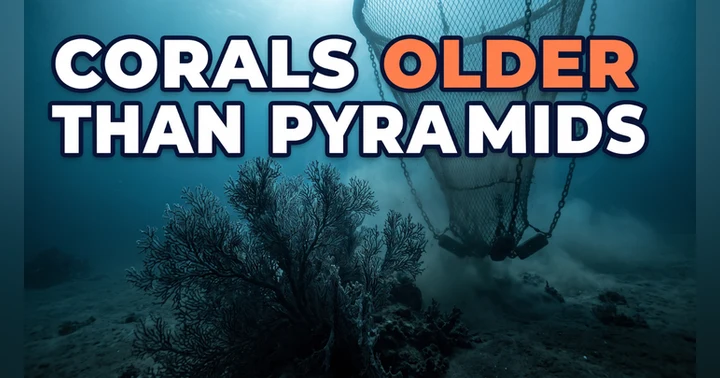
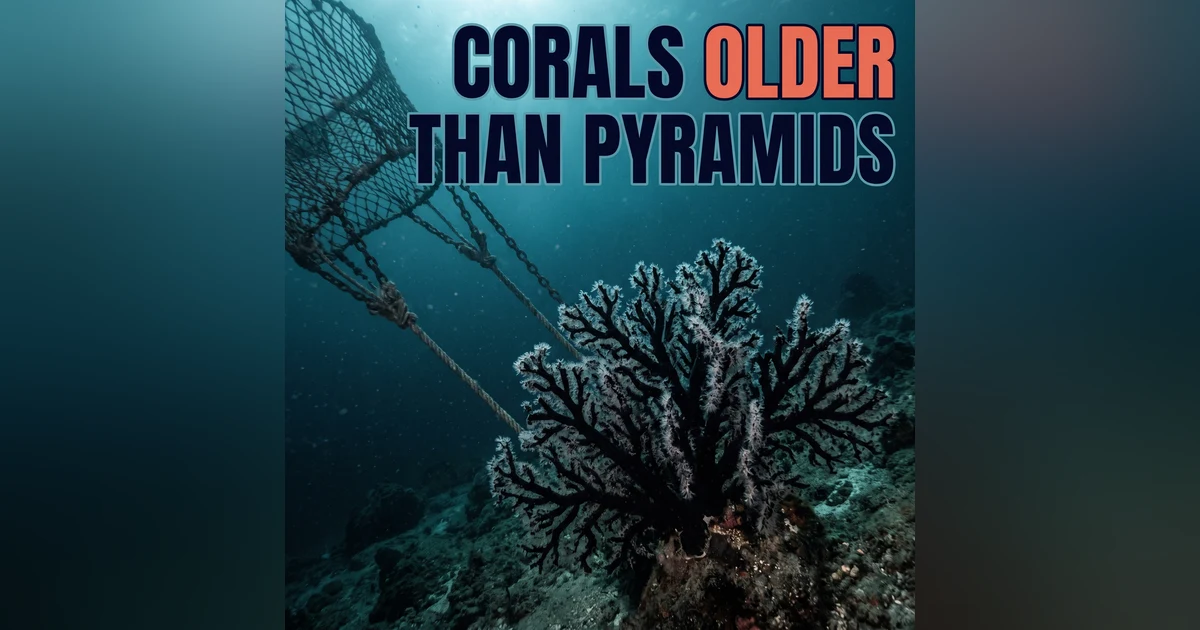
Somewhere on the ocean floor right now, a coral colony has been growing since before the Great Pyramid of Giza was finished. One deep-water black coral off the coast of Hawaii has been dated at 4,270 years old, making it one of the oldest living skeleton-building organisms known to science. A single pass of a bottom trawl net can wipe out that kind of habitat in seconds, and it's a fight that's still being decided this very year at the United Nations.
In this episode, Andrew breaks down why bottom trawling is such a hard problem to regulate. It's rarely the fish stock itself that takes the worst damage. It's the seafloor habitat those fish depend on to hide, feed, and survive, and that habitat can take centuries to rebuild once it's gone. Andrew traces the policy fight behind this back to a failed 2004 push for an outright ban on high seas bottom trawling, the 2006 compromise that did pass (UN Resolution 61/105), and the recurring cycle of reviews since then that have kept tightening the rules bit by bit.
That fight isn't a closed chapter. A UN preparatory workshop on bottom fishing's impact on vulnerable marine ecosystems was held in July 2026, feeding into a full General Assembly review later this year, with advocates pushing for a firm, time-bound end to seamount trawling on the high seas by 2027. Andrew connects it to Canada's own back-and-forth over fish habitat protection in the Fisheries Act, and sets up Friday's interview with the guest who chaired the UN fisheries negotiations that started this whole process.
Takeaways:
- Some deep-sea corals have been alive for thousands of years, and a single trawl pass can destroy that habitat in seconds.
- Bottom trawling's real damage usually lands on the seafloor habitat fish depend on, not the fish stock itself.
- The landmark 2006 UN resolution on bottom trawling (Resolution 61/105) was a hard-fought compromise reached after an outright ban failed in 2004.
- International ocean policy almost never arrives finished. It gets built in stages and strengthened through repeated review cycles.
- A new UN review is underway in 2026, with advocates pushing for a firm end to seamount bottom trawling by 2027.
Support Independent Podcasts: https://www.speakupforblue.com/patreon
Need help with your ocean non-profit, company, or project? Get the help you need with Pisces Oceans Inc.: https://www.piscesoceans.ca
Connect with Speak Up For Blue
Website: https://bit.ly/3fOF3Wf
Instagram: https://bit.ly/3rIaJSG
TikTok: https://www.tiktok.com/@speakupforblue
Twitter: https://bit.ly/3rHZxpc
YouTube: www.speakupforblue.com/youtube
0:00 Somewhere on the ocean floor right now, there's a coral colony that has already been, like, a thousand years old. It even been around as the pyramids were being built. It's older than most of recorded human history, and a single pass of a trawling net could wipe it out in seconds. And that is the fight that my interview on Friday, the person I'm interviewing on Friday found themselves in negotiating in a windowless UN rooms. and it's a fight that is still being decided this very year. So, you know, when we talk about protecting the bottom of the ocean. We talked last week about how there is room on the bottom, there's lots of life on the bottom of the deep sea, whether it's on a seamount, whether it's in the Clarion-Clipperton Zone, there is life on the bottom, and it's a habitat.
0:46 And rarely do we see habitats on the list of, like, when a trawl net goes through, a bottom trawl net goes through. It's not the fish that actually are bothered, it's the trawl destroys the habitat where the fish go. I mean, the fish go in, they're obviously bothered, they get caught, but it's really the destruction that is caused by that trawl, that bottom trawl, that actually scrapes the bottom of the ocean. And whether it's in the deep sea or in the shallows, it gets destroyed. And so the person that we're interviewing on Friday, I'm kinda doing a little bit of a mystery here, they were part of what we call, like, the high seas discrete stocks. So it's specifically bottom fishing and bottom trawling. And this person was chairing the UN fisheries negotiations at the time.
1:26 And like I said before, what's actually being damaged is the habitat, not the fish stocks itself necessarily. Obviously, they're getting caught, but it's not as if they can be degraded in one pass. But the habitat can be destroyed, and if the habitat is destroyed, the fish eventually will go away if there's enough habitat or there's not enough habitat to live in. ' Cause you gotta remember, fish need hiding spots. They need food. They need areas. They need a home. These habitats provide that home. It's rare that you'll see a lot of bottom-dwelling fish that are out in the open 'cause then they can get caught by predators. They don't want that. They wanna make sure that they can actually be protected, and they can hide, and they can do what they need to do to survive. So we have to protect the bottom. We have to protect the habitats.
2:06 And I think, when you start to look at a lot of these corals that have been growing for centuries, and some of them are thousands of years old. Like, some of them have been dated, like, 4,270 years old off the coast of Hawaii. These are Leiopathes species, right? I think that's how you pronounce it, Leopathes species. basically deep-water black coral. And so the Lawrence Livermore National Laboratory researchers dated those 4,270 years old. It's one of the oldest living skeleton-building marine organisms we know. This is an organism that builds its corals as it grows up. It takes a while to grow, but it has this intricate, like, habitat-forming ability. Now, just a comparison when people say it's as almost as old as pyramids.
2:48 The Great Pyramid of Giza is roughly 4,500 years old, so it's just about 250 years shy of that. So it's a little bit younger, not older, but it's still important. And that same research body that actually did the black coral aging, they said that bottom trawling, commercial bottom trawling, is the direct threat to these corals, alongside of, like, harvesting for jewelry and things like that for these corals. So, you can't just smash through this stuff. You have to be careful. You have to have rules so that you can sit there and enjoy the fruits of the labor of these habitat-forming corals. So as the problem that is at hand is that you have these slow-growing, thousand-year-old corals that need to be protected because we need to protect the fish, the longevity of the fish.
3:35 You want a sustainable fishery, you have to protect the habitats that can house the fish. Pretty simple. It's not difficult to understand that concept. Now, there has to be some kind of response to say, "Hey, we need to protect this." So, there was a landmark international agreement negotiated by the person I'm talking to on Friday, who was chairing the UN fisheries talks to mitigate the impact of bottom fishing and bottom trawling on vulnerable seabeds. They call it a step function change in how the type of fishery is managed internationally. And so I think this was the UN General Assembly Resolution 61/108 in 2006, right? It's a landmark resolution that first called on states, and you have these regional management organizations, regional fisheries management organizations, which are these large organizational areas, management organizations that are managed by a number of different countries.
4:28 Like, it depends on where they are. They're all over the world, though. They cover most of the world. And so they protect vulnerable ecosystems like seamounts, hydrothermal vents, cold water corals, anything of that nature from destructive bottom fishing. And it's by conducting impact assessments and closing high seas areas where these vulnerable marine ecosystems are known or likely to occur unless proper safeguards are in place. So I think it's a landmark policy 'cause it took probably about 13 years of the State Department's Office of Marine Conservation that engaged in these fisheries negotiations regionally in the Pacific and globally at the United Nations and FAO. And, um, you know, there's a co-authored paper, like a law review piece specifically on the UN fish stocks agreement review process, all that kind of stuff.
5:12 So there's a lot of documentation on this. And the negotiation that happened to create this protection and to make sure that an impact assessment has to be done in areas that we just don't know what's happening. It doesn't always happen cleanly. It doesn't always happen in the first try. It doesn't say that, " Hey," you know, when I explained it earlier, I said it's pretty simple. You have these thousand-year-old corals that form this habitat to protect fish. Without this habitat, there isn't gonna be any fish in that area. They'll go somewhere else or they'll be caught really quickly. So you have fisheries, bottom trawls, that come down and scrape the bottom and destroy parts of the habitat, you get less fish 'cause there's not as much habitat, or if there's habitat at all. And those fish don't always come back ' cause the corals take a long time to grow down there.
5:54 But if you say that to a policy, you say it to a bunch of countries, well, they're just like, " The people in our country need to fish that area because they depend on it for fisheries. Their lives depend on it. Their livelihoods depend on it. Their kids depend on it. Their families depend on it. They're gonna continue to fish." So we are advocating for those people. We are making sure that we can get, not only advocating for the people, but of course the countries get money from this. It's a big part of their GDP in some cases. So the policy doesn't happen just clean, like, "Hey, we need to protect this area. Yes, I agree. That's how it's gonna happen. Let's protect it." No, it doesn't happen that way. I'm gonna talk a little bit about the drama that happened. In November 2004, the UN General Assembly rejected an earlier push for an outright moratorium on high seas bottom trawling. And just like last week when we talked to Matthew Gianni, the Deep Sea Conservation Coalition, which he's part of and co-founded, led the campaign for a temporary ban.
6:38 Opposition led by Iceland and the EU, particularly Spain, defeated that ban and responsibility for high seas bottom trawl of fishing was left to individual nations and regional bodies instead. So it didn't really help, you know, that first pass didn't really help. Then two years later in 2006, the compromise that did pass was Resolution 61/105 Not a ban necessarily. Again, it doesn't always happen the way we want, but a requirement for an impact assessment and area closures, right? This is like the step function change that the person of the subject of Friday's interview was talking about. It's where you get what you can get. You can get something in there that everybody agrees to as the base of this policy. It's a real-world example of everything that happens in conservation.
7:21 It's never the perfect scenario because some countries or one country or two countries or 10 countries want something different. And when it comes to fishing, countries have a long culture in fishing, and they wanna keep going to seeing what they're doing 'cause nobody's ever told them to stop before, right? So successful international policy is often the strong but imperfect deal that keeps everyone in the tent, so everyone in the area, not the ideal income that we all expect that advocates originally wanted. It's never that. Now, the story doesn't end in 2006 for this document, for this regulation, this policy. The UN has kept reviewing the implementation on a roughly recurring cycle, every so often. So, uh, in 2009, it sharpened the impact assessment and stock assessment requirements.
8:03 In 2011, it required assessments to be made public, which it wasn't before, so again, it's getting better and better. In 2016, it tied assessments to FAO, Food and Agriculture Organization guidelines, which is a UN body, and a further resolution followed in 2022. As the years go on, as it gets reviewed and as they see how things are changing or not changing, there are more restrictions and there's more added to these guidelines and to these policies. This is live right now. It's a preparatory UN workshop on bottom fishing impacts on vulnerable marine ecosystems that was held just this past year in July 13th and 14th at UN headquarters in New York City, and feeding into like a full UN General Assembly review later this year.
8:46 Now, the Deep Sea Conservation Coalition is publicly pushing for a firm time-bound resolution to end bottom trawling on seamounts in the high seas by the end of 2027. And it ties into the Kunming Montreal Global Biodiversity Framework and the High Seas Treaty like what we're gonna be talking about in the next episode. So everything is kinda connected. All these policies are kinda relying on each other, or there's… As you build this policy framework around the ocean, whether it's the high seas, whether it's regional fisheries management organizations, it's all tied together at some point. They all overlap. You have to remember, like the ocean floor holds these gorgeous old living structures that are older than some of the buildings, like most of the buildings in human history.
9:29 And industrial fishing gear can destroy them in single passes or destroy parts of it in a single pass. You gotta remember like a bottom trawl has the net of a certain size, and when that drags across the bottom, it just picks up everything and could destroy coral , and sponges that create the habitat for these fish. There's other bottom species as well, but this is probably ones we're most familiar with. So fisheries management isn't only about, like fish population numbers, it's about protecting the physical seafloor habitat. And it's treated as its own public policy and its own priority. Marine protected areas doesn't just protect fish, it protects the habitat the fish live in. When you can protect the bottom or where these fish are living, you end up protecting the fish. And actually that's an interesting segue is that when the Harper government got in in Canada, they pretty much deregulated all habitat protection within the Fisheries Act back in like 2012 to 2015, before the Trudeau government got in.
10:23 The reason why they did that, they said, "Hey, we just want to manage fisheries, so we just wanna manage the fish, not the habitats that they go in, that they live in. We just wanna manage the fisheries, the commercial fisheries. That's all we should manage. We shouldn't manage anything else," even though they were related. But they didn't care about that because probably one of their supporters wanted to fish more, and they paid a lot of money for their campaign to get that done. So in Corbin when the Fisheries Act was later revised by the Trudeau administration, they started to put in more protections. They put back the habitat requirement for protection, and they added more protections into the Fisheries Act to make sure that it can't just be changed just willy-nilly as a government comes through and wants to give more to oil and gas and other types of resource intensive exploitation businesses.
11:04 Now, going back to this bottom trawling, policy, the 2006 protections for seamounts and corals were a hard-fought compromise, by getting those extra things like getting the impact assessments after an outright trawling ban failed in 2004. So they went for everything. They couldn't get it, they went for the next best thing. And then the fight, like the same fight over how far to go is playing out again and again and now in the 2026 in the UN review, so hopefully we'll be able to get that. And so, the person I'm gonna be interviewing on Friday states that, like, whether the resolution is agreement that you want to happen, you know, they remember about getting it passed after a 2004 moratorium push failed. And what they make out of is the new push happening this year to actually end seamount trawling by 2027.
11:47 It's a step-by-step process to get things done. Things don't happen quickly. And I think a lot of the times when we look at putting in regulations, I think those of us who are not familiar with how policies are made realize that we can't just wait till the last minute to protect oceans, to protect the planet from climate change. We need to push forward and actually be able to put in policy as soon as possible, because we know it's not gonna be perfect. We know we're gonna have to build on it every year, every two years, every recurring certain interval where we can get it better and better and better. So we may not get exactly what we want in the first pass, but by putting it together, history has shown that we can make them better, we can make them tougher and protect better.
12:32 And as we start to see successes or even some failures, we can really start to rethink, be like, "This isn't working. We need to try this. This is working really well. Let's continue with this. Let's expand on it." And without having that as a tool and as a policy tool, we become just sort of dead in the water, no pun intended. If you wanna help the ocean, you help the people who want to pass the policies. Whether they're perfect or not. They're doing the best they can to get to perfect, but they can't. They can't just get a ban on trawling, as this example covered, but they can get close to a ban on trawling, and that's what matters. And that's what matters as we move forward. It helps our oceans bit by bit, step by step. Okay? That's it for today's episode.
13:13 Love to hear your thoughts. Let me know if you want to hit me up on my socials, links in the show notes. And of course, don't forget to follow this podcast if you like this kind of information, and share with a friend. Like, talk about it with people. Talk about the policies that are put in place. Talk about how there needs to be a step-by-step approach, and that the first policy that's put in place on a specific subject like trawling, like deep sea trawling, doesn't always work out. And we need to build on that as we go through, but we need to act fast to do it. That's how we build strong protections for the oceans worldwide, not just country by country. But anyway, I wanna thank you so much for joining me on today's episode of the How to Protect the Ocean podcast. I'm your host, Andrew Lewin. Have a great day. We'll talk to you tomorrow, and happy conservation.