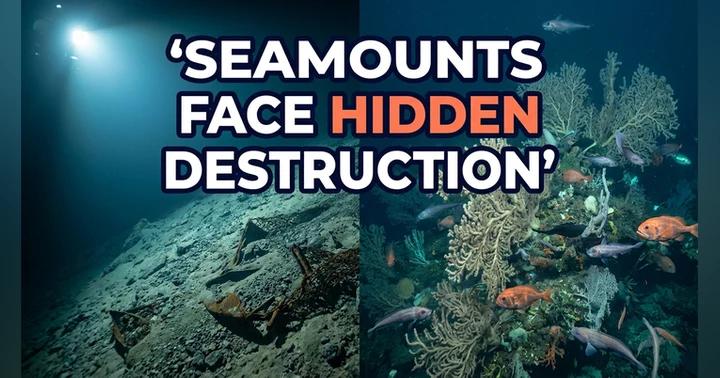
Bottom Trawling on Seamounts: The Damage Nobody Sees


 Apple Podcasts

 Spotify

 YouTube

 Amazon Music

 PocketCasts

 Overcast
Seamounts are underwater mountains that rise at least 1,000 meters from the seafloor without breaking the surface, and they punch far above their weight biologically. Topographic upwelling pulls cold, nutrient-rich water up their slopes, fueling plankton blooms that draw fish, sharks, seabirds, and marine mammals, while their rocky surfaces give slow-growing corals and sponges a rare hard place to root in an otherwise soft-sediment deep sea. Roughly one in five seamount species are endemic, found nowhere else on Earth, which is why scientists call them oases in the deep sea.
That's exactly what made a pair of Australian studies so consequential. In 1997, researchers led by Tony Koslow and Karen Gowlett-Holmes of CSIRO Marine Research surveyed seamounts south of Tasmania to test whether bottom trawling for orange roughy was damaging habitat that had taken centuries to form, and whether a proposed marine reserve would actually protect it. What they found on heavily fished seamounts, compared to lightly fished or untouched ones, was stark: stripped reef, collapsed biomass, and far fewer species per sample. A 2009 follow-up study by Althaus and colleagues went further, analyzing tens of thousands of video frames and photos across 25 seamounts, and found coral cover reduced by roughly two orders of magnitude on trawled sites, with no sign of recovery even five years after trawling stopped.
Those findings are part of what pushed Matthew Gianni, a former deep-sea fisherman, to help found the Deep Sea Conservation Coalition and push for international protections against high seas bottom trawling. This episode walks through what seamounts are, what the research actually found, and why damage this far down might be effectively permanent on any timescale that matters to us.
Takeaways:
- Seamounts are volcanic underwater mountains that drive upwelling, concentrate biodiversity, and host high rates of endemic species found nowhere else.
- Bottom trawling for species like orange roughy drags heavy gear across seamount slopes, destroying coral and sponge habitat that can take centuries to build.
- A 1997 CSIRO-led survey south of Tasmania found dramatically lower biomass and species richness on heavily trawled seamounts compared to lightly fished or untouched ones.
- A 2009 follow-up study found roughly a hundredfold decline in coral cover on trawled seamounts, with no clear sign of recovery five years after trawling stopped.
- Because this damage happens far below the surface and outside any sunlight or recreational diving range, it's often invisible until a dedicated scientific survey documents it.
- This research helped inspire the founding of the Deep Sea Conservation Coalition and international efforts to restrict high seas bottom trawling.
Support Independent Podcasts: https://www.speakupforblue.com/patreon
Need help with your ocean non-profit, company, or project? Get the help you need with Pisces Oceans Inc.: https://www.piscesoceans.ca
Connect with Speak Up For Blue
Website: https://bit.ly/3fOF3Wf
Instagram: https://bit.ly/3rIaJSG
TikTok: https://www.tiktok.com/@speakupforblue
Twitter: https://bit.ly/3rHZxpc
YouTube: www.speakupforblue.com/youtube
0:00 Is there something in your life that really made you or really inspired you to do something that you're doing right now? It could be to listen to this podcast. It could be to advocate for something to protect the ocean. Yesterday, we covered the story of Matthew Gianni, who I'm gonna be interviewing. We're gonna be publishing the interview I did with him this Friday. And we talked about his story from fisherman, like deep-sea trawling fisherman, and a bunch of other types of fisher, but really deep-sea trawling fisherman, and led to him managing the ocean program for Greenpeace International, as well as co-founding the Deep Sea Conservation Coalition. And during that time, he started off with his advocacy role really started off with him looking at what the damage he was causing, him and his crew were causing as they were deep-sea fishing, deep-sea trawling off the coast, off the central coast of California, you know, 1,000 meters down, 3,000 feet down.
0:54 And it led him to eventually co-founding a Deep Sea Conservation Coalition. Huge, huge path to really inspire. But what really made him kind of pull the trigger or led to him pulling the trigger were the studies that we're talking about today, or at least part one study and then an update of that study later on in his life. And that really solidified his knowledge on what deep-sea trawling has and had at the time. This is around late 1990s, early 2000s. So we're gonna be talking about deep-sea trawling on seamounts. We're gonna talk about what seamounts are, we're gonna start all that, and then we're gonna talk about what the study found and what it means about what the study found, and how it really got Matthew to really pull that trigger and start an organization, a coalition of over 80 organizations that have helped put in rules and policies and have a moratorium in the UN on deep-sea trawling in the high seas.
1:46 So we're gonna talk all about that on today's episode of the How to Protect the Ocean podcast. Your source for ocean news, conservation, and science, Monday to Friday. I think we're probably the podcast that publishes the most, but it's here for you. It's here for you to soak up. It's here for you to be inspired by and to lead to better protection of the ocean through your daily life. So if you want to follow that kind of stuff, hit that follow button on your, favorite podcast app, and you can do so, right away. All right, so let's first talk about what seamounts are and why they actually matter. So essentially, they're underwater mountains. Like, they rise at least 1,000 meters above the surrounding seafloor without breaking the surface. So these are underwater mountains.
2:26 Most are volcanic in origin. Now, the seamount disrupt ocean currents by a process called topographic upwelling. Basically, with their mountain, they have this side of the mountain, and that water from the bottom comes up, it's get pulled up, and it pulls cold, nutrient-rich water up from the depths toward the surface. It's called upwelling, topographic upwelling. That upwelling fuels the blooms of phytoplankton, which feed the rest of the food web in that area near the, closer to the surface. So you have small fish, then bigger fish, then sharks, then tuna, then seabirds, and marine mammals that gather around the seamounts to feed. It's actually quite an interesting area. When you talk about marine protected areas, these are distinctive areas that get protected because they are found in these areas, and they attract such biodiversity.
3:10 Now, their rocky surfaces on the top of the seamounts give slow-growing stationary animals like corals and sponges a hard place to attach and grow, something rare in the deep-sea soft sediment. So normally it's like a sandy bottom, but now, you have this rocky surface 'cause it's a mountain, and there's all these, like, grooves and stuff that these slow-growing animals can grow on, like corals and sponges. Now, on average, roughly one in five species found on seamounts are endemic. They don't exist anywhere on Earth. They only exist there. Some marine scientists call them oasis in the deep sea. It's part of the ocean where it's otherwise cold, dark, and largely empty, and a seamount is where life is concentrated. I think it's kind of interesting to, like, paint that picture.
3:51 Like, think about just complete darkness, ' cause that, you know, there's no light that gets down 3,000 feet. It's complete darkness. You have all this rocky bottom, but this, like, mountain that comes out, this seamount that comes out of the bottom, and there's all this life around it. You know, there's probably sharks moving around, there's coral sponges, schools of fish. That's what happens before any damage happens to it. That's what happens just as a natural environment. This is how these systems kinda grow. It starts off with corals and sponges and other animals that form the habitat. Then all these fish and invertebrates and bigger fish like sharks and tuna kinda come around and they feed off of the areas. It's a really cool place to be. Now, humans interact with the ocean in ways that help and ways that harm often at the same time through the same industries, right?
4:35 Sometimes it's not necessarily that they're benefiting the ocean, but the ocean is benefiting us. So commercial fishing feeds billions of people and supports coastal communities worldwide, including around seamounts, which have historically been productive fishing grounds for species like orange roughy. Now, but the same industry that feeds people can also, when practiced certain ways, cause damage that can outlast the benefit by decades or longer. So bottom trawling is one of those practices. It involves, like, dragging those nets. I talked about this in yesterday's episode with Matthew, dragging in heavy nets and gear along the ocean floor to catch fish. And on a seamount, that gear drags directly across corals and sponge habitat that took centuries or even longer to grow. So think about you found, like, these fishers found this habitat.
5:17 They're like, " We want to fish here because it's important for us because it feeds, coastal areas and , it allows us to feed our families and so forth." But as we fish and we bottom trawl to get those, we destroy all the habitat that's taken, like, centuries to build. Like, centuries to build, Now, I don't want to say that it's fishing that's the problem because, you know, fishing isn't inherently destructive and most fishers are trying not to destroy anything. They want to sustainably fish for a long time, generations and generations. The point here is that, like, even though, like, this practice, it could be legal, common, and economically important, it can still cause a lot of damage that isn't visible from the surface of the, like, of a deck of a boat because they can't see what damage they're causing.
5:57 Unlike the damage on land when-- like, which people can often see directly. So if somebody goes through, like, with their truck and starts spinning around on a field, you see the damage that can happen to that field. When you put-- Like, damage on the deep sea floor happens, like no one sees it. These seamounts sit around 1,000 meters down, like below the sea surface. So it's far beyond any recreational diver can go. Like I'm on open water. I'm legally allowed or certified to go 100 feet down. Like 100 feet. So imagine what 1,000 meters, nobody's going down there unless you're going in an ROV, or go down in a sub, which some people do, or they take ROVs down. But it's beyond the recreational diving range. It's beyond the sunlight. It's beyond casual observation of any kind. So a trawler can drag its nets across the same seamount hundreds and thousands of times over the years, and from the deck, nothing looks different.
6:42 It just looks like the surface of the water. And the evidence of destruction just stays down at the bottom. Nobody knows what's happened. And sometimes you don't even know that it's been fished. Without a scientific survey, like specifically designed to go down and look, there's no way to know what has been lost. And like anything was lost, if anything is lost at all, like that's where we're looking at here. The destruction doesn't have to be open, but it's just nobody knows this happens. We can't see it. You know, it goes back to that image I shared on Ocean Decoded Live last week, and I, I had the cartoon, like, redrawn using AI because I couldn't find the cartoon. But essentially there's two people on a deserted island. They're looking out on the ocean, at the surface of the ocean. They're like, "There's nothing here. We have nothing to feed us. There's nothing here." But underneath the surface are all these animals, like, looking up, like, looking teeming with life.
7:28 Well, same thing, like, we don't know what's happening on a seamount. So I just want you to think about that. You have the seamount that is all this, like, teeming with life, teeming with biodiversity that could help feed with animals and larvae and everything like that, other places, other seamounts, or other habitats get destroyed over years of trawling. Now, there was a study that started in 1997, the team Australian researchers led by Tony Koslow and Karen Gallet Holmes from the CSIRO, Marine Research in Hobart. They surveyed a group of small seamounts south of Tasmania using dredges and cameras. So they started to look at these seamounts. They didn't know how much fishing was going. They had an idea of where things were being fished, but they didn't know exactly, like, any damage caused, right?
8:09 That's what they wanted to find. Their goal was to assess the impact of trawling for a fish called orange roughy, and to test whether the proposed marine reserve that was gonna go in there would actually work to protect the area. So they surveyed 14 seamounts, both inside and outside in an interim protected area, deliberately choosing sites ranging from completely unfished to heavily fished. So they're gonna see what the damage is on these areas and what, like, what happens when you fish on an area heavily and when you don't fish at all, and then in the middle. That gave researchers, like, something rare in ocean science, a way to compare seamounts that had experienced years of trawling against ones that had, like, essentially been left alone, right? Similar starting conditions, one variable difference.
8:49 So like, like this is the hypo- this is how science works. I'm taking you into the mind of a scientist looking and saying, "Hey, there's a lot of fishing going on in these areas, and there's a lot of seamounts around. Let's start taking a look at what the damage is on these heavily fished areas, and if there is, like, is it causing that much damage?" This orange roughy is probably a commercially important species. It feeds a lot of people, it feeds a lot of industries. So how do we make sure that we are doing this properly, sustainably, and making sure that we're not damaging the whole thing? And maybe they won't be able to fish orange roughy after they've destroyed all these habitats as they move from seamount to seamount to seamount. So here's what the researchers found. The diversity itself was a discovery in its own. That single 1997 survey that they did turned up 262 invertebrate species and 37 species, compared to only 598 invertebrate species reported from every seamount study conducted worldwide before 1987.
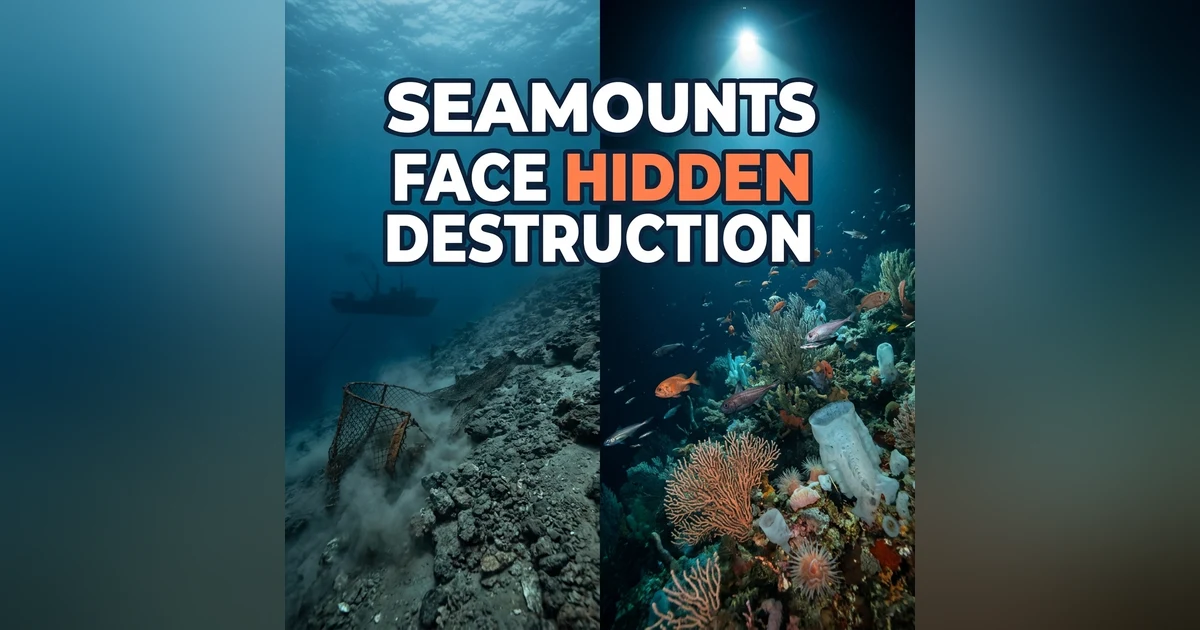
9:40 So one survey nearly matched decades of prior global research. Now, on the untrawled and lightly fished seamounts, the restructure was dense, diverse, and beautiful. It was all alive. On the other hand, the heavily trawled seamounts included two named Main, Pedra and Sister, those are the seamounts, told a completely different story. Their reef aggregate was almost stripped from the slopes, or reduced to rubble. Benthic biomass on heavily fished seamounts was 83% lower than the lightly fished ones or unfished ones, and there were 59% fewer species per sample. That's a huge difference. A follow-up study published in 2009 by Althaus and colleagues went even further analyzing over 64,000 video frames across 25 seamounts, not 14, and more than 700 high-resolution images across seven seamounts.
10:30 I assume that's within the 25 seamounts. It found trawling had reduced coral cover by roughly two orders of magnitude, close to a hundredfold, and it caused threefold declines in richness, diversity, and density across the rest of the seafloor community. I guess, incredible difference. Like perhaps the most sobering finding came from the 2009 study. On seamounts where trawling had already stopped five years earlier, there was a no clear sign of recovery. So once the damage was done, it didn't come back in five years, right? It wasn't just severe. These things, like appeared to be effectively permanent, at least on any timescale that mattered to human life. So if you go back to what I mentioned at the beginning, these seamounts have taken centuries to build this coral and sponge cover and all these different habitat covers.
11:17 It's not a system that is wonderfully beautiful and light. It is a dark system, like no light. There's a lot of currents and everything like that going across, and these animals are extremely slow-growing and sensitive. And so as these animals grow, and takes like centuries to create, and gone within moments of a trawl or a number of different trawls, we can't expect that the fish are gonna come back within five years. It just doesn't work that way. The deep sea is different. The species are different. They grow slower. They don't have the same mechanisms as the species at the surface especially corals and sponges, that are able to grow with sunlight because of their symbionts. They grow different ways, and they grow slower. You are seeing how destruction at such a level, whether it's just moments, how the recovery takes so long.
12:04 I want you to think about that as you start thinking about pressures on the deep sea, trawling, deep-sea mining. Just imagine having video of this area. Like I watch Nautilus Live, like it's a cool program. They go to sea, and they have like educational things, and these are the ones where you see these ROVs go down, and you see like people on, their voices on the camera be like, "Oh, look at that. "It's a dumbo octopus." Or you see all these others, like, "There's a rockfish here," or something. And they really enjoy seeing what they see. Imagine being a researcher. You're going down with an ROV, and you're watching this, and you see these images of just rubble. It's gotta be heartbreaking when you see seamounts that are just teeming with life, and then you go to ones that are just rubble. And five years later, you go back, and nothing came back.
12:48 Nothing. You know, seamounts often carry relatively high levels of endemism. That means, species that exist only on that seamount and nowhere else. So if that seamount is trawled that heavily, for anyone has ever surveyed like what lived there, there's no way to know what existed or what didn't, right? So not only are we losing habitat, but we're losing species that could help us as humans or just help the system in general. A well-known deep sea biologist made this point plainly, saying that we may be losing species on seamounts from bottom trawling that we haven't even discovered yet. It's not only about the damage anymore. It raised the possibility of undiscovered extinctions, species erased before science ever even knew them. Like, that is the huge gut punch of all of this.
13:31 It's not just habitat loss, it's the fact that we are losing entire species before we even knew they were there. And a lot of you are like, "Well, we didn't know them, so, you know, no harm, no foul." But these species could be pivotal in like the Earth's future, could be pivotal in understanding how these species are only found in certain spots around the world on these seamounts. It's just absence. We don't know what they are. We don't know what they were. They're just gone, and it's just because of our destruction. This is the study that got Matthew Gianni, who was a deep sea fisherman, to say, " This can't happen anymore. We need to protect these seamounts. We need to protect the deep sea. We need to really understand the impact of fishing without knowing what we are destroying or that we're even destroying." 'Cause some people may have just said, "Well, yeah, we're not destroying anything.
14:20 It's just fine. We keep going back, and we keep getting fish." But for how long? And what's the recovery? I can understand if you're gonna deep sea trawl one little area, and then it can recover quickly because it's near the surface. But if we know now that after five years we're not seeing any recovery in the deep sea, is it really worth going back and fishing again until we destroy everything and we lose everything on that seamount or multiple seamounts? And I want you to say, like, think about the same thing when it comes to deep sea mining. ' Cause there are studies that show that there was major impact in deep sea mining, and it didn't recover four years, three or four years later. I'm starting to see, like, a trend here. I'm not saying it's scientific, and I'm not saying it's real, but it's starting to sound like things in the deep sea don't recover as quickly as some of the other habitats that we've seen in the shallower waters.
15:07 So something for you to think about. This story inspired Matthew to co-found the Deep Sea Conservation Coalition and work with the UN General Assembly and the FAO and a number of other bodies to put in international moratorium on deep sea fishing in the high seas. This is what inspired the change. These two studies, and his history with deep sea fishing and trawling. That's what gets people to do amazing things. And that's what Matthew did. And these studies that show, like, some crazy emotional changes, right? Some physical changes, and emotional for us to see, wow, we're actually doing a lot of damage for what, right? Is it really worth it? And it needs to be managed a lot better. A lot better. But that's the episode for today. I'd love to hear your thoughts. You can contact me.
15:48 If you're on Spotify, give me a comment. Love to hear your thoughts on this episode. Also, my socials are in the show notes, so you can just DM me on TikTok, Instagram, Facebook, wherever you'd like to contact me. Also on YouTube, do Ocean Decoded live. Just started this show Monday to Thursday live at 4:00 PM Eastern. Check it out. We cover all different things around the ocean. All right? So I wanna thank you so much for joining me on today's episode of the How to Protect the Ocean podcast. I'm your host, Andrew Lewin. Have a great day. We'll talk to you next time, and happy conservation.