From Shoveling Coral Overboard to Negotiating at the UN


 Apple Podcasts

 Spotify

 YouTube

 Amazon Music

 PocketCasts

 Overcast
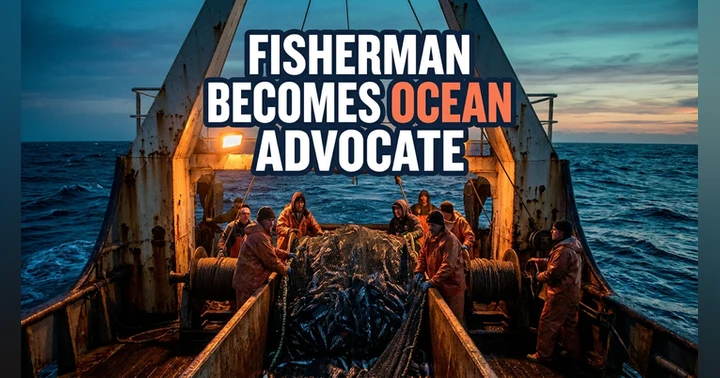
Before he ever sat across a table from UN delegates, Matthew Gianni spent 10 years working as a commercial fisherman up and down both US coasts. Gillnetting for Spanish and king mackerel in Florida. Bottom trawling off central California, New England, and Florida for sole, redfish, hake, sablefish, shrimp, and other groundfish. Hook-and-lining for salmon and albacore tuna in Oregon and California. Running pots for Dungeness crab and dredging for deep sea scallops on Georges Bank. In today's episode, I trace how that decade on deck, watching coral and glass sponges get shoveled back overboard from trawls that dragged the seafloor a thousand meters down, planted the seed for a career that would eventually take him to the UN General Assembly.
Two fights as a working fisherman pushed Matthew toward advocacy. First, he helped organize fellow fishermen to halt a $110 million plan to dump San Francisco Bay dredge spoils directly onto prime fishing grounds off the Southern California coast, a fight that eventually moved the disposal site off the continental shelf. Second, he represented the fishing industry in efforts to block new offshore oil and gas leases along the central California coast. Both wins showed him what organized advocacy could accomplish, and they set him on a path toward Greenpeace International, where he helped launch the international fisheries campaign, worked on the UN's 1991-1992 moratorium on high seas driftnet fishing [VERIFY dates], and eventually ran Greenpeace's global Ocean Program from Amsterdam.
In the early 2000s, Matthew co-founded the Deep Sea Conservation Coalition, an international coalition of organizations working to protect deep sea biodiversity from harmful activities, where he now serves as political and policy advisor. What started as a fight against deep sea bottom trawling on seamounts has, since 2014, expanded to include deep sea mining, an industry Matthew argues is moving to tear into the seabed before scientists even have a baseline understanding of what lives there. This is the first episode in a week-long series on the deep sea, building toward my full interview with Matthew, airing Friday.
Support Independent Podcasts: https://www.speakupforblue.com/patreon
Need help with your ocean non-profit, company, or project? Get the help you need with Pisces Oceans Inc.: https://www.piscesoceans.ca
Connect with Speak Up For Blue
Website: https://bit.ly/3fOF3Wf
Instagram: https://bit.ly/3rIaJSG
TikTok: https://www.tiktok.com/@speakupforblue
Twitter: https://bit.ly/3rHZxpc
YouTube: www.speakupforblue.com/youtube
0:00 I bet you're sitting there, you know, you read the title of this podcast, and you're probably wondering how someone that starts off when they're younger or maybe they're working in a in a some kind of industry, and then eventually like 20, 30, 40 years later, they become an advocate and and for the ocean and protect the ocean in some way. And and I'll be honest, for me, I always think of people who want to become who are scientists and they become more advocates because they've been working in the field a lot of the time. But today we're going be following the story of a man that I interviewed that's going to be Matthew Gianni, who is the co-founder and political advisor of the Deep Sea Conservation Coalition. I interviewed him on Friday.
0:43 We're going to talk about his story today, because I want you to get to know who he is. And, you know, a lot of the times with guests that we have, I don't get to talk a lot about them other than what they talk about themselves. So I decide, you know what? Let's switch it up a little bit and let's really focus in on the story of Matthew Gianni, who is a was a t a fisherman in the United States for 10 years and how he ended up in Amsterdam, not only having experience working for Greenpeace for like 10, 13 years, but also co-founding his own deep sea conservation coalition organization and is now advocating not only helping negotiate and putting together international agreements on deep sea fishing, but also Looking at mining and deep sea mining.
1:29 We're gonna talk all about that on this episode of the How to Protect the Ocean podcast. This is the podcast where you find out everything you need to know on ocean news and ocean science and conservation Monday to Friday every week. I can't wait for you to s like follow, enjoy the journey, ~ and really dive into a resource where you can learn about the ocean and what's happening in the ocean, not just the education aspect. Of the ocean, like animals and so forth and habitats. We go through that as well. But we really talk about how things are progressing and how we are protecting the ocean. And today we're going to be talking about one of the people, one of the many, many people who has helped protect the ocean in a lot of different ways. And that is Matthew Gianni, who started his life as a fisher, or started his working life as a fisherman for 10 years on multiple coasts of fisheries.
2:22 Now, this is this is an incredible story. Cause and then I want you to really start to think about what it takes for someone to go from fisher to advocate in the NGO speech space from an internationally. So going from local, right? So, you know, this is ~ like a fisherman who who's not just a fisherman in one fishery this entire time. He spanned like genuinely a wide range of fisheries, right? Not just On one boat or one coast. He did Florida. He ran around like gillnet fisheries for Spanish and ~ king mackerel. He worked on the Central California, New England, and Florida coasts on the bottom trawl fisheries for sole, redfish, hake, sable fish, shrimp, and other ground fish. Right? Like this is deep-sea trawling here.
3:08 We're looking to we're talking about like off central California, down to a thousand meters, roughly 3,000 feet for my American friends. And in Oregon and California, he also participated in the hook and line fisheries for Salmon Alba Cortuna. So getting this wide variety of fish, and it doesn't stop there. In Northern California and Oregon as well, he looked at the pot fishery. He's worked at the pot fishery for Dugenous Crab. And then in Georgia's Bank, going on the East Coast, Mid-Atlantic, and in New England, dredge fishery for deep sea scallops. Now, I think a lot of times when we think about the people who are in these roles of like international policy roles and political roles, dealing with all the nuances that have to go into the regulations, whether it's national or international bodies, or even even more local. It's it's not as if like we don't know where they came from. Sometimes they come right out school and they work their way up through the policy career space.
4:02 And others they come from different backgrounds like Matthew, right? And and you know, we're looking at different types of fishery that he actually did looking at gill nets, trawls, hook and line, pots, dredges. Right, up and down the Atlantic and Pacific coast, the west and east coast, the east and west coast of the United States. And so it's it's not as if he had this narrow career, right? he has a general working knowledge of a ma of the American commercial fishing system, right? And and and he's taken a lot from that, you know. And I think it it it comes down to later. We'll we'll start to see this shape how he started choosing the different paths that he took. later on in his story, and and I want you to to really understand why the deep sea like what it meant to him and and what he really understood from going into like the the especially the the trawling, right? The central California coast, trawling down to a thousand meters.
4:58 Now I want you to think about what happens there. A trawl go a traw net goes down. I've I've described how what a traw net looks like, You're looking at deep sea, so a thousand meters, three thousand feet. It goes down to the bottom. It's this net that has a wide opening and then different mesh sizes for depending on what you're what you're catching. It's got ~ sometimes it's got two doors on the side to keep the the the the opening open, right, of the net. And then it's got a chain at the bottom. And when it goes down on the bottom, these are bottom trawls. When it goes down at the bottom, the train and the the the with the doors. Weighing it down, as the boat goes at a certain distance or a certain speed, the dredge will actually dredge everything up on the bottom.
5:39 In part destroying everything on the bottom. So if there's habitat out there, coral sponges, anything like that, that gets destroyed. That gets brought up into the net. And then, of course, the fish that are living there get brought up, whether hiding or not. If as that as that chain goes through the bottom or across the bottom, gets dragged across the bottom, all those fish kind of. Put in there. Now it could be anything. It could be crabs, it could be fish, it could be any kind of vertebrate or invertebrate that's down there, sometimes bigger than you expect, and sometimes smaller than you expect, right? Depending on the mesh size of the net. And so as that comes up, so it gets hauled up through that 3,000 feet, that 1,000 meters, it goes up into the boat and it come and it comes over the deck at like through this A-frame.
6:21 It comes over the deck and then it gets plopped into like a sorting table. Now I've been a part of these things before, and we've seen. How like it through science. And we've seen how these fish react. A lot of the fish that come up, because they're coming up faster than their their air bladders would allow, you know, the fish's eyes are like popped out of its sockets. there's probably a lot of like I with the one that I was part of, the trial that I the number of trials that I was part of, they were like short, they were like shallower, but the deep sea halls that we brought in, like the an the animals, like the eyes are popped up and everything like that. Some are still alive, like invertebrates are still alive and so forth. But like you're looking through and you're sorting through what you want, what you want to keep. And a lot of them, what what Matthew was telling me in the interview, which I'll hear on Friday, they realized that a lot of them had no market value.
7:07 So glass sponges, corals, starfish, crabs. The crew just like shoveling back, shoveling them back overboard and without knowing what they were actually destroying. They they generally did not understand what it looked like before because there's no cameras that go down there. They may have thought what was there, but they're probably thinking this is the deep sea. We're not really going over anything big. And maybe if it's one, it's just one little area. But that's what happened, right? That's the image that sits with me when I see this happen or when I hear this happen. Is like you have this swath of, say, however big the net is, say it could be like, I don't know, 20 feet wide. And and you're just scraping the bottom. It could be even bigger. You're just scraping the bottom.
7:48 So you have these like swaths of. Destroyed habitat as you go through. And so imagine being this fisherman who's on board trying to maximize their catch with as much market value seafood that you can get and throwing all this other thing on board, it starts to you know hit you in the back of your head, like your subconscious. It starts to get to you in that subconscious, right? And so over that time. Matthew started to to think like certain certain things are not right, certain things are right, but we're gonna continue it through this. And then there were two specific moments and two specific projects that he was like, you know what? I can't stand for this.
8:30 The first, there was a hundred and ten million dollar project to dispose of dredge spoils from the San Francisco Bay directly in prime fishing grounds along the southern coast of of ~ California. So you know, you're in this area, you're a fisherman, you want to maximize the area, you know what's around there. And then all of a sudden, this project, this major project, $110 million, comes through and says, hey, you know what, we're actually gonna take the dredge, like the San Francisco Bay needs to be dredged out, and we're just gonna dump them in this one area. And the fisherman, like, well, hold on a second, you can't do that. So, working together with some of his colleagues in the fishing industry, he helped halt that project for several years until the US Army Corps of Engineers and the EPA agreed.
9:12 To move the disposal site off the continental shelf. Now, is that great? No, still not great, but not in his area. He won the fight with his colleagues together as a community of fishermen, they won that fight. And that takes a lot, like you're going up against the Army Army Corps of Engineers. It's a federal and EPA. Those are two federal bodies that were a lot stronger than they were today. Now, the second event that really kind of put him more towards. Advocacy are really learning toward what you can accomplish with the advocate, is he served as a fishing industry ~ representative in efforts to oppose to oppose offshore oil and gas leases along the central coast of California. Right? So oil and gas had like in California have a very interesting history.
9:57 And so, as again, as part of the fishing industry and as a representative, he participated in efforts to ensure that there was no offshore oil and gas leases that were going to be. sold off of the central California coast. So, you know, two projects that were are worth being like, wow, like this is a fisherman who's who's standing up for his right and his like his people's rights, like his other fishermen's rights to fish in nice areas where they can get maximum fisheries, right? And but he's and and and he's still fighting these these things like you know looking at oil and gas Oil and gas leases, that how that can affect fishing, looking at dredging, being dumped in a prime fishing spot.
10:37 So he's starting to think that, hey, I can get a lot done with this, right? And I think having the, and I can't say this for sure, but having the the the in the back of your mind, your subconscious, the knowing that the effects of what you're doing in this deep-sea trawling game, I think it started to really change the way he thought. And having these, this, these two experiences with advocacy. Could really help think that, hey, I maybe I can do a a lot more for the environment within fisheries. Still get, you know, I'm still standing up for fishers, but like we can actually do a little bit more, right? He went up against the Army Corps of Engineers and the EPA and they won, right? At least for a few years. That's like a that's pretty meaningful in that way, right? You know, it's it's it's the fact that the he didn't come from outside the industry to fight like, you know, for or against fisheries. He came in.
11:29 From the inside the industry, inside the fishing industry, say, hey, we need to stand up for our fishers. Oil and gas could be really bad for us. We saw that with the BP oil spill. Also, you're looking at you know, the EPA and the Army Corps of Engineers that put out dredge in the middle of a prime fishing spot. No, we're not gonna do that. So all that thinking allowed him to be like, Hey, you know what? I think I can do more. I think I can benefit more. And I wanna stay on the environmental side and really look at what we can do. So he went to work. For Greenpeace International, right? He helped start up their international fisheries campaign. That's pretty good. You know, he's working with NGOs and community-based organizations across Latin America, Southeast Asia, India, Europe, and the US on unsustainable aquaculture campaigns and other and other campaigns like that. That's pretty cool. Then he also led like Greenpeace's participation in the UN conference of straddling fish stocks and highly migratory fish stocks.
12:26 And in the negoti and and in the negotiation of the UN FAO Code of Conduct for Responsible Fisheries. So now you're looking at international campaigns here. And he worked on and toward the end of his the campaign led, and the end of the campaign led the international effort to secure UN General Assembly moratorium on high-seas drift net fishing. And that was adopted in 1991 and 1992 at the UNS UN General Assembly and entered effect in 1992. That's pretty cool. Like that now you start like you're working with Greenpeace International, having this this advocacy experience from fisheries, now coming into the NGO game with a pretty, I would say, known and getting more and more reputable organization, like in the nineties and in in the ~ in the two thousands, right? And and cause they were a real like activist organization when it first started, right? One of the co-founders was Paul Watson.
13:20 And so they were really into the ad activism part and they started to get into the advocacy part and you know looking at policy and so forth, right? They still do activism, but a lot of times looking at this, and so the reputation started to get bigger and better within the conservation ~ regime, right? They were within the conservation field. and then so any regularly represented Greenpeace at fisheries and ocean-related internet intergovernmental forums, including the UN FAO Committee on Fisheries meetings, technical and expert consultations. And the UN Commission on Sustainable Development, ICAT, and the 1992 UN Earth Summit. So I guess, you know, looking at from a policy perspective and looking at negotiations and look and his participation in that, Matthew's like getting in there.
14:03 He's getting his feet wet, so to speak. Right. And then not only is he doing it in the back rooms, like in the meeting rooms, he's also organizing, you know, at this time, organized Greenpeace ships ~ expeditions. To document overfishing and unsustainable fishing practices, more on their activism side, on the Grand Banks, the Georgia's Bank, and the Barents Sea. And then he worked through a number of different campaigns where he became involved in international policy and treaty negotiations. And eventually he ran the entire ocean program for for ~ Greenpeace International. This is how he ended up ended up in Amsterdam, where he still lives today. Now, I I want to just go back into his fishing days.
14:44 Fishing in a plethora of different industries. And then moving into like after two you know successful campaigns for fisheries industries moves into a larger platform and a larger scale of effect on these policies that he's putting into place or helping, you know, negotiate and form and shape and form. And now He's in charge of the entire Greenpeace International Ocean Program. From fisheries to ocean program. That's incredible. That's like that's pretty incredible. Right? I think, I think it's it's something where you you know you look you're talking about the UN General Assembly.
15:26 You're talking about ship like planning ship expeditions into some of the most like contested fishing grounds on earth. Right? And he's got a seat in every major international fisheries. form that that it that pretty much existed. So that's like from an in for an individual to do that as part of an organization like this, that's pretty good. And a fisher no less, right? Like I think this is why we need to really understand that advocates and and and people like yourselves who are listening to this who really care about the ocean, you can you can get to a point wherever you want to by hard work And participating in things while doing like your job or anything to really build up your reputation, to really get to where you want to go and be able to ask the question: can I go bigger?
16:16 Or maybe you want to stay at the same age, or can I do more for the ocean? This story is really starting to ask that question, right? For me, as I look towards a future in ocean conservation. I'm 47 years old. I still got a future, folks. I'm not that old. Right. And and I I think this story is inspiring in in looking at that. Right. And I think think about like this is a fisherman who once shoveled coral overboard and f and fought a like a dredge spoil project from the deck of a boat. Is is now negotiating global moratoriums at at the UN. Like I think that's pretty cool.
16:57 Right. And then he said, you know what, in early 2000s, he said, I'm gonna I want to do more. Like I the Greenpeace has been great, but I want to really focus on the deep sea. And he co-founded the Deep Sea Conservation Coalition, which is an international coalition of over 80 organizations worldwide promoting protection of the deep sea's biodiversity from harmful activities. And he so he serves right now as the DSCC's political and policy advisor. And he it's aimed at ending deep water trawling primarily on seamount ecosystems on this high seas and is pursued through the UN General Assembly process.
17:39 So he's again working on this international level, right? Now the organization has successfully advocated through the coalition, has successfully advocated for major changes to international law, policy, and regulations at the UN General Assembly and the UN FAO. And regional fisheries management organizations and other international forums, all focused on protecting deep sea ecosystems on the high seas. Now, I haven't mentioned deep sea mining yet, because this is before 2014. And they continue to do this for the deep sea. Because it's not just deep sea mining that is putting pressure on the deep sea. I want to get that clear. It is there, I mean, it's it's starting to put pressure on it, but that's not what we were worried about at this time.
18:21 And for the deep sea conservation coalition, that was what they were worried about was deep sea trawling. That's where this is this is where this is where Matthew's experience really comes in. This is where his first concern of putting, you know, glass sponges, corals all over the over the overboard after a trawl started to come into play and started to say, hey, ~ we need to put this into effect. We need to protect the ocean. Now since 2014, the coalition started to take on the deep sea mining issue. Right. But I like I want I want you to think about this. He went from Fisher all over the place to international program or program internet like Greenpeace International program director for the oceans.
19:06 Like the director of all of it. He left like a stable, high-level role in Greenpeace International, one of the biggest environmental organizations in the world, to go build something new. Aimed squarely at the exact kind of destruction he used to cause. With his own hands, like him and his crew. Like that's a pretty full circle moment right now. Right? So think about like how many years? This is over like like a couple of decades that he's like, We did so much wrong in the deep sea at the time when I started for where when I was fishing. Now I have the chance to really bring it into moment. I've I've put myself in a position where I can really make a difference. And now he's they're taking on the coalition's taking on deep sea mining.
19:50 Right, started like the they that work started in 2014 for them. And in his own like it in in in Matthew's own words, he's he said he started on the basis of that work, the seamount trawling ~ campaign, that that he eventually got into the issue of deep sea like deep sea bed mining, like himself. Right. That's what he's looking at, right? He's looking at, you know, going through deep sea trawling. Now you got deep sea mining, you know, you're looking on the seabed, you need to clean that up. You make you gotta make sure that's not gonna cause a problem. So he saw like the core of the problem was the same that drove him to find like to to start the like the deep sea conservation coalition in the first place.
20:30 Like there's almost no baseline data that exists for either seamounts or deep sea beds. Right. So there's no way to know what has been lost until after it's already gone. This is what scientists have been proposing for a long, long time, over a decade. Right. also points like specific gaps. So like looking at connectivity between species. So looking at how these species go from one place to another. So a lot of times I mentioned in past episodes that a lot of the species will, you know, be born or hatch as larvae in one area and the currents will bring it to another area. And that distance can can vary depending on the species from a couple of kilometers or even like a couple of feet all the way to 10, 20 kilometers, maybe even more.
21:13 Right. And looking at how deep sea ecosystems are structured, looking at how long species will live down there, how they reproduce, you know, what they even like what can they even look like as larvae. And and none of that is really well understood in the deep sea. So it's not as if like he just did this, like started the deep sea coalition conservation conservation or coalition on the on like as a way of just like let's just do this for the sake of it, right? He did it because it's the same fight that's followed him since his his trawling days. You know, he spent years proving that trawling was destroying seamount species. we haven't even discovered yet. Deep sea mining raised like the exact same fear. An industry like about to.
21:55 tear into the seabed or suck up stuff on top of the seabed before scientists can even be like map what lives there. Right. And and we're going to be talking tomorrow. We're going to be talking about what the what what the effect of like trawling on seamounts can do in deep sea and why that's important. And something that really took Matthew to the next level after seeing this study. We're going to focus on that study. And then on Thursday and Friday's episodes, we're really going to dive into deep sea mining. And then the the Thursday one is going to be interesting, or the fr Wednesday one's going to be interesting because I'm really going to dive into what makes A CEO from one of these mining companies look at deep sea mining and say, Hey, you know what? This is a good idea. And then we're gonna go into like what some of the claims are on Thursday's episode and say of deep sea mining and why they're not really bothering anybody, because apparently the deep sea is just a desert and there's really not that much going on there, which we know is not true. So we're gonna go through all that.
22:50 And of course, we're gonna end the week with an interview with Matthew Gianni. talking about a lot of the stuff that we talked about today, but you're going to hear it straight from his mouth. And it's going to be an incredible, incredible week of looking at the deep sea. So I want you to follow this podcast if you haven't followed before on your favorite podcast app. And of course you can also check out Ocean Decoded Live on YouTube. I've started Monday to Thursday doing a live show talking about all these different things that are happening around the ocean because I can't keep it all and do it all on here on this podcast, but I can do it. as well. I can do it on on YouTube as well. So ~ be sure to check that out. ~ I wanna thank you for joining me on today's episode of the How to Protect the Ocean podcast. I'm your host, Andrew Lewin. Have a great day.
23:32 We'll talk to you next time and happy conservation.