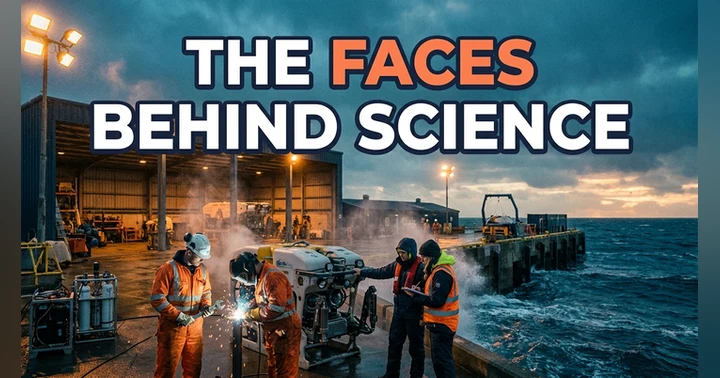
Blue Collar White Coat: Meet the People Behind Ocean Science
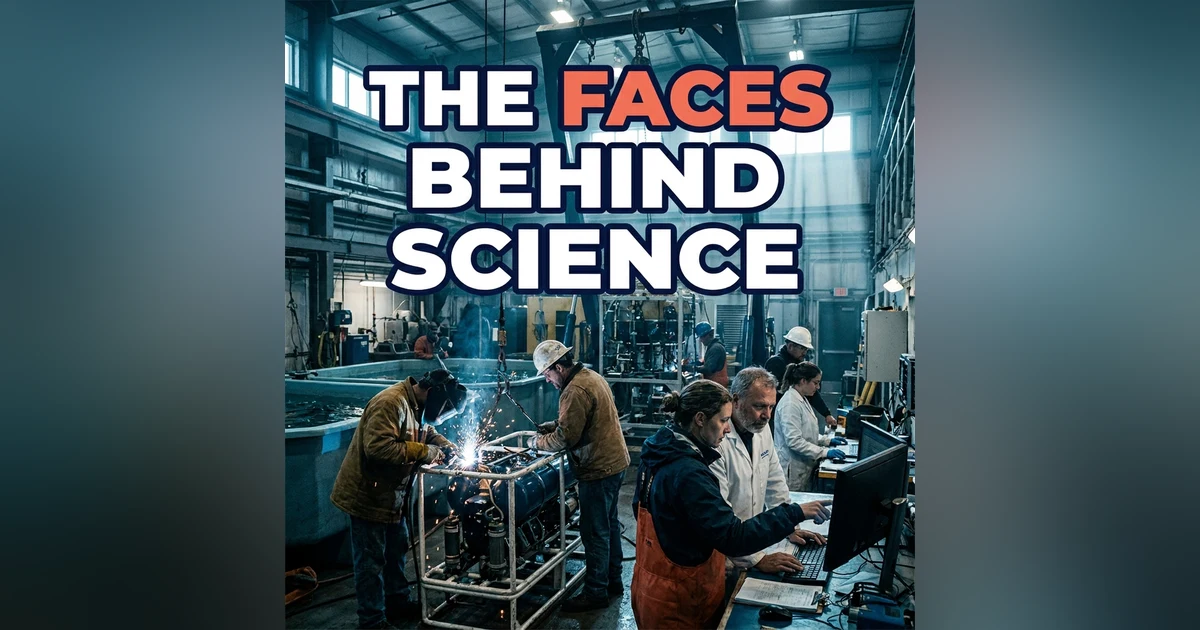


 Apple Podcasts

 Spotify

 YouTube

 Amazon Music

 PocketCasts

 Overcast
Science communication has a blind spot: it keeps putting the same faces in front of the microphone. In this episode, Andrew talks with Amy Weldon, host and executive producer of the podcast Blue Collar White Coat, about why she built an entire show around the people science coverage usually skips. Amy spent 15 years in science communications, starting at the National Aquarium in Baltimore, and now uses that background to track down the electricians, dive supervisors, ship repair technicians, and life-support operators who keep ocean and space research running.
The conversation covers why Amy chose podcasting over blogging or short-form video to reach people who aren't already interested in science, what changed between her first and second season of guest outreach, and how she gets nervous first-time interviewees comfortable enough to open up. Andrew and Amy also compare notes on the mechanics of podcasting itself: editing habits, the reality of "pod fade," and what Joe Rogan's career actually teaches other podcasters (hint: it's not SEO). They close with a preview of Amy's stacked second season lineup and a shared preview of November's International Marine Conservation Congress in Edinburgh.
If you've ever wondered who actually keeps a NASA clean room running, or why the person who cleans your aquarium's fish tanks might have a better story than the PhD next to them, this episode is for you.
Check out the podcast: https://www.youtube.com/@BlueCollarWhiteCoat
Takeaways:
- Amy Weldon built Blue Collar White Coat to interview the people who make science and conservation possible without holding a PhD themselves — electricians, dive supervisors, ship repair techs, aquarium life-support staff.
- Podcasting appealed to Amy because it reaches audiences who aren't already interested in science, the way radio once did across demographics.
- The hardest part of running an interview podcast is logistics and scheduling, not content; the easiest part is that people are eager to talk once you make it easy for them.
- Pre-interview calls and sending questions in advance dramatically lowers guest anxiety, especially for first-time interviewees unused to a microphone.
- Season two of Blue Collar White Coat leans further into skilled trades, featuring NASA facilities staff, three different aquariums, and a Norfolk, Virginia naval ship repair yard.
- Andrew and Amy will both present at the International Marine Conservation Congress (IMCC8) in Edinburgh, Scotland this November.
Support Independent Podcasts: https://www.speakupforblue.com/patreon
Need help with your ocean non-profit, company, or project? Get the help you need with Pisces Oceans Inc.: https://www.piscesoceans.ca
Connect with Speak Up For Blue
Website: https://bit.ly/3fOF3Wf
Instagram: https://bit.ly/3rIaJSG
TikTok: https://www.tiktok.com/@speakupforblue
Twitter: https://bit.ly/3rHZxpc
YouTube: www.speakupforblue.com/youtube
0:00 This week we've been talking about science communication, how important it is, and all the different aspects of science communication. And today we're going to be focusing on podcasting. I have a very special guest, Amy Weldon, who is a 15-year science communication vet who is coming to talk to us about science communication through podcasting, which is obviously something that I love to chat about. today we're going to be talking about a bunch of different things, why she started a podcast, why it's called Blue Collar White Coat, and how she's entering her second season in. and what who's gonna be on it and why you should be listening. That we're gonna talk about that all of that on today's episode of the How to Protect the Ocean Podcast, where you get your ocean news and everything you need to know about how to get the messages about ocean science and conservation out there.
0:43 And today we're gonna be talking about podcasting. But if you want to find out more news about oceans and ocean science communication and conservation, all that kind of stuff, follow this podcast if you haven't already on your favorite podcast app. All right, today is a very special day because I've known Amy a year we have a mutual friend in Dr. David Schiffman, and we've talked a couple times ~ over you know over over the the podcast medium and stuff, not on a podcast. This is the first time I've had her on the podcast, not the last. but she has a podcast called Blue Collar White Coat that she wants to talk about because today is the release date on today's. So if you after you listen to this, after you listen to all of Amy talking about the podcast, go listen to her podcast.
1:24 The first episode's coming up for her season two. and she's gonna be talking to a lot of different people. You know, her first season was a lot of within her own network and people that she knows and and and loves and and wants to be able to ~ have conversations with. And but this this year, it's a little bit more curated towards people who work in and around the ~ the the science world, you know, but not people like necessarily in the labs, but the people who take care of the labs, the people who create the ~ the tools that people use. It's it's a lot of different ~ different things. And also like there's gonna be people like a ~ commercial diving supervisor and a team lead at the Alaskan based marine operation called Highline, ~ staff from a Norfolk Virginia ship repair yard that works on naval vessels, ~ connections and and connections at three aquariums.
2:15 So it's just gonna be a lot of different things that you don't know people from people you don't normally hear from. And I think that's a really important ~ aspect when it comes down to it that we are looking at something that's different, but hearing from people who have pride in the work that they do and the and the the people they work for and work with because of the science that they put out. And I think it's really great to connect with different people all in and around and adjacent to the science world. It's a lot of fun. So here is the interview with Amy Weldon talking about conservation, science and hitting the right demographic to be able to spread the the message of science.
2:57 Enjoy and I'll talk to you after. Hey Amy, welcome to the How to Protect the Ocean podcast. Are you ready to talk about Blue Collar White Coat, your podcast? I'm excited. Are you ready to do this? Ugh, I can't wait. I just dropped the trailer today, so it's like fresh on my brain. I'm ready to go. I have all my talking points. Let's do it. Let's do it. I love this. You know, one of the best things or I guess like I feel like it's one of the privileged things I get to do is when I get to talk to another podcaster, like you know they prepare for this. Not to say that others don't, and it's cool if they don't or anything, but like you get the good microphones and the good like audio and you get the good preparation, they're ready to talk, and it's just easy to talk.
3:39 It's I find it one of my favorite types of podcasts to record. So this is gonna be a lot of fun. but before like we start, and we're gonna talk about podcasting, we're gonna talk about your new season that's coming out on Blue Collar White Coat. We'll put the link to the trailer in the show notes so that ~ people can get access to it and find out what it's all about. But before we get all to that, Amy, why don't you just let people know who you are and what you do? Sure yeah, so my name's Amy Weldon and I am the host and executive producer. I can say that now 'cause I have a team, so there's more than one of us. ~ I know, right? We'll get into that in a second. ~ But yeah, of Blue Collar White Coat Podcast, which is ~ still pretty new.
4:20 It's this is we're going into our second season. And but yeah, I have 15 years in science communications. I started actually at the National Aquarium in Baltimore ~ doing the whole education and outreach thing. I was a dolphin trainer for a little bit, so that usually gets my foot in the door for interviews, you know. And so now I'm putting that gift of gab that I would use to engage audience of you know 1500 people. there to see dolphins with conservation messages, of course, Of course. to the digital media format and which is kinda funny. It comes naturally to me, I guess. My parents both met at the like college radio station back in the day. But yeah, so so this is returning home to that somehow, but this is my ~ kind of passion project on the side.
5:07 I'm a full time science communications person as well. so I do that full time and this is kind of where my heart is. Marine science, ocean conservation is where my heart is, so it's good to be back in a way. I love it. I absolutely love it. And I think, you know, you talk about how your parents did college radio. I remember we had a college radio station at University of Guelph for like where I went here in Canada. And I remember having this like in the back of my mind, I wasn't in I didn't even know about science communication at that point, like as a profession or anything like that. But at on the radio, I'm like, it'd be really cool if I could be on the radio. Like it'd be really, really cool. And now I was like Now we have podcasting and everything like that. And I was a much different person though in university.
5:48 I was just getting out of my shy age in high school and getting into a little bit more like a what I am now in university. So I was like, that would have been cool. but yeah, it's kind of interesting now you talk about radio and we talk about podcasting. I feel like you grow everybody grew up listening to a radio station. Maybe not now, but like when I was younger, every morning it was a radio station. Whether it's sports talk, whether it was news talk like my dad would would listen to, or whether it was like radio where we had, you know, disc jockeys and music and fun stuff and just like pop kind of culture type things. You know, radio was always like those were your heroes back then. You know, the person with the voice that had the deep voice or the high pitched voice or something very different, the Howard Stearns of the world, you know, ~ and just everybody.
6:37 Like we just there's so many people at that time. Wendy Williams, I was a big hip hop culture guy, so Wendy Williams was like on the radio back then and it's just kinda like crazy to see how radio's become almost like democratized Mm. because now that you can have a podcast about anything. Anybody can start a podcast. It's even easier now than ever to start a podcast. Now to keep a podcast and maintain a podcast is another story. But the ability to if somebody wanted to just talk about something, you can pretty much talk about anything, right? Right. For you as a science communicator, why is podcasting the medium that you chose to do? Because I mean there's I mean you're a science communicator.
7:19 So there's writing involved, like blogging. ~ you could do like short-form ~ videos and and things like that. Why podcasting for you? I love this question because I realize I didn't say at all what the show is about in my intro. that soon, yeah. but As you were talking, I thought, yeah, radio was like a huge common denominator. It didn't really matter how you voted, you know, that's where you got your information, that's where you got, you know, your ~ pop culture kind of updates, you know, whatever. And it was on in the car on the way to school, or it was on, you know, the bus driver had it playing if you're a bus kid. ~ like you said, weather updates, just whatever. Like the radio was used for it was kind of just like prevalent everywhere, I guess.
8:02 ~ and that was kind of what I think drew me to the podcasting. Because I was like, the biggest question I had is like, how can we reach audiences that we really need to reach who aren't already interested in science? Where are they? What are they, you know, consuming and listening to and reading or just watching or whatever? And you know, my mind obviously goes immediately to Mr. Rogan and just like the swath of humanity that at least used to listen to that show and like, you know, it just it's it's still a lot. And it just it struck me as like, oh yeah, podcasting is a really easy place to jump in and reach a lot of different people.
8:46 It's all about, you know, how you market it, the SEO, all of our podcast nerd stuff that we can talk about in detail, but you know, a way that we can also then include really ~ diverse voices in terms of who we're talking to, you know, and perspectives. So I think that's why it jumped out at me. Yeah, absolutely. ~ I want to come back to the Joe Rogan thing because there's a really interesting point there. But before we do that, I want to talk about the show. So Blue Collar White Coat. What's it about? What was your approach to it? Because you have a very unique approach, because there are a lot of science podcasts out there, right? And a lot of them are based in education. Mine is conservation and science and a little bit of education.
9:26 Like they're all a lot of them kind of it's not a copy paste kind of thing, but it's like Here's a niche or here's like a type of animal or types of animals and we're gonna go into it, whether it be sharks or reptiles or amphibians or birds or things like that. You decided to go almost a little different and like kind of target the people like behind like STEM and science and things like that. What made you decide that approach? And if you can just kind of elaborate on that approach and what made you go through them. Yeah, dead on. You know, I think having done science communications for fifteen years now, that's like, you know, basically a hundred years in technology and digital communications. Like things have changed a lot, right? And I've seen a lot of trends come and go.
10:08 Obviously, there's like, you know, what kind of videos to make and what are the jokes people are making and what are the references everyone cares about right now. But the one thing that's kind of been ~ solid in that time is that we don't talk about the personalities, the personal stories behind the scientists and in my case, in my show's case, not even the scientists, just anyone who helps make science happen, makes conservation happen. ~ there's so many more people besides just the folks with the PhDs with the white lab coats and the, you know, everyone who's ever had to look through like a stock image search for, you know, laboratory and scientists, the pipetteding always shows up.
10:48 There's so much more to it than that. And ~ I think without telling both the stories of the folks who are doing jobs that aren't getting the spotlight, they're keeping the lights on over those lab benches, they're making sure that, you know, I always joke, who runs an HVAC system for a NASA clean room? I want to talk to them, you know, so not just highlighting these kind of long uncelebrated, I guess, jobs that have literally gotten us to the moon, ~ among other things, but also telling the stories of the people who might wear a white coat to work and might have a few letters behind their name. Pretty much every person I've talked to has a story that doesn't involve, well, mommy and daddy went to MIT for free, so I got to as well, and I don't have any student dad, and everything's fine.
11:35 No, every time it's well, I'm a first-generation college kid, you know, or I had to work through school. I did somebody the other day I talked to said he did construction, you know, and weighted tables, and now he's the director of the Monterey Bay Aquarium's life support system. You know, ~ so there's so many stories that we have just been ~ not burying but choosing not to highlight in favor of being experts. Experts, experts, experts. You should trust us. You should trust us. Here's all our credentials. We don't use common terms. We don't use layman, you know, language because we have to get things published and approved and da da da da. So that academic, ~ what do they call it, the white tower, the ivory tower, if you will, that like we have so successfully sequestered ourselves as human beings from other human beings in the process.
12:27 So that's kind of where I was going with the even the title Blue Collar White Coat. And I love that. And I'll tell you why I love it so much. ~ is because they're the people, like the people who are you're talking about, the people who you interview, they're the ones who go home with their families and are proud of where they work. You know what I mean? They talk about the stories of like, hey, we just made this, I just heard we just made this new advancement. I talking to the scientists and we made this new advancement, it's really cool, never been done before. They're the ones who probably have the most pride in the in like the building or what happens within that building. And they're taking care of the say they're taking care of that building or they're taking care of the lights or they're making sure that the exhaust and some of those fumes, like the fume hoods, are make sure it works and that everybody's safe and things like that.
13:12 Or the even the hawk occupational health and safety person who's probably like the most important person in a laboratory building, or you know, ~ and probably don't there's probably not enough of them in those buildings, you know, in terms of that, right? But like I think that's the thing is and as you were talking, I was thinking, I'm like, in at some point. In science, I feel like we lost the plot in terms of like making it exciting for everybody. Like we all, if I a lot of the people that I talked to all got inspired by somebody who may or may not have been a scientist, that initial could have been like for me, it was Jacques Cousteau, right? Explore Extraordinaire went around all these things.
13:53 That's what, like the some of the first things that I saw, you know, that interested me. Right. Some people it was Jaws. Some people it'll be Shark Native. Some people will be Shark Week. Some people will be Nat Geos, Shark Fest, whatever that might be. Astronaut was definitely on people's short list. You know, at least until like third grade when we had to start doing like division and then I like, you know what, I gotta go try something else. and the funny thing is too is I always tell people I'm like, we have a lot of scientists in science and in conservation. And a lot of the times we don't need scientists. We need people to work, whether that be on the business side and fundraising side, or whether it be on the janitorial side, or maybe it'd be on the electrician or HVAC side, like to just take care of the buildings where people are working to help conserve.
14:35 You all are taking part. And I feel like that helps with the connection. Like one of the reasons why I started this podcast was because the people that I was interviewing were pretty much down to earth. Like you and I are down to we are not, we don't we are not elitist people. You know what I mean? Like no. if you we don't make the money to be elitists, like let's be honest. You know what I mean? We're not in that kind of thing. Yeah. But we're like, I think when once people started to hear the people that I had on, they're like, oh, that's kind of cool. Like they sound like really down to earth people. Yes. And this is what we've been trying to tell us. Like when I post something about climate change and people are like, You're just taking climate change money. Where is that coming from? Why is it not hitting my bank account?
15:15 Because I don't see it. You know, I'm not that that influencer. I'm not an influencer in that respect. And I think that's what it is, is you know, we come in with like some of the jargon, we come in with some of the topics that are that maybe not everybody it's not easy for everybody to understand. And then people are just kinda like, Well, I'm not gonna talk to that person or listen to that person because they're so above. But when you talk to the people who really truly value the work that's done at their work, that's kind of a cool thing. And when you start to reach those people, they will become the people who are like, Hey, I heard this cool this cool fact about the ocean or I heard this cool fact about science or NASA's doing this really cool thing. And it has nothing to do with like the politics of science. It's just cool stuff that happens each and every day.
15:58 You know what I mean? absolutely. And I think to your point, at the end of the day, not only were we not talking to these folks enough, like everything obviously is visual these days. You have a YouTube channel, you gotta have an Instagram, you know, there's a TikTok, there's all these visual platforms. And too often and not to use NASA again on an ocean show, but to use NASA as an example. does a lot of ocean stuff too, we understand. ~ ~ so yeah, they you know, have gotten so much better and just in the last year even, 'cause when, you know, I started paying attention, but you'd see these posts about the clean room and they're interviewing the astrophysicist, you know, who's standing at the overlook of the clean room and then there's all these technicians running around in bunny suits.
16:46 And they got drills and they've got, you know, power tools essentially and they're assembling stuff and they're put and I'm like, who are they? What are they doing? well they're technicians. What is that? So is the person that cleans my teeth at the dentist? Like, what is the tech that that's that can be a lot of different things, you know? So let's talk get them up here. I want to talk to them. Because nine out of ten times they don't have a four-year degree, they have a trade school degree. They are, you know, or a certificate, rather, they have tens of years of experience as aircraft mechanics or something like that. I want to hear from them. Let's talk to them. And I think ~ you know, as an American right now, obviously things are really rough politically and especially.
17:26 When it comes to funding science and supporting science, and at the end of the day, when ~ if we want to reach more people than we have been in order to ~ gain more support for politicians or policy that support science that funds science, we have got to start holding up a mirror for those folks and showing them themselves in science and STEM. So, yes, the scientists, the astrophysicists, they work so hard, you know, our PhDs that are out on vessels for months at a time doing amazing research. They worked really hard. They deserve the spotlight. You know, let's talk to them. But let's also talk to the folks whose job before they worked at NOAA was they were a pipe fitter in someone, you know, some major building's basement, or they were an electrician out in a facility and now they work at a major ~ research institution, you know, doing the same thing.
18:20 Let's talk to those folks who have those ~ you know, skill sets and ~ jobs, I guess, that are translatable and nine times out of ten are probably not voting for science 'cause they don't see themselves in it. They don't think they have a place at the table. So Yeah. Everybody has a place with science. You know, I think that's the thing. It and it and we all learned it when we were kids. We probably had people come in at various times in our classrooms and talk about the environment, talk about science and talk about fun things. And then we kind of lost it on the way. I think in high school and people are like, I'm not good at math or I'm not good at science, right? And then it starts to Yeah. kind of deviate and then, you know, they just never comes back at times.
19:01 And that's where I feel like the disconnect happens and it's nice to be able to think about that. Because like I talk to people all the time. who learn at something new and they come to me like, hey, did you know this? And sometimes I'm like, no, actually I didn't know that. You know, that's kind of cool. Thank you for telling me. Yeah. cool thing about this job in particular is talking to people every day that make me feel dumb ~ and like teach me, you know what I mean? It's like, wow, I thought I knew how that worked and that's not how it works at all. Or like, here's an aspect of this thing that I do know quite well that I didn't even think about before, so Well, and it's funny too, because I have people come up to me. It's like their kids like learn about sharks and they come up, like, did you know about sharks? I'm like, gosh, I didn't know about that. That's really cool. Good for you. And yeah, the little kids are dedicated.
19:44 They are dedicated. Like they know like dorsal fin placement and all they know it. But it you know it but it's funny, like I'm I remember like the f like, does that bother you that they know more about a certain sub? I'm like, dude, do you understand how much information is in marine biology. Just marine biology as a big is a big field in itself. There's no way I have the ego that I think that I can get keep all of that in my brain. You know, in fact I'm working on a short form series, short video series of things I learn in marine biology as a marine biology that always like, you know, flat because it's like you're always learning, right? And this is not something that is just something like I learned in school and then I'd never have to learn again.
20:28 We're always I mean, that's why we do research is why I do I interview people because I get information from people. But it's really interesting. And now with all this, this is cool stuff. Like you have a first season that's already out, ~ and you interview all different types of people and and it's great to hear their experience and from I believe it's like truckers and all that kind of stuff. And that's amazing. And the content's there. I wanna ask you after your first season, what did you find that was easier than you expected? And then I'm gonna ask the what did you find that was harder than expected by doing this first season?
21:09 So let's start out with the first what what did you find that was easiest or easier than you at first expected? Yeah. man what you did in season two. We'll go deeper into season two in a minute, but like just your podcast experience in general. Yeah, well and to your point, I've been out of the marine science world for ten years. So ~ a lot has changed. There's been a lot of updates. ~ you know, I thought I knew the smallest species of shark and apparently there's like three now. And so like they you know, there's a lot to catch up on. And so, ~ I guess, you know One of the easy aspects is like jumping right back into this arena and being like, oh right, these are my people, this is my jam.
21:49 I missed the marine science world. But then I think ~ in the first season, one of the biggest contrasts and we were talking right before the show, is that in season one, everybody wanted to help out. They were just like, Yeah, you can interview me, like whatever. And because I was just starting out, I was not reaching out. Right. Right. I was reaching out to people that I know and I happen to know a lot of really cool people, including our mutual friend Dr. David Schiffman, who have really cool jobs. And ~ and admittedly in season one, it's a lot more ~ folks that do have maybe more science ~ focused jobs. So not necessarily they're scientists and like I said, they're pipetting and stuff like that. I think David may have been one of my only scientists proper on the show.
22:32 Yeah, or in the episode, yep. And then everybody else is like communications person or you know a person that runs the team that takes care of animals in a laboratory setting like you know would you ever think of that no you know there's animals in labs but who takes care of them you know that kind of thing in the husbandry involved? Yeah. Right. And so that kind of showed me like, okay, there's a real hunger here from people to be heard and to talk more about their kind of not gonna get interviewed by National Geographic job, you know? And then conversely in the season, I'm really trying to lean harder into that blue-collar and skilled trades aspect and get more folks that are behind the scenes doing the dirty jobs, doing the kind of scary jobs sometimes.
23:17 ~ and it turns out people that work behind the scenes don't like to be Interviewed on a show with like microphones and whatever, you know. A lot of these people aren't chronically online, like some of us. Weird. I don't know. Why? I don't get it. So it's come on. So it has been a little trickier to, you know, obviously go outside of my social circle because you know that involves a lot of steps. As you know, like you have to have kind of like the email for the pitch written up in a way that you don't sound like a spam bot, but you also like are. interesting and maybe they'll click and and engage with you but ~ also trying to pair some folks on the episode ~ in terms of like hey this is a PhD scientist who wears a lab coat and we're gonna talk to this other person on the other side of the spectrum that job like without their job this scientist can't do their job so that obviously there's some scheduling kind of gymnastics that you have to do ~ and so yeah I think like you said the hardest part is Definitely ~ as a side venture too.
24:23 I can't do this full time yet, yet I'm manifesting it. ~ just the scheduling and the administrative part and like keeping track of where you are when you can only work on it certain days a week or whatever. ~ and then the easy part is that people care about this topic and they want to talk about it, or they want somebody else in their company to talk about it because they don't want to be on camera. So yeah, yeah. Yeah, I think that's interesting. So for you the hardest part was trying to get just get people to be comfortable on camera and behind a microphone. And sorry, the easiest part? And the easiest part is just the fact that everyone is really excited about this topic, about talking to jobs, talking to folks with jobs that, you know, are maybe blue collar are, you know, even the cafe workers at the aquarium, shout out, Baltimore Aquarium Cafe workers.
25:14 I was a broke college kid for the first few years. I would have not eaten if it hadn't been for them sometimes, you know, like and so just talking to these folks who haven't previously gotten that their time in the spotlight if you will ~ everyone even if they are PhDs on I had a PhD a Stanford fisheries ~ researcher who's like ~ on payroll there. I don't think she's a professor. I don't know. You know how the academics are with their different titles, but I had emailed her and asked her, like, hey, if we get a crabber on the show, can you come on the show and talk with him at the same time? Like, what a concept. About the new legislation about limitations on the gear they can use because of gray whale entanglement.
25:59 And she said, I read, she's like, yes, I can absolutely do that, but I read what your show was about and I started fist pumping at my desk. So it's not just like the people that feel like, you know, they haven't gotten the credit they deserve. It's also the people who are the quote unquote, you know, interviewable expert that are like, We need to do this, we've been needing to do this, you know, like we need to show how important these folks are to everything that, you know, science is doing. So Yeah. I think that's what's great. I love that. 'cause I think there's always something unexpected when it comes to podcasting, right? like when I first started, I think it took me a year before I published after I did interviews because I was like I was petrified what people would think about what I was saying.
26:49 Was I saying something wrong? Was I doing this? Was I doing that? And then I found out that people loved it. A lot of people loved it. That's awesome. my like colleagues and people like in the business, like, no, this is great. Like you covered my study. This is amazing. And it led to a lot of other things. And I think that was something that I did not expect, right? ~ but definitely like the difficult part I find of podcasting, which I think a lot of people it's the reason why a lot of people will do what we call pod fade and essentially do a couple of episodes or do like six or seven episodes and then drop down and fade away, is it's the logistics, especially if it's an interview show, the logistics is difficult.
27:29 especially if you're working a full-time job like we you and I both do. ~ and then it's trying to match up times, especially if you're doing two people, if you're interviewing two people, matching up those times, getting people ready for like the technology, getting people comfortable. and then it's then there's also the after effect, the editing and putting it all together and making sure audio levels are the same and trying to learn. Like I still don't know much about Audio and making sure it's perfect. When everybody's Andrew, how much time do you spend editing? Like, honestly, people, 10 minutes. And sometimes it shows. I'm gonna be honest here. It's yeah, and there are people who will spend three to four hours on an episode, and I get it, right?
28:12 And I feel like every it this is what's beautiful about podcasting. It's everybody's choice, right? However you want to do. I think some people will do less or more ~ at a like less editing or more editing or more time or less time almost at a disadvantage to themselves. Like there's been times where I've listened to show after. No, no, but even like for me, like there's been times that I've looked, I'm like, I should have probably edit that better. Like I should have like, ooh, I repeated a word. Yeah, no, I probably shouldn't have just, you know, done that. But, you know, I think the tough part is the continuing to do it. Right. Like you've done your first season. Yeah. ~ how hard was it to like actually start on your second season.
28:55 Cause I remember after your first season, like, I'm gonna come up with another one. Cause like I find that sometimes is a great reason to either procrastinate or to not start up again and be like, you know what? I did one season. I'm fine. Like what gave you that motivation and how hard was it or did you find it hard to start up again? That's a really good question and the answer is like yes and no. ~ there was a like I talked to you in like January or February and I was like ready to rock. I was gung ho. I was like, we're gonna do this and you know, coming off of the momentum and everybody just supporting the hell out of me and ~ I think around that time is when I had a friend that jumped in and started helping with social media.
29:35 So you know, there was just a lot more traffic on LinkedIn, you know, people I this gonna sound terrible. But LinkedIn is a lot, it's this is probably actually not a surprise at all to people. LinkedIn is very easy to look like you know what you're talking about when you don't, or like you're a seasoned professional when you're not. And I think I was riding a little bit of that high. Like people were like, man, like that's really taken off. I'm like, that's just because you saw a post of mine this week and last week. Like, I don't know. But right. You are so right. know, so and you know, I'll take it. But yeah, ~ I wanted to jump in right away and I got this amazing team because I I went to a I I don't I think I put a thing out on my like personal Instagram and I was like, hey, so this is more than I have bitten off more than I can chew, but there's momentum, people care about this, I really need help.
30:23 ~ you know, obviously I can't pay you, but you know, let's figure something out, let's talk. And I totally expected crickets, you know, sometimes you just talked about that, yeah. Sometimes I just yap on my Instagram and I think it just goes out into the void. Does anyone hear it? I don't know. And you know, nobody owes you anything, you know, for this kind of stuff. So whatever. But for whatever reason, ~ I went to present about the podcast, which like ~ it's another thing that I never thought I would do after one season, being kind of on the perfectionist end of the editing spectrum you were just talking about. And that opened up so many doors and ~ I ended up meeting this guy that ~ does video and In a Portland coffee shop, because that's where the conference was, and he is literally from the next town over for me, like five minutes away.
31:10 what are the chances, And so he's like, No, I need ~ you know, I need the the kind of resume fodder right now because I've been here doing this, but I want to expand out into doing this more and this is gonna give me a chance. And I was like, Okay, but you know what I can't pay you, right? And he was like, No, nope that's fine. I was like, But I can help you, you know, I do a lot of ~ science communications like career coaching stuff unofficially and like get me a resume, let's see what you can, you know, what are some of the job descriptions that are dream jobs for you? Like let's take a look at the language, let's take a look at the formatting, let's you know, get you into ~ introduced to you to folks that I know, whatever. So that's been a good system so far and he's just he's amazing. He just cranks out stuff like crazy.
31:51 And so ~ all this to say Then suddenly I had this group working for me. So you would think that that would mean like, let's go, like, machine gun out the content. But actually it's been really tricky getting folks scheduled and then also making sure I'm being, you know, diligent with their time. ~ you know, being respectful of their time. So having my ducks in a row before I ask them what I need, you know, not just Yeah. kind of spraying at them wish list stuff, but actually like, okay, by this time next week, let's do X, Y, and Z and what do you need from me? And let's have a way of communicating. So it ended up being a good thing. I wanted to be back on the airwaves. I don't think we call them that.
32:31 By like, sure, the pod waves, by like March. And I had like one interview scheduled or done by then, but ~ it ended up being like actually a I think almost exactly a year to the day that I released. episode or sorry, season two's trailer, which is crazy. And I think it worked out exactly the way it needed to. Because 'cause there was time in there where I was like I don't wanna work on that today. Like I would have literally rather organize my linen closet right now than work on podcast stuff. You know, I think that kind of forcing yourself to do something that's a creative venture that's coming from a place of wanting to do good is gonna that's how you burn out on it, you know?
33:17 Like that's how you make your you get sick of it. Especially as an ADHD person who has probably a room full of supplies for crafts that I was gonna do and then immediately stopped the second I got all the stuff for it. yeah. So how I guess I bulletproofed myself from doing that was by forcing myself to kinda take it easy and take a break and work on it when I had the motivation and not when I didn't. ~ and it worked out. It just ended up working out really well. So Yeah, so interesting story. I just found out well I'm going through the process of doing testing for ADHD. Right. So I'm like in that I'm in that process, which has ~ well and it and it's to be honest though, like it's completely changed the way I think of approaching life and approaching tasks and things like that.
34:07 Cause there have been many a days where I'm like I got a batch record five episodes and I'm sitting here watching stuff on like TikTok on my phone, being like All right, it's ten o'clock at night. You've been doing this for two hours. Wow, where did those go? And you need to punch out five episodes and you're tired and you're doing this. And it's almost like, okay. So it like I felt for me for podcasting ~ is you gotta have workflows. Like you gotta structure it to be like, okay, so here and then I also thought, let's make I like I started to come into a point where I'm like, I gotta make this as easy as possible. To make sure that people are scheduled.
34:50 Like not I don't have to do the little steps, right? Like now pretty much everything is ~ automated and it could be automated like in terms of scheduling and stuff like that. Callendly link for me. So if somebody wants to do it, here are my availabilities. You click on that. You know, now I'm gonna get a link sent out for people automatically so I don't update it last minute like I did with you. And you know, but like but it's just like and it's like, I wanted to make it as easy as possible for things to come in. And I feel like that's like the biggest tip I give people is like put the workflows together. Once you figure them out, and that might take time, but once you figure that keep that structure, then it makes it a lot easier when you do it. Right. And I think ~ it becomes tough.
35:31 Like everything new is tougher. Everything like you do new, like season one, great. Season two is tougher. You know, because you're trying to improve on things, you know, that you want to improve internally and you're like, oh maybe I could do better in terms of prepping for interviews or things like that. Like that's how I always think. And then I'll be like, now I'm starting to do like I'm trying to get into like mini documentaries on certain things that I have I'm thinking of. And I've got interviews done for this one that I'm working on. Do you think I could actually record like the narrative on it? I been on it for two months. And I'm like, it's almost at a point where I'm like, am I really gonna do this? So I get it. Like it's difficult to help, but I find putting that work function in and and being able to do it Is pretty easy.
36:14 But I want to go like back to I think a lot of people when they see me doing podcasts, they see you doing podcast. I completely agree with your LinkedIn sort of theory where I did this for a while where I wasn't posting social clips. Like so I just did the podcast, edit it, publish it, perfect. Well, now using like this software Riverside, they give you these clips, and I'm like, This is kind of cool. Well, maybe I can start putting out these clips. I had an editor and I'm like, you know what? We're taking a little break on YouTube. So why don't you edit these clips for me? So I'm putting out two clips like a day, like on the weekday. And it started to hit my LinkedIn and it was going LinkedIn, LinkedIn, LinkedIn.
36:55 And then what I did and when I my other job that I was working at before I got this job was I was just in a software company. And, you know, everybody it was a tech software, so everybody's on LinkedIn anyway. And they started to notice like Andrew. Man, you're really pushing this podcast thing. I'm like, well, I'll be honest. I've been doing the podcast for like 10 years. Right. I just never posted about it. And because I just never had the time. And now I have an editor doing these things. And they're like, wow, I really like your stuff. And like all like I every like was like from people in my company. And I'm just like, Well, this is interesting. I'm like, but it's true. Like the people think it's like, you talk about a lot of really interesting things. I'm like, have you watched the podcast or listened to the podcast? They're like, oh no.
37:36 No, I don't have time for that. But they listen to those little clips. So it really makes you pop out. It makes people think that you're this like popular guru of the topic that you're talking of. And then I look at my stats, I'm like, like, no, I'm not the Joe Rogan of marine science or things like that, which in a way it's good and in a way it's bad. But like the you know, going back to the Joe Rogan comment we made earlier, we kind of said, you know, the interesting thing I think a lot of people think about Joe Rogan is like that he's a genius from podcasting. Not necessarily the topics that he's done. And I think because he gets the most. He still gets the most. You know, according to all the stats, he still gets millions per episode, whether you like the topic or not.
38:22 Right. It doesn't matter what he talks about. He's still the highest downloaded podcaster that's around. and what was interesting, I think at the Golden Globes, they had a podcasting category. And they were like there was a podcasting award and Amy Polar won for her podcast, which was interesting. hang, right? Yeah, I like her podcast, but it was I think it was active for like six months, you know, and it's popular, but you're just like, there's no way that's as popular as like in terms of download numbers as Joe Rogan or even other podcasts that were in it, like Caller Daddy or things like that. Yeah. And I was like, and somebody asked Joe Rogan about it's like, how like what'd you how'd you find like you didn't even enter the category.
39:03 Like, do you find that insulting? He's like, No. He's like, Because these awards they wanted me to enter for fifteen thousand dollars. He's like, I don't need to know that I'm the most popular podcast. I don't need an award to say that I get big numbers. Like it's that's and if you ever get like when you know, as you get more into more in your seasons and they start these award things start to come out to you, you'll know it's like, you to pay like eight hundred dollars to enter. To tell you that you're a good, yeah. And so you're like, well, that's why a lot of people aren't going. So it's not ~ an award show to say, hey, this is the quote unquote best on whatever measurement they use. It's just more of like, are you willing to pay to go in and then people will just vote?
39:45 And then it's like, how popular can you get your audience to vote for you and all that kind of stuff? But the thing is with Joe Rogan is like he's not a genius podcaster. You know, like he doesn't game the system. Yeah, he doesn't look at podcast SEO. I don't think he ever did. He doesn't look at like the keywords. He doesn't look at that. He is a guy who started from the beginning, pretty much from the beginning. I remember, I remember listening to a podcast. It was a live taping in an auditorium for him. And it was before he was really popular. And you could hear the echo in the auditorium. You can hear it's in front of a live audience, but it was a small live audience.
40:26 And his sponsorship was like a sexual prosthetic. Essentially. That was his sponsor. Right. Yeah. And it was kind of like before he got even popular. I think he had done Fear Factor before and all that kind of stuff. So people knew who he was. He was a comedian. And so people knew a little bit of what he was, but they didn't really know like the way they know him now. And he I don't know if he was more controversial back then. I didn't listen to him a lot, but like he had a couple of interviews that I always liked because he like he interviewed sports guys and things like that. Sure, sure. But I remember he did an interview about 10 years ago. It was actually Caitlin Collins, who was on the Hill and she was doing a podcast with this as a guy, I forget his name, and they interviewed him and they were asking him a bunch of stuff, like how did you know when to go?
41:13 Like 20 minutes was like the time for podcasts. That was it. You don't have more than 20 minutes and then you did three hours. Like, what was the genius move that led you to that? And he's like, I just like to talk. I like to have conversations with people, and we just recorded it. He's like, we were to record the 20 minutes or a half hour, an hour, and then we would continue to talk. So I just decided, why don't I just record the entire conversation? And then that's where this conversation is gonna go. So let's just have everybody listen to it. And the way he got popular was to do that consistently, because he does it like I don't even know how many times he posts now, but he was doing it like two, three times a week. But then he also like talked to celebrities and all these different people. And even if you hated it.
41:56 You were like hate the person he was interviewing, you were watching it because you were interested in it. You know, and he had all these different people and it's a podcast about conversations, and that's what he likes to have. You could argue whether he's good at having conversations, you can argue whether he has the right take or wrong takes on things. ~ we all have our opinions, and I'm like a lot of the times I'm on the opposite side of him in terms of what he thinks politically and things like that. Absolutely. That's what he does. And I think that's what people lose that in when they do the podcast is like the fun of having a conversation. And I feel like you do that really, really well when you talk to your people.
42:39 I feel like I'm a fly on the wall listening to the conversation. And I'm gonna ask you, like people ask Joe Rogan, like, what's your approach like when you do the interview? Because I think There's something to it to like that makes your guests relax, but also makes it really easy to listen as a podcast, like whether I'm cooking or walking the dogs or things like that. So like what's your approach in that way? Man, that's a great question 'cause I don't know that I've ever broken it down to a methodology, but I think ~ my career as a communications person, I talk to a lot of scientific experts on camera about what they're doing so we can turn it into a YouTube video for the institution, you know, and every single time I get folks who are again scientists, unless you're talking to Neil deGrasse Tyson, like unless you're talking to someone who's used to being the face of line of research or an institution or something like that, you're getting someone that isn't used to being on camera and they're not used to having, you know, the bright light and the boom mic and all that stuff.
43:46 So ~ there's a little bit of you know, anxiety about like the unknown, the uncertainty, right? Scientists like it's all about uncertainty. And so what I try to do beforehand is answer as many of those questions as I can, without, you know, presuming too much or being patronizing, like saying, you know, ~ This is what you should wear. You know, don't wear any bright colors or any, or, you know, if we're gonna be in front of a green screen, don't wear green, you know, that kind of thing. And I try to inject some humor into it. Like you're a person, I'm a person, whatever. ~ and then ~ I think the biggest tip that I would have is I send my list of questions ahead of time to them and I make it very clear like listen these are questions that I would like to ask.
44:33 We may not get to all of them we may not go in order. I will have them up as we talk but ~ you know we're gonna just see where the conversation takes us. And that I think puts out like I don't know 60% of the anxiety flames because I think in a world of podcast clips especially like scientists can be very ~ anyone anyone not just scientists but especially because of the like you know misinformation and disinformation out there scientists especially can be very cagey about well what are you gonna clip me saying you know what are you gonna get me to talk about that you're gonna gotcha moment you know for a viral kind of thing and it's like first of all thank you so much for thinking that I can make a clip go viral ~ but ha ha ha.
45:16 you know let's put our feet back on the ground here and realize that like it's only for so much I'll even joke at my own expense and be like look we have 45 subscribers on our YouTube right now. It's really not that big a deal, you know, whatever. And actually I will schedule a call ahead of time and say, ask me every question you have. We can meet in this platform because I use Riverside too and you know you can see the setup. And I think I had my like I have the purple light on right now, but I had the regular light on. I was like that plant, you know, it's a litter box. This is like the other day just like I was talking to a badass woman who I'm gonna have on my podcast. this season who is a ~ dive supervisor and team lead for a ~ marine ~ like ~ I have to it's called Highline it's out of Alaska anyway anyway she's awesome and she was just like What am I doing?
46:13 You know, because her boss was the one that kind of was like, I think Joe will be great for this. And I was like, Do you want to call and talk first? And kind of see and I think they just need to suss me out and see that like I don't have this clipboard where I'm going, question number one, and then scribbling down an answer and then question number four. Like she even said she's like, Well, I'm bad at interviewing. I'm like getting a job is really hard sometimes because I'm just really bad. I was like, No, no, no, we're not testing you. This isn't Me testing your knowledge, like I just want to talk to you and figure it out. And before you know it, we're on this like test call. She's in her truck, because her husband drove her and her little boy to the grocery store and she had was like, I didn't realize it was California time and not Alaska time and so blah blah blah.
46:54 So she's all nervous and I was like, Whatever, dude, like let's just hang out. And she's telling me all these amazing stories. And I was like, Okay, timeout. You just said you're not good at interviews, and I just want you to keep yapping right now, except for I'm not recording. So like Just know that this is exactly what it's gonna be when we do sit to record. There's no studio audience, you know, there's no gong. I'm not gonna like play you off or anything like that. Like it's just you and me hanging out, and I'll edit out all of my ums and ahs, and you know, times where I lose what I'm saying in the middle of a sentence, because that happens a lot now, over 40. Yeah, no. Woo! Words, what are words?
47:35 ~ yeah, so saying? You know, where was I going with this? So this was just literally Saturday that I did this, that I did this kind of like trial run, like, check it out, this is how it's gonna be, you know, whatever. And she did so amazing. You know, she's one that doesn't strike me as ~ you know, on YouTube a lot, like just online a lot, because she's either underwater or she's making sure her folks get home safe, you know, and then she's got a little boy. So For sure. I don't know if that answers your question, but that's about it. No, no, it definitely does. Because I think everybody has their own process, right? And I think we learn as we go through. You know, I feel like the comfort of the guests is the biggest thing. You know, there are some people who come on, like you said, they've never been interviewed before.
48:18 They're not normally in the spotlight. These are the reasons why they're on the podcast, for especially for you, and the reason why you want to talk to them. ~ and I think it's just one of those things where they're just sitting there and just like, okay, I'm a little nervous. I don't know what to expect. I've never done one before. Having that pre interview. interview is perfect because it just it gives you the time to vibe with that person and they're just like, okay, cool. Like I'm ready for this. This is just like this is a conversation. You're not in front of anybody, you know, you don't even have to watch after because you know, nobody likes to hear their own voice or watch themselves watching. Even like the best actors in the world still don't like to watch their own movies if they don't have to. It's like the worst thing that they have to do. ~ Yeah, so I think that's the biggest part and I think the way you're doing it is perfect and it's an evolution, right?
49:04 Of trying to you know, you're meeting different personalities and everyone's a little different, a little unique in how they get comfortable and I think that's the fun part of podcasting. And it's a lot of fun and where we can go. Yeah. So fun wait, I have a funny story actually now that you mention it. So now that I have a video guy The first episode of season two, again, coming soon. ~ it'll be dropping on August 14th. ~ we did an in-person interview for the first time. Like, as you know, we talk to people all over the place. So we do remote interviews, and I just happen I'm the luckiest girl in all the world because I'm at the dog park one day, two years ago, maybe a year and a half ago, and this gentleman comes in and he's got a NASA bomber jacket on.
49:48 And it's not like I was like, You can't get that one at Target. Like that Yeah, it's a special place. Yeah. And so I ended up talking to him and and turns out ~ he works in NASA. I think I didn't wanna pester him too much because he was very kind of like stand not standoffish. He was just he was shy and he you know, new person and I'm we're extroverts, you know, like hi, what are you doing? Tell me your life story. ~ I'm gonna be in your bubble with you. Ha and so it took a few months, but ~ I had Started hatching this idea for the podcast last summer and I'd started being like, you know, maybe I should do it.
50:29 I don't know. And I don't know about you, but when I have an idea for something, I start talking to other people about it. And I start like, what do you think about this? Like, you know, exactly. And so it was he was there at the door park one day, and I was like, so I would ask you, because you're a NASA person and you know, for all that I know, he could have been a scientist. I don't know. scientists come in all shapes and sizes, but he is definitely a, you know, muscular bearded, tattooed, tough looking guy. So I should have figured this too. He was like, I think that's a great idea. That's like that's exactly what I do. And I was like, go on, you know, and it turns out he is the actually he's leaving NASA for a new job this week, but he is the ~ facilities and operations director for the Arcjet facility at NASA Ames.
51:16 And the Arcjet facility is the way he described it, basically a giant lightsaber that they hit models of the Orion with in order to test that it'll come back with the astronauts in it safely and splash down and nothing bad will happen. So ~ he's just a delightful human. He has been a huge fan since day one. And so I asked him can you be do you want to be on the show? You know, whatever. And so we did it. We kind of commandeered the lobby area of one of those like luxury condo places that's like very Instagrammable, you know? And we set up our two phones and a camera and the whole nine yards. And he was so nervous. He was just like, ~ I'm gonna stop and get a couple beers. ~ I was like I was like, Alright, I'll Well then I was like, Well, are you gonna bring any for us?
52:03 And he was like, Hell yeah, what do you want? Like that, just like knowing that I was cool with that and that I also like do it, yeah. it. Like what's really funny is he ended up he went to one of these places that has like just tons of different beers from all over the place. And he like one of the ones that he brought for it, one of the ones that he brought was one from my hometown that I was like literally in art class with the guy that made the labels for these things. And I was like I was like, what made you pick this? He's I don't know, I kinda like the label. I was like, my gosh. So here we are hanging out. And I say this even with my remote interviews, like, we're gonna talk first. Like, you're not gonna enter this little room online and be put on the spot. Like, we're gonna hang out first. I wanna make sure your sound is good.
52:45 Take whatever breaths you need to take, you know, whatever. Let the dog out of the room because he's being a piss, like mine was a second ago. So, like, it's cool, you know. And he just relaxed into it and he was great. He was so good, he was such a good interview and he explained things so well and it's like I would have never believed that he'd never done that before, you know. So it just you know, sometimes you just gotta crack a beer of somebody. Sometimes you gotta crack a beer. I get it. I get it. You know, that's ~ I've had it well, I was part of a podcast ~ called the Marine Conservation Happy Hour Podcast a while ago, and that's that's what we did. And and I'll tell you, drinking and podcasting is a lot different than just podcasting sober.
53:26 there were some pretty there's some things that didn't get aired, let's just say, 'cause it kinda lot more a lot more editing. I was like, I don't even remember saying this. Like this is weird. ~ but yeah, no, I think that's great. Well, you know, you you you kinda mentioned a couple of the episodes that you did. Why don't you talk about what can people kinda expect to hear from this season? my gosh. ~ I'm just I'm so excited. ~ we have two not hello, dog hair in my mouth. Speaking of, you know, human interruptions. ~ so So s ~ we have not one but two NASA folks. One is this gentleman, ~ who again as of this week is is not gonna be at NASA anymore, but he's given us a tour on Friday, so we're gonna get some content for that too.
54:12 I'm really excited. ~ and then ~ a lady who I just reached out randomly on Instagram too because she had her like personal account. It like twelve hundred followers, which is is nothing to sniff at, but it's not, you know, an influencer. And she's like posting video of the folks Literally he hoeing the ropes on the ship to bring the Orion into the ship. And I'm like, okay, cool. She must be like in the Navy or something. I don't know. Like she's on the ground. So I ~ sent her, I slid into her DMs, if you will, and was like, hey, like I have this podcast, blah blah blah. I can send you a fact sheet, da-da-da. And she's Yeah, sure, let this public information officer know, you know, at NASA, whatever.
54:53 And I was like, okay, sure. Send it. Public informations person gets back to me a while later and is ~ Okay, yeah, here's her bio. She's the director of like landing operations and safety or something like that for the Artemis missions. Like, yeah. Like I just slid into her DMs and that ended up happening. So then we have, I'm talking to not one but three aquariums, folks from Baltimore Aquarium. I know, I'm so excited. The National Aquarium Baltimore, rather, the Tennessee Aquarium, who were awesome, like on board immediately. They posted don't they? They do which I need to figure out how to get on. They had posted a video of their life support guy in the pump room and it's really cute because he starts to talk and they're like, Hold on, wait.
55:37 And then they give him a microphone and then you can hear him. Yeah, it's really cute. And I was like, Hey, does he do podcasts? And they were like, Yup, let us know. And I was ~ okay. and then Monterey Bay, like I said, and then we'll be talking to like I said, I really wanted to get more skill trades, more blue collar ~ folks represented this time around. And so right now I have the ~ commercial diving ~ supervisor that I was just telling you about that I interviewed on or well didn't interview but talked to on Saturday and then a ~ hopefully one or two folks from a ship repair place in Norfolk Virginia that works on the naval vessels there which is gonna be really cool because they post really cool videos of like getting massive parts down like catwalks and and staircases and ladderways into the guts of a ship because something broke and they ha you know so he that was another person that was like I don't know if I'm qualified to talk about this, you know, and I'm like, no no, here's some questions.
56:37 Like clearly use geometry because how did you get that giant thing down to to the guts of the ship, you know, and physics, you know, what kind of what kind of torque are we talking about on some of these tools you're using? And, you know, ~ material science. What does seawater do to parts that you're working on? You know, that kind of stuff. So I'm really excited. It's it's gonna be a good mix. And then I'm hoping I'm I'm starting to kind of you know put the pieces together to do maybe like a round table ~ episode later in the season where we have a lot of these folks sitting down together to talk about, you know, the science end of things and ~ the kind of hands-on out there every day. I know David Schiffman talks a lot about ~ how not a lot.
57:20 Of ~ fisheries folks like fish fisher folk get to talk to scientists in a way that isn't like you have to change everything, you're wrong and dumb for doing this, and you know, like how could you? You don't care about you know, whatever. So giving folks a chance to like sit at the same table, so to speak. I don't think we'll have in person, but ~ and just see, I think what you and I have been talking about this whole episode, which is like, These are just people. These are just humans. And and we have stuff in common, more in common than than we even realized. And you know, let's hang out and and maybe not crack a beer every time, but a proverbial beer. And ~ yeah, just and and talk it out and see what's going on. And and I think that not just to get those folks together, maybe they're not even gonna be from the same area.
58:05 You know, I might have West Coast people and East Coast people or whatever, but showing I I'm really hoping showing the audience like, hey, this is how you get together and talk to folks that you think don't have. you don't have in anything in common with like we can do that. It's it's and and nine times out of ten we're gonna end up laughing or gonna end up you know ~ commiserating or gonna end up agreeing on stuff and that I don't know that's that's that's the goal we'll see. bond over s bond over science and what needs to be done to get science going too. Right. I think that's the fun part. Yeah. I think that's I think that's wonderful. Yeah, yeah, that's the goal. I'm excited. We've got eight episodes in the can.
58:46 but yeah, that was like that was the hope for this podcast from the start. That's why I called it Blue Collar White Coat because I want it to be, you know, everybody has a seat at the table here. ~ everybody has something valuable to contribute, and everybody can learn from everybody else. So yeah. August 14th. Sure, yeah. a week or? So it'll be ~ once every two weeks on Fridays, 'cause Friday's when I have off and I can work on it, so I know it's like against podcast like gods to do Friday, but release, they will find it. ~ so far, ~ I've definitely taken the field of dreams kind of approach.
59:27 Like if you build it they will come, if you publish it, they will download. So that's what we're going with. But and then we also just announced in the trailer that I dropped today that we have started a Patreon, which I have been having feelings about because I'm being subscriptioned to death and I know everyone else feels that way too, so it's a lot to ask in the year of our Lord twenty twenty-six to ask folks for another five dollars a month. But like I said I have a team of folks that's helping with all of the things that you talked about, systems and you know, ~ getting these these episodes turned from a a raw interview into an episode, into social media clips, into things we can talk about at conferences, TV dot dot dot. We'll talk about that in a second.
1:00:08 And ~ you know, and it's it's the hope that We can pay off the subscriptions that that keep the show going. As you know, it can it total up pretty quickly. And then also start throwing money at these amazing humans that just feel so passionately about this topic that they are volunteering their time to help this show happen. So it does. Yes. the recording it but the editing, the the marketing, the prep and all that kind of stuff. It takes a while and a a lot of great people are part of that. That's wonderful. So so where can they find the podcasts? Yes, it is at blue collar white coat pod everywhere on social and YouTube and then anywhere you get your podcasts.
1:00:53 So if you start typing in blue collar, you're gonna get a lot of shows. Keep going to white. Then there's gonna be a show that it's called blue collar white collar that shows up. no. And I know. And then there's my show. But my show's pretty distinct and I'll send you the graphic. It's a hard hat that has ~ like NASA and and a Yosemite sticker and you know, like iHeart stem sticker on it. So it's pretty cool cover art. It's pretty easy to to find. So that's that's where to find it. Wonderful. I can't wait for the new season. we're gonna release this episode like right before so people can there there's no wait in terms of when they can get access to it. ~ I can't wait to to watch this. I'm so proud of you for for doing this second season.
1:01:35 Now, one of the last last kind of topic I wanna go into, ~ we are both, we just found out actually, we are both presenting at the International Marine Conservation Congress in Edinburgh. Scotland on November the between November 13th and 17th. I don't know the exact dates of when we're presenting, but that's the conference. It is my favorite conference to go to. I've been to at least three of them, one online during COVID. this will be my fourth. I'm super super super excited. I've never been to Scotland before, so very excited about that. Now you have been there So and and this is your first IMCC. So going back to Scotland is is one thing. I'd love to hear like your thoughts on that, but also what are your thoughts and expectations going into IMCC?
1:02:20 my gosh. Yeah, loaded question for sure. Yeah, I went to graduate school in in Scotland. So lesson number one for you, lesson for anyone listening that's also gonna be at IMCC, it is Edinburgh. That's like bruh. You how little kids hit you with that when they're like, Bruh, that's it. Edinburgh. If you say Edinburgh, if you say Edinburgh, just get out. Just get out No, they won't. They'll just roll it. They'll they'll roll their eyes at you. That'll be about it. But that's how you'll stick out. ~ but but yeah, ~ Gosh, I I I guess David ~ emailed us and was like, hey, I'm thinking about putting the symposium together. And that's when it first got put on my radar. And I was like, my gosh, homecoming. I haven't been there since 2019.
1:03:01 And it's this amazing, huge, giant every two years conference. That's what's like five days, ~ four or five days long. my gosh. So It's a lot of content. A lot of content. say, yeah, so I I'm slated to do a five minute speed talk, so I'll do a much condensed version of what we talked about here probably. ~ and I think ~ what I want to get out of it at selfishly is just like new friends. I love meeting people from everywhere and like a conference is the quickest way to end up with like couches to crash on in the coolest places. Like so I'm very excited about that. I'm really excited to be around around other ~ practitioners and and And just get that buzz you get where it's like, man, good things are happening, like there is progress being made, we're on the right track.
1:03:49 And I I think my my expectation is my my kind of suspicion is that I think a lot of people are are on the same wavelength that, ha ha, wavelength. Ocean jokes. ocean jokes and or podcasting jokes, I don't know. But ~ yeah, yeah, perfect. the beauty. that's why we're pros here. Exactly. but I think it y this wavelength of like reaching outside of those science fan communities online and in person too. I'm really excited to hear about that because I think that there's a lot of us on this same kind of path and ~ realizing around the same time like, hey, we should be talking with fisher fisher ~ folks and and villagers and all over the world, you know, industry and whoever's getting their livelihood from the ocean, we need to be their ally.
1:04:42 We need to help them you know, maintain their livelihoods, but in a way that is good for the ocean long term. And and the only way we can do that is by being respectful for of them and learning as much as we can about them, embedding ourselves in the communities and having real face-to-face conversations that sometimes might get a little uncomfy, but there's no growth without that uncomfortable feeling, you know, once in a while. So so yeah, I'm excited to see that and see like what kind of ~ you know, what kind of work are, especially our marine scientists proper colleagues are are working on out there in that in terms of that. I love that. That's perfect. Thank you so much, Amy, for joining us. I can't wait to meet you in person at IMCC.
1:05:24 Hopefully we get to meet earlier, but in November for sure. I'm looking forward to that. That's gonna be a lot of fun. We'll coordinate stuff to do down there for podcasting and it'll be a lot of fun to meet you and s and introduce it all the friends and and colleagues that I've had there and I'm sure We'll both meet new people there. If people want more information, I'll put links down for for Amy's all of Amy's connections and and the YouTube and the podcast and stuff. but also if you want information on IMCC eight, I'll put the links in there too. It's a fun conference to go to and something that I feel like is gonna be needed for a lot of people, whether you're in science or not, or adjacent to science and conservation around the ocean. So it's gonna be a lot of fun. Thank you, Amy, for joining us. It was really, really fun to have you on.
1:06:05 I can't wait to have you on again. my gosh, thank you so much. And and yeah, probably n won't see you till November, but I'm I'm super excited too. And thanks for having me on to talk today. And thank you for for being my, you know, kind of ~ what's the word I wanna use? Like what's what's the what's what was Obi-Wan Kenobi's like role? What was his what was his tit yeah, his title on LinkedIn? I don't know. Yeah, you were kind of my you were one of my my podcasting yeah master Gendis when I first started. I was like, I think I wanna do this, but I don't know what I'm doing. And you're like, perfect, welcome. Yes, yes. well, this is this is exactly where I started. So we'll we'll we'll we'll get you through it.
1:06:45 That's awesome. No, I I appreciate it. It's always fun chatting and you're you're so much fun to like connect with and Yeah. we chat about everything and so it's always fun to do that and I always want to see people succeed in podcasting and getting the word out there on fun science stuff. So thank you so much for coming on. Thanks for having me. You bet Thank you, Amy, for joining us on today's episode of the How to Protect the Ocean Podcast. It was great to have you on. I love talking to other podcasters because, you know, we have this connection of what it's like to put together a podcast, right? What it's like to talk about the different people within the podcasting industry. You know, everybody, you know, when I talk to people, they're like, yeah, well, it's like, are you as big as Joe Rogan?
1:07:27 Nobody's as big as Joe Rogan. Whether you like the what he talks about or not, he's still the biggest podcaster and gets the most downloads. that we've ever seen ~ in there and per episode and probably all of my downloads combined. but regardless, it is you know, the podcasting industry is always evolving. It's always good to discuss and have discussions. I mean, when I first started podcasting, it was just audio and then it went to, you know, people on YouTube and stuff. I s I like to stay audio and put something different on YouTube, but it's all everybody's all into different ways of doing things, right? And so I think it's it's important to have those types of discussions. and we also talk about IMCC eight, which is coming up in the International Marine Conservation Congress, which is coming up in Edinburgh, Scotland, as I was Scotland, as ~ Amy told me to answer, it's Edinburgh, not Edinburgh, which is good.
1:08:15 Good to know when I go there because I've never been there before. ~ so we're you know, we're both gonna be hopefully talking within the same symposium, but we're both having ~ talks on like science communication in some sort of format. so I think it's really important to to be able to establish that, be able to have that and we're gonna meet face to face. So we're talking a little bit about that at the end of that podcast. And look, if you want to go to IMCC8, I highly recommend that you go. ~ it's a lot of fun. If you're in science, if you're in conservation, you want to learn and meet people within the the worldwide sort of community. Such a supportive ~ conference, such a fun ~ conference to go to, and you learn a lot. I highly recommend that you go there. They're not sponsoring me for this.
1:08:56 I just really, really enjoy that conference. But check out Amy's podcast because Amy's here. She talked about her podcast. She's releasing the first episode today. And it's about time that you go check it out. If you haven't checked it out before, I'll put the links in the show notes. Highly recommend that you check it out. I'm looking forward to listening to the first episode and watching it on YouTube. And yeah, other than that, that's it for today's episode. I want to thank you so much for joining me on today's episode of The How to. Protect the Ocean Podcast. Have a great day. We'll talk to you next time and happy conservation.