Why YouTube Might Be the Future of Ocean Science Communication


 Apple Podcasts

 Spotify

 YouTube

 Amazon Music

 PocketCasts

 Overcast
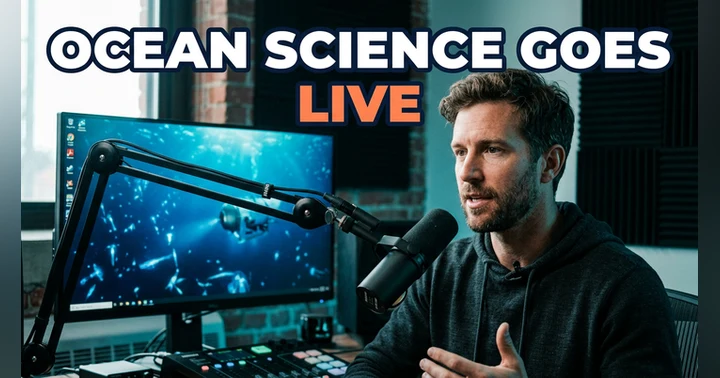
YouTube has quietly become one of the best platforms for ocean science communication, and in this episode Andrew breaks down exactly why. Fresh off yesterday's 2,000-episode milestone and the new Pisces Oceans licensing agreement, Andrew explains why he's diving back into YouTube after stepping away last spring, including the launch of a brand new daily show, Ocean Decoded Live.
Andrew walks through his own history with video, from the early days of Speak Up for Blue TV through burnout, a rebrand, and now a fresh start under Ocean Decoded. He breaks down why YouTube's search-driven discovery beats subscriber-driven platforms for reaching new audiences, how B-roll and AI-assisted visuals solve the storytelling limits of audio-only podcasting, and why going live and unscripted brings back an authenticity that AI-written scripts were starting to erode.
The episode closes with a practical look at YouTube's two-tier Partner Program, how the ad revenue and fan-funding splits actually work, and two real-world case studies in ocean science: Kristian Parton's Shark Bytes channel and KPassionate's marine mammal content. Andrew also previews tomorrow's interview with Amy Weldon of Blue Collar White Coats and shares where you can catch him talking workflow at IMCC8 in Edinburgh this November.
Takeaways:
- YouTube is search-driven rather than subscriber-driven, which makes it a strong discovery platform for niche science content
- Andrew is relaunching Ocean Decoded Live, a Monday–Thursday livestream (expanding toward Friday) at 4 PM Eastern covering ocean news
- YouTube's Partner Program has two tiers: 500 subscribers unlocks fan funding (memberships, Super Chats), 1,000 subscribers plus 4,000 watch hours or 10 million Shorts views in 90 days unlocks full ad revenue
- Standard ad revenue splits 55% creator / 45% YouTube; Super Chats, Super Stickers, and memberships split 70% creator / 30% YouTube
- Going unscripted and live restores authenticity that Andrew felt was eroding when he leaned too heavily on AI-written scripts
- Kristian Parton's Shark Bytes and KPassionate are cited as examples of ocean science creators building sustainable income on YouTube
- Andrew will be discussing content workflow at IMCC8 in Edinburgh, Scotland, November 13–17, 2026
Support Independent Podcasts: https://www.speakupforblue.com/patreon
Need help with your ocean non-profit, company, or project? Get the help you need with Pisces Oceans Inc.: https://www.piscesoceans.ca
Connect with Speak Up For Blue
Website: https://bit.ly/3fOF3Wf
Instagram: https://bit.ly/3rIaJSG
TikTok: https://www.tiktok.com/@speakupforblue
Twitter: https://bit.ly/3rHZxpc
YouTube: www.speakupforblue.com/youtube
0:00 YouTube is a special place on the internet. It is potentially the future of TV. It's a great platform for science communication for that to happen. And it's a great way for a number of different reasons, for search, for monetization, and for getting the message across, and for having a visual storytelling piece to your content. We're gonna talk about why YouTube is such a great platform for science communication, for the ocean protections that we are advocating for here on this podcast, and why and how I've been using YouTube over the last year and a half, and why I stopped for a little bit, and why I'm starting up with a live show, all in this episode of the How to Protect the Ocean podcast, where we bring to you ways that you can protect the ocean, whether it's ocean news, strategies, action items, whatever you want, we do that Monday to Friday every single week.
0:47 Monday to Friday at the same time, right? Publish 3:00 AM Eastern, so you're gonna get it when you wake up, and it's always great. If you live somewhere else in the world where you can get it in the evening or wherever, you get that as well. So, let's get started with the show. If you want more of these types of episodes, just hit the follow button on your favorite podcast app, of course, and we will get into it. Look, after yesterday's announcement, 2,000 episodes. This is 2,001. We're gonna be talking about YouTube, which I think is pretty interesting topic, because YouTube has made such a splash in social media in general. I think people don't really consider it social media. I think they consider it just, like, a content platform. But every content platform is also social media, including podcasting.
1:28 And for the last 11 years, I've been really dedicated towards podcasting. Before I started the podcast, I actually had a show on YouTube. I had Speak Up for Blue TV, which has now changed to Ocean Decoded. I started that when my kids were toddlers, and I was thinking, like, when they went to bed around eight o'clock, I was focused and doing an episode Monday to Thursday at the time. I like quantity is really what I like to do, especially with ocean news. That was fun, but the problem was it just took so much time. It took the rest of my evening. And although I liked it a lot, I think I did it too much at that time, and I eventually stopped it. I got burnt out, essentially. The workflow didn't work out. I couldn't afford an editor at the time. And so it was really difficult to do. Until I revisited the channel when YouTube really started to make a splash on the podcasting, in the podcasting world.
2:13 And look, YouTube is not a podcast platform. It is a video content platform. But we can call a podcast anything now. It could be whatever it is. It used to be the definition was a podcast was an RSS feed that would go out and distribute your episodes and your podcast to the different apps, and that's how you got it. It was audio form. Apple used to have, like when it first came out, it had a video platform to it, but nobody was really watching it ' cause it cost so much in data to watch on your phone. So that was a, problematic. YouTube came out and said, "Hey, we could do podcasts," and we could actually have… Like I used to have, I still do have a channel where this podcast goes, just the audio goes right to the channel. And then I started posting about two and a half years ago.
2:53 I started posting this podcast on the YouTube channel. It was still Speak Up For Blue TV. I had a playlist, How to Protect the Ocean. And I did that for about two years, maybe a year and a half, and I started to gain traction. And you started to see the subscriber count go up. I went from like just under 200, I think, to about, I'm at about just over 1,000 right now. And so that was kinda cool to see people started listening. I posted three times a week. It was consistent. I would just record the video while I was doing the podcast. So I had the audio version, I had the video version. When I first started doing the podcast, it was just a video. It was just me talking. No other B-rolls or any kind of editing. And then I realized after a while, after about six months, I'm like, "Hey, you know what? Let's start editing and see if it makes a difference." I think it did make a difference, but I think also people were watching it more and more.
3:40 I started to see a change, and I started to see a real growth. And then I hit an episode where it really hit big. I think I had like over 10,000 views on that episode, which is like the most I've ever had, which was kind of interesting. And then it just continued off of that. And then I stopped last March. I just stopped. And I was like, I was going through like a rebranding, which I'm still going through, and I was like, "What am I gonna do? Like, am I gonna really continue to do this podcast here?" I wanted to change the way we were doing the podcast. I wanted to post five times a week. To edit five podcasts a week is really expensive when you have an editor. I couldn't do it myself five times a week. I think I'd get burnt out again. And so I started to look at how I could change. Instead of going to three episodes a week, I was gonna go down to two episodes a week, and I was really gonna break down some of the major things that have happened in ocean conservation.
4:25 And then I just couldn't keep it up. I just couldn't do it. I couldn't find my way to do it. Then I wanted to do a little bit of mini documentaries, and I just couldn't do it. It was difficult to do because I was so busy with other stuff. Now things have changed. Things have actually gone towards an interesting route. I've signed the licensing fees to Pisces. So Pisces now, a company that I work for, is now housing How to Protect the Ocean. We've extended the network to the Pisces podcast called Ocean Leaders Podcast. That's coming out soon. If it's not out by the time you're watching this, it's probably already out on the network at speakupforblue.com. And I get to do that work during the day, and I get to work with that. And that, that's a really cool thing to be able to do. And I have my evenings back, so now I can get maybe a little more creative with that side.
5:08 And one of the things that I wanted to do back into YouTube. I'm so close to the monetization, and I can talk a little bit about monetization in just a sec. But I'm so close to the second level of monetization, and I think it's time to really develop that part of it. So I'm looking forward to doing that. So that's gonna be a lot of fun to be able to do that. But let's get into why YouTube is so great compared to the other types of platforms. So on Monday, I went through the short-form content: TikTok, Instagram, especially videos, Facebook, and YouTube Shorts. And then on Tuesday, I went through the podcast platform, which obviously I'm very familiar with over the last 11 years. And then, of course, \ yesterday was the big announcement of the 2,000th episode, what it gave me, all that kind of stuff, the relationship with Pisces, who I work for now as an ocean communications manager.
5:53 And then today we're talking about YouTube, and this is really special 'cause I've dove into each and every part of the platform. Obviously, podcasting has been the most, like, committed. But YouTube is getting there, and I'll tell you there's a few reasons. So, like, the big thing is, is like, look, it's search-driven. People can find me a lot easier than they can in the podcasting world. It's not necessarily subscriber-driven. So all the algorithms that you see, like it is in short form, like this is like search-driven. So somebody has a question, like, why orcas attack great whites. A video that I have it pops up. And it depends on where you are in the search. Obviously, AI, or AIO is gonna change the way search happens in the future, if it's not already changing now, probably already is. But, you know, you can look at questions like, "Oh, is the megalodon alive?" And try to myth bust some of those questions.
6:37 There's like high intent in there. People are searching for specific questions, and you can answer those specific questions. And then, of course, you know, just like podcasting, there's an evergreen potential, right? So if you have a playlist, people can go down your playlist and look at all the different things that are going on in the ocean, like, say, for me or whatever you're posting on And then of course, the video adds that extra dimension, that audio alone can't do. And now of course, you know, Spotify has video. Apple now brought back video. It stopped supporting for a while, it brought back video. And now of course, YouTube is always been a video platform. But it has that extra dimension where you can have B-roll in it. People they don't have to picture what you're about to do all the time. You can have that picture for them, which I think there's a good and bad way of doing that.
7:18 But you can have, like, underwater footage, you can have B-roll. There's a lot of places. Like, one of the things that used to limit me is I never liked to grab pictures off the internet that I couldn't really source, right? And I couldn't really use because of copyright infringement. But now there's a lot of B-roll that I can take, and I can get my point across with that B-roll where you subscribe to it, like you have a subscription, which I think is really cool to be able to do that. So I can do underwater video, animal behavior type videos, the visuals, like data, and, coral bleaching and plastic accumulation, stuff like that. And also, to be honest, like, AI has provided us a way to create specific visualizations, whether it is a picture. Some of those pictures obviously look different, but it's also, some of those like graphs. Like, if you wanna do a graph where you wanna put together some kind of animation that you can, you can do that, using AI, which is, I think we're getting better and better at that.
8:04 And you have to be careful how you use AI, obviously. A lot of people don't like it, but there's something that you can do to get your point across with which helps in the storytelling aspect. Now people are probably wondering like, "Andrew, like you're on podcasting which is great. Why are you doing this? Like why'd you launch Ocean Decoded?" And to be honest all the reasons above, plus it's one of the only platform in Canada that pays for you to post, which I think is important as a content creator. It's not gonna pay for all of my bills, it's not gonna pay for everything, but it could maybe one day pay for all the stuff that I put in, all the editing that goes in, like I have to pay editors to do that. All the apps that I pay for, like I've invested quite a lot of money into that. So getting some money back, like whether through Patreon or whether through the YouTube memberships or super chats or anything like that or even just the regular monetization is really important for me to be able to bring that more information to you and gain revenue to pay off and at least break even, if not make a little money.
8:57 There's nothing wrong with making a little money with the effort that I'm putting in. I do love it so it's not really a job for me but I do love it. So I think that's really important. And then, people are asking like, "Well you had How to Protect the Ocean, why didn't you just keep posting to there?" And I probably could have. There's a couple reasons obviously I've mentioned it earlier. Putting together an edited video for five episodes is quite a bit. Putting together solo episodes and interviews on the same channel I think messed up the algorithm a little bit or messed up how, my metrics because people sometimes expect a shorter episode, and then they get a longer episode with an interview, or vice versa. And so it's not always what they want, and that's fine. I totally understand that. This is the way I want to style and, create the podcast, and so that's what I do.
9:38 And to be able to edit five days, that's a lot of money. I wouldn't be able to keep up with it, as I mentioned. I'd probably burn out, and then I wouldn't keep up, and I wouldn't post. It does take a long time to edit these videos, whether they're 15 minutes, 10 minutes, or an hour. It's quite tedious for me anyway, and for the way I like to live my life. But the thing is, is like I wanted to create something. Like I had the podcast, and people can listen to the audio podcast, but in, in Ocean Decoded, I wanted to create something that was a little bit more visual and a little bit more interactive. The benefit also with YouTube is you get people to comment right underneath that video. So if there's something specific that they come to that video, they can watch it, and they can comment during it. It kinda gives you the timestamp of what they're commenting on. But you can get that point, which is really nice.
10:19 You get like pretty much instant feedback, and you can go back, and you can have a conversation with the person who's watching. Whether it's good or bad, it doesn't matter. I don't mind a little critique every once in a while, but I feel like it's really important to have that connection, right? 'Cause the whole point of the podcast and the work that I do is to start a conversation so that you can continue, we can continue having it either with each other or with the grand scheme of this community that we're building here. So I think it's really cool. And why did I choose live? There's a couple reasons. Like for Ocean Decoded Live, which I started this week, hopefully I've started this week. I'm gonna do a show Monday to Thursday at 4:00 PM Eastern. The goal of that was one, I've always wanted to do a live show. I'm a big fan of what Pat McAfee has done for sports and YouTube and kinda creating your own thing, to make a big splash.
11:05 Do I expect to get his numbers? Absolutely not. I'm not a football analyst, although I love the sport. But I think what he's done is pretty special. It's shown that you don't need to rely on mainstream TV or cable networks or anything like that to make a living, and I think that's an important aspect. And he's done it very humbly in my opinion, and I think he's done it very well. He's been very transparent in that way, and I think, it's a good way to empower the creator to be able to control that. Even if there's layoffs or things like that, he's got his own thing that people tune in each and every day. And that's great. I think that's something that you can mold to, and I think the same thing with ocean conservation, is having a live show talking about ocean news and conservation that happens that day or the day before, or like, the day after I can do the next show.
11:45 It's able to keep that relationship with the person, the audience member, and then they're able to comment live, and I can have a conversation live with somebody, which I think is really interesting. So that's one of the things. The other thing is with AI. At one point this year, for a while, I got a teleprompter. I actually got a teleprompter from my old work. It was a nice gift, so I want to use it. So I started to create scripts, which I've never done before for the podcast. And I started using those scripts. What's interesting is I used AI to do the script. And I don't know if you've noticed, but you can really tell when somebody uses AI for their script, and I think I got tired of it before my audience got tired of it, or before they started telling me that they were getting tired of it. And so I have switched back, like in this method.
12:27 So it's a little bit… Now the episodes are not as structured, but they're a little bit more of my thoughts, definitely about my thoughts. And they're not scripted. Maybe I've got some bullet points and stuff like that, but for the most part, they're not scripted. and so it's a little bit different. Like in the age of AI, it's really nice to have that authenticity. And so if I wanted to create that authenticity, I've always wanted to do a live show. I'm able to do this live show and create that authenticity 'cause it's me. It's me just going off the handle. I'll have bullet points. I can still use AI to process stuff, generate images or search for specific articles that I wanna do and do deeper dives. But for the most part, it's me. It's me and the audience, and I can have that me and the viewer relationship, and I think that's really cool to be able to do.
13:12 Plus, it allows me to keep updated on what's happening in oceans even more and cover some different things. 'Cause like with the podcast, with the themes, it's harder to cover ocean news. So if you want updated ocean news, go to Ocean Decoded and hit that button, hit that subscribe button, and so you don't miss any of those episodes. But I think that'll be a lot of fun. I'll do Monday to Thursday, maybe Monday to Friday, depending on the day. Fridays are usually, you know, my relaxing time, so finishing up work and relaxing with the family on the weekends or just, the wife and I and, enjoy that time. So, yeah, so I think, like bringing that together, which again, which is nice about with YouTube, it's the flexibility of that. It's the watch hours of that, talking about different stories for, say, an hour day, I think is really important.
13:52 So the live stream format is kind of a fun thing to do, and that's why I decided to go live. You know, and the eventual possibilities maybe expand to Twitch or other live streaming platforms at the same time or a different time. We'll see. It really depends. But simulcasting seems to be a lot of fun to be able to do. But I wanna make sure that I get it right on YouTube first because that's where a lot of my audience is. I don't have an audience on Twitch. So that'll be kind of fun to be able to do. YouTube Live is really like a sub-format of what we do. You know, you get a real-time audience relationship and the chat, which is great, immediate reaction. Everybody knows it'll be on the same time every day. That'll be nice. It builds a habit, which is great. There are other people on YouTube that are doing some amazing things within the conservation world.
14:35 So, somebody that I've covered, Kristian Parton, who I've covered on the Beyond Jaws with David Ebert. We covered his Shark Bytes channel. Shark Bytes is a shark-related YouTube channel where he kinda looks a lot of, like, the science, but also, like, the pop culture around sharks and how to behave around sharks, and he looked at, like, shark bites for a while. So those have been pretty interesting, and it's a very successful channel, over 180,000 subscribers. And then of course, there's KPassionate. So KP is a marine mammalogist, I believe. And she's got a lot of experience in field and as well as a captive or zoological experience. And she talks a lot about marine mammals. She'll talk a lot about some of the pop culture and some of the marine conservation and news that's have been happening, and I think that's kind of interesting.
15:16 She's also done Twitch before. She started off on Twitch, moved to YouTube, so I think that's really interesting. We're seeing a lot of creators that are in the science and conservation world, especially ocean science and conservation world, start to come over to YouTube. I don't know why exactly for them, but I know Kristian Parton said, " Hey, you know what? Like, I could actually, you know, pay my bills through this," which I think is phenomenal. That's fantastic for him ' cause he had trouble finding a job in science, and we all know it's trouble. It's hard, so you have to do it other ways and be able to live the life that you want. I think it's really important. But I think the lives too are a lot less polished, which I think fits my role. So I don't have to worry about editing too much. I am, like, creating assets that I could use.
15:57 I have a software called Ecamm, which is a live streaming software, which I can control different scenes, and I can pretty it up a little bit, to make it a little bit easier when it comes into post. So I think that's a lot of fun too. And there's a little bit of flexibility within that, so I think that's kinda cool. So, like, there's a lot of things that YouTube allows. They prefer people to have shows on YouTube and stay on YouTube, just like every other platform, which I think is really cool. Their monetization structure is really interesting. There's a two-tier YouTube Partner Program as of 2026. So the funding tier, which is if you get 500 subscribers, 3,000 watch hours, or 3 million Short views in 90 days. That's almost impossible to get.
16:38 I don't produce enough Shorts and I guess that good of Shorts to be able to get that. I got to 3,000 hour watch, so I'm on that tier. It unlocks channel memberships, Super Chats, Super Thanks, and YouTube shopping, but not ad revenue. So that's the difference between the first tier and the second tier. Now, full monetization, which includes the ad revenue is at 1,000 subscribers, which I have, 4,000 watch hours, which I haven't had within the last 12 months or 10 million short views within ninety days. That unlocks the ad revenue. And that's where I think you get most of the money. The first membership seems more like a Patreon-type model. The revenue split is 55% creator to 45% YouTube. And Super Chats, Super Stickers, and channel memberships carry a better split of the creators get, like, 70% where YouTube takes 30%.
17:25 Since it's a direct fan funding rather than an ad base, so that's great. Now, on Patreon, I believe it's less than that. I think the Patreon actually takes 12% instead of 30%. So obviously there's different ways of going about it. But it really goes to where people have accounts, where people are comfortable with spending, and you almost have to be everywhere for that kind of stuff. A Super Chat during a live stream lets viewers pay to highlight and pin their messages in the chat. That's a big piece of live-specific monetization that podcasts and short-forms don't really have the equivalent for, which is true. And sponsorships and brand deals, layer on like, on top of that tier. Both Shark Bytes and Cubastinate run sponsor integrations in their videos itself, so it's baked into their videos. Now, they do it as a host read ad, but they've done a pretty good job at doing that as well.
18:08 So now when you, like, you compare it to, like, the short-form RPM from Monday's episode, YouTube long-form and live monetization tends to pay meaningfully better per view than TikTok, Reels, or Shorts, but requires more upfront production and slower runway to qualify. So it's, you know, you need those 4,000 hours or 3,000 hours, depending on what membership you want or what they can give you. So that takes a long time. Like, it took me about a year and a half or two years of consistent posting to be able to get to close to that. I was 500 hours off. I stopped for whatever reason, and then it kinda dropped and now I think I'm just between, like, 3,000 and 3,500, hence why I'm gonna start up again. Also 'cause of the show. I really do like the show. So I think it's important, and so I think it's kinda cool to see the monetization for creators on YouTube, and it seems like it's well laid out, it's well-established.
18:55 Certain YouTubers have trouble with the monetization because you have to be careful of what you say and how you act. But for the most part, people do pretty well on there. But it's never really… Like, I've talked to a lot of creators, and it's never their full-time money, like just the YouTube ad revenue or the memberships or the super chats. It's actually just a part of it, and usually, like, a small part of it 'cause brand deals tend to be bigger for some creators. Now, like I said, Kristian Parton in the Beyond Jaws episode that he was on explained that it helps pay the bills for him. And so that's really great for him. I think that's a really cool model to follow to be able to do that so I think that's really cool. Now, the big thing is, like, the reason why I'm talking about all of these things that have happened today, obviously tomorrow we're gonna be talking to Amy Weldon, who has her own YouTube channel and a podcast, and she's releasing her second season of her podcast, Blue Collar White Coats.
19:41 And we're gonna be talking to her tomorrow about that. But I think, this has all been about science communication and ways that I've experienced and experimented with different formats and what's worked for me. The biggest thing that I would say right off the bat is to pick one and just drive it home. The hardest part is in remaining consistent, and what you need to do to remain consistent is you need to establish a workflow. You need to have a checklist of some sort. You need to get used to it. You need to be comfortable on camera. There's a lot of things that you have to do to make it worth your while and to make it part of your life. And that's not an easy thing. You've heard in- on Monday, I talked about how hard it was, and it s- continues to be, how hard it is for me to actually, explain something within three minutes, for the most part.
20:25 That's a hard thing for me to do. It's not easy. And so, you know, you wonder how to do things, like how to… You know, I'm used to doing podcasting. I'm already at like, you know, almost, 25 minutes, for this episode, and I'm like, "Oh, okay. How am I supposed to explain this in three minutes?" But again, it's you pick one idea, you follow it up and, you try and do as what you can. But you gotta put it in your workflow. You gotta make sure that you put it in your day. Even with Ocean Decoded Live, I wanted to go live with it a couple weeks ago, and as I was trying to do it, I wasn't prepared. So I have to prepare myself to get ready live because you're live. There's no room for editing, there's no room for anything like that. You're live, so if you mess up, you mess up. If you take your time, you take your time. It's a very different experience, and it's a fun experience that I'm looking forward to challenging myself, but to do all those, it's a difficult thing.
21:09 It's almost like a full-time job. Not quite, but it's almost like a full-time job. But if you get it down, then you're like, "Okay, now I know what I need to do, and I can do it." So I think that's an important aspect to how we go about doing social media and science communication. It really comes down to the workflow. Which is, by the way, what I'm gonna be talking about at IMCC8, International Marine Conservation Congress, in Edinburgh, Scotland. It's November 13th to the 17th, I believe, and it's gonna be a lot of fun. I highly recommend you go there. I'm not getting sponsored to promote this, but it's something that I feel like is, a great way to have a conversation with me on the workflow, because I know a lot of you wanna do science communication but you can't find the time, and I completely understand. But if you're ever looking to have a chat, we can do that live right in Edinburgh, Scotland, on those days.
21:53 I'd love to sit down and chat with you to see how we can make that happen. But that's it for today's episode. If you have any questions about YouTube, live streaming, anything like that, I'd be happy to have a conversation with you. Just hit me up on my socials. You can look in the show notes and also check me out on Ocean Decoded Live, Mondays to Thursdays. Maybe even Fridays, but we'll do Monday to Thursdays for now, at 4:00 PM Eastern, and see what I'm up to. But I wanna thank you so much for joining me on today's episode of the How to Protect the Ocean podcast. Have a great day. We'll talk to you next time, and happy conservation.