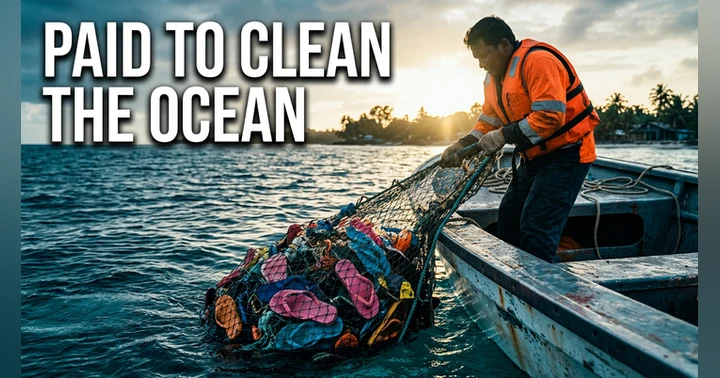
3 For-Profit Companies Cleaning the Ocean and Paying Living Wages


 Apple Podcasts

 Spotify

 YouTube

 Amazon Music

 PocketCasts

 Overcast
Not every ocean conservation win comes from a nonprofit or a government program. In this episode, Andrew breaks down three for-profit companies that are cleaning up the ocean, funding wildlife research, and paying living wages to the people doing the work. These businesses show that conservation and profit are not opposing goals. They can be the same goal.
Andrew covers 4Ocean, whose full-time captains and cleanup crews earn living wages with health insurance and bonuses across Florida, Bali, Haiti, and Guatemala. He covers Ocean Sole, the Kenyan social enterprise that pays local collectors for discarded flip-flops and employs artisans to turn that waste into sculptures sold around the world. And he covers the wildlife tracking bracelet company that lets a purchase fund a satellite tag on a real shark, manatee, or seabird, connecting buyers directly to the research their money supports.
This episode is for entrepreneurs, scientists, and conservationists who want their work to have impact without depending entirely on grants or donor cycles. Andrew argues these three companies point to a business model that more of the ocean conservation space should be paying attention to: people, planet, and profit working together instead of one getting sacrificed for the others.
Takeaways
- 4Ocean employs over 200 full-time captains and crew at living wages across Florida, Bali, Haiti, and Guatemala, plus 350+ bracelet artisans in Bali and Guatemala
- Ocean Sole pays Kenyan collectors for discarded flip-flops and employs local artisans to carve them into sculptures sold worldwide
- Wildlife tracking bracelets connect a single purchase to funding for a real satellite tag on an animal like a shark, manatee, or penguin
- All three companies operate as B Corps or B Corp-style social enterprises, combining environmental impact with fair local employment
- For-profit conservation businesses can offer more consistent funding than grant-dependent nonprofits, since revenue comes from ongoing product sales rather than competitive fundraising cycles
- Andrew argues the "triple bottom line" of people, planet, and profit should be the standard other conservation-minded entrepreneurs build toward
Support Independent Podcasts: https://www.speakupforblue.com/patreon
Need help with your ocean non-profit, company, or project? Get the help you need with Pisces Oceans Inc.: https://www.piscesoceans.ca
Connect with Speak Up For Blue
Website: https://bit.ly/3fOF3Wf
Instagram: https://bit.ly/3rIaJSG
TikTok: https://www.tiktok.com/@speakupforblue
Twitter: https://bit.ly/3rHZxpc
YouTube: www.speakupforblue.com/youtube
0:00 There is a business model that really is working for a few different companies I'm gonna talk about today, because they help clean up the ocean, and they help us better understand the ocean one way or another, and a lot of them are for-profit businesses. So I think this is a really important show for those of you who are entrepreneurs or those of you who might be scientists and conservationists who really wanna have an impact and solve problems, but may not wanna go the non-profit way, because let's be honest, the non-profit or sector is really difficult to get grants and foundations to give you money these days. And sometimes it's better just to sell a product or have something there that people can use and help them fund the work that you wanna do.
0:40 So we're gonna be talking about that on today's episode of the How to Protect the Ocean. Livable Wages in Coastal Conservation Work is the title of this episode. It's gonna be fun. I can't wait, 'cause it's something that's very near and dear to me, something that I've been trying to do for a long time. And we're gonna talk about three different companies that I have had interaction with or I've used their products that I think are really good. We talked about one yesterday, 4Oceans. We'll talk about Ocean Sole, that have been sponsors of this podcast before, and have been on the podcast before. And we're gonna talk about Follow, which is the bracelets that I wear if you've- you can see some of the clips, this is what I wear on the bracelets that tag animals, and then we get to watch where they go, but it goes towards science, and they go to funding organizations. We'll talk all about that on today's episode of the How to Protect the Ocean podcast.
1:21 This is where you find your ocean news and the companies who are working to help understand the ocean better and clean up the ocean and do that coastal conservation work that we so need done, and all by user-funded products and sales. And it's a lot of fun to be able to talk about this, ' cause I feel like it's a new way of really working with the ocean and cleaning up the ocean, the social enterprises, the B Corps that help keep our oceans clean, that help best, better understand the oceans by supporting different organizations. So that's what we're gonna talk about today. And if you wanna support all the work I do, giving you the resource that you need to make better daily decisions for the ocean, you can do that by going to our Patreon page and supporting us there. Speakupforblue.com/patreon is how you get there.
2:04 Speakupforblue.com/patreon. All our links to the links that I mention or anything that I mention will be in the show notes, so you can check that out. Okay, we're gonna talk about three businesses. Yes, we're gonna talk about 4Ocean, we're gonna talk about Ocean Sole, and we're gonna talk about Follow. And we're gonna talk about why it's so important that these businesses exist and what they are showing could be done as a business model for conservation work. I think that's really important. Yesterday we focused on 4Ocean, so I'm not gonna talk a lot about it, but essentially 4Ocean employs over 200 full-time captains and cleanup crew members at living wages across Florida, Bali, Haiti, Guatemala, and other places. The company also employs 350-plus bracelet artisans in Bali and Guatemala who hand-make products from recovered ocean plastic.
2:48 I can't tell you how important that is to support people in developing countries to be able to get a living wage and then produce something, and the empowerment that that gives the people who are doing it, as well as the funds and revenue that it provides for 4Ocean to do their work that they need to do and still remain a profitable company is just exceptional. It really is. And then the workers, they receive full-time status. They receive health insurance and bonuses, that's according to the company and third party reporting, 'cause they are a B corp. And this contrasts with, like, a collection center model used by some competitors where informal collectors are paid per pound of material gathered rather than employed directly, which happens because we're gonna be talking about Ocean Sole.
3:32 Ocean Sole is a company, it's actually a really, really cool company. Let me just look up their website here. I had it up here at some point. Ocean Sole, it's transforming ocean waste into art. So essentially, if you've never seen this, they used to sponsor the podcast for a few episodes. I had them on the podcast for a few episodes. They recycle 10,000 plus flip-flops every week. And what they do is they have people in Kenya who go out and collect these flip-flops, hence the Sole, Ocean Sole. And so all these flip-flops come in different colors, and they're styrofoamy and they're plasticky and, if you just leave them on the beach, they'll break down. They'll become these little nurdles. They'll get into, animals, and the toxins will get into the animals. It'll kill the animals, multiple, like, sea turtles, marine mammals, sharks, tuna, sea birds, a lot of, uh, different fish, and not good for corals and things like that.
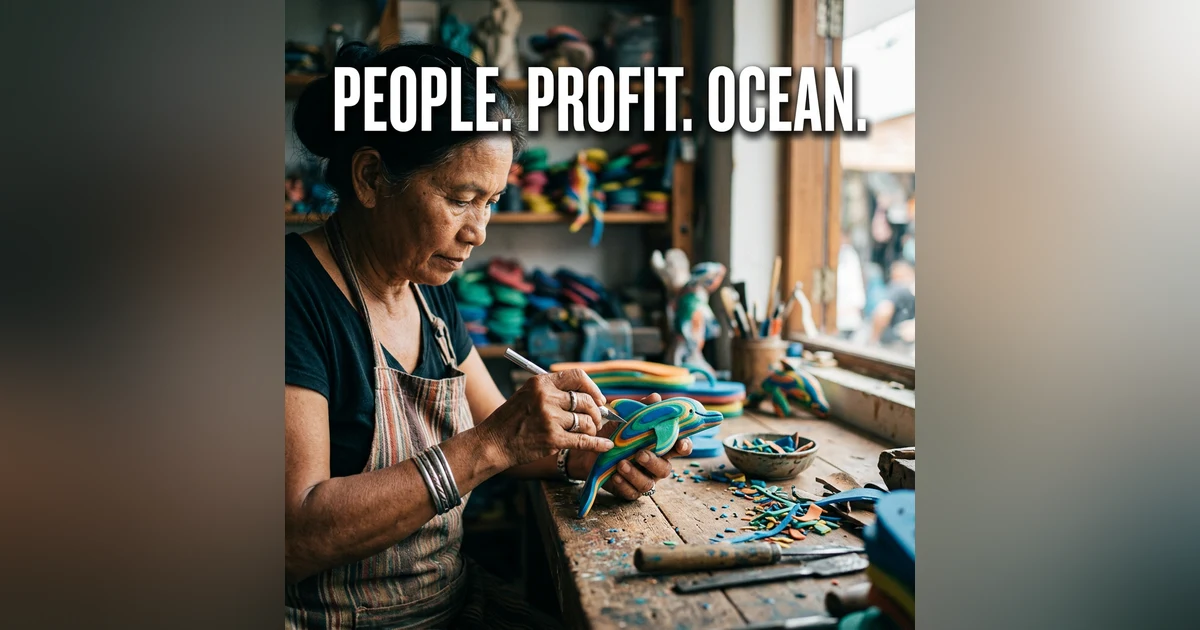
4:16 So what happens is you have people who go out and collect these soles, and they put them into bags, and they bring them to people from Ocean Sole, and they get paid per amount of, I don't know if it's by weight or what have you, but of the flip-flops that they get. The people bring those flip-flops back in, so it supports communities by paying them for the amount of flip-flops that they get. They bring in the flip-flops to these artisans that they also hired, just like, 4 Oceans, and these artisans create these animals out of them. And if you've never seen them, I've got, like, a shark phone holder I'm gonna put up to the camera. I don't know if we're gonna show this on video. There's lions, there's giraffes, there's manta rays, all different sizes. You can have small, you can have medium, some of them are life-size , some of them are, like, human size.
4:59 And they sell them to individuals, they can sell them to museums, to zoos, all this kind of stuff, to kinda highlight what it's like. But the, artistry that these artisans use to get lions with their manes and everything like that is absolutely phenomenal. And so you can create all this stuff, you can buy this and you can just have it in your office or wherever that might be, or you can get it as a gift and things like that. You see it and you get flip-flops and other plastics out of the water. People that are paid for the amount of, I think it's by weight of that they bring in. Artisans who are paid to create models of these or bring them to life kind of thing. And then you get consumers who buy them whether they're larger and they go to like a museum or somewhere where you can put art or somewhere in a zoo or anything like that.
5:41 Or just have them in your office or give them as a gift. You can do pretty much whatever you want with them. So that helps get souls out of Kenya and in Kenya is where all the artisans are employed, you're giving livable wages, which is a wonderful thing to do. Now Follow, which I discovered online is a company that has an app where you buy a bracelet and you get like an animal on it. So I've, right now I'm wearing the manatee, and I think I'm wearing the whale shark one. And so you're buying a bracelet that goes towards to help to fund a tag that is put on a whale shark or, in this case a manatee or a polar bear or another like shark or a dolphin. They even have land animals like gorillas and lions and tigers and sloths and all these other animals.
6:23 And then you go on the app and they give you a profile, you add it to your app, you follow that. And then when the tag is done, 'cause sometimes the tags will pop off at some point, it switches to another animal, and it'll tell you how many followers are on that animal. So you have all these people, and some of the cases they're like 35,000 followers for that particular animal. They sell a lot. They're a business that helps fund organizations do those tagging studies. So a portion of the revenue or the profit goes towards those tags. And it's obviously, it's not a one for one if I buy a bracelet a tag gets, put on or I buy a tag or it gets to buy a tag. It's once you get multiple bracelets it adds up to a tag and then you go. But for 25 bucks US I can help an organization track an animal.
7:07 That's huge for me. It empowers me. I like following it. I like seeing the profiles. Like for the penguins, you could actually see videos of their nest if they're a female or male, like taking care of their young, and then you can watch them go to one specific spot in Antarctica, feed, and then come back and bring it back to their babies, which is kinda cool. So you have all these companies that have a very similar model. You buy something, and they do something good, or part of their model, like Ocean Sole, is they're doing something good as part of the product. So like two of them are cleaning up the ocean, 4Oceans and Ocean Sole, and then Follow is helping us better understand the ocean by allowing us to contribute to buying tags for these organizations to study these animals and better understand their patterns.
7:48 Like a lot of people, when you start doing tagging studies of like, say, sharks or marine mammals, you start to find out where they go. And tagging is really important. That's how we know where great whites are, not only for beach safety, but for just, like, regular conservation of great whites and how we've been able to study them for so long and been able to bring them back from the brink of extinction. Same with manatees, same with dolphins, same with tigers, and same with gorillas and everything like that. Having more information about where they go and finding out why they go to certain spots will really improve our understanding of the species and of the world, and be able to better protect those places. So I think having those businesses and giving you those descriptions I hope inspires you to see what you can do.
8:29 'Cause like, you can't rely on governments. You can't always rely on nonprofit organizations to be able to give you stuff. And you gotta be careful with organizations who are claiming that they can clean up the entire ocean, like the Ocean Cleanup Project, which still hasn't been able to do it really that successfully. They've been able to create some products, you know, around rivers to be able to pick up trash, which is great. But, cleaning up the Great Pacific Garbage Patch just hasn't happened. They said they'd do it in five years. It's been longer than five years, way longer than five years, and they haven't been able to do that because of a specific reason, and it's just very difficult to do so. But these companies are doing little bit by little bit, they are supporting local people in the work that they're doing, and they're being able to give us something and make us feel empowered for protecting the ocean.
9:13 This should be the new model for businesses that are trying to do good for the world and being able to turn a profit. I'm not saying every one of these businesses that follow this model like the three, are going to succeed, but this should be heading forward. You're looking at being good for the environment, being good for the people, and making profit. The three Ps, right? Is this how it goes? I don't even remember what they were called, but it's three Ps. And I think that it's important to stress that this is the way of the future. You can't just make money off of stuff. And I see this all the time. I see, you know, energy drinks being made by social media influencers and having all these like trashy products that are made from cheap plastic, and they're taking the easy way out because it sells really fast.
9:58 What we need from entrepreneurs is to be creative, to have the ocean in mind or have the planet in mind when they are creating a business to ensure that they are not gonna ruin the planet even more. And that we can't afford any of those products anymore. We can't afford to have companies like, fashion companies say, "Hey, you know what? We're gonna charge a lot of money. We're gonna be fashionable. We're gonna try something new." That's great, but we're gonna do it with child labor, and we're gonna do it really cheap, and then we're gonna just make a lot of them. And if you don't like it, it'll be so cheap that you'll just buy more and you won't bother to return them. And we'll just make money by volume. That's not the way to go because that's really unfriendly to the environment. It's not treating people properly who make the clothes, and we need to do better is really what it comes down to.
10:42 We just need to do better for the environment, and we can't afford companies like this starting up. And to be honest, there should be regulations against it. There should have some sort of environmental benefit and social benefit for each company, and they should have to show that there's a benefit in there because to have the alternative is just absolutely ridiculous. But anyway, that's how I feel. I would love to hear how you feel about this episode and about companies that are starting now that are just kind of wasteful, and you can just tell right off the bat they're just capitalizing off of people who just want materialistic things and not really caring about the actual product and stuff or the planet and what it does. So I would love to hear your thoughts on that. You can hit me up on my social links if you look in the show notes. If you wanna support the podcast, you can please do so.
11:24 Speakupforblue.com/patreon. It also supports my work on YouTube, on Instagram, on TikTok, all that kind of stuff. I've got a lot of stuff going on and probably be doing on Patreon some videos just to update you on what's happening. By the way, this is episode 1996. I am almost at episode 2000. I'll be addressing people in terms of when we get to episode 2000 of things that have happened over the past 10 year, 11 years to get to 2000 episodes, and also what's gonna happen going forward. We'll probably do something in Patreon as well. But yeah, just wanna thank you for all the support so far, and we'll talk to you next week. But tomorrow, we have a great episode with Alexandre Mongeon. He's a Canadian, lives in the US, owns one of the largest dealers of boats, talking to me about electric motors and why he thinks electric motors are the wave of the future.
12:14 No pun intended. Kind of pun intended. But they are the wave of the future and why they are. And so enjoy that. Hit the follow button. Enjoy that episode tomorrow. I wanna thank you for joining me on today's episode of the How to Protect the Ocean podcast. I am your host, Andrew Lewin. Have a great day. We'll talk to you next time, and happy conservation.