Can Hollywood Go Green? Inside the Sustainable Production Movement


 Apple Podcasts

 Spotify

 YouTube

 Amazon Music

 PocketCasts

 Overcast
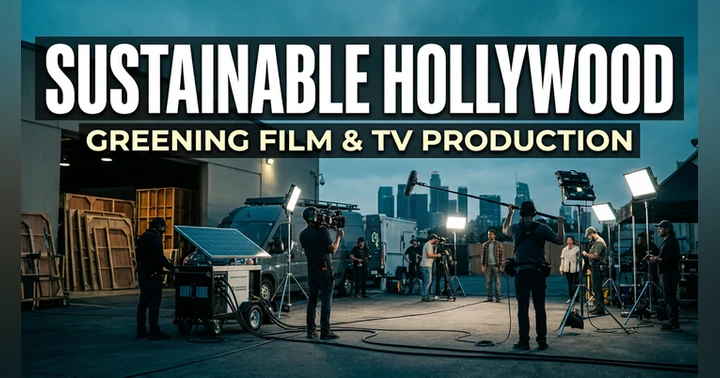
Hollywood might not be the first industry you think of when it comes to protecting the planet, but film and TV production has been quietly transforming how it operates behind the scenes. In this episode, Andrew sits down with Zena Harris, founder and president of Green Spark Group and co-host of The Tie-In podcast, to unpack what sustainability actually looks like on a working film set.
Zena walks through the surprising ways major productions are cutting fuel consumption, swapping diesel generators for solar power and battery stations, and building a circular economy for set materials instead of sending them to the landfill. She traces the industry's evolution from early recycling programs to today's focus on electrification, and explains why sustainability still gets treated as a "luxury" that's often the first line item cut when budgets tighten.
Whether or not you follow the entertainment industry, this conversation offers a blueprint any organization, including conservation groups, can use to look inward at its own operations and lead by example.
Takeaways:
- Green Spark Group has helped productions like the CBC build sustainability into operations from leadership on down.
- Fuel consumption from vehicles and generators is the single biggest driver of a film production's carbon footprint.
- Sustainability consultants now aim to join productions four to eight weeks before filming starts, rather than days before.
- Cost savings and industry reputation, more than regulation, are what convince studios and producers to change.
- The next frontier for the industry is measuring the embodied carbon in materials like set-building lumber, not just fuel and waste.
- Sustainability is still widely treated as an optional add-on, which means it's often the first thing cut when budgets get tight.
Links for Zena:
LinkedIn: linkedin.com/in/zenaharris
Website: greensparkgroup.com
LinkedIn: linkedin.com/company/greensparkgroup
Instagram: instagram.com/greensparkgroup
Facebook: facebook.com/greensparkgroup
Support Independent Podcasts: https://www.speakupforblue.com/patreon
Need help with your ocean non-profit, company, or project? Get the help you need with Pisces Oceans Inc.: https://www.piscesoceans.ca
Connect with Speak Up For Blue
Website: https://bit.ly/3fOF3Wf
Instagram: https://bit.ly/3rIaJSG
TikTok: https://www.tiktok.com/@speakupforblue
Twitter: https://bit.ly/3rHZxpc
YouTube: www.speakupforblue.com/youtube
0:00 This is the moment you've been waiting for. We are going to be talking to Zina Harris, who's here to talk about how the production of Hollywood movies and TVs can be environmentally friendly, looking at sustainability, looking at climate readiness, making sure that the impact from TV production and movies aren't going to have a significant effect on the environment and maybe save some money for these organizations. That's gonna be on today's episode of the How to Protect the Ocean podcast. Here to talk about your sustainability in ocean news, each and every Monday to Friday, if you like this type of information, all you have to do is hit that follow button to make sure that you subscribe or you follow and you make sure you don't miss any of these episodes Monday to Friday.
0:49 And if you want to support the show, you can go to speakupforblue.com forward slash Patreon. That's speakupforblue.com forward slash Patreon. It's where people want to support the stuff that I do, not only on the podcast, but on YouTube, on TikTok, on Instagram. We put out information all about the ocean news and how you can protect the ocean. So today we're going to be talking to Zina Harris, and it's actually really interesting. So Zina is the founder of and president of GreenSpark Group, which is a group of sustainability consultancy and a certified B corporation focused on integrating sustainable production practices in the entertainment industry. And their practice, her practice areas are on production coordination, corporate strategy, program management, education, sustainability production, sustainable production form conference that she puts on every year.
1:38 She's also the co-host of the tie-in, which is a podcast that just talks all about sustainability in production, in movie productions and TV productions. And today we're going to be talking a lot about just how businesses and industries that you wouldn't expect become sustainable. And what are the drivers behind wanting to be sustainable? I think that's really what it comes down to because, you know, we talk about how coral reefs need to be protected. We talk about how seagrass restoration needs to happen and mangrove restoration needs to happen. We need to reduce climate change, but how do we do that? You know, there's, there's mandates that come down, regulations that come down from governments that we talked about all this week.
2:21 When we talked about sustainability and businesses and we talked about how businesses sometimes try to, try to greenwash. So how do we make sure that these, these production companies, these, these, product companies, any kind of company that sells any kind of goods and service, how do we make sure that they are actually doing what they're supposed to be doing and making sure they don't have an impact on the environment and are sustainable in doing that while they create products that we enjoy and love and sometimes need. So I wanted to have Zina on to kind of give us a look into what we are, what we need to do as, what individual industries need to do, need to do just to become this part of, of, of life, really is really what it's going to be.
3:06 So with that said, here is the interview with Zina Harris talking about how to become more sustainable with production companies. Enjoy and I'll talk to you after. Hey Zina, welcome to the how to protect the ocean podcast. Are you ready to talk about sustainability in the entertainment industry? Oh yes, I love talking about this. And you know what's funny is I bet you some people who maybe they just turned this on and they're saying they see the title how to protect the ocean and they're probably confused. They're like, wait a minute. Andrew just said sustainability in the entertainment industry. What the heck does that have to do with ocean protection? And I'm going to say it has everything to do with ocean protection. I think there are things that we can do in our, in our daily lives, but also in our work life or through processes and workflows through work that we do in any type of industry, whether it's the entertainment industry or any other like finance or tech or anything like that.
4:00 There's always something that we can do to lessen our footprint on the environment in a variety of different ways, not only from a climate change perspective, but from a plastics and just overall sustainability and just being nice to the plant. And that's what we're here to talk about because you know, you know, when we started talking about on LinkedIn, you know, we obviously we have a podcast, you have the tie in podcast, I have this podcast and you know, obviously it's always great to be able to interview someone who has a podcast because you know, their sounds going to be great and everything's going to be fun. But you know, I feel like it's we have this this connection about looking for sustainability in different ways. So I'm looking forward to asking all questions around sustainability, especially within the film industry. But, you know, before we get started, you know, once you just let us know who you are and what you do.
4:43 Sure. Yes, I am. Well, I am a CEO and founder of Greenspark Group, which is a sustainability consulting company. And I started that in 2014. So it's been a little while now. Yeah, and it's evolved over the years. I also co host a podcast, as you mentioned, the tie in that's a lot of fun. It gives an opportunity to just talk with a lot of different people behind the scenes and entertainment that are doing great work. And we want to highlight that. And then I also I started a conference years ago, 10 years ago now, it's called the Sustainable Production Forum. And a couple years ago, three years ago, maybe we spun it off into its own nonprofit, the sustainable entertainment society.
5:35 And that's based in Canada. And so it is an umbrella nonprofit that hosts this conference and all, you know, several other conferences. And it's a great thing to have a conversation about sustainability and how we can help people and, you know, contribute to the field and then, you know, bring people together and then also have a fun outlet for talking about it through the podcast. I love that. I think that's a great thing. And I think it's, you know, something we talk about sustainability, hear that word a lot. I think some people use it for greenwashing. And I think other people use it in this real form.
6:22 You know what I mean? But I think it gets confusing for people, you know, in terms of what sustainability actually is. So for the context of what we're going to be talking about today, what is sustainability for the meaning to you and your business? I'm so glad you asked because I agree. It's one of these terms that, you know, when you say it, people's eyes kind of glaze over and it's like, what are we talking about here? You know, some people think it's recycling. Others, you know, have a particular thing that they focus on with sustainability. I like to think about it. You know, we hear ESG, environmental social governance. That's a way to think about it. You know, people, planet, profit.
7:05 That's also another way to think about it, where you're talking about, you know, obviously, you know, sustainability. Obviously, people and how they interact in the social stuff and plan it for all the environmental aspects and then governance for organizations. So I like to think about it in kind of those buckets where it's not just environmental. We're talking about the people, how they work, the opportunities, you know, in and around their workplace. And then we're also talking about culture, you know, overarching kind of organizational governance and how to make that better. And then obviously all in service of like how we do work, how we live on the planet and the resources that the planet has.
7:51 And so I think that's a really good thing to think about is that the planet provides. So I like to think about it in in kind of this broad way. I have to be honest, though, a lot of the work that we do. We, we approach work with people in mind and how they, you know, will interact with us and interact with the topic and interact in their workplace and all of this, what we're teaching them, you know, a lot of training and stuff like that. But a lot of the work that we do then, you know, on the results side of things is very environmental oriented. We're doing like, you know, carbon footprints, which, you know, like we're taking this environmental data, we're analyzing it, and then we're creating a footprint.
8:38 And then hopefully organizations use that to, you know, make projects make their organization better going forward. And that's where the governance piece comes in. So, I mean, you can see how it all ties together. But a lot of the work in our industry focuses on the environmental piece of it. Yeah, that's it's really interesting too, because like you're thinking about the different industries, obviously, and there's regulations that a lot of industries have to follow. And so you have consultants that come in. I used to be an environmental consultant for, you know, fossil fuel companies and mining companies. And there's certain regulations that they have to strictly follow to make sure they don't impact the environment. And then you get into like, you know, finance and tech and all these types of things that it's a little bit more loosely, you know, regulated for your industry.
9:27 The entertainment industry, before we start recording, you mentioned that, you know, people will do it for, you know, I was asking like, what drives people to do it? Is it just because, you know, the arts tends to be a little bit more environmentally focused or environmentally leaning and protecting that environment? So I was like, who's who's driving this? Is it the actors? Is it the studios, the production companies, so forth? You mentioned regulations? How is the entertainment industry from a production level, or even any kind of level regulated in terms of environmental regulations? Is that a federal state? A little bit of both are province if they're in Canada? Well, it's really interesting. Other industries are more highly regulated than the film and TV industry. So I will just say that the regulations come from more of a reporting standpoint, like reporting greenhouse gas emissions. And that's even fairly new, right? So it's not like, you know, there are other kind of general regulations out there, like every business needs to, you know, not don't, you know, toxin-d things down a storm drain. So if someone was monitoring that on a film production, they definitely would want to, you know, make sure that that wasn't happening. And if it did, maybe there would be a fine.
10:46 But nobody's on film production is like monitoring that stuff. Right? So, so in some ways, like there is regulation from maybe a reporting standpoint. And that peaks the the ears of large companies because they will need to report. But on the other side, like, a lot of our industry is not just like, you know, the industry tends to fly under the radar in, you know, other ways, other regulatory ways. That's not to say we're like, you know, breaking laws left and right. I'm just saying, like, you don't see the oversight in the same way as you might in other industries that are very heavily regulated, you know, manufacturing, you know, chemical industry, you know, all of these kinds of things are just a little, it's just different. So that's interesting. I do think that, you know, to your point about, you know, the entertainment industry leaning, you know, toward more environmentally friendly practices and whatnot. It's been an evolution, honestly, like, you know, there are, you know, there's talent out there who really care about certain causes. And so they will bring, you know, their cause, their sustainability, you know, environmental topic, you know, into a conversation. And that's all well and good. So that's one way it comes in. There's also, you know, a huge cost savings component, if we're just getting to, you know, that
12:16 economic that financial piece. You know, if we purely look at that, we see a lot of cost savings when you really start, you know, looking through, you know, doing a process map, for all the folks out there who love that, really picking apart, what's going on? What, you know, fuel are we using, you know, all the processes, all the decisions down the whole film and TV development, like, you know, process from like, idea, through development fundraising, you know, putting together a team greenlight, you know, actually starting to plan where this production is going to be, you know, all of that. And then, and then we get to production where we actually execute, we actually, you know, turn, you know, cameras rolling. And, you know, people are doing all their, you know, designing sets and building them and transportation, you know, there's like, on a large production, there are something like 20 different departments, which, you know, I like to, you know, people talk about, you know, it's like a small city, you know, where we've got the accounting department, and the transportation department, and, you know, foods, services. So, you know, like all the these elements in a city, you know, like really converge in this, you know, microcosm, this production. And then even after that, there's like, rap and doing
13:48 stuff with the materials and, you know, post production and distribution. And then you see it on your screen, you know, like that. So there's like a huge process to think through, right? And there's like a cascading effect from, you know, that development early development stage and those early decisions in the budget that we're creating and all of that, and then it gets to production. So it's an exciting process. What we hear the most about is that one phase of production, because that's like, where, you know, folks are executing on the vision. So I find that, you know, that just the way that comes together really interesting.
14:30 And so you can imagine, there are a lot of different companies in and around that process. Yeah. Whether it be the production company, and the very early stage, whether it be the vendors that service in and around anywhere in that process of the supply chain is really critical. And, you know, and then you've got like large companies, studios who are picking up this content and distributing it or, or commissioning it or distributing it or whatever it might be. But there are lots of different people in and around that process. And you've got investors that care or that need, you know, neither the data, the reporting or want to make sure that they're saving money when they can. So there are a lot of different reasons. And then, you know, at the end of the day, some of these, you know, large studios are all publicly traded. So investors might have something to say about it too.
15:29 So anyway, there's a lot of... A lot of moving parts. people expressing wants and needs at different stages. And so it's not just regulatory, just to circle back. It's, there's a lot of competing factors of like why, a company would want to do this. So I have to ask going back a little bit, how, I have two questions that are a little bit related to, well, obviously, definitely relate to this conversation, but related to each other. The first is like, how did you get interested in doing this type of work and in and around sustainability? And then how did you get into the entertainment industry to do it in there?
16:13 Because it's not the first thing you think about. And so I'm just wondering, like, did you have a history already working in the entertainment industry in the, in behind the scenes background, that kind of stuff? So yeah, just those, those two questions that are somewhat related. Yeah. I did not work in entertainment before starting GreenSpark Group. I did work in corporate human resources for a large multinational corporation. And I worked in the mergers and acquisitions group from an HR perspective. Okay, very related. Yeah. So I was used to dealing with people and training them and pulling policies and all of this stuff together.
16:54 So there's that. But I also in that role realized that there were a lot of inefficiencies in the organization. And I was having to talk to people about them. But I knew that, you know, maybe we could do things better. So that kind of, you know, was a bit of an internal tension for me. There's got to be a better way, you know, that sort of thing. So I ended up then going to graduate school for sustainability and environmental management. And that's where I really started pulling together, you know, that that early tension I felt working in this large company. And then also, you know, I had lived in Southern California and I had friends in the industry and I had been introduced to the industry.
17:38 Actually, I went to a couple movie premieres and that was exciting. And then I had friends who worked on set and we get to go and see what they were doing. And so I had an idea. And so I started honing in on like, what? What is, you know, what is sustainability and film and TV? Because I knew that the entertainment industry or film and TV in general was like, you know, the gateway into, you know, people's homes and, you know, way to, you know, we could talk about it and figure it out in entertainment. Wouldn't that be so cool and influence so many people? So that's what really was my my initial driver.
18:18 Yeah. Yeah. Yeah. It's interesting. It's interesting because I do agree like TV and film have such especially these days I find but historically have such a profound influence on the way we think as a society. You know, I think, you know, being Canadian, I think we get a lot. We take on a lot of American culture due to the movies and TV that we watch out of the states and things like that. And maybe vice versa with other countries. And so I think it's interesting to, you know, work in an industry like that. Like I did an interview a number of years ago where, you know, we talked about how story lines are being, you know, influenced by outside factors in terms of like people who want specific issues being brought up.
19:10 And and I spoke to one person who was in charge of looking at or helping, you know, storylines, whether it's be the subplot or the main plot, be about the environment. So it could be like a fire show that that is, you know, has a wildfire involved. And so they discuss wildfires and what causes it in a little light. And people get see that and they get a little bit more not only entertained, but also, you know, educated on on that fact. And from it. And I think it's interesting because, you know, sometimes I look every time I think about like this, like sustainability, I think about what happens on a production set in front of the camera because it's all I see. I don't see behind the camera by see in front of the camera and explosions and, you know, cars being used and all these kind of things.
19:55 And you're just like, wow, you never really think about is there sustainability around that? Are people looking at obviously safety and that kind of stuff, occupational health and safety, but also the sustainability around that is interesting to me and looking at ways to minimize the impact on the environment, even though it's it might be an intermittent or just a one blaster or things like that. But then as I got as I was preparing for this interview, I started to think about all the things that go behind the scenes and that are on like you like you mentioned all the different people and companies that are involved in a production or even before that production and after the production enduring that really could play a role in decreasing the environmental footprint of wherever they're shooting.
20:40 You know, whether it be in the US, whether it be in Hollywood or whether it be in Vancouver or Toronto and Thailand, wherever that might be. So I think that that's interesting. So can you just talk a little bit about I guess that how a project starts for you and where does it start and are you involved in all the moving parts? Because that seems like a lot of a lot of work on on those types of productions. Well, yeah, I mean, it is interesting. We we have some projects where we have been included in that, you know, that full process. And those are the those are really exciting because you can see how interventions early on in decision making and talking about sustainability, looking through the budget early on through that lens can actually, you know, we like to say, you know, kind of if you're doing this across a slate, it can definitely compound savings.
21:40 So not only just looking at your one project in the whole process of development and then, you know, execution and whatnot. But then if you're managing multiple projects like you're taking that cost savings and you're doing it again and again and again. And, you know, inevitably, it'll be different on every show because, you know, location or what's available or what you can do in a given region. But having the framework and the knowledge to then be able to replicate is like so great. It's you know, this is where it gets really exciting because, you know, production execs can see where the savings are. They don't have to wait till the end of the project and get the report. You know, they can set it up that way.
22:23 And so that's a really exciting part. But we do most like, I mean, the green spark group was like 12 years old. So we have been learning this as we go in terms of like where the best entry point would be or how to best help, you know, we're just constantly trying to evolve and figure out how to, you know, provide the most impact to our clients and whatnot. And so we've mostly joined projects at the pre-production phase and it used to start like a few days before production or it's like, you know, everything's planned, you know, but now we're you know, the industry is, you know, more aware and you can see the benefits when you start earlier and all that.
23:14 So we we do tend to start, you know, four, six, eight weeks out from actual production. So we have a lot of time to work with the crew before they actually like, you know, start rolling camera, right? Right. Right. So yeah, and then, you know, that whole production process is really, you know, it's exciting in that, you know, you're you're executing on what you planned earlier and, you know, trying to we like to try and really work with our crews to like evolve, you know, once we, you know, see, oh my gosh, you know, this EV here is really saving us money, like, let's see if we can deploy another one, you know, like, really try to evolve as it goes.
23:54 That's exciting. That doesn't always happen. Sometimes it's just like, no, you know, this is our budget. We're just going to continue with this one. Yeah. Yeah. But if we can, like, it's it's when we have the support of the producer line producer, like, it can really flow and be so cool to see all the wonderful things that the crew can can actually do. Yeah. We know like fuel consumption and this is, you know, broadly, you know, now known in the industry. Fuel consumption is the major contributor to the carbon footprint. We have a lot of vehicles, a lot of trucks, right? Carrying gear around and whatnot. We all kind of gather at base camp or all these trailers and, you know, for wardrobe and hair and makeup and all.
24:39 And, you know, there's catering, you know, so there's a lot of, you know, vehicles that we don't think about. Exactly. Exactly. And then, you know, I like to say, like, everything you see on TV was put there. For a reason, right? Somebody's on thought about that. Yeah. They, you know, you think someone's walking down the street, you know, with, you know, but all those people are extras or, or it's actually, you know, a green screen or, you know, like, so everything is planned out. And so that's the exciting part because that means that everything is a decision. And so when we talk about, you know, sustainability and, you know, we like to say, think what the sustainability lens because all of those decisions, you know, can have alternatives or can have, you know, like what, you know, what's the best way to go about this or, you know, for things.
25:36 And so we talk a lot about that with our clients and try to help them, you know, like, one of the big things is materials, you know, a lot of wood to build sets. And then what do you do with that? So there's this whole process of material reuse that we like to think about as a circular economy where, you know, when puts are coming in and they're being used and then they're going back into the system and it just keeps, you know, keeps flowing. And not going to a landfill. So, so we want to do more of that. Like, this is what we want to, you know, we want crews to experience it, see it, see the cost savings involved. So, so it's, there's a lot going into the behind the scenes, a lot of departments, a lot of people, you know, we work on a lot of times big productions.
26:28 So there's a lot of folks to engage and think through, you know, these various elements with. So it can all be very exciting. Yeah, no, I mean, I think it's great. You're the guide to help them be more sustainable, where they're trying to focus just on shooting this, the scenes and making this production. You're there to be like, oh, hey, there's options here. Like you don't just throw it in the trash or you don't just remove. There's an options to make it more circular, to make it more sustainable, which they may not have had the time to research to figure out because a lot of it, I have to, like I would imagine you can confirm this is sometimes it's a new process. Right. Or, or like, nobody's really thought of it before. And so you're like, oh, well, how about we try this and how about we try that? And like, when, when you suggest those things to people, do you find there, there a lot of times they're surprised like, oh, I didn't know they can do that.
27:22 Or I didn't know that could be done or, or, or do you ever get any pushback to some of these types of things? Of course, we get pushback. I mean, come on. Yeah, there, there's pushback, but it's interesting. This is why I'm such an advocate for talking about this, you know, and why we, you know, created the sustainable production forum years ago is because when you hear about various sustainable practices from your peers, yeah, or even inspiration from other industries, you know, pulling together and you're, you know, it's inspiring and you realize, oh, okay, I can do that. Right. So I think that more of the case studies that come out, the more behind the scenes, everybody loves watching behind the scenes videos, right? For sure. So the more of those that are that are out there talking about the good work that folks are doing, it helps get over that hump of, you know, change, right?
28:19 I don't, you know, I don't, I don't know if I can do it. But if you see, you know, a colleague, you know, doing it, then it just makes it that much easier to kind of, you know, believe in the process or whatever. So I'm a big fan of that. And yeah, I think once people, you know, do it and, you know, get into it, there's a real sense of pride. There's a real sense of like, they can see the cost savings, they can see, you know, at the end when you know, we give a report and you know, there's, you know, greenhouse gas emission reduction.
29:00 And that's exciting, you know, wow, we actually did it, you know, yeah, I think it's really important to circle that information back to the crew so they can see the fruits of their labor in that regard. You need to buy in for the next time. Yeah, and then taking that with them going forward, it just gives them more, you know, I guess more confidence to take it forward. Because that's what we want. We want them to learn, adapt, evolve, you know, see this new gear and think it's cool and find new ways to work with it. Yeah, and take it forward. So yeah, I love that. I love that idea. Can you take us through the evolution of sustainability?
29:45 Briefly, obviously, within that industry, like, when did it really start to happen? Was it when a certain regulation went through? Or when did production companies and studios and other companies start to think about, you know, being a little bit more sustainable? Like, can you take us through that and how that's changed like from then until now? Yeah, it's, I mean, it's really interesting. I think it was 2006 when the studios, like the large, you know, the big six at the time, all of those started hiring, you know, sustainability directors.
30:29 Interesting. And so it probably took a little bit of time for them to like, you know, figure out how to, you know, to, to spin up sustainability in their organization, you know, specifically focused on production. So, so it was around that time that those folks started to get hired. And was there a certain reason why that happened? Was it because of a regulation that went through or, or just that was just where things were going? Well, it's really interesting. There was a paper that came out from UCLA that I think sparked like, oh, yeah, it's a bit of an oh shit moment. Because it compared. It compared the film and TV industry in the LA basin to other industries in the LA basin and film and TV did not look good.
31:17 Gotcha. A carbon emission standpoint. And, you know, there's been some, you know, him and not all in about that paper since then. But maybe that was a trigger to for these studios to start hiring folks. And that has all been good. Right. Yeah. Because more people are thinking about this and, you know, and setting exciting it into practice, coming together in, you know, forming organizations, engaging with different groups, unions and guilds and these sorts of things. And like, that's been a great evolution in that regard. Don't get me wrong, like, I think we're just scratching the surface on all of this. But when I first started 12 years ago, I was on one production.
32:04 And all anyone was talking about at that time was waste and recycling. And, you know, we didn't have good data on fuel consumption. We didn't, you know, like we were just starting to do these calculations. You weren't even thinking about monitoring that stuff at that point, right? No, no. So that's what the big focus was early on was waste and recycling. And so, you know, take that now. And I just mentioned, like, you know, all these departments and cost savings and transportation and fuel consumption and, you know, donating food was a big evolution. So, over the years, it's really evolved from that the waste conversation to electric electrification and clean tech.
32:55 And we've got more companies out there, you know, building cool gear, cool trailers, solar power, autonomous trailers to, you know, battery power stations to replace generators. Like, so that part is, like, now we're focused on that. And, you know, what I think we need to consider now, you know, kind of coming back to the material side is that we have a good handle on the fuel consumption and how to calculate and, you know, how to compare year over year related to that kind of thing. But what we don't have a good handle on is the actual embodied carbon of the materials that are coming on to production, right? Nobody's really measuring that we have a count of plywood, but we don't calculate the carbon associated with that wood.
33:53 So, there's a big evolution and then this, you know, whole circular economy and reuse big evolution to come in that as well. So, you know, yeah. And of course, like, you start off with like an overview, like, what are the biggest savings and what are the what can we really measure? And then you start to scale down or look down and get finer and finer and look at like the like the type of wood that's coming in and how much carbon is brought into there and, you know, all that kind of stuff. I think it's a yeah, it's a it's a cool evolutionary process in terms of how you look at that. Now, I got to ask like when you start suggesting these things and you start to say, you know, try to convince line producers and and see as to make these types of new changes, like what are the biggest obstacles? Is it like money? Is it culture? Is it risk? Like what are the obstacles? And on the other hand, what is like the like the optimistic outlook for like what the producers look for that they could are they are they professing it to the rest of the industry? Like look at us. Look what we're doing. Is that the incentive?
34:56 Like, like, where is that from the negative standpoint of like money, time, culture, risk and then others of like, hey, we can talk about this because we're really proud of it. Yeah, it's well, it's all that right. There's, you know, right now we are very much focused on money and saving money. I mean, that is, I would say that's the number one part of the conversation right now. Nobody wants to spend any more money on their production. So, you know, the next level is, well, okay, we know after, you know, all these years, there are a lot of people doing this work. We know that certain practices save money. So we start talking about all that that that is possible there.
35:48 And it does take a level of trust and confidence in the producing team. And even, you know, if they're the ones hiring us or if it's a studio to actually, you know, work with us, see how it plays out, see how we can help them. We got a lot of productions under our belt. So we have a lot of case studies and experience and that sort of thing. But for folks who haven't yet done this, you know, integrated sustainability on on production, it does take a level of trust in us and in the teamwork that you know, we, we, you know, and how we work with production to do this.
36:31 And we've, you know, once that part is, you know, they see it, a lot of folks, we've got great relationships and work with folks, you know, show after show, even for different studios and they've been asked to talk about it because they're great. They're great, like, like, it's this great effort on their part to, to, to bring us on talk about this stuff, you know, show their peers what's possible. So I would love more of that. Honestly, like I said, just talking about it more. I think the peer to peer is really, really important. And I mean, there are awards out there that recognize folks for their good work.
37:19 You know, I certainly like highlighting folks when I can, you know, on the podcast or, you know, elsewhere. I do think it's important to acknowledge good work and acknowledge, you know, the trust that, you know, somebody had to take a leap, you know, a bit of risk involved. Absolutely. So, and look, it doesn't go well every single time. Like, you know, sometimes we, we go, we have this grand plan and we think we're going to do all this stuff. And then, you know, circumstances are such that, you know, okay, we're, we, it's just, we're not going to do that. So we're going to pivot. And so anyway, it's all to say, I think people need to be recognized for, for taking this chance and for doing good work.
38:02 What's the one project that made you think, okay, like, this industry can really change? Hmm. Well, you don't have to name the studio or anything. You don't think I'm too specific. But if there's something like, like a particular, a particular project you can think about. Well, we've been talking a lot about productions and we've done some, you know, great work on productions, but just a gold star project that I, you know, warms my heart every time and has had such an impact on the industry is at the corporate level. And I don't think they would mind me saying they've said it themselves, but we worked with the CBC. Oh, it's been several years now, five years, maybe the Canadian Broadcasting Company and they, I went in and spoke to their top leadership did a whole, you know, and it was just supported from leadership and trickled through the whole company, even down to developing, you know, guidelines and, you know, accountability checks and all sorts of things on training people on production, but every department, their transportation, their environmental team was involved. Like we were all together creating, you know, a sustainability strategy for them. And, you know, initially, you know, they had goals that, you know, they weren't sure if they could meet their goals.
39:28 And, you know, we were encouraging them. Yes, we know it. And we're, we think that they blew past them and they continue to evolve and continue to bring together the industry and support events and support people talking about this stuff. So I see their work as really integrative. And that has been just a fantastic, you know, case study client to watch. So I really hold them up to, you know, high standards in that regard. That's amazing. So, that's awesome. You know, one thing I always think about, you know, when we talk about the environment in general in any industry, it's almost like if you're able to protect it or you're able to do sustainable things, almost like it's like the luxury, right? If you have the extra money, you can do that and you can protect it. But once, you know, it hits the fan, like the economy hits the fan, you know, the protection of the environment tends to be the first thing to go like in policy or in the budget.
40:32 And things like that. How integrated is sustainability in the process of a production from beginning to end or is it that luxury that when a budget becomes tighter, that's one of the first things to go because it's a luxury. Yeah, right now we're still leaning on the ladder. It's still considered an add on or a luxury. I mean, some get it right, you know, and that's great. But the scale still, you know, leans toward it being an add on and a luxury. And when the budget's tight, you know, it is one of the first to go.
41:13 So all the work that we do, all that we talk about everything we're showing, you know, case study wise, you know, we're trying to tip the scale, right? We are trying to get it to be more integrated. And I think that, you know, we can't make entertainment on like a dead planet. Like we can't survive as humans on a dead planet. Like, you know, there's a even in music world, they say no music on a dead planet. Like, sure, do what we do if we don't have beautiful locations to do it in, right? If we don't have, you know, wildlife and, you know, the ecosystem and all the stuff. So it's all connected. But folks lose sight of that sometimes. And, you know, so I think we have to just we had to think about that, think about how we fit in the ecosystem.
42:11 And if we want to keep doing this work, we have to figure out how to do it in a way that doesn't, you know, degrade the planet or harm someone or something or, you know what I mean? So for sure. Yeah, no, I completely agree. I'm preaching to the choir here, of course. But I mean, like it's it's but it's always interesting because it always, you know, makes me think, you know, what's that level where they're just like, okay, we just can't afford it on this one. And then what's them to say that after a while that that just kind of, you know, just continues, you know, it's like, oh, let's keep this out. Let's keep this out. But it seems like there's this need, you know, from people or a want that people want to be environmentally friendly, whether it's cost savings on some part.
42:58 How do you sell it? You know, being in the industry that you're in, how do you sell it to just be like, hey, look, like this could actually save you money on your production or you can have, you know, we could talk about it in variety or wherever this gets talked about or at the conference, obviously, that you have. How do you sell it to, you know, the people that you sell it to? You sell it to your clients to be like, look, like, you know, obviously the budget is tight, but this will actually help you save money or, you know, you're able to talk about it. Or is there another way? Yeah. Well, like I said, we, you know, early on, we were leading with like, it's a values thing and all this. And I was like, okay, when I went to eat enough data, and we understood like, okay, what people really care about is cost savings.
43:39 So we lead with that a lot of times. And we have a lot of case studies, we have a lot of good data on this. So if someone's not familiar, we can definitely walk them through, you know, how, how they're going to save money. So, so that's usually the the lead. I also think that, you know, there's reputation that comes in and out as the folks who have consistently integrated sustainable practices, up and down the value chain, usually have a reputation of, you know, doing good work, you know, sustainability minded, they always, you know, so they fit in, you know, like, I've seen studio folks say we really love working with that producer because she integrates sustainability, like, she's, she's green already.
44:34 I said, right easy, you know, like this stuff, like reputation goes a long way. Yeah, related to this. And you know, when your, your crew is happy, because they're like, feeling like they contribute to, you know, this greater cause and all this, you just do better work. So that contributes to reputation of the team, right? So I think that's really important too. And I think that's overlooked right now, or under under talked about, you don't talk about it enough. And, but I've seen it play out multiple times. So that's positive. Yeah, I mean, so, you know, there's a reputational element, there's, you know, cost savings element, you know, it's, it's Hollywood, we want things, you know, like, we want, you know, things to sound good, things to work well, you know, we want to provide good entertainment for people. So I think those two things go a long way.
45:40 Absolutely. Absolutely. Now, one of the things that I'd love to hear from what you see in the entertainment industry, like what's one thing that you learned from the entertainment industry that you could see that ocean organization should adopt? Like, is there something that you see every day that you don't see, even it doesn't have to be ocean organized conservation organizations, but just conservation organizations in general, we talk about the environment. What's one thing that really works when you talk to the environment, like to the entertainment industry that could work, like using the same kind of style or same kind of tactic for organizations, like conservation organizations? Sure, I would say any organization, you know, conservation organizations, you know, as well, any organization can look at their own internal operations and, you know, how they're what they're consuming their procurement, you know, what, you know, create a plan, create a strategy, create, you know, calculate, you know, your impacts associated, whether it's, you know, financial impacts, greenhouse gas emissions, you know, these sorts of things.
46:48 And then you can learn from that and make decisions, better decisions about how you operate as a company that can apply to any company anywhere. And so I would, you know, it's funny because, you know, I've worked for consulting companies in the past, you know, sustainability consulting companies and, you know, even, you know, observed, you know, we do this work for clients, but we, you know, it's like I've experienced where we don't calculate our own emissions. Why not? Right? So, I mean, my company, this was a priority for us, like we do, we're b Corp and, you know, all of this great stuff. But like, even environmentally oriented organizations can take a look at what they're doing, calculate their own emissions, make decisions accordingly, and, you know, improve their own emissions.
47:47 And, you know, improve, you know, their, you know, impacts over time, right? So yeah, I love that. I love that. One last question for you. It's kind of a bit of a scenario question. Okay, so I want you to imagine it's 2036. And like, we're looking back in the entertainment industry, like truly transformed its environmental impact. What would you say that would have happened between now and then that made the biggest difference? I think that instead of focusing so much on production, we will now be focusing upstream on the development side of the equation, you know, or of the process, I think that will be more of a conversation upstream, I think more production execs and, you know, production companies themselves will be paying attention.
48:42 And then by the time the conversation gets to production, it will be normalized, it will be integrated, all of that. So I hope it comes earlier than 23. But I think the balance of like, you know, heavy on the production conversation right now, I want it to to to flip to heavy on the development conversation, because, you know, there's just so much opportunity in that process that I think is untapped. And I, I really hope the conversation swings a lot more in that direction. And what's needed to make that process go faster? Like, do you think needs to happen at that level? Well, you know, talk to you a little bit more.
49:27 Well, you know, it's it's it's a lot of it is education and awareness, like they don't, you know, folks don't realize what the possibilities are, because we haven't been having that conversation. We've been so production focused. And so I do think there's a lot of that involved. I think once we get a little bit further in our work, we'll be able to, you know, show case studies on this. But it's a little early days right now, for us to be able to do that. But there's good work happening. I just think, you know, this is a, an opportunity for, you know, folks to, you know, read up, you know, educate, get themselves, you know, up to speed, you know, obviously, we can help them do that. But like, you know, there's a lot of resources out there in the industry right now.
50:17 And then, you know, applying that the knowledge that they gain to their work in their specific role. I think that's really important. So I just think, you know, it's education and awareness, but then also like, once you have that, what are you doing with it? Right? How are you actually integrating it, starting up the conversation in a meeting, you know, and holding folks accountable as we, you know, make a plan and things like that. So, yeah, I, that's where I think things are going. I love it. You know, this has been absolutely fascinating for me and I think for the audience as well. I want to thank you so much for just taking the time and talking about this and educating us on what's been done and what hopefully will be done in the future. And I think, you know, it's really great to see an industry that has that has been so much has gotten so far so like so quickly within the last like 20 years and obviously there's more to be done as we just discussed. So I really encourage to see an industry like this, like really develop in that and evolve within this sustainability options.
51:21 So thank you so much for sharing that with us and for all the work you do to help them get there. I think that's that's really great. If people want to have more information on you or even, you know, see what's behind the scenes and the tie in podcast, how would they how would they go connect with you? Sure. You can go to green spark group.com. That's our company website. And then the tie in.com is the podcast. You can look us up on YouTube and all the socials. Also check out the sustainable production forum.com because we've got a conference coming in the fall. So I mean, there's a lot of ways to engage with us or, you know, shoot me a note on LinkedIn. I know that's how we connected.
52:01 So I'm definitely on that platform. So, yeah, we'd love to talk to folks about this amazing. Thank you so much. I really appreciate it. Thank you. Thank you for joining us on today's episode of the how to protect the ocean podcast was great to have you on. I just love the way that it becomes easy as drivers because people are demanding that companies become more sustainable in their production, not only from a production and what of TVs and Hollywood movies and all this kind of stuff. It's more of a production of just how they produce their products and services. We're talking about entertainment industry today, but this could this could easily be applicable to any type of industry that wants to change and the driver is people want to see that change.
52:44 And I think to have consultancies like zina's to be able to talk about on a podcast like she does at the tie in, which we have to be able to have a conference where others can incorporate these types of sustainable sustainable practices is a huge, huge win in battling climate change in battling water quality. You know, water quality issues in battling air quality issues on all different realms, ocean land and fresh water. So I just love housing that really tied it in. I hope you enjoyed if you have any questions or comments and you want to direct it to zina. I'm going to put her her socials and any way you can communicate with her and you can links to the podcast links to her company. If you want to work with her, but also, you know, if you have any questions to me, please let me know just DM me on Instagram or on tiktok.
53:30 I'll put my links to my socials in the show notes as well. And of course, if you want to learn more about the ocean and sustainability next week, we're going to be talking about how companies are turning the tide and changing things. And we're going to be interviewing someone who has electric vehicles or boats. It's going to be awesome. Electric motors motors for boats. It's going to be great. We're going to have a great week next week. So follow now if you haven't followed yet on this podcast or your favorite podcast tab. And of course, if you want to support the channel, you can go to speak up for blue.com forward slash Patreon. I want to thank you so much for joining me on today's episode of the how to protect the ocean podcast. Have a great day. We'll talk to you next time and happy conservation.