Why Sustainable Companies Actually Save Money


 Apple Podcasts

 Spotify

 YouTube

 Amazon Music

 PocketCasts

 Overcast
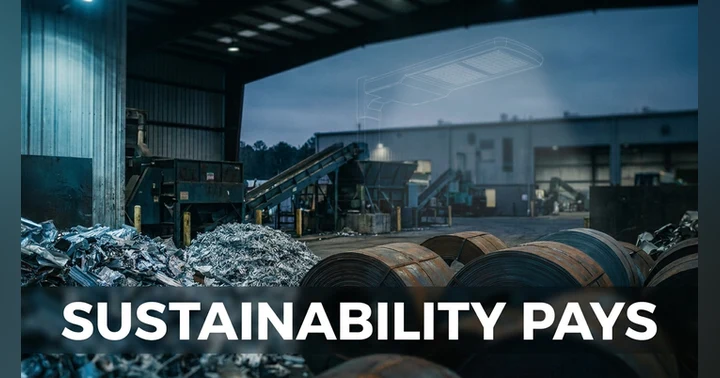
Sustainability isn't just good PR; it's good business math. In this episode, Andrew breaks down why companies are shifting toward circular business models, using Philips Lighting as a case study in selling light as a service instead of a product. He digs into the economics behind the shift: a British industrial symbiosis study that saved companies significant money and cut CO2 emissions, a PwC Sweden study showing double-digit operating cost reductions in circular electronics, and the rise of sustainability-linked loans that reward companies for hitting circularity targets with lower interest rates.
Andrew also gets honest about the limits of corporate sustainability. Greenwashing is real, B Corp certification isn't perfect, and some consulting firms that advise on sustainability also take on fossil fuel clients. He connects this to a broader conversation about right-to-repair legislation, the EU's upcoming circular economy rules, and why appliances that used to last 20 to 25 years now often die within a decade. Along the way, he shares a personal story about a retired school principal who spent 25 years collecting bottles and cans to fund his old school, a small-scale example of the same circular thinking companies are now being pushed to adopt.
This episode is part of How to Protect the Ocean's weekday coverage of ocean and sustainability news, where Andrew connects business decisions, government policy, and everyday consumer choices to the bigger picture of environmental protection.
Takeaways
- Circular business models like Philips Lighting's lighting as a service can cut costs while extending product lifespans
- Industrial symbiosis and shared waste streams between companies can generate major cost savings and emissions reductions
- Sustainability-linked loans now offer lower interest rates to companies that hit circularity targets
- Greenwashing and inconsistent B Corp standards make it hard to separate real sustainability action from marketing
- The EU's upcoming circular economy legislation includes stricter product design rules, a digital product passport, and consumer repair rights
- Right to repair laws could reverse the trend of appliances failing well before their expected lifespan
- Deposit return systems for bottles and cans show how take-back models create financial incentive for recycling
Support Independent Podcasts: https://www.speakupforblue.com/patreon
Need help with your ocean non-profit, company, or project? Get the help you need with Pisces Oceans Inc.: https://www.piscesoceans.ca
Connect with Speak Up For Blue
Website: https://bit.ly/3fOF3Wf
Instagram: https://bit.ly/3rIaJSG
TikTok: https://www.tiktok.com/@speakupforblue
Twitter: https://bit.ly/3rHZxpc
YouTube: www.speakupforblue.com/youtube
0:00 Why do companies do sustainable things? Why do they make their supply change sustainable? A lot of times, not just for the sake of being good for the environment, a lot of times it's because they save money, like actual, they actually save a lot of money. And I think that's really important for companies to do that in these times, try to keep their prices the same or to try to maximize their profits. And at the same time, when they're sustainable, they become better for the environment. Today, we're going to be talking about a particular company called Phillips Lighting that found ways to not only be more circular, but also save a lot of money. And we're going to talk about that on today's episode of the How to Protect the Ocean podcast, because this is the podcast where you find out a lot of ocean news and sustainability news, sustainability, sustainability news.
0:44 And that's what you're going to find this week on this podcast, Monday to Friday, we're going to be talking about sustainability. Today, we're going to be talking about the economics of sustainability and how it can benefit companies, not only from a PR standpoint, but also from a cost saving standpoint, which we hope, we hope that consumers see that cost savings. And I want to know from you right now, DM, if you're really struggling, do you think companies will pass on their savings to the consumer? I know they pass on when they have to pay more and we have to end up paying more, but I want to know, truthfully, if you think that business, if they save money using a circular economy, do they actually lower the prices or actually keep the prices the same? So you end up not having to spend more money. But we'll talk about that later.
1:25 I want to hear your point because I want to support you. And if you want to support this show, you can do so by going to speakupforblue.com, forward slash Patreon, join our Patreon community. You can hear stuff from me, ramblings and things that I'm trying this new, whether it be on YouTube, whether it be on podcasting, whether it be on TikTok, whether it be on Instagram, all these different things that I'm going to be trying, I'm going to be sharing in my Patreon community. Plus you get access to some cool videos that I'll be showing before I release them to the public. So check out speakupforblue.com forward slash Patreon. All right, let's get into today's show because, you know, circular business models are kind of interesting when we talk about businesses. And yesterday I talked about how businesses are where we're really going to find solutions.
2:06 Like government can provide solutions from a regulatory perspective. And we're going to hear that they can incentivize businesses to do that. And sometimes they incentivize in a forceful way. And sometimes they incentivize in a nice way by giving them tax breaks. But for the most part, you know, the government's have to put in regulations, but businesses are really going to find solutions because businesses, no matter where you're looking at, whether it's a hospital company or an environmentally friendly company, they are the ones that find solutions because they come up with a way to solve a problem. That's a business really, it's their solution providers. And so yesterday we talked about the reasoning why they would go sustainable. We're going to really focus in on the economy today because they look at economy, people and profit. They were going to be focusing on the economy.
2:47 And one company that really stood out to me in doing my research for this was Phillips Lighting. And they now sell a lighting as a service rather than a product extending the product lifespans through maintenance and reuse. So think about the business model changing. You may be buying less bulbs, but you're actually spending more on maintenance in the long run. So you're buying one ball, but you're spending more on maintenance and services and that kind of stuff and reuse, to be honest. So I think it's really cool. What really happened is aluminum recycling provides 95% energy savings compared to producing aluminum from like a raw bauxite. That's where it really comes from.
3:28 So a British study in industrial symbiosis, of industrial symbiosis, where companies were sharing waste and byproducts, found it saved 1.3 billion dollars euros in costs and prevented 42 million tons of CO2 emissions. That's a pretty big impact on just how things can change when you decide to go circular. Right. And a PwC Sweden study modeling circular business models in electronics found they cut operating costs by an average of 12% while also reducing emissions. So we're seeing a benefit here. Not only are they saving money, which is great for businesses, but they're also saving the environment by reducing their emissions or their CO2 emissions, which I think is fantastic.
4:14 Right. And now they're seeing, you know, some things that are happening with loans and lenders. So like the banks, lenders are now now evaluate ESG. So ecological sustainable goals or ecological social goals resilient. They look at that ESG resilience alongside financial history and a sustainably linked loans offer lower interest rates for company to companies that hit circulatory targets. Right. Sorry, sorry. Circularity targets. And so I think it's really cool when you start to see, you know, companies like lenders start to lend money by incentivizing their companies to lower their emissions or improve recycling or improve reuse.
4:54 I think to see companies be rewarded for that type of behavior is great because now you can get access to more lending and maybe eventually they're not going to lend to companies who are not doing those types of goals, not hating those types of goals. And circularity is becoming a huge factor in whether a company gets access to capital and not just a marketing angle. Right. Now, let's let's be honest. When it comes to the economy, I have to say this. There are companies who greenwash, who bluewash everything that they can just to get away with it, just to make sure that they can show that they have done some really cool things. But then on the other side, what you don't see, right, what doesn't make the PR list, right, the public relations list, they start to do some bad things to people, to the economy and all that kind of stuff into the environment.
5:44 So you have to be careful in how this is measured. Right. And that's why I mentioned it yesterday in the B Corps. I think what I like about because although it's not perfect and there are some companies who kind of, you know, push the boundaries, let's just say, in terms of the customers that they acquire. With their consulting firms and things like that, there is a report that was put out or an article that was put out a couple of years ago about that. Where consulting firms were taking on like fossil fuel clients and things like that. So that was a little problem. So, you know, no system is perfect. But a lot of these companies are doing what they want are doing. What not only do they want to do by saving money, but they're also being sustainable. I mean, and kind of buying into the circularity type of business model where you can reuse.
6:31 You can recycle, you can have repair if you have it and you can take back. And I think that's a really great thing because we're getting back to those days where you can just give like the empty milk bottle as a glass bottle back to the milk person who's delivering it so that they can take it back and wash it and reuse it. Those are really important aspects when you come to a business right now. Imagine a company taking back their containers so that they can either reuse or recycle or repair them and put them back into circulation. Yeah, obviously not a lot of people, not a lot of companies can do that because of the types of containers that they use. But if you move towards a more sustainable container where they can actually reuse them or break them down better so that they can recycle them into the containers again or into something else. That provides a lot of value. They can get money back for that equipment that they gather up. And there's there are some some some legislation like I don't Canada. There's legislation that's going to be starting to track the types of containers.
7:31 From a plastic pollution standpoint of where this plastic pollution is ending up and where they were derived from. Where were they made and then how to where they end up and who's actually responsible for that? Is it the consumer or is it the the the company who made the container sold it to another company that was able to brand it and put it out to the consumer and the consumer either litters it or can't really do anything with it. You know, a lot of coffee cups are notorious for that where you think they're because they're cardboard, but they got this waxy, material because they have to stay within, you know, they're they've got hot water or hot coffee in the container. So it has to has to hold up his cardboard or his paper. It's got a hold up. So it's got this like waxy material right. But that waxy material prevents it from being recycled. And so a lot of the times these coffee cups end up in the recycling bin.
8:20 Now imagine if a if a Starbucks or Tim Hortons or Dunkin Donuts makes a container that's fully recyclable. That's actually fully and they take it back themselves. You can actually bring it back to the container. Bring it back just like we do at the liquor store at the beer store when you bring back your empties. And I don't care if you can do that in other countries. And can if you bring back your empties, they will give you money back for it. I don't know if you can do it. The liquor store that used to be able to do it. You can do it at the beer store with the cans and they'll give you a deposit back, right? They'll give you money back. So you may not make your full money back, which obviously that's that's never going to happen. But you make some money back and then pay for more beer or you go pay for something else. I remember in university when we used to have house parties with us, what we do, we collect all the cans. We take pictures of how many like beer cases and all that kind of stuff that was there. And then we would drive it all back and multiple runs and we would give them all in and we'd make like 300 bucks off the thing. And that would go towards paying for repairs or cleaning bills for the house that we were renting.
9:18 So it drives value and it drives like if you're motivated enough to take it back. That's a huge thing. I know, speaking of the bottle returns or the can returns, there was a retired principal who was going around raising money for his old school and he every every garbage day or recycling day he would come by and he would grab the bottles and he would grab the cans and he would put them in his car and he would go and he would turn and he did that for 25 years where he raised money to support various aspects of his school. And you don't think it's a lot of money at the time. But if you dedicate that time to do that and take bottles and take cans and take them back, you can actually earn a good a good amount of money to pay for something that's fine.
10:01 And you can pay for a lot of money if you're a good one or to pay for more alcohol or to pay for whatever that you really want with that money if you can make couple hundred bucks off a big a big hall like a university party or after university party. But anyway, it's there's different ways of experiencing the circularity. And of course, not all companies are going to just do it because of the, you know, they got great hearts. There are certain aspects where governments have to come in and they have to say, hey, we're going to put this legislation through and you're going to have to abide by it. And to do that, you're actually going to save some money, but you may have to put some money up front, but you're going to save some money. So the EU's upcoming circular economy act introduces stricter product design rules and a digital product passport for traceability.
10:46 So the Europe, as I said yesterday, is way ahead of the game in a lot of places around the world from a lot of places around the world. And then it will have it also talk about consumer repair rights. So the consumers will be able to repair because think about this. I don't know if you've noticed this is a little bit of a rant part of the show. I don't know if you've noticed this before. But when I when we used to buy my parents when they had their fridge or they had their dishwasher or they had their oven or washer and dryer, we had that. I remember for most of my life, like the first 25 years of my life. Maybe it got replaced once in my lifetime. But appliances back then lasted for 20 to 25 years.
11:27 Furnaces, air conditioners, all that kind of stuff that lasted for 20 to 25 years. I'm not sure if you've noticed this lately, but if you own any appliances or you have owned any appliances, even if you're renting a house that have appliances, those things break very soon, like under 25 years, under 20 years, under 10 years. A lot of the times when something breaks, it's actually cheaper to buy a new one than it is to repair the broken piece or whatever was broken on that appliance. Think about that. Think about the waste that is generated from there. Instead of going to a repair place, you have to go back to because there's not as many of those repair places or having a person come over to fix that. That problem, you would take it back to the store because they'd have like a 10 year warranty and then they say, yeah, it's actually just better. We just give you a new one.
12:17 Where does all that metal go? Where does all of those pieces of those appliances that are either plastic or metal or some kind of material that may or may not get recycled? Now, metal would get recycled, but some of the stuff is all plastic and some of the stuff is not great. Then there's some chemicals in some of them to make them work. And those don't get recycled. And if they don't last for more than five or 10 years, what's the point of that? So I think governments have a responsibility to tell these companies to say, Hey, you know what? Remember how you used to make these products a lot better and they still last a lot longer? We're going to do that again. We're going to make you do that again because we get what you're trying to do.
12:59 You're trying to make people buy more. So if you get something, say you buy like a fridge and it breaks down after like, say, 10 years. Well, then you have to buy another fridge, right? And a lot of times when it's repair, you're not going to order the other part because it might take a long time, especially when you consider these days where it's like next day delivery. It might take a few weeks and you want that part or you can't go without a fridge for very long. All that kind of stuff. There are so many reasons to just buy a new fridge, right? But if there's a legislation that puts it through that says, Hey, you know what? Like there's a right to repair for these consumers. They don't have to go out and buy and spend another 800 to 1200, 1500 bucks on a fridge. Fridge are expensive. Fridges are expensive. Appliances are expensive. So to have legislation like this upcoming circular economy act, this is great. Like for the EU, but I would love it in Canada. Love to see it in the US. Let's see it in Mexico.
13:49 Let's see it in Australia. You know, like in the UK, it'd be great. So I think we should be looking at what countries are doing just like country started are starting to look at the bands on on single use plastic and start to copy those look at what works, what doesn't and take that into considerations for your country, your unique aspect and put those suckers into legislation. Right? Protect the consumer protect the environment and probably the companies will probably eventually see that. Companies will probably eventually save money on marketing on sales and everything like that. But I feel like companies are just so greedy these days. They want to milk everything they can out of you stuff that we never paid for before. We're starting to pay for now.
14:34 Right? And it's the same product. We're starting to pay for now because they're realizing they can get more money out of us. They take stuff that they included in their product for free and now say, well, if you want this, you got to level up to a service package or something like that. And I'm that that gets that gets me bothered. I'm gonna tell you right now that that gets me going as you can see in this little bit of a rant. So I think that's something that like today we should look at is the economy and how sustainability can affect the economical part of a business. Businesses provide solutions and those businesses are smart. If they can save money, they will. And if they save the environment as a benefit, you're going to hear about it because that's what's really important to them. They want the consumers to know that, hey, you know what? Not only are we saving money in our supply chain, but we're actually saving the environment while we do that, while we reduce emissions, just like Phillips lighting or while we make things repairable for appliances and things like that.
15:31 I think it's really important make things more efficient so you can get better air conditioning and furnace or heat pumps or whatever that might be. That's what we need to see. We need to continue to incentivize those country or those those companies and those in our countries need to really incentivize those through legislation. And for those who aren't incentivized or don't want to do that, we got to make them do it because we got to protect not only ourselves as consumers, but we got to protect the environment. We got to protect the planet, not just in our countries, but all around the world. So that's it for the episode today. I want to thank you for watching. I'm Chris I would love to hear your thoughts on this DM me links in for the socials in the show notes. And of course, if you want to support this show, you can go speak up for blue.com forward slash Patreon. You can see what I do on the podcast on YouTube on Instagram on TikTok on Facebook, all that kind of stuff. And yeah, that's it for today's episode of the how to protect the ocean podcast.
16:21 Have a great day. We'll talk to you next time and happy conservation.