Why Sustainability Is Becoming a Business Requirement


 Apple Podcasts

 Spotify

 YouTube

 Amazon Music

 PocketCasts

 Overcast
Sustainability anxiety is real. Watching wildfires spread, sea levels rise, and ice melt while governments drag their feet on climate policy can leave anyone feeling stuck. Andrew opens today's episode by naming that frustration directly, then makes the case for where real momentum is actually coming from: business.
This episode breaks down why companies are adopting sustainability practices, sometimes because they want to and sometimes because regulation and consumer pressure leave them little choice. Andrew walks through the European Union's corporate sustainability due diligence directive, a law requiring large companies to address environmental and human rights harms across their entire supply chain. He also shares a real cost savings story from Mountain Equipment Co-op's warehouse recycling overhaul, and explains how B Corp certification gives consumers a way to check a company's environmental and social record before they spend a dollar.
This episode sets up Friday's interview with a sustainability consultant who works inside the entertainment industry, giving listeners the business and regulatory context needed to get the most out of that conversation.
Takeaways
- The EU corporate sustainability due diligence directive requires large companies to address environmental and human rights harms across their full global supply chain
- Consumer spending and cancel culture create real pressure on companies to change their environmental practices
- Mountain Equipment Co-op saved millions of dollars annually after fixing its warehouse recycling and packaging process
- B Corp certification scores companies on people, profit, and planet, giving consumers a way to vet businesses before buying
- Small and medium-sized businesses face a heavier relative burden than large corporations when new sustainability regulations take effect
- Industry pushback has already led EU ministers to reduce the number of companies covered by the directive and delay its timeline
Support Independent Podcasts: https://www.speakupforblue.com/patreon
Need help with your ocean non-profit, company, or project? Get the help you need with Pisces Oceans Inc.: https://www.piscesoceans.ca
Connect with Speak Up For Blue
Website: https://bit.ly/3fOF3Wf
Instagram: https://bit.ly/3rIaJSG
TikTok: https://www.tiktok.com/@speakupforblue
Twitter: https://bit.ly/3rHZxpc
YouTube: www.speakupforblue.com/youtube
0:00 Let's talk sustainability because here's the thing. When we see wildfires across the planet, when we see sea level rise and ice melting, we get a lot of anxiety. I get a lot of anxiety. We all get a lot of anxiety when we're seeing the world literally melt in front of our eyes. And of course, politicians not really helping out in any kind of way because they're gonna continue to invest in fossil fuels. Doesn't matter which country or part of it seems like that seems to be the way. And it seems to be like it's just dire situation that we're in. We can't get out of it. No matter who we elect or or if a party takes power. This is just what happens to all of us. And it's just it's frustrating as a citizen of any country that has elections and Democratic party that can be in a Democratic process that they can elect the people that they want.
0:52 It seems that we always go for oil and gas and mining and coal and fossil fuels and all this kind of stuff that is detriment to our planet because that's the way we are surviving. But I'm going to tell you that there are businesses out there and not just businesses that are all sustainable, but businesses that have been working for like decades and in business for decades who are changing the way that they are doing business because of us, because of the people that are the consumers. And this Friday, we actually have an interview with Zina Harris who is a consultant, a sustainability consultant that works in the entertainment industry. And Zina comes on the podcast, and she's going to talk a lot about how what you can really think of and how you can make things more efficient and more sustainable in every little process of a production of a say a TV show or movie. It's quite fascinating. And what I wanted to do today to kind of prep you for that interview is to talk about why sustainability is such an important part of the process now and why businesses are really the key in changing how we do things because I have always been an advocate of businesses being problem solvers. They have a problem. That's why they do so well. They have a problem that we need to that we need to get solved and then they pay for a service or product or we pay for a service or product that helps solve that problem, whatever that might be. And on today's episode of the How to Protect the Ocean podcast, we're going to be talking about that.
2:19 We're going to be talking about why sustainability has become such an important part of businesses and why a lot of businesses are turning towards that, whether they want to or not. So we're going to talk about that on this episode of the How to Protect the Ocean podcast where you get your ocean news and sustainability news across the week. So Monday to Friday, you get sustainability news and ocean news and it's and you know, this is what we do. We try and provide a resource to kind of make you feel better and be more optimistic around the ocean so that we can do better around the ocean and we can make better decisions in our daily lives as well as hold our members of government accountable. And I think that's going to be a really important part in the future.
3:01 It is this hope that there are accountability measures that these elected officials hold themselves to and there could be consequences if they don't hold it. But regardless, we're going to talk about why sustainability is so important because you know, one of the questions that I have is that we have a question about sustainability. They're just saying that for us in the first time there's one of the reasons why sustainability is so important because you know, one of the questions that I asked Xena, Who uses sustainability Okay. Let's just point out, the two things that we have announced today has been sort of I can't allow that to be Broncos add in SD app and then it was the start of a Initiative agation law act and which is why sustainability's so important because you know one of the questions thatamas Zena was like, You know, why, why are we production companies do this kind of stuff? The one thing that's good is that we could put pressure, consumers can put pressure on the products that we have, whether it's a movie, whether it's a TV show, whether it's a physical product that we use, that we drink out of, you know, we, when you drive around, it doesn't matter.
3:50 We can use our dollar, right? We can use our money to put, like to invest in what we want. So for instance, like, you know, bring up the car situation. If I don't want a gas car, I can go with an EV, like an electric vehicle. I, you know, it's more, it's a little bit more expensive. And it's maybe a little bit more of a burden when you first drive it. And it's a little bit of a change. But if I truly have values, if my values truly surround that decision, then I will make the effort into doing that. Same with like boating. There are a lot of people who enjoy having a motorboat and that's a gas powered motorboat. But then now there's this up and coming electric, you know, boating that we are seeing, like, we are seeing electric motors and that is quieter, that is more powerful.
4:40 And that, you know, bust the miss of like running out of, of battery while you're on the water. And we're going to have a guest on in a few weeks to be able to talk about that. So there's always these different things that we can do to make sure we're holding companies accountable for their sustainability. And that's forcing companies to invest more into their supply chain. And forcing companies to be better business people when it comes to the environment, think about the environment. And to be honest, if you, if you take all the businesses now, the way they operate, and you try to find efficiencies, you try to find sustainability, there might be an upfront investment, but overall, there's a cost savings because there's incentives built in by government to go, you know, more sustainable, more green if you want to use those terms there.
5:28 And then of course, there's the actual money of paying, you know, in addition to go into renewable energy, or to change the way you're doing a certain supply chain, or the way you do a production, you know, for a TV show or a movie. There's always little different things that you can do, and there's ends up being benefits in the long run, not only for the planet, but for your business in terms of cost. And I think that's where a lot of people, when we discuss, when I tell people, when I talk to people like just around my area, and like, yeah, why, you know, we're, government's never going to really force people to, you know, go into EVs, or not gas-powered vehicles, and we talk about the same problem each time when if we start talking about just looking at what we do on a daily basis, every business, we can actually help, you know, become more sustainable, become less dependent on, you know, government, governments and have businesses actually focus in on being more sustainable.
6:25 Now, with that said, people can only drive a certain amount, you know, money really talks in this type of world. And so there are times when the government will have to step in and say, hey, yeah, you know what, you know, when you said, yeah, we're going to, you asked us to leave it up to you, whether you should go more sustainable in your supply chain or in your processes, and you decided not to do that. Okay, we're now we're going to give you a little bit more incentive because we're putting in a regulation. And that's what happened in Europe. So the European Union, their corporate sustainability due diligence directive requires large companies to identify and address environmental, and human rights harms across their entire supply chain, not just their own operations, it entered into force in in on July 25 2024 and aims to foster sustainable and responsible corporate behavior.
7:15 So not just in their like the European operations, but if they work globally, it has to be global, especially if they're headquartered in the EU. So I think this is something interesting in terms of like government directive, right? The European Union is a big place. It has a lot of member states and countries. And so, you know, making them have this law that they have to look after Europe's always seems to be ahead of North America in the way that they do things in terms of corporate and environmental responsibility for from what I know. Please let me know if that's different. But also, you know, you can look at like the reasoning behind it because the companies are increasingly building supply chains, you know, business partners and renewable energy into their operations to positively impact and and and positively impact society and the environment while still turning a profit.
8:07 And then like there's a twin pressure point customers demands for that accountability plus regulatory mandate so that you know, you have both, you know, the the customers are demanding it and also the government or demand and the businesses are trying to move there anyway. This helps with having this government regulatory system could help in incentivizing the businesses in either tax cuts or something that could help these these places. And now I'm not an economist. So I don't know if tax cuts would help. But usually that's what have they get rebates and all this kind of stuff to help save them money as they're as they're paying the upfront investment to changing these types of processes. So I think that's that's going to be really interesting. Now, of course, the politics of mall politics always comes into play.
8:50 So the European Union ministers recently endorsed amendments that reduce the number of companies covered and delay the timeline. So obviously not a good good thing following industry pressure about the competitiveness against foreign rivals. So here's the here's the thing that businesses can be worried about. And I understand where it comes from is like if you have businesses in the European Union who have who are forced to make these investments and put in costs for that and still sell their prices sell their products and services for the prices that they they sell them. They're losing money. Now we could argue to we're blue in the face of like, can they handle this costs like are there are there shareholders or their company leaders not going to make as much money as they usually do, which is usually in the hundreds of millions of dollars when we think about corporations.
9:35 But let's think of like a small business for small to medium sized person who has to do this as well, which is more of an upfront cost. So I think there's a little bit of leeway here when businesses talk back and have and give their feedback and say, hey, I don't know if we can do this right off the bat. The corporations, yeah, they could probably do it right off the bat. They're probably the biggest voice. They don't have to give up all that money, but also the small to medium sized businesses who also have to do this. I think that's something that could be really interesting for them and could be challenging for them. And some of those companies might be out of the coverage of those of those companies. So it'll be interesting to see what happens now, something that you can do if you're if you're not living with a company, you can do it. I mean, obviously, if you're living in Europe, you want to pressure companies to be able to do more.
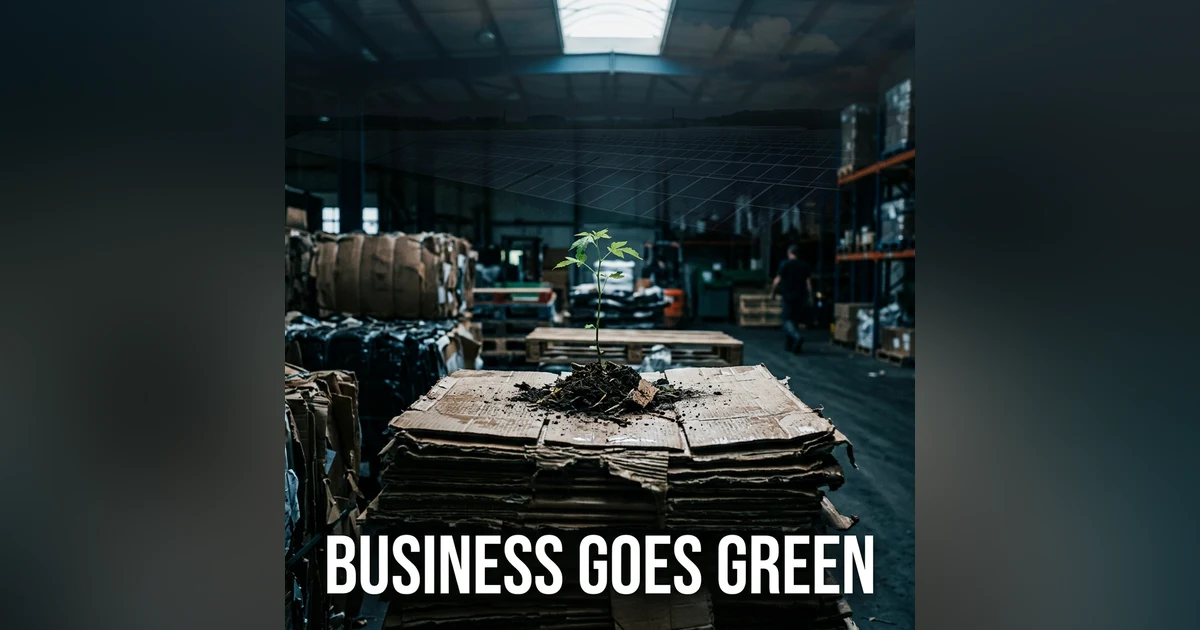
10:21 But even in North America or Asia, wherever you're from or Australia, you can you can speak with your dollar, right? Speak with your wallet. Don't support companies who are not environmentally friendly, who are not really trying to redo or change their supply chain to make it more sustainable. Sometimes you know if they are and sometimes you don't know if they are. My wife did a certification called the lead certification a while ago, and it's a business practice is to try and find efficiencies and try and find ways to not only be more sustainable, but also be more more profitable, right? Because that's what a lot of businesses want. And she went to visit a local like a Canadian. It's a pretty large store, mountain equipment co-op, and they had a warehouse and they had all these extra cardboard boxes that they had left over from all the products when they were getting it in from their suppliers.
11:16 And they just didn't have a system that was efficient that would put that together, the proper recycling, proper packaging, proper sorting and everything like that. So they put that in and they end up saving like millions of dollars in the end. Now, there was an upfront cost to do that, but overall in the long term, they're going to save millions and millions of dollars every year just because they were founding. They found a process that will help them get rid and recycle these cardboard boxes better because even though cardboard boxes and materials are able to be recycled, if you don't put them into the right containers or you don't follow the right process, they're just going to end up in the landfill and they're not going to get recycled. So having that as a big part of like these types of efficiencies and these types of sustainability practices put in is huge. The other thing that's really great are the B Corps.
12:06 More and more companies are becoming B Corp certified. Now, B Corp is a certification program, an audit program that does an audit on companies every few years and they look at the triple bottom line, right? They're looking at people, profit and planet. And I think that's really important to look at the environment and the people, how you treat your employees, how you treat your customers and of course how you're getting your profits and how you're sharing those profits. And so this certification, this audit that's done on these companies changes as they get more evolved and they evolve over time and they run these audits and they end up being, oh cool, they end up really proud that they pass a certification.
12:46 If they don't pass, they know what they have to do to pass and they start to better those processes. They become a better company for that. So you can go on the B Corp website, I'll put a link in the show notes, where you can actually find where these B Corps are, how to buy from them if you're interested in their product. And you're able to do the diligence that you need. They have like a score on the B Corp of like how they scored from a people profit and planet kind of situation. And I just think that's like a really cool thing to help you make a decision as a consumer of who you want to support. And it goes all over the place. Sometimes it's like insurance companies, sometimes it's like somebody makes a product that's more sustainable. There's a lot of different things and it's not cheap. They companies invest a heavy heavily into this process to make sure that they get B Corp certified and that they treat their employees right.
13:36 They treat the planet right and they treat the profit and people equally. So I think that's really that's really important. So this week we're going to be covering a lot of this stuff tomorrow. We're going to be looking at like the economic case of sustainability. We're going to go through the economics Wednesday. We're going to be covering the sustainability about people. We're going to be really focusing on the people. And then of course on on Thursday, we're going to be looking at, you know, what when sustainability claims are true. And so I think that's kind of an important thing to cover. So we're going to we're going to look at all this stuff this week before my interview with Zena Harris, who's talking about sustainability in the production of a TV show or a TV show.
14:19 Or movies or entertainment in the entertainment industry. So it's going to be really interesting to see how different sectors maneuver within sustainability. So that's it for today's episode. If you want to support the show, you can do so. Go speak up for blue.com forward slash Patreon. And if you want to get ahold of me, you can just go into the show notes, look at all my socials and DM me. I'd be more than happy to have that conversation with you because this is where we start the conversation and you continue it. And we want to thank you. I want to thank you for joining me on today's episode of the how to protect the ocean podcast. Have a great day. We'll talk to you next time and happy conservation.


