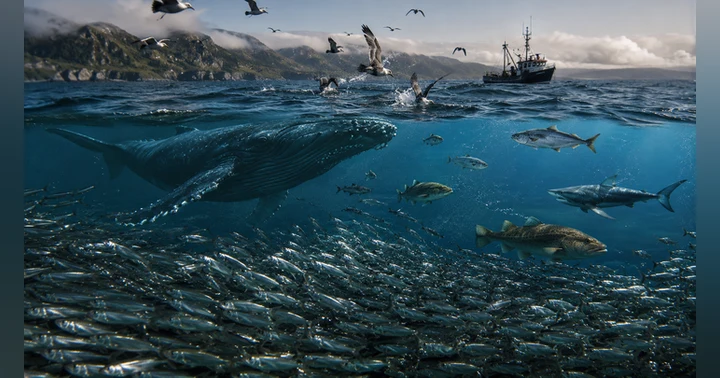
What Happens If Canada Runs Out of Forage Fish?


 Apple Podcasts

 Spotify

 YouTube

 Amazon Music

 PocketCasts

 Overcast
Forage fish may be small, but they hold Canada’s ocean food web together. In this episode of How to Protect the Ocean, Andrew Lewin speaks with Jack Daly, marine scientist at Oceana Canada, about the new report Little Fish, Big Foundation and what it reveals about the state of forage fish across Canada.
These tiny fish, including capelin, herring, mackerel, sardines, and anchovies, feed whales, seabirds, cod, salmon, sharks, and coastal communities. But many stocks are depleted, poorly understood, or managed without the long-term planning needed to rebuild abundance.
This conversation looks at why forage fish matter, how overfishing affects the entire ocean food web, why some stocks may not recover if action comes too late, and what Canada can do to protect the small fish that so many species depend on.
Listen to the full episode to understand why protecting tiny fish may be one of the biggest steps toward rebuilding ocean abundance.
Support Independent Podcasts: https://www.speakupforblue.com/patreon
Need help with your ocean non-profit, company, or project? Get the help you need with Pisces Oceans Inc.: https://www.piscesoceans.ca
Connect with Speak Up For Blue
Website: https://bit.ly/3fOF3Wf
Instagram: https://bit.ly/3rIaJSG
TikTok: https://www.tiktok.com/@speakupforblue
Twitter: https://bit.ly/3rHZxpc
YouTube: www.speakupforblue.com/youtube
0:00 Imagine a fish the size of your finger that we call forage fish could be capelin, herring, menhaden, all these, their anchovies, all these different types of fish that are so small, we don't really think about playing an important role in nature, in the ocean, and keeping food webs together, but they play a huge role. And we are losing these fish. We are fishing down the food chain for fish feed, for aquaculture, and other things that are helping the human beings and helping us eat, but not helping the ocean at all. And a new report called Little Being Big Foundation released by Oceanic Canada this past month, shows that we are not only losing these fish, but we don't know much about most of the stocks here in Canada.
0:46 And so we are going to be talking to Jack Daly on today's episode of the How to Protect the Ocean podcast, so that we can find out more about what this report revealed, as well as what we can do in the future. This is the How to Protect the Ocean podcast, where you get your weekly ocean news update, if you are interested in learning more about ocean conservation, and you don't want to miss any of these episodes going forward, hit that follow button on your favorite podcast app, and you will get it each and every weekday, Monday to Friday. We have an episode for you on the ocean. Okay, let's talk about what's going to happen today. We are going to be going over a report, not word for word, but this is a different report. This is not just a white paper that people just released that organizations release, and it's almost like a boring report.
1:29 This is a storytelling report, which as someone who is an ocean communications manager for an organization, this is a huge, huge step in the right direction in terms of how we get information out to the public, so that they find it very, very important. This report is essentially a series of stories that are given by or told by a number of different people. We have, you know, fifth generation fishers. We have indigenous people who are in charge of field technicians and research out in British Columbia. We have people who are naturalists and research director in Nova Scotia. There are just, we have a marine scientist who we talked to today, Jack Daly, who's in it as well, talking about mackerel.
2:15 And it's just a number of different things that go on and looking at how Canada and other countries, of course, but Canada, this is particularly about Canada, how Canada is going to help maintain these forage fish, maintain these fisheries. And look, this entire week, we've been discussing forage fish and their importance. And there's a reason why we do this each and every week when we have a topic and we have an interview. I do the interview, say with somebody like Jack Daly, who's a marine scientist at Oceana Canada. We talk about a lot of stuff and I don't want you to hear it for the first time. So the four episodes previous is we prepare you. I prepare you. I give a, you know, 10 to eight to 10 minute solo episode on that particular topic so that you are prepared to listen to this.
2:57 So, you know, this is going to be an episode that you're not going to want to miss. If you want to know more about the glue that keeps food webs together, forage fish, this is the episode for you. So here is Jack Daly, marine scientist at Oceana Canada, talking about the new report that was released by Oceana Canada called Little Being Big Foundation, where rebuilding oceans abundant, where we, where rebuilding ocean abundance begins. Enjoy the interview with Jack and I'll talk to you after. Hey, Jack. Welcome to the How to Protect the Ocean podcast. Are you ready to talk about the state of Canada's forage fish right now and here and now? Yes, absolutely. Awesome. I'm looking forward to this.
3:38 This is obviously a big report, but we're talking about little fish and we're going to talk about the importance of these little fish, not only to people, but also to the ecosystem. And I think there is this new report that's been put out, Little Being Big Foundation by Oceana Canada, where it says where rebuilding ocean abundance begins. It's a very interesting report. There's a lot of stark information, a little alarming at times. And so I'm here to ask you questions about that. We're going to find out all about the report, but I almost I get a link to the report in our show notes that people can get access to it. All the audience members can get access to it. But before we get into all that, Jack, you know, really appreciate you being here. It's your first time on the podcast. Why don't you just let us know who you are and what you do?
4:22 Yes. So I'm Jack Daly. I'm a marine scientist with Oceana Canada. I'm based in our Halifax office on the east coast of Canada and Nova Scotia. And I've been with the organization for about four years. But before this, I was working with First Nations in eastern Canada on fish and fish habitat work. And I originally came to Canada because I got my degree in geography at Memorial University in Newfoundland. So I'm from the US originally, but I've been in Canada for almost 10 years now. OK, right on. So going back to just sort of the beginning, what got you interested in not only studying the ocean, but getting into fisheries? Well, I'm from Rhode Island in the US.
5:06 So, you know, coastal state, not that far away from from Atlantic Canada. And I did my undergraduate there at the University of Rhode Island. But yeah, there was just a great opportunity for higher education in Canada and the benefit of that as well as that it was free, which is very un-American. So, yeah, I loved coming up here and then I really just kind of loved it. I love it. I love Atlanta, Canada. I get to travel across the country a lot, but I am based here and a lot of my work is based here, not to get to the report right away. But we do have some of sadly the most depleted forage fish stocks in the country on this coast. So a lot of my work here is very place based and very motivated by the region that I live in.
5:49 Well, that's great. I mean, I'm not great that we're like have the most some of the most depleted forage fish stocks, but the fact that you're you're interested in where you live, obviously a new place, you know, being in working in Newfoundland and studying in Newfoundland and then coming down to Halifax. You know, obviously very different cultures, not only from moving from the U.S. up to Canada, but just even within the provinces and sort of the areas as you've come to know, I'm sure in terms of like how everybody reacts. But everybody loves when you're in Atlanta, Canada, people love Atlanta, Canada. What's your just to kind of go off and just because you're kind of new to Atlanta, Canada. What's your favorite thing about, you know, living Halifax or even living in Newfoundland?
6:32 Yeah, I mean, I think one thing that people sometimes forget on this part of the country is, you know, still how kind of unpopulated we are, like living in Halifax, it does seem like a big city, but coming from the U.S. There is just so much open space. There's so many beaches to go to. There's so much wilderness to still enjoy. So it's a real benefit to live in this part of the country because there is just so much space. There's so much natural beauty. And that's why my favorite part about living both in Newfoundland when I lived there and then now in Nova Scotia. I love it. That's awesome. I completely agree with you. I'm actually headed out to Halifax in June. And so that'll be great. I'm looking forward to being there. I used to I did. I went to a university for my masters. So I was feeling I lived there for a couple of years as well. A long time ago, but it was still it was still fun. Okay, let's get let's dive into this report. You mentioned it earlier. You know, we're looking at forage fish. Can you just define for the audience what for?
7:28 Yeah, so forage fish is really that thing in the ocean that everything else eats. So they're the smaller fish such as mackerel herring, cape Lynn and sardines. You know, depending on what country you're in, people have many different classifications for forage fish. They can also include Yulecon on the west coast of this country and they can include silversides and smelt on the east coast. But the defining characteristic is that they can have a lot of different types of fish. And the other characteristic is that you know, they eat all the things in the water that we can't see. So phytoplankton zooplankton. And in turn, and they turned that into energy for everything else to eat. So whales eat them seabirds eat them ground fish eat them. And so they are just this this really pivotal part of the ocean ecosystem that connects the kind of bigger animals that we see and that we love to the things that we can't see in this water.
8:23 Gotcha. Now the report calls forage fish like the foundation of ocean abundance. What does that actually mean in practical terms? Well, what that means in practical terms is kind of the state of the east coast fisheries that we have now, you know, we're largely dependent on lobsters and snow crabs, what we would call invertebrates. Things that are highly valuable, you know, really delicious people love to eat them. But you know, you could also kind of describe them as bugs, things that just kind of crawl along the bottom of the ocean, eat a lot of the garbage. And by garbage, I mean, you know, waste of dead animals. And part of the reason why we have so many of these lobsters and so crap right now, which is a wonderful thing for our fisheries is because we kind of, you know, depleted all the fish that were in the water column.
9:09 So around 30 years ago, you know, we had the famous cod collapse. What often isn't talked about in that cod collapse is how we also had a collapse of all other roundfish, all other pelagic fish, all other forage fish. And so, you know, one way to have an actually abundant ecosystem to actually have, you know, vibrant commercial fisheries that get to fish a lot of different fish rather than just one or two is by having forage fish because they really, you know, again, eat all of those things that we can't see to provide a good food base for the rest of the things in the ocean. So that is probably the best description of them. I would say on the west coast, they are extremely important off the coast of British Columbia because they're also that vital connection to salmon.
9:54 So all the different salmon species on the west coast rely heavily on forage fish. So no matter where you are in the country, they have a huge impact. There also are forage fish in the Great Lakes in the Arctic. This report doesn't talk about them, but it's just good to it's just a good reminder that they do take place all over this this huge country that we live in. Absolutely. And I want to remind people, too, and you can confirm this for me, like this report, although it has some some stark realities in terms of where forage fish are. This is not a report to say we need to stop eating fish. We need to stop using the fish at all. This is a report to say, hey, we need to get better management. We need to get better information so that we can sustainably fish forever. Right.
10:37 I mean, that's really what Oceana is all about. Can you just confirm that for me or am I am I wrong on this? I don't think I am. Right. Yeah, no, you are right on this. And one reason why we will why we focus on forage fish is because, you know, they actually don't live that long. They're very short lived. And with forage fish, you can actually rebuild them very fast compared to, let's say, ground fish or invertebrates. So one reason why we focus on them. Well, number one is because of just the bounty they provide our ocean ecosystem, our coastal economies. But number two, they're also they're really the best bang for your buck in terms of how to rebuild our oceans. How do we feed everything that is hungry in our oceans? And then ultimately, that leads up to how do we have more abundant commercial fisheries that aren't, you know, stuck in a crisis in annual crisis management that we often find ourselves, particularly here in Atlantic Canada, but more so a long term portfolio of healthy fisheries to take from. So our focus is on how to rebuild our oceans.
11:38 And so our focus on this is really, you know, you're getting the best bang for your buck if you rebuild these fish. Okay, awesome. Good, good to know. Now, let's talk about the numbers here. Let's let's go over them briefly. What is this? What did this report overall find? Like, I know we talked a little bit about how there's a decrease in forage fish, but like, how much are we talking about what state are they in at this point, according to Oceana? Well, I might just take a step back because I know you've had my colleague on before Rebecca Skynes and she leads what is one of our real mammoth projects every year, which is our fishery audit. And our fishery audit looks at, you know, 200 fish stocks in Canada. Now, year after year, our audit, you know, it finds a lot of good things that the government is doing. But when it comes to the biological reality, it finds that only about a third of our fish stocks in this country are healthy.
12:31 And so, you know, we've been working on that report for for nine years now. And we're and we kind of came to the place where, you know, that is an extremely valuable piece of data. But now we're also looking for a solution. How can we actually get that number of a third of fish stocks up higher, maybe even 40% of fish stocks are high, you know, in the healthy zone, that shouldn't be a really drastic thing to call for. So we took a step back and we looked at the numbers and we said, well, out of these fish stocks, which are the ones that have the most important ecological function? And that's where we focus in on forage fish. Unfortunately, forage fish is kind of a subset of our fishery audit are actually much unhealthier than the fishery audit shows. So the fishery audit shows, you know, that a third of stocks are healthy.
13:22 While our fortress report only shows that three stocks are healthy. So that brings us to our fortress report where, you know, we're showing 16 forage fish stocks across the country. So we focus primarily on small finfish, Pacific herring, sardines. So those are both on the west coast. And then on the east coast, we have tons of Atlantic herring stocks, we have Atlantic mackerel and we have a couple of capelin stocks. And so our our push here is really as a way both to, you know, have more forage fish, but also to have a much healthier ocean ecosystem. That's amazing. It's it's awesome. I mean, amazing to know that, like, you know, we want to have this this this better ecosystem, we want to have a much healthier ecosystem. Scary to know that there's only one stock that's actually doing well out of the 16 that that you studied.
14:14 I know I'm talking to Rebecca over the last couple of years, we've had her on the podcast a number of times. And, you know, she talks a lot about how there's not a lot of information available for most of the stocks that they that they want to that you guys want to analyze. Was that the case for forage fish? Or did you have enough information for most of the stocks? Yeah, well, you know, with forage fish, like fisheries in general in Canada, there are a lot of them that fall into this uncertain category where we don't have a good understanding of the stock health with forage fish, the one benefit of it. So when we actually started drafting this report last year, six out of 10 of them had no stock status yet were heavily, heavily fished by the time that this report started to, you know, start to, you know, go through the process of the stock.
15:03 And so, you know, started to, you know, really be finalized, we actually saw three of those stocks get a health status, which is a really wonderful, exciting thing. So right now, three, another three stocks have no health status. The three that formerly had no health status are now in the cautious zone, which is by no mean a win, because they're cautious. And so it looks a little bit different now, thankfully, that we have a bit more information on these stocks. But, you know, even before we had that information, some of the people that we profile in this report, you know, they knew that these things weren't healthy. This, this was no shock to assign a cautious health status to these stocks.
15:44 So even though we still have a couple that are unhealthy, we know that by and large across the country, they're not doing well. And there's really no long term management plan. Instead, it's kind of just the annual crisis management that we find ourselves in. Gotcha. Now, one thing that's in this report, which I thought was really interesting is it's really story based and story based based on fishers on conservationists and where you're hearing from a lot of different people. Why did you guys decide to present it this way? And why was that important to present it this way? Yeah, well, you know, personally, I find talking to like the higher ups in government, the bureaucracy, extremely frustrating. You can show them all the data in the world, you can show them findings that cannot be debated.
16:34 And they will always find a reason for why things are staying the same. One thing that we wanted to do with this report is make it more publicly accessible. Have people tell stories that the average person in the public could understand. And also the average member of parliament could understand, you know, fisheries in Canada are governed federally. And so we really wanted to have a nice subset of people from across this country that rely heavily on these fish, because, you know, at some point, I was getting sick of telling the department that there are basically no forage fish, healthy forage fish in this country and that kind of landing on deaf ears. We're trying to mobilize, you know, the wider public because, you know, fishing Canada, what one benefit of fishing Canada is that they're actually owned by all of us.
17:21 They're governed for all of us. They're not governed for any one industry. And so that's why we took the storytelling approach. One other reason I would say we did that as well because the people that we profile in this report that I get to talk to all the time, are just really great to talk to. And so when I get to introduce them to my colleagues, they're like, Whoa, this, there's something here that, you know, we should be sharing these voices. So part of it was was that as well. It's just the recognition that we get to work with so many great people. So why not use their voices, rather than just our own or just the data. I completely agree. I mean, story is the way to really get people interested in, in, you know, understanding what's happening, seeing it from a lot of different perspectives from fishers, from scientists, from naturalists, you know, ecotourism and so forth really helps give a big, a big picture.
18:13 Now, one of the things you mentioned earlier, and I don't want to dwell on it too much, but you said, you know, dealing with DFO Department of Fisheries and Oceans here in Canada can be extremely difficult. Now I know, you know, I graduated from University of Guelph. We had a lot of people go to the Bedford Institute, great institution there for DFO. And I remember doing my master's when I went to Acadia on fish stock assessment, it was actually invertebrate stock, but we were able to talk to, you know, fishery stock assessment people. Now this is back in the early 2000s, right? Before the cuts from Harper and all that kind of stuff. But there was a lot of data, like they had data moving back for fish, they had moving back all the way to the 70s, you know, you can actually see the decline of of cod and so forth.
18:57 Can you talk to, you know, your experience and accessing data and your team's experience and accessing data from DFO? Because I'll be honest, I've heard sometimes it's more difficult than you think. Now we had an in, my advisor taught most of the people who, you know, who did those stock assessments at the time. But like, is it difficult to access the data? Or are they just not studying certain fish at all? Because not in their it's in their mandate, but not in their resources. Yeah, one one benefit of my job is I get to attend all of the stock assessments for forage fish. And so as someone who attends a stock assessment, you know, I have to kind of take off my Oceana Canada hat. And I just attend as a scientist.
19:41 But that's an example where, you know, I get to see how much data we're working with, how many environmental variables we're balancing, how many government scientists are in the room to assess, you know, the health of a stock that has almost extremely minimal economic benefit. And I find what is so frustrating about attending those assessments, particularly in Nova Scotia and the Newfoundland and Labrador in particular compared to the rest of the country, is that they're not just a lot of people. And so we're getting a lot of data that we have all of this data. We're spending all of this money, this public money. And we can't even at the end of these assessments say how many fish should come out of the water. We're getting dozens of we're getting documents that are dozens of pages long that basically say, you know, all these threats are present, all of these things are uncertain. And that's the end of it.
20:32 When we have stock, when we have scientists, you know, that will sit in on these assessments from DFO Quebec, or DFO Gulf region, or even DFO British Columbia. They'll often at the end of assessment say, wait, are we not providing any science advice here in terms of how many fish should be taken out of the water? And the answer is often no, because, and this is just my perspective, I almost think is because they know that these decisions are so political, the scientists, you know, they're scientists, they're not politicians, they don't want to be in the middle of that maelstrom. And so they often just create science reports that show the general trends of our stocks, but really leave it up to the minister to the fishing industry into environmental NGOs to have to essentially all paint our own picture of what we see.
21:20 So it's really unfortunate, particularly with forage fish, you know, these fish, they're hard to assess, you know, they don't live that long, they're schooling fish. So, you know, if you see a school of forage fish, it doesn't mean that there's a ton of fortress in the water, it means that there's one school. Right. So that is one of the most frustrating things I think as someone who attends these stock assessments and then subsequently attend the advisory committees, which is where everybody's, you know, kind of teeth come out, because we're all just kind of working with data that isn't explicit in terms of what we should be doing. Yeah, it's interesting to me, like, especially going back to seeing like the other DFO offices coming in and being like, wait, are we not providing any advice? Does that mean other offices so like DFO, you know, West and Quebec and Central and Arctic, are they providing advice?
22:13 Like even on forage fish. Yeah. So what one great example of a stock that has a really robust assessment is done out of DFO, Quebec, and that is on Atlantic mackerel. So it's a it's a hugely controversial forage fish stock. It's one when I was in Ottawa the past couple of weeks, MPs from every single party asked me about mackerel because there is such there is a very complicated stock. Essentially, you know, in Eastern Canada, we have what, you know, six, seven herring stocks, we have one mackerel stock that stock covers all of Atlantic Canada and Eastern Quebec. So it moves all around. It's all over the place. It's hard to get a handle on. But it's also extremely important for lobster for snow crab as a source of bait. So that's a stock that's assessed out of out of DFO Quebec, really great science, you know, they're able to pinpoint that we can only take 500 tons of fish out of the water every year to ensure that it grows at a 75% chance over two years.
23:14 So very, very scientific versus other stocks where we have absolutely no guidance. There's there's one stock I work on, Caplin in the Gulf of St. Lawrence, where in the past 20 years, it's been harvested between 1000 tons and 11,000 tons. And the science advice says anything within that should be okay, which is really crazy. You know, thousands of tons of fish are a lot of fish. So, yeah, so mackerel is a great example where we have a lot of fish. And that's a great example where we have really good advice. Other stocks, we don't have that benefit. And then therefore the minister has a lot more power a lot more discretion into making a decision, and then pulling out a data point here or there as to why it's a good decision.
24:01 And I think that's interesting because that's not like what is represent always representative of what's happening in the ocean when you start taking a couple of data points and making a decision based off that big decisions like we're talking. We're setting quote quote us for like you said, anywhere between 1000 and 11,000 tons of fish. That's that's a big difference. And like you said, even though they're, they're, they're short lived their life cycles are short lived. And that's that's making it really fast if you take too much, you know you're getting rid of like schools of fish, you know that that could get rid of certain populations, genetic populations and decreasing those and that could be, that could be detrimental to them going, going further.
24:44 Sorry, yeah, you have some. Well, just on that, with Forgefish, we're excited because they have a real potential to rebuild. But not every stock can rebuild after it's been severely depleted. We have one stock in the Southern Gulf of St. Lawrence, a herring stock. It has been so depleted. I talked to government scientists and managers who say, "10 years ago, we should have stopped fishing the stock. Now it's under moratorium." There is no timeline for it to rebuild. There is no future in which we see these fish returning. And so it's not only a concern of, "Oh, Shannon says we should rebuild these fish now, so let's do it."
25:24 We need to rebuild these fish before they cannot rebuild. I'm not saying that these stocks will become extirpated or go extinct. But when they're so depleted, when they're at such a small level, it's hard for them to get back to the abundance pools that we once saw. So I just like to just add that in because we're telling this great story. These fish can be rebuilt. But every species has its limit. And some forage fish, unfortunately, are at their limit. We don't want to see any more of them have to have to be in that position. Gotcha. Now, talking to fishers in this report, they fish for forage fish.
26:06 And there are a lot of people who fish for forage fish, obviously. What are they using it for? Yeah, so when it comes to Atlantic mackerel, when it comes to some herring, they're using it for bait. So right now we're in this really horrible trade war with the United States where we can't get mackerel caught there. We can't get other forage fish caught there. When it comes to alternatives, the alternatives for forage fish in terms of to be using lobster pots aren't great. People have tried to use green crab, which is an invasive species. The fish just don't want it. They love a forage fish. Forage fish is so fatty, so oily, really wonderful.
26:48 So mackerel is primarily used for bait. When it comes to capelin and herring, it's another story. It's a bit darker there when it comes to capelin and new fill in particular. You know, we're targeting row bearing females. So it's essentially pregnant females carrying eggs. That's intended for the overseas market to essentially use their eggs as sushi decorations. They used to in the past, it was very well reported that the fishermen would dump male capelins. So let's say you're trying to catch a school of fish. Let's say you catch a school and 90 percent are males, so they have no eggs. They would just dump them. That is illegal now. And so the solution to that is we're going to sell them to zoos in America to feed penguins.
27:33 It's very similar when it comes to herring. We're targeting their eggs to go overseas. And then when we're using the bodies, it's to go feed aquaculture in Europe or to feed aquaculture here. So when we think about these fish, if you go to anywhere else in the world, people really value these fish for the food that they can provide. In Newfoundland, people love capelin for the food that it provides them. Same with mackerel here and the Halifax waterfront. People actually fish it to eat. And so it's a very bizarre thing that not only are we overfishing these fish, but we're overfishing it to not even eat, to not even provide a source of protein for human beings. And so when you kind of zoom out, this problem kind of compounds.
28:15 Like no matter which way you look at it, it kind of gets worse. And that's why we really, you know, we focus on the science, we focus on how much should be taken. But you can't ignore the end use either because it really can be frustrating when you get into it. No doubt, no doubt. So as you know, as you're talking to fishers and they're fishing for this, they know it's an overfished stock, but they keep fishing for it. So, you know, obviously the onus is on the government to make sure that they're setting the right quotas. But for the fishers, like what is their position or stance on fishing these forage fish? Even though they know that they're being overfished, are they actually going out and fishing less on purpose to make sure that the stock continues? Or are they worried that that DFO is not assessing them properly?
29:00 Like what is their their view on the overfishing of these fish? Well, you know, Mackerel, I'll just go back to that because it's a really interesting population where it's actually fished by the by Canadians, by us as well as Americans. And so, you know, our stock is under a commercial moratorium. We are still taking out 500 tons of it to use as bait. So it's not insignificant. I sometimes think people forget how much a ton of fishes, how many school buses, you know, are 500 tons. It's quite a lot. Yeah. And, you know, so before when the Americans also weren't fishing it, the discussion was more so about how, well, we see a lot of mackerels, so we should fish it.
29:44 Now that the Americans are fishing it, the story here is, well, they're fishing it, so why not us? So that's a really interesting example of, you know, kind of international politics complicating the issue. I was actually speaking with some members of our federal bureaucracy a couple of weeks ago when I was in Ottawa and they basically put this to me. Why shouldn't we fish mackerel if they are? And, you know, it's really kind of a shocking question because I'm not sure in what case in Canada we're saying, well, if the Americans are doing it, then why aren't we? I think that we're a bit better than that. We're a bit more proud than that. We're saying when they do something wrong, we will not.
30:25 We know we're saying that when they tear up the Paris agreement, we will double down. And so that's a great example of where the the the politics is impacting it. Now, I will say I do. You know, I've had the benefit of talking to some mackerel fishers from Quebec who, again, rely greatly on mackerel. They fish it. But what they don't like to see is, you know, big purse sainers coming in. So huge nets coming into scoop up schools of mackerel. And so these, you know, I attend a lot of these meetings. It's always very complicated. You know, people fish these fish using different years, different regions, different times of year. There's there's a lot to get into there instead of getting into all those little fights here and there.
31:09 I'm just one person working on these fish, you know, on 16 stocks. And my main message is always we just need to rebuild them. Sometimes I find my work in Atlanta, Canada, can be frustrating because there's almost this view that this is as good as it gets. So you can tell fishermen that we can rebuild these stocks. Things will get better. Well, they've been hearing that for 30 years. You know, they they heard that after the cod collapse. They heard that after it's not as quick collapses. And it's hard not to, you know, to to feel them, to to hear their to hear their side. But the most important thing we can do is actually protect these to rebuild cod, not a forage fish. But it's a great example of a stock that was under moratorium for 30 years.
31:52 Yet we fished like 10,000 tons every year. And we wondered why it took so long to get to a slightly healthier state. You know, sometimes it's about making short term hard decisions instead of prolonging this kind of this this crisis management we find ourselves in. And I apologize. I know I say crisis a lot, but it really feels that way when it comes to fisheries in this country in the way that we manage them. And I feel as as a Canadian, I feel as though a lot of most Canadians don't really pay attention to the numbers and how low they are. And like you said, it is a crisis. Like we are at a point like the results that have come out of this report have shown really that we're in really dire straits here.
32:35 You know, one out of 16 stock being well managed or considered healthy is not a good percentage. You know, and there are a lot of people who depend on it from a fishery standpoint, you know, as well from the whole supply chain of the processors and the restaurants or whatever that might be. And it's a it's a difficult situation. Like you said, it's very complex because people, their livelihoods depend on it. And so they want to continue to fish. If we're at a point right now where we can't fish like we were with the moratorium on on cod. And like you said, for the mackerel in Canada, there's a moratorium on that. The idea is is is the patience to be patient.
33:15 But when you watch a neighbor be able to fish it and you can't I could see I can feel that frustration come out of people's like, well, hold on a second. They're going to what if they deplete it and then we'll never be able to fish it to the levels that we were able to fish at one point. And you guys are promising us that. So that cross border cooperation, which has been traditionally pretty good in the East Coast, like from a fishery standpoint, obviously now maybe a little it's and you may know more a little bit more than I do just because you're in those fisheries relations. The tariff wars, the relationship between the U.S. and Canada is not as great. That may be a bearing on it, too. We know down south their environmental policies are a lot different than ours as they are now compared to even a year and a half ago or two years ago.
33:59 And so it all kind of puts into this like into the blender and it makes these cumulative impacts even harder to to manage. So I guess, you know, we're like when we look at at the level of fortress, we're talking about fisheries and how much fish we can actually catch. How is this affecting or could affect the ecosystem in general? So, you know, we know whales, seabirds, cod, salmon, sharks, and even any kind of coastal tourism, they all depend on forage fish, right? So it's not just people. It's it's it's the environment as well. The ocean species as well. How could this affect them as we start to see these levels or these levels or seeing these levels of of forage fish where they are right now?
34:44 Well, you know, one one great person that's profiled in our report is is Shelly Lonerpin. So she works at a whale watching company. She is that she is actually a scientist, a researcher. But, you know, she's she's been with that organization for for at least 30 years, I believe. And, you know, it's kind of frustrating to talk to somebody who's who's been around the block a bit more because you kind of realize that this is this problem isn't new. She's been someone who's been sounding the alarm on this for decades. And unfortunately, you know, a voice like hers, a voice of someone who is contributing to the local economy, who lives in an extremely rural place, a rural island in the Bay of Fundy, you know, her voice is not a voice that's heard at fishery advisory meetings.
35:33 When I think of another person, I think of Jasmine Paul. So a fish harvester in Newfoundland, a Labrador, fishes, a lot of crab as her kind of, you know, primary economic fishery also fishes, a lot of cod to feed her family. She's also not allowed in these advisory meetings. And so I often think about, you know, who who is actually at the table at these meetings, the fishermen and the fishing organizations and the seafood processors often lament that there is one NGO person sitting in the corner when, you know, the reality is these these should be huge meetings. These meetings should not be scheduled a week in advance on a Tuesday in, you know, DFO and Dartmouth. I have a friend in Newfoundland who works a lot on conservation of cod there.
36:17 And she says, you know, that if if they made the cod advisory public, you'd have to fill the Mary Brown Center there. People care so deeply about fish in this country. And so one of the main challenges is actually getting those voices in the room. When you're in a room with the same guys and it's largely men who have been around when these stocks, you know, since these stocks all collapse, you're going to have different. Kind of view that's informing these decisions. I always like to remind people because these meetings can be a little tense is that this is a public resource. This is no one's individual resource. And when it comes to the economics of these stocks as well, it's even more frustrating because they only represent around 2 percent of Canada's wild fisheries value.
37:03 That's not even including aquaculture, which is a huge amount of our of our fisheries economy. So it's a very small amount of fish that we're benefiting from. But for some reason, we cannot we cannot remove the stranglehold. One one example I'd like to raise is going back to Shelley in the Bay of Fundy is the Bay of Fundy herring stock. It is one of the most depleted stocks forage for stocks in this country. And yet it has the highest forage fish quota in the country. Twenty thousand tons. And if we look as to why is that? Well, you know, there are about maybe three, four hundred people that fish herring in the Bay of Fundy around, you know, the vast majority of them are weir fishers.
37:47 So it's a traditional gear type. And they only fish like 300 guys. They only fish 30 percent of the quota. So you have 300 people sharing one third of the quota and then you have nine industrial boats fishing the other 70 percent. So that's a great example of where, you know, number one, we're overfishing and number two, the benefits of that are going to a small group of people at the expense of hundreds that rely on these fish. So what a lot of what I try to do is kind of my side job is just, you know, make this these things more public, make the advisories more public, tell people I'm happy to raise their questions at advisories.
38:27 Because as of right now, we have a real industry capture, which just limits the efficacy of these advisory boards. Yeah. And I mean, that's it's it's it's really concerning when you like you said, a small percentage benefit from catching all those fish. But there's like hundreds of people who don't, you know, who rely on it. But, you know, they're the ones who are really going to be affected because these businesses can turn and pivot and do and catch other fish where these artisanal fishers who depend on it were local. They're the ones who pay for it. When you talk to the like, when you talk to those those smaller fishermen, like smaller scale fishermen, what are their views on it compared to some of the others you say it can get kind of heated at some of these some of these meetings?
39:14 Is it because of those small scale fishers are battling the big industry? Excuse my pause. Fisheries are just so complicated. Yeah, no problem. And this part of the country where I work, but, you know, one one. So one example of why it's so hard. So, you know, I've had colleagues that have talked to dozens of fishermen in Newfoundland and Labrador. It's very hard to find a fisherman that supports the capelin fishery. A lot of people, they find it quite egregious that we're fishing the food source for cod, you know, this iconic species. It's hard to get anybody to say, you know, one on one, they support the capelin fishery. But when it comes to being in public, you know, they're they're members of a ten thousand strong union.
40:00 They don't want to be someone that speaks against their union members, particularly when there are other people that are benefiting greatly from even worse environmental things. When it comes to herring in the Bay of Fundy, as I said, there are hundreds that you should use traditional gear. Why aren't they speaking out? Well, they have to sell their catch to the to the seafood processors. And guess what? Those seafood processors own the nine per seining fleets. So it's this really uncomfortable situation. And, you know, what I often try to tell my my colleagues is that I don't want to put anyone in a position where they are uncomfortable, you know, having highlighting these voices in our report.
40:42 It's not easy to do. Getting people to agree to this isn't easy. And also ensuring that they 100 percent know the risk that is involved with speaking out. You know, like we don't just try to get somebody and have them speak and say, OK, great. See you later. We want to ensure that they're you know, they're going to be OK, that they're comfortable. And so that is probably one of the more frustrating parts of fisheries management is getting people's voices out there because, you know, people care. I was just in Newfoundland and Labrador a few weeks ago and I was talking to some local people and they were like people that have lived there for decades. They couldn't believe that there was a commercial fishery for Cape Lynn. You know, a lot of this stuff is just it's not public.
41:22 It's not it's not it's not the headline news. It's not a war in the Middle East or it's not, you know, a major crisis in our own in our own country. But it's something that happens day after day in the public view, you know, and managed by our government. DFO employs what 10000 people. Why is that many people can't manage fisheries sustainably? So, again, you know, from the more positive view, we're offering this as a real solution since they clearly don't know what they're doing. So why not just try to rebuild, you know, 16 stocks instead of 200? Because it's far easier to do. Yeah, no, absolutely. Now, we move towards like the like the fisheries management policy for Canada.
42:04 There's some pretty strong fisheries management policies, but it seems like the implementation or the enforcement of those policies is a little weak, you know, in terms of like I've seen this before, not only with with Forage Fish, but we've seen it with with cod recently in terms of like here's the science. You know, the science should dictate what we do in the policy. I think with cod, it was like they're not really growing and where there's a concern that they're going to dip below if we continue to fish. So the science says we shouldn't open up more quotas. But then last year, I believe it was last year where they, you know, DFO ended up opening up more of course to offshore, which hadn't been done in a long time.
42:44 With Forage Fish, we know that there's a lot that's decreasing. We know that there's only one healthy population of Forage Fish. But we're not implementing these types of changes. You mentioned earlier, it could be due to politics. Is it is that the only reason and how can that be made better, essentially, like how do we stop that from happening? Yeah, well, number one is definitely due to politics, you know, as I've kind of alluded in this conversation, by no means is America the example of what to do. But in that country, there is no fisheries minister. You know, fisheries fall. I think they're the 11th like portfolio for the commerce secretary.
43:27 Whereas in this country, we have a minister and that minister is, you know, dealing with serious political fights every day. I've been in this job for, you know, just four years with Oceana Canada. In that time, I believe we've had four fisheries ministers, you know, so there there is no benefit to doing the right thing. There is no benefit to making a long term decision because guess what? You're not going to be there. You know, so it is it is it is very frustrating that we're in the situation where we politicized our fisheries to their own detriment. One thing I would say as well is, you know, we can often think about these stocks in longer time timespans.
44:10 I'm often talking about them in the terms of decades, which really isn't that much time. But management focuses on year to year changes. And so we can sometimes lose what we used to have. Kaplan is a great example where, you know, I was having an interview two days ago and they said, oh, but the Kaplan stock is doing much better. And, you know, because it's 20 percent of what it was in the 90s. And I said, in what instance is a 20 out of 100 and a plus? Like if your kids came home and got a 20 on a test or an exam, you one wouldn't be happy with that. That isn't it. But that is by no means a win. And so we just have to shift our perspective a bit on, you know, what we actually want out of this ocean.
44:55 Yeah, no, I completely agree. When you mentioned, like, you know, obviously that makes a difference when you have four different ministers in the same amount of years. Do you know the reason why they keep switching? Has they hasn't been made public of like why they keep switching? I know it's usually a cabinet shuffle, but it's got to be a little bit more than that. That the minister keeps switching is that the ministers don't want to be in the position for any longer. Like, what is that? Well, it's a really unforgiving position. I don't you know, I may disagree with fisheries ministers, but I by no means, you know, do so in a personal matter.
45:35 One reason why it changes so much is honestly because they lose seats. So our previous fisheries minister, Dan Lebutilier, she lost her seat. The one before her, she she she had just resigned. But the one before her, so four ministers ago, she also lost her seat. So actually being a minister isn't isn't a isn't a safe political option to make. It's a great way to get in the cabinet. You know, it's probably one of the lower levels of a cabinet minister, but it's it's a really hard position to be in. It is so politicized. It is so hard to just have scientific discussions. Yeah, you know, I'm often in meetings where, you know, they'll be saying when I say they, I mean, you know, the owners of huge seafood processing plants or leadership of fisheries unions, rarely fishermen themselves say, well, what will be out of business if this keeps happening?
46:30 And unfortunately, they've been saying that for 30 years. You know, people are going to figure out a way to keep, you know, making money off of the ocean. What we're positing is a way to actually increase the amount of people that can work on the water that can get a livelihood from this world. So the politics is frustrating, but the science is probably what I would just come back to. It's the most clear thing that we have. And fisheries is it's an unforgiving political portfolio. But why not try to rebuild the things that have the least value in this country, which again is forage fish. There are very few fishers, if any, that rely their entire business on forage fish.
47:14 Many people that fish forage fish are also fishing lobster. They're also fishing cod. They're fishing a lot of different things. So, you know, by by ratcheting down the fishing is by no means going to put people out of work. It's just going to change the portfolios of fishing that we have. I also would be remiss if I didn't mention that we're actually not calling for closures. We do call for a closure on Cape Lynn and Newfoundland because that is historically mismanaged. But out of these 16 stocks, we actually have a lot of different calls for what should happen. So, you know, and some of that is ratcheting down fishing pressure. Some else of it is just doing more research, doing better science.
47:54 So the answer here isn't it isn't simple, but it's also not that dramatic. It's not about shutting down fisheries. It's about managing them to rebuild. Gotcha. OK, very good to know. Now, one of the strongest themes in the report is the integration of indigenous knowledge systems with like Western science. We're seeing that a lot across Canada right now. Obviously, fisheries is really important in this. Why is it so important to integrate these two systems together? Yes, so we have one person featured in the report, Sierra Hall from the Kitasu Heihe's territory. And, you know, she she's a stewardship worker and she talks about, you know, why herring are so important, both to her, to her community, but also to her region.
48:39 So the herring stock that she cares about deeply is what DFO would call central coast herring. That stock may not be critically depleted, but her bay that she lives in hasn't seen herring in large numbers in many years. And so one of the things that we can learn by pairing Western science with indigenous knowledge is by stop focusing just on the amount of fish in the water, but also focusing where they spawn, how many of them there are, how many age classes there are. I think sometimes people can talk about holistic ways of knowing or indigenous knowledge as this thing that's a nice to do, not a need to do.
49:19 Whereas we see it as actually really practical steps to rebuilding populations, to be within their historical range, to be fatter, to be healthier. You know, I often say that when talking about forage fish. I just want them to be fat and healthy and I want a lot of them. Having the number of fish in the water equal a certain amount isn't the win. It's about actually having them be healthy. And that's one place where indigenous knowledge systems and that whole world view can really help compliment the great advances that we have with western science right now. Got you. And do you find in your experience, like when you when we look at how fisheries management happens, do you find that it's ignored?
50:04 Like just in your in your discussions with indigenous people, do you find that it's that fisheries management in the past has ignored what they want or what they're going through? And a lot of times in these coastal communities. Well, when it comes to the past, they've definitely been ignored completely when it comes to the present, they still face many challenges. You know, I sit on advisory committees which feature members of First Nations from the East Coast of this country. And often when I speak to them about these things, you know, there might be one staff member for one nation sitting on 10 different advisories. They don't have the time to, you know, be able to go through the science, go through all of it and then have to debate what is often a room of angry fishermen or seafood processors on what should be done.
50:57 That our kind of governance system doesn't allow for long term thinking doesn't allow for diversity of voices. And so it can be really frustrating. You know, there there there's one group that I work with a lot. It's a First Nations group and they put a lot of their time on lobster, on salmon, on eels, you know, things that are both economically important, but also extremely culturally important. So if I'm the in the NGO, then going to them and saying, hey, I think you should add another four stocks to your list of priorities. It's really not fair. You know, it's there. They're people just, you know, have their limits. What I often say when I'm with these advisories and, you know, fishermen are angry that I'm there is I often say, listen, I only sit on the most depleted stocks in this country.
51:44 And guess what? If they rebuild, I'll leave. I don't want to be here. It's often what I tell them when they're growling at me or being angry or following me in the bathroom. I don't want to be here and I won't be if we rebuild these stocks. So, you know, I think that's one thing that's often missed is how much work has to go into this. And so, you know, when we talk about First Nations or we talk about other groups involvement, you know, what why would they want to if the system that governs these stocks is so anathema to any different view of the world. So, sorry, that's kind of a long story there, but that's perfect. Yeah, yeah. It definitely defines what we need to look for in the future.
52:26 And speaking on that, you know, we look at a DFO like in your opinion, what should like the citizens of Canada do, you know, to help this process along to make sure that DFO is actually like following the science and making the decisions for the longer term recovery or longer term sort of prognosis rather than a year by year type of decision making. Well, you know, I think one thing that the average person can do is, you know, it's really frustrating. This question reminds me, as I said, I was in Ottawa last week and there was somebody, you know, one member of parliament who I thought was very well informed on these issues and, you know, talking to them learn very quickly that they just have so many things to deal with.
53:18 Not only are they focused on fisheries, but they're also focused on, you know, helping small businesses in their communities. Their their portfolio that they work on is so large. And so when it came to when it came to talking to fisheries, they just had very, you know, kind of simple questions on, wait, these stocks aren't that healthy? Because what they're hearing from the government, what they're hearing from the bureaucracy is that things are fine, that the status quo is working. And so I always find it really frustrating to, you know, for me as a scientist who, you know, this is my full time job and I really benefit from it. But to then tell somebody who, you know, has so many concerns with their day to day lives that all you have to do is call your member of parliament and demand that they that they should read this, that they should know better.
54:03 That, you know, that that's a lot to ask. One thing I like about Oceana Canada is that our ask and our recommendations are actually pretty simple. Right. Although many people that would consider themselves opponents to me would say that we're radicals or that we're, you know, kind of crazy tree huggers. Our recommendations are very simple. It's just about following the law. It's about protecting these types of stocks to remove them from the political arena and just focus on, you know, maybe not one year, maybe not two years. But how about even just a five year view of the future? So what we really try to do is to provide lawmakers to provide the government the bureaucracy with really simple things they can do.
54:48 And that's what's exciting about this forage report. We have really simple steps that they can follow. They can protect these stocks under the Fisheries Act. They're having a really hard time protecting the two hundred stocks that we have. They've only protected 30 so far. They've only protected three forage fish. Why not in the next round, you batch all the forward fish? Why not remove these stocks from the uncertain zone and give them rules to be managed by. So we're offering really practical solutions. And the one benefit of when I was in Ottawa telling lawmakers this is that even if they didn't agree with our position, they had nothing to say to our recommendations because they're very straightforward.
55:28 Yeah. Yeah. And I think that's the thing. It's not a difficult task, not a difficult ask. You know, it's pretty just follow the law. You've built the law. Why can't we follow that law? And I think that's a question that politicians need to answer to, you know, and especially like I think it's very troubling to look at the lack of longevity of ministers in that position. It doesn't hold for accountability. It doesn't hold for systems like, hey, this is what the law says. It doesn't matter what, you know, the fishing lobby says. This is what the law says. So we have to follow the law. It's for Canada. It's for our fishers. We need to ensure that this is working out. I don't get how people can get away with not following the law.
56:11 It just doesn't make sense to me. But regardless, it's a complicated system and it's something we need to do. But the biggest thing is the knowledge. And this report definitely brings that knowledge. So Jack, I appreciate the work that you've done and your colleagues have done, you know, to bring this together. All the people who are in the report to share their stories. I mean, that's not a an easy thing to do. It's nice that they're able to do that and share it with us and be vulnerable to do that. I highly recommend everybody goes get this report. I'll put it in the show notes so people can get access to that. But I want to thank you, Jack, for coming on the podcast. Love to invite you back on to talk more about a forage fish and their status. Hopefully next time we have you on, we talk to you later. I think we're going to have a little bit more better on action that is being taken by the government. Yeah, absolutely. And if I could just say, you know, this campaign is just launching. So this campaign is, you know, we kind of drafted our campaigns to be multi year. And also, I would say on this report, what's exciting about it is it's actually pretty short. It's only around 60 pages. We consciously made it short because, you know, we're aiming for the politicians or aiming for the people that can make change.
57:15 And they're really busy. So we made this poor accessible. We made this exciting and, you know, just follow along Oceania Canada because we'll have a lot of different social socials over the next few weeks that really pull out these stories, these narratives and these perspectives. I love it. I want to thank you so much, Jack. It was really great having you on the podcast. Yes, thanks so much, Andrew. Have a good one. Thank you, Jack, for joining me on today's episode of the how to protect the ocean podcast. It was great to have you on. Love being able to talk to people from Oceania Canada. They're so great and they're so passionate about what they do. They're not only advocates, but they're scientists. They love the fact that we can highlight where things are. We're most vulnerable in terms of protecting our fisheries so that we can fish sustainably in the future. I think this is a really great mission. I think it's something that needs to be found out more because without organizations like Oceania Canada, a lot of this data wouldn't have been found, right?
58:07 We wouldn't have noticed that there's only one population of forage fish within Canada that we have enough information to assess whether they're healthy or not. That's a big problem, right? When if we don't know about this, we don't even know what we don't have information on. How can we protect fish that are so important that we don't have information on? How does that work? That just doesn't work. And so without organizations like Oceania Canada, people like Jack to be able to follow up with this, to be able to take that little unknown fish or these little unknown fish and say, Hey, you know what? We're going to do something about it. It's really difficult to continue and be able to produce these reports and to be able to get better in our fisheries. Imagine saying to somebody, Hey, we can't do better on fisheries or we can't do sustainable fishing because we just don't have the information. When we have the ability to get the information, we just don't make it a priority.
58:58 Right? Because these fish are just not known in the public is not asking for it each and every day. So what I would say if you are listening to this, whether you're in Canada, whether you're in the US, UK, Australia, India, Brazil, wherever you are, we are listened to in as like as many countries as there are. I think we are in over 190 countries on a yearly basis. So if you're listening to this in your new country, talk to your government representative. If you're in a democratic society and you're able to do so safely, talk to your your representative, your government representative. Say, Hey, I want to know more about these forage fish. This is something that is a problem and we need to deal with it. Oceana Canada already highlighted the problem. They're willing to work with you to do it, but we need to make sure that the government was a mandate to make sure that forage fish are protected and we just need to get information to find out where these forage fish lie. That is really important. So that's the big call to action today is to really say, Hey, you know what? We need to do something about these forage fish. So that's the end of the episode. I want to thank Jack and Oceana Canada for highlighting this.
59:57 Story for me. You know, it's really great when you have people like Vishali who's at Oceana Canada, their comms director to be able to say, Hey, you know what? Like we can really use your help and getting this information out there. They've been a huge friend of the podcast for me in the past. You know, they're not a sponsor, but they're just a great organization that I like to highlight. And I want to make sure that we are getting the words out there and making sure that we gain the information out there as soon as possible. So I want to thank you guys so much for joining us. so much for being a part of this podcast as well. We're gonna be back next week. We're gonna be talking about the high seas. It's gonna be really fun.
1:00:38 We're gonna be talking to the director of the High Seas Alliance, and we're gonna do all podcasts on high seas next week, Monday to Friday. So stay tuned, follow if you haven't followed, and I just wanna thank you so much for joining me on today's episode of the How to Protect the Ocean podcast. You can follow me on, if you go to the show notes, I have all my socials there. DM me, get in touch with me. Whatever you like to do. I'm on Instagram, TikTok, Facebook, everywhere, YouTube, wherever you wanna find me. And that's where we're gonna, that's where you find me. So go to show notes, click that link, DM me. And I want, thank you so much for joining me on today's episode of the How to Protect the Ocean podcast. I'm your host, Andrew Lewin. Have a great day. We'll talk to you next time and happy conservation.