What Happens When We Fish the Ocean’s Food Supply?


 Apple Podcasts

 Spotify

 YouTube

 Amazon Music

 PocketCasts

 Overcast
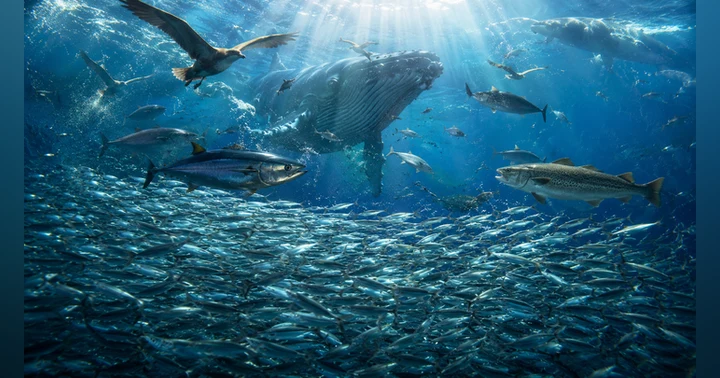
Forage fish may be small, but they help hold the ocean food web together. Species like sardines, anchovies, herring, capelin, and sand lance feed whales, seabirds, salmon, cod, tuna, and many other predators.
In this episode of How to Protect the Ocean, Andrew Lewin explains why fishing these small fish for fishmeal, fish oil, aquaculture feed, livestock feed, pet food, and supplements can create major ripple effects across marine ecosystems.
The big question is not only whether forage fish populations can survive fishing pressure. It is whether the ocean can survive losing too much of the food that keeps predators alive.
Support Independent Podcasts: https://www.speakupforblue.com/patreon
Need help with your ocean non-profit, company, or project? Get the help you need with Pisces Oceans Inc.: https://www.piscesoceans.ca
Connect with Speak Up For Blue
Website: https://bit.ly/3fOF3Wf
Instagram: https://bit.ly/3rIaJSG
TikTok: https://www.tiktok.com/@speakupforblue
Twitter: https://bit.ly/3rHZxpc
YouTube: www.speakupforblue.com/youtube
0:00 One of the biggest problem in ocean fishing isn't just overfishing predators, but removing the food those predators need to survive. This is the How to Protect the Ocean podcast, your weekday ocean news update. If you care about staying informed on the ocean every weekday, hit that follow button right now so you do not miss tomorrow's episode. And this week, we're gonna be talking about forage fish, and today in particular, we're gonna be talking about a question that's becoming more important in marine conservation. What happens when humans start heavily fishing the base of the ocean food web? I'm not talking about plankton. I'm talking about the things that feed on plankton, and that's forage fish because that's exactly what's happening with forage fish. These are species like sardines, anchovies, herring, and capelin.
0:42 Small fish, right? Huge importance and incredibly massive industrial value. A surprising amount of forage fish caught globally does not go directly to human dinner plates. Instead, many are processed into fish meal and fish oils. You know, the fish oils that everybody tells you to get omega fatty acids? It's a great way to get that, but how much of these fish are being taken out compared to what's being left to run the actual ecosystem and keep things stable and allow for fisheries of those predators to be sustainable as well. The products that are created are then used for aquaculture, livestock feed, pet food, and dietary supplements. That means that tiny fish that naturally feed whales, tuna, salmon, sea birds, and cod are increasingly being redirected into industrial supply chains.
1:30 This type of fishing is often called reduction fishing because the fish are reduced into ingredients. Now, fisheries managers do set quotas and catch limits, but critics argue that traditional fisheries management sometimes focuses too heavily on the target species itself. In other words, fisheries managers are asking, "Can this fish population survive fishing pressure?" Instead of asking, " Can the ecosystem survive losing this much food? And that distinction actually matters quite a bit. Marine ecosystems are deeply interconnected. You can't remove a major food source without consequences. One major example is seabirds. We talked a little bit about them yesterday.
2:10 But researchers have documented breeding failures in some seabirds populations during periods of low forage fish abundance. The parents of these seabirds literally could not find enough food to bring back to their chicks. Another example involves Atlantic cod. Historically, cod populations depended heavily on forage fish. When those food webs become disrupted, recovery becomes much harder. And this is one reason some scientists argue we should stop viewing fisheries as isolated industries. The ocean is not a collection of separate compartments. You can't just have salmon over here, cod over here, tuna over here. It's a connected energy system. And forage fish sit near the center of that system. There's also an efficiency question here.
2:51 Think about it this way. We catch wild fish, they turn them into feed. We feed them to farm fish or livestock, then humans eat the final product. That can become a little bit of an inefficient use of ocean protein, especially when ecosystems are already under stress from warming oceans, habitat loss, and pollution. And climate change, of course, adds another layer of risk, like probably the biggest layer of risk, making everything else even worse. Marine heatwaves can reduce plankton production, and that affects forage fish because that's their primary food, which affects predators higher up in the food chain. So pressure compounds quite quickly. Now, one thing that I find really interesting, we're gonna cover it in the later episodes, is the fact that we don't communicate this a lot.
3:33 Forage fish are not on the topics of everybody in fisheries or anybody in oceans. We often think of it, if you're a scientist, you think of them, yeah, they're an important part of the food web, and they need to be managed appropriately. But a lot of times they don't get managed appropriately, and there's not a lot of pressure on governments from the people who vote them in there, vote these representatives in there to do that because there's not a lot of communication. And communication is really important in science and conservation in general, and we don't do enough science communication and because it's hard. And we're not incentivized to do it. We're not paid extra to do it. A lot of scientists have other things that they have to do. They have to publish in journals that are hidden behind paywalls, but it can't get out to the public. And it's difficult for them to do it 'cause they're so busy managing students and everything like that.
4:14 And so what we do is we have people to do that for you, science communicators, who have done a great job in doing it in the past. And one of those people is a person that I work-- is, is a company that I work for, Pisces Ocean, who's a sponsor of this episode, who we value the fact that we need to talk more about fish like forage fish. And then we value the fact that this is an important part of the ecosystem, and we wanna make sure that people get that message out there quickly, not just to their own constituents, but also broaden that message. And we can do that at Pisces by either help you running campaigns, strategize for those campaigns. And it's okay, like I know a lot of nonprofits don't have a ton of money to hire a consulting firm to do that. We do have a program called Pisces Points where you can try and get, like, if you want us to run a campaign, we can run a campaign.
4:58 If you would later on want us to run social media or make some posts or something like that, we have that all for you. We just require a strategy session before that and a wayfinder, what we call a wayfinder. So speaking of wayfinder, why don't you go to the website right now, piscesoceans.ca for that wayfinder and be able to see what you need help in, and we can help you in that area. So go to piscesoceans.ca. I'll put the link in the show notes, and you'll be able to get access to it. Let's get back to the episode going back to what happens next in terms of how do we manage this. This is where ecosystem-based fisheries management plays a really important role. Instead of managing fish species independently, scientists and policymakers are increasingly trying to manage ecosystems as connected systems.
5:42 That means leaving enough forage fish in the water for those predators, not just to sustain individual fisheries. Some fisheries are beginning to adopt a precautionary approach, so catch limits may be lowered when predator populations struggle. Managers may close fisheries seasonally during sensitive feeding periods. And researchers are improving ecosystem models to better predict ripple effects. But this is still a difficult balance to act because forage fish fisheries support jobs and industries too. That means policymakers often face competing pressures between economic interests and ecosystem health. That's not something that you wanna have to balance. And honestly, like, this debate is probably going to intensify over the next decade because as climate stress increases, resilient ecosystems become more valuable, and healthy oceans need redundancy.
6:30 They need that abundance. They need functioning food webs. They need diversity to just stabilize the system, and that starts with protecting those foundational species. Even when you talk about diversity in forage fish species, you still wanna have a diversity of forage fish species in that particular habitat or ecosystem. ' Cause if you don't, then if that species declines, your predatory species are gonna decline right away. But if you have a diversity of forage fish species, now you can actually see, you know, if one falls off or declines a little bit, the predators can switch to the others while the one population increases. So if herring drops off, anchovies can go higher or what have you, right? If they're in the same space. Now, we may be catching the exact fish the ocean needs most, right?
7:12 We can forage fish. And protecting predators means very little if we fail to protect the food that keeps those predators alive. I want you to understand how much of a fundamental shift this is in terms of management. Because even back when I was working for Department of Fisheries and Oceans, they changed the Fisheries Act in Canada. And when they changed it, they changed like, let's just manage the fishing species. So if there's been an industrialized fishing species or commercialized fishing species or even an indigenous fishing species that has been established for the last 30 years, we are going to manage that. We're not going to manage their food source. We're just going to manage those species. Well, you can't just manage those fishery species being like, can we catch enough of them? That's great. Are there enough that we can catch? We don't care about the rest of the ecosystem. That's what that policy essentially said.
7:53 And then when that government left and the other government came in to say, hey, look, you know what? We're going to rebuild the Fisheries Act to make it even stronger and to remove that silly policy change and bring back the fish habitat part of managing fisheries. That became a lot stronger because now we are looking at food sources, we're looking at habitat sources, we're looking at a lot of different things that affect these fish. Other outside pressures, marine pollution, climate change, overfishing, all that kind of stuff makes a difference in the way that we manage these fishery species. So protecting predators, as I said before, it means very little if we fail to protect the food that keeps these predators alive. And that's what really matters.
8:34 And that's what I want you to take home from this episode. And of course, if you know someone who is interested in this type of stuff or you know a researcher who's interested in forage fish and they would like to come on and talk more about forage fish here on the podcast, please share this episode. And of course, don't forget to follow this podcast, the How to Protect the Ocean podcast, so you can get your next weekday update. And of course, Friday, in a couple of days, we are going to be talking to Jack Daly from Oceana Canada all about their new report in Canada about forage fish. It's a really great report. I want you to take a look at it. We're going to dive deep into it. And this is kind of prepping you for understanding how important forage fish are for that interview. So thank you so much for joining me on today's episode of the How to Protect the Ocean podcast. I'm your host, Andrew Lewin. We'll talk to you tomorrow and have a great day and happy conservation.