Why Saving the Ocean Still Runs Out of Money


 Apple Podcasts

 Spotify

 YouTube

 Amazon Music

 PocketCasts

 Overcast
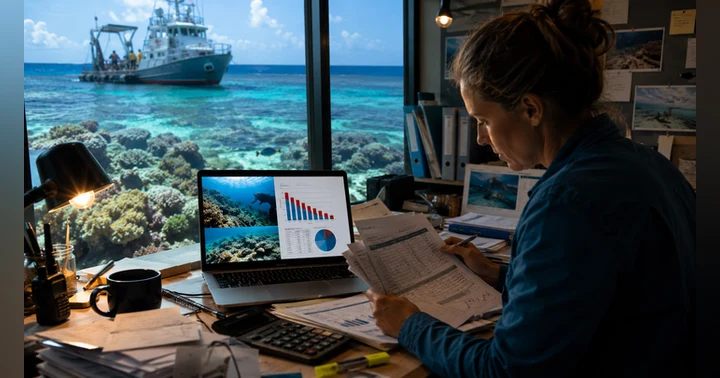
Ocean conservation is a global effort worth billions, so why do so many marine scientists, nonprofits, and conservation groups still feel like they are constantly running out of money?
In this episode of How to Protect the Ocean, Andrew Lewin breaks down why ocean conservation often operates grant to grant, donation to donation, and year to year. He explains how unstable funding affects marine protected areas, research, staffing, outreach, and long-term planning.
The episode also explores why communication is becoming part of conservation infrastructure. In today’s funding landscape, the organizations that can tell their story clearly often have a better chance of attracting donors, partners, and public support.
Support Independent Podcasts: https://www.speakupforblue.com/patreon
Need help with your ocean non-profit, company, or project? Get the help you need with Pisces Oceans Inc.: https://www.piscesoceans.ca
Connect with Speak Up For Blue
Website: https://bit.ly/3fOF3Wf
Instagram: https://bit.ly/3rIaJSG
TikTok: https://www.tiktok.com/@speakupforblue
Twitter: https://bit.ly/3rHZxpc
YouTube: www.speakupforblue.com/youtube
0:00 Ocean conservation is a multi-billion dollar global effort. So why do so many marine scientists and nonprofits constantly feel like they're running out of money? This is the How to Protect the Ocean, your weekday ocean news update. If you care about staying informed about the ocean every weekday, hit that follow button right now so you don't miss tomorrow's story. This week, we're gonna be talking about nonprofits. We're gonna be talking about how to generate revenue. We're gonna be talking about some of the problems that we've identified from nonprofits. And on Friday, I've got an interview with James Meissner, who is a nonprofit consultant that will give people like yourselves who have nonprofits some way of coping and some way of building that revenue so that you can actually run a proper nonprofit.
0:42 So we're gonna talk about that all today, 'cause people often assume that if an ocean issue is important enough, someone is gonna fund it. That's really what it comes down to. And unfortunately, that's not always the case because that's not really how conservation works. In reality, many ocean conservation organizations are operating on a year-to-year, grant-to-grant, or donation-donation basis. Even some of the most important marine conservation projects in the world struggle to maintain long-term funding. And that creates a major question. If we already know so much about protecting the ocean, why does ocean conservation still feel financially unstable? Marine conservation in general just sounds massive, and to be honest, it is. But according to multiple international reports, ocean protection receives a small fraction of global environmental funding.
1:27 I've seen that for all of my career. I've worked on projects where there's been a huge funder whether it be in the industrial region, like oil and gas or things like that, and they are watching every nickel and dime that they are spending on their project because they don't want to spend a lot on environmental projects because they realize that if they spend a lot and they do a thorough job, that thorough jobs may say, "Hey, you know what? You shouldn't be doing what you're doing here from an industrial standpoint." And so we start to see just taking away the money and trying to spend a little as much possible in environmental funding because they don't wanna get involved in it. Many marine protected areas exist mostly on paper because there isn't enough money for enforcement, staffing, research or monitoring, which we covered in the week that we talked about marine conservation and marine protected areas.
2:10 So science may identify critical habitats, governments may announce protected areas, but without long-term investment, protection often becomes symbolic, and funding is incredibly competitive. Thousands of nonprofits, universities, indigenous groups, and conservation organizations are applying for the same grants. So the competition has increased, and the funding hasn't necessarily increased in the way that the amount of competition has increased. That means organizations spend huge amounts of time trying to secure funding instead of directly protecting ecosystems. I can't tell you the number of people that are scientists who have started organizations, have done a really good job at maintaining these organizations for a long time, but they can't do the science that they wanna do or the conservation that they wanna do because they're always on proposals.
2:52 It is one of the big headaches of nonprofit management. Some researchers spend months writing proposals with no guarantee of success. I know some organizations have shut down because they didn't get the grants that they were supposed to get and that's a tough pill to swallow. Others rely on short-term contracts tied to political priorities that can disappear after elections. I wonder where we saw that before. And this instability affects everything. Research timelines, staff retention, community programs, long-term planning, even public outreach. There's another layer to this. Funding increasingly follows visibility. Organizations that communicate clearly often have a better chance of attracting donors and partnerships.
3:35 I've watched organizations have a really good and really great presence on social media, a really good backing and showing all the stuff that they're doing, and sometimes I'm like, "I wonder why they're doing that." It just kinda shows off that they have all this grant management or they have all this money they're getting from foundations because they can show off what they're doing. And sometimes you're like, "How are they doing this?" Like, how are they getting all this stuff done? Their presence on social media, their presence in their communication aspect shows what they're able to do, which brings eyes to the organizations, which brings, "Hey, this person is doing really well." As an example. I've been podcasting for 11 years. You've probably heard me say that a lot of times on this podcast if you've been listening any time recently. But since I've been doing that, I haven't necessarily posted on social media on a consistent basis until, like, the last year or so.
4:19 And when I started to do that, I started to post on LinkedIn, like clips from my episodes, and on TikTok and on Instagram, then people are like, "Wow, you're really working hard. You're really doing a lot in podcasting." And I'm like, " I've been doing this for 11 years. I've been doing this for many times, as many years that I've been doing this, really. I've been doing it for so long." And they're just like, "I just noticed you do it now 'cause it starts coming up on my feed, and I really like what you're saying." But they won't necessarily listen to the podcast. It doesn't increase downloads to my podcast or doesn't necessarily grow the show, but it shows that I'm actually doing work, and I'm getting more eyes on the stuff that I'm doing. Doesn't necessarily mean it's gonna grow the show, but it does help in making that appearance of like, "Hey, you're actually working really hard on this. People come up to me and they're like, " Well, you've been doing so much work. Like, how much time do you spend?"
5:02 And I start talking about my workflow and how much I do, and they're like, "Wow, I can't believe you're actually able to do this." But it means that storytelling is becoming part of conservation infrastructure. And this is why you see how ocean organizations investing heavily in social media, documentaries, podcasts, YouTube videos, newsletters, and influencer partnerships, not because communication is trendy, but because the attention drives support, and support drives survival. A scientific paper may contain critical findings, but if the public never hears about it, it becomes much harder to generate political pressure or donor interest. I'm not saying that scientific publications are not important. They are important to maintaining a scientific integrity.
5:44 But you still have to go out into the masses and speak to the donor and the people that you are talking to that are helping fund your organization and have that communication. Large organizations have a huge funding department, or probably more staff in their funding department or their development department than they do in their actual science department or their conservation department or their advocacy department. Because they need to have these relationships and continue to build these relationships to allow that money to continue to come. ' Cause if you don't perform and so to speak, for these donors, why are they gonna do it? If you don't relate the work that you're doing to these donors and what their mission is and what their message is and why they donated in the first place, you can't help. And so if you don't have that communication aspect, whether it's to one donor or many, or even just an audience that if you're getting funding from many people, you're not looking at driving anything.
6:31 That's a tough pill to swallow for a lot of people when you're doing this type of work. So all this stuff, it creates a difficult balancing act. Scientists need accuracy, but online platforms reward emotion and simplicity. So it's a very different way of communicating. Organizations are constantly trying to simplify complex ocean issues with losing nuance. And honestly, some issues are easier to communicate than others. Like sea turtles and whales attract public attention quickly. If you show a video of a whale breaching, that's pretty cool. In front of like, say, a whale-watching boat, that's pretty cool. That's a really fun thing to watch. Or have a picture of that, that's a really fun thing to see. That's gonna catch the eye of somebody on Instagram say, "I wonder what this is all about." But fisheries management policy is usually pretty boring.
7:15 They're not really gonna say anything. Unless you have an image of something really compelling and talking about it to your potential donors or to your audience. That's what really, really matters in this situation. But fisheries policy may affect food security, jobs, and ecosystem collapse far more directly. It may be more important. It's like every time I talk about biodiversity, it doesn't get a lot of downloads compared to my other episodes, say, on whales or sharks or sea turtles or anything like that. But it's probably one of the most important things 'cause it'll save whales and sharks and sea turtles, right? Now, this is kind of something that's been really interesting for me because I have developed this science communication role in myself by doing this podcast and by looking at how I communicate using newsletters, YouTube videos, and also social media, different platforms and so forth, and continuing to create content to not only just grow my show, but to expand my message.
8:04 So I've learned a lot about science communication. So much so that I've been recently hired, I've been there for a month, at Pisces Ocean as the Oceans Communication Manager. And what's really great is that Pisces is actually sponsoring this episode and this podcast. And what's really great is Pisces actually works as a consultant. We're a consultancy firm, and we work with clients, whether from the nonprofit sector, the for-profit sector, or academic projects like large academic projects or even small academic projects. We work with organizations to amplify their message to help them get funded So you're not always looking for funding, but this is like once you get this started, once you get a strategy, and once you start getting this produced, you start increasing that money that's coming in. You start increasing that attention first, and then the money will eventually follow.
8:48 But it has to come with a good plan with communication. So if you wanna check out what Pisces is all about, go to piscesoceans.ca. That's piscesoceans.ca for more information. If you have any questions, you can just hit me up on any of my socials that I've put below. DM me, message me on LinkedIn. I'd be more than happy to chat with you. If you're having trouble raising funds, having communication, even finding the time to do communication, we can provide that. We have a thing called Pisces Points. It's really great. You do a strategy. We do Pisces Points. It's awesome, and we can really get you started quickly. So check that out, piscesoceans.ca, and I'll put that link in the show notes. So check that out. It's a new thing that I'm doing, and I'm loving my job, and I love working with organizations.
9:31 It's a lot of fun. We do a lot of cool things, not just communication strategies, but everything, and I'm having a blast doing it. So come work with me as a client, and I would love to help you out with our great team. All right. So let's get back into the episode 'cause we wanna know what happens next. Like, what's the future gonna look like? And to be honest, I think ocean conservation is entering a period where financial sustainability becomes just as important as scientific discovery. We need organizations like nonprofit organizations and for-profit organizations to really step up for the ocean because we're seeing a lot of governments step back from the ocean. They just don't have the funding, or political parties have different types of strategies or different types of values that don't always include the ocean.
10:11 And so we need to have the organizations step up even more. So we need them financially sustainable so that we can actually continue on with some of the great work that they do. So organizations are looking for some stable funding models. Some are building partnerships with corporations. Others are developing memberships, media platforms, educational products, or even community-driven funding. There's a growing discussion around whether government should fund conservation infrastructure more like public services instead of relying so heavily on donations and grants. But here's the reality. The ocean supports global food systems. It regulates climate. It supports tourism, shipping, jobs, and coastal economies. Yet many of the people trying to protect it are working in financially unstable systems.
10:55 And that creates risk because conservation only works when institutions are strong enough to survive long-term, not grant to grant, donation to donation. That's not really what is what we're talking about here. If ocean conservation constantly operates in survival mode, long-term protection becomes much harder to achieve So I want you to follow this podcast right now if you haven't followed it before, so that you can get all the updates. We post from Monday to Friday. And for this week, we are gonna be posting all about nonprofit and how you can survive as a nonprofit. So if you have recently started a nonprofit, or you have one, or you're working with one, and you guys are always struggling for funding, and that's nothing to be ashamed of, this happens to a lot of people and a lot of organizations, I'm here to try and help with this week.
11:39 And at the end of the week, we have James Meisner, who is on the podcast, where I did an interview talking about what he does as a nonprofit consultant. He's got some great tips as an ocean nonprofit, make sure you are raising funds. So check that out. That's it for this episode. I'd love to hear your feedback. Hit me up on my socials down in the show notes below, or you can go to speakupforblue.com/feedback, and you can just hit me up, write a text or type out a message, or even record a voice message. I would love to hear from you. I wanna thank you so much for joining me on today's episode of the How to Protect the Ocean podcast. I'm your host, Andrew Lewin. Have a great day. We'll talk to you next time, and happy conservation.