In the Lion’s Den: Brandon Wilder on the Ethics of Animal Research
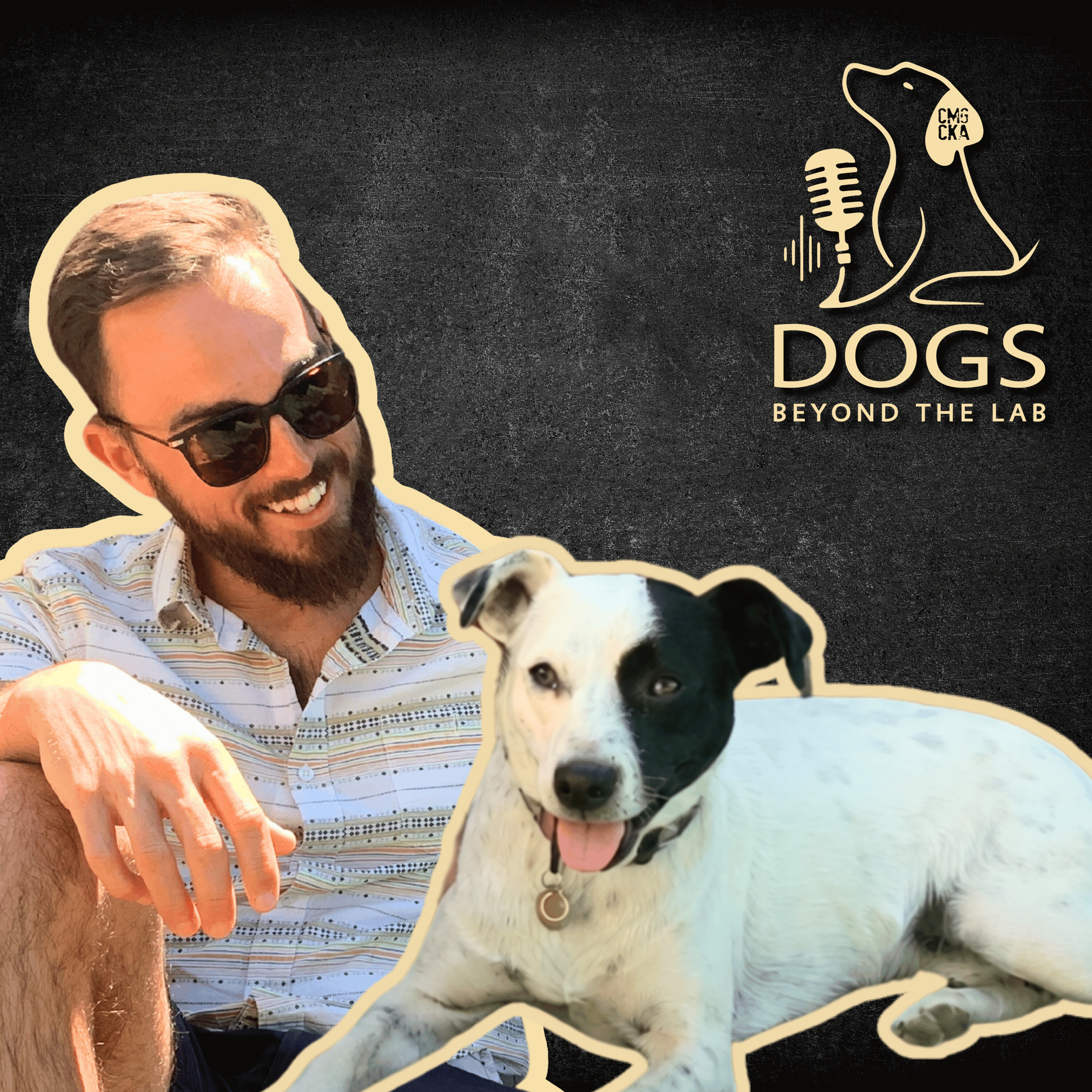
John, Lori and Chelsey are joined by Brandon Wilder, to discuss animal research and the lives of the animals involved.


We ask Brandon the difficult questions: When is animal research justified? Who decides whether an experiment is necessary? And how do we account for an animal’s well-being during research and long after it ends? Brandon shares what drives his work, where he believes research practices need to improve, and why he hopes emerging methods could help reduce the use of animals.
We also talk about the realities of caring for animals after research, the bond Brandon shares with his rescued dog Toki, and what becomes possible when scientists and animal advocates are willing to listen to one another. Join us for a conversation grounded in compassion for both animals and people.
Connect with Brandon on LinkedIn.
The hosts of the show are:
John Ramer is the Executive Director of Kindness Ranch
Lori Cohen is the Founder and Executive Director of The Beagle Alliance
Chelsey Marino is the founder of Keeper and Kin. The Leading Experts in Former Research Beagle Rehabilitation
John Ramer 0:00
I'm John Raymer from Kindness Ranch Animal Sanctuary in Wyoming,
Chelsey Marino 0:04
and I'm Lori Cohen from the Beagle Alliance in Manitoba, Canada, and I'm Chelsea Marino from Keeper and Kin in Charlotte, North Carolina, and this is Dogs Beyond the Lab.
John Ramer 0:17
Welcome everybody to a very special episode of Dogs Beyond the lab, today we are honored to have Brandon Wilder here. He has his own lab at OHSU with a specialty in studying malaria and how we can better understand the immune system and how everything works. Brandon also has an amazing dog that we're going to have to try and stop him from talking about as the podcast goes on, so please give a warm welcome to Brandon. Thanks for joining us, my friend.
Lori Cohen 0:48
Welcome, Brandon. Hi, Brandon. Thanks for being here.
Brandon Wilder 0:51
Thank you so much for inviting me.
John Ramer 0:52
Oh, it's it's honestly the least we could do to get started. You want to tell us a little bit more about yourself?
Brandon Wilder 1:00
I live in Portland, Oregon. Originally from Florida, and I've been here for about eight years, and been in the Northwest for 14 years. My working life is spent on malaria, disease that's been infecting humans since before we were a species, and every year kills roughly half a million children, which is, you know, about the number of every child that lives in Washington and Oregon, and that's every single year. And what we want to do is our part in trying to accelerate an end to malaria in the areas that it infects the most, which is mostly sub-Saharan Africa. And I also, more recently, I've gotten involved with a nonprofit, Oregon Voices for Biomedical Research, which is dedicated to kind of education and enhancing the conversation around how research happens, and especially research with animals.
John Ramer 1:54
What do you focus on when it comes to the the research with animals and the nonprofit? Is it finding an end? Is it finding more ethical outcomes, promoting why it's believed to be necessary? Still, what's the dialog look like on that?
Brandon Wilder 2:15
Malaria is an interesting case, and it's very similar to a lot of other really complex diseases. I think one thing that's true in science now is there's a lot of the low hanging fruit is gone, and the things that we're trying to tackle now are really big and really complicated. And trying to overcome not just biology, but human nature, economics, and all of that plays into malaria. This is a complex pathogen, you trying to make equally complex interventions against it, and then those have to work in really complicated settings. This is some of the most rural and poorest and neglected people in the world fighting one of the most terrible diseases that humans have ever known. I mean, it's possibly the the most deadly disease that humans have ever faced, but against that, I think one thing that can be easy to do is excuse that for doing anything and to to get towards an end, especially when we have to study these complex diseases that involve multiple organs, multiple systems, as well as environment. We haven't been able to answer some of the bigger questions without animals yet, and front of our minds always has to be well. The animals are creatures as well, and they deserve our respect just as much as those kids do that we're trying to protect. And I feel really lucky to be at a place at an institution and within a community of researchers that respects that. Every week, every experiment that we do, the first question is: You know, can we do it in humans? No. Can we do it without animals? No. How do we do it with the least number of animals in a way that does it with the least harm and discomfort to those animals, and there's a lot of questions we just have to leave off the table because you know it's not worth it, no matter if what it would do for accelerating some of the interventions we we want.
Lori Cohen 4:17
So here we are, dogs beyond the lab, speaking with someone who tests on animals, so as you can imagine, our audience is probably already sort of generalized and possibly put you into a category that with a label that probably is not fabulous. That's why I so respect you for being here, and we're really grateful for you to be here, and and I appreciate you offering this side of things. I am so curious about the humanity of this because clearly you care about what you're doing. How did you start out with why so specific with malaria? Is it because of that number of children? I mean, just I would love to hear your personal connection because. I think it's really, really important for people and our listeners to really see a human face behind the passion that drives you to do what you do.
Brandon Wilder 5:13
That was one of the things I loved in the first podcast you all had. Is I think all of us that love animals, you said something like we we anthropomorphize these animals so much, and yet we fail to see the humanness in people that are on the other side of this. And I mean, I know that is very true for a lot of the people on my side of of this, quote unquote. I mean, I did my PhD work at the University of Florida in gene therapy, so trying to take you know diseases caused by defects in your genes and fix them by introducing a correct gene, and that was for a disease called hemophilia. It's a disease where you can't stop bleeding, you can't make blood clots, which is obviously very bad. And I guess it just kind of like naturally came into the research of this is a disease of humans, and so we need to do what's right for humans. And one thing I really liked about my training was, you know, the first thing you learn about is what do patients go through with hemophilia, and you know what they were doing is having to inject themselves weekly, often with these intravenous injections of the missing protein that allows them to make blood clots, and this is obviously really bad. It's also really expensive, costs you know hundreds of 1000s of dollars a year, and then they can develop an immune response to this that makes the treatment not possible. And you know, so the the goal of my PhD thesis was how can you use gene therapy to just make this easier on their lives, and the you know the solution was that was kind of my trick is to like kind of figure out how to do it and make it a single injection, a single treatment, and then they can have you know many years of cure, and you can't obviously test this in humans, and so we you know a lot of the PhD is like looking at what is the right animal model because you're dealing with immune system interacting with different organs and blah blah blah. Don't get me started on science. I'm sorry. The end of it is. It was great, and it was really, it was really cool to see that you know I have a very narrow set of skills of things I'm good at, and it was really it felt really good to be able to use that in a way that would help people. And then when I was looking to go beyond and establish my independent research career, I thought, how can I do this at a bigger scale? Because this was a very kind of boutique. It's a rare disease. It's a very boutique treatment, and not going to reach that many people. And so that's when I really look to to global health, and I applied to labs that were doing either HIV research or malaria or tuberculosis, because those are kind of the the big things, the big problems of humanity to solve as far as diseases go. And yeah, that's still what really drives me today. Is thinking about how can I use my limited skill set in a way to try and make the world a little bit better for somebody else.
John Ramer 8:12
When you you and I talked the first time, we kind of had a little bit of a chuckle over. We both agree that there is bad science. With that, as someone in in your research, do you, on a personal note, look at other science that is being done that might be considered outdated due to the advancements of non-animal models, and is just going because of a financial benefit, or might be kind of a loaded question. But do you see animal testing being done in places that it's not required.
Brandon Wilder 9:01
Yes, is the short answer. But okay,
John Ramer 9:05
moving on. No,
Brandon Wilder 9:09
you know these these questions are complicated, and that is no excuse. But when you want to go and do an animal study, you know I don't just get to wake up one day have an idea and like I'm going to try that on an animal, whether it's a non-human primate, a monkey, or a mouse, or a zebra fish, or a frog. That requires money to do it, and to get that money, I have to apply to usually the NIH or some philanthropic organization. That science gets reviewed by independent scientists who are often competitors and often not nice to your science, and that's a good process. I mean, that's the peer review process. Like you, you should be able to stand up to really harsh criticisms, especially if you're going to use taxpayer money, especially if you're going to be doing work on animals. You're used to this. No, I mean no. Yeah, I mean scientists like we we live in criticism, and we you know that's how we that's how we talk to each other. Why you you don't see scientists have many friends outside of the science world? Not not everybody appreciates constant criticism. My wife my my wife can speak to that, and so and so there's that layer, and then you know only the most competitive applications are going to get funded. You know, most recently, 8% of applications are are getting funded by the NIH. Do I think that only 8% are good enough to get funded? No, it's probably quite a bit higher than that. So you're in the really upper echelon of science, and just a pause. And during that process, people do look at your models and say, "What does that mean for humans? Are you being legitimate? And I personally have tanked grants, made them fail because they have improperly used animal models, whether both non-human primates, where I've said this is not a good use of these animals, you're you're not answering a question that is big enough and important enough, and you're not doing it well enough to justify you know putting an animal in a cage. And same thing for you know mouse studies. You know this model in general is not human relevant. There's no evidence to support that what you're going to learn out of this is going to translate to humans, and that is not a rare critique that those get critiqued. I think, yeah. And so then, and then there's another layer. Then you know, once I get the money, then you have to go to your local institutional animal care and use committee, your IACUC, and that is comprised of you know sometimes peers, but independent people as well, and their job is to critique your science and make sure that you're doing the animal study that you proposed in the best way possible. Those are very rarely rubber stamp committees. They are not meant to be antagonistic always, but they're meant to protect the institution from the federal laws that govern animal welfare, and that will result in fines, citations, and shutting down of research. And so they have a responsibility to a larger institution like a university to make sure that you're not going to do harm to animals that's going to cause harm to the institution. And then you know every study that we do is overseen by an attending veterinarian, so a vet lays eyes on on our animals every day, and if something goes wrong, they will be notified. And there's also animal care technicians who know the animals, whether they're mice or whether they're guinea pigs or non-human primates, who can tell if something's wrong, and they will immediately report back to you and ask questions of you know what's going on in this, and because they're a part of the the approval process, they they know the science to some degree, and their job is to say, okay, this doesn't look right. I don't care what the science is. What we're going to stop the experiment now.
John Ramer 12:52
Do you know what the the counter argument on the animal lovers' side of that is?
Brandon Wilder 12:57
Wait, can I just say 111 quick thing: despite all of that, there certainly is too much variation in the quality of animal welfare in in animal research. You know, the federal regulations are too low, and the incentives for places to be excellent are not there. And the result is exactly your question. My short answer is yes. There is animal research that is unnecessary, and that is not done with the standards that I think we all would like.
John Ramer 13:28
I appreciate that answer very much. In my talks with people on the the animal lovers side of things, obviously, us as animal lovers were very passionate, and a lot of us can be really guilty of being led by emotion. And it's obvious that you're very passionate about the science that you're doing. And when I try and talk with legislators, state representatives, and Lori's been present for a couple of these difficult conversations as well. That when they say that attending veterinarians and I cook and all of those organizations are overseeing things that it's kind of like a fox in the henhouse or letting police police themselves, and it it leads to corruption. I don't have anywhere to go with that other than saying that I've heard the counter argument to that so many times that I also have to believe that there's a seed of truth to that to some degree as well.
Chelsey Marino 14:47
For me, I have an interesting perspective because I work with the dogs, dogs specifically. I know we're not talking about exclusively dogs here, but I work with animals outside of research. It's several years afterwards, right? And there are things that we see years later that you wouldn't see in the lab. That's part one of what I want to say. And part two of what I want to say is, I love veterinarians. I think that they are fantastic. I love animal caregivers. I think they are fantastic, but how much true behavior understanding? How much like psychological information can they be getting from that animal at that moment? They're they're not veterinary behaviorist, even right, and and so yeah, you can look at a dog and you can see the dog is not showing stressful signs, or they're not dehydrated, or they're not whatever. But you may not see the psychological consequences that are going to come up years later. Or maybe getting approved for these tests is that a consideration at all? Like, what is the psychological effect of not only the tests that we're doing, but the environment that these animals are going to be in?
Lori Cohen 16:07
The holistic stance, like the holistic health, I guess, all around overall health,
Brandon Wilder 16:13
and not just what happens to the animal while they're under study, but what happens to the animal afterwards as well.
Chelsey Marino 16:18
Yeah, because there are things that I think a lot of people will think, "Oh, we're just torturing these animals, you know, and and you can have the argument that we're not. But there's still a lack of agency. There's still a lack of autonomy of their body. There's lack of self efficiency or these different developments that we're missing: social development or environmental development. Like that, all that was a human. That human would be extremely traumatized in their adulthood. Or if that was a child, that would be an extremely traumatized adulthood. So I guess the question is: Is this getting evaluated? And if so, is it by veterinarians? Is it by people who can see what's happening? But do we actually know psychologically what's going on?
Brandon Wilder 17:00
No, I mean I think those are the exact considerations you need to have. I'll be disappointing in talking much about dog research, and I think, I mean, you both know better than I do. Dogs have different psychological needs based on their evolution and how we've evolved them than mice, than than monkeys, and also I'm really lucky that I have only been in places with good animal care and good animal welfare, and especially the facility here in Oregon is really how it should be done. I mean, we have a behavioral services unit. I should say they have a behavioral services unit that has multiple veterinarians, and their only job and expertise is behavioral assessment, enrichment, and making caring for the psychological well-being of the animals, as well as incorporating behavioral assessments and considerations in when you need to do experiments. I will say that is not an area that is incentivized anywhere in research, we do not have to have that. Places don't have to have that. Some places don't have it, or don't have as robust of a group that the Oregon National Primate Research Center does, and that's a problem that needs to be fixed and is a fixable problem. And the the caretakers, and they are veterinarians oftentimes, or they're specialized veterinary technicians, and and oftentimes somewhere in between there, they do know the animals' behaviors. They they get to know the animals. Each one of them can probably name by name 80 to 120 of the animals, and you know they often pick favorites, and you know I mean you all work with animals. You get attached to them if you love animals, you get attached to them. You know them, even if you know from the outside somebody would not just look at them as like cans of tuna, and they're all the same. For the fox and the hen house, I think it can be that way. Only issue I take with that is, and this is a failing of us as scientists and people that work with animals. That's taking the assumption that we want to harm animals. That our goal is to make these institutions bend to our will of doing whatever we want with animals, with no consideration of the repercussion on them, and the best, the people doing good science are not that. I'm not saying there are not people like that.
Chelsey Marino 19:30
It could be we want to get this study done. We want to we want to do this and save money, right? It could be you know we'll bend the rules a little bit on on the care of the animals or the you know whatever we're doing, because we've spent millions of dollars on this project.
John Ramer 19:47
I'm gonna also agree with Brandon a little bit on on this. In my head, it becomes the the 1% creating 99% of the problem. I know a number of really, really honorable police officers that would never bend to corruption or try and take the easy way out. But the ones that do are the ones that get all of the publicity and shine a negative light on the entire force, and I say that to compare that there's there's probably a small number of people that animals be damned we're going to finish this study and we're going to get it approved, and the quality of care drops off, and they might close themselves off to to working with outside agencies to have positive outcomes for the animals, and I feel that that both can be true if I'm not too mistaken.
Chelsey Marino 20:53
I'm sure both are true. Yeah, absolutely.
Lori Cohen 20:56
I I agree, and and I'm going to say this from the standpoint once again of saying that I was a correctional officer for a decade, and I worked with some really incredible people who had morals, had ethics, worked in integrity, and nonetheless, the pervading culture of the job itself lended towards the few that were corrupt and loud, and so I just want to know from your from your standpoint, Brandon, as a human, as we all are, what does that look like for you? I mean, when you see what's going on, and I'll reference the news currently, and and I'll even reference some of the hate projected on people who work with animals. What does that look like in your when you walk out of your laboratory doing something you love because you loved humanity? What does that look like and feel like for you when you're walking outside of that door, going home to your dog, going home to your wife, going home to your kids, I just want to hear what that is for you.
Brandon Wilder 22:11
If I could quickly piggyback on something y'all are saying, if it is 1% I think that's still too much, and you know, especially when you're working with animals, if you're harming animals, that's 1% is too much, and I, I don't think there should ever be pressure let up on demanding higher quality animal welfare in science. And the one way you can prevent that is, I feel really lucky at the Oregon National Primate Research Center is you establish a culture of animal care, and that that's really hard to do, and is not incentivized anywhere in the research pipeline, and that is a huge failing. And places that do it off their own volition and create that culture is what stops it, because I can tell you as a scientist, and I have you know have seen colleagues and people who just want to get the study done, and if there was not a culture of caring for the animals and protecting them, they would be allowed to do that, and they are not. They get very mad, and that conflict is good, and it only is maintained by a culture that's a voluntary culture. And you know, this isn't my idea, but I think a good idea is if we can start to incentivize it and reward institutions as much for their good animal welfare as we do for their good science, then you'll start to see, you know, that 1% get smaller. For me personally, I mean, I don't know. I get it. Like I'm in, I love animals, and I love humans. Some of them. I. I think we all agree. I think we're all in agreement right now. I think anyone listening is laughing and also saying,
Chelsey Marino 23:54
"Yeah, me too. Some of us like animals way better than people.
Brandon Wilder 23:57
I think, and I think this is another failing of scientists, we have not done our jobs in communicating what we do, in communicating its importance, in communicating how vulnerable we are to just being humans. Scientists are rigorous. We're critical. We can also be dogmatic, and focused, and egotistical, and we don't like to project that outwards because we feel like we have. I think some of us feel like we have a duty to being like science is golden, and you know you have to trust science because you know when your child is sick and in the hospital and you're giving them something that science says is okay, you don't want to have doubts about that. That's scary, and especially if you're, you know, we work in vaccines. If you're giving something to a kid that is showing up perfectly healthy, you really want to know the science is rigorous that that's not going to turn that healthy kid into an unhealthy kid. And so I think it's tricky, and you know, I think a lot of. The solution in the past has been to just like, look, science is perfect. We're perfect. Don't bother us. Don't criticize us, and that's really gotten us nowhere and is changing as a culture. And the better way, and this is what I love about OVBR, is like you can bring people into this conversation, and they can make their own decisions. Some of them are still going to make really bad decisions with good information, but that's better than making terrible decisions with bad information.
Chelsey Marino 25:28
I think it's interesting to hear you say that you get a lot of criticism, or you have to defend yourself, you know, as scientists. And there's, I guess, part of somebody who is completely out of that world whatsoever, right? Somebody who does benefit, I'm sure, in some way from science, the testing that has been done, right? I'm a huge science person. I'm not a huge biology person, I will say, but I do love science, and what's interesting about science is science is, in my my impression, is always evolving. I don't think that we're ever going to learn everything that we can. Like just as as a very small example, when I was a child, and you get a concussion, you're supposed to stay awake, otherwise you're going to die. As an adult getting a concussion, you're supposed to sleep, otherwise you're going to die. You know, and like that's something. How are we so like opposite on on science, right? So, you know, having to do all of these different tests in order for something to go to market or be given to a child or given to any sort of person, I do think it is important to make sure it's being done correctly, and it's the safest. And of course, the route to get there is going to be the best for everyone involved-people and humans too.
Brandon Wilder 26:56
The biggest problem with science and science education is that it's presented as facts. It is
Chelsey Marino 27:01
presented as facts, and it's not. I would say faith is more accurate than than science sometimes, right?
Lori Cohen 27:09
I would love to entertain the faith conversation, but I will not because we're not going there. However, I think that's I think that's the that's it. It is present as as facts, and then becomes dogma, and then becomes I'm right and you're wrong, and then we move into the divisiveness, and then we move into the argumentativeness, instead of the realization that we are all here, we are all human, and we are all continually learning, and I'm going to play a little bit of devil's advocate from the advocate point of view, and say that since we are all in agreement, and I think that our listeners could agree, is that I'm going to say this out loud. I so appreciate you being on here. I love this conversation. I want to talk about your dog soon and your love for your dog. I hope that this podcast lends to more compassion for humanity. We all have an overwhelming compassion for animals, but this is what I'm going to say out loud. I think sometimes advocates who throw around that they are compassionate and they call themselves compassionate have lost a sense of compassion for humanity, and that angers me as an advocate because I don't want to get the same way that Brandon, you don't want to get lumped in to bad science and poor animal care and the fact that you don't love animals. I don't want to get lumped into being someone who does not care about humanity in the same way that I care about animals, and I think we can all move forward as scientists and advocates, loving the animals and loving the humans, and finding that common ground.
Chelsey Marino 28:52
Yeah, I think it's so important, Brandon, that you're on the show because you know we talk about this often, and you're you're now like putting a face to it, right? And you are here as one of the people that we talk about. Like, hey, there's good people doing this, right? And and we know that you're giving our listeners some validity to that, and I think it's really important. I have the listeners in the back of my head, and so I'm trying to ask what they're thinking as best as I can. Right.
Lori Cohen 29:19
So let's ask this: How do you come home to your dog that you love so much every day? Because I know everyone's thinking that right now.
Brandon Wilder 29:26
Anybody who's had a dog, I mean, you you feel bad when you put him in a kennel. You and we have monkeys in cages. We're not supposed to say it in those terms, but you're putting animals in cages for the purposes of experimentation. That's not the the language that you know is nice to use, but at the end of the day, that's what you're doing. Better make sure that you're doing it in the best way, and the question that you're asking is big enough. And there are so many times. Another thing I'm probably not supposed to say, but. I think about it, and I look at my dog in the eyes, and I think, would I do to my dog what we do to our monkeys? And if the answer is no, I need to have a really big gut check of what I'm doing. And I think that spectrum, that question, is not right for everybody because you know there's a spectrum of ethics and where people put different species on that spectrum and what you think the the costs and the benefits are and that is the purpose of the conversation. That's the purpose of education and letting people know the process, the pros, the cons, everything, because everybody's going to fall slightly different on that, but I'm also somebody who has participated in human clinical trials. Have given myself malaria. I participate in humans challenge studies where we give people malaria and ask them to take risks for the betterment of other people. And you know, would I ask that of my dog as well? Sometimes, yeah. And you know, I think that's kind of how I come home to it. And as I look my dog in the eye, I also look our six-year-old in the eye and think, "Well, what if he was laying on the floor, brittle with malaria, too tired to even speak and or cry? And I mean, that that goes on for a million parents, more than that. You know, 100 million parents a year. Nobody thinks about it, and those are the things you have to weigh, and it's not easy. And I, so I don't blame people when they think I make the wrong choice, or we may, as a community, make the wrong choice.
John Ramer 31:42
When you and I talked, we discussed the the excitement around AI and organoids and all of the potential in non animal methods, and the the film, the New Gold Standard focuses entirely on the advancement in that. What do you see as the potential of those becoming more widely adopted and financially incentivized? Do you do you see a potential for the end of at least a majority of animal testing in your lifetime.
Brandon Wilder 32:28
I mean, the you know saying goes the future is the hardest thing to predict, and when predicting science, I have been wrong more than zero times. But the potential is enormous, and I don't think that that should be understated. And nor do I. I think the goal of ending at least. I mean, we should end every single animal study that we can, and the faster we can do that, the better, because there are an extremely small minority of people who like doing research with animals for the purposes of research. Most of us would just rather hang out with animals or let them be in the wild. I think some of the the last couple years have been really exciting, with you know kind of the first organ chips getting up to FDA validation to replace toxicity studies, which occupy a large amount of research, and especially research with dogs, and that's really exciting. If you can shortcut that process, not only do you save a lot of animals, but you save a lot of time and money in getting new new interventions out. The only you know thing I would say is you know that's just the last couple of years, and there's like one application where this has been really validated, and we have to be careful not overhyping things because that will do more damage to these alternatives than anything. If what happens, I mean, there's always this cycle, and you know everything, and I come from the gene therapy world, where when I was one of the reasons I went into gene therapy is, you know, we I was in high school when they sequenced the human genome, and then they're like, we're going to solve every disease. Every disease will now be cured because we can tie it to a gene, and then gene therapy is going to fix it all. I'm like, I'm in, and then you know, here we are, quite a bit away from my PhD, we've got a couple gene therapies, and a few of them are really promising. But we are pretty far from solving every disease. There's been this cycle in gene therapy too, where there was tons of interest, and then people were like, "Oh, this is actually kind of hard. Screw that. We're going to move on to something else. And the investment tanks, and I don't want to see that for something as foundational and as important as animal research, because we're really excited about it. We've reached out to to you know folks, and we're adopting these as well. You know the first hints of being able to replicate the first steps of an immune response in an organ chip, you know, just published. In the last like two years, and this is like step one of like 75 of an immune response, but we can get rid of a lot of animal studies with that first step if we can start screening what makes vaccines better in an organ chip versus how we do it now, which is in a bunch of mice. Amazing, we're we're going to do that, and and we want to be a part of making that happen faster. So to answer your question, I don't know. I hope I hope it's a majority in my lifetime.
Matt Cundill 35:29
And now, dogs beyond the lab continues.
Lori Cohen 35:33
Brandon, I'd like I just want to touch on something you said there about you hope that you don't we don't overhype it. Do you mean that you feel that the adoption of non-animal methods that that would hinder the that that would occur by that that would affect I guess the adoption of non-animal methods or would it be the the effectiveness of them like would the overhype come in which areas? Is if if that makes sense?
Chelsey Marino 36:06
I think it's like I I drive a Tesla and I love my Tesla and I think myself drive on my Tesla is safer than myself driving. But the news out there about Teslas is Teslas drive themselves off cliffs, right? So if if there is a new model, I would say a new type of you know non animal testing, and it's used too quickly and it messes up, it ruins it for the it in general. Right? Is that what you're trying to say, Brandon?
Brandon Wilder 36:36
Yes, I think I wasn't even thinking of that. That's a great clarification. Yeah, if you put something into a child that was proven on AI and it kills that kid, then you're you're going to set your instead of accelerating by 10 years, you're going to set yourself back by 30 years. And you know I think there's parallels in you know look at thalidomide is one of the reasons we have a larger species requirement because they would have caught thalidomide, and so that's why the FDA did that. Is it time to revisit that? Absolutely, because we have lots of more information since that original event, and it may have set. You know, there's inertia in science and inertia in pharmaceutical companies and regulators because they're naturally risk averse. You have to think about that. I think I was thinking more in terms of investment in these new alternatives, you know, compared to other areas of research, it's very small. The NIH is committing, you know, maybe 150 million. It's not very much in terms of research. That that's not going to overturn how science has been conducted for 250 years. This is like, this is a moonshot we're going after. This is not messing around the edges, like and and I think we need to be real about the investment that we need to make in NAMs, and it's you know orders of magnitude off, and to say that we're going to change the way science has been done for 200 years in a way that's safe and faster with such little investment and little attention is ridiculous, and is the kind of language you hear from venture capitalists that want to sell a product and want to get investment so that they can have some short-term gains, and not something you hear from the best scientists developing the best NAMs who are saying, "Hang on, we're early in this journey, and we want to do this right, and I think you know they should be listened to more often.
John Ramer 38:24
I can respect that. Yeah,
Lori Cohen 38:26
it's a process. Yeah, you know,
John Ramer 38:27
there's there's a lot of people on on both sides of this argument that I think struggle to find the nuance. I I talk with people often that say that the technology is there now, and if we end all animal testing tomorrow, then the technology has to catch up. And I I feel that in in my head that that's an unrealistic approach. And I I know that if that comment makes it onto YouTube, the comment section will go absolutely ballistic on me. But you know, I I operate a sanctuary for animals retired from research, and I have to do it in a realistic way. And in order for me to be grounded in in truth and reality, I have to look at that. And you are right; we're just now at the starting point that you know the FDA is in the process of approving one or two, and the NIH needs to better financially incentivize development so it can be introduced safely. I I told a group of people when the dogs were being released from Ridgeland Farms that if we did a huge release and one dog runs off and gets hit by a car while they're standing up for their. Autoop and telling everybody all of the good work that they did-it's going to ruin the optics of that for decades.
Brandon Wilder 40:08
While that's happening, there's people like y'all working in the background for little to no fanfare, doing really hard work physically and emotionally to prepare these animals for a life where they they don't have that, and the we can't do that soon enough and fast enough because as these you know these animals have lifespans of you know 1015 in the case of non human primates 30 years, there's going to be animals that need to be cared for for a long time, and then I think one thing that I really feel fortunate here to be surrounded by people who also say, "Well, we're still going to need 1020, 30 years of you know some animal research. Why don't we invest as much energy into making their lives as best as it can be? Those two things don't get near as much attention as the the shiny new object of technologies, which you know we still need to pay attention to shiny new objects because they're going to get us there. But I think, I think we feel more of a connection with with folks like y'all and sanctuary folks that are just doing the hard work, the slow, boring, difficult work every day. That's going to make this actually happen. Far from boring.
Lori Cohen 41:12
I was going to say, yeah. Trust. Yeah, yeah.
Lori Cohen 41:15
It's usually not boring, but I I appreciate the sentiment though. Maybe
Brandon Wilder 41:20
Inglamorous sometimes,
Lori Cohen 41:22
unglamorous. Yeah,
Chelsey Marino 41:23
for me, obviously, I don't know. The three of you have a completely different understanding of what goes on and how to get dogs out and X, Y, Z. You know, my perspective is the dogs after right, and I don't know. Obviously, different animals have different psychological developments from the dog perspective. I think it's so important what you guys are doing of making your environments. And I know we're not talking dogs again, but making that environment as I think good isn't a strong enough word to say. Just putting thought and love and care and in finances into the environment these animals are in, because again, we could be doing a test that is not actually hurting them. We could be holding them and loving on them, but if they are lacking some of these other things, I personally see that day to day with the dogs that I work with, and I can tell kind of what that environment was where these dogs came from just based on the behaviors that I'm seeing. So to have somebody on the other side who's thinking how can we make this better for the animals, I think is amazing and needs to be done more. And I don't know how that happens, but maybe someone listening feels that way, and they can do something about it. But that is so important for these animals coming out because there are things that we don't see or we don't realize that we're doing that have a big impact on them. So I commend you and whomever is doing that on your side.
Lori Cohen 42:58
That message cannot be said enough. I agree. I was at a conference a few years back, and there was an animal welfare scientist talking in Canada, and the conversation was about just that. It was about the environment in which the animals live, and that even if you were a scientist who was not, for lack of a better way of explaining it, in love with animals per se, that your good science depended absolutely the welfare of those animals. So it always strikes me that I even from the perspective, not from the love of animals perspective, why on earth some of these environments and and we've seen and heard all about these environments. Why, from a scientific perspective, would these environments not be perfect? And why would you not want the healthiest of animals in a holistic way? So you know, mentally, emotionally, and physically, why these things wouldn't be addressed? And and why, again, from the scientific perspective, why that wouldn't be imperative, absolutely a priority.
Chelsey Marino 44:07
Even something like blood pressure, or like sleep deprivation, or like eating poor food, nutrition-all of that stuff-we all know it's all connected. You know how they feel, how we feel, what we eat, what we do every day, how we sleep every day, it affects the body. I mean, that's that's how organs fail, and that's how like all these other things happen. So you're so right, Lori. Like it is important for the animals, but also for for the testing.
Brandon Wilder 44:34
100% And if you know if we're going to use less animals, one way to do that is through better data and more accurate data, and I think it's hard. The system is a bit broken in that sense because you get rewarded for very strong data on a science outcome and a human health outcome. Again, there's no rewards for going above and beyond for your animals. And you can probably get by with you know not the best animal environment because you can you've learned to or you know work to adapt the experiments and the data in those suboptimal conditions. But I think you know this plays into a huge issue in science, which is the the reproducibility crisis where something works in one lab and doesn't work in the other doesn't mean one of them is right. It just means that there's a variable that you're not accounting for, and that variable sometimes can be environment and and stress.
Chelsey Marino 45:32
I'm sure it makes you feel better at night too, going home knowing that you're doing the best that you can, even if it isn't, even if it's above what you're supposed to do, I would assume that knowing you're taking the extra step, you can go home just feeling, you know, like you're doing the right thing, and you have your obviously opinions if you're doing the right thing or not. But I would assume, you know, when you're like, hey, you know what? I did help that. I didn't yell at that person on the street, or like I did help that person who dropped their things. Like you just feel good about yourself if you think you're doing the right thing and you're going the extra step, something you don't have to do. I would assume people like you who are doing that, you know, it is easier to go home to your dog every night.
John Ramer 46:12
Nobody's proud about doing the minimum.
Brandon Wilder 46:14
No, exactly. Or if they are, they're they're not the they're definitely not the best scientists. I think that's that's been really hard for our campus in general through all of this. I mean, these are animal lovers through and through who have established a culture on this campus, and I, you know, I'm relatively new to non-human primate research, but in this process and in the last you know years, I've been able to see and hear from people at other primate centers, and they're just like your place is the best. It is the best in the world. Maybe it's number two, but it's the best. And the more you explore it, you're like, oh my god, it really is. And in addition to that, you know, we bring people. The primate center brings people in by the busload to to see the animals, and every tour ends with a conversation with a veterinarian, a scientist, and an animal caretaker, or you know multiple people, where they're like, "Ask me the tough questions. Let's let's go for it. And then it's been really hard that this primate center, the the kind of model for how animal welfare can be, and how it should be better, and the I guess filled with people who are the people that know how to make it better and who want to make it better, is the one being targeted the most and set up as the the first one to to be shut down when it you know really should be flipped and you know, if if anybody's going to make an investment in in doing exactly Chelsea what you're saying, and really optimizing for anybody, it's these people because these people live and breathe that. There's, you know, our facilities people they dream up designs for for better housing, for for better enrichment, for you know, playgrounds for for the animals, and they then they go and build them with their own hands, and it's just like a part of them.
Lori Cohen 48:03
What is that like for morale, Brandon? When when just exactly what you said that they're that the narrative should be flipped a little bit because they're at the pinnacle of animal welfare and care within that facility, and yet they're being touted as the first one to be shut down, etc. what what what does that look like for morale that you've seen so far for the people who have have made this their life's work?
Brandon Wilder 48:29
Pretty bad, as you can imagine. But on the bright side, I think one thing, and this is where you know Oregon Voices for Bum at Ork Research kind of formed out of this, is our instinct was not to just kind of shut down and get angry and and start pointing fingers. We're like, okay, well, we talk about this all the time. Let's just like talk about it more because we know we're doing the right thing, and we know we want to do better. And let's like take that conversation out, and then it can be demoralizing when people don't want to have that conversation when that message isn't you know allowed to get out or people don't want to engage in that, but you know all you can do is try. You can only do that for so long, as you all know. Working with animals, especially animals come from a research environment, is hard. It's emotionally draining. You spend 10 hours a day doing it, and you don't have a whole lot of extra brain space or emotional space for anything else, and you can't keep that up forever. You can't keep coming home at night and then fighting another fight. It's it's been hard on on folks.
Lori Cohen 49:34
Let me ask you something very important, Brandon, if you don't mind. What's your favorite thing about your dog, and what has changed in you because of your relationship with your dog?
Brandon Wilder 49:47
Oh man, I don't know how much time you have. Toki, I don't know. I think you know. There's just such a a special friendship.
John Ramer 49:57
Now you got Toki in Peru, right?
Brandon Wilder 50:00
One of the when we're working down there with the U.S. Navy has a medical research unit down there, and one of our our team members is a veterinarian, and again, you know, adamant animal lover, and she, with a few people, kind of would do rescues of dogs. There's quite a few street dogs there. She found Toki on the sidewalk, really sick, unable to move, and so took her in and got her back to to feeling well, and then with another friend started trying to find people to to adopt her, and nobody really wanted her for reasons I don't understand. Obviously, she was kind of a dog's dog when we first met her. She was in the dog park, and like zero interest in the humans around, she's just out there running amok playing, and so I think that might have kept people away. She had a life. She got her when she's about a year old. She had a life, and not an easy life before she came to us. But I just love her. I love her spiciness. She's a little spicy. She's not a human person. She's not a human-centric person. She's, you know, we try to force her to like cuddle and and be like a loving dog, and she doles it out sparingly. But for me, I think you know that makes our our little bond so much more special because you know we are bonded. She she's always looking for me. I'm always looking for her, and that really, you know, having I've had dogs growing up, and and she's I guess the first dog I've had as an adult as my own, and yeah, so it just feels a bit deeper. It feels like a deeper bond.
John Ramer 51:34
You were courageous enough to to come have difficult conversations with us, and we have we have fulfilled our obligation of grilling you with all of our questions. I'm I'm curious now that you have our attention, what questions would you have for
Brandon Wilder 51:56
us? How do you navigate? I'm curious for for each of you, John, that you've talked about this a bit, but Laurie and Chelsea, how do you navigate that space? You seem to go really well between these two worlds that are often antagonistic. My guess is you keep it's by keeping the animals as your central focus. And so, do you have any advice for us who we feel in a very much in the same situation where we're trying to navigate a lot of worlds, but keep the animals as a central focus. Like, what what could we do better?
Lori Cohen 52:26
Well, I think that you've done an amazing job explaining how you guys are already doing that. To be honest, I I think that you said it about the morale being down, but you guys kind of regrouped and and said, well, we had to acknowledge though that we knew we were doing the best we could do, we knew we could still do better. We talked about it, and that way we could go home. So, honestly, I think you guys are there. But I have to say, is that I think that you, as scientists, need to be as loud, and I don't mean it in a negative way. I think it needs to be fighting fire with fire. If I were to put it in a way that probably doesn't sound, I mean it to sound in unity, but I think that the loudest voices are out there, and I think right now you from the scientific community coming out and putting a face to your passion and your dedication and your experience and why you're doing what you're doing. I think if more scientists were to present their humanness to the world and and how much they love what they're doing and why they did it, that would be a real turning point. I think people are going to relate to you, your passion and dedication, and I, I just commend you for being here and taking the hard questions and speaking from the heart. And I think speaking from the heart for everyone and showing vulnerability and where you can do better, I think we can all relate to that. And I,
Chelsey Marino 54:00
I just think that you guys, man, speak up. I think for me, it is about putting the dog first, but it is also about the humans. If we want to get deep into my childhood here, but you know, since I was a child, I'm a very independent thinker, and what I do, how I navigate this world, and the noise that I'm sure you also deal with-a lot of noise on your end-is I try to keep an open mind, and I try to gather the information from what's being told to me or what I'm learning, and I reserve the right to change my mind all the time, and as long as my core feels like I think I'm doing the right thing, I think I'm doing that. I can go to bed at night knowing this is the best for the dog, this is the best for the human, and maybe sometimes we have to go back and forth. But everything else, I can shut out. Because I don't think it's the right thing in that moment, and I'm willing to have conversations. And maybe the thing I don't think was the right thing after a conversation or after learning something else, I'm like, you know what? That is a good point. Let me shift how I feel. And so, yeah, what Lori's saying is is is be loud and get your voices out there because I hope that there are other people listening who you know have a different perspective of people who you know who work with animals and that's how I I guess try to do that is just knowing I have all of the information that I need in this moment and I'm going to make the right decision, and everybody else can just shove it until they, you know, tell me something different that's going to change my mind, and you know, willing to have those conversations. I think that's what's important here, and not that I'm always right. I'm not definitely, but as long as I feel good about what I'm doing, that's what matters.
Lori Cohen 56:00
And that's, I think you nailed it. I think when a person or an organization or a group believes wholeheartedly that their way is the right way, that to me is a red flag right there. Think that we're always all growing, and you know we all fall short. And I don't feel that I am the judge and jury of any other person, and that's it. I am nobody's judge and jury, and and I don't feel I have the right to be anybody's judge and jury. Yeah, I think that's how I sit back every day: is go. I'm not your judge. I don't know who anybody's judge is for them. I know who my judge is, but I know I'm not it. So that's it's a shocking
Brandon Wilder 56:50
Portland Portland view.
Lori Cohen 56:52
Well, well, I am Canadian. I mean, there you go. You know, you know
John Ramer 57:00
the the two biggest lessons that I've learned, I'm going to go way out on a limb here and say something that might come across a little weird, but I love my dad. My dad is an incredible human. He is one of the most honest, hardworking people I have ever had the honor Of knowing, he hates wolves, and I spent years of my life protecting wolves. He and I will never agree that wolves deserve a place in the wild, and that doesn't discount how much I love and respect him for the work that he's done my entire life. When I went to Washington D.C. with my dog Uno the very first time, I was so scared and intimidated by by walking into the halls of the Senate Building, like I don't belong there, and I saw Rand Paul and Marjorie Taylor Greene, Paul Gosar. They all fell immediately to the floor and started playing with my dog. I had lunch with Ilhan Omar and AOC, and they all fell immediately to the floor and started playing with my dog. Looking at how my dad and I fundamentally disagree with a number of things, and I can still love and respect him and have a a real adult conversation grounded on respect, and I see the political climate that is so divided come together to play with a dog. I know that there is a human connection to be had out there, and as soon as you can find that connection and harness that, and have adult respectful conversations, you can find solutions.
Lori Cohen 59:07
Dogs are doing it. Dogs are the ones who are going to change animal. Dogs are the are going to spark the change for all animals in research because they're nonpartisan and everyone loves their dog, and if they don't have a dog, they know someone who's in love with their dog. It's our culture.
Brandon Wilder 59:26
Yeah, I mean, maybe if I can ask a difficult question: How do you how do you envision dogs are one thing? I mean, what's your thoughts on non human primate research?
Chelsey Marino 59:38
I have nothing to say because I don't know enough about it. That is not my specialty, so I will take a respectful sit sit back on this one and let the the people who know way more about that than I do.
Brandon Wilder 59:51
Well, maybe let me. I think I maybe had an assumption in that question. I I would assume that your motivation for getting dogs. Out of research is that's you know unnecessary to some degree and definitely should be reduced at the very least. And yeah, I guess maybe a more specific question is how do you see that translating to non-human primates, and what lessons could we learn as we you know try to rely less on them, and ideally in you know 1520 years, maybe use half of them, and but still have the half that are still going to be alive.
John Ramer 1:00:27
You might remember when you and I first talked. I mentioned that I worked at Jungle Friends Primate Center in Gainesville, and I was there when we received some monkeys that were released from an FDA nicotine research study, and that was my first exposure to that. What I can say, as far as the the line between primates and beagles, is from a fundraising standpoint for a nonprofit. Beagles are kind of our bread and butter out here. We work with a lot of contract research organizations that a lot through public pressure campaigns have stopped using beagles in their research and in their facility, and have moved to pigs, primarily Yucatan's and Godogens. The fundraising for caring for our pigs is probably five to 7% what it is for our beagles, the people that I speak with that bring in primates to their sanctuaries-is that your dog?
Brandon Wilder 1:01:52
It is. This is mail delivery time. Oh,
John Ramer 1:01:56
perfect!
Brandon Wilder 1:01:57
Their ongoing dispute with the U.S. Postal Service,
John Ramer 1:02:02
so given the the long lifespan of primates when they're released from research into sanctuaries, it's my understanding that the average cost to care for them for the remainder of their life can be hover right around a million dollars per, and and we're talking squirrel monkeys, not not your big orangutans or chimpanzees or anything like that, but these little marmosets, and that's a lot of money. And the majority of households, at least in North America, as Laurie said, either have a dog or know somebody that has a dog. I I can't go into Denver and start a conversation with somebody about their pet pig or their squirrel monkey at home. People have a much more difficult time finding that emotional connection with them, so it's it's going to be a difficult translation, but it's one that can be made as soon as we find that that line to get us there. We just we need that that path, and I think once that emotional connection is made, it will be even easier for organizations like yours to better incentivize the quality of care and aftercare. But right now, I understand, especially with how hard it is for us to fundraise for our pigs, how difficult it could be for you guys to to find that financial motivation for for improving quality of care.
Brandon Wilder 1:03:44
Yeah, that's interesting to hear, and I think that's one thing we struggle with. You know, I think the model and a lot of the proposals now are like, we'll just pick these monkeys up and plop them into a sanctuary. You know, we have over 4000 nonhuman primates on campus, and that's just not feasible. And I think anybody that visits a place like ONPRC and sees what goes behind caring for those 4000 animals, the the 20 veterinarians and the you know 400 employees that are around and make their lives really good as they're out there, you know most of them living outdoors in big groups and in these really nice environments. That's you know, it's going to require a different model. You you can't you can't just copy and paste and. But I really appreciate my naive hope. I think is that conversations like this will change the foundation of like we got to get these animals out of the hands of these terrorists. To okay, well, how do we unite on the animals and actually deal in the real world and focus with animals first and their well-being?
John Ramer 1:04:50
You know, they released 2000 dogs from the Ridgeland Farms breeding facility and struggled to find foster homes and places to. 2000 dogs. What would we do with 4000 non-human primates if we suddenly shut it down and and released them all? You know, yeah, you are not going to find 4000 homes to to bring in primates.
Brandon Wilder 1:05:14
Exactly.
Lori Cohen 1:05:15
In terms of feeling, how how do we feel about? I mean, how I feel does not necessarily well. It doesn't represent the facts. Obviously, I think it would be great if we moved away from harming any animals. And as I say that, we we are doing that, and I I think the biggest hindrance is that people want to snap their fingers and see something that's been ingrained systemically for hundreds of years, and it's not realistic, and it's not practical, and it's actually probably unsafe for many humans and many animals. And I think that that maybe is something important to say out loud. Not because I think I'm saying it, and it's important. I don't mean it like that. I just mean that we can have hope and faith in change, and we can act in ways that allow for progress. But if it's not grounded in, if it's not viewed upon in a holistic way and grounded in some of the realities, then we're just setting ourselves up for disappointment and anger and all of the things that I think we see out there right now. But if we came together and said this is this is a marathon. It's not the 100 yard sprint. We need to be comfortable knowing that we're going to run as hard as we can, and do the best we can, and pass the baton on to somebody else, and be at peace with that.
Brandon Wilder 1:07:01
That's so scientific of you. I mean,
Lori Cohen 1:07:06
John would never call me scientific. Don't get me started, but I don't think John would call her a
John Ramer 1:07:10
lot of things. Not scientific. Not scientific. Well,
Brandon Wilder 1:07:14
I mean, you know, scientists like we will spend 40 years of our career working on one problem, but the reality that we're probably going to fail, and at best we will make an incremental step so somebody can spend 40 years, you know, taking that across the finish line, maybe, and maybe not. Maybe it just like falls by the wayside, and we all we do is show somebody how not to do something, and that's fine. That's like you know, it's what we signed up for. But it's also really nice to hear you say that. I think when we say things like that, it sounds a little more like a threat, like you're not going to get rid of us, like we're here forever. But so it's really nice, and I think just like we need to have more candor in acknowledging the the realities and the trade offs of animal research and the variability and the quality of welfare. Hopefully, that will start to you know marginalize some of the the less productive voices.
John Ramer 1:08:10
Well, I'd like to think that at a minimum, the conversation that we've had today can serve as an example that dialog is possible between both sides of this argument. If you were to ask me, I would love nothing more than to end all animal testing tomorrow and live in some utopia that we do no harm to any living Being, and I know for a fact, without putting words in your mouth, that you would feel great if we could do the same thing. But the fact that I can't do what you do doesn't mean that I have to demonize you or make you the villain in my story. I am not the star of my own movie here. I I want collaboration. I want to see you when you come to Denver and shake your hand and thank you again for joining us on our little podcast here today, knowing that you are going to be faced with some some difficult questions, and I I commend you for that, and thank you very very much, and also thank you for rescuing your dog. Straight dogs
Chelsey Marino 1:09:34
are hard. I'm sure that she wasn't you know the the easiest little golden retriever you could have gotten. Not that she's a golden retriever, but you know, putting golden retrievers into a category of easy dogs, I'm sure a Peruvian street dog isn't isn't the simplest thing.
Brandon Wilder 1:09:51
It's funny you bring up she she loves nothing more than to hate a well behaved and joyous golden retriever. That is in addition to the male. You know what?
Chelsey Marino 1:10:03
They're not my favorite. I like dogs who make me work for. Yeah, I Golden Retrievers. I'm like, can you like not like me a little so then we can like build a relationship together?
Brandon Wilder 1:10:13
No, yeah. I mean, I'm I'm totally with her. But
Matt Cundill 1:10:17
thanks for listening to Dogs Beyond the Lab. For more, including comments, feedback, and ways to get in touch with our hosts, go to beyondthelab.dog.
Tara Sands (Voiceover) 1:10:27
Produced and distributed by the Sound Off Media Company.