Badger, Gabe, and Kai: How Three Beagles Rewrote One Family’s Life
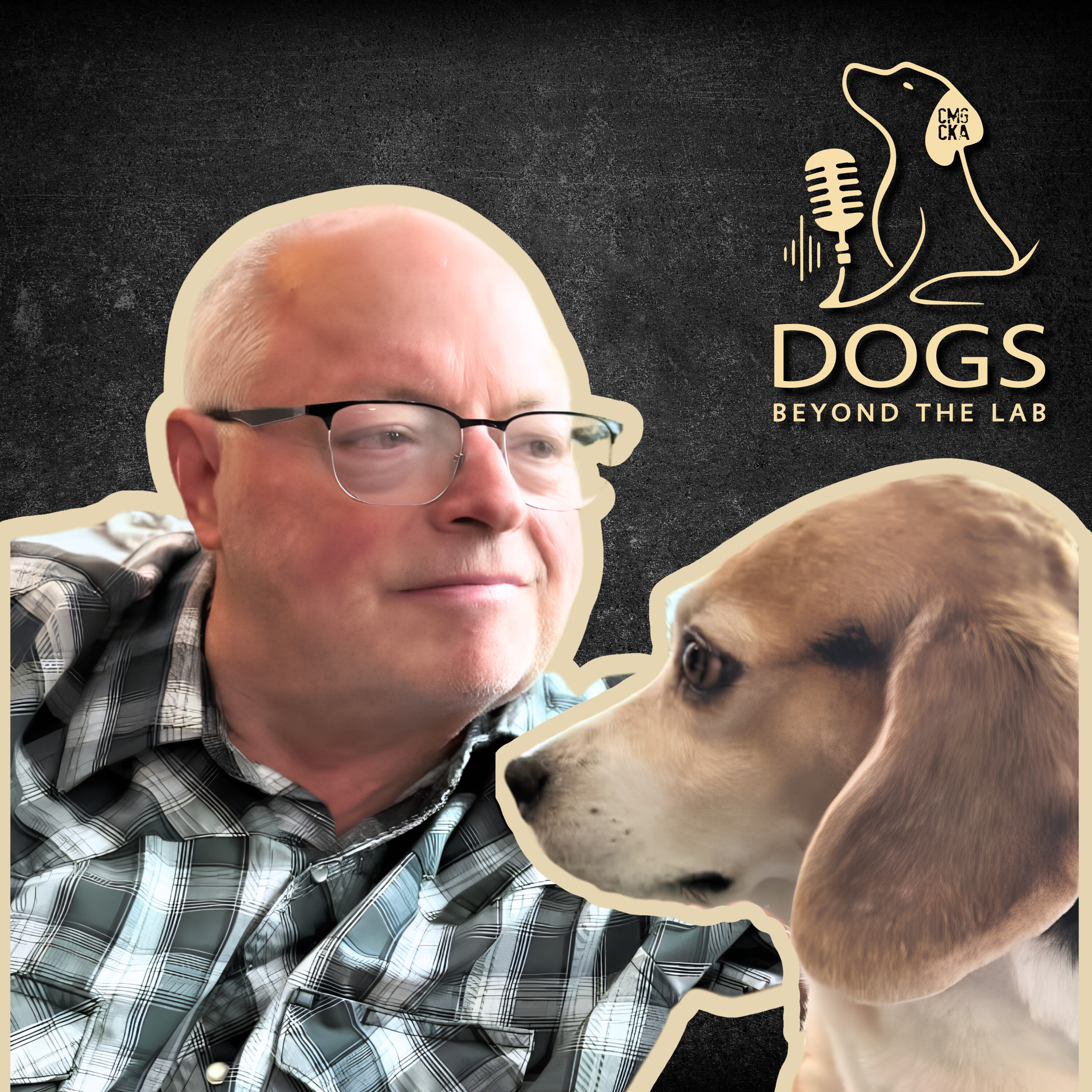


Rob Wadd joins Dogs Beyond the Lab to share the profound journey of Gabe, a former research beagle whose life was transformed by love, patience, and community. Rob recounts how he and his wife Sharon moved from life with Badger—their confident, well-adjusted beagle—to adopting Gabe, a deeply traumatized ex-lab dog terrified of ordinary things like doorways, wind, darkness, and TV. With Badger as a mentor and Sharon as his anchor, Gabe slowly learned safety, routine, and trust, from four-hour backyard sit-ins to finally mastering the dog door and cuddling on the couch—after years of keeping his distance from Rob.
When Badger passed, Kindness Ranch connected them with Kai, the tiger-striped beagle they’d originally hoped to adopt, completing a poignant full-circle story. Rob reflects on what it really takes to adopt a former research dog, when he’d advise someone not to, and how Gabe’s resilience has humbled and changed him, turning him into a thoughtful advocate for both dogs and the humans who care for them.
The hosts of the show are:
John Ramer is the Executive Director of Kindness Ranch
Lori Cohen is the Founder and Executive Director of The Beagle Alliance
Chelsey Marino is a canine Behavior Specialist and the founder of Command Canine
See Privacy Policy at https://art19.com/privacy and California Privacy Notice at https://art19.com/privacy#do-not-sell-my-info.
John Ramer 0:00
I'm John Raymer from Kindness Ranch Animal Sanctuary in Wyoming,
Chelsey Marino 0:04
and I'm Laurie Cohen from the Beagle Alliance in Manitoba, Canada, and I'm Chelsea Marino from Keeper and Kin in Charlotte, North Carolina, and this is Dogs Beyond the Lab.
John Ramer 0:17
Hi, everybody, and welcome back to Dogs Beyond the Lab. Laurie, Chelsea, how are you today?
Lori Cohen 0:22
I'm great today. How are you guys? Yeah,
John Ramer 0:25
right on. I'm doing great today. We're joined by full disclosure, a good friend of mine and a doctor from Kindness Ranch. He had an interesting start on how we met and found his perfect furry family member. So everybody, welcome. welcome Rob and Rob. Go ahead and introduce yourself and tell us about your pups.
Rob Wadd 0:47
First of all, thank you so much for inviting me here. One of the great passions of my life is talking about pups. So if you guys have about 10 or 12 hours, I'm all set. I could talk about
Chelsey Marino 0:58
dogs all day. So multi-part
John Ramer 1:00
series. Yeah, I'm
Rob Wadd 1:01
thinking this is a good group to do that in. Yeah. So to to get started is tell you a little bit about how we came to to adopt Gabe and to go through Kindness Ranch. We had a senior beagle. He was the the best dog we've ever had. I mean, amazing dog, smart and friendly, loved everybody, and we started talking when he was about six years old that we wanted to find a friend for him, a companion for him that he could train, teach, mentor to be like him. We knew that obviously dogs don't live, don't outlive us. They don't live as long as we do typically, and we didn't want to lose him in for forever. Well, we waited. We stumbled on that decision for a little while till he was about nine years old, and then we made the decision. It was time to go ahead and start looking into a pup. Initially, I had expected we would just go and find a pup at a breeder, but some very good friends of ours, our veterinarian here in town, Dr. Rob Bruner, and the lady that we actually adopted, Badger, who was our senior dog from Duane Van Buren, both recommended adoption. They said, you know, look for an adoptable dog. Duane had since stopped breeding and selling beagles, and she was pushing real hard for adoption. Well, that sounded good to us. Those are two people we respected immensely, and we said, "Okay, let's let's look into adoption. So, Sharon and I both enjoy a challenge, although sometimes we get more than we bargained for. But I started. I saw the. Sharon started looking at rescues, local rescues, and she was anticipating maybe a maybe a puppy, whatever breed didn't matter, or a senior beagle. Well, we already had a senior beagle, so that didn't really help us much. And because I am stupid enough to really like a challenge, we looked. I actually found out about these animals called laboratory rescues. We'd never heard of them before. Started looking online for information. Found a resource that we were that we went through and were approved to adopt, but they were a great distance away from us, and there was no way for us to get that that pup here if we had chose to adopt Sharon, who's the researcher. Sharon, my wife, who I should have introduced. I apologize. Sharon is the researcher in a family, so she started digging into okay, if we want to do this, where do we look? And she found Kindness Ranch in one of the greatest things that has ever happened to us in our lifetime together, we were approved to adopt. We actually saw this beautiful tiger-striped mixed breed beagle, and Sharon fell in love with her. And based on what Dr. Rob had told us we were kind of looking for a female, and so we fell in love with her. We were approved to adopt, and it turned out that she was not ready for adoption. So we had fallen in love. That was a tough deal. And John emailed me one afternoon or evening and said, "Hey, I know you're looking for a female, but I have a very traumatized male here. He just came in with the latest rescue. He's here with I think it was eight other beagles, and John said he has stolen my heart, but he is not going to do well here. You guys have a beagle. I think he'll do well there with that. And he said you guys can adopt him as soon as he clears medical. Well, I read the email to Sharon, and she was nodding her head yes before I even got halfway through the email. And she will tell you that she fell in love with Gabe before we even had any idea what he looked like, what he was. You know, it was a good thing we got there and he wasn't a porcupine because Sharon was going to adopt Gabe. That was Zach. We made arrangements to visit Kindness Ranch. It was just about three weeks, I think, after he was he was rescued. He was a tough case. Now we took Badger with us.
Rob Wadd 5:13
We went to, and I think you guys both know of the Canine Corral. Badger was in the Canine Corral. We were all in the canine corral too, and they brought Gabe down, who at the time was Nico, for Nicodemus, and we changed that name. Although both of them fit him, but we thought Nicodemus sounded like a really long name, and we were afraid that we weren't going to be able to call him. Come here, Nicodemus, come here. So
John Ramer 5:39
it'd make you sound really pretentious to your neighbors. Yeah, yes. This is
Rob Wadd 5:42
my dog Nicodemus. It's like okay, whatever. I like it.
Lori Cohen 5:46
I like it. It's biblical, John. You know, I like it. Yes, and
Rob Wadd 5:50
and actually, Gabriel is too. Sharon picked Gabriel.
Lori Cohen 5:54
It is
Rob Wadd 5:55
too. I believe it's the strong man of God. We did not know how prophetic that was because Gabe is a strong little boy
Lori Cohen 6:03
and an angel, Rob, an angel.
Rob Wadd 6:05
Yes, yes, one of the I believe the two that are named in the in the Bible. So we Sharon again did some research, found the name Gabriel, shortened to Gabe, of course. But anyway, so they brought Gabe down, put him in the canine corral, and he immediately took to Badger. Badger was doing his beagle thing. He was patrolling the perimeter, sniffling on the fence. Perfect beagle, tail held high. Gabe, who had come down and had his tail tucked, immediately took to Badger, followed him around the Canine Corral, and the tail went up, and I think that's when I realized, you know, there's something here. There's more. There's more than just this timid little dog here. He needs. He just needs a great example, because he thought he thought, okay, if if that dog can do it, who's obviously very cool. I can do it too, and it showed the underpinnings. I think of confidence, of self confidence on his part, and we thought this was going to be a breeze. We raised an excellent beagle badger. This we had talked all the way down. Billings is about five hours away from Kindness Ranch. We spent the night before we drove down and finished up the drive on Saturday morning, and we talked about we're gonna you know we're gonna get him in the house and we'll walk him around the neighborhood. He'll learn to meet people. He's gonna learn to meet other dogs. He's gonna be so happy and it's gonna be a breeze. We know what we're doing? Guess what? It took us after we got him into the canine corral. It took us an hour and 20 minutes to get him into the car. We could not get him to come close to us. John, when I remember, John tried and then went back into the office and came back out and walked past me. He's like, "I'm not. I'm not above bribery. I've got snacks.
Speaker 1 8:02
So the
Rob Wadd 8:03
unfortunate thing about that is Gabe didn't care about snacks at that point. But finally, a young lady, a staffer who had somewhat, I guess, bonded a little bit with Gabe at least, came down, and after about 15 to 20 minutes of trying, she was able to get him, she carried him over to the car. We put him into the car, and John and the ranch had given us a carrier, a crate to put him in, and he retreated into that crate. And the first picture I have of Gabe just breaks my heart. He is what in what we call resignation mode. He and you guys, I know you're familiar with it. It's basically when they just shut down, they go far away. He was staring off in the distance. He was back in the corner of the crate, looking to the side of the crate. Would not look out at us. He had just basically frozen and gone away. And we saw that a number of times over the years we've had him. Fortunately, we don't see it anymore. So we got him loaded in a crate, getting ready to go home. John had given us a leash and a collar, and we had those on him. Stephen, who was one of the staffers at the time, shut the tailgate of the car and said, "By the way, he's not potty trained. And John walked away, and Sharon and I said later on, we're like, I wonder if they're saying, I wonder how long it'll take them for them to come back if they'll even make it to Casper. Well, we did. We made it to Casper. We we had decided we're going to stop this little place with a little dog walking spot there, and I went in to get the dog some water at convenience store, and Sharon took Gabe and Badger up to the dog walk area, and as we were, I came back, and as we were just hanging around in the dog walk area, Gabe's just walking around, you know, loose, and and badger is as well. They're on leashes, but no one's holding them. A gentleman approached with another dog, so I did what I would. Normally expect that I would do in that situation. I took the leash. Well, I don't know how familiar you guys are with rodeos, but if you know bucking broncos or bucking bulls, you know what what Gabe was up to. I have never seen a dog leap and twist so high in my life. He was in a full-fledged panic. I immediately dropped the leash, and she looked me said, "Oh, I tried that already. I should have let you know. Yeah, yeah, you might have wanted to do that.
John Ramer 10:30
And Rob, this is the first time I'm hearing any of this. My heart is just racing right now. I know, so
Lori Cohen 10:38
nervous.
Rob Wadd 10:38
Yeah, I'm. Yeah, I'm sure, John. That's you know we we share this information in in some places, but we haven't. We don't really tell everybody this story, and I don't really know why. It's a. I think it's a fascinating look into the what I would call the rehabilitation of laboratory dogs. We got Gabe home, and he immediately we took him outside. We weren't sure what we're going to do with him. We had a fenced backyard, a nice backyard, and we took him outside with with Badger. And we got home around 7o'clock that night, and we sat in the backyard for four hours, waiting for him to calm down to the point where he might approach us, he was afraid of everything, and I mean everything. The we had a motion sensor light that terrified him when it turned on. He was afraid of planes flying overhead, even the high flying planes, jets. He was afraid of birds flying over us. He was afraid of voices across the street, people, cars driving by, people talking in neighborhood yards, everything brightened down, except Badger, and that was the one thing that we had going for us. As Badger and Gabe kind of hung around a little bit together, Sharon and I talked, and we were, to be honest, terrified. We had this pup who, you know, one hour out of Kindness Ranch, and we we realized then that everything we had talked about on the way down was not going to happen. The one thing that really came out a lot was how do you you know we couldn't approach him. As soon as we did, he ran. So how do you potty train a dog that you can't approach, and and that was an issue for us. We weren't sure with Badger. He was easy as as a pup. If he ever started to piddle or poo in the house, we picked him up and took him outside. And with Gabe, that wasn't going to happen. So we said, well, I guess I guess we'll we'll look at at that when it happens, and we'll go from there, which is the way we really worked with Gabe most of the time. You know, we we talked like I said, and we really were underqualified for what we're looking at doing here, and we talked about it. We said, you know, we only have one tool, and Stephen and John had both both basically given us the two main rules when you deal with laboratory research animals: love and patience. Well, love was not an issue. We fell in love with Gabe before we even saw him, and once he was in the car, actually once he was in a canine corral, he was our family, so the love was automatic. The patience was something we're going to have to learn, but we said, "Well, we've got love, and I guess we're going to have to rely on that to help him and to help us through this. He finally, we had some four wheelers at the time, and and Gabe went, and about 11 o'clock at night, Gabe went and crawled under one of them when Sharon and I were trying to to to get him to bring him in the house, and Sharon was able to reach under there and and pull him out, and she carried him into the the house, and from there it was a whole nother set of challenges for him. Of course, everything scared him. We sat down. Sharon sat on a couch, and at one point, and I have a picture of the exact moment that this happened, he was sitting next to Sharon's feet, and she reached down very slowly and gently and patted him on the head, and that was the moment that Sharon became Gabe's best friend. I have a picture of it. It's amazing. She's trying really hard. You can tell that she's trying hard not to not to lean over too far to startle him because he's so easily startled, and and so that was really the beginning. And what we would learn further was that number one, he was afraid of the dark. Number two, he's a deathly afraid of the wind. He still is. He's afraid of the dark. He's afraid of the wind. He was afraid of TV.
Rob Wadd 14:41
Never got over that, and we eventually made really one of the greater choices we've ever made. We got rid of our TVs, which oddly enough I don't miss it all, and neither does Shikron, and Gabe certainly doesn't because it terrified him. And so you know that he was afraid of of so many things, and. We just decided we're going to take life one step at a time with him. We we loved him like crazy. He was he loved Badger. Badger was I would say Badger was an excellent mentor because Badger was nine years old at the time and he was tolerant of Gabe, but he never was easy on Gabe. It wasn't like he was ever mean, but it was like I'm pretty certain that he that Badger's attitude was look, you're going to have to learn, and the way you're going to learn is to emulate me. But I'm not going to sit here and make it easy on you because it's not going to be an easy ride. So he was a smart dog, and he taught Gabe things that that we'll never know. Gabe was afraid of doorways. We have a dog door, and he was afraid of doorways, and he was afraid, definitely afraid of the dog door. He would not come in through the dog door, and Sharon would actually get on her hands and knees and poke her head through the dog door and call Gabe and try and offer him snacks, and he wasn't having any part of it. Well, I don't know how many weeks into having Gabe it was, but they were outside. Badger and Gabe were outside. Badger came in, and we were getting ready to go get Gabe. And then we looked, and he's right behind Badger. You know, I guess it eventually dawned on Gabe if if Badger can do it, Gabe could do it.
John Ramer 16:12
You know, Rob, I just want to say how much I appreciate such a detailed recalling of all the stuff that Gabe has had to overcome, because there's so many people that, not just some of our guests, but so many people listening that might struggle to remember all of those little victories and all of the things that the dogs have to overcome when they get into a house, and not that it's any like excuse or anything like that. When we adopted Gabe to you, we were going through such a transition and a large number of beagles that we we don't have to sugarcoat it. Our first set of emails weren't exactly super super friendly and understanding, but year. your your determination on getting one of these dogs and and doing the right thing, I I knew that you guys were going to be great for Gabe.
Rob Wadd 17:12
We had no way of knowing it at the time, but it has been the the the adoption of of Gabe and has been has changed our lives. I mean, it's all for the better. You know, there are are a ton of challenges, and there I know there are probably people listening who question, "Can I do this? Is it worth it to do it? Whatever challenge there is involved is is minute compared to the reward that you will feel when you see this dog being happy and confident,
John Ramer 17:44
Amen.
Rob Wadd 17:44
And of course, I have made some absolutely wonderful, wonderful friends as a result of it. Sharon and I are good friends with John and Katie. Like I said, we we really believe that John is a hero, and I know that Chelsea and Laura, you two are as well. I don't know you as well, but the work you're doing is nothing short of heroic. And I and many, many, many adopters like me are grateful beyond description for what you guys do for these pups.
Lori Cohen 18:15
Well, thank you, Rob.
Chelsey Marino 18:16
Yeah, thank you.
Lori Cohen 18:17
We think you guys are the heroes because we we do we do what we do, but you guys are boots on the ground every minute of of every day, exercising your patience. And I know that this should not be my takeaway, Rob, and it's not. But I mean, you got rid of your TVs, and Sharon's putting her head through the door. I mean, it just goes to show you what we all do for our dogs, and how much the relationship with our dogs is so important that we will bend over backwards, change our lifestyle, not go on vacation, do what we have to do, worry like about them like their children. I mean, the relationship with our dogs just what you are saying just says everything.
Rob Wadd 19:05
Gabe and Kai are family, and there are some people that feel that there are some people that don't. But the people that matter to me are are Sharon and and myself. They are family, and they always will be to us. Badger was family, and and he was the key, the linchpin, I guess to all of this happening because we had such great fortune with Badger. It's funny too. Speaking of Badger, it's really amazing to see what I think is the difference between a dog that hit the ground being loved, and that was Badger. He had when we went to to to get him, he and I was listening to the last podcast, and and your guest was saying that her dog had adopted her, and Badger adopted Sharon. She there was no doubt about it. That was Sharon was going to be his mom, and that was that, and. Our Duane, who we who we had purchased him from, spent more time qualifying us than talking about Badger. But he and and we went through all of this, and he was loved from the second that he was born, and then of course throughout up until the time he he came to us, and we loved him, and and he was family the whole time, and then we see Gabe, and we see the difference in a dog that was not born in love. He was born in in terrible circumstances, and he carries that. And then he spent the first two and a half years of his life in in circumstances that are just abhorrent to me. And when he came to us, like I said, he would adopt this resignation. When you pick them up, he would just stare into the distance. He was nowhere near us. His whole body said, "Do what you're going to do to me. I don't care. I'm not home, and that was horrible. You know, he expressed stress in other and anxiety in other ways too. And of course we hear about the dogs that circle. Gabe circled all the time whenever anything stressed him. We had a an ottoman like a coffee table in the living room, and Gabe would circle that thing as soon as he felt stressed. And the the behavior that that always concerned us most, I think, was as he would do that, he would look to the ceiling. Whenever there was trouble, whenever he felt anxiety or stress or panic or fear, he looked up. And I do not have, I don't know why. Like we don't know. We have some. We have some theories. We think maybe he was on the lower cage, and maybe everything that happened came down from above. And so when bad things happened, there was stuff coming from above. I don't know. That's a that's a theory we have, but that behavior went on for years. And he found a safe spot. First of all, by Sharon. Second of all, we have a sectional couch, and he still has his safe spot is still the corner of that couch. Now, there's um I know there's a lot of talk about kenneling dogs, trading dogs, and here's the thing: lots of people think they have the perfect answer. And I will say that every dog is is different. Nobody has a perfect answer for any one of these dogs. We've had Gabe for five years, and I'm so far from having perfect answers.
John Ramer 22:20
Chelsea has more than most.
Chelsey Marino 22:21
I tell people all the time: any question that you ask me about dogs or like training or anything like that, my answer is always the same, and it's it depends. It depends. It depends. Yes, depends on so many things.
Lori Cohen 22:34
Rob, I just I I hope this is okay that I'm going to ask you this, but because it's obvious and you've said it that badger was so important in the, in just for Gabe feeling safe, and then also for his learning, which we always say having another dog in the home is helpful because they learn the cues that we could never teach them. Definitely not mandatory, but of course it's it speeds up the process and etc. I know that when my dog, when I've lost a dog and I have a dog, when I've lost a horse and I have the other horse, that they go through a grieving process. They look for the other animal, but then they kind of step into their power a little bit because they realize that uh oh, I kind of can't be the baby anymore. I've got to. What do you mind me asking? What that looked like for Gabe when Badger was gone? And I'm sorry, by the way, my condolences.
Rob Wadd 23:30
And I appreciate that. Thank you. It still stings a bit, but Gabe was with us. We took. We had to take Gabe to the bet with us when when Badger had to leave. So he experienced that firsthand, and we believe that he understood when we came back home without without Badger. We think he understood to a point what the situation was. He was really, really a good dog. He easily could have gone into a shell and and not come out. He needs a companion, but he did really well. Now, knowing that Gabe can't or couldn't and still can't be left alone at home, it'll send him into fits later on in in the day or the evening that that aren't fair to him to have to experience, and we don't want to have to deal with them, but he was really a a good dog. Now Sharon and I made a commitment that week that one of us would stay home with him at all times, and we did. You know, it was actually a couple days that you could notice that he was was sad. You know, he was withdrawn a little bit. Now, when Badger passed, we got through. It was a Sunday afternoon, and it got through the day. And the next day, Sharon and I talked about what we were going to do. And I said, "Well, you know, I'm going to get a hold of John and see if he's got any ideas. John knew Badger. He was familiar, obviously, very familiar with our situation.
John Ramer 24:58
I know where this story is going. I'm just sitting here smiling to myself.
Rob Wadd 25:02
Yeah, yeah. This this really gets to be the good part. This really is the wonderful part. So I emailed John the next day or texted him. I don't remember. I said, John, you know, I got bad news. Badger passed. Gabe can't be alone. Do you have any ideas? Ask John Raymer, director of Kindness Ranch. Any ideas where we could find a dog? And John sent me back a message and said, "Well, I'm on a rescue right now, but I will talk to my staff and I'll try and get back to you tonight. 10 minutes later, I hear from John again. I have the perfect dog for you. We call her. We call her the house mama. She loves the other pups. I believe John told us when we when we went to pick her up that she was a stern house mother, and she she is she is she certainly is. And so we never John never mentioned her name. Never said anything except I have perfect dog for you. Come on down, stay overnight with us, see how it works out, and if she if she works with you guys, head back the next day. So we went down, drove down to Kennes Ranch the following Saturday, I believe it was, or the following week. It was we adopted him or her on a on the 17th, we adopted her on the 19th. Badger passed on 13th, and so we get down there and and we we meet John and we're talking to staff and they're like, "Okay, bring the dog down. Out comes this beautiful tiger striped beagle. Kai was the dog that we fell in love with that, the adoption didn't work out for us the first time.
Speaker 2 26:44
Wow! That's really wait, wait, wait, wait!
Rob Wadd 26:48
Just crazy, isn't that great,
John Ramer 26:50
John? John, did you know this?
Lori Cohen 26:51
John, you knew this, John. You did not prep us, and you were you also you are you set him up for it. I also you're a matchmaker. There's a lot of revelations going on here. I, I, okay, man, this could be a movie. This is crazy. So wait a minute. This is the original dog. See that dogs choose us, you guys. Dogs choose us. Okay, so Rob, you. This is the original dog that you thought. Oh my God, that you wanted, and she wasn't ready. She wasn't ready.
Rob Wadd 27:22
She had adopted out, and she was she had left and was returned through no fault of her own. I believe the lady that had adopted her was moving to a bigger city, could no longer keep her, and it's really funny because she actually she actually Facebook messaged me one day and said, "I saw I saw your picture with Kai on on the the Kindest Ranch supporters page. I just want to say I'm really happy that she's with you guys. She's she was she loved me. I believe her name was Ivy, and John would probably know better than I would. But she was just she reached out. I've not heard from her since, but but I take it as a huge sign that she's very comfortable that Kai has found a good home, and we are so happy that we are that that she sees that Kai is here and she's safe. But yeah, it was pretty amazing.
Lori Cohen 28:15
Very cool.
Rob Wadd 28:15
Because I mean, how did that
Chelsey Marino 28:16
feel when you saw her come out?
Rob Wadd 28:18
Unreal.
Chelsey Marino 28:19
Like I can because I'm in shock right now. So
Rob Wadd 28:23
we, Sharon and I, neither of us believe in coincidence. So we we saw it as being destined. She had some other work to do, you know, and we had to have and we had to get Gabe.
Lori Cohen 28:35
Yep, she was always coming to you, Rob. She was always coming to you. She
Rob Wadd 28:39
was, you know, and and so she had other jobs to do. We had to get Gabe. So the funny thing is, if we hadn't had Badger, we wouldn't get Gabe. If it hadn't been for Kai, we wouldn't get Gabe. If it hadn't been for Gabe, we wouldn't have Kai. No, it's yeah, it's it's absolutely crazy. It's just crazy, and it is wonderful. They they it was funny because they had a bit of a rough introduction because Kai, I don't think, was taking to the idea that oh sure you're going to shove me off of this this crazy dude here, and she she just let Gabe know in no uncertain terms look this is my you know this is my home I don't know who you are but this my home, and John said you know what told all of his staffers, take Kai, just walk her down the fence. We were in the canine corral. Walk her down the fence, and and Sharon, you take Gabe and walk him. You know about 20 feet away, and they walked down. And I bet you what, John? 50 feet, 70-five feet. Turned around, and everything was fine. Everything was good. Kai and Gabe were like, okay, we got this. We got this figured out.
John Ramer 29:42
Release the pressure.
Lori Cohen 29:43
Yeah, yeah.
John Ramer 29:44
What I remember most about that day, Rob, was Gabe was so obviously bonded with Sharon that that there was there was no way that he was jumping up on your lap while you were sitting in the canine. No, and and Kai did, yeah. And I I remember walking away, and I I told Katie, I said Rob finally has his dog, and I think you I
Rob Wadd 30:12
think you said that I think I think you said you know Rob, I think you finally have a dog, which is funny, and to I guess to explain that a little bit, Gabe was. It has. It took over four and a half years for Gabe to let me sit on a couch with him. That is something that I finally can sit on a couch with Gabe. I can pet him. In fact, he demands it now. He is a very demanding dog because he's spoiled rotten, and that's just how we want it. And he wants dad to sit with him on the couch, and he'll bark at me until I stop doing what I'm doing. I'll go sit down with him, and and we are the best of buddies. But it took four years to get there, and it was a very very long four years. Sharon and I would talk the you know the first night that that he came back and it was obvious the the first night that he got here and several nights well for for months afterwards that he was not comfortable with me and I think he wasn't comfortable with men in general we didn't we didn't we pretty much revolved our lives revolved around him and Badger at that time so it wasn't like we having a lot of company over, and we didn't go see anybody else, you know. So I don't know that it was men in general, or just he he just didn't like the the looks of me, or what. But it was it was a it was tough sledding for a while. Now, over the course of time here, when we're trying to figure out Gabe, trying to understand what it is that we're trying to do because I still don't think that we really have any idea what we're doing. We just we just operate out of the idea that we love him like crazy and we love Kai, and that's what guides us. But we had heard of of a lady that owned a pet shop here in Billings that she had a rescue beetle, and we're like, well, we've got to go meet this lady, and we went to a place called Lovable Pets. Ellie Hanson and her husband owned it at the time, and Ellie was there. We're through two rescues, Eddie and Marty, both Kindness Ranch rescues, and we would and and Ellie just she just was always supportive. If we ever just felt down and questioned what we were doing, which we would still go see Ellie today, I think on on some issues. But you know, Ellie was there, and she never told us you have to do this, you have to do that. You you know, it was it was basically the same advice that we got every time we've talked about the pups: love and patience. And again, the love wasn't a problem. What I realized about the patience, it's not patience with the pups; they're just doing what they're doing. Ellie once told us, you know, dogs don't have calendars, so they don't understand. They don't have to be patients. They live in the moment. We have to be patient with ourselves. It's when we start, and it's easy to do in this in this in this endeavor. It's easy to on this journey is to question yourself, and when you start to question yourself, you can start to be really aggravated with yourself. There's some things that that we've done that I go, was that the best way to handle it? How is the best way to handle that? And you can get down on yourself real easy because the dogs don't make it simple. They just they're just themselves. They're just being them. We're still trying to figure out every little nuance that Gabe's got. It's a lot easier now because he he doesn't care, but you have to be patient with yourself. And so, when Ellie said, and Stephen and John have said love and patience, I think it's really important for people to understand the love. You know, if you're interested in doing this, this, then you've got the love in your heart.
Rob Wadd 33:55
It's the patience with yourself that really, really you need to work on, because you can't beat yourself up over not understanding that he didn't want to go through a door the first time, or not understanding why he won't do this or he won't do that. I remember sitting in the living room months, years after we got Gabe, telling Sharon, "You know it's not fair. I love him. I just want to pet him. And she's like, well, he loves he loves you too, you know. You you need to understand that you can see the way he he looks at you, but people ruined his trust. They, you know, we are trying to, we are trying to convince a dog whose trust in humans has been absolutely stripped away, under terrible circumstances. We're trying to tell them, look, you can trust me. Well, initially they don't know the difference between me and the and the guy in the lab. You know, we're just people. We're just trouble. I continued to work under the idea that okay, he loves me, and this will eventually get better. Had it not, I con I consoled myself with the idea that. I know two things about Gabe. There's two things I know for absolute certainty. Certainty. Number one, he is safe, and that above and beyond all else is what matters to me. We tell the docs that because we talk to our dogs because we're half loony anyway, but we tell them you are safe. You know you are safe here and you are loved, and that's the second thing. I knew that he was loved. Anything else that comes from that is is really the whipped cream on the on the Sunday.
Matt Cundill 35:35
And now dogs beyond the lab continues.
Chelsey Marino 35:39
I think it's so interesting everything you're saying because it's something that people see a lot with these dogs when they first adopt them is this fearfulness of every little thing out there, inside, outside, going through the doorways, meeting the non-primary parent, and you know bonding with them. So I guess first question wise, obviously you know going into getting Gabe and getting Kai, even I don't know you know how she came home, but you know going into getting them that they're they're shut down, they're traumatized, they're scared. What do you think was the most surprising thing, or the thing that happened, or the thing that they were afraid of, where you're like, "Wow, like this is a different situation than we were prepared for, or that you know, a normal dog thing that wasn't normal
Rob Wadd 36:35
to them. Three three things really. The first was was being afraid of the dark. Gabe is terrified of the dark. We leave two lights on in the house now all the time. There are two lights that until the bulb burns out, those lights are on, and that just has to be the way it is with him because he is just afraid of the dark. And and I've tried to convince him he shouldn't be, but he doesn't listen for bees. So the other thing is the wind. He's really terrified of the wind. Even in the house, if we hear if the wind picks up, we hear it outside. He's scared. He's very, and again, I don't not too sure what that is, what the cause of that is. I I think it's probably just because it was so new. I I really don't know. I can't guess. I can't speculate. There's no explanation for him about what it is. So, the other thing was that really this and this really impacted the way that we treated Gabe, because initially we had planned to put him in to to crate train him and have him in a crate. We'd read a lot of stuff about you know they want a safe space, they want a den. They want this. They want that. Well, and and Sharon and I at some point had to go back to work after we got them. So so we both went to work. I went. I worked earlier than Sharon did. So I'm at my desk at work one morning, and the phone rings about 730 quarter eight in the morning, and I pick it up, and and Sharon's like, I, I don't know what to do, and I can hear what sounds like humans screaming, suffering in the background, and I'm like, I'm like, what? You know, what is that? She's like, it's Gabe. He's in the crate. I said, let him out, let him out immediately, and she did, and he's never set foot in a crate since, and he won't. Now that's a personal thing on our part. As we said, every dog is different, so not every dog is going to have that reaction. I know lots of dogs, and I'm guessing lots of of rescued dogs feel totally comfortable in a crate. They feel a safe space there, but it doesn't work for us. You know, I wish I could explain to you how horrible that sound he was making was. It was heart wrenching. It was just and poor Sharon and stuck here with no idea what to do. What do we do about this dog if he won't go in a crate? And like I said, we let him out, and and he's never been in one since. Now we did, we did. So we had, we had, we have a kitchen with tile, and we had a living room with carpet. So like, well, you obviously can't be left alone on the carpet all day. So we barricaded him and Badger into the kitchen using the absolute worst things you can use for barricades, which are like chairs, and I think we had the crate that he was in. We put that there, and I put up a webcam, basically a security camera, in the in the kitchen, so I could watch, make sure he was okay, make sure he wasn't climbing on the counters and killing himself. And I look, I'm watching him one morning, and he leaps right over the barricade, jumps right over the barricade. I'm like, well, that didn't work so hot, and that wasn't the worst part. Then he came back and he pushed the cage in so badger could get out too. He's like, you're free, badger, get out of there. Absolutely. Problem solver. Oh yeah, he was. Yes, he's a he's a smart little guy. I John, I think you got to be smart to get out of the labs. And I don't know what what Gabe did to get out of there, but I think I think the dogs that get out of there have to want to get out. And I think Gabe did. He's a smart little guy.
John Ramer 40:17
You know, Rob, there's a lab that I work with that they just recently closed. I know he would he would give us dogs when he considered them to be too squirmy to work with.
Rob Wadd 40:30
Really?
John Ramer 40:31
So if a dog didn't like being held or manipulated, and they couldn't get a needle in or something like that, he he would consider them a risk, and he would reach out and say, "I got a couple of squirmy ones. If you want to deal with them, I'm like, hell yeah, I want to deal with them. Send them to me.
Rob Wadd 40:49
We'll take the squirmy ones,
Speaker 3 40:52
huh? You said Chelsea. Did you have four years for
Chelsey Marino 40:55
you to even be able to, you know, hang out with them? And I'm sure with a variety of other behavior issues also took a lot of time, and my question is, how do you stay motivated for that? And that's something I have to talk with my clients all the time. Is you know I say that like be patient, it will happen, celebrate the little wins. But how do you wake up every day for four years and know that, like, hey, dude, like, I saved your life. Like, can we hang out a little bit? You know, like, how do you stay motivated, knowing or maybe not knowing that it's going to get better?
Rob Wadd 41:32
I think there's a couple things that you want to do. First of all, we made a commitment. You know, Sharon and I talk about that a lot. We made a commitment. Believe me, the first couple weeks, the first couple months, probably the first year, more than one time, one of us said, "You know, he's going back. He's going back. I can't do it. And the other one never agreed, and it was just a matter of it was a matter of frustration and a matter of just expressing the frustration. So, but we made a commitment. We looked at Gabe, we saw, understood to a degree what he'd been through, and this can sound funny, but we respected the fact that he had done it and had survived it. So, and and I'll tell you, we didn't want to let John down. John trusted us, and we were bound and determined that we weren't going to ruin that trust, we were going to disappoint them. We had some support systems in place that helped Donay, who we got Badger from, Ellie Hanson, of course. Ellie was always there for us. Our doctor, our bet, Doctor Rob, and we created an online-up Facebook group that has been absolutely just critical for us. The Facebook group is called Worldwide Beagle Pack. It's a kind of a stupid name now that I think about it, but that's what we ended up with because we were making it on the fly, and it's a very small group of people who were interested in Gabe's journey. So we had posted in other Beagle groups and people kind of and we had an issue and so I decided we're going to create our own our own Facebook group and we did and the the Beagle group is much more than a group of people with shared interests it is it has become quite literally a family and every time that we had an issue, and just really just wanted to hear. You know what? You guys aren't horrible. You guys, you know, aren't terrible people. You're you're you know we support you. They answered. We have you know it's a it's a different kind of Facebook group. There's no dissension ever. It is love and support. People who have have rescue beagles, people who don't have rescue beagles, people that don't have dogs at all. It's only 205 people, but they are family, and you know we're always open to other people joining. John, we we several times we talked about we got to get John invitation, but we think you know what John's got his own. John's a little busy, you know, and he's got the Kindness Ranch adopter and foster support page online, which we are, which has been a big help to us as well. So, but obviously, anybody that's interested in in joining and keeping up with what I'll call the antics of our pups is more than welcome. Like I said, these the the the Beagle Pack family is indeed that, and they've been great. Now, in terms of the the motivation, that's the support part of it. The motivation part is just watching him, just watching what he how he behaves on any given day, and knowing the next day is going to be different. And these days, typically, different means better. There was a time when we talked, you know, and it's hard to put a timeline on this stuff because it's, you know, we're coming up on five years with Gabe, but it's it was probably a couple years that that different meant one step forward, two steps back, sometimes two steps forward, one step back, sometimes. One step forward and about 4000 steps back.
Lori Cohen 45:02
So true.
Rob Wadd 45:03
But we watched, and over time, Gabe started to get beyond the two steps back. We can still see him, but one of the things that we've looked for with Gabe and how he's doing, how how we gage how he's doing, is what we call recovery time. There was a time for a long time, when if something bad bad happened to Gabe, the TV went on. I had a flashlight in my hand one night, and we did not know he was terrified of flashlights, and he saw the beam. And the fear happens immediately. But the worst thing with Gabe was that it continued. You know, he would be-I don't know how to even describe it. He'd be a mess for two or three days, where we saw the constant circling, the constant looking up at the ceiling, uneasy, even more uneasy around me than than normal, and so what we look at is when he sees that now, because he's still going to see, we're still going to have events. We know that thunder is a bad one for him, wind of course that kind of thing. But we're still going to have things that that trigger him. But his recovery time is almost instantaneous. We see him go immediately to, you know, to to fear, but he comes right back, and that's how we've gaged it over the over the years. Is how fast does he recover from a surprise or a shock, and he's doing really well. So, at this stage, Chelsea, knowing that tomorrow I'm going to see a new Gabe and a and a Gabe that's going to recover even better from whatever unexpected things happen, that that helps keep me motivated as well. Now, Sharon, you know she she gets the she's had the company Gabe for five years. Yeah, so she doesn't look good.
Chelsey Marino 46:48
Yeah, but yeah. So that's for her. I I think
Rob Wadd 46:51
the motivation is the motivation comes from from from loving him and and Kai. But that's where the motivation to get up every morning is now. I will add to that. Gabe is Gabe needs routine. Routine for Gabe is security. And when we first got him, and for years afterwards, routine meant you need to do this, this, and this. And if if you do this, this, and this, I'm not going to be a mess, and we did that. We did the routine. We there were things that we had to go through to do that. Now routine is fun. Gabe has decided now that routine is a great thing because we have a lot of fun. Our our strangest routine, and I hope that no one has me once had me committed after this. Our strangest routine when when Gabe came, Sharon sang him a lullaby every night before bed. The lullaby was really simple. Gonna go night night. Gonna wake up here. It's gonna be a great day. Okay. Now it started as a lullaby. It has now transitioned into a heavy metal full production rock show, where where where Sharon sings, I sing, Gabe barks along, and if he's in a really good mood, he hops from foot to foot so it looks like he's dancing, and we do that two verses, and he runs around to the other side of the couch and gets a snack, and that has to happen every night because that is fun. It also sings. Rob, are you
John Ramer 48:26
playing air guitar doing
Rob Wadd 48:27
this? I don't. I don't.
Chelsey Marino 48:30
I was just gonna say I sing my dog a breakfast song. It's like the Cheers theme song, but it's about Stanley breakfast time. So, like, I don't. I don't think this is weird at all. I also do it.
Rob Wadd 48:42
Well, Laurie, I'll I'll tell you, I'll tell you, we keep we keep promising the Beagle Pack that we're going to have a video of that. So one of these nights, I'll take a video. I will do that, and I will obviously let you guys know. One
John Ramer 48:56
of the things that I've I've got mad respect for you and everything that you've gone through is that you have learned through trial by fire. I've seen a lot of similarities to a number of the things that both Lori and Chelsea talk about and go over with adopters and fosters and and their path or first steps to forever, first steps to freedom, I commend you for for learning as you go. And I almost feel like I need to apologize because you adopted pre Chelsea.
Lori Cohen 49:41
I say that all the time, John. It's so funny. I say that. I'm like, oh, I'm really sorry. You were before Chelsea, BC. Yeah, BC before Chelsea. But then the other thing that I
John Ramer 49:53
commend you for, and it's it's funny that you bring up Ellie Hanson because. What what I remember most about Ellie was how significantly former research animals shaped the current path that she's on, and I also know that you've definitely become a lot more active in advocating for former research animals. I'm curious what you would say changed the most post Gabe in in your life and how it's influenced the decisions you've made moving forward.
Rob Wadd 50:34
First of all, before before Gabe, we had no understanding of this issue at all, you know, and that's very much by design, on the part of the labs and the breeding facilities. They don't want us to, you know, John. I think, I think you were the one who told me, you know, they would prefer not to adopt animals out. They're typically their excuses. Well, these are not dogs that can be pets, which could not be further from the truth, they make wonderful pets. They are going to require some commitment, and they also, you know, but but any animal does, any pet that you have does, and so so that's something, John, that I think I became aware of with Gabe. Number one is is the commitment that it takes not to just to have a rescue dog, but the commitment you need to really make to have any pet out of fairness for both the pet and yourself. But I think in terms of the activism, and I, I don't know, you know, I don't, I don't see myself as an activist. Although what I, what I see, what I, I guess, what I feel is that I want this issue to be done, but I also want it to be done the right way. I want people that are involved in it to do it with kindness to each other. One of the you know, of course, there was the the big rescue out in Wisconsin here lately, and one of the troubling things that I see online, and I'm in a lot of beagle groups, and some I'm some I'm getting out of. But one of the troubling things I see is criticism of people who are simply trying to help, and the criticism is very can be very vehement, can be downright mean, and I think that I think that there's a lot of people who are trying to help these people who foster adopt these dogs that are trying to help, but I don't think are going about it with something that we need to keep in mind, and that's be kind to each other as much as we're kind to the animals. We need to take a step back. Now, I am guilty, and I will admit it that there are times when I have not been kind. I get a little triggered. I guess what in terms of in terms of this whole rescue effort right now and the whole drive to end rescue research on animals needs to be needs to be done with with love. You know that's that's what fixes the the dogs. Fix for lack of a better word, but that's this-that's what we promise for the pups when we adopt them, and we should be promising that when we deal with people who are in very hard and can be very tough circumstances trying to figure out their way through this. You know, Gabe was a-you know-I can't overestimate the challenge that Gabe was. We were there were times we felt just defeated to have somebody who would have come in at that time and said, "Well, you idiots, you're not doing this right. You can't do this. You need to do this. You need to do that. Gabe wasn't going anywhere. He was ours. He was he's our family. We love them, but what kind of mindset would we have been in after hearing how horrible we were doing when all we were trying to do was help?
Lori Cohen 53:48
I really appreciate what you're saying, and I think we could all say that we agree. and And it's it's a little bit disheartening sometimes, if I must admit that when you know people who love the animals so much call themselves compassionate, and yet that seems to go out the window sometimes when we're dealing with our fellow human beings. And so I appreciate what you're saying, but this is what I'm hearing. And tell me if I'm wrong, but you seem to be so reflective on this and yourself and Sharon, while you went through this and the entire process and what Gabe was going through and Kai and even Badger, but it sounds this has humbled you, has it not? Is it safe to say that this has truly humbled you? Because that's what it sounds like to me.
Rob Wadd 54:37
It truly has. You know, we've the the question has come up in previous podcasts. What have you learned about this, Rob? What has Gabe taught you? And it has I see so many qualities within Gabe: strength, resilience, love. There's no. There's no other way to put it. Am I humbled because a seven-year-old beagle has shown me a better way to live? Well, you know, to a degree, I'm very grateful as well. But you know, and and Badger did to a degree too. I think you know these dogs. dogs, if we are willing to open ourselves up to learning from them instead of just, you know, just taking them for an occasional walk. Not that there's anything wrong with that, but if we're if we're willing to open ourselves up to learn from them, they have a lot to show us. They have a lot to teach us. I have been humbled very much. So you know, then I then I look at the job that you guys are doing, and I think you know the work they're doing is beyond what I'm capable of. I don't have the temperament for it. I I sometimes Sharon and I talk about John's level of patience, which has got to be saint-like, and I'm guessing you guys as well with some of the things that you go through, but you know, I I could not walk. They
John Ramer 56:06
have to be patient to put up with me, Rob. I'm admitting,
Lori Cohen 56:09
I'm admitting, Rob, that I run out of patience on occasion. I'm not gonna lie.
Rob Wadd 56:14
And and I and I do too. I try really hard, you know. And Gabe didn't teach teach me patience per se, but the experience. Yeah, for
Speaker 1 56:22
sure.
Rob Wadd 56:22
Gabe, definitely.
Chelsey Marino 56:24
Yeah, I think it's patient just loving a dog who's not reciprocating it in the way that you would like, and just saying like, "Hey, like I still love you. You're still my dog. I'm gonna keep trying, even though he's not giving you a ton of that back. Like that in itself is patience. You
Lori Cohen 56:39
really summed it up. You really summed it up, Rob. That you know what you've learned.
Rob Wadd 56:43
It's really funny because with Gabe, everything is a different situation. You can do one thing in this room, you go in another room, and that's a whole different world, and things don't work right there. Well, we Gabe used to go out in the backyard badger, and at some point something happened, and he decided he didn't want to go in a backyard anymore, which meant that we had to to walk him. We and he was not yet leash trained. He wasn't comfortable on a leash, but we managed to get some help from the from Big Sky Pet Center where the where his vet is, and they were actually able to get him a leash on him, and they walked him out one day from from daycare, brought him out to him, we wanted to get him socialized, and and Badger went with him, and he did. But but you know we we have to drive down the street. He can't walk in the neighborhood. He's not comfortable walking where you can't see. So we walk. We go drive down the street to a Cabela's and a Sand Club. Nice wide open parking lots. Gabe is happy as a clam walking in there, and and we can see if there's people approaching, dogs approaching, stuff like that. Which is not so much an issue with Gabe, but but Kai takes a little exception to being confronted by surprise. So so we drive down there, and as we drive, I would set my my hand on the shifter of the car, and Gabe rides that ride down to the to Cabela's in Sharon's park, Sharon's parking lot, in Sharon's lap, and he would rest his hand on my or his chin on my hand, you know, and then I could kind of stroke his ears and and pat him a little bit, and he was fine with that. And we get out of the car, and immediately it's like, well, that dude's back in the car. I don't know who you are. I like him. I'm not so crazy about you. And that's how it was for years. But probably was two, three years that car dad was fine. That sounds
John Ramer 58:32
like raising teenagers. Yeah,
Chelsey Marino 58:35
yeah, yeah. I was just gonna say, it kind of sounds like a baby. Like I need the baby to chill. Let's go for a car ride.
Rob Wadd 58:40
Gabe's like I don't know. I wish we could get the car dad in here because he's cool, but you, dude, you are you are no fun at all. So, but you know, so everything's situational. So eventually that came too, and it is it is the highlight of my life. I don't I don't know if you guys could tell every day is a Gabe day. Sharon and I talk about Gabe, talk about Kai every day. It's it is. We watch for we watch for signs. Now I don't mean not to sound like we're just sitting there scientifically bored out of our minds, watching a dog and making notes about how you're behaving, but we look for the the victory signs. We look for the things that we look at that! We can see with Gabe and go, he's got this. He has got this, and you know, the the sitting with me on the couch is a huge deal. Him wanting to sit with me on the couch is a huge deal. He goes outside at night on a leash out front to do his business in the dark. That's a huge deal, and and so we we we look for those things to see is he really still just making great strides, and he he does every day.
John Ramer 59:51
I have a bit of a curveball question for you, Rob. Normally we we ask our guests if they would. Commend adopting a former research dog, and I, I have a strong feeling I know exactly what your answer would be. So, what type of person or what type of situation would you tell somebody that they're not quite ready for a former research dog. When would you recommend to somebody to not adopt one?
Rob Wadd 1:00:28
First of all, the first answer is if you aren't ready to adopt the dog in general, to have a dog or a pet in general, that would be dependent on your lifestyle. Sharon and I have been married a little more than 30-one years.
John Ramer 1:00:42
Congratulations!
Rob Wadd 1:00:44
Thank you. the The first 19 of which we had a cat. Cats, you know, and he was very independent. We had a very busy, active lifestyle. We both were very immersed in our work, and and we had a lot of friends. We'd go out and go out to dinner a lot, and he didn't care. You know, he's like, well, just get make sure you got enough food, and off you go. And so he, so he's fine. So it was a long time before we realized that we could look into having a dog. And I think the first thing we looked at: what is our lifestyle like? Are we willing and able to say we're going to be not subservient to a dog, but we are going to put their needs high. Their need, you know, we're going to address whatever needs they that he has. We're going to take care of those needs, whether it is spending time with them, or financial, or medical, or you know, whatever. We're going to spend time with them, and if you if you are, I would say quite honestly, if you have a hectic lifestyle, you know I see people saying, "Well, you can have these dogs with kids. Of course, you can have these dogs with kids. Beagles, I think, in general, love kids anyway. I think most dogs do. But if you are running a lot with your kids, or you don't know for sure if you can take your dog when you run, if you're running your kids to soccer, to basketball, whatever, you know it might not be the time when you want to adopt. They do require a fair amount of time. Not all of them, you know. Some of them, some of them I've seen. They they walk into a new home and they are set. They're ready to go. They're not tense. They're not stressed, but you don't have a guarantee of that when you rescue a lab research dog. You don't know for sure what you're going to get. So I would say the first thing is, if you aren't prepared, if you aren't prepared to to commit at least a part of your life to making sure that this dog is safe and healthy, you shouldn't have the dog. You shouldn't have a dog. It's not time for you. Doesn't mean that it won't come for you. Someday it things might settle down. That's what happened with us. We got to a point where our lives more settled, or our lives were more settled, and and we got Badger, and Badger was was you know nothing in terms of of labor compared to Gabe.
John Ramer 1:03:02
I have to say that everything you've said is that Chelsea sums it up so perfectly with
Lori Cohen 1:03:08
yeah, it depends. It depends. Yes, yeah, it does.
Rob Wadd 1:03:11
You know, there's there's people who I who I would think no way in the world would they ever be happy with a rescue dog who who are wonderful families, and I think you know the one key ingredient you have to be willing, you have to be able to love unconditionally. We talk about that with dogs all the time. They they love us unconditionally, which they do, but we need to be able to love them back the same way. And if you cannot, if you can't imagine yourself loving a dog unconditionally, you're probably not ready. I think rescue lab rescues make a different or a different animal anyway, because I don't think it's ever an issue that Gabe doesn't love us that that rescue beagles can't love. I think the problems that they face is receiving love. They've never had it before. People have never been the source of any bit of love they've had until John goes and picks them up in at the lab or the breeding facility. They're unfamiliar with
Chelsey Marino 1:04:18
it. Yeah, I've never heard it put like that, but I really like it that they don't have a big problem giving love. Maybe like not in the traditional way that we see, but they they don't take love very easily. You're so right about that.
Rob Wadd 1:04:30
We as a species broke their trust.
Chelsey Marino 1:04:33
They're suspicious. Yeah, they're suspicious.
Rob Wadd 1:04:36
Yeah, they very they very much are. Gabe has been absolutely glued to Sharon's hip for five, almost five years, and he he and I are are wonderful buddies now. But if you stand up too fast next to him, he's immediately on alert. What's going on? What's going to happen now? And that's always what it seems to be: is okay. This happened. What comes next? And of course. That would that impacted on his recovery time, what we call recovery time, and now because nothing has ever in the last five years come next in terms of something bad, that recovery time is a lot better. But I think yeah, they're they have a you know they're suspicious, and I think it's I think that they have a tough time receiving love. I don't think it's a matter of of them giving love, and I think so. If you if you can love unconditionally, and can see yourself loving this a dog who is by no means ever what we would call normal. Thank God for that, because I love the abnormal dogs, and you know I think I think you've got a shot. I think it's really important, John. One of the things I I think is really critical is that these dogs, you know, you can adopt these dogs. People can do it. the The labs would like you to think that it's not possible, but it is. They make absolutely wonderful companions. You know, Gabe is Gabe is an is 24/7 entertainment. Everything he does is goofy. He's a puppy. He's never going to be anything more than a puppy. He's curious. You know, he gets engaged in something. He sees something that surprises him, and his eyes sparkle, and his ears are forward, and he's had attention, and it's just-it is amazing to see. They are infinitely great companions, and and I, I got to tell you, I think they are appreciative. Obviously, I think you can tell. I love talking about our pups. I love talking about the people who have made it possible to have them, and the people who are working so hard to make sure that more pups get out to more families. They are a great experience having them. It really has been such an amazingly rewarding experience having both Gabe and Kai here in our lives, and and we have John to thank for that, and Chelsea and Lori. We have people just like you to thank for it as well. My only question is, I guess it's more of a request: is can you please keep doing what you're doing, because there are 1000s of dogs and 1000s of families out there that rely on you, the three of you, and many like you, and we are so appreciative and so grateful. And I just I thank you for giving me the chance to say that today.
Lori Cohen 1:07:19
Well, thank you, Rob. Yeah, yeah, and
Chelsey Marino 1:07:23
thank you for being here. We really, really appreciate
Lori Cohen 1:07:25
it. I love your work. Thanks, Rob. Thanks for what you've done because that's a lot of that is truly a lot of patience. That's a long time.
Rob Wadd 1:07:33
And we we Sharon will tell you too. We have the easy work. We don't have to go face somebody that we know has been cruel with our pup, we have the easy job, and we get so many of the rewards. So we are. I appreciate that, but it has been truly our pleasure.
John Ramer 1:07:50
You deserve all of the rewards that you get wrong.
Lori Cohen 1:07:52
Thanks, Rob. Thank you.
Matt Cundill 1:07:56
Thanks for listening to Dogs Beyond the Lab. For more, including comments, feedback, and ways to get in touch with our hosts. Go to beyondthelab.dog.
Tara Sands (Voiceover) 1:08:06
Produced and distributed by the Sound Off Media Company.