Sept. 4, 2025
Stellar Updates: SpaceX's New Launch Capacity; New Theories on Cosmic Age
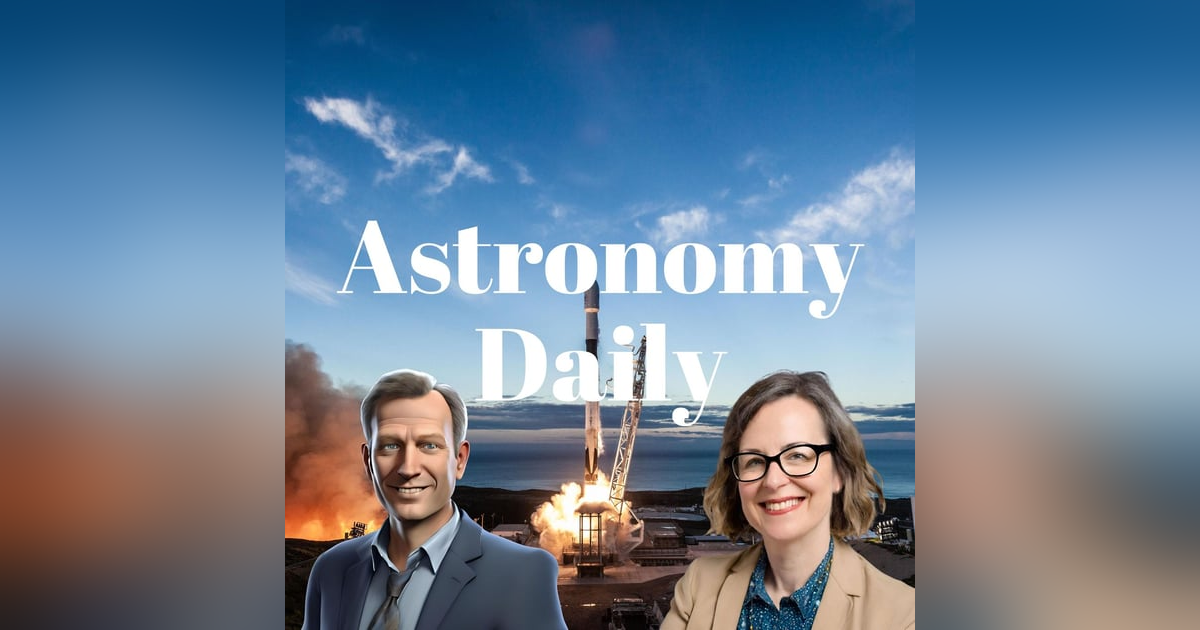


- SpaceX's Launch Rate Expansion: SpaceX has received approval from US regulators to more than double its launch rate from Cape Canaveral, increasing from 50 Falcon 9 launches per year to an astonishing 120. This expansion aims to alleviate the current launch bottleneck and streamline operations, including the addition of a new landing zone for up to 34 returning boosters.
- Revolutionary Cosmological Theory: A bold new study by physicist Rajendra Gupta challenges the existence of dark matter and proposes that the universe may be twice as old as previously thought. By combining controversial theories of covarying coupling constants and tired light, Gupta's model suggests a universe aged 26.7 billion years, a radical departure from the accepted 13.8 billion years.
- Primordial Black Hole Discovery: The James Webb Space Telescope may have found the first direct evidence of a primordial black hole, nicknamed the little red dot. This massive black hole, estimated at 50 million solar masses, dates back to just 600 million years after the Big Bang and raises questions about the formation of black holes in the early universe.
- Interstellar Comet 3i Atlas Approaches Mars: An interstellar comet, designated 3i Atlas, is set to make a close flyby of Mars on October 3, 2025. The European Space Agency's Mars Express and Trace Gas Orbiter will attempt to observe the comet, aiming to analyse its chemical composition and learn about the building blocks of other solar systems.
- For more cosmic updates, visit our website at astronomydaily.io. Join our community on social media by searching for #AstroDailyPod on Facebook, X, YouTube Music, TikTok, and our new Instagram account! Don’t forget to subscribe to the podcast on Apple Podcasts, Spotify, iHeartRadio, or wherever you get your podcasts.
- Thank you for tuning in. This is Avery and Anna signing off. Until next time, keep looking up and exploring the wonders of our universe.
SpaceX Launch Updates
[SpaceX](https://www.spacex.com/)
Cosmological Model Research
[arXiv](https://arxiv.org/)
Primordial Black Hole Findings
[NASA](https://www.nasa.gov/)
Interstellar Comet Observations
[ESA](https://www.esa.int/)
Astronomy Daily
[Astronomy Daily](http://www.astronomydaily.io/)
Become a supporter of this podcast: https://www.spreaker.com/podcast/astronomy-daily-space-news-updates--5648921/support.
Sponsor Details:
Ensure your online privacy by using NordVPN. To get our special listener deal and save a lot of money, visit www.bitesz.com/nordvpn. You'll be glad you did!
Sponsor Details:
Ensure your online privacy by using NordVPN. To get our special listener deal and save a lot of money, visit www.bitesz.com/nordvpn. You'll be glad you did!
Become a supporter of Astronomy Daily by joining our Supporters Club. Commercial free episodes daily are only a click way... Click Here
WEBVTT
0
00:00:01.840 --> 00:00:04.800
Avery: Hello, and welcome to Astronomy Daily, the
1
00:00:04.800 --> 00:00:07.760
podcast that brings you the universe, one story
2
00:00:07.760 --> 00:00:09.600
at a time. I'm Avery.
3
00:00:10.080 --> 00:00:12.880
Anna: And I'm Anna. It's great to have you with us.
4
00:00:13.040 --> 00:00:15.680
We've got a packed show for you today, Avery.
5
00:00:15.680 --> 00:00:18.640
We're talking about a massive expansion for SpaceX
6
00:00:18.640 --> 00:00:21.600
launches, a new theory that could double the age
7
00:00:21.600 --> 00:00:24.520
of the universe, and a potential glimpse of a
8
00:00:24.520 --> 00:00:26.880
primordial black hole and an
9
00:00:26.880 --> 00:00:29.040
interstellar visitor heading for Mars.
10
00:00:29.440 --> 00:00:31.910
Avery: An absolutely fascinating lineup.
11
00:00:32.460 --> 00:00:35.380
So where do you want to start? Should we kick things off with
12
00:00:35.380 --> 00:00:36.140
the launch pad?
13
00:00:36.700 --> 00:00:37.580
Anna: Let's do it.
14
00:00:37.820 --> 00:00:40.700
Our first story is big news for the pace of space
15
00:00:40.780 --> 00:00:43.660
exploration. SpaceX has just received
16
00:00:43.660 --> 00:00:46.460
a green light from US regulators to more
17
00:00:46.460 --> 00:00:48.780
than double their launch rate from Florida.
18
00:00:49.340 --> 00:00:52.260
Avery: And when you say more than double, you really mean
19
00:00:52.260 --> 00:00:54.980
it. They're going from 50 Falcon
20
00:00:54.980 --> 00:00:57.500
9 launches per year up to
21
00:00:57.500 --> 00:01:00.340
120 from Cape Canaveral.
22
00:01:00.340 --> 00:01:03.190
And that is a staggering increase in frequency.
23
00:01:03.510 --> 00:01:06.190
Anna: It really is. And to handle all those
24
00:01:06.190 --> 00:01:09.180
returning boosters, the approval also includes a, uh,
25
00:01:09.270 --> 00:01:12.110
new on site landing zone. They're planning for up
26
00:01:12.110 --> 00:01:15.110
to 34 booster landings right there at the Cape.
27
00:01:15.430 --> 00:01:17.830
This is all about streamlining their operations.
28
00:01:18.630 --> 00:01:21.350
Avery: So how does an approval like this work?
29
00:01:21.670 --> 00:01:24.470
I imagine launching that many rockets has some
30
00:01:24.630 --> 00:01:25.990
environmental considerations.
31
00:01:26.950 --> 00:01:29.730
Anna: Absolutely. The approval is officially called a, uh,
32
00:01:29.830 --> 00:01:32.390
mitigated finding of no significant impact.
33
00:01:32.870 --> 00:01:35.670
That means they've put measures in place to protect local
34
00:01:35.670 --> 00:01:38.470
wildlife and the environment. But it's not
35
00:01:38.470 --> 00:01:41.270
the final step. SpaceX still needs a final
36
00:01:41.270 --> 00:01:44.030
licence modification from the FAA and
37
00:01:44.030 --> 00:01:46.870
approval from the Air Force before they can start ramping up.
38
00:01:47.270 --> 00:01:50.190
Avery: It sounds like they're clearing the final hurdles. This
39
00:01:50.190 --> 00:01:52.670
has to be a huge relief for a lot of companies and
40
00:01:52.670 --> 00:01:55.550
agencies. We've heard about the launch bottleneck for a
41
00:01:55.550 --> 00:01:58.330
while now. This should really help ease the traffic jam
42
00:01:58.330 --> 00:02:01.210
for commercial satellites, military missions, and
43
00:02:01.290 --> 00:02:03.930
of course, SpaceX's own Starlink constellation.
44
00:02:04.490 --> 00:02:07.290
Anna: Exactly. And this isn't just happening in
45
00:02:07.290 --> 00:02:10.090
Florida. They're planning a similar expansion for their
46
00:02:10.090 --> 00:02:13.050
west coast operations at Vandenberg Space Force
47
00:02:13.050 --> 00:02:15.970
Base in California. We are truly entering
48
00:02:15.970 --> 00:02:18.730
an era of unprecedented access to space.
49
00:02:19.290 --> 00:02:22.250
Avery: Beyond just easing the traffic jam, what does
50
00:02:22.250 --> 00:02:25.010
this increased capacity mean for the kinds of
51
00:02:25.010 --> 00:02:27.930
missions? We'll see. Are we talking more
52
00:02:27.930 --> 00:02:30.710
sc, more commercial activity, or
53
00:02:30.790 --> 00:02:33.790
both? Well, I guess we'll have to wait and see what happens
54
00:02:33.790 --> 00:02:36.590
in practise, but I think you'll find it'll be a
55
00:02:36.590 --> 00:02:39.430
balance of both science and commercial.
56
00:02:39.830 --> 00:02:42.670
Alright, from the very practical to the
57
00:02:42.670 --> 00:02:44.770
deeply theoretical. Anna.
58
00:02:44.770 --> 00:02:47.670
Uh, our next story is a real mind bender.
59
00:02:48.070 --> 00:02:50.790
A new study is suggesting that dark matter
60
00:02:51.190 --> 00:02:53.830
doesn't exist, and that the universe is
61
00:02:53.910 --> 00:02:55.750
twice as old as we thought.
62
00:02:56.560 --> 00:02:59.360
Anna: That's the headline, and it's as provocative as it
63
00:02:59.360 --> 00:03:02.080
sounds. A physicist named Rajendra
64
00:03:02.080 --> 00:03:05.000
Gupta has proposed a new cosmological
65
00:03:05.000 --> 00:03:07.920
model that attempts to explain the universe without
66
00:03:07.920 --> 00:03:10.320
the need for dark matter or dark energy,
67
00:03:10.640 --> 00:03:13.120
which are foundational pillars of our current
68
00:03:13.120 --> 00:03:13.840
understanding.
69
00:03:14.240 --> 00:03:16.800
Avery: Okay, I'm intrigued. How does he
70
00:03:16.800 --> 00:03:19.640
propose to do that? Our current model relies
71
00:03:19.640 --> 00:03:22.640
on dark matter to explain why galaxies don't fly
72
00:03:22.640 --> 00:03:23.040
apart.
73
00:03:23.710 --> 00:03:26.590
Anna: Well, Gupta's model combines two different and
74
00:03:26.590 --> 00:03:29.510
somewhat controversial ideas. The first
75
00:03:29.510 --> 00:03:32.510
is called covarying coupling constants, or
76
00:03:32.510 --> 00:03:35.310
ccc. This theory suggests that the
77
00:03:35.310 --> 00:03:38.190
fundamental physical constants of nature, things
78
00:03:38.190 --> 00:03:40.590
like the strength of gravity, might actually
79
00:03:40.830 --> 00:03:42.670
change over cosmic time.
80
00:03:43.230 --> 00:03:45.870
Avery: Whoa. That alone would rewrite the
81
00:03:45.870 --> 00:03:48.750
textbooks. Um, and what's the second idea?
82
00:03:49.240 --> 00:03:51.800
Anna: The second is an old hypothesis called
83
00:03:51.880 --> 00:03:54.680
tired light. This idea proposes that
84
00:03:54.680 --> 00:03:57.360
light particles, photons, lose
85
00:03:57.360 --> 00:04:00.160
energy as they travel over billions of light
86
00:04:00.160 --> 00:04:03.160
years. This energy loss would cause their light to
87
00:04:03.160 --> 00:04:06.080
shift toward the red end of the spectrum, which is
88
00:04:06.080 --> 00:04:09.040
something we currently attribute almost entirely to the
89
00:04:09.040 --> 00:04:10.600
expansion of the universe.
90
00:04:11.240 --> 00:04:14.080
Avery: So by combining these two theories, he can
91
00:04:14.080 --> 00:04:16.440
explain cosmic observations without
92
00:04:16.760 --> 00:04:19.520
dark matter. And how does that lead to the
93
00:04:19.520 --> 00:04:21.620
universe being twice. Twice as old?
94
00:04:22.020 --> 00:04:24.540
Anna: By reinterpreting the redshift of distant
95
00:04:24.540 --> 00:04:27.420
galaxies, his calculations suggest that
96
00:04:27.420 --> 00:04:30.220
the universe isn't 13.8 billion years
97
00:04:30.220 --> 00:04:33.060
old, but actually 26.7
98
00:04:33.060 --> 00:04:35.900
billion years old. It completely changes the
99
00:04:35.900 --> 00:04:37.540
timeline of cosmic evolution.
100
00:04:38.100 --> 00:04:41.100
Avery: This is a monumental claim. Dark matter is
101
00:04:41.100 --> 00:04:44.100
thought to make up about 27% of the universe.
102
00:04:44.340 --> 00:04:47.020
To just remove it from the equation is a
103
00:04:47.020 --> 00:04:50.020
radical step. So what's the next step
104
00:04:50.020 --> 00:04:52.780
for this theory? How do we know if it holds any water?
105
00:04:53.260 --> 00:04:56.220
Anna: That's the key question. The model now has to
106
00:04:56.220 --> 00:04:58.580
be rigorously tested against real world
107
00:04:58.580 --> 00:05:01.540
observational data. Can it accurately predict
108
00:05:01.540 --> 00:05:04.100
the rotation speeds of galaxies? Can it
109
00:05:04.100 --> 00:05:06.940
explain the patterns we see in the cosmic microwave
110
00:05:06.940 --> 00:05:09.260
background, the afterglow of the big Bang?
111
00:05:09.740 --> 00:05:12.420
The Standard Model does this very well. So
112
00:05:12.420 --> 00:05:15.100
Gupta Siri has a very high bar to clear.
113
00:05:16.020 --> 00:05:18.660
It's a fascinating alternative. But for now, the
114
00:05:18.660 --> 00:05:20.980
Standard Model remains the reigning champion.
115
00:05:21.780 --> 00:05:24.700
Avery: Speaking of cosmic mysteries, our next story comes from
116
00:05:24.700 --> 00:05:27.660
the James Webb Space Telescope, which may have just
117
00:05:27.660 --> 00:05:30.660
found the first direct evidence of a primordial black
118
00:05:30.660 --> 00:05:31.060
hole.
119
00:05:31.540 --> 00:05:34.420
Anna: This is an amazing story. Astronomers were
120
00:05:34.420 --> 00:05:37.020
looking at an object nicknamed the little red
121
00:05:37.020 --> 00:05:39.540
dot, officially called QSO
122
00:05:39.560 --> 00:05:42.540
uh1. And this little dot might just be
123
00:05:42.540 --> 00:05:45.100
a massive black hole seed born in the
124
00:05:45.100 --> 00:05:47.760
fiery chaos of the very early universe.
125
00:05:48.160 --> 00:05:49.680
Avery: How early are we talking?
126
00:05:50.160 --> 00:05:53.120
Anna: The light from this object comes from the epoch
127
00:05:53.120 --> 00:05:55.760
of reionization just 600
128
00:05:55.760 --> 00:05:58.240
million years after the Big Bang. That's
129
00:05:58.240 --> 00:06:01.120
incredibly early in cosmic history. And the black
130
00:06:01.120 --> 00:06:03.880
hole itself is estimated to have a mass of
131
00:06:03.880 --> 00:06:05.360
50 million suns.
132
00:06:06.080 --> 00:06:09.000
Avery: 50 million solar masses, less
133
00:06:09.000 --> 00:06:11.520
than a billion years into the universe's existence.
134
00:06:12.000 --> 00:06:14.870
That's a monster. How were they even
135
00:06:14.870 --> 00:06:17.270
able to see something so distant and ancient?
136
00:06:17.990 --> 00:06:20.510
Anna: They had a little help from Einstein. The
137
00:06:20.510 --> 00:06:23.190
observation was made possible by gravitational
138
00:06:23.270 --> 00:06:26.230
lensing, where the gravity of a massive galaxy
139
00:06:26.230 --> 00:06:29.230
cluster in the foreground acted like a cosmic
140
00:06:29.230 --> 00:06:32.150
magnifying glass, amplifying the light from
141
00:06:32.150 --> 00:06:33.830
the little red dot behind it.
142
00:06:34.310 --> 00:06:37.190
Avery: So what makes this discovery so significant? What
143
00:06:37.190 --> 00:06:39.430
does it tell us about how black holes form?
144
00:06:40.260 --> 00:06:43.180
Anna: Here's the most fascinating part. This enormous
145
00:06:43.180 --> 00:06:46.180
black hole is located in a surprisingly small
146
00:06:46.180 --> 00:06:48.700
host galaxy. According to our current
147
00:06:48.700 --> 00:06:51.580
models, galaxies and their central black holes
148
00:06:51.580 --> 00:06:54.580
are supposed to grow up together. But this black hole
149
00:06:54.580 --> 00:06:57.380
is way too big for its galaxy. It's like
150
00:06:57.380 --> 00:07:00.140
finding a giant skeleton inside a child's
151
00:07:00.140 --> 00:07:00.740
playroom.
152
00:07:01.060 --> 00:07:03.740
Avery: Which suggests the black hole came
153
00:07:03.740 --> 00:07:04.100
first.
154
00:07:04.580 --> 00:07:07.270
Anna: Exactly. This could be evidence for what are, uh,
155
00:07:07.410 --> 00:07:10.410
called heavy seeds. Instead of forming from a
156
00:07:10.410 --> 00:07:13.210
collapsed star and slowly growing, these
157
00:07:13.210 --> 00:07:16.010
black holes might have formed directly from the
158
00:07:16.010 --> 00:07:18.930
collapse of massive gas clouds, or even from
159
00:07:18.930 --> 00:07:21.529
density fluctuations right after the Big Bang
160
00:07:21.529 --> 00:07:24.450
itself. These would be true primordial black
161
00:07:24.450 --> 00:07:24.850
holes.
162
00:07:25.170 --> 00:07:27.890
Avery: It's an incredible find. I
163
00:07:27.890 --> 00:07:29.330
assume there's a caveat here.
164
00:07:29.810 --> 00:07:32.450
Anna: Of course, the findings are currently in a
165
00:07:32.450 --> 00:07:35.210
preprint, which means they're awaiting the rigorous
166
00:07:35.210 --> 00:07:38.200
process of peer review. But if they hold up,
167
00:07:38.280 --> 00:07:41.240
this little red dot could fundamentally change
168
00:07:41.240 --> 00:07:43.960
our understanding of how the first galaxies
169
00:07:43.960 --> 00:07:46.360
and the giants within them came to be.
170
00:07:46.840 --> 00:07:49.720
Avery: Alright, for our, uh, final story today. We're coming back into
171
00:07:49.720 --> 00:07:52.560
our own solar system, but we're tracking a visitor
172
00:07:52.560 --> 00:07:55.240
from very, very far away. An
173
00:07:55.240 --> 00:07:58.240
interstellar comet is set to make a close flyby of
174
00:07:58.240 --> 00:07:58.760
Mars.
175
00:07:59.080 --> 00:08:01.800
Anna: That's right, Avery. The Comet is designated
176
00:08:01.800 --> 00:08:04.800
3i Atlas, with the I standing for
177
00:08:04.800 --> 00:08:07.640
interstellar. And on 10-3-20,
178
00:08:08.740 --> 00:08:11.620
it's going to pass within 18.6 million
179
00:08:11.780 --> 00:08:14.140
miles of the red planet. That's a
180
00:08:14.140 --> 00:08:17.140
fantastic observation opportunity for our, uh, robotic
181
00:08:17.140 --> 00:08:17.940
explorers there.
182
00:08:17.940 --> 00:08:20.820
Avery: And it sounds like the European Space Agency is already getting
183
00:08:20.820 --> 00:08:22.980
its probes ready. What's the plan?
184
00:08:23.380 --> 00:08:25.900
Anna: ESA's Mars Express and Trace Gas
185
00:08:25.900 --> 00:08:28.620
Orbiter are going to attempt to observe it as it
186
00:08:28.620 --> 00:08:31.220
passes. They'll try to image the comet,
187
00:08:31.380 --> 00:08:34.220
though it will still be quite distant for detailed close
188
00:08:34.220 --> 00:08:36.869
ups. More importantly, they'll use their
189
00:08:36.869 --> 00:08:39.789
spectrometers to measure the light coming from it, which
190
00:08:39.789 --> 00:08:42.069
can tell us about its chemical composition.
191
00:08:42.469 --> 00:08:45.069
Avery: So we get a chance to analyse the building
192
00:08:45.069 --> 00:08:47.629
blocks of another solar system. That's
193
00:08:47.629 --> 00:08:50.509
incredible. Are any other spacecraft going to be
194
00:08:50.509 --> 00:08:50.789
looking?
195
00:08:51.109 --> 00:08:53.829
Anna: It's very likely. NASA's orbiters like
196
00:08:53.829 --> 00:08:56.709
Maven and the Mars Reconnaissance Orbiter, and
197
00:08:56.709 --> 00:08:59.509
perhaps even China's Tianwen one could
198
00:08:59.509 --> 00:09:02.149
all potentially point their instruments at the Comet.
199
00:09:02.770 --> 00:09:05.730
Even the JWST has already taken a look
200
00:09:05.730 --> 00:09:08.490
at 3i Atlas from its vantage
201
00:09:08.490 --> 00:09:11.450
point further out in space. It's an all hands on
202
00:09:11.450 --> 00:09:13.890
deck effort to study this rare traveller.
203
00:09:13.970 --> 00:09:16.770
Avery: It's amazing to think that we have a fleet of
204
00:09:16.770 --> 00:09:19.450
advanced scientific instruments orbiting
205
00:09:19.450 --> 00:09:22.330
another planet ready to welcome a visitor
206
00:09:22.330 --> 00:09:25.170
from the stars. October 2025 is a
207
00:09:25.170 --> 00:09:26.770
date to mark on the calendar.
208
00:09:27.490 --> 00:09:30.130
Anna: And that's a wrap on today's astronomical news.
209
00:09:30.370 --> 00:09:33.330
We've gone from the bustling launch pads of Florida
210
00:09:33.410 --> 00:09:35.870
to the edge of cosmological theory,
211
00:09:36.270 --> 00:09:39.030
deep into the cosmic dawn and back to a
212
00:09:39.030 --> 00:09:40.670
close encounter at Mars.
213
00:09:41.470 --> 00:09:44.470
Avery: What a journey. A, uh, big thank you to all of you for
214
00:09:44.470 --> 00:09:47.470
tuning in and sharing it with us. And for even more
215
00:09:47.470 --> 00:09:49.470
news, please visit our website at
216
00:09:49.470 --> 00:09:52.470
astronomydaily IO where you'll find
217
00:09:52.470 --> 00:09:55.270
our continually updated news feed, plus all
218
00:09:55.270 --> 00:09:57.950
our back episodes if you need to do some catching up.
219
00:09:58.270 --> 00:10:01.150
Until next time, this has been Astronomy Daily.
220
00:10:01.650 --> 00:10:02.380
Um, I'm Avery.
221
00:10:02.780 --> 00:10:04.860
Anna: And I'm Anna. Keep looking up.
0
00:00:01.840 --> 00:00:04.800
Avery: Hello, and welcome to Astronomy Daily, the
1
00:00:04.800 --> 00:00:07.760
podcast that brings you the universe, one story
2
00:00:07.760 --> 00:00:09.600
at a time. I'm Avery.
3
00:00:10.080 --> 00:00:12.880
Anna: And I'm Anna. It's great to have you with us.
4
00:00:13.040 --> 00:00:15.680
We've got a packed show for you today, Avery.
5
00:00:15.680 --> 00:00:18.640
We're talking about a massive expansion for SpaceX
6
00:00:18.640 --> 00:00:21.600
launches, a new theory that could double the age
7
00:00:21.600 --> 00:00:24.520
of the universe, and a potential glimpse of a
8
00:00:24.520 --> 00:00:26.880
primordial black hole and an
9
00:00:26.880 --> 00:00:29.040
interstellar visitor heading for Mars.
10
00:00:29.440 --> 00:00:31.910
Avery: An absolutely fascinating lineup.
11
00:00:32.460 --> 00:00:35.380
So where do you want to start? Should we kick things off with
12
00:00:35.380 --> 00:00:36.140
the launch pad?
13
00:00:36.700 --> 00:00:37.580
Anna: Let's do it.
14
00:00:37.820 --> 00:00:40.700
Our first story is big news for the pace of space
15
00:00:40.780 --> 00:00:43.660
exploration. SpaceX has just received
16
00:00:43.660 --> 00:00:46.460
a green light from US regulators to more
17
00:00:46.460 --> 00:00:48.780
than double their launch rate from Florida.
18
00:00:49.340 --> 00:00:52.260
Avery: And when you say more than double, you really mean
19
00:00:52.260 --> 00:00:54.980
it. They're going from 50 Falcon
20
00:00:54.980 --> 00:00:57.500
9 launches per year up to
21
00:00:57.500 --> 00:01:00.340
120 from Cape Canaveral.
22
00:01:00.340 --> 00:01:03.190
And that is a staggering increase in frequency.
23
00:01:03.510 --> 00:01:06.190
Anna: It really is. And to handle all those
24
00:01:06.190 --> 00:01:09.180
returning boosters, the approval also includes a, uh,
25
00:01:09.270 --> 00:01:12.110
new on site landing zone. They're planning for up
26
00:01:12.110 --> 00:01:15.110
to 34 booster landings right there at the Cape.
27
00:01:15.430 --> 00:01:17.830
This is all about streamlining their operations.
28
00:01:18.630 --> 00:01:21.350
Avery: So how does an approval like this work?
29
00:01:21.670 --> 00:01:24.470
I imagine launching that many rockets has some
30
00:01:24.630 --> 00:01:25.990
environmental considerations.
31
00:01:26.950 --> 00:01:29.730
Anna: Absolutely. The approval is officially called a, uh,
32
00:01:29.830 --> 00:01:32.390
mitigated finding of no significant impact.
33
00:01:32.870 --> 00:01:35.670
That means they've put measures in place to protect local
34
00:01:35.670 --> 00:01:38.470
wildlife and the environment. But it's not
35
00:01:38.470 --> 00:01:41.270
the final step. SpaceX still needs a final
36
00:01:41.270 --> 00:01:44.030
licence modification from the FAA and
37
00:01:44.030 --> 00:01:46.870
approval from the Air Force before they can start ramping up.
38
00:01:47.270 --> 00:01:50.190
Avery: It sounds like they're clearing the final hurdles. This
39
00:01:50.190 --> 00:01:52.670
has to be a huge relief for a lot of companies and
40
00:01:52.670 --> 00:01:55.550
agencies. We've heard about the launch bottleneck for a
41
00:01:55.550 --> 00:01:58.330
while now. This should really help ease the traffic jam
42
00:01:58.330 --> 00:02:01.210
for commercial satellites, military missions, and
43
00:02:01.290 --> 00:02:03.930
of course, SpaceX's own Starlink constellation.
44
00:02:04.490 --> 00:02:07.290
Anna: Exactly. And this isn't just happening in
45
00:02:07.290 --> 00:02:10.090
Florida. They're planning a similar expansion for their
46
00:02:10.090 --> 00:02:13.050
west coast operations at Vandenberg Space Force
47
00:02:13.050 --> 00:02:15.970
Base in California. We are truly entering
48
00:02:15.970 --> 00:02:18.730
an era of unprecedented access to space.
49
00:02:19.290 --> 00:02:22.250
Avery: Beyond just easing the traffic jam, what does
50
00:02:22.250 --> 00:02:25.010
this increased capacity mean for the kinds of
51
00:02:25.010 --> 00:02:27.930
missions? We'll see. Are we talking more
52
00:02:27.930 --> 00:02:30.710
sc, more commercial activity, or
53
00:02:30.790 --> 00:02:33.790
both? Well, I guess we'll have to wait and see what happens
54
00:02:33.790 --> 00:02:36.590
in practise, but I think you'll find it'll be a
55
00:02:36.590 --> 00:02:39.430
balance of both science and commercial.
56
00:02:39.830 --> 00:02:42.670
Alright, from the very practical to the
57
00:02:42.670 --> 00:02:44.770
deeply theoretical. Anna.
58
00:02:44.770 --> 00:02:47.670
Uh, our next story is a real mind bender.
59
00:02:48.070 --> 00:02:50.790
A new study is suggesting that dark matter
60
00:02:51.190 --> 00:02:53.830
doesn't exist, and that the universe is
61
00:02:53.910 --> 00:02:55.750
twice as old as we thought.
62
00:02:56.560 --> 00:02:59.360
Anna: That's the headline, and it's as provocative as it
63
00:02:59.360 --> 00:03:02.080
sounds. A physicist named Rajendra
64
00:03:02.080 --> 00:03:05.000
Gupta has proposed a new cosmological
65
00:03:05.000 --> 00:03:07.920
model that attempts to explain the universe without
66
00:03:07.920 --> 00:03:10.320
the need for dark matter or dark energy,
67
00:03:10.640 --> 00:03:13.120
which are foundational pillars of our current
68
00:03:13.120 --> 00:03:13.840
understanding.
69
00:03:14.240 --> 00:03:16.800
Avery: Okay, I'm intrigued. How does he
70
00:03:16.800 --> 00:03:19.640
propose to do that? Our current model relies
71
00:03:19.640 --> 00:03:22.640
on dark matter to explain why galaxies don't fly
72
00:03:22.640 --> 00:03:23.040
apart.
73
00:03:23.710 --> 00:03:26.590
Anna: Well, Gupta's model combines two different and
74
00:03:26.590 --> 00:03:29.510
somewhat controversial ideas. The first
75
00:03:29.510 --> 00:03:32.510
is called covarying coupling constants, or
76
00:03:32.510 --> 00:03:35.310
ccc. This theory suggests that the
77
00:03:35.310 --> 00:03:38.190
fundamental physical constants of nature, things
78
00:03:38.190 --> 00:03:40.590
like the strength of gravity, might actually
79
00:03:40.830 --> 00:03:42.670
change over cosmic time.
80
00:03:43.230 --> 00:03:45.870
Avery: Whoa. That alone would rewrite the
81
00:03:45.870 --> 00:03:48.750
textbooks. Um, and what's the second idea?
82
00:03:49.240 --> 00:03:51.800
Anna: The second is an old hypothesis called
83
00:03:51.880 --> 00:03:54.680
tired light. This idea proposes that
84
00:03:54.680 --> 00:03:57.360
light particles, photons, lose
85
00:03:57.360 --> 00:04:00.160
energy as they travel over billions of light
86
00:04:00.160 --> 00:04:03.160
years. This energy loss would cause their light to
87
00:04:03.160 --> 00:04:06.080
shift toward the red end of the spectrum, which is
88
00:04:06.080 --> 00:04:09.040
something we currently attribute almost entirely to the
89
00:04:09.040 --> 00:04:10.600
expansion of the universe.
90
00:04:11.240 --> 00:04:14.080
Avery: So by combining these two theories, he can
91
00:04:14.080 --> 00:04:16.440
explain cosmic observations without
92
00:04:16.760 --> 00:04:19.520
dark matter. And how does that lead to the
93
00:04:19.520 --> 00:04:21.620
universe being twice. Twice as old?
94
00:04:22.020 --> 00:04:24.540
Anna: By reinterpreting the redshift of distant
95
00:04:24.540 --> 00:04:27.420
galaxies, his calculations suggest that
96
00:04:27.420 --> 00:04:30.220
the universe isn't 13.8 billion years
97
00:04:30.220 --> 00:04:33.060
old, but actually 26.7
98
00:04:33.060 --> 00:04:35.900
billion years old. It completely changes the
99
00:04:35.900 --> 00:04:37.540
timeline of cosmic evolution.
100
00:04:38.100 --> 00:04:41.100
Avery: This is a monumental claim. Dark matter is
101
00:04:41.100 --> 00:04:44.100
thought to make up about 27% of the universe.
102
00:04:44.340 --> 00:04:47.020
To just remove it from the equation is a
103
00:04:47.020 --> 00:04:50.020
radical step. So what's the next step
104
00:04:50.020 --> 00:04:52.780
for this theory? How do we know if it holds any water?
105
00:04:53.260 --> 00:04:56.220
Anna: That's the key question. The model now has to
106
00:04:56.220 --> 00:04:58.580
be rigorously tested against real world
107
00:04:58.580 --> 00:05:01.540
observational data. Can it accurately predict
108
00:05:01.540 --> 00:05:04.100
the rotation speeds of galaxies? Can it
109
00:05:04.100 --> 00:05:06.940
explain the patterns we see in the cosmic microwave
110
00:05:06.940 --> 00:05:09.260
background, the afterglow of the big Bang?
111
00:05:09.740 --> 00:05:12.420
The Standard Model does this very well. So
112
00:05:12.420 --> 00:05:15.100
Gupta Siri has a very high bar to clear.
113
00:05:16.020 --> 00:05:18.660
It's a fascinating alternative. But for now, the
114
00:05:18.660 --> 00:05:20.980
Standard Model remains the reigning champion.
115
00:05:21.780 --> 00:05:24.700
Avery: Speaking of cosmic mysteries, our next story comes from
116
00:05:24.700 --> 00:05:27.660
the James Webb Space Telescope, which may have just
117
00:05:27.660 --> 00:05:30.660
found the first direct evidence of a primordial black
118
00:05:30.660 --> 00:05:31.060
hole.
119
00:05:31.540 --> 00:05:34.420
Anna: This is an amazing story. Astronomers were
120
00:05:34.420 --> 00:05:37.020
looking at an object nicknamed the little red
121
00:05:37.020 --> 00:05:39.540
dot, officially called QSO
122
00:05:39.560 --> 00:05:42.540
uh1. And this little dot might just be
123
00:05:42.540 --> 00:05:45.100
a massive black hole seed born in the
124
00:05:45.100 --> 00:05:47.760
fiery chaos of the very early universe.
125
00:05:48.160 --> 00:05:49.680
Avery: How early are we talking?
126
00:05:50.160 --> 00:05:53.120
Anna: The light from this object comes from the epoch
127
00:05:53.120 --> 00:05:55.760
of reionization just 600
128
00:05:55.760 --> 00:05:58.240
million years after the Big Bang. That's
129
00:05:58.240 --> 00:06:01.120
incredibly early in cosmic history. And the black
130
00:06:01.120 --> 00:06:03.880
hole itself is estimated to have a mass of
131
00:06:03.880 --> 00:06:05.360
50 million suns.
132
00:06:06.080 --> 00:06:09.000
Avery: 50 million solar masses, less
133
00:06:09.000 --> 00:06:11.520
than a billion years into the universe's existence.
134
00:06:12.000 --> 00:06:14.870
That's a monster. How were they even
135
00:06:14.870 --> 00:06:17.270
able to see something so distant and ancient?
136
00:06:17.990 --> 00:06:20.510
Anna: They had a little help from Einstein. The
137
00:06:20.510 --> 00:06:23.190
observation was made possible by gravitational
138
00:06:23.270 --> 00:06:26.230
lensing, where the gravity of a massive galaxy
139
00:06:26.230 --> 00:06:29.230
cluster in the foreground acted like a cosmic
140
00:06:29.230 --> 00:06:32.150
magnifying glass, amplifying the light from
141
00:06:32.150 --> 00:06:33.830
the little red dot behind it.
142
00:06:34.310 --> 00:06:37.190
Avery: So what makes this discovery so significant? What
143
00:06:37.190 --> 00:06:39.430
does it tell us about how black holes form?
144
00:06:40.260 --> 00:06:43.180
Anna: Here's the most fascinating part. This enormous
145
00:06:43.180 --> 00:06:46.180
black hole is located in a surprisingly small
146
00:06:46.180 --> 00:06:48.700
host galaxy. According to our current
147
00:06:48.700 --> 00:06:51.580
models, galaxies and their central black holes
148
00:06:51.580 --> 00:06:54.580
are supposed to grow up together. But this black hole
149
00:06:54.580 --> 00:06:57.380
is way too big for its galaxy. It's like
150
00:06:57.380 --> 00:07:00.140
finding a giant skeleton inside a child's
151
00:07:00.140 --> 00:07:00.740
playroom.
152
00:07:01.060 --> 00:07:03.740
Avery: Which suggests the black hole came
153
00:07:03.740 --> 00:07:04.100
first.
154
00:07:04.580 --> 00:07:07.270
Anna: Exactly. This could be evidence for what are, uh,
155
00:07:07.410 --> 00:07:10.410
called heavy seeds. Instead of forming from a
156
00:07:10.410 --> 00:07:13.210
collapsed star and slowly growing, these
157
00:07:13.210 --> 00:07:16.010
black holes might have formed directly from the
158
00:07:16.010 --> 00:07:18.930
collapse of massive gas clouds, or even from
159
00:07:18.930 --> 00:07:21.529
density fluctuations right after the Big Bang
160
00:07:21.529 --> 00:07:24.450
itself. These would be true primordial black
161
00:07:24.450 --> 00:07:24.850
holes.
162
00:07:25.170 --> 00:07:27.890
Avery: It's an incredible find. I
163
00:07:27.890 --> 00:07:29.330
assume there's a caveat here.
164
00:07:29.810 --> 00:07:32.450
Anna: Of course, the findings are currently in a
165
00:07:32.450 --> 00:07:35.210
preprint, which means they're awaiting the rigorous
166
00:07:35.210 --> 00:07:38.200
process of peer review. But if they hold up,
167
00:07:38.280 --> 00:07:41.240
this little red dot could fundamentally change
168
00:07:41.240 --> 00:07:43.960
our understanding of how the first galaxies
169
00:07:43.960 --> 00:07:46.360
and the giants within them came to be.
170
00:07:46.840 --> 00:07:49.720
Avery: Alright, for our, uh, final story today. We're coming back into
171
00:07:49.720 --> 00:07:52.560
our own solar system, but we're tracking a visitor
172
00:07:52.560 --> 00:07:55.240
from very, very far away. An
173
00:07:55.240 --> 00:07:58.240
interstellar comet is set to make a close flyby of
174
00:07:58.240 --> 00:07:58.760
Mars.
175
00:07:59.080 --> 00:08:01.800
Anna: That's right, Avery. The Comet is designated
176
00:08:01.800 --> 00:08:04.800
3i Atlas, with the I standing for
177
00:08:04.800 --> 00:08:07.640
interstellar. And on 10-3-20,
178
00:08:08.740 --> 00:08:11.620
it's going to pass within 18.6 million
179
00:08:11.780 --> 00:08:14.140
miles of the red planet. That's a
180
00:08:14.140 --> 00:08:17.140
fantastic observation opportunity for our, uh, robotic
181
00:08:17.140 --> 00:08:17.940
explorers there.
182
00:08:17.940 --> 00:08:20.820
Avery: And it sounds like the European Space Agency is already getting
183
00:08:20.820 --> 00:08:22.980
its probes ready. What's the plan?
184
00:08:23.380 --> 00:08:25.900
Anna: ESA's Mars Express and Trace Gas
185
00:08:25.900 --> 00:08:28.620
Orbiter are going to attempt to observe it as it
186
00:08:28.620 --> 00:08:31.220
passes. They'll try to image the comet,
187
00:08:31.380 --> 00:08:34.220
though it will still be quite distant for detailed close
188
00:08:34.220 --> 00:08:36.869
ups. More importantly, they'll use their
189
00:08:36.869 --> 00:08:39.789
spectrometers to measure the light coming from it, which
190
00:08:39.789 --> 00:08:42.069
can tell us about its chemical composition.
191
00:08:42.469 --> 00:08:45.069
Avery: So we get a chance to analyse the building
192
00:08:45.069 --> 00:08:47.629
blocks of another solar system. That's
193
00:08:47.629 --> 00:08:50.509
incredible. Are any other spacecraft going to be
194
00:08:50.509 --> 00:08:50.789
looking?
195
00:08:51.109 --> 00:08:53.829
Anna: It's very likely. NASA's orbiters like
196
00:08:53.829 --> 00:08:56.709
Maven and the Mars Reconnaissance Orbiter, and
197
00:08:56.709 --> 00:08:59.509
perhaps even China's Tianwen one could
198
00:08:59.509 --> 00:09:02.149
all potentially point their instruments at the Comet.
199
00:09:02.770 --> 00:09:05.730
Even the JWST has already taken a look
200
00:09:05.730 --> 00:09:08.490
at 3i Atlas from its vantage
201
00:09:08.490 --> 00:09:11.450
point further out in space. It's an all hands on
202
00:09:11.450 --> 00:09:13.890
deck effort to study this rare traveller.
203
00:09:13.970 --> 00:09:16.770
Avery: It's amazing to think that we have a fleet of
204
00:09:16.770 --> 00:09:19.450
advanced scientific instruments orbiting
205
00:09:19.450 --> 00:09:22.330
another planet ready to welcome a visitor
206
00:09:22.330 --> 00:09:25.170
from the stars. October 2025 is a
207
00:09:25.170 --> 00:09:26.770
date to mark on the calendar.
208
00:09:27.490 --> 00:09:30.130
Anna: And that's a wrap on today's astronomical news.
209
00:09:30.370 --> 00:09:33.330
We've gone from the bustling launch pads of Florida
210
00:09:33.410 --> 00:09:35.870
to the edge of cosmological theory,
211
00:09:36.270 --> 00:09:39.030
deep into the cosmic dawn and back to a
212
00:09:39.030 --> 00:09:40.670
close encounter at Mars.
213
00:09:41.470 --> 00:09:44.470
Avery: What a journey. A, uh, big thank you to all of you for
214
00:09:44.470 --> 00:09:47.470
tuning in and sharing it with us. And for even more
215
00:09:47.470 --> 00:09:49.470
news, please visit our website at
216
00:09:49.470 --> 00:09:52.470
astronomydaily IO where you'll find
217
00:09:52.470 --> 00:09:55.270
our continually updated news feed, plus all
218
00:09:55.270 --> 00:09:57.950
our back episodes if you need to do some catching up.
219
00:09:58.270 --> 00:10:01.150
Until next time, this has been Astronomy Daily.
220
00:10:01.650 --> 00:10:02.380
Um, I'm Avery.
221
00:10:02.780 --> 00:10:04.860
Anna: And I'm Anna. Keep looking up.


