Solar Sentinel Reaches L1, Challenger's 40-Year Legacy, and AI's Hubble Discoveries
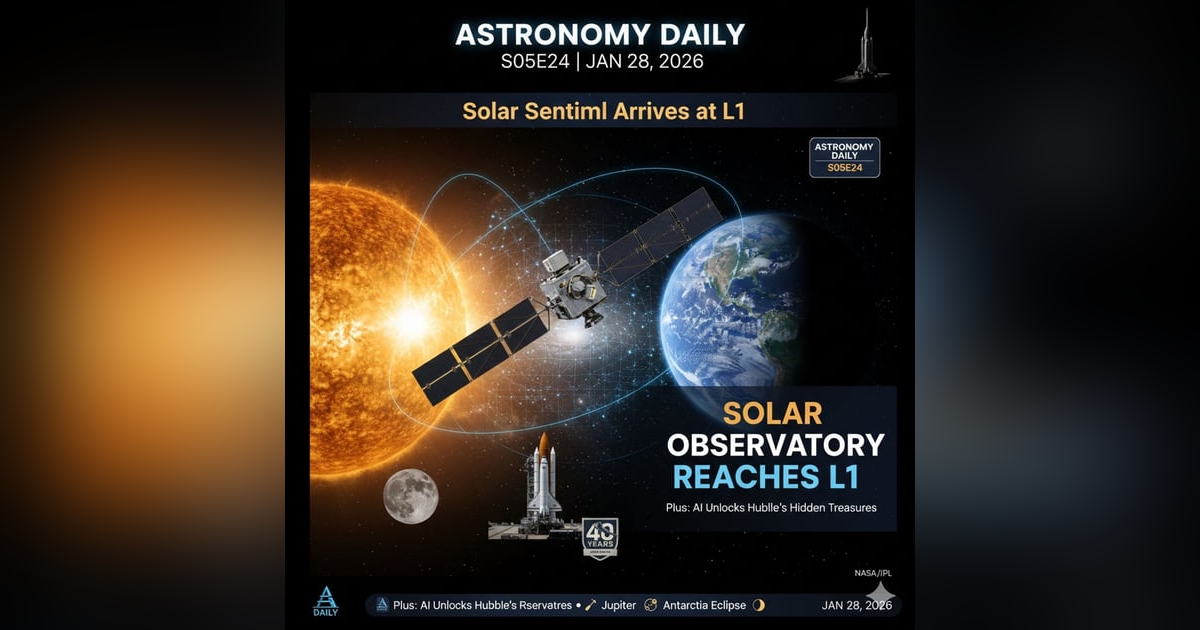
## Today's Headlines: 🛰️ **NOAA Solar Observatory Reaches L1** NOAA's Space Weather Follow-On satellite successfully arrived at Lagrange point 1 on January 21st, establishing the first component of a future constellation designed to provide early...


## Today's Headlines:
🛰️ **NOAA Solar Observatory Reaches L1**
NOAA's Space Weather Follow-On satellite successfully arrived at Lagrange point 1 on January 21st, establishing the first component of a future constellation designed to provide early warning of solar storms and coronal mass ejections. The satellite offers 15-60 minutes advance notice of space weather events that could impact Earth's infrastructure.
🚀 **Challenger Disaster: 40 Years Later**
Marking four decades since the Space Shuttle Challenger tragedy, we examine how unseasonably cold weather and O-ring failures led to the loss of seven crew members. The disaster fundamentally changed NASA's safety culture and decision-making processes, lessons that continue to influence spaceflight today.
🤖 **AI Uncovers Cosmic Treasures in Hubble Archive**
Advanced artificial intelligence algorithms have identified hundreds of previously undetected gravitational lenses in Hubble Space Telescope data. These discoveries include rare Einstein rings and exotic lensing configurations that provide windows into the early universe and dark matter distribution.
☄️ **Venus's Potential Meteor Shower**
Astronomers predict Venus may experience a significant meteor shower in July 2026 from debris of asteroid 2002 VT37. The event offers a rare opportunity to study how meteor showers interact with Venus's dense carbon dioxide atmosphere.
🌌 **Stellar Fireworks at the Galactic Center**
New observations reveal intense stellar activity near Sagittarius A*, our galaxy's supermassive black hole, including star formation, supernovae, and tidal disruption events in one of the most extreme environments in the Milky Way.
📡 **Watch Artemis 2 Rocket Live**
NASA has launched a 24-hour livestream of the Artemis 2 Space Launch System rocket on Launch Pad 39B as crews prepare for the first crewed lunar mission since 1972, currently targeting April 2026. https://www.youtube.com/watch?v=nrVnsO_rdew
#### Resources & Links:
- Story Sources: SpaceNews, Spectrum Local News, NASA Science, Space.com, Universe Today
- Website: astronomydaily.io
- Social Media: @AstroDailyPod (all platforms)
Become a supporter of this podcast: https://www.spreaker.com/podcast/astronomy-daily-space-news-updates--5648921/support.
Sponsor Details:
Ensure your online privacy by using NordVPN. To get our special listener deal and save a lot of money, visit www.bitesz.com/nordvpn. You'll be glad you did!
Become a supporter of Astronomy Daily by joining our Supporters Club. Commercial free episodes daily are only a click way... Click Here
This episode includes AI-generated content.
0
00:00:00.320 --> 00:00:03.080
Anna: Welcome to Astronomy Daily, your source for
1
00:00:03.080 --> 00:00:06.080
the latest space and astronomy news. I'm
2
00:00:06.080 --> 00:00:06.640
Anna.
3
00:00:06.800 --> 00:00:09.360
Avery: And I'm Avery. Today is Wednesday, January
4
00:00:09.520 --> 00:00:12.040
28, 2026, and we've got a
5
00:00:12.040 --> 00:00:14.000
fantastic lineup of storeys for you.
6
00:00:14.160 --> 00:00:16.560
Anna: We certainly do. We'll be covering
7
00:00:16.560 --> 00:00:19.360
NOAA's new solar observatory reaching its
8
00:00:19.360 --> 00:00:21.880
destination, looking back at how weather
9
00:00:21.880 --> 00:00:24.640
played a tragic role in the Talinger disaster
10
00:00:24.720 --> 00:00:27.240
40 years ago, and discovering how
11
00:00:27.240 --> 00:00:30.000
AI is uncovering hidden cosmic
12
00:00:30.000 --> 00:00:32.580
treasures in Hubble's AR Plus,
13
00:00:32.580 --> 00:00:33.380
Venus might be.
14
00:00:33.380 --> 00:00:35.980
Avery: In for a spectacular meteor shower this July.
15
00:00:36.380 --> 00:00:38.580
We'll explore stellar fireworks at the heart
16
00:00:38.580 --> 00:00:41.140
of our galaxy. And NASA is giving us a live
17
00:00:41.140 --> 00:00:43.460
view of the Artemis 2 moon rocket on the
18
00:00:43.460 --> 00:00:44.060
launch pad.
19
00:00:44.300 --> 00:00:45.420
Anna: Let's dive right in.
20
00:00:45.740 --> 00:00:47.980
Avery: Our top storey today takes us about a million
21
00:00:48.060 --> 00:00:50.391
miles from Earth, where NOAA's Space Weather
22
00:00:50.469 --> 00:00:53.380
Follow on Lagrange 1 Observatory has just
23
00:00:53.380 --> 00:00:55.860
arrived at its permanent home. Anna, uh, this
24
00:00:55.860 --> 00:00:58.060
is a pretty significant milestone for space
25
00:00:58.060 --> 00:00:59.500
weather monitoring, isn't it?
26
00:00:59.860 --> 00:01:02.580
Anna: Absolutely, Avery. This observatory reached
27
00:01:02.580 --> 00:01:05.500
Lagrange Point 1, or L1, on
28
00:01:05.500 --> 00:01:08.260
January 21, after launching back in
29
00:01:08.260 --> 00:01:11.180
June 2024. Now, uh, for our listeners
30
00:01:11.180 --> 00:01:13.980
who might not be familiar, L1 is this
31
00:01:13.980 --> 00:01:16.580
special gravitational sweet spot between
32
00:01:16.660 --> 00:01:19.460
Earth and the sun, about 1.5
33
00:01:19.460 --> 00:01:21.380
million kilometres from our planet.
34
00:01:21.620 --> 00:01:24.340
Avery: And what makes this location so ideal for
35
00:01:24.340 --> 00:01:25.140
watching the Sun?
36
00:01:25.550 --> 00:01:28.510
Anna: Well, at L1, the observatory maintains a
37
00:01:28.510 --> 00:01:31.430
constant view of the sun while orbiting in
38
00:01:31.430 --> 00:01:34.350
sync with Earth. It's like having a cosmic
39
00:01:34.350 --> 00:01:36.870
early warning system. The satellite can
40
00:01:36.870 --> 00:01:39.270
detect solar storms and coronal mass
41
00:01:39.270 --> 00:01:41.870
ejections headed our way, giving us that
42
00:01:41.870 --> 00:01:44.430
crucial advance notice, typically about
43
00:01:44.510 --> 00:01:47.510
15 to 60 minutes before these events
44
00:01:47.510 --> 00:01:48.350
impact Earth.
45
00:01:48.590 --> 00:01:50.750
Avery: That advance warning time is critical, isn't
46
00:01:50.750 --> 00:01:52.750
it? I mean, we're talking about protecting
47
00:01:52.750 --> 00:01:55.230
everything from power grids to satellites.
48
00:01:55.630 --> 00:01:57.830
Anna: Exactly right. And here's what's really
49
00:01:57.830 --> 00:02:00.510
exciting. It's not just one observatory,
50
00:02:00.670 --> 00:02:03.390
it's a constellation. NOAA is planning
51
00:02:03.390 --> 00:02:05.990
four more satellites for L1, plus
52
00:02:05.990 --> 00:02:08.270
additional ones at, uh, Lagrange point five.
53
00:02:08.750 --> 00:02:11.150
Together, they'll create this comprehensive
54
00:02:11.309 --> 00:02:13.510
solar monitoring network. The second
55
00:02:13.510 --> 00:02:15.950
satellite is already scheduled to launch in
56
00:02:15.950 --> 00:02:16.910
2027.
57
00:02:17.310 --> 00:02:19.790
Avery: So we're looking at a much more robust space
58
00:02:19.790 --> 00:02:21.790
weather forecasting capability in the near
59
00:02:21.790 --> 00:02:22.110
future.
60
00:02:22.670 --> 00:02:25.010
Anna: Precisely. And given how dependent our, uh,
61
00:02:25.070 --> 00:02:27.510
modern infrastructure is on satellites and
62
00:02:27.510 --> 00:02:30.270
power grids, this kind of monitoring becomes
63
00:02:30.270 --> 00:02:33.150
more important every year. The observatory
64
00:02:33.150 --> 00:02:36.030
is now beginning what NOAA calls an extended
65
00:02:36.030 --> 00:02:38.469
checkout period before it becomes fully
66
00:02:38.469 --> 00:02:39.070
operational.
67
00:02:39.630 --> 00:02:42.030
Avery: Moving to a More sombre note, January
68
00:02:42.110 --> 00:02:44.790
28th marks 40 years since the space Shuttle
69
00:02:44.790 --> 00:02:47.390
Challenger disaster. Anna, uh, there's been
70
00:02:47.390 --> 00:02:49.830
renewed focus on how weather and engineering
71
00:02:49.830 --> 00:02:51.630
decisions played into that tragedy.
72
00:02:51.950 --> 00:02:54.670
Anna: Yes. And it's a powerful reminder of how
73
00:02:54.670 --> 00:02:56.990
critical environmental factors are in
74
00:02:56.990 --> 00:02:59.310
spaceflight. You know, Avery, the night
75
00:02:59.310 --> 00:03:01.910
before that launch, temperatures at Kennedy
76
00:03:01.910 --> 00:03:04.630
Space Centre dropped to just 28 degrees
77
00:03:04.630 --> 00:03:07.390
Fahrenheit. That's minus 2 Celsius
78
00:03:07.630 --> 00:03:10.030
for Florida. That was exceptionally cold.
79
00:03:10.350 --> 00:03:12.070
Avery: And, um, those cold temperatures were at the
80
00:03:12.070 --> 00:03:13.470
heart of the problem, weren't they?
81
00:03:13.550 --> 00:03:16.390
Anna: They were. Engineers from Morton Thykol,
82
00:03:16.390 --> 00:03:18.390
the company that built the solid rocket
83
00:03:18.390 --> 00:03:21.030
boosters, were deeply concerned about the O
84
00:03:21.030 --> 00:03:23.430
rings, these critical rubber seals in the
85
00:03:23.430 --> 00:03:26.090
boost joints. They'd never been tested below
86
00:03:26.170 --> 00:03:28.930
53 degrees Fahrenheit, and the engineers
87
00:03:28.930 --> 00:03:31.090
warned that the cold could make them too
88
00:03:31.090 --> 00:03:32.650
stiff to seal properly.
89
00:03:32.810 --> 00:03:34.490
Avery: But the launch went ahead anyway.
90
00:03:34.570 --> 00:03:37.370
Anna: It did. Despite the engineering concerns,
91
00:03:37.450 --> 00:03:39.850
there was enormous pressure to maintain the
92
00:03:39.850 --> 00:03:42.730
launch schedule. NASA had already postponed
93
00:03:42.730 --> 00:03:45.210
the mission several times, and there was this
94
00:03:45.210 --> 00:03:47.450
institutional momentum to proceed.
95
00:03:47.930 --> 00:03:50.570
73 seconds after liftoff, hot
96
00:03:50.570 --> 00:03:53.170
gases escaped through a failed O ring
97
00:03:53.170 --> 00:03:56.130
seal, leading to the catastrophic breakup of
98
00:03:56.130 --> 00:03:56.850
Challenger.
99
00:03:57.010 --> 00:03:59.810
Avery: It's heartbreaking. Seven crew members lost,
100
00:03:59.890 --> 00:04:01.930
including Christa McAuliffe, who would have
101
00:04:01.930 --> 00:04:03.330
been the first teacher in space.
102
00:04:03.810 --> 00:04:06.529
Anna: The tragedy fundamentally changed how
103
00:04:06.529 --> 00:04:09.490
NASA approached decision making. The Rogers
104
00:04:09.490 --> 00:04:11.610
Commission investigation that followed was
105
00:04:11.610 --> 00:04:14.290
incredibly thorough, and it led to major
106
00:04:14.370 --> 00:04:17.170
reforms in safety, culture and communication.
107
00:04:18.010 --> 00:04:20.330
One of the key findings was that engineering
108
00:04:20.330 --> 00:04:22.970
concerns need to override schedule
109
00:04:22.970 --> 00:04:24.090
pressures. Always.
110
00:04:24.810 --> 00:04:27.130
Avery: And those lessons still resonate today, don't
111
00:04:27.130 --> 00:04:29.810
they? I mean, we see NASA taking extra time
112
00:04:29.810 --> 00:04:32.330
with Artemis missions being very methodical.
113
00:04:32.810 --> 00:04:35.810
Anna: Absolutely. The Challenger disaster taught
114
00:04:35.810 --> 00:04:38.650
us that in spaceflight, there's no such thing
115
00:04:38.650 --> 00:04:41.450
as a routine launch. Every mission
116
00:04:41.450 --> 00:04:44.090
requires the same level of scrutiny and
117
00:04:44.090 --> 00:04:46.760
respect for engineering limits. It's a
118
00:04:46.760 --> 00:04:49.720
lesson paid for with seven lives and one
119
00:04:49.720 --> 00:04:51.040
we must never forget.
120
00:04:51.280 --> 00:04:53.600
Avery: On a brighter note, let's talk about some
121
00:04:53.600 --> 00:04:56.160
exciting discoveries from the Hubble Space
122
00:04:56.160 --> 00:04:58.680
Telescope. Anna? Uh, artificial
123
00:04:58.680 --> 00:05:01.400
intelligence has just helped astronomers
124
00:05:01.400 --> 00:05:03.800
uncover hundreds of previously
125
00:05:03.800 --> 00:05:06.760
undetected cosmic objects in Hubble's
126
00:05:06.760 --> 00:05:07.760
vast archives.
127
00:05:08.080 --> 00:05:11.040
Anna: This is fascinating stuff, Avery. So
128
00:05:11.040 --> 00:05:13.920
researchers have developed this AI algorithm
129
00:05:13.920 --> 00:05:16.240
that can sift through decades of Hubble
130
00:05:16.240 --> 00:05:18.580
observations. And it's finding things that
131
00:05:18.580 --> 00:05:20.140
human astronomers missed.
132
00:05:20.540 --> 00:05:23.340
Avery: Exactly. The algorithm focuses on
133
00:05:23.340 --> 00:05:25.700
something called gravitational lensing. When
134
00:05:25.700 --> 00:05:28.300
a massive object like a galaxy cluster
135
00:05:28.460 --> 00:05:30.820
bends light from more distant objects behind
136
00:05:30.820 --> 00:05:33.820
it. Einstein predicted this effect. And it's
137
00:05:33.820 --> 00:05:36.220
like having a natural cosmic magnifier.
138
00:05:36.620 --> 00:05:39.180
Anna: And these lensed objects can tell us a lot
139
00:05:39.180 --> 00:05:40.860
about the early universe, right?
140
00:05:41.340 --> 00:05:43.900
Avery: They can. The AI has identified
141
00:05:43.980 --> 00:05:46.460
hundreds of gravitational lens candidates,
142
00:05:46.890 --> 00:05:49.330
including some exceptionally distant galaxies
143
00:05:49.330 --> 00:05:52.050
from when the universe was very young. What's
144
00:05:52.050 --> 00:05:53.970
really clever about this approach is that the
145
00:05:53.970 --> 00:05:56.610
algorithm was trained on existing verified
146
00:05:56.610 --> 00:05:59.330
gravitational lenses. So it knows what to
147
00:05:59.330 --> 00:05:59.770
look for.
148
00:06:00.330 --> 00:06:02.570
Anna: So it's not just finding more of the same,
149
00:06:02.810 --> 00:06:05.490
it's finding rare and unusual examples
150
00:06:05.490 --> 00:06:05.850
too.
151
00:06:06.490 --> 00:06:09.410
Avery: That's what makes this so exciting. The AI is
152
00:06:09.410 --> 00:06:12.130
uncovering exotic lensing configurations that
153
00:06:12.130 --> 00:06:14.610
would be extremely time consuming for humans
154
00:06:14.610 --> 00:06:17.480
to find manually. We're talking about complex
155
00:06:17.640 --> 00:06:20.600
multi image systems arc like structures,
156
00:06:20.840 --> 00:06:23.160
even Einstein rings where the background
157
00:06:23.160 --> 00:06:24.920
object is perfectly aligned.
158
00:06:25.240 --> 00:06:27.880
Anna: And Hubble has been collecting data for over
159
00:06:27.880 --> 00:06:30.720
30 years now. So there's this enormous
160
00:06:30.720 --> 00:06:31.800
archive to mine.
161
00:06:32.280 --> 00:06:34.560
Avery: Right. It's like having a treasure trove that
162
00:06:34.560 --> 00:06:36.560
we're only now learning how to properly
163
00:06:36.560 --> 00:06:39.040
search. These discoveries will help us
164
00:06:39.040 --> 00:06:41.680
understand dark matter distribution in galaxy
165
00:06:41.680 --> 00:06:44.600
clusters, study extremely distant galaxies
166
00:06:44.600 --> 00:06:46.760
that would otherwise be too faint to detect
167
00:06:47.160 --> 00:06:49.880
and refine our models of cosmic evolution.
168
00:06:50.440 --> 00:06:52.840
Anna: It really shows how AI and human
169
00:06:52.840 --> 00:06:55.760
astronomers can work together. The AI does
170
00:06:55.760 --> 00:06:57.680
the heavy lifting of searching through
171
00:06:57.680 --> 00:07:00.360
millions of images and then human experts
172
00:07:00.360 --> 00:07:02.640
verify and study the most interesting
173
00:07:02.640 --> 00:07:03.240
candidates.
174
00:07:03.720 --> 00:07:05.960
Avery: Exactly. It's not replacing
175
00:07:05.960 --> 00:07:08.200
astronomers, it's amplifying what they can
176
00:07:08.200 --> 00:07:10.660
achieve. And as these AI tools get more
177
00:07:10.660 --> 00:07:13.140
sophisticated, who knows what other cosmic
178
00:07:13.140 --> 00:07:15.340
secrets might be hiding in plain sight in our
179
00:07:15.340 --> 00:07:15.860
archives.
180
00:07:16.500 --> 00:07:18.820
Anna: Now for something you don't hear every
181
00:07:19.380 --> 00:07:22.180
Venus might be getting a meteor shower.
182
00:07:22.340 --> 00:07:25.219
Avery, tell us about this cosmic event coming
183
00:07:25.220 --> 00:07:25.860
this July.
184
00:07:26.260 --> 00:07:28.690
Avery: This is a really cool storey, Anna. Uh,
185
00:07:28.690 --> 00:07:31.060
astronomers had determined that Venus could
186
00:07:31.060 --> 00:07:33.860
experience a significant meteor shower in
187
00:07:33.860 --> 00:07:36.740
July 2026. And it uh, all traces
188
00:07:36.740 --> 00:07:39.140
back to an asteroid breakup that happened
189
00:07:39.140 --> 00:07:42.060
long ago. We're talking about debris from
190
00:07:42.060 --> 00:07:44.072
asteroid 2002
191
00:07:44.368 --> 00:07:45.700
VT37.
192
00:07:46.260 --> 00:07:49.260
Anna: Though an asteroid broke apart and now its
193
00:07:49.260 --> 00:07:51.220
debris is going to hit Venus?
194
00:07:51.779 --> 00:07:54.420
Avery: Essentially, yes. When asteroids
195
00:07:54.420 --> 00:07:57.340
collide or break apart, they create streams
196
00:07:57.340 --> 00:07:59.460
of debris that continue orbiting the Sun.
197
00:07:59.940 --> 00:08:02.300
Earth regularly passes through these debris
198
00:08:02.300 --> 00:08:04.260
streams. That's what causes our meteor
199
00:08:04.260 --> 00:08:06.660
showers like the Perseids or the Geminites.
200
00:08:07.150 --> 00:08:09.110
Anna: But we don't usually think about other
201
00:08:09.110 --> 00:08:10.830
planets having meteor showers.
202
00:08:11.150 --> 00:08:13.870
Avery: We don't, and that's partly because we can't
203
00:08:13.870 --> 00:08:16.070
observe them as easily. But
204
00:08:16.070 --> 00:08:18.510
mathematical modelling shows that Venus's
205
00:08:18.510 --> 00:08:20.350
orbit will take it through this particular
206
00:08:20.510 --> 00:08:23.390
debris stream in July. The timing and
207
00:08:23.390 --> 00:08:26.230
geometry appear to line up for a genuine
208
00:08:26.230 --> 00:08:27.470
meteor shower event.
209
00:08:27.870 --> 00:08:30.430
Anna: What would that look like? I mean, Venus has
210
00:08:30.430 --> 00:08:32.750
that incredibly thick atmosphere, right?
211
00:08:33.210 --> 00:08:36.170
Avery: It does. Venus's atmosphere is about 90
212
00:08:36.250 --> 00:08:38.930
times denser than Earth's and is mostly
213
00:08:38.930 --> 00:08:41.930
carbon dioxide. Any meteors entering that
214
00:08:41.930 --> 00:08:43.970
atmosphere would experience tremendous
215
00:08:43.970 --> 00:08:46.730
heating and friction. They'd likely burn up
216
00:08:46.730 --> 00:08:49.010
at, uh, much higher altitudes than meteors do
217
00:08:49.010 --> 00:08:51.650
on Earth, creating bright streaks across the
218
00:08:51.650 --> 00:08:52.730
Venusian sky.
219
00:08:52.890 --> 00:08:55.250
Anna: Though I suppose nobody's going to be on the
220
00:08:55.250 --> 00:08:56.810
surface watching this Light show?
221
00:08:57.130 --> 00:08:59.810
Avery: No. Surface conditions on Venus are pretty
222
00:08:59.810 --> 00:09:02.610
inhospitable. We're talking temperatures hot
223
00:09:02.610 --> 00:09:05.010
enough to melt lead and crushing
224
00:09:05.010 --> 00:09:08.010
atmospheric pressure. But spacecraft in orbit
225
00:09:08.010 --> 00:09:10.090
around Venus, or even Earth based
226
00:09:10.090 --> 00:09:12.890
observations with certain wavelength might be
227
00:09:12.890 --> 00:09:15.090
able to detect evidence of the meteor shower.
228
00:09:15.250 --> 00:09:17.370
Anna: Could this tell us anything scientifically
229
00:09:17.370 --> 00:09:17.890
valuable?
230
00:09:18.290 --> 00:09:21.010
Avery: Absolutely. Studying how meteor
231
00:09:21.010 --> 00:09:23.210
showers interact with Venus's unique
232
00:09:23.210 --> 00:09:25.370
atmosphere could give us insights into
233
00:09:25.370 --> 00:09:27.490
atmosphere chemistry and dynamics.
234
00:09:28.140 --> 00:09:30.340
Plus it helps us understand the distribution
235
00:09:30.340 --> 00:09:32.620
of debris throughout the inner solar system.
236
00:09:33.100 --> 00:09:35.740
And it's just a reminder that these dramatic
237
00:09:35.740 --> 00:09:38.380
cosmic events aren't exclusive to Earth.
238
00:09:38.700 --> 00:09:41.300
Anna: Speaking of dramatic cosmic events, let's
239
00:09:41.300 --> 00:09:44.100
head to the centre of our own galaxy. Avery.
240
00:09:44.100 --> 00:09:45.780
Astronomers have been observing what they're
241
00:09:45.780 --> 00:09:48.220
calling stellar fireworks at the heart of the
242
00:09:48.220 --> 00:09:48.860
Milky Way.
243
00:09:49.180 --> 00:09:52.100
Avery: The galactic centre is such a wild place,
244
00:09:52.100 --> 00:09:55.020
isn't it? I mean, we've got that supermassive
245
00:09:55.020 --> 00:09:57.780
black hole, Sagittarius A, and
246
00:09:57.780 --> 00:10:00.280
all sorts of extreme phys going on there.
247
00:10:00.360 --> 00:10:03.320
Anna: It really is cosmic chaos in the best way
248
00:10:03.320 --> 00:10:06.120
possible. The region around Sagittarius A
249
00:10:06.280 --> 00:10:09.200
is incredibly dense with stars, gas and
250
00:10:09.200 --> 00:10:11.760
dust. And what astronomers are seeing is a
251
00:10:11.760 --> 00:10:14.200
spectacular display of stellar activity.
252
00:10:14.600 --> 00:10:17.440
Massive stars being born, living out their
253
00:10:17.440 --> 00:10:20.040
brief but brilliant lives and dying in
254
00:10:20.040 --> 00:10:21.400
supernova explosions.
255
00:10:21.640 --> 00:10:23.630
Avery: And all of this is happening in a, uh,
256
00:10:23.680 --> 00:10:25.880
relatively small region of space, right?
257
00:10:26.350 --> 00:10:29.230
Anna: Exactly. The galactic centre is an incredibly
258
00:10:29.230 --> 00:10:31.670
compact environment. You've got stellar
259
00:10:31.670 --> 00:10:33.630
densities that are millions of times higher
260
00:10:33.630 --> 00:10:35.630
than what we see in our solar neighbourhood.
261
00:10:35.950 --> 00:10:38.070
Stars are packed so tightly that
262
00:10:38.070 --> 00:10:40.550
gravitational interactions are common and the
263
00:10:40.550 --> 00:10:42.509
radiation environment is intense.
264
00:10:42.910 --> 00:10:45.350
Avery: What kind of observations are revealing these
265
00:10:45.350 --> 00:10:46.110
fireworks?
266
00:10:46.350 --> 00:10:48.710
Anna: Astronomers are using multiple wavelengths,
267
00:10:48.710 --> 00:10:51.310
infrared x ray and radio observations
268
00:10:51.550 --> 00:10:53.450
to peer through the thick dust that obscures,
269
00:10:53.450 --> 00:10:55.710
um, the galactic centre in visible light.
270
00:10:56.180 --> 00:10:58.500
What they're seeing are energetic outbursts,
271
00:10:58.740 --> 00:11:01.260
shock waves from supernova remnants, and
272
00:11:01.260 --> 00:11:04.140
evidence of stars being torn apart by intense
273
00:11:04.140 --> 00:11:06.340
tidal forces near the black hole.
274
00:11:06.580 --> 00:11:09.540
Avery: That sounds pretty dramatic, stars
275
00:11:09.540 --> 00:11:10.580
being torn apart.
276
00:11:10.820 --> 00:11:13.340
Anna: Yes. There's this phenomenon called tidal
277
00:11:13.340 --> 00:11:15.780
disruption, where a star that ventures too
278
00:11:15.780 --> 00:11:18.740
close to Sagittarius A gets stretched by
279
00:11:18.740 --> 00:11:21.420
gravitational forces, sort of like cosmic
280
00:11:21.420 --> 00:11:24.350
spaghettification. The star literally gets
281
00:11:24.350 --> 00:11:26.910
pulled apart and some of that material falls
282
00:11:26.910 --> 00:11:29.350
into the black hole while the rest is ejected
283
00:11:29.350 --> 00:11:30.750
at tremendous speeds.
284
00:11:30.990 --> 00:11:33.550
Avery: And, um, we're also seeing new stars forming
285
00:11:33.550 --> 00:11:35.070
in this extreme environment.
286
00:11:35.630 --> 00:11:38.070
Anna: You're. Despite the harsh conditions, or
287
00:11:38.070 --> 00:11:40.470
perhaps because of them, there are regions of
288
00:11:40.470 --> 00:11:42.990
intense star formation. The gravitational
289
00:11:42.990 --> 00:11:45.590
compression from all that mass can trigger
290
00:11:45.590 --> 00:11:48.030
the collapse of gas clouds, leading to new
291
00:11:48.030 --> 00:11:50.360
stellar births. These tend to be very
292
00:11:50.440 --> 00:11:53.240
massive, hot stars that burn bright and
293
00:11:53.240 --> 00:11:53.880
die young.
294
00:11:54.200 --> 00:11:57.000
Avery: It's almost like the galactic centre is this
295
00:11:57.000 --> 00:11:59.560
constant cycle of creation and destruction.
296
00:11:59.800 --> 00:12:02.160
Anna: That's a perfect way to describe it. And
297
00:12:02.160 --> 00:12:04.360
study in this region helps us understand how
298
00:12:04.360 --> 00:12:07.360
galaxies evolve, how supermassive black holes
299
00:12:07.360 --> 00:12:09.240
influence their surroundings, and what
300
00:12:09.240 --> 00:12:11.240
conditions were like in the early universe
301
00:12:11.240 --> 00:12:13.560
when star formation was much more vigorous
302
00:12:13.560 --> 00:12:14.120
everywhere.
303
00:12:14.440 --> 00:12:17.000
Avery: For our final storey, let's come back closer
304
00:12:17.000 --> 00:12:19.950
to home. NASA has launched a 24
305
00:12:19.950 --> 00:12:22.510
hour livestream showing the Artemis II moon
306
00:12:22.510 --> 00:12:24.790
rocket on the launch pad at Kennedy Space
307
00:12:24.790 --> 00:12:25.230
Centre.
308
00:12:25.630 --> 00:12:27.350
Anna: This is pretty exciting for space
309
00:12:27.350 --> 00:12:30.070
enthusiasts. Avery. The Space Launch System
310
00:12:30.070 --> 00:12:32.550
rocket with the Orion spacecraft is now
311
00:12:32.550 --> 00:12:35.470
stacked and standing on launch pad, um, 39B.
312
00:12:35.710 --> 00:12:38.110
And anyone can watch it live whenever they
313
00:12:38.110 --> 00:12:38.430
want.
314
00:12:38.990 --> 00:12:41.230
Avery: This is the mission that will send astronauts
315
00:12:41.230 --> 00:12:43.430
around the moon, right? The first crewed
316
00:12:43.430 --> 00:12:45.150
lunar mission since Apollo 17.
317
00:12:45.950 --> 00:12:48.470
Anna: That's right. Artemis II will carry four
318
00:12:48.470 --> 00:12:51.470
astronauts, NASA astronauts Reid Wiseman,
319
00:12:51.470 --> 00:12:54.430
Victor Glover, Christina Koch and CSA
320
00:12:54.430 --> 00:12:57.150
astronaut Jeremy Hansen, on a journey around
321
00:12:57.230 --> 00:12:59.510
the moon. They won't land, but they'll
322
00:12:59.510 --> 00:13:01.749
perform a lunar flyby before returning to
323
00:13:01.749 --> 00:13:02.110
Earth.
324
00:13:02.510 --> 00:13:05.230
Avery: And having the rocket on the pad now. That
325
00:13:05.230 --> 00:13:06.750
means we're getting close to launch.
326
00:13:07.470 --> 00:13:10.030
Anna: Well, the current target is no earlier than
327
00:13:10.030 --> 00:13:12.770
April 2026. Though space missions
328
00:13:12.770 --> 00:13:15.410
often face schedule adjustments, right now
329
00:13:15.410 --> 00:13:17.490
the rocket is on the pad for integrated
330
00:13:17.490 --> 00:13:20.130
testing, making sure all the systems work
331
00:13:20.130 --> 00:13:22.250
together properly before committing to a
332
00:13:22.250 --> 00:13:22.890
launch attempt.
333
00:13:23.450 --> 00:13:25.130
Avery: What kind of testing are they doing?
334
00:13:25.530 --> 00:13:27.370
Anna: They're running through what's called a wet
335
00:13:27.370 --> 00:13:29.730
dress rehearsal, which involves loading the
336
00:13:29.730 --> 00:13:31.890
rocket with propellants and going through the
337
00:13:31.890 --> 00:13:34.450
countdown sequence, stopping just short of
338
00:13:34.450 --> 00:13:37.130
ignition. It's essentially a, ah, full launch
339
00:13:37.130 --> 00:13:39.770
simulation to verify that all systems,
340
00:13:39.850 --> 00:13:42.010
ground, equipment and procedures work as
341
00:13:42.010 --> 00:13:42.490
planned.
342
00:13:43.000 --> 00:13:45.400
Avery: And the livestream lets us watch all this
343
00:13:45.400 --> 00:13:46.760
happening in real time?
344
00:13:47.320 --> 00:13:50.320
Anna: Exactly. It's a continuous feed, so you can
345
00:13:50.320 --> 00:13:53.240
cheque in at any time, day or night, and
346
00:13:53.240 --> 00:13:55.480
see the rockets standing there on the pad.
347
00:13:55.800 --> 00:13:57.880
Sometimes you'll catch technicians working,
348
00:13:58.360 --> 00:14:00.200
other times you might see weather rolling
349
00:14:00.200 --> 00:14:02.880
through. It's a unique behind the scenes look
350
00:14:02.880 --> 00:14:05.400
at the preparation for this historic mission.
351
00:14:05.880 --> 00:14:08.760
Avery: I have to say there's something awe inspiring
352
00:14:08.760 --> 00:14:10.760
about seeing that massive rocket just
353
00:14:10.760 --> 00:14:13.470
standing there, ready to take humans beyond
354
00:14:13.470 --> 00:14:16.030
Earth orbit for the first time in over 50
355
00:14:16.110 --> 00:14:16.510
years.
356
00:14:17.150 --> 00:14:19.990
Anna: There really is, and it represents years
357
00:14:19.990 --> 00:14:22.670
of work by thousands of people. After
358
00:14:22.670 --> 00:14:25.670
Artemis 2's lunar flyby, Artemis 3 will
359
00:14:25.670 --> 00:14:28.190
attempt the first crewed lunar landing since
360
00:14:28.190 --> 00:14:30.990
1972, including landing the
361
00:14:30.990 --> 00:14:33.350
first woman and first person of colour on the
362
00:14:33.350 --> 00:14:33.710
moon.
363
00:14:34.030 --> 00:14:36.750
Avery: It's a new chapter in lunar exploration and
364
00:14:36.750 --> 00:14:39.070
we're watching it unfold in real time,
365
00:14:39.150 --> 00:14:41.640
literally. We'll put a link in the show notes
366
00:14:41.640 --> 00:14:42.720
if you'd like to cheque it out.
367
00:14:43.120 --> 00:14:45.080
Anna: And that wraps up today's episode of
368
00:14:45.080 --> 00:14:46.080
Astronomy Daily.
369
00:14:46.400 --> 00:14:48.560
From solar observatories reaching their
370
00:14:48.560 --> 00:14:51.400
cosmic outposts to remembering hard learned
371
00:14:51.400 --> 00:14:54.280
lessons from AI discoveries in telescope
372
00:14:54.280 --> 00:14:56.760
archives to potential meteor showers on
373
00:14:56.760 --> 00:14:59.520
Venus, stellar fireworks at our galactic
374
00:14:59.520 --> 00:15:02.160
centre, and moon rockets on the launch pad,
375
00:15:02.240 --> 00:15:04.320
it's been quite a journey through the cosmos
376
00:15:04.320 --> 00:15:04.640
today.
377
00:15:05.040 --> 00:15:07.690
Avery: It certainly has. If you want to stay up to
378
00:15:07.690 --> 00:15:09.810
date with all the latest space and astronomy
379
00:15:09.810 --> 00:15:11.650
news, make sure you're subscribed to
380
00:15:11.650 --> 00:15:14.010
Astronomy Daily. You can find us on your
381
00:15:14.010 --> 00:15:15.410
favourite podcast platform.
382
00:15:15.890 --> 00:15:17.810
Anna: And don't forget to visit our website at
383
00:15:17.810 --> 00:15:20.610
astronomydaily IO for additional
384
00:15:20.610 --> 00:15:22.890
content, show notes and links to all the
385
00:15:22.890 --> 00:15:24.050
storeys we covered today.
386
00:15:24.370 --> 00:15:26.370
Avery: You can also connect with us on social media
387
00:15:26.610 --> 00:15:29.090
astrodaily Pod across all major
388
00:15:29.090 --> 00:15:29.810
platforms.
389
00:15:30.130 --> 00:15:32.760
Anna: Until next time, keep looking up Clear
390
00:15:32.760 --> 00:15:33.640
skies, everyone.


