Nov. 14, 2025
Rocket Triumph, Astronaut Rescue, and Cosmic Crater
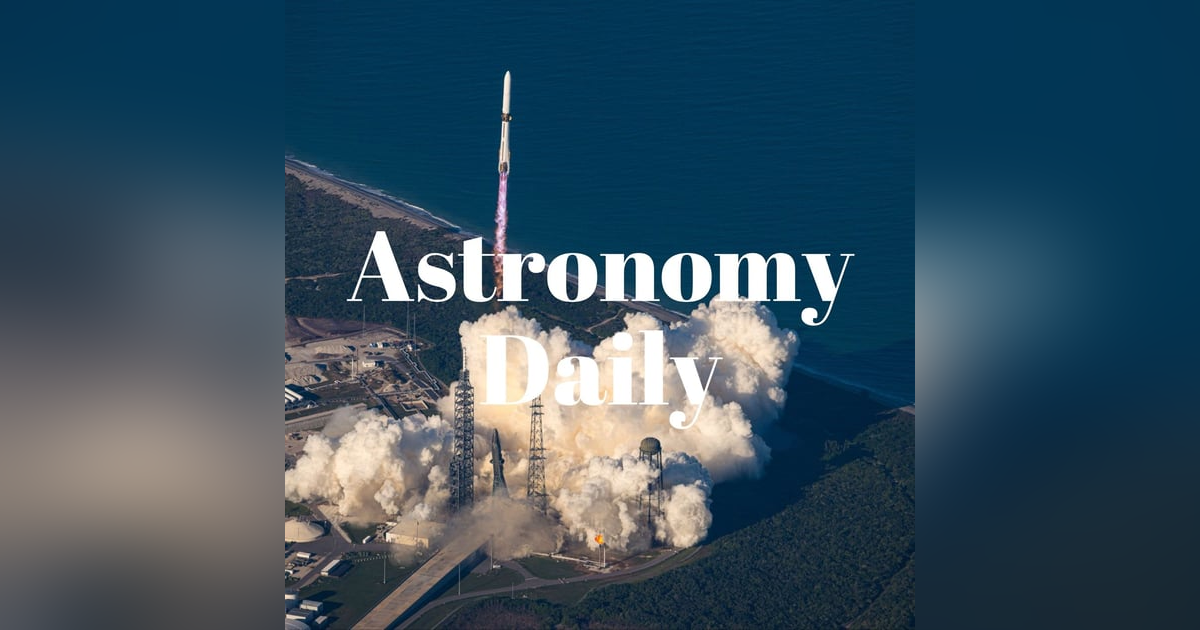


- Blue Origin's New Glenn Rocket Success: Blue Origin celebrated a significant milestone with the successful launch of its New Glenn rocket, deploying a NASA science mission destined for Mars. The highlight was the first successful landing of the rocket's first stage on an autonomous drone ship, showcasing advanced engineering and precision technology crucial for future missions.
- Chinese Astronauts' Safe Return: Three astronauts aboard the Tiangong Space Station faced a tense situation when cracks were discovered in their Shenzhou 20 spacecraft's window due to micrometeoroid impacts. Fortunately, they were able to transfer to the newly arrived Shenzhou 21 spacecraft for a safe return to Earth, turning a potential disaster into a valuable research opportunity.
- Comet C 2025 K1 Atlas Breaks Apart: Comet C 2025 K1, also known as Atlas, put on a spectacular show as it fragmented after a close encounter with the sun. Astronomers captured footage of the comet breaking into at least three pieces, providing a rare chance to study its pristine material and gain insights into the early solar system.
- Discovery of the Jinlin Crater: Geologists in southern China have discovered the Jinlin Crater, a nearly one-kilometer-wide impact site formed within the last 11,700 years. This finding is significant as it is the largest crater from this time period and enhances our understanding of asteroid impacts on Earth, aiding in planetary defense efforts.
- For more cosmic updates, visit our website at astronomydaily.io. Join our community on social media by searching for #AstroDailyPod on Facebook, X, YouTubeMusic, TikTok, and our new Instagram account! Don’t forget to subscribe to the podcast on Apple Podcasts, Spotify, iHeartRadio, or wherever you get your podcasts.
- Thank you for tuning in. This is Anna and Avery signing off. Until next time, keep looking up and exploring the wonders of our universe.
Blue Origin Launch Success
[Blue Origin](https://www.blueorigin.com/)
Tiangong Space Station Update
[CMSA](http://www.cmse.gov.cn/)
Comet C 2025 K1 Atlas Fragmentation
[NASA](https://www.nasa.gov/)
Jinlin Crater Discovery
[Geological Society](https://www.geosociety.org/)
Become a supporter of this podcast: https://www.spreaker.com/podcast/astronomy-daily-space-news-updates--5648921/support.
Sponsor Details:
Ensure your online privacy by using NordVPN. To get our special listener deal and save a lot of money, visit www.bitesz.com/nordvpn. You'll be glad you did!
Sponsor Details:
Ensure your online privacy by using NordVPN. To get our special listener deal and save a lot of money, visit www.bitesz.com/nordvpn. You'll be glad you did!
Become a supporter of Astronomy Daily by joining our Supporters Club. Commercial free episodes daily are only a click way... Click Here
This episode includes AI-generated content.
WEBVTT
0
00:00:00.480 --> 00:00:03.400
Anna: Welcome to Astronomy Daily, the podcast that
1
00:00:03.400 --> 00:00:06.240
brings you the universe one story at a time.
2
00:00:06.480 --> 00:00:08.080
I'm your host, Anna.
3
00:00:08.160 --> 00:00:10.920
Avery: And I'm Avery. Today we'll be looking at a
4
00:00:10.920 --> 00:00:13.200
huge success for Blue Origin's new Glenn
5
00:00:13.200 --> 00:00:15.919
rocket. A dramatic planned return to Earth
6
00:00:15.919 --> 00:00:18.800
for three Chinese astronauts and a comet that
7
00:00:18.800 --> 00:00:21.080
decided to put on a show by breaking apart
8
00:00:21.080 --> 00:00:22.560
right in front of our telescopes.
9
00:00:23.280 --> 00:00:26.120
Anna: And to top it all off, we're coming back down
10
00:00:26.120 --> 00:00:28.560
to Earth to explore a, um, massive
11
00:00:28.560 --> 00:00:31.400
10,000 year old crater discovered in
12
00:00:31.400 --> 00:00:31.680
China.
13
00:00:32.540 --> 00:00:35.420
So let's get started. Avery, why don't you
14
00:00:35.420 --> 00:00:37.180
kick us off with Blue Origin?
15
00:00:37.580 --> 00:00:40.060
Avery: Absolutely. This is big news in the
16
00:00:40.060 --> 00:00:42.820
commercial space race. Blue Origin just had a
17
00:00:42.820 --> 00:00:44.900
landmark success with the second launch of
18
00:00:44.900 --> 00:00:47.700
its new Glenn rocket. It wasn't just a
19
00:00:47.700 --> 00:00:50.180
launch. It was a complete mission profile
20
00:00:50.180 --> 00:00:52.900
success. They deployed a, uh, NASA science
21
00:00:52.900 --> 00:00:54.700
mission that's now on its way to Mars.
22
00:00:55.180 --> 00:00:57.420
Anna: Which is a major achievement in itself.
23
00:00:57.900 --> 00:01:00.460
But that wasn't the main event everyone was
24
00:01:00.460 --> 00:01:01.420
watching, was it?
25
00:01:02.070 --> 00:01:04.870
Avery: Not at all. The real nail biter and the part
26
00:01:04.870 --> 00:01:06.910
that had everyone glued to their screens was
27
00:01:06.910 --> 00:01:09.430
the landing. For the first time, they
28
00:01:09.430 --> 00:01:11.710
successfully landed the massive new Glenn
29
00:01:11.710 --> 00:01:13.590
first stage booster on one of their
30
00:01:13.590 --> 00:01:16.230
autonomous drone ships out in the ocean. And
31
00:01:16.230 --> 00:01:18.630
we have to emphasize how difficult that is.
32
00:01:18.790 --> 00:01:20.870
You're essentially trying to land a
33
00:01:20.870 --> 00:01:23.550
skyscraper on a moving target in the middle
34
00:01:23.550 --> 00:01:24.150
of the sea.
35
00:01:24.630 --> 00:01:27.350
Anna: That's the holy grail of modern rocketry.
36
00:01:27.590 --> 00:01:30.430
Proving reusability is the key to bringing
37
00:01:30.430 --> 00:01:33.350
down the cost of access to SpaceX
38
00:01:33.570 --> 00:01:35.850
has been the dominant player there. But this
39
00:01:35.850 --> 00:01:38.450
proves Blue Origin is officially in the game.
40
00:01:38.450 --> 00:01:41.290
And, um, then some. It's an incredible feat
41
00:01:41.290 --> 00:01:43.930
of engineering. The guidance systems have to
42
00:01:43.930 --> 00:01:46.490
account for wind, ocean currents, the
43
00:01:46.490 --> 00:01:49.050
rocket's own fuel sloshing around. The
44
00:01:49.050 --> 00:01:51.850
margins for error are razor thin. So this
45
00:01:51.850 --> 00:01:54.450
isn't just a win. It's a demonstration of
46
00:01:54.450 --> 00:01:56.130
some serious precision technology.
47
00:01:56.770 --> 00:01:59.690
Avery: Exactly. And New Glenn is a beast of a
48
00:01:59.690 --> 00:02:02.400
rocket designed for heavy lift missions. With
49
00:02:02.400 --> 00:02:04.640
this successful landing, they've demonstrated
50
00:02:04.640 --> 00:02:06.440
a capability that's crucial for future
51
00:02:06.520 --> 00:02:08.880
contracts, especially high value government
52
00:02:08.880 --> 00:02:11.240
payloads and the big lunar missions planned
53
00:02:11.240 --> 00:02:13.640
for the Artemis program. The competition is
54
00:02:13.640 --> 00:02:15.940
definitely heating up. Mhm.
55
00:02:15.940 --> 00:02:17.920
Anna: It's an exciting development that benefits
56
00:02:17.920 --> 00:02:19.000
the entire industry.
57
00:02:19.960 --> 00:02:21.960
Avery: It's not just about competition though.
58
00:02:22.200 --> 00:02:24.800
Having multiple reliable heavy lift rockets
59
00:02:24.800 --> 00:02:26.440
is a game changer for science and
60
00:02:26.440 --> 00:02:28.920
exploration. It opens up the possibility for
61
00:02:28.920 --> 00:02:31.040
more ambitious missions, larger space
62
00:02:31.040 --> 00:02:32.840
telescopes, and even the construction of
63
00:02:32.840 --> 00:02:33.790
orbital infrastructure.
64
00:02:34.900 --> 00:02:37.740
Anna: Now, speaking of missions in orbit, our next
65
00:02:37.740 --> 00:02:40.580
story involves a situation that was a little
66
00:02:40.580 --> 00:02:43.060
less smooth. It concerns three
67
00:02:43.060 --> 00:02:45.620
astronauts aboard the Tiangong Space
68
00:02:45.620 --> 00:02:46.100
Station.
69
00:02:46.580 --> 00:02:49.340
Avery: Right. This has Been a tense situation. They
70
00:02:49.340 --> 00:02:51.300
were scheduled to return to Earth, but there
71
00:02:51.300 --> 00:02:53.220
was a problem with their right home. The
72
00:02:53.220 --> 00:02:54.820
Chenzu 20 spacecraft.
73
00:02:55.300 --> 00:02:57.780
Anna: That's right. During routine checks,
74
00:02:57.860 --> 00:03:00.140
tiny cracks were discovered in one of the
75
00:03:00.140 --> 00:03:02.980
porthole windows. The suspected culprit
76
00:03:02.980 --> 00:03:05.460
is a micrometeoroid or a small
77
00:03:05.840 --> 00:03:08.360
piece of space debris. It's a stark reminder
78
00:03:08.360 --> 00:03:10.800
of the constant hazards of living and working
79
00:03:10.800 --> 00:03:12.160
in low Earth orbit.
80
00:03:12.480 --> 00:03:15.120
Avery: Even a sand sized piece of debris can cause
81
00:03:15.120 --> 00:03:18.000
catastrophic damage at orbital velocities. So
82
00:03:18.000 --> 00:03:20.000
they couldn't risk re entry in a compromised
83
00:03:20.000 --> 00:03:21.840
vehicle. What was the solution?
84
00:03:22.400 --> 00:03:24.960
Anna: Fortunately, the replacement crew was already
85
00:03:25.040 --> 00:03:27.880
on its way. The new Shenzhou 21
86
00:03:27.880 --> 00:03:30.240
spacecraft had just arrived at the station.
87
00:03:30.720 --> 00:03:33.360
So the stranded crew will be able to return
88
00:03:33.360 --> 00:03:36.120
to Earth aboard that new undamaged
89
00:03:36.120 --> 00:03:38.240
ship. And, and the plan is to bring them back
90
00:03:38.240 --> 00:03:41.000
to Earth sometime today. The China Manned
91
00:03:41.000 --> 00:03:43.960
Space Agency, or CMSA M said
92
00:03:43.960 --> 00:03:46.320
in a statement. We wish them well in the
93
00:03:46.320 --> 00:03:47.160
return journey.
94
00:03:47.640 --> 00:03:50.080
Avery: That's a relief. And what happens to the
95
00:03:50.080 --> 00:03:51.320
damaged Shenzhou 20?
96
00:03:51.800 --> 00:03:54.280
Anna: Well, there's a fascinating silver lining.
97
00:03:54.360 --> 00:03:57.040
The damaged ship will remain docked to the
98
00:03:57.040 --> 00:03:59.320
station for now. It presents a unique
99
00:03:59.320 --> 00:04:02.080
opportunity for researchers to study the long
100
00:04:02.080 --> 00:04:05.040
term effects of space debris impacts on
101
00:04:05.040 --> 00:04:07.720
spacecraft materials without having to bring
102
00:04:07.720 --> 00:04:08.600
it back to Earth.
103
00:04:08.940 --> 00:04:11.660
Avery: Turning a near disaster into a valuable
104
00:04:11.660 --> 00:04:13.740
scientific experiment. I love it.
105
00:04:14.220 --> 00:04:17.140
From human drama to cosmic drama, our
106
00:04:17.140 --> 00:04:19.340
next story is about a comet that has been
107
00:04:19.340 --> 00:04:22.020
putting on quite a show. We're talking about
108
00:04:22.020 --> 00:04:24.540
Comet C 2025 K1,
109
00:04:24.699 --> 00:04:26.380
also known as Atlas.
110
00:04:26.700 --> 00:04:29.540
Anna: Right. This Comet had a very close encounter
111
00:04:29.540 --> 00:04:32.300
with the sun back in October and it seems the
112
00:04:32.300 --> 00:04:35.100
experience was a bit too much for it.
113
00:04:35.430 --> 00:04:37.630
Avery: A bit too much is an understatement. The
114
00:04:37.630 --> 00:04:40.230
intense heat and gravitational forces caused
115
00:04:40.230 --> 00:04:42.670
it to fragment. Astronomers, uh, at the
116
00:04:42.670 --> 00:04:45.310
Asiago Observatory in Italy and the
117
00:04:45.310 --> 00:04:47.510
Virtual Telescope Project have captured
118
00:04:47.510 --> 00:04:50.070
incredible footage showing the comet has
119
00:04:50.070 --> 00:04:52.950
broken into at least three distinct pieces.
120
00:04:53.270 --> 00:04:55.670
Anna: It sounds destructive, but for scientists
121
00:04:55.910 --> 00:04:58.830
this is actually a fantastic event. Why is
122
00:04:58.830 --> 00:04:59.110
that?
123
00:04:59.350 --> 00:05:01.670
Avery: It's because Comet C 2025
124
00:05:01.670 --> 00:05:04.640
Atlas is a pristine object. A
125
00:05:04.640 --> 00:05:07.280
visitor from the Oort Cloud in the outermost
126
00:05:07.280 --> 00:05:08.520
reaches of our solar system.
127
00:05:08.760 --> 00:05:11.000
Anna: Mhm. A cosmic time capsule.
128
00:05:11.080 --> 00:05:13.880
Avery: Exactly. It's made of the same ancient
129
00:05:13.880 --> 00:05:16.440
ice and dust that formed the planets
130
00:05:16.440 --> 00:05:19.320
billions of years ago. When it breaks apart,
131
00:05:19.720 --> 00:05:22.400
it's like cracking open a, uh, geological
132
00:05:22.400 --> 00:05:23.240
treasure chest.
133
00:05:23.640 --> 00:05:26.400
Anna: So by studying the light from these
134
00:05:26.400 --> 00:05:29.360
fresh fragments before they have a chance
135
00:05:29.360 --> 00:05:32.120
to change, scientists can get a uh, much
136
00:05:32.120 --> 00:05:34.700
clearer picture of the raw ingredients and
137
00:05:34.850 --> 00:05:36.890
that built our solar system. It's an
138
00:05:36.890 --> 00:05:38.850
incredible unexpected opportunity.
139
00:05:38.930 --> 00:05:40.570
Avery: It's certainly a positive way to look.
140
00:05:40.570 --> 00:05:43.370
Anna: At it and for our final story, we are
141
00:05:43.370 --> 00:05:46.370
coming home to planet Earth for a discovery
142
00:05:46.370 --> 00:05:48.370
that looks back thousands of years.
143
00:05:48.690 --> 00:05:51.370
Geologists in southern China have confirmed
144
00:05:51.370 --> 00:05:54.130
the discovery of a massive impact crater
145
00:05:54.610 --> 00:05:56.450
named the Jinlin Crater.
146
00:05:56.690 --> 00:05:59.050
Avery: And when you say massive, what are we talking
147
00:05:59.050 --> 00:05:59.330
about?
148
00:05:59.650 --> 00:06:02.130
Anna: It's nearly a kilometer wide.
149
00:06:02.450 --> 00:06:05.250
Analysis shows it was formed by a meteorite
150
00:06:05.250 --> 00:06:06.870
impact within the last. Last
151
00:06:06.870 --> 00:06:09.790
11,700 years during
152
00:06:09.790 --> 00:06:12.470
the Holocene epoch, which is our current
153
00:06:12.470 --> 00:06:15.350
geological period. The energy released
154
00:06:15.350 --> 00:06:17.910
was equivalent to about 40 atomic
155
00:06:17.910 --> 00:06:19.230
bombs. Wow.
156
00:06:19.230 --> 00:06:21.550
Avery: That's incredible. And it's the largest
157
00:06:21.550 --> 00:06:24.030
crater ever found from this recent of a time
158
00:06:24.030 --> 00:06:24.750
period. Right.
159
00:06:24.990 --> 00:06:27.870
Anna: That's what makes it so significant. Finding
160
00:06:27.870 --> 00:06:30.750
relatively young craters is extremely rare
161
00:06:31.150 --> 00:06:33.550
on Earth. Processes like erosion,
162
00:06:34.080 --> 00:06:36.400
vegetation growth, and human activity
163
00:06:36.640 --> 00:06:38.240
quickly erase the evidence.
164
00:06:38.640 --> 00:06:41.200
Avery: Right. Especially in a wet, subtropical
165
00:06:41.200 --> 00:06:43.720
climate like southern China, you'd expect the
166
00:06:43.720 --> 00:06:46.400
crater to be filled in and overgrown very
167
00:06:46.400 --> 00:06:49.280
quickly. It's amazing it was identifiable
168
00:06:49.280 --> 00:06:49.840
at all.
169
00:06:50.240 --> 00:06:52.960
Anna: Exactly. Discoveries like the Jinlin
170
00:06:52.960 --> 00:06:55.320
Crater are crucial for planetary defense
171
00:06:55.320 --> 00:06:57.520
scientists. They help us build a more
172
00:06:57.520 --> 00:07:00.400
accurate model of how frequently medium
173
00:07:00.400 --> 00:07:03.160
sized asteroids hit our planet. Each new
174
00:07:03.160 --> 00:07:05.970
crater we find refines our understanding of
175
00:07:05.970 --> 00:07:08.210
the potential risks and helps us better
176
00:07:08.210 --> 00:07:09.250
prepare for the future.
177
00:07:09.570 --> 00:07:11.410
Avery: And, um, that's a wrap on our news Roundup
178
00:07:11.410 --> 00:07:14.290
for today. From Blue Origin's reusable
179
00:07:14.290 --> 00:07:17.010
rocket success and a dramatic astronaut
180
00:07:17.010 --> 00:07:19.650
rescue to a fragmenting comet and a
181
00:07:19.650 --> 00:07:21.050
massive ancient crater here.
182
00:07:21.050 --> 00:07:23.210
Anna: On Earth, it just goes to show that there is
183
00:07:23.210 --> 00:07:25.810
always something new and exciting happening
184
00:07:26.050 --> 00:07:28.810
both out in the cosmos and right here at
185
00:07:28.810 --> 00:07:30.730
home. Thank you for joining us on Astronomy
186
00:07:30.730 --> 00:07:31.090
Daily.
187
00:07:31.170 --> 00:07:32.930
Avery: Um, until next time, keep looking up.
188
00:07:36.190 --> 00:07:37.150
Stories are told.
189
00:07:43.950 --> 00:07:44.590
Stories.
0
00:00:00.480 --> 00:00:03.400
Anna: Welcome to Astronomy Daily, the podcast that
1
00:00:03.400 --> 00:00:06.240
brings you the universe one story at a time.
2
00:00:06.480 --> 00:00:08.080
I'm your host, Anna.
3
00:00:08.160 --> 00:00:10.920
Avery: And I'm Avery. Today we'll be looking at a
4
00:00:10.920 --> 00:00:13.200
huge success for Blue Origin's new Glenn
5
00:00:13.200 --> 00:00:15.919
rocket. A dramatic planned return to Earth
6
00:00:15.919 --> 00:00:18.800
for three Chinese astronauts and a comet that
7
00:00:18.800 --> 00:00:21.080
decided to put on a show by breaking apart
8
00:00:21.080 --> 00:00:22.560
right in front of our telescopes.
9
00:00:23.280 --> 00:00:26.120
Anna: And to top it all off, we're coming back down
10
00:00:26.120 --> 00:00:28.560
to Earth to explore a, um, massive
11
00:00:28.560 --> 00:00:31.400
10,000 year old crater discovered in
12
00:00:31.400 --> 00:00:31.680
China.
13
00:00:32.540 --> 00:00:35.420
So let's get started. Avery, why don't you
14
00:00:35.420 --> 00:00:37.180
kick us off with Blue Origin?
15
00:00:37.580 --> 00:00:40.060
Avery: Absolutely. This is big news in the
16
00:00:40.060 --> 00:00:42.820
commercial space race. Blue Origin just had a
17
00:00:42.820 --> 00:00:44.900
landmark success with the second launch of
18
00:00:44.900 --> 00:00:47.700
its new Glenn rocket. It wasn't just a
19
00:00:47.700 --> 00:00:50.180
launch. It was a complete mission profile
20
00:00:50.180 --> 00:00:52.900
success. They deployed a, uh, NASA science
21
00:00:52.900 --> 00:00:54.700
mission that's now on its way to Mars.
22
00:00:55.180 --> 00:00:57.420
Anna: Which is a major achievement in itself.
23
00:00:57.900 --> 00:01:00.460
But that wasn't the main event everyone was
24
00:01:00.460 --> 00:01:01.420
watching, was it?
25
00:01:02.070 --> 00:01:04.870
Avery: Not at all. The real nail biter and the part
26
00:01:04.870 --> 00:01:06.910
that had everyone glued to their screens was
27
00:01:06.910 --> 00:01:09.430
the landing. For the first time, they
28
00:01:09.430 --> 00:01:11.710
successfully landed the massive new Glenn
29
00:01:11.710 --> 00:01:13.590
first stage booster on one of their
30
00:01:13.590 --> 00:01:16.230
autonomous drone ships out in the ocean. And
31
00:01:16.230 --> 00:01:18.630
we have to emphasize how difficult that is.
32
00:01:18.790 --> 00:01:20.870
You're essentially trying to land a
33
00:01:20.870 --> 00:01:23.550
skyscraper on a moving target in the middle
34
00:01:23.550 --> 00:01:24.150
of the sea.
35
00:01:24.630 --> 00:01:27.350
Anna: That's the holy grail of modern rocketry.
36
00:01:27.590 --> 00:01:30.430
Proving reusability is the key to bringing
37
00:01:30.430 --> 00:01:33.350
down the cost of access to SpaceX
38
00:01:33.570 --> 00:01:35.850
has been the dominant player there. But this
39
00:01:35.850 --> 00:01:38.450
proves Blue Origin is officially in the game.
40
00:01:38.450 --> 00:01:41.290
And, um, then some. It's an incredible feat
41
00:01:41.290 --> 00:01:43.930
of engineering. The guidance systems have to
42
00:01:43.930 --> 00:01:46.490
account for wind, ocean currents, the
43
00:01:46.490 --> 00:01:49.050
rocket's own fuel sloshing around. The
44
00:01:49.050 --> 00:01:51.850
margins for error are razor thin. So this
45
00:01:51.850 --> 00:01:54.450
isn't just a win. It's a demonstration of
46
00:01:54.450 --> 00:01:56.130
some serious precision technology.
47
00:01:56.770 --> 00:01:59.690
Avery: Exactly. And New Glenn is a beast of a
48
00:01:59.690 --> 00:02:02.400
rocket designed for heavy lift missions. With
49
00:02:02.400 --> 00:02:04.640
this successful landing, they've demonstrated
50
00:02:04.640 --> 00:02:06.440
a capability that's crucial for future
51
00:02:06.520 --> 00:02:08.880
contracts, especially high value government
52
00:02:08.880 --> 00:02:11.240
payloads and the big lunar missions planned
53
00:02:11.240 --> 00:02:13.640
for the Artemis program. The competition is
54
00:02:13.640 --> 00:02:15.940
definitely heating up. Mhm.
55
00:02:15.940 --> 00:02:17.920
Anna: It's an exciting development that benefits
56
00:02:17.920 --> 00:02:19.000
the entire industry.
57
00:02:19.960 --> 00:02:21.960
Avery: It's not just about competition though.
58
00:02:22.200 --> 00:02:24.800
Having multiple reliable heavy lift rockets
59
00:02:24.800 --> 00:02:26.440
is a game changer for science and
60
00:02:26.440 --> 00:02:28.920
exploration. It opens up the possibility for
61
00:02:28.920 --> 00:02:31.040
more ambitious missions, larger space
62
00:02:31.040 --> 00:02:32.840
telescopes, and even the construction of
63
00:02:32.840 --> 00:02:33.790
orbital infrastructure.
64
00:02:34.900 --> 00:02:37.740
Anna: Now, speaking of missions in orbit, our next
65
00:02:37.740 --> 00:02:40.580
story involves a situation that was a little
66
00:02:40.580 --> 00:02:43.060
less smooth. It concerns three
67
00:02:43.060 --> 00:02:45.620
astronauts aboard the Tiangong Space
68
00:02:45.620 --> 00:02:46.100
Station.
69
00:02:46.580 --> 00:02:49.340
Avery: Right. This has Been a tense situation. They
70
00:02:49.340 --> 00:02:51.300
were scheduled to return to Earth, but there
71
00:02:51.300 --> 00:02:53.220
was a problem with their right home. The
72
00:02:53.220 --> 00:02:54.820
Chenzu 20 spacecraft.
73
00:02:55.300 --> 00:02:57.780
Anna: That's right. During routine checks,
74
00:02:57.860 --> 00:03:00.140
tiny cracks were discovered in one of the
75
00:03:00.140 --> 00:03:02.980
porthole windows. The suspected culprit
76
00:03:02.980 --> 00:03:05.460
is a micrometeoroid or a small
77
00:03:05.840 --> 00:03:08.360
piece of space debris. It's a stark reminder
78
00:03:08.360 --> 00:03:10.800
of the constant hazards of living and working
79
00:03:10.800 --> 00:03:12.160
in low Earth orbit.
80
00:03:12.480 --> 00:03:15.120
Avery: Even a sand sized piece of debris can cause
81
00:03:15.120 --> 00:03:18.000
catastrophic damage at orbital velocities. So
82
00:03:18.000 --> 00:03:20.000
they couldn't risk re entry in a compromised
83
00:03:20.000 --> 00:03:21.840
vehicle. What was the solution?
84
00:03:22.400 --> 00:03:24.960
Anna: Fortunately, the replacement crew was already
85
00:03:25.040 --> 00:03:27.880
on its way. The new Shenzhou 21
86
00:03:27.880 --> 00:03:30.240
spacecraft had just arrived at the station.
87
00:03:30.720 --> 00:03:33.360
So the stranded crew will be able to return
88
00:03:33.360 --> 00:03:36.120
to Earth aboard that new undamaged
89
00:03:36.120 --> 00:03:38.240
ship. And, and the plan is to bring them back
90
00:03:38.240 --> 00:03:41.000
to Earth sometime today. The China Manned
91
00:03:41.000 --> 00:03:43.960
Space Agency, or CMSA M said
92
00:03:43.960 --> 00:03:46.320
in a statement. We wish them well in the
93
00:03:46.320 --> 00:03:47.160
return journey.
94
00:03:47.640 --> 00:03:50.080
Avery: That's a relief. And what happens to the
95
00:03:50.080 --> 00:03:51.320
damaged Shenzhou 20?
96
00:03:51.800 --> 00:03:54.280
Anna: Well, there's a fascinating silver lining.
97
00:03:54.360 --> 00:03:57.040
The damaged ship will remain docked to the
98
00:03:57.040 --> 00:03:59.320
station for now. It presents a unique
99
00:03:59.320 --> 00:04:02.080
opportunity for researchers to study the long
100
00:04:02.080 --> 00:04:05.040
term effects of space debris impacts on
101
00:04:05.040 --> 00:04:07.720
spacecraft materials without having to bring
102
00:04:07.720 --> 00:04:08.600
it back to Earth.
103
00:04:08.940 --> 00:04:11.660
Avery: Turning a near disaster into a valuable
104
00:04:11.660 --> 00:04:13.740
scientific experiment. I love it.
105
00:04:14.220 --> 00:04:17.140
From human drama to cosmic drama, our
106
00:04:17.140 --> 00:04:19.340
next story is about a comet that has been
107
00:04:19.340 --> 00:04:22.020
putting on quite a show. We're talking about
108
00:04:22.020 --> 00:04:24.540
Comet C 2025 K1,
109
00:04:24.699 --> 00:04:26.380
also known as Atlas.
110
00:04:26.700 --> 00:04:29.540
Anna: Right. This Comet had a very close encounter
111
00:04:29.540 --> 00:04:32.300
with the sun back in October and it seems the
112
00:04:32.300 --> 00:04:35.100
experience was a bit too much for it.
113
00:04:35.430 --> 00:04:37.630
Avery: A bit too much is an understatement. The
114
00:04:37.630 --> 00:04:40.230
intense heat and gravitational forces caused
115
00:04:40.230 --> 00:04:42.670
it to fragment. Astronomers, uh, at the
116
00:04:42.670 --> 00:04:45.310
Asiago Observatory in Italy and the
117
00:04:45.310 --> 00:04:47.510
Virtual Telescope Project have captured
118
00:04:47.510 --> 00:04:50.070
incredible footage showing the comet has
119
00:04:50.070 --> 00:04:52.950
broken into at least three distinct pieces.
120
00:04:53.270 --> 00:04:55.670
Anna: It sounds destructive, but for scientists
121
00:04:55.910 --> 00:04:58.830
this is actually a fantastic event. Why is
122
00:04:58.830 --> 00:04:59.110
that?
123
00:04:59.350 --> 00:05:01.670
Avery: It's because Comet C 2025
124
00:05:01.670 --> 00:05:04.640
Atlas is a pristine object. A
125
00:05:04.640 --> 00:05:07.280
visitor from the Oort Cloud in the outermost
126
00:05:07.280 --> 00:05:08.520
reaches of our solar system.
127
00:05:08.760 --> 00:05:11.000
Anna: Mhm. A cosmic time capsule.
128
00:05:11.080 --> 00:05:13.880
Avery: Exactly. It's made of the same ancient
129
00:05:13.880 --> 00:05:16.440
ice and dust that formed the planets
130
00:05:16.440 --> 00:05:19.320
billions of years ago. When it breaks apart,
131
00:05:19.720 --> 00:05:22.400
it's like cracking open a, uh, geological
132
00:05:22.400 --> 00:05:23.240
treasure chest.
133
00:05:23.640 --> 00:05:26.400
Anna: So by studying the light from these
134
00:05:26.400 --> 00:05:29.360
fresh fragments before they have a chance
135
00:05:29.360 --> 00:05:32.120
to change, scientists can get a uh, much
136
00:05:32.120 --> 00:05:34.700
clearer picture of the raw ingredients and
137
00:05:34.850 --> 00:05:36.890
that built our solar system. It's an
138
00:05:36.890 --> 00:05:38.850
incredible unexpected opportunity.
139
00:05:38.930 --> 00:05:40.570
Avery: It's certainly a positive way to look.
140
00:05:40.570 --> 00:05:43.370
Anna: At it and for our final story, we are
141
00:05:43.370 --> 00:05:46.370
coming home to planet Earth for a discovery
142
00:05:46.370 --> 00:05:48.370
that looks back thousands of years.
143
00:05:48.690 --> 00:05:51.370
Geologists in southern China have confirmed
144
00:05:51.370 --> 00:05:54.130
the discovery of a massive impact crater
145
00:05:54.610 --> 00:05:56.450
named the Jinlin Crater.
146
00:05:56.690 --> 00:05:59.050
Avery: And when you say massive, what are we talking
147
00:05:59.050 --> 00:05:59.330
about?
148
00:05:59.650 --> 00:06:02.130
Anna: It's nearly a kilometer wide.
149
00:06:02.450 --> 00:06:05.250
Analysis shows it was formed by a meteorite
150
00:06:05.250 --> 00:06:06.870
impact within the last. Last
151
00:06:06.870 --> 00:06:09.790
11,700 years during
152
00:06:09.790 --> 00:06:12.470
the Holocene epoch, which is our current
153
00:06:12.470 --> 00:06:15.350
geological period. The energy released
154
00:06:15.350 --> 00:06:17.910
was equivalent to about 40 atomic
155
00:06:17.910 --> 00:06:19.230
bombs. Wow.
156
00:06:19.230 --> 00:06:21.550
Avery: That's incredible. And it's the largest
157
00:06:21.550 --> 00:06:24.030
crater ever found from this recent of a time
158
00:06:24.030 --> 00:06:24.750
period. Right.
159
00:06:24.990 --> 00:06:27.870
Anna: That's what makes it so significant. Finding
160
00:06:27.870 --> 00:06:30.750
relatively young craters is extremely rare
161
00:06:31.150 --> 00:06:33.550
on Earth. Processes like erosion,
162
00:06:34.080 --> 00:06:36.400
vegetation growth, and human activity
163
00:06:36.640 --> 00:06:38.240
quickly erase the evidence.
164
00:06:38.640 --> 00:06:41.200
Avery: Right. Especially in a wet, subtropical
165
00:06:41.200 --> 00:06:43.720
climate like southern China, you'd expect the
166
00:06:43.720 --> 00:06:46.400
crater to be filled in and overgrown very
167
00:06:46.400 --> 00:06:49.280
quickly. It's amazing it was identifiable
168
00:06:49.280 --> 00:06:49.840
at all.
169
00:06:50.240 --> 00:06:52.960
Anna: Exactly. Discoveries like the Jinlin
170
00:06:52.960 --> 00:06:55.320
Crater are crucial for planetary defense
171
00:06:55.320 --> 00:06:57.520
scientists. They help us build a more
172
00:06:57.520 --> 00:07:00.400
accurate model of how frequently medium
173
00:07:00.400 --> 00:07:03.160
sized asteroids hit our planet. Each new
174
00:07:03.160 --> 00:07:05.970
crater we find refines our understanding of
175
00:07:05.970 --> 00:07:08.210
the potential risks and helps us better
176
00:07:08.210 --> 00:07:09.250
prepare for the future.
177
00:07:09.570 --> 00:07:11.410
Avery: And, um, that's a wrap on our news Roundup
178
00:07:11.410 --> 00:07:14.290
for today. From Blue Origin's reusable
179
00:07:14.290 --> 00:07:17.010
rocket success and a dramatic astronaut
180
00:07:17.010 --> 00:07:19.650
rescue to a fragmenting comet and a
181
00:07:19.650 --> 00:07:21.050
massive ancient crater here.
182
00:07:21.050 --> 00:07:23.210
Anna: On Earth, it just goes to show that there is
183
00:07:23.210 --> 00:07:25.810
always something new and exciting happening
184
00:07:26.050 --> 00:07:28.810
both out in the cosmos and right here at
185
00:07:28.810 --> 00:07:30.730
home. Thank you for joining us on Astronomy
186
00:07:30.730 --> 00:07:31.090
Daily.
187
00:07:31.170 --> 00:07:32.930
Avery: Um, until next time, keep looking up.
188
00:07:36.190 --> 00:07:37.150
Stories are told.
189
00:07:43.950 --> 00:07:44.590
Stories.


