Lunar Lander Lessons, Cosmic Endgame Insights, and Life's Rapid Emergence
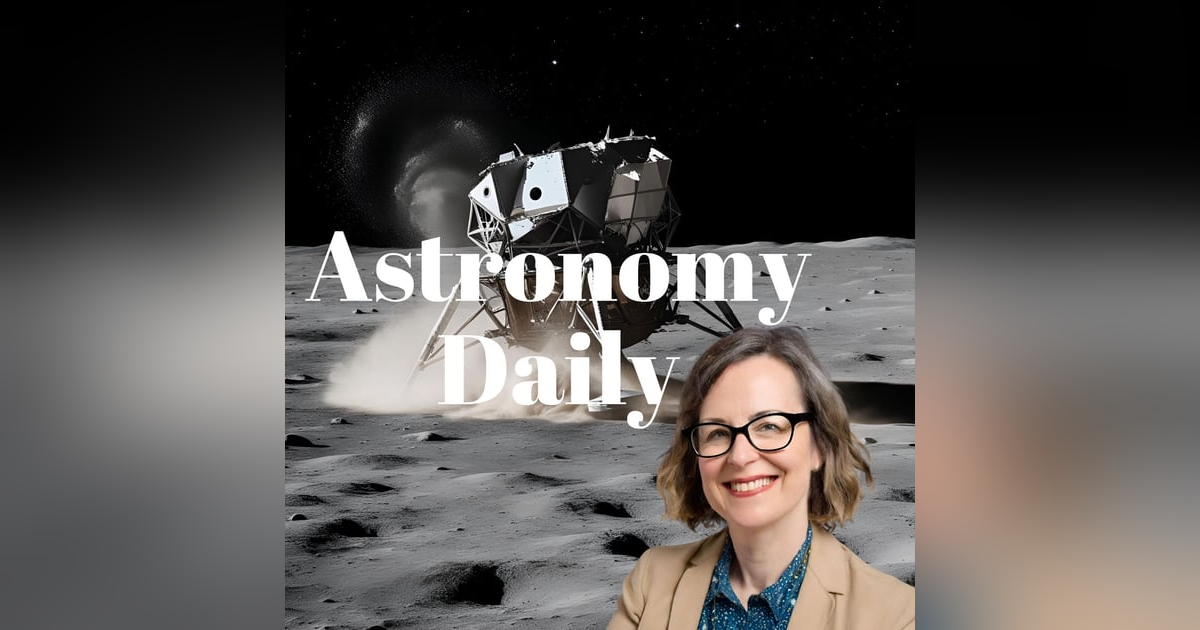


Join Anna in this episode of Astronomy Daily as she takes you on an exhilarating journey through the latest happenings in space exploration and astronomical research. Prepare to be captivated by a series of stories that span from the Moon's surface to the far reaches of the universe's fate.
Highlights:
- Intuitive Machines' Lunar Lander Mishap:Discover the factors that led to the topple of Intuitive Machine's Nova C lander during its lunar touchdown. Learn how issues with laser altimeters and challenging lighting conditions at the Moon's south pole contributed to this landing anomaly and what improvements are planned for future missions.
- The Universe's Ultimate End:Explore new research from Radboud University that revises predictions about the universe's demise, suggesting it may happen in about 10 to the power of 78 years. Understand the implications of Hawking radiation and how this research bridges gaps between quantum mechanics and general relativity.
- Life on the International Space Station:Get an inside look at the busy lives of astronauts aboard the ISS as they conduct biotechnology experiments and research on fire behavior in microgravity. Discover how their work contributes to both space safety and advancements on Earth.
- Historic Decommissioning of Galileo Satellite:Mark a significant milestone as the European Space Agency bids farewell to its first decommissioned Galileo satellite, GSAT 0104, after 12 years of service. This event underscores the importance of responsible space operations and sustainability in satellite management.
- Rapid Emergence of Life on Earth:Delve into groundbreaking research suggesting that life on Earth may have emerged much more quickly than previously thought. This study provides compelling evidence supporting the hypothesis of rapid abiogenesis, raising intriguing questions about the potential for life elsewhere in the universe.
For more cosmic updates,visit our website at astronomydaily.io. Join our community on social media by searching for #AstroDailyPod on Facebook, X, YouTubeMusic, TikTok, and our new Instagram account! Don’t forget tosubscribe to the podcast on Apple Podcasts, Spotify, iHeartRadio, or wherever you get your podcasts.
Thank you for tuning in. This is Anna signing off. Until next time, keep looking up and stay curious about the wonders of our universe.
Chapters:
00:00 - Welcome to Astronomy Daily
01:10 - Intuitive Machines' lunar lander mishap
10:00 - The universe's ultimate end and Hawking radiation
15:30 - Life aboard the International Space Station
20:00 - Historic decommissioning of Galileo satellite
25:00 - Rapid emergence of life on Earth
✍️ Episode References
Intuitive Machines Lunar Lander
[Intuitive Machines](https://www.intuitivemachines.com/)
Radboud University Research
[Radboud University](https://www.ru.nl/)
International Space Station Research
[NASA ISS](https://www.nasa.gov/mission_pages/station/main/index.html)
Galileo Satellite Decommissioning
[European Space Agency](https://www.esa.int/)
Rapid Abiogenesis Research
[David Kipping's Study](https://www.columbia.edu/~dkipping/)
Astronomy Daily
[Astronomy Daily](
0
00:00:00.320 --> 00:00:03.160
Anna: Welcome to Astronomy Daily, your daily dose of
1
00:00:03.160 --> 00:00:05.800
everything happening beyond our atmosphere. I'm
2
00:00:05.800 --> 00:00:08.480
Anna and I'm thrilled to have you join me for
3
00:00:08.480 --> 00:00:11.400
today's cosmic journey through the latest developments in space
4
00:00:11.400 --> 00:00:13.600
exploration and astronomical research.
5
00:00:14.160 --> 00:00:17.000
We've got a packed episode for you today with some fascinating
6
00:00:17.000 --> 00:00:20.000
stories spanning from our nearest celestial neighbor all the
7
00:00:20.000 --> 00:00:22.160
way to the ultimate fate of the universe itself.
8
00:00:22.960 --> 00:00:25.480
First up, we'll dive into what exactly caused
9
00:00:25.480 --> 00:00:28.360
Intuitive Machine's second lunar lander to topple over when
10
00:00:28.360 --> 00:00:31.280
it touched down on the Moon in March. The
11
00:00:31.280 --> 00:00:34.160
company has identified several factors that contributed to this
12
00:00:34.160 --> 00:00:36.760
unexpected landing position, including some
13
00:00:36.760 --> 00:00:39.280
interesting challenges with their laser altimeters
14
00:00:39.440 --> 00:00:42.200
and the tricky lighting conditions near the lunar South
15
00:00:42.200 --> 00:00:44.960
Pole. We'll explore how they're planning to address
16
00:00:44.960 --> 00:00:46.640
these issues for future missions.
17
00:00:47.760 --> 00:00:50.360
Then we'll look at how Intuitive Machines is
18
00:00:50.360 --> 00:00:52.720
diversifying beyond just lunar landers,
19
00:00:53.200 --> 00:00:55.920
especially as NASA's Artemis program faces
20
00:00:55.920 --> 00:00:58.480
potential major changes under new budget proposals.
21
00:00:59.100 --> 00:01:01.660
It's a fascinating look at how commercial space companies
22
00:01:01.820 --> 00:01:04.700
adapt to shifting priorities in space exploration.
23
00:01:05.580 --> 00:01:08.500
Next, we have some mind bending research about
24
00:01:08.500 --> 00:01:11.460
the ultimate end of the universe. Scientists from
25
00:01:11.460 --> 00:01:14.180
Radboud University have revised their predictions about
26
00:01:14.180 --> 00:01:16.700
when and how the cosmos might meet its final
27
00:01:16.700 --> 00:01:19.260
demise. Spoiler alert. It's still an
28
00:01:19.260 --> 00:01:22.100
incomprehensibly long time away, but apparently
29
00:01:22.100 --> 00:01:24.980
sooner than previously thought. We'll break down what
30
00:01:24.980 --> 00:01:27.980
this means and the science of Hawking radiation that's driving these
31
00:01:27.980 --> 00:01:30.820
new calculations. We'll also check in with the
32
00:01:30.820 --> 00:01:33.660
crew aboard the International Space station, where
33
00:01:33.660 --> 00:01:36.180
the Expedition 73 team has been busy with
34
00:01:36.180 --> 00:01:38.980
biotechnology experiments and important research
35
00:01:38.980 --> 00:01:41.980
on how fire behaves in microgravity. Their
36
00:01:41.980 --> 00:01:44.700
findings could have significant implications for fire
37
00:01:44.700 --> 00:01:47.380
safety both in space and here on Earth.
38
00:01:48.420 --> 00:01:51.340
Then we'll mark a historic milestone in satellite navigation
39
00:01:51.340 --> 00:01:54.300
as the European Space Agency bids farewell to its first
40
00:01:54.300 --> 00:01:57.260
ever decommissioned Galileo satellite after 12 years
41
00:01:57.260 --> 00:02:00.020
of service. It's a reminder that responsible
42
00:02:00.020 --> 00:02:02.820
space operations include not just launching new technology,
43
00:02:03.140 --> 00:02:05.860
but properly retiring old satellites as well.
44
00:02:06.100 --> 00:02:08.980
And finally, we'll explore fascinating new research
45
00:02:09.540 --> 00:02:12.420
suggesting that life on Earth may have emerged remarkably
46
00:02:12.420 --> 00:02:15.340
quickly after our planet formed. This study
47
00:02:15.340 --> 00:02:17.860
provides the strongest evidence yet that the process of
48
00:02:17.860 --> 00:02:20.580
abiogenesis, the development of life from non
49
00:02:20.580 --> 00:02:23.540
living matter, might be a relatively rapid phenomenon
50
00:02:23.540 --> 00:02:26.510
under Earth like conditions. The implications for
51
00:02:26.510 --> 00:02:29.390
the search for life elsewhere are profound, so
52
00:02:29.390 --> 00:02:32.310
buckle up for a journey across the cosmos as we explore
53
00:02:32.310 --> 00:02:35.230
these stories and more on today's episode of
54
00:02:35.230 --> 00:02:36.150
Astronomy Daily.
55
00:02:37.590 --> 00:02:40.510
In what has become a cautionary tale about the challenges of lunar
56
00:02:40.510 --> 00:02:43.510
landings, Intuitive Machines has now revealed
57
00:02:43.510 --> 00:02:46.470
exactly what caused their Nova C lander to fall on its
58
00:02:46.470 --> 00:02:49.070
side during its touchdown in the moon's south
59
00:02:49.070 --> 00:02:51.900
polar region this past March, the
60
00:02:51.900 --> 00:02:54.860
company executives disclosed three key factors during
61
00:02:54.860 --> 00:02:57.740
a May earnings call that contributed to what they
62
00:02:57.740 --> 00:03:00.220
diplomatically termed a landing anomaly.
63
00:03:00.940 --> 00:03:03.940
First, and perhaps most significant, were issues with the
64
00:03:03.940 --> 00:03:06.580
lander's laser altimeters. According to
65
00:03:06.580 --> 00:03:08.940
CEO Steve Altemus, these crucial instruments
66
00:03:08.940 --> 00:03:11.860
experienced signal noise and distortion during the
67
00:03:11.860 --> 00:03:14.740
final descent phase. This interference prevented the
68
00:03:14.740 --> 00:03:17.340
altimeters from providing accurate altitude readings.
69
00:03:17.940 --> 00:03:20.940
Essentially, the spacecraft couldn't properly determine how far it
70
00:03:20.940 --> 00:03:23.380
was from the lunar surface as it approached touchdown.
71
00:03:24.180 --> 00:03:27.060
The second factor involves the unique lighting conditions
72
00:03:27.060 --> 00:03:29.500
at the moon's south pole. Unlike,
73
00:03:29.450 --> 00:03:32.290
equatorial regions, the south pole experiences
74
00:03:32.290 --> 00:03:35.290
extremely low sun angles, creating dramatic
75
00:03:35.290 --> 00:03:37.850
elongated shadows across the lunar landscape.
76
00:03:38.330 --> 00:03:41.290
These shadows severely challenged the precision
77
00:03:41.290 --> 00:03:43.930
capabilities of the lander's navigation systems,
78
00:03:44.420 --> 00:03:47.340
which rely partly on visual references to guide the
79
00:03:47.340 --> 00:03:50.140
descent. Connected to this lighting issue
80
00:03:50.140 --> 00:03:52.660
was a third problem involving crater recognition.
81
00:03:53.140 --> 00:03:55.780
The unusual lighting conditions made craters appear
82
00:03:55.780 --> 00:03:58.740
differently at lower altitudes than they did in the
83
00:03:58.740 --> 00:04:01.260
reference images from NASA's Lunar Reconnaissance
84
00:04:01.260 --> 00:04:04.220
Orbiter. This discrepancy confused the
85
00:04:04.220 --> 00:04:07.060
lander's optical navigation system, further
86
00:04:07.060 --> 00:04:10.020
complicating its ability to execute a proper landing.
87
00:04:10.650 --> 00:04:13.490
The combined effect of these issues resulted in the Nova
88
00:04:13.490 --> 00:04:15.770
C lander tipping over upon touchdown,
89
00:04:16.170 --> 00:04:19.130
falling onto its side within a crater. This
90
00:04:19.130 --> 00:04:21.810
unfortunate position prevented the spacecraft's solar
91
00:04:21.810 --> 00:04:24.730
panels from generating sufficient power, dramatically
92
00:04:24.730 --> 00:04:27.370
shortening its mission to barely 12 hours after
93
00:04:27.370 --> 00:04:30.250
landing, far less than planned. Despite
94
00:04:30.250 --> 00:04:32.810
this setback, Intuitive Machines is already
95
00:04:32.810 --> 00:04:35.390
implementing changes for their next lunar mission, M
96
00:04:35.390 --> 00:04:38.180
IM3, scheduled for launch next year.
97
00:04:38.660 --> 00:04:41.220
Altimus outlined several specific improvements,
98
00:04:41.540 --> 00:04:43.940
including the addition of dissimilar and redundant
99
00:04:43.940 --> 00:04:46.900
altimeters to provide backup measurements if one
100
00:04:46.900 --> 00:04:49.860
system fails. These systems will also undergo
101
00:04:49.860 --> 00:04:52.739
more rigorous flight like testing before launch to better
102
00:04:52.739 --> 00:04:55.660
simulate actual lunar conditions. The
103
00:04:55.660 --> 00:04:58.420
company is also developing a new lighting independent
104
00:04:58.420 --> 00:05:01.380
sensor specifically designed to measure surface
105
00:05:01.380 --> 00:05:04.030
velocity regardless of shadows or lighting
106
00:05:04.030 --> 00:05:06.990
angles. Additionally, they're enhancing their crater
107
00:05:06.990 --> 00:05:09.830
database to improve the optical navigation system's
108
00:05:09.830 --> 00:05:12.830
ability to recognize lunar features under various
109
00:05:12.830 --> 00:05:15.630
lighting conditions. Interestingly,
110
00:05:15.630 --> 00:05:18.510
these modifications won't delay the IM3 mission.
111
00:05:18.830 --> 00:05:21.630
Though Altemus acknowledged there would be a slight
112
00:05:21.630 --> 00:05:24.590
increase in costs due to the additional sensors,
113
00:05:24.830 --> 00:05:27.670
he didn't specify exactly how much more expensive
114
00:05:27.670 --> 00:05:30.180
the mission would become. Meanwhile,
115
00:05:30.500 --> 00:05:33.180
Intuitive Machines remains in negotiations with
116
00:05:33.180 --> 00:05:35.700
NASA and other customers about up to
117
00:05:35.860 --> 00:05:38.700
$14 million in success payments related to the
118
00:05:36.540 --> 00:05:39.380
IM2
119
00:05:39.380 --> 00:05:42.260
mission. Despite the lander falling over,
120
00:05:42.660 --> 00:05:45.140
some payloads did manage to conduct limited
121
00:05:45.140 --> 00:05:47.850
tests. For example, a NASA
122
00:05:47.850 --> 00:05:50.130
drill was able to test its mechanisms,
123
00:05:50.530 --> 00:05:53.290
although it couldn't perform its primary objective of
124
00:05:53.290 --> 00:05:55.750
drilling into the lunar surface as as planned.
125
00:05:56.390 --> 00:05:58.710
This incident highlights the extraordinary
126
00:05:58.710 --> 00:06:00.870
difficulties involved in lunar landings,
127
00:06:01.430 --> 00:06:04.230
particularly in the challenging south polar region
128
00:06:04.310 --> 00:06:07.190
where NASA and other space agencies hope
129
00:06:07.190 --> 00:06:10.190
to establish a long term human presence. The
130
00:06:10.190 --> 00:06:12.830
extreme lighting conditions, combined with the
131
00:06:12.830 --> 00:06:15.670
complex terrain featuring numerous craters and shadows
132
00:06:15.830 --> 00:06:18.550
create a particularly demanding environment for precision
133
00:06:18.550 --> 00:06:21.270
landings. The lessons learned from this
134
00:06:21.270 --> 00:06:24.230
mission will undoubtedly inform not just Intuitive Machines
135
00:06:24.230 --> 00:06:27.000
future attempts to but also the broader commercial lunar
136
00:06:27.000 --> 00:06:29.720
industry, as it supports NASA's Artemis
137
00:06:29.720 --> 00:06:32.440
program and other initiatives aimed at returning
138
00:06:32.440 --> 00:06:34.760
humans to the lunar surface in the coming years.
139
00:06:35.240 --> 00:06:37.840
Beyond their lunar landing setbacks, Intuitive
140
00:06:37.840 --> 00:06:40.840
Machines is actively working to diversify their space
141
00:06:40.840 --> 00:06:43.680
business portfolio. During their recent earnings
142
00:06:43.680 --> 00:06:46.560
call, CEO Steve Altemus emphasized the
143
00:06:46.560 --> 00:06:49.440
company's efforts to expand beyond their core lunar
144
00:06:49.440 --> 00:06:52.440
lander technology into other promising space sectors.
145
00:06:53.440 --> 00:06:56.240
One notable project involves the design of an orbital
146
00:06:56.240 --> 00:06:59.000
transfer vehicle based on their Nova C lander
147
00:06:59.000 --> 00:07:01.960
architecture. This work is being conducted with
148
00:07:01.960 --> 00:07:04.680
an unnamed government customer and leverages the
149
00:07:04.680 --> 00:07:07.200
company's existing expertise in spacecraft design
150
00:07:07.440 --> 00:07:10.160
while opening new market opportunities in orbital
151
00:07:10.160 --> 00:07:13.120
logistics. Intuitive Machines is
152
00:07:13.120 --> 00:07:16.120
also collaborating with the Air Force Research Laboratory on
153
00:07:16.120 --> 00:07:18.160
the ambitious Jetson project.
154
00:07:19.040 --> 00:07:22.000
This initiative aims to develop a spacecraft utilizing
155
00:07:22.000 --> 00:07:24.330
nuclear electric propulsion, a potentially
156
00:07:24.330 --> 00:07:27.330
revolutionary technology that could dramatically increase the
157
00:07:27.330 --> 00:07:29.850
capabilities and range of future space missions.
158
00:07:30.330 --> 00:07:32.810
In February, the company secured a
159
00:07:33.050 --> 00:07:35.930
$10 million grant from the Texas Space Commission
160
00:07:36.410 --> 00:07:39.090
to support their work on a lifting body reentry
161
00:07:39.090 --> 00:07:41.610
vehicle. They're partnering with Rhodium
162
00:07:41.610 --> 00:07:44.370
Scientific to explore how this vehicle could be used for
163
00:07:44.370 --> 00:07:47.300
microgravity research, potentially offering a
164
00:07:47.300 --> 00:07:49.980
valuable service for returning biomedical experiments
165
00:07:49.980 --> 00:07:51.260
safely to Earth from space.
166
00:07:52.620 --> 00:07:55.460
We all know the universe will eventually end, but how
167
00:07:55.460 --> 00:07:58.180
and when has been a subject of intense scientific
168
00:07:58.180 --> 00:08:01.140
debate. Now, fascinating new research from scientists
169
00:08:01.140 --> 00:08:03.980
at Radboud University suggests the universe's
170
00:08:03.980 --> 00:08:06.940
demise might arrive much sooner than previously calculated.
171
00:08:07.260 --> 00:08:10.140
Though we're still talking about an almost incomprehensible
172
00:08:10.140 --> 00:08:12.780
timescale, the research team, led by
173
00:08:12.780 --> 00:08:15.410
Heino Falca, along with colleagues Michael
174
00:08:15.410 --> 00:08:18.210
Wandrak and Walter Van Swigelkom, has
175
00:08:18.210 --> 00:08:21.090
dramatically revised estimates for cosmic longevity.
176
00:08:21.330 --> 00:08:24.330
According to their calculations, the final decay
177
00:08:24.330 --> 00:08:26.930
of the universe could occur in about 10 to the
178
00:08:26.930 --> 00:08:29.650
78th power years. That's a one followed by
179
00:08:29.650 --> 00:08:32.450
78 zeros. While this represents a
180
00:08:32.450 --> 00:08:35.370
significant reduction from previous estimates, it's
181
00:08:35.370 --> 00:08:38.330
still billions upon billions of times the current age of our
182
00:08:38.330 --> 00:08:41.220
cosmos. As Falcke himself put
183
00:08:41.220 --> 00:08:44.140
it, the ultimate end of the universe comes much sooner
184
00:08:44.140 --> 00:08:46.940
than expected, but fortunately it still takes a very
185
00:08:46.940 --> 00:08:49.860
long time. What's particularly interesting
186
00:08:49.860 --> 00:08:52.340
about this research is how it builds upon Stephen
187
00:08:52.340 --> 00:08:54.420
Hawking's groundbreaking work from
188
00:08:54.420 --> 00:08:57.180
1975. Hawking theorized
189
00:08:57.180 --> 00:08:59.900
that black holes aren't completely black, they
190
00:08:59.900 --> 00:09:02.900
gradually emit tiny amounts of radiation, now known
191
00:09:02.900 --> 00:09:05.860
as Hawking radiation, over immensely long
192
00:09:05.860 --> 00:09:08.820
timescales. This process causes black holes to slowly
193
00:09:08.820 --> 00:09:11.180
evaporate and eventually disappear entirely.
194
00:09:11.760 --> 00:09:14.440
The Radboud team extended this principle to other dense
195
00:09:14.440 --> 00:09:17.280
cosmic objects, including neutron stars.
196
00:09:17.680 --> 00:09:20.640
Their surprising discovery was that the evaporation process
197
00:09:20.640 --> 00:09:23.280
is driven not just by mass, but by density.
198
00:09:23.680 --> 00:09:26.400
This led to some counterintuitive findings about decay
199
00:09:26.400 --> 00:09:29.280
timelines. For instance, despite
200
00:09:29.280 --> 00:09:32.080
their extreme gravitational pull and reputation as
201
00:09:32.080 --> 00:09:34.920
cosmic devourers, black holes share a similar
202
00:09:34.920 --> 00:09:37.730
decay timeline with neutron stars around
203
00:09:37.730 --> 00:09:39.730
10 to the 67th power years.
204
00:09:40.610 --> 00:09:43.050
That's significantly shorter than previous scientific
205
00:09:43.050 --> 00:09:45.890
estimates. The reason for this unexpected result
206
00:09:45.890 --> 00:09:48.530
is that black holes lacking a solid
207
00:09:48.530 --> 00:09:51.370
surface can partially reabsorb their emitted
208
00:09:51.370 --> 00:09:53.690
radiation, which actually slows the
209
00:09:53.690 --> 00:09:56.410
evaporation process. To put this in
210
00:09:56.410 --> 00:09:59.370
perspective, the researchers calculated that objects as small as
211
00:09:59.370 --> 00:10:01.770
our moon, or even a human, would take
212
00:10:01.770 --> 00:10:04.440
approximately 10 to the 90th power
213
00:10:04.440 --> 00:10:07.360
years to evaporate through Hawking like radiation.
214
00:10:08.000 --> 00:10:10.600
Of course, other natural processes would end their
215
00:10:10.600 --> 00:10:13.440
existence long before this theoretical timeline played
216
00:10:13.440 --> 00:10:15.840
out. What makes this research
217
00:10:16.160 --> 00:10:19.000
particularly valuable beyond the cosmic doomsday
218
00:10:19.000 --> 00:10:22.000
predictions is how it helps bridge the gap
219
00:10:22.320 --> 00:10:25.280
between quantum mechanics and general relativity,
220
00:10:25.840 --> 00:10:28.760
two fundamental theories of physics that have
221
00:10:28.760 --> 00:10:31.280
proven notoriously difficult to reconcile.
222
00:10:31.700 --> 00:10:34.540
As co author Walter Van Swigelkom noted, by
223
00:10:34.540 --> 00:10:37.380
asking these kinds of questions and looking at extreme cases,
224
00:10:37.780 --> 00:10:40.700
we want to better understand the theory, and perhaps one
225
00:10:40.700 --> 00:10:43.220
day we unravel the mystery of Hawking
226
00:10:43.220 --> 00:10:46.180
radiation. While none of us need worry about
227
00:10:46.180 --> 00:10:48.900
witnessing the universe's final moments, this
228
00:10:48.900 --> 00:10:51.420
research provides valuable insight into the
229
00:10:51.420 --> 00:10:54.140
fundamental workings of our cosmos and the
230
00:10:54.140 --> 00:10:56.980
physical laws that govern everything from the smallest
231
00:10:56.980 --> 00:10:59.960
particles to to the largest structures in existence.
232
00:11:00.520 --> 00:11:03.400
It's a reminder that even in studying the end of everything,
233
00:11:03.880 --> 00:11:06.800
we continue to deepen our understanding of the universe we
234
00:11:06.800 --> 00:11:07.560
inhabit today.
235
00:11:08.920 --> 00:11:11.920
Have you ever wondered what it is that astronauts actually do all
236
00:11:11.920 --> 00:11:14.880
day on the iss? I'm sure some people think
237
00:11:14.880 --> 00:11:17.840
they spend the day looking out the window and admiring the
238
00:11:17.840 --> 00:11:20.120
view. Well, far from it.
239
00:11:20.440 --> 00:11:23.280
Let's take a look at what they did on Tuesday. This week as an
240
00:11:23.280 --> 00:11:26.170
example, the International Space Station
241
00:11:26.170 --> 00:11:29.050
continues to serve as humanity's premier orbital
242
00:11:29.050 --> 00:11:31.810
laboratory, with the Expedition 73
243
00:11:31.810 --> 00:11:34.450
crew currently engaged in a diverse array of
244
00:11:34.450 --> 00:11:37.170
scientific investigations. NASA
245
00:11:37.170 --> 00:11:39.850
astronauts Anne McClane, Nicole Ayers,
246
00:11:40.009 --> 00:11:42.650
and Johnny Kim have been particularly busy with
247
00:11:42.650 --> 00:11:45.610
biotechnology research. McClane donned
248
00:11:45.610 --> 00:11:48.570
a special biomonitor garment and headband as part
249
00:11:48.570 --> 00:11:51.250
of an experiment monitoring astronauts psychological
250
00:11:51.250 --> 00:11:54.170
responses before, during and after their missions.
251
00:11:55.120 --> 00:11:58.000
This research aims to assess how space travel affects
252
00:11:58.000 --> 00:12:00.640
heart health, crucial knowledge as we plan for
253
00:12:00.640 --> 00:12:03.360
longer duration missions beyond Earth orbit.
254
00:12:03.680 --> 00:12:06.480
Perhaps the most intriguing experiment currently underway
255
00:12:06.480 --> 00:12:09.200
involves DNA inspired nanomaterials.
256
00:12:09.680 --> 00:12:12.640
MacLaine and Ayres have been working in the life sciences glove
257
00:12:12.640 --> 00:12:15.560
box, mixing MRNA and protein solutions
258
00:12:15.560 --> 00:12:17.800
to produce special molecules formed by these
259
00:12:17.800 --> 00:12:20.680
nanomaterials. This research could lead
260
00:12:20.680 --> 00:12:23.280
to more cost effective in space production methods
261
00:12:23.680 --> 00:12:26.680
and potentially revolutionize targeted therapy delivery back on
262
00:12:26.680 --> 00:12:29.440
Earth, improving patient outcomes with fewer side
263
00:12:29.440 --> 00:12:31.960
effects. Fire safety in space
264
00:12:31.960 --> 00:12:33.920
represents another critical research area.
265
00:12:34.400 --> 00:12:37.320
Astronaut Johnny Kim spent the day installing hardware for
266
00:12:37.320 --> 00:12:40.320
the Solid Fuel Ignition and Extinction Experiment, which
267
00:12:40.320 --> 00:12:43.080
includes mist systems designed to extinguish flames in
268
00:12:43.080 --> 00:12:46.080
microgravity. He's also working with the Combustion
269
00:12:46.080 --> 00:12:49.000
Integrated Rack to better understand the fundamentals of
270
00:12:49.000 --> 00:12:52.000
how fire behaves when gravity isn't pulling flames upward.
271
00:12:52.790 --> 00:12:55.790
This research isn't merely academic. Understanding
272
00:12:55.790 --> 00:12:58.630
fire behavior and suppression methods in space is essential
273
00:12:58.630 --> 00:13:01.550
for crew safety on the ISS and future deep
274
00:13:01.550 --> 00:13:03.910
space missions. Meanwhile,
275
00:13:03.990 --> 00:13:06.870
JAXA astronaut and Station Commander Takuya
276
00:13:06.870 --> 00:13:09.470
Onishi has been focusing on similar fire
277
00:13:09.470 --> 00:13:12.070
safety work in the Japanese experiment module.
278
00:13:12.390 --> 00:13:15.150
He's been handling gas bottle exchanges in the Solid
279
00:13:15.150 --> 00:13:17.750
Combustion Experiment module and performing
280
00:13:17.750 --> 00:13:20.550
critical leak checks to ensure safe operations.
281
00:13:21.650 --> 00:13:24.370
Beyond scientific duties, Onishi has tackled
282
00:13:24.370 --> 00:13:27.290
orbital plumbing tasks, installing recycle
283
00:13:27.290 --> 00:13:29.810
tanks and configuring drain valves, the
284
00:13:29.810 --> 00:13:32.730
unglamorous but essential maintenance that keeps the station
285
00:13:32.730 --> 00:13:35.210
functioning. The station's three
286
00:13:35.210 --> 00:13:37.570
cosmonauts, Sergei Ryzhikov,
287
00:13:37.730 --> 00:13:40.050
Alexei Zubritsky and Kirill
288
00:13:40.050 --> 00:13:42.850
Peskov, have primarily focused on maintenance
289
00:13:42.850 --> 00:13:45.730
tasks in the Russian segment. Their work included
290
00:13:45.730 --> 00:13:48.680
removing cargo, replacing thermal sensors and
291
00:13:48.680 --> 00:13:50.680
verifying flow sensor installations.
292
00:13:51.480 --> 00:13:54.480
Peskov conducted an ethernet cables audit and
293
00:13:54.480 --> 00:13:57.440
worked on the intermodular ventilation system connecting
294
00:13:57.440 --> 00:13:59.960
the Russian and US modules. Critical
295
00:13:59.960 --> 00:14:02.960
infrastructure that ensures proper air circulation throughout
296
00:14:02.960 --> 00:14:05.840
the station. This blend of cutting edge
297
00:14:05.840 --> 00:14:08.680
research and meticulous maintenance highlights the dual
298
00:14:08.680 --> 00:14:11.160
nature of the ISS as both a world class
299
00:14:11.160 --> 00:14:14.120
laboratory and a habitable outpost in the
300
00:14:14.120 --> 00:14:16.960
harsh environment of low Earth orbit. As the
301
00:14:16.960 --> 00:14:19.880
crew continues their six month mission, these experiments
302
00:14:19.880 --> 00:14:22.560
will provide valuable data for scientific advancement
303
00:14:22.560 --> 00:14:25.400
and support humanity's ongoing space exploration
304
00:14:25.400 --> 00:14:28.320
efforts. I think you'll agree there wasn't
305
00:14:28.320 --> 00:14:30.760
much time for just sitting and looking at the view.
306
00:14:32.279 --> 00:14:34.960
In a significant first for Europe's satellite navigation
307
00:14:34.960 --> 00:14:36.800
system, Galileo satellite
308
00:14:36.800 --> 00:14:39.560
GSAT0104 has been officially
309
00:14:39.560 --> 00:14:42.370
decommissioned after 12 years of service. This
310
00:14:42.370 --> 00:14:45.130
marks a historic milestone as the first satellite in the
311
00:14:45.130 --> 00:14:47.970
Galileo constellation to be retired, setting
312
00:14:47.970 --> 00:14:50.610
precedent for responsible space operations in the coming
313
00:14:50.610 --> 00:14:53.570
decades. GSAT 0104
314
00:14:53.810 --> 00:14:56.210
holds a special place in European space history.
315
00:14:56.690 --> 00:14:59.690
Launched on October 12, 2012, it was the
316
00:14:59.690 --> 00:15:02.490
fourth and final in orbit validation satellite for the
317
00:15:02.490 --> 00:15:05.410
Galileo program. Most notably, it
318
00:15:05.410 --> 00:15:08.365
participated in a watershed moment on March 12,
319
00:15:08.515 --> 00:15:10.990
2013, when, alongside its fellow
320
00:15:10.990 --> 00:15:13.590
satellites, it enabled the very first position
321
00:15:13.670 --> 00:15:16.350
fix by Europe's independent satellite navigation
322
00:15:16.350 --> 00:15:19.350
system M. For a constellation like Galileo,
323
00:15:19.350 --> 00:15:22.150
which serves as critical public infrastructure intended to provide
324
00:15:22.150 --> 00:15:24.150
uninterrupted service over decades,
325
00:15:24.470 --> 00:15:27.270
decommissioning activities are as essential as launches.
326
00:15:27.990 --> 00:15:30.950
The retirement process isn't just about making space safer,
327
00:15:31.030 --> 00:15:34.030
it's literally about making space for new satellites, as
328
00:15:34.030 --> 00:15:36.790
the constellation requires continuous replenishment.
329
00:15:37.490 --> 00:15:40.410
The decision to retire Gisatsura 104 came
330
00:15:40.410 --> 00:15:43.410
after careful deliberation by a board chaired by the
331
00:15:43.410 --> 00:15:46.050
EU Agency for the Space Program, with
332
00:15:46.050 --> 00:15:49.050
participation from the European Space Agency and
333
00:15:49.050 --> 00:15:51.770
European Commission. Decommissioning
334
00:15:51.770 --> 00:15:54.610
activities began in March 2024 and
335
00:15:54.610 --> 00:15:57.062
were completed last month in April
336
00:15:57.198 --> 00:16:00.050
2025. What's particularly notable
337
00:16:00.050 --> 00:16:02.570
about this decommissioning is how it aligns with
338
00:16:02.570 --> 00:16:04.850
ESA's commitment to sustainability in space.
339
00:16:05.620 --> 00:16:08.420
With the growing concern about space debris threatening current
340
00:16:08.420 --> 00:16:11.420
and future missions, ESA has set an ambitious
341
00:16:11.420 --> 00:16:14.340
goal of net zero space pollution for new missions by
342
00:16:14.340 --> 00:16:16.820
2030. For G Satsaro
343
00:16:16.820 --> 00:16:19.740
104 engineers used remaining propellant
344
00:16:19.740 --> 00:16:22.420
reserves to place it 700 km above the
345
00:16:22.420 --> 00:16:25.380
operational Galileo constellation in what's known
346
00:16:25.380 --> 00:16:27.700
as a graveyard orbit. This
347
00:16:27.700 --> 00:16:30.620
exceptionally stable disposal orbit is designed to
348
00:16:30.620 --> 00:16:32.660
remain undisturbed for hundreds of years,
349
00:16:33.310 --> 00:16:35.710
ensuring it won't interfere with active satellites.
350
00:16:36.110 --> 00:16:39.110
The satellite was then completely passivated by removing
351
00:16:39.110 --> 00:16:41.870
all internal energy sources, including battery
352
00:16:41.870 --> 00:16:44.630
charge. This approach represents the
353
00:16:44.630 --> 00:16:47.590
standard disposal strategy for satellites in medium earth
354
00:16:47.590 --> 00:16:50.470
and geostationary orbits, where Earth reentry
355
00:16:50.470 --> 00:16:52.870
is generally not feasible. Future
356
00:16:52.870 --> 00:16:55.550
decommissioned Galileo satellites will be disposed at
357
00:16:55.550 --> 00:16:58.550
slightly different altitudes to maintain safe distance between
358
00:16:58.550 --> 00:17:01.460
them. The Galileo program continues
359
00:17:01.460 --> 00:17:03.860
to thrive despite this retirement. The
360
00:17:03.860 --> 00:17:06.540
constellation currently provides the same level of performance
361
00:17:07.020 --> 00:17:09.580
with active satellites in all prime slots,
362
00:17:10.060 --> 00:17:13.020
plus three active spares. Six more
363
00:17:13.020 --> 00:17:15.740
first generation satellites are ready for launch and
364
00:17:15.820 --> 00:17:18.060
12 second generation satellites are in development.
365
00:17:18.940 --> 00:17:21.340
This decommissioning gives the Galileo program
366
00:17:21.420 --> 00:17:24.420
valuable experience that will prove crucial as
367
00:17:24.420 --> 00:17:27.100
more satellites reach the end of their operational
368
00:17:27.100 --> 00:17:30.000
lives in the coming years. The
369
00:17:30.000 --> 00:17:32.480
remaining three original in orbit validation
370
00:17:32.480 --> 00:17:34.760
satellites have exceeded their design
371
00:17:34.760 --> 00:17:37.720
lifetime but continue to provide excellent
372
00:17:37.720 --> 00:17:40.400
navigation performance. They'll be reviewed again in
373
00:17:40.400 --> 00:17:43.160
October 2025 to determine if they should continue
374
00:17:43.160 --> 00:17:46.040
operating or join GSAT 0104
375
00:17:46.040 --> 00:17:48.880
in retirement. Galileo has
376
00:17:48.880 --> 00:17:51.880
become the world's most precise satellite navigation system,
377
00:17:52.440 --> 00:17:55.040
serving over 4 billion smartphone users
378
00:17:55.040 --> 00:17:57.340
globally since entering open service in
379
00:17:57.340 --> 00:18:00.020
2017. Beyond consumer
380
00:18:00.020 --> 00:18:02.620
applications, it's making a difference across rail,
381
00:18:02.860 --> 00:18:05.700
maritime, agriculture, financial timing services and
382
00:18:05.700 --> 00:18:08.500
rescue operations. A testament to Europe's
383
00:18:08.500 --> 00:18:10.540
commitment to space technology leadership.
384
00:18:11.980 --> 00:18:14.940
Finally, today, when we think about the dawn of life on
385
00:18:14.940 --> 00:18:17.700
Earth, it's easy to imagine a process that took
386
00:18:17.700 --> 00:18:20.620
eons. A, slow gradual emergence from
387
00:18:20.620 --> 00:18:23.590
complex chemicals to the first self replicating
388
00:18:23.590 --> 00:18:26.310
organisms. But fascinating new research
389
00:18:26.390 --> 00:18:29.150
suggests that life might have gotten its start with surprising
390
00:18:29.150 --> 00:18:32.150
speed after our planet formed, raising profound
391
00:18:32.150 --> 00:18:34.710
questions about the potential for life elsewhere in the
392
00:18:34.710 --> 00:18:37.430
universe. A recent paper by American
393
00:18:37.430 --> 00:18:39.990
astronomer David Kipping, titled strong
394
00:18:39.990 --> 00:18:42.950
evidence that abiogenesis is a rapid process on
395
00:18:42.950 --> 00:18:45.910
Earth analogues offers compelling analysis
396
00:18:45.910 --> 00:18:48.880
of when life first emerged on our planet. The
397
00:18:48.880 --> 00:18:51.560
evidence of ancient life stretches remarkably far back,
398
00:18:51.720 --> 00:18:54.200
possibly as far as 4.2 billion years ago.
399
00:18:54.520 --> 00:18:57.480
Astonishingly close to Earth's formation around 4.5
400
00:18:57.480 --> 00:19:00.480
billion years ago. The timeline is truly remarkable when
401
00:19:00.480 --> 00:19:03.200
you consider the evidence. Fossilized mats of
402
00:19:03.200 --> 00:19:05.920
cyanobacteria known as stromatolites, date back
403
00:19:05.920 --> 00:19:08.760
3.7 billion years. Rocks from Australia
404
00:19:08.920 --> 00:19:11.880
show isotope patterns consistent with biological activity
405
00:19:11.880 --> 00:19:14.850
dating to 4.1 billion years ago. And
406
00:19:14.850 --> 00:19:17.570
some ancient Canadian rocks contain tiny filament like
407
00:19:17.570 --> 00:19:20.250
structures that may represent biological remains from
408
00:19:20.250 --> 00:19:21.930
4.28 billion years ago.
409
00:19:23.210 --> 00:19:26.130
Scientists trying to understand life's earliest journey often study
410
00:19:26.130 --> 00:19:28.930
what's called luca, the last universal common
411
00:19:28.930 --> 00:19:31.890
ancestor. This hypothetical organism gave rise
412
00:19:31.890 --> 00:19:34.490
to all forms of life on Earth. Bacteria,
413
00:19:34.570 --> 00:19:37.370
archaea, and eventually complex cells like our
414
00:19:37.370 --> 00:19:40.370
own. Current research places LUCA's existence at least
415
00:19:40.370 --> 00:19:43.290
3.6 billion years ago, possibly as far
416
00:19:43.290 --> 00:19:45.890
back as 4.3 billion years. What
417
00:19:45.890 --> 00:19:48.210
Kiping's analysis reveals is truly significant.
418
00:19:48.850 --> 00:19:51.530
Using Bayesian statistical methods to evaluate the
419
00:19:51.530 --> 00:19:54.410
evidence, he calculates 13, 1 odds in
420
00:19:54.410 --> 00:19:56.930
favor of rapid abiogenesis, the
421
00:19:56.930 --> 00:19:59.410
spontaneous emergence of life from non living matter.
422
00:19:59.890 --> 00:20:02.690
This crosses the threshold of 10 to 1 that scientists
423
00:20:02.690 --> 00:20:05.690
consider strong evidence, making this the first time we
424
00:20:05.690 --> 00:20:08.450
have formal statistical support for the hypothesis
425
00:20:08.920 --> 00:20:11.520
that life rapidly emerges under Earth like
426
00:20:11.520 --> 00:20:14.400
conditions. This finding addresses
427
00:20:14.400 --> 00:20:17.320
a long standing concern about what's called the weak
428
00:20:17.320 --> 00:20:20.240
anthropic principle, the idea that we might be
429
00:20:20.240 --> 00:20:22.920
observing an atypically quick emergence of life
430
00:20:23.320 --> 00:20:25.800
simply because if life hadn't appeared early,
431
00:20:26.120 --> 00:20:28.800
we wouldn't be here to observe it. Kipping's odds
432
00:20:28.800 --> 00:20:31.360
ratio provides a more objective measure supporting rapid
433
00:20:31.360 --> 00:20:34.200
abiogenesis. But here's the crucial caveat,
434
00:20:34.430 --> 00:20:37.390
and it's one Kipping emphasizes. This doesn't mean
435
00:20:37.390 --> 00:20:40.030
life is common throughout the universe. Earth like
436
00:20:40.030 --> 00:20:42.430
conditions themselves may be exceedingly rare.
437
00:20:42.910 --> 00:20:45.790
As he writes, our result does not establish that life
438
00:20:45.790 --> 00:20:48.230
is common, since Earth's conditions could be
439
00:20:48.230 --> 00:20:51.150
incredibly rare. There's also an intriguing
440
00:20:51.150 --> 00:20:54.070
tension within these findings. If life started so
441
00:20:54.070 --> 00:20:56.830
quickly, why did it take roughly 4 billion more
442
00:20:56.830 --> 00:20:59.230
years for intelligent life like us to evolve?
443
00:20:59.960 --> 00:21:02.680
With our sun expected to make Earth uninhabitable in about
444
00:21:02.680 --> 00:21:05.440
900 million years as it grows 10%
445
00:21:05.440 --> 00:21:08.360
more luminous, there seems to be a narrow window for
446
00:21:08.360 --> 00:21:11.320
intelligence to emerge before a planet becomes too hostile.
447
00:21:11.720 --> 00:21:14.400
The most humbling aspect of this research remains our
448
00:21:14.400 --> 00:21:17.080
limited sample size. We still have only one
449
00:21:17.080 --> 00:21:19.400
confirmed example of life in the universe
450
00:21:19.720 --> 00:21:22.480
Earth. Finding evidence of past or
451
00:21:22.480 --> 00:21:25.400
present life elsewhere in our solar system, whether on
452
00:21:25.400 --> 00:21:28.020
Mars, an ocean moon like Europa, or or
453
00:21:28.020 --> 00:21:30.460
conclusively detecting biosignatures on an
454
00:21:30.460 --> 00:21:32.940
exoplanet would revolutionize our
455
00:21:32.940 --> 00:21:35.700
understanding. As Kipping concludes,
456
00:21:36.100 --> 00:21:38.900
our next task is clearly to look out and address this
457
00:21:39.620 --> 00:21:42.380
how common are conditions analogous to those of
458
00:21:42.380 --> 00:21:45.300
Earth? That search continues with
459
00:21:45.300 --> 00:21:47.980
each new discovery, bringing us closer to answering one of
460
00:21:47.980 --> 00:21:50.980
humanity's most profound questions Are we alone in
461
00:21:50.980 --> 00:21:51.620
the universe?
462
00:21:53.540 --> 00:21:56.340
And that brings us to the end of another episode of Astronomy
463
00:21:56.340 --> 00:21:59.130
Daily, where today we've traveled from the
464
00:21:59.130 --> 00:22:01.810
Moon's surface to the ultimate fate of the universe,
465
00:22:02.050 --> 00:22:04.210
with several fascinating stops in between.
466
00:22:05.730 --> 00:22:08.250
We began with Intuitive Machine's Lunar Lander
467
00:22:08.250 --> 00:22:10.930
mishap, where altimeter problems and challenging
468
00:22:10.930 --> 00:22:13.930
lighting conditions cause their Nova C lander to topple
469
00:22:13.930 --> 00:22:16.690
over in March. Despite this setback,
470
00:22:16.690 --> 00:22:19.570
the company is implementing important changes for future
471
00:22:19.570 --> 00:22:22.210
missions while diversifying their space business
472
00:22:22.460 --> 00:22:25.420
beyond lunar exploration. We then ventured
473
00:22:25.420 --> 00:22:28.260
to the far reaches of time itself, with research
474
00:22:28.260 --> 00:22:31.180
from Radboud university suggesting the universe's
475
00:22:31.180 --> 00:22:33.940
end may arrive in about 10 to the power of
476
00:22:33.940 --> 00:22:36.060
78 years, still an
477
00:22:36.060 --> 00:22:38.499
incomprehensibly distant future, but
478
00:22:38.499 --> 00:22:41.300
significantly sooner than previous estimates of 10
479
00:22:41.300 --> 00:22:43.740
to the power of 1,100 years.
480
00:22:44.780 --> 00:22:46.780
Up on the International Space Station
481
00:22:47.180 --> 00:22:49.840
expedition's 73 crew members have been been
482
00:22:49.840 --> 00:22:52.440
advancing biotechnology research and
483
00:22:52.520 --> 00:22:55.000
studying fire behavior in microgravity,
484
00:22:55.320 --> 00:22:58.240
crucial work that improves our understanding of both space
485
00:22:58.240 --> 00:23:00.440
habitation and life on Earth.
486
00:23:01.160 --> 00:23:03.520
We also witnessed a historical first with the
487
00:23:03.520 --> 00:23:06.040
decommissioning of Galileo satellite GSAT
488
00:23:06.040 --> 00:23:08.960
0104 after 12 years of
489
00:23:08.960 --> 00:23:11.760
service. This pioneering event demonstrates
490
00:23:11.760 --> 00:23:14.720
Europe's commitment to sustainable space operations and
491
00:23:14.720 --> 00:23:17.310
sets a responsible example for commercial constellation management.
492
00:23:18.350 --> 00:23:20.910
Perhaps most thought provoking was our look at new
493
00:23:20.910 --> 00:23:23.790
evidence suggesting life may have emerged with
494
00:23:23.790 --> 00:23:26.030
surprising speed after Earth formed.
495
00:23:26.590 --> 00:23:29.310
David Kipping's analysis showing strong
496
00:23:29.310 --> 00:23:31.010
statistical support for rapid abiogenesis
497
00:23:32.260 --> 00:23:35.260
raises profound questions about the potential for life
498
00:23:35.260 --> 00:23:38.060
elsewhere. Even as we acknowledge the rarity of
499
00:23:38.060 --> 00:23:40.900
Earth like conditions, these stories remind us
500
00:23:40.900 --> 00:23:43.670
that space exploration exploration continues to challenge our
501
00:23:43.670 --> 00:23:46.350
understanding of the universe and our place within it.
502
00:23:46.750 --> 00:23:49.630
Each discovery brings new questions, and that's what makes
503
00:23:49.630 --> 00:23:52.470
astronomy so endlessly fascinating. If you've
504
00:23:52.470 --> 00:23:55.270
enjoyed today's episode, I invite you to visit our website
505
00:23:55.270 --> 00:23:58.150
at astronomydaily IO where you can
506
00:23:58.150 --> 00:24:01.110
sign up for our free daily newsletter and catch up on all the
507
00:24:01.110 --> 00:24:03.670
latest space and astronomy news with our
508
00:24:03.670 --> 00:24:05.630
constantly updating Space News feed.
509
00:24:06.430 --> 00:24:09.100
You can also subscribe to Astronomy Daily on on
510
00:24:09.100 --> 00:24:11.220
Apple Podcasts, Spotify,
511
00:24:11.540 --> 00:24:14.460
YouTubeMusic, or wherever you get your podcasts. To ensure
512
00:24:14.460 --> 00:24:17.260
you never miss an episode, this is Anna for
513
00:24:17.260 --> 00:24:20.180
Astronomy Daily. Thank you for listening, and until
514
00:24:20.180 --> 00:24:21.860
next time, keep looking up.


