S03E98: Starliner Delays & Mars' Icy Secrets Unveiled

Welcome to another thrilling episode of Astronomy Daily, where we bring you the latest and greatest discoveries from the cosmos. This episode is packed with fascinating updates, from the perseverance of astronauts aboard the International Space Station (ISS) to icy clues about Mars' ancient climate, mysterious dark comets, and even a potential new discovery by the Hubble Space Telescope. Let's dive into some of the highlights!
First up, we have an update on astronauts Butch Wilmore and SUNY Williams, currently stationed on the ISS. Despite facing technical setbacks with the Boeing Starliner spacecraft, both astronauts remain confident in its capabilities. Their journey, which began on June 5, has been extended due to thruster malfunctions and helium leaks. NASA is hopeful for a late July return, and the astronauts are making the most of their extended stay by conducting various scientific experiments, including gene sequencing in microgravity.
Next, we delve into Mars' climatic history. Recent studies suggest that the red planet may have experienced cold and icy conditions similar to those found in subarctic regions on Earth. This discovery, published in Communications Earth and Environment, provides new insights into Mars' ancient environment and its potential to have supported life. By comparing Martian soils from the Gale crater with those found in Newfoundland, Canada, scientists are uncovering the complex interactions between water and temperature on Mars.
We also explore the intriguing world of dark comets. According to a recent study by researchers at the University of Michigan, up to 60% of near-Earth objects could be dark comets. These mysterious celestial bodies likely contain or previously contained ice, suggesting they may have played a key role in delivering water to Earth. This research not only broadens our understanding of near-Earth objects but also enriches the broader discourse on how essential elements like water might have been transported to our planet.
Lastly, we turn our attention to the enigmatic Omega Centauri, the largest and brightest globular cluster visible from Earth. An international team has possibly pinpointed an intermediate mass black hole at its core, thanks to over 500 Hubble Space Telescope images gathered across two decades. This potential discovery is thrilling, as intermediate mass black holes are crucial to understanding black hole formation and growth.
If you're fascinated by the mysteries of the universe, this episode is a must-listen. Join us as we explore these cosmic wonders and stay updated with the latest discoveries in space exploration. Don't forget to visit our website at astronomydaily.io for more space news and to access all our past episodes. Follow us on social media @AstrodailyPod to stay in the loop with the latest discussions and discoveries.
Until next time, keep looking up and stay curious about the universe!
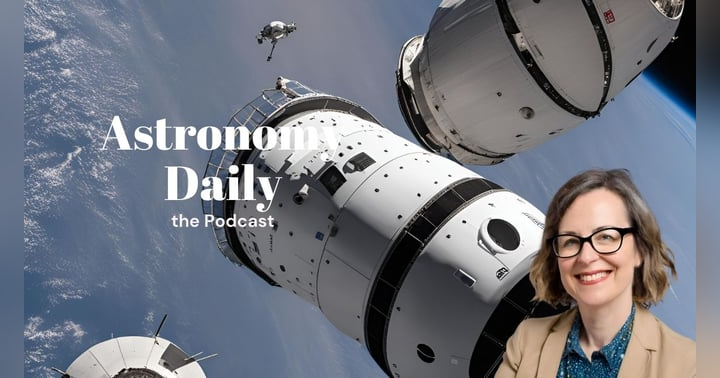
S03E135: Starliner vs. Crew Dragon, Polaris Dawn's Delay, and Chandrayaan-3's Lunar Revelations