N526FC Hawker 900XP Overrun at Telluride: 0° Flaps and a Tailwind



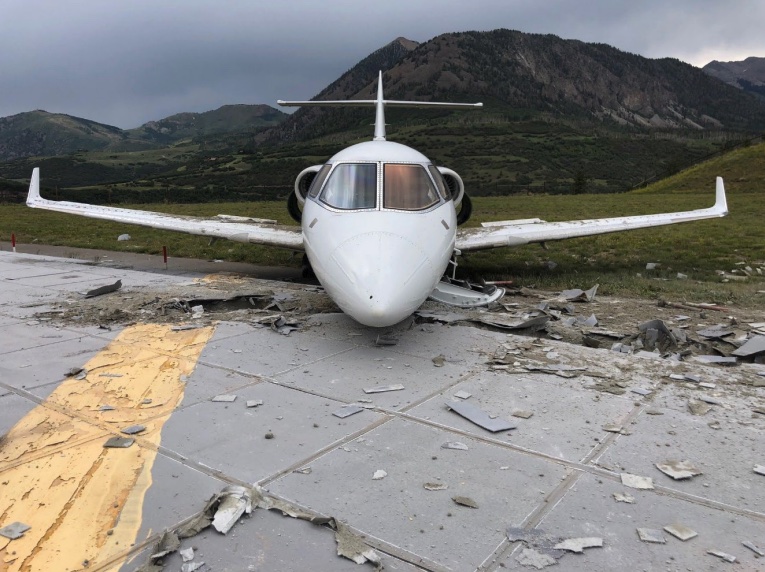 Max Trescott and Rob Mark devote this episode to one accident: the July 20, 2024 runway excursion involving Hawker Beechcraft 900XP N526FC at Telluride Regional Airport in Colorado. The Part 91 positioning flight carried only the captain and copilot and was returning to Miami after dropping off passengers. Neither pilot was injured, but the airplane sustained substantial lower-fuselage damage after overrunning Runway 27 and entering the airport’s engineered material arresting system, or EMAS. Here are Takeoff Videos One and Two.
Brought to you by AVEMCO aircraft insurance.
Support Rob and Max by making a donation at Patreon.com
Telluride is among the most demanding airports in the United States. Its single runway is 7,111 feet long, the airport elevation is 9,069 feet, and the field sits atop a mesa surrounded by rising mountainous terrain. On the afternoon of the accident, the temperature was about 20°C and the calculated density altitude was 11,244 feet. The crew’s takeoff calculation indicated that 6,800 to 6,900 feet would be required with 15 degrees of flaps, leaving only a few hundred feet of nominal runway margin. The airplane weighed about 24,374 pounds, roughly 2,700 pounds below its maximum takeoff weight, after taking on enough fuel for the return flight to Miami. Max notes that at mountain airports, carrying only the fuel needed to reach a lower-elevation fuel stop can improve takeoff performance and climb capability when margins are already narrow.
The actual conditions were even less favorable. An airport camera showed a wind from approximately 120 degrees at 12 knots, gusting to 17 knots, creating a tailwind for a Runway 27 departure. The Hawker’s flight manual limited takeoff and landing tailwind components to 10 knots. NTSB calculations showed that, at the airplane’s weight and the airport conditions, the required runway length was 6,448 to 7,035 feet with 15 degrees of flaps. With the flaps at zero, the required distance increased to between 7,912 and 9,308 feet—far longer than the runway available.
The Hawker began the takeoff with its flaps fully retracted. The copilot was flying. During the roll, the airplane failed to achieve the expected performance, and the takeoff was rejected. The crew used brakes, airbrakes, and thrust reversers, but the jet continued beyond the runway and crossed the EMAS before stopping. The flap handle and mechanical flap-position indicator were later found in the fully up position, and the captain reported seeing that the flaps were retracted after leaving the airplane.
The cockpit voice recorder summary revealed no audible checklist use or discussion of the airplane’s configuration during startup, taxi, or the attempted takeoff. The aircraft flight manual’s before-takeoff checklist included “Flaps—Set,” and its lineup checklist required a FATS check: flaps, airbrakes, trims, and V-speeds. The operator’s checklist included the same items. Max and Rob discuss how either check should have caught the configuration error, and why a departure using nearly the entire calculated runway should have prompted a detailed briefing covering flap setting, speeds, abort criteria, and crew responsibilities.
After the overrun, the crew could not shut down the engines using the cockpit controls because accident damage had affected the high- and low-pressure fuel controls. Airport personnel disconnected the batteries without success. The engines were finally stopped when the captain, working with a mechanic by telephone, manually adjusted the fuel control units. The episode also examines the AWOS audio that began playing at about the time of impact. The crew had entered AWOS information into the flight-management system during performance planning, but the recording does not establish when the weather was obtained, what wind was used, or whether it was updated immediately before departure.
Max and Rob also review the inbound flight. The CVR summary contained no audible approach briefing or checklist use, even though it was the copilot’s first trip into Telluride. The crew discussed taking photographs and videos during the approach, and the copilot said she was confused while the pilots were discussing the hold. Max explains the uncommon Arrival hold depicted on the RNAV GPS X Runway 9 approach. Unlike a hold-in-lieu of a procedure turn, an arrival hold is not automatically authorized and normally must be assigned by air traffic control. The discussion highlights the risks of unfamiliar procedures and of relying on unofficial approaches created by local pilots.
Finally, the episode examines inconsistencies between two NTSB accident forms submitted after the event, including conflicting accident times, aircraft-manufacture years, pilot-flying entries, flight experience, and weather descriptions. Max and Rob see those discrepancies as part of a larger pattern of weak attention to detail and ineffective crew coordination. The NTSB determined that the probable cause was the crew’s failure to configure the airplane properly for takeoff in a high-density-altitude environment, resulting in loss of control and a runway excursion. The failure to use checklists contributed. The central lesson applies to every cockpit: when runway, weather, terrain, and performance margins are tight, disciplined checklist use, precise communication, and a willingness to stop before beginning the takeoff are indispensable.