
Holistic Healing: Rhonda Hodge's Approach to Mental Wellness and Neurodiversity
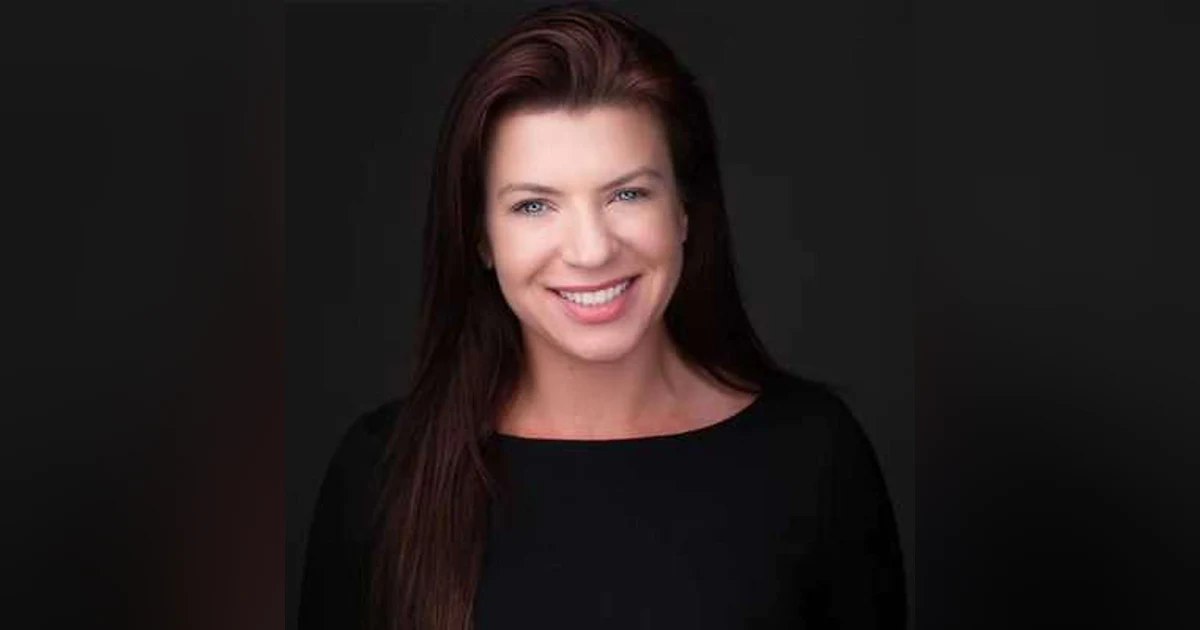

Send us a text The mental health landscape has fundamentally shifted, especially in the wake of COVID-19. Rhonda Hodge, founder of Harmony Psychiatric Services, offers a refreshing alternative to the conventional 15-minute medication check-ups that have dominated psychiatric care. With dual credentials as both a therapist and nurse practitioner, Hodge created her practice to treat patients holistically—combining medication management with therapy, movement, and nutrition support. What sets H...


 RSS Feed
The mental health landscape has fundamentally shifted, especially in the wake of COVID-19. Rhonda Hodge, founder of Harmony Psychiatric Services, offers a refreshing alternative to the conventional 15-minute medication check-ups that have dominated psychiatric care. With dual credentials as both a therapist and nurse practitioner, Hodge created her practice to treat patients holistically—combining medication management with therapy, movement, and nutrition support.
What sets Harmony apart is their commitment to treating humans, not just symptoms. Hodge poignantly shares how witnessing an over-medicated foster child inspired her career pivot: "I had to hold up her head because she was so over-medicated and I just knew that things needed to be done differently." This experience catalyzed her mission to create psychiatric care that truly sees the whole person. Her practice has evolved to include transcranial magnetic stimulation (TMS) for treatment-resistant depression, hiking groups, academic coaching, and executive functioning support.
The conversation takes a fascinating turn when Hodge discusses neurodiversity as a brain style rather than a disorder. She celebrates the engineers, entrepreneurs, and brilliant minds who think differently, while acknowledging the pandemic's role in revealing neurodiversity as people lost their ability to "mask" during isolation. Equally compelling is her transparent approach to provider wellness—creating flexible schedules that honor her team's personal lives—which directly translates to better patient care. As mental health needs continue to escalate nationwide, Harmony is expanding geographically while maintaining their person-centered philosophy. Perhaps most touching is Hodge's acknowledgment of how difficult seeking help can be: "That first call is actually really hard to make." Whether you're struggling personally or supporting someone who is, this conversation offers both practical guidance and deeply compassionate insights. Visit harmonypsychiatric.com to learn more about their innovative approach to mental wellness.
https://harmonypsychiatric.com/
Want to be a guest on Living the Dream with Curveball? Send Curtis Jackson a message on PodMatch, here: https://www.podmatch.com/hostdetailpreview/1628631536976x919760049303001600
00:00 - Welcome to Living the Dream Podcast
00:56 - Meet Rhonda Hodge: Harmony Psychiatric Services
04:05 - Neurodiversity as a Brain Style
06:00 - Provider Wellness Improves Patient Care
07:57 - Mental Health Impact of COVID
09:45 - Treating the Whole Person
11:28 - Alternative Mental Health Treatments
13:18 - Expansion Projects and Contact Information
16:10 - Final Thoughts and Sign Off
0:00 Welcome to the Living the Dream Podcast with Curveball, if you believe you can achieve. Welcome to the Living the Dream with Curveball Podcast, a show where I interview guests that teach, motivate and inspire. Where I interview guests that teach, motivate and inspire. Today, I am joined by psychologist alumni Rhonda Hodge. She is the founder of Harmony Psychiatric Services and her company focuses on treating you for your mental health symptoms by managing medication, exercise and nutrition.
0:44 Her goal is to empower you on your mental health journey. So we're going to be talking to her about everything that she's up to and what she'll be up to in the future. Rhonda, thank you so much for joining me. Thank you so much for having me. I'm really happy to be here. Why don't you start off by telling everybody a little bit about yourself? Sure. So I started my career as a therapist, and so that was my first master's degree, and then, I would say, five or six years into the field, I was working mostly with foster kiddos and I kind of defined my why as making an adjustment into the medicine piece, because I had one little kiddo that I had to hold up her head.
1:29 I'll never forget her face. I had to hold up her head because she was so over-medicated and I just knew that things needed to be done a little bit differently and I wanted to help kind of create some of that change. Didn't really know exactly what I was going to do, and that's when I went into the medicine side of it. So I'm I'm a DNP, I'm board certified in family, which is essentially primary care, urgent care, um, work in emergency room can do a whole lot of different things. It's the whole person. And then I'm board certified in the psychiatric piece, um. So I opened up Harmony in 2015 to create a practice that really treated the patient holistically, looked at the whole person, combined therapy with medication and sometimes in seeing the same provider, and it's really blossomed into something pretty beautiful for my patients and for us.
2:27 Okay, well, talk to the listeners about your company you know. Tell them how and why you got that started. Sure. So I opened up in 2015, again, just to do things a little bit differently and because I had the background in both. Oftentimes, when you're going into to get help and you are looking for services, you're going to see a psychiatric provider who you might see every three months for a few minutes, and I hope that model is changing across the board. But for the most part, the model at the time was you'd see your provider for 15 minutes every three months and they didn't know a ton about you, and then you would see a therapist separately, and I wanted to do that differently.
3:11 We started to grow in 2019 and then COVID hit and with the crisis of COVID also came a mental health crisis and from there we have several nurse practitioners, we have therapists, we have academic coaches, executive functioning coaches. We're doing TMS, which is transcranial magnetic stimulation, as an alternative treatment to treatment resistant depression, because after COVID, people were just really not getting better and we needed to find something different. We do hiking groups, we do movement in our medicine.
3:52 We're not just adding medication, just really thoughtful in treating each human being as they walk through the door. Okay, well, let's talk about neurodiversity. Why is neurodiversity for more a common brain style rather than a disorder? executive functioning coaches who were the head of school systems, and just the change that we're seeing, where we have lots of theories about how COVID made it more difficult for our kiddos and our adults to mask and to learn how to mask which is something that's really common in neurodiversity and why oftentimes it goes undiagnosed is because of the mask and the roles that people learn to play, and during COVID that made it really difficult.
4:51 So we're seeing people raw and as they are and it's actually to me it's a beautiful, really beautiful thing. Our neurodiverse population are there, are engineers, there are entrepreneurs, there are brilliant minds in the way that it works, in the way that their brain works, and it's so neat to watch them in that the particular you know. Watch them. I don't really like to put it under that category, but watch people with that diagnosis to just embrace who they are and to be able to come so alive rather than continuously feeling as if they have to mask who they are to fit in, and then also helping them find that balance too, because you're still in society, you're still going to get along with people, you still got to do all those things and just being really vulnerable and allowing them to be vulnerable, to educate and understand that this is just how your brain works, and it's actually really cool.
5:45 Well, I know in your bio you talk about how you transparently run your organization and you focus on provider wellness to improve patient wellness. So talk to the listeners about that. Sure. So my providers know that they are we're kind of corny. I mean, even the patients know this. They're part of the Harmony family. I sign everything to them that way and they know that I really do love them and care about them Before our providers. I'm not hiring anybody for a certain schedule. I'm hiring the person and allowing them to create the schedule that works best for them, because that's what's most important to me.
6:27 They can't show up for their patients if they know that they're missing their kiddo's play or it becomes so difficult to them to rearrange their schedule when something comes up, or they know that they just don't want to work on Fridays or Thursdays or the day that their husband or wife or kiddo is home and they want to be able to spend that time with them. I want them to do it. They have to be able to live their life. The job that we do is so challenging and it's so difficult that the burnout is it's too high and if you can't show up for your life, then you're not going to be able to show up for your patients and our providers' lives are really important to me and there have been times where I've done little videos.
7:11 I do videos sometimes and allow myself to be vulnerable with the patients, and I do tell them that if you're feeling especially with COVID was going on and everybody was being hospitalized and there was just so much. I just remind them that we went through the process with them, we went through COVID with them while we were supporting them and the patients really like that. It's taken in a really beautiful way and I've had some patients that you don't know how that's going to be taken and they show the providers the same grace that they want to be shown. So it's actually again like a family. Well, speaking of COVID, talk about some of the common mental health symptoms you saw during COVID.
7:57 Yeah, well, we all underwent a collective trauma absolutely, and trauma is underlying most symptoms. Now, most diagnosis Diagnoses definitely look different. One of the biggest things that I noticed is that people who were dealing with depression and anxiety prior to COVID fared sometimes not to overgeneralize fared sometimes better than patients who had never experienced trauma or depression or anxiety previously, because the other people had the tools, they had the toolbox. They knew what that feeling was, they knew how to identify it, whereas people where this was just something that was incredibly novel for them.
8:41 It was really, really scary, and so that was definitely something that I noticed. But I often compared in 2021, 2022, 2023, I compared us to trying to save people on the Titanic rather than actually helping people to get better is that we were just saving lives for a number of years because people were doing so poorly. Our hospitals in New England, our Boston hospitals, children's hospital there were hundreds of kids boarding. There were adults boarding because there weren't enough mental health beds. It was like nothing I've ever experienced in the 20 years in mental health and I do feel like we're starting to.
9:27 Mental health still looks different, but we're starting to be able to help people to thrive and not just survive. Well, talk about why it's so important to treat the whole person instead of just the symptoms. Well, one of the pieces that I really discuss a lot with my providers is the importance of their relationship. And if I don't know that, I know that Mary got laid off for some reason, but I know she's going to have another job, you know along the way, because I know that about her and I know that her husband's supportive and I know that her kids are also.
10:08 You know, ending school, it's the end of school. I know all of these things are going up. If I am not looking at her as a whole person, I might throw her on some meds rather than saying, well, let's see, let's see, let's talk about this, let's break this down. Let's look at you know what, when you were going to the gym, that time you were starting to feel better. Let's just go for a walk, let's talk it out. I might still have her on some sort of medication or something to help, but it's not going to look the same as if I didn't know all of those things about her and I didn't know her really in that intimate way to be able to say, well, you know what? Joe's always been really good at this for you.
10:50 Why don't we? Why don't we kind of figure that out Because I'm looking at. I want the medication that I put into somebody's body to be what they absolutely need. I don't want it to be a blanket, I want it to be because I know they really need this biochemical support. And looking at them as a whole person means that I'm making really smart or hopefully smart choices for them, really intentional. We'll talk about some of the alternative methods that can be used to treat mental health. Do you mean, aside from with a provider?
11:31 Right. Yeah, so I always talk. I mean, I always do talk about diet and exercise and I I do talk about how you can. If you move your body you can change your thought. But that's you know. That's something easy to say, but if you're dealing with depression and anxiety, sometimes just getting up and walking to the refrigerator to get yourself something to eat can feel like too much. If you have ADHD and anxiety, any of those things can feel like an absolute mountain. And that's when we start doing some of the movement with our patients while they're with us and when they're in sessions. Whether it be going for a walk, whether it be meeting on the rail trail to chat, whether we just show them little movements with their body to get them there.
12:14 It's not as hard for everybody to do that, but I would say a vast majority of people. It really is a huge struggle. So it's a lot of that hurdle help to get them started. For those other people then we it's programs like Orange Theory, intentional programs where you have to walk in and have that accountability and and go and do it and finish, finish it for the day. Those are also super helpful and beyond that, I also have to use the toolbox that works for them, a general toolbox of tools that we learned when we were going to school that would work. They don't work for every patient and we need to find what works for them so that when they're in those positions of feeling despair or feeling really anxious that they're not pulling from a toolbox that really isn't meant for them anxious that they're not pulling from a toolbox that really isn't meant for them.
13:15 Okay, Well, tell us about any current upcoming projects that you're working on that listeners need to be aware of. So we are definitely looking at some expansion. I did just open up a satellite location in Portsmouth because Portsmouth is the seacoast is the seacoast of you know, it's in New Hampshire, but Massachusetts, new Hampshire, maine because I was having a lot of patients that were coming to us and driving an hour, two hours for treatment, and so I brought TMS, which is the transcranial magnetic stimulation, to the seacoast and now I'm putting providers in those locations. But what we're noticing is we're having people call from around the US for appointments.
13:57 So we're doing a lot of licensing in other states we have. We are expanding our academic programming. The reason that we did that was because of COVID. Essentially, therapists and psychiatric providers were needing to become you teachers, essentially, and teachers were needing to become mental health providers, and so we have this middle programming now for adults as well, because adults were definitely feeling like they were getting stuck too and a lot of those symptoms of neurodiversity and ADHD were really rearing their head and making people feel really lost.
14:37 So we have some academic programming, executive functioning life coach as well, that I kind of call them like our middleman between the outside world and us to really help them to stabilize their life while we're really working on helping their symptoms get better. So there's a. We have a lot of groups coming, some summer camp options for kiddos. We just really want to treat the whole person rather than just talking about their meds. Okay, what's the contact info so listeners can keep up with everything that you're up to?
15:21 So the best way would be through wwwharmonypsychiatriccom. There's a contact me form there and those all go directly to me and I can chat. I can send people in in the right direction when they're looking for help, because sometimes it's really hard. Those first calls are actually really hard to make and if we're not available in your area, I can help do some research which I've done a couple times for people to make those first calls and to get them set up with a like-minded practice in their area. Okay, we'll close this out with some final thoughts. Maybe, if that was something I forgot to touch on, that you would like to talk about, or any final thoughts you have for the listeners and also throw out that website again.
16:23 I think it's really important to know that we recognize we as providers, as professionals, recognize just generally across the board, not just Harmony that it's really hard to make that first phone call. So a lot of places do have like the contact me forms or through email. Sometimes that is easier and I can't stress just like with the exercise piece, I can't stress that enough too for family members who are like why aren't they just getting help? It is so hard and debilitating sometimes to just make that first step that that hurdle help that body doubling, we call it, where you are just sitting with them while they do it can be the difference for them. And using those forms and honestly, just telling people who are struggling like lean into yourself, just the swans, I promise it will be worth it. And honestly just telling people who are struggling like lean into yourself, just the swans, I promise it will be worth it.
17:06 And again, it's wwwharmonypsychiatriccom. All right, ladies and gentlemen, so be sure to check out everything that Rhonda and her company is up to. If you or somebody else you know are needing mental health services, please contact her or contact your local providers. Follow rate review. Share this episode to as many people as possible. Follow us on your favorite podcast platform. Visit wwwcurveball337.com for more information on the Living the Dream with Curveball podcast. Thank you for listening and supporting the show and, rhonda, thank you for all that you're doing in regards to mental health and thank you for joining me.
17:47 And thank you for doing this show. I wish you all the best, thank you. For more information on the Living the Dream with Curveball podcast, visit wwwcurveball337.com. Until next time, keep living the dream.