
Crafting Words That Matter: Katerina Stoykova on Poetry, Publishing, and Persistence
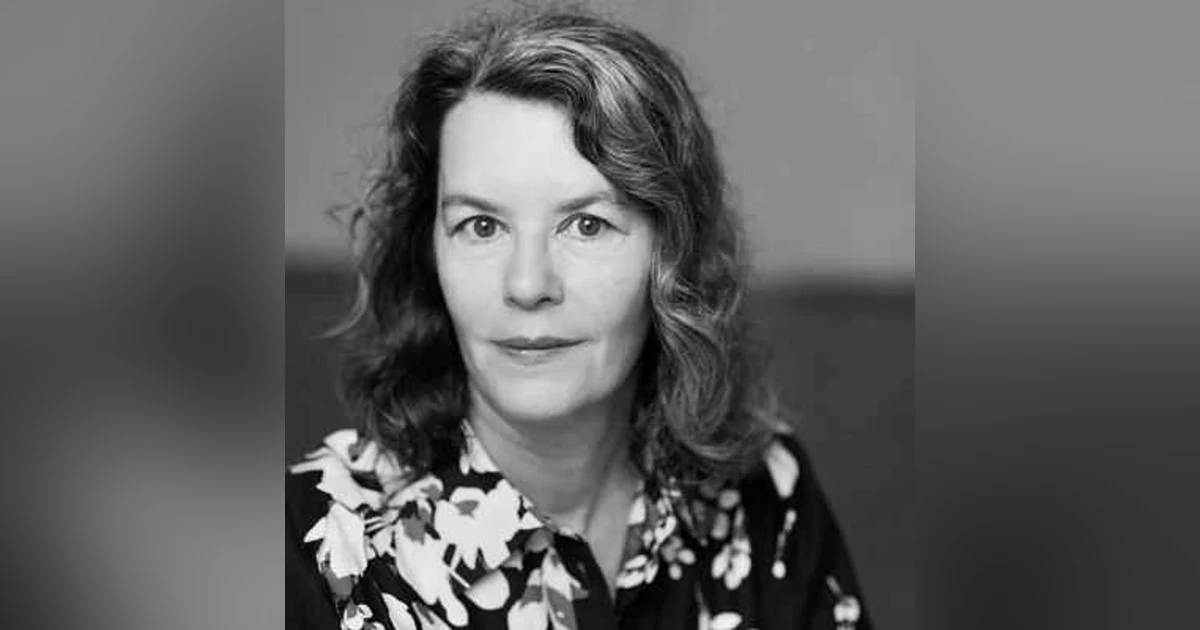

Send us a text What happens when an eight-year-old girl from communist Bulgaria decides she's going to be a poet? Katerina Stoykova joins us to share her remarkable journey from the shores of the Black Sea to becoming a published author, publisher, and literary community builder in Kentucky. Katerina's story begins with a pivotal childhood moment when a visiting poet sparked an unshakable desire to write poetry. With disarming honesty, she recounts telling her mother about her dream and imme...


 RSS Feed
What happens when an eight-year-old girl from communist Bulgaria decides she's going to be a poet? Katerina Stoykova joins us to share her remarkable journey from the shores of the Black Sea to becoming a published author, publisher, and literary community builder in Kentucky.
Katerina's story begins with a pivotal childhood moment when a visiting poet sparked an unshakable desire to write poetry. With disarming honesty, she recounts telling her mother about her dream and immediately writing her first poem, determined to prove herself. This early conviction carried her through years of honing her craft, from publishing in magazines as a teenager to finally releasing her first book in her thirties.
Drawing from her fifteen years of experience as founder of Accents Publishing, Katerina offers invaluable guidance for writers navigating the publishing landscape. She breaks down exactly what to look for in a publisher (longevity, fair contracts, good distribution), how to scrutinize publishing contracts, and the factors to consider when choosing between traditional and self-publishing paths. Her practical advice demystifies the often-confusing publishing process with refreshing clarity.
Perhaps most valuable is Katerina's wisdom on handling rejection—an inevitable companion to creative work. Rather than being crushed by rejection or wearing it as a badge of honor, she advocates for emotional neutrality: "Take every rejection as a data point, just like Thomas Edison said about finding ways not to make a light bulb." This perspective, coupled with her three non-negotiables for writers (reading, writing, and workshopping), provides a sustainable framework for creative growth.
Subscribe to hear more conversations with fascinating creators who are living their dreams and building meaningful careers through passion and persistence. How might your own creative journey benefit from Katerina's insights?
Want to be a guest on Living the Dream with Curveball? Send Curtis Jackson a message on PodMatch, here: https://www.podmatch.com/hostdetailpreview/1628631536976x919760049303001600
00:00 - Welcome and Guest Introduction
01:08 - Bulgarian Roots and Poetic Awakening
03:12 - Writing and Publishing Poetry Books
07:55 - Finding the Right Publisher
15:06 - Traditional vs. Self-Publishing
18:58 - Accents Publishing and Creative Work
22:57 - Handling Rejection and Literary Events
25:00 - Upcoming Projects and Final Thoughts
0:00 Welcome to the Living the Dream Podcast with Curveball, if you believe you can achieve. Welcome to the Living the Dream with Curveball Podcast, a show where I interview guests that teach, motivate and inspire. Where I interview guests that teach, motivate and inspire. Today, I am joined by poet and podcaster and business owner, katerina Stoichkova. Katerina is Bulgarian, but she lives in Kentucky and she's got books out there about poetry and have a podcast, and she's doing a lot in the state of Kentucky to help people also as well.
0:50 So we're going to be talking to her about everything that she's up to and what she's going to be up to. So, katarina, thank you so much for joining me today. Thank you, Curtis, for this kind invitation. I can't wait to talk to you today. Why don't you start off by telling everybody a little bit about yourself? Oh well, I was born and raised in Bulgaria during communist times. I was born and raised on the Black Sea, so it was quite beautiful. In a lovely resort town. I was seeing the sun rise out of the Black Sea every morning.
1:34 I am an only child. I wanted to become a poet. That was my dream when I was eight years old. When I was at school, a poet came to the classroom. I can't remember his name or his face or anything else, I just remember that I was in second grade. In second grade, and when he was talking about poetry, I felt how this huge desire unlocked inside me and I knew beyond a shadow of a doubt that that's what I'm gonna do all my life.
2:16 And when? And then I went home and I told my mom mom, I'm gonna be poet. And I don't think she believed me or anything. But I told her you'll see. So I went to my room and I wrote a poem, and then somebody told me that I, in order to be a poet, I have to write more than one poem. So I continued and continued trying to become better and better, and when I was a teenager, in high school, I started publishing poems in magazines throughout the country. However, it took longer to publish my first book.
2:56 I was in my 30s when that happened. Okay, well, talk to the listeners about what it takes to write a good book and especially, how do you come up with a good title for a poetry book? Well, in order to write a good poetry book, normally people write the poems first, and then they put it together in some way that makes sense for the work as a whole. So then, what's important to write a good poetry book, I think, is, first, to write good poems.
3:38 Second, to come up with it, come up with a theme. And third, to have, uh, interesting architecture in mind. And fourth, to not be afraid to completely abandon those ideas and try something new. And try something new and try something new, because a poetry book is not a porcelain cup that you break in. You can never put it back together. You put it back together and then you put it back together and you put it back together until until it is something that you yourself like and a publisher likes enough to make a commitment for it.
4:27 And how to make a good title? Well, the title of a of a poetry book has a different function than the title of an individual poem. In a poetry book, few things are local. Pretty much every decision that you make is a global decision, so you have to weigh that decision uh, to the effect that it has not only to the the poem that it affects, but also against every other poem that has been included in the collection. To me, a good title for a poetry book is one that has multiple meanings, so it's open to different interpretations, it is broad, it is non-ating and also also is welcoming, and it is representative to the themes included in the book.
5:45 Well, you mentioned about a publisher. What should people look for in a publisher when they're trying to find one? One thing that I look for in a publisher is longevity. If the press has been around for a while, it is likely that it will continue. It is likely that it will continue Not only. I mean. That means that your book will likely keep on being in print. And also, if a press is very new, that means that they have some time to learn things the hard way, and I'm speaking from experience because I'm a publisher.
6:28 Accents Publishing is 15 years old this year and we never compromised on quality, but we did learn things by doing so. Longevity is one. Another one is that the press would have a good contract for you. Ideally, you won't have to pay for publication. Ideally, they will give you percentage as a royalty. They would give you a discount to buy your own books. And the distribution is another thing that I would look for in a press.
7:13 I would look for how they promote their books, and if I know an author who has been published by this press, I would definitely ask them questions. I would ask them two questions. I have two questions that I ask authors who have been published by a press what was your experience? And then, do you recommend the press? I know you talked about the contracts. What should people look for and watch out for when they are revealing a contract for possible signing of it?
7:57 So what they would watch out for. I mean, I would want to see what I'm giving up in terms of rights and what I'm receiving in return. So what rights I am giving up to the publisher in this contract, that should be stated explicitly. Are you giving up print rights, what locations and for how long? Then what I would watch out for is if there is a publisher deadline to it, because there would be a clause that would say that you, the author, need to deliver all your materials by a certain date.
8:54 But let's make sure that the publisher also has a deadline also, because if you're a new author and you don't have a lot of pool or literary power, then things change, priorities shift and you don't want your books to get kicked back to the publisher's queue. Another thing that you would want to see is you would want to see an exit clause. Under what conditions is this contract terminated? So you will want to see, as I said, the publisher's deadline.
9:39 But also, under what conditions do rights return to you, like if they don't meet demand, or if they go't meet demand, or if they go out of business, or what else? You also want, as I said a little bit ago, ideally you want to have royalties. You want to have outlined everything that you're receiving from this publisher in terms of royalties and free copies and discounts you wanted in writing in the contract why should a person give some best practice tips on someone deciding whether they want to look for a traditional publisher or they?
10:36 want to self-publish. Well, I think it's a good idea for us to be aware of our personal goals, and if your personal goal is to launch a long-term literary career, then it's a good idea, and you have the time to do that. In other words, you are fairly young. So in this case, it is probably worth it to put in a few years of trying to win a prestigious contest or to try to publish your collection especially if it's a first collection in the best press possible.
11:26 So I would look for traditional publishing under this circumstance. If you're working on your career in academia, university presses are a very good choice. If you are someone who would like to have a book to share with family and friends and the larger literary community, then independent literary presses are very good choice. Then, if you have a particular audience in mind and you do not plan to venture outside of that audience, then self-publishing is a very good choice, because you can control quite a few variables at that point.
12:24 Ultimately, it is more important at some point becomes more important to have the book rather than where it came from. So self-publishing is always an option. However, if you are going to self-publish, I would still recommend that you use a professional typesetter and a designer. Okay, well, tell us about your company as well as your podcast. Accents Publishing is your company, and tell us about the podcast, what we can expect when we listen to it and where we can listen to it.
13:06 Okay, thank you very much. My company is Accents Publishing, independent press for brilliant voices. We started it 15 years ago with handmade chapbooks. At the time we made the $5 handmade chapbook and we couldn't make them fast enough. They were very popular, very beautiful, but I found myself printing and binding books all the time, so became unmanageable and we started printing through professional printing companies, which made things easier for us and we could publish more books.
13:53 For these 15 years we have published over 100 books. I would say that a lot of them are poetry books, although we have several nonfiction books and some novels and short story collections and a series of novellas. I would say that accents publishing. I have learned so much and it has given me so much throughout the years and I have met some wonderful people and accents is was a radio show and currently is a podcast on WUKY and NPR, and it has been on a hiatus for half a year, but I'm about to start later this month recording again.
14:46 Later this month recording again. Okay, well, let the listeners know about your books that you have out. Tell us what we can expect with each one of them and what we can get them. Thank you. My latest book is a nonfiction book called the Poet's Guide to Publishing how to Conceive, arrange, edit, publish and market a book of poetry and I worked for over 10 years on this book and I wanted to put in it everything I know about how to put together a poetry book and how to edit it together as a whole, and how to find a publisher, and then, when you have your book in your hand, how to stand behind it and how to promote it.
15:36 And my latest and it's available wherever books are sold and my latest poetry book is called Between a Birdcage and a Birdhouse and it came out from University Press of Kentucky and it has immigration poems in it well, talk to the listeners about how to take their writings to the next level and and also how to deal, you know, with rejection, because you know you face a lot of rejection, or you can at least oh yes, one thing is do not wait.
16:23 Do not wait. Do what you can today. If you're serious about writing, know that it takes decades to develop as a writer and if you are not actively working on your craft you're getting behind. So that is kind of like an urgent message, but I don't want to scare anybody. As long as we do the three big ones, the three non-negotiables reading, writing and um workshopping, reading poetry, writing poetry and um talking to several, several other people to get feedback and to become better then we are moving ahead.
17:16 So what was the second part of the question? I want to make sure I answer. It was just how people can take their writing to the next level. Okay. Well, talk to the listeners about. You did some work with the Kentucky Book Festival and the Kentucky Poet Society. Tell us about those important roles. Now I remember the second part of the question, which was how to deal with rejection, and, uh, I'm sorry, may I say a sentence about that? yeah, go ahead.
17:56 Okay, because I have faced a lot of it over the years. Um, I have found that it is most important to be emotionally neutral about it. Emotionally neutral because some people let themselves be destroyed by rejections or because they know that they don't deal with it. They avoid putting themselves out there. And there are other people who swing the other way and become proud or wallpaper their you know writing space with the rejection. See how many times I got rejected and how persistent I am.
18:37 I would just take every rejection as a data point, just like thomas edison said you, these are so many ways that I found out how to not make a light bulb right. That's the example. So being neutral about it and to keep good records about where you've been sent back, where you have had work sent back, so you don't send the same thing to the same places and do not let it stop you, really Don't let it stop you. And your question about the Kentucky Book Festival and the Kentucky State Poetry Society, I can speak to that.
19:24 Yeah. I can speak to that Kentucky Book Festival is the biggest, longest running literary event in our state. This year it will be the 44th edition and it was started by volunteers in Frankfurt, which is the capital, and authors would go and would sit behind tables and sign books all day and meet the public and have events.
20:06 The festival draws thousands of people and we have about 150 authors and it is a community celebration. It is People love to be there. The first half an hour all you see is authors hugging each other because they haven't seen each other all year. So it's kind of like I quote other authors family reunion and everybody with a new book wants to be part of the Kentucky Book Festival and publishers time the release of their books so that they can come at this in time or to be included for the Kentucky Book Festival.
20:56 I had the privilege of serving as the director for two years and I was able to appreciate how hard administrators work, administrators of literary events work, and how many considerations come into play and how it looks. Easy and flawless the event the day of, but it has taken like 10 months of meticulous preparation. Easy and flawless the event the day of, but it has taken like 10 months of meticulous preparation for that to happen?
21:37 Okay, well, tell us about any upcoming projects that you're working on that listeners need to be aware of. I teach a class based on my poetry guide to publishing book. It's a five month uh, five month class in which the students work on to put their book together. And I'm finishing this one and I'm gearing up to make a new one and I will be working on my own poems and relax a little bit and, who knows, maybe I'll even film a narrative feature.
22:22 That will be my third narrative feature that I'm co-writing and acting in, so it's going to be a busy summer. Sounds like it will, so everybody can keep up with everything that you're up to. Throw out your contact info. Well, following me on social media would be the easiest way to do that. Social media would be the easiest way to do that. K-a-t-e-r-i-n-a-s-t-o-y-k-o-v-a. Katerina Stoykova is my name. Okay, we'll close this out with some final thoughts. Maybe, if that was something I forgot to talk about, that you would like to touch on any final thoughts you have for the listeners.
23:07 Well for the listeners. Well for the listeners, I would say um, having a creative life is a wonderful way to enrich your regular life and um, I find myself a whole lot more happy and fulfilled and excited about my life when I'm creating something. So I wish everybody a wonderful creative summer and thank you, curtis, for being a wonderful host. Oh well, thank you for coming on and, listeners, please be sure to purchase Katerina's books, you know. Check out everything that she's up to and going. Please be sure to purchase katarina's books, you know.
23:47 Check out everything that she's up to and gonna be up to. Follow rate review. Share this episode to as many people as possible. Follow us on your favorite podcast platform and visit wwwcurveball337.com for more information on the living a dream with curveball podcast. Thank you for listening and supporting the show. And katarina, thank you for Thank you for listening and supporting the show. And Katarina, thank you for all that you're doing and thank you for joining me. Thank you. For more information on the Living the Dream with Curveball podcast, visit wwwcurveball337.com. Until next time, keep living the dream.