Ep 209 - "The Intelligence We Miss"
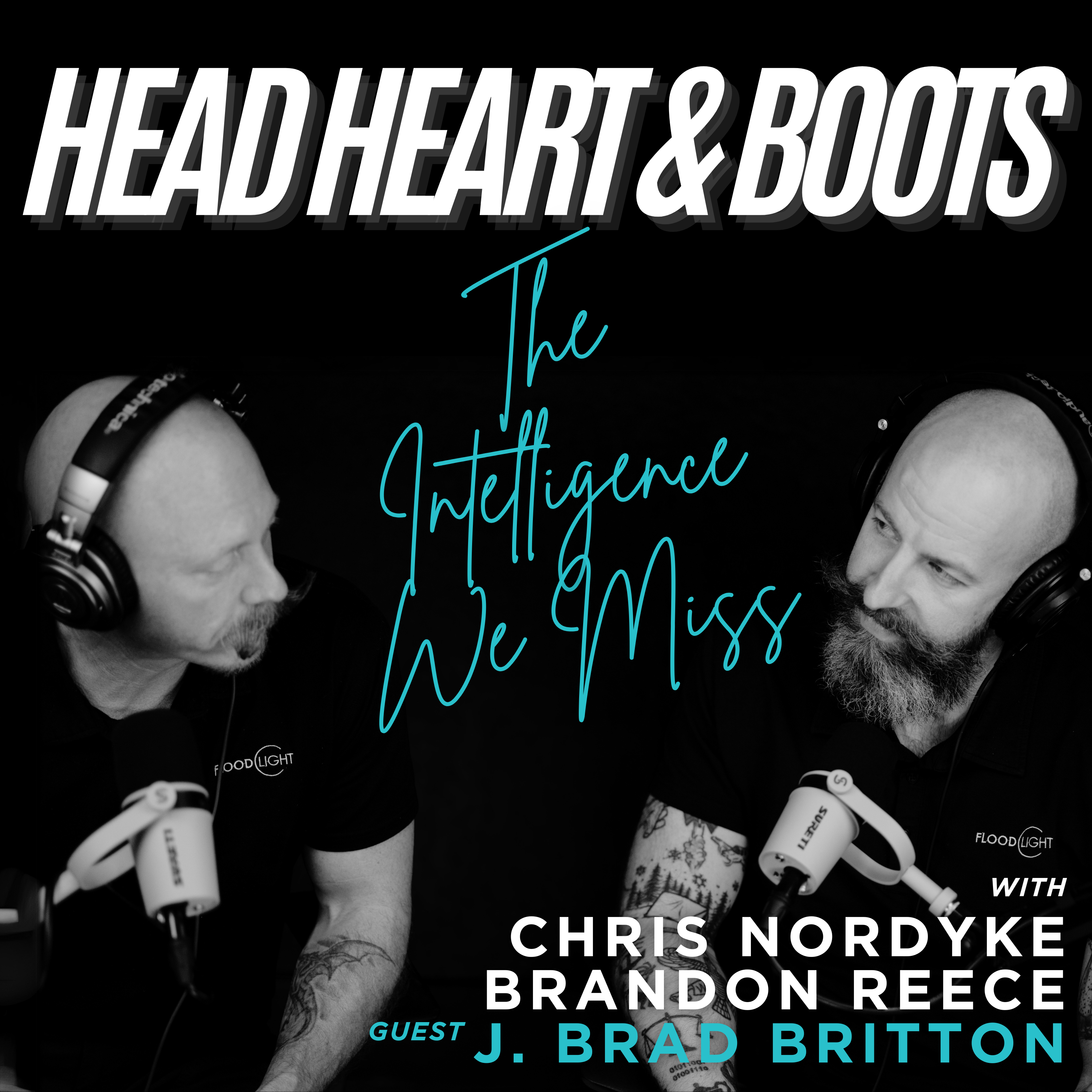


In this episode of Head, Heart and Boots, Brandon and I sat down with J. Brad Britton for one of the most meaningful conversations we’ve had on the podcast. J. Brad spent decades leading inside the Cutco and Vector organizations, but this episode centers on something far deeper - his relationship with his son Sam and how that journey completely changed the way he thinks about leadership, communication, and human potential.
What stuck with us most was hearing J. Brad talk about realizing Sam understood far more than anyone had assumed for years. It forced him to rethink not only his parenting, but the way we all judge people based on surface behavior instead of curiosity and empathy.
We also dug into leadership lessons from Cutco, coaching young salespeople, and why presence and encouragement matter so much when developing people. This episode is thoughtful, emotional, and packed with perspective that applies far beyond business.
Hope you enjoy
Chris
Why You Should Listen:
[00:05:42] The moment J. Brad realized his son understood far more than anyone had believed for years
[00:14:18] How raising a child with apraxia reshaped his perspective on leadership, patience, and communication
[00:24:07] Why curiosity and empathy matter more than assumptions when working with people
[00:36:12] Leadership lessons from decades inside the Cutco and Vector organizations developing young salespeople
[00:49:03] A powerful conversation about fatherhood, encouragement, and learning to truly see the people in front of you
Did you know...
Only 30% of businesses listed for sale actually find a buyer? Even more striking, just 10% of those sell for the price their owners anticipated or higher, meaning only 3% of all business owners achieve their desired sale price. By focusing on understanding and enhancing your enterprise value, you can significantly boost your chances of joining that successful 3%.
Business Health & Value Assessment
Start Assessment Know Your Enterprise Value. See Your Potential Gaps.
Complete this assessment in less than 15 minutes and receive a free assessment for your business that includes:
- A Lite Valuation Of Your Business
- Your Value Multiplier Per Your Industry
- Health Assessment Per Our PYB Methodology
- Business Value & Growth Roadmap Tailored For You
- Value Acceleration Strategies
Spotlight on Floodlight: Your Secret Weapon for Sales & Scaling
This isn’t a paid plug. It’s real talk from the front lines. If you’ve ever thought, “How do I get a VP-level sales leader or even a sales team without hiring full-time?” Floodlight has the answer.
Fractional Sales Leadership
- They act as your outsourced VP of Sales, taking full responsibility for training, managing, and growing your sales team. No six-figure hire needed.
- Clients often close 20 to 50 percent more deals within six months, thanks to data-driven coaching, CRM setup, scripts, and performance reviews.
More at floodlightgrp.com/sales
Commercial Sales MasterCourse
- A self-paced, video-driven B2B sales course designed specifically for restoration teams. Perfect for building commercial revenue and getting free from TPA handcuffs.
- Covers mindset, prospecting, pipeline building, LinkedIn lead generation, and includes a $250 discount with code SALESBOOST.
Details at floodlightgrp.com/courses
Tailored Consulting & Coaching
- Floodlight’s Propel Your Business methodology offers a full-circle roadmap: financials, sales, marketing, leadership, recruiting, productivity. All built for contractors.
- These aren’t “life coaches.” They’re former restoration owners who’ve lived the chaos and know how to scale out of it.
Explore more at floodlightgrp.com
Live Training, Tools & Strategic Partnerships
- Floodlight also delivers live onsite and virtual training, keynote speaking, and leadership tracks covering operations, project management, and strategic growth.
- Bonus: They’ve vetted tools like Xcelerate, Liftify, and Sureti. Floodlight clients get access to exclusive discounts on tech that actually moves the needle.
See all partnerships at floodlightgrp.com/partners
Why it matters for you as a listener
- You don’t need to figure this stuff out alone.
- If you’re serious about sales growth, operational clarity, exit readiness, or leadership development, Floodlight is already helping folks like you scale smarter.
- And you get it from industry insiders. People who’ve sat in your chair, survived the fires, and built systems that actually work.
0:00 How you doing? So for those of you that, I mean, this sounds, this is so cheesy ball. This is like dumb studio humor is, is see who will be the first to hit the mic. Yeah. To open it up to, you know. For a long time, I think for like almost two years straight, it was me. I don't know about that. And then you started playing games, my friend. Games. I tell you. I know. I really hope at some point we can get a sponsorship from Ketone IQ. Yeah. I keep bringing these things on the internet. on the show. It's like powered by ketone IQ. We're getting nothing for it. I think they work. Send us a case of them and then we'll talk about them on the podcast. I think they work actually. They do work. Yeah. 100 milligrams of green tea extract to caffeine in it.
0:41 It's the bomb diggity. All right. Haven't said that word in probably 10 years. Bomb diggity. Well, hey, welcome back to the Head, Heart & Boots podcast. Today, we've got a really interesting guest. A little bit outside of the norm for us. You guys have some history too, clearly. Yeah, yeah. It's really cool. So early in my career, some of you have heard me talk about Cutco selling knives at the beginning of my career. So J. Brad Britton... was the West Region president for Cutco. Spent 36 years. Unbelievable. In that organization. And I'm just, some of you've heard me talk about Cutco before. I'm just a huge fan. I mean, it was a really important part of my life. A lot of my foundational sales training experience came from that as a, you know, 19 to 22 year old, also learning how to manage people and all that kind of stuff.
1:24 Interview, run a business, like all that stuff is incredible. And Jay Brad was in that same system and kind of my boss, my boss boss as I was coming up. But he also was a father to a son with apraxia, which is kind of generally considered on the spectrum of autism. And it's this condition where they think very normally, like inside their brain, they have lots of intelligence and are normal in many ways, like any other child or person, but they have difficulty expressing physically that, They have difficulty speaking, in a lot of cases, using appropriate body language and facial expressions and all that kind of stuff. And so just a really interesting condition and obviously difficult, perplexing for parents and the person themselves, I'm sure.
2:12 But J. Brad wrote a book called Real Words with Sam about his kind of journey with his son and a lot of leadership parallels in it. Unbelievable. You know, and... That's kind of, I mean, it was one of the reasons that we wanted to have him. Totally. So anyway, in the show, we get into some of his Cutco background and I bring that up and it's a little nostalgic for me. And we talk about this experience with his son and it's good. It's good. Hang in there. It's one of our longer shows here recently, but we cover some good ground. So a little bit slower burn. And then once we get into the kind of the nuts and bolts of the conversation, I think it's real easy to see these layers of opportunity to learn and how we can apply that to our own teams, our own families, just relationships in general.
2:57 It's actually, it's powerful. Yeah, I think a lot of it centers on how we tend to judge. We tend to judge people on sort of their surface behavior, not considering what's going on behind the scenes. And so anyway, there's a lot here. Thank you for listening. Wow. How many of you have listened to the Head, Harden Boots podcast? I can't tell you that react how much that means to us. Welcome back to the Head, Heart & Boots podcast. I'm Chris. And I'm Brennan. Join us as we wrestle with what it takes to transform ourselves and the businesses we lead. This new camera angle makes my arms look smaller than yours. I'm noticing that and I really appreciate it. I thought you did that on purpose. No, I don't. I didn't.
3:37 And I am not happy with it. All right. Welcome back to the Head, Heart & Boots podcast. Chris Nordyke. I'm Brandon Reese. This is a new thing. I've watched you. You're like staring us back into the formal announcement. Well, I feel like it's a branding thing and I can get a little bit lazy with it. But, you know, it's just, I don't know. It's the work so well you stop. Yeah, exactly right. Yeah. So today we're here with a special guest, J. Brad Britton. And just a little bit of table setting for the conversation. So Jay Brad was a senior executive with Vector Marketing and Cutco Cutlery as I was coming up as a Cutco sales rep. And I forget exactly what your title was at the time because you got, I think, promoted up a few times over the course of my time with Cutco.
4:22 But we're going to get into that. And you're also the father of a son with apraxia, which we're going to get into what that condition is and how it's shown up for you guys and your family and your relationship. But you recently came out with a book about the experience called Real Words with Sam. And the camera probably won't pick up a great shot of that, but it'll be in the show notes. I've been working my way through this for the last few weeks since we booked you for the show, J. Brad. And I want to start there with this experience with your son. I hope it's okay for me to say this. None of my children have autism or apraxia. And I really related to the vulnerability you brought in this book, just in terms of your internal, your inner turmoil.
5:06 as a father and going through this journey with your son, I related really heavily to a lot of the inner turmoil that you communicate in the chapters. And so by the end of it, I had sort of this parallel journey with, in particular with my daughter, who's 20 now. that I feel like I was kind of on emotionally as I read the book with you. So anyway, here we go. That's, that's kind of the table setting, but J. Brad, take us early on in the book. You talk about sort of your mentality going into the diagnosis that, that you guys received for your son and some of the inner struggle that that set off for you. But just take us back to the early days when your son was a toddler and some of these, behaviors and mannerisms started to show up and started to create all these question marks for you guys.
5:53 Take us back there. Time machine. Yeah, okay. Well, you covered a lot of things. First of all, cool to be here, Chris. It has been a long time. Other than social media, I mean, probably face-to-face, it was early 2000s, maybe. I don't even know. That was a while back, for sure. And also, I appreciate both you guys reading the book, or Chris, you reading it, Brandon, you listening to the audiobook. It really does mean a lot, you know, because, yeah, as you could tell, put a lot in it. put a lot out there. As you know, as an executive, what you may or may not remember, Chris, is that I'm, you know, pretty stoic type of personality. Not a lot of highs, not a lot of lows as far as, well, I mean, high when it comes to getting excited about reaching sales goals, maybe, or encouraging people.
6:37 That's where, you know, my emotion would come out. But when it came to personal issues or even business challenges, it's like, you know, there's some things, there's things we can impact, there's things we can't. If I can't do anything about it, Just, you know, I don't want to waste any brain energy on it, you know, brain or heart energy on it or head or heart energy on it, I guess, as you guys do. Or boots, for that matter. I wouldn't want to waste boots going to do anything, trying to do anything. And it's an old philosophy called can't change it. That's a stoic philosophy focused on if you can do something about something, then take action and do it. But if not, you know, move on. And that's, I think, the kind of the attitude and the philosophy that you're thinking about.
7:18 So, yeah, the early couple of, basically the introduction in chapter one is what you're talking about. And also, I did it a little differently. I did introduction in chapter one, and then I kind of continued the introduction, you know. And, yeah, it's just a lot about... It's a lot about that, you know, this mentality that helped me succeed in business, a pretty high level. And I think it's valuable for anyone, an entrepreneur or whether someone's an entrepreneur or not, just kind of as a life philosophy. And I'm glad that you related to it, both you guys and Chris. You said with no one with autism or this type of a disability. I'll give you a little insight on kind of the process of writing this, writing the book.
7:59 You know, I... wrote six, seven, eight drafts of every chapter, right? And on about the fourth or fifth or sixth draft of several of the chapters, I started realizing that I might be trying to teach too much. You know, my background was training, teaching, you know, and here's a story and here's how you should think about it, right? And I started to realize that I might not need to do this or it might be more effective or better to not teach draw conclusions in a lot of things. If you can tell a good story that has meaning and not try to explain and say, here's what you should think or take away from this story, everybody's gonna take away something a little different based on their worldview, their perspective, you know, their particular experiences of life.
8:43 And I tried to write it in a way that makes it very universal to people. And the amount of people that have come back to me and given me feedback and the diverse backgrounds, fathers, you know, mothers, people with disabilities, disability in their family, people without disability in the family, young people who just see the world differently, the people in their 20s and 30s see the world differently than people in their 40s, 50s and 60s, just because the world is different. I didn't make this up, but I call it respecting the intelligence of the reader. So I just tell the story and let it sit there. Now, there are a couple of chapters, you guys, since you've been through it, that I There were some that I drew something out that I didn't think would be common that people would think about.
9:27 Like the story you may remember when Sam was having a very, very challenging session in doing his spelling. And he made no progress. And he just basically stormed out to the car. And as he got out there, he just kept saying, there's more, there's more, there's more. And then he came back in. And, you know, the idea is that he had to reset. He had to go back to the beginning. Like when we arrived at the car, he had to go there and then, and then come back in. And I've seen him do this lots of times in life. And, The parallel to us is, you know, sometimes, you know, it's not failure necessarily to start over. You know, if you go down the wrong track, like if you're going down the track this way and here's where you're supposed to be, you can't always just do that.
10:08 Sometimes you've got to go all the way back to here and then go to here. I don't know if that made sense. or not. But so that was something I don't know that people would have drawn from the story. But for the most part, it's just putting it out there and leaving it out there. And I'm really pleased with the feedback. It made it to Amazon bestseller in nine categories in the first three weeks that it was out. And a lot of that has to do with a lot of people. I mean, I know a decent amount of people and they knew I was writing a book and that really helps a lot. But a lot of the reviews, I don't know the people, the people that have left some of the Amazon reviews. So That feels really good. And people reaching out to us. I was reached out to on Monday by a reporter.
10:48 He's written for The Guardian and The Huffington Post and places. I guess he's, I don't know where he's located, but there's this legislation going on in D.C. about dispelled communication and people are saying it's not real. These people that their livelihoods depend on it not working. And it's big, big. crazy politicized. I don't even know why. And there's so many other things that people could be talking about challenges and problems that we got. And there's this huge thing. And this fellow reached out to me because of the book and because one person who's big in the autism space, you know, mentioned my name. And anyway, I got this email Monday. He said, Hey, I need some on the record remarks by Tuesday at noon.
11:28 And it was like Monday at like five o'clock at night, six o'clock at night. I got this thing. And I'm like on the record. Oh man, that sounds like you know, it's like, that's from the movies, you know, I'm going to be on the record, you know, and it's like scary because they always say, oh, this is not on the record, right? Like, when you're on the record, you're committed to it and so I determined that it was worth it doing it. I researched the guy, he's totally legit, got PhDs and all kinds of things and so the article came out yesterday and they quoted Sam and me Seven times we got quoted in the article. In fact, the very last line is, I get the last word of the article. And now the article's all over the autism community and the Spellers community. It's kind of viral on social media.
12:11 So that was kind of neat to get that exposure there too. Are you excited at all about, I guess, becoming a more public advocate? I mean, as on the heels of writing a book, I'm not in the autism community is at some level engaging you and there's potential for you to speak at conferences and do stuff like that. Is that of interest to you? Yeah, that's likely what will happen. I'm kind of making a plan. I'm in this interesting transitional phase to trying to decide what to do with the book or to lean more into just some personal coaching cohorts. I have a woman who runs a big drug rehabilitation center in LA to reach out to me about coaching her staff, like in professionalism and business and sales and just mindset, because a lot of the staff in these rehabilitation centers are people who have been rehabilitated.
12:59 Right. And they wanted to give back. And she said that she says they don't really have a lot of background, you know, in professionalism and mindset and that type of thing. And so we're in kind of communication about that. And then she's talking about opening up another center closer to where I live and, you know, being a partner. And so, you know, I don't know if that is a thing, but I definitely want to get on some stages. I'm going to I've been on a few small ones. I've got a small group. speaking engagement this Saturday. I got invited to, well, Sam and I got invited to go present at Harvard University this fall to a leadership society. And I don't know how many, it could be five people. You know, I don't know anything about it. I've got a call tomorrow to hear some details about that. But heck, just to say, oh yeah, I presented at Harvard.
13:43 You know, just to be able to say that, even if it was one person, you know, that's a cool thing to be able to say, right? So we'll see how that plays out. But yeah, I expect that, Now, advocate, you used the word advocate. That was not my intention, you know, to advocate. I don't like conflict. Obviously, in business, you know, you have to, it happens, and you have to know how to deal with it and what have you. I don't run right up to it. Like, I know some other people in my space, some dads that I'm friends with on social media, we kind of like each other's things and repost each other's things. Some of them, they're like, they want to get in the face of the argument, right, and just walk right up and. you know, challenge the world to a duel, you know, with the gloves. I'm not that, right?
14:23 So advocacy is not really a direction that I would like to go if I kind of have to. I'm forced into it, I'm sure. But when it comes to leadership training, like there's a lot of lessons, like you said, that I've learned from Sam. And I've got curriculum, I've got four or five, you know, keynote outlines already there. Already created. So I think maybe the book will open some doors, but where my value is going to come is the combination of, you know, 40 years in leadership development and sales training and things that I had done. And you were part of that years ago, you and many people that have gone on to succeed at really high levels combined with. Being a Christian since I was, you know, practically a toddler, you know, six years old, five years old, and combined with this experience that I've had as an autism dad and the transformation or the shift, to use an AI type of word, the shift, changed everything, right?
15:16 Have you ever read that AI wrote that? Yeah, right. For me, it's really true how I've changed and my perspective changed, you know, because presuming competence, right, believing in the ability of the individual, that's like part of Vector's core values, your core belief, right? Anybody can succeed with the right effort, with the right mindset, with the right, you know, support. And so while I understood that in business, how, and I still to this day am baffled at how I missed it. In my own home. You know, I just miss that connection. But now that I know, you know, how smart he is and the amount of deep mental processing that's going on in his head and the wisdom that he can share, it changed everything.
16:00 No, but it changed my relationship with him dramatically. So, Jay Brad, I want to dig into that just a little bit because it's such an important part of the story. And I think, you know, inevitably, we have listeners that have children with some kind of neurodivergent condition that is perplexing to them and is difficult and I would guess in some cases scary and... creates a lot of uncertainty in their family. And so I'd love for you just to speak about the early days. Like one of the first things you talk about in the book that just stood out to me was that spelling workshop that you guys were when you were first exposed to that sort of methodology. And before that, because I know that was a big turning point.
16:42 I want you to talk about that. For those people that don't have neurodivergent children or children with autism, you know, What was family life like? And what was it like being a dad? Because you were really vulnerable about this in the book. What was that like pre having some of these discoveries when you're just kind of trying to like wrestle through it? That's part of the part of the reason that this was written, because I didn't. I didn't really wrestle through it. I just kind of avoided it. And I think that's pretty common for dads with children on the spectrum, children neurodiverse, other kinds of disabilities. I just had accepted that this...
17:23 He is who he is. Love him. All kinds of joyful type of things that happen on a daily basis. When he's being good, he's an angel. But when, I shouldn't say being good is not the right word, but when he's in a meltdown mode, it's 10x what he's. people with non-neurotypical children are dealing with. And of course, the world thinks that, oh, they're bad parents. They don't know how to discipline. You know, they don't this, they don't that. And yeah, I just kind of got to the point where I just could ignore that. My wife didn't ignore that. She would go right up to people and talk to them. She didn't care. But I would just avoid it. And it was just avoidance, you know? My job was to make money.
18:05 My job was to pay for every possible type of therapy we could think of to try because what if, you know? And I didn't avoid my son. You know, one year we went to Legoland 50 times in one year, one time. We just happened to be taking him to a program that a little bit out of the way on the way home, I could drop by Legoland for three or four or five hours, you know. So I like to do things with him. We were doing things kind of side by side. I didn't ever feel like we were doing it together. Now, he probably did, and I believe that he did, you know, but he also knew, he could tell that I didn't respect his intelligence. I didn't know that he knew the things, and he was thinking about things the way he was thinking about things.
18:49 I sometimes say when I'm on a podcast or face-to-face podcast, speech, people say, well, why do you, why did you write this book? I'll say, well, I learned, I learned how to change history, right? Now you can't change the past, right? Like in a time machine, but you can change history because history, history is what we remember. Our history is how we think about things. And when I learned from that, that symposium that I watched, where I watched a young man spell for the first time. And then when my son, you know, two years later started spelling and spelled some actual, you know, original thoughts to us and telling us, you know, who he is through answering these questions he was being asked. It changed all my memories, right? I mean, the memory of what happened is still there, but the memory of what was happening is different.
19:33 You know, because knowing that he understood, sometimes I'm really happy and it brings me a lot of joy. And a lot of times it brings me, frankly, shame. You know, we're at the mall or something and he'll like cut in line or I'm just using that as an example. Or he'll do something that's not appropriate. And, you know, someone will start to get a little angry, perhaps. Let's say if he's trying to cut in line and I'll walk up and say, sorry, sir. He doesn't understand what you're saying because they're talking to him. But what I didn't realize then is he totally understood. He just couldn't do anything about it because of apraxia. And for the listeners that never heard of apraxia, I mean, that's another reason I think I wrote the book is because it's shocking that I had never heard the term in 18 years of having a son with that was...
20:16 In fact, I don't even know this is going to be controversial, but I think a lot of people that are diagnosed with autism, what they have is really apraxia. And maybe they don't even have autism. Like, maybe my son doesn't even have autism, because what is it? Autism, and there's not even any one, like, narrow definition of it anyway. But apraxia is when the brain is functioning just fine, and it tells the body to do something, you know, to touch your nose, and they do that. Or apraxia. Or they pick up a glass, you know. And the brain is saying, touch your nose, right? But the body just won't respond. And it's very inconsistent. Like, obviously Sam can go to the kitchen and get some ice and put it in a cup. Or not obviously, but he can.
20:56 So he can do things that his brain is telling him. But it's sporadic. And if there's ever anxiety or anticipation, it just causes his body to fight against what he really wants to do. And that is the most bizarre thing. And it's still happening. I mean, just in the last few weeks' instances, where he was supposed to go whale watching with the group of people that he has a program that he goes to. He's studying his last high school class. He gets to work on that independently at this program. They go to the gym and they do the various little trips where they're supposed to go whale watching. and he'd been talking about it for two weeks. You know, the day was coming, the whale watching day. It was a Tuesday a couple of weeks ago, and he got up early that morning, got his clothes on, put his backpack on.
21:41 He was ready to go 30 minutes before the girl came to pick him up. The lady came to pick him up, and she got there, and, you know, he's trying to make himself move, and he just can't do it, and he sits back down, and... You know, 10 minutes, 20 minutes, the screaming starts, just yelling, the mom not being able to handle it. And, you know, the mom crying starts and everything. You know, it's like, what's going on? Why won't he go? You know, he just wouldn't go. Finally, 45 minutes later, the people had already left, and there was no way he was going to catch up even if they just drove. straight to where the whale watching was going to happen. And later that day, he had a spelling session and where they'll sometimes do for us, if we ask them to do a check-in and a check-in is where they'll ask, they'll do their normal process, which you read one of the chapters that talks about how they start with reading a paragraph and they do step-by-step and slowly getting, adding more cognitive questions that need to take more cognitive energy.
22:42 And so they asked him, Sam, your family would like to know, you know, how you're doing and what happened this morning, right? And I wish I had this pulled up, but I'll try to give it to him verbatim. He said something like, I eagerly anticipated this experience. but the anticipation, no, he didn't use anticipation twice. He had a, he used a different word. He's puts together these really interesting sentences, but basically he said the anticipation built up and what occurred was I did the opposite of what I wanted to do. Basically he said, I just couldn't get myself to go because the anticipation had built up too much. I'm like, wow, you know, and it's, and I have to say as hard as that was on us, you know, trying to get him to go and coaxing and trying everything that we knew.
23:24 And well, maybe you don't know, but you can imagine, right? As hard as it is on us, and as frustrating it is because we have things, you know, we want to do in life, a list of things, it's harder on him, you know? And I have to continually say that. And there's a chapter in the book that talks about that when we're on that cruise. You know, it's harder on you than it is on me. It's harder than you than it is on me. And I have to just remember the cage, you know, really, that he's in, as smart as he is, and having to deal with that. And it's just, things just take practice, right? And it has to do with I think, I'm not a scientist, but myelination of the nerves, you know, when you know how to do something, the nerve is myelinated. There's a coating, insulation around the nerve that allows the electronic impulse to go from the brain to wherever it needs to go to tell the body what to do.
24:13 Well, there's... very little myelation in a lot of these brains. And if you practice something over and over, like spelling, right, it's a practice. It's a motor skill. It's practice. It slowly myelinates. Whereas with us, like you can be driving home from somewhere that you drive all the time and you're on autopilot and all of a sudden you're in the driveway and you're like, whoa, what even happened? I didn't even know. It's because... It's because it just, you know, it's highly, I guess there's heavy myelation in there. Now some scientist is going to tell me that I'm describing this wrong, I'm sure. You know, one of the things that stood out to me, Jay Brad, is that it's kind of like this idea of humility in the sense of having to relearn or reset expectations. And there was like this kind of ongoing vibe of an increase in curiosity, right?
24:57 is kind of what helped solve this gap between you and your perspective on your son's capability and what your son was really capable of. And it's interesting because Chris opens the conversation with, I paralleled you even though I don't have a son with this type of disability. In reality, and I don't want to take away from, right? So the scenario that you and your son are partnering in, it's extreme, right? But and... there's this element of, I think that gap exists between us and a lot of people groups, whether it be teenage kids, whether it be employees in our organizations that don't see the world as a CEO or as an executive. Like there's this element of, I just felt deep respect to curiosity and what that meant in terms of equipping you to learn and drive a new perspective on what you thought your son was capable of.
25:50 And to me, like, That's a universal lesson that creates all sorts of outcomes that are super powerful, whether it be a deeper bond and relationship, a more productive and unified workforce, like whatever the case may be. That's what I've been struck with. And again, I don't want, I'm not trying to take away from the uniqueness of this situation. No, not at all. Not at all. Powerful, you know? It totally makes sense. And you touched on a key word that I try to lean into and gravitated toward and feel like I try to embrace, you know, for most of my business life. And that's curiosity. Stay curious. You know, good leaders need to be curious before critical. You probably heard that, right?
26:31 And it's easy to, if someone's late six days in a row or something, it's like, come on, what are you doing? Right? But... We don't know what's going on. You know, we don't know what there could be something, you know, heinous happening. And it's just not about being late. I was just using that as an example. So that curiosity is just an important, just important thing to have in leadership. There's a lot of things like as a leader, as a human, even how do we balance certain things? Like I kind of have some framework around some training about balance, you know, and I think the way most people think about balance is. work-life balance, you know, and it's just a myth. I mean, what people, this utopian thing that they expect, it's not even a thing, okay? It's not real. Yeah, you know, because there's seasons.
27:12 Like, just to walk, you're completely, you're out of balance when you walk, right? In order to move forward, if you start to lean forward and then move your foot, if you didn't move that other foot, you would just fall on your face, right? You're not in balance. And so to progress anywhere, you have to constantly be out of balance, right? And so there are... Things that are seemingly opposites that if you apply some wisdom to it, they become allies. They're not necessarily opposites. I get this, I think I get this from Jim Collins. Jim Collins wrote a book that most people have read a book called Good to Great, right? By getting the right people on the bus. But he wrote a book before that, which I think is better. It's called Built to Last.
27:52 He talks about this concept, which I just absolutely love. It's the genius of the and. right, the A-N-D, versus the tyranny of the or, right? And it's the idea in business or in life that people think they've got to choose between two things, right? Maybe an entrepreneur might choose between having a successful business or a rich family life. Right. Well, this probably one of the purposes of your podcast is you don't have to choose. But but there's a lot of things that people think they have to choose between. And as a leader, I think about urgency. Right. It's important to embrace urgency, but there's also patience. Right. We have to balance those two things. Right. Ambition and contentment.
28:33 Right. Vision and courage. Realism, acceptance and action, conviction and surrender. I call these counterweights. I might write a book called Counterweights. And the thing is, there's not like, okay, how do I balance confidence and humility? There's not like a written formula for how to do it. It's mostly just understanding that I need to have both those two things, accountability and grace. I mean, these two things, in order to lead effectively, I need to be able to know that both of these things exist and just be cognizant of it, right? I thought that the idea is, and this is going to be fun because for you, the head, heart, and boots, a brand that I'm, I've got like a little wordmark logo, et cetera.
29:19 It's called the heart-mind leader, right? We're leading with the heart and the mind equally. And if ever there was a time where I've got to lean one way or the other. right? Let's say it's an odd number. Let's say it's 99, not 100%. And I have to lean 1% one way the other. I'm going to lead hard, right? I want to always err in the favor of people. But the idea is I'm going to lead with both of those at the same time. And most leaders lead far too much with one or the other. I believe. Right? And so this concept of the heart-mind leader just has, it just balances out all these different counterweights. The original term I came up with is balanced tension pairs. Right? I'm like, that doesn't roll off the tongue. That doesn't sound. I can't call a book balanced tension pairs.
30:01 You know? And somehow counterweights emerged eventually. I might have even been asking AI. You know, Tony Minutes were talking about, what can I call these things? They're really good. It's a great concept. Are you a business that's under five million in sales and you're just now getting ready to try and scale your company up and hit some of those targets you've always wanted to hit, but now you've got to build a sales team? Or maybe you just hired your first sales rep, but you don't really know how to manage them. Like how do you manage, lead, train, develop a sales rep? Floodlight has a solution for you now. So we can actually assign your sales rep a turnkey VP of sales that will help them create a sales blueprint, their own personal sales plan for your market, They'll have weekly one-on-ones with that sales rep to coach, mentor them, hold them accountable to the plan.
30:45 And they'll also have a monthly owner's meeting where they'll meet with you or your general manager and review the progress of that sales rep. Their plan to actual results, what kind of performance improvement they're working on with them. Also let them know, hey, you might, they're doing really well. Maybe we should think of hiring a second sales rep. They're going to have that one-to-one advice for you as an owner or senior leader on the team as well. How great would that be to have a bolt-on sales manager for your one sales rep and it's only $2,500 a month? If you're interested in talking more about that, reach out. Let's grab some time and let's talk shop. Our floodlight clients this last year in 2024 generated over 250 million in revenue. Supported by, advised by, an industry expert who's owned and operated a business just like you.
31:28 So take action. Don't kick the can down the road. Start with our business health and value assessment. And let's unlock the next chapter of your success story. You know, something that came up for me, and I mentioned my daughter. So she's 20 years old. She'll be 21 this next month. And she's really suffered from anxiety at intervals in her life. And on some level, it was really hard for me to understand in the moment. Like as a father... Like I really struggled with anger, you know, and of course anger, not so much in like the scream out loud, you know, that kind of anger, but more just this frustration and feeling of powerlessness of not, not being able to fully understand where she was coming from.
32:13 Yeah. And then combining with a fear of kind of what I think I know about the world and how my life is, has played out and what her current state is. means for the rest of her life. You know, it's like, and in hindsight, right, I'm now like you, I'm kind of reliving some of our history with her as I've, I've grown to understand her better. Yeah. I understand all those moments that we were in, but I'm curious if that was a struggle for you early days. I mean, you, you talked about kind of your own stoicism and that's been sort of a key element in your own leadership and success. But I just wonder in your own quiet moments, like was anger, was it a struggle?
32:54 And You know, was that a thing for you early on? And how did you move through that? Or how did you deal with that? These are good questions. Very introspective, right? I think that was one of the words that Sam defined in one of his pages. How would you define introspection? And it said, oh, shoot, I'm going to say this out there and I'm going to forget the answer. It was a very profound answer to the thing. I'm going to... I'm going to look it up right now because it's going to bother me if I don't. How would you define introspection? He says, trying to inspect unconscious patterns going on inside yourself. Right? It's a brilliant example. Right on the money. The economy of words and everything. Yeah. Right? Yeah, he's got so many really great things there.
33:34 But I will say we're all different, right? We all think of ourselves as more different than everybody else. But anger is not something I've dealt with much in my life. I mean, I've been genuinely angry twice in my life and won't go into the stories. That's just not something I've really dealt with. Perplexed, frustrated, I can say I can go there. Yeah, and it's young people, young people. Here we are all of a certain age, and there's people that might be listening to this that are 20, 30 years younger. Yeah, the idea of anxiety, you know, it's like, well, anxiety wasn't a thing when I was in middle school. You know, I mean, we just call it being scared, you know, and you just dealt with it. Right. So for us to hear someone say, well, my anxiety was acting up or I was having an anxiety attack even.
34:20 This is where we've got to balance. You know, I've got to balance my experience in life with the very real experience that this person is having. I have to say, if my life had been exactly like their life I dealt with, I had the same experiences, the same parenting, the same environment, the same whatever else I dealt with. I'd likely think the way that they do, right? And that's something I came to grips with a long time ago. I used this very extreme example. You know, there are people in the world that, you might have to cut this, but they practice human sacrifice, right? Tribes in who knows where, remote areas, or cannibalism, you know, or things like that. And I think, how evil. I mean, that's just like the epitome of evil, right?
35:02 But you know what? If I had... was born in that environment, born in that tribe, born at the time when those people were born and lived through everything and was taught everything that they were taught, you know, I mean, why would I think any different than that person? And so this is what leads me to this idea of grace, you know, just everybody deserves grace because they just don't know where they came from and what they're doing and what they're going through is not where I came from and what I'm going through, right? I can't put myself in their shoes. You know, they say, you know, walk a mile in another man's moccasins. Well, you can't. You just have to take a breath and focus on, you know, loving people, you know what I mean? And be of service in any way that you can.
35:42 You know, another framework I'm working with and the things that I'm quote teaching, I'm not actually teaching it yet, but things that I think I'll be leaning into in cohorts or whatever, is that I'm going to be doing a lot of work. is I'll call it the learner's posture, right? I want to take it in a step further and call it the disciple's posture, but people might think I'm trying to make something religious out of it. But it's this idea of when I go out into the world, there's two things that I want to do. First, I want to learn. I want to learn from everybody and I want to have this mindset that I can learn from everybody. Right. I've misquoted Confucius many times, and I'm going to misquote Confucius again, because what I'm going to say is not exactly what was said originally, even though I thought it was. But I thought Confucius said something along the lines of put me in a room full of people and I can always find a teacher.
36:25 OK, just really cool. Right. But the actual quote is something like if I'm walking a path with two people, I can always find a teacher or something like that. And it basically implies that when I can learn how to be better and when I can learn things to avoid, you know, that's kind of the teacher. Yeah, yeah, that's kind of the Confucius thing, but his is about two people, but I would take it one step further. Put me in a room with one other person, and I can find a teacher, right? So that's kind of like, not that I'm wiser than Confucius, but I kind of started embracing that a long time ago, but it really, after, you know, learning about my son's... intelligence. I really try to embrace that. So go out in the world and I want to learn from everybody. And if I think about the learner's posture, the disciple's posture, but the other half of that is I want to bless people.
37:11 I want to serve people. So if I go out into the world and I can get this mindset right in the morning every day, I'm going to go out to learn from everybody I can learn from, which when people know that somebody learned something from it, it builds them up. It builds their prides and their confidence and makes them better equipped to do the next thing that they're going to do, but also that I'm going to serve and I'm going to bless people. And it's not easy. It's not a natural thing for me, at least, to think those ways. It's a conscious effort I've got to make to think about, okay, I'm going to go out and I probably should make some code or a little logo and tattoo it somewhere that I see it all the time because I need to constantly be reminded of this disciple's posture to learn and bless.
37:52 I want to kind of piggyback on something that you were talking about a little bit earlier. And it's something obviously from the story of your son is it's kind of like this idea that I've called in the past, like existing in your, in the outer edge of your current capability, right? So it's like this idea of being out of balance. You're saying that if you're growing, you're out of balance because right, that step automatically puts you out of balance. You can And one of the things I've just tried to remind myself for a large part of my life now is that if I'm growing, if I'm doing something to pursue growth, I'm going to be uncomfortable. Because I'm going to be looking at a task or a responsibility that in its current state is outside of my currently known capability or competency or whatever the case may be.
38:38 I was just kind of thinking about the story of your son, how, you know, some of this might be real or some of it might actually just be the growth in your perception of your son's capability. But he's operating outside of kind of the current edge, right, of what he's capable of doing, whether it be in the spelling programs or some of these other things that you're trying to do or take him on. Anyways. What were you learning? Like as you're watching your son be in this state of kind of being on the outer edge of known capability, you're on the outer edge of your understanding of his capacity. How did you kind of work through that? How does that show up maybe potentially in the way that you've led people and encouraging them to be, I would say, uncomfortable or comfortable in the uncomfortable?
39:20 Being on the outer edge of their current capacity, continuing to pursue growth. How do you see that? What do you do there? There's some quotes around, you have to get comfortable being uncomfortable. That's a big one. I know Steve Harvey used to say it a lot. I'm sure it went back before Steve Harvey, but the one that, as you were talking, I wish I had this Rolodex, I could look all these up fast enough. Of course, if I wasn't talking to you, I could just ask Claude, what's the quote? Yeah, that's right. You could cheat. But it's something, growth exists constantly. on the other side of your obstacles or on the other side of your comfort zone. I think it's one of the ones I've heard, yeah. Yeah, anyway. So, yeah, what you're saying is a very real thing. And I think the thing that I am challenged by, which I kind of have to come to grips with over and over, is a lot of those things I've embraced in business and leadership coaching and leadership training, if you want to...
40:07 with just being a good manager or leader of people, I've embraced those things generally with the public. And a point that I like to make, and I don't make it in the book, I don't draw this conclusion, but what I want people to get from it is that it's really easy to just take for granted the people that are the closest to us. And this is the cause of a lot of conflict in families, a lot of divorce. We just... As someone who's a high-powered business leader, they really work hard to, if they're effective the right way, stroke the ego, so to speak, recognize people, appreciate people for their contributions because they know that those that appreciate what you appreciate appreciates, right? And it's going to help people to move forward, right? We create who people are and what they can accomplish based on how we see them, right?
40:52 Goethe has a quote, if we treat a man as he is, he'll never grow. But if we treat him as who he could be, you know, they'll grow a lot. Goethe didn't say it that way, but you understand the point. It's funny that I have all these, quote, the concept of the quotes, I just am having trouble getting the quotes in my head. You know, and there's been studies that kind of show this same type of thing too, you know, that The study was done in the 1940s, I think, where they gave these teachers and they said, oh, you've got the gifted kids in your class, you know, and we chose them to go to you because you're some of the best teachers. You know, they're kind of lazy, so you kind of have to push them, but they should blow past the material. I wouldn't be surprised if you're way ahead of schedule by the end of the year, right?
41:36 And come to find out, that actually did happen, right? The teachers, those kids were like a... 50% further along in the curriculum than the regular classes, so to speak. And at the end of the time, they basically made the statement that, well, there wasn't anything special. These kids were chosen at random. And so just because you perceived that they were smarter, they did better. And they asked the teachers, why do you think that is? And they said, well, it must be because you chose us as the best teachers. I mean, we were the ones that had to be us. Like, no, we drew names out of a hat who was going to be the teachers that were going to get those groups. Right. And so it's like simply the expectation created. And so in business, easy to embrace because it makes sense. It's logical to me that that's going to happen, but it's so much more challenging, at least for me.
42:19 I can't speak for everybody, but to take that same approach. approach, so to speak, because you don't want to manage your family. You know, there are things that should be done in both places, but, you know, my wife doesn't want to be managed. You know, she knows she's smart. She's been in leadership roles and things like that, but it's easy to take those things for granted. And like with Sam now, when he wants to get my attention, He'll come in here into my office and the door locks, but I don't usually lock it. And he'll come in and he'll just be saying some words about something happening in two weeks. And he'll just come in and say it over and over. And he's trying to communicate something to me. Probably has nothing to do with the words that are coming out of his mouth. He wants to know what we're going to do on Saturday.
43:00 We've been over the Saturday schedule. First, we're going to do, he loves to wash the clothes. He washes all the clothes in the house. Even if there's no clothes dirty, he'll go find clothes to wash. He just loves to do the laundry, which my wife is thrilled, right? He never does it hurt her. Yeah. So we're going to do laundry. Then we're going to do spelling. Then we're going to get dressed. Then we're going to go to the bus stop, right? And we're going to go, you know, take the train. We're going to go bowling. We're going to come home. You know, and we walk through that scenario 10, 15 times a day, right? Leading up to Saturday, right? Right now Saturday comes and it may take 30 or 40 minutes to get him out of the house, you know, to actually start moving. And sometimes we never move. But the point is, he'll want to go through that with me. And maybe he just wants to spend time with me.
43:40 Maybe he just maybe he wants confirmation that that's still the plan. I don't know, but I'll be doing stuff. I'll be working on an email or something or other. But I've learned I've got to. When he wants my attention, I mean, what's more important, right, than as a dad giving my child that kind of attention? If a prized employee needed my attention, I would drop everything and I would, you know, talk to them. So I would turn, fully face him, you know, wait for him to say what we need to say. We interact. And I think he can feel whether I'm doing it just to placate him or not. So I have to, like, genuinely release all of the things to be able to give him that time and attention. And I think we don't do that with people that matter the most very often.
44:22 And because it's who I am, one thing I'm going to be teaching, I'm speaking at a women's ministry spring brunch or something this Saturday. And I'm going to make sure I make that explanation with Sam, you know, how being fully present. and how important that is for everybody around us. But, I mean, what's the most important relationship that a lot of us have, depending on our beliefs? Well, it's a relationship with Christ, right? It's a relationship with God. And how often do I not give God my full attention, right? Whenever the time comes or, you know, kind of the new prayer that I have really started embracing for the last several months is, I love you, God. Thank you, God. I'm listening, God. Right. And one of my, you know, messages is called listen first communication.
45:04 And it's about how to listen. You don't just listen with your ears. Right. You listen with your ears, your eyes, your heart and your mind. Right. Well, it has to do with the heart, mind leader. And you have to be fully present. Right. If I owe that to my son, I mean, maybe I don't owe it to God. But I mean, if I really want to nurture that relationship, I've got to go into life with that kind of mindset as well. It's extremely challenging. Indeed. Extremely challenging. I think that that's one of those things where I get frustrated as a leader. The constant context shifting makes it very difficult for me to prioritize being present in the conversation I'm currently in. I mean, I feel it right now. Like, you know, the business is still running behind us.
45:44 We're recording a show right now, but the business didn't be like, oh, cool, we'll pause for an hour and 15 minutes while you run this show. And so that is difficult. And I've realized over time how short I, or what's the term I'm looking for, how I've devalued the opportunity I had in a moment because I was already focused on the next one. And I've got a human being sitting in front of me right now. And I'm not there. I'm not fully present. I'm not engaged in the conversation at the same level because I'm worried about next week, tomorrow, later this afternoon. And every once in a while, you get a good reminder. where you slow down for a moment and you recognize that.
46:26 And, you know, fortunately, we have an opportunity to kind of rebound, maybe hit reset, do something a little differently. But man, unfortunately, I feel like there's more times that I look in the rearview mirror and I missed the opportunity than it was that I was really present and took advantage of it. Yeah. It's a good reminder, dude. That's a valuable reminder. Yeah, what you're saying is common, though. And I think one of the keys is to try not to put yourself in scenarios where people can interrupt you. Like, if you've got a task that you need to focus on some deep work, whether it's working on a project or something like that, you need to go somewhere. Like, I would need to lock this door. or go somewhere where my family's not around. Because if they come up and want my attention, and I've got this thing and I really need to do, and it's important, then I have to choose.
47:09 It's the genius of the and. It's hard to have the genius of the and. Because I've read, it says it takes 20 minutes to get the brain from one task to another to really be able to focus in on deep work. And so if that's important, I've got to get away somewhere else. I can't work from home, for example, or at least I lock the door or whatever else. Or... let it be known to the family with Sam. Well, I used to think he wouldn't understand if I said, hey, I really need to be able to focus. So if you come need my attention, I won't be able to give it to you for a little while. But at this time, I'll be able to give you my full attention. First of all, I got to stay true to my word if I'm going to say that to my family or to whoever else. And then it's more likely that they'll understand, you know, they may or may not, but more likely that they'll understand why I'm doing it is because I explained it ahead of time.
47:53 Hey, Jay Brad, I want to take a turn here because I absolutely cannot let this podcast interview go by without talking a little bit about your experience with Vector and Cutco. Because I've said it to college students I've met with, I've recommended Cutco, Vector to so many young people as just an incredibly transformative business experience early in their careers. But I think what I'm so enamored with now, 25 years later, is frankly how Cutco Vector ever even succeeded. I mean, when you just look at the model on paper of recruiting 18 to 20-year-olds who have no sales background in almost every example, And within three days of training, get them selling knives in people's homes.
48:40 It's extraordinary. I mean, it really is an extraordinary thing. And I wondered if you could talk a little bit about your experience in that. Because you spent, what, 20 plus years with Cutco Vector? How long were you... Yeah, well, 1988 till 2024. So really, I mean, it's 36 years, but I had a nine-year kind of a hiatus in the midst of that. But I was never fully out. You know, I mean, the relationships that you form are, you know, are strong over those. So I'd say 36 years, 37, 36, 37 years. But, you know, 10 years in the field, seven years as a corporate executive, nine years kind of out, and then back another 10 years in the field, nine or 10 years in the field as a division manager. Because when you started, I was the region sales director, I think.
49:22 And then I was promoted to region manager. Both of those are employee positions, like W-2. Everybody else, well, not everybody, but... Everybody else in the sales field is independent contractor managers. And then when I came back, I came back as an independent contractor. It was more fun to be a division manager than it was to be a region manager, I think. You know, pros and cons. I mean, hard to make that comparison. Yeah, I spent a lot of years there. And a lot of the things I've been talking about were things that were cultivated, ideas and frameworks that were cultivated there. People will say to top managers, they'll say to me or they'll say to Dan Cassetta or they'll say to... some of the greats, any of the current region managers, they'll say, what did you do to help Elrod get to this level?
50:04 Or John Berghoff are names that are pretty well known outside of Cutco. Even Travis Kalnick was a Cutco rep. I don't know if you knew that up in Pasadena who founded Uber, the founder of Uber. I never met him. I can't take credit necessarily, but you don't do anything. You don't I mean, well, it's accumulation of all the things that you do, I guess is probably a better way to say it. But you just create an environment where people can grow, where there's opportunity and people can grow and you provide them with support. And not everybody's going to go gangbusters, but a lot of people will. And that's all you can do. as a leader, you can just create an environment where there's a growth mindset, there's a learning mindset, there's, you know, talking to some of the things we talked about, you know, there's, there's accountability, there's grace and opportunity, you know, and recognize the heck out of people.
50:52 I mean, that's, that was probably the thing I was the best at in Cutco is just, is just recognizing people. I mean, I can't tell you how many little handwritten thousands and thousands and thousands of little handwritten notes that I sent, but, The weekly newsletter would come out, and back before you just printed them online, they'd mail them to, you know, circle someone's name, write a little note, send it to them in the mail. That goes a really, really long way. You know, I sign my emails, P.S., you're awesome. You know, a lot of times, it's part of my standard signature that's in there. And I think there's probably a whole other book to be written just about recognizing people. And, you know, people, Maya Angelou, as someone said, people don't care.
51:34 what you do, they care, you know, they don't remember what you do. They remember how you made them feel. And so you just got to give people that opportunity to, in an environment, to be able to grow. You basically till the soil, water it, but it's still up to the seed to grow. Yeah. Yeah. So you started as a sales rep yourself, everybody, everybody. Yeah. Virtually everybody. Yeah. 1988. Yeah. College student in Texas. Sure. Yeah. And then you ultimately became a branch manager. Is that when you moved to California and opened a branch in Sacramento? Or what was that path? Yeah, so I mean, most people listening, this would mean nothing to them whatsoever. But you know, so yeah, no, I started in Houston. I opened my branch office in Beaumont, Texas. We broke the all-time national record as a branch manager.
52:16 But we still came in number two that year. So nobody remembers who was number two, even though we did break the all-time record. Somebody else just broke it by a lot higher. I was there for one year. I moved to Oklahoma City. There was an opportunity to be a division manager, to grow into a division manager position up there, Oklahoma, Arkansas, that area. But I only was there for four months of the summer of 1990. And then at the end of the summer, I moved to Sacramento. And that was the fall of 1990. And I was in Sacramento for 10 years. before and ended up running all of North California and also Southland as well, which is why I met you because I was manager of both divisions for a little while, which is not too common, but it happens.
52:56 And you were working at the Pasadena office? I was actually in Pac-North West. I came in under Mark Lillard. Oh, Lovis. Okay. Who started in my office as a branch, as a rep. And that's right. But you branched in Southern California and you worked with JP. That's right. Yeah. Yeah. Yeah. I was under Mark and then Mark promoted Isaac Tolpin. Isaac, yeah. And I started out in Ian McKenzie's branch. Oh yeah. National champion. You had a great legacy. Ian and then Lovis and then Tolpin. I Pretty incredible. Yeah. And I've been fortunate to stay in touch with Isaac over the years. And yeah, he's obviously gone on to do all kinds of start and do all kinds of great things. But yeah, I think what I'm just most, so many of our listeners, this is why this is relevant, I believe, is so many of our owner clients and listeners, they are struggling to figure out how do I work with these young clients?
53:48 19, 20, 21, 22, 23-year-olds. And of course, Cutco has built an entire legacy and brand around working with 18, 19, and 20-year-olds. And one of the things I've talked with our clients about and I've brought up in keynotes and trainings and things I've done is the importance of PDI. And I'm curious, just for your perspective, in hindsight, and both at the time when you were leading and managing in the field, like, how important was that PDI piece? I'm going to define that real quick. Yeah, so PDI, yeah, for those of you who don't know, personal daily interaction is what PDI stands for. And it was something that was prescribed to all of us in our management training program. Could you just kind of describe, I imagine you were around, was that always around when you first got into your co?
54:29 Oh, yeah. PDI, I got PDI'd as a rep. And they would say it's personal daily interaction, positive daily injection, people would call it. And then my manager, this is a direct quote, so don't shoot me, but he would say pretty damn important that the PDI would stand for things. But yeah, it's not. It was not all that practical in every type of business, but it was, well, I guess you have to make it practical. It wasn't practical in Cutco either. I mean, we had long, long days. I mean, you know, you get up in the morning, you know, get into the office, see PDI for an hour, basically just calling people, checking in, how was their day. And then you maybe run an interview, then you maybe run an advanced training, then you PDI for another two hours, and then you run another interview, and then you PDI for three hours at the end of the day, right?
55:14 And it's just all day. You're just constantly calling every single person on the team and just checking in. How are you doing? What's going on? You know, maybe they just had an appointment and it. they had a no-sale. Maybe you're talking through it a little bit. And what did they say? What did you say? How did you handle it? What's your mindset after that? Here's what you can try next time, right? So it's teaching. Well, there was actually, we call it the four I's of PDI, right? There was information. Hey, we've got a team meeting coming up tomorrow. Or hey, we've got a conference coming up. Inspiration, instruction, right? And there was another I. But there was little frameworks to work through in that. But really, now that I look back on it, It's just a way to help everybody was seen, valued, and heard. You know, you're just making them know that they're important.
55:56 My boss is taking the time, you know, to call me. And it's different now because nobody picks up their phone, everybody texts, and, you know, there's different kinds of... PDI is taking on different flavors and different flares. And I think I hear Sam coming in. Sam may come in and say hello to us here in a minute. We'll see. Yeah, that's great. Yeah. Well, you know, the way I always thought about PDI, or I should say the way I thought about it 20 years later, was... I think I realized the value of it in hindsight, which was, you know, salespeople have bad days. And if they're not careful and if they're not coached and supported, those bad days can turn into two bad days. And two bad days can turn into a bad week. And I feel like in hindsight, I wish I had been more diligent.
56:37 I frankly probably would have increased my results and my performance. I wish I was more diligent in the PDI back in the day because the ability to pick somebody up after a single bad demo with a customer or a no sale and to get them reactivated and re-motivated and make another call or set more appointments or get more referrals. Yeah, that's the whole idea. You're right on. People's brains will play tricks on them, you know, neurodiverse or not. And you have one appointment that doesn't go your way. By the way, we would train people not to say bad. There's no such thing as a bad day, right? There's a character-building day that you might have, right? It's a day that builds your character, you know? Things don't go your way, but there's never failure. There's only learning, right?
57:18 And there's little mantras that you kind of jam into someone's brain. But, I mean, I can't tell you how many reps I'm certain. Thousands would have quit had I not called them after that third appointment that they ever did that the person laughed at them or something. On my second appointment, the person laughed at me when I told them the price. They just literally fell on the floor laughing. That will shake your confidence. Oh, yeah. It was not possible. I was terrible in the beginning. I was one of those really bad starters, or slow starters. My first 20 appointments, normally 20 appointments, if someone's not doing very well, they'll make eight, nine, or 10 sales. And someone who's doing pretty well will make 15 sales. I made one, and it was my mom. So...
57:58 I remember you telling that at a conference. I did not, uh, did not have the fastest start, but there, you know, looking back, there's some things that, that I did have in place. Like I scheduled a whole bunch of appointments. Like if that, after that second appointment, if I'd had to go get on the phone to schedule more, more appointments right after that one, I may not have ever scheduled another one, but luckily I had like nine or 10 already booked ahead of me. Right. You know, and most of them were encouraging, even though they didn't buy anything, but I, I, I wanted to sell, but I wasn't trying to sell. There's a difference between wanting to and thinking that I was doing something for myself if they bought from me, right? And you know the product. If you've got a product that you know, I mean, people that bought Cutco from me in 1988, they still have it. There's nothing that they bought in 1988, no matter what they spent on it, that they're still using every single day and they still have to this day.
58:45 I mean, nothing. I used to use that in my appointment. I say, think about Ms. Jones. It saves time, saves money, use it every single day, never have to pay for itself, or never have to replace it, it pays for itself, right? Works just as good today as it did the day that you got it, right? I say, can you think of anything else like that? And she says, well... My husband, well, no, he doesn't work the same way. And they would make their own joke. I heard that one a few times. But so I was doing them a service, right? I didn't really know it at the time. I mean, I had belief that it was the best knife, but the fact that it was probably the best place they could have put, you know, 30 bucks or 50 bucks or 200 bucks or 500 bucks at the time back then. I mean, the set that was $600 when I started is $2,000 today, you know, the same set, right?
59:30 So, and it'll be $6,000 today. you know, in 30 more years, right? So that was something that I had to get past. And once my confidence started kicking in and I saw other people making sales and I looked at them like that guy turned in six sales and I had one and he only did seven appointments and I did 15, I'm like, okay, something's not right here. You know, and so, but my manager was, I was a constant PDI-er, you know, I called after all of my appointments or either I called him or he called me and we talked through everything and he had an answer to everything. everything. I was lucky to be trained by a national champion. He was the number one sales rep the year before. He was just brand. In fact, I was in his second group of people that he ever trained. And I didn't know that at the time, but I mean, I could give the objection.
1:00:13 I could say, well, here's what they said. And he would have this beautiful answer. And I could say, oh, they couldn't afford it because their cat needed braces or their dog had a nosebleed, right? And he would have the cat braces close, you know, and he just spit it out. I'm like, how, what? How would you even know to say what you just said? And he said, well, you know, you just take, you know, you just get, it just takes practice, you know. And so I got to this point where I would ask myself, if I do an appointment, I don't make a sale. And I would leaving, I would say, would my manager, John, would he have made that sale? And I finally started getting to the point that, you know what, he probably would have. He probably would have figured out how to do it. And so the fact that it was possible drove me to try to figure it out, you know, and I got, and I got, made up all these closes and I would practice them. I would pretend to get an objection.
1:00:54 I'm driving in my car, pretend to get an objection. I'm speaking it out. You know, people are looking at me like, the guy talking to himself and hopefully they thought I was singing to the radio. But I mean, I was constantly role-playing to myself, you know, these scenarios. It was helpful. Well, you know, I think to me that underscores what a lot of us just don't give enough attention to. I mean, the owners listening to podcasts, sales managers, GMs, you hire a sales rep. And I think a lot of times we just send them out into the wind. Hey, go do your thing. Bring in the business. And you don't... We don't support them and encourage them and stay close enough to that rep while they're onboarding and while they're kind of getting their feet away.
1:01:35 And I think that's something that Cutco Vector just was so exemplary at. In fact, I think it was foundational was really in that fast start. That first weekend, that first few weeks, it was so critical to stay in front of discouragement and disappointment, like to be right on it to where it didn't have time to fester, you know, as they were building their confidence and conviction, you know. And I think very few businesses are great at that. When they onboard sales reps, we just think, just go do your thing, go talk to people, you know, and you'll figure it out. It's like, well, no, it's a head game for sales reps. I think a lot of times people, the managers, forget what it's like to be new, you know, forget what it's like to be the ones who have that memory and have embraced it a lot of times will, you know, be the ones that are more effective in those early conversations.
1:02:23 But yeah, I mean, it's critical. And certainly there's a lot of principles that the Vector business and the Cutco business do that many, many businesses could embrace. When I was taking my hiatus, I didn't like set up a shop and say, okay, now I'm a consultant. Yeah. But I was almost always had some work. If someone would call based on reputation and say, hey, we're starting, we need to do some recruiting, or we need some refinement in our training programs. And they'd recognize that there's something that they needed to do, some really interesting ones. But they wanted to mimic Cutco. And I would say, you can't out-Cutco Cutco because there's certain things that are inherent, you know, 75 years or not 75 years now, but at the time, 50 years of, of tradition, you know, 50 years of recognition, 50 years of seeing what the top rep is this year, then the year, then the year.
1:03:10 And it just, the confidence that that builds and, and the recognition programs. And when I was a region manager, my trophy budget, right there, I think there was one year we spent $250,000 on trophies, trophies. Right. And it was cool because I was spending so much money on a credit card. I got the American Express black card back when they were, nobody had those, you know, and I got to use that because I spent a million dollars on business expenses of running conferences and doing all those things. That was a pretty cool perk to have for a couple of years, but. I'll bet it was. I'll bet it was. Back in the day. Well, listen, Jay Brad, this has been great. We're coming up against the clock, but this has been really special. And first of all, I just want to thank you again. Not only, man, for taking time with us today, but just the vulnerability that you brought to this book.
1:03:53 I mean, I think, like I said, I highly encourage anybody to read this, whether you have a child with any kind of disability, let alone autism or apraxia or some kind of neurodivergence. But like, again, for me as a dad, like I just really related to this storyline. Like in some ways, I mean, I don't want to overly simplify it, but like this love story between a father and his son. you know, and, and sort of discovering like this story of you seeing him for the first time and having this new understanding of him and then how that developed over time. I just related to a lot of it. And so I found it really great. Yeah. Thanks for that. And I, and I hope anybody listening will, will do it. I mean, I got lots of books that I still haven't read, you know, this is a book that it needs to be read, right?
1:04:36 It needs to be read by a lot of people. I've written like 80% of at least a half a dozen books. Yeah. And I wrote the first chapter of this book and I sent it to two people that I respect. Both are kind of public. So, hello, Rod is one and John Israel is the other. I don't know if you know who John Israel is. Oh, yeah. Mr. Thank you, right? And I sent it to them. I said, what do you guys think about this? And both of them got back to me and says, this is, and this is just the first draft, you know, of the chapter one. And I said, this book needs to be finished. This is a message that's important. This is a message people need to hear. John actually does have a daughter with a daughter. I guess a neurodiversity issue, but Hal doesn't. And I was like, their encouragement was so confident that this was the book that I needed to write. And I told them about other books and they were like, oh yeah, it sounds like a pretty good idea.
1:05:19 But this was pretty unique to a lot of people. And so that was the encouragement that it took to actually get it finished. And like I said earlier, I tried to write it in such a way that it doesn't really matter who somebody is There's going to be value beyond what people expect because it's not – I know what people expect. An autism story. Here's what happened when they got diagnosed, and here's this and there's that. And it's not. It's not even written in chronological order. It's very unique, and I wanted to make it that way. I hope a lot of people will read it because I haven't – of course, nobody who's read it and didn't like it and called me up and said, hey, I don't like it. Nobody said that, but – And maybe I'll get some one-star reviews on Amazon at some point. You know, somebody will have something to say, but I really tried to write it in a way that it was just going to really be universally applicable.
1:06:04 And by the way, you guys both need to go to Amazon and get a review. If it gets to 100 reviews, then Amazon starts to bring it up more as a recommendation. Yeah. Okay. And Brandon, since you did the audio book, go to Audible and leave it for the audio. You can actually leave it for both. Right. The audio book and the regular one, if you want. I mean, a lot of people say they want to do it, but getting around to actually doing it is. Yeah. Well, I will definitely go on to do that today. I got to go back into my Amazon history and then write the review. Listen, for those that want to check out Real Words with Sam, just Amazon it. Right. You can just put it in your search bar right now. It'll come up with all the different options. Is there also a website too that they can check out?
1:06:44 Yeah, you know, and I would even recommend people doing it that way because you can read the first five chapters for free on the website. I give it available so if someone wants to just not spend any money and see if it's going to be worth dropping 20 bucks on it. But yeah, the website's realwordswithsam.com is all it is. And I didn't put a whole lot of extra bonuses online, but there's some things online that you don't see in the book, but you'll certainly get a feel for what the book is like. And it's the first thing you see, basically, buy the book, free preview, right? Click of the preview. You've got to put in your name and email address, but you'll get that, and you'll probably get a little welcome email. Hey, thanks for looking at the book. And that's one way to get it.
1:07:24 Thanks again, Jay Brad. I appreciate you joining the show, man. Really great. Really great to reconnect with you, Chris, and continue to visit if you come down. We've got some things we could do down in Southern California. Brandon, if you're ever down, you guys know how to get in touch with me. Right on, man. Thanks again. Sounds great. All right. Take care. All right, everybody. Hey, thanks for joining us for another episode of Head, Heart, and Boots. And if you're enjoying the show, but you love this episode, please hit follow, formerly known as subscribe, write us a review, or share this episode with a friend. Share it on LinkedIn, share it via text, whatever. It all helps. Thanks for listening.