Ep 200 - "Leadership in the Loneliest Era"
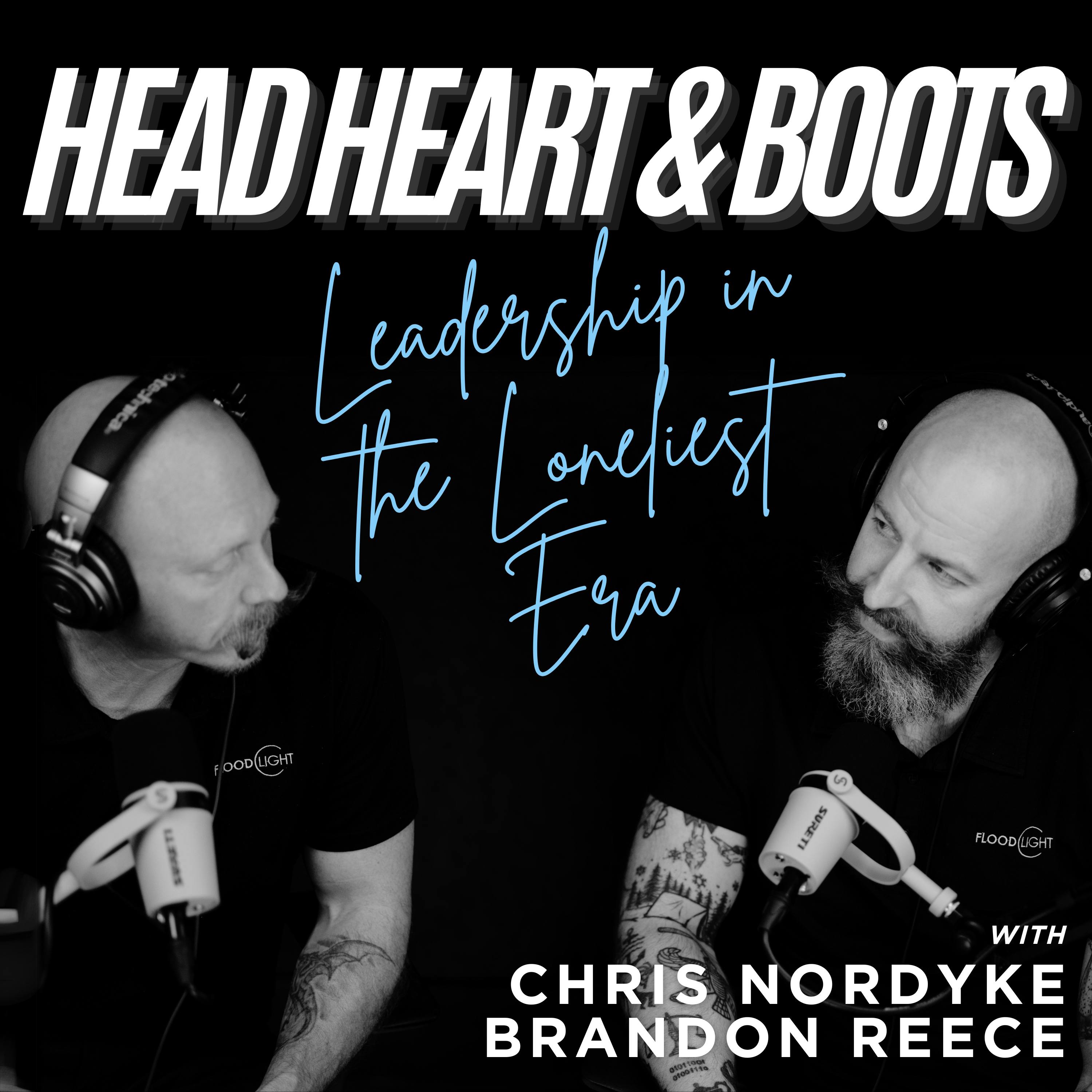


In this episode of Head, Heart, and Boots, Brandon and I dig into something that feels bigger than business but is showing up inside every business anyway: loneliness, disconnection, and the emotional fragility many people are carrying into work right now. We unpack how remote work, constant digital distraction, and the erosion of real face-to-face relationships are reshaping not only mental health, but also trust, confidence, and the way teams respond to pressure and change.
We talk candidly about what it feels like to lead in an environment where people seem more depleted, more anxious, and less resilient than they did just a few years ago. From the loss of natural boundaries between work and home, to the challenge of building genuine relationships with employees while still holding clear standards, this conversation wrestles with the tension every owner and leader feels but rarely names out loud.
This episode is not about easy answers. It is about recognizing the reality in front of us and asking better questions about how we lead, hire, communicate, and create environments where people can actually feel seen without losing accountability. If you have felt the weight of leading tired people while being tired yourself, this one will hit close to home.
Hope you enjoy.
Chris
Why You Should Listen
[00:03:12] Why loneliness and social disconnection are quietly reshaping workplace behavior, resilience, and team dynamics
[00:09:48] How remote work and digital life have blurred the lines between personal identity, relationships, and professional performance
[00:17:26] The leadership challenge of balancing empathy with accountability when employees are struggling emotionally
[00:24:41] Why many leaders feel exhausted trying to carry the emotional weight of their teams while still pushing for results
[00:33:05] A candid look at how rebuilding real connection and trust inside teams may be one of the most important leadership skills moving forward
Did you know...
Only 30% of businesses listed for sale actually find a buyer? Even more striking, just 10% of those sell for the price their owners anticipated or higher, meaning only 3% of all business owners achieve their desired sale price. By focusing on understanding and enhancing your enterprise value, you can significantly boost your chances of joining that successful 3%.
Business Health & Value Assessment
Start Assessment Know Your Enterprise Value. See Your Potential Gaps.
Complete this assessment in less than 15 minutes and receive a free assessment for your business that includes:
- A Lite Valuation Of Your Business
- Your Value Multiplier Per Your Industry
- Health Assessment Per Our PYB Methodology
- Business Value & Growth Roadmap Tailored For You
- Value Acceleration Strategies
Spotlight on Floodlight: Your Secret Weapon for Sales & Scaling
This isn’t a paid plug. It’s real talk from the front lines. If you’ve ever thought, “How do I get a VP-level sales leader or even a sales team without hiring full-time?” Floodlight has the answer.
Fractional Sales Leadership
- They act as your outsourced VP of Sales, taking full responsibility for training, managing, and growing your sales team. No six-figure hire needed.
- Clients often close 20 to 50 percent more deals within six months, thanks to data-driven coaching, CRM setup, scripts, and performance reviews.
More at floodlightgrp.com/sales
Commercial Sales MasterCourse
- A self-paced, video-driven B2B sales course designed specifically for restoration teams. Perfect for building commercial revenue and getting free from TPA handcuffs.
- Covers mindset, prospecting, pipeline building, LinkedIn lead generation, and includes a $250 discount with code SALESBOOST.
Details at floodlightgrp.com/courses
Tailored Consulting & Coaching
- Floodlight’s Propel Your Business methodology offers a full-circle roadmap: financials, sales, marketing, leadership, recruiting, productivity. All built for contractors.
- These aren’t “life coaches.” They’re former restoration owners who’ve lived the chaos and know how to scale out of it.
Explore more at floodlightgrp.com
Live Training, Tools & Strategic Partnerships
- Floodlight also delivers live onsite and virtual training, keynote speaking, and leadership tracks covering operations, project management, and strategic growth.
- Bonus: They’ve vetted tools like Xcelerate, Liftify, and Sureti. Floodlight clients get access to exclusive discounts on tech that actually moves the needle.
See all partnerships at floodlightgrp.com/partners
Why it matters for you as a listener
- You don’t need to figure this stuff out alone.
- If you’re serious about sales growth, operational clarity, exit readiness, or leadership development, Floodlight is already helping folks like you scale smarter.
- And you get it from industry insiders. People who’ve sat in your chair, survived the fires, and built systems that actually work.
0:00 Wow. How many of you have listened to the Head, Heart & Boots podcast? I can't tell you that reaction, how much that means to us. Welcome back to the Head, Heart & Boots podcast. I'm Chris. And I'm Brennan. Join us as we wrestle with what it takes to transform ourselves and the businesses we lead. This new camera angle makes my arms look smaller than yours. I'm noticing that and I really appreciate it. I thought you did that on purpose. No, I don't. I didn't. And I am not happy with it. Bro, I kind of want to do this without glasses this morning. Yeah. Getting crazy. Right, I'll join you. Yeah, we're getting crazy. We might not be able to see anything, but damn it, we'll record something. Everything's a little fuzzier, but that isn't necessarily bad.
0:41 See, distance-wise, I'm gold. Mine's old man time, catching up to the old reading. Reading shit here. Yep, I got to put an extended arm. Are we live? Yeah, yeah, yeah. This is real. Welcome back, everybody. Welcome back to the Head, Heart, and Boots podcast. That's right. You know, Brandon and I are kind of shifting mental gears here, but I think we've got a really good topic. that Brandon's brought to the table today. You want to just launch? Yeah, so I think that for a while now, social media, I think, news, all the things, they've started to kind of point towards this idea that as our worlds get more and more remote, we've got way more remote workforces now.
1:22 A lot of this was sped up during the COVID piece and it kind of just hasn't returned where we just have all these things that we're doing inside our lives, inside our businesses, social media platforms becoming like a primary mode of conversation and relationship. There's something that's beginning to get spoken about more and more often and it's more and more scientifically supported. And it's just this idea of, a real loneliness epidemic. And I thought about this as I was listening to this. So I was listening to a sermon. That's part of where this came up. But real quickly, they basically said, and I haven't validated this yet, I just haven't had time, is apparently the Surgeon General, is that the right term, put out an extensive warning and white paper about, on this idea of loneliness epidemic that we are currently facing.
2:14 And they were just talking about the effects, if you will, on the general population. And ultimately what it leads to is this, it's creating a ton of mental wellness issues and physical issues. issues because of this living in an extended state of loneliness, how there's real chemical and physical ramifications of it. And so as I was listening to this sermon, I was just kind of thinking to myself as a business owner, the relationships that I have with business partners, with leadership teams, with our employees. And I was like, man, this is... This is interesting because I can, not only am I experiencing some form of this on my own, personally, it's making me ask myself some questions regarding how I lead people.
3:05 And where maybe in the past, I hadn't maybe given something the same amount of weight that I had. it's making me question that a little bit as a leader and just asking myself some more questions of, wow, is this something that we are seeing and witnessing in the business? And if so, does it require us to iterate a little bit in terms of behavior? So here's kind of like the primary elements of this. One is that people are losing their own self-worth and value. Like they're having a tough time identifying their own personal value. And apparently that's kind of a byproduct, just not being in this human-to-human relationship.
3:47 Because there's a lot of things that happen in physical relationship, being present in the same room, sitting across the table from somebody, versus what can happen in a virtual environment via a screen. An example is that, for instance, when somebody experiences direct eye contact, there's an immediate dropping of cortisol in the system. And then there's an immediate application of these kind of healthier chemical responses that make you feel seen, heard, valued. And so there's this scientific reaction that's happening that reduces stress and increases the healthy mood, mental state chemicals that, Purely from eye contact.
4:36 And what they're saying is, is that physically you can't recreate that via a screen. So even if you and I lock eyeballs in a virtual Fathom meeting or whatever the case may be, that same reaction doesn't happen. It's not the same. It requires this physical proximity. And they're just citing all these things relationally that are super healthy for us, that build community, that build value, that build wantedness, that build seen and heard and valuedness. that only happen in this kind of physical relationship. Yeah. Yeah. And man, dude, even in my partnership with FP, I travel a lot, and so I'm getting on the ground with our team, but I go weeks at a time where all my interaction with anybody and everybody is predominantly virtual.
5:24 And bro, if I'm honest about it, it's been a growing problem. It's part of the uneasiness that I haven't been able to label super well. You know what I mean? It's weird. Anyways, yeah. That's where I wanted to go. So there's the, I love that. There is so much in that because I feel what you're saying. And like, well, I think about you and I getting together this last weekend, Saturday, we got together. Yeah. And it's just profoundly different as well when you're really able to be in the moment with somebody. And I think that's so rare now. where neither one of us were looking at our phones for the most part. We had a section of time where we weren't looking at our phones. We were hiking and we were breathing heavy, going up this hill.
6:08 And so there is something important about that that I think we have, like in mass, at scale, we've fallen away from most people to where... They don't have friends outside of work. I mean, we've talked about this before. This is really, really common amongst entrepreneurs and owners is we get so enmeshed in our business and what's happening in our business that we no longer are taking routine time and not to drink and party. No. Like hanging out with the boys or with the girls and going out and partying is not what we're talking about. It's not getting wasted at the hotel bar.
6:50 No. It's like you and I were looking each other in the eye. We were talking about things that mattered to each of us. There was a level of vulnerability talking openly about what's happening in our lives right now beyond just work, but including work. And I don't know how you like, how the research, you know, sort of fleshes that out. But I think that's something that's missing too, is that all of us are so consumed with work and work is so accessible at all times. All times. You know, it's really been that way for the last 10 or 20 years. But I think since everybody's gone remote, part of what's come with remote too is there's a sense that there is really no defined start and stop to work. Mm-hmm. You know, it used to be to some degree, right, when we were working in Sublimity, Oregon, you know, Silverton, Oregon, State and Oregon, and when we were operating, you'd go to the shop in the morning and there was some kind of process of you driving home to your house at night.
7:44 Mm-hmm. And does that mean we all didn't have work that came up at night? Well, of course we did. This is restoration. Yeah. But it is, it's different. It is. It's different to where it's so easy to grab the iPad and review that spreadsheet one more time or make some tweaks to it or reply to six or eight more emails after dinner. So I think all of this is kind of coalescing. And, you know, the other thing that came to my mind too is you talk about working with FP and us in our consulting work with all our clients is that's with you having the best possible setup. Like you have professional lighting in your room. You have really nice equipment. You have a microphone that makes it feel much more like you're right there and they can see all the features in your face.
8:29 And so I would just offer this little side note is, if you work remote, spend the two, three, 400 bucks to have a really good microphone and very good lighting. So people can at least see you really well. It's one of the big problems and why it feels so lonely. Yeah. And why people hate sitting on webinars and everything else is so different when you're looking at somebody with a dark camera view and everything else. So that's something for all of us to consider if you do remote work. Yeah, I think one of the things that was just, you know, having an impact on me as I was considering this, I mean, one is like, I just, our world that we live in now, we are in a remote relationship with most of our interactions the majority of the time.
9:13 And so just there's a real impact on me personally and, you know, for a lot of us personally. Yeah. A lot of the people listening to our show, though, are operators that are running their shops. And so they're physically in proximity with their people. But I think it's this element of understanding the deficit that our people are starting from. And then understanding that it means we may have to do more than we did in the past because it's harder to fill that gap. Or the need is so much greater than potentially it was even seven or eight years ago, right? Six, seven, eight years ago. And so I was just really considering that. In full transparency, when you start working with any organization and in consultation or consulting and even as an operator, there's these elements of auditing and investigating the business.
10:02 And really trying to understand the truth of the current situation and understanding what literally has to be done and prioritized to move the business. Yeah. And I think recognizing a reality versus only trying to recognize what you want to hear or see or experience, that's a thing, but that's a different show. When you identify that there's needs in the business, reasonable, appropriate needs that require attention and change and change management, I think we can underestimate this need that exists before we even start working with our team to move through infrastructure or system or process changes in the company. Does that make sense? Yeah. And it's like, I don't, I think in many ways, if I'm really honest, I don't think I did a good job of that.
10:47 Like when I first came into the FP ecosystem as an operator, I'm not sure that I totally took stock of the state of our people outside of just normal business stuff. And if I'm honest, I'm assessing some of my leadership that I've attempted to live out so far. And I'm kind of finding myself wanting a little bit. I'm listening to myself. I'm looking back at some of the situations, some of the communication we've sent out. some of the decisions that I've made or led. And I can tell that it wasn't the spirit of, it may not have even really been the methodology that was a failure. I think I underestimated the level of need that we were starting from in terms of my individual team members.
11:33 And the fragility, not because of the state of the business, but because of the state of people. And I'm not sure that I took stock of that really well. And I believe that we are certainly experiencing some byproduct of people just being a little distrusting and extra cautious. And the gap in the sense of, I think it's very easy for our people to feel completely undervalued. Yeah. It's not because of a lack of effort per se. It's a lack of effort to meet the current demand. I hope that makes sense. Well, here's, okay, this is what's coming up for me, man, is, and I don't know if this is something that's sort of on the cusp of change in our culture, but I catch myself bristling a little bit sometimes, especially on this topic.
12:18 Mm-hmm. Just how much we as business owners and leaders, we're stuck in this paradigm of employees, team members. I think we create some separation in our minds between real relationships, like we engage husband, wife, girlfriend, kid, friend, buddy, pal. We sort and kind of separate between our professional and personal lives and we're And for whatever reason, there's a difference that we assign to the people we work with. In particular, if we're leaders, we think of our downline employees. And I think this is largely subconscious. Okay, but just as I'm listening to you, and I'm not accusing you, I talk the same way, but I'm starting to notice, like there's almost a designation for how I talk to think about and connect with employees that...
13:08 Versus the kinds of relationships that I'm trying to cultivate with buddies, friends, neighbors, church, cousins, family. Yeah. And I realized, look, there's obviously practical differences. Yeah. That are like real. I think we probably, in the midst of that, we don't tend to really engage with people at a super authentic, interested level. Yeah. This is kind of interesting, and I think we should hang in this. So we may kind of open a can of worms here. And so people feel, yeah. So I think a lot of employees, dude, this is like, remember the whole quiet quitting thing we went through? Sure. And it's, of course, still going. Yeah, I don't think it is. But that whole quiet quitting thing in COVID, I think a big part of it is, and pardon my language, but I think it requires strong language.
13:54 I think many, many, many employees walk around, regardless of how awesome you think your culture is, feeling like at the end of the day, nobody gives a fuck about them. Like if push came to shove, if they had a rough couple months, their behavior was poor because they're struggling in their marriage or they have financial struggles at home or they have a sick kid or they have some other kind of frustrating, disappointing, distracting thing going on at home, that there's just a knowledge that if they weren't 100% for long enough, they're shit on down the road. They're going to get replaced. Now, the reality is, this is what's hard, right? Yeah. is the reality is it's almost certainly true.
14:37 If any of us just bag out on our responsibilities at work, at some point somebody's be like, why are we paying you? And so I get that. And I think that's the tension, is how do we turn this corner to affect this loneliness thing? I think some of it has to be rethinking how we even... Like our mindset, the way we talk about, quote, employees, and I don't think it's necessarily us putting a friendlier term on it, like calling everybody family. That's not what I'm talking about. Yeah, yeah. I don't think it's nomenclature and things like that. You know, it's challenging too because... The easiest way I can relate to this personally, again, this is not advice giving. This is me just kind of processing raw with you is I look at it almost closer to a parent-child relationship.
15:22 And that has nothing to do with me trying to place a statement about competency or value or anything. It's just that kind of relationship where... Boundaries and relationship go hand in hand, like meaning that part of the way that you create trust and confidence in the relationship is by being clear on the boundaries that you create. And I think that what you're talking about is challenging because it's not the ownership doesn't rely only on us. And here's what I mean by that. Yeah. Man, this is the wrestling match, I think, between individual and entity and who's responsible for what. So here's what I mean. In my mind, there's a level of responsibility that I have as a steward to an entire organization, meaning we have lots of families inside the company that we're responsible for.
16:13 Yeah, yeah. And when we get in these situations where we're trying to isolate or work through the specific relationship with an individual, As much as we want to do to affect positive change in that one-on-one relationship, it's always going to be secondary to the broader responsibility that we have to steward the whole and really understanding how much can you give on an individual basis, understanding that it begins to take away from the broader body that you're also a steward of. So there's that. So that kind of stays in the back of my mind as I try to think through this a little bit and think about, okay, what part do I need to flex more or do a better job of iterating around or modifying my approach But then there's also this thing where when you start to blur the line, I don't know if blurs the line is the correct word, but when you really want to engage people at a personal level, you also run this risk of, I don't know if I believe this.
17:16 I'm just saying I think mental gymnastics that I do maybe. You run this risk of the employee, the team member, not being able to handle that level of relationship well. Example, you and I have always had a different working relationship than most of my team. Right. Because you've been able to handle or separate the difference of when you and I meet on a Saturday to be in relationship on a Saturday. Yeah. Versus when we go to show up at the job and we have these roles that have titles and responsibilities and relationship to other team members. Like your ability to be responsible with that.
17:58 Yeah. makes a difference in terms of what I can give. And I think the challenge is, is that people often want a richer relationship with the employer, the supervisor, the boss. But then many of us really struggle to be a good steward to that relationship. Yeah. We can take it for granted. We can take it for granted. Or it's not even like take it for granted. It's almost like a subconscious lowering of the standard because, oh, we're tight. We have a good relationship. Oh, sure. I know what you mean. So then I'm putting that individual ultimately in a compromised state as a leader. So you would think, well, if we have a tight relationship that's mutually respectful, you would guard your performance to not put me as a leader in a compromised state based on how you're performing.
18:43 Yeah. Yeah. I think, unfortunately, humans, we really struggle to give and take responsibly when we want a certain working environment. We're good at saying we need more of and want more of, but I think we can fail then to be a good steward of what we're receiving. Does that make sense? It does. Well, it takes me to this principle of yin and yang. Are you a business that's under 5 million in sales and you're just now getting ready to try and scale your company up and hit some of those targets you've always wanted to hit, but now you've gotta build a sales team? Or maybe you just hired your first sales rep, but you don't really know how to manage them. Like how do you manage, lead, train, develop a sales rep? Floodlight has a solution for you now.
19:23 So we can actually assign your sales rep a turnkey VP of sales that will help them create a sales blueprint, their own personal sales plan for your market. They'll have weekly one-on-ones with that sales rep to coach, mentor them, hold them accountable to the plan. And they'll also have a monthly owners meeting where they'll meet with you or your general manager and review the progress of that sales rep, their plan to actual results, what kind of performance improvement they're working on with them. Also let them know, hey, you might, they're doing really well. Maybe we should think of hiring a second sales rep. They're gonna have that one-to-one advice for you as an owner or senior leader on the team as well. How great would that be to have a bolt-on sales manager for your one sales rep and it's only 2,500 bucks a month?
20:06 If you're interested in talking more about that, reach out. Let's grab some time and let's talk shop. Our floodlight clients this last year in 2024 generated over $250 million in revenue. Supported by, advised by, an industry expert who's owned and operated a business just like you. So take action. Don't kick the can down the road. Start with our business health and value assessment. And let's unlock the next chapter of your success story. What I think we're talking about is these are conditional relationships. Yeah. They just are. Yep. Our relationship to, I mean, frankly, business partners, a little more like a marriage. But when you think about a marriage, marriages are absolutely conditional.
20:49 Our relationship to our spouses, let's strip out... strip out your religious ideologies and like, yeah, we're not supposed to get divorced. Totally get it. The reality is, people do. The reality is, is that our relationships to every human person are conditional. They're based on a lot of different things, right? And there is a threshold of tolerance that everybody has, right? For some, like in marriage, for some, it's physical abuse. It's like, that's it. That's the, you cross the boundary. This relationship is over, but there are conditions that all of us bring to every relationship. Yeah. I wonder if our ability to solve for this loneliness thing is really all of us as leaders, I know this is true for me, becoming more disciplined around honesty and real-time feedback.
21:35 Because if you have honesty and real-time feedback paired with this personal, personal, interested, curious, genuine relationship of, hey, you're not just an employee. Like, I really care about what your life is like and how this, like your work fits in with the rest of your life. Like that, that's important to me. Like, I think we can communicate and live that out, but we also have to be equally committed to when there's a condition that's not being met. Mm-hmm. that we're open about it and we're not allowing the relationship to cause us to shy away from addressing that condition. And it's like the same thing I've experienced in my marriage with my wife.
22:17 When we let things go unaddressed that are offensive to us, it totally chips away at the relationship. There is no avoiding that. And I think a lot of, well, men and women both, But I think just for men listening, I think our tendency often is to suppress our feelings of disappointment, frustration, irritation. And I think some of us also bring that into our work relationships where when we develop a friendship or a close relationship with employees, And then we start to get frustrated, irritated, disappointed in their behavior, angry with their performance or behavior. Our tendency might be to kind of give them a free pass, give them some extra rope to hang themselves with rather than getting in and addressing that in real time.
23:07 Again, it's no different than marriage. The most healthy marriages, people I know that are genuinely affectionate and seem to be happy with one another more than not, is... they deal with things as they come up and they're very honest with each other. Yeah. And I just wonder how I think a lot of us struggle in getting that combination right. And I think a lot of us avoid getting into personal relationship with employees because we've been burned in the past where they've taken advantage of that relationship. But I think a lot of that can get solved by us adopting a really disciplined approach to the relationship. It's like, hey, I think maybe even when we onboard people, we need to be more deliberate about like, look, We don't just say we're like family, but we're just, we're relationships here.
23:52 Yeah. And we're going to get to know you. And my hope is that you're going to get to know us and you're going to get to know your fellow employees and you're going to care about each other. We're going to care about each other here. And this is a conditional relationship. Because if you don't do what we brought you onto the team to do, you are hurting other people on the team. And so therefore, out of my care for you, and the whole rest of the team, and this whole thing we're doing together, my promise to you is I'm going to be honest when you're not meeting the conditions. Whether that be how you're spending company money, the sales activities that you're committed to doing in the field. the way that you present yourself professionally, your appearance, the way you talk to others, the way you follow our processes, like all that stuff.
24:40 My promise to you is if any of that gets out of whack, I'm going to tell you because I want you on the team. And if you stop doing those things or you do those things out of alignment, inevitably... It's where the conditions kick in. It's where the conditions kick in. And they have to be there. What do you think of that, dude? No, I think that's got legs. I think when I hear myself talking about this principally, I go back to situations, let's say, that I've been through even in the last couple weeks. And I think anybody listening has experienced this too. It's just so much more complicated than it sounds like when you're talking about it. And it's like... It's emotional as well. It's very emotional. It really is. And I think too, from a leadership perspective, is that you also run the risk of just not having enough emotional tank, gas in the tank to be everything that everybody wants you to be.
25:31 I think that that's where I'm kind of starting with, with like this, the need is so much higher than it probably should be right now because of the environmental conditions that have been created over the last... maybe 10, maybe even 20 years. It's pushing a level of onus on us as leaders and as employers that just requires us to slow down and ask some questions. Because I think if you try to continue to approach it from looking at it and saying, well, that's unrealistic demand on me because you're looking at prior experiences and workforce exposure, I think that's wrong because I think you're running the risk of ignoring a reality and reality just is.
26:12 You've got to do something about it. And or you run the risk of, what's the term? You just run the risk of not running the right play when you could be winning. Because you're just... You're ignoring something. But the gap is big, dude. It's one of the things, I've been talking to my kids quite a bit about this. And they're that tween generation. We've talked about this, where they didn't grow up on devices. But certainly once they hit high school and junior high, they were being exposed full-time to those devices. And so it influences them, especially as their adulthood they went into that was full-blown. But it's different. It's slightly different for them than, let's say, somebody that's under 20 years old right now, as an example.
26:55 And they can speak to it and they understand it. And they've been able to also help me identify their generation versus the current generation. They feel the difference socially and the neediness, the... I don't know, just there's a lack of skill set that you would normally develop when you're in the schoolyard, when you're in conflict with schoolmates and peers, and when there's healthy lines, because you might get punched in your face if you open your mouth, versus the lack of lines and boundaries that our young generation is exposed to on a day-to-day basis. Hell, young generation, I am, like all of us, right? There's just like... People talk big talk because they understand there's really very little physical circumstances or consequence for it.
27:39 Which back in the day, dude, you opened your pie hole. Somebody was going to maybe put their fist through it if you didn't have some game to back up what you were yakking about. Man, there's just no such thing. There's no social responsibility, it seems like. Anyway, okay, now I'm... I'm spinning. But I think that's just, I don't have the answer. I've just found myself going, wow, in the past when I've communicated the spirit of or the theory behind or why we're going to do something, the level of support and commitment and unification I could get versus what I'm capable of getting now with the same kind of actions, it's different, dude. It's measurably different.
28:21 And it kind of put me on my heels a little bit. Like I'm, I'm experiencing it as a leader, as an entrepreneur, I'm going, hmm, this is something that we have to take in account. Here's another area that I think maybe so, so we're kind of going all over the place, but you had mentioned this idea of during the onboarding being more intentional about setting those boundaries. Like here's what you're going to experience here. Yeah. you have a couple different ways that you can respond to that. One, you could identify this is not going to be a good fit because honesty is going to happen here. You could identify like that could be hard at times, but it's going to be honest and fulfilling and I'm going to know where I stand. I think another thing that this requires though is I think we really have to take stock of who we can put on our roster.
29:08 Understanding that this need exists for most of the people that we're going to have an opportunity to hire is, understanding the need and the level of demand is higher potentially than it has been. Asking ourselves the question as leaders and as a company, do we have the resources, the time, the energy to give to this? And to what extent? Because then that should help guide you on who you can hire. Because you can't be everything to everyone, no matter how hard you try. And so if you intentionally put somebody on, maybe that... is going to be void of enough life experience. And I don't want to say age, because we can't discriminate on age. But from a reality perspective, it could be that your organization doesn't have what it needs to support real young hires.
29:56 If that gap, that life experience gap, that social gap is too big, you may just not be able to give them what they need to succeed in your particular business. And that would be a real smart thing to identify before you say yes. Give me an example of where there might be a mismatch like that. Or we'd have an inability to give these youngsters what they need. Well, I think part of the way that we look at experience or lack of experience is, like, if we just remove the age, and you just said, you looked at somebody's career history, right? And you see what they've been exposed to. And that could start all the way from team sports. It could be where they got their education in terms of the rigorousness of the studies, of the project work, the expectation.
30:40 It could be any kind of employment history. I think there's a reality that if we know that there's kind of a social gap that exists that may have been larger than it has been in the past, then that's going to exist no matter what. Yeah. And then you add on top of that an employee prospect that literally has zero life experience outside of being born. Like they weren't part of a team at all. They were isolated or siloed in high school. You can't point towards anything where they achieved, got recognition, honors, awards. They don't have a college education, which you know how I feel about college education. I think it is sometimes worthless completely. Yeah. But there is something that happens when somebody goes to school often where they're at least put in an environment where they have due dates and expectations placed on them.
31:27 Anyways, if you look at that and there's really not much history there to point to, I think that would be an example of you really have to ask yourself, does your organization have the time and assets to... to pour that much into that individual to elevate their basic understanding of what it's like to operate within a team and be responsible for due dates, like how to be a good employee just to start with, you're running a big risk, man. A big risk. You know, another thing that's coming up for me as you talk about this is anxiety. Hmm. Like what do you mean? This younger, this younger generation in my experience, dude, I've run high on is, well, well, listen, I think we're all affected by this.
32:11 And I think a lot of it traces back to our devices and social media culture, all the things. But I think that's a, a universal kind of marker on, let's, let's just call them like the, the 15 to 25 crowd right now, maybe a little bit even older than that. where I think COVID was a big culprit. A lot of people going through school in COVID. And I think the predominant message that these students got as they were going through the whole COVID experience from public school in particular is, this is so scary and hard. You can't handle this. No, sure. It's a heavy message. And how did that message come? Well, and did all the kids absorb that?
32:52 Of course not. But a majority did, I believe. Mm-hmm. To where they were being given a constant drumbeat message of, well, this is scary. This is hard. This is risky. This is dangerous. And it came in all variety of forms. You know, obviously, I'm like, how much do I want to get into this subject matter, right? Yeah. But... But the point being is that like the relaxing of standards, right? Yep. Classes changing from, you know, graded classes to pass, fail. These are all things we experienced in our local school district. And I saw the impact of that on my children. And in a couple of cases, we just decided to move them out of the public school system. And I'm so grateful that we were able to do that. But my point is, is that there are a lot of kids with fractured self-esteem, self-confidence, And really high levels of baseline anxiety.
33:42 And as I talk with other friends, I mean, the kids that are in that kind of, you know, 15 to 25 age range where they were all impacted by COVID a little bit differently, but it's part of that whole experience. Yeah. And so my question is, is that something that we should be interviewing for? Obviously, I'm not talking about the medical condition of anxiety. We obviously can't ask about people's medical health history and all that kind of stuff or make judgments based on that. But what I mean is, do we need to become better at our interview process to understand where people are mentally coming into the role? Because let's face it, I mean, in restoration, there's a level of baseline pressure in our industry.
34:22 Yeah. It's not good for everyone. And I think we see this on teams. Yeah. Where we see people of the age range I'm talking about coming in, and some really struggle in this environment. And it's like, is there a way for us to be a little bit more conscious of how we're interviewing to kind of stress test that piece a little bit? To understand how they deal with adversity and really being intentional about incorporating to understand who we're bringing on. Because I agree with you. I think we do have to be... we do have to be more careful about the avatar of the person we're hiring. Otherwise, they're likely to struggle.
35:04 They're likely to struggle to meet the conditions. Yeah, I think that's huge. Here's a reality check that I feel like I've gone through. I think it relates to what you're saying directly is, this whole idea of how much do you have to give in the current state of the business? One of the things that happened when we partnered with FP is, is there was kind of a state of the union that was given, that I gave. And it was a recasting of where we're going with the company. And man, it's like, I look back on that now. I mean, seriously though, let's call it what it was. It was one of the most inspiring speeches I've heard you give.
35:45 So it stands on its own as I felt like a beacon. It was a great opening speech. But anyway, keep going. Well, I'm assessing it now. And I'm assessing like, how would my team, how are they probably feeling versus what we've accomplished and where we're at versus what I was casting? at that session. I know that even though I tried to do a good job of telling the team, this is going to come with pain first. Yeah. we forget how easy it is for people to ignore pain. Because we don't want to, it's like you tell your kid, don't do this or you're going to get grounded. And they get hyper-focused on doing the thing and not the consequence. Because we all just, it's uncomfortable and we want to ignore it.
36:27 And I think that no matter how well I could have articulated at the time that there's going to be pain before there's success, I'm going to be able to ignore it. I think the team is straining under the pain portion. Because we've had a lot. We've had to assess everything. And I'm not taking anything from the state of the company or its history. But dude, when the world changes as fast as it's currently changing, no matter how well you've done, yesterday was yesterday and tomorrow is a whole different ballgame. And so we've just been having to assess every element of the business and there has been change. But it's funny because we've been throwing around this term, change fatigue. And I think, yes, I think that's a good way to label it. But you know what I think I'm realizing is that more of the change fatigue has nothing to do with the procedural shift.
37:14 it actually has way more to do with the instability emotionally of the team to begin with. And so change is just another chink in the armor that strips confidence. And I feel like the confidence level of the company as a whole already is fragile. And it's like, I want to point towards this because of this, a lack of leadership here, I think we always need to be accountable and we always need to be gaining skill set. That's always a part of it, yeah. But man, I think part of me is going too. It's like people are in a fragile state. They're depleted. They're depleted. Like there is, and again, I want to be clear. We have responsibility as leaders in our company. I am not blame shifting at all. At the end of the day, it's still our problem to solve.
37:57 But I just want to recognize, and I think maybe this is just for other leaders and owners listening to the show today, like you're not alone. There is something happening in the workforce that is making some of these goals harder to achieve. Not impossible, not diverting responsibility. It's harder. And we're probably wondering why it feels so much harder. Why do we experience maybe more friction? And think about this. This would carry over to all your partners, other companies, peer businesses that you do business with, all their staffing. What about TPAs that you're in relationship with, carriers that you do business with? Mm-hmm. These things are true in all of their organizations as well.
38:37 And so if we just kind of can collectively breathe in and say, okay, I can do better. And there's some real life things that you're experiencing that are affecting your effectiveness. And that's okay too. And I think one of those things is, is that each one of our team members coming into the business to include ourselves right now, have a much bigger gap than I think we've recognized in the past. Yeah. And it's not their fault either. And so it's this weird dance that we have to do as leaders where we continue to iterate, conduct some after action review on how we're behaving, what we're communicating, what change we're instituting, and then also give yourself some grace because people are in a rough way.
39:18 And they were in a rough way before you showed up. And they're in a rough way outside of work all the time. And life is doing its thing. you can't, I don't know. You can't own all of it. You know what I mean? I don't know. I don't know if we've done anything to help anybody in this conversation right now. Well, it's helping me. I'm having thoughts about this. Yeah. Yeah. You know, I was hanging out with the boys last night. We had a cuss and discuss. Oh, yeah. Yeah, yeah. It was at my friend Jared's house. He's a builder. He's got a hot tub. And so we all hot tubbed for a few hours last night. And, you know, in this hot tub, I've got a longtime real estate guy. He's a broker and property manager guy. Has kind of his own little portfolio. And then...
39:58 Now I got my friend Tim, who our neighbor in our offices, and Tim's like an absolute real estate tycoon. And then I've got Jared, who's a high-end home remodeler in our market. So all of us are kind of high achievers in our own way, in our own space. And when we get together for these hangouts, dude, the blessing of it for me is that I realized that we're all the same. And I can find my, I can catch myself comparing, you know, myself to even my buddies, you know, just in their different levels of success and, and where they're winning and so forth. But then when we all start talking about the other pressures of life and marriage and parenting and physical health and anxiety and stress and all the things, it becomes very clear very fast that we're all in the same shit.
40:49 Yeah. We're all in the same, wading through the same water. Yeah. Yeah. And of course that's true with every single one of our employees. Yeah. You know? Yeah. The magnitude of the challenges and problems might be different. Yeah. But yeah, I just have to think that most of us are walking around very lonely in our work. And I think that even becomes more severe for some of our frontline people that the weight of the world is on their shoulders to provide... And especially in our industry, it's a taxing. Yeah. It's a taxing industry. Yeah. You know? Yeah. And just life in general. It's like, I think about, you know, I think we can wrap this one up, but, you know, I was thinking, just thinking about my son and, you know, he's got a family forming that he's becoming more and more responsible to and orienting more and more around and, you know, You know, I just think about how challenging that is for him right now.
41:43 Dude, like hockey stick, like the responsibility growth. Yeah, it went up through the ceiling. And the challenges that he's going through are, he's doing great. He and his fiance are doing great. fantastic. I think that they're trying to think through things very well. They're being very mature. I think they're asking themselves hard questions. They're leveraging levels of discipline. So this isn't, he's not suffering consequences per se, but there's just a reality when you're And yet he's trying to do a great job at work too. And he's got professional challenges for himself. He's got certain levels of achievement that he wants to earn.
42:25 And man, it's like, because I'm just his dad and I'm not his boss, I just look at the whole thing so much more sensitively. And it's like, I just recognize how hard it is to give that much to both spectrums, your professional career and your at-home career. And I just go, man, all of our people are in the midst of the same thing. Yeah, dude. I think we need to develop eyes for that as owners and leaders. Yeah. To be able to see that more clearly with our own people, yeah. And it's just, it's challenging to know how to coach that, you know? Here's my commitment to myself. And if this, anybody else can relate to this, great. If not, you know, you're going to have some other way that you solve this problem, but... I think my commitment right now is I'm going to continue to be as transparent as I possibly can in all the areas of my interaction with my people that I can responsibly.
43:14 And here's what I mean by that. I have to do a better job of filtering the angst or emotions that I have related to the current state of the company, current state of the industry, current state of my own personal life. Because that's not fair for me to load that on my people. They already have their own shit. They do not need to carry the load that I'm responsible to steward. And so I can't be transparent about everything at all times because it's not fair to my people. But I can do a better job of just speaking the reality of why I'm asking them to iterate, why I'm asking for change. And then one of the things that I'm doing right now is we are trying to get better at messaging, hey, massive levels of change is not what you need to get ready to expect all the time.
44:01 Like, breathe. Yeah. Because if our company's high angst, high anxiety, high distrust, high all these things, and you give the impression to them that we're going to be in a constant state of change forever, Yeah. Oh my gosh, I just don't think they have the wherewithal emotionally to even understand how to mentally prepare for that. And it's not true. Like, tweaking and iterating modifications... Mm. refining, that's forever. That's not the same as massive institutional change though. And so I think for me personally, in our state of the business, I'm just going to get really good at or I'm trying to remain committed to. I'm going to do a better job of being transparent where I can, being honest.
44:44 Like, hey, we have to do this. Here's the implications on you personally, on us as a business. Right? And then there is a level of I'm going to try to do a better job of monitoring my own emotional response to what's happening in my life, understanding that I'm ultimately asking my people to do the same thing. Right? Like that's where this comes together for me is even though they have challenges in their life. Mm-hmm. I am asking them to show up and be responsible for how they're processing that and how they allow it to affect their role in the company. Part of something smart, though, that you've done at FP, you and Wayne and Steve have really been prioritizing, though, is not firing on too many targets.
45:26 And I know you guys wrestle with it. I've heard you wrestle about it. And I know it's a focus point you guys have tried to keep in mind is, okay, like for example, I know when we first got in there and we're looking at it, we were seriously looking at job management software change. And you guys ended up deciding to punt that. And I thought because the load it would have created on the overall team would have been extreme in conjunction with some of the other targets that you guys have been firing on for meaningful change. I think there's something to that. I mean, I think there's something to that where, and you guys were conscious of this, like being conscious of people's capacity to handle this stuff. And I think probably people's capacity has gone down because of all of the distraction and anxiety.
46:10 We are not the same. And thank God in some way you could say for AI and automation that's coming up because I think it's going to be able to close some of that gap. Like our capacity to move and create change, Fortunately, the robots are going to take on some of that in the future. Yeah. Because we don't have the same capacity more as humans. Yeah. It feels like there's, and I can't, I think science is beginning to substantiate some of this. I agree. I think ultimately we just don't have the same level of fuel in the tank and we need to understand that and iterate some expectations and plans. Yeah. accordingly. I think, yeah. My freaking reg band glasses.
46:51 I love these. And I had to pause my notifications during this podcast. And I really, I'm probably going to turn them off because I love getting my notifications in my ear. I love getting my calls announced. And I hate them. And I hate it. This whole distraction culture. Oh, it's insane right now. It's insane. And yet there's this ego pull within us to be connected and to know and to have answers and to move fast. It's challenging. It's exhausting, right? It's challenging. We got to protect our people from that somehow. Yeah. People and ourselves. Yeah. People and ourselves. All right. Just some stuff to consider, guys. This is just real life crap I think that we're all to a certain extent wrestling with.
47:32 And I think sometimes for me, just getting it out in the air and recognizing it and kind of pulling the dead body, if you will, out of the backyard is important. Because it definitely diffuses some of it a little bit. It's like just getting it out. I've got a shameless clothes for us. Okay. You ready? Yeah, for sure. I've been just working on my cheesy sales pitches. That's right. Everybody ready for this? That's right. So if this is you, you relate to what Brandon and I are talking about. There's so much distraction, so many things tugging on your sleeve in the business that are all important. And you know you're not giving the proper support, mentoring, coaching, and management to your salesperson or your salespeople on your team.
48:13 There is a solution for that. It's called Floodlight Sales Partners. We have professional... sales leaders that will come in and lead, manage, mentor, and hold accountable your sales rep and give them the support that they deserve and they need to maximize their own performance. So if you're interested in that, find me on LinkedIn or reach out at floodlightgrp.com and we can talk shop and see if you can afford it. It's crazy, super expensive. But a lot of people are surprised that they can actually afford it. So give us a call. I like that message. It's crazy. All right, gang. Thanks for hanging out with us. We'll see you. All right, everybody. Hey, thanks for joining us for another episode of Head, Heart & Boots.
48:56 And if you're enjoying the show, but you love this episode, please hit follow, formerly known as subscribe, write us a review, or share this episode with a friend. Share it on LinkedIn, share it via text, whatever. It all helps. Thanks for listening.