Ep 224 - "I Am the Voice, with Jared Thayer"
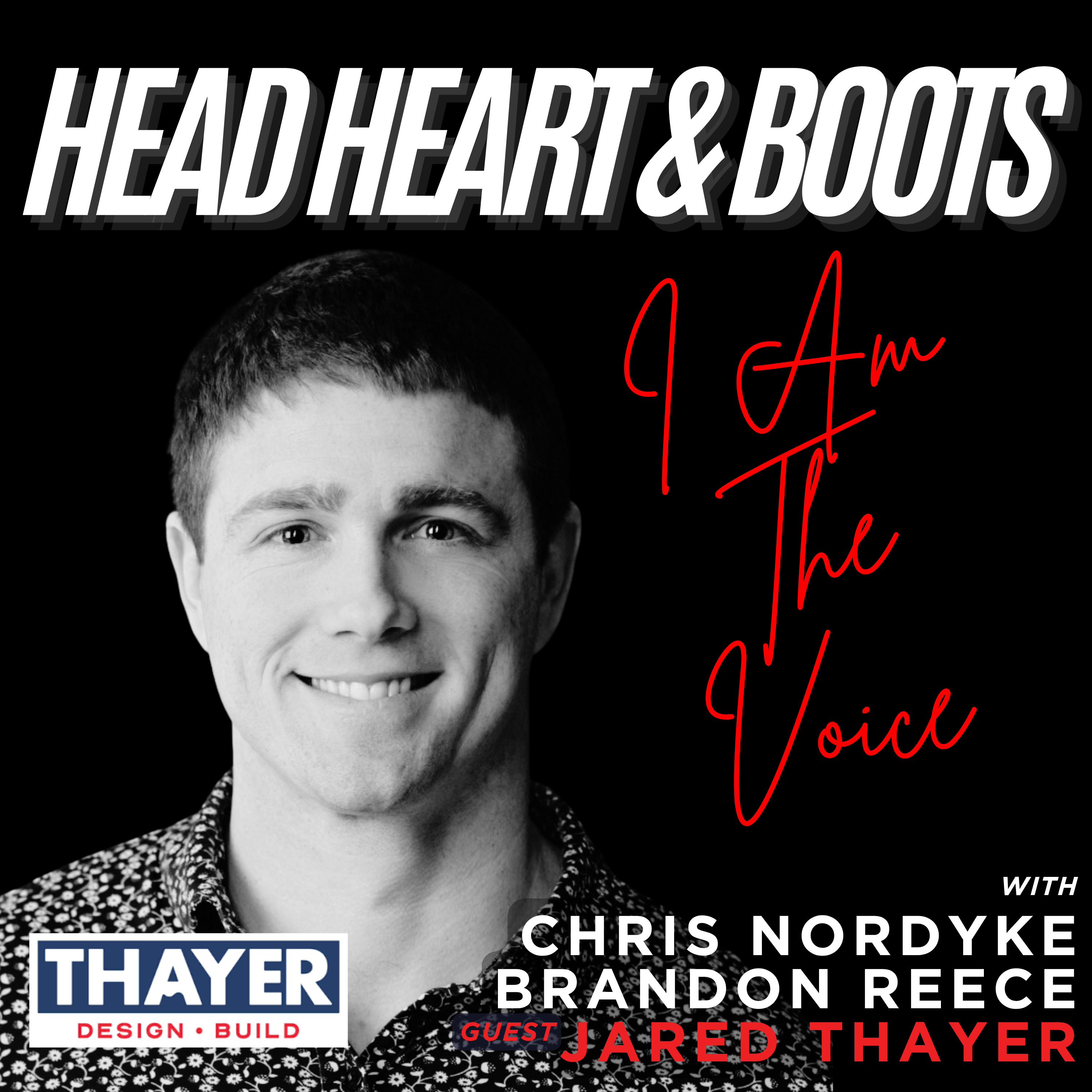


Key Takeaways
- Jared Thayer, owner of Thayer Design Build, shares his inspiring journey from a difficult childhood shaped by addiction and his grandmother's guidance to building a successful remodeling company from scratch.
- Undercharging remains a silent killer for contractors, and learning to price jobs correctly is essential for business survival and avoiding catastrophic financial losses.
- Balancing entrepreneurship and family life requires intentional work-life integration, especially for single parents navigating divorce while raising children.
- Prioritizing health, morning routines, and mental discipline serves as the foundational bedrock for high-performing business owners and trades leaders.
- Embracing powerful mindset shifts, such as Tony Robbins-style incantations, can help leaders overcome adversity and step boldly into their roles.
Chris's friend Jared Thayer joined us this week, and this conversation covers more ground than almost any episode we've recorded. Jared is the owner of Thayer Design Build, a remodeling company he started in 2014, and his story starts with a hard childhood, a mom who disappeared into addiction, and a grandmother who became one of the aces in his deck of cards. From there he built a construction company from scratch, grew it to a ten person team, went through a divorce last year, and is now raising three boys as a single dad with a level of intentionality most of us talk about but never actually practice. We get into pricing and why undercharging is the silent killer of contractors everywhere, health as the foundation for everything else, faith, mountaineering, and the Tony Robbins incantation that Jared led a group of us through in the woods outside Sisters two years ago. He brought that same energy to close out this episode, right before our internet connection gave out mid recording. Some things you can't plan for. This one earns its runtime.
Enjoy the show - Brandon
Restoration, roofing, HVAC, plumbing, landscaping. If you build it, fix it, or maintain it, this show is for you.
Why You Should Listen:
- [2:21] Jared's childhood: a mother lost to addiction and the grandmother who became his lifeline
- [9:37] Losing 90K in overnight billable work and rebuilding from zero
- [13:53] The divorce, raising three boys as a single dad, and why he calls it work life integration instead of balance
- [28:20] The morning routine and health discipline that fuels everything else
- [36:00] The incantation story: a windstorm in the woods outside Sisters and a moment none of us forgot
- [51:09] Charge enough money: the lesson that cost him a good employee and changed how he prices every job
About the Show
Head, Heart, & Boots is for the men and women who build things for a living. Restoration, roofing, HVAC, plumbing, landscaping, and every blue collar trade in between. Hosts Brandon Reece and Chris Nordyke built and scaled real companies in the restoration industry, and they have carried those hard-won lessons into every blue collar trade they work with today. Every week they dig into the head (strategy), the heart (culture and people), and the boots (execution) of running a business worth owning.
This show is the front door to Floodlight Consulting Group, where Brandon, Chris, and the team help trades businesses find the money already sitting inside them and build companies worth far more than the day they started. Same people, same mission, whether you are listening or working with us directly.
Ready to see what that looks like in your business? Start Here!
Owning a business in the trades can be the loneliest job there is. Head, Heart, & Boots exists to change that, because the best leaders don't go it alone, and neither should you.
Frequently Asked Questions
Who is Jared Thayer on Head Heart & Boots?
Jared Thayer is the owner of Thayer Design Build, a remodeling company he started in 2014, who joined hosts Brandon Reece and Chris Nordyke to discuss business, resilience, pricing, and personal growth.
Why is undercharging considered dangerous for contractors?
Undercharging is labeled the silent killer of contractors because it erodes profit margins, leads to severe financial distress, and often costs business owners valuable employees when they cannot pay properly.
What topics are covered in the episode featuring Jared Thayer?
The episode covers a wide range of topics including Jared's challenging childhood, losing $90K in billable work, navigating divorce and single fatherhood, health disciplines, mountaineering, contractor pricing strategies, and powerful mindset incantations.
0:00 Wow. How many of you have listened to the Head, Heart & Boots podcast? I can't tell you that reaction, how much that means to us. Welcome back to the Head, Heart & Boots podcast. I'm Chris. And I'm Brandon. Join us as we wrestle with what it takes to transform ourselves and the businesses we lead. This new camera angle makes my arms look smaller than yours. I'm noticing that and I really appreciate it. I thought you did that on purpose. No, I don't. I didn't. And I am not happy with it. Welcome back to the Head Heart Moods podcast. Brandon and I are here today with my friend, Jared Thayer. Yes, sir. Jared, you know, I could put some fancy introduction in, but we're going to hear his story here in a little bit. You're going to hear about all the things that he's accomplished as still a young man.
0:44 But I think... I've gotten to know Jared at a pretty deep level over the last couple years. So some of you guys have heard me talk about Cuss and Discuss, which is a little men's group. It's been flailing a little bit the last few months. All of us are young and busy. Summer's really tough, but well, I still, this is why I didn't want to grow my beard back with all that white shit in it. But no, I mean, Jared's part of that sauna group and it's a hot tub group, it's a sauna group. And I've just grown to really love and appreciate, I think one, Jared's capacity for being vulnerable and being real and authentic. And I think also too, I've admired his drive and determination. And you're going to hear that in spades too as we... Just before this, he was talking about some billionaire guy, the body, the whole... Jared is incredibly driven and disciplined.
1:30 And I think I appreciate that energy in him. But I think it's the vulnerability, and that's going to come out today too, just Jared's willingness to just be real, I think is uncommon in our culture today. And I'm really excited to dig in. And I think I'm probably going to learn some things about your story that I've either forgotten or that I haven't heard yet. Jared, why don't you kick us off, take us way back. Yeah. Because I think one of the other things I always admire about people's story is we all have a different starting point. Like our starting points are all different. We're all given a different deck of cards. And some people's stories of overcoming, I think, are there for us as a gift. Like to be like, okay, if Jared can do this with the hand he was dealt, well, then I sure as shit should be able to do something as well.
2:16 You know, and I think that's one of the gifts of this show that listeners are going to have. So take us all the way back. Yeah, great. Well, I guess to begin with, I'm 37 years old. So 37 years here on this earth. Came from divorced parents. And realistically, like part of what gave me the drives that I have today was the difficult childhood that I had. didn't live with my dad. I lived with my mom and she had some alcohol and drug abuse problems. And it really came to a head when I was in the eighth grade and we started having problems. I moved up to my dad's and I didn't see my mom until the end of my senior year. And so she just disappeared from my life, didn't know what was happening.
2:57 And then when I did see her again, she was a hollowed out version of the lady that I used to know. And so I think there's some Maybe some trying to run from what my parents had modeled as I was growing up. And so living with my dad from eighth grade through high school, he was blue collar, working for the bridge crew here locally. And he worked really hard, didn't really make that much money. And I saw that also as something that I didn't want to model. either. And so coming out of high school and getting into the professional world, I naturally went in towards the construction. I worked at a sign company and that was in 2008.
3:38 And when that happened, you know, 2008 happened, actually I had an MIP and I couldn't drive. So they fired me from my job. So I went back to school actually, but I guess backing up a little bit further to, to be forthright, I did get in some trouble at school. you know, the upbringing. So actually I got expelled for smoking pot before school. And when they expelled me, I had grandparents who cared about me. And that was like, that was one of those aces that I had in this deck of cards. It was a grandma who loved me and wanted to see me succeed. And so she made sure that I got set to the community college when I was there instead of the option school, which is, you know, I would have had a completely different set of peers there and I probably would have had a different outcome.
4:21 But at the community college, I took a class called Eliminating Self-Defeat Behaviors. Oh, wow. Another one called Stress Management. And I worked out a ton. And I think that that was an inflection point because it introduced me to personal development in a way that's different than what you'd ever learn from school, traditional schooling. Yeah, yeah. And then that love of personal development picked up again outside of high school. I didn't really enjoy school. I wasn't a great student. Outside of high school, I wasn't really succeeding. And you have these moments of failure where you kind of just look at your life and you're like, what is going on? Why am I not doing better? And so I read the Tony Robbins book, Awaken the Giant Within.
5:01 Oh, yeah. It was really insightful. Yeah. Classic. Oh, man. Yeah. He was old back then. And that was when I was like 19 years. And it just ignited this fire of like, if I can just learn my way out of this position that I'm in where I'm not succeeding, I'm not doing well, if I just keep learning and growing, right? Mm-hmm. And so I carried that with me and was in the community college and went back to construction and did some commercial construction for a while for a local company. That company was, that family really thrived. They had a great collection of properties. And so I saw like a family that worked from not having money, not doing well into doing well.
5:43 And you can kind of see, like when you can see somebody who's walked a certain path, okay, I can do something similar to that. Yeah. And then that job came to a close. I got burned out and I worked at ED Hughes Excavating. It was so funny. When I got this job, I didn't really ask them what I'd be doing. I just assumed, okay, parking lot. Because I saw that at the commercial construction company. Okay, parking lots are grading, lots of gravel, some dirt. Well, the first day on the job, I show up and we go to the back of somebody's house and it just smells like shit. And I told the guy that. He's like, well, it smells like money to me. It was solving problems, baby. Yeah, it was disgusting. So I spent an entire summer down in the shit, shoveling shit and working in the sewers.
6:27 And there was one job at Oregon State University. And I saw all these young kids, younger than me, going about their lives, dressed up, beautiful women. I'm thinking, what the fuck? Right? I'm on the wrong path. I'm struggling shit. Yeah, I'm on the wrong path again. Right? And like, there's a lot of moments of being on the wrong path and I think it takes being able to look at yourself and to have that self-awareness. You know, like oftentimes everybody's like, oh, I'm the man. You know, but, Is that really the case when you look around at the peers? If you can answer that honestly and you say no, then let's figure something else out to get a different result. So I went back to school, wrote a letter to my employer, said, hey, can you please give me unemployment?
7:10 Either way, I'm going to go back to school. But if you said that you laid me off, it'd be a lot easier for me. So fortunately, they did that. And it was at that time that I once again fell in love with learning and learned all sorts of great stuff at the community college. And I also met who would become my spouse. And so we fell in love. And two months prior to getting married, we started Thayer Construction. I decided to name it that because my aunt was like, well, any respectable company was named after the owner's last name. I'm kind of regretting doing that because it makes it a little bit more difficult of a business to sell or even if I don't want to sell it to remove my identity from that.
7:52 So there's one thing, maybe don't name your business your last name. Other companies, they've done great doing that. We initially started doing handyman type work for a property management company, and that was really great. That was another opportunity. It was so funny. I went from making, I guess backing up a little bit further, I worked at a roofing company, worked under the table for another company. So there was some back and forth, but worked at a lumber mill. But I remember going from earning like 20 bucks an hour to getting my contractor's license and charging. $45 an hour. And we were making what we felt like was so much money that I looked at my fiance and was like, hey, are we breaking a law right now?
8:40 It felt like we were printing money, right? $45 an hour. Now, of course, our labor rate is much more than that because it's been just time. But that was really amazing, right? To go from having very little control over the amount of money that you can make to being able to what feels like print money. It was outstanding. And it was super humbling work. It was swapping out toilets and fixing leaky faucets and reculking tubs. And it was cleaning gutters. But it was nice working for that company because we had all the work that we could handle because they're a pretty decent-sized property management. And eventually that relationship didn't succeed me working with them.
9:23 I think that maybe I wasn't providing enough value and there was just, it didn't work out. So I ended up moving on and I went from like maybe 90K in billable work down to zero, right? Overnight. And I just like got on Google and searched like how to run a successful construction company. So I went back to learning, just trying to figure out how do I do this thing? I want to do it really well. And found some cool answers there, talked to some mentors, and eventually started just serving homeowners, made flyers, did door knocking, ran some ads and some local lead generation services.
10:04 Those weren't really that great, but it's funny, going from a $45 gutter cleaning job to a $450 dry rot repair, and then maybe a year later, two years later, $150,000 basement remodel. So that was like a really cool progression. But we started doing remodeling for just simple bathrooms. And as they became more complex, we had to move from just having a written scope of work to needing to like, well... how do you figure out how to deal with all the specifications? How do we explain something that's more complex than what we can talk about just in writing? And so we started doing drawings.
10:46 At first I subcontracted that out. And then eventually, after a few false starts, because the hires weren't right the first time, we ended up bringing that in-house. And that was, I think, maybe 2019, 2020. And that was a real game changer to be able to have a designer who's there to be able to work with the clients and create some really cool stuff that's beyond what I could just do. I think there's a lot of contractors who it works to just have a solid scope. I did that for the longest time, but it really brings on a different level of sophistication and a different type of homeowner that you serve. And I found that people are willing to pay more for that predictability of understanding that they're going to understand exactly what they're going to get.
11:32 And then they're going to understand that they're going to have an exceptional service experience as they're getting there. And you're like helping them visualize that dream or that thing that they're investing. Yeah, full renderings. And so now we have 10 team members who are a part of our team, soon to be 11. Two designers, myself in sales, general manager who does the estimation, and overall performance. production management, and then a person full-time in marketing, another who is full-time bookkeeping, and then an admin. I think that's everybody who's there. Another carpenter coming on soon. Nice. Yeah. When was the start date up there?
12:14 2014. Okay, so 2014. So, I mean, it is, it's funny, right? Because I think the ongoing kind of experience is that everybody's an overnight success after, you know, a couple decades of commitment. Mm-hmm. Like, you know, like my limited exposure to you, I'm like, wow, you know, Jared's business is really thriving. It seems like he's growing really quickly. And then, you know, in my mind, I'm like, you've been in business like five years, you know, not, not to the extent that you have. And as I just think it's an assumption often we make from the outside looking at clearly, you've been putting your time in and learning lessons along the way. And that's why you're doing what you're doing. now. Yeah. You know, if you're as a flywheel, right. Yeah. From Jim Collins, but good to great.
12:54 Yeah. You're, you've got this machine and like every action that you're taking is adding some energy to it. And either that energy is moving against the direction of that machine's momentum or it's adding momentum to it. And it's felt like within this last year, there's just a lot more momentum. And the other part of that story that I hadn't shared is that fiance, who I started the business with, we ended up having three children, three boys. And just this last year, we got divorced. We finished up that divorce. And so I don't think that the failure of that marriage was because of the business. I never worked. more than 50 hours a week. Usually it was 40 hours a week, maybe 45 hours a week.
13:36 I never worked crazy long hours. Maybe I thought about it afterwards and I love business and was really passionate about it. But it didn't fail because of that. I think it was a factor though, like any sort of thing that could be one of those auxiliary points in that relationship. Yeah. If you don't mind me asking, your time with your boys is kind of mission critical for you. That's not a pastime thing. If you don't mind, what transpired in terms of that process and some of that determination of, I've still got this business to grow, but I want to prioritize my boys. How were you processing that in the moment? I think in some ways, I'm really wanting to provide my children with a better life than what I had.
14:23 in my childhood. And so, and that's probably part of that maybe hole in my heart that I'm trying to fill. Yeah. How do I, how do I make sure this doesn't happen to my kids or to their kids or their kids after that? Yeah. I'm wanting to like create this generational vehicle that will help us thrive through time, through a long time, not just through my time. And so the other part too is like not wanting to have regrets, not wanting to be older and be like, man, I became a multimillionaire, but I failed to raise great kids. I've seen a lot of successful people end up having kids that have some major problems. And I didn't want to do that. And so just keeping that on the forefront, and that's the beautiful thing about having a business, is you get to make your own rules, right?
15:09 You get to say, hey, sorry, I'm not going to do this. I've got this thing, right? And if you have your values right, which for me is like, number one, my health. If I don't have great health, I'm not going to be able to show up for my children. Number two, my relationships with my children being at the top of that. Maybe it should be God, but it's my children at the top of that. And then other relationships. And then the third being this mission that I'm creating of the career. So like keeping those values in mind, like, of course, I want to be present for these school activities. I want to actually pick them up myself and drop them off and try to spend as much time with them. They're not an inconvenience, right? Like it's the point of it all. The best thing that came from that marriage were these three boys.
15:50 And yeah, I see my, I live right next to my grandfather, the boys' great grandfather. And to see him surrounded by his great grandchildren and these kids all over, I'm like, I want to have that one. Which means like my kids got to do great and I got to have a great relationship with them. So do you ever feel conflict there? Or it sounds like maybe some of that has been a little bit easier for you to kind of default to or make that decision or that prioritization, but I don't want to assume. Is there a bit of a wrestling match there? Is it like conviction? Do you have to remind yourself? What's that feel like day to day? Yeah.
16:31 Yeah, previously in my marriage, I felt more of a conflict with going on vacation because it always just felt like such a task. And then finally when that plane takes off, I can relax and just say, well, the business is behind me. But I didn't ever have a problem with, like day-to-day being available. We did have somewhat more of the traditional, all right, hey, you take the kids, I'm going to go to work. But now that I'm a single father, I view it as more work-life integration than work-life balance. Oh, that's interesting. Kids are going to come to the office with me, and I'm going to work from home. And we're going to make both succeeding in business and raising great children a priority.
17:12 Both of those things. And if one has to come over the other, it's going to be the kids. But I want both of those things to win. And I want for someday my boys to want to participate in business with me. Actually, the first business that I started was called Mark's Famous Horseradish. And my dad, for Christmas, he'd make horseradish. And I was like, oh, what a great idea. I'm going to create the next resource foods. And, you know, it's just going to be the thing. So I created it, got the business license, all this stuff. And then I told my dad, unfortunately, I never talked to my business partner, my dad, about it. Turns out he hates business and money and like... He was like, I'm not working with you. And I was like, oh, I'm so sorry. I like my heart. I just wanted to do something with my dad. Well, my dream is that someday I'm going to go and work for my boys because they're doing something so badass that it's well beyond their design build.
18:01 And if they want to come and work in this company, that's great. My hope is that they're doing something well beyond this. It's not that I want for them to steward this company. It's there if they want to do it, buy it from me, but I want them to be way up here. So that integration word, I think this is interesting because I think we've heard a lot of people and we've obviously wrestled with it, like this idea of work-life balance and one of the things that we were just talking about a while back was like our kids, my kids, Jana and I's kids, have grown up around all the businesses, whether that we were in the top leadership seat or however we were engaged. They've been in a lot of the companies, they've worked for a lot of the companies, like we've tried to pull them into that space.
18:45 neither one of my two are like probably budding entrepreneurs. Like we don't know. They're in their mid-20s. It still can change. But they learned a lot of lessons that they are in turn leveraging in their favor now, regardless if they're going to be doing the entrepreneurial journey or not. Yeah. So this integration level, what I'm hearing you say is that this is exposing them to these ideas, principles, concepts, and they may leverage those things to go build their own. Your priority is not fair. It's the equipping of them to be able to make these decisions. How does that show? What are you doing? Kind of walk me through what does a day-to-day life look like as a dad integrating his sons into the business for these lessons?
19:29 Yeah, the idea isn't that they have to be entrepreneurs, but it's that they have to be badasses, which is cool having only boys because it's just high testosterone household. They just have to be great at whatever they choose to do I would love to see them be great at business because I think there's so many opportunities to be in charge of your own destiny with business. Some people, they let their business be in charge of their destiny, but you can shape and say this doesn't work. But on the practical level with the boys, we just talk about it often. I talk about how like, oh, wouldn't this be a cool business to start? And I'm exposing them to adult ideas at a young age. Like when I worked for, there was Dickery of Construction here in Corvallis.
20:11 I didn't realize you worked for Darren. Yeah, that's a badass family. Those people are awesome. And what I noticed is when speaking with Gene, he would tell his children from a young age about their finances, right? Like they didn't hide any of that stuff. Me growing up with my father, you don't talk about money, right? right you don't talk about money it's an embarrassing thing versus for me and my boys like I want to tell them everything right like if this if this person has made this mistake this big life mistake they should know about that so that they don't make the same thing or if this person used some adult concept to be able to thrive I want them to know about that too and so I guess maybe it's like trying to help them not just see things as a child Bro, you do some of the coolest, thoughtful things with your boys.
21:02 Like one of the things I'd love for you to share about how you've used AI. Oh, yeah. To like teach them and like talk about the bedtime stories because I don't know if you're still doing that, but I know for like several months it seemed you were coming up with these things. Talk about that a little bit. Yeah, I was doing that for a little bit. We haven't been doing it lately. They actually asked me for that a little while ago, but we've been reading The Warrior Kid. by Jocko Willink, which is just another great book about working hard. But for a little while, especially during the time when we were getting a divorce and it was difficult, there was probably behavioral issues with the way that I was parenting that and my former spouse's parenting that led to our children having behavioral issues.
21:45 And so I would tell chat GPT like, hey, you know, I've got these three boys and these are their names. And I want you to write a bedtime story. And I want it to be about this idea about, you know, getting along with each other or about building a business or about these different things and have it in this fun setting. And so, you know, it would be like, you know, Solomon, Eamon, and Koba out here building some factory that creates tanks, you know, because they love tanks. And so, you know, they would be able to visualize themselves working together to create a business. And so that's one of the ways I'm trying to influence them. Actually, if I'm being honest, I'm trying to brainwash my children in the best of ways.
22:27 Yeah. Okay, I'm trying to brainwash them to be great people. to be successful, to do the right and honorable thing, to study and to learn and grow and to build a strong family, to really value that relationship. You know, it's interesting, Jared, and you saying that. One, I want to just kind of point out for a lot of the folks listening that that's a radical calling and it's not easy. Most of us are not. doing that. I think that we're looking at our playbook and saying we could have, should have. I think sometimes we're saying we'll have time to do that later, which inevitably you find out you don't. But I think what's interesting about what you were just talking about is in an earlier, in fact, I don't know release schedules.
23:08 They've the order of these, but Chris and I recorded a solo session and we were just talking about, Chris was highlighting kind of this reference to the grind mentality that still is just absolutely everywhere in terms of building a business. He was just kind of referencing these ideas of business people, gurus, talking about like, hey, if you're not grinding 24-7, you're not going to win. This is a grinder's game. And we were just kind of highlighting like, well, what happens when you're working 20 hours a day on your business? How could you even possibly give anything of substance to any other meaningful pillar in your life if that's what you've prescribed to? And so I'm listening to what you're talking about, a guy or a gal that's investing 20 plus hours a day to the, let's be honest, 12, 14, 16 hours a day to the organization they're trying to build.
24:00 It is not realistic then for you to be at home, making sure you're there for those critical pickup moments, the bedtimes, investing in the bedtime stories and the reason and the mission behind why you would prioritize that. So I think for me, what I'm just trying to highlight here is that the intentionality that it requires to build a business is, is not a mistake. And like all of us have this really easy time of buying in to the four ways that you build a great business. But man, how many people are saying, yeah, but I have a mission to brainwash my boys or my kids into being prepared for them to do this in the future. And am I building a strategy that then I'm holding myself accountable to or my community is helping me be held accountable to so that I can actually achieve this goal that I've established for myself.
24:50 And so I'm oversimplifying, but part of what I hear in your story is you've got these things outside of the company that you've created a plan for or you're working on developing this working plan for and you're executing on intentional steps to secure the outcome that you've said this is important to me. I think it's so easy sometimes for us to listen to an entrepreneur's story and not catch the intentionality behind something. Even if sometimes it's a wing and a prayer and it ends up working out the way you want, intentionality is what I'm hearing in what you're doing. First off, is that fair in that assessment? And if so, is...
25:30 Where else? Are there other categories, if you will, or pillars where you've looked at this and said, no, I got a plan here. If I'm going to experience what I want to, I've got to have a plan, and this is what I'm doing to execute on that plan. Is that a fair question? Yeah, intentionality for sure with the boys. I think a lot of that stems from wanting to be intentional to make sure that my children don't turn out like my parents. So I'm like, And, you know, it's my grandparents seemingly did really well for themselves. And that wasn't the case for my parents. Of course, I hope they don't learn listening to this right now. But what I want to make sure of is that, like, my family, my bloodline gets better every generation.
26:15 Like, we have an idea at our companies that we want to get better every loop. So, like, every remodel is a loop. Every time we hire somebody is a loop. Everything that we do, you open and you close this project, and next time we want to do better. Well, that same thing should apply towards our families. Yeah. So, and then the second part of your question. Yeah, is there another bucket? Is there another category? Health, for sure. Yeah. Yeah. And like, you have nothing without your health. You know, you can't sacrifice your health for your business, because if you don't have You can't serve your family. You can't serve your business. You can't worship God. You like, it's nothing. And so to just prioritize that and like, if you take care of your health, you're going to be able to serve your business that much better, right?
27:01 Like you're going to have this energy flowing through. You're going to feel great. and you're going to be able to show up better for the people and things that matter in your life. Give us a sense, break down a little bit, because I know you are very intentional about your health. So give us a sense for what does that picture look like? I mean, because there's a lot of people listening that for sure are single dads. Mm-hmm. and they have a business, or they're a project manager in a construction company, or they're a GM for a business, or something like that, and they're saying, God, I want to, I just, or the age-old thing, I don't have time, or whatever. That's a story people tell themselves. Our beliefs right here, the story that we tell ourselves about we don't have time, or that I have to do all the admin work if I'm going to have a successful business.
27:44 There's the other thing, the reason why I typically am only working 40 hours a week. of real work. The other work is like the fun stuff, you know, networking, different things. But the only way that's possible is by having other people do it, oftentimes better than me. And I'm just like, I can't do it. I can't do the books, right? I mean, that could be an excuse in a story, but like, I'm not going to. Somebody else is going to be way better. I can't design. Somebody else is going to do it way better. I just need to focus on being a great business owner and in this current time being the salesperson. The sales, yeah. Yeah. That's circling back to your question was... Yeah, what does that health commitment look like for you right now? Yeah, yeah. So best case scenario, I wake up, you know, five o'clock or six o'clock and I just go down to the treadmill and I run for...
28:29 10 minutes on like level eight, right? So I get a solid sweat in and I kind of have this visual of like these, what is it, glow sticks that are in my body and in my legs and when I run and I sweat, I'm cracking open that glow stick and that's radiating energy throughout the rest of the day. So anytime when I run in the morning, I just have so much more energy and much better emotions to be able to attack whatever is happening that day. And like, if you've got an energy that's up here, like, you're not just like, oh man, I've got another phone call. I have to go to this meeting, these different things. No, you're just, you're pumped, you're excited. You're like, I'm here.
29:10 Let's crush it. Today is the day that I get to create my future. And so... That's a big part of it. And waking up early and running in the morning starts the night before by not drinking alcohol, right? Like I've drank plenty of alcohol in my life and it doesn't move my life forward, right? Like it feels good in the moment, but it's not moving my life forward. And then, you know, the same would apply for pot too. Like I've smoked pot in the past and I found that like anytime I do it the night before I always wake up groggy. Right? Yeah. And I'm not as productive. No. Even if I enjoy it and it isn't moving me forward in where I want to go. So there's that. And then the other thing is making sure to just eat high protein and try to avoid bad foods.
29:52 And that oftentimes starts with just making sure you're not purchasing it at the store so you don't have to practice discipline at home. You just don't eat it. Not that it's perfect. And then the other thing is trying to get into the gym basically every day. Because if I say, oh, I'm only going to go three days a week or four days a week, then inevitably something's going to happen. And then I'm only going to go two days a week. And so I'm trying to go seven days a week and usually that equals out to five. I like that mentality. Yeah, I like that mentality. It's interesting. I think when you set goals, there's a level of admittance that you're probably going to hit some 70 or 80% of that and being more honest with yourself out of the gate. Like, I'm going to near miss. Yeah, yeah.
30:33 So let's make sure the near miss is still a win. Yeah. That's smart, actually. I think I need to reevaluate that mind. Yeah. It feels great. It feels great to feel fit. Yeah. I love having energy and feeling good about my body. Yeah. I want to get even better. You've mentioned several times, I just don't want to lose this because I think we have plenty of audience that can relate to this. You've in passing mentioned God several times. I'm going to assume because that keeps popping up in kind of these indirect references, that's a part of your life. Yeah, to a degree. What's that look like for you? Do you mind just kind of giving some sharing your kind of perspective on where that shows up and what it means to you?
31:15 Yeah, I do believe in God. Maybe not in the traditional Christian sense, perfect Christian, but I would relate most to Christianity more than anything else. But I believe that there's a higher power and that God lives within me and God wants me to do good. And my mission in life is to be a force for good and positive change. I visualize this line right here and on the underside of the line is darkness and bad and it's, hatred and its jealousy and its fear and anxiety and all these negative emotions. And on this other side of the line is goodness, right? It's light and love and joy and passion and excitement.
31:57 And like, I want to be a force for this top side, right? But realistically, we do have darkness within us. And if I can somehow channel that darkness towards accomplishing good, right? Like using my anger to go and do something great with it, right? Using that pain as fuel rather than using it for destructive purposes. So... Yeah, when I say God, like I've been climbing mountains lately, mountaineering, so top of South Sisters and Mount Gloufland and a couple of other ones. And anytime I go up there, like I just feel so small and I just feel that this emotional upwelling, that there's this higher force.
32:37 And I just, I pray to God up on the mountains, like God, please help me do something great with my life. Help me to serve you and to be a force for good and positive change. so yeah, that's what I want to do. I want to do goodness on this earth. We're going to die someday, so like let's do all that we can right now. Yeah. Yeah. Yeah, I think that's critical. What did you learn about marriage through your divorce? Where are you at with that? And I ask you because I know just, again, you've brought a lot of intentionality to that whole process. And I was able to kind of be with you along with our other friends through that experience. And where's your head at? I'm sure it'll evolve over time, right? But you're not one of those people that is like, screw marriage, I'm never doing that.
33:21 You've never been like that. At least maybe you've had some thoughts about that at times. But what do you feel like you've learned and where... Where's your mindset about marriage? Yeah, about getting married in the future? Yeah, just like your role in the thing, your understanding of what didn't work in your marriage and how you're thinking in the future, what kind of relationship you want, your role, all that. Yeah, so we got married because we fell in love. We fell in love because we had some values in common. And I think that we didn't stay married because we didn't have as many values in common or that our values changed over time.
34:04 And I think that's the biggest thing is like, it's not just, is this person hot? Or... some of these other reasons why people get married. Like there has to be these values that are preferably values that would help a marriage thrive. You know, like if both of you value being alcoholics, like probably values that aren't going to create a lasting marriage, but that's something that I learned. And the other thing that I learned is there's seasons, there's seasons and they change over time. And the best thing that came from that marriage was those boys. And for those who, you know, there's this like problem that we're having with birth rates here in this country.
34:48 And like the best thing in my life is my children, right? I want more for that matter. I've kind of gone back and forth with like, I'm free to travel the world and this other sort of stuff right now. But also I can just imagine being a grandfather, a great grandfather and just being surrounded by love. So yeah. Yeah, I know. There's all sorts of other reflections from that marriage of checking in with each other. We worked together, right? We worked together on a daily basis. And what did work was she had her arena and I had mine. She didn't necessarily work for me. We collaborated together as co-business owners. Although I guess technically I was kind of in charge.
35:29 There was some tension around that. But for the most part, I just trusted that she was doing the right thing. And she was a great worker as well. Really appreciated that. And we were able to, I guess for the most part, set it aside when we were at home. What other specifics do you have on that topic? Geez, I mean, we could go all, in all kinds of circles on that. You... You talked about Tony Robbins, and I have an interesting experience with you. We were on a men's retreat. Yeah. It's almost too, it's way too long ago, bro. I thought you were going to go to a hot tub. We have to do this again. Yeah, yeah, yeah. Let's get back to it. We don't necessarily need to go into the full spectrum of detail on that experience, but it was, I mean, for me, it was really special.
36:11 And you actually brought a really special element that I'll never, I'll literally never forget. Yeah. We were in the forest outside of Sisters, Black Butte, amongst these. It's a forest of pine trees. And it was the middle of a windstorm. And so the wind is just howling through the trees. And we were having just this incredible nature experience. There was like 10 of us guys running through the forest and having a ball. And at the end of it, you gathered us all up. Tell this story, dude. Yeah. It was special. And I think it speaks to some of that personal development kind of season in life, you know? Yeah. Yeah, there's this like, there's this energy and intensity that just flows through my veins.
36:55 And it comes out specifically with the incantation. So... I guess backing up a little ways, I read that book, Awaken the Giant Within, and started following Tony. And I ended up going to some of his in-person events, which are really intense, right? And yeah. Basically, he brainwashes you for success, right? Like he puts some ambition into you and just brings out this energy and intensity. And part of that is called incantations, right? So you get into a peak emotional state, you know, you're thinking about what you want to accomplish in your life in a really high frequency. And then you recite these words.
37:36 And in this instance, it was, you know, I believe in, well, I guess that was a different one. Now I am the voice. I will lead, not follow. I will believe, not doubt. I will create, not destroy. I am a force for good. I am a force for God. I am a leader. I will defy the odds. I will set a new standard. I will step up now, right? But you're not just saying it, right? You are screaming it with the most emotional intensity. And so I took that home with me and I have recited that, you know, when I'm alone, sometimes I'm, I'm praying, I'm in these emotional peaks and it's like, it's just taking like that emotion from above, right? From that God above, it's just bringing it down into the, into this physical moment here. And so we, yeah, we practice that at that end of that experience and yeah.
38:21 No, no, no, no, no, no. We didn't practice that. You led us into that. We had this incredible, it was just an incredible experience in the woods. Yeah, it was peak. And you had, you took that moment and you circled us all up and you're like, guys, I got to share something with you. And you did it like with all vigor. You brought all the energy and all of us were like, holy shit, what's going on here? Yeah. Rarely do people express that much passion and emotion and energy. Think about it, going to the gym. You go to the gym once and it doesn't really build the muscles.
39:01 But if you practice that level of intensity with frequency, you start embodying it a lot more. Most people, the most intensity that they experience is when they go to the football game and they're cheering for the other team. Imagine if you cheered for yourself, for your life, for your goals, the way that you cheered for that team, right? Where you'd say, yes, I've got this thing, right? To celebrate those wins and to anchor that emotion into your daily experience. It was the same thing happened in wrestling practice, right? We would put our hands in and we'd say, I believe in myself, believe in my teammates, believe through hard work, I will achieve success, great things are going to happen. That's interesting.
39:43 That whole sports analogy, man. How often are we giving so much energy and effort and passion for something that's not even ours? Right. Yes. Yeah. If you brought that to your life, to your family, my children, I have them say that I believe in myself, right? You know what's crazy? It's like when I'm in some of those scariest moments in my life, I'm getting ready to jump out of an airplane for skydiving. And what does my brain default to? Which incantation? I believe in myself. I believe in my DNA. And so now when somebody on my team is questioning whether they can do something or something, I'm like, hey, I believe in you. You've got this, but it's at my core.
40:24 It's not a logical level. And so to give that, that's some of the stuff that I do with my boys. We practice incantations together as well. Yeah. Yeah, that whole I am the voice incantation that you let us in, I think what it was a first experience for me, actually, because I haven't been to any Tony Robbins stuff, it was the first time I've experienced that in real life. Somebody modeling that, this absolute abandon, no bucks to give about what other people think of me, that's what it required. I mean, you were, your whole body was engaged in it. It was funny because like a couple minutes after we did this, you did it and you're like, come on guys, let's do this together.
41:05 And we just, I, Ah, in the voice, you know? Yeah, man. And I probably just blasted out somebody in their car. But, like, turning down the knob. But that was, like, 1 20th of what we did in the forest. And it was so funny because we had this family that was hiking through the woods that came, like, a minute and a half after. And they're probably like, what in the hell is going on out here? Is there some weird, like, tribal ritual that people are doing, like, sacrifices or something? Yeah, man. But it was a special experience. And just even talking about it now, I want to go, I want to review that. I want to go do that with my sons. I want to take them out to the woods this weekend. Yeah. I know. I need to do it.
41:45 Right? Yeah, that weird thing. You know, it's interesting about being afraid of how others perceive you. You know, a lot of people never do that. It's like, oh, what are these strangers going to think? It's weird. Yeah, there's, it's like to live a unusual life, you are going to do unusual things, right? I remember being at the ocean once, staring, staring out, and just, I had that, again, this welling up of emotion, and I'm just, they're thinking like, God, I can't live a normal life. Like, I don't want to, I don't want to die normal. Like, having never, having never experienced the world or accomplished something great, like, I have to do something. Like, I've, You can't just stay here.
42:26 So I don't know, it's... You know what I always find so interesting about the fact that we get to do this is the everyday heroes. Like, I think what I mean by that is, I think anybody publicly can think about like a Tony Robbins character and think, oh my gosh, these gurus, it's unbelievable the level of influence and power they have. I'm just kind of thinking to myself right now, like little town of Corvallis, small little bumpkin college town in the middle of the Pacific Northwest, which is predominantly rural Oregon, and there's this voice that's influencing men, in this particular case, who all have companies, businesses, families, and communities they in turn are a voice for.
43:09 And so I'm just kind of thinking about this from the fact that Chris and I, in our own little right, have some influence in the communities that we're a part of. And obviously we're doing everything that we can to continue to leverage the show for a force of good, as you would refer to it. And I'm thinking to myself that Jared, who for all intents and purposes, right, you're not an influencer guru, although you are becoming a voice that people are listening to, had this moment where you led somebody who in turn has a voice on a mic that's intending to build their platform for a voice of good and change, positive change. And you were the leader instigating that and you're just a local guy. You're a local hero. And so my whole point in just kind of bringing that up is I just think that there's...
43:53 kind of zooming out a little bit, if you just think about, again, like our level of influence, some of the intentionality that you've committed to and what you're making decisions around and priorities around. I'm thinking that business is good. It's powerful, as you said. It's like it puts you in this place of control Or sense of control where you get to determine the priorities of that business instead of you being at the whim of whoever's cutting your check. Powerful. Love it. And look what happens when a local man or woman becomes that local hero and says, I'm not going to do 20 hours a day only on the business. Like there's opportunity there. I'm going to give that everything I can. Yeah. But I'm also going to have these other places where I'm intentional and I'm providing influence.
44:38 And I think that there's no doubt to anybody that's listening, Jared, that if you continue down the path that you're committed to right now, you will not die alone, dude. You know, you're going to be a guy that has several people in the room that says, yeah, like, Like that guy had influence on me, your boys. And then the multiples of generations and communities that they in turn will have influence on. And the only reason I'm trying to bring focus to that is it's so easy in these business environments, these talk shows of the podcast to get so hyper focused on these moments that, of what are you going to do to create more business, more money, be more profitable, and we're missing probably the most awesome opportunity that we have to leverage this sense of control or us building a better business for Because man, like, dude, I'm as excited as I am about what Thera is doing in terms of building your business.
45:38 That actually is like the thing I'm like, well, fuck. If you're going to do that again, I want to be in that group. Like, I want to yell at the moon with you guys. Oh, trust me, bro. You do want to be in the woods in that moment. It is. It's like you have these, I think you created a new watermark in my life. And for all the other dudes that were around there that hadn't ever had that experience, Like, holy shit, there's this thing that you can do that creates an energy inside of you that is positive and durable. I can do this thing. I can come back to this thing. I can embody this language inside of me. Yeah, it's durable. It's like, and you talk about it, you've gone back to that over and over and over again.
46:21 I just, I think we need more of those experiences as men. I think women probably need their own version of that as well. But like you say howling at the moon. Yeah. Like we're designed to have these moments as men of reckless abandon, where it's like, I'm returning to my wildness. That was kind of what was in that moment. We love that. We were all just submitting to the moment. And I still remember there was a transition most of us had around the circle. We saw you being weird because the first time you did it, we're like, okay, Jared's weird. But by the end of it, By the end of it, we're like, holy shit, there's something special. And then when we all started chanting, and we did it probably, what, four or five times there together?
47:05 Yeah. Oh, man, it was a beautiful experience. Yeah. I so appreciate that. So the part that I haven't explained about earlier on is... I read that book and then started getting in business. And then I used the funds of the business to, I never went and got a four-year degree, but I used the funds of the business to pay for me to go to a bunch of conferences. Yeah. And I made a practice of reading a lot of books, a lot of business books. And then I've spent probably about two years painting rental properties and driving all over. And whenever I was doing that, I was listening to audiobooks. So it was like my own form of a university to just continue putting good stuff into my mind.
47:46 Since then, I've go to lots of different conferences and learning opportunities. I love to learn. And that's if your listeners would take something home, it'd be to just be ambitious with learning. Yeah, yeah. learning is how you're going to go from where you at to where you want to be. Learning about goals, about habits, about how to not just be a business operator, but to be a business owner, which is, I still don't think I'm quite to being full-time business owner. I'm a business owner like, part-time with some of my activities. I still operate sometimes, right? This loop does not operate without me being there. Right now, I'm here at the beginning in sales and I'm here at the end for closeout, making sure everybody's happy.
48:28 I'll pop in if there's a problem. but I'm not a full business owner yet. I hope to be someday. I think that's a very realistic perspective. I think just accounting for it is important. You strike me as an individual that'll just speak the truth to themselves, and I think that's really meaningful. I think we just have a habit of not wanting to hear that truth, and we spend way too much time and energy saying things to ourselves that aren't, and then we become a victim of that. Yeah, that you're like, and part of that is like, Yeah, being able to look at the other companies that are crushing it and just acknowledging, yeah, they're doing it better than me. I should study what they're doing, right?
49:08 Like R&D, rip off and duplicate. Model what's working. That's a big thing. And then the other thing that I did early on, probably my second year in business, is I was going door to door handing out flyers to people. And there was a dumpster out in front of one of the places and I still went and knocked. And there was a person in there and I gave him my flyers. I'm Jared there. I'm looking to do remodels. And he's like, hey, I'm a contractor. I was like, oh, well, hey, if you ever get tired of being a contractor and you want to come work together at some point, I'd be happy to do that. Maybe a year or two later, he reaches out and I ended up hiring him.
49:49 And he was so much better at construction than me. And for the first time, I was able to leave my role in the field, focus on the office, focus on sales and admin and marketing and all that stuff, and let somebody run the job site in a way that was so much better than what I could ever do. Our level of complexity went from here with me all the way up to here. Because I started the company when I was 24 and I didn't have a great job. company that I worked for that knew, that apprenticed me. Great project management. Yeah. You know, it's funny. Actually, I was going through some files today and I saw a letter that I wrote to my wife at the time and it said like, hey, I think I need to make a change in my career and I need to quit being a business owner and go work for somebody who can, I can be their apprentice to learn because right now I don't understand this.
50:37 Yeah. And that wasn't necessary because I just hired somebody who knew. Yeah. Dude, at that age though, that's a really crazy self-assessment at that age. That's pretty incredible, yeah. Yeah, that's interesting, man. Gosh, what a story too. Just the fact that you just, hey, make the best out of this situation. Yeah, and the lesson learned there is I ended up losing him maybe twice. two years later because I wasn't paying him enough money because I wasn't charging enough money, right? And if there's one piece of advice to your listeners, charge enough money. And we all have this head trash in our minds that's saying, oh, I can't do this, I can't do that, I'm not going to get work and all these people.
51:22 Like there are the levels of wealth that are available in this country are just unbelievable. And people are willing to pay for an excellent product and an excellent service. And so like if I know for me, anytime I was the lowest bidder and I won because of that, I would always feel like I just undervalued myself. And I spoke with what Michael Stone one day after losing like $70,000 on a job. And I was trying to justify to him why it was a good thing, right? Like, oh, I want this person to be happy and so forth. And he's like, look, man, you're not taking care of your family. Your family needs you.
52:02 And you're making excuses for why to not take care of them. If you want a friend, you should get a dog. But you're in business and you need to earn the money that you deserve for your family. Mm-hmm. And so, I mean, that's huge. Yeah. And it's been a lot of work to understand that, not just on a logical basis, but emotionally like, Oh no, I'm not ripping these people off by charging this much money. I'm by charging this. I can hire great people. Yeah. I can provide a great product. We can make sure that things are smooth. You hear about all of these problems and contractors and these, bad reputations and they go out of business, it's because they're not charging enough. Yeah. So I lost that helper, but if I just charged enough money and I paid him enough, he'd still be working.
52:46 Yeah. Yeah. You know, it's interesting that you kind of dialed in on that perspective. I think we did a post or something not too long ago about this idea that we often fill this pressure to lower pricing, to be more competitive, to win the opportunity, and, yeah, And we don't take stock of the opportunity costs associated with that. Because if you're saying yes to lowering your price, you're going to be forced to say no elsewhere. And we were just kind of talking about the fact that that's everything from your equipment, your facilities, your hiring practices, your pay packages and compensation packages. You're going to say no to something.
53:27 And the reality of it is you end up taking away from the thing that would give you the power to charge the appropriate level of prices. It's like, it's a cost loop and you're, it's self created essentially. But a lot of that's in your head, right? Like how did you wrestle with somebody telling you, Hey, go after the premium price. Don't be afraid to charge it. But then you lose those first two bids. Like how did you kind of wrestle through that and stay convicted to that, that commitment? Yeah, through learning, right? Like this, through going to conferences and hearing people talk about this through different books. But marketing, when you have two people in your pipeline and you lose one of them, like that's a really big deal, right?
54:10 Like, oh man, I lost this job, how bad. But if you have like 10 people in your pipeline, you lose that one, you're like, fine, that's fine. They're not my target customer, right? They don't value what I have to offer, right? And we say no to a lot of work because they're not searching for what we have to offer. And if we market well enough to enough people, because we're charging enough money that we can market, then we're going to be able to have a large enough microphone to find the people who care about what we have to offer. Yeah, that's good. I spoke with somebody a little while ago, and he was super thrilled about not paying his wife any money.
54:53 And, you know, his competitive, like he provides great service and great quality product. Fantastic. People love it. And he just is choosing to not charge very much money. I think there's guilt around charging money and maybe what you would call a different head trash. But it was like being really, really proud to not pay his spouse. It's like, man, of course I want to pay my spouse. I want to pay my spouse and I want to provide healthcare for myself and my family and I want to provide a retirement. If we are professionals, we need to be compensated like professionals. Just because we work with a hammer and a saw doesn't mean we're any less valued than somebody who's working in an office.
55:35 In fact, here soon with AI, we actually might be more valued. because all of a sudden these knowledge workers are able to just be replaced versus the stuff that you know. So who knows how that's going to work out with, Well, this is going to probably be a bit of a shock towards the end of the show here, but as you guys see, we ended up actually having a bit of a catastrophic failure with the interwebs. And so there was kind of an abrupt finish to that pricing sensitivity story. But just so it's clear, essentially, we all have a responsibility to really think about what we're doing and the decisions that we're making around pricing consistently. if you're saying yes to lowering your price, you're saying no to something else inside the organization that could be vital.
56:16 That being said, Jared actually did end up ending this show with us in a very special way. And earlier he referenced being part of the Tony Robbins kind of movement and being a part of those events. And he had mentioned the incantations that they will rally around at the event. And he ended up leading us through that process, which was killer. So Chris, go ahead and run through that. So we'll do it again. And you guys heard this earlier in the show, but this is I am the voice. All right. Now, I am the voice. I will lead and not follow. I will create and not destroy. I will believe and not doubt. I am a force for good.
56:56 I will set a new standard. Step up. Step up. What a cool way to end that episode with each other. It was uncomfortable, because he rallied. I mean, he brought it. But at the same time, there was a very clear calling in that to raise the bar in a more holistic way, not just winning at work, not winning at just building business, but really a calling to break any kind of old school family cycles that may exist or past experiences, post-traumas, and set a new standard for how you're going to show up each and every day. It was a beautiful calling, man. It was awesome. I love it. Yeah. Okay. Until next time, everybody. Later.
57:37 All right, everybody. Hey, thanks for joining us for another episode of Head, Heart, and Boots. And if you're enjoying the show, but you love this episode, please hit follow, formerly known as subscribe, write us a review, or share this episode with a friend. Share it on LinkedIn, share it via text, whatever. It all helps. Thanks for listening.