Ep 214 - "Fast and Flat: Leadership Lessons from a Ranger"
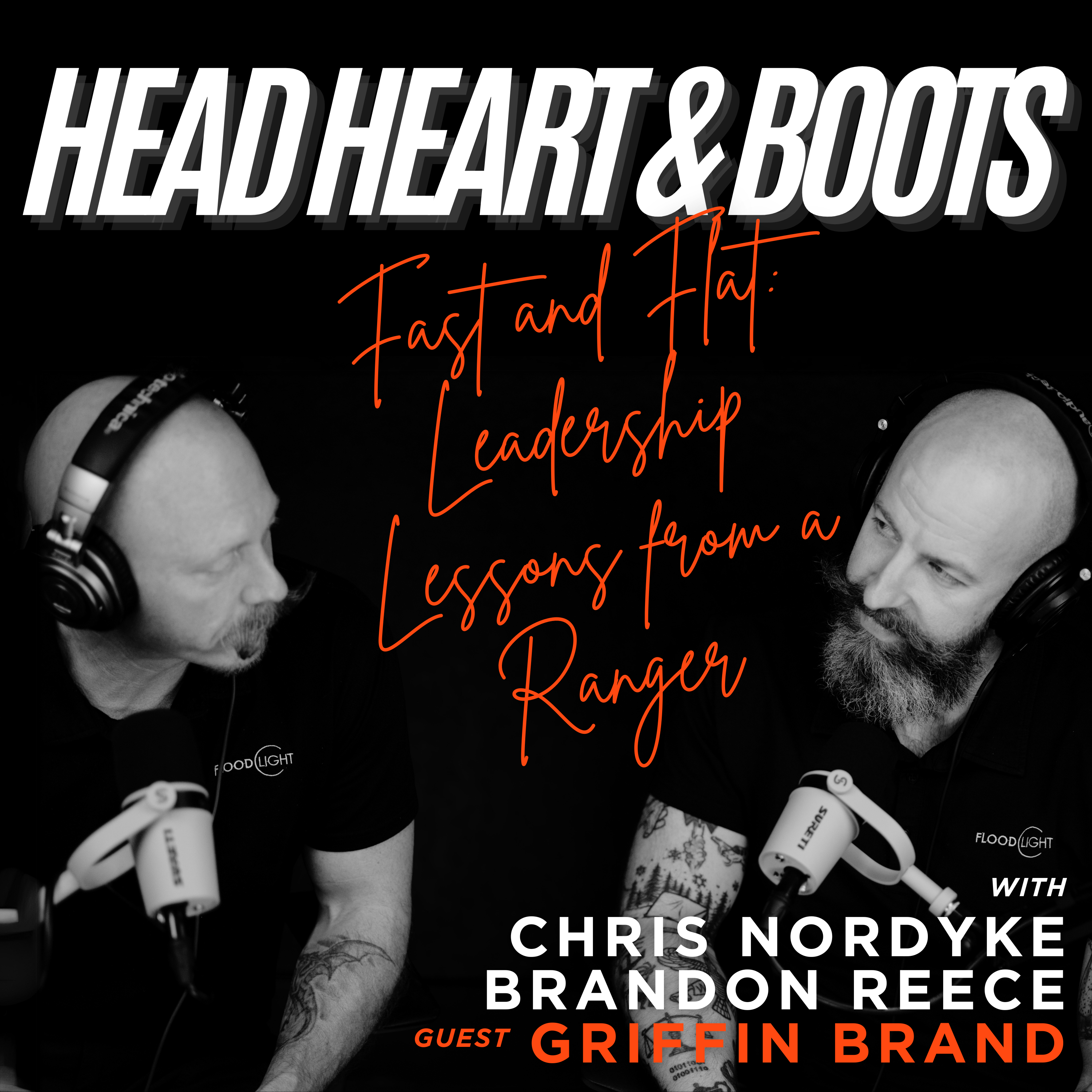


Some guests just drop bombs for an hour straight, and Griffin Brand is one of them.
Griffin is a former 75th Ranger Regiment special operator who, at 26, found himself as the lone military advisor to the U.S. ambassador in Kabul, wrangling 20 different three-letter agencies into one room. Now he's in private equity with High Ground, working deals across the restoration industry. If you caught last week's episode with Griffin and his co-author Dan Casey on their book Bring Your Own Pencil, this is the deep dive into the man behind it.
This conversation is loaded for anyone leading a business in the trades: restoration, roofing, HVAC, you name it. We get into General McChrystal's "fast and flat" philosophy and how to break down the silos killing your company's speed. Extreme ownership, owning the inputs so the outcomes take care of themselves, why veterans are the best hires in blue collar, and a story Griffin had never told before about an insider attack at the embassy and what it taught him about empathy and leadership. Trust me, you'll want a notebook.
Owning a business in the trades can be the loneliest job there is. Head, Heart, & Boots exists to change that, because the best leaders don't go it alone, and neither should you.
Why You Should Listen:
- [11:03] The third door: how Griffin got through every door he was told was closed, including Ranger Regiment
- [15:09] The leadership move that built instant trust with the highest-ego room on the planet
- [18:53] Fast and flat: McChrystal's team of teams, and one practical way to run it in your shop tomorrow
- [34:07] The insider attack story Griffin processes live for the first time, and the empathy lesson he took from it
- [52:39] Why veterans are the hire your business needs, and how to find them
Grab Bring Your Own Pencil on Amazon, Audible, or bringyourownpencil.com.
Did you know...
Only 30% of businesses listed for sale actually find a buyer? Even more striking, just 10% of those sell for the price their owners anticipated or higher, meaning only 3% of all business owners achieve their desired sale price. By focusing on understanding and enhancing your enterprise value, you can significantly boost your chances of joining that successful 3%.
Business Health & Value Assessment
Start Assessment Know Your Enterprise Value. See Your Potential Gaps.
Complete this assessment in less than 15 minutes and receive a free assessment for your business that includes:
- A Lite Valuation Of Your Business
- Your Value Multiplier Per Your Industry
- Health Assessment Per Our PYB Methodology
- Business Value & Growth Roadmap Tailored For You
- Value Acceleration Strategies
Spotlight on Floodlight: Your Secret Weapon for Sales & Scaling
This isn’t a paid plug. It’s real talk from the front lines. If you’ve ever thought, “How do I get a VP-level sales leader or even a sales team without hiring full-time?” Floodlight has the answer.
Fractional Sales Leadership
- They act as your outsourced VP of Sales, taking full responsibility for training, managing, and growing your sales team. No six-figure hire needed.
- Clients often close 20 to 50 percent more deals within six months, thanks to data-driven coaching, CRM setup, scripts, and performance reviews.
More at floodlightgrp.com/sales
Commercial Sales MasterCourse
- A self-paced, video-driven B2B sales course designed specifically for restoration teams. Perfect for building commercial revenue and getting free from TPA handcuffs.
- Covers mindset, prospecting, pipeline building, LinkedIn lead generation, and includes a $250 discount with code SALESBOOST.
Details at floodlightgrp.com/courses
Tailored Consulting & Coaching
- Floodlight’s Propel Your Business methodology offers a full-circle roadmap: financials, sales, marketing, leadership, recruiting, productivity. All built for contractors.
- These aren’t “life coaches.” They’re former restoration owners who’ve lived the chaos and know how to scale out of it.
Explore more at floodlightgrp.com
Live Training, Tools & Strategic Partnerships
- Floodlight also delivers live onsite and virtual training, keynote speaking, and leadership tracks covering operations, project management, and strategic growth.
- Bonus: They’ve vetted tools like Xcelerate, Liftify, and Sureti. Floodlight clients get access to exclusive discounts on tech that actually moves the needle.
See all partnerships at floodlightgrp.com/partners
Why it matters for you as a listener
- You don’t need to figure this stuff out alone.
- If you’re serious about sales growth, operational clarity, exit readiness, or leadership development, Floodlight is already helping folks like you scale smarter.
- And you get it from industry insiders. People who’ve sat in your chair, survived the fires, and built systems that actually work.
0:00 Well, my friend. I feel like we're back in the saddle, bro. Bro, we're kind of ear to ear right now. And that's not just, well, listen, I mean, we've been on a string here. I mean, with Kerry Jones last week and that just published, I mean, awesome conversation with a generational restorer. Oh, yeah. And then, wow, it's just continuing in the same. Yeah, some rad back-to-backs. So this is one of two shows. So the next two weeks, we're going to be talking to a couple of fellas that wrote a book called Bring Your Own Pencil. So today is Griffin Brand. And then next week, we'll have actually Griffin and his co-author. But man, dude, Griffin... For those of you that are from the industry, you've probably ran into him. He's been part of the PE development happening with High Ground.
0:44 And he was the one on the ground at a lot of these shows interacting with contractors. In fact, that's how we met three years ago. Well, just like, I mean, he's your prototypical entrepreneur. You know, like while he was in the army building the... He doesn't go deep into it, but building a real estate portfolio, flipping houses while he's in the 75th Ranger Regiment. Yep. Like special operator and... Yeah, here's a guy, if I remember the story right, at 26, he's hanging out with diplomats and all the alphabet letter agencies. And as a 26-year-old in Afghanistan, and he goes into some of the leadership lessons that he learned. I mean, just a really incredible person that I think all of us can learn something from.
1:26 So, yeah, and it's just stage-setting. To be honest, guys, make sure you're paying attention because you're not going to want to miss next week's episode on the back of this. This just kind of gets everybody fired up. So good. But Griffin, man, smart, intellectual, fast on his feet, super articulate, and just drops bombs for like an hour straight. And then we get to do some more of it later. So anyways, guys, this is going to be one hell of a show. Trust me. All right, let's go. Wow. How many of you have listened to the Head, Heart & Boots podcast? I can't tell you that reaction, how much that means to us. Welcome back to the Head, Heart & Boots podcast. I'm Chris. And I'm Brennan. Join us as we wrestle with what it takes to transform ourselves and the businesses we lead.
2:10 This new camera angle makes my arms look smaller than yours. I'm noticing that and I really appreciate it. I thought you did that on purpose. No, I don't. I didn't. And I am not happy with it. Well, well, my friend, welcome to the show, dude. I am super excited to get into this interview with you. I've got some backstory I'll open with in a moment, but Griffin, thanks, brother, for joining us. I'm excited. And thank you both for having me. This is a show that I've listened to quite a bit, one that people talk about all the time, and so it's absolutely a pleasure to be on here and talk with you two gents today. I'm excited for it. Right on, dude. That's awesome. I think I'm trying to piece together when we first met. I think it's been close to three years. Oh, yeah, probably, right? Three plus? Yeah.
2:50 I think it was the original RIA that I went to three years ago. Yeah. I didn't even know how to spell restoration. I was so new to the industry. I didn't, I'd never even touched a dehumidifier before, but not that I'm that much further along three years now later, but I can spell a little bit better, I guess. Oh man, I'm excited. So for some of the folks that have maybe paid attention, we have a little bit of some crossover in our audience. But you and I talked earlier, I was actually on your show, a veterans-focused show where you talk a lot about giving veterans guidance on where to go once they leave active duty in the services. And it was awesome. It just had a great exchange.
3:31 But it just kind of unpacked a little bit more for me, our connection in terms of our services and the armed forces and being part of the US military. We're going to get into that with you. Obviously, you took a very specific direction with that, which will get a few of us fired up, a little bit of hoo in the background when we get into that. So I'm excited. Anyways, dude, let's do two things. I want to stage that really quick with the audience, what we're doing. because this is a two-show opportunity. So we're going to release these episodes back-to-back. The first one, we're meeting with you specifically. We're going to have some opportunity to learn your backstory, see what it is that the leadership development journey has taken you on, and where it's ended you with the release of a book. By the way, the forward was done by General McChrystal.
4:13 So for any of you that actually pay attention or fans of the military or anything... what a hitter to have read your book and then affirm you. So that says something. So we're going to get into that. But then the second episode, the following week's episode is going to be with you and your co-author, Dan Casey. And we're going to talk about the book itself. And by the way, I've already gone through, done some executive summarization of it. It's gold. And it's usable gold. So anyways, stage setting for that, the second show is going to be all about your book and you guys as authors. But today, bro, let's get into the story. Let's walk the journey. What was it like, baby Griffin? Early days. Early days, all the way up to now you're an author and you're getting ready to share with the world some awesome insights on how we can be better leaders.
5:01 with plenty of military stories. Yes, please. Yeah. Well, thank you for that. I really appreciate it. Yeah, General McChrystal, you mentioned, was kind enough to read our book, to preview everything, write a blurb for our cover. And what's crazy about that story is I asked him, I asked him if he would do that. It was basically a cold email. We may have met in person once, maybe long ago, but he served before my time. When I sent him these suggested blurbs for our cover, he didn't even take any of the ones. I was trying to save him work, But he's such a great dude. He read it of his own accord, and he wrote his own blurb. He just threw out the suggestions that I gave him. And instead of pressing the easy button, he took his own time to digest the material and write his own blurb. So I just thought, what a phenomenal guy, for one.
5:42 He's incredibly busy, so the fact that he would even consider that to begin with. But two, It speaks volumes for the community, right? It's not about us or our book in any way. That's just the fact that the special operations community, the military community at large, and a lot of these, and the reason I say this, because a lot of it translates to the blue collar services industry. It's such a tight knit community. We want to help one another. We want to lift each other up. And the fact that he would, that General McChrystal would do that, given all of his competing demands, just, I think, speaks a lot for him, but also for the greater community and how we help one another. Yeah, that's huge. Yeah. So back to your question, let me get to the background of where I come from. I was born and raised in Southern Virginia, went to school in North Carolina and Charlotte and played football there.
6:25 But before I played football there, I grew up aspiring to play football somewhere else. I thought I was going to play in the NFL. My family, we grew up going to Virginia Tech home football games. I don't know if you guys play football out there in Oregon, but in Southern Virginia, Virginia Tech is everything. The Ducks do these days. That's a good point. But anyways, I grew up going to Virginia Tech home football games, and that was my childhood. Every Saturday in the fall, we would go to the Tech home games. And frankly, I didn't miss a Tech home football game until I played from the time I was born until the time I went to college to play myself at Davidson. I hadn't missed a Tech home football game. And so that was everything to me. Flash forward to my high school years, I had a couple substantial knee injuries.
7:08 And the second one was actually so severe that I had to, my mom very graciously moved for about a month that she and I just moved to Ohio and got surgery from the Cincinnati Bengals doctor because all of the local doctors said, you'll never run again, much less play organized sports. And so, of course, as a 15 year old, like that's devastating news when you want to play in the NFL. Yeah. So we go get this surgery, but that completely changed the trajectory of my life. I realized I never fully recovered after that surgery. I realized the NFL was probably out of reach. Playing at Virginia Tech was also pretty much out of reach as well. Not to mention the fact that I topped out about 5'10". So that didn't help any of these ambitions. So I ended up looking at schools that I could go and get a good chance at making into med school.
7:51 And Davidson was one of those schools. So I thought I was going to go be a doctor. I get to Davidson trying to figure out ways to pay for it. And I learned about ROTC, a way for the Army to pay for your school. And also, they might pay for med school too, if you're a good enough student and do well enough. in undergrad. And so that was the trajectory I charted out for my life. I'm going to go get selected into med school, have the army pay for it, be a doctor in the army. At the end of the day, I'm a doctor, have a great solid profession. And partway through Davidson, I started getting a little bit more interested in the military thing. And I had a really difficult phone call with my parents where I called them and said, Hey, mom and dad, I know you are banking on me being a doctor. I'm actually deciding to pivot. I'm switching from being a biology major.
8:32 I'm going to go be a Spanish major. Very marketable skill, by the way. And I'm also going to try and go special operations in the military. I'm not going to be a doctor anymore. My parents are incredibly gracious. It wasn't a freak out, but I think behind the phone, they were losing their minds. Like, what just happened? What is he thinking here? But that's what I did. So I commissioned into the Army, had a number of great experiences that I'm happy to dive into more detail, but ultimately was selected into the 75th Ranger Regiment and had phenomenal experience there, kind of a career and in some ways, a life-defining number of experiences there that affected how I view any opportunity, how I view leadership especially, and really set the standard for how I view organizations at large because of the standards that the 75th Ranger Regiment holds so close and what makes them so special.
9:22 So I'll pause there for any double clicks you guys have, but kind of framing. You're already going to the right where we want to go. Yeah, something I just want to highlight, and I think you and I have touched base on this several times. You know, what the military, in general, right, wrong, and different, how you feel about it, that's not what the conversation's about. I will tell you, though, that the military is near and dear to my heart, and it's the backbone of the freedom that our nation gets to experience. So we definitely have an opinion on it. And when it comes to military service, what is so powerful is that they put an immense amount of weight and responsibility on very young people, and they find a way to equip them enough to actually do a pretty damn good job of it.
10:04 And when you start going into, like you said, the different tiers of special operations, then all of that begins to get ratcheted up aggressively. What some people may not know is that in the army, the Rangers, you're getting exposed to some higher level strategy, combat tactics, techniques, warfare fighting, even though the general body of that group is still young. Whereas when you get into some of the upper tier special operations groups, you're starting to get more senior people that already have several years of operating experience in the field. And so again, I think what's unique about what you grew up in is an environment where there's still a higher level of responsibility being delegated, but it's still on really a young group of individuals to take on and shoulder those responsibilities.
10:51 Right. What did you see in those early phases of getting accepted into the 75th Ranger element? What were you being exposed to? What started to happen to shape those leadership perspectives? You're absolutely right. There's 18-year-olds that make it through Ranger selection on the enlisted side. And all of a sudden, they're in a squad performing operations on some of the most highly sensitive, highly dangerous, and really complex objectives in the world. And here they just graduated high school. Yeah. So it is a pretty incredible situation. And then on the officer leader side, it's the same thing. The good thing is on the officer side, you have to have done virtually every job, especially if you're a platoon leader or company commander, you have to have done that job in the regular army first.
11:36 You do have a little bit of experience, but I'd like to share a little bit of a personal anecdote here. A lot of my life has been defined by getting through doors that I was told were closed. And one of those doors is Ranger Regiment. But going back a little bit, I was told, you know, so I commissioned into the Army as an armor officer. I was told that there's no way you can go from an armor officer to get into the Ranger Regiment. It's for infantry guys and some specialty enablers, but there's no MTO or there's no slotting for an armor guy. And somehow or another, I went to selection, was able to get my foot in the door there. I got selected. I was told by multiple super high up commanders that even though you've been selected, now you still can't go.
12:17 I was like, what do you mean? They told me yes. But all that to say, I just want to encourage people, there's always... There's a great book called The Third Door. There's always a back door to get in. There's always, you know, there's the front two doors, the front two lines to get into some opportunity or restaurant or whatever it is. But there's always a third way in. And I think a lot of my life has been defined by trying to find that third way because everyone is telling me that there's not. Everyone's telling me that there's no way to get into this. And so Ranger Regiment was the first example of that. You mentioned getting opportunities where, frankly, you may not be qualified for, you may not have been trained for, but you have to figure it out and lead appropriately. And one of those was while I was in Ranger Regiment.
12:57 My second major deployment to Afghanistan, there's this very rare position, and it's the one special operations liaison to the U.S. ambassador to all of Afghanistan. typically reserved for a more senior officer, typically a major or sometimes a lieutenant colonel. But for whatever reason, I guess my battalion commander thought that I was up to the task. And so I'm put into the U.S. Embassy in Kabul, Afghanistan. I'm one of the few uniformed military people in the entire embassy. And I'm, Oh, by the way, I'd only been to Afghanistan one time before, and that was just for a brief deployment. So I didn't even really know the geography of the country, much less how to consult the special operations tactics for the State Department there or the ambassador.
13:41 But I find myself a couple weeks into being in country, sitting at a table with the U.S. ambassador, a bunch of super senior State Department leads, and... I'm the only one in uniform, the only one at all that has any sort of military perspective. And here I am, I'm like, I think I was 26 at the time, still learning what, you know, what happens in Afghanistan and how things are interacting. And, you know, to flash forward through kind of that situation, I'm, I concluded the deployment by bringing an entire group. There were about 20 different groups of all sort of agencies and three-letter groups that everyone can probably guess on this call. And I ended up bringing them all together in a working group. But it was because I could take the approach of I'm very humbly saying, I don't know what I don't know, but what I do know is everybody needs to be talking better.
14:26 And I understood that there were a lot of disconnects between these various organizations. And so I was able to, throughout the course of that deployment, see things more objectively and bring the right voices in the room. We had a lot of really great success as a result of that because we got people talking a similar language in the same room. And that was, for me, the guy who had only spent a couple... a couple of weeks in Afghanistan before this and had no business being there. But I think, you know, the moral of the story is like, sometimes that objective perspective is very helpful. It actually is referencing the book range. It's on the, on the bookshelf behind me with David Epstein, but talking about how oftentimes a generalist is better for some specialized problems or mission sets.
15:08 And so I just, yeah, I got to stop you for a moment. Cause I think that this is one of those scenarios where we could blast past this and, and miss something, a piece of gold that you dropped for us. So I just tried to kind of summarize very quickly what I heard you just say. And I think if I messed it up, you can clarify for us. So bold confidence in what we do know and admitting what we don't is what set the stage for you to be an optimal leader in that particular environment, in that moment. Is that fair? Did I summarize you correctly there? Absolutely. I mean, you're a young man at this point. How old are you at this point? I think I was 26. 26, okay. Luckily, you've got some college second deployment, but you're talking about three-letter groups.
15:53 These are government-funded groups, boys and girls. So these are not the folks that you're running into at the local grocery store. And you as a young man with very little experience have to corral these individuals that all have high ego, high expectations, high drive. Like these aren't slumps on the couch. And you just went in boldly with what you understood. And you were very open and honest about what you didn't. And I bet you it built trust almost immediately out of the gate. Am I wrong there? No, that's absolutely right. And one thing I found, and it's something, again, that I had learned just being a platoon leader in the regular army before this experience was, you can never know what's truly going on in a situation unless you show up there in person, unless you feel, physically touch, experience what somebody is going through.
16:36 And so, you know, as a platoon leader, a lot of guys would get mad at their soldiers because a vehicle wasn't working properly or they didn't know a certain drill on the machine gun or whatever it might be. But the only way to truly understand the problem and diagnose it and fix it is by just physically going there and checking on it. And this isn't a plug for micromanagement anyway. I think that there's a way of doing this that allows them to be their best and operate outside of you. But what I found in the embassy was, again, nobody at that table was probably under the age of 40. So I'm a lot younger. Definitely... less experienced. But I found that if I went to each of their offices, if I went out on a mission with each of them or just kind of shadowed them for a little bit of time, I could find out all of the issues they were dealing with at a high level, of course, but then learn how I could link in another organization to solve that issue or to better communicate.
17:25 Because for whatever reason, because they'd been there before, because they'd been doing it for a long time, they just hadn't been cross-pollinating things that they were learning. And it was up to me, the newbie guy, to just say, hey, I don't know what I don't know. But what I do know is I can come in and see what you're doing. I can come in and experience your day-to-day and just draw a couple little connections to make a difference. Super powerful, man. I remember reading General McChrystal's book, and this was ultimately what he brought to the special operations groups when he was leading the... those units overseas is that he just created a path for more transparency. And my limited understanding is he held the line that these heavily egoed, siloed special operations teams with a lot on risk and a lot on the line, he held the line of, we will be honest and the ability for them to succeed in a very complex and dynamic environment.
18:24 And as far as I understand historically, he's one of the first generals to make those silos break down and begin to open up communication with these groups. And this is from all armed forces groups, local and international groups. And it sounds like you did a small version of a very similar perspective, like get on the ground and open up communication and then net the benefit of this gained kind of insight that we can leverage as a team versus being siloed and on our own. I love McChrystal's phrase, fast and flat. And that was the goal of his operation when he started off in Iraq and then later in Afghanistan. His goal was to flatten the organization so there weren't 20 levels, 20 layers between information at the edge and the senior leader who's making a decision.
19:10 If you can flatten that to where something happens at the edge of action and a decision is made as quickly as possible after that. And if you can also give subordinates, I like to, the military uses the term left and right limits. If you can give them those left and right limits and then let them operate to the best of their ability within those, then they can make decisions a lot more quickly. They can know that it's nested within the higher commander's intent or their overall kind of command philosophy. And you'll see much better results. And that's why we talk about McChrystal's actions in our book, because it was such a revolutionary approach to warfare. And that's really the only reason we had any level of success in Iraq and later in Afghanistan. Of course, a lot has transpired over the last couple of decades since that.
19:53 But you have to keep things fast and flat. And the second that you have siloed information, siloed organizations that are not communicating between one another, that's when huge breakdowns happen. And that's exactly what we were seeing in the Afghanistan embassy. Oh my gosh, dude. I don't know if you can tell on camera. I keep getting the hairs on my neck standing up because there are moments when we're in the middle of a show where you can just tell there's information exchange that's happening that's really valuable regardless of what my opinion is. And I feel like we're in one of those moments, dude. You are sharing gold that someone could hold onto and go do something with as soon as they get out of the cab of their truck and stop the show.
20:38 And we're just getting it going. I I can only imagine what's going to happen. We get Dan Casey on for phase two, but dude, flat and fast. What was it? It was flat. What was the phrase? Fast and flat. Fast and flat. Guys, operators, business owners, leaders, what can we do to get flatter in our organization for the sake of speed? And what can we do to break down these silos that are closing off communication that's critical to our success? Oh my gosh, dude, we've got to, we're just getting started. If I could just make it a hair more practical for an operator, for a business owner, whoever. Yeah. I think people hear that and they're like, how can I have everybody report to me?
21:18 That just sounds crazy. It sounds like micromanagement. It sounds like I would have my hair on fire even more than I already do. What I would suggest, and this is what General McChrystal did, was he started a video teleconference, basically a massive Zoom for everyone that was under his command. Again, privates and like lower, unless they weren't on this, but every major decision maker in his command would hop on this Zoom. Yeah. call basically every single morning, thousands of people across Iraq and later across Afghanistan. And he would put out, he would have informed people speak on updates from their, you know, their neck of the woods, their kind of piece of the fight. And then he would put out his like overall commander's intent or commander's update for each day. And that way, information was flowing very quickly across the entire network.
22:02 Like you said, special operations was known for having a, people called it a tribe of tribes. Like, everyone was their own little tribe that didn't share with other tribes because they were so insular, so secretive, so elite, that they just got really contained in those bubbles. Yeah. And he burst all the bubbles and he started calling it a team of teams. And that was really the revolutionary concept. And the most practical way he did that was that large teleconference that he did every single morning. So maybe as a business leader or general manager, whatever, a great move would be to somehow imitate that philosophy, somehow... Every morning, maybe once a week, whatever it is, just put out your philosophy, put out an update to everyone across the organization so that everyone is on the same page.
22:44 And it's, you know, one click for you or one quick type. It's consolidates all that rather than you feel like you have to have everybody report to you nonstop. So just, just two cents there. Yeah, I think what comes to my mind is an owner creating a five to seven minute loom video. Sure. It goes out, it's transcribed, it's got a summary of it. Every single person in the organization gets it. Yeah, yeah. One of the things that he did in conjunction with that, and it applies, is that there was this encouragement of off-to-the-side conversations then with those leaders. So basically what he did is he set the table that we support each other. This is a we event. It's a team sport. Here's what we got to cover right now during this timeframe.
23:25 But please, if a piece of intel is coming in from the CIA that's operating here, and that makes sense to you and what you're currently operating, you two get off to the side, start exchanging information immediately. Let's find a path to support each other with the shared intel. And so again, going off of what you guys did, there's the general output of keeping everyone operating on the same page. And then it's this encouragement of, we're all battle buddies in this company. If you know something or have experienced something and it's critical to protecting the brand, get into a meeting with this individual immediately. Let's share that information and make sure we empower each other. So just something to add to that, I think is powerful. Well, in general, McChrystal would also call, he was known for calling squad leaders and platoon sergeants and platoon leaders, very young guys.
24:13 He would call them directly. And it's probably terrifying to get a three-star at the time calling you and asking what you're seeing on the ground. But he wanted to know, he couldn't be everywhere at once, but what he could do is get perspective from guys that were at the very edge of decision-making. And so he regularly would touch base with those people so that he knew what was happening at the edge of all the action. And he And that way, he could in some way be everywhere at once and be in all parts of the country of Iraq at the same time. Oh, so powerful, man. It's good stuff. So non-military guy here. I think one of the things that I've read a lot of stories, and obviously many people listening to this, whether they've got military backing or not, I've seen a lot of the movies that have been done about Afghanistan. And it would seem that historically, there was a unique kind of chaos on the battlefield and operating in that particular territory that...
25:02 And I'm so curious for you to talk about those experiences of like, how do you live out the commander's intent in such a uniquely chaotic environment? And of course, also the geographic elements too. It's very mountainous, incredibly rugged, right? From a battlefield standpoint, what were some of the experiences that you had when you reflect on kind of the leadership principles you took away from the battlefield in such an interesting environment? Yeah. like Afghanistan. Yeah, it's a great point because, like you mentioned, Afghanistan has incredibly diverse geography. You've got very mountainous kind of north-eastern part of the country. You've got desert in the south and the Kandahar region. So, I mean, it's a beautiful country.
25:44 You could have ski resorts there if there wasn't tremendous tragedy and things over the years. So it is a very complex place because you're not fighting a nation state. In Afghanistan, we weren't... the Taliban and other groups weren't wearing uniforms. And so there was no way of knowing who the enemy was at all times. And in fact, most of the time, they intentionally used non-combatants to shield themselves or to divert things. And they would meet in mosques, which are obviously no strike zones. So incredibly divert, an incredibly difficult operational environment. And that's why the war prolonged so long. That's why there was no kind of definitive end to things because frankly, we're fighting a very, a very experienced foe, a very experienced group in the Taliban.
26:27 And then of course, when ISIS got involved as well, they had a unique flavor to it, but all of that presents a very unique leadership experience to say the least. And so I, I think what I personally took away from that are a few things, but I think the main thing being, just like what I talked about entering the embassy with very little experience, you're going to find yourself in situations where there's no precedent. You're going to find yourself in situations that don't fit the exact parameters of what the commander's intent is. They might check a couple boxes, but then there's always this little variable, but it's different in this one way. And so how do I respond knowing that I'm not going to get reprimanded later on or knowing that I'm not breaking some sort of rule here? And I think in a lot of ways, there's nothing new under the sun, but I think business leaders find themselves in the same situation all the time.
27:11 I think guys, because of technology changes or the growth of their business or a competitor entering the market, whatever it might be, they find themselves in situations that look a lot like things that they've seen in the past, but have a wrinkle that doesn't fit the exact mold. And so they don't know exactly how to respond to this new challenge that's presented today. And I think the one thing is making just the best decision that you can. I think people can overanalyze situations. They can, the cliche phrase, analysis paralysis. I think a lot of times if you've experienced a similar situation before, you've got a gut feeling. You have a pretty good sense of how this should be reacted to. And so understanding that within yourself and responding accordingly, I think is really, really important.
27:53 But also having the humility. So on the one hand is being confident and acting within what you feel within yourself. On the other hand is having humility to ask around, to ask other people, to bring in third parties or to bring in whoever might have an informed perspective to help you. And so countless times when I was in the embassy, in Afghanistan, I would call up a more senior officer who was working a different job within Afghanistan or doing something different. And just be like, hey, sir, how do I respond to this? How would you respond? Or how would you think through it? Who would you bring into the conversation? And just having that humility to be like, look, I've never dealt with this before. And I know you've got a lot more experience than I do. How would you approach what I'm dealing with? And I think, again, just being able to say, I'm not sure.
28:35 I love the phrase, if you ask for advice, people often give you money. If you ask for money, they give you advice. It's kind of the same in this situation. If you ask for advice, people are going to give you some gold back. They're going to give you something that really helps. And so that's kind of the approach that I took. Always be willing to say, look, I'm... I don't know how to deal with this, but what I do know is I'm going to learn really quickly, work really, really hard, and I'm going to collaborate with others because there's a lot of others that are way better, way smarter, way more experienced than I am. Oh my gosh, this is awesome. Okay, I'm super want to nerd out a little bit more here. So... Help me understand this role that you held at the embassy during this window of time. And in conjunction with that, I think what I'd be super curious about hearing is, what was the one or two things that just kind of blindsided you?
29:23 You obviously knew you were going into an environment that was new and uncomfortable, but what absolutely caught you off guard in this new environment? Well, the very easy answer here, the first one was COVID. So I went in the middle of 2020, which was, I spent virtually the entire year of 2020 in Afghanistan. And that was, of course, when the country was in utter chaos. Most people, I don't have the exact data on this, but most Afghans over the age of 60 died of COVID. So we'd be targeting a guy. We'd have a whole target deck built out and then all of a sudden we'd get notification or some sort of report saying, you know, he already died of COVID. So I was like, well, that makes our job a lot easier. It kind of took care of some target packets for us.
30:07 So that was one surprise was just not only am I entering an entirely new environment altogether with... Afghanistan, with the embassy, with all the State Department dynamics that I was pretty clueless to beforehand. But on top of all of that, we've got COVID, which nobody knows how to deal with. We had people, soldiers were quarantined in Afghanistan for months at a time because they kept on testing positive. We just didn't know if the tests were working or not. We didn't know what was free to leave quarantine and what wasn't, what was still contagious. And so it was just an incredibly dynamic time all around. I guess the other answer here, maybe the harder answer to fully articulate is part of, and I haven't really talked about this before, and I haven't thought through it a ton, but part of my role there was helping negotiate prisoner releases.
30:54 Yeah. So at the time, there were some Afghans that were being held prisoner by the Taliban. There were some Americans that were being held prisoners still, like civilian Americans. And we had some Taliban prisoners. And negotiating those, and I wasn't the one directly negotiating, but I was part of the kind of the working group that was working on how we would negotiate, what the exchanges would be, when it would take place, how it would happen, all that sort of stuff. Yeah. For one, I had not done that before. And two, it was incredibly difficult negotiating for what I felt was always kind of the short end of the stick. We were really trying to keep diplomacy with the Taliban and figure out how to also approach this prisoner situation as kind of an act of goodwill.
31:36 And so... And suffice it to say, I was completely out of my element and trying to figure out, learn a lot of social dynamics at the same time as contributing to this group that was working on those prisoner exchanges. So that one very much caught me off guard. Something I never anticipated working on. Something the Army absolutely does not train regular people to do. I certainly hadn't had any training before that point. Yeah. hopefully responded accordingly. And I think that the group had, we had a good bit of success, but thankfully they were a lot smarter people than I working on it as well. What a challenge, man. Are you a business that's under five million in sales and you're just now getting ready to try and scale your company up and hit some of those targets you've always wanted to hit but now you've got to build a sales team or maybe you just hired your first sales rep but you don't really know how to manage them.
32:24 Like how do you manage, lead, train, develop a sales rep? Floodlight has a solution for you now. So we can actually assign your sales rep a turnkey VP of sales that will help them create a sales blueprint, their own personal sales plan for your market They'll have weekly one-on-ones with that sales rep to coach, mentor them, hold them accountable to the plan. And they'll also have a monthly owner's meeting where they'll meet with you or your general manager and review the progress of that sales rep. Their plan to actual results, what kind of performance improvement they're working on with them. Also let them know, hey, you might, they're doing really well. Maybe we should think of hiring a second sales rep. They're going to have that one-to-one advice for you as an owner or senior leader on the team as well.
33:04 How great would that be to have a bolt-on sales manager for your one sales rep and it's only $2,500 a month? If you're interested in talking more about that, reach out. Let's grab some time and let's talk shop. Our floodlight clients this last year in 2024 generated over 250 million in revenue. Supported by, advised by, an industry expert who's owned and operated a business just like you. So take action. Don't kick the can down the road. Start with our business health and value assessment and let's unlock the next chapter of your success story. You mentioned target packets, which tells me that you were involved in some direct action missions. Like, I don't know if I'm saying this all right. I just steal this from movies.
33:46 But, you know, I think when people that haven't been in the military, we think about combat and war. And it's the highest stakes experience that any of us could ever be involved in, really, right? Life and death are the stakes. Were there any moments of truth for you during your service where in the midst of those, the highest stake environment that you've taken away with you? These are great questions, guys. I appreciate it. You're causing me to think on my feet here. And I really like it because some of these things I haven't thought about as thoroughly as I'd like to. This is, again, a story that I have not told before, but would like to just kind of process it here with you. There was a significant insider attack on the U.S. embassy while I was stationed there.
34:28 So when I was stationed in Afghanistan at the embassy, there was an insider attack, meaning an Afghan local had been let off the compound during COVID to attend to his family. He had then been let back onto the compound later. But while he was off, in hindsight, they learned that he had been radicalized. the Taliban or some other group had gotten to him and incentivized him in some way or another to perform an insider attack when he was let back onto the embassy. So when he came back on, he conducted this attack and severely injured multiple U.S. people on the compound. Thankfully, none of them died miraculously, and he was quickly neutralized that the Afghan was. And that happened kind of right around the corner of a building.
35:09 I heard parts of it happening. Thankfully, it wasn't directly involved in that attack. But When things like that happen around the corner, it causes you to question a lot of things. Is any single Afghan on this compound safe? How paranoid do I need to be? You're already on high alert, obviously, being in a war zone, especially with rocket fire coming regularly and those alarms going off on a regular basis. But I guess the lesson I'd like to tell here is, or the story I'd like to tell is, there are these two Afghan local guys who... I had become friends with. They worked on the embassy, really nice guys. I could just like see it in their eye. You know, you just kind of get a sense that somebody is a good person. I had this sense about these two guys and they didn't speak any English.
35:52 I spoke, you know, maybe a couple of phrases of comprehensible Arabic. And so, it wasn't a communication. It wasn't any sort of like real relationship. It was just like, We made some jokes that didn't involve words. I saw them and they just seemed like great guys. And I was so tempted to avoid them and to completely end that relationship after the insider attack. But after a lot of introspection and thinking about the situation, I was like, the best thing that I can do, of course, I always had a weapon on me. I was always well-protected and well-prepared as much as I could be. But I decided I would continue this relationship with these guys. So I would actually seek them out. especially right after the attack when they were kicking a lot of Afghans off the embassy compound.
36:35 A lot of things happened as a result of this attack, but I decided to kind of take the opposite approach. I would lean further into that relationship because I just had a sense they were good guys, and that would be the only thing that would make them feel like they could continue to contribute because, frankly, they were helping the American effort. And so I don't know if there's anything to unpack there, but sharing this story kind of live here is something that everyone's got humanity, even in the least humane situations. And so I felt like it was my kind of role to lean into that. What is... I'm sorry, bro. I am just so fired up right now. I can't even give Chris a moment. Right now, you said you just processed this live for the first time with us, which by the way, thanks, bro.
37:15 What is the takeaway? What did that tell you as you're kind of reprocessing this right now in light of just releasing a book and these, you're about to take on a whole new freaking journey. We haven't even got there yet. What about that? What happened in that moment? Like as you're retelling this right now, what stands out to you? What are you going to carry with you into this next adventure that came out of that experience? For the longest time, I thought that I didn't have empathy. I didn't think that I was an empathetic person. And in fact, when they run personality tests on a lot of special operations folks, they see that they are very low on the empathy score. That's notorious across... Because you have to, in some ways, steel yourself to what you're going to face.
37:58 You have to block things out, really compartmentalize things that you see or witness or do. And so empathy just is not part of the culture, as you can imagine. And I, for the longest time, didn't think I was empathetic. And in many ways, I kind of leaned into that as well, that I didn't have empathy. But I learned through this and other similar type situations, maybe not to the same degree, but I learned that I am an empathetic person. I learned that to be the best leader that I can be, you have to really put yourself in the shoes, as cliche as it sounds, of these other people. What are they dealing with? How can I go out of my way? How can I... imagine what they're thinking you're going through in a way that will keep them in the fight in this situation. They were doing good work on the embassy for us.
38:39 And so by me leaning into that, they were able to continue doing that work and do it to the best of their ability. And I wonder how many times in a business or as a leader, I wonder how many times we have situations where the best response is maybe to be more empathetic. rather than drawing a hard line, rather than pulling back, maybe it's to step in for a second and try and imagine what they're going through. And again, it goes back to McChrystal's thing of fast and flat. That's how you best understand what's going on at the edge of decisions is by being empathetic, trying to understand what those people at the edge are feeling, seeing, experiencing. And if you can be empathetic and really step into that role with them, then you will best know what's going on at all parts of your organization as well.
39:24 Yeah, it's kind of where my head went. I think our experience with business owners and being owners, sometimes your employees are going to make bad moves. And every now and then you're going to have an employee that takes advantage of the company or actually harms the business. We've had owners that have dealt with situations with office managers stealing money and some of the worst outcomes that really harmed the business and they become jaded and they become suspicious of everybody. And oftentimes, even like updating policies, well, now we aren't going to do this anymore. And they get stuck there. And it really negatively affects the whole rest of the team because they feel that suspicion, right?
40:06 They feel that guardedness and that new caution around everything. And I think it really holds a lot of owners back. And so I think that's a perfect analogy for... look, we can't judge the whole group and act as though everybody is out trying to screw us when those kinds of things happen. And no way am I advocating for giving people unlimited chances or turning an eye to things. In no way is that the case. But I love Adam Grant's book, Give and Take, if you're familiar with that. And he presents the three types of people. There's the givers, there's the takers, of course, but then there's the matchers in the middle. And I think a lot of studies, and he proves it in the book, a lot of studies show that the most successful people are givers.
40:50 But one of the caveats he mentions is that they're not givers all the time and they're not givers to every person. If a giver in contact or is working with or interacting with a taker, they have to recognize that and become a matcher. Like you don't just blindly give to somebody who's just gonna keep taking and taking. It is okay to become a matcher in those situations where you give a little and make sure that they're giving a little back. And you don't just keep on giving more of the rope. And so I think it may be a lot easier said than done, but to the degree that you can be a default giver, And then have the wherewithal and have the discernment to become a matcher when you need to with certain people or when somebody burns you in your organization like that.
41:31 I think that allows for much better outcomes. But defaulting to a giver can be really hard for somebody. It's not natural for everyone, but it does in the long term result in way better outcomes. You know, we got really dialed in for an extended period of time. It seems like this happens where we get kind of stuck on a topic or an area of focus that just seems to be super relevant across the board. And for a while, we really got stuck. I don't know, stuck. We were really leaning in on this aggressive accountability around extreme ownership and And so just really quick, like extreme ownership is kind of like this idea. It's like, no matter what, it's your bag. Like you've got to be able to understand and assign some responsibility to something.
42:13 Otherwise, you effectively neutralize your ability to affect change, make a difference, right? Whatever. And this idea, we started to really try to apply it with teams from the perspective of how we showed up and took on our own roles and responsibilities. And inevitably, when you start talking to people about this idea of extreme ownership and them really owning the outcomes of their performance, almost every team member can immediately point to someone else in the team that affects their performance. So it's like, in the resto space, of course, it's like coordinator versus project manager. There's this grind that happens where PMs are looking for this level of support.
42:55 Coordinators need PMs to do X, otherwise they can't do their job. And so immediately when we start to talk about this idea of extreme ownership on our own performance, people are quick to identify, well, what happens when XYZ person continues to not do their job? And part of what we would say in that is, okay, well... When you're a victim of them not doing their job and you don't do anything to compensate for that, how effective is that for you? Like, are you winning? No. Okay, so then extreme ownership means step in, do what you need to do to continue to be successful in your responsibilities. And then the idea is like, we're only going to do that though for so long. So if we're a leadership team and we're telling our team to take extreme ownership over their role, and I'm asking Susie or Jojo to step in and compensate when a peer doesn't do their job, I can only allow that, though, for so long before I have the responsibility as a leader to correct the problem with the preempt that continues to skirt their responsibility and not do their job.
43:52 My point in sharing that is that's what you're talking about. Like, that's how we would do that in real life is we teach the team member, look, look, If you, you are ultimately responsible for the outcome of your performance. And sometimes that means you leaning over the table or doing whatever is necessary to succeed in your roles and responsibilities. But, and, you're not just going to blindly take that over and over and not raise your hand or not set the expectation that that's not a good peer partnership when your friend on the team continues to fail to do their job. So in my mind, that's a real life application of what you're saying is start by default as the giver.
44:32 Extreme ownership, do what's necessary, but then become a matcher at some point so that you don't continue to be abused or taken advantage of. And I think in general, as a leadership group, we need to pay attention to that. And we have to be the person that steps in and stewards well and protects our team members from being the giver that keeps giving to a taker. I completely agree on the extreme ownership. And I think the second side of extreme ownership that a lot of people don't give a whole lot of credit to, or maybe they don't acknowledge as much, I love the side that you're talking about where you take ownership of the outcomes. You take ownership of the work you produce and what is actually happening in the organization. But the second, the alternative side is taking ownership of the inputs.
45:14 And I think that's a topic we talk about in our book. And I know I'm getting ahead of myself a little bit here, but... if you can own the inputs, let the outputs take care of themselves. If you own the habits, if you own the procedures, if you own the task that you're doing on a regular basis, if you can own what's going into accomplishing your mission, your job, your performance, whatever it is, then you can let the outputs, the outcomes take care of themselves because you have done all the preparation, all of the work that needs to be done on the front end. And I think that's a big topic we talk about in the book because a lot of people... get really focused on goals. They get really focused on where the organization is going, what they've accomplished in a week, a month, a year.
45:56 But what's going to drive all of those, what's going to make a difference, what's going to make next year better than this year is changing your inputs, changing the habits that drive all the rest of those. Solid, man. Okay, let's keep your journey moving here. So, kind of tail us out on career, military career. When did that end and where did you end up going post that career? Yeah, so I ended up after about eight and a half years, ended my time in the Army and And as I was getting out, the Army has this incredible program called the Skill Bridge or Hiring Our Heroes. There's a number of different programs. But you can effectively work for, it used to be up to six months, they've started changing some of the standards.
46:37 But you can work for a period of time for a civilian organization while still being paid by the Army, effectively getting job training as you're getting out. And so for about a year, a little over a year, I did that skill bridge. And then my first time right out of the army, I worked for a real estate private equity firm raising capital. And this goes back to the third door concept, like getting in places you're not supposed to be. I don't have a business degree. I have zero finance background. Like I said, I was a... Spanish major at Davidson. And my Spanish is incredibly rusty now, so don't test me on that. But I found a way by cold calling. I've been investing in real estate, kind of residential rentals and fixing and flipping properties, doing all these things while I was in the army.
47:20 And so I learned that the people that are most successful typically start doing the residential thing and then they get into commercial real estate investing through syndications or funds. Yeah. And so I was like, how can I skip the line? How can I skip ahead to where all these guys are ultimately going? And so what I did was just I cold called the founders or the CEOs of all those top organizations that I most respected. And I was like, hey, I'm six months of free labor. I have special operations experience. I think I can bring some value to organization. X, Y, and Z. What would it look like to work together when I get out of the army? And so actually the one that was at the top of my list, the one that I most respected and wanted to work with is the one that I ended up going to. And I started off as a quote unquote unpaid intern, and they ended up hiring me as their director of investor relations.
48:04 And so I led their investor relations department for a little over a year and then transitioned from there into the restoration space again. another door into the restoration space that I never should have had opened, but I found a way to kind of squeak my foot in there. And so that's kind of that, that part of my story getting out of the army. And that, again, that was with PE, right? So you're, you coming into our industry or to the restoration space was as part of that PE movement as they were pursuing businesses in our industry. That's right. Yeah. After doing the real estate thing for a little over a year, I realized real estate wasn't... It's a great business. People do very well, but it lacks some of the variables that operating a business has.
48:46 There aren't as many people involved. There's just a whole intricacy and some of it's good. A lot of it is not so good, but operating a business and helping grow businesses and acquire them just has a lot more variables. It's a lot more exciting, at least in my mind. And so I made... I'll fast forward through this story, but I made a connection with the CEO of High Ground Restoration Group, Ben Balsley. And the connection was pretty funny. Actually, I made a stupid joke in a line at the food line at an alumni event that I wasn't supposed to be at to begin with. And that connection led to meeting Ben Balsley. Ben started trying to help me as I was getting out of the military, trying to connect me to people to look for additional jobs, and ultimately decided to bring me onto his team.
49:26 He took a risk on me. Again, no finance background, no private equity acquisitions, M&A background, other than raising capital for real estate, which is a very, very different type of endeavor. And I think we had a lot of success. And so started with High Ground in 2023 in the fall. And that was kind of coincided right as I was officially getting out of the military, finishing that Skill Bridge time, finishing the real estate thing. And again, have kind of been at this table that I don't necessarily deserve a spot at, but just learning quickly and figuring out along the way and hopefully making an impact just through humility and stupid hard work. I tell If I run into a wall, I will either find a way around it, over it.
50:10 I might dig under it, but if I can't get any of those, I will headbutt through it until it falls down. And so that's kind of the only way I've had success in a lot of situations. I love it. So at High Ground, what aspect of the M&A process were you in? Were you sourcing deals? Were you doing due diligence, integrations? What was your focus? Yeah, at High Ground, it was the full gamut. So when I first joined the team, the real intention was like, let's increase our M&A pipeline by deal origination, building relationships with owners, getting deals into the LOI process, the letter of intent, and then working towards closing. And then as I was there for longer, I started growing in my purview. And so it started from, I said, from I would tell people from cold call to close, originating the deal, trying to build relationships with owners, get people on the phone, meet them at conferences, whatever, go show up in person at their businesses and then get them all the way through the LOI process and to closing.
51:06 And then High Ground has a phenomenal integration team that is... completely focused on getting companies onboarded into the business, changing whatever technology needs to happen, helping them with that whole process. I mean, it's a phenomenal, phenomenal team. And the integration process is taken very seriously. So that wasn't as much of my purview, but from call to close. And I think I might have told you this story before, Brandon, but... The first thing I saw when I joined Restoration was I showed up at Dry Force Restoration down in Dallas. And again, very fresh out of the military. I still didn't necessarily know how to talk to civilians incredibly naturally. But I get to Dry Force and I walk into their warehouse, their bay, early in the morning.
51:50 And what I see is the military. Weirdly enough, I saw a line of vehicles perfectly lined up with a load plan. All of their techs were there for the day doing some little version of calisthenics, getting their route plan, getting their briefing for the day from the project managers. And I was like, man, I am right back in a military motor pole. I feel at home. And that's what's crazy is how similar the restoration business is to the military. how I think military leaders are phenomenal placements for restoration businesses because it feels very similar and there's a lot of very similar type people. I think a lot of younger military folks would do phenomenal as project managers or techs or whatever within restoration businesses as well.
52:31 So the overlap there really caught me off guard, but made me feel a lot safer at home in this industry from the beginning. Dude, you've hit something on the head. It's funny because it seems like our feeds and stuff are so invasive that as soon as I say something about a topic, I get all the variables coming at me. And this is actually recently I've seen at least two brands pop up that have a specific focus on placing veterans inside operations. And I think the broader blue-collar industries in general, as they... continue to become more sophisticated, faster paced, recognized again as what they are, which is the backbone to the American economy and super critically important to the future of the United States.
53:21 Hire a veteran. Again, like with anything, there's dirtbags anywhere you go. Don't get me wrong. But if you're an entrepreneurial-minded organization that wants to move fast, adapt and overcome, be flexible, be nimble, hire veterans. They literally spend the vast majority of their career adapting and overcoming because crap is changing all the time. You don't get a lot of time to sit around and have an opinion or a perspective on why things changed and what it means to you. It's like, get your shit together and let's go. Like, here's the new definition of success. We're going to maneuver around it. We're going to adapt and overcome and find a way to win no matter what. Well, who doesn't want a roster of that in their organization regardless?
54:02 And so, I mean, you and I have talked about this a lot. I think that a smart move that any business owner or entrepreneur could make is, get connected to whatever local military groups you have access to, where it be an active duty post, whether it be recruiting, whether it be education programs, where they're taking transitioning service members, whatever. Get veterans in your roster, man. They just know how to move with the changes in the business and they really don't get caught up on, yeah, but yesterday you told me it was this. We get over it and we move forward. So anyways, yeah, I beat that drum. I think it's valuable. Yeah, thank you for that. And what I would say is, as a restoration owner, anyone in the restoration business knows what it's like every single day to deal with somebody on their worst day, to deal with catastrophe, to be standing in the nastiest water you could imagine and have to make a decision and have to calm somebody down.
54:55 That is literally what the military trains soldiers to do. They've already been doing that for years. And so I think they're just uniquely suited to be in these dynamic situations, to comfort people, to react calmly, and to make a difference. And again, the head-butting-a-wall thing is not unique to me. That's what the military trains people to do. Find a way to yes. Yeah, find a way to yes. What an awesome way to close that little segment. Okay, so we've got to pivot here a little bit because we need to do some stage setting because we're going to get you and your co-author, Dan Casey, back on later today, actually, and start talking more about the book. So, okay, you've had an unbelievably great run in the military, lots of successes, developed some very unique skill sets, and...
55:41 prepares you to take the third door into a couple new opportunities post-military. You're now in this PE environment, finding success there, earning your own street cred now in an environment that's new to you. What happens next? Bridge the gap between that and now we're going to be talking about a book here in a couple hours this afternoon. Well, what I saw lead to success in both the military and in the business world, when I was comparing notes with my co-author, Dan, who played football with me at Davidson, what we noticed was he saw the exact same things, the exact same attributes, the exact same actions or focus to lead to success within the football world. On the sidelines, the best coaches had the exact same philosophy.
56:23 And so we think there's something here to kind of keep pulling the thread on. And as we looked at it, Bill Walsh has been an idol of Dan for a long time. He was the head coach of the 49ers in the 80s, created them from, you know, took them from being the laughingstock of the NFL. They were atrocious to being an NFL dynasty. Won three Super Bowls in a decade. They'd won another one right after he retired. But he wrote this book called The Score Takes Care of Itself. And in that book, he kind of lays out all of his leadership philosophy that he took to the 49ers to turn them around. And the core of that was the standard of performance. It was like, these are the inputs that you must get right to make sure the outputs happen as you want them to, or that the score takes care of itself.
57:07 And so when we were comparing notes on... what leads to success in all these different industries where like there's a, there's a playbook for success, but we, we don't really see it in other books. We're not reading the book that we are thinking through and we're not reading all the concepts that we want because it, and I guess it just doesn't exist. So let's just make it ourselves. And so we decided to take all of these lessons from histories, some of history's greatest leaders. Again, none of the stories in the book are our personal story. It's all from the great, these great leaders from throughout history and, centered on the leadership principles of Bill Walsh and how those are reflected in all other industries, whether it's the military, whether it's historic exploration, whether it's innovators, whether it's entrepreneurs.
57:48 We kind of take all of these and bundle it into our book, Bring Your Own Pencil. and we view it as just a leadership reference guide. Each story is pretty, you know, it's a pretty short kind of punchy book where you can reference a chapter. Each one goes by in maybe five minutes. The book itself is relatively short. And so a leader who's busy is about to walk into a boardroom or about to walk into briefing all of their technicians or whatever they're facing, can pull it out, reference a couple of the stories, have anecdotes to pull from, feel energized or feel lifted up as they go into these situations. And it's also small to fit in your pocket. So we're big fans of just carrying it around with us because we personally reference it regularly and think that it's a helpful guide for others too.
58:30 So cool. Okay, so I'm going to, I mean, maybe this will come up a little bit more in the second seg, but... like you're making some pretty strategic decisions around this. Like there's a lot of commitment going on to writing a book, putting it out there in the open for the world to have opinions on. But it sounds like there's going to be a lot of full-time support and leaning in on this particular adventure. Is that something we can chat about briefly or do we wait on that or is it a little early to tell? Yeah. Yeah, we can talk about it. We think that the book has tremendous potential. Like you said, General McChrystal was kind enough to endorse it. We've had several NFL coaches that we've spent some time with that are fans of our, the writing fans of kind of the topics that we talk about.
59:14 It feels like it resonates a lot with their coaching philosophies because again, success leaves clues and there's a blueprint for what it looks like to be successful in any industry. Yeah. And so, yeah, we're trying to see what direction that the book goes. I'll let him tell a story. But Dan, my co-author, will be coaching in the NFL imminently. And so there's a lot of similar kind of opportunities that we're seeing with the book. And so excited for the direction that it heads. Frankly, it was a really fun project to write. And the... part of writing it, the act of putting our thoughts on paper, really refining them, editing it thoroughly, just that whole process over the last year, couple of years really helped us think about these things a lot more thoroughly and really develop our thoughts into what's more helpful for us as leaders and for many of our future endeavors.
1:00:02 So it made us better people and we hope that it has even a fraction of that impact on others that end up reading it. I love it, Matt. I love it. First and foremost, Griffin, thank you. I scribbled a note partway through our talk, like the value X, like the multiplier in terms of value when I, based on the quality of the guest. And you just, we just get the honor sometimes to have some folks on the show that, their mind is just wired in such a way that the way they communicate is super clear and effective. Rock Solid, the leader and founder of Rock Solid, a nonprofit that provides playground builds for cancer, for kids suffering from cancer, he's one of these individuals, I don't remember what show number it is, but he just came on and just drops golden nuggets, like every word that comes out of his face.
1:00:53 And bro, I want to affirm you. Like when you communicate the thoughts that are rattling around in your dome, it's good, it's clean, it's clear. There is something happening here. And I think that you are going to have an audience because people need to slow down and listen to what you are communicating. because it's valuable and you're doing it in such a way that's special. I think that's the challenge. We know a lot of people that know stuff, but not all of us have the ability to articulate those thoughts in a way that the audience can quickly scoop them up and do something value-added with them. And you do have that, man. So I just want to affirm you in that you've been a great guest. I'm excited to get you guys on again later, not just for the book, but in general.
1:01:34 Because I think just hearing you process leadership concepts and thoughts is powerful and it was motivating and helpful for even me. So thank you for being with us, dude. And I am really psyched to get back on the recording with you and your business partner here or your co-author here in a couple hours. Yeah, thank you guys so much for having me. I will just one last thought again. And I really appreciate that as well. Kind of leaning into the unknown constantly with... not only with the book, but with a lot of other decisions. And like we mentioned, always trying to find a third door. But one thing that I just keep on coming back to is clarity doesn't precede action. You have to take the steps first. And then the insight or the epiphany moment will happen afterwards.
1:02:16 And I might be butchering this phrase, but you have to cross the river by first feeling the stones. You can't... see the right steps. You can't see the right path, but you have to take that step in order to find the right direction across whatever you're facing. And so I would just encourage people, if they're facing something that there's a lot of fear, there's a lot of unknown or uncertainty, apprehension even, just take the next best step and you'll eventually cross that river. But you have to take the step before you can feel the stone under your feet. So thank you guys, Brandon and Chris, so much for having me. Again, been a huge fan of the show for a long time. From that first RIA conference when I joined the restoration industry, brand new, the greenest stick in the room, I first heard you guys are one of the great voices.
1:03:03 You guys are one of the great leaders yourself and influences within businesses across the industry. So thank you for what you do. Thank you for the way that you impact not only the industry, but individuals, business owners. I think you guys make a lot more impact than you realize. And we need more people like you who are great communicators, who are ambitious and humble leaders to advance the industry. And so I'm just incredibly thankful for the work that you guys do. And just to have a conversation with two great guys like yourself, because it's always fun to talk to you both. Awesome, my friend. Thanks, man. Yeah, that's rad. We'll see you here in a little bit. Yeah, that's a wrap. All right, guys. Remember, pay attention. This is a two-parter. So two weeks in a row, we'll be hanging out with the great Griffin and learning some awesome stuff from you and Dan Casey.
1:03:48 Thanks again, brother. Thank you, guys. All right, everybody. Hey, thanks for joining us for another episode of Head, Heart, and Boots. And if you're enjoying the show, but you love this episode, please hit follow, formerly known as subscribe, write us a review, or share this episode with a friend. Share it on LinkedIn, share it via text, whatever. It all helps. Thanks for listening.