The Gulf Coast Dixie Mafia
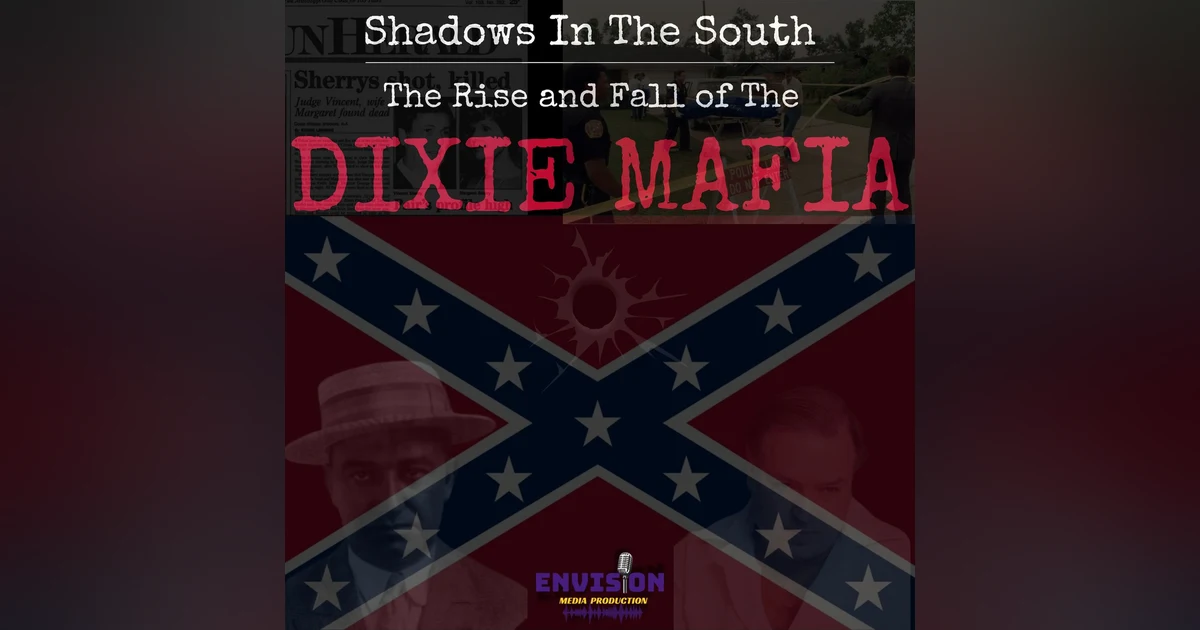


Jim dives deep into the shadowy world of the Dixie Mafia—the ruthless Southern crime network that terrorized the Gulf Coast with drugs, gambling, corruption, and murder. From their strongholds in Biloxi, Mississippi, and operations reaching into Louisiana, these loosely connected criminals operated with impunity for decades.
At the heart of the story is one of their most infamous schemes: the "Lonely Hearts" scam run straight from Louisiana State Penitentiary at Angola. Dixie Mafia kingpin Kirksey Nix Jr., serving life for murder, orchestrated the massive extortion racket from behind bars. The money flowed through a Biloxi law firm, but when funds went missing, Nix's paranoia led to a deadly betrayal. His alleged associates, including lawyer-turned-mayor Pete Halat, allegedly pointed the finger at Halat's law partner, Circuit Court Judge Vincent Sherry, and his wife, prominent Biloxi city councilwoman Margaret Sherry. On September 14, 1987, a hitman executed the couple in their own home in a cold-blooded double murder ordered from Angola. We'll unpack the Louisiana ties—the web of corruption that protected the Dixie Mafia, the investigation that finally brought down key players like Nix, Halat, and others, and the shocking betrayals that exposed it all. This is a tale of greed, deception, prison power, and how one scam shattered lives on the Gulf Coast.
Chapters:
04:55 Crime and Corruption
09:02 Carnival Massacre
20:27 Violence Expands
24:45 Gillich’s Rise
25:55 Lonely Hearts Scam
34:11 Murder Over Missing Money
36:28 The Sherry Double Murder
43:16 Federal Trial Unfolds
47:33 Aftermath and Legacy
Exposed Listener Deals!
Cozy Earth: Get 30% off on Bamboo sheet sets, pajama sets, pillows, comforters and so much more! Use the code EXPOSED at checkout.
www.CozyEarth.com
For commercial free early releases, bonus episodes and more! https://www.patreon.com/exposedpodcastfiles
Become a supporter of this podcast: https://www.spreaker.com/podcast/exposed-scandalous-files-of-the-elite--6073723/support.
0:20 Hey everyone, Welcome back to Exposed Scandalous Files of the Elite. I am your host, Jim Chapman, and today I'm going to take you into the shadows of one of the most notorious and misunderstood criminal networks ever to operate in the American South, the Louisiana based Dixie Mafia. Now, in order to do that, I want you to imagine this. It's nineteen eighty seven. A prominent judge and his wife are gunned down in their quiet Biloxi home. The killings aren't random. They're ordered from a prison cell hundreds of miles away in Louisiana, a man serving laws life at Louisiana State Penitentiary at Angola. He isn't just surviving behind bars, He's thriving, running an extortion empire, pulling strings that reach every courtroom, city hall, and underworld across state lines. Now, this isn't the Italian Cosa Nostra mob with its commissions made men and omerta codes. It's something much more raw, more chaotic, you might say, sloppy, but in many ways even more dangerous. Because this organization didn't play by anyone's rules but its own. The Dixie mafia, which was also referred to as the Cornbread Cosa Nostra, was a loose network of white Southern criminals who thrived from the nineteen sixties through the nineteen eighties, and they had deep roots in operations right here where I'm recording in Louisiana. And
1:54 in this episode, I'm going to walk you through it all how the network's first formed in the back and vice districts of the Gulf Coast, the key figures who rose to power and refused to let prison walls stop them, and the shocking crimes that terrorize community, even the high profile trials that finally brought some of them down, and what life behind bars really looked like for the men who once thought they were untouchable. Now, I'm gonna keep this strictly focused on the history the facts in the Louisiana connections that often get overlooked in most of the reports that I have read or listened to. And I'm gonna start at the beginning. So the story of the Dixie Mafia doesn't have a single founding father moment like the Italian mafia. It grew really organically in the decades after prohibition in World War II, across Mississippi, Alabama, Louisiana, Georgia.
2:54 In Texas. You had a generation of men, many with roots in bootleg or military experience, who would see opportunity. Now in Louisiana, this area was prime for this type of organization. New Orleans had been a port city. It had a vibrant underworld, if you will, and Baton Rouge and the surrounding parishes offered a more rural hideout and easy access to the interstates for moving goods and people discreetly. The Gulf Coast Corridor from Biloxi to Lake Ponta train became a natural artery for this network, and by the early nineteen sixties, what started as small time gambling operations moonshine runs, maybe some stolen good rings that would start to coalesce. There weren't highly structure families with bosses and underbosses.
3:49 Think of it more like a loose group of thugs who would share protection, muscle, and connections. And they were a very bold group. They would commit many in plain sight. And what fueled it well several things. First, this was post war and the economy in the South it wasn't good. You had a legal gambling you had prostitution, bootlegging, filling the gaps left by dry parishes and restrictive laws. In Second, there was a deep seated distrust of federal authority in many circles, and that was a mindset that framed criminal enterprise as a form of resistance against that. And Third, and maybe most importantly, corruption Local sheriffs, judges, and politicians could be bought, they could be intimidated, and they could be partnered with in places like Biloxi's Strip, in parts of Louisiana's more rural parishes, the line between a lawman and an outlaw would often blur. Now by the early nineteen seventies, the network had grown and spread further out.
5:00 Drug trafficking, especially marijuana and cocaine, would come through the Gulf ports and that would become a big business. The Dixie Mafia would pull a page from the Italian's playbook and they would start extorting businesses. Arson would be used to settle scores with rivals or collect insurance, and murder for hire emerged as a service for those who needed problems to just kind of, you know, disappear. Louisiana would play central role, not only as a territory, but as a hub, New Orleans would provide the connections needed to have access to bigger players, and rural areas would offer places to lay low. And then there was Angola, Louisiana State Penitentiary. Now, what should have been the end of the road for many of these guys became just another headquarters.
5:54 And we'll go deeper into that later, but it's worth noting early on the men who ended up there didn't always see prison as a finish line. Some saw it as a cost of doing business, and they kept right on doing it behind bars. Now, before we move into the key players who defined this area, I want to set one thing straight. The Dixie Mafia wasn't a single monolithic organization. That's why many who covered it found it so hard to unpack. It was more like a brand, a name that stuck to various crews and individuals who shared a Southern identity, a willingness to use violence in a network of contact. Some operated primarily in Texas or Georgia, and others, like those tied to the Biloxi, Mississippi scene.
6:49 They had strong Louisiana ties, and the victims these were often ordinary people. They were just caught up in the crossfire, business owner squeezed for protection, money, witnesses who may be new too much, or sometimes you'd have rivals who would just get in the way. The human cost was real, and it's important to keep that in mind as we go along. So I got a lot of grind to cover. Let's get into it. And as I told you, these seeds were planning it in the nineteen fifties, they took root in the sixties, and after prohibition ended, the bootleggers and gamblers didn't just disappear. They adapted. In Louisiana, that adaption happened in the smoky roadhouses along Highway one ninety and then very rural parishes like Livingston Parish, the parish i'm recording out of right now, neighboring Tanjibhoa Parish, and New Orleans. And this is not an organization with a godfather at the top.
7:48 It's just a. Web of independent operators who knew each other and enforced their own brand of street justice. Now investigators and researchers, they often traced Dixon Mafia's early momentum to Biloxi, Mississippi, and at this time in history, Biloxi, y'all, is not what it is today. Today. It's dominated by beautiful casinos like Beau Ravige in the Hard Rock Casino and many others. But back then, downtown Bluxi was simply known as the Strip. It had shady clubs, it had bars, gambling dens because gambling was very much illegal as of that time, and they also had a lot of prostitution rings. And these businesses they would operate openly.
8:34 They were protected by local officials, but the influence would flow kind of both ways across state lines Louisiana. As I told you, it would offer easy access for moving stolen goods, drugs, and even fugitives. And that quick access to Interstate ten and Lake Poncha Train. It would make the logistics of all this really easy. Rural communities, they will provide the safe houses and the methods to stay low. Now, all of this would create an environment where the crews of the Dixie Mafia could thrive. And we're gonna get to February eighteenth of nineteen sixty nine. It's just before Mardi Grass season. In about fifty carnival workers, families who had traveled the circuit. They were on games they were on rides, fortune telling booths all the things. They had set up camp near Covington, Louisiana, which is in Saint Tammany Parish, near the shores of Lake Pontcha Train, which let me digress quickly. I want to tell you about Lake Pontcha Train. This ain't a lake in the middle of the neighborhood, y'all. Lake Poncha Train covers six hundred and thirty square miles. It's located in parts of six Louisiana parishes, including Saint Tammany, or Lean's Jefferson, Saint John the Baptist, Saint Charles, and Tanjapehoa. And this lake was formed over four one thousand years ago, and its access is really throughout all these parishes. And you can even
10:08 now access it via the Diversion Canal through Livingston Parish, So you can literally take a boat from my parish in Livingston and go all the way to New Orleans without ever. Having to get off the boat, but back to it. In nineteen sixty nine, these carnival workers they had gone into New Orleans for an evening, right they're going to go party. They left behind about two dozen people, mostly women, and children at these camp sites at what was known as Skibo Trailer Court, and these carnival folks, they're known to carry large amount of. Cash for their trivels. They were always on the move, so they didn't bank anywhere.
10:50 Back in the late sixties, you didn't have the internet, right, If you didn't have a bank that you actually went to and deposited your cash, you kept it on you. And they had a ton of it on them at all times. Now, for bad actors like the Dixie Mafia, this is pretty tempting. So sometime after dark, at least five masked and heavily armed men descended on this trailer park and they're dressed in military style fatigues. They're carrying handguns and rifles, and they moved with coordinated precision and they rounded up these campers at gunpoint. Now, victims were forced to lie face down, and some were even chained and padlocked to trees and trailers using heavy locks and heavy chains that these attackers had brought with them. And what followed was a night of sheer violence. The gunmen systematically broke into at least ten trailers, ransacked them for valuables, and they would collect roughly twelve thousand dollars in cash and jewelry. Now, this is a huge amount of money in nineteen sixty nine money, and as large as that was, some speculate the victims may have lied about the total that got stolen from them to avoid tax issues on the earnings, meaning the real take could have been much higher than that twelve thousand dollars. So the violence escalated when the attackers zeroed in on a lady by the
12:21 name of Margie George. Now, Margie George was a forty four year old fortune teller often referred to as the Gypsy Queen, and these attackers were convinced she was hiding a safe with even more money. So the man demanded this combination to this safe and Margie George, she refused to give them that combination. So, in an act of sheer brutality, one of the attackers he takes a hatchet and he literally split her skull wide open, and she died on the scene. And the sheer savagery of that murder, hacking a woman to death in front of terrified witnesses, many of these children, that shocked even the most hardened investigators investigating this case. Then a month later, Gary McDaniel, a non associate with ties to the Dixie Mafia, he suddenly gets found dead. Now, his killing was widely believed to be connected to the carnival workers incident, with many speculating it was retaliation tied to the overt violent nature of this crime, and possibly that the carnival workers somehow figured out this guy was involved and got to him before the police did.
13:37 So. After this incident, obviously it will become a major deal in the papers of the time. And that didn't do anything but help the Dixie Mafia, because what is that, that's notoriety. People who are bad actors. They want to be involved with people that are getting let's say, words in the price about their horrible attacks. So by the early nineteen seventies, that network had kind of professionalized in its own rough way, and drug trafficking would become a major revenue. Stream marijuana big deal. It would come through those golf ports from South America, and they would use both land and water to transport that through Lake Pontra train as well as transport that down I ten. Cocaine would follow later and gambling operations would expand from back room poker games to full scale illegal casinos in some parishes prostitution rings. They would also operate out of motels and clubs that doubled as meeting spots for the Dixie Mafia.
14:46 And it was Louisiana's unique geography that would play a huge role. You got to remember, we got a lot of swamps here, and we got a lot of vyues here, and that provides perfect hiding spots for stolen cars, weapons, and even bodies. New Orleans established connections would help as well. They would kind of work with the Italian mafia, which had a presence in New Orleans when needed. They would give the Dixie Crews additional muscle and access, and in baton rouge in surrounding areas, protection rackets would target bars, restaurants, and construction businesses. Either pay up or face broken windows, fires, or worse. Now, what made these early formations so effective was the lack of rules. Unlike the Italian mobs, the Dixie Mafia in Louisiana they could partner with someone in say Mississippi, for a big score, and then they could go solo on smaller jobs. Loyalty was based on money and mutual benefit rather than a blood oath like you would take in the New York Mafia. Betray that trust, however, and the consequences would be swept and they would be violent.
16:08 After spending hours diving into these crazy cases, the last thing I want is to lie there staring at the ceiling because the sheets feel rough or I'm sweating all night. That's just a few of the reasons I love Cozy Earth. They make the softest, most luxurious bamboo betting and lounge where I have ever owned. Their sheets are temperature regulating, ultra breathable, and actually get softer with every wash. The pajama sets and robes make me feel like I am in total vacation mode while steal at home. I love Cozy Earth so much, in fact, that I worked out a deal with them right now as a special offer for my listeners, you can unlock an exclusive thirty percent discount on anything you buy using the code exposed and check out when you visit Cozy Earth. And here's the peace of mind. Their betting is backed by a one hundred night sleep trial and a ten year warranty, so you can try it completely risk free. Stop settling for restless nights. Head to cozyearth dot com. Use my code exposed at check out and treat yourself to the best sleep you've had in years. Your bed will thank you.
17:22 That's cozyearth dot com and use the code exposed at checkout for thirty percent off. Corruption was the glue that would hold the Dixie Mafia together. However, and if you live in the Deep South like I do, it is pretty well known that in several Louisiana parishes and Mississippi coastal counties, sheriffs and deputies were on the take. Some actively would participate, others would just kind of look the other way. This allowed open vice districts, if you will, to flourish in Biloxi. Figures like Sheriff Leroy Hobbs would be come symbols of this entire era. There were a lot of men who allegedly would use their badge to hide what they were really doing until heat from the Feds would finally force change. Now in Louisiana, most early participants in the Dixie Mafia did it for the reasons you would think money. Most of these guys came from working class families. They were hit hard by shifts in agriculture, oil, booms and bust and limited opportunity in the Dixie Mafia would offer fast money, respect on the streets, and a sense of power. You also have veterans returning from Korea and Vietnam, and sometimes they brought combat skills and really a hardened worldview that would translate well when involved in the criminal underworld. So I'm going to digress again, and
18:54 we're going to revert back to nineteen sixty seven before we really get into the heart of this, and to tell you a pretty shocking story that, although not related to the Louisiana faction of the Dixie Mafia, it does relate to a prominent figure during that time that you've definitely heard of, and his name is Martin Luther King. So, according to accounts detailed by FBI informants, the White Knights of the Ku Klux Klan of Mississippi, they were led by Samuel Bowers. They had long wanted to kill doctor Martin Luther King, and after an earlier nineteen sixty four contract failed to materialize, they turned to criminal networks that they had worked with for weapons and for bombing, and in the spring of nineteen sixty seven, while at a federal penitentiary in Levenworth, Kansas, inmate Leroy mcmahonnon approached a fellow prisoner, Thomas Nissan about a lucrative contract. What was the offer a share of one hundred thousand dollars to assay fascinate Martin Luther King. This money originated from the KKAK in the Dixie Mafia was offered the contract. Now, while this specific nineteen sixty seven contract did not result in an attempt on doctor King's life at that time, it really paints a picture of how this network was quickly gaining respect from other more high profile organizations in
20:26 the criminal underworld. So, by the nineteen seventies, the Dixie Mafia had matured in what started as scattered crews would evolve into something that could coordinate multi state operations. You had bank robberies, armored car heist and large scale drug shipments that would become common with these guys. Contract killings would emerge as a service industry. Within this network. And they were just running rampant at this time, and this was the type of thing that really cause concern with not only police, but with your everyday citizen. Now, one pattern that repeated across Louisiana was a willingness to target citizens, business owners who refused what they called protection payments, witnesses preparing to testify. No one was off limits to the Dixie Mafia. They were very unpredictable, and they were very feared, and you just never knew when a seemingly minor dispute would escalate. So that brings me to Kirksey McCord.
21:34 Nicks Junior and Kirksey was born in nineteen forty three in Oklahoma, and he came from a family with some prominence. His father was actually a well known judge, but young Kirksey he chose a very different path than his dad. While his father was busy upholding the law, Kirksey was busy breaking the law. By the late nineteen sixties and early nineteen seventies, he had become deeply embedded in the Dixie Mafia, and in nineteen seventy two he gets convicted for the murder of Frank Corso in Louisiana. Now, Corso was a well to do New Orleans grocery executive. On the night of the murder, Nicks, in at least one accomplice targeted Corso's home in a planned robbery and Frank Corso.
22:21 He was a successful businessman and these attackers apparently believed there would be a significant amount of cash or valuables inside his home. During the home invasion, Corso was shot and killed. The brutality and the calculated nature of that crime would absolutely shock the New Orleans area. Prosecutors would present evidence that next was directly involved in the planning and execution of the break in witnesses, physical evidence, and circumstantial evidence would tie him to the scene and the motive of quick money. Now, this is in an era when home invasions were becoming a tactic for Dixie Mafia affiliated crews. So Nicks was convicted of murder and he gets sent to life without parole in Louisiana State Penitentiary in Gola, which for most men, a life sentence inside LSP and and Gola would mean fading into obscurity, but Nicks treated it as a new headquarters. Now, Kirksey Knick's conviction would mark a turning point for the Dixie Mafia.
23:31 While it removed Nicks from the streets, it would elevate his status within the Dixie Mafia. He had proven willing to kill during a bank robbery, and that reputation would follow him inside the wall. From Angola, he would start cultivating relationships and schemes that would define the next phase of his criminal career. So Nicks didn't just survive in prison, he thrived. He would get loyalists both inside and outside of prison. He would run schemes, coordinate criminal operations, and maintain influence over those operations on the street. His ability to operate from inside of one of America's toughest prison would earn him legendary and feared status. And Nicks he was a master manipulator. He understood psychology, he understood leverage, and he understood the power of fear. And associates on the outside they would handle the logistics while he called the shots on the inside, whether it was visits to him in prison, messages that would get smuggled outside the prison, monitored phone calls, whatever. And he always kept money flowing for the Dixie Mafia. And that brings me to Mike Gillich Junior now Mike was born in nineteen thirty in Biloxi, Mississippi.
24:53 He was born to a working class family who relied on Gulf shrimping and fishing for income, and in nineteen seen fifty one he gets married. He eventually has three kids, and it was in the nineteen sixties that he goes into business for himself. He built and managed a network of motels, nightclubs, gambling operations, and strip clubs on Biloxi's Strip, with two in particular, one called the Golden Nugget and another called the Dream Room, becoming very prominent and successful spots in that area. And it was during the nineteen seventies that Gilich emerged as the de facto kingpin. As a matter of fact, people would call him the godfather of Biloxi. So was Nick and Gillich that came up with a way, even with Nicks being in Louisiana State Penitentiary, to scam their way into a massive amount of money, and that scam would forever be known as the Lonely Heart's Scam, so by the men. In nineteen eighties, Kirksy Knicks Junior had already been serving a lowe at Angola for the murder of a New Orleans grocer, Frank Corso, as I told you about, and Nicks had tons of influence by this time on the inside corrupt guards on the payroll, fellow inmates as foot soldiers, and he had that massive network on the outside that actually included lawyers, girlfriends, and operators like Mike Gillich Junior.
26:23 So Nix's big scam idea well. He decided he wanted to exploit the personal ad sections of gay magazines and newspapers. Now, in the nineteen eighties, before widespread Internet dating, Lonely Heart columns were a lifeline for a lot of gay men seeking connection in a world that was often hostile toward gay men. At this time, the mid nineteen eighties, the AIDS crisis was at its height, the stigma of being gay extremely high, and people weren't open with the fact that they were gay like they are today. Nix and his crew they saw dollar signs and opportunity in this.
27:06 So the scam all. Started with access, and Gola wasn't exactly wired for business calls. Inmate had limited or no phone privileges for personal use. But Nix had money and he had connections. He and his associates they would pay off guards, they would get favors for this, and he would get unsupervised access to prison telephones. Reports say Nix was making at least eighty calls a day at the height of his operation, and they would target publications like The Advocate, No, not the Baton Ridge newspaper, but a leading national gay magazine at that time, along with other outlets that ran personal ads.
27:49 And these ads were warded carefully to sound sincere and appealing. Here's an example of an actual ad from a lonely heart scam. Quote some fit inmate early thirties seeking mature stable men for friendship and possibly life together upon release. It's lonely in here, write me at PO box and it would put the PO box number, and that was to a Biloxi address, And sometimes they would really lean into the prison angle. Another actual ad would read quote reformed bad boy looking for a second chance with the right guy. In other times it would be more flirtatious, like quote summer fun and more let's connect and the return of dress. Was never the prison. It was a PO box always in Biloxi, Mississippi. Why because that territory was covered by Gilich's faction of the Dixie Mafia, and he provided the entire logistical backbone his clubs, his motels, and the associates made sure the mail was picked up, responses were handled, and money flowed smooth without raising red flags locally. Now, once a man responded to the ad, and many did, the real work began. The scammers would reply with personalized letters, and these weren't generic form letters.
29:13 They were tailored to build a relationship the respondent, an inmate they were paying, or someone on the outside. Would share personal details, childhood stories, dreams for the future, complaints about prison food, loneliness of confinement. All the things. And it was just bullshit designed to play on the sympathy for being gay in prison and Gola is and was a notoriously tough place for gay people, and the letters would describe this in detail, and they were trying to manipulate these gay men into feeling sorry for them, play on their emotions and start sending them money. And then came the visuals. Sexually sugg just of photographs were enclosed with the mailings, and these, in reality were never of an actual inmate. Instead, they were muscular models, anonymous men who fit the fantasy procured by these letters, and the combination would be extremely effective. Heartfelt words plus provocative images would hit both the heart and the sexual appetite.
30:25 And as that correspondence continued over weeks or months, what happens well trust builds. The inmate would express deepening feelings, quote, You're the one I've been waiting for. I can't wait to hold you when I get out. Victims would pour their hearts out in return, sharing personal details that could later be used against them, and it's at this point that the con turned criminal. Once that victim was emotionally invested, that's when the money started. Always framed as temporary hurdles to their happily ever action after common pitches would include legal fines or fees that had to be paid for before parole, or they needed commentary, or they needed bribes for better treatment on the inside. They would say they needed travel money so the inmate could come straight to the victim upon their release. They would say they need moving expenses for setting up that new life together, or they needed medical bill money, all these things and the amounts would vary. They'd get five hundred dollars here, one thousand dollars there, sometimes more. Payments at that time were directed via Western Union money orders or checks to a control to dress and nicks. He had a girlfriend on the outside. She was a local pretty blond from Biloxi.
31:47 In her name was Laray Sharp. She was also listed as a pairalegal, but she carried no such license. But she did work at a powerful law firm in Biloxi called the Hallett and Sherry Law Firm, and she would play an extremely critical role in this story. She would collect the mail from the po boxes, she would handle deposits into the firm's trust account for this scam, and she would coordinate with Gilich's crew. Now, some victims were hit with a secondary extortion. After sending that money. They might receive a threat quote, if you don't send more, I'll tell everyone about us. And again, y'all, this is the nineteen eighties for closeted men. That fear was powerful.
32:33 Police reports from that era would show some victims did come forward, but they would be dismissed because of the nature of the ads. I mean, you go in there and you say I've been given an inmate money and I'm a gay guy, and the police likely are not going to feel too sorry for you. So this scam ran strong for at least four years through nineteen eighty nine, and Nix and his crew targeted men nationwide, estimating the scam produced over a half million dollars serious cash in the nineteen eighties hundreds of victims. Now, many sent small amounts and then they would stop, and others were milked for thousands over month. The operation was sophisticated enough to have multiple personas running simultaneously, different fake identities with different PO boxes, all in Biloxi and inside Angola. Nicks was not alone fellow Dixie Mafia inmates and associates like Bobby Joe Fabian. They would help write letters, make calls, and manage logistics, and the prison environment itself would become an asset.
33:43 The isolation would make. That fantasy stronger, and the corruption allowed the phones and contraband to flow. Now, what really made the scam ultra successful was who these gay men were on the outside. Many were closeted professionals, teacher, businessmen, government workers who if this shit got out, they would be ruined professionally, So most of them would just cut their losses and they would never report this to anybody. Now, let me tell you about the owners of that law firm that was collecting these checks that Laray worked at. There was a lawyer by the name of Pete Hallett, and there was also his partner, which was a prominent judge in Biloxi by the name of Vincent Sherry. And by late nineteen eighty six things were rolling. Hundreds of thousands had been raised by this scheme. Then disaster Nick. He would discover that a large chunk of this money, reportedly over one hundred thousand dollars, was missing through reports from Gillage, So he got paranoid, who stole my money? So the long and short of this is Pete Hollett knew about everything and was deeply involved, but that law and judge Vincent Sherry, he had zero idea of anything about this scheme that was going on. And when Nick started asking questions in a ploy to save his ass, Pete the lawyer, he
35:15 blamed all the missing money on Vincent Sherry, the judge, stealing it. And because Pete had conveniently kept Vincent Sherry's name on bank accounts and safety deposit boxes associated with the missing funds, that like it appeared credible. So believing Cherry had stolen from them, the Dixie Mafia ordered to hit on a judge in Biloxi. So let me review where we're at during this point of the story, because I've given you a lot of names. You have Kirksey Knicks, he's inside LSP and Angola and he's running things on the inside. You have Mike Gillich Jr. And he's running things for the Dixie Mafia on the outside. Then you have Nix's girlfriend in the fake paralegal Laray Sharp. She's helping Nix on the outside with collecting the money. You have lawyer Pete Hollett and he's on the outside laundering that money. And you have law partner and judge Vincent Sherry caught in the middle, not knowing a damn thing.
36:18 And at this point a hit has been put out for his death by the Dixie Mafia over one hundred thousand dollars they believed that he stole. So this hit gets put out and the price tag for that double murder was reportedly around twenty thousand dollars, and Nicks coordinates with his trusted lieutenant on the outside, Mike Gillich, who was tasked with arranging the actual killing, and on the evening of Monday, September fourteenth, nineteen eighty seven, a guy by the name of Thomas Leslie Holcombe, who was a hit man from Texas. He enters the Scherry home in Biloxi now Vincent Sherry. He was in the den or the living area, and he gets shot at close range, reportedly just two feet away, with a twenty two caliber pistol with a suppressor on it. Margaret Sherry, his wife, was in the bedroom, probably undressing for the evening, maybe preparing for bed. And we know this because she only had one ear ring in her hand and the other was still in her ear She was pulling her earrings out at this point. She was shot four times point blank in the head. And you have to wonder why kill them both? And this is multifaceted. First, it speaks to a major difference between the Italian mafia and the Dixie mafia. The Italian mafia had a lot of rules, and one of those was you don't mess with family when it comes to hits. Now, this is something they
37:49 would absolutely never do. They would have waited till the guy was alone and no other family members were around or involved. It was a mood that the Italian mafia lived by. But that wasn't like the Dixie mafia. Remember, they had no rules, but there was also another piece to that Margaret Cherry was going to run for mayor of Biloxi, and in this time in history was when those giant casinos that you see now they were seeking approval from the state of Mississippi and also the city of Biloxi to be built, and she would have played a big role in that had she been mayor. And it was no secret that she was actually campaigning against the casinos coming to Biloxi, Mississippi. So some theorized it was kind of like a bonus for the Dixie Mafia because of course they wanted the gambling casinos to themselves.
38:48 They had illicit gambling there. They didn't want legal gambling because it meant less money for them. So that's possibly the reason why both people were killed. Now, these murders occur, and believe it or not, that Sherris are not discovered for two days when Judge Vincent Sherry did not show up for court, his employees call his law firm and who answers the phone, but none other than Pete Hollett. Well already told you that Pete was deeply involved with the Dixie Mafia and that he was aware of this hit being put out as a matter of fact, it was his bullshit story that caused the hit. But of course he plays dumb on the phone. He acts surprised that the judge did not show up for court, and he does something that, looking back on this now seems pretty obvious and what have been kind of out of character, and that is he takes a junior lawyer with him to go check on the sherrys now. The reason he did this was so he would have a witness that they were dead when he got there. But he didn't tell the guy that, of course, he just said, hey, man, I want you to ribe with me because the judge didn't show up for court. So they arrived and Pete he is insistent on this junior lawyer going and knocking on the door of the house and he says, you could do that, and I'm gonna go talk to the neighbors and see if they've seen anything. And why did he do that, Well, it's because he knows what's in
40:21 that house and he didn't want to be the one to discover the bodies and put any sort of arrow on himself, so he has the other guy do it. So the guy goes to. The door when he knocks on the door. It's actually halfway ajar, so it opens up. And at that point he calls Pete up to the front door and he says, hey, man, I'm knocked on the door and it's like open, And Pete plays dumb and he says, oh, they never leave their doors open. Something's not right. Let's go in there and look. Both of them proceed into the house and they find the Sherry's dead and they call police. Now, initially the police, they can see a lot of theories here as to why the people were killed. You got to remember, this is a judge. He's made a lot of enemies, He's put a lot of people in jail.
41:06 So they're thinking, was this some sort of guy who got sentenced to prison and he got out and then he went and killed the judge? Did this have something to do with the casinos being built in Biloxi? And they just had no idea. But they knew one thing for sure, it was a professional hit because there was no evidence at all on the scene. Nothing, It was clean. And they also knew it wasn't a robbery because nothing was taken, and these people had money and they had a lot of valuables in that house. None of it was touched. So local law enforcement they worked the case, but the progress is slow. Biloxi had a history of corruption and ties to the Dixie Mafia underworld, and some officers and officials were compromised or they were intimidated and leeds would dry up. For nearly two years, those murders remained unsolved and the community lived with the fear that the killers were still out there. There was just nothing there, y'all, no evidence, nothing other than a broken silencer and a weapon that the police found much later on. But behind the scenes, the FBI was aware because they had been working the Lonely Heart scam and they were monitoring kirksing Nicks and his calls in and out of Louisiana State Penitentiary in Gola, and in nineteen eighty nine they opened up a formal investigation and they would get some breakthroughs.
42:34 They would get phone records which would show massive numbers of calls between Gola and Biloxi, over three hundred in some periods, and that would link Nick's sharp Gillich in that law firm. They would also find money trails via Western Union from the gay guys that would send the money right. They would also get victim statements from tall targets. These gay guys would come forward in some cases and they would give statements of what was going on, and they had some informants that would actually pretend to be gay guys, and that's how they kind of exposed that whole lonely heard scam. So in nineteen ninety one, a major federal trial targeted Kirksy Knicks, Mike Gilitch, Scharie Laray Sharp, and others, and the charges would center around wire fraud, conspiracy, and travel in the aid of murder for hire related to those shared killings and Nicks, Gillich, and Sharp. They get convicted in this trial on key counts. Sentences would include additional time for Next because he was already serving life in prison. Mike Gillich would get twenty years because he cooperated in these cases, and Sharp would also get prison time. However, this trial did not fully resolve the murder conspiracy regarding Pete Hallett. They didn't have a whole
44:07 lot of evidence on all lawyer Pete. So in nineteen ninety one, when all these people were convicted, it was really just a partial victory. Yes, they disrupted the scam and they put key players behind bars. But the full story of the Sherry murders required more. And the turning point would come when Mike Gillich, facing another sentence, decided to cooperate more fully. And this is in nineteen ninety four. His testimony would implicate Pete Hallett, who incidentally became the mayor of Biloxi, and I'll tell you about that. In a minute. It's going to blow your mind. But he would also state in open court the role of Thomas Holcombe as the shooter. This new information leads to a nineteen ninety six indictment with dozens of counts against Nicks, Hallett, Holcombe, Sharp and others. Charges included rico charges, murder for hire, and a slew of other shit. And these trials would unfold in nineteen ninety seven and Hattiesburg, Mississippi, and draw huge media attention. Now, as far as the prosecution's case, Mike Gillich would serve as the star witness.
45:18 He would describe how lawyer Pete had stole that scam money and blamed it on Judge Sherry and participated in planning that hit. He also outlined the twenty thousand dollars contract and also outlined how the gun was transported to the triggerman. They also had financial records to back that up. Of course, they have witnesses and ballistics and all the things. And as far as. The defense, lawyer Pete, he challenged the credibility of informants because you got to think about it. These are all crooks saying that you did something wrong, so you're going to challenge that.
46:00 But in the end. Everybody gets convicted again, but this time on conspiracy of murder. So it's worth pausing for a second because I want to work back to that mayor stint for lawyer Pete. So, while the investigation for the Sherry murders was unfolding, in the background, one of those central figures Pete Hallett. He was elected and served as mayor of Biloxi. He was elected in nineteen eighty nine, which is two years after the murder of his former law partner Vincent Sherry and Margaret Sherry, and he took office at the time when the city was still kind of reeling from those double murders. Can you imagine that? And during his term he positioned himself as a reformer and community leader. He focused on economic development and tourism and cleaning up the city's image, and was involved in efforts to revitalize the downtown area of Biloxi. The FBI investigation into the Sherry murders and the Lonely Heart scam was actively progressing during this period, and he reportedly was managing aspects of Nick's affairs on the outside. So obviously his political career it would end after one term. He didn't seek or win reelection in nineteen ninety three, and of course, just a little while later, he gets indicted and convicted of conspiracy involving all of
47:32 that ship with the Sherry murders. So what happened to these folks? Well, Kirksey Nicks, believe it or not, he's still alive. He's eighty three years old, but he's no longer in Angola. He is now at the Federal Correction Institution in Elreno, which is a medium security federal prison in Oklahoma. Thomas Leslie Holcombe, the trigger Man, he died in prison in two thousand and five. Pete Hollett, he's still alive. And a free man. He was actually released in twenty twelve. He's eighty three years old, and following his release, he spent time working as a church handyman in Hattiesburg, Mississippi, before returning to private life with his family, and to this day he maintains his innocence, publicly claiming he had no knowledge or involvement in the plot to kill his law partner. How about Laray Sharp, the former girlfriend of Dixie Mafia leader Kirksey McCord next junior, Well, she's been out of prison for twenty years and she lives a quiet private life in Florida. She's seventy one years old and has never done an interview, never since a release. Mike Gillich Junior, the mafia kingpin for the Dixie Mafia. He passed away from cancer on April twenty eight, twenty twelve, at the age of eighty two. He only served nine years in prison due to his willingness to cooperate with the Feds and another interesting thing about his family that the apple doesn't fall far from the tree. His son, Mike Gillich
49:05 the Third, in November of twenty twenty two, was investigated after police were notified by a New Orleans hospital that a twelve year old girl disclosed sexual abuse by a family member. Forensic interviews revealed that Gillich the Third had been sexually abusing this young girl for five years, beginning when she was seven years old. Gillich the third was the boyfriend of the child's mother, and the abuse primarily occurred when the child would visit and the mother was away at work. So, following a three day trial in Harrison County, Mississippi, a jury deliberated for three and a half hours before finding him guilty, and he was sentenced to fifteen years in prison with three years suspended. He is still incarcerated today, and today that old strip in Biloxi is transformed. Illegal gambling dens had given way to regulated casinos that bring tourism and major economic activity. The Dixie Mafia as it existed in its heyday is largely a thing of the past, broken by prosecutions, aging out and changing times, but its legacy linger and for us in Louisiana and across the South, the history is a reminder.
50:22 It shows the dangers when crime goes unchecked, the importance of clean law enforcement and a clean justice system, and the long reach of prison based crime. It all show shows the resilience of justice when good people, investigators, prosecutors refuse to stay silent. Now, if you enjoyed this one, please share it on your social media. It really helps. Drop us a review, share your thoughts, and if you would like to join the family on Patreon and get commercial, free early releases, bonus episodes, and more, check us out patreon dot com. Slash exposed podcast files and until next time for exposed scandalous files.
51:03 Of the elite. I'm your host, Jim Chapman. Much love,


