Part One | The Collapse: Effective Altruist
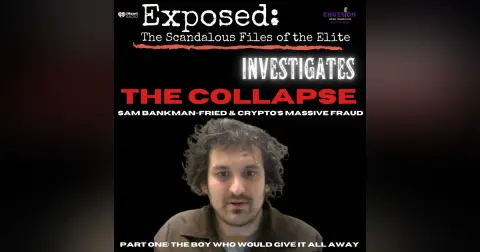


In Part One of this four-part series, Jim introduces you to the Stanford law professors' son raised on utilitarian philosophy. The MIT physics grad who walked away from a Jane Street trading desk with a plan to "earn to give." The kimchi premium — an arbitrage loophole in South Korea that minted millions a day and seeded a trading firm called Alameda Research. And the founding of FTX, the exchange that made him, at thirty years old, one of the richest and most trusted men in finance.
Chapters:
02:08 the FTX Story
04:35 A Stanford Childhood and Elite Privilege
08:28 MIT, Gary Wang, and Effective Altruism
11:43 Jane Street and the Making of a Reputation
14:30 Alameda’s First Big Trade
23:16 The Secret Privileges in FTX’s Code
32:35 Sam Bankman-Fried Goes to Washington
36:52 The Crypto Crash
38:39 Seven Versions of the Truth
Tags: sam bankman-fried, crypto, cryptocurrency, fraud, netflix, podcast, exposed, Jim Chapman, crime, effective altruism, Jane Street, cryptocurrency trading, Alameda Research, special account privileges, market downturn, customer funds, lender repayments
For commercial free early releases, bonus episodes and more! https://www.patreon.com/exposedpodcastfiles
Become a supporter of this podcast: https://www.spreaker.com/podcast/exposed-scandalous-files-of-the-elite--6073723/support.
0:00 It's a night in June 2022, Nassau, in the Bahamas. Outside, it's paradise. There's warm air, palm trees, and it's the kind of place folks save their whole lives just for one visit. But inside of a penthouse office, nobody in that room is looking at the water. They are looking at the screens, and all of those screens are red. All of them. The crypto market, the market that made everybody in that room rich, is coming apart in real time. A coin called Luna worth billions of dollars just weeks before is worth nothing. Nothing a giant trading fund called Three Arrows Capital is going under. And the phones start ringing.
0:50 Because the lenders, the people who loaned billions of dollars to a trading firm called Almeda Research, those people want their money back. And they want it back now. And in the middle of all that noise, a young woman named Caroline Ellison opens a spreadsheet on her computer. And she starts building versions of the truth. Not one version. Seven of them. Now hold on. How did we get here? How does a young man who told the whole world he wanted to earn billions of dollars just so he could give it all away, how does he end up needing seven versions of the truth? Well, that's exactly what this series is about, and it starts a long, long way from the Bahamas. Welcome to Exposed, Scandalous Files of the Elite, Sam Bankman Freed, Episode 1, the boy who would give it all away. Hey everyone, welcome back to Exposed, a scandalous files of the elite. I am your host, Jim Chapman, and I want to thank y'all so much for joining me because we are starting something pretty big today.
2:22 Just a little information. This episode is one of a four part series, but it's going to be back to back to back to back. So you're going to hear this today. Tomorrow will be episode two. The next day will be episode three. And of course, the next day, the fourth and final part of this series. We're going to talk about Sam Bankman Freed and the collapse of FTX. And I'm just going to tell you right up front, this one has everything that this show is about. We're talking about politics. We're talking about entertainment. We're talking about finance, billions of dollars of it. And we're talking about the kind of elite protection that that lets a man in car guy shorts walk into Congress and be treated like a prophet. Right up until the whole thing. comes crashing down. Now, as always on this show, we're going to build this story the way we build every story here, out of the documents, the indictment, the trial testimony, the court records, because when the lawyers and the cameras go away, those documents are what's left, and they don't care about anybody's public image. But before we get into it, let me just say a quick thank you to our Patreons. I say it all the time, but we could not do this show without you. Y'all keep the lights on, you keep the research going, and you keep this show independent.
3:49 And I mean that from the bottom of my heart. If you can't be a Patreon, I totally get it. There are some other great ways to support the show. Share it on your social media, tell a friend, leave a review. It literally takes like 10 seconds. One word, reviews, is all it takes. But it really, really helps run this show up the rankings. And that helps me more than you know. And lastly on that, come to talk to us on the show's Facebook page. I read your comments. I love interacting with y'all over there. And some of the best case suggestions I've ever gotten come straight from that page. So don't be a stranger. All right. We've got a boy genius to talk about, a philosophy that might have been a sales pitch in a little computer setting that changed everything. So let's get into it. And we start in March of 1992 at Stanford, California. A baby is born and his name is Samuel Benjamin Bankman Freed. Now, if you've listened to this show for any length of time, you know that I always tell you when you want to understand the man, Look at the house he grew up in. And y'all, this house is something else. Sam Bankman Freed was not born into what you would consider an ordinary family. He was actually born to two professors at Stanford Law School. Two. His father, Joseph Bankman, a professor of tax law, also had a background in clinical psychology.
5:18 And his mother, Barbara Freed, was a professor whose field, now listen to this, I want you to remember it for the rest of this series, his mother's field is legal ethics and political psychology. Legal ethics, y'all. You can't make that shit up. This woman taught right and wrong professionally at one of the finest law schools on the planet. And young Sam, he doesn't just visit that world. He grows up inside of it. He is raised right there on that Stanford campus, surrounded by some of the smartest, most credentialed, most powerful people in American life. Professors. Lawyers. thinkers, the elite of the elite. And I don't use that word lightly on this show. So wrap your head around that for a second. This isn't a story about a kid who clawed his way up from nothing and got corrupted by money somewhere along the way. This is a kid who started out at the very top of the pyramid, intellectually, socially, all of it, and was taught at home by his own mother how to think about right and wrong. And I want you to sit with one more thing, because if there's a theme to this show, if exposed has a thesis, if you will, and y'all know it does, it's this. The elite don't live by the same rules that most all of us in the rest of society live by. They live in a world. Where rules are sometimes just suggestions. Where every door has somebody standing by it,
6:50 ready to hold it open. Where the consequences that would flatten an ordinary person just somehow never quite land. Now, most people who grow up in that world, they turn out fine. They work hard. They stay honest. They color inside the lines, if you will. But every once in a while, a kid grows up in that world and learns the wrong lesson from it. He doesn't learn that privilege is a responsibility. He learns that rules are negotiable, that smart people can argue their way around just about anything, that if your intentions are good enough and if your story is good enough, then the normal way of doing things just doesn't really apply to you. So keep that in your back pocket because everything Sam Bankman Freed does for the rest of this story, every bit of it makes a whole lot more sense once you understand the house he grew up in. Now, does that mean his parents did anything wrong raising him? No, of course not.
7:48 And I want to be careful here. A child's choices are a child's choices. And we're going to follow the documents wherever they land, including later in this series. to some very hard questions about mom and dad themselves. But that is for later. For right now, what I need you to understand is this. Sam Bateman Freed was born with every advantage. The brains, they run in that family like water runs downhill. By the time he's a teenager, Everybody around him can see that this boy's mind just works differently. He doesn't just want to solve problems. He wants to solve the biggest problem he can find at the biggest scale there is. So in 2010, Sam Bankman Freed enrolls at MIT, the Massachusetts Institute of Technology. He studies physics and mathematics. Big brain on this guy, right?
8:40 Which if you know anything about About MIT, it's like saying a kid went to the beach and got wet. The place is built for minds like Sam Bankman Freed's. He graduates in 2014, but the degree is not the most important thing Sam takes away from MIT. Not even close. The first important thing is a person, his roommate, his frat brother. His name is Gary Wang. Now, Gary Wang, he's quiet. He's not the face of anything. He's a builder, a coder. The kind of man who would rather write a computer program than talk to a room full of people. Write that name down, y'all. Gary Wang. Because this whole empire is going to be built on Gary Wang's code.
9:25 And years later, Gary Wang is going to sit in federal court and explain exactly what that code did. We're going to hear from him before this episode is over. The second important thing Sam takes from MIT is an idea. While he's there, he encounters a philosopher. His name is William McCaskill, and a movement McCaskill helped build is called effective altruism. Now, let me explain what effective altruism is to you in plain English, because I didn't have any idea when I started researching this, but it mattered. It's the engine of this entire story. The idea goes like this. Most people who want to do good in this world, they go work for a charity or they go volunteer.
10:10 And that's fine, but it doesn't necessarily scale. You're just one person, right? But if you're one of the rare people who can go out and make an enormous amount of money, millions, billions, the most moral thing you can do is exactly that. Go make a fortune. and then give it away, carefully, scientifically, to the causes that will do the most good with every single dollar. They call it earning to give. Go get rich on purpose as a moral duty, and then give it all away. Now, I want you to think about the philosophy for a second, because I have turned that over in my mind at least 100 times. On the surface, it sounds noble, right?
10:51 It almost sounds beautiful. Feed the hungry, cure disease, save lives with a fortune. But you see the trap door in it, don't you? Because the money itself is the mission. If getting rich is a good deed, then somewhere down the line, a person might start to believe that almost anything he does to get that money can be justified. The end starts justifying the means. And that's when the man himself is the one grading his own homework on what the greater good means. Well, nobody is checking the math. Was it a belief? Was it a brand? I'm going to let you decide that for yourself as this series goes on. And I promise you, by the end, you're going to have plenty of evidence to decide with. What I can tell you is that Sam took the idea seriously enough to live it, at least at first. From 2014 to 2017, he worked as a trader at Jane Street Capital. Now, Jane Street is not some little brick-and-mortar storefront operations. It's one of the most elite quantitative trading firms in the world. The kind of place that hires geniuses and puts them to work moving money at the speed of light. And Sam specializes in international ETFs, exchange traded funds, and he is freaking good at it. And here's the part that made people fall in love with him.
12:18 He gives away half his salary to effective altruism causes. Half, not 10%, half. While his co-workers are buying apartments and cars, Sam is living cheap and writing checks to charity. Now think about what that brought him. Because it brought him something no public relations firm on earth could have purchased at any price. It brought him belief. People didn't just think Sam Bankman Free was smart. Plenty of people on Wall Street are smart. They're everywhere. And nobody trusts them as far as they can throw them. People thought Sam was good. They thought the money was a means to an end with him, that he was playing the game for the purest of reasons. Investors remembered that. Journalists remembered that.
13:07 And in a few short years, when this young man started asking the world to hand him billions of dollars and take his word for it, the reputation earned right there in those Jane Street years. With those charity checks, it's going to open every single door he knocks on. And I'm not saying the giving wasn't real. A man doesn't fake giving away half his paycheck for three years. The money did go out the door, and by all accounts, it did some good in the world. I'm saying you should pay attention to how perfect that reputation is going to function later. As armor. As a shield. Because when questions finally start getting asked about Sam Bankman Freed, the first thing out of everybody's mouth is going to be, but he's the guy who gives it all away. A guy like that wouldn't steal, would he? Hold that question.
14:00 We're going to spend the next four episodes answering that one. So here he is, his mid-twenties, perfect story, the genius trader with a conscience. The young man who cracked the code on how to be rich and righteous all at the same time. But trading somebody else's money for somebody else's firm has a ceiling on it. And a man who believes he's supposed to earn billions, billions with a B, well, that's the man that is not going to stay an employee forever. In the fall of 2017, Sam Bankman Freed walks away from Jane Street and what he builds next is going to make Jane Street look like a lemonade stand.
14:43 So after Jane Street, Sam spends a brief stretch of time working at the Center for Effective Altruism. This is in Berkeley, California. And remember, William McCaskill, that's his outfit. Think about that. He doesn't just believe in the moment. For a little while there, he works for it. The philosophy and the man are joined at the hip. But Sam Bankman Freed is a trader at heart and a trader's trade. So in the fall of 2017, he founds his own trading firm and he calls it Almeida Research. Now, what does Almeida do? Let me give you an example of that, because this first trade is actually really easy to understand, and it's kind of brilliant. At that time, Bitcoin did not cost the same everywhere in the world.
15:32 In South Korea, for example, because of the rules over there and the enormous demand, Bitcoin was selling for a lot more than it was selling for here in the United States. And traders, they had a nickname for that price gap. They called it Kimchi Premium. after the famous Korean dish. So Sam's firm does what any sharp trader would dream of doing. They buy Bitcoin where it's cheap, and they sell it where it's expensive, and they pocket the difference. Over and over again. It's actually called arbitrage, and when you can do it at scale, at speed, it is about as close to printing money as the law allows. And it works. Almeda reportedly nets tens of millions of dollars in early 2018 doing exactly that. Now, reportedly, I want you to hear that word because in this story, we're always going to separate what we know from what's been reported. And I'm going to flag it for you every time and let you know. Now, this is tens of millions of dollars for a firm that basically just started, run by a guy in his mid-20s. And the kid is a rocket ship. And everybody in crypto can see the fire coming off of Sam Bankman Free. Now, I want you to appreciate what those millions really meant. Because it wasn't just money. The money was proof of concept.
16:59 Proof in Sam's own mind and the proof online. in the minds of the people flocking to him. The whole theory worked. The theory said, take a world-class mind, point it at a place where the money moved fast and the fortune will come and the fortune will fund the mission. Well, here it was working in real time in his 20s, not a theory, not in philosophy, in a bank account. And success like that does something to a young man, especially a young man who already believes the math of his own morality adds up to better than anybody else's. It makes him certain. It makes him impatient. And it makes him look at the next bigger opportunity and think, why not me? And why not now? Because arbitrage has a ceiling too. The kimchi premium, that's not going to last forever. Price gaps close as the markets grow up, and there's a big frustration eating at him. The one I mentioned a minute ago, Almeida makes its living trading on exchanges owned by other people. And it pays those people for every single trade. And the house always takes its cut. But now put yourself in Sam's head because this is where his ambition starts to outgrow the trade yourself.
18:18 If you're an arbitrage trader, you make money on other people's exchanges. You are a guest in somebody else's casino and you pay for the privilege. Every trade costs you fees. Every trade depends on their rules, their systems, their honesty. And Sam Bankman Freed, he looks at that arrangement and he thinks, why am I paying rent? when I can just build the casino. So in the spring of 2019, that is exactly what he does. And y'all, when I tell you the whole world is going to walk through the doors of that casino, presidents, movie stars, the biggest names in sports, I'm not even exaggerating a little bit.
18:59 But before the world walks in, two men are going to sit down on a computer and they're going to change one little setting. And that setting is going to bring the whole house down. So in April and May of 2019, Sam Bankman Freed, together with his old MIT roommate, Gary Wang, they found a brand new company and they call it FTX. And FTX starts out in Hong Kong and then it's incorporated in Antigua. And I want you to file that little detail away, too, because in this story where a company is legally from turns out to matter a whole lot later on. Gary Wang, he is the chief technology officer, the man building the machine, and Sam is the face, the fundraiser, the visionary. And the pitch, and this pitch is beautiful in its simplicity. FTX is a crypto exchange, a place where regular people and big institutions alike can buy and sell digital assets. And Sam's sales line is that it's an exchange built by traders for traders. In other words, the other exchanges are run by amateurs. We're only professionals. Your money is safer and smarter with us. Now here's the thing you have to understand about an exchange. And this is not complicated. An exchange is supposed to be a neutral referee. Customers deposit
20:32 their money. The exchange holds that money. The exchange then matches buyers with sellers and they take a small fee. The referee doesn't play in the game. The referee does not take the customer's deposits and go place bets. with those deposits. That's the whole deal. It's the entire foundation of trust that this thing is built on. Now, let me put it in terms we all understand. If you hand a valet your keys to your truck, you expect him to park it. You don't expect him to take it joyriding all weekend and bring it back with a tank on empty, hoping that you don't check the mileage. You deposit on an exchange with the same idea. It's yours.
21:14 It's supposed to sit there untouched until you say otherwise. The entire industry, the entire financial system runs on one simple promise. We'll hold it and we won't spend it. When you deposit money in an ATM or with a bank, You don't expect them to spend it. Now, average people believed FTX kept that promise. That's why they came. Teachers came. Truck drivers came. Young kids with their first paychecks came. They came because the platform looked professional, because the pitch sounded professional, and because the man selling it sounded like the most trustworthy man in the whole business, which is exactly why FTX. what was happening inside that machine, if you will, mattered so much. But FTX had a problem built into its DNA from day one. Because sitting right beside that exchange, using the exchange, is Almeda Research, Sam's trading firm. And Almeda isn't just a customer of FTX.
22:17 Almeda is what's called a market maker. It's the firm always standing there ready to buy or sell, providing the action on the platform. It is, from the very first day, the single biggest player on Sam's Own Exchange. So the referee owns one of the teams, if you will, and the casino owner is also sitting at the table playing hands against the guest of the casino. Did anybody sound the alarm about that at the time? Not really, no. Because the machine worked, the money was flowing, and Sam Bankman Freed was out there telling the world that FTX was the safe, grown-up, responsible way to do crypto. And the world, investors, journalists, politicians, celebrities, the world believed him.
23:02 They lined up to believe him. But underneath the floorboards of that shiny new exchange in 2019, something was getting installed. Something quiet, something almost nobody knows about. And Gary Wang put it there. Now, listen, everything I'm going to talk about next, we know because of what happened years later in a federal courtroom in Manhattan when Gary Wang, that quiet coder, the roommate, the co-founder. raised his right hand, swore to tell the truth, and walked a jury through it, step by step. So keep in mind, this is not gossip. It's not rumor on the internet. Sworn testimony, given under oath, in the trial of the United States versus Sam Bankman Freed.
23:46 And Wang testified that what he built, he built at Sam Bankman Freed's direction. So let's slow down and do this carefully, because this is the most important part of this episode. Every trading platform, y'all, has a risk engine. Think of it as an automatic safety system. And its job, it's simple. Don't let anybody lose more money than they have. If you make bets on the platform and those bets go bad, if your account slides down towards zero, the system steps in and closes you out automatically. It liquidates you. It sells your positions before you can dig a hole that you can't climb out of. Now that's not cruelty.
24:30 That's the rules that protects everybody else on the platform, and every traitor plays by those rules. Every traitor except the one. In 2019, per Gary Wang's testimony, Sam had him add a special flag to Almeida's account, a setting in the code that exempted Almeida from that system. Almeida's position's could not be auto-liquidated. While every other customer on earth could get wiped out when their bets went bad, Almeda could slide below zero and keep right on trading. And then it went further. Wang testified about a second feature, and I want you to remember its name because it sounds so harmless, so technical, and it's neither of those things.
25:15 The feature was called Allow Negative. Allow negative, y'all. Meaning Almeda's balance was allowed to go below zero. Meaning Almeda could withdraw money, real money, other people's money, sitting in that exchange beyond what Almeda actually had. It would be like if you were going to an ATM to withdraw money and you had negative $ 50 cash and there was a glitch in the system where you could withdraw $ 6, 000 cash And it would just pull it from other people's accounts and give it to you. Think of it that way. Now, how big did that secret line of credit get? How much was Almeida ultimately allowed to owe? Y'all, that number is so large and so central to where this story goes.
26:04 I'm going to hold it until part two of this series tomorrow before we talk about it. Because that's when we'll open up the books. But I will tell you this. It's not a number that happens by accident. Nobody fat fingers their way into what this became. This was built on purpose by two men who founded the company in the company's very first year. And here's the part that should make the hair on the back of your neck stand up. The customers didn't know. The investors writing $ 100 million checks, they didn't know. The politicians taking Sam's money and posing for pictures with him didn't know. As this company rises, and it's about to rise higher and faster than any company in modern memory, that little setting sitting there with the code this whole time was like a loaded gun in a drawer. So the question I want you chewing on is the question this whole series is going to wrestle with. When did the boy who would give it all away decide the rules were for other people?
27:09 Because from here on out, Sam Bankman Freed doesn't just rise, he explodes. So let's talk about the rise, because you can't really understand the fall until you understand just how high things flew. Start with 2020. Sam Bankman Freed gives roughly $ 5. 2 million to groups supporting Joe Biden. And just like that, The 28-year-old crypto trader becomes one of the largest donors to the president of the United States. One of the biggest in American politics, y'all. That's not a donation. That's a door key. That is a seat at tables most people don't even realize exist. Then comes 2021, and the numbers get stupid. In July of 21, FTX raises $ 900 million from investors in what's called a Series B round at a valuation of $ 18 billion. Listen to that again, $ 18 billion for a company that is barely two years old.
28:13 Then in October of that year, they do it again. Another round, roughly $ 420 million at a $ 25 billion valuation at this point. Forbes magazine puts Sam's personal fortune at as much as $ 26 billion. He is on paper one of the richest people on the face of the earth, y'all. And he's not even 30 years old yet. He's not wearing a suit either. That's part of the brand. Messy hair, the cargo shorts, the t-shirt, the genius who can't be bothered with appearances because he's too busy saving the world. And the world just eats it up. FTX goes on a spinning spree that will make a lottery winner blush.
28:57 The Miami Heats Arena becomes the FTX Arena, a $ 135 million naming deal. Major League Baseball puts FTX patches right on the umpire's uniforms. And think about that. The referees wearing the FTX logo. The esports team, TSM, signs a $ 210 million naming deal. And the celebrities, here they come, lining up. In June of 2021, Tom Brady. Tom Brady, the greatest quarterback that ever lived, and his wife at the time, supermodel Gisele Boudreaux. They become FTX ambassadors and equity partners. In his book about Sam, Michael Lewis later reported that Brady was paid around $ 55 million in stock for an endorsement. That's reporting now, not something proven in court, but it tells you the neighborhood we're living in. Basketball superstar Steph Curry comes aboard too. Meanwhile, the company itself moves.
29:59 In the fall of 2021, FTX moved its headquarters from Hong Kong to the Bahamas, to Nassau, to Sunshine and Friendly Regulations. and Sam buys out his biggest rival's stake in the company, Binance, the giant exchange run by a man named Changping Zhao. Everyone calls him CZ. He sells his stake back to FTX for about $ 2. 3 billion. And here's a detail that seems small now, and it's going to matter enormously later. That buyout was paid largely in FTT. It was a token that FTX itself created. Sam paid off his biggest competitor with money his own company had printed, technically, out of thin air. So file that away. And I want you to think about the psychology of this moment, because it explains so much of what follows. Everywhere Sam Bankman Freed looks in 2021, the world is telling him the same thing. You're a genius, The smartest money in Silicon Valley is writing him checks as fast as he can cash them. Forbes is putting a number next to his name that is bigger than the economies of most small countries. And the greatest quarterback of all time is signing on to sell his product. And nobody is asking the boring questions. Nobody's asking to audit the books in any way that matters. Nobody's asking how the trading firm and the exchange really share that building in the Bahamas.
31:32 When everybody around a man tells him he's a genius for long enough, he starts to hear it in his own voice. He starts to believe that. And a man who believes he is a genius starts to treat caution like it's just a character flaw. Something lesser minds will worry about. People not as smart as him. File that away too. Because the boring question is, We're the only ones that mattered. And they were going to get asked eventually, just not by anyone with the power to stop him. By the end of 2021, Sam Bankman Freed is not just a rich man. He is a phenomenon. Magazines are putting him on covers. Journalists write about him like he's a once-in-a-generation mind. Politicians take his calls. And through it all, he keeps saying the same thing. The thing that makes it all okay. He keeps saying, I'm not doing this for me. I'm doing this to give it all away. Well, in the early months of 2022, Sam takes that show somewhere he had been aiming at all along. He takes it to D.C. On December the 8th, 2021, Sam Bankman Freed sits in front of the United States House Financial Services Committee. That's the committee that oversees, y'all, the entire American financial system. And he testifies. And his message is pretty masterful. I'm the responsible one. I'm the adult in the crypto room. Regulate us, please. And here's how. Now think about the nerve of that. Knowing what we covered already,
33:05 while a secret setting in his own company's code is letting his trading firm spend money it doesn't have, the man is sitting in front of Congress, in the flesh, presenting himself as a face of responsibility. Wrap your head around that. And Washington just loves it. In January of 2022, FTX raises another $ 400 million and the company receives a $ 32 billion valuation. $ 32 billion. The American arm FTX.US is valued at $ 8 billion by itself. And on February the 9th, 2022, Sam testifies again, this time to the Senate Agricultural Committee.
33:49 And he pushes a bill. The DCCPA that would shape how crypto gets regulated in America. Critics at that time and since said that bill looked like it was practically written for FTX, his company. Whether you think that's fair or not, here's what nobody disputes. A 29-year-old who had been running a company for less than three years was helping write the rules for the entire industry and the United States Senate was listening. Three days, excuse me, four days later, February the 13th, 2022, it's Super Bowl Sunday. And there in the middle of the biggest television event on the planet is an FTX commercial starring Larry David.
34:35 One of the most famous ads of the entire game. Your grandparents saw that ad. Your neighbors saw it. Tens of millions of people who couldn't tell you what a blockchain was said. saw that ad. And they saw Sam Bankman Freed's company treated like Coca-Cola, like Budweiser, like a permanent piece of American life. That same month, February of 2022, Sam launches the FTX Future Fund, his big, effective altruism, philanthropy fund. pledging more than $ 100 million to save the future of humanity. The halo he's trying to build is complete. The genius, the fortune, the good works, all of it polished to a shine. And the money keeps flowing into politics.
35:21 In the 2022 election cycle, Sam's publicly disclosed giving reaches roughly $ 40 million, overwhelmingly to Democratic candidates and causes, including his own PAC. called Protect Our Future, which spends more than $ 27 million. He is, by any measure, one of the biggest individual donors in the Democratic Party. Now, here's where I need to slow down again, and I need you to listen to the exact words, because on this show, we deal in documents, right? According to the federal indictment, United States v. Bankman Freed, filed in the Southern District of New York, prosecutors would later allege that the real total was more than $ 100 million in campaign contributions. More than $ 100 million. And prosecutors allege, y'all, that the government's claim, later tested in court, is that the money came from misappropriated and embezzled FTX customer deposits, funneled through other executives who put their name on donations that weren't really theirs.
36:28 Straw donors is what they call that, and it's a federal crime. At the start of 2022, though, none of it was public. Sam Bankman Freed stand at the absolute summit worth billions, blessed by Washington, endorsed by the biggest stars on earth, praised as a visionary who was going to save the world with other people's trust. And then came the spring and then came June. So here's what happened in June of 22. And it happened fast. The crypto market, which at this point had only ever seemed to go up, turned. Two big pieces of it, a project called Terra and its coin Luna, collapsed. Then a huge fund called Three Arrows Capital went under. Billions and billions of dollars of value, y'all, were just evaporated. And everybody who had loaned money into that market started looking around.
37:25 They were nervous and they were asking the same question. Who else is exposed? Who else is standing on a trap door they're going to fall through? Now, understand what a crash does to a lender. When times are good, nobody asks a borrower hard questions. The money's flowing. Everybody's happy. Roll the line over and let's do it again. But when the market breaks, when the move flips overnight, lenders stop rolling loans. They call them in. They demand to see the books. And across the crypto world in the spring of 2022, that's exactly what happened. A great crash. silent tightening of that market. It's like a fist closing.
38:07 And everybody who had handed out billions started demanding those billions back. And it turns out Almeda Research, Sam's original trading firm, the one living inside his exchange, the one with that secret setting, Almeda was standing on a trap door. The crash blew holes, real holes in Almeda's balance sheet. Almeda owed its lenders billions back. And the lenders started calling in their loans and saying they wanted their money back. Now we're getting to the point in this episode that we've been driving toward. And once again, we know it from sworn testimony. This time from Caroline Ellison herself, the woman running Almeida, who would later stand in a federal courtroom, plead guilty to her own crimes, and describe what happened next.
38:54 Ellison testified that in June of 2022, Sam Bankman-Fried directed her to repay Almeida's lenders using FTX customer funds. Now, let that hit you. Customer funds, the deposits of ordinary people, people who put their money in FTX because Tom Brady told them it was safe because the Super Bowl ad made it look as solid as a bank. According to Ellison's testimony, Sam told her take that money and use it to pay off his trading firm debts. And how do you repay lenders? with money that isn't yours? Well, you use the drawer with the leaded gun in it.
39:35 The allow negative setting, remember? The back door from 2019, sitting there the whole time, just waiting. But there was a problem. The lenders wanted to see Almeida's book's First, show us your balance sheet, I'm sure is what they said. Prove you're good for it. And the real balance sheet, the true balance sheet, well, the true one would have ended everything right there in June. So Ellison testified she prepared seven alternative versions of Almeida's balance sheet to send to one of those lenders, a firm called Genesis. Seven versions, seven different stories about the same company's money. And she testified Sam reviewed them. And Sam chose which one to send. Y'all, I've read a lot of court documents doing this show.
40:27 And I don't know that I've ever read a colder sentence than the one I read in this document. Not whether to send a fiction, as it's termed, but which one. fiction to send. And all while this was going on, Ellison was keeping a running memo on her computer, her own list, in her own words, and the title of that memo came into evidence at trial. She called it, Things Sam is Freaking Out About, quote unquote. So in June of 2022, while the rest of the world still thought he was a boy king, Sam Bankman Freed was freaking out because he knew what the world did not.
41:09 He knew the money was gone and he knew the only thing standing between him and the end was a story told seven different ways. And the very last words that I'm going to say in this episode, y'all, they don't belong to me. They belong to Gary Wang, the roommate, the coder, the co-founder sitting on a witness stand in Manhattan in October of 2023 under oath when prosecutors asked him what Almeida got that no other customer on FTX ever got. And Wang said, quote, we gave Almeida special privileges on the platform, unquote. Special privileges. Remember how that sounds.
41:51 And remember where it leads. Because tomorrow, in part two, we're going to open all seven of those balance sheets. We're going to follow the customer money through the back door. We're going to go meet with the lenders, the penthouse, the parents, and And we're going to watch the most trusted man in crypto spend the summer of 2022 building a lie tall enough to hide an $ 8 billion hole. And trust me, you're not going to want to miss it. That's all we got for today. Once again, check out the Patreon, patreon.com slash exposed podcast files, commercial free early releases, bonus episodes, and more. Look, you're going to hear a lot of commercials on the free version from here through the rest of the holidays, through the rest of the year of 2026. Apologize about that. We got to pay the bills around here. And the free version does come with commercials. If you don't like that, Go to the Patreon.
42:53 Check us out. We'd love your support. And until next time, for Exposed Scandalous Files of the Elite, I am your host, Jim Chapman. Much love.


