"Murdaugh" Episode Thirteen | Call Your First Witness
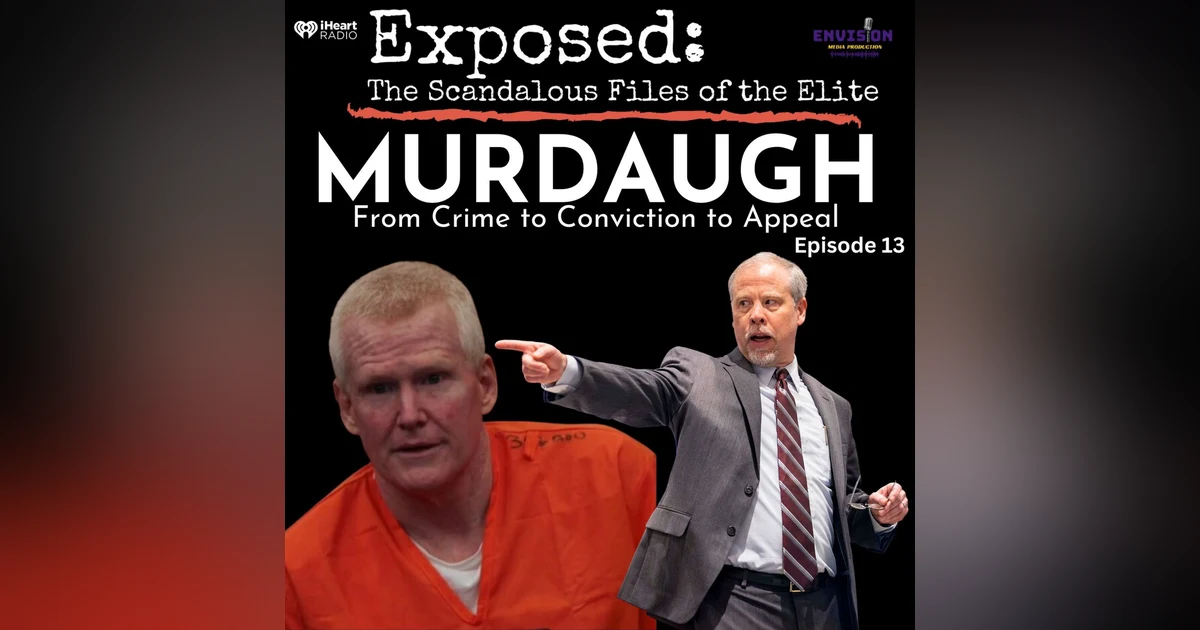

In this episode of “Exposed Scandalous Files of the Elite”, Jim brings you the first day of testimony in the Murdoch trial, focusing on Sergeant Daniel Green's crucial insights as the first responder to the murder scene. Key exchanges with prosecution...


In this episode of “Exposed Scandalous Files of the Elite”, Jim brings you the first day of testimony in the Murdoch trial, focusing on Sergeant Daniel Green's crucial insights as the first responder to the murder scene. Key exchanges with prosecution and defense attorneys are analyzed, revealing the emotional tensions and procedural challenges faced during the investigation.
#murdaugh #AlexMurdaugh #trial #podcast #conviction #exposed #creightonwaters #cliftonnewman #Southcarolina
Timestamps
02:47 Testimony from Sergeant Green
05:49 Crime Scene Overview
10:06 Victim Assessments
13:36 The Shotgun Incident
18:22 Weapon Discussions
21:59 Evidence Preservation Issues
27:35 Contamination Concerns
37:06 Prosecution's Response
39:48 Tire Track Discussions
43:16 Officer McDowell Takes the Stand
55:44 Shell Casing Identification
The “Murdaugh case details” may be disturbing for some listeners. Exposed: Scandalous Files of the Elite provides the“latest update on the Alex Murdaugh case” throughout its ”Murdaugh” series podcast. Discover “the impact of the Murdaugh trial ” can be followed by subscribing wherever you listen to your podcasts.
For collaborations, promotions, or appearances email Jim at: https://www.exposedpodcastfiles@gmail.com
Join us on Patreon for commercial free early releases, bonus content and more by clicking HERE
Become a supporter of this podcast: https://www.spreaker.com/podcast/exposed-scandalous-files-of-the-elite--6073723/support.
0:12 Hey everyone, and welcome back to Exposed Scandalous Files of the Elite. I am your host, Jim Chapman, and today we are back with this thirteenth episode in the Murdall series and it's all come down to this, y'all. The trial is finally here, and today I'm bringing you the first day of testimony. Now, as we have done in the past, we're gonna play some clips from the testimony, and when there's something poignant to discuss, as I did in Murdoll's questioning by police, I'll comment, we'll discuss it, and then we'll get back to the testimony. But before we get into it, just quickly, I have a new Patreon Global Celeb to shout out. And when I say global celeb, I mean global celeb. So today I am welcoming Miss Nicole Jordan, who is from my absolute bucket list place to visit News Zealand. A couple of facts about New Zealand now, because of its proximity to the coast and to the mountains, it's one of the few places in the world where you can lay out at the beach and snowski all in one day. And it was also the first country to allow women the right to vote in the entire world way back in eighteen ninety three. So thank you so much, missed Nicole Jordan
1:44 for supporting and welcome to the Global celebs. Now, if you want to see what the fun is all about, check out the Patreon. We offer commercial, free early releases, bonus content, files, pictures, all kinds of things, and we would love to have you join us on the Patreon. Now let's get into today's episode. And this first clip you're gonna hear is from the very first witness called by the prosecution, and that was Sergeant Daniel Greene of the Collington County Sheriff's Office. And if you will remember, he was the first person on the scene at the sights of the murders of Maggie and Paul Murdall. I played you the entire bodycam footage. So what first and leading the questioning is Prosecutor Creighton Waters. And here is that clip.
2:38 My full name is Daniel green My last name was g R. E. E. N E. Sargeant green had done today. I'm good, all right? I tell us where you work, wrentual. They call it the County Sheriff's Office. Okay, and you're rank a sergeant obviously, that that's correct. A right. Tell us just a little bit about yourself. Just give us just a little bit of your background that led you to your career in law enforcement. Floyd greens Sure. I went to school here, grew up here, went to college at Charleston Southern University. I got a degree in social studies education, taught for a little while, and then got into law enforcement. It's kind of fell into it and liked it. And I've been here since twenty fourteen. Okay, you started with the Sheriff's apartment in twenty fourteen.
3:19 That's great. And what was your first job that you did or how does your career progress. I started at the jail. I worked there for just over a year, and then I was moved to the road patrol. I was on road patrol for several years, moved up the ranks to sergeant, where I was a roe patrol supervisor, and now I'm a detective. Okay, when'd you become detective earlier last year? I would have been in June of last year. Back in June of twenty twenty one, what was your job at that particular time with the Sheriff's Department. In June of twenty twenty one, I was a road patrol sergeant supervisor. All right, and explain how that works. What's your exact role as a sergeant in a road patrol supervisor.
4:00 So, for the most part, I'm assigned a team consistent of three to four deputies, just depends that include a corporal as well as several other deputies. My job primarily is to supervise them, and they're in a twelve hour shift. We answer calls for service. Sometimes I'll go with other deputies to calls that require more than one officer to be present. The majority of my job is supervising what they do. And during June of twenty twenty one, were you working day shift or night shift or how did that work? I was on night shift at that point. What are what are the hours of the night shift? So we swap every two months, so two months and beyond days two months and beyond nights. For those hours, it's six am to six pm or six pm to six am.
4:47 Okay, and let me take you actually the evening of June seventh, twenty twenty one, were you working that particularly evening? I was what shift were you working that? We're on night shift again, So what hours of that be? Working from six pm to six So you went on duty at six pms? I did, yeah, okay, And you said you're the sergeant. What was the do you have a squad that your superbosin that are out during that shift? I explained that to the jury if you would play. So that shift consisted of myself being the sergeant, I had a corporal and two deputies working as well, and at that point I had a lieutenant who was my immediate supervisor. He was working as well. All right, again, you tell me who those people were. Sure? So my corporal was Corporal Jenicky, and the two deputies working with me were Deputy William Prewitt and Deputy Chad McDowell.
5:33 And the lieutenant was. Who Lieutenant Lonnie Needles. Did you on the evening of June seventh, twenty twenty one, I get a call for service at forty one forty seven Mozell Road? I did you remember approximately what town that was? Later in the evening, several hours into my shift. And did you ultimately respond to that location? I did? What was reported to you that led to the call for service dispatch. That there was a caller who stated he had found his wife and son shot. And so tell me what happens. Then you get that report, what do you do? So I get that call for service, obviously we immediately respond.
6:14 As situations like that, we would respond with lights and sirens to get there as fast as quickly as possible. You're driving fast to get there. Yes, lights are on, siren was on. I think it still took me close to twenty minutes to actually get to the scene from where I was. But you have to ask dispatch to clarify the address. I did once I got out there. It's a very dark area, very rural area on Mozelle Road. There were not a whole lot of residences in the area, and I did need clarification once I got out there to confirm the address. And then I located the address on a mailbox across the street from a driveway. So you saw the mailbox and the driveway you entered. Is that correct? It's correct, the driveway that you entered that had this mailbox. Where did it ultimately lead? What structures were there as you pulled.
6:59 Up to the scene. As I pulled down the long driveway. When I got to the end of it, there was a dog kennel area on the left, as well as a shed area on the right, and. That was the driveway with the mailbox. Correct, is this location where the scene was? Is it in College County? It is? Tell me just a little bit before we get into more specifics. What was the you said it was dark? What was the weather like? What was the conditions of the scene or the weather and the scene like? So quite normal for June around here. It's rather hot, humid. It had been raining a little bit off and on that evening. It was not raining at the time that I actually responded to the scene. Now you heard waters ask about the weather. Why does that matter? Well, he's making a point that the weather is not what you would call perfect for finding evidence on a crime scene. It's been raining. Rain washes away evidence.
7:55 Keep in mind, this case is all circumstantial, not a whole lot of what you would call direct evidence. So he's attempting to establish very early on to the jury as to why this is in the weather certainly playing a part. We continue. Okay, were you the first law enforcement officer or first responder on the scene? Oh? Were there others other first responders following close behind. The additional first responder that was directly behind me worked for Colton County Fire Rescue. He pulled in almost the same time I did. When you would arrive at the scene, before we talk about you know what you actually experienced at this scene.
8:38 What is your main job at a scene like this? What are you there to do as a first responder, the first officer on the scene. So a major crime scene like that, my job is to get there, secure the scene. And what I mean by secure the scene is ensure that there are no individuals there that would potentially cause harm to additional first responders coming there, or any witnesses or victims that are already on scene, Preserve any evidence that might be there, and then wait for investigators to arrive as I gather information from anybody else that is already on scene. Okay, so you're going to gather basic information, but your job's not to investigate it in great details. That's correct.
9:18 As you arrived at this scene, again, what had been reported to you by dispatch that. A male caller had called and said he found his wife and son shot. And from that report to you, about how long did it take you to ultimately make it onto the scene? It was roughly about twenty minutes when. You arrived on scene. Were you when you said one of the things that you do was secure the scene. Were you at all concerned about any perpetrator still being there at that point in time. When I arrived, Not necessarily, just because he had already been there for quite a while whenever he called. It seemed the way the call came in that he discovered them like that, and that there was nobody else there other than him and the wife and son. So you're the first officer on scene, but you're not thinking the perpetrators are still there.
10:01 They just it's something you have to keep in the back of your mind, But not necessarily at the forefront. You didn't come in hot with guns drawn or anything like that. No, when you arrived at the scene and you walked and got out of your car, what did you see. So as soon as I got out of my vehicle, I was walking down the rest of the driveway which went between the dog kennel and the shed, as I could see mister Murdall down at the end of the driveway. As I approached toward him, I could see the male victim laying on the ground To my left, as well as the female victim on the ground to my right. The male victim was close to a small shed and the dog kennel on the left. It was a large deal of blood that had pooled around his body. Same thing for the female victim on the right, also a large amount of blood around her body.
10:52 As you approached and at first saw the male victim and the female victim, what was your assessment? Was there any possible signs of life from your. My initial assessment was that there was not. There appeared to be a large amount of blood around each of them, as well as brain matter. Did you ultimately have a conversation with mister Murdoch when you were out there? I did. And do you see him here in the courtroom today, the person that you talked to you? And can you point him out to the jury place? Yes, sir, he's right there wearing a dark blue or black jacket. Nic In director reflect that he's identified mister murdach. It does. When you ultimately approached mister Murdock, what's the first thing that you did.
11:35 The first thing I did was ensure that he did not have any weapons on him. That's standard procedure for arriving on a scene like that. Any kind of weapons that are anywhere on the scene, I want to be aware of, just so I can know whether they're or not, and if they are there, who has access to him at any point? Just and that's for my safety as well as other responding officers and for anyone else that's on scene. Did mister Murdoch give you any possible explanation for when you approached him? His immediate reaction was to start telling me about an incident that had happened with his son, with a boating accident. With a boating accident, sir, Had you asked him anything about that? I did not. You ultimately Were you wearing a body worn camera that particular?
12:16 I was, And you ultimately had a conversation with mister Murdoch for extended a fairly extended period of time. Is that correct? That's correct. Did you ever see any tears in your interactions with mister Murdoch. He did not appear to be crying. He was upset, but I did not see any visible tears. Did mister Murdock tell you that he had any sort of fire off? He did. He stated that he had. Left from that scene, went to the residence, grabbed a shotgun from that residence, and then brought it back because he felt like he needed to have it just in case something else were to happen.
13:00 He told you he had gone back to the residents after finding the victims to get that gun he did. What, if anything, did you do once he told you that he had gotten a gun. First he pointed to or pointed out where the gun was. It was leaning against the vehicle that he was driving at the time. I could see that it was a camouflage shotgun. I spoke with him for a few more minutes, and just based off of how nervous he was acting and anxious and upset, I decided it was in everyone's best interest to get that shotgun and secure it in my vehicle so that no one else had access to it. Okay, so you put that shotgun on your vehicles that correct.
13:41 What did you ultimately do with that shotgun? Did you later turn it on over to additional law enforcement? Yes, after it was secured in my vehicle. Once SLED arrived on scene to do their further investigation, it was then turned over to slid. Now at this point, Waters produces the gun that Alex Mardall went left the scene, retrieved from his house the shotgun, and then brought back to the scene, and he has Sergeant Green identified. And he also plays the full bodycam footage, which I already played that in a prior episode, so I'm not gonna do it here. And then it's Dick Harpootlian's turn to cross examine Sergeant Green. Steph Green.
14:25 For my own edification. I'm curious. I have called over several weeks, left your voicemail for you to call me back and talk with have I not? I haven't received them. Christmans, you don't check your voicemails. Did you call my cell phone? No? I called your offer. Okay, I don't bet you. Okay. This possibly sets you to the wrong one. I don't know. But you've spent an extensive amount of time talking to mister water to about your testimony. Eddie not. I've spoken with him a few times, yes, how many times? Are three? Or four? Maybe at least? And as he reviewed with you the points he was trying to make.
15:08 We've discussed the five camera footage ex sense of the right. So here Harpoolian is making a huge point of the fact that Green would not call him back, which is a huge point. The defense attorney has a right to speak to the detective just as the prosecution does, and what he's trying to do is put the thought in the jury's mind, just playing a little seed, that the sergeant was ducking him because he was trying to hide something, or he was trying to give the prosecution some sort of advantage. Pretty smart defense tactic. There. We continue, Let's let's proceed on. Let's see if I can quarify a couple matters. Let's talk about this shotgun.
15:57 You this is the shotgun that mister Murdoch was caring for had leaning up a car against the car when you got there. Is that correct? It was leaning up against that vehicle. Yes, And. According to what you testified to just a moment ago. These are the shells. The chain of custody, punched shotgun and the shell they went together. Whenever I released the shotgun to the sled agent who took possession of it, I was unaware of any shells that may have been inside of it at the time that it was handed over. That was what was discovered inside the gun, is my understanding.
16:37 Yeah, where did that change of Okay, what you published to the jury pollution. You would like me to read it? Yes, the Camo Binelli's Super Black Eagle three twelve gage shotgun, serial number U five seven three two one zero E one seven one unfired shot shell, twelve gauge Federal one unfired shot sholl Winchester sixteen gage. Okay, so there's a twelve gay shell and a sixteen gage show yes, twelve gay shotgun. Yes, maybe way beyond your experience. But can you fire a sixteen gauge shotgun shell from a twelve gauge shotgun?
17:28 I wouldn't recommend trying it. Recommend what I would not recommend trying it? I don't know that it would actually work or not. And it resolved in damage to the person trying to fire the shot, that. More than likely. True. That objection's all ruled, so you would not recommen. You could actually harm your shelf. It could blow off if you pulled the trigger on a sixteen gauge a twl gate shotgun. I've never tried it, nor seen it tried, so I don't I don't know. You don't do that because you get that harm do it right? It's possible, So this shotgun according to shating of evidence you've just read at a sixteen gage and tauel gage. Correct, and was leaning up against the call it was the second was Now I'm sort of interested.
18:15 Is to. Sure, I'm sort of interested as to why, Well, let me use cut this, Jason, and there's discussions on this take. We'll make it up that there was a theory that Paul had shot his mother and then shot himself. Is that correct? That's out on the scene. Yes, she had been shot multiple times, and he had been shot with a shotgun. At least one of the shots we all believe was upward. That's why his brain for all of the ceiling. That part I don't know. I knows involved in.
18:55 That part of saying at the scene, I. Did not discuss anything being shot upward. I don't recall saying that. Did you hear discussions to that of your fellow officers. Of a shot being fired upward? That's what it looked like they were saying. Is and further, I think you are in front of you one of the officers saying that brains are on the ceiling, there's blood all over the place. Correct. I don't recall them saying brain was upward. I don't recall, and. I'm further you as you're discussing this with them, indicate, let me make sure I get this correct. You indicate there are multiple or someone indicates to you there are multiple blackout rounds around Maggie's body and in the vicinity.
19:57 Correct, not rounds but shellcasings. All right, shellcase. Now let me ask you this. When you got there, didn't the fire chief and the fire department arrived before you did? No, sir, I was first unseen. Okay? Do they arrive while you were there? The one of the fire rescue workers, I believe it was Barry mccroy. And when you got there, we hear this unidentified person, and in your notes you indicate it was the fire chief. I believe it indicated to you pointed out to you tire tracks, and you went over and looked at those tire tracks, and there were multiple tire tracks coming and going. Correct. I don't know that someone indicated them to me. I believe I just saw. Them, okay. And what did you do to preserve those the tire tracks?
20:45 Nothing? And you certainly are not an expert in tire track I'm not so you couldn't tell what was multiple vehicles or one vehicle. No, and it may have been multiple vehicles, may have been. You take pictures of the track. I did not take any pictures of the scene. No, sir, that's not my job. You tell them about the tracks? No, sir, not my job. Do you regret not doing it? It's not part of my job description. But what your job to even tell them there were multiple tire drives if it had come up, if I had been asked, yes, And in addition to that, since they were not secured in any way, multiple vehicles, law enforcement vehicles and others drove over those.
21:29 Tracks, that's possible. I wasn't over there the whole time to know what kind of vehicles were driving in the area. Well, by the time Sweed got there, did you strike that you never took sled over and pointed out tire tracks? Not to my recollection, I did not. Is there's somebody there with your department that should have done that. I have no idea what they do with their job descriptions as far as what they point out to additional investigators. Did somebody from fire and rescue point out footprints? I believe on my body camera there is a fire riskue individual pointing out some footprints. Okay, did you take pictures of those? I did not? Did you tell about I. Didn't now a couple of things that bothered me here with Sergeant Green's testimony, which I do feel HARPOOLI and did a great job of bringing up first those tire tracks.
22:21 I didn't care for Sergeant Greens. It's not my job and not in my job description comments. I just didn't care for that. I mean, if you see evidence on a scene and detectives show up, you definitely should point that out in my opinion, but we continue by our. Rescue person satisfy to you, I believe agreed with many set of prints behind the trailers. If you were told publishing again this time not publishing an askey. Did my object. I haven't heard a question yet. I like to make one. Were you told by fire and Rescue there's a set of prints behind the trailer?
23:06 Yes? Okay? And did he tell you that they attempted to not disturb those footprints in any way? I don't recall exactly what was said. Let me further ask you. You asked, mister Murdall, we've heard this on the tail he talked about the tire tracks coming and going, and he told you those weren't his tire tracks. Correct, He did say that they were not, Okay, And further, he indicated to you, mister Murdad did that he felt this was related to the boat case. You indicated you knew about the boat case. You've read about the boat case.
24:03 That's correct. And in the boat case, Paul had been charged with three counts of felony by killing a young girl and. Wounding two others. Correct, don't. I don't know much details about that case. I really don't know, Okay. But mister Murda indicated to you that the brets made against Paul he did, and that he'd even got in a fight once about it. I believe you said, punched. Punch, okay, and so on the scene, he believed that Paul's death was connected to someone angry about the boat case. Correct. Back to that, your honor, as to what he believed, asking when is what another first believed?
24:43 On the scene, mister Murda indicated to you he thought the death of his son was related to his son's involvement in the death of the youngly and the injury of two others in the boat case. Correct, it appeared that that's what he was getting at. Yes, And that's on the trend on the on the tape. Now, let's talk a little bit about it. The preservation of the crime schae What did you do other than put yellow tape up to preserve crime schaine.
25:32 That is about the extent of my job is to put up the tape and make sure people that don't need to cross it don't cross it. And I then there were officers walking around putting little pieces of tape near shellcasing those one officer doing that, Yes, And in the process of doing that, And I didn't see any lights other than. Maybe a flashlight. Were there any did y'all put up any sort of high intensity lights so people make sure they were stepping on something in the dark. At that point, there was no light, no additional lighting that had been put up. Now, you and your officers were walking through that entire area exact correct, we're walking in the area? Is now a classic tactic here, just trying to prove contamination to the crime scene. Standard stuff to put a little doubt in the mind of the jury that something could be a mess. Next, Harpootlan shows some pictures of Paul's body in Maggie's body and continues to hammer down that contamination of the crime scene.
26:31 Here's that clip. So as you look at this, I want to make sure I understand one of Paul's feet is still inside. This is the feed room behind him, correct? Yes, man, this is his. Head bless of blood, and this would be a part of his brain lying next to him. Correct. I don't know if that's part of his brain or not. All right, So it's fair to say you didn't know whether that was part of his brain when you first saw him. He didn't know what it is. A catastrophic and he was dead. Oh did you?
27:14 It was very clear that it was catastrophic. Okay, that's fair. Now when show when you came upon this scene, clearly this feed room was part of the crime scene. Correct. Yes, Now you're taught to keep the crime scene Christine correct. As Christine as possible. Yes, there was no reason for you to go in. There, was there me at the time? No? Okay, was there any reason for the police before the swect crime folks showed up, was there any reason for you all go in there?
27:58 There's no reason for me to go in there, I can speak if there was a reason for another officer to. Have gone in there. Well, let me ask you this. Did y'all have any sort of prime scene expert at with you that night? Some of the processes crime. Scenes investigators do process crime scenes. Do you remember going in that. I don't remember if I did specifically, or but you shouldn't have. If you did, it's not to say that I shouldn't have. If there was something that needed to be done in there, then. Yes, I guess what I'm getting at is I think one of the and you would agree with me, one of the cardinal rules of a prime scenes keep it pristine, don't walk over things trying to preserve tire tracks, get pictures of them, footprints, all those sorts of things with somebody with the officers with you. Were you in charge of the scene.
28:45 I was in charge of the deputies that were under my immediate supervision until someone higher than me had arrived on scene. And were those deputies directed by you or anyone to do something to preserved the tire tracks pictures, pouring them all, cover them up. I did not give anyone that instruction. Though, so you didn't do that. In terms of Paul where Paul was laying, was anybody instructed, you know, put according around him. There's no reason to go into the feeding them. There's no reason to do anything of Trusia until the swed crime scene process is now on the way at. This point, right, I believe they were?
29:25 Yes, And can you identify this for the jury point that picture? It's Maggie Murda, that's correct. And by the way, when you saw her from I mean the parents that she was deceased, do you believed? I mean, but you have you ever seen a dead body? I have seen multiple? Yes? Many? Right, Yes, so. You're sort of an expertis area who dead? Do not? Who want to get ems there to check them out? Or not? Correct? You take that call off? Yes, but you could understand obviously Alex Murdadd's concerned that they might be aligned that maybe maybe I mean, you're not saying that he shouldn't be concerned if somebody checked out both Maggie and Paul to make sure make sure they were dead.
30:12 Right, He was very concerned about that. Yes, again, now has two Magie murdod We see these numbers. Did y'all do these numbers or were they done after y'all were there. I don't know when those numbers were done. They were not placed by myself, forty or gene. I can't say that for sure. Certainly we see that in the video that they're putting down yellow tape. They're not putting these down, correct. That's correct? Now, you also, according to the video, we saw a number of your officers are walking around marking or cartridge a jar, right they were? Did they pick any of them up? No? Not to my knowledge.
30:53 Later on we see. Them talking to you and others on the video where they're saying these routes came from a black out. There for blackout, three hundred blackout? Yes 're right? I mean did they get down on their hands and knees and look? Or I mean did they You would have to ask them. I don't know what they did to know that they were three hundred blackout routes. Well, who would who would have? Who are those officers that were wrong walking around her without a light on them, perhaps stepping on? Correct? Were those w McDowell and deputy crew were both in that area?
31:33 Were they doing that pursuing to your instruction? They were not specifically instructed to do it. They just took the initiative to do it. Did you in any way have your man or women put protective gear on their feet? I saw you put gloves on it, But did they did they put anything to insulate them sell from contaminating the scene. On their feet? No? In many instances, departments around the country have people thress in a gown to keep their date, DNA their hair from contaminating the scene. Do you do that? We do not unrope patrol with Calton County as standard practice. No, you do not, not a standard practice.
32:18 No, have you ever done that? I have not. Have you ever had something covering your feet when you're walking on a. Crime sam, I couldn't tell you that for sure. Now if we later on, fine, And did you notice bloody footprints? Well, first of all, did you notice bloody footprints inside the feed room? I don't remember seeing any. I don't remember seeing any bloody footprints. Okay, if there were bloody footprints in the feed room, could they have been created by you or your men? They could have been created by anyone walking in that area. Sort, and you're walking in there or your men are walking in there? Correct? Yeah? Correct? And you think that's standard operating procedure, Will.
32:59 You do your best not to contaminate anything, and this is your best. What you're looking at right now is standard procedure to walk. In an area. It's where there's blood, where there's brain matters, where there's and I believe there's wadding ling on the floor. I don't recle, but you would agree with me that you have these procedures so that you don't contaminate the crime scene, so that you don't destroy evidence like those tire tracks or those footprints, or leave your DNA or in some way alter the sea so that, if I mean, you would agree with me, so that let me finish the question, so that if there is exculpatory or inculplatory evidence that would help you find the perpetrator and prosecute them, or evidence that would clear somebody that was destroyed. Some of that was destroyed that night because you, your department, and maybe even sweat didn't preserve that evidence. Isn't that correct?
34:09 I'm not sure if I fully understand your question. The question is this, if you were if you are a spoilating your standing, your men are standing in the spot, and there was evidence there or the tire tracks that weren't preserved, or the footprints that weren't preserved. If that evidence could either incriminate somebody or exculpate somebody. Could correct could Yes, that's why you don't do this, right, That's why you don't contaminate the evidence. Correct. Well, I think in that exchange, are Poolan definitely won.
34:51 He nearly got Sergeant Green to admit that the crime scene was contaminated. Say what you want about the defense, but Harpootlin is a damn good defense attorney. We continue. That's correct. You put the yellow table around the panel, right, we put it around the whole area. Did you put it so that folks couldn't drive in and out? They were not to go past where my vehicle was parked to believe that was the extent of the yellow table. But between your vehicle and the entrance, there was none of those none of those. Tire track entrance of. The property. That if somebody had driven into the. Property, you mean from the main road. Of Mozillam, the main road, all all the vehicles were coming in on that driveway.
35:36 Right, So if somebody had come in and left, who committed the murders? Whatever tire tracks that were left were obliterated by your men. Is that right? It's possible. Were you there with a corner right. Given my extent at the time there, I would assume so, But I. Don't remember the corn I may have, I don't remember. Specifically apparently recording to can talk. None on my body camera, but it could have been after the body camera was turned off. I don't know.
36:16 And why did you turn it off? Why has the body camera turned off? On's my job, my specific job of doing any primary investigation after my initial arrival is completed, and I'm not going to be doing anything further to investigate. It's no longer needed. So with that, hardpootly And is done with this witness, And as is standard of any trial, the prosecutor gets the opportunity to respond to that, and the defense can respond to the prosecution's response. So Creighton Waters, he springs out of his chair in record time. He was probably salivating to get back up there, and he really does.
37:00 It's an amazing job of undoing the damage that Harpootlian caused. And Harpootlian responds to that. So here's both of those clips, Thank. You please, of court. You were asked a series of questions about xaminating evidence. Are you aware that indy evidence was contaminated in this case? I'm not. Did you agent everything you could to avoid contaminating evidence? Yes? Did you in fact instruct your deputies set up a crime scene and instruct them to avoid areas where evidence might be contaminated? We did everything we possibly could to avoid contaminating. Your officers all have basic training and trying to avoid contamination of evidence. Yes. Are you also, though, as first responders in a fluid situation during the best you can to assess what's going on?
37:42 Correct? It's not your job to do the actual prime scene investigation work. Is that correct? Not at all. You were asked about and whether or not you'd had any meetings with prosecutors. Is it common for law enforcement witnesses or anybodys to meet with prosecutors prior to a trial? Was Did anybody ask you to do anything but express your accurate, honest, opinions and observations about what you observed at this scene. No. You were asked about this particular shotgun right here, This twelve gave shotgun. This is the shotgun an out Nordock hat. When you ride for the scene Is that correct? That's correct? And you were asked about the shell right here?
38:24 Is that correct? That's correct? Did you i Moguswell I did? Was it our own loaded by somebody else. After you turn it over to that? Yes, you asked a little bit about the three hundred blackout casings or cases that were at the scene. Is that correct? That's correct? All right? And just real quick, explain to the jury what a casing or a case. Is, please. So a casing would be what would be left after the projectile has been fired through. A weapon, after he's been fired, the shell that comes out of the gun and lands on the ground near the victim. Is that right? That's correct. So it's the remnants of a fire ground. Is that right? That's correct. There were multiple ones of those blackouts surrounding Maggie. Is that correct? That it's correct. You were asked a lot about the tire tracks and you just happen to notice those over behind the defensive vehicle.
39:07 Is that correct? That's great? And we had a still image put in evidence the exhibit number five. This is it right here? Was just the still image? Is that right? Yes? All right? And the still image doesn't reflect as good as what the video does is that right? See the video shows it much better. All right? Were these like tracks in the dirt or where these impressions in the grass and the dewy grass. They appeared to be impressions on the demi drot dewy grass. They weren't like tracks in the dirt that you saw, correct? No, all right, I'm gonna go back to the video. I'm playing it at approximately twenty five minutes and eleven seconds. Maybe from earlier, but only two am I did you go out this way at all?
39:53 No? Just go over to that corner of the building. I'm almost see you. Let me see what are we half words? Well enough, we all handled that. Part or not. I see quite a few tire tracks. And here are any of these you going in and out? No? I came in here and I left one time, then I came back.
40:36 Okay, sure, that's maybe okay from earlier, but okay, only two are I did you go out this way so. That the images that we just saw those were the dewy impressions in the grass that you were just talking about. Is that correct? That's correct? And the defendants said two of them were mine and the rest of them may have been from a Is that correct? Yes, you were asked a little bit about the boat case. Did you have any detailed knowledge or understanding of the boat case when you arrived at the scene. No, you just knew very generally that there was some boat case. Is that right? Yes, they had been in the news. Did you even realize that this was that Paul Murdoch when you arrived on the.
41:19 Scene, Not until he had brought up the boat incident? And who brought up the boat ins? This murdod did and. Within a few minutes off you were arriving. He's the one that brought up the boat ins and he offered that right out of the gate. Is a possible explanation for what happened here? Is that right? Yes? Nothing further? You're on anything further. As you find it unreasonable for him to say that his son, who'd been involved in this incident, who had been threatened on numerous occasions, been punched. He told you he'd been punched. Right he did? Okay, that was a possible explanationation, not impausible for somebody killing Paul. You didn't bike back on him, did you, No?
42:10 And it was in his mind apparently the only reasonable explanation that occurred, right, I don't know what was in his life. I mean, that's what he told you, that's what he believed. That was the statement that he made. Yes, okay, And just one other follow up question. You were asked if there was any evidence the dewey tire tracks. This was at ten o'clock at night. Was their dew on the ground? Already? It was pretty human out there's. A lot it was humid. Yeah, it wasn't like in the morning. This was not morning time. So but but and are you telling me no one could have looked, No expert could have looked and said, you know, that's a suburban, that's a pickup truck. That's no one could do that.
42:55 Or I'm not going to pretend to know what an expert in that kind of stuff can and can't do. But you were You're not an expert. Did you believe those tire tracks that's last until sled got there. Yes, it appeared that they probably would. Did you point them out this? Did I do it? Did you point them out to Swift? I did not? All right, So one witness and it's already heating up. And next up is Officer Chad McDowell, who really gets under fire for lifting paul sheet and leaving a footprint creating waters, was first up with questioning. And here's that the state calls Corporal McDowell. Do you solemnly swear or firm that the testimony you give to the court in this trial shall be the truth?
43:39 To help you? Guy? Got Thank you. She'll have a seat and adjust that microphone. Make sure you speak. Into that microphone. State your name is spell your last day. Please. My name is Chad McDowell. The last name is spelled mc dow e L L Corporate mcdowll. How are you doing today? Good? Tell the jury where you worked. I worked for college, the County Shriff's office, as I'm assigned to the Red Patrol of the Canon Handler. Okay, and can you just give us a quick background of who you are, where you grew up, and how you ended up in your career. In law enforcement. Sure. I grew up in Colleton County, went to Collin County High School, went to college at Tri County Technical College, where I studied criminal justice. Once I reached age, I came home, was hired by Colling and County Shriff's Office.
44:26 Left for a couple of years ago work for Jasper County and then came back to Colleton. I've been assigning to Read patrol at Colleton, all right? And when what year did you first start working for Colleton County Sheriff's Department or began your law enforcement career? Twenty sixteen? And what's your current You're a corporal now, is that correct? Yes, sir? And what is your current assignment? What are your doing? I'm still assigned to Red Patrol. I'm a canine handler. And you say canine, Explain to the jury what that is. So I have a canine there's assigned to me. We respond to certain calls or if we're requested by another deputy for narcotics, searches, searches for suspects, things of that matter. All right, canine is a dog? Co right, that's great? All right? What's your dog's name? Iva? Eva? What kind of dog is Eva?
45:07 He's a Belgium malare malamore yep? Is that kind of like a German shepherd. Kind of short haired? Plenty years? I got short hair, twenty years. Is Evo typically with you when you're out on patrol? Yes, sir, I was Evo with you the night of June seventh, twenty twenty one, Yes, sir. Were you a corporal then at that time? Yah, Sir, I was a deputy all right? And who was on the squad that. You were on? Sergeant Daniel Greene, Corporal Alice Janiki, myself, and Deputy Pruit Cody Pruitt. So who is your immediate supervisor? It would have been Corporal Janiki. Okay, and then above that is Sergeant green all right, and then above that Lieutenant Nettles, all right, and then above that Captain Crasse okay, all right. What shift were you were you working the night of June seventh, twenty twenty one, Yes, sir, I was, And that was in Collison County, Yes, sir? And what shift were you working that night?
46:02 Night shift? Did you ultimately respond to a call for service at forty one forty seven Mozel Road, Yes, sir, and you actually went there? I did? And did you come to the incident location at the kennels at that property of forty one forty seven Mozelle Road. I did? Is that in Corleton County? It is. Were you when you arrived? What other first responders were on scene? To your recollection? Sergeant Green was there. There was one other fire rescue personnel vehicle in there. I believe the rest were staged the best I can remember. When I say staged, I mean at the head of the driveway. They may have may been there may have been a couple of other apparatuses on scene.
46:44 And which do you recall which driveway you entered? Did you enter the driveway near the kennels where you came from? Yes? There, it was the same driveway everyone else entered. So you were parked behind uh. Sergeant Greens? Yes, sir? Uh? What did you do after that? After you got out of your vehicle? What did you do? I approached the crime scene. I was trying to make my way to Sergeant Green to see what you needed me to do. I've made my way through the crime scene as carefully as I could. I approached the Sergeant Green. I saw that he was interviewing the only person on scene. Let me ask you this. You're obviously serving as a road patrol officer, Is that correct?
47:24 Yes, sir? You what is your job as a road patrol officer? As a first responder when you come upon a scene like this, what is your particular role as you arrive at something like this. We don't see, we secure the scene, meaning make sure there's no active threat for other arriving first responders will preserve the scene to the best of our ability and then turn the scene over to arriving detectives. When you arrive at a scene like this, are you constantly not only paying attention for any threat or anything like that, but also making sure that you don't disturb or any any sort of evidence and maybe at the scene. Yes? Is that part of your general training and center operating procedure? It is. You also have to couple that, though, with the duties of a first responder, which is to get to that scene, to secure it and make sure there's no active threats and get it under control.
48:13 Is that correct? That's correct, So the. Duties of a first responder have both of those sort of balancing together. Is that right, yes, sir? Or are you constantly always looking around for evidence not only to identify it, but also to assure that you don't disturb anything? Is that your general You're not a weed? Thank you, Erron. What is your general training as a road officer as it relates to coming upon a scene and looking for evidence? Our number one. Duty would be safety number two. We're looking for evidence so as not to disturb it. Thank you, right there to the right what is that to the right of the stream, to.
48:56 Be miss Myrtle's body. Thank Maggie Murdoch. Brand started Murdoch. Who are those individuals right there? Sergeant Green and mister Murdall, how you doing? What did the defendants say to you right there? He said? How are you doing? Did you know about? No? Sir? How are you doing? That's what he said, Yes, sir, listeners, okay, nine fifteen sixty eight. And what's your son's first name?
49:38 He said, Paul, Paul Harry Murdoch? And what's his birthday? That I have to be lighting them? What are you covering them up? I got somethink they don't have to do that. He's asked that if we don't have to disturb anything, not to We've got splinter on the way.
50:21 All right? What were you asking fire and rescue to do at that point? Just to try to preserve it the best they could if they ask them? But what were you specifically asking them. Not to do cover the bodies if they didn't have to? And what was their response? Though I couldn't make it out. I believe he said we're covering them for family, responding I couldn't make it out. Yeah, he's asked that if we don't have to disturb anything, not to we've got splinter on the way you recall. Now again, it sounds like he says, we're just gonna for him up because the family being here?
51:03 Does the family being here? That's what it sounds like. Here, we'll run this here, does Yes? I agree? I told everybody else a chancel. So what we from? Hey, Cody, I need a piece of that tape whenever you get done. What did you just ask Cody for a piece of tape? Piece of crime scene tape?
51:43 Right? And who was Cody? Deputy Prue? He is the one that you see there with the yellow crime scene tape. And why did you ask Deputy Prue for some crime scene tape? I had observed a showcasing on the ground. I wanted to market so that it didn't become disturbed. General duties as an officer, You observed something and you asked for some tape to market? Is that correct? Yes, sir? And that's what you were previously describing your role as. Is that correct? Yes, sir? Yeah, if y'all don't mind, just Markham. Do what. Okay? I got a case in right here, So that's a stuff.
52:34 That case in that you saw. Did you recognize what kind of ammunition it was? Yes, sir? What kind of ammunition? Was it? Three hundred blackout casing? And how could you tell it was a three hundred blackout casing? Just my own personal experience. I want a three hundred blackout and I recognize it. You recognize the case from your own experience? Yes, sir, Now if you will remember with the previous witness or Poutlian asked him how they knew that that ammo was three hundred blackout ammo without disturbing the shell casing, and the response from Green was he didn't know, HARDPOOLI and of course was leading the jerk to think that someone must have picked it up in disturbed evidence. Great job here by creating waters to shut that down completely and get an answer to that question.
53:24 We continue on. Did you observe any dogs in the kennels? I did you remember how many or where they were? I do not remember more than one dog, though I don't remember. They said they had several cases by her body. But this one will be a little bit harder, lad, So I want to mark it real fast. M h.
54:05 You mark that casing? Were you careful not to disturb its location where you found it? Yes, sir, I placed the tape beside it and then placed the rock on top so it wouldn't blow away. Why are there so many showcases and only women? Frock white.
54:59 K four was a you sorry? Do that to everyone? Well? What was that loud noise? It's just my wainshow wipers. And why why was it making that noise? They had removed all the moisture. I guess. Let you there. I don't see anybody. Right yellow, yeah, yeah, come through for Cassie.
55:45 A couple of yeah, I'm trying to figure out. Other three are a black owl. I haven't figure out longer. Seven the sail faces, but only one gun shopping into the back of each chip. No, my dog figured out. I'm just curious. I only saw one more casing, but just in case I see more, Daniel put his car in there. So now this is uh, I'll tell you about this and that.
56:29 I don't think. There's one there. There's blood over here. The one right? Sorry? Yeah? Yeah, you look at the showcases Ranna blackout good Sheriff. Those cases that you were marking right here, did you at all disturb the location where you saw them? No, sir. Is he your job to be doing a crime scene collection for this case? Or are you just doing that to assist those who will do that that will arrive at a later time.
57:17 No, sir, I don't collect anything. I'm just marking it so that they're not disturbed. Who's that to the right of the screen right there? That would be me? All right? And what are you about to do? Step inside and assist? See? How do you with lifting that sheet? All right? And were you asked to do that? Yes, sir? And who asked you to do that? Captain Chapman? All right? And where's Captain Chapman in this image in the middle? And as he had senior. Officer to you at that time? Okay? And I noticed before you moved, what did you do turn. My light on? And why did you turn on your light so. That I could plainly see what was underneath me where I was going? Did you disturb any any evidence or anything as you started to go into the feed room?
57:57 No, sir. Were you careful to avoid doing that? Yes, sir, did you kick any shellcasings or waddings or anything like that when you went into the feed groom? Sir? Did you step on any bloody free footprints when you went into the feed room? Sir? If you had seen something like that before he stepped in there, what would you have done? I would have stopped and notified the detective. Well, best. Fire rest. You might have some more sheets to steal. That's like us. And do you recall what if anything was laying on Paul's rear.
58:45 End his cell phone or a cell phone? Is that it end this image right here? Yes, sir? Yeah, what's your shortage for no black guys blue? I don't mean. Probably. I haven't asked the dad about the tone, but his dad did say he came over and. Checked the policies.
59:25 Beyond that. I don't know that he. Did have a shotgun with him. I have secured that vision. He was so awkward one simon, h.
1:00:10 Did you kind of jump out of the feed room just then? Yes, sir? Did you turn on your light before he did so? I believe, sir, watch it again. Did you jump out when you left the feed room? Yes, sir? And why did you jump out like that? Trying not to deserve the body. It was easier to leap out than to try. To step Did you enter the feed room at any point after that? To your recollection, not to my recollection. I'm gonna show you what's been marked as defense exhibit number one and see if you recognize this particular.
1:00:58 Image, Yes, sir, and I switch out post place? Does that appeared to? Is that how you found Paul when you arrived at the scene. Yes, sir. And were his hands underneath him in that fashion when you arrived at the scene, Yes, sir, you're all right. Half stay's exhibit seven, I believe in Out of the Dutch.
1:01:38 Can show you what's been marked at the exhibit seven and see if you recognize. That image, Yes, sir, And what is that? It's a still image of video of my body one camera? Is that a still image of one of the doctor one of the minis walked up? Yes, sir, just masterful the way Waters ended that bringing up the how you doing comment? Who says that those three words had bothered me since the first time I saw that body cam footage that was so far out of place. At that point is when I said, oh, this guy did this shit? Well, let's see what harpooling and can do to unravel what was, in my opinion is some great direct by Waters.
1:02:26 Here's that club. When you got to the scene. Who was your supervisor Sergeant Green? Sergeant Green, and I believe Sargeant Green was instructing all to put some yellow tape up. You did some of that, he didn't. That definitely prove it, yes, but I didn't. What was what was. Sergian Green? What? What was his instructions to you? What was what were you there to do? Number one? Let me withdraw that question. Were you there to apprehend somebody? Not at the time they sair. I was just there to assist where needed, assist doing what. Whatever was needed of me.
1:03:08 Were you invested? Were you all attempting to determine what happened? We? Were we there as initial responders, were there to secure the scene, secure the. Scene, and secure the scene for further processing by. SLED by our investigators. I learned later on that Sled was responding as well. Yeah. So let me by way of example, you went down to where Paul's body was, It was covered with a sheet. We see that on the video. Correct, not when I initially responded, but yes, sir. No, no, but the video what you saw, yes, sir? And why why were y'all what I mean, what was the road? Was there a purpose in going down there and pulling a chet back looking around it?
1:03:50 I believe they were looking for another weapon? What kind of weapon? I believe they were for a three hour blackout? But I mean we saw in the picture. If you look at Paul's body, there's no three three hundred black outland next to him. Correct, No, sir, I'm correct. Yes, you're correct. No, there was no three hundred blackout laying beside them. Okay, So you say you're down there looking for another weapon? Where were you looking for another weapon? I wasn't, sir. I was assisting lifting the sheet for detectives. And you can see you stepped into the fever room, yes, sir. And based on the way Paul was laying, and of course you did have a flashlight and you were looking try not to step on anything. Did you have anything insulate your feet? In some jurisdictions they have little baggy things that put over their feet to make sure they don't contaminate the scene. If you have those on the no, sir.
1:04:48 And did you when you stepped in, you got a flashlight. What you were looking at with the pizzible eye. You're determined you weren't disturbing the scene. Correct, that's correct? In an effort not to Yes, sir, you don't know whether you did or you didn't. To my knowledge, I did not, But you can't say that you did to your knowledge. Can you rep that to your knowledge? You didn't to my knowledge, I did not deserve anything. But you would can see there's microscopic evidence sometimes a crime scenes. Correct, Yes, so that's possible. And you didn't have a microscope and this, sir, But like sweats, crime team would look very closely, would they not? They would not. I mean, as far as I could tell, you were looking basically for three or four feet away from the floor, right, Yes, sir, Okay, So what you can see with the naked eye at night with a flashlight from three or four feet if what you base your opinion, you didn't disturb anything.
1:05:43 That's correct. Now, And you don't know why they were looking for another weapon, but you don't know what other weapon. You don't know where that weapon might have been. And again, multiple definites had seen all of body before he was company with a she right. Myself, Sergeant Green, did you in in your presence, any of the other officer with with you there that night? Did any of them disc gott This is a possible murder suicide. Murder suicide. It's possible, it's not to my recollection. Now. When you're going out and we saw you mark a shellcasing, was that in the grass or on the on the on the.
1:06:28 U the dirt? Brother, I believe the first one was in gravel, in the gravel, yes, sir, kay? But you found others, right, yes, sir. And to do that you had to walk around in the grass, yes. Sir, okay. And again you've got a flashlight. You're looking and you don't know what was in the grass that you may have disturbed around those showcase, Yes, sir, you don't know, necessir, you may have disturbed something. It's possible. And I guess what I'm trying to ask is, why then were you trying to look for shellcases? Why couldn't you wait till the next morning? Why why was this urgency I mean with somebody getting away or I mean, I don't quite understand why.
1:07:19 I can't answer that. I don't know. I didn't know somebody was getting away or not. Did somebody instruct you to go find shellcases? Necessir? You just did it on your own initiative, yes, sir. And you can see that you may have disturbed destroy evidence in. That process, microscopic or something I didn't see. Well, microscopt was something down in the grass? I mean you're walking on grass right, Yes, a smooth surface like in the in the shed in the feed room. But it's grass at night, correct, Yes, sir. And I guess what I'm trying to wonder is what y'all were doing. Were you trying to solve a crime? Were you trying to just index everything was there? And when did you find out if sledge was coming?
1:08:07 So we're trying to mark everything there. As you can tell, there were multiple units coming back and forth, Fire rescue as well as Sheriff's office. We try to market so that it brings awareness to their to them and it doesn't become disturbed. I'm sorry, I can't understand it. I can't hear you. There were multiple units so scene, Sheriff's office as well as fire rescue. The reason that I saw urgency to mark those showcasings is so that it brings awareness to those of. Us that were walking around and they don't become disturbed. Well, that brings up the question, should you have been walking around? What do you what if you've got two dead people? Whoever the perpetrator was at that point, y'all hadn't identified Maggie. That's hurt. Okay. So the perpetrator may be in the woods across across the street as far as you know.
1:08:51 At that point, right, could have been anywhere. Right. So you're not trying to solve a prime. You're processing a scene. I'm not cross saying anything. You don't know what you're doing. I just told you what I was doing, sir. You're marking pieces of evidence, yes, sir. And the urgency to do that was so that no one else should walk over them, Yes, sir, while you're walking around them around him, yes, sir. Well you don't know whether you actually stepped on one or not, do you? I was very careful or not to you? Okay. Now, let me also ask you this that the pattern of the first shellcasing was how far away from the feed room.
1:09:38 I can't say you found the first shellcasing I found? Yeah, I'm not sure. Ten feet twenty feet more than me, further than. Probably about the same distance from me to you. Okay, from the feed room door, yes, sir, now I understand, and you fired. You got to wak out right, yes, sir. And when you fire that there's a deject to the right. Of the left, to the right mind us. Okay. So if the feed room is where I am that shellcasing ejected to the right, right and forward, right and back, what. Do you know? Are you asking where the showcasing was in relation to the door? It would have been forward and right of the door, forward and.
1:10:24 The right of the door, and there was the pattern of casings leading they all weak of her body. I can't remember. Did you sketch where you found them? Nis, sir? I did not do a crime scene sketch. Have you ever done a crime scene sketch? N sir? Tell me your training in crime scene processing. It's very basic, limits of what you would get at the Criminal Justice Academy. Very basic, yes, sir, So. You're not a crime scene processor. Again, and I'm not asking this question competitively. I'm just trying to puzzle it out.
1:11:05 What you don't know? What your role is there? I was the first responder, well, they were dead, Paul and Maggie, right, you couldn't render them any a. Your honor, I would object no question in that statement. Is there a question? Could you have rendered them a where they end up in a physical condition where your assistance would have helped? Nice? Sir, they were dead, correct? Are you asking? Yes, sir? Yes? Okay. Let me show you a couple of these these quips and ask about them. Okay, This is you walking, and these are the dogs bends over here to.
1:12:01 The left, right, yes, sir? And on right in front of that one of the dog bens is a hose that is neatly coiled around a hose, something holding the hose, right. That's what it looks like. Okay, go ahead, eleven. Hey you doing? Okay? Now this mister Waters, I asked you about this just a moment ago when he said how you doing?
1:12:45 When somebody walked up, you would concede to me. It's but for that one quick he appears to be distraught over the death of his wife and son. He appeared visibly upset. Yes, okay, Other than this, how you doing this sort of thing? Right? Correct? H okay? Also, we see him in a T shirt and a pair of shorts. Right, yes, sir, I've looked at your report. Everybody that encountered him that night. No report indicates any blood of physical on him. You would agree with. That, I didn't observe anything. What I did not observe anything? It's away sure, yes, sir. Okay, if you noted blood on him, he would have made if you would have put that in your notes or reported.
1:13:29 That to somebody, right, yes, sir, okay, sure. That's you apparently determining the shellcase that you found.
1:14:10 There's a three, correct, the one that I'm marked, Yes, sir, The one was in the gravel, Yes, sir. So my opinion, Waters won that by a mile, but Waters was not done yet with this redrag. Are you a first responder? Yes, sir. Your first job is safety correct, yes, sir. It's second job is to protect the scene as our projection leading. Tell me what your jobs as a first responder. Argent, Yes, sir. We secure the scene, make sure there's no current threat for additional first responders. We then secure the scene, make sure that nobody comes in it's not supposed to do so that we preserve any evidence is there.
1:14:55 It's part of your training. To avoid disturb the scene as best you can, Yes, sir, still paying attention to your primary role. Yes, sir. It's part of your training and your experience, and what you try to do is if you do see it, in your honor lead a refraser. If you are on scene and you do see evidence while you were there, what is your standard operating procedure in that event? I would market and why do you do that just to bring awareness to it so that it's not disturbed? Is your job to be a crime scene investigator? You're just marking that, are we phrased? You were asked earlier about apprehending any suspects. Was mister Murdock ever in custody?
1:15:50 Ness or not? To my recollection, so your observation. Was he allowed to move freely? Yes, sir? Was he allowed to interact with people who came to talk to him, Yes, sir. Was he ever placed in the back of a police car, not that I'm a never put in handcuffs? No, sir. Was he being treated as a suspect when you were there? Not that I'm af. Nothing. Farlyer on, nothink furly on. Thank you. You may step down. So there you have it. Two up, two down in the first day of direct testimony. Now they had several other people including the nine to one one dispatcher and the fire chief, as well as Captain Chapman's testimony still to go in this first day, So on the next episode I will cover that. But what struck out to me so far more than anything else, is the scene sure could have been secured better. I think these police officers did a great job. These are road cops, they're not detectives, and I think they did a pretty good job of securing that scene. But there was some sloppy stuff there that for sure, a trial of this magnitude you don't want that kind of sloppiness on the scene. The main thing that was highlighted in this episode for me was that comment, how you're doing.
1:17:21 I think that made quite an impression on the jury, and I honestly think that won the day for the prosecution. Shout out to create Waters for focusing on that so much, and we are just getting into it, folks. I want to thank all of you so much for listening. Please rate the podcast wherever you listen. It makes all the difference in the world. Just one word and hopefully five stars.
1:18:02 It really helps to push this podcast out to people that are not familiar with it. Thank you so much to the Patreons Labs. I couldn't do this without you. And until next time for exposed scandalous files of the elite, I'm your host, Jim Chapman. Much love,


