Day 7 | The Trial of Keffe D: Who Killed Tupac?
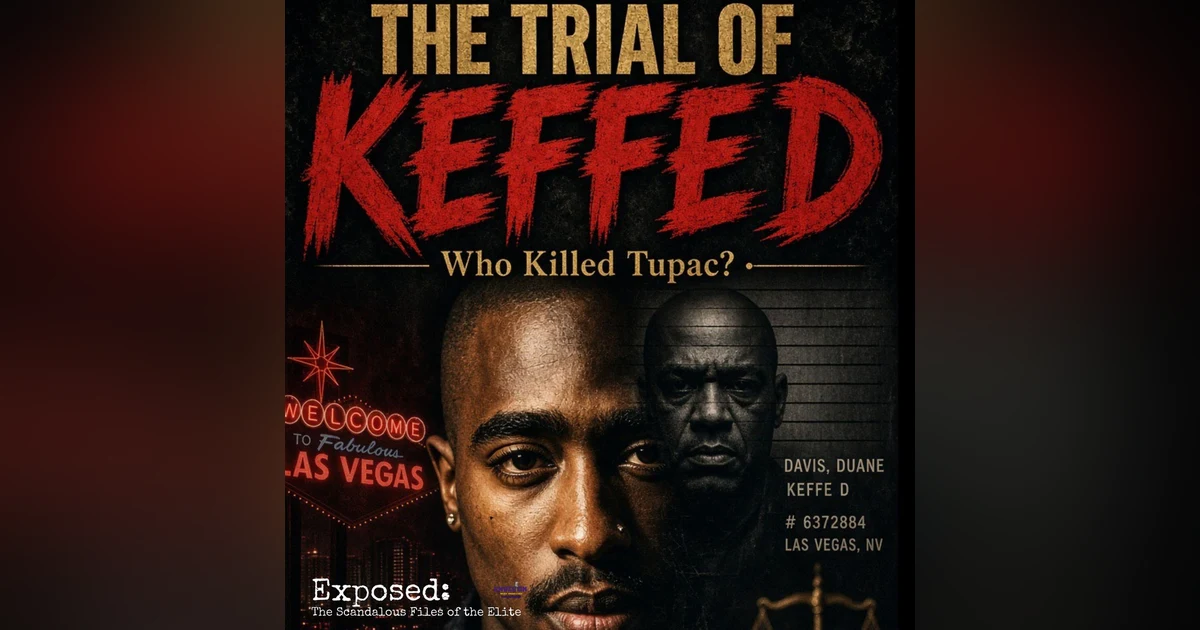


On Day 7 of the high-stakes murder trial of Duane “Keefe D” Davis, the man accused of orchestrating the 1996 drive-by killing of Tupac Shakur, the jury heard chilling first-hand testimony from one of the rapper’s closest friends and a deep dive into the gang hierarchy that prosecutors say put Davis at the top of the chain of command. Malcolm Greenidge, better known as E.D.I. Mean of the Outlawz, took the stand under a court order after initially resisting. A childhood friend, mentor figure, and group member who called Tupac a big brother, Greenidge described riding in the caravan behind Suge Knight’s BMW on the night of September 7, 1996, as the group headed toward Club 662.
He watched a light-colored four-door Cadillac pull alongside the BMW. Shots erupted from the back seat. He saw an arm and a gun extend from the vehicle — the arm appearing to belong to a Black man. Horrified, he later approached the stopped BMW, only to hear the wounded Tupac warn him: “Get on the ground, they’re going to shoot you.” Moments later, a police shotgun was pointed in his face.
The day also featured testimony from crime scene analysts who processed the 2023 search of Davis’s Henderson home, recovering production budgets, copies of Compton Street Legend, a 1996 Vibe magazine, and a scrapbook filled with contemporary newspaper clippings about Tupac’s murder. A firearms technician confirmed that all seven .40-caliber casings recovered from the original crime scene were fired from the same gun, with no matches in the national ballistic database.
Former Compton police gang detective Robert Ladd closed out key portions of the day by painting a clear picture of South Side Compton Crips structure. He identified Davis as a high-ranking “shot caller” and major narcotics dealer — the kind of OG who could order younger members to act and expect compliance. If Davis was in that Cadillac, Ladd testified, any shooting would have required his authorization.
Timestamps:
07:34 Home Search Evidence
10:50 Juror Knows Witness
14:25 Cartridge Case Analysis
17:59 Compton Gang Expert
29:19 Davis and Southside Crips
2:00:46 Little Owl's Custody
2:04:44 Field Cards and Identity
For commercial free early releases, bonus episodes and more! https://www.patreon.com/exposedpodcastfiles
Become a supporter of this podcast: https://www.spreaker.com/podcast/exposed-scandalous-files-of-the-elite--6073723/support.
0:20 Welcome back to Exposed Scandalous Files of the Elite. I'm your host, Jim Chapman. I'm back with the coverage from the seventh day in the state of Nevada versus Dwayne Keefe D. Davis trial. Now, yesterday, day six. The trial was completely centered around filmmaker Michael Dorsey and more of Davis' 2017 Death Row Chronicles interviews. So today, the prosecution, they shifted gears. An actual eyewitness from the convoy, physical evidence from Davis' house, and gang-related context testimony designed to explain this. the motive in this case. So court started around 930 in the morning and first up on the stand was Malcolm Greenidge. Now he's professionally known as EDI Mean.
1:16 He's a founding member of the Outlaws and he's one of Tupac Shakur's closest childhood friends. Now the Outlaws was a rap group that Tupac wanted to help by breaking them into rap music. And right from the jump, this guy made it known he was being forced to testify. He did not want to be here, much like many of the previous witnesses that we have covered. So Greenwich testified about his relationship with Tupac by saying, quote, a mentor, the list goes on and on, unquote. He also testified that he had a dream of becoming a rapper and that Tupac saw something in him and agreed to help make that dream come true, which led Greenidge to join the group that would eventually become the Outlaws, and they released an album with Tupac. Now, Greenidge further testified about Tupac's business plans at that time by saying, Tupac wanted to launch his own imprint called Machiavelli Records. Now, before you say, oh, that shows some kind of a motive that maybe Suge Knight might have killed him. The fact of the matter is it was supposed to be distributed and plans were that it was going to be distributed by Death Row Records. So Suge Knight is still going to get his piece of the cake, right? Now, separately, Tupac was also in talks with Quincy Jones, allegedly, for
2:47 independent business and film projects that would not involve death row, according to this witness. Greenidge then spoke of the night of September 7, 1996, leading up to the shooting. He said that he and others had come to Las Vegas that weekend specifically for the Mike Tyson vs. Bruce Seldon fight at the MGM Grand. and that Tupac spent part of the day gambling and that he did make some money. He actually won at the tables. He said that Pac told the group that they would go change clothes and that he would call them when he was ready and they could all head to the fight together. However, He said that phone call never came and he never attended the fight. He said later that night the group was traveling in a convoy toward 662, Club 662. Greenwich was in a vehicle position directly behind the black BMW driven by Suge Knight with Tupac in the passenger seat. As far as the shooting itself, he testified the group was behind Pac and Suge. They were stopped at a traffic light in the area of Flamingo and Coval Lane. And he testified, quote, we were at a light.
4:00 Mr. Shakur and Suge Knight were talking to some young ladies. We couldn't hear what they were talking about. And when those ladies pulled off, another car pulled up and started shooting at Mr. Shakur and Mr. Knight. The shots came from inside the vehicle. It was from the back seat, and the arm and the gun attached to that arm came from the back seat window. From my vantage point, they appeared to be African-American. Now, details that he provided included that the suspect vehicle was a light-colored, white or cream four-door Cadillac. He said his immediate reaction was that he was horrified. He then said Suge Knight made a U-turn and drove away, so Greenwich Vehicle followed the and at another intersection, Knight stopped again. Greenwich and others got out of their vehicle and approached the BMW to check on Tupac. And I found this interesting and also a little bit sad. Greenwich said, quote, when we approached the car, Mr. Shakur said to me, get on the ground. They're going to shoot you. Which, y'all, Pac is lying there, dying, and he was still worried about his friend. I thought that was Pretty cool. So Greenwich said that he turned around and there was a shotgun in his face. The person holding the shotgun was a police officer. Greenwich immediately complied and he got on the ground.
5:26 From his position on the ground, he said he could not clearly see Tupac's specific injuries, but he did observe that Suge Knight was bleeding from the head and was asking for medical assistance. for Tupac. A jury did submit a written question that was read in open court, quote, were shots that were fired from your crew toward the attackers? And Greenidge answered, not that I know of. On a follow-up from the defense, he did confirm he did not know whether anyone in the vehicles in the caravan had a weapon. So there's some talk back and forth about shooting back after this incident from Suge Knight and Tupac's peeps.
6:10 And there's some debate over that. Some people say they did, some people say they didn't. I don't necessarily know why that would matter, but there you have it. The defense did take over and Sam's questioning focused heavily on Tupac's relationship with Death Row and his future plans. And what he's trying to do there is tear down the fact or actually give a motive to the fact that, hey, there's another reason Tupac might have needed to be killed in some people's eyes. And he's trying to throw some blame on Suge Knight's way, right? Greenidge confirmed that there were proposed projects with Quincy Jones and they were intended to be independent and would not have involved death row records.
6:50 Sam also would press this guy on the limits of what Greenidge could actually see. He kept pushing the fact that, hey, you couldn't make a facial identification. You were kind of limited. as far as what you could see from your vantage point. All you could see is an arm and a gun. It could have been anybody, you know, things like that. Greenwich testified to a lot of things in the way of what exactly happened from his vantage point, but he wasn't able to say who was in that car. And that's an important part of the testimony, but it was significant. He's one of the few remaining people who was actually in the convoy that night and close enough to witness the shooting and and hear Tupac speak right after the shooting.
7:35 So after Greenwich, the prosecution turned to the September 2023 search of Dwayne Davis' home in Henderson, Nevada. the search that actually followed his arrest. Now, Jeffrey Scott took the stand. He identified himself as a senior crime scene analyst with Las Vegas Metro PD. Now, he testified that on July 17th, 2023, while working the swing shift, he responded to Kifidi's residence to document the execution of a search warrant. He was the first and initially the only crime scene analyst to arrive. He was later relieved by a co-worker. Her name is Stevie Thelebaum, and we'll get to her testimony in just a bit. His role was to photograph and document items of interest pointed out by detectives that were executing that search warrant. He was not there as a primary investigator looking for specific items, just basically there to process and preserve whatever documents detectives told him to. Prosecutors would display a series of photographs. They showed a picture of a Dodge Challenger parked inside the residence. They showed interior photos of the residence and documents inside of an envelope that made no particular meaning to me. They showed a three-page document that looked like it was a proposal for an episodic series, some sort of television product. It included a ledger detailing a total budget that was slightly under $ 1 million.
9:05 And on cross-examination, when shown certain photos, he stated he could not specifically remember whether he took those pictures or or somebody else did. Really, the defense didn't have a whole lot to ask him. He's just a guy taking pictures. He's a crime scene analyst. So his cross-examination, meaning defense attorney Michael Sanft, was very brief. Now, next up on the stand was Stevie Thellebaum, and she identified herself as a senior crime scene analyst, also with Las Vegas Metro PD. she testified that she responded as the relief for the guy that I just told you about at the Davis residence, Jeffrey Scott. And she documented the scene with her own photographs. Now, prior to testifying, she did mention she reviewed all the photographs taken at the location. And much of her direct examination consisted of walking through the jury's room. additional photographs from inside the home and the garage. They showed a bottle of 1995 Dom Perignon. They showed multiple books that were visible in the home, including Compton Street Legend, Murder Rap, The Confused Mind of a Drug Dealer, and a Vibe magazine that featured Tupac Shakur on the cover, which was a 1996 issue related to the case. And she confirmed she collected two specific items, The Book, Compton Street Legend, and That Vibe Magazine. Now, in the garage, detectives located two storage bins that contained what looked like a lot
10:38 of personal effects, and she discussed photographing these bins. And again, cross-examination for this witness, relatively brief. It focused on pictures and the collection process of those pictures. And then they take a break in court. And although this was not brought up until after lunch... The court had a problem. During the break, they learned one of their seated jurors actually knew a previous witness, and it's Jeffrey Scott, the guy I covered just before this lady. And that's a problem, but we'll get to more of that in a bit. Witness number four then took the stand. Her name was Justine Gaddis, and she was called to the stand because she was a homicide detective with the Las Vegas Metropolitan Police Department. She also testified that she was present during the execution of the search warrant at Kifidi's residence on July 17, 2023. She talked about the two storage bins from the garage and other items of interest that they took and impounded, if you will. She did say that certain items were later released back to Kifidi. She talked about specific items that were recovered, including a 1997 Compton Police Department search warrant document and return for a California address that was linked to Davis. She talked about some books.
12:03 She talked about that Vibe magazine that they took. She talked about a jacket containing local gang references. She talked about numerous news articles and magazine clippings on Tupac Shakur's shooting and his death, as well as some articles on Orlando Anderson, some articles on Biggie Smalls, some articles on Death Row Records. and she said they also seized multiple electronic devices, including laptops, external hard drives, tablets, and phones. Gaddis also confirmed that former detective Clifford Mogg, he had been the primary Las Vegas Metro PD investigator in the Tupac homicide investigation prior to his retirement in August of And on cross-examination, she acknowledged that Mogg retired from the Las Vegas Metro Police Department in August of 2023 and then subsequently became a contract investigator for the Clark County District Attorney's Office. Now, the defense questioning, it focused more on the absence of formal evidence. officer reports that were written by Mogg before or after his retirement. This guy apparently did not log a bunch of things, as you should, as you're supposed to. And Gaddis testified she personally had not read any officer reports written by Mogg. Now, she took over this investigation. That's kind of a problem. Where's all your reports? How do you not write anything down?
13:34 Gaddis also testified that she participated in travel to California to interview multiple potential witnesses and because several out-of-state witnesses were resistant or uncooperative, the Las Vegas Police Department obtained authorization to ping phone locations to locate these witnesses. And she said she coordinated with local and California law enforcement to execute an arrest warrant for an uncooperative witness by the name of Corey Edwards in Compton. So cross-examination starts on her and continued for about 30 minutes. It's centered on the chain of investigation and particularly focusing on Mogg's role the original investigator and how he didn't take any notes or anything. And then basically Gattis is dismissed. There wasn't a whole lot of fireworks there with the cross.
14:26 Witness number five is then called. His name was Mark Hatton, and he identified himself as a Las Vegas Metro Police Department officer who had previously worked as a firearms unit technician. And his testimony was centered around the spent cartridge cases recovered from the scene at the Tupac Shakur shooting in Las Vegas. He stated seven fired cartridge cases were recovered from the roadway. He said the cases were head-stamped 40 S & W, which means they were fired from a. 40 caliber weapon. And he said they were spent shells linked to the shots fired at the BMW carrying Tupac Shakur and Suge Knight. And it was interesting that he mentioned, unfortunately, at the time of the shooting, the National Integrated Ballistics Information Network, known as NIBIN. It's a database, y'all. It was not fully built at that time. And this is essentially like a DNA database, okay? It's like CODIS. You can enter bullets into this database, and it can see if there were any other shootings around the country where they were fired from that particular gun. But at the time, this was brand new. Actually, the system didn't even start until 1997, but it was conceptualized back then. So even when it started in 1997, you have to build up the database. It just doesn't automatically have every bullet in the world inside of that database. So he said that
15:58 was really of no use. However, the casings were entered in 2003, and he said that search produced no matches to any other crime scene or recovered firearm in the system at that time. Now, in 2023, as part of a renewed investigation, Hatton was tasked with re-examining these same seven casings. And I would imagine this was done because they knew this trial was about to come and they wanted to prepare for it. And they're hoping maybe, remember, they've never found this gun. They've never found the gun from the shooting. So they're hoping that maybe somewhere this gun has all of a sudden appeared. So they had him re-examine these. And they had some other technology now in 2023 that may be able to locate the gun. However, although it could confirm that all seven casings matched each other, it could not find any hits from another gun. that was in the possession of police anywhere in the country.
17:01 So cross-examination then took over with Hatton. It was very brief. He basically went over the same thing he did with the prosecution. I do want to circle back quickly and let you know about that A witness who a juror actually knew, and this came up today during a break in the trial. If you'll remember that first witness, Mr. Scott, a juror, tells the judge, hey, I know that guy. Is this a problem? They pulled him back in the chambers during another break. And they said, look, can you still be fair and impartial even though you know this guy? And he said, yes, he could. That's very common. You can still be a juror if you know someone. But it could also open up an appeal opportunity in the future.
17:53 And that's the risk that you take. But they did not dismiss the juror. And he is still a juror in this case. And now we're getting to the witness of the day. And that was Robert Ladd. And Ladd identified himself as a retired Compton Police Department officer who spent the bulk of his career in the gang unit, approximately 12 years. And I've seen a lot of interviews with this guy. He has been very vocal. since he has, I guess, retired. But he was a big-time gang homicide investigator, and he worked those streets of Compton, y'all, in the early 1980s, all the way to where the Compton Police Department was disbanded in 2000. So the bloody years, if you will, of Compton. And he gave some very interesting testimony about So I'm gonna play just his testimony for you now.
18:49 And this is. Gonna give you as clear a look as you can get of what gang activity was like in Compton in the 90s through the eyes of an actual gang unit cop. It is very interesting, though it is lengthy, but I'm telling you, it's a must hear. So I'm gonna play that now because he was the last witness of the day. And I will be back tomorrow. Crime Wire Weekly will air. So you won't have an episode of the Kifidi trial coming your way tomorrow. The next one you will get will be Monday. And you're going to get both days eight and nine on Monday. But here's that clip. And I'll be back next episode. Much love.
19:45 May I please have you state. And spell your personal last name for the record? Robert Lashley. R-O-B-E-R-T-L-A-D-D. You may proceed, Mr. Paul. Thank you, Your Honor. Good afternoon, Mr. Ladd. How you doing, sir? Sir, can you tell us a little bit about your employment? Yes, I'm retired now, but I was a police officer for 32 years. Where did you start your career? I started in 1983 when I was hired by the city of Compton. And what was your initial position with the city of Compton? A patrol officer. And then did you change positions at some point? Yes, when I was a patrol officer for several years.
20:28 And that really was my beginning introduction into the world of the Crips and Bloods because most of the radio calls that we got in Compton revolved around gang activity. So I got to learn their, you know, the way. They dress, their territories, how to read graffiti. And then in 1988, I was promoted to the gang unit. And for our edification, how big is Compton? Compton's a 10-square-mile city. It had a population of 100,000 people. And we had 55 active gangs in this little 10-square-mile city. Interesting. Is it fair to say that most of the gangs were affiliated either with the Crips or Blood or Mob and various subsets of those types of groups?
21:16 Yes, it was basically Crips, Pirus, and Hispanic gangs. Mr. Palal, you've reminded me that this may be a good time to read the Tavares Instruction. You're right. Ladies and gentlemen, you are going to hear testimony regarding drug trafficking, conspiracy, federal convictions, as well as gang affiliations. These are not offered to show the defendant's propensity to commit crime or any other improper purpose, and you may. Not consider it for those purposes. It is only offered to establish the credibility of his prior statements made by defendant, motive, and identity. You may proceed, Mr. Paul. Thank you, Your Honor. All right, and then tell us a little bit about your career in terms of, you said in 1983 you you became a patrol officer at your patrol in Compton, which had you responding to a lot of gang-related calls.
22:07 Is that correct? That's correct. And then you ultimately. Go to the gang unit. Is that correct? Yes. And were you assigned a partner? Yes, my partner was Tim Brennan. And then who was the lieutenant in charge. Of the gang unit at the time? Lieutenant Reggie Wright Sr. During your time as a gang detective, did you have did you also respond to a lot of gang activity in Compton? Yes, when I got into the gang in 1988, Compton was a very violent city. We were averaging 70 to. 80 homicides a year and hundreds and hundreds of shootings. So my responsibilities now were to investigate all gang-related crimes, gather intelligence, and photograph and identify gang members. And I also went out on a a daily basis and try to contact gang members and talk to them when I arrested them. And also, I try to talk to them out in the field so I can kind of build a rapport with these gang members out there.
23:09 Okay, so, I mean, you'll have to forgive me, but when I think of a officer detective rolling through Compton and trying to start up a conversation with a gang member, it seems weird to me that the gang member would want to interact with you at all. Like, how did you develop that rapport? Well, it doesn't happen overnight. It takes several years. You just got to treat them fair, and you have to talk to them like you'd want to be talked to. And we didn't sweat them on the small stuff. We let patrol kind of do that. For instance, if they were out there just drinking some beer or smoking some marijuana or whatever, we'd come up and we'd talk to them and say, man, we're not going to sweat you on that stuff. So over time they say, all right, this guy's pretty cool.
23:55 We'll talk to him. And then your partner, Tim Brennan, he ultimately was given a nickname Blondie. Is that right? Yes. DJ Quick wrote an underground song about it, and it was called Blondie. So everybody in Compton knew my partner was Blondie. He kind of became famous over it. Can you tell me a little bit about any type of gang training that you've given as somebody who has... dealt with LUDs and CRIPs in Compton specifically? Yes. It was from 2001 to about 2010 that my partner Tim and I, we taught at many national seminars right here in Vegas and in California also. And this is where thousands of police officers come from all over the country as well as around the world to learn about the CRIPs and LUDs. And so we taught them about that.
24:57 You had mentioned that in a city as small as 100,000 people, you would have somewhere between 50 to 60 or more homicides a year and then additional hundreds of shootings. Can you tell us a little bit. About that, about the volume of these types of cases? Were they mostly gang-related shootings and homicides? Most of them were, yes. Okay. In 1993, I was promoted to gang homicide detective and started handling all the gang homicides, too. I did this till the year 2000. And so I spent 12 straight years in the gang unit. And during that time, I handled hundreds of homicide cases and thousands of shootings. and I actually talked to thousands of gang members and I got to know really the way they talk, the way they think, the way they act, basically their overall mentality about gang life in general.
25:55 I want to talk to you a little bit about some of the difficulties associated with investigating gang cases. As somebody who did hundreds of investigations and homicides and thousands of shootings, did gang cases in particular present investigatory problems? Absolutely. Gang cases, they're the hardest to solve, especially in Compton because there's a code out in the street where you're not supposed to talk to the police, you're not supposed to go to court, or you get labeled a snitch. And the other problems that we have is that the good citizens that actually see what happened and want to come forward, they're afraid to. They get intimidated by these gangsters, and so you really... It's really hard. We really don't have any witnesses, so we kind of rely on a lot of informants to get our information out there in the streets.
26:51 And then you mentioned relying on informants, but is it fair to say that if somebody wants to, if a case needs to be prosecuted or brought to court, somebody can't remain a. Confidential, reliable informant. They actually have to reveal who they are. That's true. And as part of your investigating homicides and shootings, was that a problem to get people to come forward and testify as opposed to giving you information on background? Yes, it's very difficult because when they come to court, if you can get them to come to court, they don't want to get involved. They don't want to say anything, so they're not cooperating. And you said being labeled a snitch was something that was frowned upon. In your training and experience, were there any other types of consequences for people who are labeled snitches in Compton, Galveston, and the gang life?
27:46 Absolutely. These guys take. The code very seriously, and if you get labeled a snitch, it's probably the worst thing that can happen to you as a gang member. You're probably going to have to leave the state if you don't want to get severely beaten down all the way up to getting murdered. They take it very seriously. Now, I'm going to ask you now about a gang in particular. I'm going to ask you about the Southside Compton Crips. During your time in Compton, California, were you familiar with the Southside Compton Crips? Yes, sir. And can you tell us a little bit about the Southside Compton Crips?
28:28 Yes, the Southside Crips, they're located in the southeast portion of our city, and they're area, one of our larger gangs, it's probably a half mile in every direction. There was an excess of 100 documented active gang members at the time. And they identified themselves by wearing. The color blue. So when you contacted a Southside Crip member, he's going to have something blue on him. Blue shoestrings, a blue rag, anything blue identifies him with being a Crip gang member. And also the Southside Crip.
29:08 Members adopted the Seattle Mariners baseball cap. It's a blue cap. It had an S on it. And to them, the S. Stood for Southside Crips. Now, I want to direct your attention to specifically the mid-' 90s, 1995, 1996. Were you familiar with somebody by the name of Dwayne Davis? Yes. Was he somebody that was a high-ranking person in that gang or a low-ranking person? In that gang? Well, as high as you can get, yeah. Now, what are the different levels of gangsters involved? in Southside, or just general gangs? Are there different levels?
29:58 Yes, there's definitely a hierarchy within the black gangs in Compton. There's really three phases that these guys go through. The first phase is the BG, or baby gangster phase. And this is the time when they're just joining a gang, and usually, most of the time, not all the time, they get jumped in. And by getting jumped in, you have to show how tough you are, so it probably lasts about a minute, maybe two minutes, where five, six, seven gang members are gonna try to beat this guy up, and he's gotta fight with them to show how tough he is, and if he passes, he gets to join the gang. And these are the ages between 12, 13, to 15, and 16, and this is the beginning stages, so they're out there doing low-level crime, such as graffiti, selling drugs for the older gang members, and being lookouts.
30:59 And then is there a level above that? Yeah, the next level we call the gangster phase, and that's from the ages from 15 to 16 to about 25 or 26. Now this is the stage where these guys do the most violence. They're the ones out there that are committing the drive-by shootings and murders and robberies and carjackings. What they're trying to do is they're trying to earn their stripes for the gang so they can get kind of respect within the gang. So this is the most violent time for these gangsters. And then is there another level. In the hierarchy? Yes, the last level is ages 25 to 26 on up.
31:44 And these are the guys that, a lot of them went to prison during their gangster phase, and a lot of them are getting older now, and they put in the work. They call it earning their stripes within the gang. They're getting their respect. Now they're the older gangsters. And these guys become the leaders or shot callers of the gang, and they tell the younger officers what to do. And, again, they take this very seriously. They're If the OGs tell younger gangsters what to do, they. Do it without hesitation. If they don't, there's going to be severe consequences I've seen all the way from severe beat-downs all the way up to murder.
32:25 Now, in that hierarchy, so we have baby gangsters, what was the middle one called, just gangsters? Gangsters. Gangsters, and then like OGs. Yeah. Did you happen to know in the mid-90s where Dwayne Davis stood in that hierarchy? Yes, he was a shot caller. Your Honor, may we approach? All right, so you're saying that Mr. Davis was a shot caller within the Southside Compton Cribs? Absolutely, yes. And what does that mean? Well, he could tell the younger gangsters what to do, and if they don't listen, like I just said, there's going to be severe consequences. The younger gang members are supposed to do what they're told without hesitation.
33:15 Now, were you aware of whether or not Mr. Davis was a narcotics trafficker? Yes. He was definitely a high-level narcotics dealer. Compton, we're a small city, and we didn't have the manpower or the resources to go after a major narcotics dealer like Mr. Davis. But during my time in the gang, we were approached by two different agencies, the FBI task force, really the DEA and FBI task force, and they would come to us because they wanted information on Mr. Davis' fellow gang members who he hung around with. And basically they would tell us that he's trafficking narcotics across the United States all the way to the East Coast.
34:06 Now, I want to talk a little bit more about Mr. Davis. Would you see him sometimes in Compton? Yes, many, many times I've seen Mr. Davis. And can you, do you see him in the courtroom today? Yes, I do. Can you please point him out and identify an article of clothing he's wearing? Yeah, he's a male, black sitting at the end of the table wearing what's either gray or black suit. Your Honor, may the record reflect the identification of the defendant in this case? It will. All right, and. Would Mr. Davis dress in normal gangster attire like you were talking about before, or would he dress differently?
34:48 No, his later years after he became the leader, whenever I'd see him, he'd be nicely dressed. He'd have the brim hat on, and he wouldn't have anything gangster-like on. He was always well-dressed. Okay. I'm going to ask you now about somebody by the name of Orlando Anderson. Were you familiar with Mr. Anderson? Yes, I was very familiar with Mr. Anderson. I had many, many contacts with him. Can you tell us how you first became aware of Mr. Anderson's involvement in gang activity. If such activity existed? Yes, I guess you could say I was there for his initiation into the gang. My partner Tim Brennan and I, we We're at a fast food restaurant getting something to eat, and we're in the drive-thru. And this particular restaurant was right adjacent to Southside Creek Territory. And there's an alley that runs just adjacent to it. So we got our food, and we were driving out of the fast food restaurant, and all of a sudden we heard a barrage of shots.
35:56 We could hear them hitting our car. and heard about five or six shots, right? So after the shots stopped, we looked at each other, jumped out of the car, made sure we were all right, and we ran to where the shots were coming from. And witnesses were pointing down the street, and I saw three male blacks running down towards a known gang hangout. So these guys ran in there. We called the troops. We subsequently arrested Orlando Anderson and two other and during their interviews they said that was part of their initiation. They didn't have to be jumped in if they tried to kill me and my partner. So they were automatically in the gang and Orlando Anderson wasn't the shooter during this incident.
36:46 Was not. Was not, yeah. Now, were you familiar, did Orlando Anderson to your knowledge have any relation to Dwayne Davis? Yes, we found out that Orlando Anderson was Keefe's nephew. I'm sorry. That's fine. And Keefe is what Mr. Davis went by? Yeah, Keefe D. Yeah, Keefe D. Is that kind of how you're used to referring to Mr. Davis? Yeah, it's kind of known by their nicknames, really. Okay. And then were you also familiar with somebody by the name of Terrence Bubble Up Brown? Yes. I had many contacts with Mr.
37:27 Brown. He was kind of an older gangster, call him a wobbler. I still consider him in the gangster phase, but he kind of was a little older too. And I guess in the mid-' 90s, what phase or what level would you say Orlando Anderson was? Definitely gangster phase. And then did he go by any nicknames that you're aware of, Orlando Anderson? Yes, Baby Lank. And then were you familiar with somebody by the name of DeAndre Smith? Yes, DeAndre Smith, many contacts with him. Again, admitted to me, Southside Crip member. His nickname was Big Dre.
38:12 Why was he called Big Dre? Because he was a big man. He was like 6'4, probably 300 pounds. He was a big guy. Were you also familiar with. Gang called Mob Pirou. Yes. Can you tell us about Mob Pirou? Yes, they're a gang in the city of Compton and they're located in the northeast portion of our city. Their gang used to be called the Looters Park Pirou. That was their territory. In about 1975 or 76, a group of kids over there wanted to start their own gang and have their own territory, so they started a Mob Pirou, which stands for Members of Bloods. Now, their area is probably a quarter mile in each direction, and there's probably 45 to 50 active gang members in this gang. And they identify themselves by wearing the color red. And just like the Crips wore anything blue, the Pyrus or Bloods wear everything red.
39:19 Now, we're going to talk a little bit about. the flare-up between Ma Pai Ru and Southside Crips, but even before any of the music, or any of the particular 1990s issues that we're here to discuss, would it be fair to say that Ma Pai Ru and Southside Crips were natural rivals? Yes. The Bleszend Crips never got along since they originated way back in the early 70s. They're kind of like just natural enemies because one wears red and one wears blue. Were you familiar with whether or not Ma Pairu associated with any particular record label in the mid-90s?
40:04 Yes, Death Row Records. Do you know who ran Death Row Records at the time? Yes, Suge Knight. Were you familiar with Suge Knight prior to his ascension in Death Row Records? Yeah, we had contact with him before, but not many, because he really wasn't a gang member. He didn't really hang out, but he grew up in that neighborhood. I'm going to ask you about some of the people that you would associate with Mob Piru. Earlier, I think now it's last week, we met with somebody named James McDonald. Are you familiar with James McDonald? Yes, very. Do you recall what his nickname was?
40:45 Yes, Mob James. Now, would you go to the McDonald's house in Mob Piru territory? Yes. Mob James' house was kind of like the main hangout for the Mob Piru, Looters Park Piru. He had two younger brothers, Buntree and Timmy Roo, so. This was the main hangout for the Mob Pyrus, and we would go there. If you wanted to find the Mob Pyrus, that's the first place you'd look. So we had many run-ins at this Mob James house. And were you familiar with somebody by the name of Trayvon Lane?
41:26 Yes. States Exhibit 60. Do you recognize the person depicted in States Exhibit 60? Yes, that's Trayvon Lane. His nickname is Tray, and he's a member of the Mob Pirate. Are you familiar with somebody by the name of Roger Williams? Yes, I am. His nickname is Neckbone, and he's also a member of the Mob Pirate. Actually, I think I skipped something with Trayvon Lane. You had talked about the three levels of being a gangster. What level would you say Trayvon Lane was in. The mid-' 90s? Gangster. So like the middle, most violent level. Yes.
42:06 And then in the mid-' 90s, what level was Roger Williams? Definitely gangster. In the mid-' 90s, what level was Mob James McDonald? I would consider him an OG. And then. You had mentioned Buntree. Is that Alton McDonald? Yes, it is. And in the mid-' 90s, what level would you describe him? Gangster. And then are you... Now, in that neighborhood, same neighborhood, there was. A person that lived there or grew up there named Reggie Wright Jr. Is that fair to say? Yes. Were you familiar with Reggie Wright Jr. Very, yes.
42:46 And when you say very, how are you familiar with Reggie Wright Jr. Well, he used to work at the Compton Police Department, be a full-time police officer, I think, in around 1988. He was only there for five years because he got injured and had to retire. Now. I'm going to ask you something, I guess, culturally about gang life. How important is one's reputation in the gang world? Very. These guys live for respect. That's how they live their lives. And then if somebody felt as though they were disrespected, what would you expect them to do?
43:30 They have to retaliate. If a gang member is disrespected, they have to retaliate or they're considered a punk out in the streets. And if you get considered a punk out in the streets, you kind of lose your respect and credibility. And what's the consequence of losing your respect and credibility in the streets? Well, I mean, you're going to be nothing in that game, really. And then we talked about the hundreds of murders that you've investigated and the thousands of shootings you've investigated. Was retaliation, in your experience, ever a motive for those shootings or murders?
44:11 Yes. I've investigated like a thousand crimes, and I would say 90% of them are because of disrespect. And so when you get disrespected as a gang member, you can expect some sort of retaliation. Now, you had heard... gathering intelligence about this Lakewood Mall incident. Is that fair to say? Yes. But you weren't there, were you? No. Just so we're all clear, Lakewood Mall, is that in Compton? No, it's several miles out of Compton.
44:53 And so that wouldn't be something for you to investigate? No. But as a gang expert and a gang investigator.... What, to you, is the significance of somebody trying to rip off a gang member's chain? Most definitely disrespect, especially the chain that they were trying to take at the Lakewood Mall. It was a highly prized medallion, and these guys wore it like a badge of honor, so them trying to steal this chain and beat up on this subject, it would be a major display of disrespect. So now this guy's got to go back to the Mob Piru and Death Row records and tell them what happened. So the next time they see each other, it's going to be on, like on site.
45:46 As soon as they see each other, some confrontation is going to happen. And you had said that, we're talking about the chain, we're talking about that Death Row chain, is that right? Yes. And you had mentioned that they were wearing it with great pride. By they, who are you talking about? The entourage of Suge Knight, that's Trayvon Lane. Well, back in 95, Suge Knight gave these out as Christmas presents to his entourage, like just, you know, Trayvon, Neckbone, Buntree. They gave one to Reggie Wright Jr. So not too many people had them at this time. So it was a prized possession to these guys.
46:28 Now, I'm going to take you forward to September 7th of 1996. You become aware of a shooting that occurs out here in Las Vegas September 7th, 1996. Is that correct? Yes, sir. How do you become aware of the shooting that occurred here on September 7th, 1996? Well, I was at home, and I get a call from my boss, who's Reggie Wright Sr., and he tells me that, hey, Suge Knight and Tupac were just shot, Tupac's in critical condition, and get ready because it's coming back to Compton. He told me that they thought the Southside Crips were responsible for the shooting.
47:13 And so when he's telling you this, do you now have to have a response to this, or why is he telling you specifically to get ready? Because when you disrespect a shooter, the biggest rap mogul on the planet, and the biggest rap star on the planet, and he surrounds himself with Imam Piru, then there's gonna be some sort of retaliation. And all these guys were from Compton. So when they got back to Compton, we expected a war. And was there a war? There definitely was a war. Can you tell us about that?
47:53 So in the immediate aftermath of the Tupac Shakur shooting, Did you. Notice an uptick in violence in Compton? Yes. Two days after Tupac was shot was our first shooting. One of the OGs was at a store. On Alondra Boulevard in Compton, and. He was shot in the back several times, and a 10-year-old little girl got caught in a crossfire, and she was hit, and. She was in critical condition. And the guy that was shot was a Southside Crip member, and again, he was a shot caller for the Southside Crips. His name was Darnell Brim. And we've heard Darnell Brim's name before here, but was Darnell Brim part of the same.
48:39 Subgroup of the Southside Crips as Wayne Davis? No. He was a Southside Crip gang member like they all were, but there was two factions of it. There was a group called the Birth Crew, which Mr. Davis ran, and then there was a Glencoe crew that Darnell Brim ran. And is it fair to say that at some point there was a conflict between the two groups that caused the factionalization? Yes, there used to be one big happy family, but there was a disagreement over drugs, or some drugs were stolen from one of the Burr's crew members, and that's when they split apart. They start fighting with each other, and they split apart into two different factions.
49:25 Now, in your understanding of gang culture, would. Ma Pairu, if they're seeking defense, retaliation, would they be discerning about which crew or which part of the Southside Compton Crips they were shooting at, or would it just be you find a Southside Crip and then you start shooting? Yeah, they don't care. When they go hunting for somebody, they don't care which. Faction he's from. If he's a Southside Crip member, they're going to go after him. Now, certainly that wasn't the only shooting that occurred in the immediate aftermath of the two Boxer Corps shootings, is that correct?
50:05 That's correct. We had three murders and ten attempted murder drive-by shootings that happened within a ten-day period in Compton. And is that when, and were those shootings going back and forth related to Ma Pairu and Southside Crips? Yes. So, I mean, you had mentioned earlier, there's 53 or 50 plus gangs in this. Ten square mile radius, but During this particular heightened sense of violence, what was happening was the shooting back and forth between Ma Piru and Southside Crips. Yes, but basically what it told me as a gang investigator, right after the first shooting of Darnell Brim, to me there was no doubt in my mind that the Southside Crips were responsible because the Ma Piru, had to retaliate, and they had 54 other gangs to choose from, but they went right.
51:02 After the Southside Crips. So there's no doubt in mind he was responsible for shooting Tupac and Chignot. Now, as a result of this, in October, you and your partner, Tim Brennan, put together a multi-house search warrant. That is correct. And what was the purpose of this search warrant? Well, we had two purposes, really. One, there was a war in the city of Compton, and innocent people were getting shot, as well as gang members. And so we wanted to put a stop to that. So by hitting houses on both sides, both the Pairus and the Crips, we wanted to quell the violence and try to stop it.
51:50 The other reason was we wanted. To try to help Las Vegas PD with their investigation of the shooting of Tupac and Suge. You said you wanted to help the Las Vegas Metropolitan Police Department in their investigation of who shot Tupac and Suge. Can you elaborate more on how you believe this search warrant might help Metro in its investigation? Yes. The way we handle gang-related homicides is When we did the search warrant, we'd find a reason, hopefully, to arrest them. We'd find guns or narcotics. In their house, and then we'd bring them down to the station. So you would have all the players that were involved, like, that we heard about that was involved in the shooting of Tupac Shakur. So we rounded them all up, and hopefully Las Vegas PD would come down and try to interview them, try to get one of them to cop out or... try to put him in Las Vegas. Whatever they want to do on their investigation of the murder, we rounded up all the people for them.
52:58 So that's how. We helped them. So the search war is sort of two-purpose. You have an active war going on, and you're trying to slow the violence in Compton, but you're also thinking, well, maybe we can get some of the folks who we think might be involved in the Tupac shooting to start talking as well. Correct. And.... Did Las Vegas Metropolitan Police Department send detectives. Out here for that purpose, or out there for that purpose? Yes, they sent two detectives. Now, with regards to the search warrant itself, were a number of firearms recovered as well? Yes. And was part of the goal that maybe not only just take the guns off the street.
53:39 For the Compton War, but was there a hope that maybe the firearm for the Tupac Shakur murder. Might be recovered as well? That's correct also. It's fair to say that that did not happen. That's correct. I'm actually going to approach with states proposed exhibit number 161. Okay. I'm showing you what's proposed states exhibit number 161. I've got to get my glasses on. No problem.
54:25 Do you recognize what state's proposed exhibit 161 is? Yes, it's a search warrant. And can you open it up and throw it? Do you recognize the search warrant? Yes, I do. It was a search warrant that we prepared, well, Tim wrote after the Tupac shooting. And did you assist him in the investigation that led up to the search warrant? Yes. And did you assist him in giving him the information in order to get the probable cause? Definitely, yes. And then did you also assist in executing that search warrant? Yes. Any objection, Mr. Smith? So admitted. Now, there's been some allegation that the Compton Police Department was only focused on the Southside Crips when it came to trying to stop this war and stop this violence. Is it fair to say that among the houses that.
55:26 Were searched included a large number of Ma Pai Ru houses along with Southside Crips houses? Yes, definitely. We hit many houses on both sides. And is it fair to say that is a total of 38 residences that were looked into? Yes. And to include members of Mount Pineroo. And South San Joaquin Crips. Yes. Now, do. You wish to approach her? No. I'm going to show you what's been previously marked as States Exhibits 162 and 163. Do you recognize what these are?
56:06 Yes. What are they? These are evidence that we collected at the scene. Okay. And without going into the addresses, is it fair to say that these were evidence that were collected from Dwayne Davis' house and Dwayne Davis. Family's house? Yes. Okay. Now I'm going to move State's Exhibits 162. And 163's evidence. Any objection? No objection. So admitted.
56:51 Okay, I'm going to first turn your attention to States Exhibit 162. Yeah, you just want. Me to avoid the address, don't worry. We have to avoid the address, so maybe take it off me. Jessica, maybe take it off me while it comes up so we can avoid the address itself. Page, please? Actually, no, I'm sorry. Can you do the second page first?
57:31 Okay. Yes. Okay, so this is the. The first address we're going to talk about here, and again, we're not going to go into what the actual address is, but do you recognize the people that are listed that were located at the address? Yes. And fair to say they were members of Mr. Davis' family? Yes. Now I'm going to turn your attention to the next page.
58:20 And under line number five, do you see what's listed there. As the receipt? Yes. And line number five is one hotel's receipt. Is that correct? Yes. And then line number six is one Compton Municipal Court subpoena. Is that correct? Yes. Then I'm going to show you States Exhibits 163, if we can take it off us. For a second. Can you take it off us for a second?
59:25 Give me half a second here. Sorry, can we approach? I think you just have to show it to him, Mr. Paul. I don't think we can put it up. Okay. This is what it says. So I'm showing you page three of States Exhibit 163. Can you tell us what this document actually is? Yeah, it's a receipt for property taken. And then It actually mentions who is taking some of the property here, doesn't it? Yes. And who's that?
1:00:06 Myself. And then one is a letter from the Excalibur Casino. Is that correct? Yes. And then the other is an envelope addressed to Orlando Anderson, is that correct? Yes. And then the third is miscellaneous bills addressed to Orlando Anderson as well, is that correct? Yes. Yes. And all these three items were collected by you. Is that fair to say? Yes. So from Mr. Davis' home, and we'll start with 163, we have from Mr.
1:00:49 Anderson's home, we have a receipt from the Excalibur. Is that correct? Yes. And then from, and is part of the reason why you're collecting that receipt is because it's relevant to the investigation as to who shot Mr. Shakur. Yes, we thought it might be significant that it showed that Mr. Davis was in Las Vegas at the time of the shooting. I guess this one is Mr. Anderson, correct? Yeah. And then from Mr. Davis' house, there's also a receipt, a hotel receipt that was collected. Is that fair? Yes.
1:01:49 I'm going to show you space 160. We're not going to talk about the addresses specifically, but the two addresses attributed to Mr. Anderson and Mr. Davis, one is at the top and then one is at the bottom with a red dot. Is that correct? Yes. It's fair to say that they are very close to each other. Yes. I'm going to move 160 to evidence. Any objection? No objection. So, Mr. Anderson, was he one of the people that was caught up during the search warrant, this 38-house search warrant?
1:02:35 Yes. And was Mr. Davis around during the 38-house search warrant? No, we couldn't locate him. So, you were able to locate Mr. Anderson, but Mr. Davis was just not around. Correct. And you don't know why or how that is. That's correct. But with regards to Mr. Anderson, it's fair to say Mr. Anderson at that point is a person of interest at least in the shooting of Mr. Shakur. Definitely, yes. And then at that point, do you. Make him available for questioning with Detective Becker from LVMPD? Yes. And does Mr. Becker make an attempt to question Mr.
1:03:17 Anderson? Yes. And did any useful or relevant information come out during the course of that questioning? Not that I was aware of. Now, let's fast forward a little bit. You are aware that six months later, Christopher Wallace, also known as the notorious B.I.G., also known as Vicky Smolsky, He was killed in Los Angeles. Is that correct? Yes. Now, was that in the Compton area? No. So were you responsible for the investigation into Christopher Voss? No. But did you end up assisting the LAPD in trying to...
1:04:02 execute search warrants in an attempt to gather information on the murder of Christopher Wallace. Yes. Why were you the person, or you and Mr. Brennan the person, that LAPD would ask for assistance? Because we knew who all the players were, and we told them at the time that they had a little internal feud going with each other, and we were getting ready. To do search warrants on them. So you were getting ready to... they were having an internal feud. Is it fair to say that the 1997 search warrant served a dual purpose in a similar way that the 1996. Search warrant served? Yes. So, like, in 1996, you have a war between Ma Pairu and Southside Crips, and you're also trying to see if you can get any information related to the Tupac Shakur murder. Is that fair?
1:04:52 Correct. And then in 1997, you had mentioned that there was an internal feud that had gotten violent. Is it fair to say that the Burris Street Crew and the Glencoe Street Crew on the Southside Compton Crips, that they had started engaging their own violent view. Yes, definitely. And as a result, and at the same time, there was some question as to whether or not members of the Southside Crips may be involved in the murder of Christopher Watts. Correct. And so were those two goals, or those two functions, part of the reason or the basis for executing such forms.
1:05:32 Yes. Now, I'm going to show you what's been previously admitted as States Exhibit 136. Do you recognize States Exhibit 136? Yes. This is a cert point we did on. And we're not going to talk about addresses by agreement, but It's a search you did on a different house from the houses that you did in 1996. Is that correct? Yes. And this is a different residence that was associated with Mr. Davis. Is that fair? Yes.
1:06:28 Page 4, 136. It's not actually 136, but it is. Just give. Me a second. Of course, it's about this genre. We're just pulling that out. Sure. Jessica, you can put it on me. And Mr. DiGiacomo, do you mind zooming in a little bit? Yeah, I'm trying to figure out how to make the zoom work on this. The zoom tool's not working.
1:07:18 Mr. Lab, we're going to do this the old-fashioned way. It's going to be up there, but I want to show you page 4 of 136. It's still up there on the screen as well. On page four, we have another receipt of property taken. Is that right? Yes. And on line four, what do we have? Let's see. A money due bill for the Monte Carlo Casino. Now, in relation to this search warrant as well as the other search warrant, really, you can only take property that would be related to the investigation, correct? Correct. So, like, if I couldn't take just any random property just because I have a search warrant, can I? No.
1:08:01 You have to take things that are related to the actual search warrant. Correct. Now, I am going to ask you, did you spend, you said you had worked at Compton until about, how long, actually, let me rephrase. How long did you work at the city of Compton for? From 1983 to 2001. I'm sorry, 2000. Okay. Is it fair to say that at some point the Compton Police Department got swallowed. Up by the L.A. Sheriff's Office? Yes. Did you sign on to the L.A. Sheriff's Office after that? Yes.
1:08:43 Do you recall approximately how many of the Compton police officers stayed with the L.A. Sheriff's Office? Oh, go ahead. I don't want it to be like yesterday where we keep lining up with each other. Do you recall how many of the Compton police officers were hired on by the L.A. Sheriff's Office when L.A. Sheriff's Office took. Over Compton Police Department? Yeah. I'm not sure of the exact number. I think there was like 103 of us, and I think all but two were hired by the Sheriff's Department.
1:09:23 Now, you ultimately left the L.A. Sheriff's Office, is that correct? Yes. And then where did you go to work after that? I laddered over to Agency Garden Grove PD in Orange County. Probably a little bit safer than the Compton Police Department. You could say that, yes. It was still a busy city, but it wasn't nothing like Compton. And then during that time period is when you started giving talks. With the detective. Brennan regarding your experience working, uh, blooding crip gangs and comptainers. Yeah. Um, is it, uh, fair to say that, uh, Detective Brennan. Is no longer with us? Yes, he passed away of cancer several years ago.
1:10:06 Oh, yeah. You know, I had forgotten about one of the, um, one of the shootings I wanted to talk to you about during the war that escalated immediately after the shooting of Tupac Shakur. So I'm going back a little bit. I apologize for that. One of the people that was shot was a man by the name of Bobby Fitch. Is that correct? Yes. Bobby Fitch was actually killed on September 11th. Is that fair? Yes.
1:10:47 Did Where did Bobby Finch live in relation to Corey Edwards? Next door. Was Bobby Finch a gang member? No. Was Corey Edwards a gang member? Yes. And what gang did he belong to? Southside Cribs. And do Bobby Finch and Corey Edwards look alike? Yes, they do. Steele, pass the line, please. All right, we're on cross, so whenever you're ready, Mr. Stamp, you may proceed.
1:11:27 Thank you. Now, during your time in Compton, it seems like it was a pretty colorful time where you were there. Very active, yes. There's a movie called, I think, End of Watch. Have you ever watched that movie? No. Okay. Have you ever watched any movies at all from that time period? Like, say, I don't know what there was out there. Any of the LAPD movies during that time period? Have you ever watched any of those? You have to be more specific. I know. And I'm trying to figure out there's another one out there besides End of Watch.
1:12:11 But you. You share, basically, your experience working as a Compton police officer to the time you started working as a detective for gangs in a book that you wrote. Yes. And that book is called and entitled Once Upon a Time in Compton, right? Yes. Okay. Now, you do write this book in addition to Timothy Brennan, your partner. Yes. Now, in the book, you know, I've read the book, and when you guys are working together as a team, it's... It's Tim and Bob, right, in the book. You guys, Tim and Bob, we did this. Tim and Bob, we did that, right? Yes. Now, the book itself, as you created the book, fair to say that that was a book that I would think that you would be proud of, the work that you put into the book. Yes. And in terms of the book itself, you could sit here basically as you're talking with us and this jury today, that the book is accurate in terms of what you recall during the time, right? Yes. and you would have taken great pains to make sure that that book was accurate before it was published.
1:13:20 Yes. Meaning, for instance, if you read something in the book that wasn't accurate, and it wasn't published yet, you would make a note to either tell Tim or this other lady, I think her name is Lolita, that, hey, this isn't quite right, I don't remember that, and there would be some discussion, maybe changing or something, right? Yes. Okay. And in order for you to. Write the book, and I think you published this book. In 2017? Correct. That was, and you started working for Compton in what year? 1983. So, and you start off in the book from 1983 on in terms of your experience working as a police officer in Compton as well as Tim's experience working as a police officer in Compton, right? Yes. Did you, I would imagine you would have used notes and.
1:14:08 That kind of thing to help refresh your recollection and help remind you of certain events, certain cases, that kind of thing. Yes. Yeah, because in the book, for instance, there's a lot of different people you run into. There's a lot of different scenarios you run into as well, right? Yes. Most of it was based off our memories, but for the search warrant or whatever, we can go back to the search warrant and look at that to refresh our memories. But most of the story was just... from my memory. Yeah, and, um, fair to say, of course, it's also Tim's memory as well. So something that you wouldn't remember, he wouldn't remember, and vice versa, and you go, oh, yeah, I remember this now, and you would say, oh, yeah, I remember that now, right? Yes.
1:14:49 So part of the book, in essence, really is a, uh, it's a, it's a team, though, between you and Tim, uh, and Lolita writing the book for you. It's a collaboration. Collaboration, okay. Now, did you write any of the book yourself? Um, I wrote, basically we got Lolita Files to write the book and we told the story to her. Right. She actually wrote it, but it's our story. Right. And Lolita meaning that this was an experienced writer that you recall, right, before she wrote the book? Absolutely. And when she wrote the book, can you tell us a little bit about Lolita, who she was as.
1:15:32 A writer? Sure. Yeah, she had several books that were published prior to that, and she was very up on the hip-hop scene. So when we got together, we kind of just clicked, and we collaborated to write the book. And in terms of her background and so forth, did she go to school for that? I'm not sure. All right. And was she working as a journalist or a writer prior to you meeting her to write this book? Yes. Yes. Now, in addition to that, throughout the course of the book, you do put pictures in here and pictures of you with darker hair and less of a goatee and more of a, looks like just a, actually one without a picture of no facial expression whatsoever. It's a picture of you as a young police officer. Now, the purpose for these pictures in your book is really to help establish the some of the things that were happening during that time period so the reader could see visually what was going on, right? Correct.
1:16:35 Now, in addition to that, in the book, you had put as well in the book, the picture that I was looking. At is this picture right here. Do you recall this picture? Yes. Yeah. And once again, it's just to show your experience while you were being a police officer in Compton, right? Yes. Now, in addition to that, though, you do put in the back of your book some documents that were documents that you used in furtherance of your job as a detective at some point, right? I don't really understand that question. Meaning, for instance, in the back of your book, you do put in here a map of the Compton area gangs, for instance.
1:17:18 Yes. You also put in here. And the Compton area gangs, for the jury, we're talking just to highlight how compact of an area... the city of Compton was, and how many different areas was claimed by different types of gangs. Fair? Fair. Okay. In addition to that, you also have included in here the search warrant that we just talked about before, right? This 40 area search warrant. Yes. You put that in the book as well. Yes. And just for the jury's edification here, for instance, none of the information in here is redacted, meaning it's not taken out. by a black mark or anything like that, right?
1:17:58 Correct. All right. And I'm not trying to get anybody in position here to be in trouble, but in essence, the book and the information that's in here was readily available for anyone who wanted to buy and read it. Correct. Okay. Now, in addition to that, did you have a publisher on this? At the beginning, we did, yes. Okay. And what do you mean at the beginning? Well. It was a publishing company, and we kind of had a little conflict with them, so we decided to leave them and self-publish. I see. And so with Lolita's help, once the book was finalized, and you and Tim both felt good about the finished product with Lolita, then you just published it yourself. Yes.
1:18:43 How does that work? Well, you just go to Amazon Books, and it kind of just... runs you through it. It's kind of a complex system. You have to do certain things. I mean, I didn't. Really do it, so I can't really tell you the exact steps because I'm not very good on the computer. I know how to turn them off and I know how to turn them on. But let me ask you this in terms of what was happening with Amazon and Once you submitted it to Amazon, Amazon becomes a platform that sells the book. Yes. And so if someone's interested in the book, they just look it up, and they click, and they buy the book. Correct. Now, at some point, though, as they're buying the book, you receive a record as to how many people have purchased the book, right?
1:19:30 Yes. And how much money you and Tim and Lolita would potentially be making for the sale of each book. Correct. Now, in this case, for instance, with the sale of each book, I would imagine Amazon would have taken a pretty big chunk of the proceeds from the sale of each book. Yes. You don't make much money. Yeah. And so even though you're selling, and with regards to Once Upon a Time in Compton, can you tell us how many of these books that you sold? No. Okay. I'm assuming at some point you did receive a check. Yeah. Okay. But not something that you could retire on. Oh, definitely not. Okay. And in terms of your books, do you remember how much they cost, how much you were selling them for?
1:20:14 I thought it was $ 15. 99, but I'm not positive on that. Okay. Now, one of the things that's in your book as well is you had, there was a part of the book where you had identified a MGM Grand Ticket. Yes. to the Tyson-Seldon fight. Do you recall that particular image in your book? I think it was, yeah, we covered that out of Suge Knight's house. Yeah. And with regard to that, if I show you, let me do this book here. Your Honor, if I could approach and ask the clerk to mark this as proposed exhibit next in order.
1:20:59 Okay. What is the next order, Justice? The meeting of the She'll put. It on there. Is it BB? Okay, got it. It'll be a minute. Was there any objection? I apologize. No objection. Do you recall this particular image in your book showing you what's been marked as BB? Yeah, it looks like it, yes. Okay, and that was a ticket stub, it looks like, to the Selden-Tyson fight?
1:21:43 Yes. On September 7th, 1986? Yes. And that ticket stub was located in Shug Knight's house? Yes. Do you recall when Chuck Knight's house was searched? The day that we, I think it was October 2nd. The day we served all 38 search warrants. I see. And so his house was one of the houses that you were searching to basically try to quell any potential violence in Compton as well as gather information. Yes. Now, with regards to this particular ticket, though, because it was captured, there was an understanding between all the police officers conducting all the searches at the same time that you were looking for information leading to the murder of Tupac that had occurred in September?
1:22:49 Yes. So with regards to this ticket, for instance, because it was the Selden-Tyson fight on the night of Tupac's murder, this ticket was obtained by you or kept in evidence as part of your investigation? It wasn't part of our investigation, though. It was for Las Vegas PD. Right. So let's get a little bit into that. And I want to make sure that the jury understands. So in terms of the actual murder investigation itself, that was the jurisdiction of Las Vegas Metro. Yes. And so, which I guess is difficult here, right? Because potentially everyone that's a potential suspect in the Las Vegas murder case potentially would have been residing in Compton, right? Not necessarily, but most of them did.
1:23:37 Yeah. And so on this particular day, when you're out executing the search warrant with all the different locations, you had invited the detectives that were assigned to the Metro homicide investigation here to come out to Compton to be present so that they could interview people if they wanted to. Correct. All right. And so this particular piece of information would have been something that they would have been interested in, I would assume. Yes. All right. Now, we talked a little bit about what was also found, and you had indicated that there were some receipts, some hotel receipts that were located. I think the state had already presented this to the jury. What was the last exhibit you guys put up for that? It's 161 and 162.
1:24:29 It's just, that's the entire return for all locations that were up there. Sir, what you were showing earlier in terms of the affidavits in this case. Thank you. Fair to say that the size of the affidavits that were shown to you, and once again, this is for the state, or for the jury's evocation. State's exhibit 161 This particular affidavit was actually a lot bigger, right? What do you mean by that? Well, meaning, for instance, that you were targeting some 38 houses, which means that each house had its own paperwork attached to it, which would have made this document a lot bigger than what this document is right now. Oh, for sure.
1:25:18 Yeah. And then with regards to the document, we're targeting or focusing on The first item here looks like was a, let's see here. In state's exhibit number 162, there was a reference here to a hotel receipt. Right? Yes. Now, the property report here that we're looking at on 162, which I will show without the This is the property report that we referred to earlier, right? Yes. And the hotel receipt that's on there is one of the items that was taken from this particular property, right?
1:26:19 Yes. Do you have that receipt? No. So unlike, for instance, the Suge Knight ticket indicating that there was a fight and so forth in, you know, Las Vegas, September 7, 1996. This indicates that there was something taken, and that would have been that hotel's receipt. But you don't have it here. Correct. Do you know where its location is at all? No. Now, in addition to that, you also, in one of the other homes, had indicated that there was a letter from the Excalibur Casino and so forth. I'm going to show you this document here. This is States Exhibit 163.
1:27:08 And just for the jury's education here. So it looks like here on number one, this would have been the receipt of property taken, correct? Correct. And underneath it here, number one would show a letter from Excalibur Casino addressed to Orlando Anderson, right? Yes. All right. Do you know the date of this particular document? It would have to be the same day of the search warrant. Well, I'm sorry. I'm talking about the letter itself. Oh, no. Okay. And do you have a copy of that letter? I do not, no. All right. Do you know where that letter is? No.
1:27:49 All right. The next part here looks like there's an envelope addressed to, once again, Orlando Anderson. And with regards to this particular document, do you have any indication of where that document is? No, it's booked into property. Right. And that's the same thing with number three on miscellaneous bills addressed to Orlando Anderson, right? Yes. None of these documents are addressed directly to Mr. Dwayne Davis. Fair? Yes. And once again, when you are searching and finding something like, for instance, the Suge Knight. Ticket, that document is carefully taken from the scene and put into evidence in a way that would preserve the chain of custody of something like the ticket.
1:28:36 Correct. Now, in this case, when you search... either of the two residences in this case, did you find any indication at all, any MGM grant ticket of being on the second row of the fight, anything at all that would indicate that Mr. Davis was actually in Las Vegas? No. Now, in addition to that, we had talked a little bit about the second search warrant. The second search warrant is this one here, States Exhibit 136. When a search warrant is executed in California, At the time it's executed, is it confidential or sealed?
1:29:35 Sometimes, yes. In this particular case with this particular search warrant, was this search warrant sealed? Yes. And was it sealed up until the time that the search had been conducted? Yes. Okay. When did this particular search warrant become unsealed? I don't recall. Okay. Okay. Fair to say, though, that if someone's charged in a crime based upon search warrants that are sealed, that that search warrant would then be available for the defense to look at. Yes. And it would be unsealed at that point. Yes. And that would be the same, of course, with the search warrant that occurred at the beginning of October the year before, right? Correct. So in this case, with this particular search warrant here, this is dated as of May 27, 1997. On this particular one here, you had indicated the form. This is on page four of this document. The information that I think we're most interested in is line four of that document, right?
1:30:50 Yes. Meaning that, once again, these. Are items that were taken from this home, and those items were put into your property or evidence box. Correct. And number four is a money due bill from the Monte Carlo Casino. Right? Can you tell us the date of what this money due bill was for? No. All right. And once again, your search in this particular regard was actually May of 1997, right? A few months after, part of a few months after the September 7th, 1996 shooting. Correct.
1:31:30 In addition to that, in terms of that money due, can you tell us, for instance, who that money due bill was addressed to? No. Okay. Now, there were some questions by the state on that issue about the fact that this was actually a search warrant investigating into the murder of Doogie Smalls. Remember that line of questioning from the state? Yes. But fair to say, of course, that even then, as you're conducting this kind of investigation, you are still thinking about the Tupac case, right? For sure. Yeah, you weren't just at that particular point forgetting that the Tupac murder even occurred. You're still thinking during that time period, if you run across something you think is relevant, you would have identified it, right?
1:32:16 Correct. And in addition to that, though, you would have identified it and you would have called Metro and say, hey, by the way, we've got something there that will help you with the Tupac murder investigation, fair? Yeah. Okay. There's no reason why you wouldn't have done that? Not that I know of, no. Now, we talked a little bit about the size of some of the people that were involved here, and I think, was it DeAndre Smith you said was a pretty big guy? Yes. All right. And you said he was like, what, 6'2, 6'3, and about 300 pounds, something like that, big guy? About 6'4, 300 pounds. Okay. Okay. Did he play any sports or anything as far as you know? I think he did.
1:32:58 I'm not positive. Okay. Now, are you aware of an individual by the name of Terrence Brown? Yes. And was Terrence Brown one of the individuals that was potentially a suspect in the Tupac murder? Yes. All right. Now, with regards to Terrence Brown, can you describe for us how, like, his size as well? Yeah, he was. He's approximately a little shorter than you, and just medium built. So a good-looking guy? I'm sorry? I don't know. I don't know about that, but... So it's a little bit shorter than me and about my size. Right. Okay. Let's just put it down as I'm the M62, so that's like, I'm just kidding, 5'8, and something else. And then in terms of the... At the time, with Terrence Brown... you are aware that Terence Brown actually dies in, what, 2015? Yes.
1:33:59 Right. And when he dies, do you know how he dies? Yes. How did he die? He was at a marijuana dispensary. In Compton, and a robbery occurred, and he got killed during the robbery. So based upon the way he was murdered in that case... No indication that that was some type of retaliation for the murder of Tupac in 1996? No. Okay. In addition to that, in 1996, I apologize. With regards to DeAndre Smith, do you know when he passed? 2004, and he died of medical complications.
1:34:41 Right. And as far as you know, nothing that would have been associated with any type of retribution or revenge for the murder of Tupac Shakur? Correct. Now, Orlando is the one who passes away relatively quickly after the shooting. Yes, approximately a year and a half. Right. And in terms of how he passes, he was shot and killed? Yes. You want me to tell you what happened? Please. Orlando Anderson was with his best friend, Michael Durrell, and they were at a burger stand in Compton. And across the street from the burger stand, there was a car wash. And Orlando Anderson recognized the people of the car wash.
1:35:24 There was three people sitting in the car, and he recognized one of them that owed him money for some narcotics that he didn't pay him for. So Orlando Anderson took it upon himself, and he initiated the confrontation. He drove up to the car, and he exited with a gun. However, one of the persons in the other car, they had a gun too, so they had a shootout at the car wash. And then when the smoke cleared, Orlando Anderson was killed during the shootout, as well as two other people in the other car were killed. And in terms of the two other people in the other vehicle, were they both Crips? Yes. So it wasn't a blood-on-Crips sort of shootout? No. It was just over money and drugs? Yes. Now, we've had some discussion here about Darnell Brenner. And you're familiar with Darnell Brim.
1:36:21 Yes. And the way I'm understanding this is that within the Southside Crips, you had two different factions. Correct. You had the Glencoe faction with Darnell Brim. Yes. And then you had the Burr Street faction. Correct. Now, in terms of the two different factions that we have here, the Burr Street faction was. A faction that was dealing with the drugs, mostly. Can you repeat that? In terms of the Burr Street faction, that they deal in drugs. That was one of the things that they were involved in, yes. Yeah. And in terms of the other faction, we talked a little bit about Darnell Brim.
1:37:05 He was a shot caller. Correct. And he was a violent person. He had the potential of being a violent person, yes. Well, you recall in your book describing him as a very violent person. I don't recall that, but if it's in there, it's what I said. Okay. And once again, it would have been something that if it wasn't true in your book, you would have corrected it. Yeah, I'm not saying he wasn't a violent person. Yeah. He definitely had the potential to be a violent person. And isn't it fair to say, though, like even in your book, that you describe him as being someone that was implicated in some attempt murders, that kind of thing as well? Absolutely. Darn outbred. Yes. Now, Darnell Grimm is shot in the back how many days after the shooting of Tupac Shakur? Two. And with regards to the shooting in the back, do you know who shot him in the back? No. We were told it was Pairu, so... Right.
1:38:07 And would that fall more into the idea of what you're saying about retaliation in this case? Yes. Now, there are other people that potentially were considered... I think including the initial investigation here as being part of the Tupac murder. Do you recall a person by the name of Noel Spank Johnson? Yes. All right. And he is also a Southside Crip member, part of the Glencove crew. Correct. All right. Do you recall a person by the name of Jerry Monk Bond? Yes. All right. Once again, part of the Glencove crew. Correct. and then also Orlando Anderson. Right. Okay.
1:38:52 So those individuals at some point were considered to be potentially involved in the murder of Tupac Shakur, correct? Yes. Okay. Now, in addition to that, when you had conducted the searches on Mr. Davis' home and the locations that were at, did you ever find. Money Not that I'm aware of, no. No vast sums of money for somebody making 100% of $ 4 million a month? No. How about expensive clothes, like stuff that was worth, you know, suits worth $ 6, 000, anything like that? I don't recall the clothing that was inside. Yeah, but in terms of, you know, just information about the individual's living conditions, for instance, did you find any expensive cars that he owned or anything like that? Besides the lowriders and stuff that people put a lot of work into. Well, them are expensive cars to me, so yes, we did. And when you say lowriders, are we talking about lowriders here or BMWs?
1:39:56 Monte Carlos, you know, hydraulics, all that kind of stuff. Sure. And in terms of the Monte Carlos and the hydraulics, Mr. Davis was actually part of what they call a lowrider club in Compton? No, I wasn't aware of that. Okay. You're not aware of... let me ask this next question, but in terms of the vehicles we're talking about, they were not for Mercedes-Benz, BMW, nothing like that. They were just modified cars. Now, in addition to that, going back to your book, Do you have anything in here, like a disclaimer that says that, hey, we can't verify the truthfulness of the book at all?
1:40:55 I'm not sure. All right. If you were just to review the book real quick, just to tell me if there is anything like that, would that help your recollection? Honestly, I wouldn't even know where to look. It should be in the front because it would be a big warning. Do you want to check it out? No, there's nothing in there to that effect then. And would it be... Have you ever read a guy by the name of Greg Kading's book, Murder Rap? Some of it, yes. Can you tell us who Greg Kading was? He was a LAPD sergeant. Okay.
1:41:35 Did you have any interactions with him? No. Did he share in any investigation that you were involved in? No. Did your partner... have any work with him. Yes. And the work that we're talking about is in the task force that was assigned to investigate the murder of Biggie Smalls. Correct. And he was part of that. Tim Brenner was part of that, along with Mr. Cady. Correct. All right. Now, We had shared a little bit about the swallowing up of Compton PD by the L.A. Sheriff's Department. You call it swallowing up. I call it absorbed or whatever. Right.
1:42:29 Why was that? Well, it would take, I could tell you in a couple minutes, but it's really a six-month long. Thing that happened, but I can explain it to you if you want. Well, I mean, obviously there's a lot of moving parts, right? Yes. The absorption or dismantling of a police department is a very unusual thing, right? Yes. And so in order for that to happen, if I can just cut right to the chase with you, was there corruption going on within the department that caused the absorption of the department back to the sheriff's department? No. Okay, then what was it that caused it? It was.
1:43:12 The mayor, Omar Bradley, at the time, was being investigated by the FBI. He found out that he was being investigated by the FBI and he blamed our chief. So what he did is he put our chief and a captain off on administrative leave and he made some allegations of missing narcotics. Now our These guys were two 30-year veterans with prestigious careers. Our department elected to do a vote of no confidence against the mayor. And this really pissed the mayor off. And he went to the city council, and they voted to bring in the sheriffs. And they never asked the citizens if that's what they wanted. He just did that upon himself. Now, there was a long investigation regarding the Stovall narcotics, and our two captain and chief were exonerated. There was a 60-page report on it, and it resulted in one Hispanic narcotic officer was taken to narcotics, and he was dealt with. So the bottom line is we lost our police department, 112-year-old police department, Omar Bradley ends up getting arrested and convicted, so everybody
1:44:47 lost here. And as a result of that, I think you told us earlier you didn't stay in the city of Compton. You got reassigned to another city? No, I stayed in the city of Compton. For a year, and then I elected. To go to another agency. I see. All right. And then. While you were there, the other thing that you did, and you shared with us a bit about the fact that you were very well-versed in the gang culture in Compton, right? Correct. And in terms of the well-versed, meaning that you can identify and see patterns of behavior that would indicate to you maybe gang activity, for instance, right?
1:45:32 Yes. And that would also include how a person dressed. We talked a little bit about that. I apologize. Like, for instance, even the way a person dresses in blue, right? That would help you determine maybe, potentially, that that person's associated with a type of gang. Yes. Like in this case... No. No? All right. But with regards to the way it's set up, though, is that, you know, did you at any point ever determine that Tupac Shakur was a member of the gang? No. Why not? Because he wasn't.
1:46:12 And when you say that I mean obviously he's associated with the mob or with the death row label correct and he was also at that particular point hanging around with Shug Knight correct and Shug Knight was an identified mob pyro or an associate of the mob pyro correct as well as other people who were mob pyro like Mob James for instance was in that. Association yes his entourage were all mob pyro gang members Okay, but. You're telling us right now that Tupac was not a gang member? No. Just because he was hanging around these people did not make him a gang member? Correct. Now, fair to say, of course, that even in the Death Row record label, there were actually Crips that were part of that label as well, right?
1:46:59 Yes. That would have been Snoop Dogg? Correct. That would have been Dr. Dre? Not sure about Dr. Dre. Who's the other one that I'm thinking about? Is it EZ? EZ. He was an associate with that record label, I think. I don't think he was. You tell me, because I'm just trying to figure it out. But fair to say, though, that within business, it wasn't about a color as much as it was about money, right? You're making money, and so you're not isolating one segment of the population from the other in terms of your product. Correct. Okay. Now, with regards to Mob James at that particular point, you had told us that you believed he was an OG. Yeah.
1:47:45 Did Mob James have any indication for violence? I never investigated him for any violence because he was in jail when I was, most of the time that I was in patrol and in the gang unit. I don't know exactly when he got out, but when he got out, he was already older. He didn't really hang out with the younger gangsters. I see. And with regard to this retaliation thing we talked about, you said there was some concern that once the shots were fired and Tupac was hit, that there was concern that there was going to be some type of gang war back in Compton, right?
1:48:27 Yes. Now, you shared with us a little bit of how this worked. You were asleep in bed, and you get a call early morning from Reggie Wright Sr. I don't recall if I had to sleep in bed when I was at home. Okay. And can you tell us what time that you received the call from Reggie Wright Sr.? I don't recall. It was a long time ago. Okay. But it would have been still that evening or that night? Yes. Not the next morning or anything like that? And the reason why he would have called you is because he was your direct boss? Yes. Okay. Now, in addition to that, you had also mentioned this retaliation. The shootings that occur after, you have, is it Mr. Brim's first, was the first shot fired against, between the Ma Pairu and the Southside Crips?
1:49:25 Was he the first one shot? Darnell? Yeah. Yes. And then after Darnell, who was the next person shot? I believe it was the next day at 713 North Bradfield. I believe two people were shot, and that's in Piru territory. Do you know if they were Piru? They were. They were. And do you know who shot them? No. All right. Now, with regards to the Darnell Brim, do you know who shot him? No. Now, in terms of the two Piru that were shot the morning after Mr. Brim, do you know how the order was given out for these people to be shot?
1:50:15 No. So no phone records, for instance, from Mr. Davis indicating that he wanted these people shot or anything like that? Correct. Now, after the two Piru were shot, what happened next? I believe later on another person was shot at Pine and Bradfield in Mob Piru territory. And was that person a crip or a blood? The person that was shot was Piru affiliated, yes. Okay, so two Pirus are shot that day, and then later on that day another Piru affiliate was shot. Yes. All right, and do you know if that was an order that was given out by anybody to shoot that Piru? No. Okay, and then the next person shot after that was who?
1:51:01 I don't recall the name, but I believe it was the 80-something South Ward Street. Was that... And that was in Crip territory. And so that person was a Crip? Yes. All right, and that shot occurred when, or when did that shooting occur? I don't recall. All right. And as far as you know, this is happening over the course of maybe, there was 10 days. I think that was how it was framed. It was like it's a 10-day war in Compton. Yes. But fair to say it may have been a little bit longer, like maybe 13 days, right? No. Okay. So if we go with 10 days in this, any proof at all that we can show this jury that Mr.
1:51:50 Davis ordered any of the shootings to occur in this case? Now, in addition to that. The idea here behind the shootings, we go back to the Lake Woodmont incident, right? Is the Lake Woodmont incident, in your mind, the definitive act in which the war is now declared between the Ma Pairu and the Southside Crips? That was the first incident that sparked this whole back and forth thing.
1:52:33 Yes. Now, let me ask you this. Did it really happen? Yes. Okay. Now, in your book, you identify it as happening at the Lakewood Mall. Yes. And it happened in a footlocker. Yes. Now, do you. Have any indication at all of a police report or. A call for 911 to the area on a fight that occurs at the Lakewood Mall that day? No. No? No. Do you have indication at all from the security people at the mall where they would have written up a report that said, hey, we had an altercation here at the Lakewood Mall? I don't think a report was generated by the security officers, no. Okay.
1:53:17 Now, fair to say, of course, there's been some description of that brawl being the kind of brawl that actually required Foot Locker to redo their entire inside because it just destroyed the inside. You recall anything like that? I never heard anything like that. I just know there was a fight at the Foot Locker. Right. You heard there was a fight, but you never made any effort, for instance. And it's not your job because it's Lakewood, right? Correct. But in essence, no verification that even Foot Locker was contacted to say, hey, did a fight break out over here on this particular day? Nothing like that. Don't recall. So in essence what we have right now is what you had heard from people on the street as to what happened at this Lakewood Mall incident, right? Yes. Now some people, I would assume, thought that the shooting of Tupac was in retaliation, or maybe the fight of Tupac and Orlando was in retaliation to what happened at Lakewood Mall.
1:54:16 But as you're sitting here right now, you don't have any actual proof of the Lakewood Mall incident actually occurring? No. Okay. Yeah. Now, in addition to that, we had heard from you a little bit about... I'm sorry, I just have to make sure I got all my notes here. We talked a little bit about your identifying of a shock caller, right? Now, a shock caller is somebody who basically tells people what to do. Yes. And you had said that the shot caller is somebody that if an order is given to one of the other lower people on the totem pole, they have to follow that order.
1:55:01 Correct. All right. And in this particular regard, you don't know, for instance, what happened in Las Vegas, who did anything in terms of a shot call, or anything like. That, right? I don't understand the question. Meaning, you don't have any proof for us today that says that first of all, even if Keith Lee was in Las Vegas, right? You don't have to prove that. His own admission, I mean. Besides the admission, you don't have any actual physical evidence that supports that, right? Right. And then in terms of his admission, did you ever verify what he was telling people to see if what he was saying was true?
1:55:43 As far as what? Being in Las Vegas. Did I? Yeah. No. Okay. Okay. So in terms of the information that was given, you're just saying that because Mr. Davis was a drug dealer and maybe had provided money for the Southside Crips or something like that, that because of that, he is a leader in the Southside Crips. Well, there's more to it than that. Sure. But I just want to make sure I'm clear about something here. In terms of your investigation of this case. Did KVD ever order a hit on anybody before or after the shooting. Of Tupac Shakur? Not that I know of.
1:56:27 I have no further questions. Thank you. All right. Redirected by Mr. Paul. Yes. I'm going to start where Mr. Sam left off. So, Mr. Sam asked you if you had any proof that Mr. Davis was in Las Vegas at the time of the Tupac Shakur murder. And your response was, his admission. Is that what you're saying? Now, you have investigated hundreds of homicides. Is that right? Correct. Have you ever relied on a defendant's or suspect's admission to. Form a case?
1:57:08 Yes, sir. In fact, in. Gang cases in particular, where witnesses are scared to come out, is a defendant's. Admission of committing a murder is powerful evidence used to prosecute. Yeah, that's basically, that's how most of our gang crimes get solved, is by self-admission or incrimination. Okay, and then Mr. Sanft asked you about, you don't know whether or not Mr. Davis ordered the hit, and to be fair, you weren't in the Cadillac, were you? No. Okay. But let's go through Mr. Sanft's logic. You had said that Mr.
1:57:49 Davis was a shock caller within the Southside Crips. Is that fair? Yes. And then let me pose this to you. If Mr. Brown, Terrence Brown, DeAndre Smith, and Orlando Anderson and Mr. Davis are in a car, who is the leader in that car? Mr. Davis. Who is the shot caller in that car? Mr. Davis. And so if a shot is coming, if those four people are in a car, and shots are coming out of that, who has. To give the authorization? Mr. Davis. Okay, so if Mr. Davis is in the Cadillac, he's the one calling that shot? Absolutely. If he tells them not to do it, say, let's handle this back in Compton, they wouldn't have had a shooting.
1:58:34 If he sanctioned it, then there'd be a shooting. And Mr. Orlando Anderson, he was what you had called a gangster, right? Absolutely. So he would be the person that would have to listen to Mr. Davis. Yes. And so was it in your experience, knowing the roles of everybody in that vehicle, could Mr. Anderson shoot that gun with Mr. Davis in the car without Mr. Davis' permission? No. Now let's talk about your book.
1:59:17 When was your book published? 2017. So that would be well after Mr. Davis' proffer statement, correct? Correct. Be well after his 2009 statement to the Las Vegas Metropolitan Police Department. And it might be contemporaneous, we don't know, to the time of his statement to the death row office. Regarding the. I want to talk a little bit about the L.A. Sheriff's Office absorbing the Compton Police Department. Is it fair to say that a function of that transfer was that some of the evidence that was retained from those search warrants just were, for lack of a better term, lost.
2:00:04 Yes. I mean, I didn't know it at the time. I mean, we just switched police departments, and they absorbed us, and they kind of were responsible for. All the evidence, too. So I don't know what happened to it after we got absorbed by the sheriff's department. Mr. Samson mentioned. Reggie Wright Sr. To you. Did Reggie Wright Sr. ever ask you to work on behalf of the Mob Pirates? No. Did you ever work on behalf of the Mob Pirates? Never. Okay. Talking about the Burris Street faction, Mr.
2:00:47 Sanf mentioned that. Mr. Sanders asked me some questions about Southsiders. Darnell Brand was actually in conflict with the. Burr Street crew. Is that fair? Yes. But Michael Durow was a member of the Southside Compton Crips, the Burr Street crew. Is that fair? Yes. I think he went by Little Owl. Is that right? That is correct. Were you aware that the court actually has taken judicial notice of the fact that Little Owl was actually in custody during the September 7, 1996 murder of Tupac Shakur?
2:01:30 That is correct. Kind of hard for him to be the person responsible for the murder of Tupac Shakur. Now, Orlando Anderson, he was also a member of the Burris Street crew. Is that fair to say? Yes. And we've talked about before, Corriette versus a member of the Southside Compton Crips for a street crew. Yes. Three cross, Mr. Sand. Thank you, Your Honor. Just a couple things, sir. In terms of the publication of your book, can you tell us, you said that was accurate, right? Yes, I tried to be.
2:03:00 I'm sorry? I tried to be. No, no, and it's fine. We're not really going to knock it. I just want to know that at some point in here you do identify Mr. Davis as Keefie D. Correct? Yes. Do you recall the spelling of his name in the book? No. Do you recall how you spelled his name? No. Would review of your book help you in terms of how you spelled his name in the book? Sure. Okay. Let me make sure I've got it here. You want me to approach? You may. Okay. And just for the record, how did you spell his name?
2:03:52 K-E-E-F-E. All right. And do you have any reason to doubt the accuracy of your spelling of his name? I could be misspelled. I don't know. Yeah. Go ahead. No, go ahead. No, but in terms of, for instance, I would imagine during the time period that that's not a usual name, Keefe. No. And you would have learned that that name, Keepee, was more of a nickname. Correct. It wasn't his birth name, for instance. Correct. And in terms of that name itself, you would have had, like, say, for instance, field interview cards.
2:04:36 If you ever ran across individuals, you would put their names down and maybe their monikers or their street names or their nicknames, for instance. Correct. Did you ever fill out a field interview card for Mr. Davis? I don't think I ever did, no. Yeah, and once again, these guilt interview cards that you would have used are cards that would help law enforcement identify people that potentially are gang affiliated. Yes, it does help, yes. Yeah, and what usually would happen, I would assume, is that when you happen upon someone that you're speaking to and you identify him to be maybe a member of a gang, you would write out information about him, including his nickname and so forth, on a card. not they're affiliated with the gang or not. Correct.
2:05:24 So in this particular regard, though, you being the detective for the gang unit in Compton, which according to your. Book was actually very small. At some point it starts off with you and Tim as being the main gang detectives in Compton. Yes. And so you had a lot of people to go through, but even then, you don't recall ever filling out a field interview card identifying him as a gang member. No, but he self-admitted it to me. I mean, we'd go out there. I see the same people every day because Compton's such a small city. So every time I saw someone, if I stopped and filled out a field card, that's all I'd be doing. So I talk to these guys and they self-admitted to me.
2:06:13 They tell me their nicknames. And that's what happened with Mr. Davis and I. And for you to say. Again, once again, this is a form of keeping records, right? Is that if you ever have a police officer who's not with your same knowledge and experience on those streets, they can look at those billed interview cards to help them determine who Mr. Davis is, right? That's correct. No further questions, John? Any redirect? Yes, sir. With regards to Mr. Davis, did he ever hide the fact that he was a member of the Southside Compton Crips? No. Was he actually quite open and proud of the. Fact that he was a member of the Southside Compton Crips?
2:06:56 Okay, I'll actually rephrase. Did Mr. Davis evince behavior that made you believe that Mr. Davis was proud of being a member of the Southside Compton Crips? Yes. And, um, To your knowledge, did he ever hide being a. Member of Southside Crips? No, whenever I would see Mr. Davis, he would always be in the company of other Southside Crips, too. And did he ever self-identify as a member of Southside Crips? Yes. Is that it for you, Mr. Poole? Yes. Anything else, Mr. Sam? No, no.


