A Father’s Stand: The Case of Aaron Spencer
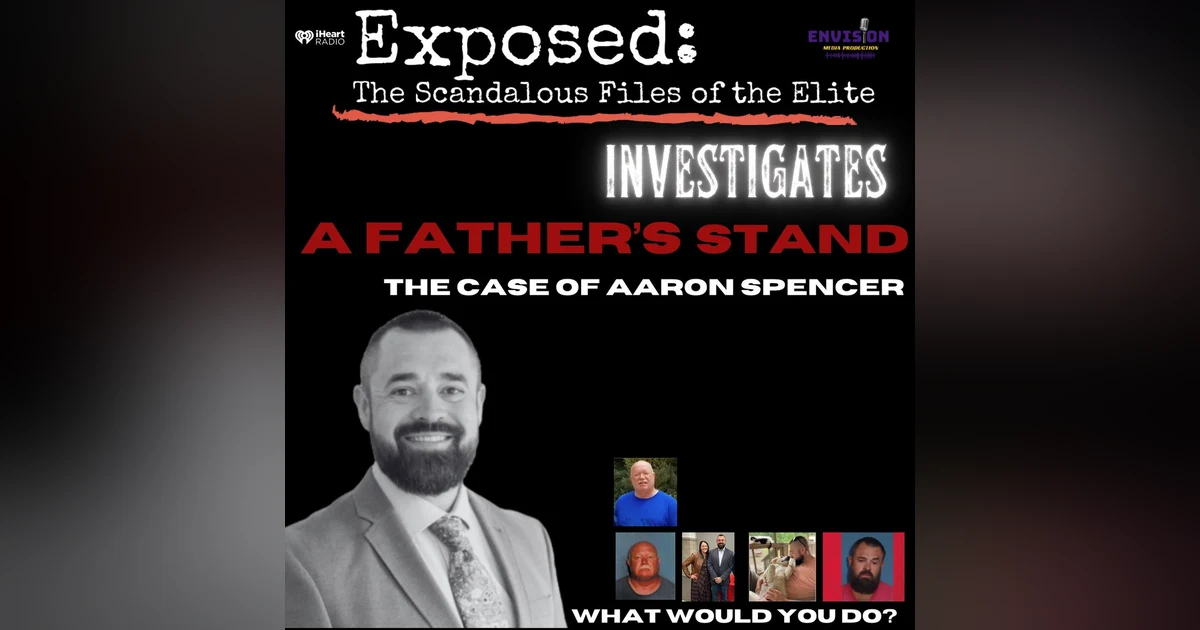

A 2-Part Podcast Series In the early morning hours of October 8, 2024, Aaron Spencer woke up to every parent’s worst nightmare: his 13-year-old daughter was missing from her bedroom. What he discovered next would thrust this Arkansas father, husband,...


In the early morning hours of October 8, 2024, Aaron Spencer woke up to every parent’s worst nightmare: his 13-year-old daughter was missing from her bedroom. What he discovered next would thrust this Arkansas father, husband, and Army combat veteran into a national firestorm. Spencer found his daughter inside the truck of 67-year-old Michael Fosler — the man already facing 43 felony charges for SA. and other charges. Fosler had been released on bond despite the severity of those charges. Spencer forced the vehicle off the road during a desperate confrontation.
When it was over, Fosler was dead, and Spencer was on the phone with 911. Instead of being treated as a father who acted to protect his child, Spencer was charged with second-degree murder. What followed was a high-stakes legal battle filled with explosive twists: allegations of missing dashcam evidence from Fosler’s truck, a lead detective terminated for policy violations, claims of misconduct, and growing questions about whether the system was more focused on prosecuting the father than protecting the victim.
Timestamps:
06:18 Arkansas Roots
18:46 Assault Allegations
23:26 Weak Bond Release
26:54 Early Morning Pursuit
35:17 The Charges Unfolds
39:26 Courtroom Battles
47:25 Sheriff Campaign
For commercial free early releases, bonus episodes and more! https://www.patreon.com/exposedpodcastfiles
Become a supporter of this podcast: https://www.spreaker.com/podcast/exposed-scandalous-files-of-the-elite--6073723/support.
0:08 It's just after one am on October eighth of twenty twenty four, and it's quiet in Lonoke County, Arkansas. And then a dog starts barking. A father wakes up in the dark. He walks down the hallway to check on his teenage daughter. Her bed is empty. In her place a stuffed animal with a hoodie draped over it, obviously placed there to fool him into believing his daughter was still asleep in that bed. His wife jumps into action. She calls nine to one one and her voice is shaking as she reports her daughter missing. But the father doesn't wait. He grabs his keys, jumps in his truck, and drives into the night, searching the dark road around their home. Minutes later, he spots a vehicle he recognizes.
1:05 Inside that vehicle his thirteen year old daughter, and behind the wheel a sixty seven year old man by the name of Michael Fossler, the same man who just months earlier had been charged with forty three felonies for sexually abusing that very child. Fossler was out on bond. He was under court order to stay away from miners, including this girl. The father forces the vehicle off the road an altercation follows in multiple shots or fire. Then the father picks up his own phone and calls nine to one one. He tells the dispatcher he just shot a man who was with his daughter. That father's name is Aaron Spencer, a US Army veteran, a husband of more than twenty years, a father of two, and a man who until that night had lived a quiet life working as a contractor and raising his family in Lanoke County, Arkansas.
2:07 The man he shot and killed was Michael Fossler, the man prosecutors say had raped, groomed, and exploited Spencer's daughter. Fast forward to June fourth of twenty twenty six and Special Circuit Court Judge Ralph Wilson Junior dismisses the second degree murder charge against Aaron Spencer. The ruling came weeks before his trial was set to begin. The judge cited due process violations and the loss of critical evidence, specifically a dash camera memory card from Michael Fossler's truck that law enforcement failed to properly preserve. This case has gripped Arkansas and drawn national attention, and now it's over. But that story is far from finished, because while he was fighting those charges, Aaron Spencer did something almost unthinkable. He ran for sheriff of Lenoke County against the very sheriff whose office had arrested him. And in March of twenty twenty six, in a stunning upset, he wins the Republican primary with more than fifty three percent of the vote, defeating a thirteen year incumbent. And now he is the Republican nominee in November's general election. A man once charged
3:39 with murder could soon be the top law enforcement officer in his county. This is the story of Aaron Spencer. It is a story about a father who says he did what any parent would do when the system failed to protect his child. It is a story about the limits of self defense and the demands of the rule of law. It is a story about a justice system being scrutinized, from bond decisions for accused child predators to the handling of evidence, to judicial accountability. And it is a story about a community that, at the ballot box appeared to render its own verdict on whether Aaron Spencer should lead them. I'm Jim Chapman, and i am going to bring you a deep dive into this case not to sensationalize the tragedy, but to understand it. We will examine the facts from court records, public statements, election results, and official documents. We will walk through Aaron Spencer's life, from his early years in the mountains of Washington State, through his military service to the family life that he built in Arkansas. We will reconstruct the night of October eighth, twenty twenty four in detail, and the legal battle that followed, the arrest, the charges, the court controversies, the dramatic dismissal, and we will look at what comes next, the November election,
5:09 and the broader questions this case raised for every parent, every community, and every citizen who believes in both justice and accountability. It involves competing claims about what happened in those final moments on a dark road, and it involves deeply held beliefs about when a parent has the right or the duty to act when they believe their child is in imminent danger. Throughout this episode, I will present the facts as they are known from public record, and we're going to start at the very beginning, long before that October night, long before the campaign signs went up, long before the court room battles. We're going to go back to where Aaron Spencer's story really starts, in the mountains of Washington State, where the values that will one day define him were first forged. This is a father's stand the case of Aaron Spencer. So I'm going to take you to the mountains of Washington State because this is where Aaron Spencer's foundation was laid, the values that will one day define him and ultimately put him at the center of a national story. Now, I'll be honest with you. Detailed public information about Aaron Spencer's childhood, it's limited.
6:39 He's not done any long form interviews about his earliest years, and that's completely understandable. Some chapters of a man's life are meant to remain private, especially when he's raising a family and trying to protect the people he loves the most. But from everything he has shared publicly through his campaign website, his statements, and the way he described his own roots, a clear and consistent picture can be seen. In my view, It's a picture of a boy raised in the mountains with a strong moral foundation, a foundation built on faith, hard work, respect for the law, in a deep love for country. In the mountains of Washington. They were daily realities.
7:21 So picture this tall pine trees, rugged terrain, communities where people still believe that your word is your bond, and that looking out for your neighbor isn't an option, it's a way of life. In places like that, children learn early that life doesn't hand you anything. You work for it, you earn it, and when something threatens your family or your community, you don't wait for someone else to fix it. You step up. It teaches self reliance, but it also teaches responsibility. It teaches you that strength isn't about muscle, it's about character, and it teaches you that protecting the vulnerable, especially the people that depend on you, that's really the highest calling a person can have. Those lessons would stay with Aaron Spencer and they would become a part of who he is to this very day. So it was from those mountain roots that Aaron made a decision that would change the whole trajectory of his life. He would join the US Army and become an airborne veteran. Now, airborne service isn't just another job in the military. It's calling.
8:30 Demand's courage, discipline, and the willingness to jump out of a perfectly good airplane into unknown territory. It requires a unique form of mental toughness, the ability to stay calm when everything around you is chaos, and to trust the people on your left and the people on your right with your life. Now, for Aaron, that experience didn't end when he took off the uniform. The values of airborne service, duty, honor, and an unbreakable commitment to protecting others that became woven into the very fabric of his civilian life. If you've ever spent time with veterans, they will all tell you that the military doesn't just teach you how to fight.
9:13 It teaches you how to lead. It teaches you how to serve, and it teaches you how to carry responsibility even when it's heavy. And Aaron would carry those lessons forward throughout his life. Now, after his time in the army, he faces the same question every veteran eventually faces, what comes next? And for Aaron, the answer was Arkansas. His wife was an Arkansas native from Cabot, a town in Lonoke County. They've been married for more than twenty years now, and together they've made a deliberate choice to build their life and would eventually raise two children in that very community. Aaron didn't just move there for convenience or on a whim.
9:54 He put down roots. And I want you to consider what that decision really means. Young veteran fresh from service, choosing to start over in a new state with the woman he loves, choosing the slower pace of rural Arkansas over whatever opportunities may have existed for him elsewhere. Choosing to raise his children in a place where community seemed to matter, where faith was still central for many families, and where a man can still make a living with his hands and his word. Now this choice, to me, it tells me something important about Aaron Spencer. It tells me Aaron values stability, he values family, and he values building something that lasts. So in the years that followed, Aaron and his wife they created the kind of life that many people dream about but few actually achieve. They have a strong marriage, a home, two children, and a deep sense of purpose. Aaron works as a general contractor and a farmer. And that's important to understand. This isn't a man who sat behind a desk pointing fis in giving orders. This was a man who got his hands dirty, literally framing houses, pouring concrete, working his land, providing for his family through sweat and skill and long days that start before the sun even comes up. There's a certain kind of dignity in that kind of work. It teaches you patience, teaches you problem solving, and it teaches you that when something breaks, you don't just complain about it.
11:26 You figure out how to fix it. Those early years in Linote County, they were the quiet years, the building years, the years when Aaron Spencer was simply a husband and father trying to do right by his family. And Aaron and his wife would raise their children with the same values he had learned growing up in Washington, faith or work, respect for the law, and love of his country. They would teach their kids that family protects its own, that your word matters, and that you show up when it counts. Now really should have sit with that for a minute. Before any of the headlines, before any of the charges, before the campaign signs, and before the national attention, Aaron Spencer was living an ordinary but meaningful American life. He's the kind of man that coached little league or helped a neighbor fix offense, the kind of man who went to work every day so his kids could have what they needed. The kind of man who believed that being a father meant more than just providing. It meant protecting.
12:29 That protector instinct didn't just suddenly appear on October eighth of twenty twenty four. It had been developed for decades. It started out in the mountains of Washington, it was sharpened in the army, and it was lived out every single day in Lenok County, where a husband and father worked hard, loved his family fiercely, and believed without question that his most important job was keeping his children safe in a world that doesn't always feel safe. Now. Lot of time thinking about this part of the story while preparing for this episode, because when we only see people through the lens of their worst day or their most controversial moment, we can miss who they actually are. Aaron Spencer wasn't born a headline. He was born a son.
13:17 He became a soldier, he became a husband, he became a father, and every single one of those roles carries expectations. And as a father, the expectation was simple but a huge responsibility. Keep your children safe, provide for them, teach them right from wrong, and when danger comes real, immediate, terrifying danger. You don't get to hesitate. As a father of free I can attest to this. It's something hard to describe, but you can feel it deep down in your soul when you're a father. Now, in Aaron's case, that expectation, in that duty, it was tested in ways most of us will never have to face. But the foundation for how he would respond to it was laid long before that test would ever come to pass. It was waiting quietly, steadily for the moment when everything would change for Aaron and his family. So, Aaron and his wife, they had been married for more than twenty years by the time twenty twenty four ribbed, and that's a significant milestone in any marriage, but especially in today's world. Twenty years of choosing each other through the good seasons and the hard ones, twenty years of building trust, raising children together, and creating a home that felt Say, they were in Lenoke County, his wife's hometown, and I want to hammer
14:49 down this wasn't a temporary stop. This is where they chose to live, where they made a decision for their children to grow up. And when Aaron would work with his hands to for his family. The mornings would start out early. Aaron would head to the job sites as a general contractor, framing houses, pouring foundations, building things that would stand long after he left the property. Or he would work the land on their small place, the kind of place where you still have room to breathe, where your kids can play outside without fear, and where the stars at night aren't drowned out by city lights. Country living. His wife, She would keep the house running, raising their two kids with the same values. They both believed in the kind of parenting that doesn't make headlines, but it quietly shapes the next generation. They would have two children.
15:40 Their daughter, the one at the center of everything we're going to discuss, was growing up in this environment. By twenty twenty four, she was thirteen turning fourteen, the normal teenage girl in many ways, navigating friendships in the awkward, beautiful years between childhood and young adulthood. Her younger sibling was part of the same household, part of the same protective world that their parents worked so hard to create. And I want you to really feel the contrast here, because it matters. This was not a dramatic or chaotic household. This was a stable, loving home. A place where the father went to work every day to provide, the mother helped raise and guide the children, where family dinners, routines, church on Sunday, and ordinary milestones of childhood were kind of the rhythm of life. Aaron Spencer wasn't famous, He wasn't seeking attention. He was doing what millions of fathers across his country do every single day, showing up, working hard, trying to give his kids a better life than he had, And by every account I have, from public records to his own statements, he took this seriously. Being a father wasn't just one part of his identity, It was central to his identity. In those later years, that protective instinct was always present, even if it hadn't yet been tested in the extreme way it eventually would be. Aaron was the kind of father who paid attention, who noticed when
17:12 something fell off, and who believed that keeping his children safe was absolutely non negotiable. Now where they lived, this type of place, This is where people still know their neighbors, where kids ride bikes down quiet roads, where parents don't expect to have to worry about predators moving freely among them. That sense of safety, that illusion that the system would protect the innocent. Was part of the very foundation they built their life on, and Aaron respected the law. He had served his country. He believed in doing things the right way. He believed that when someone commits a crime, especially a crime against a child, the justice system would step in, hold the person accountable and keep the victim safe.
17:58 But that belief would haveentially be shattered. Of course, I'm going to get to the horrific events that occurred in twenty twenty four, but it's very important for you to understand that prior to twenty twenty four, those beliefs were very much still intact. It was part of a quiet confidence that Aaron carried as a father. My children are saved. The system works. We can live our lives without looking over our shoulders every single moment. And I'm gonna speak carefully here because what comes next involves the sexual abuse of a child, and I'm going to handle this with the seriousness and respect that it deserves. So the Spencer family, they are living life, and the Spencer's daughter at this point had been spending a lot of time at the home of a family friend by the name of Leanna Higginbotham and look one thing I'm not gonna do during this particular podcast is identify the victim by name. I'm just going to refer to her as Spencer daughter. So Spencer's daughter. She's spending a lot of time with this family friend. It's the spring of twenty twenty four and at this point she's thirteen years old. One day Spencer daughter.
19:20 She confides in a family member who to my knowledge, has never been identified, that she was sexually assaulted several times by a sixty seven year old man by the name of Michael Fossler. Now, this family member tells mom and dad, Heather and Aaron Spencer about these sexual assaults. They go to their thirteen year old daughter. They ask her about this and she confirms that it's true. Now, Aaron nor Heather had any idea who Michael Fossler is, never met him, did not know him, and they only knew through their daughter that he was supposedly the boyfriend of that family friend, Leanna Higginbotham. So Aaron Spencer he to the Higginbotham residence. This is in July twenty twenty four because he believed she was Fossler's girlfriend and he wanted to obtain the name, phone number, address, all that sort of information for this asshole that might have molested his daughter. Now, rather than providing that contact information, Higginbotham spoke with a family member about the confrontation, and because that family member is a mandated reporter, they immediately report this sexual assault allegation involving Spencer's daughter to the Linoke County Sheriff's Office. So the Sheriff's office, upon learning of this information, they head over to the Spencer residence to get the details on what's going on. And I have a partial transcript to the bodycam footage from the Sheriff's office upon encountering Aaron Spencer. I'm not gonna cover this
20:52 word for word, but I'm gonna give you the highlights. So then Linoke County Sheriff's Office they go to Aaron Spencer's home. This is on July seventh of twenty twenty four. It's around three point thirty seven pm, and Sergeant John Ingram and at least one other deputy, which reports would say is Deputy Brian Duke, they respond to that mandated reporter's notification about Michael Fossler. Now, initially these officers walk on to the property, and Aaron Spencer is like, what are y'all doing poking around my house? And they start talking to Aaron Spencer about all of this, and he's a little bit combative and understandably so basically he's trying to find out who the mandated reporter was, trying to get a name. They didn't want to give that to him.
21:38 But the conversation included some pointy questions from Spencer about what would happen to Fossler should he go through with letting them talk to his daughter, et cetera. So officers explain they have received a report from a mandated reporter regarding allegations involving Spencer's daughter. Spencer then asked who the mandated reporter was. When asked whether there was any truth to that mandated report, Spencer replied, I don't know. Spencer also shifted to questions about Falslor's likely punishment, saying, what's going to happen to that man when you arrest him and prosecute him in this and that three to five years?
22:20 What he's just rolling around cruising grooming? So he was upset, and again understandably so. Spencer referenced another child abuser and express doubt the system would keep Falslor locked up. He essentially asked whether that person was going to get back out. Spencer also asked one of the officers how he would feel if the same thing happened to his child, and the officer shockingly responded back that it had happened in his family. And in response to Spencer's line of questioning about Fosslor in the system, the deputy stated, hey, man, we don't live in a country where you can take the law into your own hands. We need to be able to handle this. Basically. Spencer responded to that statement with a cuss word. Basically. Now, I'm gonna tell you I don't blame Aaron Spencer here. He was very untrusting right off the bat, but he did come around and he did agree, Hey, I'm gonna let you speak to my daughter, and it's got to be a female deputy, which it was. A female deputy spoke to her, and the next thing you know. On July eleventh of twenty twenty four, Michael Fossler is charged with forty three felonies involving Spencer's daughter. Now, those charges included rape, sexual assault, grooming, internet stalking, of a child, possession of child pornography. They represented a very serious victimization of this child. He was
23:50 taken into custody and it's off to jail for this guy. And in my view, here's where the first major failure occurred in the eyes of not only my but many others who followed this case. He gets released on bond, a cash bond to be reportedly fifty thousand dollars. Fifty thousand dollars. That's it for forty three counts. Now, you only have to pay twelve percent of that, so that's a little more than six thousand dollars. I believe that's crazy. He was also issued a no contact order, which is a piece of paper. It's not like you can't actually contact someone. It just means you're going to revoke your bond if you do that. Man, he was legally required to stay away from minors, including the child he was accused of abusing. Now, for the Spencer family and really everyone close to this case, that decision was incomprehensible and it was exactly why Aaron was apprehensible about reporting this in the first place. Their daughter had been harmed by this man. The charges were serious, and yet he was allowed back into the community with what many viewed as minimal restrictions in an o unbelievably low bond amount, and that bond decision would later become a central point of anger and debate, not only in Lenoke County, but nationally as well. And I want to give you a little history that I found pretty interesting regarding Michael Fossler. He was actually a lawman and a military man prior to this occurrence. He was born in Indiana in nineteen fifty
25:23 seven and in the early nineteen eighties he had served as the town marshall for the town of Hamlet, Indiana. He was also in the National Guard, which in nineteen ninety five. Of his service in the National Guard would lead him to move to Cabot, Arkansas. Now in twenty twenty three, a year prior to his arrest, his wife, Jane Fossler, would pass due to an illness. So that's a little background on him. But back to it, Michael Fossler is out on bond with that no contact order, but aside from that, just really light restrictions. For example, he didn't have an ankle monitor, no social media restrictions or general Internet restrictions, and he was not on house arrest.
26:07 It's just mind boggling to me, and it's leniency. So this would come out later after the incident that occurred on October eighth of twenty twenty four. But I want to stay in chronological order with this case, so I'm going to go ahead and tell you about it now. It would take less than a month before Michael Fossler would be contacting this child again via social media apps, and this thirteen year old girl would actually get picked up by Fosslor three more times between his arrest and his death, obviously unbeknownst to the Spencer family. So let's go to October third of twenty twenty four, and Fosslor would spend several days attempting to persuade this thirteen year old girl to leave the house and go with him.
26:54 And on the night of October eighth of twenty twenty four, just after one twelve pm, Aaron Spencer would wake up to his dog barking, which his dog would never do this unless there was someone priling around the house or in the house. Something felt wrong, something felt off to him, that sixth sense we all have, and he decides to get up and go check on his daughter, obviously with everything going on. He peeks into her room and he sees her sleeping in the bed, but his dog was still barking now in the daughter's bedroom, so he looks closer and it's then he discovers she wasn't in her bed at all, and her place was a stuffed animal with a hoodie draped over it. It was a decoy left behind to make it look like she was still sleeping.
27:42 His wife immediately calls nine one one to report their teenage daughter missing, and Aaron, being who the hell he was, he didn't wait for police to arrive. He grabs his keys, gets in his truck, and he starts searching the dark roads around their home in Lenoke County. He pulls out of the drive way, calls a family member, and he tells them his daughter is missing. Now. That call lasts a minute in thirty nine seconds, and there's also a few texts to Aaron that he doesn't respond to. On the way, what he would find next would be shocking and terrifying. Aaron locates Michael Fossler's vehicle. Inside that vehicle, in the passenger seat was his thirteen year old daughter, Fossler behind the wheel. Now was the middle of the freaking night in this sick, twisted, sixty seven year old man who had already been charged with dozens of felonies for abusing this child. Here he is alone with her in his truck. And imagine this father, Aaron Spencer, driving up on this now at the time he spots the vehicle, it's traveling down the road in the opposite direction, actually back toward his house. He starts honking, flashing his lights, turns around, tries to do anything to get them to pull over, in complete fear of what this asshole might do next. And Spencer then realizes he's gonna have to make a split second decision. There was no time to think, and this guy wasn't pulling over. His daughter was in danger.
29:09 And he does what in the law enforcement world is known as a pit maneuver, and he forces Fossler's vehicle off the road. So, according to Aaron Spencer, at this point, he forces Fosslor out at gunpoint, and when he did, Fosslor didn't move. He said. He then saw his daughter try to exit the vehicle, and Fosslor stopped her from doing so. And he said at that point, Falslor did exit the vehicle, and when he got out it appeared he had something in his hand. He then lunges at Michael and yells quote fuck you as he lunges, and Aaron then fires fifteen rounds into Michael Fossler with a nine millimeter and then, after emptying the gun, jumps on top of him and pistol whips him several times for good measure. But it was after the shooting that Aaron Spencer does something very important to this case. He didn't run.
30:01 He calls nine one one and he reports that he shot a man who was with his daughter. Law enforcement arrives and they find Michael Fossler deceased at the scene. So here are the facts up to that point of the shooting. If you've not been falling along very well, you have a thirteen year old girl with a man more than five decades older than her. In the wee hours of the morning, a father locates them and says he did what he believed was necessary to stop it. That this animal, and I'm completely comfortable referring to Fosslor as that dead or not, this animal lunched at him and he did what he had to do so. Police come, they gather evidence, they conduct interviews, etc. And Aaron Spencer is arrested. And here is how his arrest warrant reads reads.
30:51 On October eighth, twenty twenty four, at approximately one thirteen in the morning, deputies responded to a call on Highway two thirty six East in reference to a missing juvenile. Deputies were advised that the missing female juvenile had been raped and sexually assaulted by Michael Fossler in July twenty twenty four, and that he was known to drive a Ford F one fifty. Lenoke County Dispatch requested that Cabot Police Department send officers within their city to try and locate the missing juvenile at Michael Fossler's residence. Prior to receiving information from Cabot, Dispatch received a second call from the father of the juvenile, identified as Aaron Spencer, stating he had located the man who kidnapped his daughter, but that the mail was dead on the side of the road and that he had no choice. Deputies arrived inside the rural area of Lonoke County and located both Aaron Spencer and Michael Fossler. Deputies immediately began life saving measures on Michael Fossler, but he had succumbed to his injuries.
31:49 Deputy took Aaron Spencer into custody and secured the female juvenile away from the scene. Deputies cleared and stored the weapon, a Glock nineteen that was found to have been on the person of Aaron Spencer and had blood on the outside of the weapon. Detective McCain was the first detective on scene. Upon arrival, I observed a Ford F three fifty sitting on the north side angled in the northbound lane on the Highway thirteen with a white Ford F one fifty sitting next to a driveway. The F one fifty appeared to have been forced off the roadway due to skid marks located on both the asphalt of the highway and through the ditch line. Michael Fossler was lying on his back in the ditch on the east side of the road. Michael Fossler had visible puncture wounds believed to be caused by a firearm projectile on his chest, abdomen, and both left and right arm. Upon inspection of the white Ford F one fifty, damage was located on the rear of the vehicle normally seen after impact with another object.
32:46 On examination of the Ford F three fifty showed that the vehicle had damage to the front and commonly seen after impact with another vehicle. A search of the area was performed and during that search, several nine milimeter casings were located on the roadway driveway in ditch area surrounding the white Ford F one point fifty. Once clearing the scene, myself and Detective Rice interviewed Aaron Spencer at the Lynoe County Sheriff's office after being advised of his rights, to which he acknowledged understanding. In reference to the events that occurred, Aaron Spencer stated he had been woke up by his dog barking, which was uncommon, and went to check on his daughter due to the events that occurred earlier that year. Aaron Spencer stated the dog was in his daughter's bedroom.
33:28 When he opened the door, the dog continued to act out of character. Aaron Spencer further explained that when he looked closer at what he thought was his daughter in bed, he realized it was actually a stuffed animal with his daughter's hoodie on it. Aaron Spencer stated that he had become scared of what had happened to his daughter and had his wife called nine one one to reporter missing. Aaron Spencer then stated that he left the residence and began to search for Michael Fossler and his daughter. Aaron stated when he arrived at the intersections, he observed the white f one point fifty belonging to Michael Fossler, turn off the highway and towards his residence. Aaron Spencer then stated he turned around and attempted to stop the vehicle by flashing his lights and blowing his horn. Aaron Spencer stated he was in fear for his daughter's life and continued to pursue Michael Fosslor east. Aaron Spencer explained that when they arrived at the intersection of Highway two thirty six and Highway two thirteen, he hit Michael Fossler's vehicle in the rear, causing it to slide off the roadway.
34:24 Aaron Spencer then stated he exited his vehicle with his firearm in hand, ordered Michael Fossler out of his vehicle and to lie down in the ditch. Spencer stated he observed his daughter trying to exit the passenger side of the vehicle, but it appeared Michael Fossler had grabbed her and stopped her from getting out. Aaron Spencer then stated that Michael Fossler exited his vehicle had something in his hand, but he didn't know what it was. Aaron Spencer stated that Michael Fossler then lunched toward him, saying fuck you. Aaron Spencer stated he then opened fire on Michael Fossler, emptying his weapon before jumping on top of him and pistol whipping him. Aaron Spencer stated that he got he aught his daughter out of the vehicle and returned to his truck where he related his weapon and called nine one one and Aaron Spencer at this point gets arrested and shit is totally about to hit the fan when people hear the facts of this case as they were known at the time. So a press release comes out the next day, October eighth, and it just read. At approximately one twelve am, Lenote County Sheriff's Office deputies were dispatched to a residence in reference to a missing juvenile.
35:31 While en route, deputies were notified that the father, Aaron Spencer, had located the juvenile in a vehicle with Michael Fossler. A confrontation between the two adult males ensued, which resulted in a shooting. Deputies immediately initiated an investigation. Michael Fossil was pronounced dead on the scene and Aaron Spencer was taken into custody. Spencer was transported to the Lenokee County Detention Center and has been charged with murder in the first degree of felony. And that was a Facebook release. This thing goes national, so a prosecutor looks at this case, and from a prosecution perspective, the case would later center around questions of premeditation, the number of shots fired, whether Aaron Spencer had other options such as calling nine one one immediately instead of pursuing and confronting Fossler, and they would argue that while the situation was horrific, the response crossed the line into criminal conduct. Now, from the defense perspective and from Aaron Spencer's own statements, this was a father facing an immediate, terrifying threat to his child, a man who had allegedly abused her was now alone with her again in the middle of the night, violating a court order, and Spencer maintained that he had acted to protect his daughter from imminent harm, and that Arkansas law allows for the use of deadly force in defensive others when there's a reasonable belief of serious danger. And keep this in mind. Just months earlier, Aaron Spencer was a father going to work his kids, trusting the system would
37:02 protect his family if something went wrong, and instead he finds himself in a situation no parents should ever have to face, discovering his child was with an abuser in the middle of the night, and he had to make a decision that would put his own freedom on the line. And what makes this even more unbelievable to me is the sense of systematic failure that many in the community felt. This is a man that was charged with forty three felonies involving a child and a basically released on a ship bond. He violates that bond, and a father who had done everything the right way was suddenly forced into an impossible position. Now, that sense of betrayal would become a major theme in the months that followed. It would fuel Aaron Spencer's decision to eventually run for sheriff, and it would shape how voters in Lenope County viewed this case and it would raise difficult questions about how the justice system handles cases involving sexual abuse of children, particularly when it comes to the pre trial release aspect of that.
38:10 But as you know, the legal system moves, but it moves very slowly in cases like this, and what comes next was a long, complicated, controversial journey through the court system. So originally Spencer gets arrested for first degree murder, but it would be seven weeks later that that charge is actually downgraded to second degree murder and a firearm enhancement is added. Now that second degree murder charge, serious class A felony in Arkansas, carries significant prison time, and that firearm enhancement would add even more weight to those charges. So from the very beginning, Aaron Spencer he maintains his innocence.
38:52 He took the position that his actions on October eighth were justified, and he's consistently argued he acted as father protecting his child from imminent harm, a position rooted in Arkansas law regarding the use of deadly force in the defense of others. But the legal system that they don't just accept a self defense claim at its face value, especially when a death has occurred, and so that case moves forward into a pre trial phase, and almost immediately a lot of controversies start to emerge. One of the earliest and most significant issues involved the judge that was initially assigned to the case, Judge Barbara Elmore. Early in the proceedings, Judge Elmore issued a very broad gag order and that restricted what the parties in the case, including the defense, the prosecution, even some of the witnesses, could say publicly. That order also led to sealing much of the court file. Now, later on the Arkansas Supreme Court they would step in and rule that gag order was an abuse of discretion and they would strike that down.
40:04 And this was already an unusual level of intervention by the state's highest court in a county level criminal case. It kind of told you the gravity of this case and how much media attention it had gathered. Now, in the months that followed, the Supreme Court took the extraordinary steps of even removing Judge Almore from the case entirely. The court cited concerns about fairness and the appearance of bias. A new judge was assigned, a special Circuit Court judge by the name of Ralph Wilson Jr. He was a retired judge, had a long career on the bench, and that judicial change was significant. It signaled that the case was being watched closely at the highest levels of the Arkansas court system. It also meant that the legal strategy in the ton of the proceedings would shift under new leadership.
40:57 So while all of this judicial old drama would play out, the core legal battle was taking shape around two very different interpretations of what happened on that October night. So let me break this down clearly for you so you can follow the arguments on both sides. From the prosecution's perspective, this was not a clear cutcase of self defense or the defense of others. Prosecution's perspective, not Jim Chapman's perspective. They would point out several factors. First, they would mention the number of shots fired. Reports indicated that Aaron Spencer fired fifteen rounds, with many striking Michael Fossler, and prosecutors would later argue this level of force raise questions about whether the response was reasonable or excessive. The second thing they focused on was the chase and the confrontation. They said Spencer did not simply encounter Fossor and react in a moment, he searched for him, located the vehicle, forced it off the road. Executors would argue that sequence of events showed purpose and deliberation rather than a pure reaction to an immediate threat. And I would totally disagree with that.
42:11 The guy had his daughter. You're leaving that part out. Another thing they brought up was prior statements. There were reports that Spencer had made statements in the months before the shooting about what he would do if Fossler came near his daughter again, and those statements would become the subject of what's known as a four H four B motion, which is a rule of evidence that allows prior acts or statements to be introduced in certain circumstances to show the motive, intent, or plan of a defendant, and the prosecution successfully argued for the admission of some of this evidence. But I ask you, if your father or mother and someone had done this to your daughter, would you go around and say maybe to your friends or something, or really just make it public that if you go around them again, that's your ass. It's basically what he did.
43:01 Got no problem with that. Finally, the prosecution's position was that even in a horrific situation involving a child, there's a legal process. They argued that Spencer should have called nine to one one and allowed law enforcement to handle the situation rather than taking matters into his own hands. Now on the other side, the defense, led by attorneys representing Aaron Spencer. They built their case around Arkansas law regarding the justified use of deadly force. So, Arkansas has a Code five Dash two Dash six oh seven, and it says a person is justified in using deadly physical force if they reasonably believe the other person is committing or about to commit a felony involving physical force or violence, or if they reasonably believe the other person is eminently endangering the lives of themselves or another person. I think this totally qualifies in that situation. The defense argued, on the night of October eighth, Aaron Spencer had every reason to believe his daughter was an imminent serious danger. Fosslor had already been charged with forty three felonies involving her, he was under a court order to stay away from her, and yet he was found alone with her in the middle of the freaking night. The defense further argued that when the confrontation occurred, foss Lord lunged at Spencer and that created an immediate threat that justified the use of force.
44:26 They pointed to Fosslor's criminal history in the case and the violation of the no contact order creating a reasonable fear for his daughter's safety. This was not, the defense, maintained, a case of vigilani justice. It was a father facing an immediate threat to his child and responding in a way he believed was necessary to protect her. In these two competing narratives, they would dominate the pre trial phase. Motions were filed, hearings were held, evidence was fought over, and through it all, Aaron's Spencer remained out on bond, living under the shadow of serious felony charges while trying to maintain some semblance of a normal life for his family.
45:11 The public reaction during this period was intense and deeply divided. On one side, you had many people, especially in Lenokee County and across Arkansas, that viewed Aaron Spencer as a father who had done what any parent would do to protect his child when the system failed. They saw him as a hero who protected his child when the courts put that child back in danger and support would grow, particularly after he announced a run for sheriff. Now on the other side of that, prosecutors and some legal observers argue that no one, no matter how justified their anger or fear, has the right to take the law on their own hands. They warned against creating a culture where individuals decide when deadly force is appropriate rather than relying on the justice system, and vibe when only grow as the case move forward and as Aaron Spencer entered the political arena. And what makes this legal cluster so significant is not just the arguments themselves, but it's what they reveal about our justice system. When a man charged with dozens of serious crimes against a child is released on a low bond and then violates that order, what responsibility does the system bear? Because I feel like they bear some responsibility when a father response to what he perceives as an immediate threat to his child, where's the line between justified protection and criminal conduct? And when evidence handling issues later emerge, as they did in this case, how
46:44 do we balance the rights of the accused with the pursuit of justice. These questions swirled around the courtroom long before any verdict would be reached. Now, Aaron Spencer was living with these judgments every day, His family was living with them, The community was watching, National media was paying major attention, and the legal battle was exhausting. It was expensive, and it was emotionally draining, but it was far from over. In fact, the most dramatic developments were still ahead, including a stunning political move by Aaron Spencer and the judicial system.
47:25 So while that legal fight was ongoing no trial date finalized. In the weight of these serious charges hanging over him, Aaron Spencer makes a decision that would shock many people and really change the trajectory of this story completely. In October of twenty twenty five, he announced that he was running for sheriff of Leno County. Now think about that for a moment. This is a man facing murder charges who was stepping into the political arena to challenge the very office that had arrested him. The incumbent sheriff at the time was John Stanley, who was a Republican who had held that position for more than thirteen years. Spencer was running against the man whose deputies had actually taken him into custody after that shooting. It was a bold, almost unthinkable move, and it would obviously immediately draw national intention.
48:20 But why did he do it well. According to Spencer's own public statements and campaign materials, his decision was rooted in the same protective instinct that had defined his life as a father. He believed the justice system had failed his family. He pointed to the low bond given to Michael Fossler despite these serious charges. He pointed to the violation of a no contact order, and he argued the system needed accountability and reform so that no other family would have to endure what he had gone through. His campaign message was clear and it was direct. He wanted to restore trust in law enforcement, to demand accountability from public officials, and he wanted to ensure the justice system actually protected people it was meant to protect, including children.
49:11 Now it's important to note Aaron Spencer had no prior law enforcement experience. He was an Army veteran and a general contractor, not a career police officer, and critics they would immediately raise questions regarding his qualifications. Someone label him a visulanite who had taken the law into his own hands and others question whether a man facing murder charges should even be allowed to run for such a powerful position, But Spencer he would lean into his background. He would emphasize his military service, his values, and most powerfully, his lived experience with what he called a broken system. He wasn't running as a traditional law and order candidate. He was running as a father who had seen the system fail up close and wanted to fix it from the end side, and the race became one of the most watched local elections in Arkansas in years. National media outlets would pick up the story. CNN, Fox News, local Arkansas stations, and several large true crime podcasts all covered the unusual dynamic a man charged with murder running against a sheriff who arrested him, and voters in Lenokee County, a heavenly Republican area, they were sharply divided. Some would see Spencer as a hero who protected his child, and they admired his willingness to challenge the status quo, but others worried about electing someone with no law enforcement background impending serious charges.
50:44 But through it all, Spencer continued to maintain his innocence and argue his actions on that night were justified under Arkansas law. In that campaign, it was intense, but relatively short in the grand scheme of things. By early twenty twenty six, that race was heating up towards a March primary, and on March third, twenty twenty six, the voters would speak. And next week I'm gonna bring you the dramatic wrap up to this two part series on Aaron Spencer. It's gonna really get crazy from here, so look forward to that. I want to thank my Patreon members. I could not do this show without you. If you're interested in supporting the show, check us out on Patreon, patreon dot com, slash Exposed podcast Files. I could really use your support.
51:38 Please consider doing that. Little is two dollars and fifty cents a week, and we have everything from commercial free early releases, to bonus episodes to quarterly guests for our top tier Patreon members. I appreciate all of you and love you more than you know. And until next time for Exposed Scandalous Files of the Elite, I'm your host, Jim Chapman. Much love,


