

 Apple Podcasts

 Spotify

 Castro

 PocketCasts

 Podchaser
A Wearable for Deep Sleep, Mental Strength & Cognitive Health with Ariel Garten

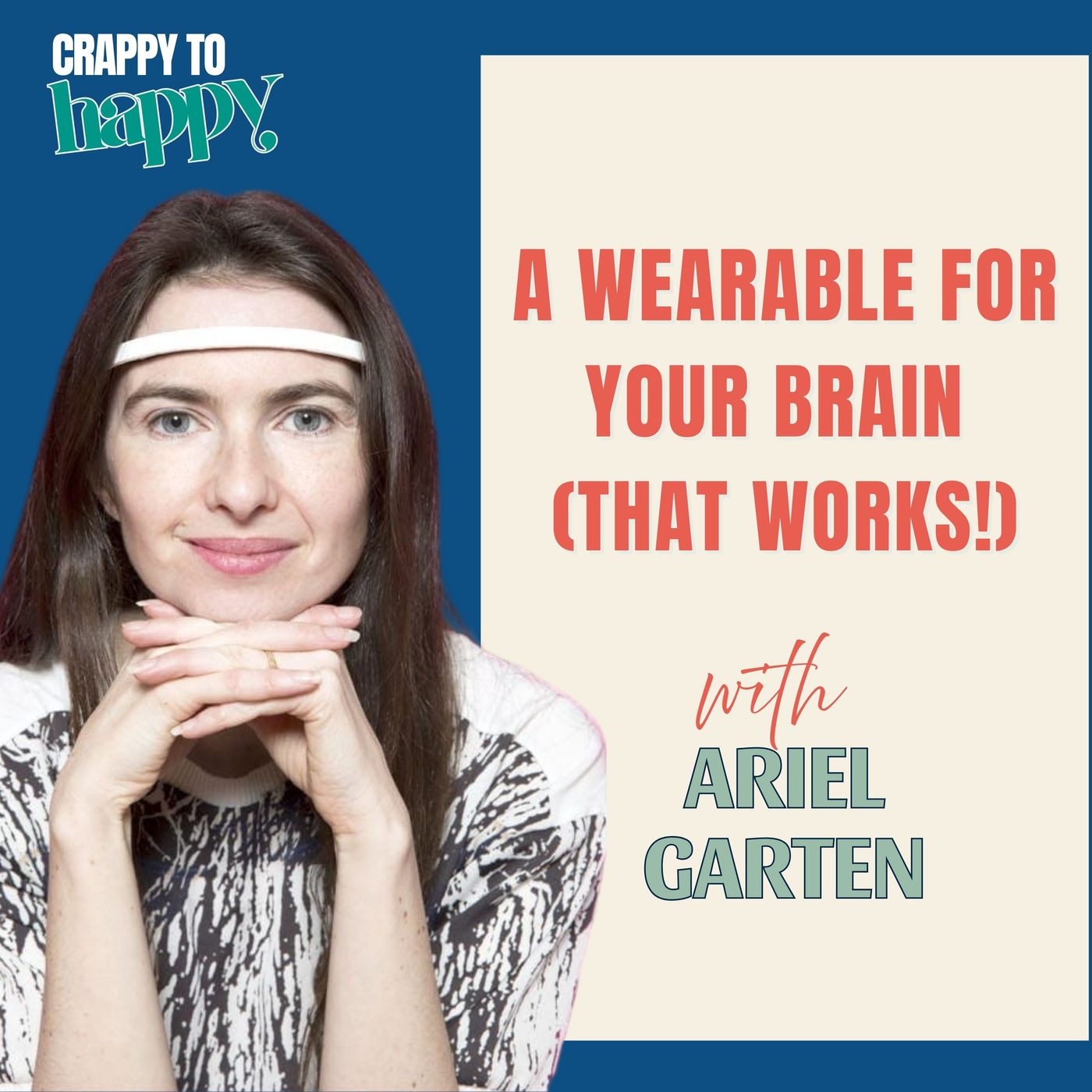
If you've ever wondered whether your sleep tracker is actually accurate, or whether meditation is doing anything measurable in your brain, this episode is for you. Ariel Garten is the co-founder of Muse, the brain-sensing headband, and she's back on the show with a significant update on how the technology has evolved. The Muse Athena contains an entirely new technology called fNIRS that tracks real-time blood flow and oxygen delivery to your prefrontal cortex.
We get into why wrist-based devices like Oura and Apple Watch can only ever estimate your sleep stages - because they're guessing from heart rate and movement, not brainwave data, whereas the Muse measures deep sleep at 94% accuracy compared to a clinical sleep lab. It's Deep Sleep Boost feature uses barely-audible pink noise pulses to increase the amount of time you spend in deep, restorative slow-wave sleep. We also go into ADHD territory. Both Ariel and I are diagnosed, and we talk about what neurofeedback and meditation training can do for focus, executive function, and the near-constant urge to abandon tasks halfway through.
What you'll learn
- Why wrist-based sleep trackers can't accurately measure deep sleep, and how EEG-based tracking changes the picture
- What deep sleep actually does for your brain and body - and why it matters for memory, cognitive function, and reducing the risk of Alzheimer's
- How the Deep Sleep Boost feature uses tiny pink noise pulses synced to your delta waves to deepen your sleep (and why your bed partner won't even hear it)
- What your alpha peak frequency is, why it tends to decline with age, and how you can track and potentially maintain it through neurofeedback
- What fNIRS technology is and why training your prefrontal cortex to demand more oxygen could be important for long-term brain health
- How Muse's neurofeedback and meditation tools can support focus, attention, and executive function - and what this means if you have ADHD
- The full range of content in the Muse app, including over 500 guided sessions covering sleep, stress, relationships, focus, and more
- How the app's AI assistant, ENSO, can help you interpret your data, track trends over time, and find the right tools for your goals
Muse headband:
www.choosemuse.com/
(enter code cassdunn at checkout for 15% off)
Previous episode with Ariel Garten (2019)
https://www.crappytohappypod.com/wearable-technology-for-your-brain-with-ariel-garten/
Beyond Confident 2.0 for Solopreneurs & Service Providers
Open for enrolment NOW.
Transform self-doubt & self-sabotage, rewire your nervous system for success, and do the inner healing work, while being supported to create a streamlined, profitable business that supports your lifestyle.
Save $1000 with Founding Member Pricing.
www.cassdunn.com/bc2
Connect with Cass:
www.cassdunn.com
www.instagram.com/cassdunn_xo
Contact Crappy to Happy:
Email: hello@crappytohappypod.com
www.crappytohappypod.com
www.instagram.com/crappytohappypod
0:00 This is Crappy to Happy and I am your host, Cass Dunn. I'm a clinical and coaching psychologist, a mindfulness meditation teacher and of course author of the Crappy to Happy Books. In this show, I bring you conversations with interesting, inspiring, intelligent people who are experts in their field and who have something of value to share that will help you feel less crappy and more happy. Welcome back to Crappie the Happy. I am your host, Cass Dunn.
0:40 Today I am bringing back to the show Ariel Garten. Ariel was a guest back in 2019. She's the co-founder of Muse, the brain sensing headband. If you remember that one. I had just discovered Muse when I first spoke to Ariel and I was absolutely fascinated by the idea of being able to see what my brain was doing in real time while I meditated and how this could help me to deepen my own meditation practice. I'm still a fan of Muse. There have been a few iterations of the Muse headband since then. The Muse S was launched which is a soft headband style designed for sleep tracking but most recently it is the Muse Athena which is where things get really interesting.
1:24 This is a whole new category of brain sensor technology that tracks your actual blood flow and oxygen delivery to your prefrontal cortex. It's got deep sleep boost features that track your brain waves and introduce pink noise pulses that drop you into a deep sleep. If you're somebody who struggles with insomnia, you struggle with sleep. This is so incredible and there is loads of research to back up its benefits. There's also a mental focus feature in the app that you get with the Muse headband which I was really interested in as somebody who's been diagnosed with ADHD and it turned out Ariel has also been diagnosed with ADHD.
2:07 We had a conversation about all of this, about meditation, neurofeedback and how this kind of brain training can really shift things. If this is of interest to you and you're interested in trying out the Muse, I became an affiliate really early on. I don't talk about it very often but if you're interested to get one for yourself, make sure that you use my referral code because you will get 15% off. I'll put that link in the show notes. But right now here is my conversation with Ariel Garten. Ariel welcome back to the Crap It A Happy Podcast. I am so happy to be here today on a day in Toronto that's pretty crappy.
2:49 It is snowing and sleeting and raining all at the same time and I am in my house honestly feeling very happy. Yeah, these are the pleasures now living in London. I was just saying it's so freezing cold outside but the houses are built to keep the warm in. You've become very appreciative of the indoors and the warm and the shelter. I was really thinking about this knowing that I was going to be on the Crap It A Happy Podcast today. I was thinking about this as I was dropping my daughter off at school and I was walking back wearing snow pants, a snow jacket and a rain jacket over top of it and just being like, what on earth am I doing? The hail pelting down. I'm fine, God, I can hear the drop, drop, drop, drop, drop.
3:32 And I was like, I could see this as incredibly crappy and miserable or I could stand back and look at the big beautiful white clumps of snow coming down between the raindrops and I was thinking people paint these things when you go into a museum and you see beautiful art of that gloomy day and you just get into the mood of it and you see the beauty of it. It's like I can stand here and see the beauty in this. I can be thrilled that I'm alive right now. I love the happy podcast that for me today. Ah, I love that. I love that. Just a little shift in perspective can change everything. Yeah, and a shift that's available at every moment.
4:14 Right, right. So you and I have got straight back into talking about the mindfulness six, seven years ago when you were first a guest on Crappierta Happy. I can't believe I was thinking earlier, wow, and you're still doing news and I'm still doing Crappierta Happy all these years later. Yes. Still loving it. But we were talking about mindfulness and meditation and in relation to the news headband, the brain sensing headband, which I had just discovered and was massively a fan of because it was enabling me to track, I was by teach mindfulness meditation, you know, tracking what was happening in my brain and giving me real-time feedback so that I could adjust accordingly. And I have since reshared that episode because I love the music.
4:54 Anybody who's interested in mindfulness and meditation, I recommend that they look into it. But Ariel, we have come a long way. And so we've come up with the news headband. So after we spoke, just to catch people up kind of quickly, after we spoke, the news S came out, which was the soft headband, which started tracking sleep. So that was a new thing as opposed to just meditation. And obviously it's coming leaps and bounds since then. So from your perspective, when you first developed this technology and the news headband to where you are now, like how has your own understanding of what your building shifted over time? Oh, that's a beautiful question.
5:34 Okay. So going into the way back machine into 2019 when we last spoke, at that point, we knew that we could track people's brains and give them real-time feedback while they meditated and that that was really meaningful. So at that point, the device had been out for five years. So we had several hundred thousand people around the world using it to meditate. And we went to them and we were trying to figure out what is the real value that this is giving you? How is this meditation helping your life? What are you using it? How are you using it? And we heard stories from people who had tried to meditate before, but couldn't in the news was really getting them on their practice and really showing them what their brain was doing and telling them the meditation was actually real in doing something in their brain and like enabling them to continue going.
6:25 And some people were using it for sleep. So it turned out the two most popular times when people were using it were six o'clock in the morning, early birds that were not me. Go to bed, me. And nine at 10 p.m. at night because people were meditating before they went to bed in order to help them sleep better and they were reporting it was working so they kept doing it. And so we actually said, okay, well, with that information, we can make something that's really going to work very effectively for sleep. And so we took our clinical grade EEG and built it into a soft form factor that wrapped around the forehead in the ears, made it super comfy so that you could lie down on a pillow and fall asleep with it on initially to build experiences to help people fall asleep, but then to track their sleep and then give them real time feedback through the night to improve sleep.
7:17 So since then we've worked with dozens and dozens of sleep research labs around the world who actually now use Mews as a sleep research tool. So we're studying autism, Alzheimer's, Parkinson's, etc. They send Mews as home with participants. They sleep with them through the night and they use them to track their sleep instead of having them come into a sleep lab. And now they're using our sleep intervention technologies. So we built technologies that help you fall asleep, that change the audio so that you fall asleep faster. And we have a new thing called deep sleep boost that deepens your deep sleep. So now the same research laboratories are using it to see if they can improve cognitive function and older adults by using these as tool to enhance sleep.
8:04 So we've moved from meditation into sleep and then really more broadly into the idea of brain health, that how can these tools improve our brain and our ability to function both today and 20, 30 years from now? Yeah, that is amazing. Sleep, we know, is so foundational to sleep. Quality sleep is so important to every aspect of our health and wellbeing physically, mentally. So getting that information about how we're sleeping, the quality of our sleep, so obviously provides really useful data to then be able to know where we can improve, right? Yes. So quality sleep is one of the main pillars for not only brain health, mental health, but also physical health.
8:50 So we all know we need to exercise, eat right, sleep well, meditate. You know, these are like the basic non-negotiables of good of a good life. But most people don't really know how to improve their sleep. They don't know where their sleep is broken or why it's broken. And particularly deep sleep is critically important. And there's not good ways to know how much deep sleep you're getting or how to improve your deep sleep. Research shows us that deep sleep is really where your body repairs, where your brain consolidates the information that you learned throughout the day to improve your memory the next day. Some of it happens in REM sleep as well, but deep sleep is critically important. And in deep sleep, that's where you flush toxins out of your brain and potentially reduce the load of amyloid beta in your brain.
9:36 Hopefully, you know, reducing your chances of Alzheimer's, etc. in the future. So deep sleep is incredibly key to your brain health. And sleep overall is incredibly key to our functioning. I mean, we all know how unpleasant it feels if we haven't slept well. Yeah, exactly. I want to ask you, what is the difference in the information that you will get from something like a muse headband versus something like an ororing or what Apple Watch or whatever of people are kind of using to track sleep? Yeah. So an ororing Fitbit Apple Watch, all of these things are getting the proxy information based on your movement in your heart rate.
10:18 So they're seeing as your heart rate moves up and down throughout the night, it suggests that you're in different stages of sleep. But the only way to actually know what stage sleep you are is to track the brain. So when you go into a sleep lab and you get a, you know, sleep lab test, they're putting electrodes on your head and they're seeing your shift in alpha way of activity, delta way of activity, your sleep spindles, your cake complexes. This is the macron micro architecture of sleep. So something that's on your wrist is only kind of guessing how your sleep is. And it's particularly notoriously bad at knowing deep sleep because it's just guessing, okay, well, you're lying there and your heart rate is slower.
10:59 That could be lots of things that are happening. It doesn't necessarily mean you're in deep sleep. So whereas or ring, or ring is pretty good at sleep. It's 76% accuracy compared to PSG. Muse is incredibly good at sleep. So Muse is at deep sleep, 94% accurate compared to PSG. So it's incredibly precise. And then the thing is, when you say, yeah, polysum biography systems, that's a sleep lab. Right. Okay. I'm sorry about that. I'll stop you. What do you say? Something really technical. I don't know what you're talking about. So the delusional is going to be.
11:40 Yeah. So I know. And then the things that sit on your wrist and fingers are not helping you actually sleep better by intervening. So tracking sleep is one thing. You know, it's good to know. But the most important thing is actually doing the intervention. So Muse has several different sleep interventions. One is go to sleep experiences. We call it our digital sleeping pill. As you are falling asleep, Muse is tracking your brain wave activity and guessing when you're moving into light sleep. And when you've dropped out of consciousness into light sleep, and it adjusts the audio that you're listening to in such a way that it just encourages your brain into sleep.
12:20 And it's incredibly effective. It's been demonstrated to improve latency to sleep onset. So that's how fast you fall asleep. It's been demonstrated to improve it by 55%. So that's a really big deal. And then if you wear the device throughout the night and you wake up in the night, the Muse wakes up with you. And then JetLeap brings back the same guidance that helped you fall asleep the first time to help you fall back asleep. Interesting. Interesting. Now, even when I have won my Muse to bed to measure my sleep, I haven't necessarily used the listening interventions. Maybe because I don't want to put ear buds in and my husband's next to me. How does that work on a practical level with the listening? If you're sleeping next to somebody else.
13:01 You can either use ear buds and lots of people do fall asleep with ear buds in, or you can just listen on your phone speaker. So our deep sleep boost, that's a different feature that we have in sleep. Deep sleep boost enhances your delta wave activity. So that's the thing that deepens your deep sleep. And that's delivered with tiny little audio pink noise pulses. So they're barely audible. And you can actually just play it on the speaker of your phone. Your bed partner won't hear it. We've done lots of testing. And just by playing little pink noises that are synchronized to your own delta waves, then you are able to deepen your delta activity and reorganize your delta activity so that you have more deep sleep and more glenphatic action in your brain.
13:49 It's amazing. And your brain picks up the sound. So it's at a level that is audible to your brain, but not so loud that it wakes you up. And the system actually automatically adjusts if it sees that you're awakening. It adjusts the sound volume. And it's not a sound that's loud enough for your bed partner to hear. And perhaps if they do, maybe it's deepening their deep sleep as well, but it's really tuned to you and tuned to your brain and exactly what it needs at the right moment. That's incredible. Thank you. It really is amazing. Yeah, it really is. Yeah, so we built that feature with our partner labs in Toronto, in Montreal, in Boston, and in Spain.
14:30 So there was a consortium of researchers that came to us and said, "We would like you to build the steep sleep stimulation function that's well proven out in the literature because we'd like to be able to use it with older adults with cognitive decline because they hypothesized that when you boost deep sleep in this way, it's going to improve their cognitive function." And so we built it for the researchers and along the way, we're actually able to release it to our entire population of people using news. So you're able to get true, true research grade technology to use in your own bed every night. Yeah, it's incredible. I think that's really important to understand, too, because I think a lot of these kind of wearables, they're big gimmicky.
15:11 I mean, they serve their purpose, but this is really high quality. Like I said, not just the information, but the intervention. Yes. So Mews has been published over 200 studies. Mayo Clinic uses it widely for, there's a study with Mayo in cancer care and demonstrating that Mews improves breast cancer functioning. They just published a long COVID study demonstrating that using Mews' meditation and sleep interventions improve long COVID symptoms significantly. There's been another study in Cushing syndrome, so undercrundis function, fibromyalgia, all of these are Mayo studies. They even use it with their own doctors. So there is a study published a few years ago that demonstrated that doctors using Mews at the Mayo Clinic reduced burnout by 54%.
16:00 Holy. Wow. And improved cognitive function, stress and resilience. Really, really good outcomes. That's incredible. Now you talked about the Delta waves with the sleep and you've just inspired me to use the sleep technology. The audio, not just tracking my brain. I also obviously use the meditation. And for anybody who doesn't know, I mean, you can listen to the previous episode with Ariel from 2019, but essentially you put the thing on your head. It's like a headband. Connect to your app and as you are meditating, it's giving you real time feedback by way of the soundscape. So my favorite personally, there's plenty to choose from, but my favorite is the rainforest.
16:42 And so I sit in the rainforest and I meditate and hear the sounds of the rainforest. And I know when my brain is active because the wind and the rain gets very loud and then as my brain calms down, that sort of gives me feedback to, you know, come back and then it slows down and gets quiet. So that's essentially how that technology works. And then you hear a little bird chirping when you have had a, what is the bird? It's when you're, it calm that the bird chirps. And then when you're able to remain and calm focus detention for five seconds or more than the bird chirps. So it's a subtle reinforcement. It's a conditioning that indicates to your brain that yes, this is the right state. Stay there, stay there, stay there. So you end up learning much faster your brain and two of you learned much faster, had to jump into that state because it's been reinforced for being there.
17:30 Yeah. And for people who, like I just can't meditate or it's, you know, they give up on it because they think they're not doing it right or they're not getting anything out of it. It gives, it's a tool really that can help you to really track your progress and give you in the moment some feedback about what's happening with your brain so that you can come back. But what I noticed with my most recent muse, the Athena, which is the most recent evolution of the muse headband, there is so much more in there that was not in previous iterations. And one thing that was, there's lots that I want to talk to you about. One thing I noticed was first and foremost, this alpha peak score.
18:10 Can you explain what the alpha peak score is and why it's important and what that's telling me? Sure. So the muse Athena, which is our latest device, has a host of different brain health features inside of it. One is the ability to track your cognitive function and it does that with your alpha peak frequency. So people's alpha peak is generally between 7 to 12 hertz. We say 8 to 12 hertz. In reality, I don't think I've ever seen anyone higher than 11.5. And as you age, it can drop considerably below 8. So we did a study with McMaster University looking at our big brain database and we were able to identify that as time goes on, people's alpha peak frequency decreases.
18:57 That decreases quite obvious decade by decade. So we offer your own alpha peak frequency as a metric that you can use to track your brain's cognitive function. And actually the reinforcement that we give, the neurofeedback with muse's meditation, is something that can help to reinforce and maintain your alpha wave frequency and potentially can help to reduce the future effects of cognitive decline. So the alpha peak is very key. Alpha is a state that you're in when you are both very calm and a state that you're in when you're very focused.
19:37 So if you're able to maintain sort of this internal single-pointed focus, you are up regulating your prefrontal cortex activity, your down-regulating kind of meaningless internal chatter. You're in a brain state that your brain is working really effectively in the state of calm focus. You're feeling really good because you're in calm focus. And it's actually a very healthy state for your brain and your body. In that state, you're more relaxed. Your physiology is more relaxed. Your blood vessels are dilated. You're in a really, really healthy state. And your alpha peak frequency is something that you can use to check how it's changing at different times of day, how it's changing over the course of time to give you a window into the kinds of things that help your body and brain be in its best state.
20:32 And the alpha score that you get, essentially after a certain number of periods of meditation, the device collects enough data from you to be able to give you your personal alpha peak score. That's right, isn't it? And then over time, the more that you use it, the more it's kind of keeping a track and showing you how that's improving or not, right? Exactly. And how that shifts throughout the course of your day and throughout the course of your months. So it can be a really interesting metric for you to have insight into your own brain activity. And the cognitive stuff as well while we're talking alpha peak, I noticed with the Athena that it had a feature which was like mental, I forget what it's called, but it's like mental training, right?
21:20 It's mental strength, mental strength, mental strength. And I thought, oh, this is interesting. Let me have a look. And there is an exercise where you look at this like a eagle, basically. Is it an eagle? And it's flying. And I've just got to keep, you just got to keep focused on the bird. And the more that you focus on the bird, the bird flies towards the horizon. And then at the end, it gives you a score for your mental strength. So how effectively you were able to just calmly focus and keep your attention on the bird. So this is a whole other technology. So the previous muse generations, muse two and muse S used EEG technologies.
22:02 They were measuring the electrical activity of your brain and PPG where we're measuring the blood flow just in the vessels at the surface of your forehead from which we could drive your heart rate. So we were getting electrical activity and heart rate. In the Athena, we have a whole new technology called F-nears, functional near infrared spectroscopy. And that is measuring the blood flow not on your forehead, but actually the blood brain barrier. So that's literally measuring the blood flow that's coming from and going to your brain in order to look at the level of oxygen that your brain is using. And so this is a whole new kind of insight into the oxygen levels inside of your brain.
22:47 And it gives you the Athena strength session you mentioned, which is training your brain to demand more oxygen. So yeah, it's wild. All of this is in a slim, slim little form factor. So for you guys, yes, I've got mine here too. I was going to show it. Yes. Yes. So for anybody who's watching the video, so these are EEG sensors on the forehead here, gray lines, and behind the ears. And then these little windows here, these are five optodes. So these are optical sensors that are sending light to your blood brain barrier and receiving the light back into the device and then able to determine your oxygenation levels.
23:30 And so this is a technology that's used in research labs to be able to track blood flow to the brain and to see which areas of the brain are working. It's kind of like a little mini FMRI. And then in the Muse app, what we're doing is we're also giving you neurofeedback to teach your prefrontal cortex to up-regulate its blood flow and up-regulate its oxygen delivery. And when you look at the things that cause cognitive decline, you look at things like vascular dementia, these are all dysregulations in part. These contain dysregulations of the blood flow to the brain and a decrease in oxygen delivery to the brain. So when you're able to train your brain to maintain great vascular function, good blood flow to the brain, good blood flow to the prefrontal cortex, you're able to potentially stave off some of these potential effects of poor oxygen flow.
24:27 I did not know that. I thought I was training myself to focus a little bit like we do with the meditation. I didn't realize I was actually kind of training my brain to intake more oxygen. Yep. And so the sensors are specifically over the prefrontal cortex left and right separately. And so what you're doing is you're training your prefrontal cortex, which is the part of your brain that's responsible for maintaining your focus, as well as our executive function, our planning, our prefrontal cortex have so many roles. And you're training them to really maintain their function and demand more nutrients and be able to bang themselves in more nutrients, more oxygen throughout the activity.
25:12 Amazing. It really is amazing. Yeah, I know it really is. But on that too, like in that same sort of section on the app where you can see your blood flow to your brain. And I have looked at it and I've looked at it and watched it and thought, that's so interesting. But not really understood what to do with it, but just like it will show you in real time when you've got the headband on what the oxygen levels are in the left and right side of your brain. Yes. So it's looking, you're looking at your oxy and deoxyribose. So there's two different aspects to oxygen in the brain. One is the amount of oxygen that your brain is consuming. So when you're doing a task, it's going to be consuming oxygen. And the other is the amount of oxygen that it's demanding.
25:55 So we're able to look both at the used up oxygens of the deoxyribose and we're able to look at the oxyribose, the oxygenated blood that's coming in. And so we're able to look at this ratio of how well your brain is working, by is it demanding oxygen at the right times, is it using up oxygen, meaning it's actually functioning and doing its thing, and is that balance appropriate? Right. That is interesting. Now, ADHD, I was diagnosed with ADHD and have trouble with attention and focus. When you talk about some of these cognitive training functions that the muse assists with, is there any research there you mentioned Alzheimer's before, but is it useful for that?
26:40 The muse is not a medical device and it's not intended to diagnose or treat any medical condition. That said that focused attention training can be incredibly useful for ADHD. There's lots of research that demonstrates the positive effects of neurofeedback and being able to overcome some of the difficulties associated with ADHD and the ability to train your peripheral corduces is really key because it's your peripheral cortex that is both your attention control center and the place that allows us to inhibit our activities. So in ADHD, we're often dealing both with an inability to attend and an inability to inhibit.
27:27 Yes. You want to just jump up and do something and other brains might say, "Don't jump up now, that's not a good idea." Or you might want to like, flirt out in the middle of a sentence and other brains would say, "That's not correct now, that's not a good idea," but an ADHD is harder to inhibit. So when you strengthen your peripheral cortex, you know, you're working on multiple aspects of the condition that are really, really helpful. And then just meditation in general is also extremely helpful for ADHD because you're learning to stay in one activity. You're learning to sit there and attend and then to observe and monitor your own mind, observe and monitor your distractions and then choose not to follow your distractions.
28:08 Like that is so key. I myself have had ADD-80-HD. I see all of the ways in which my brain wants to work inherently where there's a thought I want to be distracted. I'm doing something for five seconds and then I just want to get up and do something else where somebody else is able to stay on task. But since I'm able to see those things, I'm able to see what my brain is doing, I can bring in my attentional control centers and make a different choice and say, "Oh, I see that urge to get up, but I'm not going to. I'm going to choose to stay here and I'm going to choose to stick with this." And through training with meditation and F-nears and neurofeedback and all of these tools, it's really fundamentally shifted my ability to overcome the ADD-80-HD challenges.
28:58 And you know, there's so many of them. You know, the classic ones that you talk about, like the intention or really the intention is the main one. But also things like unfinished tasks. So in the past, I would have like all of these half-finished projects. And now I can see like, "Oh, I'm getting to the point where the project's halfway and I want to just get up and abandon it and I'm not going to. I'm going to make a different choice. I'm going to see what my brain body previously would have wanted me to do and I'm going to say, "Nope, I'm an adult. I can choose something else. I have the power to like stick with this and get to the end." And then you know, I get to the end and give myself checkbox, little reward. It's like, "Yep, stuck with it." Yeah, yeah, yeah.
29:39 And on that too, I think when you have something like ADD-HD and your to-do list is chaotic and cluttered and the more that you're reacting, the more you're just exacerbating those issues, whereas meditation and mindfulness and just practicing those tools of just being still and cultivating calm and regulating your own nervous system with the breath work, which is all built into the app as well, then all of that is going to help as well. It's just the calm environment, isn't it? Like internally and externally. Yeah, the calm environment, the ability to see your brain's activity and to see the choices you would have made and then have the cognitive capacity to make a different choice.
30:21 And these are the skills that you're training and building and meditation and that you train and build when you use tools like Muse. And it has been so life-changing, so absolutely life-changing. And the more I observe myself and you have the power to like just sit there and observe and see what my own mind is doing, the more I find all of the funny little things that I now realize actually were ADD. It's like my husband would always goad me about like boxes that I shove into the corner. It's like, oh, you made a pile of things in the corner because you didn't want to deal with it. Relatable. Relatable.
31:01 I didn't realize it was an ADD symptom until I was reading a forum and somebody was complaining about like the black boxes of death, the piles in the corner from their husband. I'm like, oh, I'm the husband. Those are my piles, right? And what I realized was I didn't have the like prefrontal executive functionality to know what to do with them, to know how to organize them. And as I strengthened like work to my prefrontal cortex, worked with strategies, worked with my own abilities, I could see you like, right, I felt helpless. I didn't know what to do, so I shoved it in the corner. I don't have to be helpless. I can figure out what to do. It might take me longer. But this thing has a place.
31:42 We're going to find the place and we're going to put it there. This other thing has a place too. I know it creates anxiety because I don't know what the place is and I don't know how to solve this. But I'm going to just sit with that, ask my husband where it goes if I need to and start to unpack it, literally unpack it. Yeah, so really helpful. So there's the meditation and as I just mentioned too. So beyond just the soundscapes and the meditation, now there's a whole range of different meditation practices in there. Can you talk about what is available in there? Sure. So we have different styles of meditation. So mind meditation is the classic focus detention meditation that really helps you to train your brain to observe your own thinking and maintain that beautiful state of calm focus detention.
32:32 So that's really like the core anchor of the meditation practice. Then we have heart meditation. We're actually listening to the beating of your heart, like the beating of a drum. And that teaches you to be aware of your sinusoidal arrhythmia. So when you breathe in your heart rate increases, as you breathe out your heart rate decreases. And it tunes something called your interception, which is your ability to sensitively understand your state. So as you understand the state that you're in, you can then make better choices. When you notice like, oh, my heart is racing. I'm feeling ramped. It's like, right, that's time to stop. Take a deep breath. Calm your mind. Calm your body. Then we have breath work practices. Breath work can be really, really key to helping you shift your physiology. And then with the subscription, we have a library of over 500 different kinds of guided content in different styles and Zen and secular meditation.
33:22 We have inspirational guidance. And we have collections for anything that comes up in your life. So we have a college collection for students who are struggling in college and with identity issues. We have birthday collections. We have work collections, relationship collections. So all the things that come up in your life, there really are meditations there that are able to meet you where you're at and help you shift your thinking and guide you to a better place. Yeah. Yeah. And when you meditate too, it's not just giving you the feedback in real time with the birds and the sound, but after each session, it's also giving you like almost like a little report on the movement of your body and the rate of your heart.
34:03 So you're getting a whole lot of data each time you use it. Yeah. So through every single meditation that you do when you're wearing the headband, all of the sensors are active. So you're not just listening to the guidance, you're also at the end getting insight into your mind and body through every single session. I really mentioned before about your alpha pecan tracking at kind of different times of the day is wearing the muse outside of meditation, outside of sleep, wearing it during tasks where you're focusing your attention. Is that a useful thing to do? So we definitely have biohackers who know where at various points in the day to see what happens to my brain when the algorithm in it for the focus detention meditation was really built for calm versus focused within a focused attention on the breath practice.
34:51 So the calm and focus algorithm, you know, is very specific and how it's built. But the rest of the data that you'll get on your brain waves and your heart rate, those are transferable from activity to activity. Yeah, but it's really built for that meditation kind of tracking and the sleep tracking. Yes. But again, people use it in all sorts of different ways to gain new insights. And then we have, you know, our researchers who use, so separate from the consumer app, there's a research backend that researchers use for the research studies where they get data through an IRB approved protocol and they get all of the raw data to be able to use in their analyses. And then we have clinicians who use it differently as well.
35:32 So for clinicians, we have a whole row of specific clinical programs that you use with your patients for stress, sleep, focus, attention. So it really depends on the use case. So there's different use tools in the background that can be used for all these different uses, these cases. It has evolved so much and the technology is so incredible. And I'm curious now with all of the infiltration of AI into literally everything we do, is there any future of AI being built in? I'm just curious. Yeah. So there actually is an AI assistant in the app named ANSO. Oh, there is two. There is two. I just ignore him. I thought.
36:12 And so it's actually really helpful. So ANSO can help you interpret your data. So ANSO is able to look at your immune session data and then interpret that data for you. And you can ask ANSO questions like how does this compare to a session I did a year ago or five days ago. So ANSO can look back across sessions, can help you look at trends. ANSO is really also evolving into a sleep coach. You can ask ANSO questions like, given this information, how can I sleep better? What are the things that I should do? And then as you've heard, our app is large. There's so many things that you can do with it. ANSO can also help guide you. It's like, great, I want this type of meditation and so what should I listen to?
36:54 Or these are my goals. What do you suggest, suggest a training program for me? Yeah. Yeah, it's amazing. I've been a fan since I first discovered it. I've also put so many people onto the muse and I did become an affiliate and a muse ambassador. So I'll put a link to that because I think I got a jiggy 15% discount if you buy through me. I'm here to hard sell the muse, but I'm such a fan. I'm always recommending it to people. But is there anything I've missed? What else does it do that I haven't even touched on? I would actually love to know a little bit about your experience. What are some of the benefits you've experienced? Well, I don't know that I've been using it towards fullest potential.
37:34 I have always been a meditator. So I really enjoy getting that feedback. It keeps me more consistent when I get the feedback and I can see the objective kind of data about what was happening while I was doing the meditation. I noticed, I really noticed that over time when I use it regularly that I can really see the improvement. I know when I go for periods of not meditating, I really notice how much more difficult it is. And not just feeling more difficult, but in the data, it shows me that like I was all over the place with it. But I'm really liking what's really happening with that brain training because that mental strength thing I think is incredible.
38:20 And I went and actually pulled out. So just for listeners to, I went and got, I did it and I didn't do very well. I didn't know what I was really doing the very first time. I was saying, "Where am I doing here?" And then the bird will stop for a bit and I was like really trying to focus and I couldn't get the bird to fly again. And then I eventually figured it out and I got a really low score. And then I gave it to my husband and said, "You do this. Make the bird fly." And he got a really high score. First go. So tracking that over time has been interesting too. And what I have noticed is that it helps me to get into like you said that calm, focused state and developing that knowledge in myself, like in my own body of what that feels like.
39:01 Yeah. And so the Athena session is so interesting because a lot of people struggle with it initially because you don't know what it feels like to increase the blood flow to your peripheral cortex. You know, none of us are ever aware of the blood flow to our brain. What? But it's such a key thing to be able to track and to train. And so when you're able to just do the thing that is increasing the blood flow, then the bird flies and that becomes this very intuitive reinforcement to your brain to be like, "Oh, right. Right. Increasing oxygen delivery to my brain. That's how I do it. And saying, "Yes, yes, delivery more oxygen. This is good. This is good." And it's a very, very positive feed forward.
39:43 So your husband just got it. And once your brain gets it, it learns how to do it. And that's the beauty of all this kind of neurofeedback that you are showing your brain and body. This is the state to be in. And then your brain body goes, "Oh, I didn't realize that I needed to be here. That this was important." And then we give you some audio reinforcement and scores and things that say, "Yes, you did it. See? You want to go there. And your brain body goes back there the next time and it becomes less and less effort each time because your body knows." And the idea is that you are using the tool to train so that throughout the day, you don't need the tool. Throughout the day, your brain body knows like, "Right, this is the state to be in.
40:23 This is the state of focus. This is the state of calm." And then life throughout the day becomes so much easier. Yeah. I also really noticed like the difference between going from a shorter session to a longer session and how long before my brain started to fatigue. And so just things like that are really interesting to note and to pay attention to. It reminded me of when you first, do you remember those magic eye books where you have to get into a fuzzy focus to see the image pop out of all of the pixelated? That's what it was like. Like once you can see it, you can't unsee it, right? But it sometimes takes a while like you can staring at it going, "There's nothing here and then once you get into that, oh, there it is." That's how I felt with the boat. Oh, there it is. Like now I'm in the zone and so yeah, you're trying yourself to be able to get back there more quickly.
41:06 I think it's fascinating. I think that's just brilliant. Thank you. Thank you. Yeah. I mean, we've worked really hard over the last decade to create kind of the most validated set of brain health tools that we could in one device and you know, try to approach it from every angle. We can help you meditate which we know improves your quality of life in your brain health. We help you sleep which we know improves your quality of life in your brain health. We help you train your brain, hear our metrics, hear what's going on in all of it. And from here we're continuing to build new interventions and new experiences constantly and as soon as you get a new device, the cool new things that we build get delivered to you through the app.
41:50 So the ecosystem is always growing. Yeah, exactly. And so on that too, so I then said to my husband, "Oh, here you should take my old mouse S." So, and do the, because he loved the brain train and can't get him to meditate mind you, but he loves the brain train. But he couldn't because it's a different technology in that headband, right? You have to have the Athena to be able to use those particular functions. Yeah. So the Athena is the one that contains all the Fnearest functionality, but the S contains all of the other functionality except for the Fnearest. So like deep sleep boost, the go to sleep technologies, all of those are available in the S. Yeah. Yeah. So, you don't need the Athena unless you want those extra things, but if you do want those extra things, then you'd have to get the Athena.
42:33 Ariel, this has been so great to catch up with you and to just to catch up on how far the views has come since those early days and I still love it, still a fan. I really appreciate you making the time to share. It's been fascinating for me. Thank you. Oh, my joy and pleasure. It's been so nice to see you again. Crabbit of Happy is created and produced by me, Castan. If you enjoy the show, please hit the follow button wherever you listen to ensure you never miss an episode. Share with a friend to get me into the ears of more lovely listeners and I would love you to leave a five-star rating and review. Thank you so much for being here and I cannot wait to catch you next week for another fabulous episode of Crabbit of Happy. [Music] [Music]