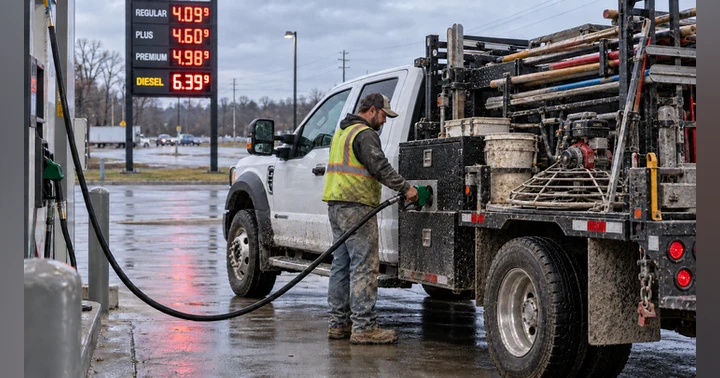
Are We Reducing Concrete's Carbon Footprint or Just Moving It Somewhere Else?
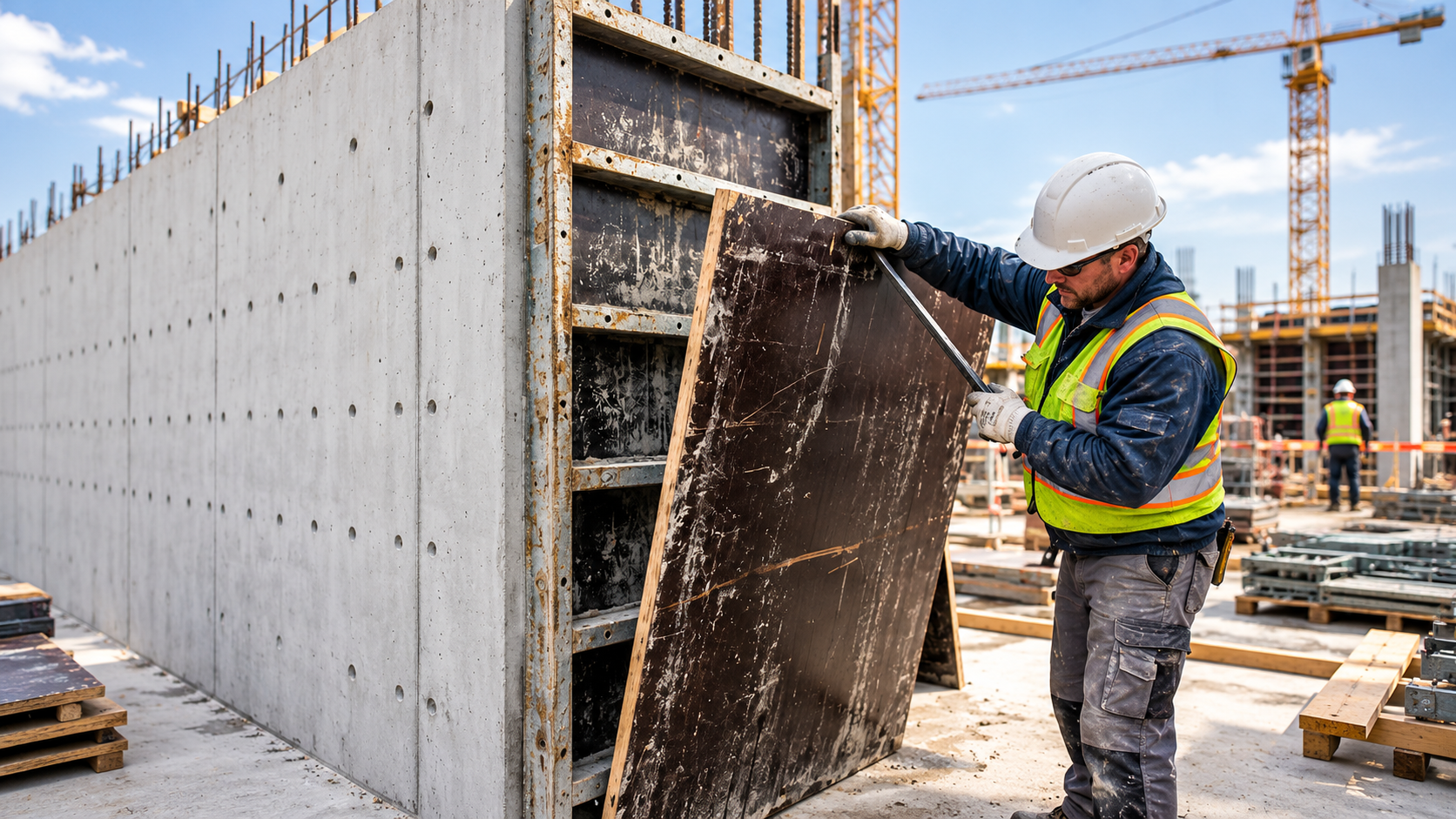
Low-carbon concrete. Now with added labor, paperwork, and plywood.
There's something about the concrete industry's push to reduce carbon emissions that continues to bother me.
We're constantly hearing how cement manufacturers are reducing their carbon footprint through less clinker, lower energy consumption, and more sustainable products. That all sounds good, but what if we're simply moving some of the costs, energy consumption, and environmental consequences from the cement plant to the ready-mix producer and concrete contractor?
If that's happening, what have we actually accomplished?
I've questioned the economics behind the transition to Type IL cement in previous articles, along with the hidden costs of lower-carbon concrete. This week's Concrete Logic Podcast episode with Jonas DeWeber of Nox-Crete and Ken Pratt brought those questions back to mind.
We discussed something most people probably haven't considered: how changing concrete chemistry can affect the life of concrete formwork.
Think about that. We change the composition of cement to reduce its manufacturing footprint, but those changes can create additional costs and waste elsewhere on the construction site.
Is that really progress?
Cement Manufacturers Are Doing What Businesses Should Do
Let me make something clear. I have no problem with cement manufacturers reducing their costs and improving profitability. Every business should be doing that.
Cement manufacturing requires enormous investments in plants, equipment, people, transportation, and energy. If manufacturers can produce cement more efficiently, they absolutely should.
One of the most significant changes in recent years has been reducing the amount of clinker used to manufacture cement. Clinker is produced by heating limestone and other raw materials in a kiln to temperatures approaching 2,700°F. That requires considerable energy, and energy costs money.
With Portland-limestone cement, commonly referred to as Type IL, manufacturers replace a portion of that clinker with finely ground limestone. ASTM C595 permits Type IL cement to contain up to 15% limestone by mass.
The economic advantage is straightforward. Less clinker means less energy-intensive manufacturing per ton of finished cement. Although additional grinding and other operating requirements can offset some of the savings, reducing clinker content generally lowers the energy and emissions associated with cement production.
Manufacturers can potentially produce more finished cement from the same clinker production capacity while reducing fuel consumption and production costs. That's a smart business decision, and if it improves their profit margins, good for them.
My concern isn't that cement manufacturers are saving money. It's whether those efficiencies are creating additional expenses for the companies that have to use their products.
Because those expenses don't disappear. Somebody has to absorb them.
Less Energy at the Cement Plant. More Energy Somewhere Else?
Reducing clinker content can lower the energy required to manufacture cement while also avoiding some of the CO₂ released during the chemical process of making clinker. Those are legitimate manufacturing benefits.
But changing cement chemistry can also change how concrete behaves.
Setting times, early strength development, admixture requirements, finishing characteristics, and even the interaction between concrete and formwork can all be affected.
Before someone gets worked up, I'm not suggesting Type IL cement can't produce good concrete. It absolutely can. Nor am I suggesting every mix using Type IL creates additional problems or expenses.
The concern is what happens when those changes do require additional resources downstream.
A ready-mix producer may need additional admixtures, testing, or trial batches to achieve the same performance. A contractor may encounter longer curing periods, additional cold-weather protection requirements, or changes in finishing characteristics. Certain mixes may also require different release agents or affect the longevity of forming materials.
Each of those adjustments has a cost. Some require additional materials, some require more labor, and others require fuel, electricity, or equipment.
So while we've reduced energy consumption at the cement plant, have we increased the resources required to construct the finished structure?
That's the question. And I don't believe the answer requires another government program or another carbon reporting requirement. It requires understanding what happens after the cement leaves the plant.
The Ready-Mix Producer Gets the Next Bill
Consider the ready-mix producer. The cement supplier changes its product, but the producer still has to deliver concrete that meets the project's strength, durability, workability, and other requirements.
Sometimes that transition is relatively straightforward. Other times, getting the same results requires changes to established mix designs, additional admixtures, more testing, or increased quality control.
Who pays for those adjustments?
The cement manufacturer may have improved its manufacturing efficiency, but the ready-mix producer could now be working with a more complicated or expensive process. And there's no guarantee the producer is purchasing cement at a lower price to offset those costs.
As I discussed in my previous article, The Real Drivers of Cement Prices, cement prices have continued increasing even as manufacturers pursue production efficiencies. There are several reasons for that, including freight, energy, demand, regional competition, and capital expenses.
Again, I don't fault manufacturers for pursuing profitability. The ready-mix producer should be doing the same thing.
But when the producer incurs additional expenses, the options are limited. Absorb the costs, increase prices where possible, or find efficiencies elsewhere to make up the difference.
Eventually, some of those costs make their way to the concrete contractor and project owner.
Making one part of the supply chain more efficient doesn't necessarily make the entire supply chain more efficient. Sometimes it simply shifts the expense.
Then There's the Concrete Contractor
This week's Concrete Logic Podcast episode provides an interesting example.
Jonas DeWeber and Ken Pratt discussed how certain concrete mixtures interact with form release agents, plywood overlays, and forming systems. It's a topic most people outside concrete construction probably haven't thought much about, but contractors know how much money is invested in formwork.
On a large project, forming materials can represent a significant portion of the cost of constructing the concrete structure. Contractors purchase or rent these materials with an expectation of getting a certain amount of use from them.
The more times a forming system can be reused while maintaining quality, the better the economics.
But what happens when changing concrete chemistry contributes to premature deterioration of plywood overlays or creates problems with release agents?
Contractors may need to change products, spend more time cleaning forms, or replace materials earlier than anticipated. There are several factors that affect formwork life, and it would be misleading to blame every problem on Type IL cement. However, the relationship between concrete chemistry and formwork performance is worth understanding.
Consider a hypothetical example. A contractor purchases 1,000 sheets of forming plywood at $100 each, for a total investment of $100,000.
If those sheets provide 20 uses, the plywood cost is $5,000 per use across the inventory. If their useful life drops to 12 uses, the cost increases to approximately $8,333 per use.
That's a 67% increase in plywood cost per use.
Now consider what happens beyond the financial impact. The replacement plywood has to be manufactured, transported, handled, installed, and eventually disposed of or recycled where practical.
All of those activities require resources.
We've potentially added materials, transportation, labor, and waste while celebrating a reduction in the manufacturing footprint of the cement.
To be clear, this is an illustration of the economics, not evidence that Type IL cement generally reduces formwork life by 40%. But it demonstrates why we should care about how a material change affects the construction process.
If the cement manufacturer becomes more efficient while the contractor consumes more materials, shouldn't we question the overall benefit?
Have We Confused a Lower Carbon Number With a Better Product?
I think this is where our industry has gotten itself into trouble.
We've become so focused on lowering embodied carbon numbers that we've sometimes lost sight of what we're actually trying to accomplish.
We're trying to build something. A bridge, hospital, manufacturing plant, data center, or road. Whatever the project, the objective is to construct a durable, functional structure at a reasonable cost.
Concrete is only one part of that process.
Yet we're increasingly asking concrete to satisfy environmental requirements that may have little connection to improving the economics or performance of the finished project.
In my previous article, Data Centers Are Abusing Concrete, I raised a similar concern. Owners want lower carbon, faster schedules, lower costs, and the same performance. When those requirements conflict, the ready-mix producer and concrete contractor are often expected to figure out how to make everything work.
I'm not opposed to improving materials. I'm opposed to pretending those improvements are free or celebrating a benefit in one part of the process while ignoring additional costs elsewhere.
If reducing the carbon footprint of cement leads to additional material consumption, equipment operation, labor, or construction waste, how much have we actually accomplished?
Maybe the overall result is still positive. Maybe it isn't. But a lower carbon number on an environmental product declaration doesn't automatically mean the entire construction process has improved.
And Now We Have to Pay People to Track It All
Here's another part of the conversation that doesn't get nearly enough attention: the administrative burden.
Think about everything involved in meeting increasingly complicated embodied-carbon requirements.
Someone has to develop and interpret the specifications, collect environmental product declarations, verify compliance, review submittals, document deliveries, and maintain records. When products or mix designs change, portions of that process may need to be repeated.
And who's doing all this?
Engineers, quality control personnel, project managers, estimators, consultants, owners' representatives, and administrative staff.
These are people who could otherwise be spending time improving productivity, solving field problems, or finding better ways to build.
Instead, we're creating another layer of paperwork, meetings, software, consultants, and administrative systems.
None of that is free.
I'm not suggesting the administrative effort itself represents a major source of carbon emissions. But it consumes real resources and adds expenses to construction.
Think about what we're doing. We spend money developing lower-carbon materials, verifying their environmental performance, tracking compliance, and sometimes accommodating changes in how those materials behave in the field.
At what point do we ask whether the benefits justify the resources we're spending to achieve them?
And please don't tell me the answer is more tracking.
We already have enough administrative requirements in construction. We don't need another industry dedicated to measuring the industry that's actually building something.
What About the Energy Required to Build It?
There's another issue that rarely seems to enter the conversation.
The energy and resources associated with additional construction activity.
Workers drive to jobsites. Equipment consumes fuel or electricity. Temporary facilities require power. Materials have to be manufactured and transported.
When changes to concrete materials extend schedules or require additional construction activities, those changes can carry environmental and economic consequences.
I'm not suggesting we calculate the personal carbon footprint of every construction worker. Quite the opposite.
I'm suggesting we stop acting as though additional labor, equipment, and time have no consequences simply because they occur outside the cement manufacturing process.
Time is a resource. Labor is a resource. Energy is a resource. Wasting any of them should concern us.
We talk endlessly about reducing embodied carbon, but when was the last time you heard someone celebrating a contractor for completing a project with fewer man-hours, fewer truck trips, less wasted material, or fewer equipment operating hours?
Those are real efficiency improvements. Many also reduce energy consumption, and they generally make economic sense without requiring another layer of consultants to prove it.
Why Not Focus on Actual Efficiency?
Here's what I'd rather see our industry focus on.
Better structural designs that use materials efficiently. Improved planning that eliminates unnecessary deliveries and rework. More reuse of forming materials. Better equipment utilization. Less wasted concrete. More productive labor.
None of those ideas is particularly exciting, and nobody is likely to get a standing ovation at a sustainability conference for improving formwork reuse.
But why shouldn't that matter?
If a contractor gets 20 uses from a sheet of plywood instead of 12, fewer sheets need to be manufactured and purchased for the same amount of work.
If better planning eliminates unnecessary concrete deliveries, we've saved fuel, labor, time, and money.
If more efficient structural design reduces the amount of concrete required, we've reduced material consumption without forcing the ready-mix producer or contractor to accommodate a more complicated mixture.
Those seem like pretty good environmental improvements to me.
And here's the best part: businesses already have a financial incentive to pursue them.
You don't have to convince a contractor that wasting less material is a good idea or a ready-mix producer that fewer rejected loads would help its business. Project owners don't need a carbon report to understand the value of a shorter construction schedule.
These improvements align economic incentives with more efficient use of resources.
Why isn't that the foundation of our sustainability conversation?
Maybe We're Looking at This Backward
I keep coming back to the same question. What are we actually trying to accomplish?
If the objective is to use less energy and make better use of resources, I'm all for it. If we're developing better materials at lower costs, that's progress too.
But when the objective becomes lowering a carbon number regardless of the costs and consequences elsewhere, I think we've lost our way.
Cement manufacturers should continue improving their operations. Ready-mix producers should continue refining their mixtures. Contractors should keep finding better ways to build, and owners should expect their money to be spent wisely.
That's how an industry advances.
But changes made upstream shouldn't automatically become someone else's problem downstream.
In my previous article, The Hidden Cost of Low-Carbon Concrete: Someone Has to Replace the Energy, I questioned what happens when changes to cement chemistry require additional resources elsewhere in the construction process.
This week's episode adds another dimension. What happens when we're not just changing the concrete but also affecting the materials required to build with it?
More plywood, release agent, equipment, labor, administrative work, and money.
For what? A lower carbon number at the cement plant?
That doesn't automatically make the finished structure more environmentally responsible, and it certainly doesn't make it less expensive.
So What Have We Actually Saved?
I'm not advocating that we abandon Type IL cement, blended cements, or new concrete technologies. Nor am I suggesting there's no value in reducing manufacturing emissions.
There is. And I fully support manufacturers finding ways to use less energy and improve their profitability.
But we should be careful about what we're calling progress.
An improvement at the manufacturing level isn't necessarily an improvement for the entire construction process. The ready-mix producer still has to make the concrete, the contractor still has to build with it, and the owner still has to pay for the finished product.
If manufacturing savings in energy and emissions are offset by additional materials, labor, waste, and energy consumption elsewhere, what have we accomplished?
And if we're spending more money simply documenting compliance, shouldn't we question whether that effort is delivering something of value?
I don't believe the answer is another carbon calculator or reporting mandate. I believe the answer is recognizing that every decision we make about construction materials has consequences beyond the manufacturing facility.
Making cement more efficient while making concrete construction less efficient isn't necessarily progress.
We may have reduced the carbon footprint of a ton of cement while increasing the cost and resource consumption required to build the structure.
And if that's the case, we haven't solved the problem. We've just moved it.
Are we actually making construction more efficient, or are we spending more money, using more resources, and creating more paperwork so we can say we've reduced our carbon footprint?
That's a distinction worth understanding.

Editor-in-Chief, Concrete Logic
Seth Tandett is based in Richmond, Virginia, and has spent years working in the concrete construction industry across central and southern Virginia. His experience includes structural concrete work on multi-level frames, data centers, federal facilities, and other large-scale projects.
Today, Seth works in business development for Baker Construction and hosts the Concrete Logic Podcast, where he asks direct questions about what is really happening in the concrete industry.
Outside of work, Seth spends time studying economics, reading American history, and hunting waterfowl.
On the Concrete Logic Podcast, Seth brings the same approach he uses in the field: ask better questions, challenge weak answers, and focus on what actually matters in concrete.
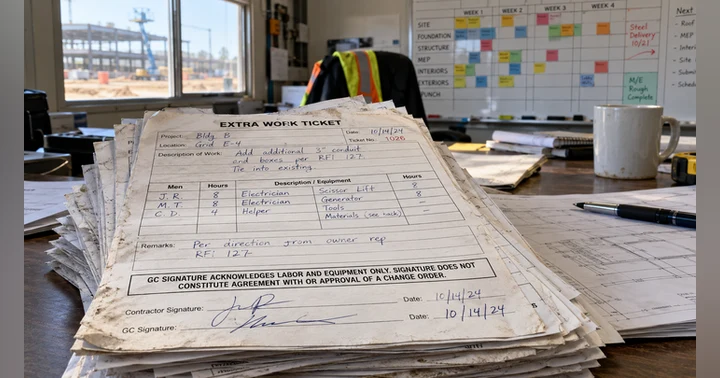
Who Really Pays for Construction Change Orders?