140. Deer Are Like Pigeons (and Other Things I Learned About Hunting)


 Apple Podcasts

 Spotify

 PocketCasts

 Goodpods

 YouTube

 Castbox

 Castro

 iHeartRadio

 Amazon Music

 Podcast Addict

 Audacy

 Pandora

 RSS Feed

 PlayerFM
“Deer for city people are like pigeons.” My neighbor’s wife told me that at her house, without apologizing, and I didn’t know what to do with it. Until then, my whole view of hunting was “guns bad, hunting weird.”
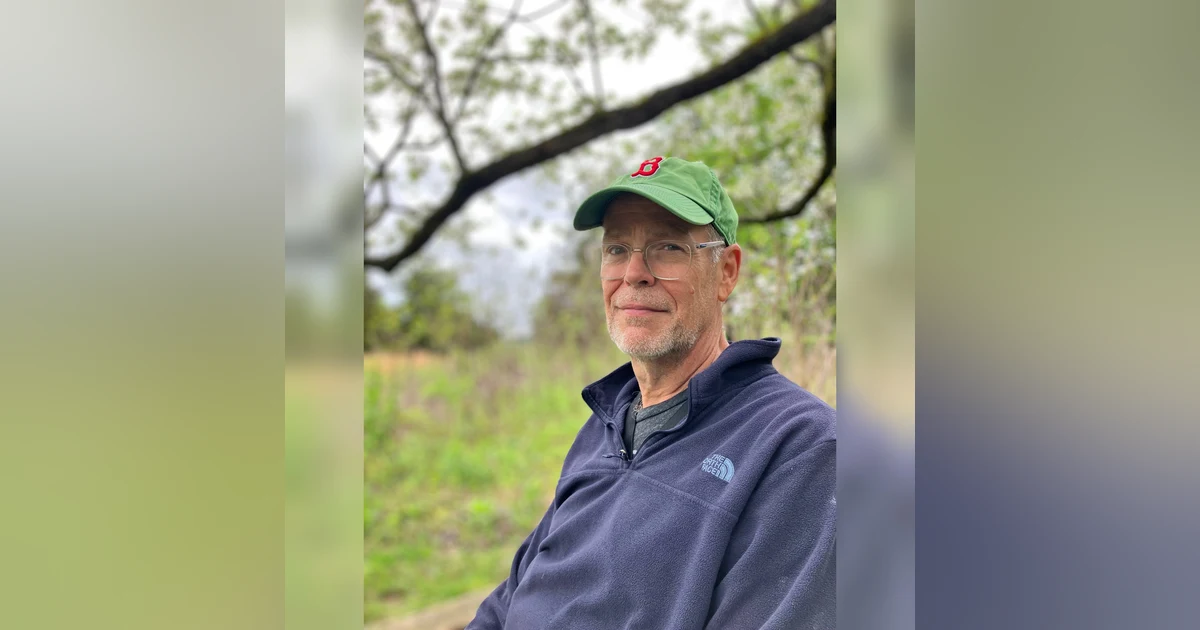
This episode, Cidiot speaks to Jeffrey Kiplinger. He hosts The Claverack Podcast, has been a conservationist all his life, and yes, he’s a bowhunter. We talk about invasive honeysuckle choking our forests, and about Columbia County having up to 150 deer per square mile on land that can support about five. We talk about a new generation of hunters who are more interested in forest health and food than trophy bucks. And we get to the question I was honestly too scared to ask: what happens after you take the shot?
Nine seasons and more than 130 episodes in, it’s time Cidiot finally talked about hunting.
(Plus Jeffrey has simultaneously released an episode of The Claverack Podcast with me, so tune in there as well).
Chapters
- 00:00 – Cold open: “Deer for city people are like pigeons”
- 02:00 – Meet Jeffrey: from 3 homes to full-time in Claverack
- 04:20 – How The Claverack Podcast started (hint: a 140-page comprehensive plan)
- 05:55 – Conservation close to home: Loomis Creek, old orchards and 250 new trees
- 09:15 – The bigger picture: too many deer, more bears, fewer birds and pollinators
- 09:55 – Trail cams, coyotes and the night shift
- 10:45 – OK, let’s talk about hunting
- 11:45 – Why the deer are the problem: invasive plants and the Taconic Community Forest
- 15:00 – By the numbers: 5 deer per square mile vs. 150, and a new kind of hunter
- 17:00 – A day in the woods: crossbows, blinds, camo, and when to wear orange
- 19:00 – What happens after the shot: field dressing, gut piles and bald eagles
- 22:20 – Beavers: the good and the bad
- 23:35 – Venison as a fix for food insecurity (and how to cook it)
- 25:45 – Old laws, food banks, and why you can’t buy local venison
- 27:30 – The new hunting community: Hudson Fish and Game Club, Forest Defense, Queers in Camo, Hunters of Color
- 29:35 – “The icky part,” and a class in seam butchery
- 32:30 – Wrap-up: will Mat actually go hunting?
Mentioned in this episode:
- The Claverack Podcast (There's a new episode with Mat Zucker!)
- Taconic Community Forest (Columbia Land Conservancy)
- Hudson Fish and Game Club
- Forest Defense
- Queers in Camo
- Hunters of Color
- Columbia Kitchen
Thanks to editor Brett Barry of Silver Hollow Audio and the Kaatscast podcast.
©2026 MCZ Media LLC. Cidiot® is a registered trademark.
Mat Zucker: [00:00:00] Deer for city people are like pigeons. That's what my neighbor's wife [00:00:10] told me at their house completely unapologetically, and I did not know what to do with that sentence. Because up to that point, my entire relationship to hunting was [00:00:20] guns bad, hunting weird. Other than skeet shooting at L.L.Bean in Maine, I'd never so much touch a gun or a bow.
But as it turns out, my neighbor [00:00:30] Jeffrey, host of the Claverack Podcast, a lifelong conservationist, and yes, a bow hunter, has a whole worldview behind that pigeon line, and it's not what I [00:00:40] expected. It involves invasive honeysuckle choking out our forests, a deer population running 30 times over what the land can handle, a new [00:00:50] generation of hunters who look nothing like the guy with the trophy buck on the wall, and eventually, a conversation about what happens after you pull the trigger that I was frankly [00:01:00] too scared to ask about.
I'm Mat Zucker, and this is Cidiot, learning to live and love life in the Hudson Valley. I can't believe in nine seasons and more than 130 [00:01:10] episodes I haven't really talked seriously about hunting. But as fall gets underway, I again throw myself into the deep end of local life, one uncomfortable topic at a time.
[00:01:20] Today, deer are like pigeons, and other things I learned about hunting.[00:01:30]
Music: The valley moved up from the city. It's a new way of living and I'm trying to get used to it. One [00:01:40] part cool is half an ounce of an idiot. Bordered by Manhattan and they call me a cidiot. At first it hurt my feelings, but it's kinda grown into it[00:01:50]
And they can tell when you're new to where. I'm looking out of place, but I'm trying to keep fitting in. [00:02:00] It takes too long to be a local, so for now I'm a cidiot
Mat Zucker: Hi, Jeffrey
Jeffrey Kiplinger: [00:02:10] Hey, Mat
Mat Zucker: Thank you for- It's good to be here ... yeah, thank you for coming on Cidiot.
Jeffrey Kiplinger: Yeah, this is great. And no, it's a, a pleasure to talk to you.
Mat Zucker: Well, I'm talking to another podcaster- ... so I'm a little stressed out, but [00:02:20] you're also a neighbor. But, you know, it's funny 'cause I found you before I even knew you were a neighbor.
I, I found the Claverack Podcast.
Jeffrey Kiplinger: Yeah.
Mat Zucker: And I was so excited 'cause I'm so into local.
Jeffrey Kiplinger: Mm-hmm.
Mat Zucker: Um, [00:02:30] and there's some regional shows, and there's... I'm trying to track down all the local shows. So I didn't even know there was one-
Jeffrey Kiplinger: Yeah ...
Mat Zucker: in the hometown we moved to.
Jeffrey Kiplinger: Well, I was aware of you and, and the Cidiot [00:02:40] Podcast, uh, from long ago when you were, I think, in, in Red Hook at the time.
Mat Zucker: Yeah, yeah.
Jeffrey Kiplinger: Yeah, yeah.
Mat Zucker: Yeah.
Jeffrey Kiplinger: And I always thought of you as a little bit outside of Claverack, but, [00:02:50] uh... and was surprised to see that you'd moved just down the road from us.
Mat Zucker: But when you moved here, I thought you had a commuting story where, like, you had a Boston, New York thing. Yeah. This was halfway in the middle.
Jeffrey Kiplinger: Yeah, I mean, when we first [00:03:00] moved out here, it was... the idea was to create a weekend place-
Mat Zucker: Ah ... '
Jeffrey Kiplinger: cause we were still very much, uh, at that point kind of mid-career. And, and we had [00:03:10] these things happen in our careers wh- where my wife, who's an architect, got an opportunity to work for, uh, as a design director for, um, one of the bigger Manhattan [00:03:20] firms.
And so we took an apartment, rented an apartment in Manhattan, and she was living down there, and I was still running a company back in the Boston area, and [00:03:30] we had an apartment there. And so we would meet up here in our weekend place.
Mat Zucker: You had three homes. Oh, my God.
Jeffrey Kiplinger: We would meet up here in our weekend place.[00:03:40]
This was probably from about 2016 to, to the pandemic. So, um, 2016 we were back and forth, [00:03:50] both, both still very involved in our careers. I sold my company. I moved out here permanently at the end of 2017, so I was out here full time. And then [00:04:00] Katie would come up on the weekends from Manhattan on the train.
But getting together and just being able to totally relax up here-
Mat Zucker: Yeah ...
Jeffrey Kiplinger: was great. And when [00:04:10] the pandemic happened, we closed out the apartment in New York City- Mm-hmm ... and Katie moved up here, which has turned out to be permanent.
Mat Zucker: And how did the podcast start? [00:04:20]
Jeffrey Kiplinger: Um, that was, uh, much more recent, really just the last two years.
So I've become more involved with things like, you know, local sort of mini [00:04:30] communities, small communities of people, and become much more integrated into the Claverack area. And one of the things that I noticed early on was that [00:04:40] Claverack had this comprehensive plan. All the towns in, in the state I guess do comprehensive plans, and they're supposed to renew them once every 15 years or [00:04:50] so, and this one was developed back in 2007.
And I, and I read through it. It's like 140 pages, and I read through it, and I was like, "Well- You know, here it is [00:05:00] 2020, and I don't see any of these changes implemented. So I started to go to the town board meetings, and I started to go to the planning board meetings and, and, you know, got more [00:05:10] involved. I won't say so much involved with local politics as just trying to help.
Mat Zucker: Hmm.
Jeffrey Kiplinger: I think The Claverack Podcast is about people that care about the future [00:05:20] of Claverack-
Mat Zucker: Mm ...
Jeffrey Kiplinger: and, and what that looks like. And, you know, yeah, some of those people might be aggressively pro-development on one side, and some of them might be, uh, [00:05:30] you know, not in my backyard types. But-
Mat Zucker: Yeah, I've listened.
You've had a mix. You've had, like, some artists on. You had a farmer couple. You've had, you've had an interesting mix of people.
Jeffrey Kiplinger: Yeah, and [00:05:40] I hope to continue to have an interesting mix of people. I thought that I could isolate myself to just Claverackians in the beginning, and, [00:05:50] um, and I think that I need to move a little bit more broadly out because we're not that different from any of the other municipalities around Claverack.
Mat Zucker: I'd like to talk a little bit about conservation too because [00:06:00] it's something that you know a lot more about than I do. I think you and your wife are very-
Jeffrey Kiplinger: Uh ...
Mat Zucker: actively involved. I even see an electric
Jeffrey Kiplinger: car. The more, the more we know, the less we know. It's one of those situations. [00:06:10]
Mat Zucker: Kinda, but you're, like, engaged in the topic.
My question would be, like, what do I need to know about what's going on right now? in conservation in a town like us. Like, I live on a creek, so I think water [00:06:20] matters. Um, I see the farmland. I see things becoming either solar farms or there's a rumor of a battery farm coming.
Jeffrey Kiplinger: Mm-hmm.
Mat Zucker: So I guess I'd be curious what the big topics are right now in [00:06:30] conservation in a town like ours that people could relate to.
Jeffrey Kiplinger: Yeah. Well, it's a great question because it's, there's a focus on the big picture as well as a focus on the small picture, [00:06:40] and you just brought up the small picture, which is really super important. You live on a creek. Yeah. Loomis Creek is super clean water. The major sources [00:06:50] of pollutants in Loomis Creek are-
Mat Zucker: There's pollutants?
Jeffrey Kiplinger: Well, there's, there's silting up that you can get, you know, if you dig around it and, and do [00:07:00] a lot of development, right? Yeah. So if you, if you built a housing development in the Loomis Creek watershed, it would have an impact-
Mat Zucker: Right ...
Jeffrey Kiplinger: on you guys downstream, right? And that flows into Clover Creek, and [00:07:10] that's, you know, a potential issue for the health of that stream as well.
But also, there's agricultural use in the area, so the orchards and stuff that are around our [00:07:20] houses here, people spray those.
Mat Zucker: Yeah.
Jeffrey Kiplinger: Uh, so that they can pro-
Mat Zucker: Some do, some don't.
Jeffrey Kiplinger: Yeah, some do, some don't. But they're trying to produce, uh, you know, an agricultural product, and [00:07:30] it requires sometimes protection from insects and predation by birds and animals and stuff like that.
So, you know, you have to look at those things, and [00:07:40] that's on the local level and the, the hyperlocal level, right? So you have across the street from you, uh, a couple that, um, that we talked to on the podcast, Tom and [00:07:50] Tracy, who are looking at their orchard, which was put in place 50 years ago or more. It's growing Empire and McIntosh apples [00:08:00] primarily, which are used a lot for quick sale in grocery stores, you know, for eating apples, and a lot for juice.
So those are not like specialty [00:08:10] apples like for, you know, uh, artisanal cider- Mm-hmm ... or, or things like that, and they're not heirloom apples, you know, that people like go, "Ooh, I've never heard of [00:08:20] a, you know, a, a Gayfield's Pippin," or something like that. You know, they, they, you know-
Mat Zucker: I've never heard of this.
Jeffrey Kiplinger: I made it up. Oh, okay. There's, there's [00:08:30] hundreds and hundreds of apples, I guess- Yeah, yeah ... and, and, you know, they all have these great names- I'm new ... and, you know. Yeah, so me too. But, you know, they had this old-school apple orchard. They've stopped [00:08:40] spraying it, so they're looking at what do they do about managing the trees that still exist?
Do they take out some of them? How do they protect the health of the Loomis Creek Watershed? They've just [00:08:50] done a tree-planting project along there with the s- the, you know, the state DEC involved. They're putting in like 250 new trees along the, the watershed there, [00:09:00] and it's gonna produce this beautiful area that they can walk in.
So I think next steps, maybe we start to talk with them, since we have adjacent properties, about [00:09:10] creating a walking trail through both the properties.
Mat Zucker: Yeah. Nice.
Jeffrey Kiplinger: You know, th- those are the kind of things that you can look at at a micro, local level, right? But in the big picture, there's also a [00:09:20] question of, okay, we have too many deer.
We have a growing population of bears. We have declining populations of birds. We have declining populations of [00:09:30] insects which pollinate the, the farmers' crops. What do we do about all of this? You know, because it's, it's a pressure on the Hudson Valley. It's a pressure on the [00:09:40] state of New York. It's a pressure on the northeastern part of the US.
It's a pressure on the, the entire continent.
Mat Zucker: Are there bears? Wait. I thought bears were on this other river.
Jeffrey Kiplinger: You haven't seen them yet?
Mat Zucker: I [00:09:50] haven't seen bears here.
Jeffrey Kiplinger: Oh, there's bears.
Mat Zucker: There's bears? Oh, yeah.
Jeffrey Kiplinger: Here? I got them on my... I, I have trail cameras in my back- Oh, that's a good picture ... um, woods out here and, you know.
And trail cameras, [00:10:00] you should consider getting one 'cause they're so much fun. You see all kinds of things that go on at night that you'll never see otherwise. Oh, I'd
Mat Zucker: love to see that. I need a
Jeffrey Kiplinger: trail camera. I think they're also 80 bucks or something like that, and you just, you know, wrap [00:10:10] a strap around a
Mat Zucker: tree.
So not a flock camera, a trail camera.
Jeffrey Kiplinger: Yeah, a trail camera. Not a, not a flock. They're not connected to the internet in any way. Yeah. There's nobody out there. There's no, uh, uh, evil [00:10:20] organization watching, you know, what's going on, on my property. Just, just me and the deer and the coyotes and the foxes and the squirrels and the-
Mat Zucker: The coyotes are scary.[00:10:30]
Jeffrey Kiplinger: Yeah. Well, let's- Coyotes are, are... Coyotes are friendly. Coyotes are- They're not
Mat Zucker: friendly ...
Jeffrey Kiplinger: scavenger. They're, they're helping me clean up. Like, if somebody hits a deer on the [00:10:40] road out here and it falls on my property and starts to stink, that's the coyotes that are gonna take it away.
Mat Zucker: Okay. So we, we have to talk about [00:10:50] deer, and we have to talk about hunting.
Jeffrey Kiplinger: Yeah.
Mat Zucker: And this is extremely uncomfortable for cidiots like me. So this is an important topic. I need to head into this. I can't believe I've [00:11:00] never spoken about this. So We're gonna talk about hunting, 'cause you know about that, which, you know, the bias for, for me is guns [00:11:10] bad, hunting weird. What is that? I'm so curious.
And then, then I was talking to you and your wife, and we're talking about deer, and [00:11:20] like, "I don't wanna hit the deer." And your wife says to me, "Matt, deer for city people is like pigeons." She was very unapologetic. I was like, "What are you guys ta- ... [00:11:30] And then you guys go hunting." So I guess help me unpack the idea of hunting, specifically you guys hate deer, apparently.
Jeffrey Kiplinger: No. [00:11:40] No, actually, I- There's
Mat Zucker: too many ...
Jeffrey Kiplinger: I love deer. But what, what I, what we realized- ... what we realized here, uh-
Mat Zucker: I'm, like, shaking. I'm so nervous about this topic. [00:11:50]
Jeffrey Kiplinger: What we realized after moving here was that w- we had these nine, 10 acres that were all basically the native [00:12:00] trees that supported, like, the birds and the butterflies and the other wildlife were all dying back, or they weren't getting established, right?
We weren't seeing any [00:12:10] new growth of oak trees and things like that on this property. And the reason was because all of the ground surface area was consumed with these invasive plants, mostly [00:12:20] honeysuckle, multiflora rose, buckthorn. Uh, you know, there's a whole number of bad actors out there. And when I was a kid in, you know, the 1960s and '70s, you didn't see these [00:12:30] invasive plants.
Mm. They've, but they've become very dominant here because, you know, now we have this global kind of situation where everybody moves around all the time, and so the [00:12:40] seeds are coming in. Uh- Mm ... you know, there's, there's invasive animals, too, you know? Um, but, but, you know, I, I think that the plants were reducing the forest [00:12:50] health.
So we began to pull out the invasive plants, and we saw new growth of good forest. And then we started to realize that the new growth of good forest wasn't [00:13:00] lasting because we had a massive amount of deer predation.
Mat Zucker: Mm.
Jeffrey Kiplinger: And when I started to look into this as a related problem, I realized that a deer [00:13:10] predation is keeping down any kind of seedling trees that are coming into the-
Mat Zucker: The deer are going after the good plants.
Jeffrey Kiplinger: Yeah. They're going after-
Mat Zucker: The local plants ...
Jeffrey Kiplinger: because they evolved [00:13:20] in North America to eat the North American plants. Oh. They don't eat the invasive ones-
Mat Zucker: Oh ... uh, to a great extent. Okay. This makes sense now.
Jeffrey Kiplinger: Yeah.
Mat Zucker: Starting to.
Jeffrey Kiplinger: So, so, you know, [00:13:30] this gives the invasive plants a, a, a tremendous edge. And whenever there's a tree that falls down and some sunlight starts to hit the forest floor, the first thing you see sprag- [00:13:40] spring up is these invasive plants that then cover all of the ground and prevent anything else from sprouting.
Well, you mentioned Taconic Community Forest earlier as a [00:13:50] wonderful
Mat Zucker: Oh, I love this place. Yeah. This is part of the Columbia Land Conservancy-
Jeffrey Kiplinger: Right ... in Craryville. Well, we were talking on my podcast.
Mat Zucker: Yeah.
Jeffrey Kiplinger: And that's a great example of you have- [00:14:00] 550 acres or whatever it is, and it's a mix of old forest that looks fairly healthy, but isn't because a lot of the [00:14:10] understory has all been browsed off by deer.
And then there are areas where, because that forest wasn't healthy, a storm or [00:14:20] a f- you know, a wildfire or something like that knocked out a lot of the tree canopy, and all that came in was invasive honeysuckles and rose and, and all of [00:14:30] this mess. And they're gonna need to get in excavators and, and big equipment in order to remove a lot of that.
There's, there's one patch that I'm aware of down there that's like [00:14:40] 13 acres, and it's all invasive plants.
Mat Zucker: Crazy.
Jeffrey Kiplinger: There's, and there's nothing else growing there And, you know, so how are the deer related to that? Well, the deer are related to [00:14:50] forest health overall because they're not allowing the forest to regenerate.
And we have in this part of the state for some reason, I, uh, well, [00:15:00] for obvious reasons, it's all old farmland growing in in newer forest, right? Ideal habitat for white-tailed deer. So deer were hunted to [00:15:10] extinction in New York, and they began to come back in about 1910.
Mat Zucker: Hmm.
Jeffrey Kiplinger: And s- since 1960, their population has just exploded.[00:15:20]
So we're now at about 30 to 50 times the carrying capacity of deer per unit of land, right? People usually speak in terms of per square mile. [00:15:30] A square mile of land in Columbia County should be able to support about five deer. We have up to 150.
Mat Zucker: Okay. So-
Jeffrey Kiplinger: So it's big.
Mat Zucker: Yeah ...
Jeffrey Kiplinger: [00:15:40] so- That's a lot ... yeah. It's a huge pressure on the forest.
And that, and, and we have at the same time we have declining population of hunters. Now, when I think about the declining [00:15:50] population of hunters, I think about, you know, my grandfather or something like that, right? Who m- might have hunted in order to try to get a trophy [00:16:00] buck with a big rack of antlers that you could, you know, then mount the head on a wall or something.
And there are a few of, uh, the old-school hunters left in the area. [00:16:10] And well, actually, not a few, a good number. But that declining population is because those guys are aging out, and they're not [00:16:20] teaching their grandsons or granddaughters to hunt. And so now we've got a new generation of hunters that's coming in that's more like [00:16:30] me, that are more concerned about the overall forest health.
And we have to refocus our hunting on population control and-
Mat Zucker: Okay, that's [00:16:40] what I didn't realize. So there's different kinds of hunters. Yeah. There's the game hunters for sport-
Jeffrey Kiplinger: Yeah ...
Mat Zucker: which might be declining, and people still might do.
Jeffrey Kiplinger: Yeah.
Mat Zucker: And then there's the rise of the Jeffrey [00:16:50] hunter, which is more of a conservationist hunter.
Jeffrey Kiplinger: Yeah. And there's, there's overlap, right? Because I find this-
Mat Zucker: This makes me a little more comfortable.
Jeffrey Kiplinger: Okay. I, I, you know, and I'll, I'll [00:17:00] touch on this, and then I'll move on. But- ... but I find there is no bad day that I've ever had hunting. There are many days where I haven't seen a single [00:17:10] deer. There are many days where I haven't shot anything, you know, and never, never lifted my, my bow or my gun.
But- Wait ... being in the woods- Wait, you
Mat Zucker: have a gun and a bow? [00:17:20]
Jeffrey Kiplinger: Yeah.
Mat Zucker: You're a bow hunter and a gun-
Jeffrey Kiplinger: Right. I don't hunt gun here on this property. I hunt, I hunt with a gun elsewhere. But here on this property, we're small enough where I hunt with a crossbow. [00:17:30] Cool. And the time that I spend in the woods is the best time Ever
Mat Zucker: It's fun?
Jeffrey Kiplinger: You know, you're, you're out early in the morning or late in the day. [00:17:40] You're seeing the world around you wake up as the sun rises, or you're watching it go to bed as the sun goes down.
Mat Zucker: Do you put on the camo and the paint?
Jeffrey Kiplinger: Um, I've got [00:17:50] camo clothing on, but no, I don't do the paint. Okay. 'Cause I'm usually hunting in a stand or a blind.
Mat Zucker: What's a blind?
Jeffrey Kiplinger: A blind is just basically a way, um, to [00:18:00] disguise yourself behind vegetation or- Oh ... you know, you can, you can buy little tents, or you can build a little house in the woods or whatever. And, you know, those are ways to [00:18:10] keep the game from just looking at you going, "Wait a minute." Where's the...
Mat Zucker: I mean, you can't just, like, hunt any day you want.
Like, when, when do you hunt deer? Like, is it a certain time of year?
Jeffrey Kiplinger: No, deer season is very specific, right. Um-
Mat Zucker: Oh, [00:18:20] that's... But I have to wear orange, right?
Jeffrey Kiplinger: That's- If you go out in a, in a, an area like a state park or something like that where there may be hunters, go hiking in the [00:18:30] Catskills or up in the Taconics or something like that, yeah, definitely during the gun season, which begins about the middle of November-
Mat Zucker: Yeah
Jeffrey Kiplinger: and lasts basically till the end of the year. You wanna [00:18:40] definitely wear orange then. Not so much for bow. You could get away with not wearing orange, but it is a good idea. Bow season starts early.
Mat Zucker: Well, I'd only get shot in the leg. [00:18:50] I mean.
Jeffrey Kiplinger: Yeah. Well, you don't wanna get shot with an arrow- ... no matter what.
But, but, uh, uh, people that hunt with a bow, um, typically are [00:19:00] trying to shoot game at a much closer range than people that hunt with a gun.
Mat Zucker: Wait, so if you, if you do hit said deer- Mm-hmm ... what do you do with it?
Jeffrey Kiplinger: Oh, that's a great
Mat Zucker: [00:19:10] question. Like what hap-
Jeffrey Kiplinger: That's, that's where it gets ugly. That's where the work starts, you know?
Mat Zucker: Like, I'd want the crown, so.
Jeffrey Kiplinger: Yeah. The first thing you have to do basically is, is make [00:19:20] sure the animal is dead, and, uh, and you want, uh, to hunt ethically. You want the animal to die as quickly and as painlessly as possible. So one of the [00:19:30] reasons I hunt with a crossbow is because the impact, uh, of the arrow is very, very high.
Um, the, the velocity and the force with which [00:19:40] the arrow hits is very high. And so if I get a good shot on an animal, I can bring it down very, very quickly. Basically, the, the little razor blade heads on [00:19:50] the, on the arrow-
Mat Zucker: Yeah ...
Jeffrey Kiplinger: cause the animal to bleed out very, very quickly. Okay. And it's... I guess the, the animals are obviously surprised by being hit, but I've [00:20:00] never had one run more than about 50 yards.
Mat Zucker: Okay.
Jeffrey Kiplinger: So, you know, anyway, they come down very quickly, and then, you know, once they're dead, you do have to, [00:20:10] um, get the guts out of the body.
Mat Zucker: You do?
Jeffrey Kiplinger: That's often done in the field, so, you know, you're, you're basically down on your knees with, um, with the deer. [00:20:20] Um-
Mat Zucker: Do you do it yourself, or do you, like, bring an intern, your podcasting intern?
Jeffrey Kiplinger: No, I'll, I'll-
Mat Zucker: You know ...
Jeffrey Kiplinger: do it myself.[00:20:30]
And then I basically use a, a thing called a jet sled, which is basically a plastic sled [00:20:40] that I can pull, hmm, either with ropes around my shoulders or I'll, you know, hook it up to my tractor if I get it out on one of the tractor roads. And, you know, and, uh, and haul it back [00:20:50] up to my shed where I have a, a device for hanging the deer upside down, and then I can finish skinning it and butchering it.
Mat Zucker: And then what do you do with-
Jeffrey Kiplinger: [00:21:00] The meat?
Mat Zucker: Yeah.
Jeffrey Kiplinger: I cook it. I mean, you know-
Mat Zucker: And there's... And the rest of the body? I only ask 'cause a previous neighbor had a dead chicken-
Jeffrey Kiplinger: Oh ...
Mat Zucker: and he [00:21:10] threw it on the ground and didn't bury it. I was like, "Is that legit? Like, don't you have to bury it?"
Jeffrey Kiplinger: Well, the way I look at it is, you know, we mentioned coyotes earlier.
Mat Zucker: Yeah.
Jeffrey Kiplinger: And, you know, coyotes [00:21:20] are part of the crew of scavengers that I have deep respect for.
Mat Zucker: Oh.
Jeffrey Kiplinger: Uh, along with, um, vultures, crows- Yep ... ravens, bald eagles. [00:21:30]
Mat Zucker: Yep, we see them around here,
Jeffrey Kiplinger: yeah. These are all scavengers. And, you know, I, um, I'll sometimes put the, the New York DEC, the Department, Department of Environmental Conservation.
But they, they want [00:21:40] you... They have a program where they ask hunters to put a game camera over the gut pile from a field-dressed deer to see what's coming in and eating it. [00:21:50] And I have put a game camera over a gut pile and seen three bald eagles light on it. And- Wow ... you know, it's, it's fantastic.
Mat Zucker: So nature takes care of [00:22:00] itself.
Jeffrey Kiplinger: Yeah, yeah. And then the coyotes come in at night and, you know, when the birds are asleep, and they'll take care of the last bits of it. But, you know, yeah, there's, there's sometimes [00:22:10] leftover, um, if you don't tan hides, you know, you have to dispose of the hide, um, which is best bagged up and put into a [00:22:20] garbage can someplace.
Mat Zucker: I saw at the Columbia County Fair they had, like, beaver hides- ... for sale. I didn't see deer hides.
Jeffrey Kiplinger: Well, a lot of people, a lot of people, uh, still trap in this area, and [00:22:30] beaver is still a, a game species.
Mat Zucker: They're not a beloved, they're not a beloved friend either.
Jeffrey Kiplinger: Again, this, this is kinda like the deer question, right?
Some people think deer are a [00:22:40] beautiful part of the wildlife habitat around here, and they're not looking at a big picture, uh, you know, that says deer are bad because they're, you know, they're ruining the forest. [00:22:50] That's not to say that they're too narrow-minded, because both are true. Deer are beautiful creatures- Right
and deer are ruining the forest.
Mat Zucker: Right.
Jeffrey Kiplinger: Right? Beaver are also [00:23:00] problematic creatures from i- in terms of, um, you don't want your farmland flooded. You don't want your road flooded. You don't want a road to wash out. You don't want a beaver dam to [00:23:10] break like one, uh, did up, um, uphill from New Lebanon a couple- Hmm
of years ago and really created a, a huge flood in the town. So beavers can be problems. [00:23:20] But beavers are also important in terms of controlling runoff during big storms- Okay ... because beaver dams create these big shallow areas of [00:23:30] water that can absorb a lot of water from a rainfall. So, you know, again, both good and bad in beavers.
Mat Zucker: Do you hunt other stuff besides deer?
Jeffrey Kiplinger: I do not, [00:23:40] no. I'm mostly focused on deer. Okay. The, you know, the other aspect of deer which we haven't touched on is that I think venison is a part of the solution to the food [00:23:50] insecurity problems that we have in this part of the state, and really all, all across the country.
I mean, really, uh, um, meat is becoming incredibly [00:24:00] expensive.
Mat Zucker: Yep, right
Jeffrey Kiplinger: now. Uh, you know, the production of meat is problematic, uh, you know, um, with beef cattle having to be shipped across the country in order to finish on feedlots in the [00:24:10] Midwest. You know, slaughterhouses, uh, you know, we read stories all the time about, um, slaughterhouses, uh, being cruel to workers, being cruel to animals, and, [00:24:20] and really not being very clean places.
Uh, so, you know, the, the food supply in this country is increasingly at risk, and the Department of Agriculture and the [00:24:30] FDA don't have the resources to keep track of all of that. CDC doesn't have the resources to keep track of all the foodborne diseases. So, you know- [00:24:40] Having a source of clean food, right?
If I shoot a deer on this property, that deer, because deer don't eat any carrion or anything like that, it's never been exposed to anything [00:24:50] but plants. Mm. And the plants that grow locally, you know, are the-
Mat Zucker: And it's a, it's a lean meat, right? It's not a-
Jeffrey Kiplinger: It's a very lean meat,
Mat Zucker: yeah ... yeah, it's not like a super red meat.
Jeffrey Kiplinger: Yeah, but I mean, part of [00:25:00] that- It's not unhealthy ... because, yeah, uh, unlike like pork fat and, and beef fat, which we're used to eating, deer fat has a stronger taste, and people are not used to [00:25:10] eating it. So that's what's responsible for the gamey taste in meat.
Mat Zucker: Yeah.
Jeffrey Kiplinger: So very frequently we'll just cut all the fat off and deal with very, very lean cuts of meat.
[00:25:20] So that means that like a filet mignon, you wanna, you wanna cook it rare or medium rare, and you want to have a, you know, a, um, [00:25:30] like a compound butter or a, you know, a nice, uh, pan sauce or something to go with it that, that makes it taste richer and not dry like [00:25:40] a, like an overcooked non-fatty meat. Sorry, did I get too esoteric?
Mat Zucker: No, no, I'm fascinated. But I know you're saying there's a problem-- there's a solution right in front of us for a problem.
Jeffrey Kiplinger: Yeah, [00:25:50] exactly. And, you know- All around us ... it's-- we're, we're dealing with, um, laws that are kind of archaic in this area, you know, a... For example, there's no market hunting allowed, meaning that you [00:26:00] can't hunt an animal and then sell it to a restaurant- There you go.
Mat Zucker: Okay ... or
Jeffrey Kiplinger: a grocery store- That's the best we can ... or something like that.
Mat Zucker: Yeah.
Jeffrey Kiplinger: Um, and the reason for that has to do with, uh- [00:26:10] Oh ... hunting regulations that go back to this period of time when deer were a very low population, and the hunting community didn't wanna see a lot of [00:26:20] encouragement of over-harvesting deer.
Mat Zucker: Correct. And
Jeffrey Kiplinger: now
Mat Zucker: they'll go-
Jeffrey Kiplinger: We need to over harvest, right?
Mat Zucker: Right.
Jeffrey Kiplinger: It's different now.
Mat Zucker: Otherwise, they'll show up at the-
Jeffrey Kiplinger: Yeah ...
Mat Zucker: Hillsdale Market.
Jeffrey Kiplinger: Yeah. But the, [00:26:30] the laws are, are still... Even though I can go out and forage mushrooms or fish or something like that, and then I can sell that to a restaurant, you know, just as a private [00:26:40] citizen, I can't do that with, uh-
Mat Zucker: Oh, it's illegal.
Okay ... with a deer. It's illegal.
Jeffrey Kiplinger: Yeah.
Mat Zucker: Huh.
Jeffrey Kiplinger: So we need to fix some of those issues with regulation, but [00:26:50] things are beginning to open up. Just like with the raw milk Kind of thing Yeah ... right? You know, where for a long time you couldn't sell raw milk, you couldn't distribute raw milk if you were a farm. Now those laws have [00:27:00] changed, and farms are allowed to distribute raw milk or sell raw milk on their own premises.
That opens up a type of food source that wasn't available to people before. [00:27:10] The same thing can be true with venison and will be, I think, within just a few years. We have more processors who are willing to donate or for a [00:27:20] fee paid by the hunter, donate the packaged venison to food banks. And we have a few places like Columbia Kitchen that are willing to accept venison [00:27:30] from-
Mat Zucker: Yeah, they are.
Okay.
Jeffrey Kiplinger: Yeah.
Mat Zucker: Yeah.
Jeffrey Kiplinger: So-
Mat Zucker: For the hunting and stuff, like, are you part of, like, a club, like a, a hunting game club, or is there a community?
Jeffrey Kiplinger: I just joined the Hudson Fish and Game Club, [00:27:40] not so much because I wanted a place to shoot at a range or something like that, but more because I wanted to be more integrated into the [00:27:50] hunting community.
Mat Zucker: Mm.
Jeffrey Kiplinger: The hunting community, as we talked about earlier, is still mixed between a kind of an old-school hunting philosophy, um, where, uh, [00:28:00] taking the trophy buck and preserving the population of does so that they might produce more bucks in the future. You know, that's, that's kind of the old-school way of h- looking at hunting.[00:28:10]
But there's a new group of hunters that are, are kind of coming into the community that are more about forest defense and more about, um, food [00:28:20] supply and some of these other issues.
Mat Zucker: Uh- It really changes the color and the bias of when we hear a word, what we think of it, right?
Jeffrey Kiplinger: Yeah. And I'm not trying to convince people so much that they should [00:28:30] hunt or that deer hunting is great or good or, you know, there's, there's gonna be many different opinions about this.
But I do want people to realize that there's a lot of different [00:28:40] ways to look at this.
Mat Zucker: I'm always like, "Does everyone have a gun up here?" I'm sure there's Jews and gays who hunt.
Jeffrey Kiplinger: I'm sure there are. I, I mean, you know, that [00:28:50] some of the people that I'm working with now as a hunter safety instructor, right- Yeah
are, are really interesting groups of- Young people, you know Yeah Uh, there's a group called Forest [00:29:00] Defense out of, uh, Tivoli. Um, there's a group called Queers in Camo. Oh Sorry. Queers in Camo.
Mat Zucker: Forest Defense- Yeah ... and Queers, Queers in Camo.
Jeffrey Kiplinger: Queers in Camo. There's [00:29:10] a national group called Hunters of Color, and they, there's a local chapter here.
And Columbia-
Mat Zucker: Cool ...
Jeffrey Kiplinger: Land Conservancy does work with those groups. So, you know, [00:29:20] there's, there's a lot of people I think that are coming into this, looking at it not so much as a sport sport-
Mat Zucker: Right ...
Jeffrey Kiplinger: um-
Mat Zucker: It, it doesn't sound like a sport.
Jeffrey Kiplinger: Yeah. Um, where you're [00:29:30] trying to get a trophy, but more as an avocation.
Mat Zucker: I can't believe I've never talked about this.
Jeffrey Kiplinger: I am happy to have you [00:29:40] up here. I have a, a, you know, I have two deer stands and a, and a deer blind set up, um-
Mat Zucker: Yeah, yeah ... if you want to come Tell me when you're doing it. I'll c- I'll, I'll, I'll rush over. I just don't wanna do the icky thing.
Jeffrey Kiplinger: Oh, [00:29:50] okay.
Mat Zucker: Maybe not the first time.
Jeffrey Kiplinger: Do you wanna, you wanna do the icky thing, uh, with somebody else, is what you mean to say?
Mat Zucker: Sure.
Jeffrey Kiplinger: Yeah.
Mat Zucker: I want someone else to do it.
Jeffrey Kiplinger: Yeah. I mean, I think that's a big barrier for a lot of [00:30:00] people, right? The, the icky part.
Mat Zucker: Right. But it's also the reality. Yeah. And also it's sort of like you wanna go in the water but you don't wanna get wet. Yeah. Like, it's also like, uh, maybe, maybe you should. [00:30:10] Maybe, you know, maybe that's part of it.
Jeffrey Kiplinger: Uh, well, I learned
Mat Zucker: from- It's life and death. Like, it's full cycle, right? Yeah. It's kind of natural.
Jeffrey Kiplinger: It is, yeah. Circle of life, right. I learned to butcher animals, [00:30:20] gosh, 15 years ago. Because as I told my wife at the time, "I don't wanna be so detached from my food that I'm only recognizing- Right ... as food if it's wrapped [00:30:30] in cellophane at a grocery store."
Mat Zucker: Right.
Jeffrey Kiplinger: You know? And so I said, "I, I don't know how hard this is gonna be, but I wanna take this class in, you know, slaughtering and butchering [00:30:40] pigs."
Mat Zucker: Right.
Jeffrey Kiplinger: And so I went away for a four-day weekend, and the first day, we, we killed and, and bled out and removed the [00:30:50] hair and split. The group of us over there, we, we did it two people per pig, so I think there were a dozen- You went
Mat Zucker: to school for this?
Jeffrey Kiplinger: Yeah, I went to a place in New Jersey and, and it was [00:31:00] a, a guy who taught seam butchery, which is a, you know... You can butcher an animal really, really quickly with a band saw.
Mat Zucker: Oh.
Jeffrey Kiplinger: You know, just, you know, cut, [00:31:10] cut the meat into big chunks, and that's the way it's done for grocery stores. But the way you get traditional whole muscle cuts of something like a pig, where sometimes you wanna [00:31:20] make a, you know, a whole cured cut of meat like a guanciale or a, a coppa or something like that, you know, to get that whole muscle cut, you have to work [00:31:30] along the little seams of fascia that, that- Mm-hmm
exist between the muscles, and that's called seam butchery. It takes a lot longer, and it's harder to learn. So this [00:31:40] Austrian butcher came over, and he taught us seam butchery on these pigs, and I took this class twice, so two four-day weekends a, a year apart. So I, I learned a lot about how to [00:31:50] cut up an animal, and part of that was the nose-to-tail eating- Yeah
type of thing- Yeah ... because we did... We cooked with all the organ meats. We made head cheese. Yeah. We, you know, we did [00:32:00] everything we could. It w- to, to make it everything but the squeal kind of eating.
Mat Zucker: Yeah. Right?
Jeffrey Kiplinger: With deer, uh, you know, to be able to do the same thing and harvest the maximum amount of meat [00:32:10] is an ethical approach to, to taking deer.
Mat Zucker: Wow, that's a class to take.
Jeffrey Kiplinger: It, it really was, yeah.
Mat Zucker: I've taken-
Jeffrey Kiplinger: Came home, came home with, like, f- [00:32:20] five coolers full of ice and, and meat. And like, "What am I gonna do with all of this?"
Mat Zucker: Right. But it definitely demystifies the world.
Jeffrey Kiplinger: Pigs are, pigs are bigger than deer.
Mat Zucker: Well, my brother-in-law would love [00:32:30] that class.
All right, cool. Well, thank you for, thank you for throwing water on my face about the topic I wanted to hear about. I'm gonna come over and [00:32:40] come... I think I'm gonna come hunting.
Jeffrey Kiplinger: Yeah. Uh, that would be really fun.
Mat Zucker: I might wear a microphone.
Jeffrey Kiplinger: Okay. No one will believe it. I'm sitting here in my tree stand- ... [00:32:50] and there's something moving up.
Oh, shit, it's a squirrel.
Mat Zucker: That's probably what's gonna happen. Thank you so much, Jeffrey.
Jeffrey Kiplinger: Yeah, this was [00:33:00] great, Mat. Thank you.
Mat Zucker: Great.
Music: Down in the valley, moved up from the city. It's a new way of living, and I'm trying to get used to it. One part cool is half an ounce of an idiot. Ported to Manhattan [00:33:10] and they call me a cidiot.
At first it hurt my feelings but it's kinda gotta ring to it. When you move to the country[00:33:20]
And out of place but I'm tryna keep fitting in I used to look for soap but now I'm a cidiot. I'm a
[00:33:30] cidiot, I'm a cidiot, I'm a cidiot, I'm a cidiot