Finding Your Way Home, with Burt Feldstein

 Apple Podcasts
 Spotify
 YouTube
 Amazon Music
 PocketCasts
 Podchaser
 TuneIn
 iHeartRadio
 Pandora
 Deezer
 Overcast
 Castbox
 PlayerFM
 Podcast Addict
 RSS Feed
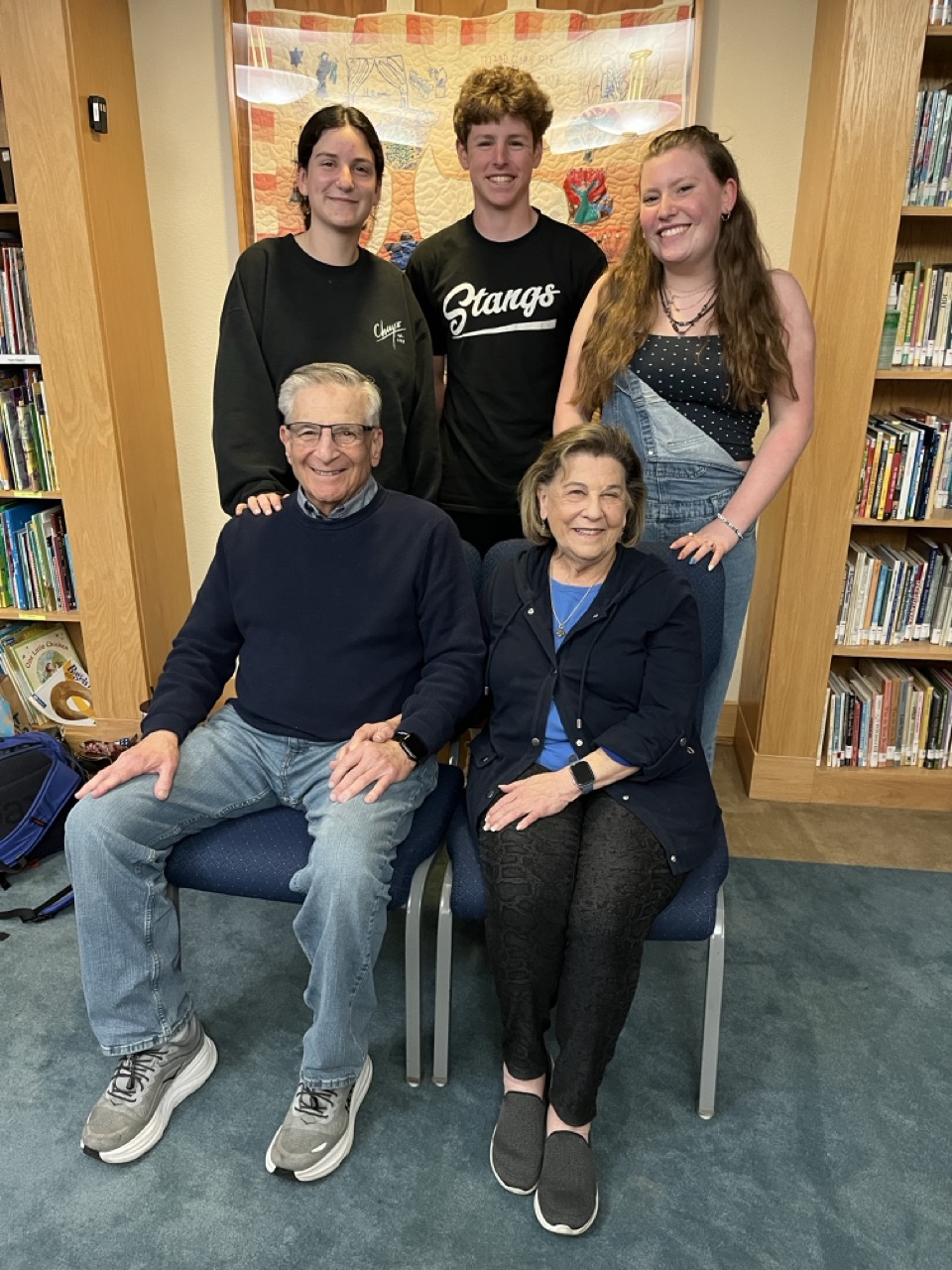
 In this episode of Bina hosts Aviva Feder, Yarden Crane, Nolan Valdivia sit down with Burt Feldstein, a retired finance executive, 12-year police volunteer, and Brotherhood president at Congregation Beth Chaim. Burt traces a winding path from an Orthodox upbringing in Rochester, to the Reform movement where he found warmth, equality, and a community worth building.
The conversation looks at Burt’s belief in chesed as a lived practice, from teaching kids with Down syndrome to swim, to finding an autistic child who wandered too far south of Camino Tassajara.
Thank you to our funders: Sinai & Synapses, Contra Costa Jewish Community Center, an anonymous prominent national foundation, the wider Midrasha community for making this show possible and our brand-new media sponsor, the J. Weekly of Northern California!
If you want to donate so we can make more episodes or have questions for our team, email shalom@binapod.com or visit binapod.com
Burt: [00:00:00] My parents always said actions speak louder than words, so I kind of try to follow that if I can.
Nolan: This is Bina, a Better Together podcast from the students and faculty of Contra Costa Midrasha, where Jewish students, mentors, and elders sit down to share stories and trade wisdom. I'm Nolan Valdivia.
Today, I'm co-hosting with fellow Better Together teens Aviva Feder and Yarden Crane. Today, we're talking with Burt Feldstein. Burt is a beloved Better Together participant, a dedicated member of Congregation Beth Chaim, and a volunteer with the local police force. We think you'll be inspired to hear about his passion for helping others and the world.
Yarden: Hi, Burt. Do you wanna introduce yourself a little bit? Maybe say your name, two things you like? I don't know, just tell us a little bit about yourself.
Burt: Oh. My name is Burt Feldstein. I'm a senior citizen who's presently [00:01:00] retired, although I do some volunteer work, and, uh, I'm also president of the Beth Chaim Brotherhood, and on the Beth Chaim Board of Directors.
Yarden: Awesome. Um, what got you into Beth Chaim, and what made you start becoming the President and all these fancy things?
Burt: Oh. Well, my girl, Lynne Gross, and her family belonged to Beth Chaim, and so, uh, when I met her, we decided to join together, and we've been members now for oh, probably over 20 years. Somebody recruited me to be in Brotherhood, and, uh, I became Treasurer, and then, uh, several years ago, became President and Treasurer, so I'm doing both functions for Brotherhood.
Yarden: That's a lot.
Burt: And then, uh, being the Brotherhood, uh, president automatically is on the board of directors. But in prior years I was on the board as treasurer of Beth Chayim. I was treasurer there for seven years as well.
Yarden: Mm-hmm. And were you... Did you decide to be [00:02:00] Treasurer because you worked in business? You said you got a degree in business, correct?
Burt: Yes. Uh, it was something that I thought I could help with with the temple- Mm-hmm ... I knew with my financial background, and it worked out well. We, we stayed afloat during those seven years.
Yarden: That's all that matters. Um, do you... Would you say that your Jewish, like it was very... Your Jewish roots were very strong in growing up as a child?
Were you required to go to synagogue a lot or did that come over time?
Burt: I grew up, uh, in an Orthodox family- Mm ... and, uh, basically that turned me off of Judaism. I did not like Orthodoxy. I couldn't, uh... First of all, it, they don't explain anything about what you're praying for, what you're studying. Everything was just Hebrew.
It was just you learned rote Hebrew, and, and the customs that you had to follow. And, uh, what really turned me off is at my bar [00:03:00] mitzvah, I'm sitting there on the, on the bimah, and I'm looking up, and my mother's way up in the balcony. I'm saying, "Why can't she be with the rest of the people?" And so I thought that right away, that was not what I was, what I would like, and been that way ever since, and feel that way in Israel too where women only have a small portion of the Wailing Wall.
I mean, while women are in the armed forces fighting for the country, yet they're not getting the, all the freedoms that the men have there. Interesting. So it's all r- goes back to Orthodoxy. I, I am a strong m- believer in the Reform movement, and the URJ, and Zionism for Israel, so.
Aviva: What is, like, wisdom you'd have for your teenage self, or you can also do advice that was given to you as a teenager, something you wanna pass on?
Burt: That's a tough question. I, uh, th- uh, thinking back lots of years.
Yarden: Well, what, um, if you don't wanna think about that, what's some advice you would give us, I guess, as we're going on?
Burt: This is a tough time [00:04:00] living with so much going on. So the thing is, you can't let that get to you personally. You gotta keep that out separate and think about your schooling and, and plan and think about what your future is gonna be aside from what is going on in the world around you, 'cause that can kinda make you not focus on what you really need to be focusing on.
So I would say to teenagers, if, you know, set your goals and still work towards those
Yarden: Did you focus a lot on school when you were a child? Were you-
Burt: Unfortunately not. No, I grew up in a very poor family. My father was a, a, a dri- truck driver. He was born with cataracts before, before they, uh, had, uh, the surgery that could correct that, so he had very limited, uh, ability in school and left after seventh grade.
So, uh, our family was poor because he had, um, you know, not high-earning [00:05:00] jobs. So during school, I had to help out with the family, had the largest morning paper route in the district, and then after school I worked studying-- I worked, uh, s- uh, stocking shelves in grocery stores and stuff. So had very little time for study, unfortunately.
Mm. Tried to do my best, but the only way I could've gotten into college right out of school was a free ride, and my grades didn't support that. So I did the work, but my brother and sister was able to get to school, thanks, I guess, I say thanks to me.
Yarden: Well, I think it is a lot of thanks to you. Just hearing about it, I think sometimes the older siblings, I'm not an older sibling, but I think sometimes the older siblings are not appreciated enough, especially when there's, like, a big age gap, because it turns a lot of, like...
They, they're a lot of the primary care- caretakers, and they see the children and, like, interact with them sometimes more than parents.
Burt: Well, my brother and sister were excellent students. My brother went on [00:06:00] to law school right out of there. He graduated number one in the law class, and he's still practicing law, even when years old, back in Rochester, New York.
Yarden: You said you went to college. What did you do for college?
Burt: When I got out of the service, I went to, basically I started in, in community college, going at night the whole time, and, um, my wife fortunately, uh, helped tremendously by typing all the papers and stuff, 'cause I was not a good typist. I say I was a Hunt and Packer, H&P, Hunt and Pack.
Nolan: And, uh, without her
Burt: ability to help me with there, I would've been a really tough struggle. But, and then from there I went on to regular school. I did it all in the evenings, and, uh, I was able to get good jobs while doing that. And like I said, one of the schools actually sent me to, uh, grad school at Amos Tuck School of Business at Dartmouth, where I m- uh, studied, uh, credit f- and financial management.
And so my whole working career after [00:07:00] that point was all finance
Aviva: When you were in school, how did you, like, balance going to school at night and having a, um, day job? How was that for you?
Burt: It wa- it was difficult 'cause, uh, well, I us- uh, my day started early in the morning and ended late at night, and fortunately, my, again, my wife took, helped take care of the kids while I was doing all this.
Without her support, this wouldn't have been possible. Didn't have much time for sports or anything during that time either, unfortunately. It was just work, all work and school.
Yarden: Do you wish that you could have played sports in high school or in-
Burt: Well, in high school I was. I was on the swimming team in high school.
Yarden: Nice.
Burt: And I lettered my last two, j- just on my junior and senior year, and it was kind of fun. I was, uh, did backstroke. Did the 100-yard backstroke and 50 yard in the medley relay, and, uh, my s- junior year I was third string, but really second string because first string was ineligible grade-wise. [00:08:00] And then my senior year I was second string, but really first string 'cause that same guy was still ineligible.
But I won my share of meets, so it was good.
Yarden: Well, it matters.
Burt: And a lot of it had to do with back then we had, in Rochester we had the, the, a Jewish center with a pool and, uh, courts and stuff. And we'd go there. We would, uh, be able to practice swimming at the, at the pool and, and at the Jewish center, and also we could...
And during the weekends we could go, they had dances for the teenage kids and stuff. It was really, it was really great. Unfortunately, that no longer exists.
Yarden: Mm-hmm. I used to... I grew up, um, in Houston, Texas, and I grew up maybe a block or two from the JCC, the Jewish Community Center. Um, they just revamped it, so it's, it's much more beautiful than it ever was when I grew up there.
But, um, I would remember, like, going... That's how I learned to swim. And so my growing up was very similar of, like, I would go and I would get [00:09:00] swimming lessons every single time, every single year, um, up until, since I was a very young baby up until I moved here. And so I feel like those community centers create a lot of, like...
Well, als- what they're saying is, like, they create a lot of community, but it's also just, like, it's a place for fun, and they have the basketball courts- Yeah ... and the swimming pools, and the... It's just-
Burt: But it, the other thing it did, too, it also, they had Red Cross presence, and so I became a Red Cross water safety instructor.
Mm. And I was teaching kids how to swim, and I actually had an opportunity to work with Down syndrome kids to help them get accustomed to the water and to... They couldn't really learn whole out swimming, but the k- swim to a degree that at least swim and enjoy themselves in the water.
Yarden: That's really, really cool.
What g- what got you started with that program?
Burt: I've... It's just seemed like something I'd like to do when I saw the Red Cross there and where they tried to recruit you to do... Well, I learned that when you do your [00:10:00] swimming instruc- learned, first of all, they taught me how to swim, and then they, and which progressed up to where I was on the swimming team, and then they, they said, "Well, now you can go help people, and this is w- some of the programs we have available to, uh, help people."
And so jumped right in on that.
Yarden: It's amazing. Do you think that... Well, going back to your, um, Orthodox, you grew up Orthodox, do you think that some of your Jewish values, like, came in, and so that's your willingness to, like, help others? Or do you think that that influenced it? Or do you think more of, like, maybe helping your family and, like, that's just, like, how you grew up?
Burt: The Jewish part really didn't teach you to help much, 'cause like I said, was when you went to Temple, there wasn't a... Like, now when you go to do our temple, there's people say, "Hi, how are you?" Talk, there's interface with all these people and friendly. At the Orthodox, people went there, they put on their tallit, they davened and all that.
So there was not [00:11:00] any talking or, like, didn't seem like a whole lot of camaraderie at all with, with that. So I don't think that really did it much at all for anything. Of my family upbringing, their, my parents were very caring. My brother and sister were caring people. I think that probably would carried forth in that, and some of my friends, too.
Yarden: Just that's-
Burt: A lot of my friends felt the same way I did at, in the Or- going to the Orthodox temple.
Yarden: I think it's really important to just find, that's my little piece of advice, I guess, is to find friends and people who will, are very close to your identities- Mm ... and morals. Because if you, the more, like, close the, that you are, the more that they're, like, it doesn't, they don't have to be like you with interests.
Mm. But if they fit your morals, then it, like, just, it clicks. Yeah. I don't know how to embrace.
Aviva: I agree with that. I think it's much easier to make friends when you have the same moral ground. Yeah. And when you know that what you have in [00:12:00] common is the stuff that I think really matters.
Yarden: Agreed. And it's, like, the foundations of, like, for me personally, I'm a very big family person, and so I always look for, like, friends who treat others with kindness.
And, like, I do a lot of work with that and volunteering with that in general, and so I think that's very high up on my, like, moral list. Whenever I meet with someone or just learn, I think kindness is the biggest thing. And you never know someone's story, you never know what someone's going through, so treating them with kindness doesn't hurt.
Burt: Nope. Not at all. There needs to be more of that in this world. Mm-hmm. Especially nowadays.
Yarden: I think you're doing a great kindness with volunteering with the police. Do you wanna talk more about that?
Burt: Oh, certainly. So it's interesting how I got involved in this. I was never involved in, in, in police services at all.
But one day we were coming home for dinner, and a drunk driver rear-ended us right, kind of near where you live, right on, I was, uh, going north on, on [00:13:00] Danville Boulevard in El Cerro. We were stopped at that light, bam. Our car was wrecked pretty badly. We couldn't move, but Danville Police came, made sure we, we were okay, and, and drove us home because the, our car certainly wasn't drivable.
And so I said, "Gee, you guys, is there anything I can do to help you?" They said, "Hey," they, they said, "Hey, we have a volunteer service." So I signed up for that. Went to the Citizens Police Academy, went through the background checks and all that, and went through and been, and now I'm in, and I'm in my 12th year doing it, so.
Yarden: That's amazing. Have you, do you think that you've made a big impact on people's lives with that?
Burt: Uh, well, it, I think what it does is people, a lot of people have very negative connotations on the p- about the police department. And our, part of our job is just show that there's a good side, you know? That every, it's not all tickets and arrests and all that.
We do provide services. And one of the services we provide are vacation house checks. Like, if you or your parents go away for [00:14:00] vacation, you can go online and request that we check your house while you're gone. And we do, we go around, make sure all the doors and doors are locked, there's no broken windows or anything, and, uh, we report on that, so.
And we get quite a few of those to do.
Aviva: That's really cool. I think it's really stuck out to me when you said that when you got rear-ended, the first, like, one of the first thoughts that came to mind was, "Oh, how can I help you?" And I just wanted to, like, shout that out 'cause I think that's such a... Like, it's so Not impressive.
It's like-
Yarden: Admirable.
Aviva: Yes Admirable. It's admirable that- Mm-hmm ... one of your first instincts was to ask how you can repay that, and I think that's just really, I think there needs to be a lot more of that. I think- Mm-hmm ... that's really cool.
Yarden: And it also is very telling of, like, who you are as a character. I feel like if, if your first instinct is to be like, like you just went through this traumatic accident, and then your first instinct, it may not have been the exact second later, but, like, your first instinct is, "How can I help, and how can I [00:15:00] give back?"
It shows so much about, like, who you a- are as a person. And I feel like actions just, even if they're the little actions, it shows so much about a person. Yeah.
Burt: My parents always said actions speak louder than words, so I kind of try to follow that if I can.
Yarden: Do you have a favorite story about police volunteering?
Burt: No, one of, one of them, uh, many years ago, uh, we were patrolling around, and we got a call that there was a autistic boy that walked away from his home. And, uh, so they wanted an all-points search for the kid. And so they block off certain sections of the town. They clear it. We go around and clear it, so we were help clearing certain p- parts of the town.
And, uh, we, then we drove beyond the cleared section where the kid... The parents said the kid was not supposed to go, uh, south of Camino Tass. He had to stay on one side, so we knew pretty much he wasn't gonna go over to the other side of Camino Tass, [00:16:00] 'cause it's a big road to go across and lights and stuff.
Dangerous. So o- so we went further, further west, and sure enough, we saw him walking down on the, on the west side back. Down there was, was Sycamore. And so we, we stopped. We got him, called him in, and they came and, and reunited him with his parents. So that was a good, that was a good thing.
Yarden: That's amazing.
Even, again, just hearing your stories just, it goes back so much. Mm-hmm. Like, it shows how much kindness you have and how much- Mm-hmm ... like, just generosity- Yeah ... you have to give back to the world.
Burt: And one time we rescued a squirrel.
Yarden: That's important, too. There's a lot of- Yeah, so- ... squirrels out there ...
Burt: so we were, we were, we were driving down, uh, Hartz or h- heading towards Hartz, driving, driving north.
And we're going by the railroad intersection. People are on the corner flagging us down, so we tur- turn around and come back. And they say, "There's a squirrel down this drain." "Can you get him [00:17:00] out?" So we couldn't. We didn't have any tools, all this, so we called the fire guys, and the fire guys come, and they, they came and lifted the thing up so the squirrel could get out.
And what does the silly squirrel do? Runs across six lanes of traffic. Luckily, he didn't get hit.
Yarden: Oh my
Burt: goodness. He didn't say thank you.
Yarden: I'm sure he was thinking thank you. Yes.
Aviva: She wanted to say it from across the street.
Burt: If we do find a house that has an open door, our job is to get away, 'cause we don't know if there's anybody inside.
There could be an armed robber inside. So we get away and call in on our radio, 'cause we do carry regular radios, the police do. We call in on our radio, and then they'll s- send two officers to come to clear the house and check it out, make sure it's safe, and then, uh, we let the owner know that they had an open door and so forth, and that's one of the good services that the town does to make sure.
Yarden: Mm-hmm.
Burt: And, uh, knock on wood, we've, all of, all the open doors we've found are just, [00:18:00] and the owners just forgot to lock a door- Mm-hmm ... or didn't totally secure it all the way or something.
Yarden: Yeah. I have a question going back to just your, your Judaism. Um, what made you start to believe in Reform? And, like, what made you...
You said you had a really bad connection with Orthodox, and I know it's a lot different, um, Orthodox and Reform in the different beliefs, but what made you try again and, like, be open to converting to Reform
Burt: Judaism? Well, I went to some of the services with some of my friends who were Reform, and it was more open, kind of understood what was going on.
You know, part of it was in English. In the Orthodox, none of it was English, then we had all these things we were supposed to... I had to put tefillin on, I don't know why, and, uh, tzitzits and all this stuff and, and we had four sets of dishes, and it was so... Just following all this was like, why?
Yarden: Mm-hmm.
Burt: You know, I don't...
I'm still here tomorrow if I don't do it the same way, you know? I'm thinking, "Why do I have to do all these extra things and not enjoy life [00:19:00] more instead of trying to follow all these strict rules?" And so with the Reform, I got to be Jewish, I followed a lot of the, lot of the Jewish practices, but I felt freer.
I actually felt a, a lot more, more freedom than I felt under the Orth- or Orthodox rule.
Yarden: Yeah.
Burt: And I felt that women also the same way. In the Orthodox, women are like second-class citizens, and I never liked that idea.
Yarden: Mm-hmm Do you think that, like, inequality... I feel like from listening you, to you talk a little bit, you've talked a lot about like, um, special education and, um, people with disabilities, but also about women.
Like, has it always been very prevalent to you, um, talking about inequalities or like- Yeah ... is that something that you've always-
Burt: Racial inequality too. I, I, I, I really dislike that. I kind of feel everybody's equal. You know, we all got this... Basically, [00:20:00] sometimes some of these, uh, uh, sometimes I feel like walking up to some, some, some guy who's a, a anti-Semite, anti-Semitic race, and I say, "Hey, that blood transfusion you got, do you know that came from a, from an African American guy?
You got his blood running through your system. How do you feel about that?"
Yarden: Funny. No, I like the way that the, like, the thought behind that because I think right now it's very prevalent in my mind. I'm taking a sociology class. Mm-hmm. Um, and in sociology the whole point is to analyze why do we have race, why do we have racism.
Yeah. That's all. And, and it's all just in there, and it's just like, like the, to control others basically. And so just thinking about it, it just, it breaks my heart personally because it's like we're all, we're all the same. No one's- Yeah. Yeah ... our blood runs the same.
Burt: Kidneys, their hearts all, you know.
Yarden: Exactly.
Burt: Interchangeable.
Yarden: No, I definitely-
Burt: What gets me is too, [00:21:00] I, I said this is a kind of a silly ra- rationalization, but we're supposed to be the, the smartest animal on the planet, right?
Yarden: Mm-hmm.
Burt: But we're the only animal that kills just for killing.
Yarden: That is true.
Burt: Other animals, they kill 'cause they have to eat or whatever, because they're predators.
But They don't just pick fights or-
Aviva: Mm-hmm. That makes me think of a quote I saw the other day. Someone said that killing is, like, innate in human nature, and then they said, "But you've never seen a mouse make a mousetrap." And I thought that really resonated with how I've been feeling about inequality especially, 'cause it's not really inherent.
Burt: So in other words, killing a mouse in a mousetrap is... But then again, other hand, that one takes- goes a little, little different, because the, the mice can bring dis- breed disease and stuff that can impact your family and- Mm-hmm ... and so sometimes you have to take steps that you are not very favorable. Like, we do that, [00:22:00] but I don't like doing it, but I know I gotta do that or, 'cause the mice could cause sickness and stuff in the house.
Aviva: Yeah. But it's never the mice making them.
Burt: I don't wanna kill Mickey, but sometimes I have to.
Yarden: I grew up on Tom and Jerry, where it was always the mouse and the cat trying to kill each other. Nolan and Burt, do you guys wanna talk a little bit about how you guys know each other? How-
Nolan: Lynne and Burt were pretty much the first people I met doing Better Together.
I knew after the first time I met them I, I'd fallen in love. I mean, I- ... always love seeing them. It always puts a smile on my face. And I love reading Lynne's long texts. And I love when Burt cracks his jokes. Through the program, I have found my third set of grandparents. Like, it is awesome. I have loved the com- connection I have made and- Yeah, it's [00:23:00] awesome.
Yarden: And how long have you guys- We
Burt: feel the same way ... that's
Yarden: so cute. How long have you guys known each other for?
Nolan: What is it now? I'm a sophomore, and I started in eighth grade- Two years ... it's two or three. Two or three years, yeah.
Yarden: That's a lot.
Nolan: Yeah.
Yarden: That's crazy just to see. I feel like this is exactly what this podcast is about, is highlighting, like, just the connections that we have with each other, and just it doesn't matter what age you are, you can still be friends.
Nolan: Yeah.
Yarden: That's what I like to say. Absolutely. And I do agree. I feel like I've gotten so many different sets of g- grandparents. Like, I have 10,000 more that I am so thankful to have, and I'm still thankful to have both sets of my grandparents, but I just, I have so many more now, and it's just-
Burt: You guys are lucky to have grandparents.
I never had that opportunity.
Yarden: Mm-hmm.
Burt: I had, I had four grandmothers. I never met one. They all passed away before I was born. One grandfather married three times. I'm figuring out why. [00:24:00] The second one kind of, like, disappeared somehow. 'Cause I checked ancestry.com, and I can't- It's crazy.
Aviva: Yeah ...
Burt: I couldn't put all the pieces of the puzzle together.
But, uh, and my, uh, one grand- my mother's father, uh, was pushed away from our family by her older brother 'cause he wanted to take over their business. So, so he was gone, and my father's father wound up in the old age home. We, so we had to go see him there, so we didn't have a whole lot of, uh, interplay with him, so.
Mm-hmm. So grandparents are... I would love to have them over again and, because I see what kids do and how they enjoy their grandparents, so.
Yarden: Yeah. I was actually very fortunate to know my great-grandpa. Wow. Um, we used to call him Grandpa because in Hebrew you call your grandparents Saba and Safta. So we used to call him Grandpa and, um, I actually very clearly remember him.
He passed away when I was, like, um, I think eight, something, something along [00:25:00] those lines. So I got to know him and know his story, and I just very distinctly remember him hugging me. Like, I can just- Mm ... I think about it now, and I just remember his hug over everything. Yeah. And just, like, that's one thing that sticks to me.
Burt: That sure beats knowing about your family heritage other than having to look on ancestry.com. I know. Really.
Yarden: Well, my ancestry, I'm 99% Ashkenazi Jew.
Burt: Mm.
Yarden: So we're very diverse.
Aviva: But it's the 1%. But- Just, I don't know
Nolan: Have you ever met your great-grandparents, Aviva?
Aviva: No, I have not, but I am named after one of... My Hebrew name is after one of my great-grandmothers.
Hmm.
Nolan: Yeah, that, uh, I got my dad's grandfather's, uh, name as my middle name, so I never got the chance to meet them, but I, I do really wish I could've. Um-
Yarden: I have my great-grandmother's name as my [00:26:00] middle name.
Burt: I'm named after my grandmother, Bertha. I'm sure glad they didn't name me Bertha.
Yarden: That would be very fun.
Burt: I'd have to be the toughest kid in school.
Yarden: I love that, but it shows how deep-rooted it is in Jewish tradition to name-
Nolan: Yep ...
Yarden: our children after.
Nolan: I actually was not named after someone Jewish. Uh, she was a Cath- a, uh, or he was a, uh, Mexican Catholic guy. Oh. My dad's side. Interesting. Yeah. And apparently him and his wife were some great cooks.
I really wish I was able to, like, try that, but, uh, I love my Bubby and Zadie, and my Nana and my Papa so much. Like, all the... Every time I get to see them, it, uh, puts a smile on my face. I mean, I just have endless memories with them all. I mean, list keeps growing.
Yarden: That's awesome. What, what does [00:27:00] the name Bertha mean to you, and how did they decide to choose from Bertha to Burt?
Burt: Beats me. I, like I said, I'm just glad they didn't call me Bertha, that's all. But, uh, I... That was just her name that was handed by, by her parents. But, uh, that was done way back in the 1890s, so Don't know. But back then Bertha was a more, more, far more common name. Now it's, it's totally gone pretty much. You don't see too many people named Bertha.
Right. Except maybe Big Bertha.
Nolan: Yeah.
Yarden: I feel like you have a, a pretty unique name, Burt.
Burt: Yeah.
Yarden: I feel like I don't know many people named Burt.
Burt: No, there's not many. A few, few famous people, not very many at all And especially with the old Burton with a U. You know, a lot of people are Bert with an E. Or more, there's more Berts with an E than Burts with a U, I think.
Aviva: I, um-
Burt: I never really took a consent- a, [00:28:00] a census of that, so.
Aviva: Hmm. I mentioned to one of my friends that I was going to, um, film a podcast 'cause I left rehearsal early, and they said, "Oh, like, who's gonna be on it?" And I said, "Oh, this guy named Burt." And they thought I was talking about our friend Robert, 'cause that's sometimes what we call him.
And I was like, "No, no, different person."
Burt: Oh, that's funny when s- it's so sad that the, one of the most famous Burts a freaking puppet.
Yarden: Isn't Bert the name of a Sesame Street- Yes ... character?
Nolan: Funny story about that. The first two times I ever met Lynne and Burt, I immediately came home and told my parents the amazing people I had just met. And my dad, he's a funny guy. I mean, he, he didn't remember Lynne, Lynne's name for the first two sessions, so every time I came back, and he still makes the joke to this day whenever I come back, "You see, uh, Burt and Ernie this time?"
I said, "No, I saw Lynne and Burt, [00:29:00] though."
Aviva: That's hilarious.
Nolan: What is a Jewish value that means a lot to you?
Burt: I think a lot of the Jewish value to me is, uh, following a lot of the Ten Commandments, being honest, and, uh, also, uh, helpfulness, providing chesed for people who need help. And, uh, there's, there's so many really that, and we get to see a lot of at Temple.
Nolan: Mm-hmm.
Burt: And, uh, we do a lot of that stuff for helping people at the Temple and things, so, uh, I think helpful is probably one of the best ones.
Yarden: What do you do in the Brotherhood? Like, is it a different, like, section or-
Burt: It's a, it's a men's group. So basically we have a lunch once a, once a month. We pick different restaurants to go to.
We meet, we do some gaming stuff. So we have, like, Super Bowl pool. We just finished the Super Bowl pool. Mm-hmm. And, uh, we arrange it so, uh, a [00:30:00] portion of the winnings goes into the Brotherhood treasury that we help sponsor different things. And, uh, uh, we sometime- we have a, a, a retreat. Our, our temple president's family has a, a place up in Placerville, so this last year- Mm
we, we went, went up there. I didn't go 'cause I don't like the cold weather. But, uh- ... they, we had 25 guys go up there and spend, uh, three nights-
Nolan: Wow ...
Burt: up there, and had a good time doing hiking and k- skiing. Some went skiing, some did fishing in their lake on the falls, and played games, poker and stuff. Our Rabbi went.
They had a f- they had a service, and they had a little Torah study on the Saturday morning, so it was quite nice.
Nolan: Uh, I have a question for you. So you, I know I've heard you say you're a, uh, volunteer police officer, and you said one of your biggest values was giving back. What does being a volunteer police officer mean to you in how, the ways you work?
Burt: [00:31:00] It's a service to the community. Basically, we're, we're, we're in town, and w- when they have a lot of the events in town, like, uh, one of our bigger events is this 4th of July parade, and then we have the lighting of the oak tree. And so you'll see us walking around in our volunteer uniforms. And we have radios.
We're all synced in, so you know, if we see somebody in distress, we help, we call it in. And, uh, l- so also we're, we're a visible... We're there visibly, so people know there's a, probably they can get help, even though sometimes for a volunteer the biggest question you get is, "Where's the closest restroom?" So-
Aviva: Sometimes.
Burt: But, uh, a- and, but the other thing is that we, we patrol areas in our patrol car. A- and it puts a, a... Even though we don't make arrests and stuff, it puts a police presence in a neighborhood, which means a crook could be s- s- checking out a neighborhood, sees the police car, and says, "Oh, this may be a place I don't wanna be," and goes somewhere else.
And so we're [00:32:00] also a deterrent. And keep away. And it's a good feeling doing that because we have a limited police force in our town, and this is just an added auxiliary that helps, um, project a larger police department. Oh, and the other thing I like, the other thing we do too is, like, we, a- actually we don't do traffic enforcement, but we'll park by a four-way stop sign, and you watch the people come to a screeching halt, some almost go through the windshield- Mm-hmm
when they see the police car. And, uh, so it makes people think twice that maybe you should stop at a stop sign you don't know there might be a police car there. But it's also a good safety thing to think, you know, there could be another car coming. It's a good idea to maybe just stop at the stop sign.
They're there for a reason.
Yarden: Maybe, maybe they're there for a reason.
Burt: Yeah. Did
Yarden: you, did you know that? Um, no, I feel like it's, it's a really good way of just, like, like, honestly, I agree with the protection thing of even if you don't necessarily do, like, [00:33:00] respond or, but you're still responding and you're creating a safer environment because you're here, and sometimes showing up is, like, the biggest thing.
And so you guys showing up is just creating a lot, like, a presence.
Burt: Yeah, and also if there's a line down or an accident that's blocking traffic, they could call us to do traffic control and move cars around, so especially, like, a line, we've had some power lines go down, we'll block it off so nobody goes near the power down, power line, stuff like that, that we can do.
Yarden: Going back to advice, do you remember the best piece of advice you're, you've ever gotten, or something that you've gotten that you, like, keep with you throughout your life?
Burt: Hmm. Try to be yourself. It's always don't take things too seriously, although I do. But, uh, try to be kind and try to be understanding to other people, 'cause everybody has their own ideas and things, so, y- y- you know, there's no sense arguing [00:34:00] with people.
They're gonna have a different viewpoint, so, uh, just, you know, let them have their viewpoint and, you know, you can share yours, but don't get into an argument over it. It's not worth it.
Yarden: No, I agree. I've always been, in my family, the one who stops the arguments. Mm. I am not, I really don't like it, but I just, I just don't think that it's productive.
I don't think that- Mm-hmm ... it, anything will come out of it except for hurt feelings because-
Burt: One, one thing you can't do is just yourself change somebody's mind.
Yarden: Mm-hmm.
Burt: It just, you know, it's very, it's alm- almost impossible.
Yarden: Agreed. What they think is what they think, and- Yeah ... you're not gonna change that.
Burt: No.
It's gotta be something other than you that's gonna do that. It's gotta be many different things to change their viewpoint, but one, one conversation or several conversations are not gonna change somebody's point of view.
Yarden: I think that's really important and really, like we can take that into our own lives of like- Mm
especially when going with, I, I, this [00:35:00] is just an example for me, of like going to teachers, like you're not gonna change their mind on a grade, or they're, you're not gonna change their mind on how they're gonna, they're not gonna just redo their whole curriculum. Mm. Like, sometimes you need to come and you need to meet in the middle, and you need to understand, like in all aspects of life, of like sometimes it just won't work out, and sometimes we'll have our differences, and we'll just-
agree to disagree. That's
Yarden: the big, the word for it, so.
Burt: I was never able to change a teacher's mind. Yeah. But, uh, back dealing with Orthodox Hebrew school, that was another story, 'cause that was really strict discipline. That was like a really old school where they actually hit you.
Yarden: Would you rebel against, like the practices whenever you would go,
Burt: like- I, no, but I, I've always had a sense of humor, and a lot of times the, uh, rel- Hebrew school teacher didn't appreciate that And so I got whacked in the hand with a paddle [00:36:00] with seven holes in it.
Oh.
Yarden: Goodness. That shows the stark difference because that would never happen today. Yeah, at Beth Chaim, that would not.
Nolan: Yeah, no.
Yarden: It would not fly well. I
Nolan: don't see Morah Jeff- And we
Aviva: can literally have it happen to you Today, that person
Burt: would be in jail.
Nolan: I don't see Morah (teacher) Jeff enforcing his... Oh,
Aviva: yeah.
Morah Jeff would do is not-
Nolan: Yeah, not that ...
Aviva: give us candy or something.
Nolan: Yeah, g- give us candy. Here's some candy. Now be quiet. Sit in the back.
Aviva: Keep your mouth full so you don't talk. Yeah. Yeah.
Burt: Well, at least he give you something so chewy you keep your mouth shut. Yeah. Exactly.
Yarden: That's so smart. Just give them something to do.
Aviva: That's what I do. And to the kids that I teach at Sunday school, I'll give them Nerds, and I'll tell them to eat one singul- singular, pardon me, Nerd until they're quiet. And so it just keep them busy. They have to eat it one by one. I
Yarden: feel like it's really cool to see the way that teachings are just, like, have developed and shifted over the years, and how, [00:37:00] like, how there's so many similarities, but there's also so many differences.
And just, like, what's taught in the curriculums are just, they're so different. They're so-
Burt: Ours was really basic way back then. I mean, you kids would go to the back of my classroom, be totally bored, and you'd say, "Whoa, this is so... What is this? This is so basic." Things are expanded so much. It's
Nolan: Yeah, like I'll come home and I, like, I remember, I feel like both you two have probably done this, when you get home in, like, elementary school and you're like, "Mom or Dad, can you, like, come help me with this homework?"
And they just look and they're like, "I've never seen this in my life. This is not what we used to do in school."
Yarden: Weird. Yes, during math. If you haven't had a, like, a crying session- Oh, my gosh ... with your parent argue on math, then you haven't done it right. Well,
Aviva: maybe you have done it right, I guess.
Yarden: No, I was always very fortunate because my brother was a year above me, so then [00:38:00] everything, he would just...
And he would have a lot of the same teachers as me. And so every time, every year, I could just... He's, he doesn't do any of the work. I do all of the work. But it's like he could teach me because he knows exactly what the teacher wanted, and that was very nice. Yeah.
Burt: Sometimes. And I liked geometry. I always remember that, but- Ooh
calculus-
Nolan: That makes one of us
Yarden: Yeah, calculus is a single person ... killed me. Oh, my goodness. I was supposed to take, um, calculus this year and I said no. Um, and so now I'm taking statistics instead. I actually- How is that? Oh, not good.
Burt: Oh.
Yarden: Worse than if I was taking calculus.
Burt: I said I got calculus on the bottom of my feet.
I don't need to study
Nolan: it. Uh, geometry is horrible. I cannot stand geometry. It's very, very difficult.
Burt: It's, yeah, just angles and lines and stuff.
Yarden: Yeah,
Nolan: you just draw a- When you say it like that, it makes it real simple.
Yarden: You draw a triangle and you're good.
Nolan: You try and do a paragraph proof.
Aviva: Oh. I do mine [00:39:00] online, so I just mute them if I don't wanna hear it.
Yarden: Oh, I went through that. Don't worry. I, I did my time. I did my- It was bad ... I don't need to be there anymore. Um, but were you, would you consider yourself more of, like, a math, science person, or more of, like, a history-
Burt: I liked science, but math I gave up at calculus. I said, "I ain't gonna do it." Yeah. And I decided because of that, it was one of the reas- right, one of the reasons why I switched from engineering to business
Yarden: That makes sense
Burt: Too many calculations and stuff Yes.
No That's, uh, I wanna do, do something, and I wanna interface more with people. Engineering, you don't interface much with people. You're, you're on a drawing board and stuff. Back then especially it wasn't so much computerized as it is like nowadays. So it's like a lot of drawing and stuff and, eh, I said, "That's pretty boring. I like to talk."
Nolan: When you went in the service with the Air Force, wasn't it a lot of math-based calculations for
Burt: you? Yeah, but that was, you know, [00:40:00] basically easy. We... Actually, I learned to do a slide rule pretty good. You don't even know what a slide rule is. No. I
Nolan: don't
Burt: know what- It's that, that, the pre, that, that was before calculators.
It was a slide rule you practiced.
Yarden: Uh-huh. I know what you're talking about. Yeah. Like an abacus?
Burt: Yeah.
Yarden: Like the length,
Burt: the little- Where there was straight and you had a slide in the middle and you match up and it'd give you the answer over here or there.
Nolan: Ancient devices.
Burt: Yeah.
Nolan: You can tell the difference between Never heard of that.
Burt: Yeah. Like in the service I was making, I was making, I had, I had a top secret security clearance when I was 19 years old, and 'cause I went to, uh, they sent me to a army tech school to learn how to make, uh, maps. And so we would, then with the maps we do in photo intelligence, we take, uh, pictures from, uh, like U2 planes, spy planes.
And we'd calculate how tall things are in the ground and that, and put 'em on the map. And the map would then would be like what the air, what a airplane, a B52 pilot or the bombardier, what they would look at. They would see what we [00:41:00] drew and that's w- if that's what it was on their, on their scope, that's where the target was.
And so that was my job.
Yarden: You did some high-tech stuff very
Nolan: early. At 19, that is-
Burt: Yeah ...
Nolan: awesome.
Burt: Pretty neat That was, and I turned 19 years old and, uh, I had, and the bad part was while I was getting the, waiting, I had, took me several months to get the top secret security clearance so I was only 19, just had high school behind me.
But they still had to do, do that and so in the interim I was waxing floors and cleaning toilets and that kind of stuff until I got my security clearance.
Yarden: Do you think that made a big impact on your life, having such pressure and just like, like you had to grow up really fast. Yeah. There was no- Yeah ... in between of like, "Oh, I can still be a kid."
Burt: We didn't, we didn't have time to think about that really. The job, the job at least it wasn't a dangerous job Yeah. Because, uh, where I worked, I had to go through an armed guard every day with my, uh, credentials and stuff to get into where I was working. [00:42:00] Mm-hmm. And so, uh, you know, and once we're there, it was kind of c- congenial.
The officers were always good to us 'cause they, you know, they would supervise what we were doing. Yeah. And they knew... They were pretty good guys, 'cause if we didn't do a good job, they were pushing us all that. They'd wanna keep our morale going. So it's very good. We had pretty good food and, and, uh, we had to do shifts.
We had to do, uh, sometimes, uh, you know, graveyard or, or, um, mid- You know, I, I liked the regular daytime shift because at night we'd go to the thing and go to the whole, the air club and dance and meet girls and stuff like that. Mm-hmm. But I didn't like the graveyard shift at all, 'cause I didn't sleep much.
Yarden: Yeah. I'm sure.
Burt: It was hard sleeping, 'cause there, where we worked and where our barracks was, was right at the end of the flight line where B-52s took off. Mm-hmm. And that's probably one of the loudest planes I ever... There's eight jets on a B-52. Mm-hmm. And then also we had the [00:43:00] refuelers, the KC-135s, and we had an F-102 squadron there.
So there was jets going on all the time taking off. So sleep was, uh, tough.
Yarden: Yeah. How long did you serve for?
Burt: Oh, three and a half years. I got out six months early because my sleeping, I started having seizures, and so, uh, I got out a little bit early because of that.
Yarden: So you, because of your poor sleeping habits- Yeah - you had seizures, and then you decided after the Air Force to go and do overnights and do school at night?
Burt: School at night, yeah. I do. Well, but I had-
Nolan: That's funny. You gotta do what you gotta do.
Burt: I had medication then to stop the seizures
Yarden: for
Burt: a while.
Yarden: Uh-huh.
Burt: They, they put me on the medication for a while.
And fortunately, after about, uh, maybe four or five years, they stopped, so I didn't need to take the medication after that.
Nolan: Uh, I know I always-
Burt: It was maybe about, yeah, six years maybe.
Yarden: Mm-hmm.
Nolan: I know I always tell [00:44:00] you this, but, uh, once again, thank you for your service.
Burt: No, you're welcome. I, uh, glad to do it.
It kept a young kid out of trouble.
Yarden: Do you think your, your life would be a lot different now-
Burt: Yeah ... if
Yarden: you didn't go?
Burt: Probably.
Yarden: Yeah.
Burt: Uh, my, my, my goal was to go to college- Mm-hmm ... after s- after high school, but like I said, my grades didn't get me a free ride, so had, it came out of the question. I really wanted to be a doctor.
Uh-huh. Even took Latin in high school.
Yarden: That's amazing.
Burt: Uh, what a waste that was. I couldn't find... I went around the whole neighborhood looking for anybody to speak Latin, and I couldn't find anybody.
Yarden: You know, they still teach, um, Latin at my old elementary school in Texas. Um, and I actually had to take a few years of Latin.
Yeah, well, that sucked. So, okay, now it's all clicking to me. So you went to do your [00:45:00] service, and so you would get, you got the GI, and so you got funds to help you-
Burt: Yeah ...
Yarden: go to college. And so that's how you were able to
Burt: go to college. Yeah, yeah, yeah. And also, then some of my employers paid for a part of it, too, that the GI Bill didn't cover.
Yarden: Mm-hmm. And so-
Burt: And so I got into managerial roles early in my career, which was really good.
Yarden: And where did you work, like, while you were studying? What did you work as? Like, what jobs did you do?
Burt: Worked as, uh, so my f- my, part of the stuff I was working for the county 'cause of my mapping. I was making, uh, survey maps for the county where properties, showed different property lines and stuff and all that.
And so, uh, that's basically what I was doing when I met my wife, and, uh, she didn't like Rochester, New York, at all. She wasn't from there. "It's too cold. We don't like this here," so we decided to move. Mm-hmm. So we quit our jobs. We didn't have, we didn't have kids [00:46:00] then. Didn't have much of anything. So we were gonna head out here to San, the Bay Area 'cause her sister was, husband was going to Berkeley Law School.
Mm. So we wanted to join up with them.
Aviva: Yeah.
Burt: But so along the way, we stopped in Overland Park, Kansas, to see her folks, who transferred from Rochester. He got transferred to Overland Park.
Aviva: Mm-hmm.
Burt: So that's where they were, so they said, "Hey, it's a good place to live. Why don't you stop and, hey, look for a job or something."
So, uh, we said, "Yeah, sounds like a good idea," so I found a job, I got a job with this company called, uh, the Dart Truck Company division of Paccar Inc. And Paccar Inc. is based out of Bellevue, Washington, and they make, uh, there are several different, uh, companies under them like Peterbilt Trucks and Kenworth Trucks and stuff like that.
You see them? And the Dart Truck Company.
Aviva: Mm-hmm.
Burt: So they said they needed somebody who knew a little bit of engineering background and all that, who can deal with vendors [00:47:00] and try to get money back for warranty parts, because just these things were huge earth-moving equipments. The tires were 12 feet in diameter, huge things that are used in open pit mining and- Oh, geez
logging equipments, and really big expensive things. Back then they were like, this, this is back in the, uh, '70s. They were $200,000 a piece or better. So- Oof ... the components were worth thousands of dollars. So I said, "Yep." I took the job. I developed a form. I went back to all these different suppliers. I started bringing all this money into the company, never had before.
And they, they thought this was really good. And, uh, they, they owned like the hy- hydraulic cylinders on a logger and all on the trucks and all. They're a couple thousand bucks a piece. Mm. The transmissions are, you know, like $10,000 a piece, is, uh, and getting them fixed or replacement parts or getting money was big money to the company, so they appreciated it.
Then they said, "Well, our, our, our, our credit manager is leaving. [00:48:00] You're getting money in from vendors. Do you think you can get money from our customers, get them to pay?" "Oh, yeah, give it a try." So they sent me to school for that. Mm. Separate from what I was doing. Mm-hmm. And then, and I had to take some, uh, correspondence courses.
They had specialized in this thing, and I started doing that, getting money from the customers. I had to go out and visit a lot of the customers, and these are like huge mining companies and stuff, and that was really good. I started bringing that money in, doing good. And then the, uh, an opening opened up with their Peterbilt division in, in Newark, California.
And, uh, their re- western regional credit manager left. They said, "How would you like to go to California?" I said, "Gee, I was going there anyway to begin with." So I got transferred to that job, and then I had the two kids. They transferred the whole family, paid the way, paid the hotel. Everything was really great.
Mm-hmm. And so I moved to Du- found a house in Fremont. Then we, my wife and I, [00:49:00] lived there comfortably. We actually had three houses there, moving up and all that, so it was really good. Later, uh, later on, my boss, who was over the whole Peterbilt Finance, he, he left, and I thought, "Maybe I should get that position."
But they brought in a guy from a competitor who was like, he was like, uh, an older guy back then. I was wondering, "Why'd they get this guy?" And he wasn't much fun to work for. I was thinking. So I s- I answered an ad in the Wall Street Journal thinking I'd never get it with a high-tech company, and I did. So I moved into high-tech from there and can- and, uh, uh, commuted from Fremont to, uh, down towards Palo Alto, which is a long commute.
But, uh, unfortunately that company went bankrupt. Again, lost those stock options. And then I kept moving around high-tech companies in credit and finance and all the way up till the end of my career That's what changed it, the [00:50:00] whole thing And
Yarden: so you started with, um, like one company, and how long were you at that first company?
Burt: 11 years.
Yarden: 11 years, that's awesome. With
Burt: Peter Pit- with PACCAR Inc. They're actually headquartered in Bellevue, Washington.
Yarden: Mm-hmm.
Burt: With the Peterbilt division, I got to travel all over the West Coast. I had to visit at least one dealer a month somewhere and go over their financials with them and make sure they're, they're abiding by the contractual arrangements that they agreed to financially.
Yarden: Yeah.
Burt: And so I had to do that, and, uh, even got to fly in some of their airplanes. I got to fly in the corporate jet w- once.
Yarden: Wow.
Burt: And, uh, that was kinda cool.
Yarden: Mm-hmm.
Burt: But then, uh, l- uh, short, about, oh, after I left them, they decided that they were tired of dealing with the four unions that dominated that plant and would go on strike every four years.
Mm-hmm. So they closed that plant down and opened a brand, they built a brand-new plant in Denton, Texas.
Yarden: Yeah.
Burt: So if I stayed with them, I would've been down in Denton, Texas, never met you [00:51:00] guys.
Yarden: I know. It's crazy to think. Texas
Aviva: payback.
Yarden: It all works out, no, more it all works out for a reason. Like, just thinking about that, and I think with me it's very prevalent right now with college decisions are coming up.
And so it's like I try to keep on telling myself it all works out for a reason, and just like-
Burt: You never know what's gonna happen. Exactly. You know, you're going this way, all of a sudden something happens and you're, now you're over here. Mm-hmm. So, you know, you gotta be prepared to be flexible.
Yarden: Yeah. It's just something new,
Burt: I think.
If you get too locked in, then you're gonna get very upset and say, "Oh, no. I can't... My, my, if I ever..." With the family and all that, you have to be quite flexible and try to, to ex- to accept what you got and work with it Best you can.
Yarden: I think that's what's beautiful about life, honestly, is just how cool, like how everyone's living these different lives and how you can just, like, you can go from one thing to just a completely different thing in 20 seconds, and just, it's just, [00:52:00] it's really cool.
Aviva: What's an assumption about teens or senior citizens that Better Together has shifted for you? Or what are maybe, like, stereotypes that you feel like have been broken by Better Together?
Burt: I feel like getting to know the teenagers is one thing, because, you know, a lot of times you think teenagers are irresponsible and boisterous and stuff, but, uh, meeting, meeting you guys has been fantastic.
I mean, you're all sharp, very, and outgoing, and just, it's super pleasure. And th- to be able to discuss things, your lives, our lives together, that's very meaningful. Mm-hmm. I think this is as meaningful for us as it is for you- It is ... 'cause it gives us fu- hope for the future for you guys, and a future for every other teenager, knowing you guys.
Mm-hmm. Mm. It's like we're in good hands.
Nolan: Yeah, coming up.
Yarden: No pressure. That might be, like, a stark difference from volunteering at the police. Like, you, you see a lot of, of the bad cases- Yeah, a lot of the- ... versus, like, I feel like there's a difference between-
Burt: Yeah, we don't see too many bad cases in our position.
Fr- and Danville's a very safe [00:53:00] town. It's the safest city in California. I, I
Nolan: think the thing with teens is now the e-bikes and h- they're always getting pulled over and stuff.
Burt: And rightfully so, 'cause these kids are dangerous.
Nolan: Yeah, they're... So a lot of those bikes are illegals-
Burt: Yeah ...
Nolan: or illegal bikes.
Burt: And the kids are driving them like they think they can get away with all this stuff, and they're cutting in front of cars.
I don't know how many times I've had to slam on my brakes. I don't wanna hit a kid, but I think the parents need to wake up and say, "My kid shouldn't be on this thing." Mm-hmm. You know? What's wrong with riding a bike and pedaling? You get good exercise. It's a lot safer.
Nolan: Yeah.
Yarden: Yes. Um-
Burt: They're getting absolutely no exercise, and they're dangerous.
I've seen some kids out, they're popping wheelies on these things. Yeah. They could fall over backwards.
Yarden: They're really cool. Like, like- Yeah. I'm sorry, but just seeing the amount of strength and skill that they have to do some of the tricks that they're doing. And did you see below, like, the creek where they created that, like, whole bike course?
Oh, I've seen that. That's really cool.
Burt: Mm-hmm. [00:54:00] What side- You could do that on a regular bike ... as long as they're doing it, if they're doing it there, fine. Don't do it on the road where there's cars and people.
Nolan: Exactly. A lot of, uh, people I know, though, on e-bikes have gotten into some really bad i- crashes. I know, well, uh, yeah, just been hit by cars or just ran into things.
But yeah, biking overall is dangerous, especially like- Mm-hmm ... mountain biking. Uh, w- I know a few people who've been in the hospital for a few days.
Burt: Well, I consider bikers, most bikers, to be live in a, they live in their own protective bubble. I'm in my little bubble on my bike, and nothing's gonna happen to me, even though I'm driving down Camilo Task right there at the edge of the bike lane, and cars are going by me at 60 miles an hour.
Uh- I'm safe.
Nolan: Some of those bikes, like you can cut them, cut the wire on them to make them, uh- Hmm ... like faster. How do you know
Aviva: this,
Nolan: Nolan? Yeah. Yeah. Because I, I- Interesting ... had like- ... a foldable little one. It went like 15. I
Aviva: had a
Nolan: Razor scooter when I was 15. And my friends [00:55:00] had, like, they were spending thousands on these bikes, and they would be like, "Oh, have you cut the wire?"
I was like, "No, mine only goes 15." And they were like, "Oh, I just cut mine. Mine goes like 55 now." I said, "55? You're-
Burt: Why
Nolan: would you wanna go 55? ... you're talking a- about a bike, right?"
Aviva: I'm scared to go 55 in my car
Burt: You're a hamburger. You're a hamburger if you hit anything at 55 miles an hour. You know that?
Nolan: Yeah, that's just asking- I mean, that's it.
You're
Burt: just- ...
Nolan: for an injury ...
Burt: you're, you're nothing. You're just a pile of yuck. Yuck.
Aviva: That's- Pile of yuck. I love this ... perfectly
Nolan: describes it.
Aviva: Yes. That's gonna be the name of this podcast. Pile of yuck.
Nolan: Yuck.
Aviva: I love that.
Nolan: Thank you, Burt, for coming and joining us on the podcast. And we'll see you guys next time.
Burt: My pleasure. Thank you. It's been a pleasure talking with all you guys[00:56:00]
Yarden: Thank you for listening to Bina from Contra Costa Midrasha. I'm your host and lead producer, Yarden Crane. Our senior producer and editor is Andrew Sims. Our associate producer is Aviva Fetter. Our producer is Julia Kurzrock. And our executive producers are Devra Aarons, Aron Korney, Shahnti Brooke, and Rob Goldman.
We also wanna thank our funders, Sinai and Synapses, Contra Costa Jewish Community Center, an anonymous prominent national foundation, and the wider Midrasha community for making this show possible. If you want to donate so we can make more episodes or have questions for our team, email shalom@Binapod.com or visit Binapod.com.
Our Bina Better Together podcast presents candid interviews and personal stories, including memories, opinions, reflections, and personal information. These conversations are shared from each speaker's perspective. Whenever we edit for length and clarity, [00:57:00] good faith efforts are made to reserve the accuracy and intent of expressed statements.
All subjective views and opinions expressed on air are those of the individual speakers and do not necessarily reflect those of Contra Costa Midrasha, Human Content, the student host, the production team, or any affiliated individuals and organizations. To learn more about our ethics policy, visit Binapod.com.
This has been a Human Content and Contra Costa Midrasha production.


