S5:10:123: Richard Zitrin Trial Lawyer: A Life Representing People Against Power
Richard Zitrin has been at the forefront for representing those who cannot fight the system. Most of these people are minorities usually poor and face a justice system that is not fair. Trial Lawyer: A Life Representing People Against Power is a book...

 Apple Podcasts

 Spotify

 Castro

 RSS Feed
Richard Zitrin has been at the forefront for representing those who cannot fight the system. Most of these people are minorities usually poor and face a justice system that is not fair. Trial Lawyer: A Life Representing People Against Power is a book about just that. He tells you about one of the most brutal cases he had to defend with the San Quentin 6, all the way down to a case against Chrysler.
This book has truly changed my life. Knowing that in this world of unfairness, there are people out there trying their best to make things as equal as possible.
Join us as we welcome Professor/Attorney Richard Zitrin on this Episode of A Day With Crime.
You can find out more about Richard Zitrin at:
www.richardzitrin.com
Get yourself a copy of Trial Lawyer: A Life Representing People Against Power
https://www.amazon.com/dp/B09XJMD425/ref=dp-kindle-redirect?_encoding=UTF8&btkr=1
DON'T FORGET TO RATE, COMMENT AND SUBSCRIBE
Join us on social media
Visit our website www.adaywithcrime.com
adaywithcrime@gmail.com
Cover Art created by Geneva McClam
Sound Mixing and editing by David McClam
Intro and outro jingle by David McClam
Don’t commit any crimes our there…So you DON’T end up on our podcast!
0:11 Welcome to A Day with Crime podcast were Crime a Day keeps the doctor away. Here are your hosts, David in Geneva McClean. What's going on? Everybody? Welcome to an episode of A David Crime. Where are your host David and Geneva. You are listening to a very special episode of the season. We have a very special guest. We get to him. It's just a second. But Geneva, how are you doing today? I am doing great, Dad. You know, it's been a pretty chill day over here. I read a lot today, So how are you doing? Fine?
0:53 Read a lot as well as you know. We're in the middle of a book challenge right now. Came to your sprint last night. It was actually pretty good. Got to finish a book. Everything here on the home fronts going well, so it is good. So speaking of books, that brings us today to who our special guest is. Let me read you a little bit about who he is and then we're introduced him into the podcast. So. He has been licensed to practice law in California and New York for four decades. He has tried over fifty cases to verdict, from murder cases to products liability and malpractice, among others. He has been certified in California as a trial specialist in both criminal law and legal malpractice law. He also has spent over forty years teaching at two Bay area law schools, primarily teaching legal ethics and also teaching trial practice. He has written three previous books, including The Moral Compass of the American Lawyer, Truth, Justice, Power and Greed, and over one hundred published articles. He has published in perioddicles from the New York Times, Los Angeles Times, in San Francisco Chronicle, to the National Law Journal, the Sporting News, and nine, a journal of baseball history and culture. Today, our special guests is Professor Richard Citron. He is the author of the brand new book called Trial Lawyer, A Life Representing People Against Power. Professor Richard Sitter and welcome to a David Crime. How
2:25 are you doing today, sir? I'm doing well, David. Thank you for having me, but we thank you for coming on. We're gonna get to your book, Trial Lawyer, A Life Representing People Against Power in just a second. But since we have somebody on the podcast with jar esteem, I know that you've written bills, writing bills, You've been everywhere. What is your thoughts and feelings. I know that Roe versus Way just got overturned. It's a big issue right now. Some people agree, some people don't agree. Some people agree for maybe what they consider to be right reasons or wrong reasons. What's your thoughts in that, being that this is kind of your will? Well, I'm very concerned about it. I mean really concerned about it. I think the Supreme Court has been hijacked by a majority that doesn't reflect the majority of the American people and is doing a disservice to America with a contorted conception of what the Constitution really means. You know, I just saw a PBS special on Benjamin Franklin, who I have a particular affinity for because I was born on his birthday. And in that conversation about Franklin, historians pointed out that he knew the Constitution was going to be a dynamic document that had a change with the times. But it seems like the attitude of the Supreme Court is that it's the original document and only the original document, I believe, and people have been saying this for sixty years, that
4:00 doing empirical studies that prove it for sixty years. But the Supreme Court is deciding things based on their own personal and political perspectives and not based on the Constitution and the law. And I believe that that's what happened with Dobbs to overturn Row and the gun decision about New York, and the environmental decision that the EPA can't stop polluters as it's been doing, which could be even worse because they could kill us all. It's just an extreme disservice. And even if Donald Trump was indicted and convicted, and I hope he will be, this is his legacy and it's a very very dire one. That was kind of the things of my next question janeven. I have been persecuted to the States when they's come to Donald Trump because a lot of people knew we didn't like him. On our podcasts, though, we come with the real truth, and there's been a number of cases that has come up where his name has been mentioned, Jeffrey Epstein to be one of the most recent ones.
5:02 It's not that we want to cause any malice, but the truth is the truth, and now that we know a lot about what's going on. In January sixth, we just had a very big bombshell testimony a few days ago, and a lot of people is feeling that even though this is out now, if you watched that, I was watching some of the Capital police officers faces when she was giving this testimony, and they had this look of this dude really didn't give her damn. So basically, what's your thought, what do you feel happen? I feel that if it was any one of us regular no matter what color, we would be persecuted to the furthest end of the law and probably put away. Do you think that Donald Trump would get away with this or that they would do what they need to do and convict him legally. Well, I've been concerned that the congressional hearings won't turn up enough stuff, but I must say, in the last week or so, it's been extraordinary. And Miss Hutchinson was a hell of her witness. She was very poised and very on point, and she's a conservative Republican, you know, she's not a flaming lefty, and she just felt that, as she put it, that the Constitution was being violated. Now, whether that's going to make a difference, I don't know, because we all know that Donald Trump has been so often like Teflon and his supporters tend to line up behind him no matter what. But these hearings have brought out a lot of people like the former of Attorney General bar who I have no love for, but who told Trump flat out that the idea that he had won the election
6:35 was BS and that's not the words that he used. He used the real words. So maybe they're going to move against Trump. They certainly have enough evidence. I think a real key, David, is that Pat Chippolini is gonna come along and give testimony, And that could be a key because he's the guy who was the White House counsel who told Trump you have lost, but he didn't want to testify, And now with this new revelation from from Cassidy Hutchinson, he's now said I'm willing to testify, and that could make the difference. We do know that the Department of Justice is investigating because they went out and seized a bunch of stuff. The FBI went out and received a bunch of stuff. So I hope that they're moving and I hope that well in advance of the elections this November, that Trump will be indicted and he certainly should be he's he in my view, he's a criminal. You know, you know from reading the book I represented. A lot of people are accused of crimes, and most of those who were not rich white guys.
7:44 But this guy is a real criminal. So that kind of leads into your book and for the audience knowledge. The reason we ask you these questions is because it goes hand in hand with what you do, and hand in hand with a book that I say has change my life, and that is your book, Trial Lawyer of Life, representing people against power. At the risk of sounding races, which I'm not trying to be the one thing that a lot of people that I've come in contact with. My wife is white, and we have a lot of friends who don't get it, and my wife does get it. And I've been that's the question, But why do you not like Donald Trump? And what has Donald Trump done to you in four years? And my answer has always been, if you look at the scope of the way the world went when he got elected, white supremacy became on the rise. He talks about getting rid of Mexicans. There's a number of cases that we actually covered that he was using Mexicans to get rid of them. Saying, well, they're all murders, get rid of them.
8:39 Racism was at an all time hiding what I've ever seen it before in my whole forty nine years of life. When I read this book, your first trial that you ever did, which is a doozy, which is the San Quentin six, one of the most bloodiest murders in San Quentin prison or in history. Your first client was Johnny Sloan. I I want to hear directly from you. I read the book when you had to represent him, What was your feelings when the first time you saw him come into that courtroom. Well, let me tell you about the first time I saw him in the San Quentin visiting center. So Johnny, along with George Jackson, who was the solid Dad brother and a very famous political prisoner, and four other five other guys who were eventually accused with Johnny, we're all in the first floor of the adjustment center at San Quentin. Couldn't get outside except for a visit.
9:39 They never exercised outside two showers a week. When they went to visits, they were wearing twenty five pounds of chains, including a neck chain around their neck. And to me, it looked like when Johnny walked into that visiting room that he was being taken to the auction block. I mean it was. It is horrific. And the room was so crowded and bad that there was a screen between us. We couldn't even shake hands. We had to shake hands by sticking our fingers under the one inch or one and a half inch space below that screen and shaking our fingertips. It was I think I was in shock, David, I really was. I was twenty six years old, Johnny was twenty four, and I think I was in shock.
10:28 I had never seen such treatment, such dehumanizing treatment, in my entire life, and it continued throughout the entire trial. I know at one point when I was reading the book to me, reminded me of slavery days. Right the way you described him being chained. He's chained to a table, even though he's sitting in a courtroom. He's not causing any kind of rookies at all, but just because of who he is. Now, if you look at the other side of that, I don't know what this feeling it was. Maybe you can tell me, But now I'm in all of this mess, I'm in these chains. I'm before a judge who's obviously white, that Jerry Mark peers his white and ill have this white attorney. Did he feel like you felt when I was reading that, that maybe he got the white attorney that understood as much as he could and got maybe what he was feeling, like that he wasn't looking at a black man, he was looking at just a man. Well, my job was as a law clerk, David, so I wasn't the front and center guy. But David Mayer, who was my mentor and was his lawyer back then as I was clerking, certainly was somebody who cared deeply about injustice and particularly deeply about injustice and prisons.
11:39 He represented a lot of black prisoners in lawsuits and habeas corpus petitions, and I think he really did understand. But I'll tell you neither David nor I really understood back then as much as I learned to understand later on and continue to learn to understand. I mean, it was a it was a radicalizing experience to see Johnny in those conditions and to become friendly with him, But it just was the beginning of my journey of awareness when it related to matters of race. Now, Johnny always said throughout the trial, I cannot sit here like this. I can't effectively communicate with my lawyers. I am in pain, I am my back is killing me. And a couple of times he actually wrote a letter to the judge saying, I'd rather stay in San Quentin than come to my own trial because it's too painful to be in these chains for ten or twelve hours a day. I know eventually you got the change drop, and being who you were at that time, you know, not very into this, probably knowing the backlash you would get to keep fighting for that. What was your thought pattern? Because I can imagine that maybe some of your peers is like, hey man, you're fighting the losing battle. Why do you even care so much? This guy's pobably guilty?
13:03 Would it? Anyways? Why was it so important to you to keep fighting to have those changing moved from Johnny? Well, when I first met Johnny and then we had some meetings where all the lawyers and the law clerks and the six were all together. You know, we had a big meeting room with maybe fifteen eighteen people. The one thing that the six guys wanted, all men of color, was to have the chains removed. I mean, we were trying to file legal motions to set aside the indictment, to accuse the grand jury of being biased, to point out that they were involved in a conspiracy with people who never got named, so how the heck can you possibly defend against that? And all kinds of other motions. But the one motion that they wanted the most was what we called the unshackling motion, and I did my very best to write that motion. Now, David, we lost that motion in the trial court, and when they went to trial, they were in twenty five pounds of chains. But ultimately that was the reason for Johnny's reversal of his convictions, was because the federal judge Felton Henderson, a wonderful federal judge still around now in his eighties, said that there had never been a showing that they ever needed to be in chain, so why were they chained? And he reversed the conviction that Johnny had on that basis, and eventually Johnny was set free and he's been free now for the last
14:37 thirty four years. So I was kind of upset. I don't know, maybe I'm more upset about it than you were, as I want to ask your opinion. I did find an article I think he was written sometime I want to say ninety sixes talking about Johnny, and he was saying what he was doing. Now, David, who you mentioned, came up in there. But he's seeing he mentioned like everybody, but he didn't mention you. If you read that article, were you upset about that? Well, I didn't see that article. Now I know that there was a biography written about him by a law professor in Chicago named Laurie Andrews, and it only has one mention of me. But the reality is when Johnny got out of prison, he still hadn't been paroled on his original conviction from nineteen sixty seven or sixty six, and he needed bail to be put up, and I put up my house and his investigator also put up her house, and his parole plan was to come and live with my house at my house, which he did. He took over my daughter's room. And there's a picture in the book of me and Johnny embracing as we drove away from Vacaville State Prison on the way to San Francisco. In fact, Johnny and I are still friends.
15:58 I saw recently and we were. We were just talking about that picture, and we both remember exactly where it was, at a seventy sixth station on Red Top Road out on Route eighty, about halfway between Vacaville and San Francisco. I don't mind. I don't mind that I wasn't mentioned. I was one of the many, many people involved, and there are a lot of other things going on, and I went off at some point and did other things. I had the chance to sit through the trial with the then famous Charles Gallery defending Johnny, and I chose instead to go out on my own and a partnership with my mentor and do criminal defense and a lot of prison work. And I never regretted that, so I said at the beginning, this is the book that changed my life. I don't know if a lot of people know how those of us who haven't readers get ahold of a lot of books. Didn't even now, I haven't the readers. We're in a number of groups that gives us arts artis Advanced Readers copies. These are books that authors put out and give their permission for us to read early so that we can give feedback on the book. I got your book through net Galley, and when it popped up, I read it and I was kind of like, I got to read this book because I've never known many white people in real life to get or try to understand what we're going through.
17:23 So I ran through the synopsis. I got to read this book, and I'm glad I did because it changed my life because it lets me see that there's somebody else out there that's not my skin cone, that wants to fight for me, that can understand as much as they can. Now. You speak a lot of new book about white privilege. You talked a lot about the George Ford situation. We've been to Task two over that because a lot of white people. We mentioned the white pillars before, like in our George Ford episode, people jumped our case and said, you don't understand white people have a hard time too, And that's not what we're saying. We understand there's just as many white poor people as there is black or Mexican or for people. What is your definition as a white person of what white privilege is.
18:04 Well, I kind of have two definitions, David. The first is applied to me because I was brought up in an upper middle class household. My parents were physicians. My dad was from an immigrant family, but they laid the star on his behind and did everything to be able to get them through college and medical school. And so we had a privilege, pretty comfortable existence. That's a privileged thing that doesn't necessarily being white or black or Latino or anything else, because there are black physicians and black middle class kids in black and Latino physicians and Latino middle class kids. But so the other part of privilege, to me is a lot more deep and takes a lot more of a difficult road for white for to understand. And I can sum it up in one little part this way. So I was at the gym today, played basketball, and I saw my friend et Cedric, who's been out of commission because he got hurt. And I often think of Cedric when I was jogging around downtown San Francisco and I have my jogging clothes on and be dirty and sweaty, and I needed to use the bathroom to pee, and I would get to the door of a fancy hotel, not at the doorman, go right through and head to the bathroom, no problem. And then I would think to myself, almost every time man If Denzel and his hood.
19:37 He tried to do that, he gets stopped at the door, despite the fact that he's got two advanced degrees as a special ed and math teacher in high school and coaches basketball. He'd be stopped dead at the door. And that says something about white privilege, and it also says something about basic racial unfairness. Why is that happening. It's happening because racial animus and racial bias runs very, very deep, and a lot of it is conscious and Trump being elected brought a lot of that stuff out, but a lot of that is operating under the surface where people don't really understand it until you watched sedgerec being turned away at the door of that hotel, and then it clicks in. So I tried to be tuned into that as much as I can over time. And I gotta say, as I write about in the book David, the whole experience with George Floyd and the related episodes Beyanna and Tavon Martin and all these other folks, it really taught me a great lesson about looking deeper inside myself to realize that being an anti racist, as Abraham Abraham X Candy talks about, is not enough that white people have to go beyond being anti racist to actually try to understand things better. So before I talk to you about one of the case I want to talk to you about before
21:07 we end this. What you just said sparks up one of the one of my most favorite parts of the book that you wrote, and I want to read that you said. More recently, I realized that the same presumption perception also exists outside the courtroom and the police squeezing the life out of a large Staten Island man as he lay on the ground fighting for breath, and a man shooting and killing an unarmed black teenager wearing a hoodie, and a black man being shot seven times in the back by police officer, or in Chinese Americans being spat on on the street for being the sources of the COVID virus. The perceptions made by those at the scene about Eric Garner, Trayvon Martin, Jacob Blake, and countless others are also based on stereotype presumptions that have only been seriously examined. After another black man, George Floyd, died suffocated under the knee of a white policeman. Now over a year after that event, some of us may be in danger of allowing these presumption perceptions to sneak back into our consciousness unless we take serious steps to prevent it. That struck me the hardest on a number of reasons. One, we've done cases on all of those people you mentioned. No, a lot of white people didn't even know who they were. And I'm constantly asked why do I think that the George Floyd's situation had such an impact than these other ones, And my answer has always been the same. It's because we were in the minute, in the middle of a global pandemic. You were forced to sit in your living room and watch this day after day after day. They played that knee
22:41 on his neck that eight minutes more times than I cared to see it. His trial was publicized, and I think at that point in time, people of different races understood what we were going through. We've been called whiners for years, or we whind this stuff don't happen, This stuff don't happen, that don't take place. But when I see somebody of your prestige and somebody of your skin tone write that, it makes me feel hope that there's people that they get it. That if I got in trouble and I needed someone not necessarily my skin tone, to come to my defense. There's at least one man out there that I may be able to call on and say, can't you help me? And you're gonna care about that. So your book has changed my light's fundamentally. I really appreciate those very kind remarks. You have anything you want to say, be far ask him about this last case Sneva. I mean, Dad, listen, you just be out here saying everything that I want to say, but you say it better than me, so it's fine. I mean, all I really want to say is I am appreciative of you Richard for coming on and talk to us, because I would not have read this book. I would not like, I would not have read your book if my dad had not been pasturing me. It felt like for weeks. It was probably only for like a single week, but he was like, you have to read this, you have to read this, and I was like, okay, when it comes out, I'll read it. And then he got ahold of me and he was like, I'm
24:12 gonna try to get you a copy of this book because Richard's coming on the podcast. I was like, okay, well now I have to read the book, and I'm glad that I did. I have not a large one, but a small social media presence in the book community. I do books like Instagram that's book related, and I also do YouTube that's book related. And in all of my YouTube videos, I link different books and resources that people can read or access to learn more about being anti racist. And your book is added to that list because I did not have a lot of hope about it. And then my dad was like, you have to read it.
24:56 You have to read And he doesn't just tell me to read things unless they they are meaningful, and this was meaningful. This was so meaningful. I like, I read the book. I talked to my boyfriend about the book. My boyfriend is black, and he was like really, and I was like, listen, you're gonna have to read it, Like I'm going to have to buy a physical copy and put it in his hands for him to read it. But I'm just grateful that you were willing to come on here and talk to us, because I your perspective is a different one, and I truly believe a perspective that people will listen to, but it's also backed up by people of color. That, and it's it's not just your book is not just like a white person trying trying to sound like they understand, and like you really do understand. That's what I'm trying to say.
26:06 Thank you so much, Eva. And it's a work in progress too, you know. It's like I learned with Johnny. I can't get inside the adjustment center and I can't get inside your skin. So I got to just do the best I can to appreciate that and then try to learn as I go along. So I don't want to give away a lot of your book, because I do want people to read it. I endorsed this book every time I get a chance to everybody, especially my friends that's going into law, I'm like, if you don't know how to do law right in what you should stand up for, you need to go read this book. But the last part of that book deals with a case that you took on against Chrysler, of all people, big car corporation back then, still is today a little hispanic lady just trying to get what she deserves. What do you tell us little bit about that? How you felt about that? Well, sure, you know our client was a poor Latina who lived in a poor section of town, and she had this van and she was trying to drive around a gentle curve on the main drag in the Latino section of the town Mission Street and the Mission of San Francisco, and she couldn't steer the car.
27:26 She couldn't steer the van and went across three lanes of traffic and crashed into a building. Unfortunately, she wasn't that badly hurt. She broke her leg, simple fracture. But we knew there was something wrong with the van, and we also found out that there was something wrong with the way they had agreed to fix the van. They recalled the van because of the way the power steering housing was too weak, but they fixed it with a fix that didn't do any good at all, and so they really made the problem worse. She went and she got to fix at the local drop dodged dealership, and she still couldn't drive the car. But the problem was for us that she was in a bar, and the neighborhood bar on a Saturday on Mission Street in San Francisco, largely Latino population. She was there though with her kids and husband. They were having a spaghetti feed because it was a Saturday, the fifth of July, and it was the local gathering place for those folks. Chrysler, on the other hand, thought, Wow, here's this poor lady and she's in a bar. She's got to be drunk.
28:37 And they were so out of touch, and their lawyers were so out of touch, and they were so elitist in there. I got to say at raggedy asked attitude that they thought that, you know, that was it, that was the whole story, despite the fact that Chrysler had this fix that didn't work, and the proof was there. Improving grounds tests showed that the fix didn't work, so they offered us no money and as a result, they forced us out to trial. And I remember in my rebuttal closing arguments saying, you know, maybe the Chrysler executives get to go out to the Gross Point Country Club to celebrate the fourth of July, and Dora celebrates it in the bar and the mission, but that's not a matter of drinking alcohol.
29:30 That's a matter of where your community is. And so if you're going to take it out on her for that, you better be really careful. And what I didn't understand was we did a great job in that case, I think. But what I didn't understand was what a terrible job the Chrysler lawyers did because they totally ignored the reality of dealing with real people. We had grease monkey witnesses. We had a guy who dropped out of school in the eighth grade to work on his dad's wheel and frame shop, who had never been in a court before, and he was our expert on wheel and frame. And they thought that that guy was gonna be a mess. They called him a grease monkey. They you know, gave him no credibility at all. You know what, He's probably the best witness I ever put on the witness stand. Part of the lesson was treat everybody with respect and treat everybody on their own where they're coming from. Don't try to you know, just as I tried to do with Johnny Spain. But the other part of the lesson was, you want to talk about white privilege, there were some really, really really out of touch big firm lawyers and Chrysler lawyers who didn't have a clue what it was like to be an ordinary person. Oh man, if you when you read that in the book, you can feel it too, because, like you say, they were real elitis. It was almost like they was laughing when you guys are like, we just gonna go to trial. They knew they had this child one and I'm reading the book,
31:00 I'm going, all right, Richard, what are you guys gonna have to do to do this? And then when you came back and this said, we just gotta appeal to people. And that's what you guys did. You talk to everyday people, like real people. These guys didn't know what to do, and I was here, going, you're gonna win this case. You guys did the excellent job in that case, and it just shows the gament of work in which you've done standing up for those of us that can't stand up for ourselves. I don't know. I don't believe that your publicist has shared with you what my review was. I'd like to share that with you now and give you a couple of comments that was made. I know that you're not on Instagram, because what we do is when we do reviews on authors books, we search for them, and you were not there, but you are. Your name is hashtag there. So my review said, everyone wants to feel like justice is fair for all being a minority.
31:52 I know, like most of the world knows, that justice is not fair or equal. The problem is those who we trust to fight for us know it as as well, but most will not go against the grain to fight for us. Richard Citron gets it. Trial Lawyer is about a lawyer who spent the bulk of his career fighting for those who cannot fight for themselves. Richard Citron understood that in most situations, minorities and the poor it cannot only afford proper representation, but still may not get a fair shake if they did. The stories he tells in this book are true and raw, pointing out the wrongs in the legal system and how he fought to do his part to correct that. You feel this in the first story he tells about the same Quentin six. Every citizen and every lawyer needs to read this book. If I were ever in need of a lawyer, Richard Citron would be the one I would call. No matter what side of the justice argument you are on, do yourself a favor and read this book. I think everyone can learn a thing or two from it. So holy when we get mad. These are some of our friends. That's in a large boot community. But book is Sierra Roebeck and said, I like lawyers who fight for the underdog.
33:00 Cat's creation. Who is the creator of our groups? Cat's book? Nerds said it's an interesting one book. Nerd GIN twenty two said, Oh, as an inspiring lawyer, I need this one. Your book has the potential and I know that it will touch many, many, many lives. And to me, I don't know if you ever read or watched read the book by John Grissom or watched the movie A Time to Kill Matthew McConaughey plays the lawyer Jake Brigands in that and as you know, Samuel Jackson played his client and he ended up getting him off from murder in the end. Jake burgans, like yourself, I'm sure, had to go through a lot of things, a lot of emotion. He had death threats, had everything could be thrown at him, but what was important to him was that his client was seen as a man, and pointing out that what happened to him and his daughter, but his daughter being raped could happen to anyone of any race, in any color. And like you, with many of the synopsis and verdicts and things you you help to get in the things that you did it he understood that is closing argument, which is the greatest closing argument I've ever heard, whether it's true or not, would get his client off. And I personally thank you for writing this book. I know African Americans worldwide is gonna thank you if they read this book. You truly get it. I am a better person for reading this book, and I am certainly a better person for knowing you. So I think you've a come on the show today.
34:30 Well, I just want to say David and Geneva that I'm a better person for knowing you because the way you have accepted what I have tried to write. And also, you know, I think Geneva particularly just you're saying like why should I read this book, and your dad's telling you you got to read it. I very much appreciate that you were able to see where I'm trying to learn, where I'm trying to move beyond the anti racist and myself. And it's still a work in progress, and you know I make mistakes along the road, but I'm glad you were able to see it in a way. I was writing this book for white progressives who don't entirely get it.
35:12 Kind of to try to explain the road that I have taken. But it's very important and gratifying to me personally that you two believe that people in the African American community have something to really get out of this book. And he makes me feel very, very pleased because that means that I'm coming along the road to enlightenment about race that I've been trying to be on for so long. So I know, you don't do too terribly, too terribly far from me just a couple of hours in San Francisco reading a lot of things about you know, you don't actively practice as much. You're doing other things. So what are you doing today? Well, I have written a bill called ESP eleven forty nine, the Public Right to No Act, and I am working on it pretty much daily. It's a bill that's now through the State Senate and we'll go to the State Assembly in early August. And what happens in that bill is that if there is a secrecy in the courthouse because there's an order by the judge to keep all the information that's exchanged during the litigation process secret or an agreement between the lawyers, all of that stuff will be outlawed in cases involving products liability and environmental hazards. Now, the Chrysler case is what started me down that road because they thought we were two didn't
36:43 know anything criminal defense lawyers, who, by the way, make the best criminal defense lawyers make the best lawyers in my opinion, they gave us nothing. They offered us nothing, and we went to trial and we got three point four million dollars. But then we were able to go on TV on all the consumer affairs shows and explain how this part didn't work and how the fix didn't work, and two million Dodge Vans that had this problem, the owners could figure out a better way of fixing it, which we could explain to them. And I realized that if you settled the case and it's all secret, then the public never knows. So, for example, Oxyconton, which we all know about now, for fourteen years, Purdue Pharma was able to keep all the information about Oxyconton's secret, so that the public didn't know and the doctors who were prescribing it didn't know either about all the lies that the Purdue people had told. This bill would prevent that because in the very first case that went to court, it would have to come out, all the information that's exchanged would be free and available to the public, and lives would be saved. So this has been a big cause of mind, something I've been working on for over twenty years, and I think it's my last big one because now I got another book on the queue, and I'm gonna wind up writing books more than anything else. Well, whatever you write, I'm reading, I'm actually going back to read some of the other books that
38:14 you wrote before this one. I do want to take this time to think Jane Riley at Smith Publicity. She is the one who reached out to me after I wrote the review on your book on net Galley and ask who I was interesting having you on the show. So without Jane this interview wouldn't have been possible. She's a sweetheart. So and you have a very good publicity coup deity with SMI Pulicity, so they've been nothing but nice and good to me. So I appreciate that. That's great. So, Richard, I think you could come on the show anytime you want to come back feel free. Anything you write down the pipeline, you already know that you have two people that's going to be reading that book and advocating for you. So we thank you Ald come on the show today, and I thank you so much for having me, David and Geneva. It's been a pleasure getting to know you, guys. It's been a pleasure. It has been a pleasure, all right, guys, So we hope you enjoyed this interview with Professor Richard Citron. Please do yourself a favorite this year. If you read nothing else, go pick up Trial Lawyer, A Life representing People Against Power. It can be found at Amazon in any place else that you buy books online or offline. We do think Professor Richard Shitter will coming today. This has been one of the most important interviews I think that we've done in the history of this show. I know there hasn't been a ton of those, but this one would definitely go down as one of the best and most needed. So guys, we thank you for tuning in today. We know you have many
39:45 choices of true com podcasts. For the last four and a half years, we have been one of them. We hope you are being safe, be good to yourself and to each other. And there's always don't many crimes out there, so you don't end up on our podcast. Thank you for listening to A Day with Crime. Artwork created by Geneva mcclan, Sound mixing and editing done by David mcclan. Join us on our website www dot a Davidcrime dot com and email us at a Datewcrime at gmail dot com, where you can subscribe, learn ways to support the show, and get access to our social media networks. Thank you for listening and for your support, and as always, A Crime a Day keeps the doctor away until next time.
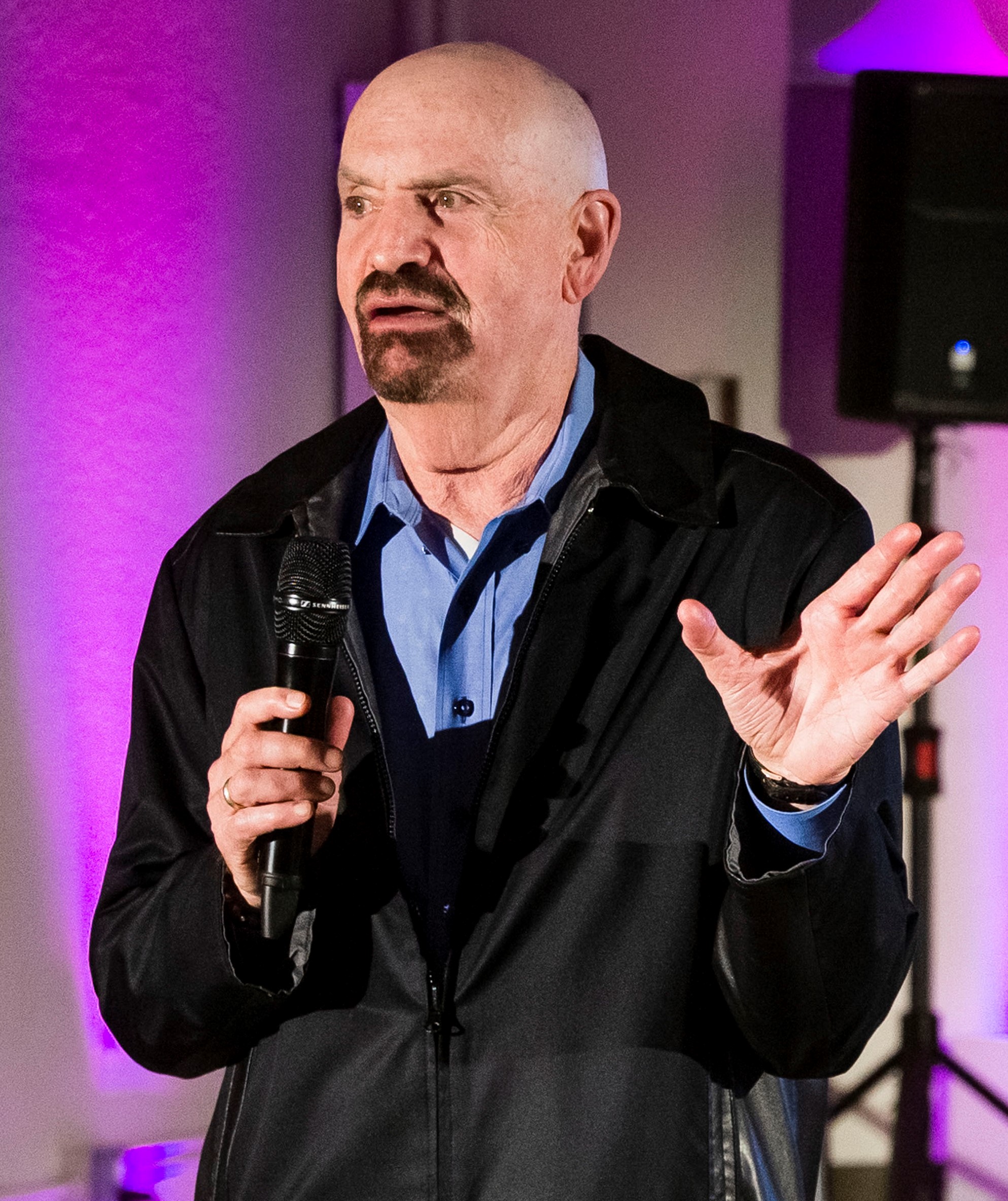
Lawyer/Storyteller
Richard Zitrin's career as a trial lawyer has involved fighting for individuals against powerful forces in both criminal and civil trials. As a professor, he has taught for over forty years at the University of San Francisco and UC Hastings law schools. He has received numerous awards for service to the community, including the national American Bar Association's Pro Bono Publico award for public service, the California Bar's 2019 award for "outstanding long-term contribution to the advancement of attorney professional standards in California," and many statewide and local awards for promoting equality and diversity. Zitrin is the author of over 100 articles and three other books, including The Moral Compass of the American Lawyer: Truth, Justice, Power & Greed. He has also served as a legislative consultant to several national and California legislators.