
Insecurities with the Self can impact our self-love and the magnetic pull of aligned values and visions. Insecurities with the Self affect our vulnerability and prevent us from how discovering our...
















































Join Favazza and Jeanell Greene to the pursuit of extraordinary relationships—those that elevate and complement, rather than mirror our insecurities. We delve into the transformative impact of self-love and the magnetic pull of aligned values and visions. Uncover the transformative power of vulnerability and discover how, by sheer force of will and presence, we can step bravely into the unknown version of ourselves and attract the kind of partnership that resonates with the deepest parts of our being.
Website: https://ytspod.com/
Transcripts: https://www.buzzsprout.com/2242998/14418990
EPISODE LINKS:
Jeanell's Page: https://jeanellgreene.com/
Jeanell's Linkedin: https://www.linkedin.com/in/jeanellgreene/
Jeanell's YouTube: https://www.youtube.com/@jeanellgreene/videos
OUTLINE:
The episode's timestamps are shown here. You should be able to jump to that time by clicking the timestamp on certain podcast players.
(00:00) - Overcoming Trauma and Rebuilding Relationships
(11:56) - Healing From Infidelity and Childhood Trauma
(17:36) - Understanding Toxic Relationships and Communication
(31:38) - Own Your Life, Overcoming Challenges
(36:29) - Impact of Past, Embrace Change
(46:33) - Importance of Feelings and Breaking Limitations
(59:19) - Creating Extraordinary Relationships and Self-Transformation
Quillbot Flow- AI Software & Beyond
Master your writing style with incorporating Quillbot Flow and write your best version now.
Disclaimer: This post contains affiliate links. If you make a purchase, I may receive a commission at no extra cost to you.
Support the show
PODCAST INFO:
Podcast website: https://ytspod.com
Apple Podcasts: https://ytspod.com/apple
Spotify: https://ytspod.com/spotify
RSS: https://ytspod.com/rss
YouTube: https://ytspod.com/youtube
SUPPORT & CONNECT:
- Check out the sponsors below, it's the best way to support this podcast
- Outgrow: https://www.ytspod.com/outgrow
- Quillbot Flow: https://ytspod.com/quilbot
- LearnWorlds: https://ytspod.com/learnworlds
- Facebook: https://ytspod.com/facebook
- Instagram: https://ytspod.com/instagram
- TikTok: https://ytspod.com/tiktok
- Twitter: https://ytspod.com/x
00:00 - Overcoming Trauma and Rebuilding Relationships
11:56 - Healing From Infidelity and Childhood Trauma
17:36 - Understanding Toxic Relationships and Communication
31:38 - Own Your Life, Overcome Challenges
36:29 - Impact of Past, Embrace Change
46:33 - Importance of Feelings and Breaking Limitations
59:19 - Creating Extraordinary Relationships and Self-Transformation
Favazza:
If we are not in sync with each other and we allow our own insecurities to affect this little healthy circadian rhythm of sinkness, and that affects it. Now the other person, the partner, is going to feel something's off because their own insecurities are now affecting them. And so, when it comes back around, my perception of what she's perceiving me to be which is also my understanding of the expectations of this relationship, is now being tainted, based off her behavior. And now I am having this little fuzzy feeling that something's off. So then it gets worse and worse, and that's what draws us to do something stupid, to realize there was nothing ever to happen in the first place.
Jeanell Greene:
Yes, and if we add the layer called we don't know how to communicate in healthy ways, we just know how to be passive, aggressive or shut down, you know, or be super anxious about a relationship that, on top of that, is like a formula for disaster.
Announcer:
You're listening to a podcast that encourages you to embrace your vulnerabilities and authentic self. This is your transformation station and this is your host, Greg Favazza.
Favazza:
I'm so glad that you're here, because I really wanted to challenge you in your expertise to the fullest extent.
Jeanell Greene:
Yeah.
Favazza:
I wanted to do a live kind of therapy session to share the focus of the next 40 days. I'm going to do a 40 day challenge and at the end of the 40 days what's going to be? It's my birthday, but oh, happy birthday.
Jeanell Greene:
Yeah, advanced happy birthday.
Favazza:
Thank you, there's a 40th. No, I'll be 33.
Jeanell Greene:
So you're just a young pup.
Favazza:
Yes, but everything behind my actions has this very has depth and breadth of the situation that has occurred in the last couple years over my ex, who's also my mother, my child. She is a narcissist and I've lost everything. So, recovering from that and applying myself in real time to my life, I want to illustrate that authenticity every day by sharing what happened, like a little snapshot every day of a situation and how I was manipulated and how it affected me and still does to this day. Is that something you're interested in doing with me?
Jeanell Greene:
Well, I guess the first of all. I'm not a therapist and I'm not a counselor, so really my focus as a coach is really to take ownership of whatever is happening, like the conversation on narcissism. I don't really get into that because I feel like that's kind of playing a bit of a victim, like the problem is over there.
Favazza:
Oh yes.
Jeanell Greene:
So I really, I really work on like okay, what is it that I need? What do we need to heal within ourselves? What is it that we need to forgive about ourselves? Where is it that we haven't had compassion for ourselves so that, no matter what everyone else is doing around us, we are not thrown into that like hurricane or tornado of their shit?
Favazza:
Yes, you know, and that is why I want, that's why you are perfect for it, because how I illustrate myself is through self leadership, through taking accountability, and I focus on what's not happening around me, but only what I can control. And that is the daily application in my actions and that yeah, yeah.
Jeanell Greene:
And the inquiry within going okay, like, why is this person triggering me? What is it actually triggering? Because it's so easy to look out there and go, okay, she is this way and that's why I'm the way. Well, no right, there's something. And you know, when I share my story about my dad and how he left, I didn't see that until I was inside my divorce, looking at my X and being like how could you? You're an asshole and you're a horrible person and then realizing, oh no, he's just triggering something from my childhood, when my dad left and abandoned us, and I have it like I can't trust people, I'm unlovable and everybody I love will leave me. So I might as well just date guys who are jerks, because I know they're going to leave it eventually.
Favazza:
Yes.
Jeanell Greene:
But it was all in the subconscious. So you know we can go through it. But I just want to just preface that I'm not here to like join into the it's into the pity party. I'm really here. But well, let's look at, well, what if, and imagine if it wasn't that way, and where's it that we need to take responsibility? So yeah, if you're, if you're game for that, I'm game for that too.
Favazza:
Yes, one, I don't. I definitely don't like pity parties. I was in the army for five and a half years and there's a little PTSD associated with that and also with my childhood and being sexually abused by a sibling, and a sweep it under the rug mentality was definitely occurred and kind of recovering from the lies of the narcissist. but also her taking off with my son and stealing my identity, getting hit by a car from her controlling the narrative around police. I mean that was just a huge thing Because all this military guy is just harassing her. It's not the other way around, like I had no clue what the fuck is. Coercion to the point where. The point where you are being pushed into a situation that you felt all of a sudden that you were just stuck within these walls, that you can't even move without them saying so.
Jeanell Greene:
Mm, hmm, yeah, I got that. I got that. And at the end of the day, what happened happened. So how do you move forward? How do you not let this thing hang over your head and keep you from actually being happy and finding love again? Right, because we close our heart off or like, oh, this is how women are or this is how right, and so as much as we say we want to fall in love again, there's this subconscious way of being that we're like actually close to it because we haven't healed and forgiven that. So if as long as it stays in that lane, I'm cool with that, I just yeah, because I don't. I got that. You've been through a lot, I, so get that. And at the end of the day, it happened. So how do we move forward? How do we become stronger, wiser, better and happier and learn from that trauma, rather than have that trauma be the thing, this badge or this label we put on ourselves, saying like I'm broken or whatever, I'm unlovable. So so then, yeah, so as long as we play in that in that field.
Favazza:
One step past that, yeah, once we get to where we can remove the label and be essentially reconnected with ourselves, because we fall in these positions where we're genuinely good people wanting to help other people, and at that point I've lost myself. So, reconnecting with myself, but still moving to the point where what I built will allow me to stay at this level that I'm at now and not fall back down to repeat like behavior. But, lastly, this individual I'm going to have to interact with for the next 16 years. So when I'm around her this is the scary part is that it comes back, just like how I were to put on my uniform or be in the same area where I served in the military Because I had to. I had to leave where I lived to reconnect with myself prior to meeting with her, which is where I'll, colorado Springs and I served, and that reactivated something inside me to start taking accountability. But when I'm around her, it's like it's not even less than 20 minutes. I start to see a difference and how I talk, how I look at things, and it bothers me so bad. Yeah.
Jeanell Greene:
Yeah, Because there's a conversation that goes through your head right. There's a thought that now is either attached to something in the past, it's like you said the uniform, you put the uniform back on, you're there. There you are again, yes, ma'am. And so it's really like well, what if you didn't put that, put it on that uniform? Or what if you created a different uniform, different context.
Favazza:
Yes.
Jeanell Greene:
For her, because hurt people hurt people, right, Like I think that's really, really true. So I think, bringing compassion to that, you know, and a lot of times my clients are so upset with their parents because their parents divorce and they fucked me up and whatever right. But then it's like, okay, well, tell me about your parents childhood? Well, their childhood was sucky too. So it's like, well, yeah, and we can see that they're just doing what they know because they're messed up and their parents were messed up. Maybe we could have some compassion for each other's humanity.
Favazza:
Do they really even know their parents childhood?
Jeanell Greene:
Yeah, do they even know? No, they don't.
Favazza:
They have this generalized understanding what they think they know, but they never took the time to ask.
Jeanell Greene:
They never right. And even if they told the story, we weren't there, we didn't know what that was like. You know, it's so easy to judge other people. You know, I'm Catholic, so divorce was never so, divorce was never a thing. And so when I was in that first marriage and I was like I want out, everything inside of me was like, oh my God, you know, like you are a terrible person, and that was the narrative I had. And so I stuck it out and meanwhile I'm like dying inside because I so was so afraid of what people were going to say and also what was God going to say? And who was I to myself, like, oh my God, I'm so shameful, I'm so like I'm a bad person for.
Favazza:
I'm trying to know I can't hold it in. My parents are still together, they've been together and they always taught me if you're with somebody, you have a child. With somebody, you do not quit, you never quit. And then that military mindset and then their mindset. I, literally I've put myself mentally through the most intense situations. That contemplating suicide and acting on suicide happened on a couple occasions because what I was going through I somehow mentally was not understanding, comprehending, and still got past the that situation of almost to do into.
Jeanell Greene:
Oh, my goodness my friend, I so understand. And yeah, yeah, yeah cool, I noticed we're recording. Are we actually recording recording? Are we just prefaceing, are we?
Favazza:
just no, we are actually recording. Recording this is how episodes take off and this is got it. Okay, yes, and with that being said, welcome to your transformation station.
Jeanell Greene:
Thank you so much. This is going to be fun.
Favazza:
Yeah, so it's Janelle Green. Do I have that right?
Jeanell Greene:
That's right.
Favazza:
Can you kind of give us a little snapshot from what I see? You got 20 years experience in South growth coaching and positive psychology, which I'd like to add on. Yeah.
Jeanell Greene:
Yeah, you know, I'm a first generation Canadian Filipino, so with that comes a lot of expectation and a lot of pressure. I'm also the eldest, so there, I've always been a good girl people pleasing straight, a student, obedient, you know all that. And that all changed when I got married to my first husband. And looking back now I see that it came from fear. It came from fear of being alone. It came from the fear of nobody wanting me. And when I was in that marriage I decided to start doing the work. So I did this, the sort of weekend seminar, and that's when my eyes were opened and it was like Wizard of Oz, where everything went from black and white to color and I just saw how my life was the way it was, because I actually hadn't healed. What had happened to me when I was nine. And what happened when I was nine was my dad. Well, my parents first of all had a great marriage like ideal, you know, laughing and playing and dancing and overnight date nights and things like that. And then, all of a sudden, my dad cheated on my mom with my mom's best friend who lived in our basement, got her pregnant and left. And I was nine, my sister was six and my brother was three, and for the next three years, you know, we were separated and my only memory of that time was my mom on her knees praying to God to bring my dad back. Three years later, my dad comes back, asked for forgiveness. He was sick, he was on a kidney transplant list and was going through dialysis and needed someone to take care of him because he couldn't work. And my mom said yes, and my mom forgave him. And the next 13 years it was like nothing had happened. They just pretended like they never talked about it, my mom never hung it over his head and until my dad passed away like everything was great. And so you know, maybe six months later I met my first husband and I realized at that point that I actually hadn't healed my relationship with my dad or what had happened to me when I was nine and in doing the work, what I saw was that little nine year old standing at the window watching her dad leave, waiting for him to turn around and say ha ha, joke, because my dad was a big joker, which he never did. I made three decisions that day, subconsciously. And that was I.
Favazza:
Before you go any further and say that I'd like to actively participate and challenge their interviewee with yeah go for it. I wanted to punch the camera when you told me about your dad up and walking away, because to me I feel like there's a lot. There is the fact that this individual pretend to be somebody he wasn't, and that mask eventually came off. He was only there for a certain reason, and that is to benefit himself and only himself. And when he saw a new opportunity or something that fed into his Ego or whatever conscious scheme he was into at that point, he ran with it. And then, when he had this reality or a wake-up call that's going to affect him for the rest of his life, he came back to the only thing he knew that was solid and stable. And that Upsets me to the point of me reliving a moment with myself. But what I want to ask you is what came to mind when you realized that you were not over that Experience you went through at nine years old.
Jeanell Greene:
Yeah, I didn't realize that I hadn't gone over, because consciously I'm like, okay, great, my dad came back, we had our happy ending. You know, here he is on his death bed and we're like it's all love and support and I Felt like, or I thought, that things were complete. And as I was really starting to think about my future and what kind of relationship I wanted to have, I saw how I Actually wasn't complete. And you know, I actually you know I work with infidelity a lot with couples and I don't actually see it that way. I see infid you know, when I really look at it, my mom was a very independent woman and my dad wanted a lot of affection and my mom just was not fulfilling that need for him. And you know, in my I'm gonna be, I'm gonna call myself out in my first marriage I had the same experience I did not feel loved, I did not feel seen, I did not feel special and I did some things that I'm not proud of, because I was so hungry for that attention, for that passion, for that Feeling alive and I felt dead. You know, and I'm not proud of what I did, but I I have a lot of compassion for people who have that moment of weakness, and I know my dad regretted it and my clients all regret. I don't think that people do it consciously, I don't think that it's Now. There's, you know, the small percentage of people who are just jerks and they don't care about anybody. But in my experience working with men and I work mostly with men that's not the case it's. They don't feel loved, they don't feel appreciated, they don't feel wanted, they feel rejected. And all of a sudden here comes some candy, going on, I'll give you attention, I'll give it to you. And if they're not getting it over here, and if, if sex is, is their love language, they're like dying inside they're gonna go get that candy.
Favazza:
Well, I think it's everybody's love language as few. We'll just understand ourselves as we want to be valued, appreciated, and that falls on the short-term Goals inside of ourselves. If we are going to go towards something new in a relationship is sexual contact, context, appreciation, being valued. That satisfies all of that. But looking at what a healthy relationship is like a real, true relationship of 60 years, it's being able to endure that process of stepping away from each other to be with someone else, to realize that we were with the right person all along. It just take. It just took taken. A shitty experience to have us reconnect is what I was trying to preface.
Jeanell Greene:
Yeah, yeah, I mean, we're all human, we all do stupid things, we Temptation is there, the ego is there, but that's why it's so important to do the healing work, because then you're just gonna keep sabotaging it. You know, I meet people who have been married five times and they keep attracting the toxic relationships. It's not, it's not any wonder there is I said you are the common denominator. It's not women are terrible or men are liars. It's, there's something about you that has you attract or be attracted To those crappy relationships, and so it takes some. You know, you can't usually do that work by yourself. You kind of need someone to point it out to you. Like, do you notice that you attract these kind of people and they're like no, I never realized that. I thought it was just coincidence. No, it's not.
Favazza:
Okay. So then let me ask you this so there is this, this like stigma or Around okay guys or liars, and then women, I mean I'm not sure, I don't remember or I'm just being clevered not to say anything. That would kick me.
Jeanell Greene:
Oh, you can do whatever.
Favazza:
I can't even think of it off the top of my head. But what I'm looking at is what if that stigma is affecting our Understanding on how we view the person that we are intimately Involved with? So I would. I'm thinking it's like a like, a like, a certain self-fulfilling prophecy. Yes, so if I, if we are not in sync with each other and we allow our own insecurities to affect this little healthy circadian rhythm of Synch-ness and that affects it, now the other person, the partner, is going to feel something's off because their own insecurities are now affecting them. And so, when it comes back around, my perception of what she's perceiving me to be which is also my understanding with the expectations of this relationship is now being tainted based off her behavior. And now I am having this little on this fuzzy feeling that something's off. So then it gets worse and worse, and then that's what draws us to do something stupid, to realize there was nothing ever to happen in the first place.
Jeanell Greene:
Yes, yes. And if we add the layer called we don't know how to communicate in healthy ways, we just know how to be passive, aggressive or shut down, you know, or be super anxious about a relationship, that, on top of that, is like a formula for Disaster. And so women, let's talk about women for a second. You know, for us. This is why communication is so important to us, because we make stuff up and if you don't actually tell us what we need to hear, we're gonna go. Oh, we're gonna think worst-case scenario. Why? Because as humans, we are always in survival. Like that is the default, is survival. So if I don't feel love from you, if I don't see you present with me, my brain goes okay, what's going on? Is he cheating on me? What's happening? Does he not love me anymore? Am I unattractive? And my fat? Am I skinny? Like we start making stuff up and if the the other person doesn't know how to ease our Anxiety or know how to communicate love in the way that we need to hear love, then all it's just the snowball effect. So, like trust, so so many people do with trust issues and and betrayal, right and they go. You know, my husband's so great, but I have trust issues. Well, unless you deal with those trust issues, you're eventually gonna push that man away, no matter how much he loves you, because you're just gonna keep putting out this, this vibe called I don't trust anybody rewind, and so we got a rewind.
Favazza:
Go for it. So what do you just said? Or if there's this way, we have to approach this Understanding on our partner that in order to feel loved, it has to meet these certain Expectations that are in line. So, if the relationship has already reached that point where it's failure to like, you can't return Because, no matter what I say, I'm being honest. But you think I'm be online like and I'm being completely Transparent, at this point there's nothing I can do. And this is where the guy is going to say fuck it. Or yeah, it's a curious saying that I know you're cheating on me, but I'm not. I'm being completely here. It's now you're framing me to want to go that direction, when I never had the attention to begin with. But Exactly if we go back to say we have to fulfill these needs for our partner, as in what she needs in order to be valued, understood, heard and appreciated is Universal, but it's individual to every single individual.
Jeanell Greene:
So if we Go ahead, Sorry, I was like, I think, one of the things that men when they trip up a lot a lot.
Favazza:
Let's do this is.
Jeanell Greene:
Women, as we all know, are very emotional creatures, yes, borderline crazy sometimes, and Men are very action oriented. So a lot of the time, all the women want and I can speak for myself, all women want is just to feel heard. You don't have to fix us, you don't have to give us advice, you don't like none of that. You just need to say hey, honey, oh man, I so get it. You know, I'm so sorry you're feeling that way. You know you deserve better. Is there anything I can do? Would you like to talk about it and just let her say what she needs to say and be like babe, you're so great, like, don't let that upset you, you are just amazing and I love you. She doesn't need to be fixed. She doesn't maybe give advice, none of that. And I think men go there, they or they go. Well, we got in a fight. So maybe if I just clean the house or I just go do the dishes or I buy her flowers, like all this doing, then things will be better. No, you actually need to go where she is in that emotional Shithole she's in, and sit there with her like a best friend and just put your arm around her and say I got you and this Is something my husband is so good at, and I think that's the thing that men have just not been taught how to do. Like empathy, what's that? Listening, what's that?
Favazza:
So then, what's the difference between just being there as an empath versus Conflict resolution in a relationship?
Jeanell Greene:
Say more about the conflict resolution. What do you mean by that?
Favazza:
So if there is a disagreement in the sentence and the phrase comes up you always do this, when we both know I damn well do not always do this, that. How do we?
Jeanell Greene:
go forward. I think the thing that the the knee jerk reaction is to resist no, I don't know, I don't know, I don't Right and that just makes things worse. And here's the thing when our defense, our defensive walls are so high, logic or emotional connection is no longer available, and so we actually have to do it. First of all, slow our roll, take a deep breath and go Okay, how can I bring this wall down? The only way you can bring the wall down is to be connected, and so I would say two things. Number one is get curious. Tell me more. How do you, what do you mean versus like no, I don't tell me more. Let her talk. I got it and try to see it from her point of view, and if you can even see, point one percent of truth in what she's saying, to say you know what? I can see why you would think that way. You don't agree with it. But hey, I can see your point of view, why you might feel that way, and here's what I have to say about that. But now she feels like you're on her side. She doesn't feel like you're resisting her or making her feel making her wrong or judging her. Or again, now you're on opposite teams you actually want to have and say, yeah, you know what? I can see why you might feel that way, but can I just do you mind if I just share something with you and just go into that way, because now she's actually open to hearing you? That wall has come down, but when those walls are up, ears are plugged, eyes are closed, nobody's listening to anybody. It's now a domination game. Who's right, who's wrong? Who's fault it is, and we can't get to anywhere close to love from that space and from that energy.
Favazza:
Okay, so then, with what you just said, we have to understand the quantity and quality of these kinds of conversations that we have to have, and is there a point where compatibility becomes an issue for one another?
Jeanell Greene:
Yes and no. I mean. A lot of clients come to me and the first question is can we save this marriage, can we save this relationship? Yes, I would say there is maybe a 2% space where I would say highly unlikely, but most of the time it's just that one person isn't willing to get over themselves and set their ego aside to actually come to the table and take responsibility.
Favazza:
I know right, that's literally what the fuck is going on. I'm sorry, but that has to be.
Jeanell Greene:
Yeah. Welcome to my life, yeah, yeah. But you know, like, as someone who grew up, my parents, my mom never apologized. We were the kind of family I don't know, I don't know if it's a Filipino thing but we would fight. We would storm away, go into our bedrooms, slam the door, we would take the next hour or two to cool off and then we'd come back into the living room and act like nothing happened. So there was no accountability, there was no responsibility, there was no forgiveness, there was no I'm sorry, I did you wrong. None of that. And so when I met my husband who's the complete opposite. He's like an over over apologizer over responsibility guy. He thinks everything's his fault I really got like, wow, there's actually a lot of power in admitting your shittiness and actually there's nothing wrong with saying, hey, you know what I shouldn't have said, that I was actually really mean, because I wasn't taught that way. I wasn't taught to have compassion for yourself or other people and not, you know, my parents were great people and there was this programming that I, even when my husband says sorry to me and even like I'm going to be out myself for a second there's times when he says sorry to me that I know it's my fault and I almost don't want to say sorry, because I'm like, well, he said he's sorry, so I'm not going to apologize, like it's done. But then, if I'm really honest about it, I'm like no, I need to apologize, but my ego does not want me to apologize. My ego is like yeah, it's his fault, he already apologized, so you don't need to say anything.
Favazza:
Oh, okay, don't go another step further. Okay, so is this now, when you realize you're in a shitty relationship and I'm looking at that as a guy perspective Is this because he always apologized and then the partner that he's with never stepped to that next level to realize her act? She was actively participated in this situation that led to this point.
Jeanell Greene:
Yeah, absolutely. We train people to treat us the way that they treat us, and so you know if we're the ones who you know, since childhood, I've always taken the blame. That's what we're going to do in our relationships, even when it's not yours to take, because we don't know how to put up boundaries, because we don't love ourselves enough to put up that boundary, because we're so afraid of being left alone and being being abandoned, and so we'd rather be miserable and in a relationship rather than taking the risk of being authentic and powerful and setting strong boundaries so that people treat you the way you want to be treated. But most of us, we weren't taught that way.
Favazza:
So when the relationship gets to that point where it's been I don't want to say like social engineered, I mean, I guess, is it that point when it's finally that way, you can't save the relationship. Once it gets to that point, is it possible?
Jeanell Greene:
No, oh 100%. Really 100%, but again it has to be both people. You know what? Not even I'm going to take that back. I'm going to take that back because, I would say, 70% of my clients come to me by themselves. Their partner has either left or is planning to leave, or they have left their partner, and so they don't have the participation of the other person. And so what there is to do and we kind of talked about this in the beginning is how do I love myself enough to forgive? And I want to. Just really, this is super powerful Forgiveness. We think in society, forgiveness is about letting somebody off the hook for their shitty behavior. And here's the cool thing about forgiveness Forgiveness has nothing to do with the other person, because who we need to forgive first and foremost is our self. You know, forgiving ourselves for beating ourselves up, for making up stories about who we are just because someone right. So my dad left Okay, that was my dad's thing. And yet I made it mean that, oh, it must be something about me. If he loved me enough he wouldn't have left. If he loved me enough, he wouldn't write all these stories that I make someone else's actions mean about me. And when I got to the point of like I just need to forgive that little nine year old for thinking those things and thinking that she's unlovable. Now I can actually start to forgive myself and release myself from the emotional prison and punishment that I've been putting myself through for freaking 3040 years. And then, once I forgive myself, now I can forgive my dad. Why? Because I don't want to carry this monkey on my back for the next 40 years. Because I know the impact is going to be my husband and it's not fair to him for me to carry my crap into this relationship.
Favazza:
Yes.
Jeanell Greene:
So this is why doing the work is so important.
Favazza:
Okay. So when it gets to that point in the relationship where the woman is walking out Now is this I'm just looking at this through my experience Is this because the man has lost his own individuality and starts to represent similarities of his partner's identity and that scares the shit out of her because she sees the very thing that she's trying to avoid?
Jeanell Greene:
Very, yeah, absolutely.
Favazza:
Oh my God, that's for being just always aware of the situation. It's actually. It's a miserable life to live. I try to be aware of everything, about everything.
Jeanell Greene:
Yeah, yeah. And at the end of the day, we get to decide how our life goes. You know, for so long I had, I've been molested, I've been my dad abandoned me, I've been bullied. There's so much of my life and I could use all of that as ammunition for having a shitty life. And I just got to the point and I'm like what am I doing? Why am I allowing my experiences, other shitty people, to dictate the kind of quality of life that I'm going to lead? And I could see that God had a plan for me. And I'm like how can I live into this big, audacious, bold life with all of these old emotional baggage that really doesn't matter anymore. And so we live so much in the past because we don't know how to be present and we don't take the time to create. Who is Janelle 2.0. Who is the Janelle that is going to impact 10 million lives? She's definitely not that little sad girl standing at the Bay window wishing her daddy would come back. No, she is someone who forgives, who has compassion, who inspires other people to be better than who they were yesterday.
Favazza:
So what did start with? Having boundaries, since our past has literally played this impact on who we are. So it's a compilation of people that we've been lived to create this version of ourselves and, depending on our emotional state at that time, those parts of the people that we've been with will start to reflect out, and when we start reflecting out, we get challenged. That would put us in a situation where we have to fall back on our original selves, and when we don't have that, I want to say boundary, because I feel like this is one thing that you just can't pick up from people, but you actually have to take the time to create that in yourself. Whether your boundaries rigid or flexible, but yeah, regardless of those will allow others to influence you from even fixing your original state.
Jeanell Greene:
Yeah, what's so interesting is, you know, I do free consults in the first session and I'll say to people you know, so tell me why you're here, and they can talk about all the crappiness in their life for like days if I let them. But I'm like, okay, great, but tell me what is it that you want? They're like I've never thought about that. I'm like, oh interesting. So you spend all your time resisting, avoiding, making wrong all these things, and yet you wonder why you're unhappy, your energy is all in the negative and so you have to really focus on, okay, what is it that I want? And, more importantly, what are my values? And so what? I invite people in their first session. I give homework. I'm a big homework.
Favazza:
Yes, I'm a person.
Jeanell Greene:
Yeah. So I give them homework, and the first homework is make me two lists. Make me a list of what it is you want. What do you want, what do you want to have? Who do you want to be? What do you want to do? And usually the first half of it is all superficial I want a nice car, I want a nice job but the second half goes really deep I want freedom, I want to feel, I want to love myself again. Right, and when they get to that level, then I go okay, make me a list of all your fears. So the fears are the obstacles to what you want. So now you're going to look at that list of fear and go okay, where did that fear come from? And, more specifically, what is the thought and the emotions attached to that fear? Because a lot of it comes from our childhood, right Between you know, four to 10 years old-ish, and so much of it is subconscious. And so you know, as children, we just believe everything our parents tell us. If our parents told us we were bad, then we have a story that we're bad. So, as adults, what I challenge people is what if it wasn't true? What if everything you thought about yourself or the world isn't true. What if you could create a different context about it? Thank you. Now you're now creating something new. That was not. It has nothing to do with your past thoughts, but you got it. You got it. First of all, get clear about where you want to go. What's in the way of where you want to go? And then just analyze that. Well, is that true? Like I had a story that I'm dumb when I was molested. I had a story I was dumb because I didn't tell anybody and I didn't see that story until probably 10 years ago. So then I asked myself well, am I dumb? And I gave all the reasons why I think I'm dumb, and I gave reasons why I didn't think I was dumb. And then I was like okay, well, what if it wasn't true? What would now be possible? Well, now I can actually create a business that is authentic to me and I could believe in myself enough to do something really audacious like that. And then the third piece, which is the even more important piece, is what is the impact of holding onto that old crap? And what is the impact if I choose to change, if I choose to be better? So now you are living into a new future and a new experience of yourself, Cause I know Janelle 2.0, the woman who's gonna transform the world and impact 10 million lives is not who I am right now. I'm close to it, but there's always a gap between who we are and who we wanna become, and so that's why it's so fun, Cause I'm always up leveling, and even when I feel like I'm at the top of my mountain, I'm looking for the next mountain.
Favazza:
It's okay. So the impact of why we want, the impact of what's happening right now based off our previous perceived conditions, are affecting us in everything. So when I say everything connects to everything, everything does. So if I think I'm stupid, well guess what's going to happen. It's going to affect my decision-making process of making the most accurate thought out decision in anything as far as marketing, as far as buying a new car, as far as when I should talk to my spouse because I feel like I'm in the right, and when we are clearly not in the right. This is metaphorical, I'm not married or any of that, but that whole approach is going into everything.
Jeanell Greene:
Absolutely and you know I shared earlier is like trust was, and still is, a big thing for me, because people who I trusted hurt me, molested me, bullied me, left me, cheated on me. Right, I have all this evidence that I can't trust people. But what is the impact of that? I can't make decisions, I don't take chances If I think I might fail, I avoid rejection and that person is not going to fulfill this huge mission I'm on, and so I got to continue to look at that and do the digging and continue to look at the parts of myself that I don't want to look at. But there's so much power there, you got to follow the breadcrumbs and some of us are going I'm scared of what, like? I even have people who say to me you know, I'm scared, who this new version of me is Cause? Why, if I don't like them, the unknown is so scary? That's why change as much as we want to change, the unknown is uncomfortable. The unknown lacks stability and certainty and all these things as humans that we crave, and that's why you need a coach to push you out of that.
Favazza:
Yes.
Jeanell Greene:
It's okay, you're not going to die.
Favazza:
I spoke in with he's in my previous episode and I can't remember his name, so I definitely do that. I'm all over the place, but he's spoken with billionaires and he himself he's made 200 million with his real estate apartment company and he told me the information that was relayed over from them to him to me that how did you get to that point? They finally embraced the version of themselves that they were afraid of becoming, and then that is what's led to them to their success. Now, if we were to look at a successful relationship and a unsuccessful relationship, what would be some like key signs to compare for those that are probably having some anxiety right now, wondering if they're in a shitty relationship or not?
Jeanell Greene:
Oh man, that's a we need days to unpack that. In my experience, I can give you my top three. Yes, ma'am, I think having the same values, wanting the same things, being committed to the same vision Right. If one person wants to live in LA and the other person wants to live in New York, well, how is that going to work? Right? One person wants kids, the other one doesn't. One person wants sex every day, the other one doesn't care. Well, how's that going to work? So, being on the same page about not necessarily every detail, but at least going in the same direction. Second of all, they got to love themselves. I think we're so afraid to be alone because we don't love ourselves. And I noticed, as I love myself more, I love being alone. But most people that's why people get married four, five, six times is they're so afraid to be alone because they don't know what they're going to find. And so we actually have to really do the work to be our own best friend, because, to your point, we might encounter crappy relationships, or rather, we will encounter crappy relationships, and if we don't have this piece handled, we will believe anything anyone tells us. If someone says, oh, you're a horrible person, oh, you're a liar or you're whatever, you're ugly. That was something I was told as a kid a lot you're ugly.
Favazza:
Because we start telling ourselves that so is there a I agree with it. Is there a terminology, Like when you say being alone? Like what if we were to compare that and say being alone and not being with anyone right now? Would that affect our survival instincts to want to latch onto the first thing that pops up?
Jeanell Greene:
Maybe, maybe, but for me, my fear was like I don't want to be seen as that single woman who just lives with dogs. What are people going to think of me? They're going to think I'm worthless. They're going to think I have nothing, no value. But that's all conversation within myself. And so, as a young person, I've probably been through dozens of real. I had a relationship every month with new people and none of them worked out for me, and but I was just so afraid to be on my own because what would people think of me? Yeah Right, but it's really who cares? Who cares? Who cares? It's how we think of ourselves. Okay, we put so much validation on what other people think, or we think what other people think about us and, honestly, they don't give two shits about us. They care more about themselves and they can judge all they want, but they don't know who we are. They don't know what we've been through, they don't know what it's like to be in a crappy relationship. So to tell me oh, you're bad to get divorced, you're bad to leave that person. Who are they?
Favazza:
to say Okay, so that's. There's a problem with that, because I'm definitely guilty for being in a the worst relationship that I can literally find and would never wish this on any human being. Why do I find myself going back?
Jeanell Greene:
Yeah, going back to the same person.
Favazza:
Yes, is it because there's an addiction to it, with the dopamine release of being love bombed and then treated like shit to this operant conditioning? The same way you would train your dog, my, my labrador? Yeah, and then we have laws theory. Is that what has happened to me, when the moment I try to heal and heal and I start to flap my wings and then she does snaps her fingers.
Jeanell Greene:
Then I went on to say hey, Jump, jump, jump, yeah, jump, so high, so high. Tell me. Tell me, yeah, there is definitely something you get. There is a benefit. Now, it could be a. It could be a double sided benefit. Either there is a high that you get from getting the attention and the love that you've been searching for and thinking that this is the person who has the magic key to that, but on the flip side, on the darker side, is I feel so unworthy that if I don't do what this person wants and they leave me, that's actually worse than staying with someone who doesn't actually value me. Again goes back to being a fear of being alone. Like there's all these layers right, it's like an onion and in every situation, at the end of the onion, what is really there is a fear of being alone, because death is being alone. So, but the fact that we're being judged is being alone.
Favazza:
Our thought process, like I'm thinking of it as sunk cost fallacy, where we have invested this much time into this person, thus starting over, seems like a bigger obstacle, just as the fear of the unknown or links to that.
Jeanell Greene:
Yeah for sure, Like being this whole marriage thing with this first guy. I remember, a week before the wedding, being like I said to my mom mom, I don't know if this is the guy for me. I was in tears and the wedding invitation has been out, Like there was so much invested into this event and even though my heart was like Janelle, this is not right, my brain said but Janelle, all the invitations are on. What are people gonna say? And they bought the gifts already and you already have your dress. Who freaking cares? But that's the logic that I went through to tell myself that I need to stay here because to leave costs too much and it's a waste. And I think, even though we know that, logically, we kind of have to experience it to really get it.
Favazza:
We almost need a safe word that we would use in sexual intimacy for our own life. When we start to spiral, like I use, I call myself a sergeant, or I would have somebody refer me by my last name who kind of bring me back to the identity that I associated with. Like what would Sergeant Favazza do?
Jeanell Greene:
Yeah, yeah, yeah and I think that Sergeant Favazza is in my sort of equivalent is my inner wisdom, my higher self. So I sometimes talk to future Janelle and I'm like future Janelle, in a year from now, what would you advise me? And that future Janelle, she's smarter than me, she's wiser than me, she can call me on my BS, and sometimes it's God, sometimes it's my angels, but I think having experience of being outside of our current state and reflecting that is, I think, really beneficial.
Favazza:
Interesting Now. Is there anything that you would like to relay over to our audience that I haven't already asked you? I know I kind of killed the fun.
Jeanell Greene:
Oh, no, no, no, no. There's just so much to say. Yes, you know, I work mostly with men and I would say that you got to feel if. If you want to heal, you got to feel it. What's that say? If you want yeah.
Favazza:
Got to heal, you got to feel you can't you can't.
Jeanell Greene:
You can't heal what you can't feel, and I think so many men and women too focus on. You know, I just don't want to feel it, I just want to like block it out, I just want to not not have emotion. But that's why there's so much emotional disorders, mental disorders, suicide, depression. It's because we don't allow ourselves to just be honest. You got to feel, feel something, Feel to heal. No, the other way around Feel to heal. But I think that you know that's that's the space that I create for men is. I don't. They judge themselves, they beat themselves up. So, with me, what they get is they get actually encouragement. I'm like good, I'm glad you saw that, Awesome, Okay, let's, let's, let's shift this. And so by the time they come out with me, they're a completely different human being and so they're no longer, like you said, triggered by other people. Like I have a client right now whose wife is one minute she wants to be with him. Next minute she doesn't want to be with him, and so he's like so confused because just as soon as he gets confident in himself and feels like I don't need her, I can love myself, and whatever she decides to do is not, you know, an issue for me. All of a sudden she looks at his way and says let's have sex.
Favazza:
Damn it.
Jeanell Greene:
I'm literally guilty and all of a sudden, yeah, and all of a sudden he's running back again and then they go in and have sex or whatever. And then she at the end she's like, oh, we probably shouldn't have done that. I'm not sure, I need some time. And he's like so confused and I'm like dude, like stop jumping and just let her go. And so now he's kind of he's now focused on his kids, he's focused on his work, his focus on himself and creating a life he wants. He's buying a home in Mexico, which is his dream. And now she's coming back and like, how come you don't show me a thanks? He's like, hey, man, you said this is what you wanted, I'm giving it to you. So, like you said, we're just going to be friends. Well, that's not what. No, no, you said it. And now he's got that boundary and he feels so powerful because she no longer has control of his emotions.
Favazza:
Jesus, I've been in that situation so many times that I it's almost like my dissociation, as my childhood has adapted to the point where I, like you, flinch when you know something's coming, where now I know this is going to happen, so now I'm going to take it out on myself. You know what we're not. We are not ready for each other. I'm going to leave, when she was literally going to do that to me, but I automatically just did it to myself to end this and just yeah, and then 100%. then it keeps happening Over and over and over, where you just see the game keep playing out and it's in itself defeating prophecy. Oh my gosh, I had set when I was 16, I had the most abusive relationship and it was just like that.
Jeanell Greene:
It was like a peak. I felt like I was going crazy yeah. I felt like I was going crazy and he was the person I think when I look at the relationships that caused me the most trauma, other than my dad, obviously it was him. And the funny thing is he reached out to me a couple of times, like a year ago, and I was like hey, let's catch up. I'm like why, I'm like how you know, and I made, I made pleasantries on the K. How are you? Are you married? You have kids? He's like I don't want to talk about over text, like call me. I'm like no, I'm not going to call you. Yeah. And then when I said, why would I want to call you? You did this, this and to me, and then he flipped it around to me oh, so you just hold it on grudges and you can't. You obviously haven't grown up.
Favazza:
Mother fucker yeah.
Jeanell Greene:
This is exactly. This is exactly why. But the thing with him is he told me that crying was weakness. He told me that I belonged in a mental institution because I was too emotional and so even when my dad passed away, I could not cry, because I was so stuck in this belief that if I cried, people would think I was crazy. And I really had to work on on dismantling that. That is nuts.
Favazza:
So he put his own beliefs that's based off fear of being perceived a certain way onto you, which isn't real, but made you even question your own self, because you have yours, you have societals, and you have his, which is all conflicting. And my dad and you're and then yeah, that's just going to make you go crazy. No wonder why we need to go beat that guy's ass. I know.
Jeanell Greene:
But you know, now I get to live in this extraordinary marriage with a guy who just adores me and supports me and loves me and wants to just make me happy, and so I want to make him happy and so we just love up on each other and we support each other. And his dad passed away recently and I was afraid that he was going to shut down and and push me out, but no, he came to me, he was vulnerable with me, he shared his emotions and he let me support him and he loves and respects me even more because of who I was for him in his darkest times, and that just made us stronger.
Favazza:
I like that I really do With recognizing people that are essentially they're drowning people. They, they keep repeating the cycle and then they try to take you with them. How do we avoid those times or recognize that they're even in our social circle, circle?
Jeanell Greene:
A hundred. Yeah Well, step number one Awareness, self-awareness. We are so caught up in our brain, in our logic, in what like work, we don't even stop to pause and go hold on what's happening right now. Is this even what I want? We're just in like autopilot, and so I think to be able to break that autopilot of either thinking about the future or thinking about the past and really being present, going and also, more importantly, being authentic with our self and like knowing when our gut is saying this is not good. Mayday, mayday, mayday. We, we just ignore that, and I think we need to learn to go oh, there's a mayday, okay, I need to stop, pause, figure out what this, why I'm feeling this way, versus trying to push through it and like right this whole, like trying to be strong and like avoiding. And I get it. I come from a very masculine upbringing. I was in sales for 20 years in software. I was in a man's world for a very long time. I get it. You shut off your emotions and you just get the job done. Yes, but and but. There's a cost, there's an issue, though, and you start a new job.
Favazza:
There's an issue, though, and you started to highlight it a little bit with we want to be authentic. We want to embrace our vulnerabilities as our authentic self. Yes, but there is these preconceived notions, there's these norms, there's these social um past on thoughts, upbringing or social upbringing effects are our conscious state, what? How do we decide what is, is who in what the we should be? Cause we have the thoughts, say the situational knowledge of whatever situation we are in based off previous history. We have our social upbringing, we have the thought of what is expected to be said versus knowing what we should say, and then we have our own body reaction to this situation. How do we align all that in one straight line to give the answer?
Jeanell Greene:
That's the fact, you know. There's just so much to it and it's all in our blind spot and we don't even realize the limitations that we have. We just have it like this is who I am, this is just. You know, this is, I've always been this way. But what if you didn't have to be that way? And I think again, going back to what I said five minutes ago, to really listen to that gut, cause that gut is strong and it just gets louder and louder and louder If you don't pay attention. And a lot of times it manifests itself as sickness, as cancer, as things like that, as IBS.
Favazza:
Yeah, definitely the gut.
Jeanell Greene:
Because the intuition is actually located in the gut. That makes a lot of sense. So I think, just again getting real with yourself and if you can't get, if you can't do that on your own, then hire someone to help you get there. But when you get there, you know, hire someone to help you get there. But when you actually listen and get all the shit, that everybody's the shit, a kudah, what is all the expectations, all the societal norms, and just go in and listen, well, this is for me Like I go away by myself for a week every quarter to just go there. I take off the coach hat, I go just be Janelle, listen to what my, my, my inner child's telling me, what she needs, which is usually fun and is missing in my life and I just, I, just be myself, cause at the more authentic we are, the more in integrity we are with our values, the more power we have. So a lot of times people go Janelle, you know, you glow, you radiate, like you're so powerful and confident. I'm like, yeah, I'm that because I do the work every fricking day, and when I don't do the work, I get sidetracked and I start doing things that I think I should, could or would have done, or what a coach should do, instead of really listening to what my gut says.
Favazza:
Oh right.
Jeanell Greene:
That is always right, I got this.
Favazza:
All right, this is. This is really good. I have this on my my fridge right now. There's a. It's a post-it note. Why do I lose control when I miss one day? Why does it start to fall? Why do I lose?
Jeanell Greene:
control. Why do you lose control if you miss one day? Yes, what does that mean?
Favazza:
So I have a morning routine and an evening routine and if I don't do that then I feel like I'm out of control with my normal or future self. I don't feel clear, I don't feel healthy. It's like I'm addicted to that, that pavaza 2.0. And when I get the pavaza it's like, oh, should it got that? Maybe it's that paradoxical with today's society with all these choices.
Jeanell Greene:
Yeah, yeah, I think that that's awesome, and for me it's more about the feeling that those things provide not so much the actual action, because sometimes we think we want to go straight and then our gut says no, no, no, no, you're going to be left, buddy. No, no, no, no, I'm going straight, dammit, because that's what I said I was going to do and I have integrity and I'm going to just do it. But then we push and force it and then we realize like this isn't working and when I tap back in, my gut says well, janelle, maybe you want to do that, but maybe not right now. Like I wanted to launch this program and I was excited about it, but everything kept getting in the way and I was like what is going on in the universe? Yeah, every single thing I needed was not happening, whether it was someone to help me or there was always a setback, and so I kind of had to step back and go OK, hold on, what is the universe telling me right now and what is that I actually want? It wasn't the actual workshop itself, it was an experience that I was hoping to create. So if it's about the experience, if it's about an emotion, I can shift the doing piece of it, and so I agree, there is definitely this regiment that is required to up a level, especially in the matters of health, and we also need to have some space to rejig, to repivot, if that's what is needed. And I think sometimes for me I know I beat myself up about it and I just have to give myself compassion that sometimes I go in a million miles an hour actually doesn't work and I actually have to slow my role, take a break, have a sip of water, maybe go do something fun that's not work related, and then when I come back to it, all of a sudden boom, boom, boom, boom. Everything just starts to fall into place.
Favazza:
Right. So with this mentality that the world is changing, I don't know, the universe is now all against me. It's not really a thing. That's just what we're telling ourselves, right? That is absolutely because it's so much easier.
Jeanell Greene:
Yes, it's so much easier to blame society, the universe, god, that ex-girlfriend, that abusive boyfriend, that dad who left, then actually take responsibility and say I am the driver of this car or this captain of the ship and I get to say how it goes. And that takes work and a lot of people aren't willing to do the work because it's hard. They'd rather just sit back, sit you know, put the car on cruise control, check out, judge other people, judge yourself. It's just easier that way. But to have the extraordinary life that we want of design, of intentionality, if power requires work, just like working out, you can't just have an awesome body just sitting around. You need to get up and get your ass to the gym, have an accountability partner and stay focused.
Favazza:
And get supplements and stretch and start out a light routine and slowly work your way out. And have a favaza motivator.
Jeanell Greene:
There we go.
Favazza:
Yes, so this is wonderful. If our audience want to learn more about you, janelle, where can they go? And if they want to check out your coaching yeah, Well, I'm definitely on Facebook and Instagram and TikTok.
Jeanell Greene:
My website is janellegreencom, or, if you want to get there in a simpler way, it's saveourmarriageca. You know I'm really passionate about marriage and family and ending generational trauma, but a lot of my clients aren't. You know, the relationship piece is a part of it, but that's not why they come to me. They're coming to me for someone to support them and getting empowered, getting clear about who they are and what they want as quickly as possible.
Favazza:
I like that.
Jeanell Greene:
And doing the healing work that's required, because sometimes we know what we want. The work is actually dealing with all the obstacles and all the shit that gets in the way of that.
Favazza:
So does that apply with relationships where we think we know what we want and this also applies to job choice what we really want isn't what we want, but it's wanting what we want in ourselves. Thus, it's something completely different 100%.
Jeanell Greene:
You know, when I got married, the first time I thought what I wanted was someone like me, because I was dating a lot of men that I think felt intimidated by me, and so I was like, no, I just need to find someone like me, alpha like me, strong like me. Well, guess what? We bombed heads like a lot. And then so I met my husband now, who is the complete opposite of my quote unquote type, and I remember introducing him to my sister and my sister looked at me and she's like I don't get it. I'm like, yeah, I get it. You wouldn't get it because he is not what you would expect me to date. Like I never liked the nice guy. I thought nice guys were boring. I thought, like man, I'm going to just step all over this man and then I'm going to end up dumping him because he's so boring he's not going to challenge me. And then I got really clear about after I did the work. I got really clear about what I wanted for myself from a place of love, not from a place of fear of being alone. And I manifested this man. And it's been almost 18 years and we are still awesome playmates, we play music together, we sing at church together. He's in a Pink Floyd band. He's in a rage against the machine band. And I'm out there in the. I'm out in the, in the crowd, just like loving him, and all the girls are loving him. But he's got eyes for me and I take him home and we just have this juicy, sexy, playful, deeply vulnerable relationship that is so fulfilling and I never thought that was possible for me.
Favazza:
Hmm, okay, so definitely. I want to just say I was that guy where it was considered boring and they would just come and go. It's like then you realize that they chose for the exciting one. That just only happened for like maybe a month and yeah, exactly. But then for people that want that healthy, sexy relationship, how do we distinguish lust from actual love?
Jeanell Greene:
Hmm, I think again going back to knowing your values and knowing why you're with this person, because I think sometimes again it's a fear thing. It's like, well, he checks off one of my 10 boxes. I mean again that abusive relationship sex was great, but it was break up sex. It was break up sex, right, and it was like, ooh, let's get into a fight so we can have break up sex, cause it's really fun.
Favazza:
Scrowg Leo and Pisces.
Jeanell Greene:
Fun times, yeah. So I think, going back to like just knowing, knowing your self worth, knowing your value, knowing what you want and being so committed and adamant that that's what you want, cause what we do is we settle. We tell ourselves well, you know, we shouldn't be picky. Hell's. Yeah, you should be picky, especially if you're thinking long term. But we're like no, as long as they're like a four out of 10, like so they check off four of the boxes. No, they should be a nine out of a 10 or a 10 out of 10. I think if, that's if, if, if, extraordinary relationship is what you want. That's what you're looking for. But if you're like I want an okay relationship, yeah, sure, a five or six good enough, and for some people that's good enough for them. They don't expect much. For me, I expect a lot, yes, cause I know I'm worth it.
Favazza:
But then when you got to deal with someone saying you have unrealistic expectations, it's like, well, maybe you haven't looked at your expectations, understood what you wanted.
Jeanell Greene:
So yeah, yeah, and I think and having again communication is so important to talk about. Okay, why is that important to me? Cause maybe it's not that thing, it's the thing underneath that thing. So maybe you know money, right, I'm going to have lots of money, okay, but that's not the thing they want. What they really want is freedom. What they really want is fun. What they really want is to be generous. So you got to be able to look beneath that. But again, you won't know that until you do the work on yourself and know yourself enough to be able to reflect that back to someone else. And when you love yourself, you will. I believe that we are all energy and when we are, we elevator energy, we're going to attract people of that same caliber.
Favazza:
Okay, so this is. I have something for you this Favazza 30, well, it's really 40, but it's the 2430 kind of I wanted to rhyme and 24 hours. We had to maintain accountability every 24 hours in ourselves. So we don't lose ourselves, but redirect this new behavior to reconnect with who we were but also who we want to be. And for 30 days we're. I'm going to be sharing different types of information from my routines, from things that I developed in the army, from learning in Kramagawa as an instructor to becoming whole in applying heuristics in these approaches. But if we could have just like a 10, 15 minute conversation once a week for till my birthday, would you be okay with doing that? So for just to relay the progress but also illustrate your expertise and how people can see you in action and want to essentially come to you next if you'd be interested.
Jeanell Greene:
I mean, we could have a conversation about it for sure. I don't know what that looks like because I'm super busy. I'm like I'm full, I'm almost at full capacity. I've got a workshop for February about five ways to rekindle your intimacy and romance for. Valentine's Day, so, but yeah, we can absolutely talk about it.
Favazza:
Okay, yeah, because I would love to do it Like just once a week. This would be huge for marketing you but also showing my progress and having it as you, as the expert, illustrate. Okay, this is working. Continue, keep moving forward. You are making progress.
Jeanell Greene:
Yeah.
Favazza:
Yeah, it's up to you. For those that are listening, I don't know anything about Janelle. This is us meeting, so this is authenticity in itself, in real time, and it is uncomfortable for being a introvert doing this kind of stuff.
Jeanell Greene:
Yeah, I mean, we can definitely talk about it, definitely, if we can make it work.
Favazza:
Yes, ma'am. Okay, and is there anything else you would like to leave our audience with before I let you go?
Jeanell Greene:
Yeah, be the change you wish to see in the world. Don't wait for other people to lead you. You lead yourself. And when you do the work to love everything about you, to be your own best friend, you don't need anybody else to tell you what a great person you are. Validate you. You just know it. I don't need anyone to validate me. I'm even okay with people getting pissed off at me because I know I love ruffling feathers. That's something I enjoy because I'm here, I'm so committed and I want to say to people what they need to hear not necessarily what they want to hear. There's a lot of people that will tell you all that BS, fluff, crap. That's not my game, and so when I take people on as clients, I let them know listen, there's going to be moments that you're going to want to punch me. There's moments that you're going to probably cry. There's moments that you're going to be really confronted and triggered by what I'm saying to you, and you just got to know that it's all from love and it's all in the service of you healing what there is to heal so that you can be the better, a better person, partner and parent that you can possibly be.
Favazza:
That is beautiful. So now, I really do appreciate you coming on the show today.
Jeanell Greene:
Yeah, you're welcome. Happy to be here.
Announcer:
Thanks for joining us on this adventure of growth and discovery. If you're ready to achieve a sustainable transformation, don't forget to hit that subscribe button so you never miss an episode. And hey, if you've enjoyed the show and want to support it, take a moment to leave a podcast review on Apple or your favorite podcast platform. Stay connected with us on social media for behind the scenes, sneak peeks, inspiring quotes and the latest updates. You can find us on Facebook, Instagram, TikTok and YouTube. Just search for YTS, the podcast. Until next time, Remember change is constant and transformation is inevitable. Embrace the journey and keep rocking your way towards a better you. Stay bold, stay curious and stay true to yourself. See you next time on your transformation station.


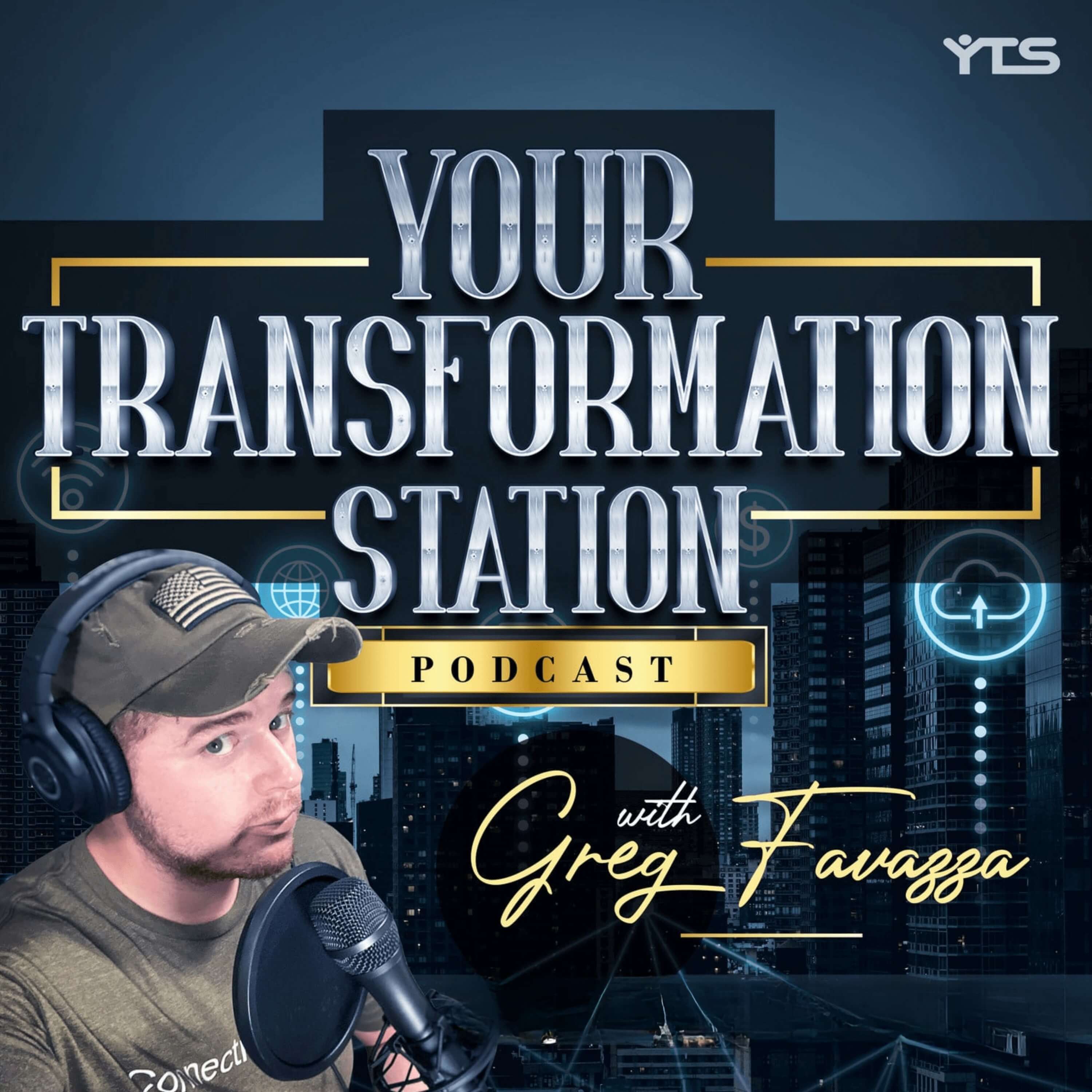
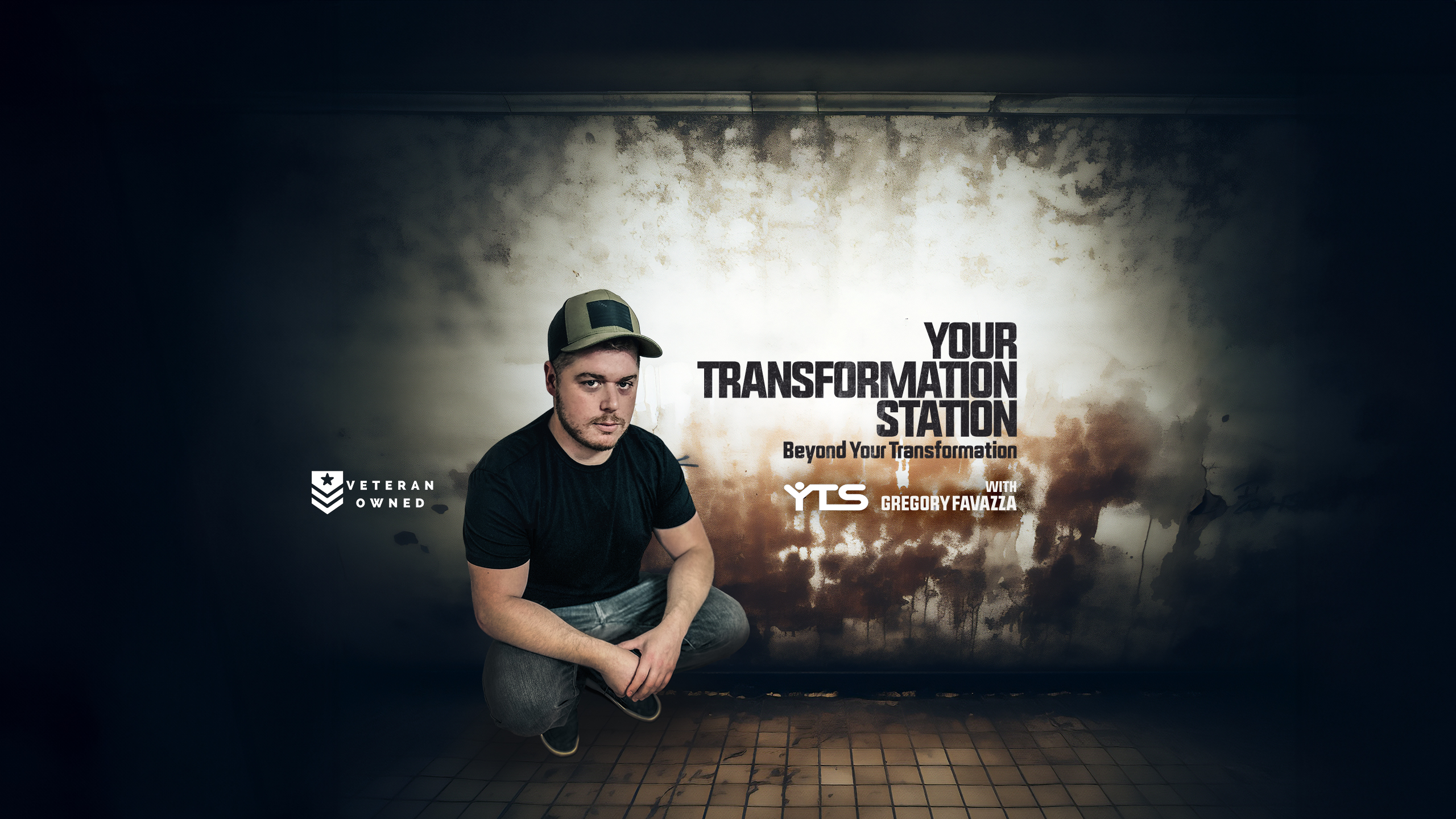
Gregory Favazza: Veteran, Host, Leadership Expert
Gregory Favazza is the host of Your Transformation Station, a podcast focused on clarity, discipline, and the psychological mechanics behind real change.
He holds a Master’s degree in Industrial Organizational Psychology and a Bachelor’s degree in Organizational Leadership. His academic training is paired with lived experience as a military veteran who has operated inside high pressure systems where performance, morale, and accountability are not theoretical concepts. They are survival skills.
Gregory approaches transformation clinically rather than motivationally. His conversations cut through surface level advice and expose the systems beneath behavior. Power dynamics. Incentives. Identity. Emotional regulation. Accountability. He challenges guests and listeners to stop reacting, start reading situations accurately, and lead themselves with precision.
His style is direct, controlled, and intentionally uncomfortable for anyone addicted to excuses or performance based confidence. Your Transformation Station attracts leaders, creators, and thinkers who value depth over hype and self control over noise. People who understand that change is not inspirational. It is operational. #podcasts #yourtransformationstation #leadership