Governing by Crisis: The Shutdown Deadline and the Erosion of Trust
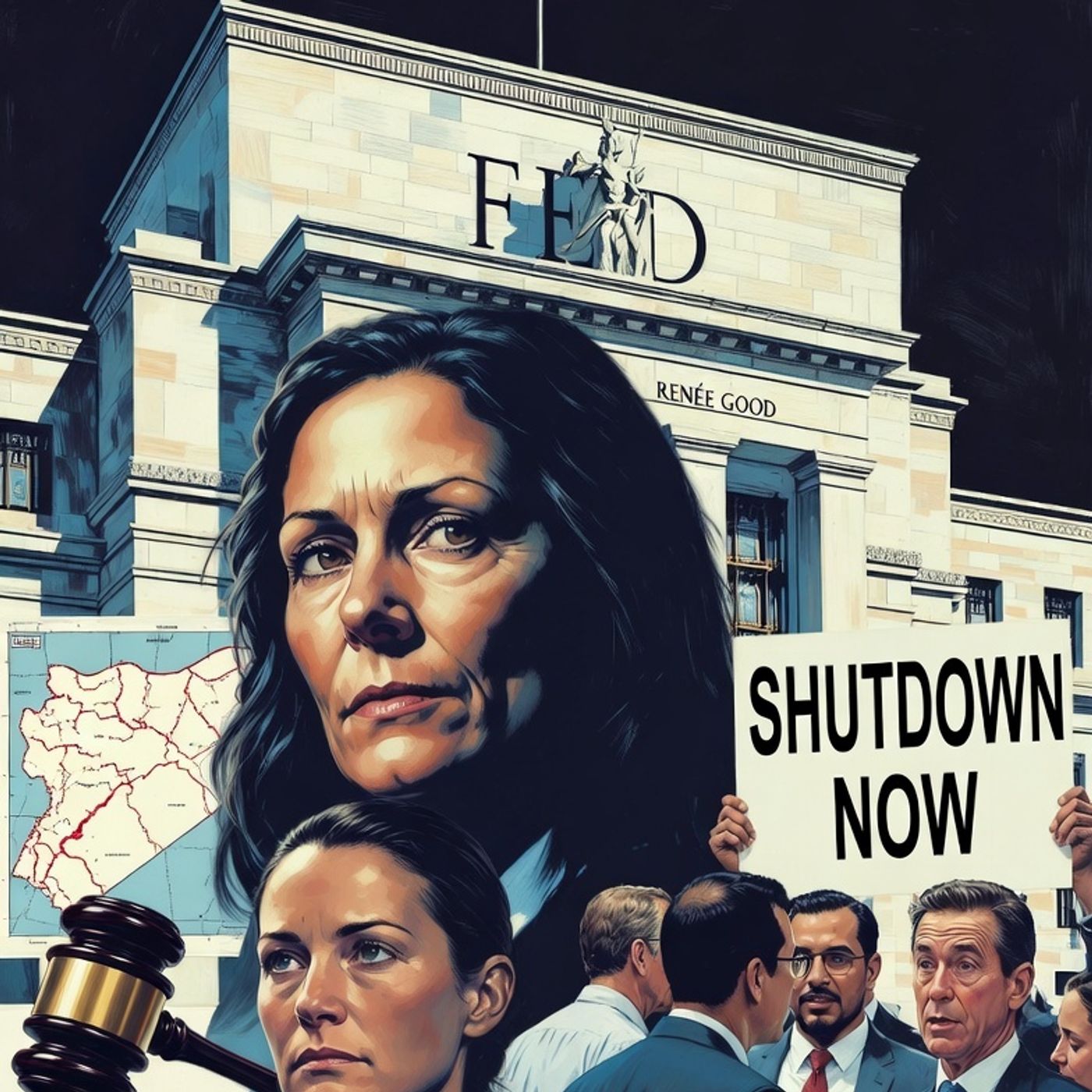
Welcome back to the blog, listeners! In our latest episode, we delved deep into a concept that has become all too familiar in the modern political landscape: governing by crisis. We specifically used the recurring spectacle of the government shutdown deadline as a case study to illustrate how this approach not only paralyzes effective policymaking but, more insidiously, chips away at the very foundation of public trust in our institutions. You can catch up on the full discussion, which also touches upon other critical issues like the Renée Good incident, Syria strikes, tariffs, and the economy, right here: The Trust Crisis: Renée Good, ICE, Syria Strikes, Shutdown Deadline, Tariffs, and the Economy.
What is Governing by Crisis?
At its core, governing by crisis describes a political strategy where decisions, legislation, and even fundamental governmental functions are pushed to the absolute precipice, often under the threat of dire consequences. Instead of proactive planning, reasoned debate, and incremental progress, the political actors involved create or allow crises to emerge, believing that the imminent danger will force opposing factions to capitulate and reach an agreement. It's a high-stakes game of brinkmanship, where the threat of a shutdown, a default, or some other catastrophic outcome becomes the primary negotiating tool. This methodology fundamentally alters the incentive structure of governance, transforming the deliberative process into a desperate scramble for survival, fueled by artificial deadlines and manufactured urgency.
This isn't about facing genuine, unforeseen emergencies that require swift and decisive action. Those are an inherent part of governance. Rather, governing by crisis is characterized by the *deliberate cultivation* of deadlines that are either self-imposed or exacerbated by political posturing. It’s the difference between responding to a natural disaster and deliberately setting a forest on fire to force people to evacuate their homes. The former is reactive and necessary; the latter is manipulative and destructive. This approach breeds a culture of expediency over efficacy, where short-term political victories, achieved under duress, are prioritized over the long-term health and stability of the nation. It fosters an environment where compromise is seen not as a virtue, but as a sign of weakness, and where obstructionism is a viable, even celebrated, tactic.
The Shutdown Deadline: A Recurring Case Study
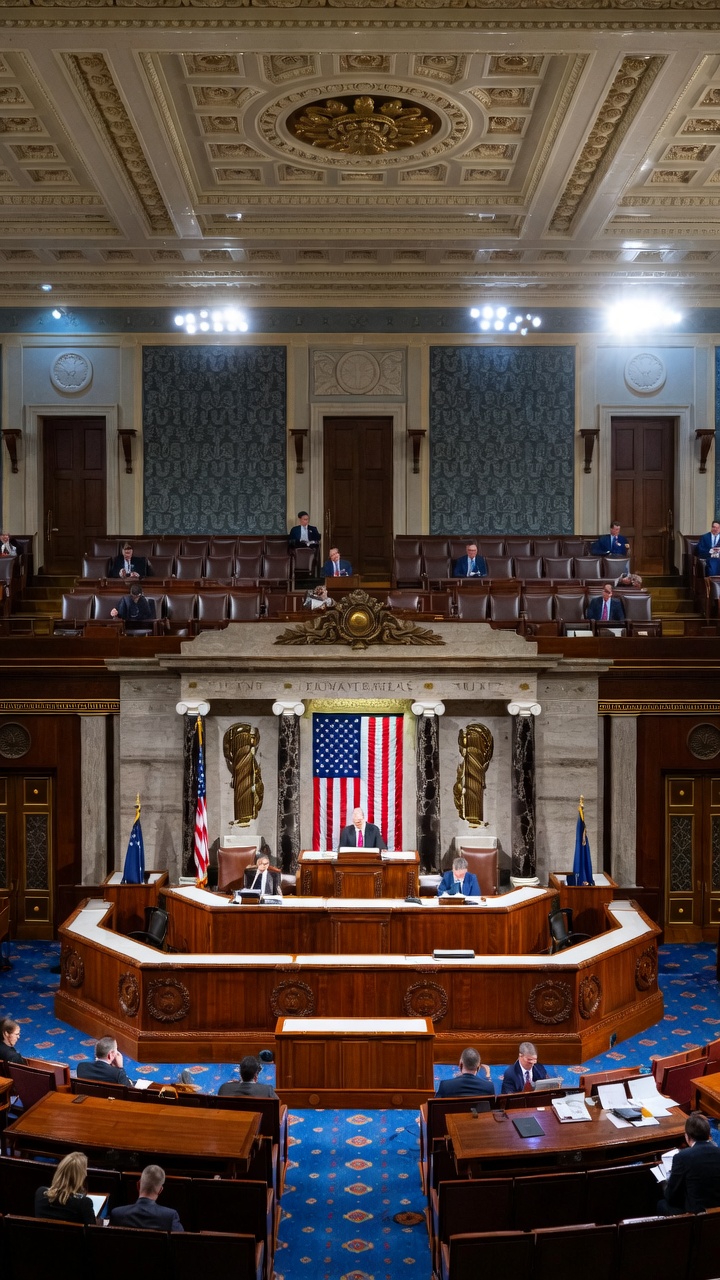
The United States government shutdown deadline is perhaps one of the most predictable and, paradoxically, most disruptive examples of governing by crisis. Every fiscal year, Congress is tasked with passing appropriations bills to fund government operations. When disagreements arise over spending levels, policy riders, or ideological priorities, the process often devolves into a last-minute scramble. Instead of engaging in good-faith negotiations throughout the year, political parties frequently dig in their heels, viewing the looming deadline as an opportunity to extract concessions from the other side. This creates a cycle of uncertainty and anxiety for millions of federal employees, contractors, and citizens who rely on government services.
The narrative surrounding these deadlines is almost always the same: intense negotiation, public pronouncements of unwavering resolve, dire warnings about the consequences of inaction, and then, often in the eleventh hour, a temporary patch or a last-minute deal that kicks the can down the road. This pattern repeats itself, sometimes with minor variations, becoming a predictable drama that plays out on the national stage. Each cycle of crisis governance, whether it's a brief hiccup or a prolonged shutdown, reinforces the idea that the system is inherently dysfunctional, and that meaningful progress is only achieved through extreme pressure and the threat of collapse. This creates a sense of inevitability around these conflicts, making it harder to imagine or implement alternative, more stable governance models.
The “continuing resolution” is a prime example of this. It's a short-term funding measure that allows the government to continue operating at previous levels when a full appropriations bill cannot be passed. While it prevents an immediate shutdown, it also signifies a failure to perform the basic function of budgeting. It's a temporary salve, not a cure, and it perpetuates the cycle of crisis by delaying the difficult conversations and compromises needed for sustainable funding and policy. The reliance on these stopgap measures becomes a habit, a crutch that prevents the government from functioning as intended. The urgency required to pass a continuing resolution is far less than what is needed to pass comprehensive legislation, thus incentivizing procrastination and brinkmanship.
How Crisis Governance Erodes Public Trust
The constant reliance on governing by crisis has a profound and corrosive effect on public trust. When citizens witness their elected officials repeatedly engaging in brinkmanship, threatening government shutdowns, and narrowly averting disasters, it fosters a perception of incompetence and irresponsibility. It suggests that the government is not a well-oiled machine capable of consistent and reliable operation, but rather a chaotic and unpredictable entity. This erosion of trust has several key facets:
Firstly, it breeds cynicism. When the public sees the same patterns of conflict and last-minute resolution replaying, they begin to believe that the entire process is a charade, designed more for political theater and posturing than for genuine public service. They may conclude that the disagreements are not about core principles but about power and partisan advantage. This cynicism can lead to disengagement from the political process, as citizens feel their participation or concern ultimately makes little difference to the outcome. They see the drama, but they don't see solutions that benefit them.
Secondly, it undermines the perceived legitimacy of governmental actions. If essential functions are constantly being held hostage or operating under duress, the public can start to question the authority and efficacy of the government itself. When the government’s ability to perform its most basic duties, like funding itself, is perpetually in question, it weakens the public's faith in its capacity to address larger, more complex challenges. This is particularly damaging when these crises directly impact citizens' lives, whether through furloughs, interrupted services, or economic uncertainty.
Thirdly, it creates an environment of fear and anxiety. The threat of a government shutdown, for instance, creates immediate anxiety for federal workers and their families. Beyond that, it can lead to market volatility, concerns about national security, and uncertainty about the delivery of essential services. This constant state of low-grade emergency is not conducive to a stable and trusting relationship between the governed and their government. People begin to associate government with disruption and instability, rather than with order and reliability.
Finally, the lack of transparency often associated with last-minute deals exacerbates this trust deficit. When agreements are hammered out in closed-door meetings under intense pressure, with little public input or debate, it fuels suspicion. Citizens may feel that important decisions are being made by a select few, without their knowledge or consent, and that the public interest is being sacrificed for partisan gain. This opacity breeds distrust and a sense of powerlessness.
Beyond the Shutdown: Other Examples of Trust Erosion
While the government shutdown deadline serves as a stark and recurring example, the phenomenon of governing by crisis and the resulting erosion of trust manifest in numerous other areas of American governance. These examples, as we explored in the episode, paint a broader picture of a system under strain:
Consider the use of executive orders and emergency powers. While these tools are designed for genuine emergencies, their repeated or perceived overuse, particularly when they bypass legislative processes that are stalled by political deadlock, can foster resentment and undermine faith in the democratic legislative branch. When one branch seems to consistently circumvent the others due to partisan gridlock, it can lead to accusations of overreach and a perception that the system is broken. This isn't about the merits of the executive order itself, but about the perception that it's being used as a shortcut to avoid the messy but necessary work of legislating and compromising.
Trade policy, for instance, has seen instances where tariffs are imposed under the guise of national security or economic emergency, creating uncertainty for businesses and consumers alike. These sudden policy shifts, often enacted with little warning or extensive public consultation, can leave industries scrambling to adapt and can lead to retaliatory measures that harm the broader economy. The feeling that critical economic decisions are being made impulsively or reactively, rather than as part of a carefully considered long-term strategy, can erode confidence in the government’s economic stewardship.
Even foreign policy decisions, such as military strikes or shifts in international alliances, can be influenced by the pressure of a looming crisis or a desire to project strength in a moment of perceived weakness. While the complexities of international relations are immense, a pattern of reactive, crisis-driven foreign policy can create instability abroad and sow doubt among the domestic population about the nation’s strategic direction and its ability to act with considered deliberation on the world stage. The need for decisive action in a crisis is one thing; a consistent pattern of governance driven by the *need to appear decisive* in every situation is another, and it can lead to more impulsive and less effective outcomes.
The very structure of our political system, with its checks and balances and separation of powers, is designed to prevent hasty decisions and encourage deliberation. However, when political incentives are aligned to exploit these structures for partisan gain, turning necessary delays into manufactured crises, the system itself can become the source of the problem. The public observes this, and their trust in the system's ability to function as intended begins to wane.
The Consequences of a Trust Deficit
The cumulative effect of governing by crisis and the resulting erosion of trust is not a minor inconvenience; it has significant and far-reaching consequences for the health and stability of a nation. When citizens lose faith in their government, the fabric of society begins to fray:
Firstly, it leads to political polarization and gridlock. If parties believe they can achieve their goals through brinkmanship and obstruction, rather than through compromise and consensus-building, it entrenches divisions and makes bipartisan cooperation increasingly difficult. Each side may see the other as an existential threat, making any concession seem like a betrayal of core principles. This can lead to a perpetual state of political warfare, where governing becomes secondary to the art of winning the next partisan battle.
Secondly, it undermines the rule of law and the enforcement of policies. When a significant portion of the population distrusts the institutions that create and enforce laws, compliance can become voluntary or even oppositional. This can manifest in various ways, from widespread tax evasion to a decline in respect for law enforcement and judicial rulings. If people believe the system is rigged or unfair, they are less likely to abide by its dictates.
Thirdly, it can have a negative impact on the economy. Uncertainty, whether stemming from political instability, unpredictable policy changes, or the threat of governmental dysfunction, can deter investment, slow down economic growth, and create financial volatility. Businesses and individuals are more likely to thrive in environments of predictability and stability, which crisis governance actively undermines.
Fourthly, it weakens national security and global standing. A government that appears divided, dysfunctional, or unreliable at home will struggle to project strength and stability abroad. Allies may hesitate to rely on a nation whose government is constantly teetering on the brink, and adversaries may be emboldened to exploit perceived weaknesses. This can diminish a nation's influence and its ability to navigate complex international challenges effectively.
Finally, and perhaps most critically, a deep trust deficit can lead to social unrest and a weakening of democratic norms. When people feel that their voices are not being heard, that the system is unresponsive, and that their leaders are acting in bad faith, they may seek alternative avenues for expressing their grievances, which can include protests, civil disobedience, and even more extreme forms of dissent. This is a dangerous trajectory for any democracy, as it erodes the shared understanding and mutual respect that are essential for peaceful coexistence and self-governance.
Pathways to Rebuilding Trust
Rebuilding trust in government is not an easy task, nor is it a quick one. It requires a fundamental shift in approach, a commitment to principles, and sustained effort from both elected officials and citizens. However, there are clear pathways that can lead towards this crucial objective:
First and foremost is a commitment to transparency and accountability. Government operations and decision-making processes must be made as open and accessible as possible. This means more public hearings, greater disclosure of information, and clear explanations for policy choices. When citizens understand how and why decisions are made, they are less likely to suspect malfeasance or incompetence. Holding officials accountable for their actions, through ethical oversight and adherence to established procedures, is also paramount. This means ensuring that there are real consequences for misconduct and that no one is above the law.
Secondly, there must be a return to proactive and deliberative governance. This means abandoning the "governing by crisis" model and embracing a more structured, long-term approach to policymaking. It involves fostering an environment where negotiation and compromise are valued, where disagreements are addressed through reasoned debate rather than ultimatums, and where the focus is on finding sustainable solutions rather than temporary fixes. This requires leaders to prioritize the public good over short-term partisan gains and to engage in continuous dialogue, even when agreement is not immediately forthcoming.
Thirdly, fostering a culture of truthfulness and factual accuracy is essential. In an era of rampant misinformation, government officials have a heightened responsibility to communicate truthfully and to base their policies on sound evidence and data. When the public perceives that government is being forthright and honest, even when delivering difficult news, it strengthens the foundation of trust. This also means being willing to admit mistakes and to correct them openly.
Fourthly, encouraging civic engagement and dialogue across political divides can help rebuild trust. When citizens are empowered to participate in the political process, to voice their concerns, and to engage in respectful dialogue with those who hold different views, it can foster a greater sense of shared ownership and investment in the system. This can involve supporting grassroots organizations, promoting media literacy, and creating platforms for civil discourse.
Finally, elected officials must demonstrate integrity, character, and a genuine commitment to public service. Trust is built on the character of those who hold power. When leaders consistently act with honesty, humility, and a focus on the well-being of all citizens, they can begin to restore faith in the institutions they represent. This means leading by example, adhering to ethical standards, and consistently putting the needs of the country above personal or partisan ambitions.
In conclusion, the recurring spectacle of the government shutdown deadline is more than just a political annoyance; it's a potent symbol of a broader trend towards governing by crisis that is steadily eroding public trust. As we discussed on the podcast, this pattern of behavior fosters cynicism, undermines legitimacy, and creates an atmosphere of fear and uncertainty. The consequences are profound, leading to polarization, weakened rule of law, economic instability, and diminished national security. Rebuilding trust is a monumental challenge, but it is an essential one. It requires a deliberate shift towards transparency, accountability, proactive governance, and a steadfast commitment to truth and integrity. Only then can we begin to mend the fractured relationship between the government and the governed.

The Economy's Squeeze: Price Sensitivity and Trust in Economic Stability