Ep 198 : From a Copperbelt mining town, & Tonga Heritage to Assorted Immigrant Podcast ft Zenith Malawo

Join Raphael and Zenith as they explore immigrant life from Zambia’s Copperbelt to the US, diving into culture shocks, childhood sports, Tonga naming traditions, practical tips on leveraging local resources (like libraries), the NFL, Super Bowl, and the legacy of family and cows in Zambian Tonga culture. Discover Assorted Immigrant Stories Podcast and learn about the power of community, everyday wisdom, and keeping heritage alive across continents.


This week, we're thrilled to welcome Zenith Malawo, host of the Assorted Immigrant Stories Podcast. Zenith takes us on a lively journey through Zambia's Copperbelt mining towns, where her story unfolds. Discover the meaning behind her name, her family legacy, and Tonga's heritage. Dive into childhood memories of wild games, community sports, and the close-knit mining town camaraderie. Zenith also shares the cultural significance of cows in Tonga tradition and the importance of capturing everyday immigrant experiences.
Zenith offers valuable insights for parents raising multicultural kids, shares lessons from her own mistakes, and emphasizes the importance of keeping traditions alive, from language to music. Whether you're looking for inspiration, nostalgia, or practical advice, this episode is a delightful mix of laughter, memories, and heartfelt conversations about living between worlds.
Don't miss out—tune into the Assorted Immigrant Stories Podcast and don't forget to leave a 5-star rating!
We love to hear from you via audio or written https://www.whitelabelamerican.com/contact/
Zenith Malawo [00:00:00]:
You consider like Catholic is under Christianity, right?
Raphael Harry [00:00:03]:
Yeah. Okay. In America, it's considered separate. So, oh really?
Zenith Malawo [00:00:07]:
I didn't realize that.
Raphael Harry [00:00:08]:
Yeah. You never notice it that on forms, Catholic is marked separate from Christians. That was one of my first culture shocks here in America. I was in the military and I noticed, I was like, why are you marking Catholics separate from Christian.
Zenith Malawo [00:00:30]:
I never paid attention.
Raphael Harry [00:00:34]:
Ah, yeah, it's— I'm going to look. I was like, oh wow, what's the meaning of this? This, this confusing to me.
Zenith Malawo [00:00:43]:
Yeah, I mean, that's confusing.
Raphael Harry [00:00:45]:
Hey everybody, Raphael Harry here. You're listening to White Label American. On this show, we dive into unique and diverse origin stories from immigrants and allies. Join us weekly as we break barriers, connect the past with the present, and peek into the future. Welcome to another episode of White Label American. Thank you all for joining us. Ah man, right after we had Bad Bunny Benito, as we call him in this house. He's a good friend of mine, though we've never met, but we're good friends.
Raphael Harry [00:01:32]:
So staying with our Puerto Rican family, but we're gonna dive away from Puerto Rico to, you know, Southern Africa. But we are one people, you know, we all love to eat plantains and coquitos and other things that we don't know the name of, but it's the same thing we eat. But I'm honored and happy to have a good friend who's one of the nicest people that I've had the pleasure of meeting in life. She's a good friend of the podcast, um, she's a great podcast listener. I don't think I've met anybody who listens to podcasts more than this person that we have on the show today. She's, uh, Let me not mess up her intros. She's a mom, she's a nurse, she's a storyteller, sports enthusiast. Yes, also that.
Raphael Harry [00:02:29]:
And she's also a HBCU alum. She's the host of The Assorted Immigrant Stories. I was about to say the— there's more to the title, but she will allow to do the intro because my throat started messing up now and I might butcher that title. But there's a lot more to this wonderful woman, and I will allow her to take over the intro. So welcome to the show, Zenith Malau. How you doing today, my sister?
Zenith Malawo [00:02:58]:
I'm doing all right. And let me tell you, we really enjoyed that Bugs Bunny performance. I mean, last night my son was like, Mommy, can we play it again? We watched it like maybe 3 or 4 times. Like, you've got to go to bed, it's past bedtime.
Raphael Harry [00:03:14]:
Well, what I did for my, for my kid was, um, you know, I'll, um, you know, the, the, after the Oh, because the game was, the game was boring. The game was boring. I don't remember anything that happened in the game because I don't know, there was no Mahomes, there's no, uh, Jalen Hurts. I don't know, it's just a boring game. I, I was, I forgot about the whole Super Bowl itself. The most entertaining thing was Bad Bunny showing up, and I was like, oh, finally something entertaining happened today. Even the commercials were boring.
Zenith Malawo [00:03:49]:
You think so?
Raphael Harry [00:03:50]:
Oh, the commercials were boring. I can't remember. I think because a lot of it was just AI, AI, AI.
Zenith Malawo [00:03:56]:
Well, that is true.
Raphael Harry [00:03:57]:
I was like, that is true. This is— yeah, so I don't know, this year was boring. The movies I was waiting for, they are not releasing trailers yet, so I don't know. It was just—
Zenith Malawo [00:04:08]:
it was a hard watch.
Raphael Harry [00:04:09]:
It was— well, it was rough. It was rough. But before— you're a bigger NFL fan than I am, so Well, for me, a Super Bowl is Mahomes. No matter how bad you are, good you play, Mahomes shows up and wins. That's my rule for Super Bowl. You know, I mean, Mahomes guy. So that's how it works with me. But yeah, I know you don't like to hear Mahomes because he is—
Zenith Malawo [00:04:34]:
No, absolutely not. But before I get into all this football thing, thank you for having me. This is such an honor. I mean, we've tried to make this work for a very long time, so I am so happy to be here. Now, getting back to football, you know I'm a Lamar Jackson fan. You know I was going there. Let me tell you what it used to be like before, back in the day, before we had Lamar Jackson. We had— oh my God, I've even forgotten his name, but it was anybody but, uh, um, the white—
Raphael Harry [00:05:07]:
that white dude was the quarterback. Uh, um, I'm blanking on his name.
Zenith Malawo [00:05:14]:
I can't remember. I can't believe I'm blanking as well. Joe Flacco.
Raphael Harry [00:05:19]:
Yeah.
Zenith Malawo [00:05:20]:
So, you know, Joe Flacco days, when it was Super Bowl time, for us it was anybody but the Patriots. Okay, we don't want that Tom Brady winning. So anybody who went up against Tom Brady, we were rooting for. So it's the same, we feel the same way about Patrick Mahomes. So anybody but Patrick Mahomes. So anybody Patrick Mahomes is playing for in the finals. So last year we were celebrating because last year we thought we would make it there. We did not.
Zenith Malawo [00:05:50]:
Patrick Mahomes was there, and oh my God, they got clubbed, but we were like, oh yeah, yeah, yeah, I, I know that feeling.
Raphael Harry [00:05:57]:
However, I just gotta give a secret that will stay with only listeners of this podcast. Anybody who approaches me outside of the podcast, I'll deny this, all right? So all that time, people were against the Patriots, you know, except for my first Super Bowl in America. That was the only time that I was anti-Patriots because I was like, okay, Giants, although that was it, Giants always have terrible quarterbacks.
Zenith Malawo [00:06:27]:
That was with Manning, right?
Raphael Harry [00:06:32]:
Uh, one of the Manning brothers. Yeah, that boy shouldn't have won quarterback. As soon as I got to know quarterbacks, I was like, man, he trash, he's trash. But don't tell, don't tell my New Yorkers here. However, when I got to know who Tom Brady was as a quarterback, I was like, man, he's the GOAT. He's good. I supported him. But the only reason why I started supporting Tom Brady was because of his wife, more of his wife.
Zenith Malawo [00:06:52]:
No kidding. So I'll tell you, for me, it was— I watched an Oprah special, and he was a guest. And he was towards the end of his career. And I think listening to his whole story, you know, he wasn't like a first-round pick or like a top pick. He wasn't. He was like— Maybe 1-0 for some large number like that.
Raphael Harry [00:07:16]:
Oh, really?
Zenith Malawo [00:07:17]:
Yes. That's Tom Brady's story. And for me, it was how hard he had to push himself to be like a great quarterback. He wasn't a natural athlete. He wasn't. So it's when I listened to that story, I was like, wow, I love the story. And, you know, things like that really gripped me. And from then on, I was— it's kind of like a Roger Federer.
Zenith Malawo [00:07:40]:
I was like, okay, you know what? I might love somebody else, but I will root for you. So in his final year, well, you remember he retired and then came back, or maybe he hadn't retired yet. He went to the Buccaneers in—
Raphael Harry [00:07:53]:
yeah, he never truly retired, and then he went to Buccaneers. But that's when I admitted that, yeah, he confirmed. Correct.
Zenith Malawo [00:08:01]:
Me too. Then I was like, no problem, I'm gonna root for you. And it was around, it was around the time Serena was also like retiring. So okay, I'm rooting anybody in this age group, okay? Because you guys are great, and at this age you're still performing this way. Yes, I'm rooting for you all the way.
Raphael Harry [00:08:22]:
However, final thing I'll say about NFL is my rule is simple. I see a Black quarterback, yeah, you got my attention, you know. So Mahomes, is he from a problematic family? Yes. I mean, it's NFL, but NFL, they are problematic, to be honest. So I'm not looking for, I'm not looking for my best friend in the NFL. I understand NFL, I know them. However, Mahomes, he got it, he got it. And that boy, yeah, I put my money on Mahomes.
Raphael Harry [00:08:53]:
So as soon as he got injured, I knew this season was over for me. I was like, oh man, it's over, it's over. Somebody, you got it, it's your chance. Jalen Hurts, I trust that guy, but I don't know what's happening to Eagles. Eagles fans always been nice to me. There was a girl who had one of my first crushes in America was an Eagles fan. They almost tied me down then. I could have— I was ready to become an Eagles fan in 2 minutes.
Raphael Harry [00:09:19]:
It never worked out. So I was like, okay, no team can tie me. But the only team that can't get me is the Cowboys.
Zenith Malawo [00:09:25]:
Okay.
Raphael Harry [00:09:26]:
As soon as— I don't know how, but I just got into that bandwagon of anytime they lose, I just love seeing them lose.
Zenith Malawo [00:09:34]:
Oh my God.
Raphael Harry [00:09:39]:
Ah man, as soon as I found out about that, oh, my first Master Chief, I showed up to work, Master Chief, what was this? You guys played last night?
Zenith Malawo [00:09:48]:
What happened?
Raphael Harry [00:09:49]:
What was the score? I forgot to watch the game.
Zenith Malawo [00:09:51]:
Hey man, don't you have work to do?
Raphael Harry [00:09:54]:
Hey, hey, somebody get this guy a broom to go sweep. I'd be like, oh Master Chief, come on, man. You know, you know, I'm the supervisor, dog. You need to go sweep something. Get him, get him something to sweep. You Cowboy fans, you're not nice to people. That's my first trolling in America.
Zenith Malawo [00:10:13]:
Right, right, right.
Raphael Harry [00:10:15]:
Yeah, yep, Cowboy fans. But, uh, yeah, yeah, it's a good love relationship there.
Zenith Malawo [00:10:21]:
For us, it's the Steelers. Baltimore and the Steelers, we have a love-hate relationship.
Raphael Harry [00:10:26]:
Oh yeah, so technically I'm, uh, you know, the Commanders was supposed to be my first team, you know, being in the DMV because you lived here. Yeah, but, you know, I support Commanders, Giants, Eagles, whoever pay me to just pay me. I'm available. That's it.
Zenith Malawo [00:10:46]:
I'm with you.
Raphael Harry [00:10:47]:
Yeah, pay me. That's it. So with that being said, can you introduce the audience to your podcast and why you picked the names that you went with for your podcast? So yeah, let them know what your podcast is about.
Zenith Malawo [00:11:02]:
Okay, so my podcast is Assorted Immigrant Stories Podcast. And that's not the name I wanted. Actually, I wanted something else, but every time I picked a name, it was taken. I had like maybe 5 names— Landing America. I mean, every last one of them was taken. And then one day I just said, I'm like, what am I going to name this podcast? And, you know, growing up, we used to have these cookies called Baker's Cookies, and one of the Uh, so it was like Lemon Light, or it would be Marie. And one of the— what, what do I call it? One of the packets was called assorted, like assorted cookies. It was assorted, but a baker's assorted cookies, like Danish cookies.
Zenith Malawo [00:11:49]:
Yes, they're called baker's Danish. Did you say Danish? Yeah, we have one that is similar, and I think it's called Tennis. No, no, it's Tennis and Eat Some More. Eat Some More is closer to the Danish cookies, but they're very similar. But they're South African, and the brand or the company name is Baker's, and they make different flavors. So there's like Lemon Cream, there's Marie, there's Tennis, which is like coconut, there's Eat Some More, which is kind of like shortbread. They have ginger. Okay, so then they have like ginger, they have different flavors, and then in the assorted packet it's got all of them.
Zenith Malawo [00:12:26]:
So it might have like 2 of this, 2 strawberry, to tennis, to everything. And I thought to myself, well, the idea is to share different immigrant lived experiences so that we can teach lessons to people who are still coming behind us. And I know we've heard the big stories of the $0 to become a billionaire, and that's not the focus. I'm just talking about everyday things like where to register for something. What you can get from a local library, when to register for something— those small, small details that somehow can impact your life. Because my own life was impacted by not knowing small details like that. And because people were constantly asking questions of what to do, what should they do next, and I thought, you know what, let me start sharing this in some form so that this information can just be out there, or as a resource someone can listen to it and just be like, oh, okay, listen to this, so maybe let me try this, or maybe let me go and apply for this here and things like that. Yeah.
Raphael Harry [00:13:31]:
Yeah, that is— we always underestimate the little details because that's what ends up killing us the most. We always have eyes on the big picture. It's always the bigger stories. It always takes me back to the unofficial biography of Tom Cruise. That was like the first time— that I realized that people in the movie industry, it's like the 1% that we always have our eyes on, the actors that made it or are making it. And the rest of them are people with 9-to-5 jobs who are in the industry, who, you know, are in it because they love the trade. And I have like one of my neighbors, he's an actor. But if I tell you his name, you wouldn't know him.
Raphael Harry [00:14:26]:
But he's been in very tiny roles. But he's a working guy, always, you know, taking his— appearing like in a whole show, but he would just appear in one scene. And it was when I read that book, but I read it from a point of, you know, because it was like, what, almost 15 years ago. And I read it, I was to laugh at Tom Cruise. I think that was the point of, you know, because it was the anti-Scientology thing. Oh, at the time, okay. It was kind of like exposing him on that because it was an unofficial, uh, biography. It wasn't with him writing about it or giving his input.
Raphael Harry [00:15:03]:
The guy who wrote about it. So, but I don't even remember all the Scientology stuff. What I remember is the beginning of him working as a, uh, um, a waiter before he had his big break. And that was when I was like, oh, Tom Cruise washed dishes? Because since I knew him, I always knew him as a big star, right? And then you start realizing that, wait, there's a small detail. And, you know, and but that always stayed with me. And then later on, I'll find out that Idris Elba was also a small— was, you know, also struggled and all these people. And with time, you start noticing that there's a whole lot of little steps that we skip over and we just go straight to the big, you made it. Right.
Raphael Harry [00:15:51]:
And then like, oh. So that's why it's always important to see people doing the work that you're doing, work I'm doing, and what we, you know, like there's a guy who I said no to over 3 years ago, wanted to come on the podcast and he pitched to me his story. And I mean, immigrant who came from one of the Caribbean countries and, you know, I came to America, with $1, that kind of thing. Now I own like 5 companies. I'm a multimillionaire. I said, that's good. But this is what I do, you know. Who are you? What are you? Your origin? You know, I want to talk to you.
Raphael Harry [00:16:29]:
I want to know the person, not about selling your companies. It's great. I'm happy for your success, by the way. I'm not against your success. And he never wrote back to me after that. So it was clear that we didn't— we are not a vibe for each other. Right. There are many people who, you know, they don't want to hear that.
Raphael Harry [00:16:51]:
And but there are people who at the same time resonate with— they appreciate hearing those little details. You know, when I was talking to somebody who's like a cousin to me and I was telling him about libraries, how libraries work in New York City, how we have different systems for each borough. But they literally do the same thing, but they operate on independent systems. And how I never took libraries for— I took them for granted until I moved to New York City. And then I saw the power of libraries, how huge they were, and how if we had something like this, it's not something that's under the federal government. It's on the city's municipal thing. And he was listening. He was like, it was like I was speaking something foreign.
Raphael Harry [00:17:43]:
He was like, no, no, no, no, no, we can't have this in Nigeria because we won't maintain it. I said, who's the we? And I was telling him how, you know, when it comes, like, you can go vote there. And I was explaining and he was like, no, this don't make sense. And I was like, this helps people like an entrepreneur. You know, there's so many resources. Like you start your own company. You don't have to go rent an office space. And he was like, what? What do you mean I don't have to go have an office space? I'm like, you can have all that money from day one.
Raphael Harry [00:18:15]:
You can. That's why you have to go steal. That's why you have to go be begging somebody. You have to go be at the mercy of some big man. But these are all resources that are available to you. So if you don't have everything, your library is there. You can go being there. You can't speak.
Raphael Harry [00:18:33]:
The language. Your library has resources for you. And he's like, what? You mean all this? I said, yeah, it's your library. This is part of the— and he was like, oh no, no, no, we can't have this in Nigeria because, you know, it, it, it— no, it's just too much. And I was like, ah man, this is— ah, we got to keep having conversations.
Zenith Malawo [00:18:53]:
So yeah, we have to, we have to. I actually did an episode on how not to sleep on libraries because to your point. There's so many things in there. It's not just books. For instance, I learned last year that I could have been taking my son from when he was a baby at the library because they have programs for babies, they have programs for toddlers, they have book clubs, they have days with music, they have all kinds of things. And then it's free internet. If you want to be a content creator, perhaps you're an international student, you can walk over to the public library. You don't have to pay use the computer, do whatever you need to do, your homework.
Zenith Malawo [00:19:31]:
There's so many other things. And I was listening to a podcast, actually it was this morning, and the lady was saying when she was in the UK, there were people encouraging African parents that, look, you pay a lot of taxes, and the taxes you pay to when you're working hard are going to these free facilities such as libraries. Take your children there. Take yourself there, use these facilities. Because they're finding that you're moving somewhere for a better life, but better life is just equating to money. But it's not just money, it's all these other experiences, you know, walking into museums, libraries, and utilizing these spaces.
Raphael Harry [00:20:11]:
So, oh yeah, that was actually going to be an example I was going to bring up about, you know, um The first concert I ever took my kids to was at the library. We have something because of this snowstorm, they postponed it. But every first Saturday of the month, we are at the Brooklyn Museum. It's a party. It's kind of like a party, but it's just open to the public. But you just have to register to get tickets. And there's DJs. It's open to families, everybody.
Raphael Harry [00:20:46]:
It's like 3 floors and each floor has a separate DJ playing, but it's a nice thing, you know. But I was like, man, when I was single and I was like, where I go find women? I go to the nightclub. I don't like nightclubs. There's women there, there's men there, everything. But these are things that, you know, you just be, oh, where do I go? I can't go anywhere. Whether you're looking for love, you're looking for resource, everything you're looking for, the city has provided it. And I'm there like, man, there were so many resources that I was denying myself because of the word free. You like, oh, I have to go and spend money before you find— like, there's so many, but it's just around me.
Raphael Harry [00:21:26]:
It was around me and I was denying myself under the, you know, just because I was like, oh, if I spend— if I don't spend money, I cannot enjoy it.
Zenith Malawo [00:21:36]:
Why?
Raphael Harry [00:21:37]:
Who told me that? Because I came from Africa.
Zenith Malawo [00:21:41]:
Yeah.
Raphael Harry [00:21:42]:
So I stereotyped myself into to deny myself the right to— I was like, oh man. So yeah, so I have to let others know. People I know don't listen to my podcast. And, you know, some of my friends, when they're complaining, I'm like, you know what you're looking for is right here. It's, you know, whether it's jobs, whether it's whatever resources, it's right here. And they'll be like, what? You mean the city doesn't help? The city actually, your government helps you. You're lucky you're in this type of place. Even in some places that they have that are so-called backward in America, they still provide the resources there because there are people who work there making sure these are provided to you.
Raphael Harry [00:22:26]:
But if you don't utilize it, then the funding starts being cut off. So I let them know and they're like, oh, oh, yeah. So that's why it's important. And I'm happy that you're doing the work that you're doing, because I suffered from not knowing, and I can admit it now. And that's why we are— I'm doing my best to make sure my kids doesn't grow up in that. You know, I can't give— she can't know everything, and it's not right. She's not meant to know everything, but she will have her own experiences in life.
Zenith Malawo [00:23:01]:
Correct.
Raphael Harry [00:23:03]:
You know, I go with her to the library and I'm seeing other kids there and they are not limited to, you know, there's this illusion that only poor people go to libraries, people from a certain demographic. I've heard the way some people talk, and— but I'm— the neighborhood I live in is— back in the days, yes, it was considered quote-unquote poor, but gentrification, it's— I mean, the houses here, I can't afford to buy houses, but luckily we got ours a few years ago at the right time. You go to library now, I know the children I'm seeing there, you know, you, you hear the language and you're like, oh, okay. And you're seeing the resources there, and I'm like, wow, I'm the one denying myself. I choose not to utilize this, but I'm happy to see kids in there. I've seen babies, so I'm seeing the parents bringing their babies, and so I'm happy my kid goes there, and you know, and she's like she's lucky she likes to read, but if she's not reading, there's games, there's, there's other stuff, there's other resources available. And then if I take her to the much bigger library, there's even vinyl, she can go play music, and there's other, there's instruments. And if you want to do content creating, there's also stuff.
Raphael Harry [00:24:23]:
But if you need meeting rooms, and I'm like, they thought about that and put that in a library. So that's, that's why I'm so impressed. And there are other resources, not just limited, but I'm just using library as— Right, right.
Zenith Malawo [00:24:39]:
It's just an example. But yes, so many other things.
Raphael Harry [00:24:43]:
Conversation. So, you know, when I see small business, like my school, it's not a public school, the university I attended, but I was at the small business. That's like New York City has a small business office.. And when I went to the meeting, because I haven't decided yet, but I'm just like, let me go see what's out there. And they had a small business support meeting in December for small business entrepreneurs. And I saw lots of, the city has like 5 different offices, the universities provided their support systems. And you don't have to be a graduate from the university to go and ask for help from them. They have legal teams available.
Raphael Harry [00:25:28]:
My university was one of them. I was like, oh, I'm a graduate. So why don't you come here if you need help? We'll help you draft paperwork and all that. I said, oh, I'm busy at home being like, man, what paperwork do I draft? How do I fill the taxes? Why do you have to carry out the load on yourself? You paid money to go to the school. They'll help you. Right. There's so many things that we We don't— it's not the '90s, not the '80s anymore. You don't have to carry the burden by yourself.
Raphael Harry [00:25:58]:
So it's beautiful if we can't be an island unto ourselves anymore. Yes, we have wild people in the government at the federal level, even some state levels, municipal levels. But there are people like us putting the information out there that, yeah, we see what we've discovered. We made mistakes and we want you to learn from our mistakes. That's right. We are not those of us who say we are perfect.
Zenith Malawo [00:26:26]:
You're not selling perfection.
Raphael Harry [00:26:29]:
No. Yeah.
Zenith Malawo [00:26:30]:
So just selling where to go and, you know, might help someone.
Raphael Harry [00:26:34]:
But I'm really proud of you because I remember when you started and, you know, you've been doing amazing work and you continue to grow. And if you haven't listened to Zeni's podcast. Please go out there and listen to it and give her 5 stars and support her because she's doing amazing work. But we're not going to— we'll spend a lot of time on football and podcast. We haven't gone to the original, the origins of Zenith Malawi, and we know that that name is not originally from, um, where you're based. I haven't said where you're based, by the way. So let's go to where you were born and where you are, you know, where you originated from. So let's start at the very origins.
Raphael Harry [00:27:21]:
So where was Zenith born in?
Zenith Malawo [00:27:24]:
Okay, so I was born in Luanshya back in 1981 at Luanshya Mine Hospital. Luanshya is a mining town on the Copperbelt in Zambia, which, like you mentioned, is located in the southern part of Africa.
Raphael Harry [00:27:38]:
Luanshya.
Zenith Malawo [00:27:40]:
Mm-hmm.
Raphael Harry [00:27:41]:
That's the first, that's the first on this podcast. Luanda. Now I don't think I heard Luanda before. You know, Luanda, uh, Luanda. No, yeah, Luanda. Wait, why am I blanking? Is this cold weather? You know, this snowstorm really messed up my, my, my brain because everything is just like took everything I've been remembering and put it in one side. So slowly I've been collecting it back. But wait, let me see.
Raphael Harry [00:28:08]:
Zambia's capital is— it's not Luanda, right?
Zenith Malawo [00:28:13]:
No, you're in Angola.
Raphael Harry [00:28:14]:
You're all the way— Angola. Yeah, that's across the border. Wait, why am I messing that up? I should remember.
Zenith Malawo [00:28:23]:
Lusaka.
Raphael Harry [00:28:23]:
Yeah, yeah, Lusaka. Yeah, yeah. See, I used to pass all the— that test in Nigeria. They used to test us with the capital of all the African countries. No, it's— but when I should take the test, Eritrea hadn't been— I hadn't gained independence. Okay, okay. Yeah, but I still— I should be able to pass on those two. I can't remember Eritrea and South— I know South Sudan, I don't know Eritrea, but right now I can't remember.
Raphael Harry [00:28:50]:
But I'm still good, I'm still good, I still got it. I knew it was an L. So how far is Lusaka from, uh, Lushisha, right?
Zenith Malawo [00:29:01]:
Luanshya. So from— oh my gosh. So when I was about 8 or 9 years old, we moved from Luanshya to Chilawumbwe, which was further out from Lusaka. So I can give you an approximation of how long it is from Chilawumbwe to Lusaka, because if I start saying how long it is from Luanshya, like, I was a kid, I really don't remember. So I want to say from Chilawumbwe to Lusaka, depending on the roads and the traffic you know, you get some bad patches, it can take you somewhere between 6 and 8 hours to get to Lusaka.
Raphael Harry [00:29:36]:
Wow.
Zenith Malawo [00:29:37]:
Okay. Yeah. Chilabongwe.
Raphael Harry [00:29:41]:
Chilabongwe. Chilabongwe. See, I always love Zambian names. That's why you guys got the best nickname for your national team.
Zenith Malawo [00:29:49]:
Chipolo Polo. Chipolo Polo. Yes. And Chilabongwe literally means croaking frog.
Raphael Harry [00:29:56]:
Wow, you see, it's a— Zambian names.
Zenith Malawo [00:29:58]:
And, and at night you will hear the croaking frogs because it's a very wet mine. It's one of the wettest mines in the world, and there's a lot of frogs. So at night you actually hear them croaking.
Raphael Harry [00:30:09]:
So you were always around mines as a kid? Yes.
Zenith Malawo [00:30:15]:
So the Copperbelt basically is where my— the copper was discovered, and a lot of copper deposits along the area, which is why it's called the Copper Belt. And this is composed of about 7 mining towns, and maybe there are other smaller ones in between now that have come in. But so the main one was Luansha, because I think Luansha was one of the first places where copper was discovered. This was back in the early '90s. So it was Luansha, Ndola— well, Ndola was more of the headquarters of the Copper Belt. But the mining towns were like one—
Raphael Harry [00:30:49]:
that's why they have that big stadium, right, right, right, right.
Zenith Malawo [00:30:54]:
So it was like Luanshanda, Kitwe, Mufuleira, Kalulushi, Chingola, and Chilawumbwe. All these are mining towns. So this is where the minerals were. So towns were mapped out in these areas where people were working. And so yes, I grew up around the mining towns, and my dad was a mining engineer actually. It's the reason my parents migrated. So My parents are originally from the southern province. So my parents are Tonga Bay tribe, moved to the Copperbelt because that was where people were looking to for economics, right, to better themselves economically.
Zenith Malawo [00:31:29]:
And because the mines had been booming and jobs were being offered, and post-independence, the mines could even send you to school, which is how my dad went to university through the programs that the mines were developing for the local people. And so that's how they found themselves on the Copperbelt. And that's why I was born there.
Raphael Harry [00:31:49]:
Wow. So you're a child of the copper, or we call you a child of—
Zenith Malawo [00:31:55]:
Right.
Raphael Harry [00:31:56]:
Yes.
Zenith Malawo [00:31:56]:
So you know the name Copper Bullets for our team? Yeah. When you're from the Copperbelt, people say, wa ko pala.
Raphael Harry [00:32:07]:
Wa ko pala. So I am a ko pala. Ko pala. Wow. You got to put on a t-shirt. Got to put on a t-shirt. Maybe I'll get one t-shirt too. Zambian game today.
Raphael Harry [00:32:21]:
Yeah, okay, okay. You see, yeah, I was— I know the first time I heard, uh, Chipolopolo, that was, um, '93 into '94. Okay, man. Yeah, that just stayed in my brain forever. I was imprint.
Zenith Malawo [00:32:35]:
Pow!
Raphael Harry [00:32:36]:
Great. Yep, yep. If it wasn't Nigeria, Zambia faced in the final of '94.
Zenith Malawo [00:32:42]:
Ah, we'll never forget Daramba.
Raphael Harry [00:32:44]:
Yeah, that was just, uh, I was just like, ah man, this, this, this nickname was too cool. This thing was way too cool. Yeah, right, right. Yeah, I love this nickname, you know. I know, it's a cool name. What, what, uh, uh, so your, your tribe is, uh Tonga? Like, is this like T-O-N-G-A?
Zenith Malawo [00:33:07]:
Yes, T-O-N-G-A. Oh, is my native.
Raphael Harry [00:33:12]:
How do you say hello? Hey, that one, that one passed me. I thought something just— that's— I think I'll stick to If I was in the studio, Josh would have been laughing at me right now. Oh man, that was a long— you would have a short hello. That's a long hello.
Zenith Malawo [00:33:45]:
Well, you know, I can speak other tribes too because I grew up on the Copperbelt. I'm very fluent in Bemba as well, so maybe that might be easier. In Bemba, you say mulishani.
Raphael Harry [00:33:54]:
Mulishani. Okay, yeah, that's easy, much easier. Yeah, maybe I'm more Bemba then. So Tonga, Tonga, it's— is that more inland or is that coastal?
Zenith Malawo [00:34:06]:
The way, you know, you guys are— Zambia is a landlocked country, right? So we are surrounded by like 8 different countries. So we don't have coastal areas, but it's more on the southern part of the country, you know, you know, as you're going towards Zimbabwe, that's where it is in the south.
Raphael Harry [00:34:23]:
Oh, okay. Yeah, so you guys go back to, uh, so much— is that close, like Northern Zimbabwe, or—
Zenith Malawo [00:34:33]:
yes, that would be Northern Zimbabwe. Okay, Northern Zimbabwe, because we're right on top of Zimbabwe. Wow. You can walk, I think, in Livingstone, well, because that's the border town, so literally you can walk.
Raphael Harry [00:34:48]:
Um, oh, so the Livingstone But that's the falls, right? The waterfall.
Zenith Malawo [00:34:53]:
Oh yeah. So where the falls is, the town is called Livingston. The city is called Livingston too. Oh, right.
Raphael Harry [00:35:05]:
So wait, so but Livingston is in Zambia?
Zenith Malawo [00:35:08]:
Yes, Livingston is in Zambia and it's a border town. It borders with Zimbabwe.
Raphael Harry [00:35:13]:
The waterfalls too?
Zenith Malawo [00:35:15]:
Actually, you know, yes, we actually share the waterfalls. You know, you can see it from Zimbabwe. It is in Zambia. You can see it from Zimbabwe, which is why we fight over it.
Raphael Harry [00:35:24]:
Oh my goodness.
Zenith Malawo [00:35:25]:
But you know what, coming to think of borders, now that you say this, I think there's a place which is called the Four Points. When I took my son to Zambia back in 2023, before it had— it had to be that you got on a pontoon to cross over from Botswana into Zambia. So there's a point at which Zambia Botswana and Namibia. There was a point in which they met and you took a pontoon and went across into Zambia, but now they've built a bridge and it's like a 4-section bridge. So it's like Zambia, Zimbabwe, Botswana, Namibia. So you have like a 4-point location. Oh wow, for those 4 countries. So we crossed over from Livingstone into Botswana but we could see the road that would take you to Zimbabwe.
Zenith Malawo [00:36:15]:
And then we were on the river, and on the river— Chobe River— one side was Botswana and the other side was Namibia.
Raphael Harry [00:36:23]:
That sounds like a beautiful view right there.
Zenith Malawo [00:36:26]:
Oh, it was wonderful.
Raphael Harry [00:36:28]:
Okay, so with that being said, what at this moment would you consider your favorite childhood memory to be? Oh, I mean, because you can't just give me all that beautiful stuff and put in my head and I'm like, well, we got to give you something tough too.
Zenith Malawo [00:36:49]:
Okay, you know, I was a very sporty kid, and I think what, what I love more than anything was being outside with friends playing a game called stats. And I don't know why we called it that name. So it was a game where you had two teams. It didn't matter how many people you were, you just divide and you divided the people equally into teams. So one team was on the outside, there were one, there were like you had a couple people on one end and a few people on the other end, and then the other team was in the middle. And the goal was to try and hit the people in the middle with the ball. And we made ourselves a ball. The ball was made out of like sacks and plastic.
Zenith Malawo [00:37:33]:
I mean, this was like a very strong ball and we caught it. I used to love that game because I would jump, you know, every time you jumped you got like 5 points. If you caught it, you got 10 points, you know, things like that. But the idea is to hit you with the ball without you jumping over it and catching over it. Oh, I could play that all day, all day.
Raphael Harry [00:37:53]:
I'm trying to— I'm thinking if we had something— well, it's, it's, it sounds like, uh, dodgeball in a way.
Zenith Malawo [00:37:59]:
It sounds like dodge Dodge. Yes, it's similar to dodge.
Raphael Harry [00:38:05]:
I don't think I ever played something like that as a kid. It was fun.
Zenith Malawo [00:38:12]:
Yeah, and we made it creative. So sometimes what we used to do, you could have buckets of water and empty bottles, and the idea is that while somebody is throwing, you have to— you have to fill up maybe like 10 bottles of water while dodging the ball. It was a kind of thing like your mother is coming to pull you, like it's dinner time, like, yeah, can we go home?
Raphael Harry [00:38:48]:
Yeah, that's, uh, yeah, that's— so did you do this trick that, uh, I remember doing this once or twice. Well, I would just say once or twice for the record. Where it was the moment I saw my person coming from the house, because I was always the youngest in my house, and when I made eye contact and it's like, oh, I was just about to head home, I was just leaving for the house right now, I was just heading home right now. Did you see it was already dark? Didn't you see the nighttime? Yeah, but it's already 7 PM, you were supposed to be home 6 o'clock. Oh, 6 o'clock, it's 7. I was just leaving, I was I said I scored the last goal. And you know, you say I scored the last goal and then I will head home. And when you say last goal to— I scored the last one, I'll head home.
Raphael Harry [00:39:40]:
And then that last goal becomes, no, no, the last goal and I'll head home. And then that last— everybody starts fighting over, no, no, I scored the last goal. No, I will score the last goal. And then before you know, somebody grabs your ear, I said, didn't I tell you to come home at 6 o'clock? Oh, it's not 6 o'clock. Yeah, I said I'll come at 6 o'clock. It's already 7. Oh, 7? Oh no, no, I was just coming home right now, right now. I was going to leave, right? So why in the middle of the field? Uh, no, no, I was good.
Raphael Harry [00:40:11]:
I was going to grab my shoe. I was about to grab my sandals and, um, you just got a knock on the head. Come on, run to the house.
Zenith Malawo [00:40:22]:
Yeah, yeah, it was fun. It was fun. I mean, I was so dirty by the end of the day. I mean, we did play many other games that I can't even begin to mention. It's just that one really stands out. But yeah, we played many other games and it was just the whole idea of being outside until the late hours. So the holidays were always something to look forward to because you knew that, oh, now we're going to be playing. Oh yeah.
Raphael Harry [00:40:48]:
Yeah. Oh man. So, um, stick— sticking with, uh, staying with your origins, what, um, are the meaning of your names, and is there a story behind how you came to have your name?
Zenith Malawo [00:41:08]:
You know, I think I've heard a couple of versions about my name, and I wish today is something I could ask my parents so that they could just tell me. And I did find my name circled in a book in my dad's library. My dad used to have a library in the house, and you know, one of those— he was a big reader. And I found it circled. I was like, oh, okay. I wondered if it was just an aha moment for him when he was reading this book and he decided this was going to be the name. I don't know. But the version one of my uncles had told me was that my dad was sort of the last to get married, you know, amongst his siblings.
Zenith Malawo [00:41:45]:
Everybody had been married. He was very studious, like a very serious guy type thing. Even when he went to UNZA, my uncle jokes, man, you'd go there trying to bother him and he'll give you money so quick because he wants to study. And so he had gotten up in his age and they caught it at the very highest point of hope. He married and he had me and I was named Zenith because Zenith means the highest point.
Raphael Harry [00:42:15]:
Yeah, you know, our people, you know, they're gonna roast you. They roast you all the way.
Zenith Malawo [00:42:28]:
So I don't know, I really wish that's a question I'd ask my dad today, but he was a big reader and like I said, I found it circled in the book. Maybe he just got fascinated with the meaning. It means the apex, the highest point. And, you know, he was like, okay, this is it. And Malaw, I don't know. And I'm Zenith Hamamba Mwanga Malaw. And Mwanga means like to tie, you know, tied. Hamamba, I tried to ask my uncle what it means, but he couldn't give me like a clear explanation.
Zenith Malawo [00:43:02]:
So I don't know what Hamamba and Malaw means. So, but that's something I plan to explore the next time I go home.
Raphael Harry [00:43:10]:
Okay. Oh, so there's a possibility that— because I've met people whose names all have meanings, uh, they go in tandem. So if you take them separately, it doesn't make sense what it means, right? But together, combined, and it may make sense. Great. So, all right, so yours might fall into that category then.
Zenith Malawo [00:43:41]:
All right.
Raphael Harry [00:43:42]:
Yeah, yeah. So it could be also be a Tonga way of naming.
Zenith Malawo [00:43:48]:
It's possible because I know there are a lot of Tonga names I know that when I hear the name and I know what it means, but for some reason those I don't because we have very specific names for specific situations. So if I hear a name like I know what they mean. I know what those names mean. I know exactly what they mean. You know why? Unless maybe they were named after somebody. Usually they are named— for example, means rainy season. So somebody who was born in the rainy season would be named Mainza. For it, for example, somebody who stayed more than 9 months will be called Ah, yeah.
Zenith Malawo [00:44:31]:
And if you, uh-huh, if you, if you follow two sexes, let's say it's two boys and then a girl, you'd be called Mutinta, and vice versa. Oh yes. If, if let's say maybe your mom lost a baby and then you were born, you'd be called Jello. So it's like that, it goes like that.
Raphael Harry [00:44:51]:
Ah, you see, you see that with ours, it's There's a version of something like that in my— I don't know if it's my people. I've interacted with some with a version of naming like that, but I don't think I can remember at this moment if it's my people or one of the sub-ethnic groups amongst my people, or— Evis, you just— you triggered something within me that I know I've interacted with. Either probably my region, it could be my people, but there's also the aspect of Christianity making a lot of us go with, you know, what we consider English names, right? So that's where names like Miracle— somebody named Miracle, because it's like, oh, the mother has lost a couple of babies, you know, miscarriages, and it's like, Miracle! Now this, this child is called Miracle. You know, that's why you got it. Like, yeah, yeah, but you have a traditional name. Miracle is my name. What do you mean traditional name? Oh man, that's a— I get it. But mom has to explain it.
Raphael Harry [00:46:04]:
I was like, oh, okay. Yeah, but yeah, I mean, what's your traditional name?
Zenith Malawo [00:46:10]:
Miracle.
Raphael Harry [00:46:10]:
I don't know if that's why it's popping up in my head right now. I think I have a cousin with No, that's not what I was thinking. That's not what I wanted to come in my mind, but yeah, so I can't control these things.
Zenith Malawo [00:46:32]:
Yeah, like my son's name is Jipego. That is one of his names. That means gift from God.
Raphael Harry [00:46:39]:
Okay. Yeah, you know what's interesting? If I didn't know you and I just heard that name without— I could have said Portuguese. I could probably just say Portuguese because, you know, we were, uh, you know, we also have huge Portuguese influence.
Zenith Malawo [00:47:01]:
So, okay. Oh, okay. In Nigeria, huh?
Raphael Harry [00:47:04]:
Not, not, not all of us, but like my, my people specifically.
Zenith Malawo [00:47:09]:
Okay, because you're what tribe?
Raphael Harry [00:47:11]:
You told me before you I'm an Ijo.
Zenith Malawo [00:47:15]:
Ijo.
Raphael Harry [00:47:15]:
Okay, so, you know, Portuguese first met us. Okay, coastal people. So that's why we converted to, you know, Catholicism.
Zenith Malawo [00:47:27]:
Well, Christianity.
Raphael Harry [00:47:27]:
But we, you know, in Nigeria, we don't consider Catholicism and Christianity is too separate like it's the way it is here in America. So it's the same thing. So, but if you say that again, We don't consider Catholicism and Christianity separate.
Zenith Malawo [00:47:43]:
Okay.
Raphael Harry [00:47:43]:
Yeah.
Zenith Malawo [00:47:44]:
We consider like Catholic is under Christianity, right?
Raphael Harry [00:47:47]:
Yeah. Okay. In America, it's considered separate. So, oh really?
Zenith Malawo [00:47:51]:
I didn't realize that.
Raphael Harry [00:47:53]:
Yeah. You never notice it that on forms is Catholic. Catholic is marked separate from Christians. That was one of my first culture shocks here in America. I was in the military and I noticed I was like, why are you marking Catholics separate from Christians?
Zenith Malawo [00:48:15]:
I never paid attention.
Raphael Harry [00:48:22]:
Yeah, it's— I was like, oh wow, what's the meaning of this? This is confusing to me.
Zenith Malawo [00:48:28]:
I mean, that's confusing. What are we doing here?
Raphael Harry [00:48:31]:
So I always make that distinction. I try to explain, hey, you know, we don't— it's the same thing to us, you know.
Zenith Malawo [00:48:40]:
So under the same umbrella.
Raphael Harry [00:48:42]:
Yes, under the same umbrella. But I started with the Portuguese. But if thanks to pronunciations, you know, names like George, you know, which would have been— there are certain things we should have been calling Bohe. But we can't say ho-hey, so we just call it George. It's not too long ago I found out that, oh, that we're supposed to be calling it ho-hey, thanks to the Portuguese. But yeah, yeah, I was like, hey, none of us gonna figure that out. That's something. I found out that, oh, it was called Portuguese because I always wonder why do we have this stuff and we call it George.
Raphael Harry [00:49:21]:
So I was like, but we never met— English didn't come here. It Portuguese. So how do we have George? And then it started making sense, you know, when that explanation was given to me that it's Jorge. But who gonna be pronouncing Jorge? Like, I have a good friend who— it's another cousin of mine, but we're good friends who became cousins, you know. You know those friend cousins that you have? So his name is, uh, you know, everybody called him Joe. He's in my region, you know, but we became good friends and from friends became cousins. So it was one day we had to fill out a form. We're in the same place, had to fill out form, and then I saw his name and I was like, you spell your name as Jose? He said, yeah, that's my name.
Raphael Harry [00:50:08]:
I said, that's your real name? He said, yeah. Wow. But everybody call you Joe. He said, bro, who gonna be calling— who gonna be in our area who's gonna be saying Jose? I said, it's because you and I know football, that's why you can say Jose. I said, oh, that's true. Yeah, his dad named him Jose because of, uh, there's a long story of his dad having a Portuguese friend. But who in school, who was going to be Jose, man? What's your— what is the easy name to call you? Joe. Okay, Joe.
Raphael Harry [00:50:36]:
His dad said Joseph. The guy grew up being called at home, everybody knew him as Jose. Outside of his house, Joe. So the whole neighborhood, Joe, Joe. And Oh, when you come, when you see his real name, it's spelled Jose. So when you come to my region, you're going to see names like that, but you see Da Silva, but the one is that we can say Da Silva, but when you— okay, but you find Portuguese influences. Yeah, but who gonna pronounce that? We can't.
Zenith Malawo [00:51:07]:
Wow.
Raphael Harry [00:51:08]:
Yeah, so I mean, people can learn, but yeah, yeah, well, we got, we got it real. We got our own version of, uh, you know, like the, the one you pronounce that was like, yeah, I'm not gonna try that. Yeah, like my elder sister's name, Perkibina.
Zenith Malawo [00:51:23]:
I mean, even us, it's easy for you.
Raphael Harry [00:51:27]:
Okay, yeah, then we have, uh, my name is Oindemfa.
Zenith Malawo [00:51:34]:
Oindemfa.
Raphael Harry [00:51:34]:
Okay, then we have Tuba Daimfa, we have, uh, there's names that I won't— there's the upper grade levels You know, uh, and then there's middle— mine is mid-level, you know, it's easy. Okay, just as it sounds. And then there's some—
Zenith Malawo [00:51:53]:
you know what, even my grandfather, my mom's dad, his name was Jelly. But now sometimes I sit and say, I wonder if he wasn't Jerry and then he became Jelly, you know. I think his name was Jerry. I think his name was Jerry and he became Jelly.
Raphael Harry [00:52:22]:
Jelly Jonga.
Zenith Malawo [00:52:22]:
Like, uh-uh, his name was Jerry.
Raphael Harry [00:52:24]:
I'm sure of it. It's like, uh, my last name is officially Ari.
Zenith Malawo [00:52:34]:
Ari. Okay, then now it's Harry.
Raphael Harry [00:52:36]:
Yeah, that's how you say it, Ari. Because there's Hari, but the Haris are in, you know, from my same ethnic, my same tribe. But Hari clan is next state. So if you meet an Ijaw in America and you say, you know, a Hari, they're gonna be telling you, oh, those guys from River State, not Bayelsa where I'm from. That's who they're directing you to. But if you say, no, no, he's from Bayasa, they're gonna be like, huh? Right. They don't know Harry's. But.
Raphael Harry [00:53:08]:
But the story goes back to the Guy who, I don't know, I think was my great, great grandfather who was in school and somebody couldn't pronounce this. Somebody kept saying, what's your name again?
Zenith Malawo [00:53:19]:
Harry. Harry. Harry. There you go.
Raphael Harry [00:53:27]:
It's stuck. So I have uncles who go by Ari and Harry. So yeah, by the time I arrived, the division had been— it's like Game of Thrones. There's two factions. So I was like, yeah, but there are some who are like, man, change it. I'm like, change what? You guys waited for me to be an adult to tell me that. Yeah, I could have been three letters instead of five.
Zenith Malawo [00:53:53]:
I know, too late.
Raphael Harry [00:53:55]:
You should have done that when I was a kid. Now when I'm an adult, now it has stuck with me. So no, so it's always funny to me when I meet the Ari. I'm like, well, war don't end, as we say. So, you know, so you're a big lover of sports. What do you remember to be your very first sports memory?
Zenith Malawo [00:54:25]:
Oh, I don't know why this is what comes to me. Running on the field, like doing 100 meters training. And I remember her name to my right. Her name was Progie. I don't know why I remember her. We were classmates, but that's what I remember. Like race day, what we called sports day, and we had interhouse competitions. Oh, we had red, blue, green, and yellow.
Zenith Malawo [00:54:51]:
Yes. You know how purple— no, in fact, both primary, secondary school, and both my primary schools, we had the same colors: red, green, blue, and yellow. Those were our colors.
Raphael Harry [00:55:04]:
I think we had 5: red, green, blue, yellow. I think we have purple.
Zenith Malawo [00:55:09]:
No, ours was just those 4. So that's what I remember. But there were— there are other key moments that do stand out to me. When I was in grade 4, I was already on reserve for the netball team. And usually that happened when you're in grade maybe 5 or 6, but in 4th grade already, because I was very athletic as a kid. So I was on reserve for both the swimming team and the netball team, where the older kids were the ones in the main team. So obviously once I got to those grades, I was like the lead in those teams. Yeah, but it takes me back to Luanshya.
Zenith Malawo [00:55:47]:
Um, when I, you know, like I said, Luanshya was a mining town, and the mines— Zambia Consolidated Copper Mines at the time— did a very good job at giving structure to the town. So they had great structures with the schools, sports facilities. There is nothing we did not have. You had sports competitions both both at school and out of school. So you could take part in what we call ZECM competitions, or just with the trust schools, because every mining town had a trust school. So we used to compete with the other trust schools, like would have friendlies and then would even have finals. And the way the school curriculum was structured was in such a way that everything was built into the system. There wasn't anything like the way it is here, like you have to sign up for soccer, you have to sign up for this.
Zenith Malawo [00:56:39]:
We had classes from morning until lunchtime, and then afternoon is what we called afternoon activities. And this is when you did all the artsy stuff and the sports, and they were divided in such a way that every kid took part in every sport. So term 1, for example, was netball and football, and then term 2 was track and field. And table tennis. Term 3 was swimming and volleyball. So I took part in all of that.
Raphael Harry [00:57:06]:
Wow, I like that. Yeah. So do they still do that?
Zenith Malawo [00:57:10]:
So I don't know what it's like today because I was just thinking about it the other day when I was recording my season finale. I was like, I wonder if it's like that today because, you know, the mines got privatized. Then you had different companies by the different towns out. So it's not like it used to be where it was like one umbrella company for the whole Copperbelt. So I, I don't think it's what it used to be, because even the ZCCM games that they used to sponsor died once the mines got privatized, because that was an opportunity for the people who were not going to the trust school per se to still take part in a sport. So you might have been going to a local government school, but you took part in a sport. And something I remember now, this was like maybe a negative experience. So my dad used to have this wooden racket in the house.
Zenith Malawo [00:58:01]:
It was an old slazenger racket. And I remember the tennis people came to recruit us. I was fourth grade, I was about 10 years old, and I was like, oh, I want to play tennis. But my dad was like, I'm not buying you a new racket. I was like, no, but the people want, you know, coming with smaller rackets. He's like, you can just take the, you know, the wooden. My dad was like tough guy, like you can make it regardless of what you have. So I walked to the tennis courts with my Schlesinger racket, big wooden racket.
Zenith Malawo [00:58:31]:
I can't imagine how small I looked now when I think about it. But let me tell you, the kids laughed at me when I got there. The racket was so big and heavy, the kids laughed at me, and I never went back to the tennis court. And I say all this to say, because I love tennis so much, I tried to pick it up in 11th grade, but I was already older by then. Like, I just couldn't. But it's a game. When I watch it, I almost feel myself running in it, you know, like, like I'm in it. But yeah, so the sports program were great.
Zenith Malawo [00:59:06]:
I feel like every kid took part and it was in the end, I think when you went to those schools, you were a well-rounded student.
Raphael Harry [00:59:17]:
Yeah, I like hearing about programs like this because I didn't have— I wasn't exposed to a program like that during my time in Nigeria. However, we still had— by the time I finished secondary school, we still had Governor's Cup. It was beginning to die off. I think it was towards the end after my graduation. 1999. I think that was— yeah, I don't think Governor's Cup lasted probably into early 2000s. That was the end. And but it's one thing I like reminding people that, you know, people always try to act like, you know, we need to bring brand new solutions all the time.
Raphael Harry [01:00:09]:
Yes, there's stuff we need brand new solutions for. However, a lot of stuff we've done, it's just to bring stuff that we've already done in the past and just do a better job of managing, you know, and, you know, implementation. Because the examples you gave of the copper companies before they got privatized, it reminds me of, you know, I'm not a big fan of this person, but I get why people love him. But before Dangote came to our place, the team that should have— that technically was my team, Eagle Cement, you know, like the biggest cement company. And it's not Dangote that is responsible for the failure of the company. I'm not putting the blame on him. However, he represents monopoly. That is what I'm against.
Raphael Harry [01:01:06]:
It's kind of like Bezos, Zuckerberg, and all that. So that's the point I'm trying to make here. Eagle Cement, I still remember, um, they were one of the big clubs in Port Harcourt. They had their own football team, and then they had their cement company. And my aunt, who didn't have— she didn't go to university. But she was able to rise up to managerial levels, had her own official car, but she didn't even know how to drive. So by the time I finished secondary school, I would go drive the car because I figured out how to drive and I would drive her around. But it's the fact that she was able to have a union job, rise up and earn a decent living wage through that company, you could see that they were taking care of their people.
Raphael Harry [01:02:00]:
Now, were other people embezzling funds? Yes, and messed up stuff. But there was stuff that could have been done to save that company, and he just seemed like the solution was sell it to the monopolist, and then it destroyed everything. All that to say, that shouldn't lead to Governor's Cup being destroyed, because we had this Governor's Cup where each state had a program in place where all the counties within the state, the schools played each other, private, public. And yeah, we're obsessed with football. This was back before academies started popping up. So how did Ikanu, who led to Nigerians being obsessed with Premier League, come out? He didn't come out from an academy. It was playing in a tournament like that. Then he gets picked for Under-17.
Raphael Harry [01:02:55]:
But that's how schools were playing each other. If you have something like this, you have games, you have sports teachers, you know, but you can do that for every sport. You can employ people, you know, it's something that you add to your economy. But it's like we only think of it from, oh, football is— we won gold at '96, so only football gets everything. Oh, we won gold at boxing, so only boxing gets it. So it's like, why only one size fits solution. And that's where people always can't seem to get with me. Like, um, no, you can have well-rounded programs.
Raphael Harry [01:03:32]:
I watch— I have Egyptian TV on and I'm seeing how they have all the sports available in their country. I'm like, why can't you do it? Why can't you just make it available and let your people pick and you get the best solution? And you see in the Olympics Moroccans winning different sports in the Olympics. That's how you get the talent. And you don't just say, oh, academy, pick only one footballer, pick— and then you end up with a Nigerian team where there's no central midfielder, and then you have to go look who's born in England, oh, who want to play for Nigeria, and then it's like, why? So the solution, you've had it in the past, and then you're like, well, we don't need this anymore, we run away, go find something brand new. I'm like, there's this saying that what you're looking for in Sokoto is in your Sokoto. What you're looking for far away, it's right in front of you. So that's why I always love hearing from other people that it's always worked. It's always been there.
Raphael Harry [01:04:32]:
And then we go act like, oh no, no, no, no, no, go, go get some, go pay some consultant. And then you charge them 5 million, they charge you 5 million. Oh, And they tell you the exact same thing. Oh yeah, yeah, yeah, I like— I prefer that. I've told you for free. And then like, nah, we're not gonna do that.
Zenith Malawo [01:04:54]:
So yeah, so those structures were really in place. A lot of things died with the dissolution of, uh, ZACM because they also had something you might not think as important. They had, like, my mom, for example, who went as far 10th grade. But when she moved to the Copperbelt, they used to train women like her. So you trained, you, you know, how, like, what do you call it, kindergarten, how to teach kids kindergarten, knit, cooking, and all like the domestic kind of stuff. And they called it community development. They called them community development officers. So my mom was like a community development officer.
Zenith Malawo [01:05:32]:
So then once they got to a certain stage, they would then train other women in the community on those similar skills like that. So, but because it's all these little, little things, right? So kids are playing sports, kids are in the afternoon being part of something, you're having swimming galas, competitions. Yeah, people are becoming professional. And now there's a gap. Those things are not there. So what are people expected to do? Or what do you think the young people are going to do? So then you have the, the— a lot of youth crying, there's nothing to do, there are no jobs. And that's what, that's what happens, right?
Raphael Harry [01:06:13]:
We have gambling apps now, so you can go gamble, see, and then you're gonna become rich. You're gonna become rich. You can become rich right now. Make it. You make— I'm like, golly, every, every, every other country I check, I'm like, gambling app. I'm like, what? Oh my goodness, man. But we're gonna start wrapping up because we're gonna do a part 2 and part 3.
Zenith Malawo [01:06:39]:
It's okay. So we have to— because we have to talk about my creative journey, how I actually landed to the podcasting, because— oh yeah, what I wanted to do was YouTube.
Raphael Harry [01:06:50]:
But you know, let's wrap up because I Oh yeah, yeah, well, we can't give everybody everything today, but before, before we get to, you know, the, the final question, what, uh, you know, I mean, I have two questions I'm going to ask, so let's see. Okay, yes, so let's say I arrive in, uh, I'm gonna mess up the town again. No, yeah, okay, well, I'm going to Tonga territory, then put— make it easy. Okay, Livingston. I'm going to Livingston.
Zenith Malawo [01:07:35]:
Livingston, yes. Monze is much more Tonga than Livingston. I think Livingston is a little bit kind of Lozi, but Lozi is another tribe. Tribe, language, ethnic group.
Raphael Harry [01:07:51]:
Yeah. So which one is the Tonga town then?
Zenith Malawo [01:07:55]:
Well, it can be Monze, Choma, Mazabuka.
Raphael Harry [01:07:59]:
Oh, Choma. Well, I used to have a crush on Choma, so Choma. I can't remember Choma then. Okay, so let's say I go to Choma. What are 3 snacks that you recommend I have. First timer in Tchoma.
Zenith Malawo [01:08:18]:
Hmm. Snacks. And does this— well, can you call a drink a snack?
Raphael Harry [01:08:25]:
Well, I leave everything to you. I'm in your hands. So if I, if I take a drink and I wake up in Namibia tomorrow, I'll hold you responsible. So everybody listening, you know who to go after, you know, because if I— if you see me on Instagram or on YouTube with a video like, I don't know where I am. I took this drink.
Zenith Malawo [01:08:47]:
Okay. No, because I feel like in Zambia, the snacks have become the same everywhere. So I feel like this— what we call snacks are not very region-specific is what I want to say. So I might take a snack, but it's a snack you can find anywhere.
Raphael Harry [01:09:05]:
Well, this was your opportunity to have claimed the snack. That's why I'm not going to tell you what to do. but I'm just saying if it were.
Zenith Malawo [01:09:13]:
Okay, okay, okay, okay.
Raphael Harry [01:09:19]:
Lusala. Lusala. Yeah. Why y' all got the names? That's everything. I'm just. My name is. I'm thinking. I remember that one.
Raphael Harry [01:09:29]:
I can remember that one.
Zenith Malawo [01:09:33]:
It's a snack, but you can also eat it, like as a relish with meal. But you can just fry it and eat it as a snack.
Raphael Harry [01:09:40]:
So is that— is that— it's a root.
Zenith Malawo [01:09:43]:
Spicy? It's a root? No, it's, it's a root. Oh, I don't know what I can equate it to, but it's like a root and you can just sauté it, you know.
Raphael Harry [01:09:55]:
Okay.
Zenith Malawo [01:09:55]:
With salt. And but you can also do the whole tomato, onion, and eat it with fufu as well.
Raphael Harry [01:10:01]:
Ah, hey, this is serious. We're getting into serious territory. All right. What's the next one?
Zenith Malawo [01:10:08]:
Okay, Lusala. And then I will say, well, since you're in Troma, not far from Mazabuka, let's say, well, sugarcane.
Raphael Harry [01:10:20]:
Sugarcane. Oh, that's like cheating, but I will take it. I'll take it. Sugarcane. My teeth. It's been long since I bit into sugarcane. I don't know if my teeth can still handle that. They will have to cut it for me.
Raphael Harry [01:10:31]:
I'm just saying. I'm a pampered baby now. Once I cross 40, I became, uh, easy life now. I need sugar mommy now. I can't do that hard life. You can't do that, huh? Nah, I can't do that anymore because back in the days I would just, yeah, I'll bite it myself. Ow, ow, ow. Now I need to do chewing stick for 6 months straight before I go and bite sugarcane.
Zenith Malawo [01:10:59]:
Okay, now this one is a drink.
Raphael Harry [01:11:02]:
Okay. Oh, okay.
Zenith Malawo [01:11:03]:
But very specific. Well, yeah, specific to the Tonga people. Jibwantu.
Raphael Harry [01:11:11]:
Jibwantu. Now I feel like I speed the way he was shouting.
Zenith Malawo [01:11:16]:
This boy, you okay?
Raphael Harry [01:11:22]:
You want— if I drink this drink, I'll still stay in Choma? I'll wake up in Choma, not the one I'm gonna wake up?
Zenith Malawo [01:11:29]:
You'll be fit, strong and fit.
Raphael Harry [01:11:33]:
Oh, it's the one I drink now, I'll go and say elephant, come, let's go and wrestle elephants. Yes. Okay, maybe, maybe, all right, send me some. If somebody is listening in Zambia, send me 2 bottles so that I have some people I need to go and fight in my village. So send me, send me 2 bottles, please. I've got my best friend. Yes, wait, say the drink name again so that I remember. Jibuantu.
Raphael Harry [01:12:00]:
Jibuantu. Hey, the name is so strong. I already feel strong just saying the name 3 times.
Zenith Malawo [01:12:06]:
I feel strong.
Raphael Harry [01:12:06]:
I don't need to lift weights today anymore. I don't think I need to lift weights for the rest of the week. I'm good. No, you should have told me about this drink a long time ago. I don't think I don't need to go to to the gym anymore.
Zenith Malawo [01:12:18]:
I'm good.
Raphael Harry [01:12:19]:
I own a gym. Yes, this is, this is it. This is it. All right, so next question. We need— I don't think I've heard Tonga music before, so give me 3 artists that can keep me dancing from Tonga. Tonga music, keep me going, you know.
Zenith Malawo [01:12:42]:
You got me on that one. You really did. And it's so funny, we were just listening to Zambian music sometime last week. I can tell you a song, I can't even tell you who sung it, and the Zambians are gonna kill me for this. I have lost touch with Zambian music completely.
Raphael Harry [01:12:57]:
Oh, but listen, listen, 3 chickens. I know, sacrifice.
Zenith Malawo [01:13:04]:
There's a song and it's called Mapopwe. Mapopwe means corn, maize. And because we as Tongans, we're known to be great farmers, and so every rainy season we grow corn. I mean, everybody does it across the country, it's just that that's our—
Raphael Harry [01:13:22]:
this is your time, so you are claiming it.
Zenith Malawo [01:13:26]:
It's, it's you, you guys are number one farming. Yes, like, um, yeah, cattle ranching and growing corn. So yeah, there's a song, it's called Mapopwe. I don't think the guy who sang it is Tonga per se, but it is—
Raphael Harry [01:13:40]:
right now, yes.
Zenith Malawo [01:13:42]:
And there was another song because I was laughing when I was listening to it. I was like, oh, it's a Tonga song, and I can't recall it, but I'll send it to you.
Raphael Harry [01:13:51]:
Okay, so since you couldn't give me the names of the artists, we will save you with this. You have to answer 0.5 questions. It will sneak in 0.5. In there. So since you mentioned cattle, if I were to go to Tonga right now and some, some, some lovely person came up to me and say, ah, I, I like you, and I say, okay, me too, I like you too, you know, let's just pretend like I'm single, you know, I'm available, and I said, okay, so let me make you my missus, would they say, uh, you have to, you know, you know, yes, bring 5 cows? Yes, you have to bring cows. Okay, I'm coming right back. Let me just go to the airport and bring my— the cows at the airport. I'll be right back.
Raphael Harry [01:14:40]:
Yeah, it's those cows with big horns.
Zenith Malawo [01:14:41]:
Bring your 100 cows.
Raphael Harry [01:14:45]:
Okay, okay. Yeah, they should have to— you should have told me before. I don't think we would have recorded this episode. You could have told me. Ah, I didn't know. I would have chosen another tribe.
Zenith Malawo [01:14:55]:
Different.
Raphael Harry [01:14:56]:
I don't know, it's this, it changes the whole, the whole— okay, Tonga, no, keep the music, we are good, we are good. Just give me the drink, I'll still take the drink, but you still take this one. I love my people, I love—
Zenith Malawo [01:15:18]:
you know, and let me tell you the thing about the cow That's actually like my mom's legacy. So my mom died when I was about 12 years old, and what I didn't know is that she'd left some cows. But as I've gotten older, my aunties and uncles have been taking care of them, and they tell us, oh yeah, your mom left you some cows. And you know, we just check up on them. And over the years—
Raphael Harry [01:15:40]:
so you have cow all this time?
Zenith Malawo [01:15:43]:
You tell me.
Raphael Harry [01:15:43]:
Hey, you know what, let's change. Okay, well, anxiety is single. You know what? I like— I can do two wives too, by the way. I understand animal husbandry. I got a degree in animal husbandry. I know how to take care of cows. I don't eat cow meat a lot.
Zenith Malawo [01:16:05]:
But you know how to take care of them?
Raphael Harry [01:16:13]:
Oh man. We definitely have cows. We're going to talk cows a lot in the second episode.
Zenith Malawo [01:16:23]:
Okay, not a problem.
Raphael Harry [01:16:26]:
All right. So final question. What would you like to leave the audience with? It could be, you know, anything from maybe cows, wisdom, or, you know, from something from your favorites. Tonga music, or, you know, I don't know. But, um, if it's— I don't know, we could do cow poetry. I don't know.
Zenith Malawo [01:16:54]:
But what I will say is that there's a lot more to share, and please come back for part 2 and part 3. And listen to my podcast, Assorted Immigrant Stories. Even though I am going on a break, I will still maintain a social media presence, but you can binge the old episodes. I just finished a 10-episode miniseries full of lessons. Like Raphael said, we already made the mistakes. You don't need to do the same thing. You can avoid some of those mistakes, and it's just as simple as registering for something, saving you money, you know, going to community college versus university if you don't have the money. Decisions like that.
Zenith Malawo [01:17:38]:
So yeah, listen and take a two cents from there and see what your life can pan out. And obviously for people back home, you know what, one of the things I told myself is I will start intentionally listening to Zambian music because my son is now like asking me so many questions, you know, Mommy, how do you say this? What's the music? Put this song on. So we're getting back into that path. Yeah, thank you for having me.
Raphael Harry [01:18:04]:
Yeah, that's beautiful. Yes, please let people know where they can find your podcast and how to get in touch with you.
Zenith Malawo [01:18:12]:
I'm a bit sad that I've been having trouble with AfriPods and Jollof Radio Media because those are the first two platforms I would have loved to mention, especially being that tomorrow is Africa Podcasting Day. But for some reason my RSS feed is not working there. So you can find my podcast on Apple Podcasts, Spotify, YouTube, and wherever you get your podcasts from.
Raphael Harry [01:18:35]:
All right. And, well, by the time this episode comes out, it'll be after the Africa Podcast Day. But shout out to all our African podcast creatives. And yeah, be you at home or in diaspora, we recognize you and we love y'all. And shout out to all of you doing good work and putting out good content. We appreciate it.
Zenith Malawo [01:19:01]:
Yes, absolutely. Yeah, you know, we, we celebrate you. We're listening to you. You're in our rotation. And I just wanted to point out one thing: you can follow me on Instagram at Assorted Immigrant Stories Pod. On TikTok, it's Assorted Immigrant Stories Podcast, same as YouTube. Facebook is AIS Podcast. I know my names are all over the place.
Zenith Malawo [01:19:21]:
The plan is to one day just have one name and integrate everything, because I know saying 4 names confusing for a lot of people.
Raphael Harry [01:19:29]:
Yeah, it's fine. Just— it'll be in the show notes and it'll be easy for you to find it. There you go. So, uh, once again, thank you. How do we say thank you in, uh, in Tonga?
Zenith Malawo [01:19:45]:
Tualumba. Tualumba. Twa with a T. Twa. Tualumba.
Raphael Harry [01:19:50]:
See, that's easy. Why is the rest not easy like that?
Zenith Malawo [01:19:55]:
Tualumba.
Raphael Harry [01:19:55]:
See, that one I can say easy.
Zenith Malawo [01:19:58]:
Tualumba. And then in Bemba it would be Tuatasha. Oh no, no, no, no, Bemba switched it.
Raphael Harry [01:20:06]:
Okay, sticking with Tualumba.
Zenith Malawo [01:20:07]:
Everybody— wow, this is—
Raphael Harry [01:20:09]:
oh yeah, yeah, you don't make life easy for me. Tualumba, my sister.
Zenith Malawo [01:20:15]:
Tualumba, everybody.
Raphael Harry [01:20:19]:
Tualumba. Thank you for the privilege of your company.
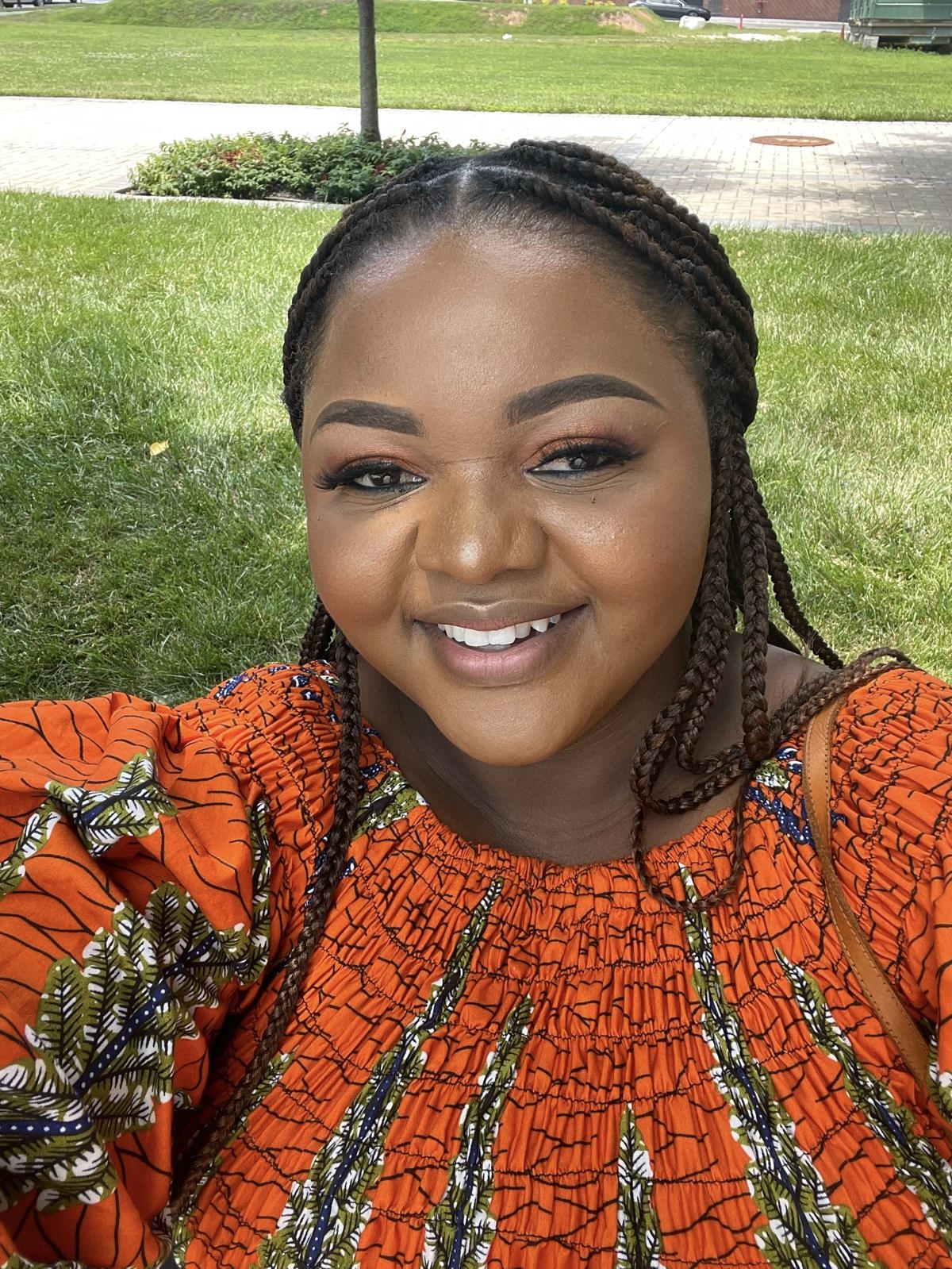
Mom, Nurse , story teller , solportscenthusiast
I’m Zenith H. Malawo, a Senior Clinical Nurse II at the R Adams Cowley Shock Trauma Center at the University of Maryland Medical System. I came to the United States in 2003 and, as an immigrant and naturalized citizen, my lived experience shapes how I show up in healthcare and storytelling. I hold a BSN from the University of Maryland and am currently pursuing my Family Nurse Practitioner (FNP) degree at Coppin State University, an HBCU. I’m also the host of Assorted Immigrant Stories – Lweendo: Tales of a Journey, where I explore migration, identity, and the lessons learned along the way.


